18 Bathroom Tile Ideas That Are Bold Enough to Transform Everything
Most people plan a bathroom renovation backward. They pick the vanity first, agonize over the paint color, and treat tile like an afterthought — something to “just choose” once everything else is decided.
That’s exactly the wrong order, because tile is the one material that touches almost every surface in the room. It’s the floor you stand on, the wall behind the shower, sometimes even the ceiling above the tub. When it’s boring, the whole room feels boring, no matter how nice the fixtures are. When it’s bold, it can carry an entire bathroom on its own.
That’s the idea behind this list. These 18 bathroom tile ideas aren’t small accent choices — they’re the kind of tile decisions that set the whole mood, from color-drenched showers to sculptural fluted walls to grout so bright it becomes part of the design. Pick even one, and the rest of the room gets to be simple.
Table of Contents
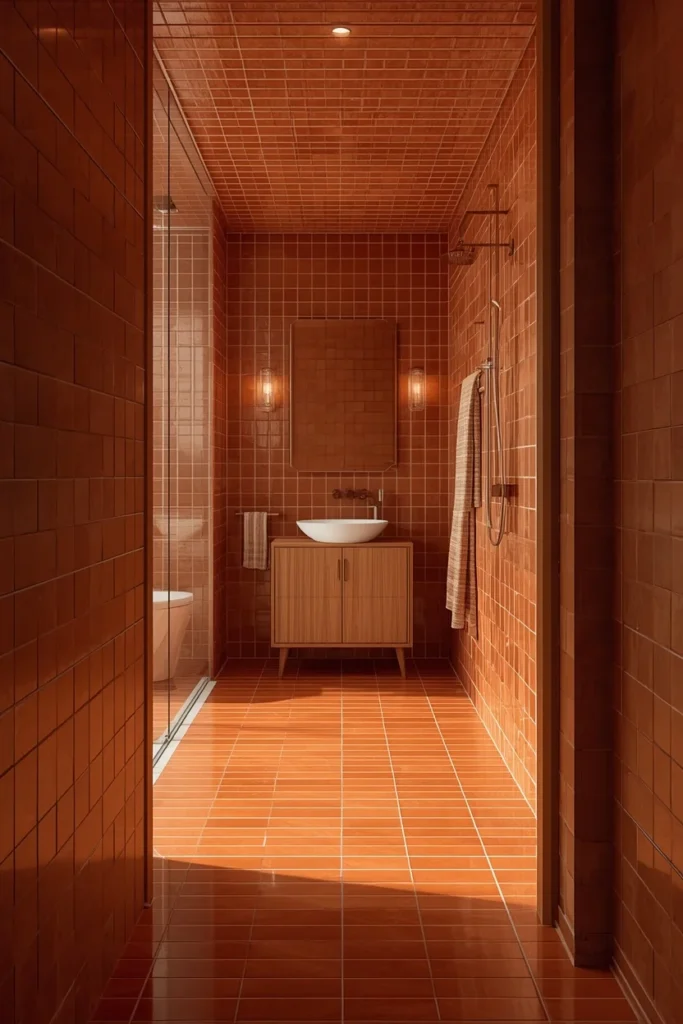
1. Full Color-Drenched Tile, Floor to Ceiling
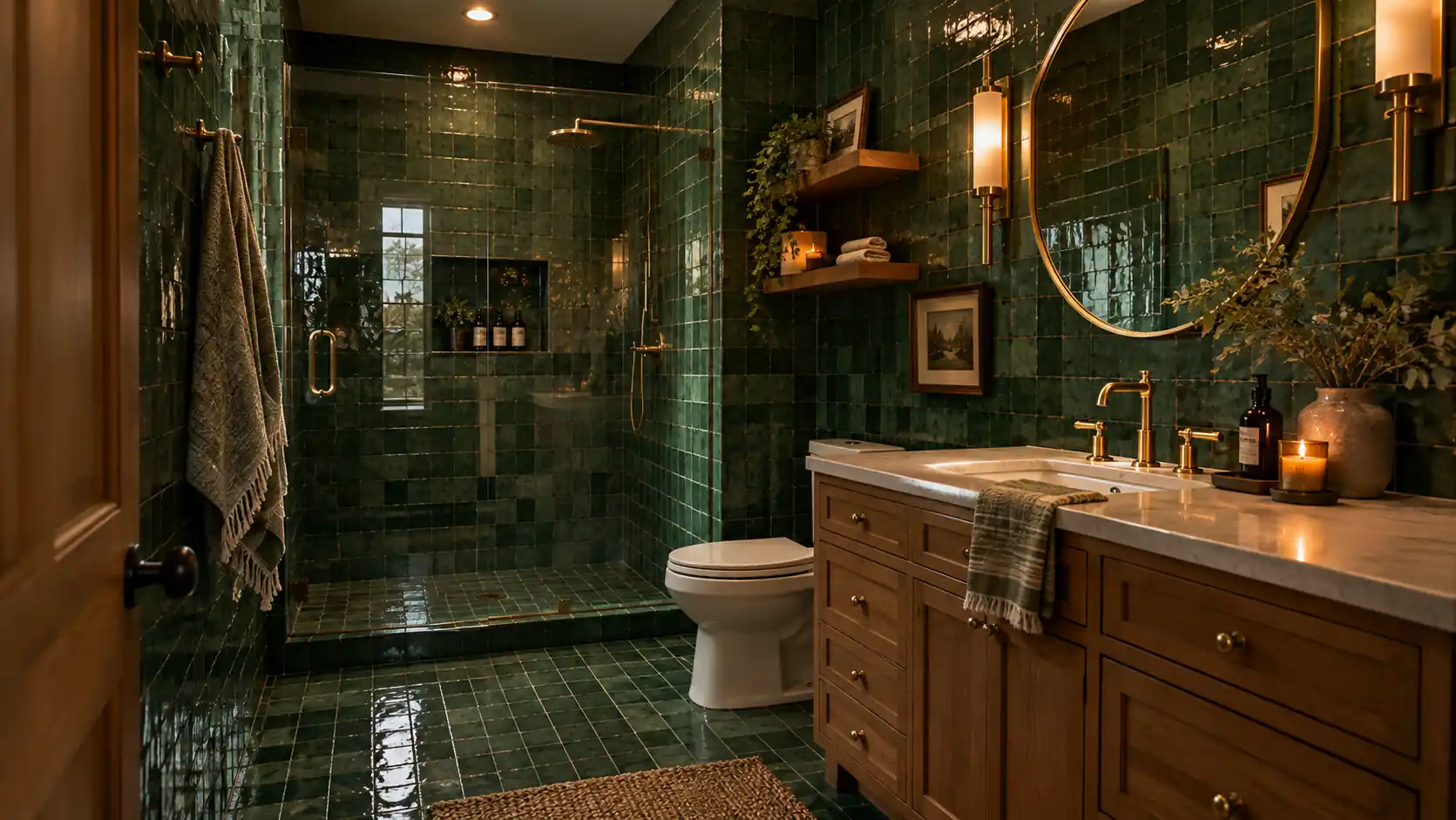
Color drenching means choosing one tile and running it across the floor, walls, and even the shower ceiling so the entire room reads as a single, saturated environment. Because there’s no color break between surfaces, the eye stops measuring where the room ends, which paradoxically can make a small bathroom feel larger and more immersive rather than boxed in. A deep tone like forest green, terracotta, or aubergine tends to work better drenched than a pale neutral, since the saturation is what creates the drama. Keeping the vanity and hardware simple — a single warm wood or brass moment — lets the tile stay the obvious star instead of competing with too many other finishes. This is one of the most talked-about bathroom tile trends precisely because it turns a functional room into a fully considered, almost gallery-like space.
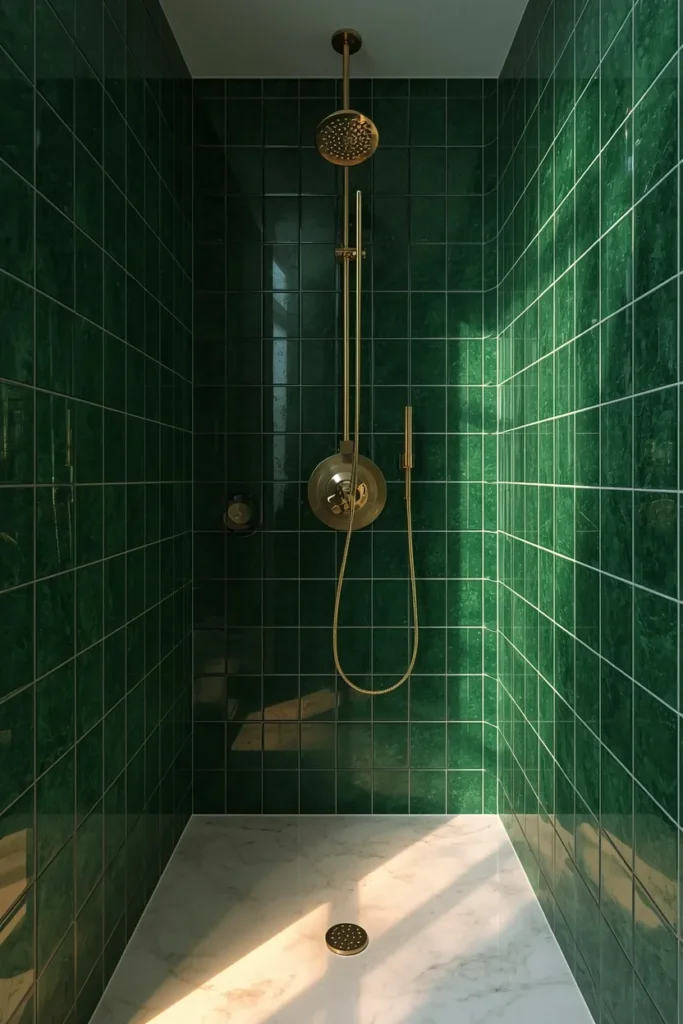
2. Jewel-Tone Glossy Tile
Deep jewel tones like emerald, sapphire, and garnet bring genuine color drama into a bathroom without tipping into anything childish or trendy in a fleeting way. A high-gloss finish on these saturated colors bounces light around the room, which helps counteract the visual weight that dark, rich tones can otherwise carry. These shades pair especially well with brass or gold fixtures, since the warm metal picks up the tile’s undertones and reads as intentional rather than mismatched. Using the jewel tone on a single wall or the shower surround, rather than the whole room, keeps the look dramatic without overwhelming a smaller space. Designers have specifically pointed to this kind of saturated, vintage-glam color story as one of the defining bathroom tile.
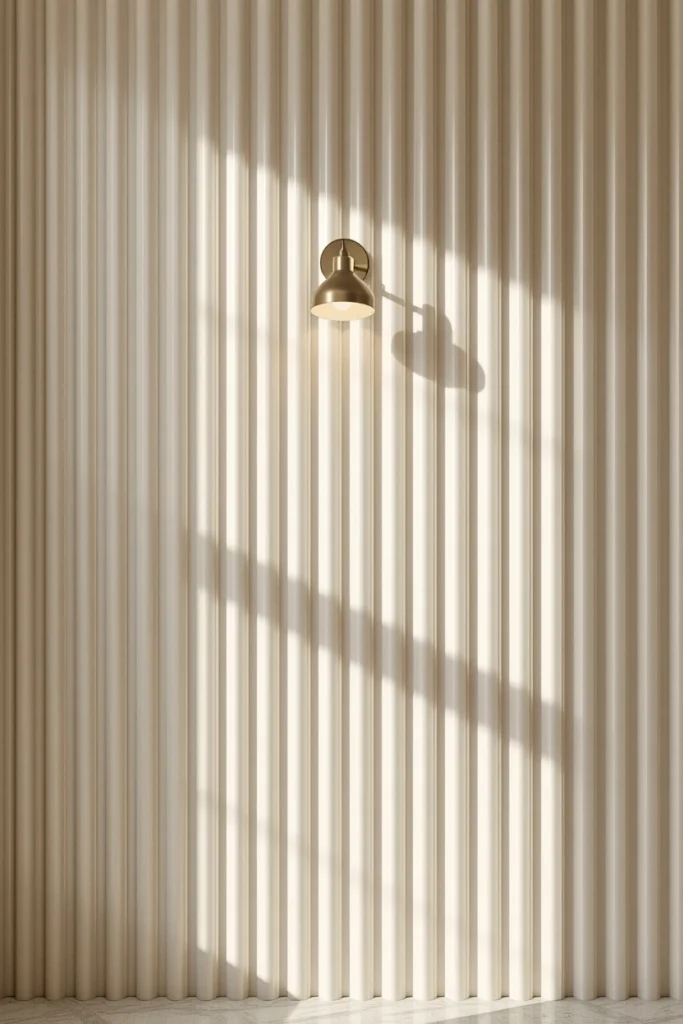
3. Sculptural Fluted Tile Walls
Fluted tile brings raised, rounded ridges to a flat wall, so the surface catches and releases light differently depending on the time of day and the angle you’re standing at. Because the texture itself is the design statement, fluted tile in a single neutral color, like warm white or soft greige, can still feel bold and sculptural without leaning on color at all. This makes it a strong choice for anyone who wants drama but isn’t ready to commit to saturated color across the whole room. Vertical fluting tends to visually stretch a wall upward, which is a useful trick in bathrooms with lower ceilings. Because the texture does the work, fluted tile walls need very little extra styling — a single mirror or sconce is usually enough.
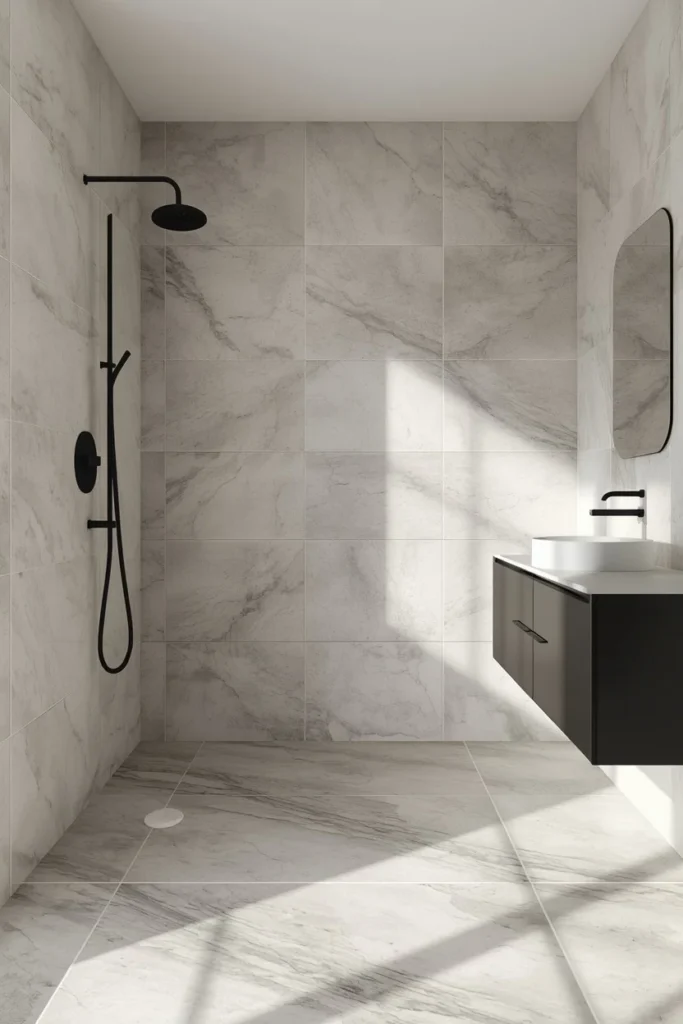
4. Oversized Slab-Look Porcelain
Large-format porcelain panels, often 24 by 48 inches or bigger, mimic the look of a continuous stone slab while cutting grout lines down to almost nothing. Because there are so few visible seams, the wall or floor reads as one clean, monolithic surface, which is exactly why this format has become a staple in modern, minimal bathrooms. These panels can convincingly replicate marble, limestone, or even onyx veining without the sealing and upkeep that natural stone requires, making the luxury look considerably more practical day to day. Running the same oversized tile from the floor up into the shower removes even more visual breaks, reinforcing the sense of one continuous, expansive space. This is one of the more universally flattering bathroom tile ideas, since it works equally well in a compact powder room or a sprawling primary bath.
5. Tile Drenching Into the Ceiling
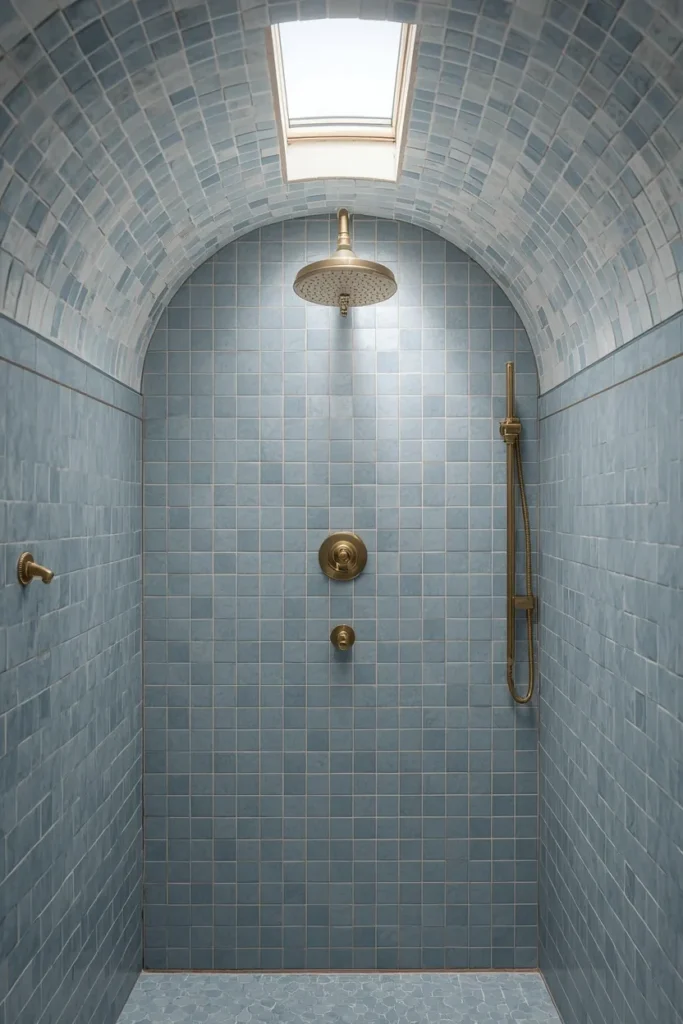
Extending the shower or bathroom tile up and over the ceiling, especially in a vaulted, arched, or barreled space, turns an often-ignored surface into part of the overall design. This move is showing up specifically as designers push tile drenching beyond walls and floors into what was previously just a painted afterthought. In an arched shower ceiling, the tile can emphasize the architecture itself, almost like a continuation of the walls rather than a separate plane. A single, simple tile, rather than an intricate pattern, tends to work best here, since the ceiling is viewed at a steep angle and a busy pattern can feel disorienting overhead. This idea is especially striking in showers with skylights or windows, where the tiled ceiling catches changing daylight throughout the day.
6. Bold, Unexpected Checkerboard Colors
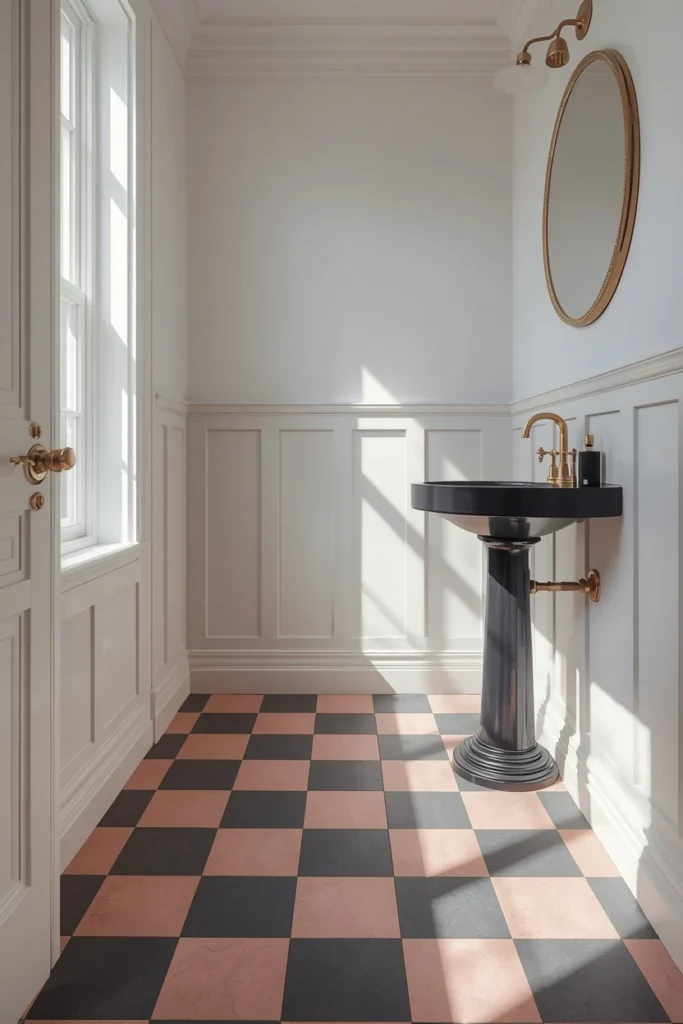
Checkerboard tile is a classic, but today’s version swaps the traditional black and white for softer, more unexpected pairings like pink and charcoal, or sage and cream. Using muted, tonal colors instead of high-contrast black and white gives the pattern a softer, more elegant finish rather than a stark graphic one. Scaling the squares larger, rather than small and busy, keeps the look feeling current instead of retro-novelty. This pattern works especially well in powder rooms, where a bold floor can carry the whole design while the walls stay quiet and plain. It’s a low-risk way to bring real personality into a bathroom tile choice without needing to commit to an unusual color on the walls themselves.
7. Vintage Encaustic Patterned Floor
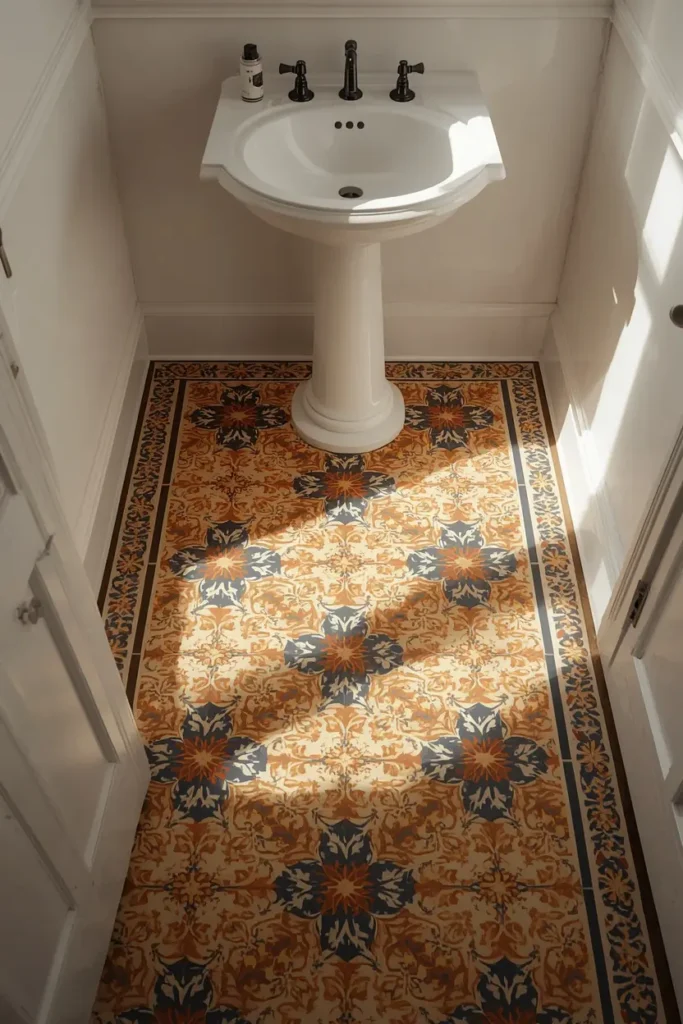
Encaustic-style tile, with its ornate, colorful geometric patterns, brings genuine old-world character into a bathroom, and its return blends nostalgia with more durable modern manufacturing. Unlike printed vinyl versions from years past, today’s encaustic-look porcelain tiles hold their color and pattern crisply without wearing down the way historical cement tiles could. Because the pattern itself is so detailed, keeping the surrounding walls and fixtures simple and neutral is essential, or the room can quickly feel too busy. This is one of the strongest bathroom tile ideas for smaller powder rooms or guest baths, where a dramatic floor makes an immediate impression the moment someone walks in. It also tends to photograph exceptionally well, since the intricate pattern gives Pinterest scrollers an instant, detail-rich visual to stop on.
8. Terrazzo 2.0 with Oversized Chips
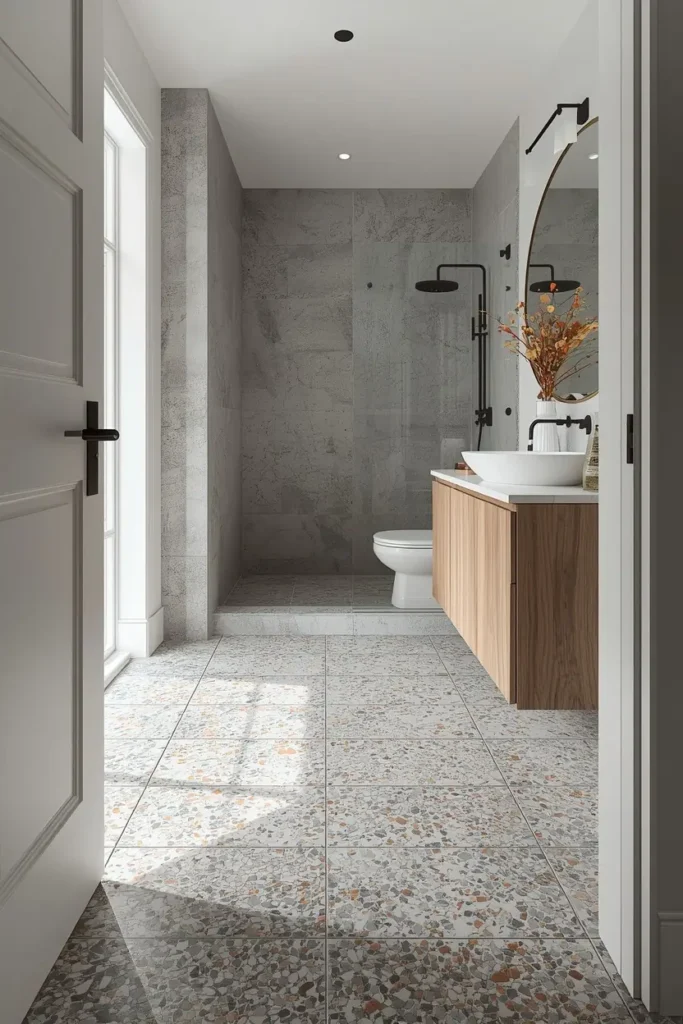
The newest wave of terrazzo trades the tiny, uniform flecks of older designs for much larger chips of colorful marble or aggregate set into a clean concrete base. Chips in cobalt blue, burnt orange, and sage green mixed together give the surface a playful, almost confetti-like energy that feels distinctly more expressive than traditional terrazzo. Because the pattern is irregular by nature, this material hides small dust, water spots, and daily wear better than a plain, solid-color floor. Running the terrazzo from the floor partway up the wall, or into a matching shower base, extends the playful effect without needing to add pattern anywhere else in the room. This bold, updated take on terrazzo is one of the standout bathroom tile trends for anyone who wants color and texture without a single traditional pattern.
9. Contrasting, Colorful Grout
Instead of hiding grout lines, this idea makes the grout itself part of the design, using a bright, contrasting color like yellow grout against blue tile, or coral grout against white tile. The effect highlights the geometry of the tile layout and adds an unexpected pop of color and graphic linework across the wall or floor. Because it’s primarily a grout choice rather than a full tile swap, this is one of the more affordable, high-impact bathroom tile ideas on this list, especially for a smaller accent area like a niche or backsplash. Keeping the tile shape simple, like a plain square or subway, lets the colorful grout lines read clearly instead of competing with an already busy pattern. It’s an easy way to turn a standard, builder-grade tile installation into something that looks custom and considered.
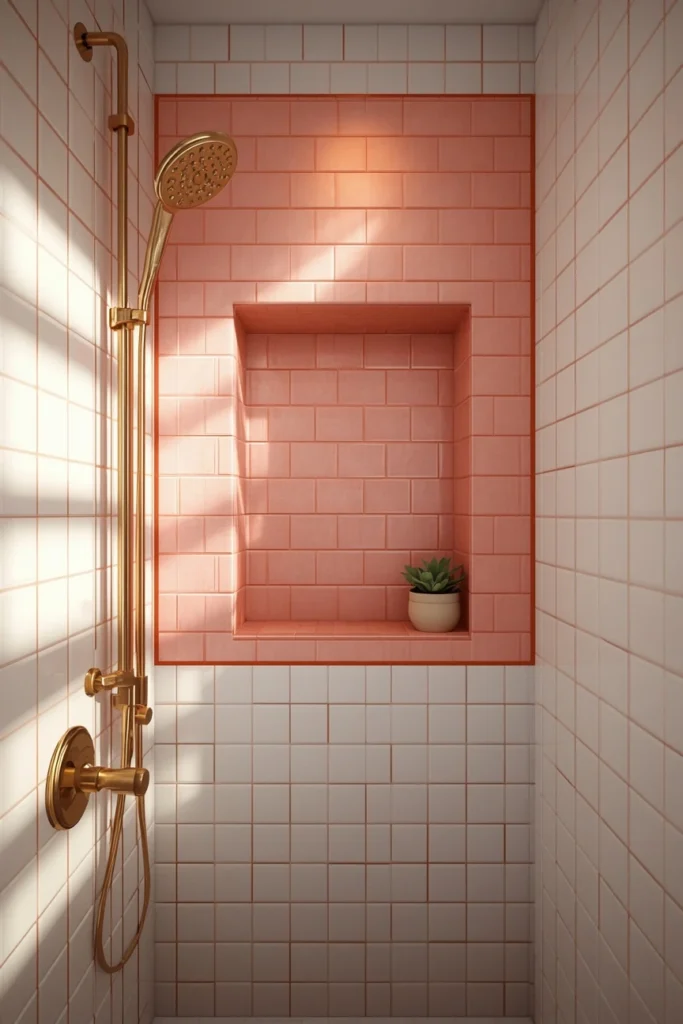
10. Herringbone Brick Tile
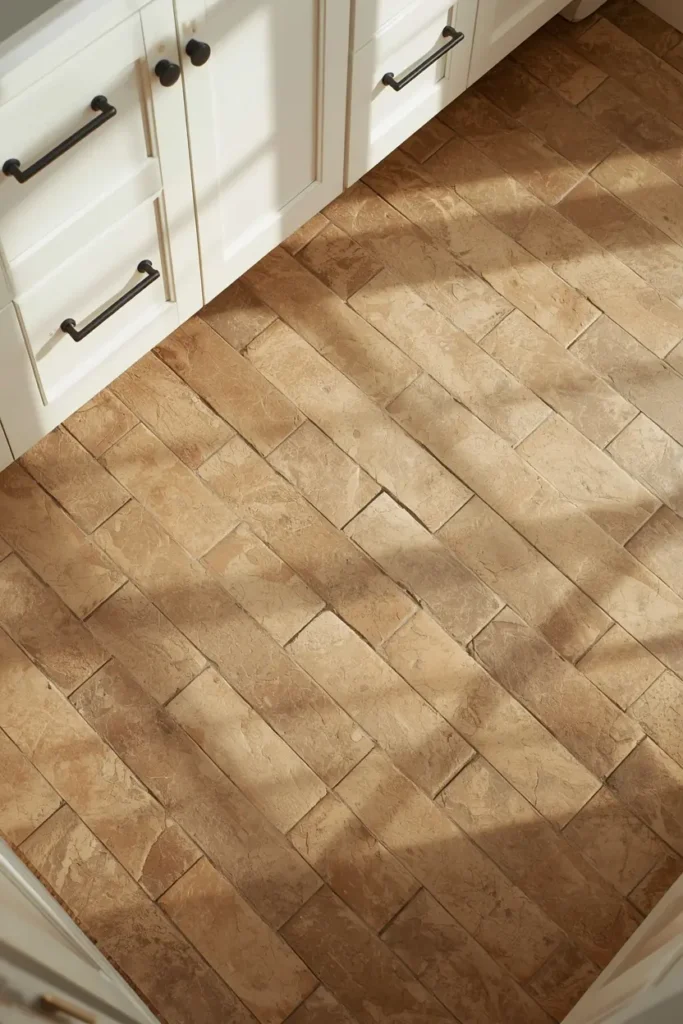
Slim, brick-shaped tiles laid in a herringbone pattern bring a rustic, European countryside feel into a bathroom, especially when kept in warm, honey-toned neutrals. Because the tiles are narrower than standard subway shapes, the diagonal pattern reads with more movement and a slightly softer, more textured look than a classic herringbone in larger tile. This layout also creates a subtle illusion of extra floor space, since the diagonal lines lead the eye across the room rather than stopping at a single visual edge. Pairing the brick herringbone with simple white walls and black or brass fixtures keeps the floor as the clear focal point. It’s a strong pick for anyone chasing a farmhouse or modern-rustic bathroom tile look that still feels current.
11. Geometric Color-Block Accent Wall
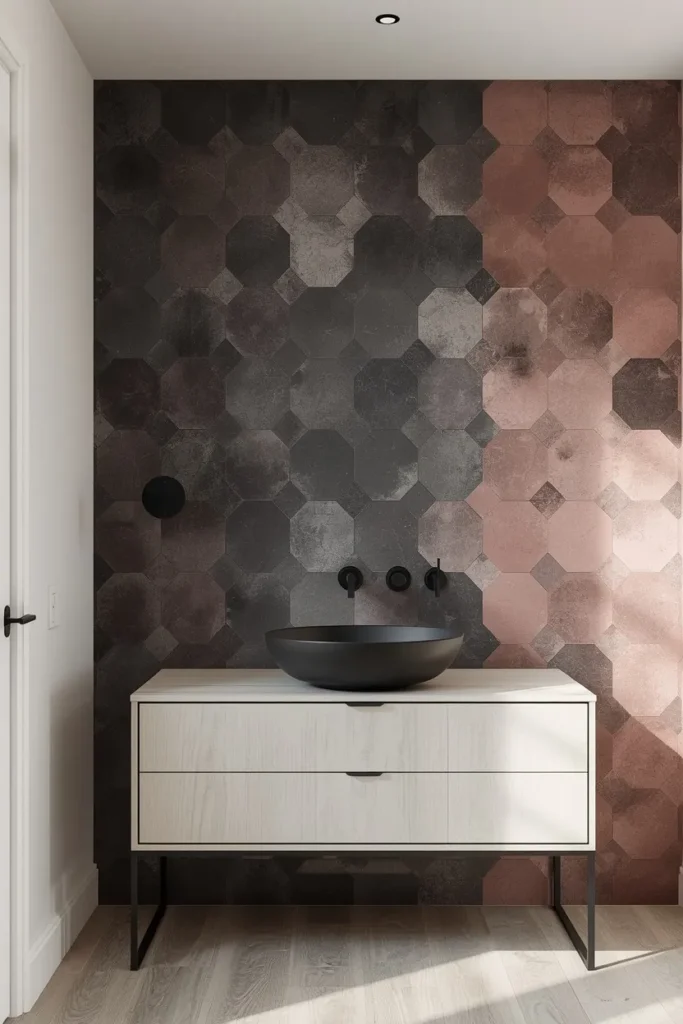
Simple tile shapes, like hexagons or rectangles, can be arranged in large-scale color blocks to create an almost abstract art piece on a single wall. Pairing a matte, saturated color like deep charcoal with a softer tone like dusty rose gives the wall real sophistication while still feeling playful rather than childish. Because the impact comes from scale and contrast rather than an intricate pattern, this idea is surprisingly easy to execute even for a first-time renovation. A hexagonal color-block wall stretching from floor to ceiling behind a floating vanity makes an especially strong photo moment, since the geometry reads clearly from a distance. This is one of the more design-forward bathroom tile ideas, and it tends to resonate with anyone searching for modern, gallery-style bathroom looks.
12. Saturated-Color Zellige Tile
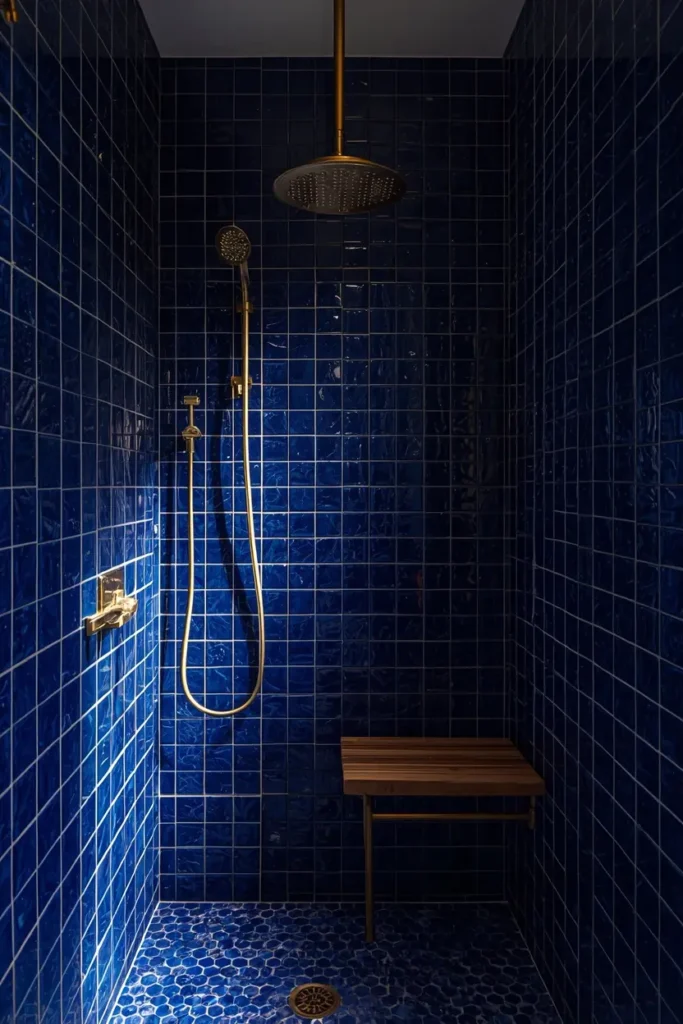
Handmade zellige tile in a rich, saturated glaze, like deep cobalt or burnt ochre, brings both bold color and natural texture into the same surface. Because each tile is hand-formed, the glaze pools and varies slightly from piece to piece, so the wall catches light differently across its surface rather than reading as one flat, uniform color. This variation is what keeps a saturated zellige wall from feeling overly bold or garish, since the subtle imperfections soften the overall effect. Pairing it with simple brass fixtures and a plain stone or wood counter keeps the tile as the clear centerpiece of the room. Saturated zellige is one of the standout bathroom tile trends specifically because it merges two popular directions — bold color and artisanal texture — into a single material.
13. Botanical Mural Tile Wall
A large-scale botanical print tile mural turns an entire wall into something closer to wallpaper than traditional tile, with leaves, florals, or branches stretching across multiple panels. Because the pattern is so visually rich, keeping the rest of the room’s palette solid and quiet, like a single teal or cream accent color, keeps the mural from feeling overwhelming. This idea works particularly well in a shower or tub surround, since the water-resistant tile can handle a design ambition that wallpaper simply can’t in a wet space. A botanical mural tends to feel especially fresh paired with brass fixtures and simple black-and-white floor tile, letting the wall carry all the color and detail. This is one of the more expressive, personality-driven bathroom tile ideas on the list, and it photographs beautifully because the mural itself is the entire visual story.
14. Two-Tile Contrast Zones
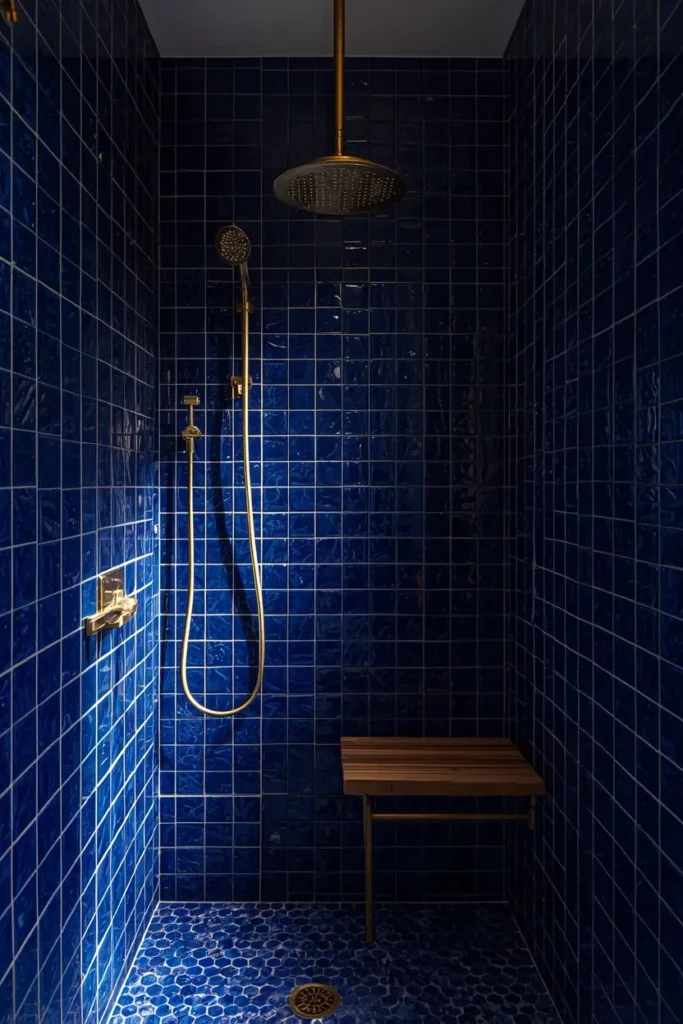
Instead of choosing one tile for the whole room, this idea pairs a calm, simple field tile with a bold, patterned, or brightly colored inset tile to define specific zones. A plain tile can cover most of the floor while a contrasting border frames a freestanding tub, almost like a rug woven directly into the floor. A centered accent panel can serve the same purpose in a shower, creating a sense of architecture and intention rather than one flat, continuous surface. This approach is a practical way to control cost too, since the bold, more expensive tile only needs to cover a small accent area rather than the entire room. It’s a favorite trick among designers because it delivers a custom, layered look without requiring an unusual tile everywhere.
15. Wood-Look Porcelain Flooring
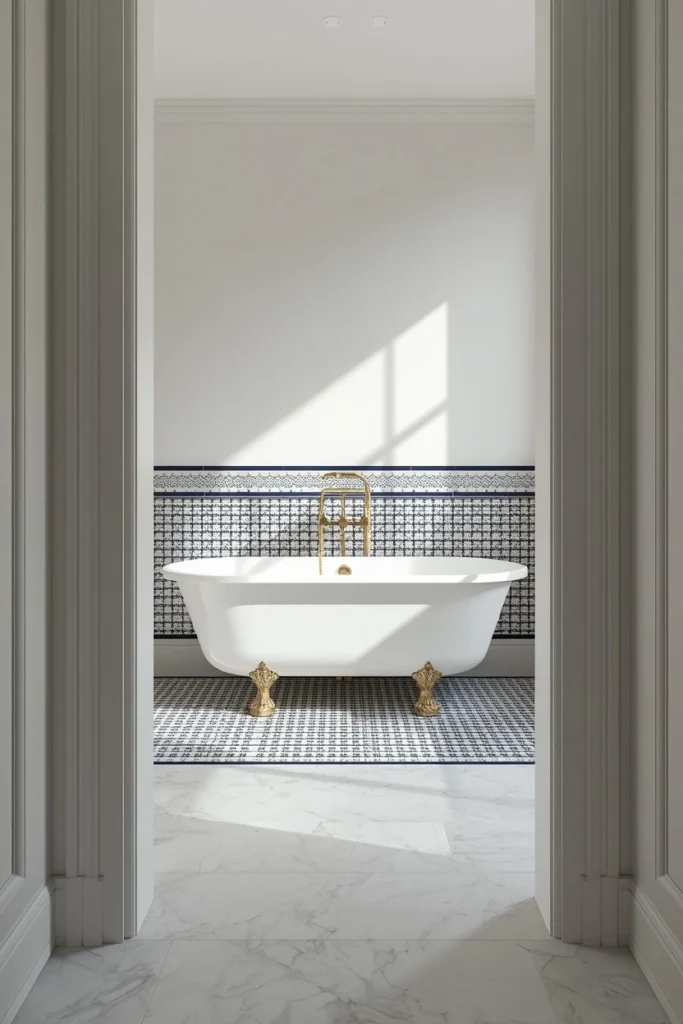
Wood-look porcelain tile brings genuine warmth and old-world charm into a bathroom while sidestepping the moisture problems real hardwood faces in a wet room. Modern printing technology has made the grain pattern and shade variation on these tiles nearly indistinguishable from actual timber at a glance. Pairing it with softer neutrals and a few live plants leans into a natural, grounded palette that feels calmer than an all-tile, all-stone bathroom. Because the look reads as flooring rather than a design statement in the traditional sense, this idea works especially well as the quiet backdrop for a bolder tiled shower or accent wall elsewhere in the room. It’s one of the more practical, everyday-livable bathroom tile ideas on this list, offering warmth without any extra maintenance.
16. Bold Striped Tile
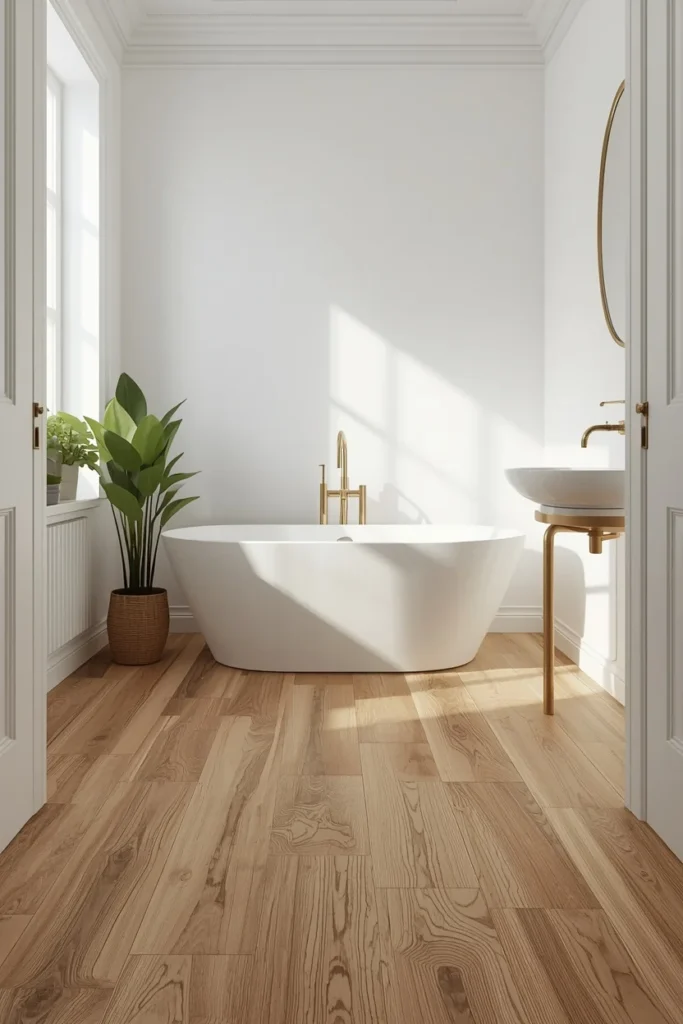
Striped tile brings intentional linear movement to a wall or floor, and it’s showing up in both high-contrast color pairings and calmer, tonal green stripes. Bold contrasting stripes, like navy and white, add real graphic energy and work well as a shower accent or backsplash, while softer tonal stripes bring a quieter but still distinctly patterned look. Running the stripes vertically can make a low ceiling feel taller, while horizontal stripes can visually widen a narrow room. Because stripes are inherently linear and directional, they pair especially well with simple, boxy fixtures and clean-lined hardware rather than ornate or curved pieces. This is a flexible bathroom tile idea that scales from subtle sophistication to full playful drama depending on the color contrast chosen.
17. Iridescent Glazed Tile
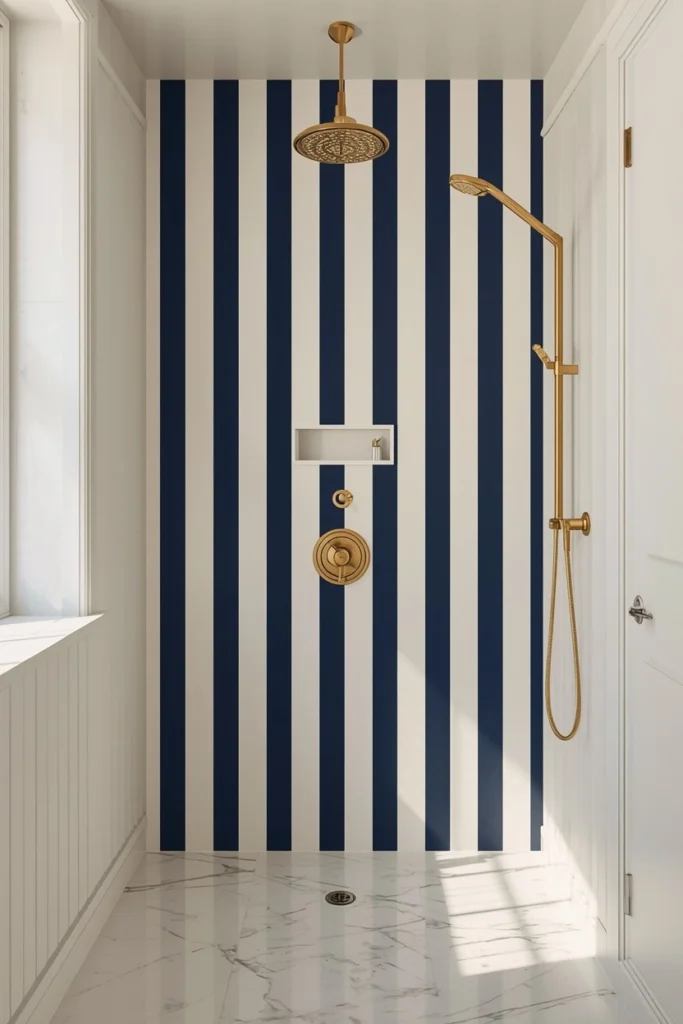
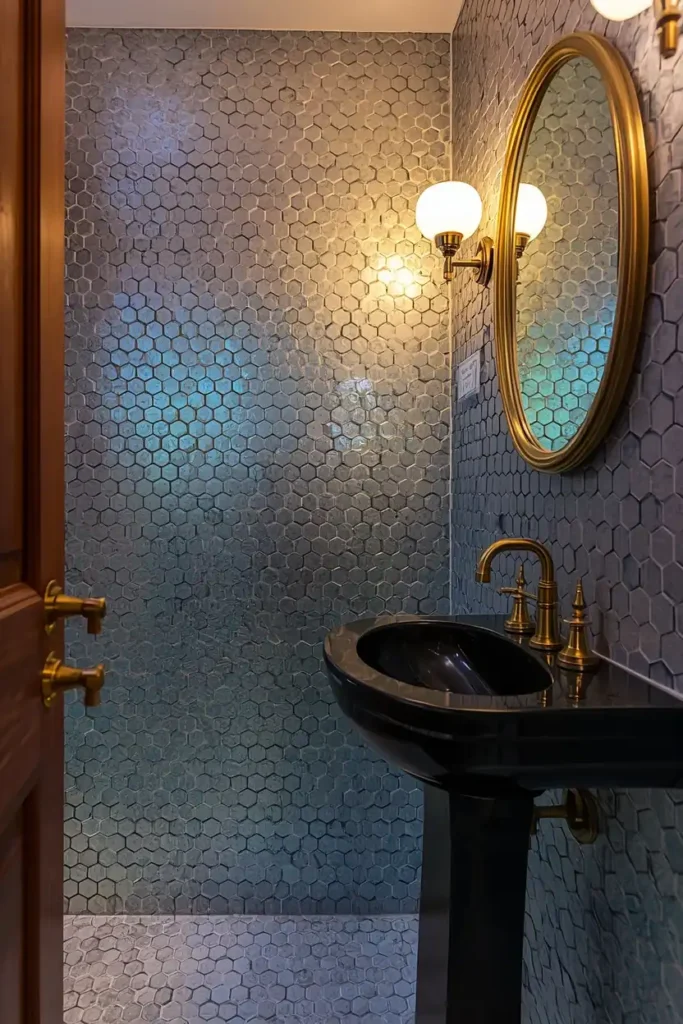
Iridescent tile shifts color subtly depending on the angle of light hitting it, giving a wall a shimmering, almost liquid quality that flat, matte tile simply can’t replicate. This effect works especially well in smaller accent areas, like a powder room or a shower niche, where the shimmer can be fully appreciated up close rather than lost across a huge surface. Because the glaze itself does so much visual work, keeping the tile shape simple, like a plain square or small hexagon, lets the color-shifting effect stay the focus. Pairing iridescent tile with warm brass fixtures amplifies the shimmer, since the metal finish echoes the tile’s own subtle color shifts. This is one of the more rare, showroom-specific bathroom tile trends, and it tends to generate strong engagement on Pinterest simply because the material looks different in every single photo angle.
18. Pebble and Shell Mosaic Shower Floor
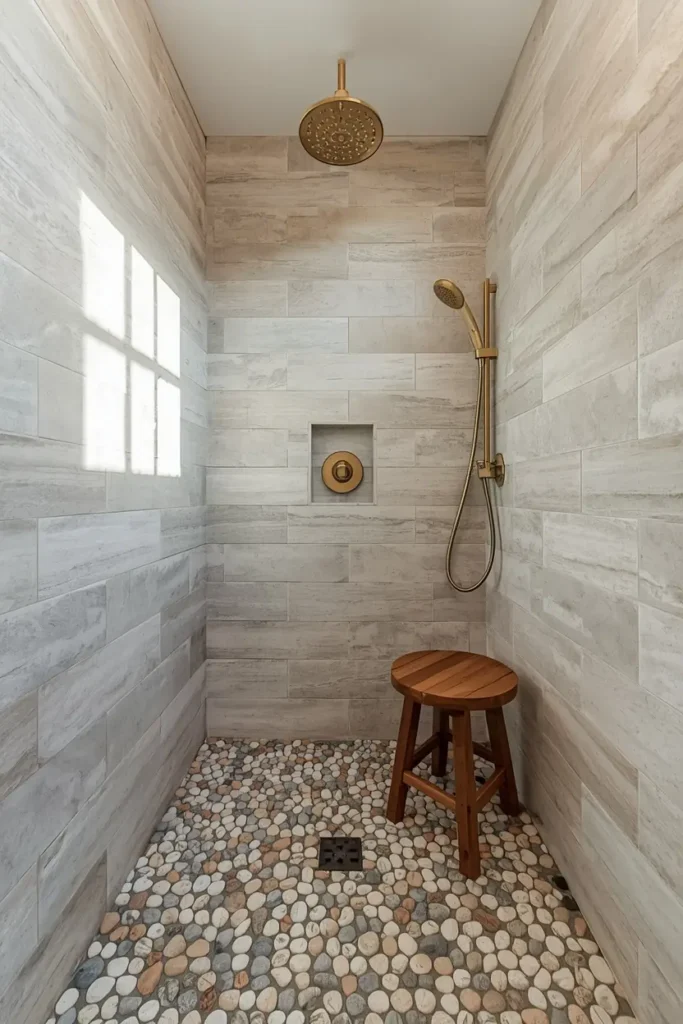
A mosaic shower floor made from natural pebbles or shell-shaped tile brings organic, coastal texture right underfoot, adding both grip and visual interest to a surface that’s usually an afterthought. The varied shapes and tones of natural stone or shell mosaic give the floor a detailed, authentic look, picking out soft grays and browns that tie the shower back into the room’s broader palette. Because the texture is uneven, this flooring also offers genuinely better slip resistance than a smooth, flat tile, which matters more in a wet shower than almost any other design consideration. Pairing this floor with simple, large-format tile on the shower walls keeps the mosaic as a distinct, grounded detail rather than competing with a busy wall pattern. This is one of the more sensory, spa-driven bathroom tile ideas, and it works particularly well in coastal or organic modern bathroom concepts.
Styling Tips
- Pick one bold tile move per room — a color-drenched shower, a mural wall, or a bold floor — and let everything else stay quiet so the tile reads as intentional, not chaotic.
- Follow the “three S’s”: scale, shade, and sheen. Larger scale and glossier sheen both amplify boldness, while smaller scale and matte finishes calm a bold color down.
- Warm metals (brass, unlacquered brass) tend to soften saturated or dark tile better than cool chrome or nickel.
- Save your boldest, most expensive tile for a contained area — a niche, an inset panel, or a single wall — if budget is a concern.
Practical Implementation Ideas
- Test tile samples in the actual bathroom under both daytime and evening lighting, since saturated colors and glazes shift dramatically depending on light source.
- Use large-format tile in small bathrooms to minimize grout lines and help the space feel more expansive, even with a bold color.
- If committing to a bold floor or wall, keep the vanity, hardware, and lighting simple so the tile doesn’t have to compete with too many other decisions.
- Consider porcelain look-alikes (wood-look, marble-look) if you want a bold material’s appearance without its maintenance demands.
Common Mistakes to Avoid
- Combining too many bold tile choices in one small room, which can make the space feel busy and disorienting instead of intentional.
- Choosing a highly patterned tile without considering how it will look installed across an entire floor rather than in a single showroom sample.
- Skipping grout color planning. A grout that’s too stark or too matched can either fight the tile or wash out a pattern entirely.
- Using a low-traction, glossy tile on shower floors, where safety matters more than shine; save high-gloss finishes for walls instead.
Small-Space Alternatives
- Use a bold tile only in a niche, backsplash, or single accent wall rather than committing an entire small bathroom to saturated color.
- Choose large-format tile to minimize grout lines and help a compact room read as more open, even with a dark or saturated color.
- Try colorful grout on simple white tile for graphic impact without needing a bold tile color at all.
- Vertical patterns (stripes, fluting, herringbone laid vertically) can help a small bathroom feel taller rather than more cramped.
Budget-Friendly Alternatives
- Reserve the boldest, most expensive tile for a small accent zone, like a niche or inset panel, rather than tiling an entire room in it.
- Choose a colorful or contrasting grout on inexpensive plain tile for a custom look without the cost of specialty tile.
- Porcelain versions of encaustic, wood-look, or marble-look tile deliver a similar visual impact at a fraction of the cost of the real material.
- Peel-and-stick tile decals can test a bold pattern or color in a powder room before committing to a permanent installation.
Pro Styling Recommendations
- Choose one dominant finish (matte or gloss) and let a secondary tile or grout provide the contrast, rather than mixing several finishes at once.
- When using two tiles for contrast zones, keep one simple and one bold — never bold and bold in the same room.
- Let sculptural or textured tile (fluted, ridged) stand in for extra decor, since the tile itself functions as built-in art.
- Match metal fixture tones to the tile’s undertones (warm tile with brass, cool tile with chrome or nickel) for a cohesive finished look.
FAQs
Conclusion
Tile is one of the few materials in a bathroom that can carry an entire design on its own, which means it’s also one of the easiest places to play it too safe. The rooms that actually get remembered — pinned, saved, referenced — usually come down to one confident tile decision, not ten small ones. Pick the idea from this list that matches the mood you want, keep everything else in the room quiet around it, and let the tile do the transforming.