25 Thanksgiving Tablescape Ideas That Will Impress Every Guest at Your Table
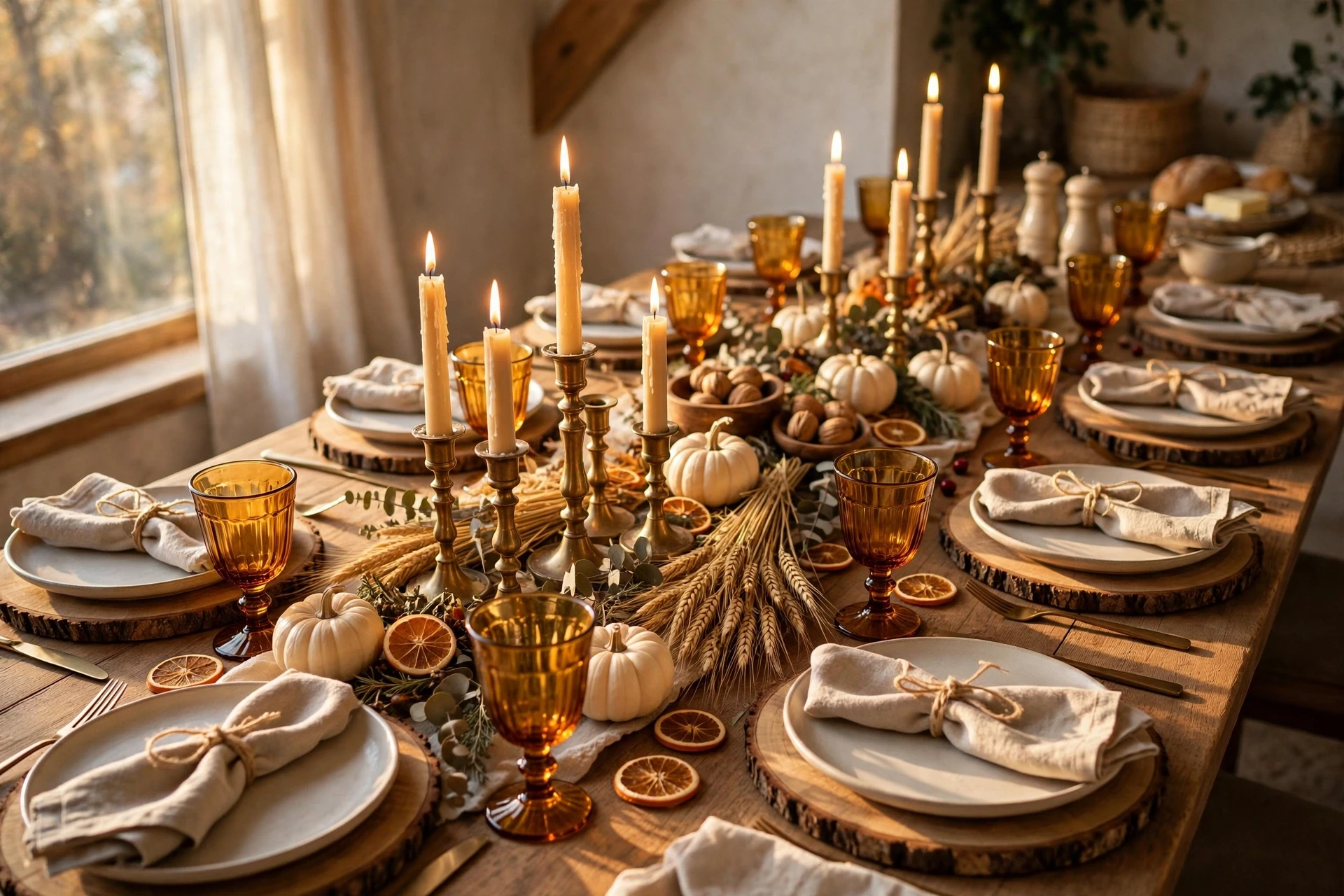
The table is where Thanksgiving actually happens. Everyone circles it, sits at it, leans over it to pass the gravy boat, and remembers it long after the food is gone. A table that’s been styled with even a little intention turns “dinner’s ready” into a moment people notice the second they walk into the room.
Twenty-five ideas here cover centerpieces, place settings, color, and lighting — the details that make a Thanksgiving table feel gathered and special, whether you’re hosting twenty people at a long farmhouse table or four at a kitchen nook.
Why Your Thanksgiving Table Matters More Than the Menu
Guests remember a beautifully set table longer than they remember the exact seasoning on the stuffing, because the table is what they’re looking at for the entire meal, not just the few minutes it takes to eat any single dish. A styled table also does something practical: it signals to everyone sitting down that this meal is different from a regular Tuesday dinner, which sets a warmer, more attentive tone before anyone even picks up a fork. That matters even more at Thanksgiving specifically, since the holiday is built around gathering and gratitude rather than gifts or spectacle, and the table is the one physical object that holds that whole idea together. None of this requires new china or a florist on speed dial. It requires the right combination of color, texture, height, and light, applied with a little planning the day before.
Table of Contents
25 Thanksgiving Tablescape Ideas
1. Set Each Place with a Wood Slice Charger
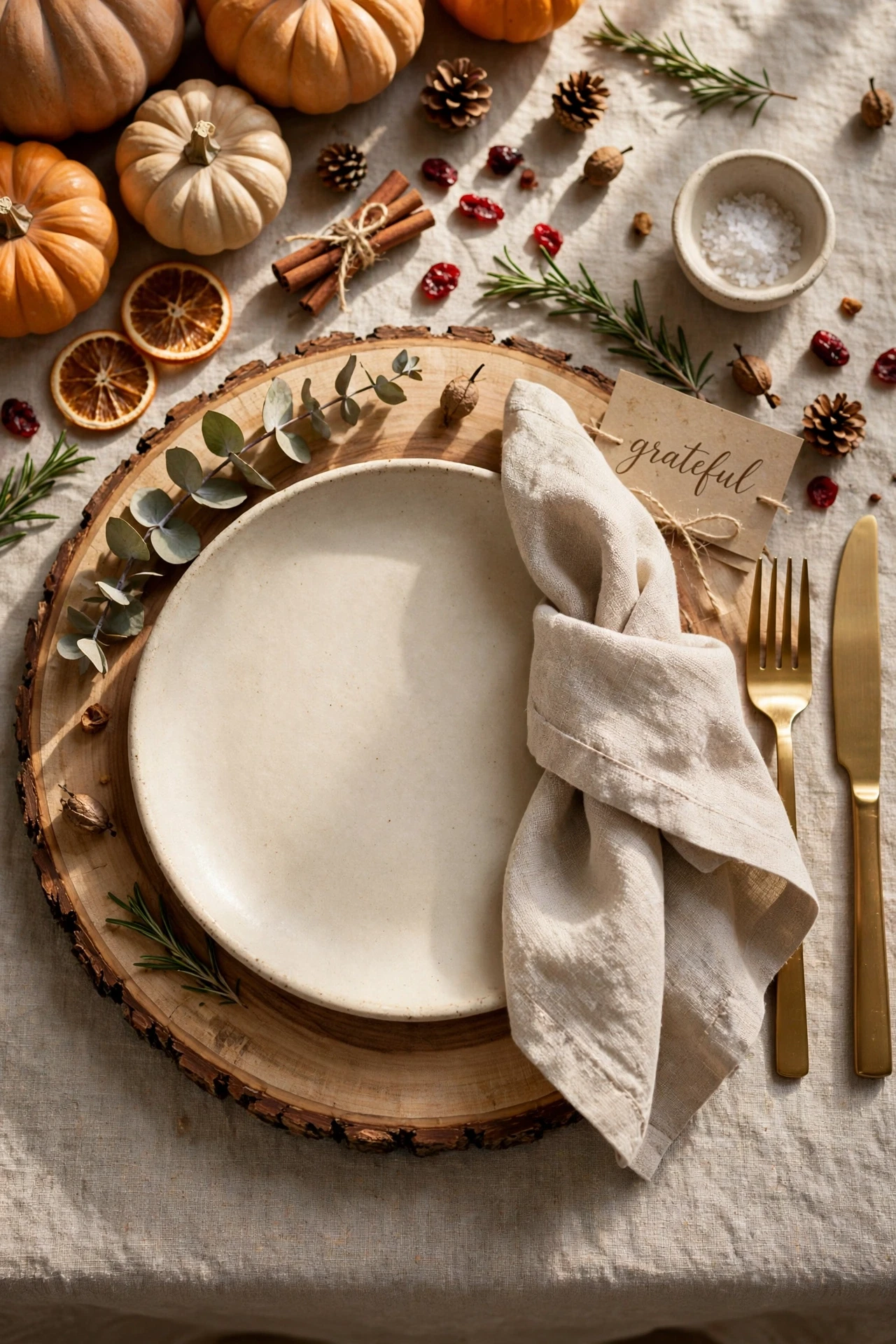
A wood slice charger under each dinner plate brings texture and warmth to the table before a single other decoration goes down, and it grounds the whole tablescape in something that feels gathered from nature rather than purchased as a set. Choose slices with visible bark edges and natural grain variation, since the imperfection is exactly what makes them feel handmade instead of mass-produced. Pair them with simple cream or white dinnerware so the wood’s texture stays the visual focus at each place setting. This works especially well for rustic, farmhouse, or cabin-style dining rooms, though a cleanly sanded and sealed slice can suit a more refined table too. Because they’re reusable year after year, wood slice chargers are also one of the better long-term investments on this entire list.
2. Pour Into Amber Glass Goblets
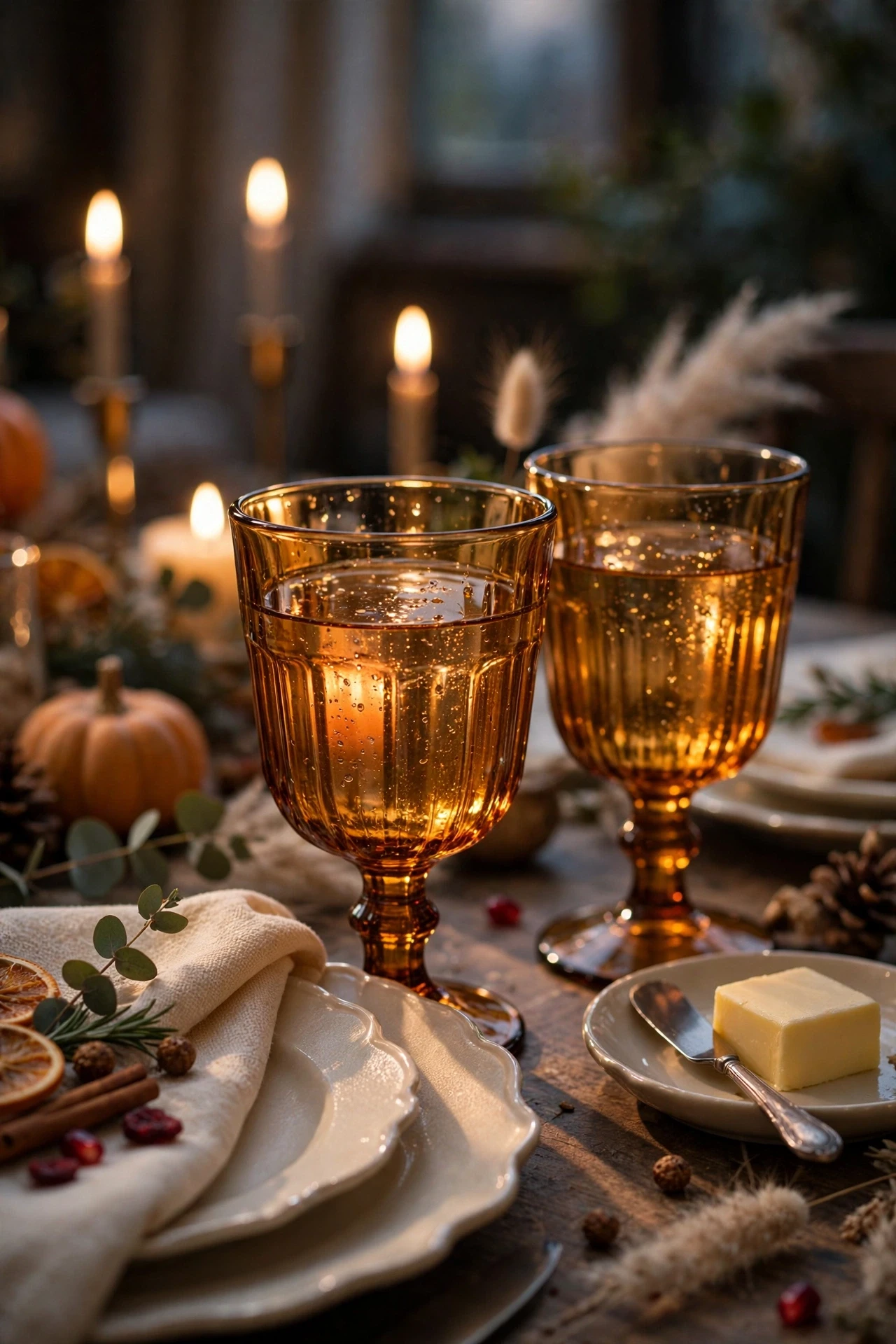
Amber-tinted glass goblets add a warm, golden cast to the table the moment they’re filled with water or wine, and that warmth echoes the same amber and gold tones showing up in centerpieces and candlelight this season. Choose goblets with a slightly imperfect, hand-blown look rather than perfectly uniform glass, since the subtle variation catches light more interestingly across a full table setting. Mix amber goblets with clear stemware for wine if you want a layered look, or commit fully to amber glass across both water and wine glasses for a more cohesive, monochromatic effect. This detail works beautifully with brass candlesticks and wood chargers, since all three share the same warm undertone. It’s also one of the few tablescape elements that continues doing visual work throughout the entire meal, since it’s touched and refilled constantly.
3. Cluster Brass Candlesticks at Varying Heights
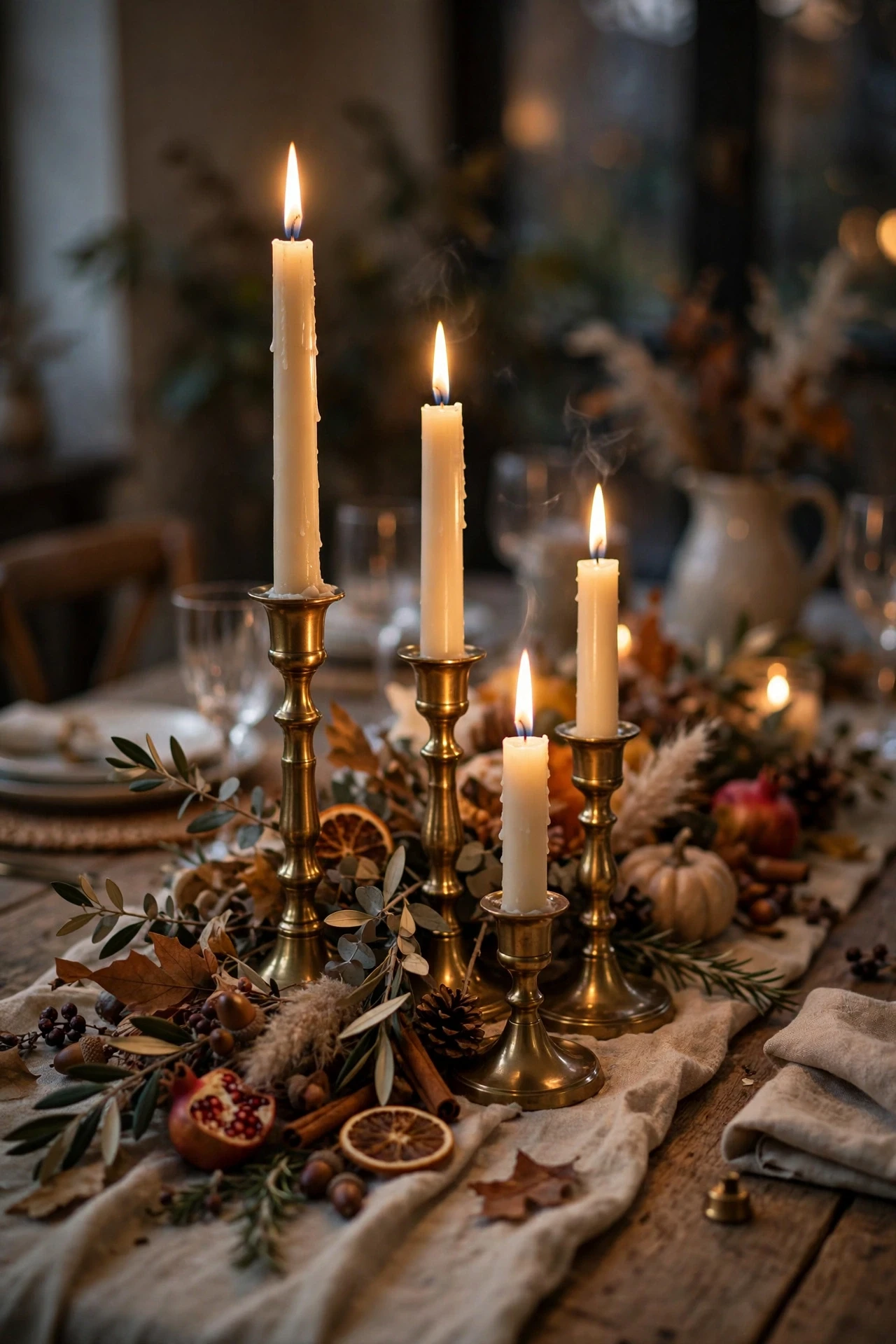
A row of brass candlesticks in varying heights down the center of the table creates immediate visual rhythm, and the warm metal tone flatters nearly every color palette that shows up on a Thanksgiving table, from deep jewel tones to soft neutrals. Choose ivory or cream taper candles rather than bright white, since the warmer wax tone photographs and glows more naturally once the candles are actually lit. Group the candlesticks in odd numbers at each cluster point, spacing two or three clusters evenly down a longer table rather than one single row of identical height. Mix in a few candlesticks with slightly different finishes — antique brass next to polished brass — for a collected-over-time look instead of a matched set. This detail matters most once the sun goes down, when candlelight becomes the primary light source for a meal that often stretches into evening.
4. Tie Wheat Bundles with Ribbon and Dried Orange
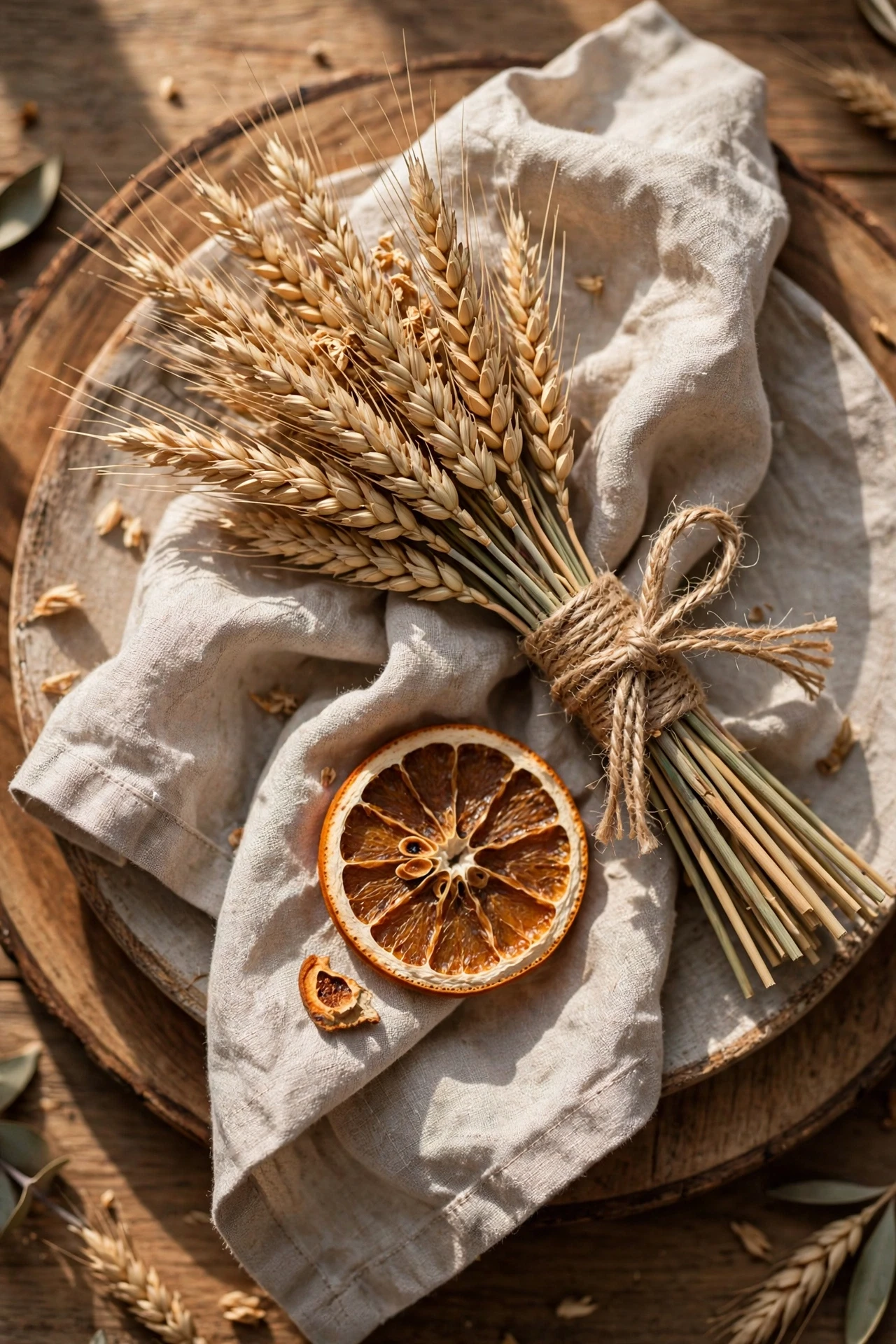
Small bundles of wheat tied with a simple ribbon and tucked with a dried orange slice make an easy, handmade-feeling accent that can sit at each place setting or cluster in the center of the table. The dried orange adds a pop of warm color and a subtle citrus note that pairs well with the classic sage, wheat, and cream palette of a traditional Thanksgiving table. Tie the ribbon in a natural material like jute or linen rather than satin, keeping the whole bundle feeling gathered from the garden rather than store-bought. Place one bundle at each guest’s setting as a take-home favor, or group several together as a low, textural centerpiece down the table’s length. This is one of the most affordable DIY ideas on this list, since wheat stems and dried orange slices can both be prepared well ahead of the actual dinner.
Related: 20 Thanksgiving Entertainment Ideas to Keep Everyone Happy
5. Fill Copper Vases with Jewel-Toned Blooms
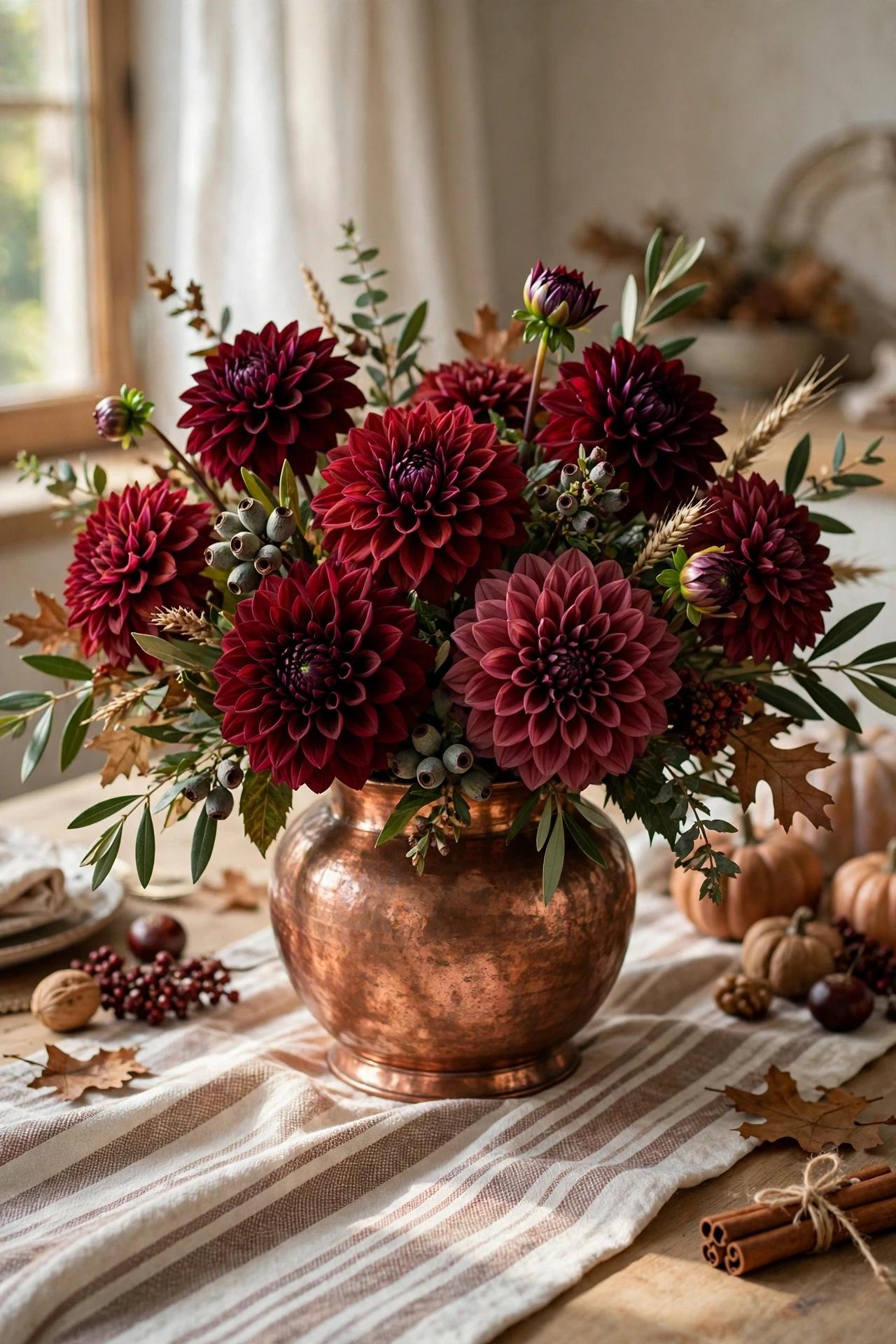
Copper vases filled with deep jewel-toned flowers — garnet dahlias, burgundy roses, or amber chrysanthemums — bring a richer, more grown-up color story to the table than the traditional orange-and-brown palette most people default to. The copper vessel itself adds warmth even before any blooms go in, and it photographs beautifully against both white linens and darker moody tablecloths. Choose two or three flower varieties in complementary jewel tones rather than a single color, since the slight variation reads as more curated than a monochromatic bunch. Position a few smaller copper vases down the table’s length rather than one large centerpiece, which keeps sightlines open for guests to actually see and talk to each other across the table. This idea suits a more modern or transitional table setting particularly well, where traditional pumpkin-and-gourd styling might feel too rustic for the room’s overall aesthetic.
6. Layer In a Striped Table Runner
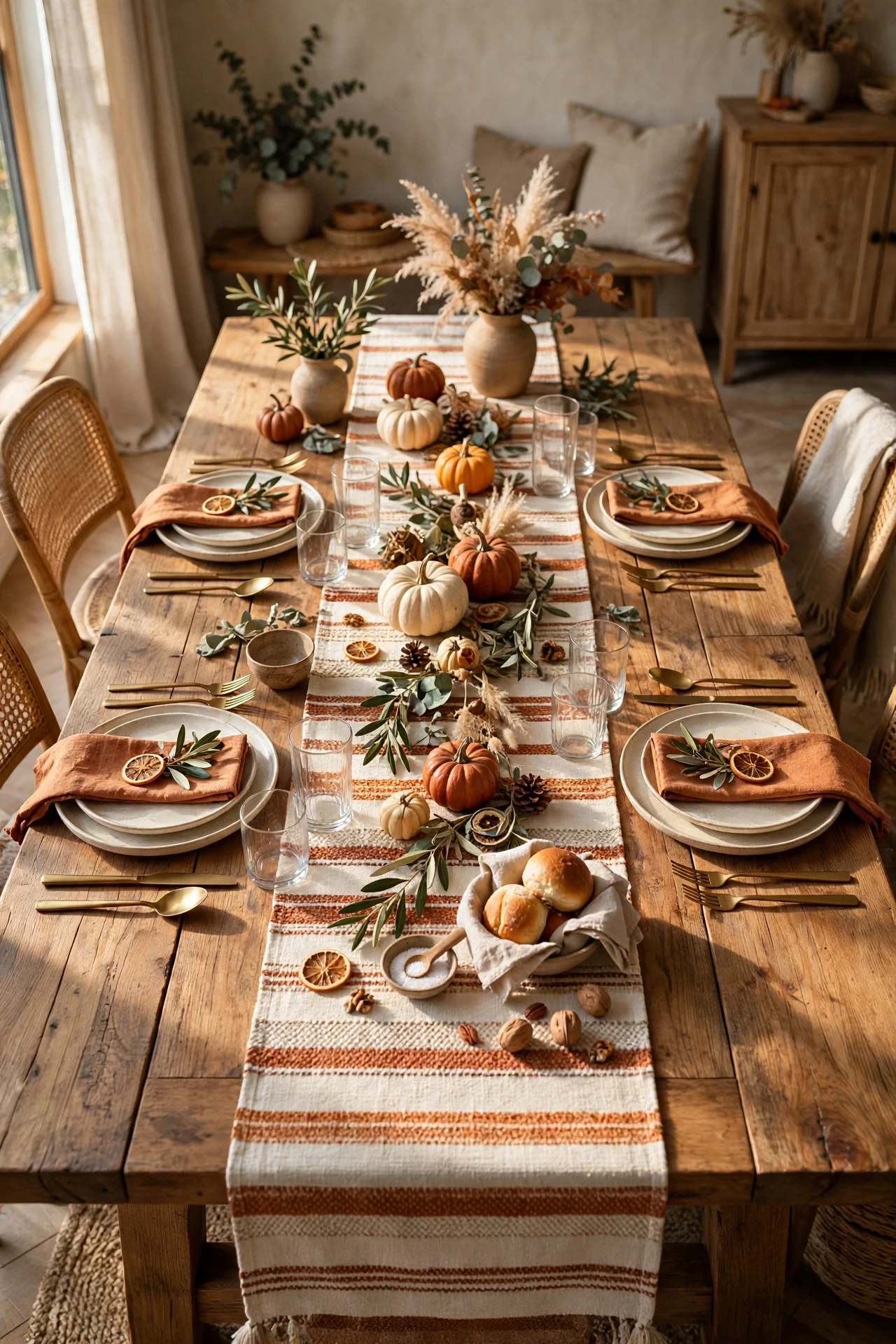
A simple striped table runner adds pattern and structure to the table without requiring any elaborate centerpiece to go with it, and it works especially well as a foundation layer that other decor gets built on top of. Choose a runner in a muted, autumnal stripe combination — cream and rust, sage and wheat — so it reads as seasonal without leaning into anything overtly themed like pumpkins or turkeys. Center it precisely down the table’s length before adding place settings, since a runner set slightly crooked undermines the clean look it’s meant to provide. Layer candlesticks, small vases, or a grazing board directly on top of the runner rather than beside it, letting the stripe pattern peek out at the edges. This is one of the fastest ways to make a plain wood or glass table feel styled, even if nothing else on this list gets added.
7. Run a Grazing Board Down the Table’s Center
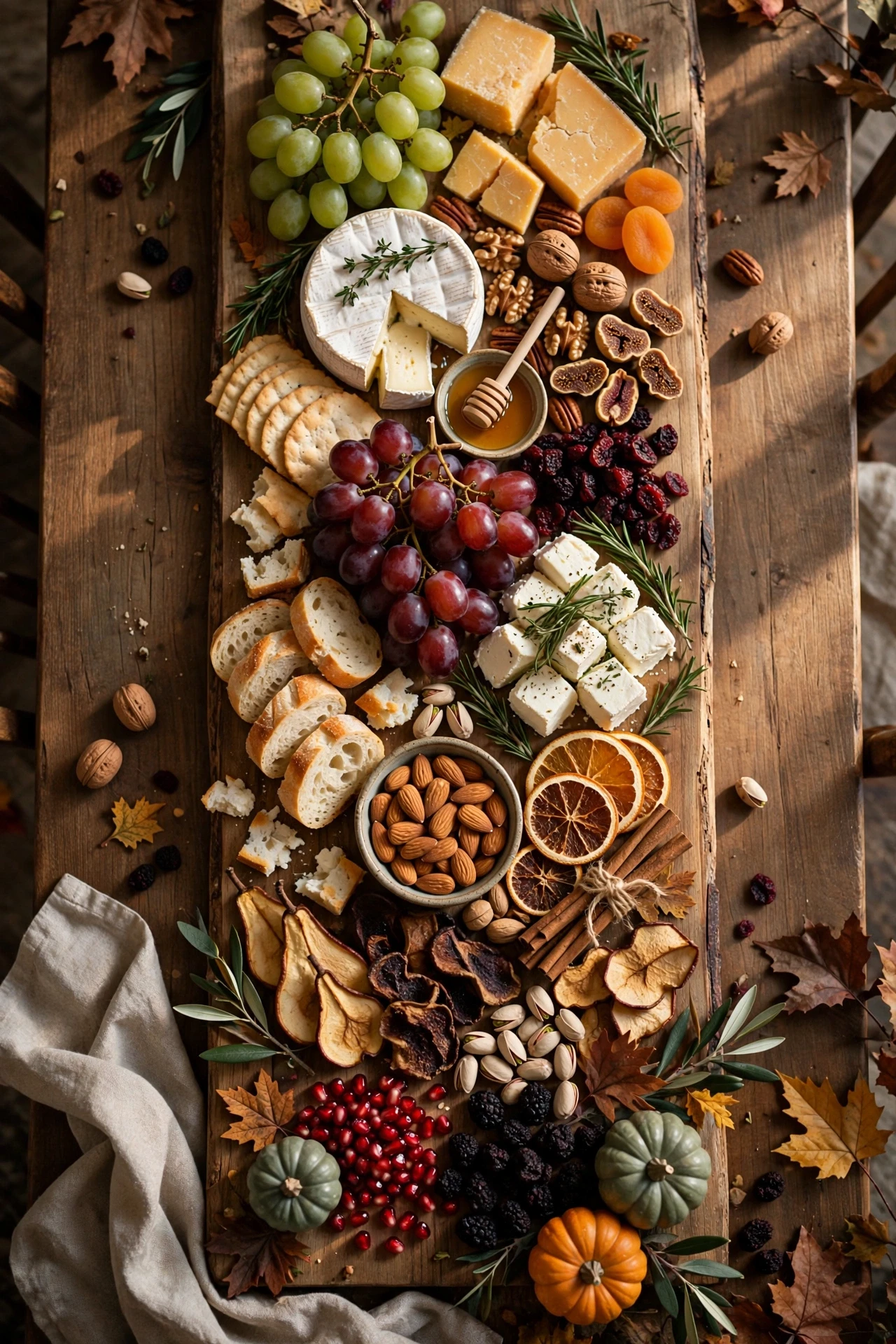
A grazing board built directly down the center of the table, covered in cheese, fruit, nuts, and small bites, works as both centerpiece and appetizer, solving two hosting problems with one styling move. Choose a mix of colors and heights across the board — a wedge of dark cheese, a cluster of red grapes, a small bowl of honey — so it reads as a full spread rather than a flat, evenly distributed layout. Leave small gaps of open wood or marble surface between food groupings, since a board packed edge to edge with no breathing room starts to look cluttered instead of abundant. This idea works particularly well for guests who arrive hungry before the main meal is ready, since it gives people something to do with their hands and their attention right at the table. It also means less pressure on a separate appetizer course, since the centerpiece and the starter are the same thing.
8. Stack Vintage Turkey Plates on Wood Rounds
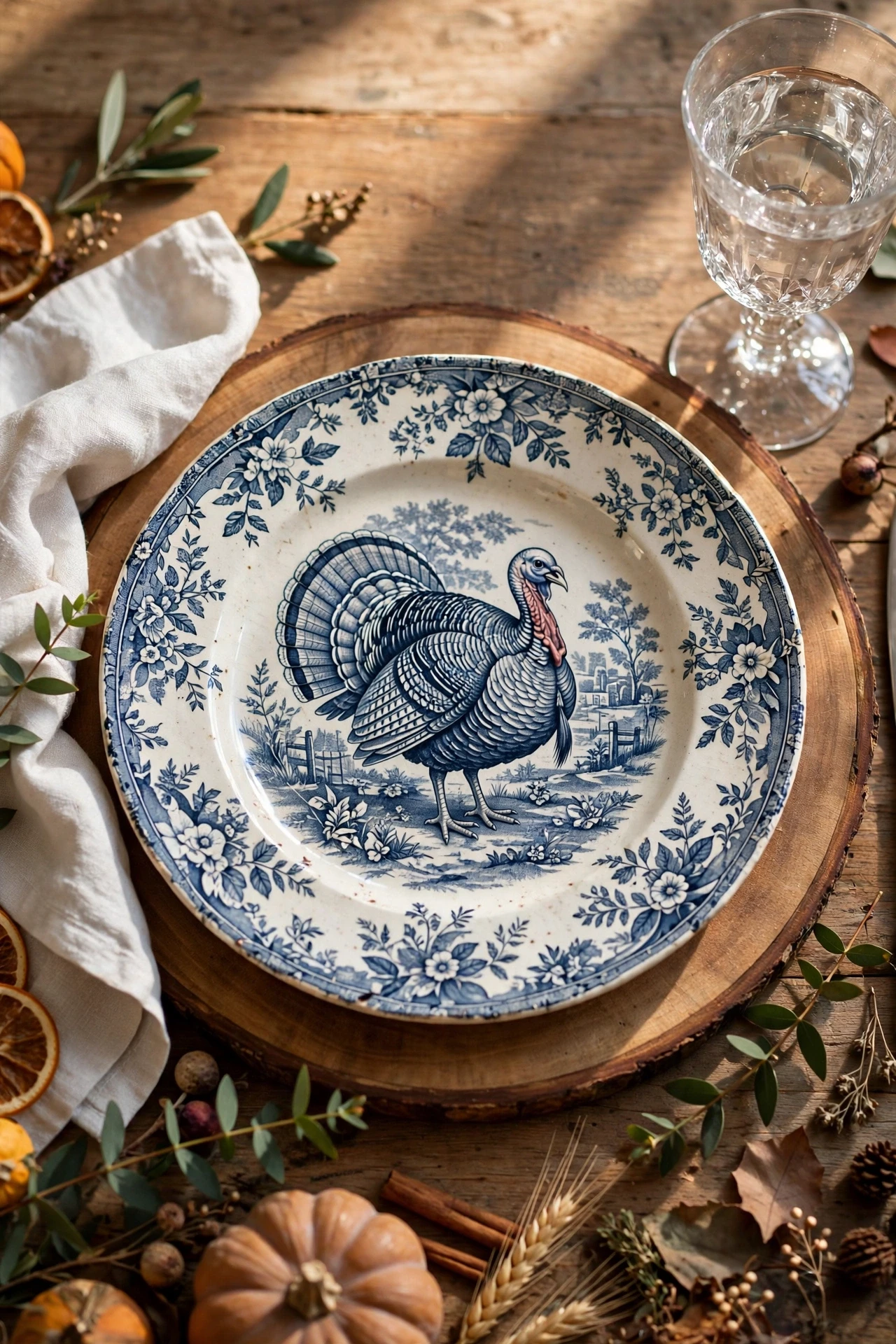
Vintage-style turkey-print dinner plates, stacked on simple wood chargers, bring a nostalgic, heritage feeling to the table that immediately signals “this is Thanksgiving” without needing any additional themed decor. Look for plates with a classic transferware pattern in a single color, like deep red or navy, rather than a busy multicolor print, so they read as elevated instead of novelty. Layer them in the traditional stacking order — charger, dinner plate, smaller salad or bread plate on top — for a formal table setting, or simplify to just the turkey plate and charger for a more casual gathering. Pair the plates with crystal stemware and a simple white linen napkin so the pattern on the plate stays the clear focal point at each setting. This look works best on tables that already lean traditional, since the vintage print can feel out of place next to a strongly modern or minimalist tablescape.
9. Set the Table with Crystal Stemware

Crystal stemware catches and refracts candlelight in a way ordinary glass simply can’t, and that subtle sparkle adds a sense of occasion to the table even before any food arrives. Choose a simple, classic cut rather than an ornate pattern if you want the crystal to complement other decor rather than compete with it, since heavily patterned crystal can feel busy next to a detailed centerpiece. Use two glasses per setting — one for water, one for wine — positioned at the upper right of each plate in the traditional formal arrangement. Hand-wash crystal before and after the meal rather than running it through a dishwasher, since the heat and detergent can dull the glass’s clarity over repeated washes. This detail elevates a table more than almost any other single purchase, and because crystal stemware gets reused for every future formal occasion, it’s a genuinely long-term investment rather than a one-holiday expense.
10. Drape a Magnolia and Cotton Garland Down the Table
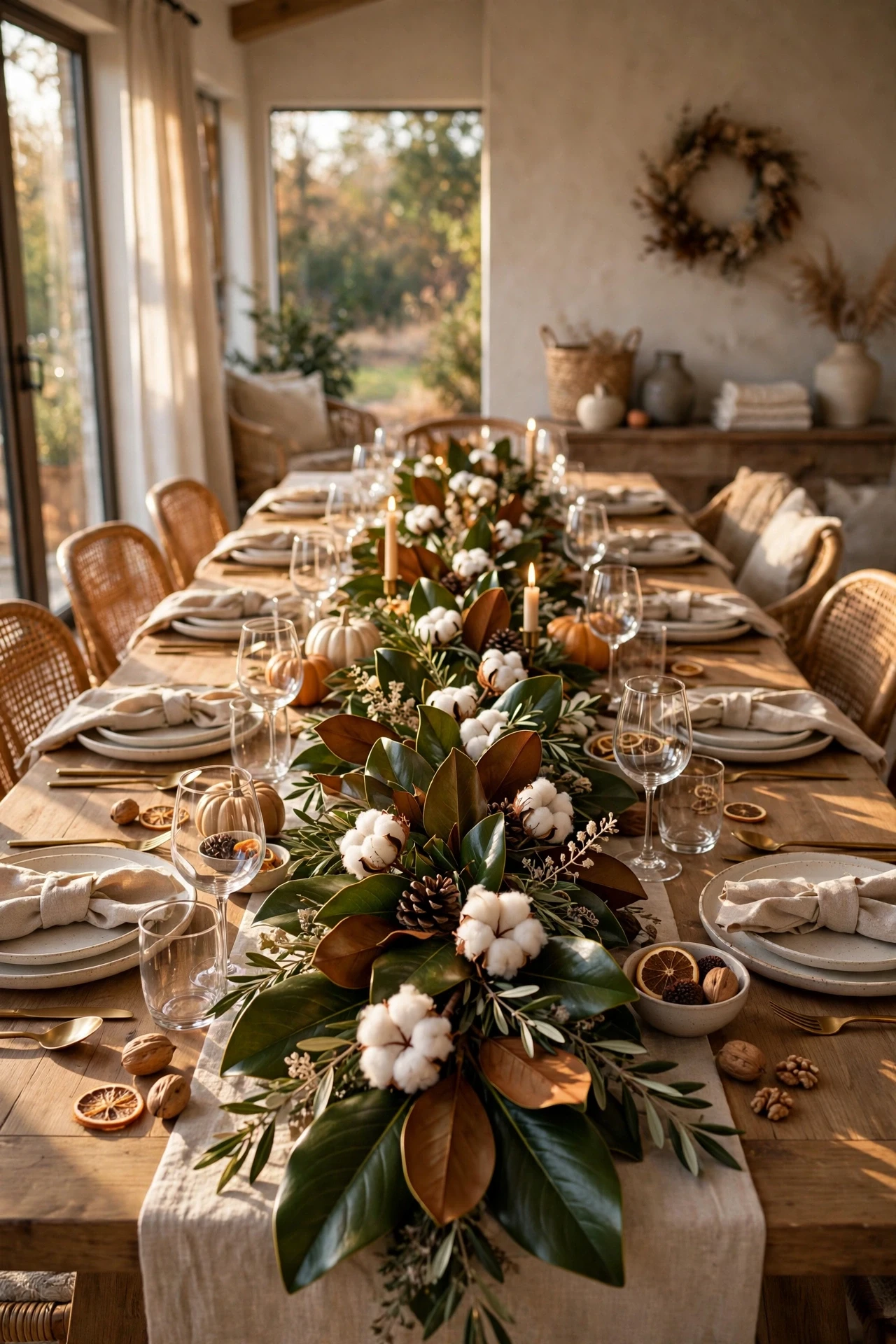
A garland built from magnolia leaves and cotton stems running the length of the table brings a distinctly Southern, heritage feel that reads as traditional without tipping into anything overly formal or fussy. The dark, glossy magnolia leaves provide a strong visual base, while the cotton bolls add texture and a pale, neutral contrast that keeps the garland from feeling too heavy or dark. Let the garland drape loosely with a slight dip between anchor points rather than pulling it perfectly straight, which gives it a more natural, gathered look. Tuck in a few small pinecones or acorns along the length for extra texture in the gaps between magnolia leaves. This garland style works beautifully as a standalone centerpiece or as a base layer that candlesticks and small vases get placed directly on top of.
11. Scatter Acorns and Mini Gourds Between Settings
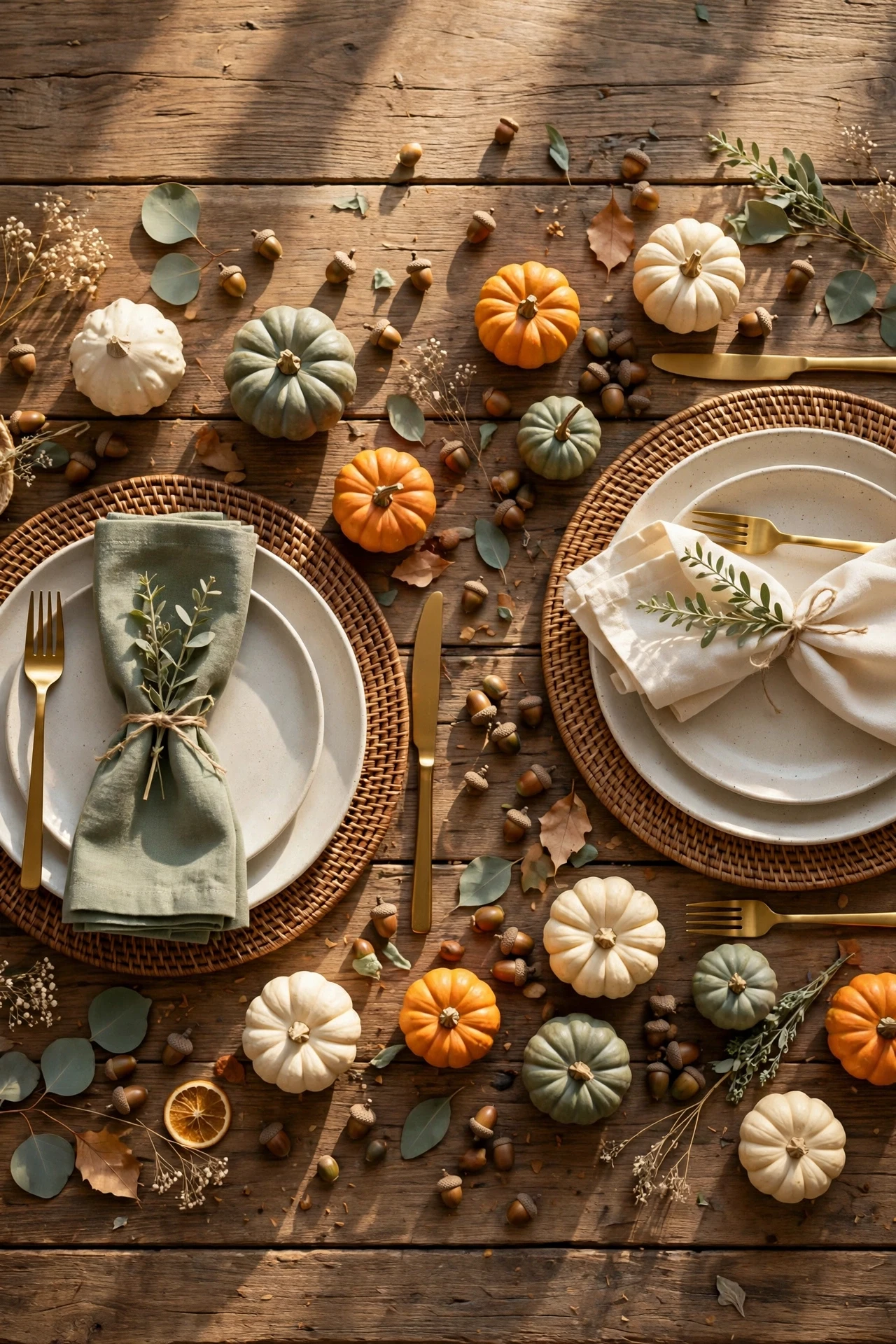
Scattering a handful of small acorns and mini gourds loosely between place settings, rather than confining them to a single centerpiece, fills in the empty spaces on the table with texture and color without requiring a formal arrangement. Choose mini gourds in two or three complementary colors — cream, sage, deep orange — so the scattered pieces read as intentional rather than random leftover decor. Keep the scattering light and uneven rather than perfectly spaced, since real gathered foliage never lands in a neat grid. This idea works especially well alongside a runner or garland as the base layer, filling in visual gaps between larger elements like candlesticks or vases. It’s also one of the easiest ideas on this list for kids to help set up, since there’s no precision required.
12. Light Smoky Green Tapers in Crystal Holders
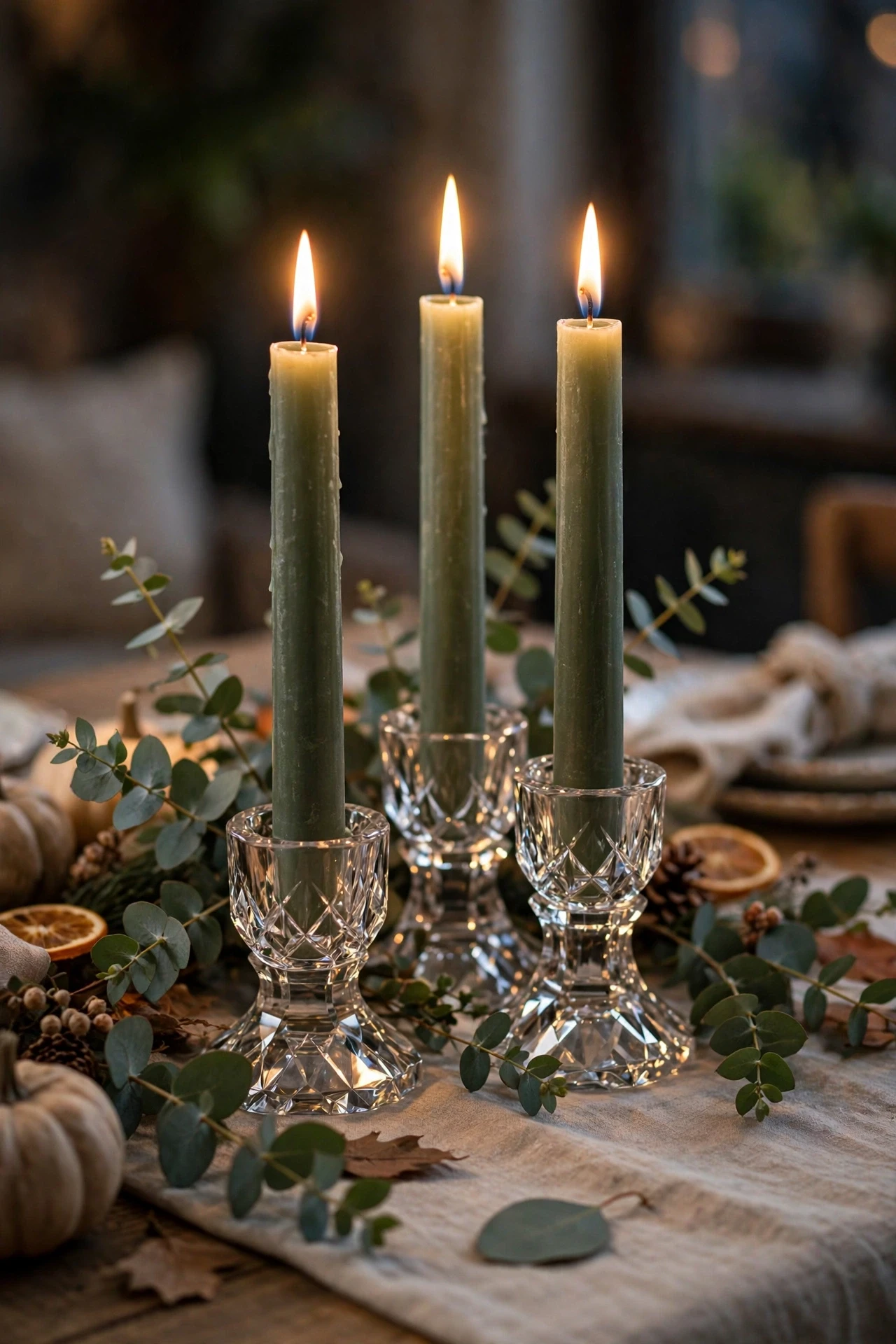
Smoky, muted green taper candles set in crystal candle holders bring a moodier, more current color to the table than the standard ivory or cream taper, and the smoked glass tone pairs beautifully with both gold and silver flatware. Choose a candle holder with some weight and presence, since a thin, delicate holder can look out of proportion next to a taller taper candle. Group two or three smoky green tapers per crystal cluster, spacing clusters evenly down the table so the color repeats without overwhelming the rest of the setting. Pair the candles with eucalyptus or another muted green foliage nearby so the color story feels connected rather than isolated to just the candles themselves. This combination works especially well on a table that’s otherwise kept fairly neutral, since the green tapers become the clear color statement without needing anything else to compete with them.
13. Pair Woven Chargers with Gold Flatware
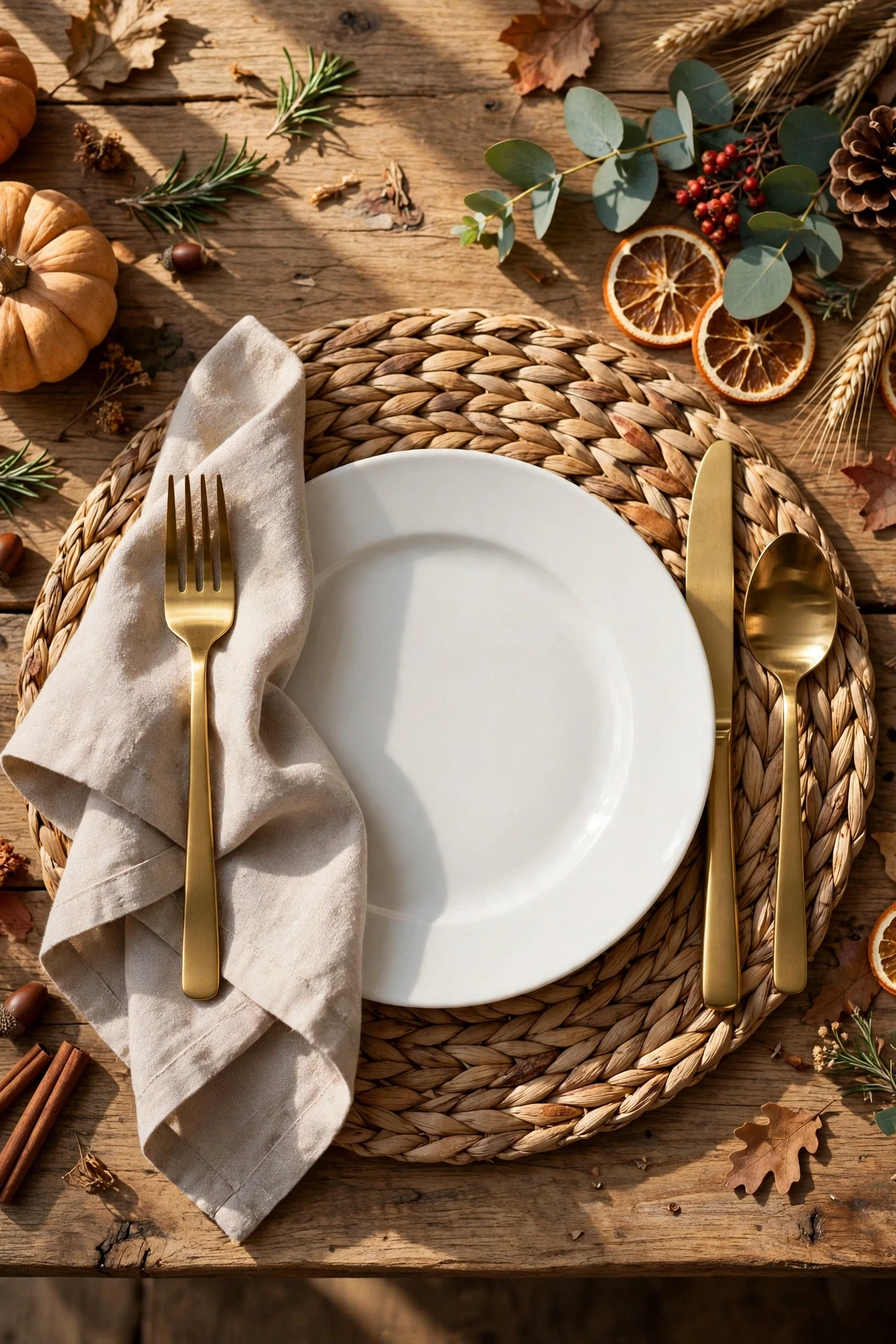
A woven rattan or seagrass charger under each plate adds farmhouse texture to the table, and pairing it with gold flatware creates a deliberate contrast between something natural and something polished that keeps the whole setting from feeling either too rustic or too formal. Choose flatware with a simple, clean line rather than an ornate handle, since the gold finish itself already provides enough visual interest without additional detail. Position the woven charger beneath a plain white or cream dinner plate so the texture of the weave stays visible around the plate’s edges. This pairing works well across a wide range of table styles, from casual family dinners to slightly more elevated Friendsgiving gatherings, because the natural-meets-polished contrast reads as effortless rather than overly matched. It’s also a combination that transitions easily from Thanksgiving into general fall and winter entertaining without needing to be swapped out.
14. Drape Napkins Instead of Folding Them
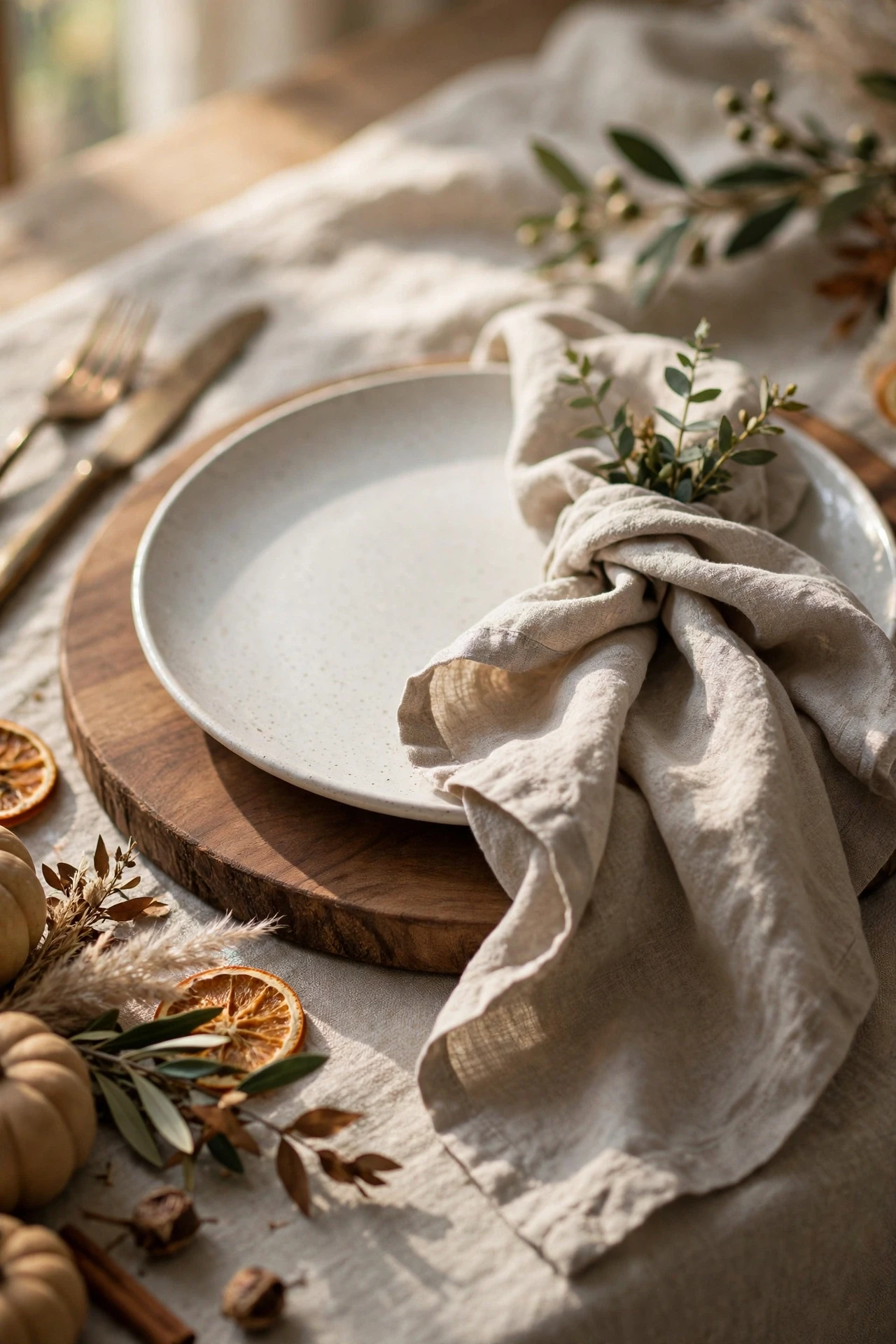
Skipping the formal napkin fold in favor of simply draping the linen loosely across each plate or letting it hang slightly off the table’s edge has become a popular, low-effort styling trick that reads as relaxed and current rather than unfinished. Choose a linen with some visible texture or a slightly wrinkled, lived-in quality, since a stiff, perfectly pressed napkin doesn’t drape as naturally. Let the napkin fall asymmetrically rather than centering it precisely, which adds to the casual, gathered feeling this trend is going for. Tuck a small sprig of greenery or a place card into the drape for a little extra detail without adding real effort. This idea is particularly useful for hosts who feel pressed for time, since it looks intentional while requiring genuinely less work than any formal fold.
15. Go Modern and Moody with Black Linens and Brass Flatware
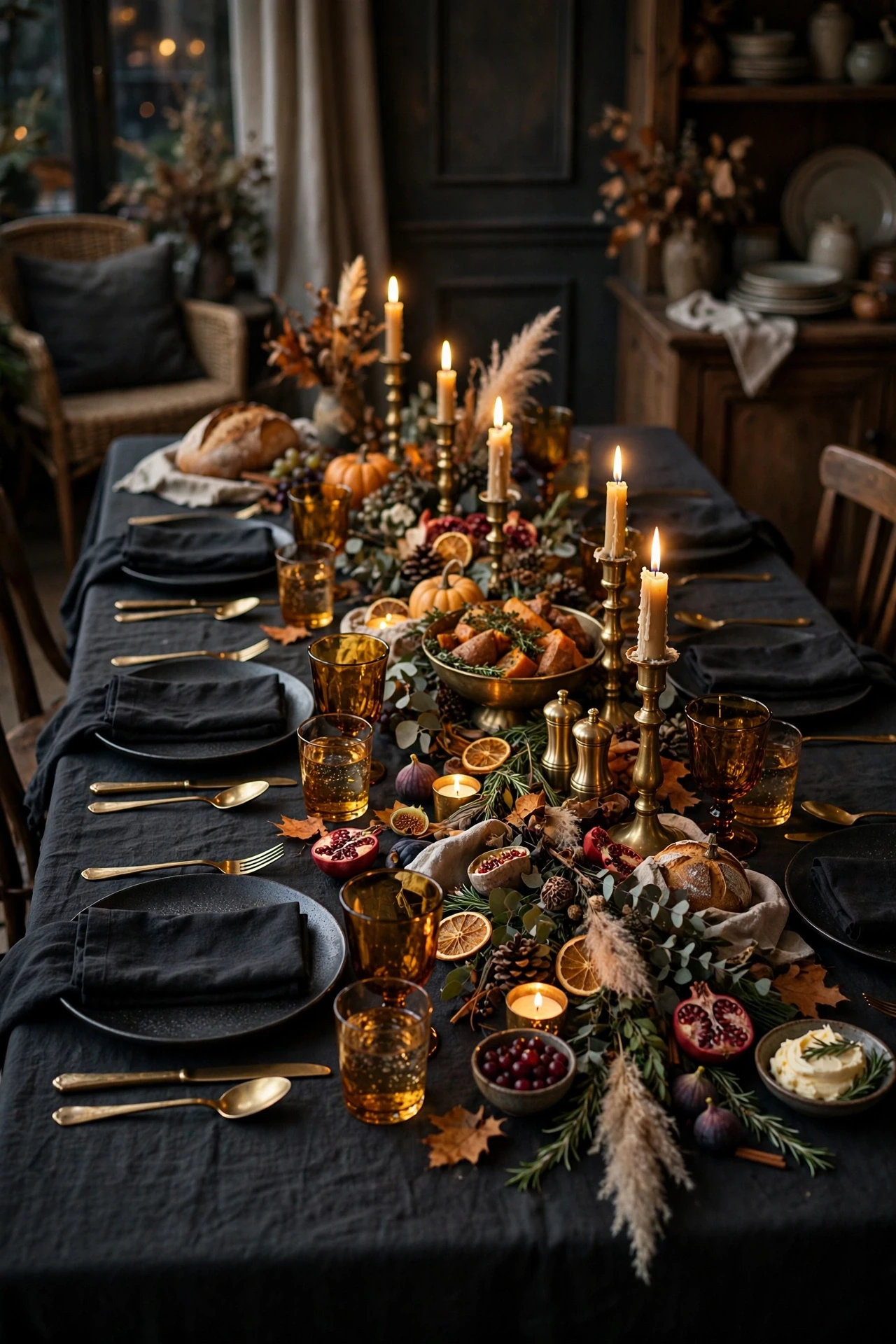
An all-black tablecloth and napkins, paired with brass or gold flatware, transforms a traditional Thanksgiving table into something contemporary and dramatic, appealing to hosts who want the holiday’s warmth without the expected orange-and-brown palette. The dark linen makes every other element on the table — glassware, candlelight, metallic flatware — stand out with much stronger contrast than it would against a white or cream cloth. Choose a matte black fabric rather than anything glossy, since a matte finish absorbs light in a way that reads as sophisticated instead of harsh. Add warm brass candlesticks and amber glassware to keep the overall mood cozy despite the darker palette, since black alone can start to feel cold without some warmth layered back in. This look works particularly well for evening Thanksgiving dinners or a stylish Friendsgiving gathering among friends, where a slightly bolder aesthetic choice feels more at home than at a traditional family meal.
Related: 15 Easy Thanksgiving Napkin Folds That Look Fancy
16. Add Mini Pumpkins as Place Card Holders
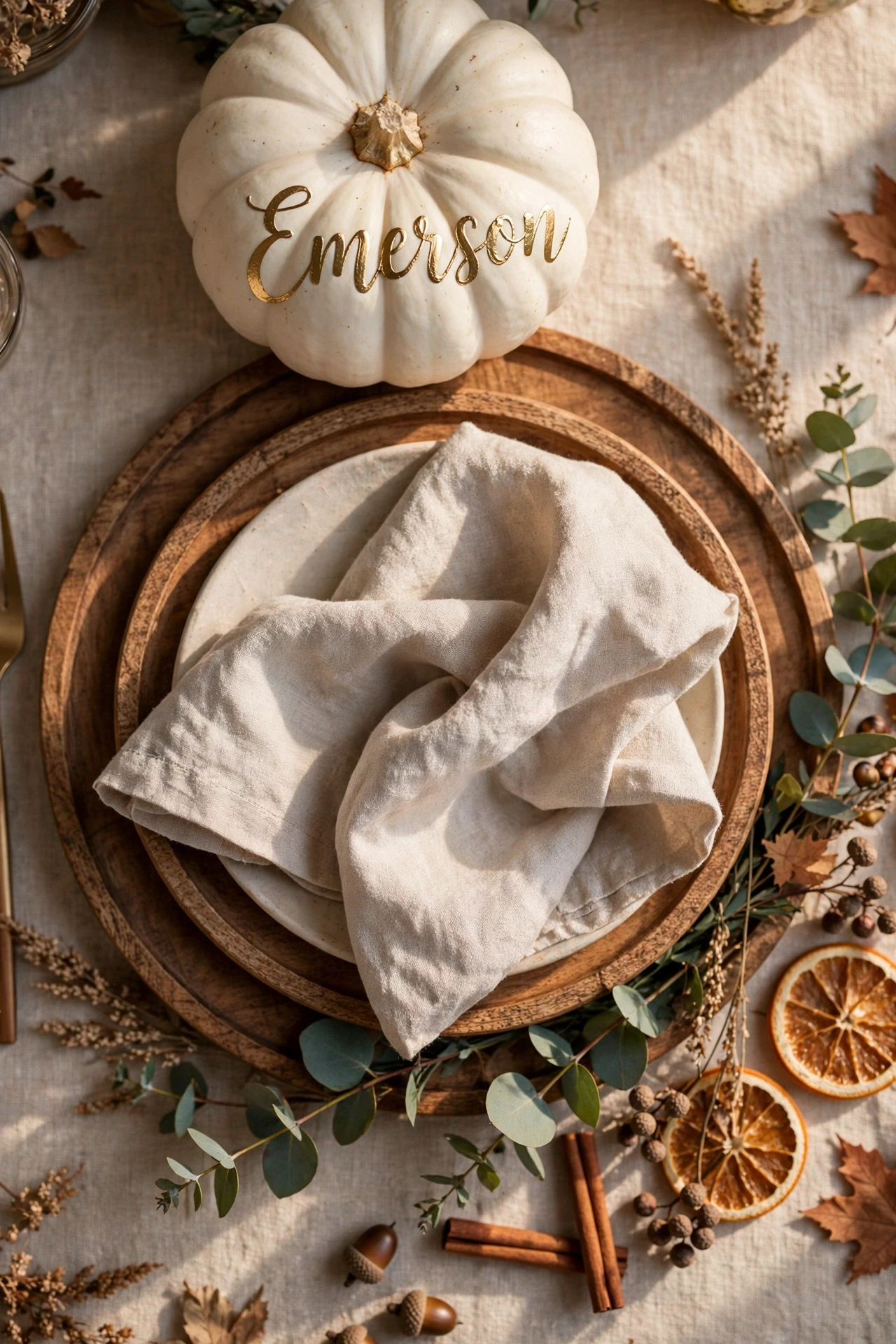
A small pumpkin at each place setting, with a guest’s name written directly on it or tucked into a tiny card holder nestled against it, turns a practical seating solution into a piece of decor in its own right. Choose mini pumpkins in a uniform color — all white, all sage, all a single shade of orange — so the row of them down the table reads as a cohesive design element rather than a random assortment. Write names directly onto the pumpkin with a gold or metallic paint pen for a simple, elegant look that doubles as a takeaway favor. Position each pumpkin just above the plate, in the spot a traditional place card would normally sit, so guests can find their seats at a glance. This idea works particularly well for larger gatherings where assigned seating helps the meal run more smoothly, since it solves a hosting logistics problem while adding genuine charm to the table.
17. Build a Centerpiece from Fresh Seasonal Fruit
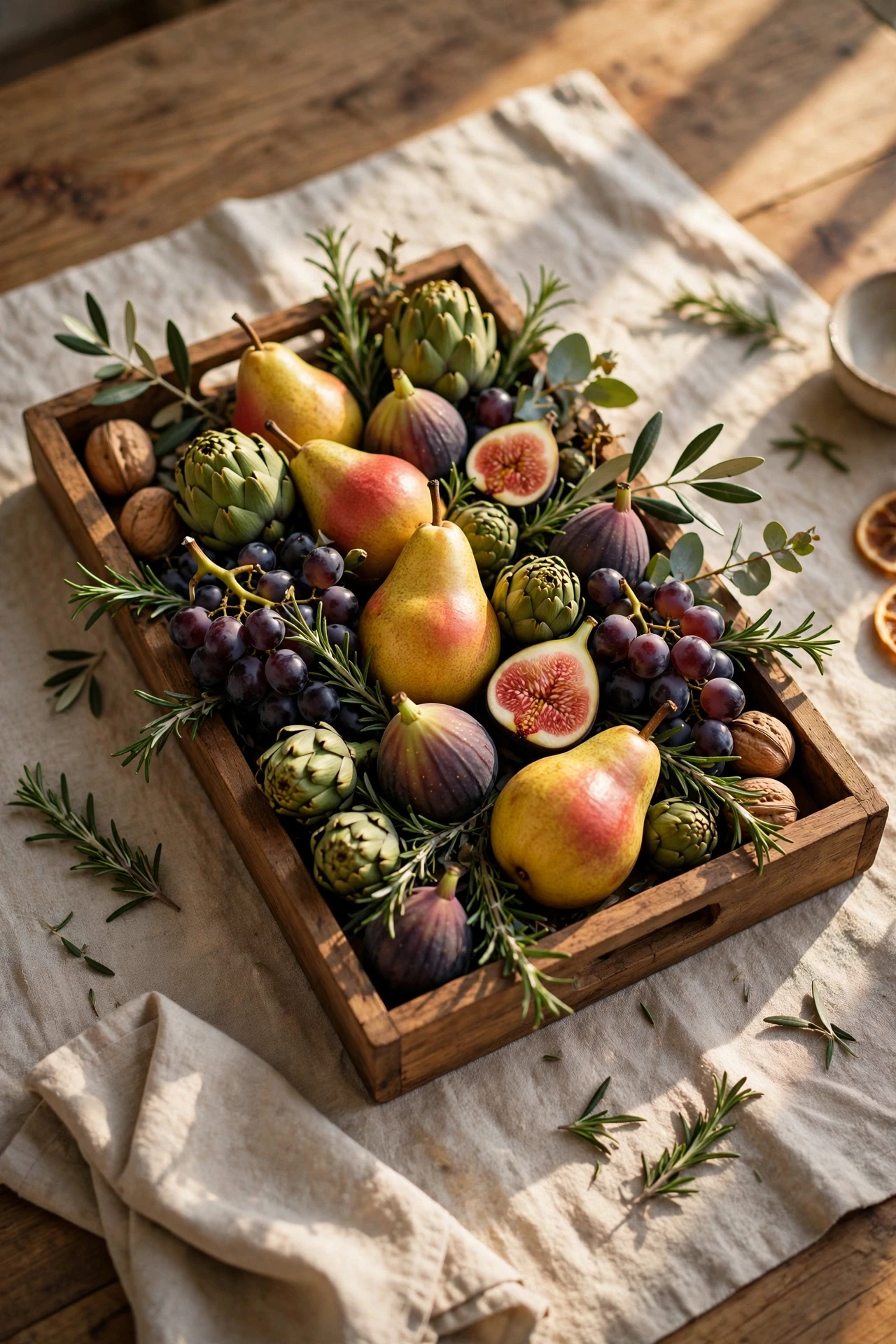
A centerpiece built from fresh seasonal produce — pears, figs, apples, small artichokes, clusters of grapes — brings an unexpected, slightly old-world elegance to the table that feels fresh compared to the usual pumpkin-and-gourd default. Arrange the fruit directly on the table’s runner or a low wood tray rather than in a tall vase, letting the produce’s natural shapes and colors create the visual interest on their own. Mix fruit with some greenery, like small sprigs of rosemary or bay leaf, tucked in between pieces for added texture and a subtle fragrance. This centerpiece doubles as a functional detail, since guests can genuinely eat the fruit throughout or after the meal, or take pieces home as a small favor. It works particularly well for hosts who want a centerpiece that doesn’t need to be thrown away the next day, since most of the produce simply gets used in the kitchen afterward.
18. Go Dark and Dramatic with Deep Red Roses
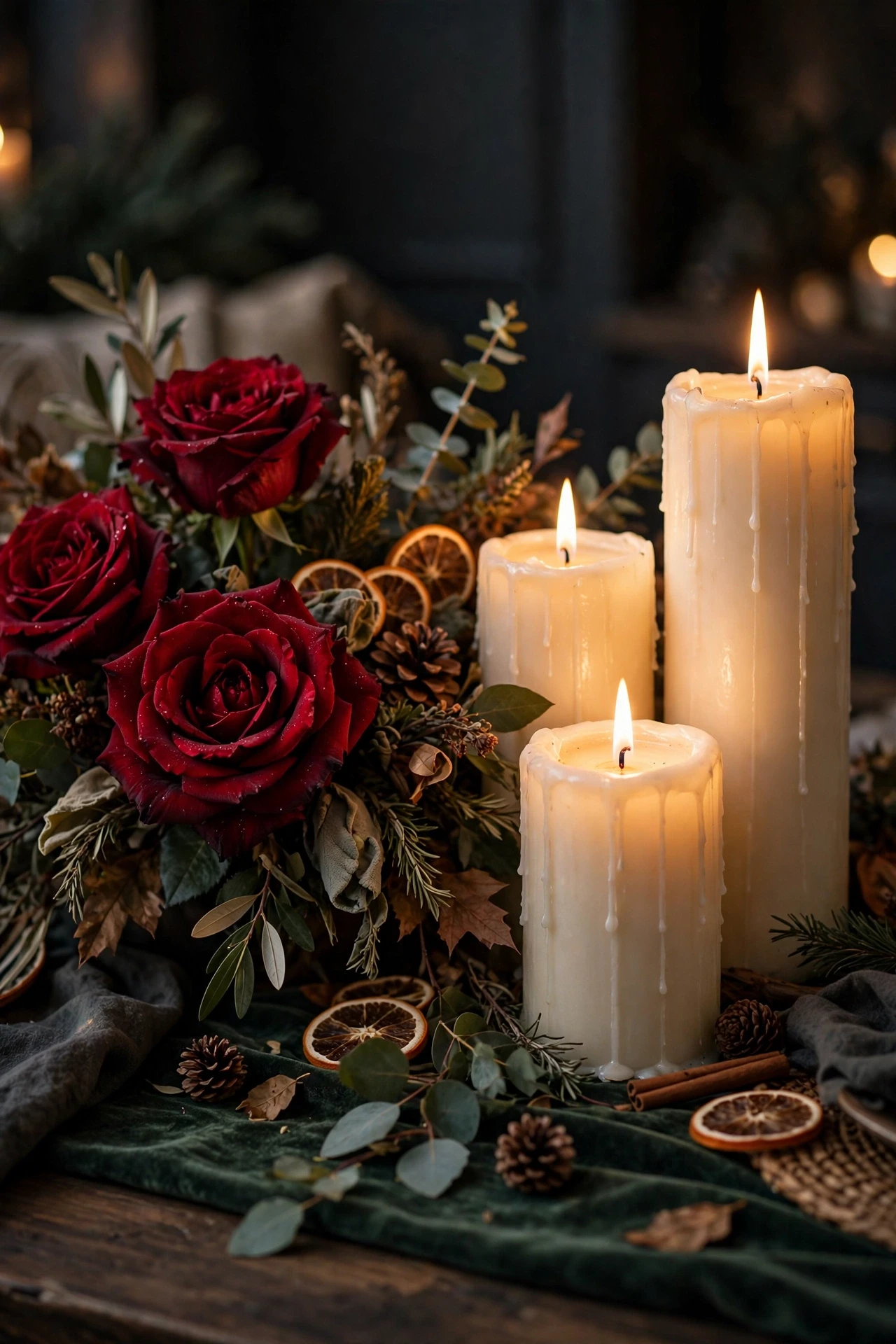
Deep red or wine-colored roses, paired with extra-large candles and just a few natural elements like berries or dark greenery, create a table setting with real visual drama, suited to hosts who want the meal to feel like a genuine occasion rather than a casual dinner. Choose roses in a deep, saturated shade rather than a bright true red, since the muted, wine-toned version reads as more sophisticated and less holiday-specific. Use oversized pillar candles rather than thin tapers for this look, since their scale matches the drama of the deep floral color better than a delicate flame would. Keep the surrounding table elements simple and dark in tone — a black or deep green runner, minimal additional decor — so the roses and candlelight remain the clear focal point. This approach suits an evening dinner particularly well, since the deep colors and dramatic candlelight both read best once natural daylight has faded.
19. Keep It Neutral with Monochromatic Ceramic Pottery
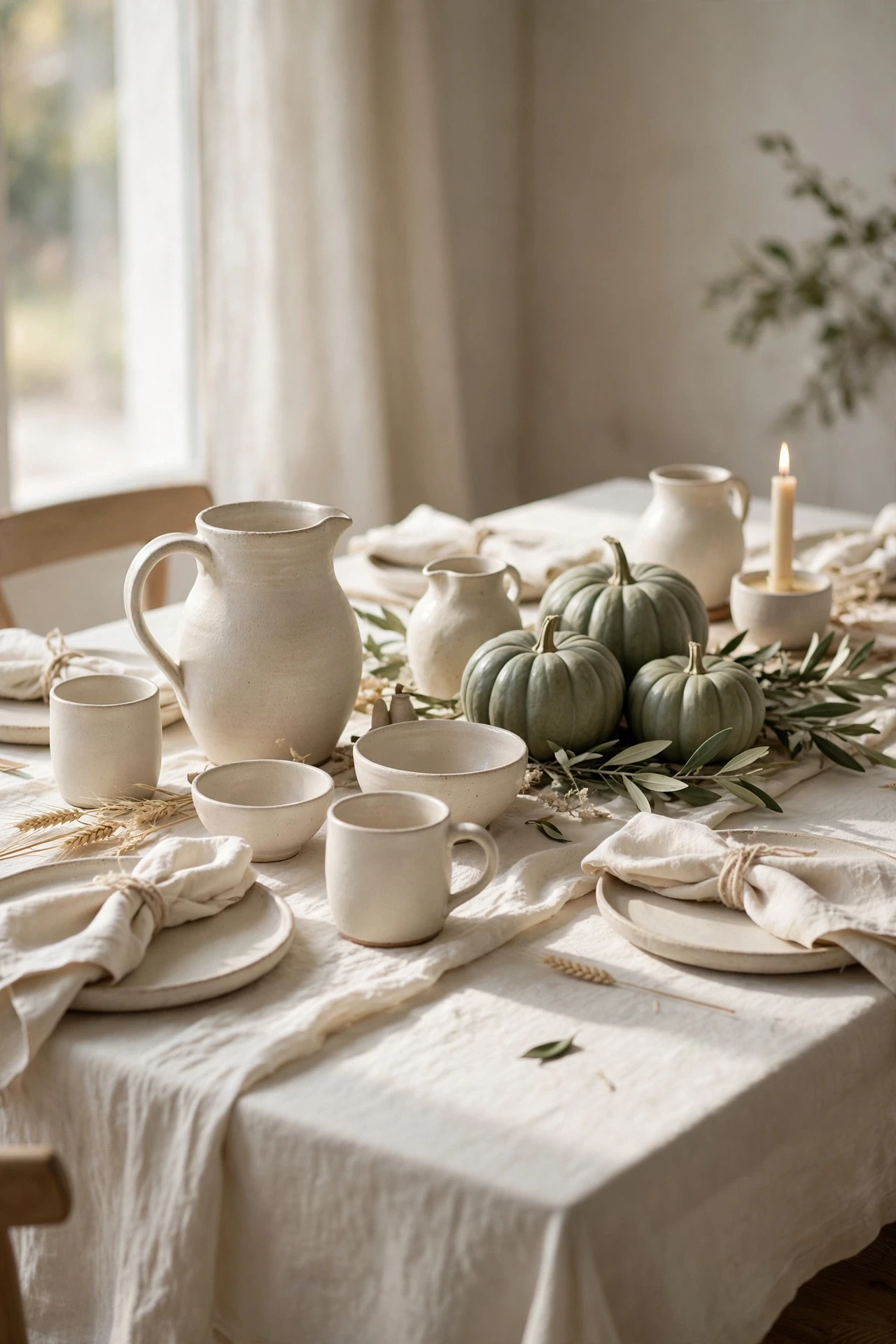
A tablescape built entirely in neutral, monochromatic tones — using handmade ceramic pottery, a minimalist tablecloth, and simple pumpkin accents for a hint of seasonal color — creates a calm, sophisticated table that photographs beautifully and works with almost any dining room. Choose ceramic pieces with visible handmade texture, like a slightly uneven glaze or organic shape, so the monochromatic palette doesn’t read as flat or sterile. Add just one pop of seasonal interest, like a small grouping of cream or sage pumpkins, to keep the neutral palette from feeling too austere for a holiday table. Layer in different textures within the same tone family — matte ceramic, woven linen, smooth stone — so there’s still visual variety even without color contrast. This approach suits modern, minimalist, or Scandinavian-leaning dining rooms especially well, where a busier, more colorful tablescape might feel out of place.
20. Mix Dusty Blue with Warm Autumn Tones
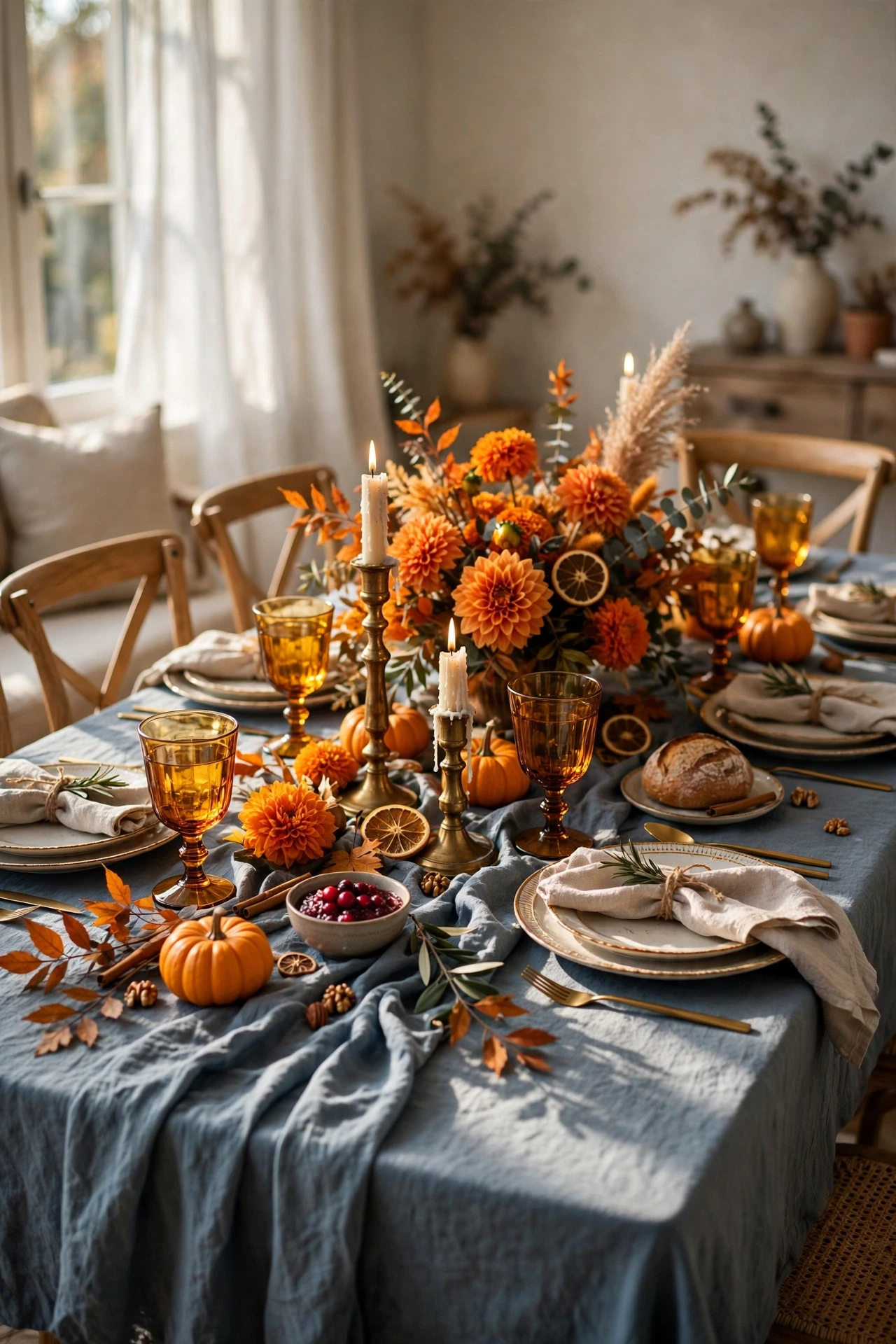
Pairing dusty blue linens or accents with the traditional warm oranges, ambers, and browns of a Thanksgiving palette creates an unexpected color combination that feels fresh without abandoning the season’s familiar warmth entirely. Choose dusty blue for a single strong element, like the tablecloth or napkins, and let the warmer tones carry through the centerpiece, candles, and flatware, so the cooler color doesn’t overwhelm the overall mood. This combination works because blue and orange sit opposite each other on the color wheel, creating a natural contrast that reads as intentional rather than clashing when the shades are muted and dusty rather than bright and saturated. Keep metal accents in warm gold or brass rather than silver, which helps bridge the two color families and keeps the whole table feeling cohesive. This palette suits hosts who love their traditional Thanksgiving colors but want a slightly more current, less expected version of them.
21. Set a Gingham Tablecloth with Heirloom Plates
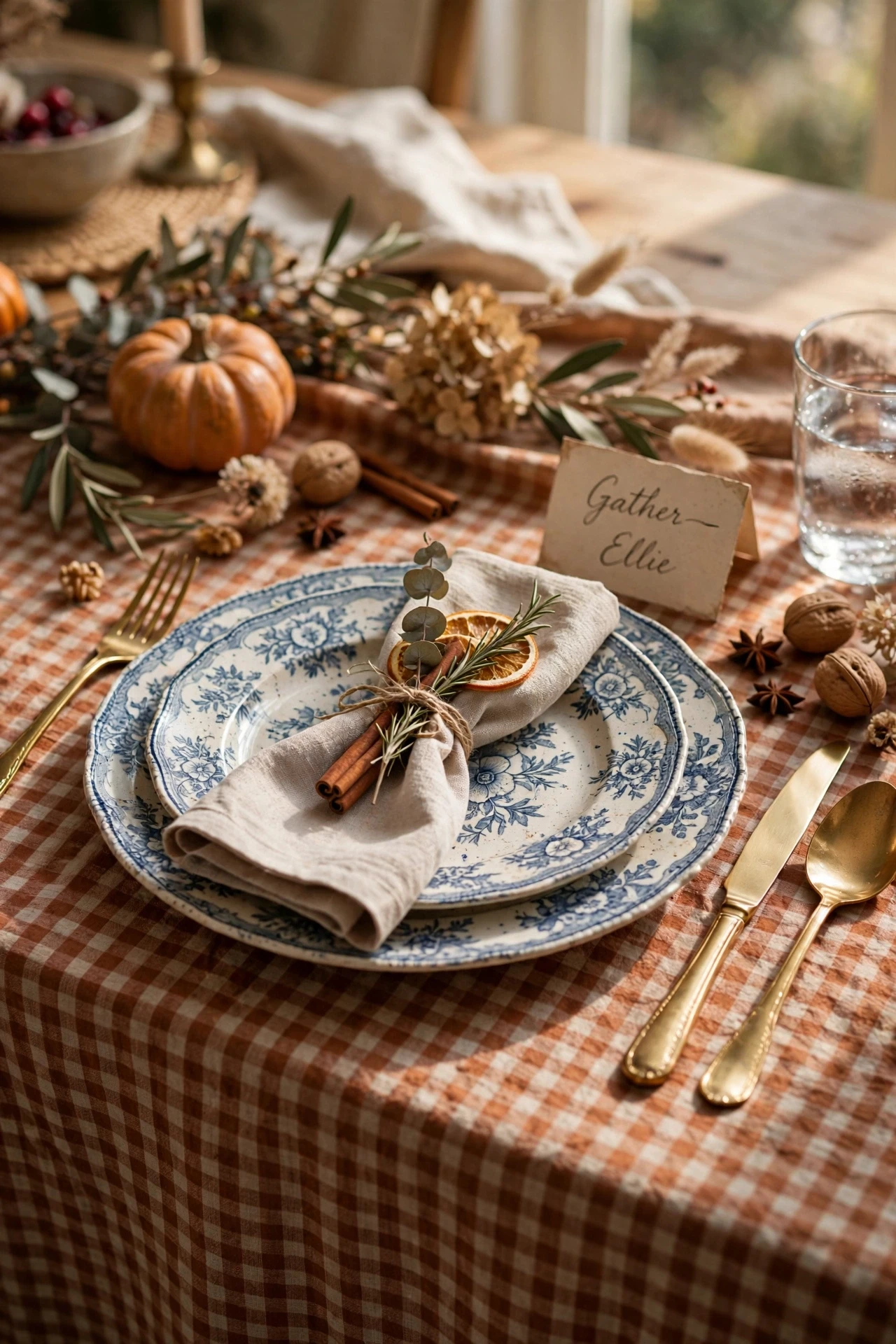
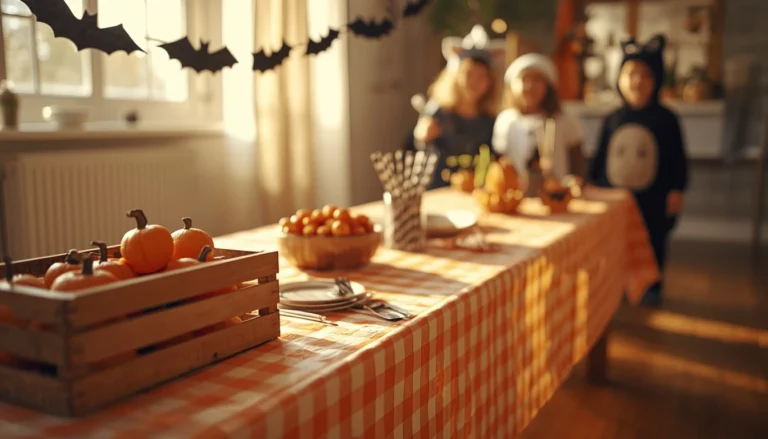
A gingham check tablecloth, paired with heirloom-inspired dinner plates, strikes a balance between casual and timeless that suits family gatherings where formality would feel out of place but a completely plain table would feel underdressed. Choose a gingham in a muted autumn color — rust, olive, or warm brown — rather than the bright red typically associated with picnics, so the pattern reads as seasonal rather than summery. Layer heirloom-pattern plates, whether genuinely inherited or a newer piece designed to look vintage, directly on top of the check for a look that feels collected across generations. Add a simple place card at each setting in matching handwriting or a coordinating ink color to tie the whole table together. This combination works especially well for a table that’s been used for family meals for years, since it embraces a lived-in, unpretentious feeling rather than a showroom-perfect one.
22. Add Handwritten Place Card Holders
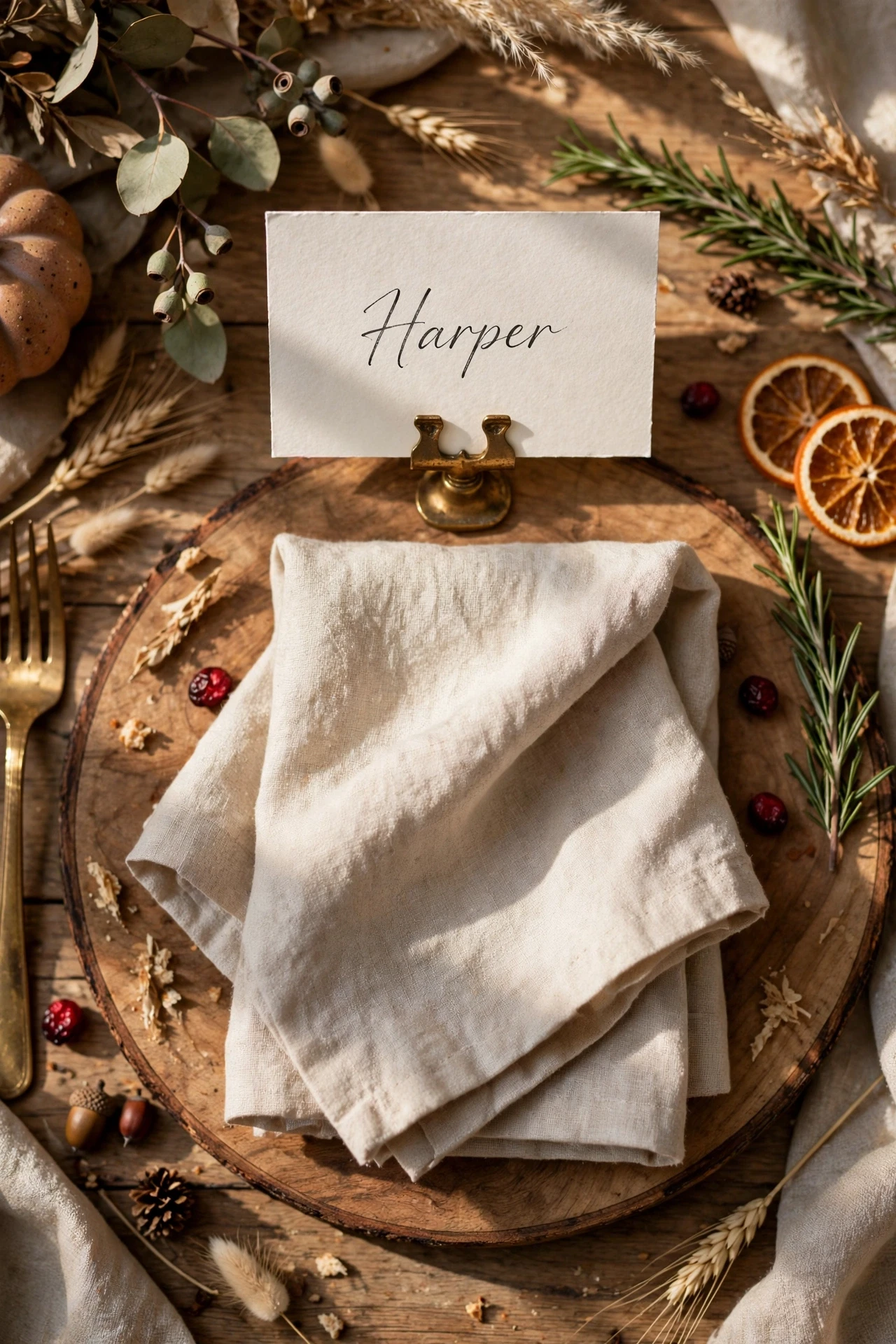
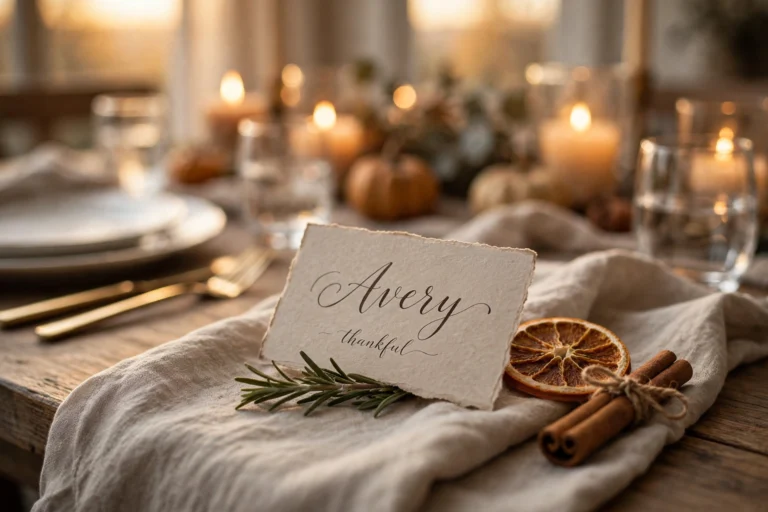
A simple place card at each setting, held in a small brass or wood holder, adds a personal touch that guests genuinely notice, especially at a table where not everyone knows each other well, like a blended family gathering or a Friendsgiving with new faces. Choose a card stock with some texture or a subtle deckled edge rather than plain printer paper, since the tactile quality reads as more considered even for a detail this small. Write names in a simple, legible script rather than an overly ornate font, prioritizing that guests can actually read their own name at a glance. Position the holder just above the charger or plate, in the same spot a mini pumpkin place card might otherwise go, depending on which detail fits the rest of the table’s style. This is one of the lowest-cost, highest-impact personal touches on this entire list, since it costs almost nothing but makes every single guest feel specifically thought of.
23. Layer Jewel Tones for a Regency-Inspired Table
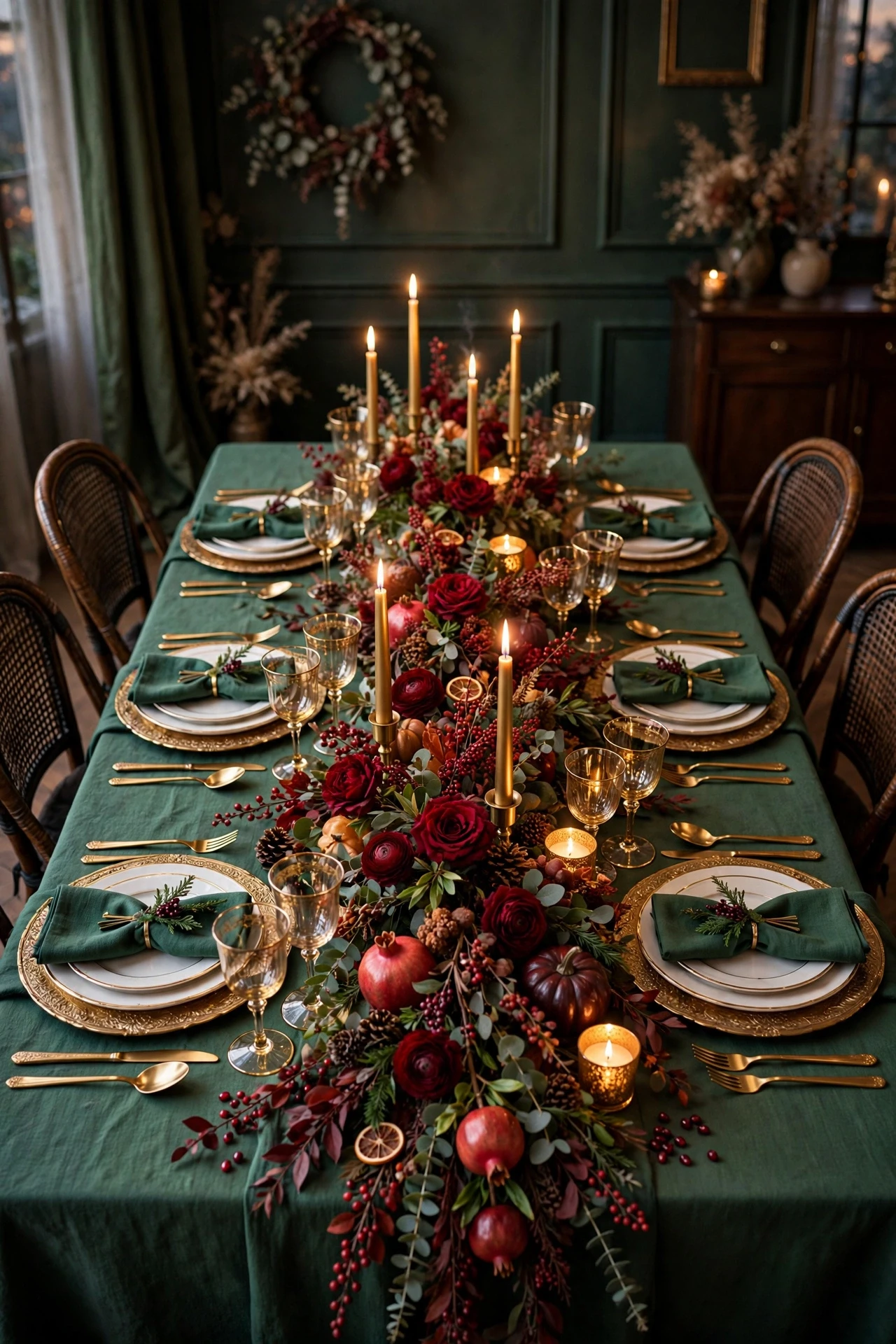
Emerald green, garnet red, and gold layered together across linens, glassware, and flatware create a richly colored table that feels closer to a formal historical dinner party than a typical family holiday meal. Choose one jewel tone as the dominant color, usually carried by the tablecloth or a dominant floral element, then layer the other two tones in smaller doses through glassware, napkin rings, or candle holders. Gold flatware and gold-rimmed glassware tie the different jewel tones together, since gold reads as a neutral within this particular palette rather than as its own competing color. Keep the overall styling structured and slightly formal — precise place settings, matched glassware, symmetrical candle placement — since this rich, layered color story tends to suit a more traditional table arrangement better than a loose, casual one. This approach makes a real statement for hosts who want their Thanksgiving table to feel genuinely elevated and a little dramatic.
24. Style a Loose Eucalyptus and Floral Runner
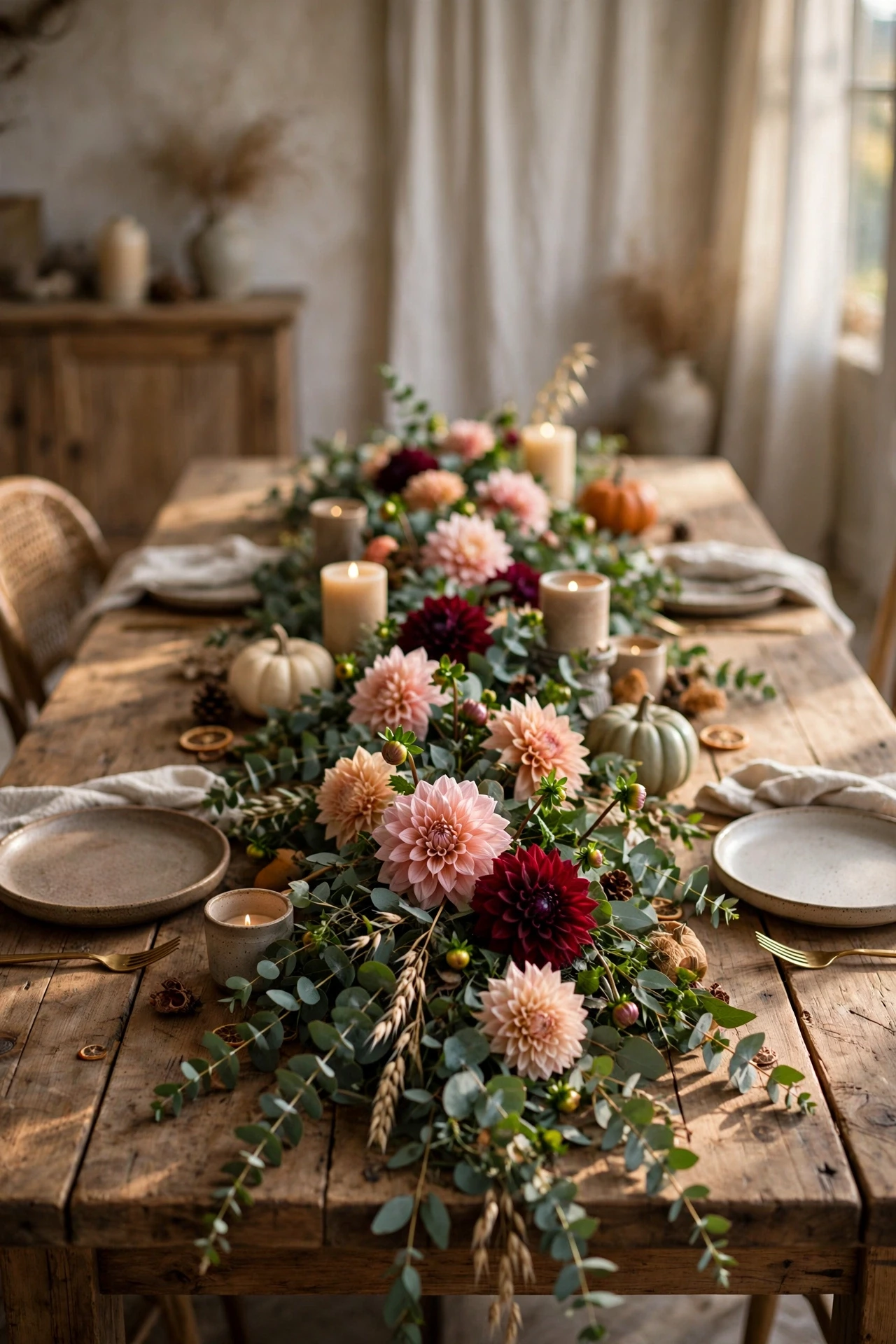
A loose runner of eucalyptus mixed with a few soft floral stems, laid directly on the table rather than arranged in a rigid vase, creates a relaxed, garden-gathered centerpiece that photographs beautifully and takes very little formal arranging skill to pull off. Choose eucalyptus for its long-lasting, fragrant foliage, then tuck in a handful of seasonal blooms — dahlias, ranunculus, or chrysanthemums — at a few points along the runner rather than evenly throughout. Let the greenery trail slightly off the table’s edges at each end for a fuller, more organic look. This centerpiece style works particularly well for a modern table that still wants some floral softness, since the loose, undone arrangement feels less formal than a tightly composed vase arrangement. It’s also one of the more forgiving centerpiece styles for a first-time host, since there’s no precise vase height or flower ratio to get exactly right.
25. Bring In Tartan and Velvet for a Refined Finish
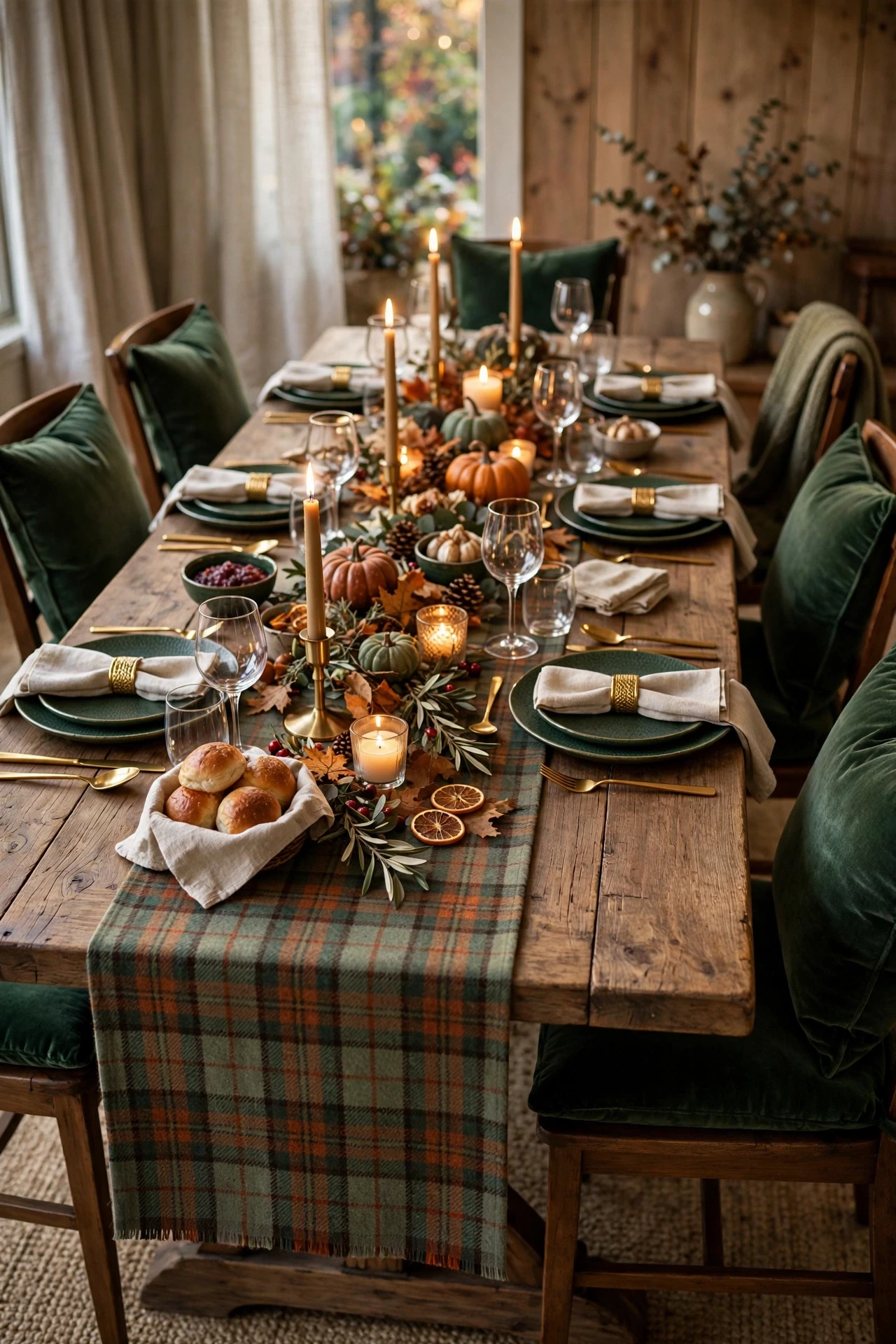
A tartan table runner or napkins, paired with velvet chair cushions or a velvet ribbon detail, brings a rich, textured elegance to the table that leans slightly more formal and holiday-appropriate than typical fall decor, while still working well specifically for Thanksgiving. Choose a tartan in muted, autumnal colors — deep green, rust, and navy — rather than the brighter reds more commonly associated with Christmas plaid, so the pattern stays seasonally appropriate for late November. Layer velvet in a single accent spot, like chair cushions or a ribbon tied around each napkin, rather than throughout the whole table, since velvet’s rich texture makes the biggest impact in smaller, more concentrated doses. Pair both textures with gold or brass metallics, which suit the slightly more formal, traditional mood this combination creates. This look works especially well for a table transitioning guests smoothly from Thanksgiving into the winter holiday season that follows just a few weeks later.
Related: 18 Thanksgiving Office Door Decor Ideas That Get Noticed
Styling Tips for Pulling It All Together
Pick one dominant color and one accent metal, then repeat both across at least three elements — the linens, the centerpiece, and the flatware — so the table reads as one cohesive story instead of a collection of separate pieces. Vary your heights on purpose: candlesticks, florals, and place settings should sit at different levels so the eye moves across the table instead of stopping flat at one height. Keep centerpieces low enough that guests can see and talk to each other across the table, since a tall arrangement blocking sightlines undermines the whole point of gathering together. Set the table a day ahead if possible and walk around it from every seat, checking sightlines and spacing before the actual meal. Leave breathing room between elements; an overstyled table can feel just as chaotic as a bare one.
Practical Implementation Ideas
Start with the linens and dominant color, since that decision anchors every other choice, from flatware finish to floral color. Set the table in layers — base linens and chargers first, then plates and glassware, then the centerpiece and small details last — so you can step back and assess balance at each stage rather than fixing everything at once. Count your place settings and centerpiece elements against your actual guest list before shopping, since running short on chargers or candles mid-setup often leads to a mismatched last-minute substitution. Set the table the night before if your dining room can be closed off, which removes one major task from an already busy holiday morning. Do a final walkthrough with the lights you’ll actually be using during the meal, since a table styled under bright daytime light can look different once evening candlelight takes over.
Common Mistakes to Avoid
An oversized centerpiece that blocks guests’ sightlines across the table is one of the most common mistakes, since it undermines the actual purpose of a shared meal, which is conversation and connection. Mismatched metal finishes — silver flatware next to brass candlesticks next to gold-rimmed glasses — read as unintentional rather than eclectic unless the mixing is done deliberately and sparingly. Overcrowding the table with too many small decorative objects leaves no room for the actual food, forcing awkward last-minute rearranging once dishes start arriving. Forgetting to test the lighting in advance means discovering too late that candles placed too close to a floral arrangement create a fire hazard, or that the room feels too dim once natural light fades. Finally, styling a table that doesn’t match the actual formality of the gathering — an overly formal crystal-and-linen setup for a casual family meal, or a paper-plate casualness for a more formal dinner — can make guests feel like the mood doesn’t match the moment.
Small-Space Alternatives
A smaller table or a tight dining nook benefits most from a low, narrow centerpiece — a scattered fruit arrangement or a slim runner rather than a tall floral vase — so there’s still enough surface space for actual plates and serving dishes. Skip the layered charger-plus-plate stacking in favor of a single plate directly on the table or a thin placemat, which saves valuable surface area at each setting. Choose a smaller cluster of two or three candlesticks rather than a long row, positioning them at the table’s center where they can still be enjoyed from every seat. A single well-chosen runner and one simple floral or fruit grouping often makes more impact in a small space than trying to layer in every idea from this list at once. Fold or drape napkins simply rather than in an elaborate style that requires more surface space than a small table setting can spare.
Budget-Friendly Alternatives
A striped or gingham runner paired with a few taper candles can transform a bare table for well under fifty dollars, making this one of the highest-return combinations on the entire list. Wood slice chargers, once purchased, get reused every year, which quickly offsets their upfront cost compared to buying new seasonal placemats annually. A fresh fruit centerpiece costs a fraction of a professional floral arrangement and does double duty as an actual food item guests can eat during or after the meal. Handwritten place cards on simple cardstock cost almost nothing but add a personal touch that reads as far more considered than their price tag suggests. Borrowing or thrifting a few pieces of vintage glassware or flatware delivers the collected, heirloom look without the cost of buying a full new formal set.
Pro Styling Recommendations
Professional stylers set the table in layers and step back to assess balance after each one, rather than placing every element at once and hoping it comes together. They favor fewer, higher-quality pieces — one great centerpiece, one strong metal accent — over many small decorative objects, since a table with too many competing details reads as cluttered rather than abundant. Repetition of a single color or metal finish in small doses across multiple elements reads as far more sophisticated than introducing several new colors at once. Layering different light sources — ambient room light, candlelight, and any natural light still available — creates the kind of warm, layered glow that photographs and feels best during an evening meal. Most of all, professionals plan the table around how guests will actually interact with it, prioritizing sightlines, elbow room, and easy access to serving dishes over pure visual drama.
Frequently Asked Questions
Final Thoughts
A Thanksgiving table this memorable doesn’t come from buying every piece on this list at once — it comes from choosing the handful of ideas that fit your actual guest count, your dining room, and the mood you want the meal to have. Start with your linens and one dominant color, then layer in a centerpiece, lighting, and one personal detail like place cards or a mixed-in heirloom piece. By the time everyone sits down, you’ll have a table that does exactly what it’s meant to do: make people slow down, look around, and feel genuinely gathered.