24 Thanksgiving Centerpiece Ideas for a Table Everyone Notices
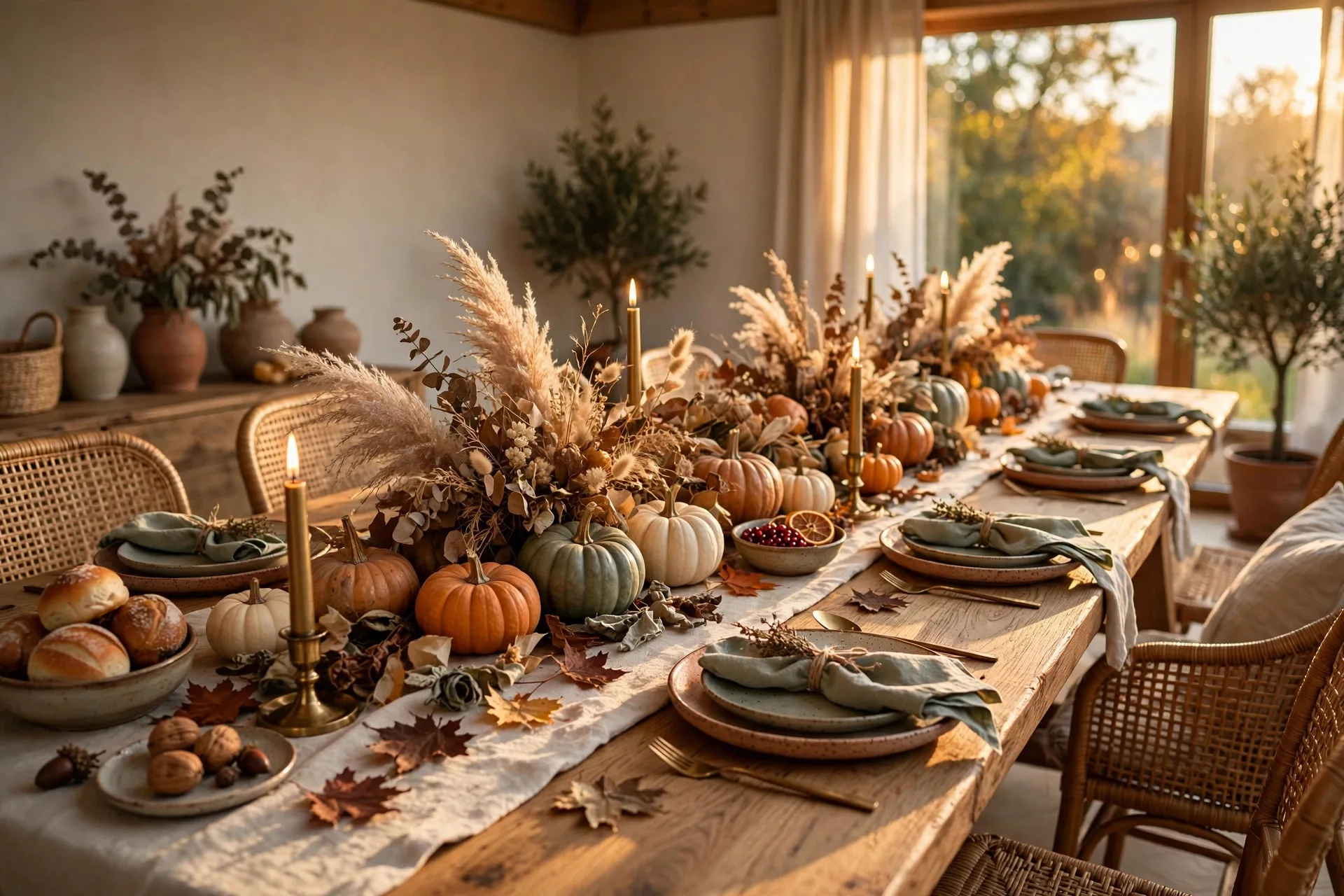
The centerpiece is the first thing anyone sees when they walk into the room, and it’s usually the last thing people think to plan. Most Thanksgiving tables end up with whatever pumpkins were left at the grocery store, arranged in a rushed line down the middle five minutes before guests arrive.
It doesn’t take much to change that. A centerpiece that actually gets noticed usually comes down to three things: the right height so people can still see and talk across the table, a color palette that doesn’t fight with your dishes, and a little bit of texture — something dried, something soft, something with a bit of shine from a candle.
Below are 24 Thanksgiving centerpiece ideas, sorted by style, so you can find the direction that actually matches your table instead of piecing together ideas from a dozen different aesthetics. Whether your table seats four or fourteen, there’s a version here that will work.
Table of Contents
24 Thanksgiving Centerpiece Ideas
Classic & Traditional
1. The Layered Pumpkin Runner
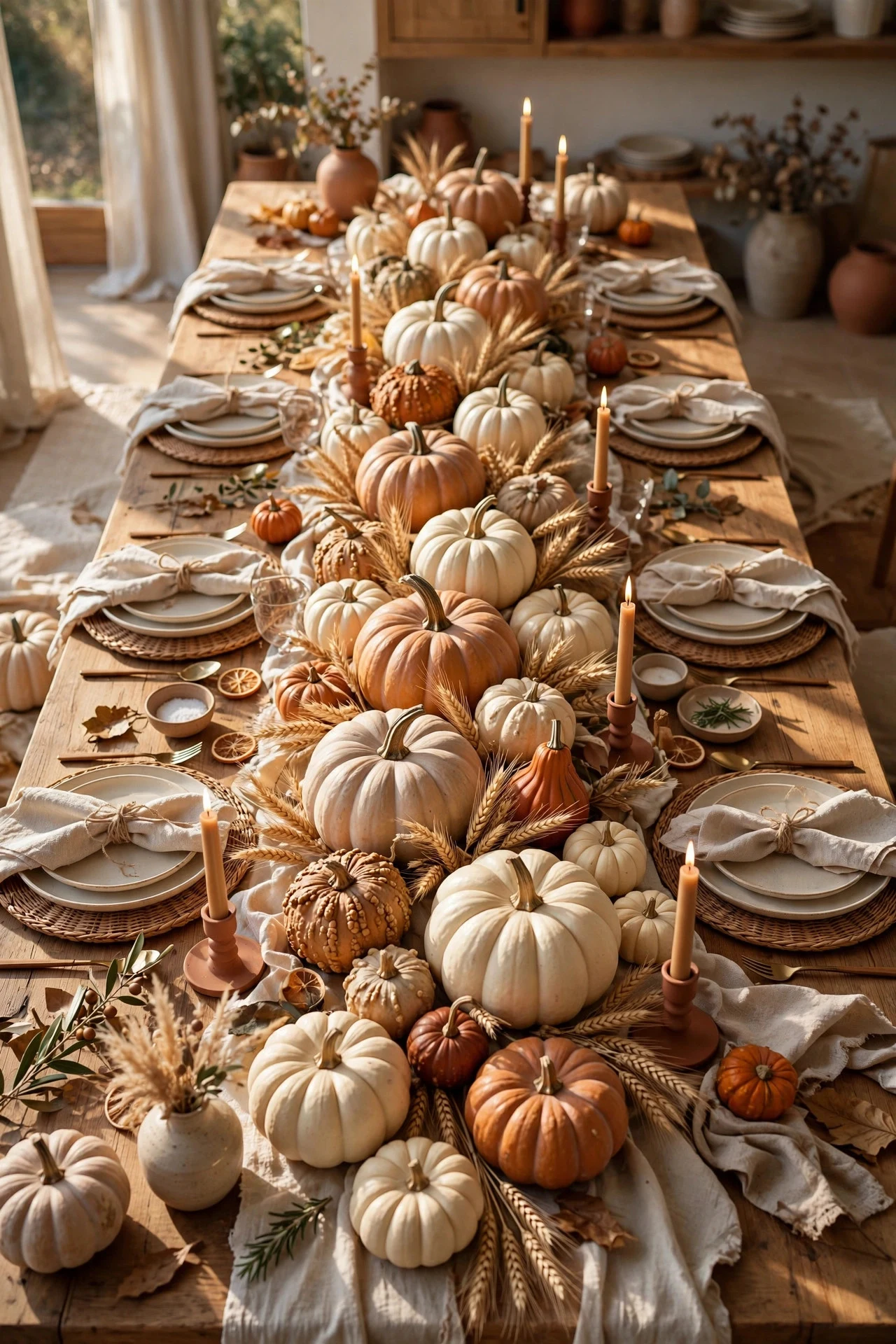
This is the most reliable Thanksgiving centerpiece because it uses variety in size rather than a single showpiece, which makes it easy to build with whatever pumpkins and gourds you can find locally. Space three or four larger pumpkins unevenly down the center of the table, then fill the gaps with smaller pumpkins, gourds, and a few artichokes for texture. Keep the color palette within two or three tones — cream, terracotta, and sage work particularly well together — so the arrangement reads as intentional rather than random. Tuck in a few sprigs of eucalyptus or dried wheat between the pumpkins to soften the hard edges and add height variation.
2. The Classic Cornucopia
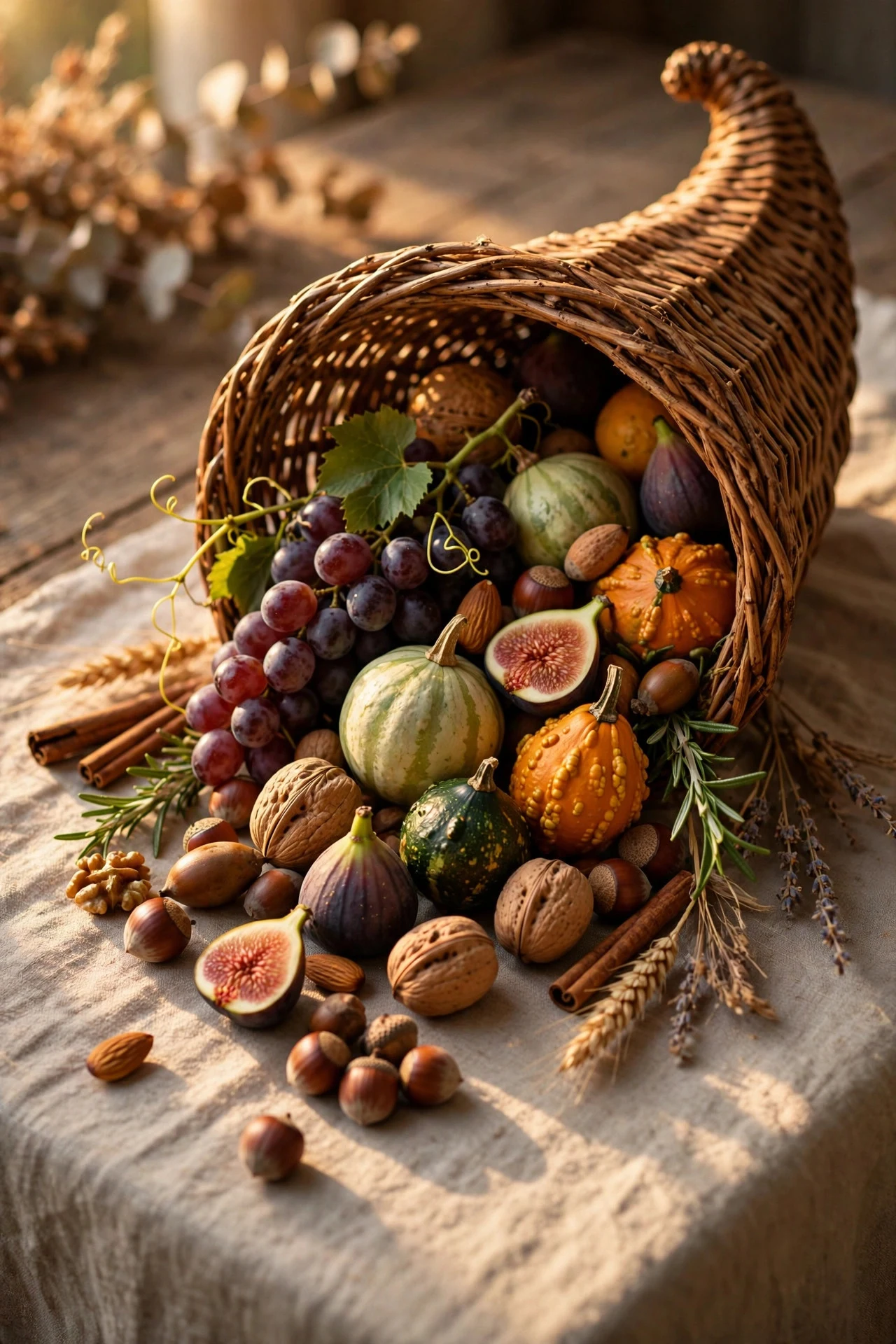
A cornucopia works well for a more traditional table because it’s instantly recognizable as a Thanksgiving symbol without needing any additional styling to explain the theme. Fill it with a mix of real or faux fruit, nuts, and small gourds, letting a few pieces spill out onto the table rather than staying contained inside the horn shape. This idea works best when the cornucopia sits slightly off-center rather than dead-center, since it allows the overflow to trail naturally along the table. Add a few taper candles on either side to balance the asymmetry and add height.
3. The Harvest Basket Centerpiece
A wide, shallow basket filled with seasonal produce gives you the classic Thanksgiving look with more flexibility than a formal cornucopia. Layer in mini pumpkins, apples, pears, and pinecones, using floral foam or crumpled paper underneath to build height where you want it. This works well because the basket itself adds warmth and texture before you’ve even added anything to it, giving the whole centerpiece a cohesive base. Place a few loose sprigs of bittersweet or dried hydrangea trailing over the basket’s edge for a softer, less structured finish.
Related: 18 Small Thanksgiving Table Decor Ideas for Cozy Dinners

4. The Indian Corn & Wheat Bundle
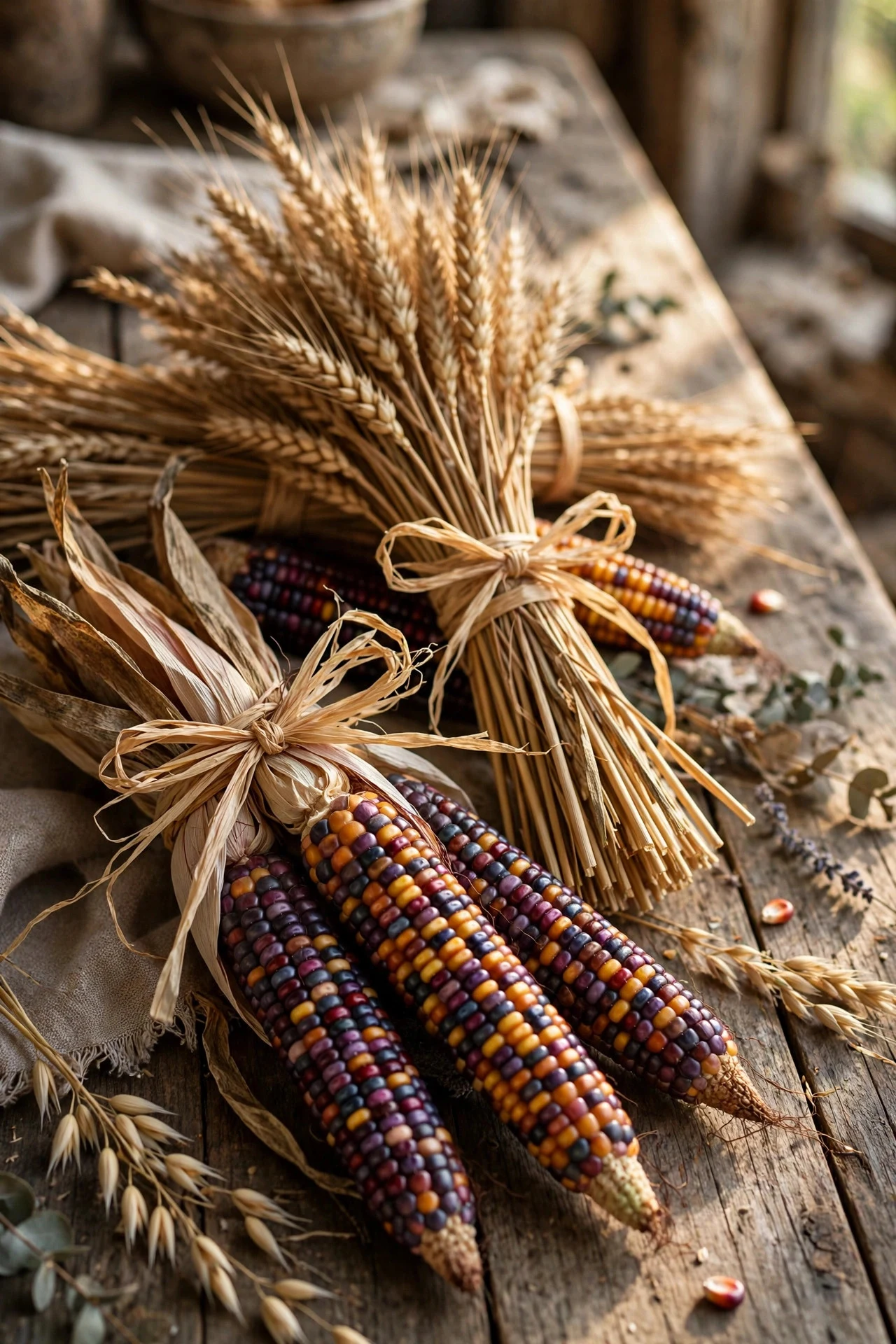
This centerpiece leans into the most traditional harvest imagery of Thanksgiving, built around bundles of dried Indian corn and wheat tied together with twine or raffia. Lay several bundles horizontally down the center of the table, alternating direction slightly so the arrangement doesn’t look too uniform. This idea works particularly well on a farmhouse-style table, since the natural, unpolished texture of the dried corn husks and wheat pairs naturally with wood and linen. Add a few small pumpkins along the edges to fill any gaps and anchor the bundles in place.
Low & Long
5. The Low Floral Runner
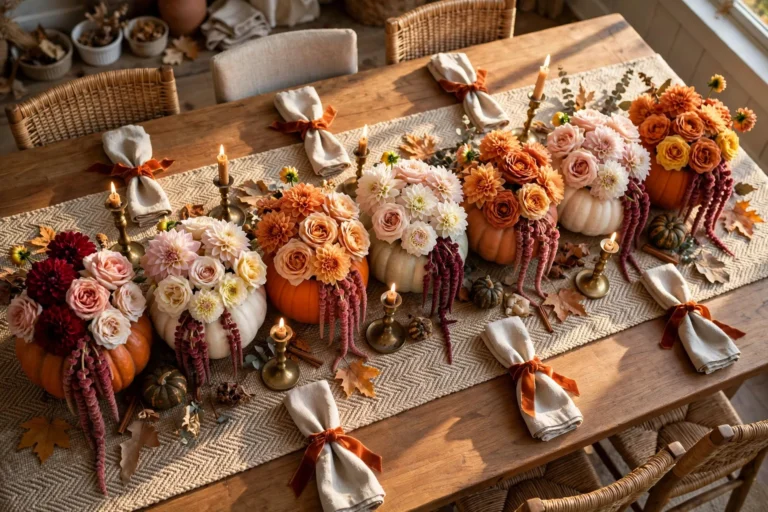
Design experts consistently point to low centerpieces as the most reliable way to keep a Thanksgiving table both beautiful and functional, since guests can see and talk across the table without a tall arrangement blocking their view. Use a long, shallow dish or a row of small vases and fill them with low-cut seasonal flowers like chrysanthemums, celosia, or garden roses in warm, muted tones. Keep the blooms cut short enough that nothing rises more than a few inches above the table’s surface. This idea works especially well for a table with a formal place setting, since it leaves the sightlines completely open for conversation.

6. The Candle & Greenery Runner
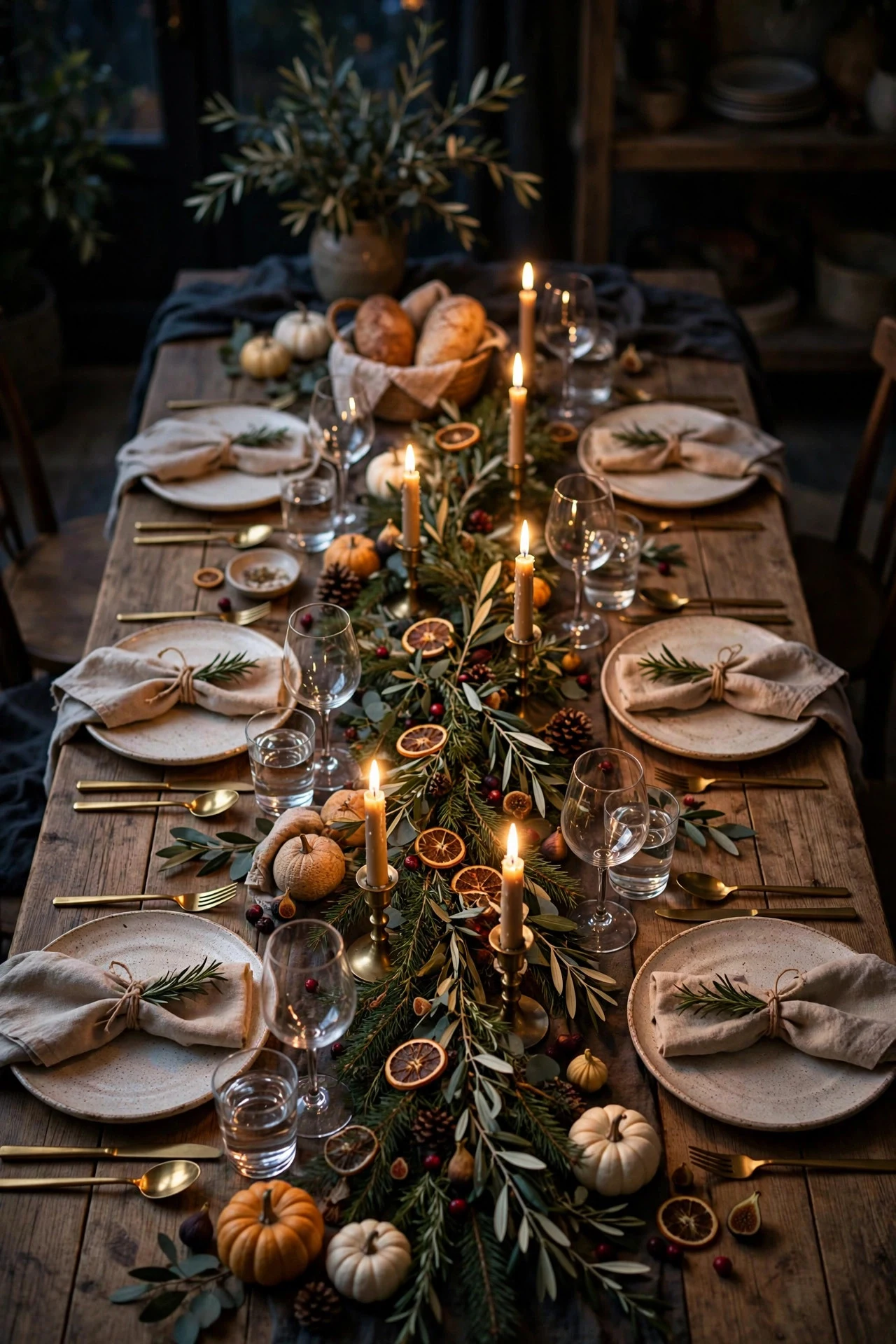
A row of taper candles interspersed with sprigs of fresh or faux greenery creates a low, elegant centerpiece that works on almost any table style. Alternate candle heights slightly — a mix of 8-inch and 12-inch tapers — so the arrangement has subtle variation without becoming tall enough to block sightlines. This idea works particularly well for evening gatherings, since the candlelight becomes part of the centerpiece itself rather than just an accent. Use brass or dark bronze candlesticks for a warmer, more grounded look against the greenery.
7. The Dried Pampas Grass Table Runner
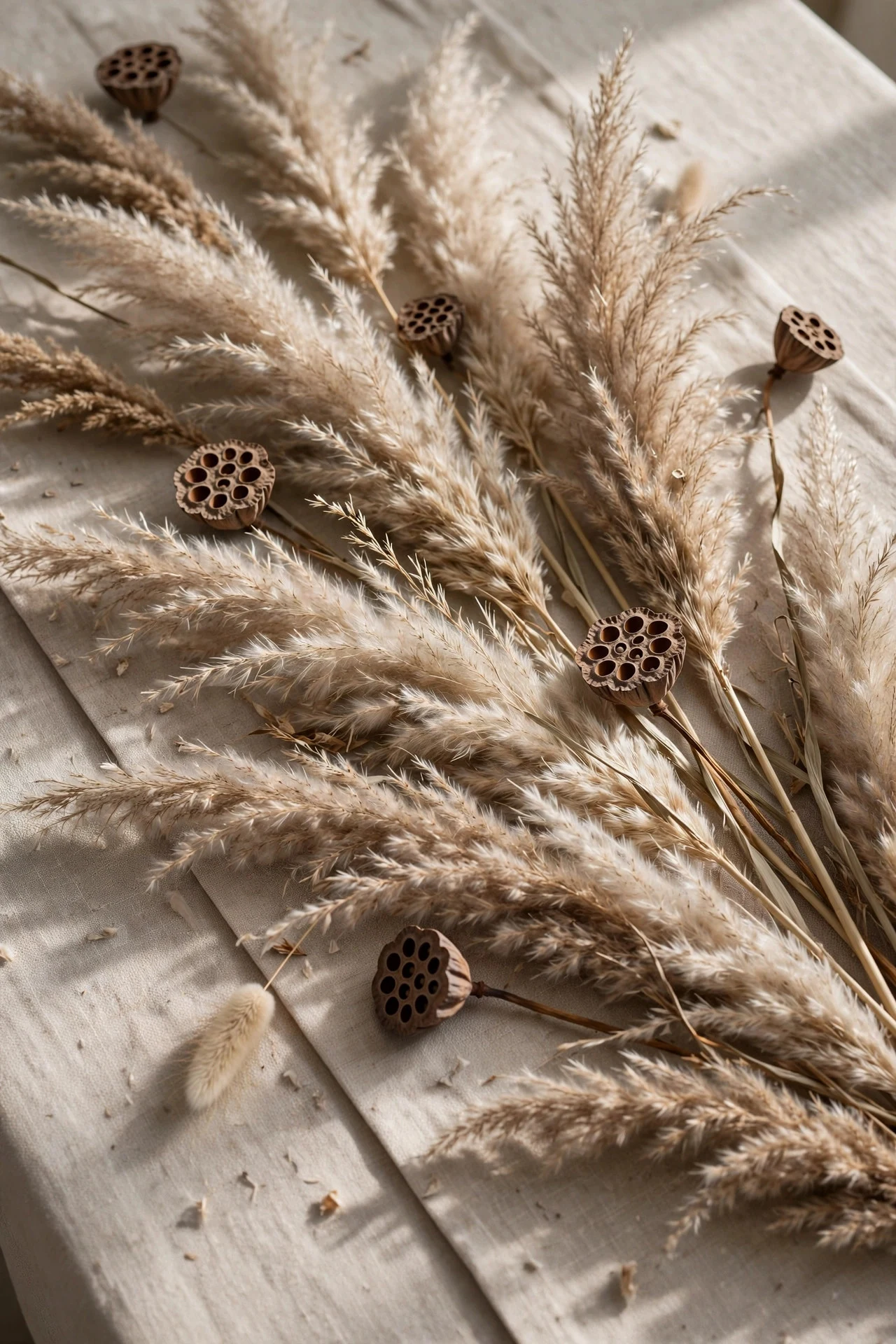
Pampas grass has become a go-to for a softer, more textural Thanksgiving table, and laying it flat as a runner rather than standing it in a vase keeps the whole look low and modern. Lay several stems horizontally down the length of the table, letting the feathery plumes overlap slightly for fullness. This idea works especially well paired with neutral tableware, since the pampas grass adds texture without introducing any additional color that could clash with your dishes. Tuck a few dried lotus pods or small pumpkins along the runner for subtle points of contrast.
8. The Fruit & Foliage Garland
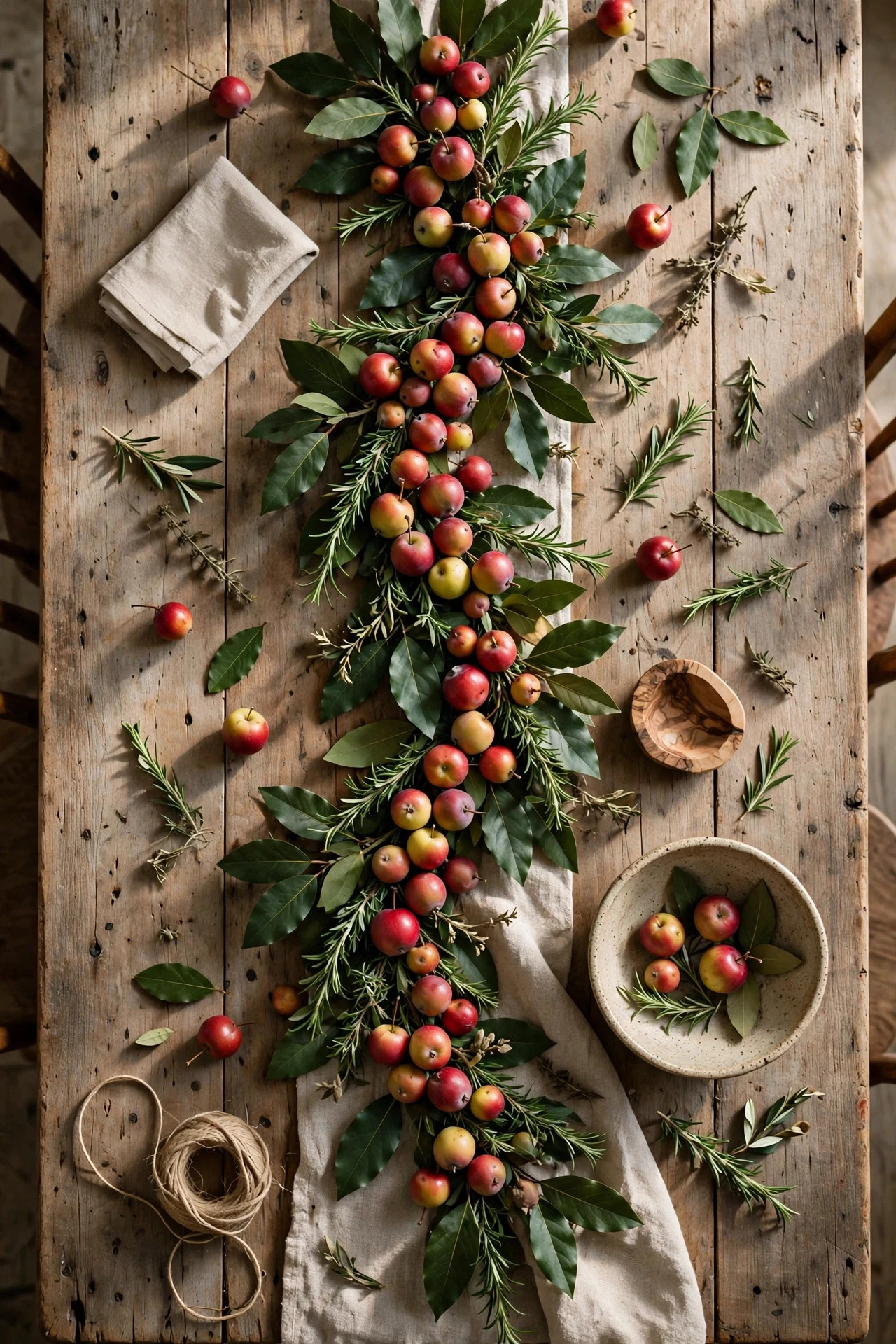
A garland made of small fruit, greenery, and dried leaves running the length of the table creates a low, continuous centerpiece that feels more like a design detail than a single arranged piece. Use floral wire to string together crab apples, bay leaves, and sprigs of rosemary, then lay the finished garland straight down the center of the table. This idea works particularly well for a long table, since the continuous line draws the eye down its full length rather than concentrating attention in one spot. Add a few votive candles along the garland for warmth once evening sets in.
Foraged & Natural
9. The Foraged Branch Centerpiece
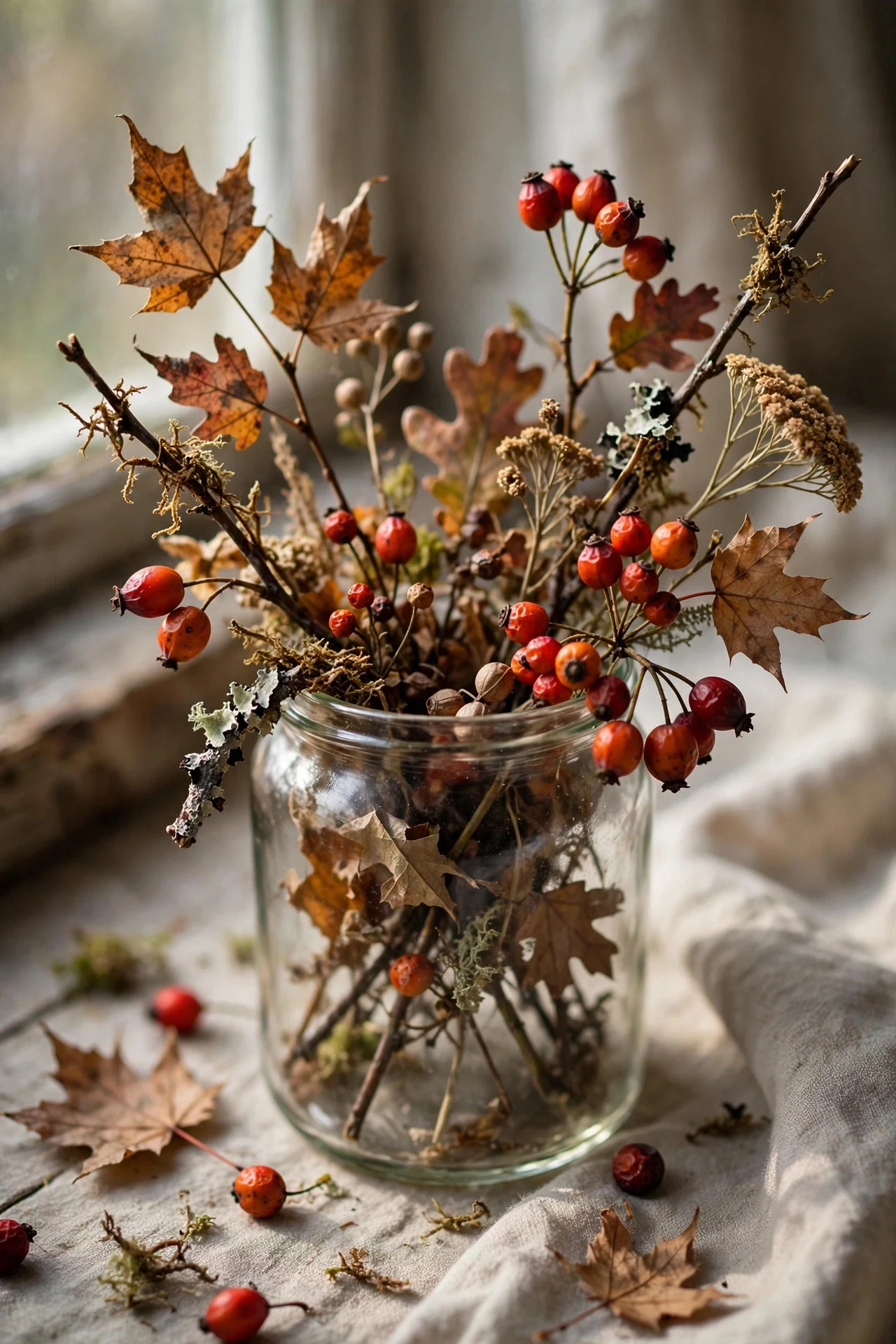
Walking through your own yard or a nearby park in late fall usually turns up everything needed for this centerpiece at no cost — turning branches, berries, and ornamental grasses. Arrange a loose bundle of foraged branches in a simple vase or jar, letting the natural asymmetry of the branches stay rather than trimming it into a tidy shape. This idea works because the imperfection is the point, giving the table a lived-in, seasonal feeling that store-bought arrangements often lack. Pair it with a single votive candle at the base for a simple, grounded finish.
10. The Single Stem Artichoke & Candle
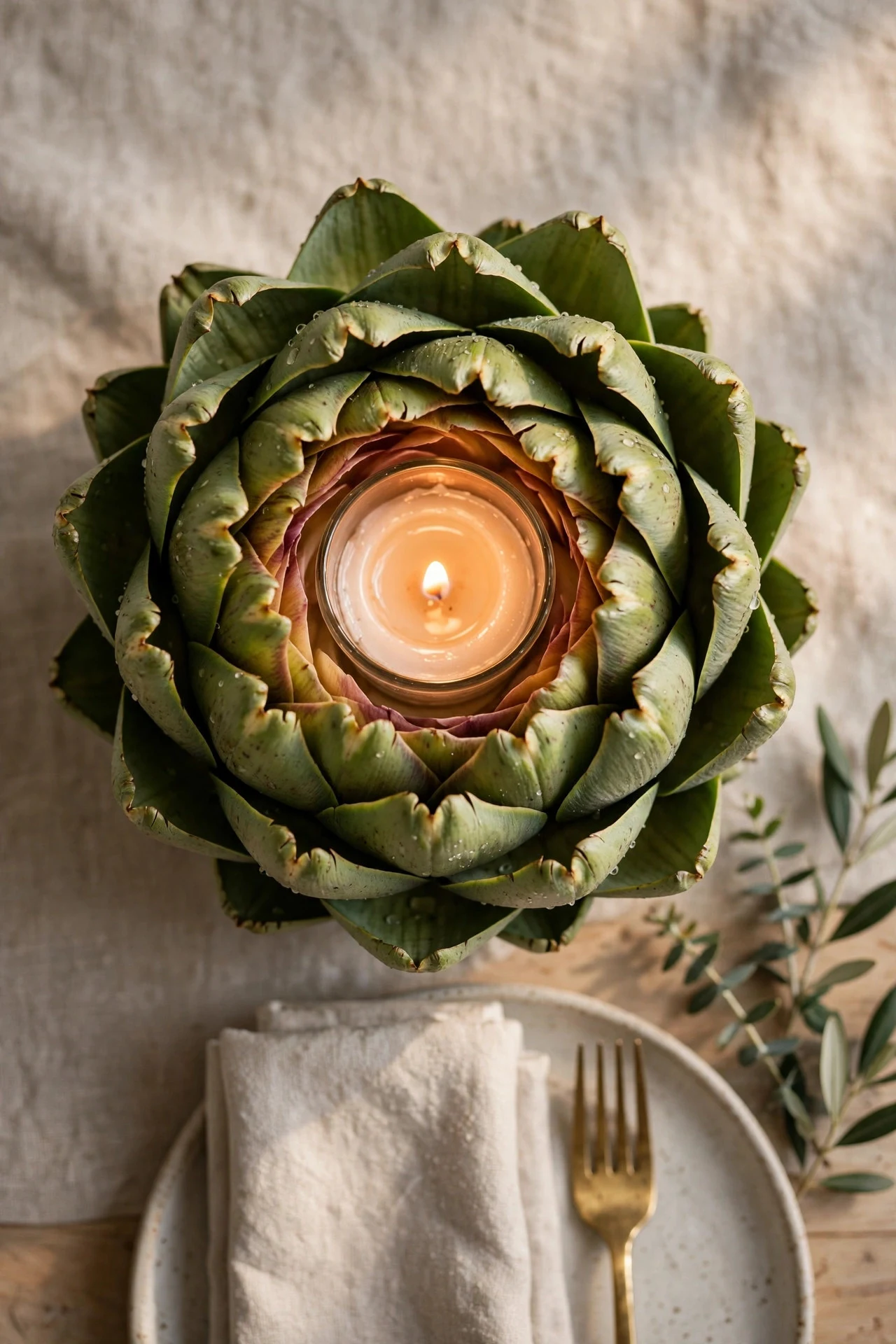
This is one of the simplest centerpiece ideas on the list, built around a single fresh artichoke with an LED votive nestled into its center, paired with a sprig of foliage laid across each place setting. It works because it treats each place setting individually rather than relying on one large arrangement, which creates a more intimate, personal feeling at the table. This idea is especially useful for a smaller gathering, where a large centerpiece might feel disproportionate to the size of the table. Repeat the artichoke and candle motif at intervals down the table rather than clustering them in the center.
11. The Acorn & Pinecone Vase Cluster
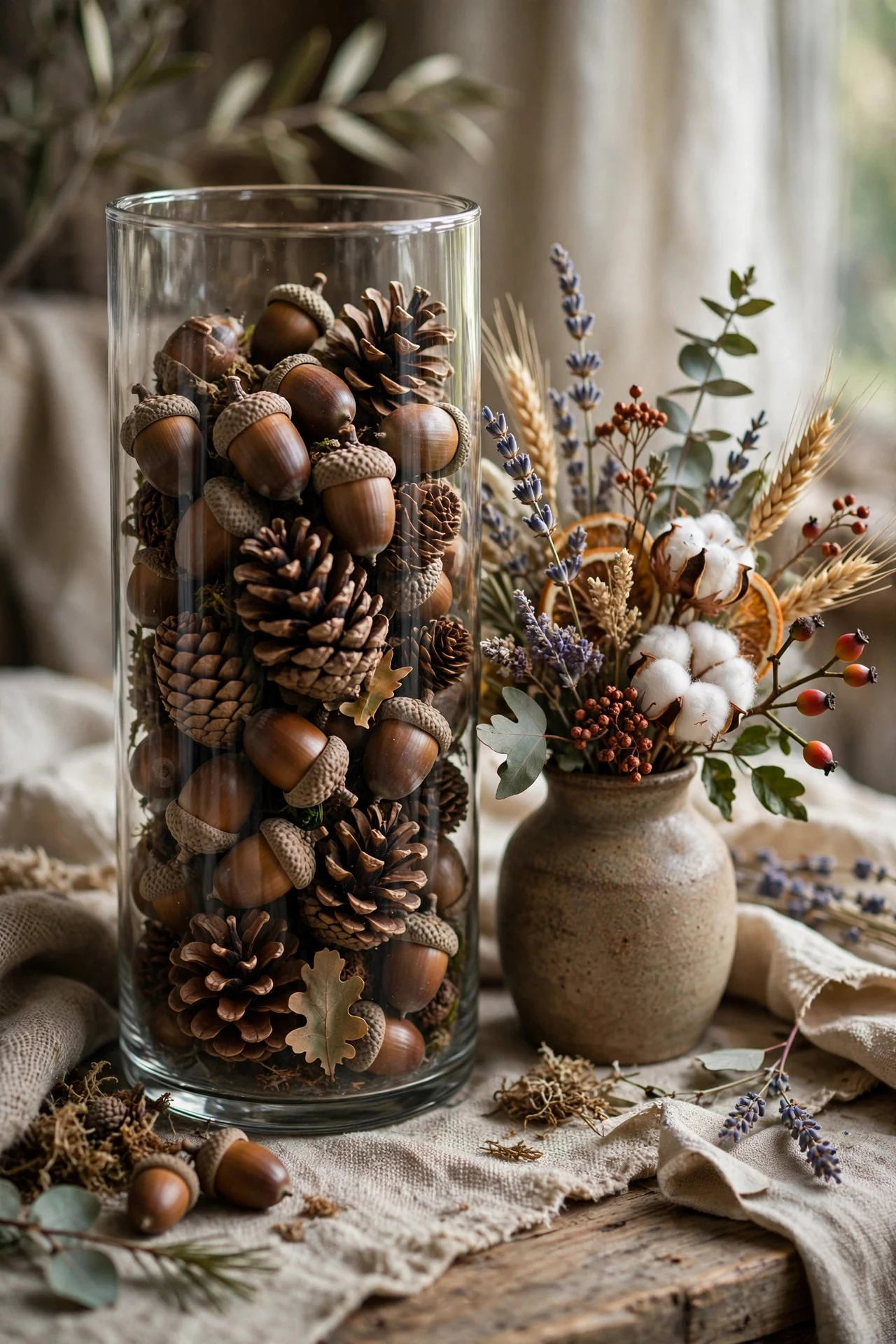
Fill a clear glass vase with acorns, pinecones, or colorful popcorn kernels, then nestle a smaller vase of seasonal flowers inside or beside it. This idea works particularly well because the natural filler material adds texture and interest even before the flowers are added, giving the arrangement a fuller look without needing an expensive floral budget. It’s also an easy way to repurpose a vase you already own into something that feels specifically seasonal. Cluster two or three of these vase-in-vase arrangements at varying heights down the table for a layered effect.
12. The Wreath-as-Centerpiece
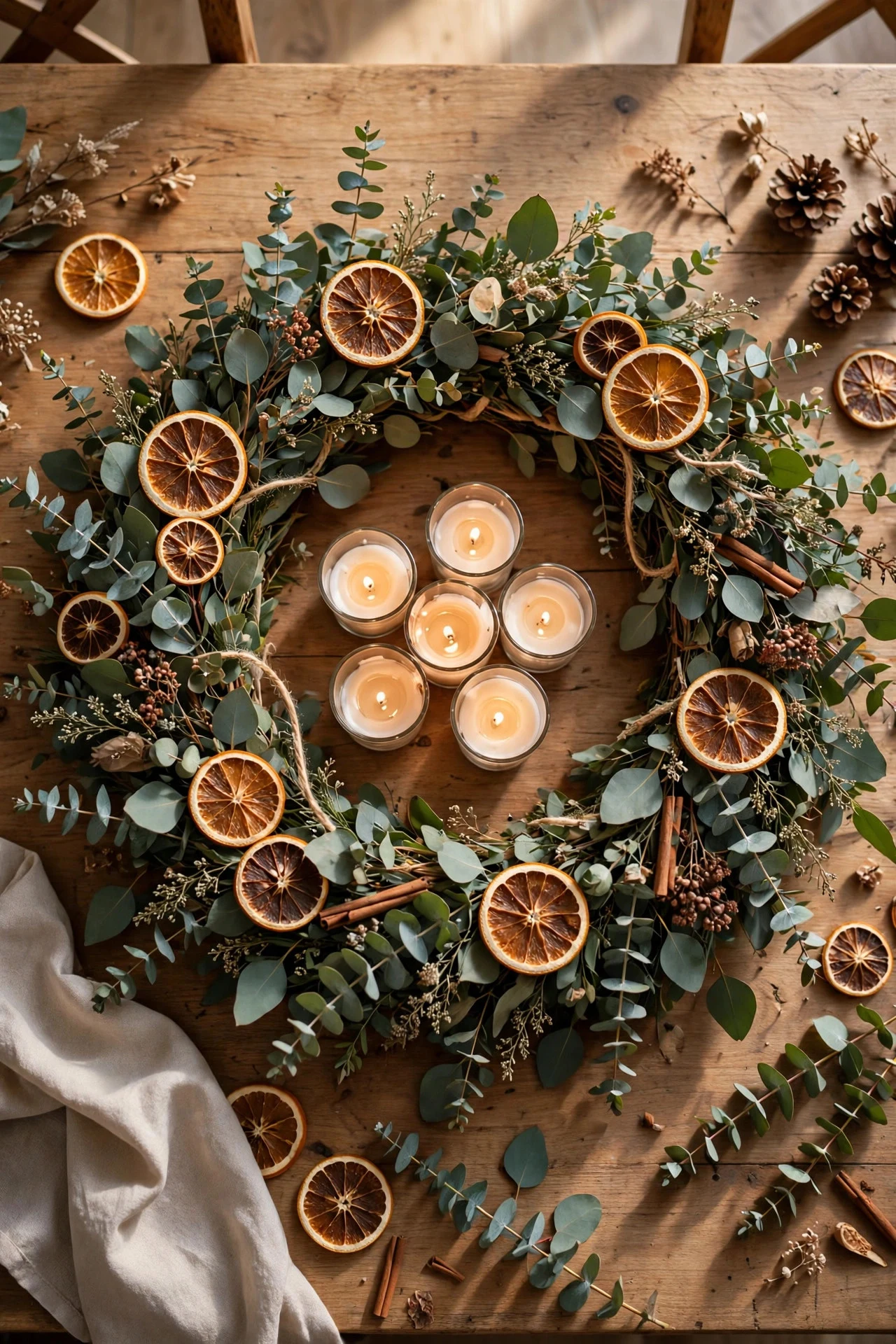
Laying a wreath flat on the table instead of hanging it turns a familiar decoration into an unexpected centerpiece with an open center perfect for a candle or small pumpkin cluster. Choose a wreath made of natural elements like eucalyptus, dried oranges, or wheat rather than a more formal floral wreath, so it reads as tablescape decor rather than a leftover door decoration. This idea works especially well because the open center gives you a built-in frame to style additional pieces inside, like a cluster of votives or a small pumpkin. Lay it flat in the center of the table and build outward from there.
Farmhouse
13. The Wooden Crate & Gourd Display
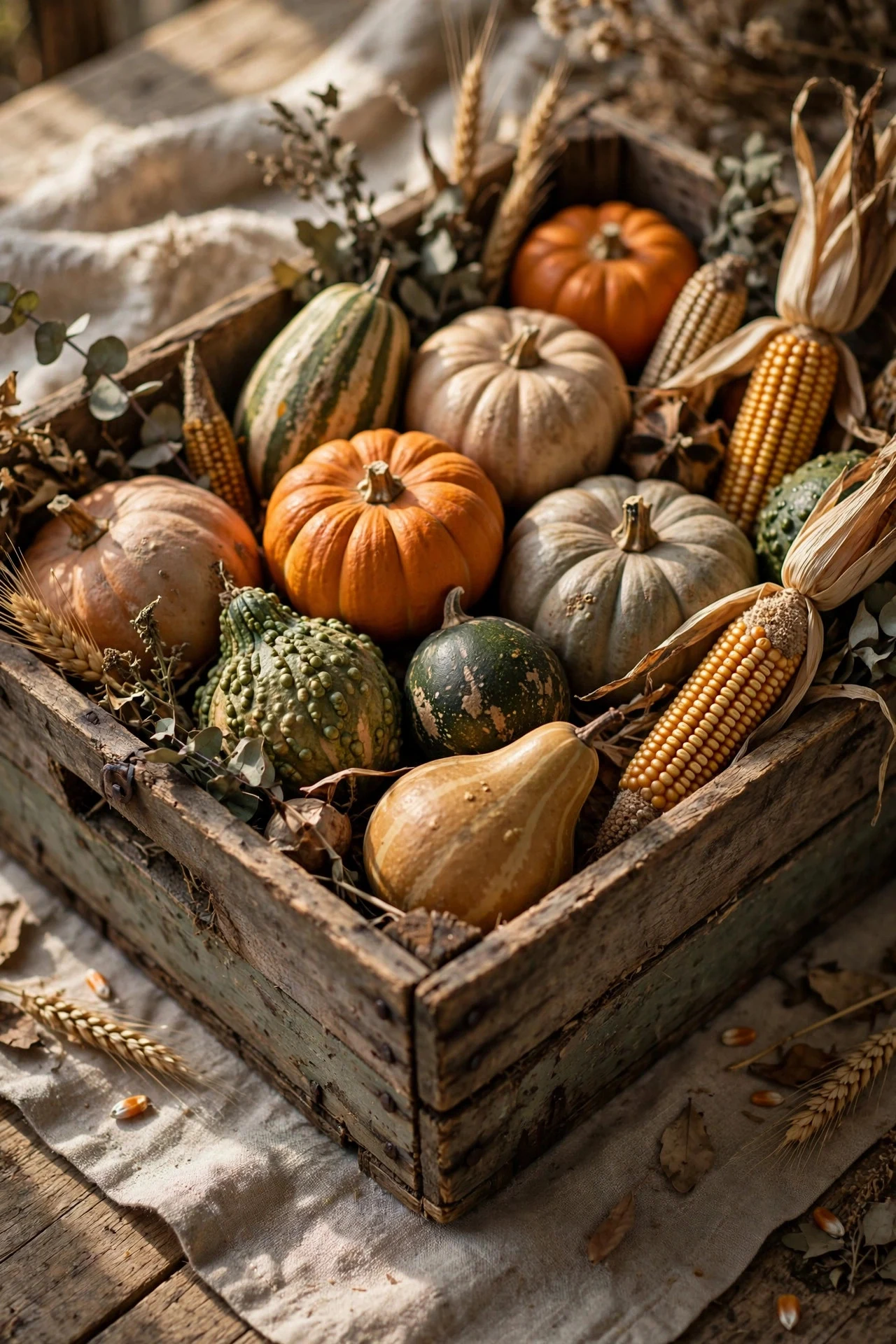
A weathered wooden crate laid on its side or used as a low tray anchors this centerpiece in classic farmhouse style, filled with an assortment of gourds, pumpkins, and dried corn. The rough, unfinished texture of the crate contrasts nicely against smoother pumpkins, giving the whole display a layered, textural feel. This idea works particularly well on a farmhouse table with a linen runner, since the crate echoes the same worn, natural materials already in the room. Tuck a few sprigs of dried baby’s breath or wheat into the gaps for softness against the crate’s harder lines.
14. The Mason Jar Trio
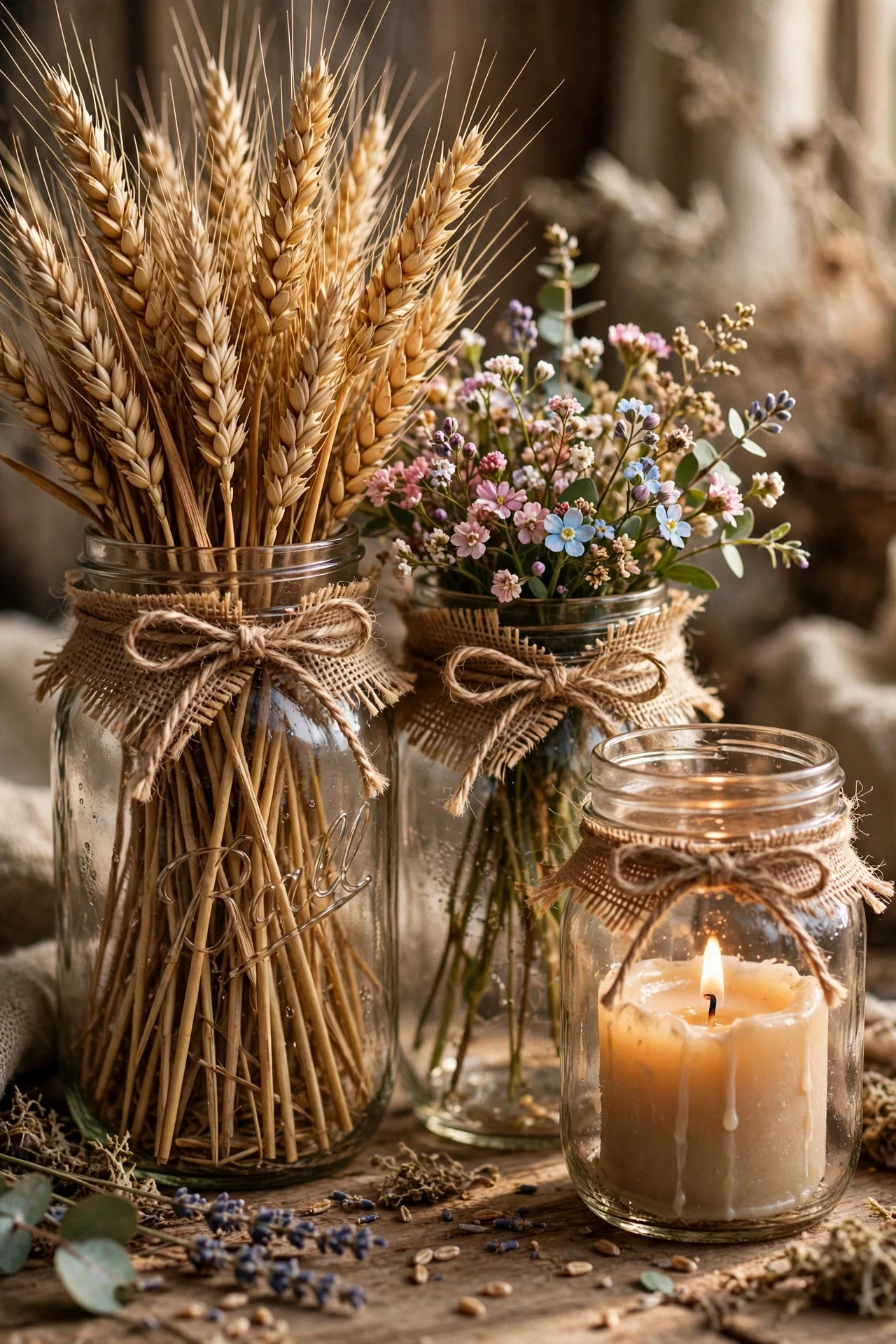
Three mason jars of varying heights, each filled with a different seasonal element — one with wheat, one with small flowers, one with a single candle — creates an easy, budget-friendly farmhouse centerpiece. Cluster the jars together rather than spacing them evenly, since a slightly asymmetrical grouping reads as more natural and less staged. This idea works well because it uses items most people already have at home, making it one of the fastest centerpieces on this list to put together. Wrap a small strip of burlap or twine around each jar’s neck to tie the grouping together visually.
15. The Galvanized Tray Centerpiece
A galvanized metal tray filled with a mix of pumpkins, candles, and greenery gives you contained, farmhouse-appropriate styling without anything shifting or rolling around the table. Layer the tray with a mix of heights, keeping candles toward the back and smaller pumpkins toward the front so nothing is hidden from view. This idea works especially well because the tray makes the centerpiece easy to move on and off the table quickly, which matters if you need the space for serving dishes at some point during the meal. Add a strip of plaid ribbon along the tray’s edge for a classic farmhouse finishing touch.
Related: 16 Thanksgiving Table Favor Ideas Guests Will Actually Keep

16. The Plaid & Pumpkin Table Runner
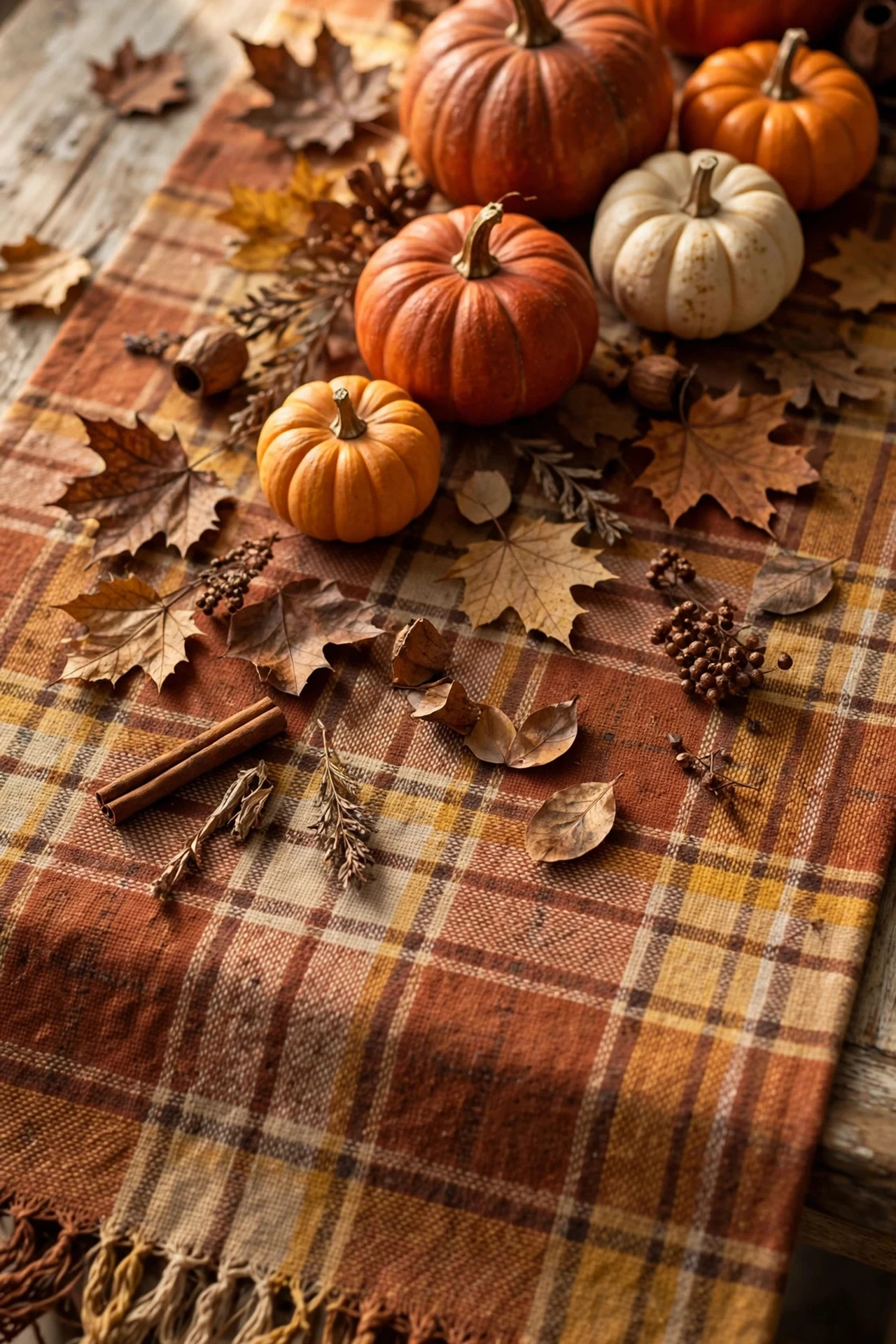
A plaid table runner alone does a lot of the visual work here, so the centerpiece on top can stay simple — just a few clustered pumpkins and a scattering of dried leaves. This idea works well because the pattern of the runner adds enough visual interest that the centerpiece doesn’t need to compete for attention. It’s also one of the most budget-friendly ideas on the list, since the runner itself is often the only real purchase required. Choose a plaid in warm tones like rust, mustard, and forest green to keep the palette cohesive with the rest of a farmhouse table.
Modern & Minimalist
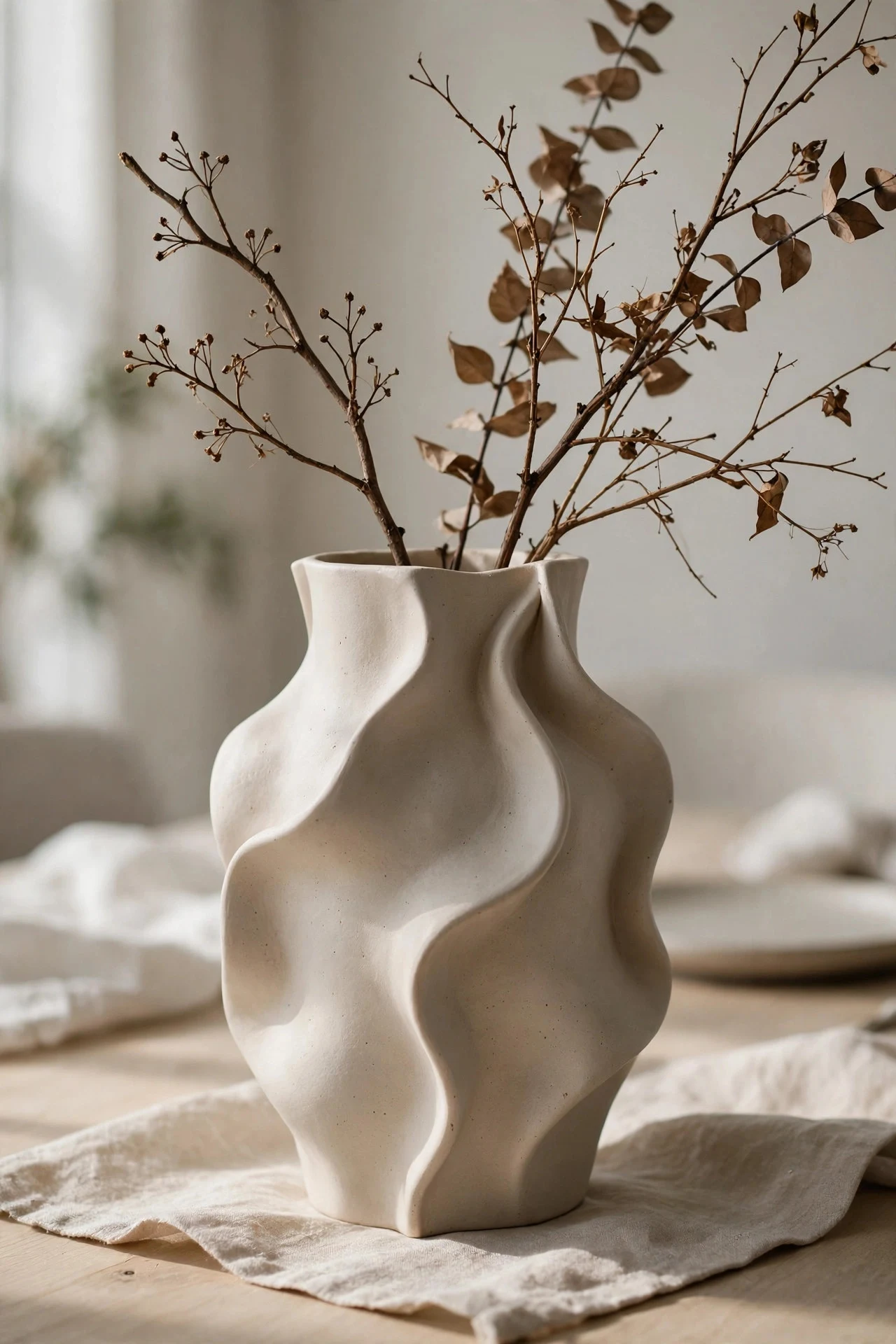
17. The Single Sculptural Vase
For a modern table, resist the urge to fill every inch of space and instead let one sculptural vase with a few dramatic branches or dried florals do all the visual work. Choose a vase with a distinct shape or texture — matte ceramic or fluted glass both work well — and keep the florals inside minimal, maybe three to five stems total. This idea works because restraint reads as intentional in a modern setting, where a fuller, more layered centerpiece might feel at odds with the clean lines of the table. Position it slightly off-center to avoid a too-symmetrical, overly formal look.
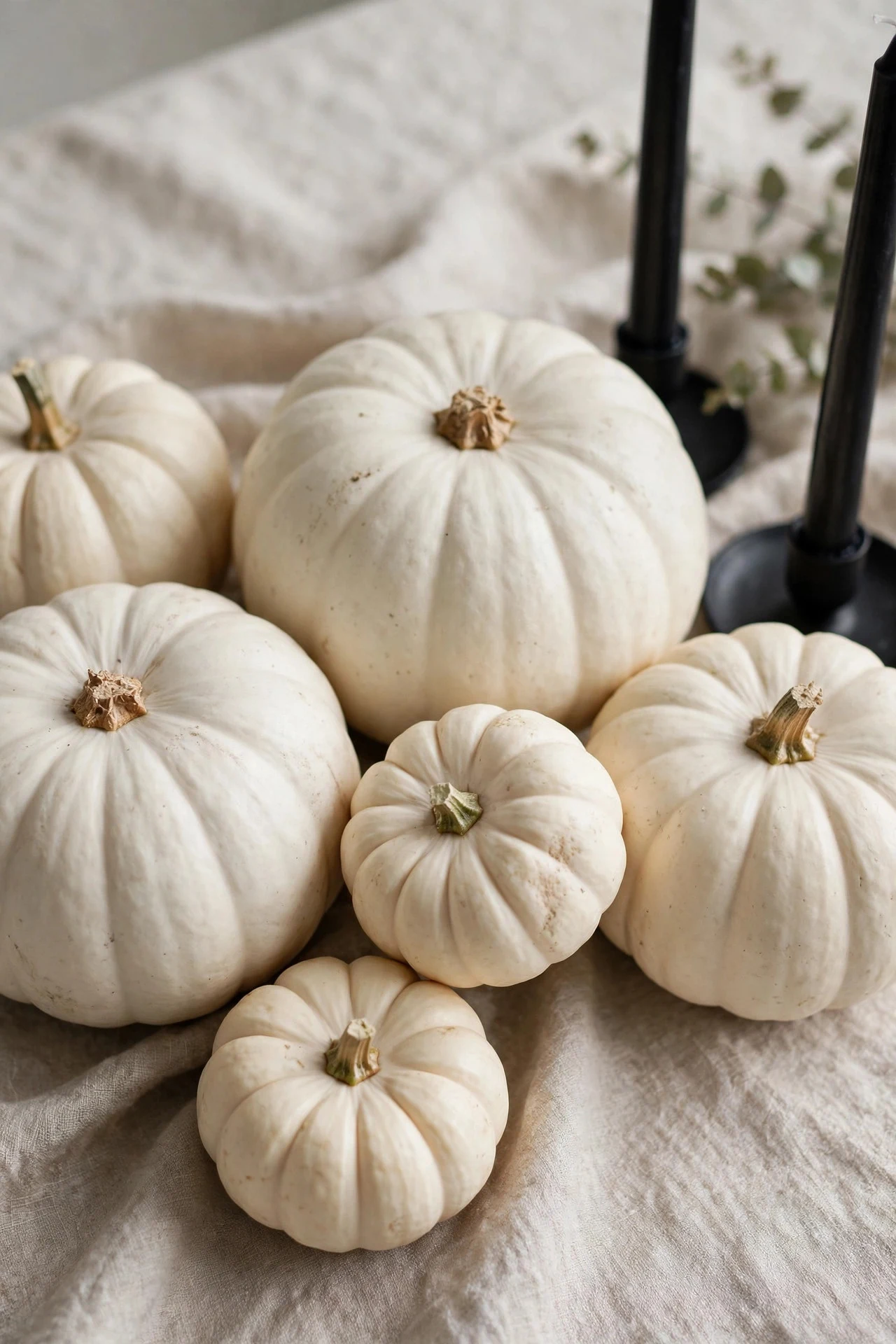
18. The Monochrome Pumpkin Cluster
Sticking to a single color family — all white pumpkins, or all deep charcoal ones — instantly gives a modern table a cohesive, curated look without needing florals at all. Cluster pumpkins of varying sizes together in the center of the table, keeping the grouping tight rather than spread out for a more sculptural effect. This idea works particularly well against a neutral linen tablecloth, since the monochrome pumpkins become the clear visual focus without competing colors around them. Add one or two black taper candles for contrast if the pumpkins are white, or vice versa.
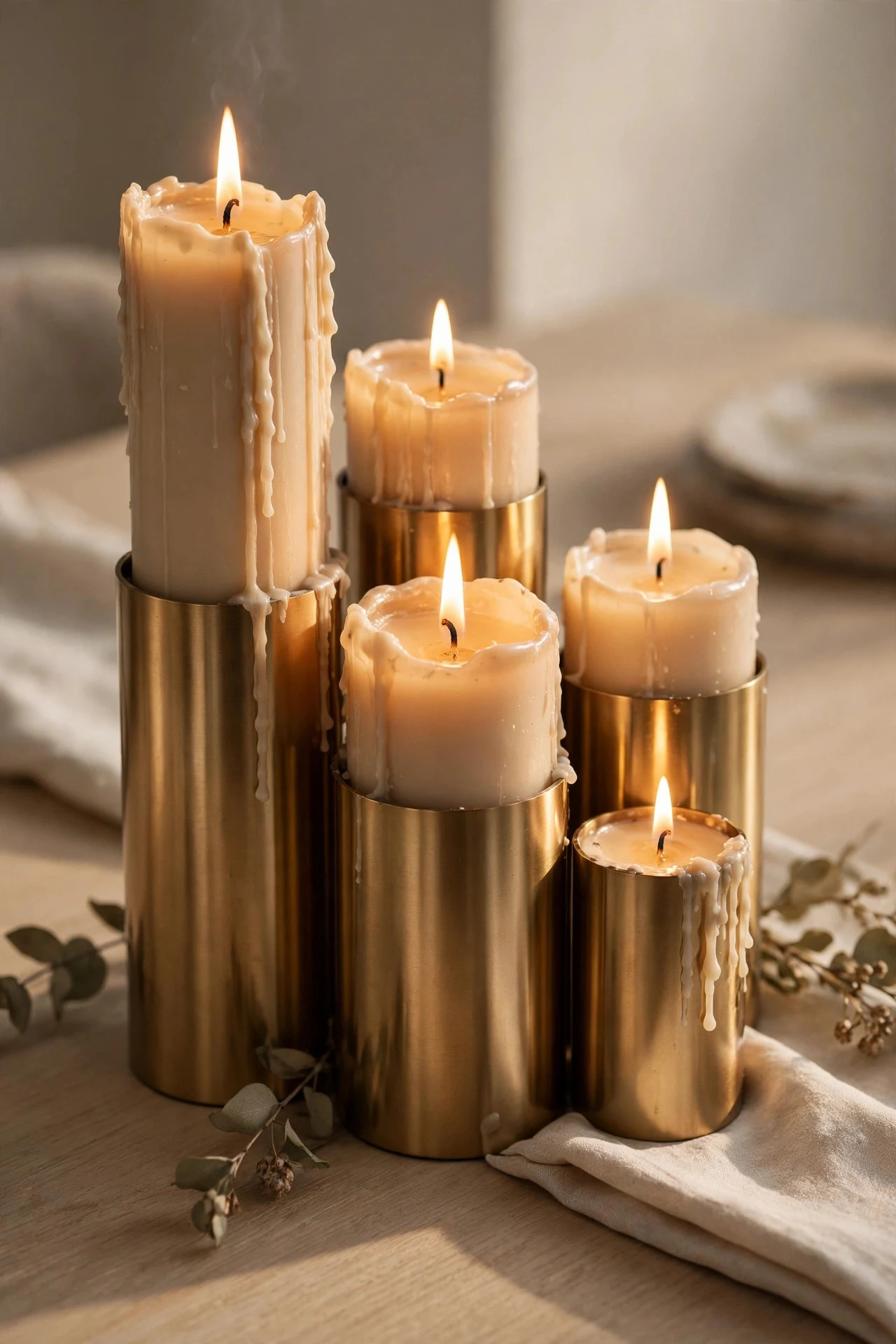
19. The Geometric Candle Cluster
Group candles of varying heights in simple geometric holders — brass cylinders or matte black stands — down the center of a modern table, skipping florals or greenery entirely. This idea works because the repetition of clean shapes creates visual rhythm without needing organic elements to feel finished. It’s also one of the lowest-maintenance centerpieces on the list, since candles don’t wilt or need water, making it practical for a table set up days in advance. Vary the candle heights just slightly so the cluster doesn’t look too uniform or mechanical.
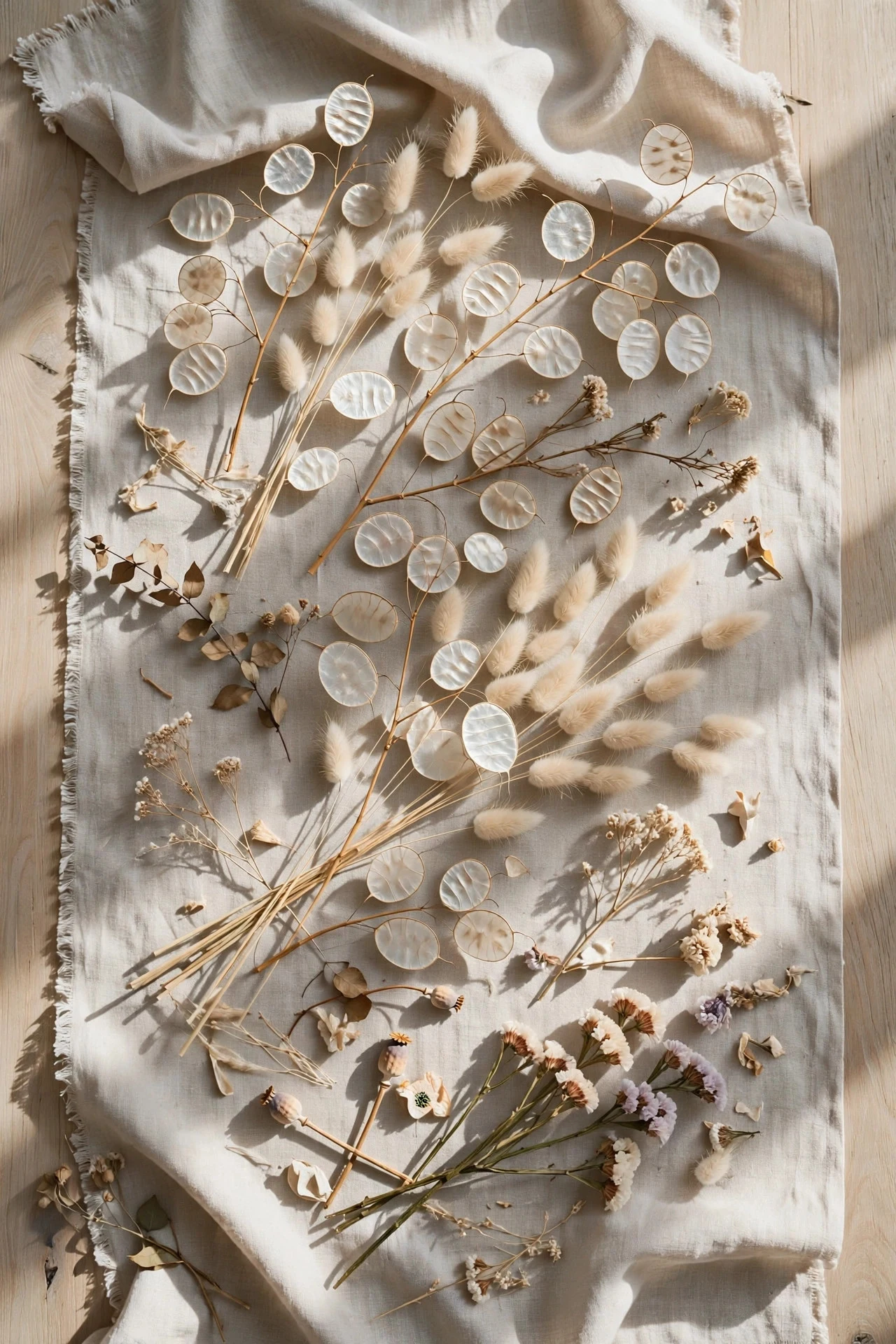
20. The Dried Botanical Runner
A collection of dried botanicals — lunaria, bunny tail grass, dried eucalyptus — laid flat in a loose, airy line down the table gives a modern table texture without heaviness. Skip a container altogether and let the dried stems rest directly on the tablecloth or runner, arranged with visible gaps rather than densely packed. This idea works well because the pale, muted tones of dried botanicals fit naturally into a modern neutral palette without introducing the warmer oranges and reds of a more traditional Thanksgiving table. Scatter a few loose petals or leaves around the runner for a slightly undone, natural finish.
Cozy & Warm
21. The Blanket & Candle Layer
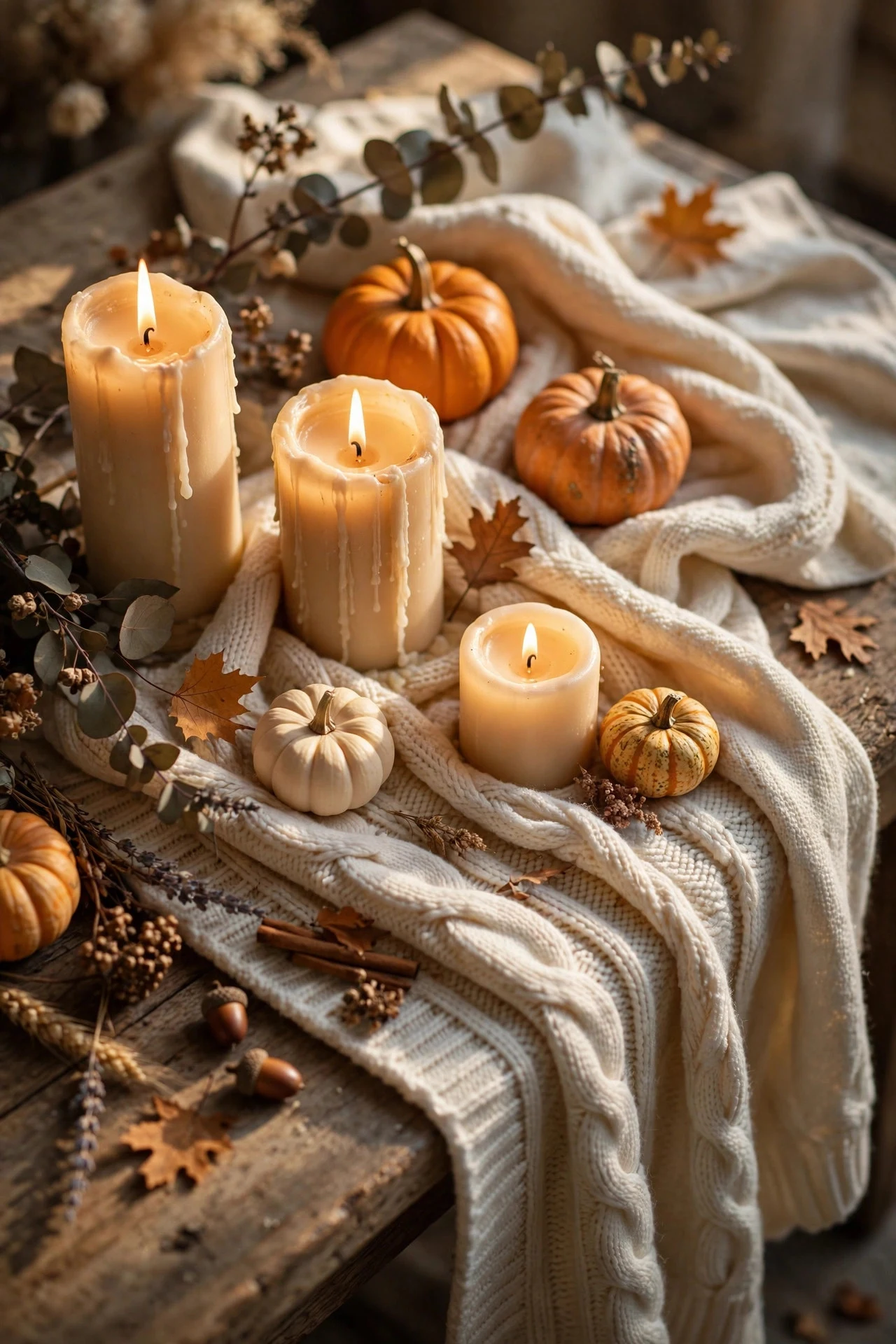
Draping a soft knit throw along the center of the table beneath the centerpiece adds an unexpected layer of texture that makes the whole table feel warmer and more inviting. Layer a few pillar candles and a small cluster of pumpkins directly on top of the folded blanket, letting the fabric peek out from underneath. This idea works particularly well for a smaller, more intimate gathering, since the softness of the blanket makes the table feel cozier rather than more formal. Choose a cream or oatmeal-colored throw so it doesn’t compete visually with the warmer tones of the pumpkins and candles.
22. The Cinnamon Stick & Candle Bundle
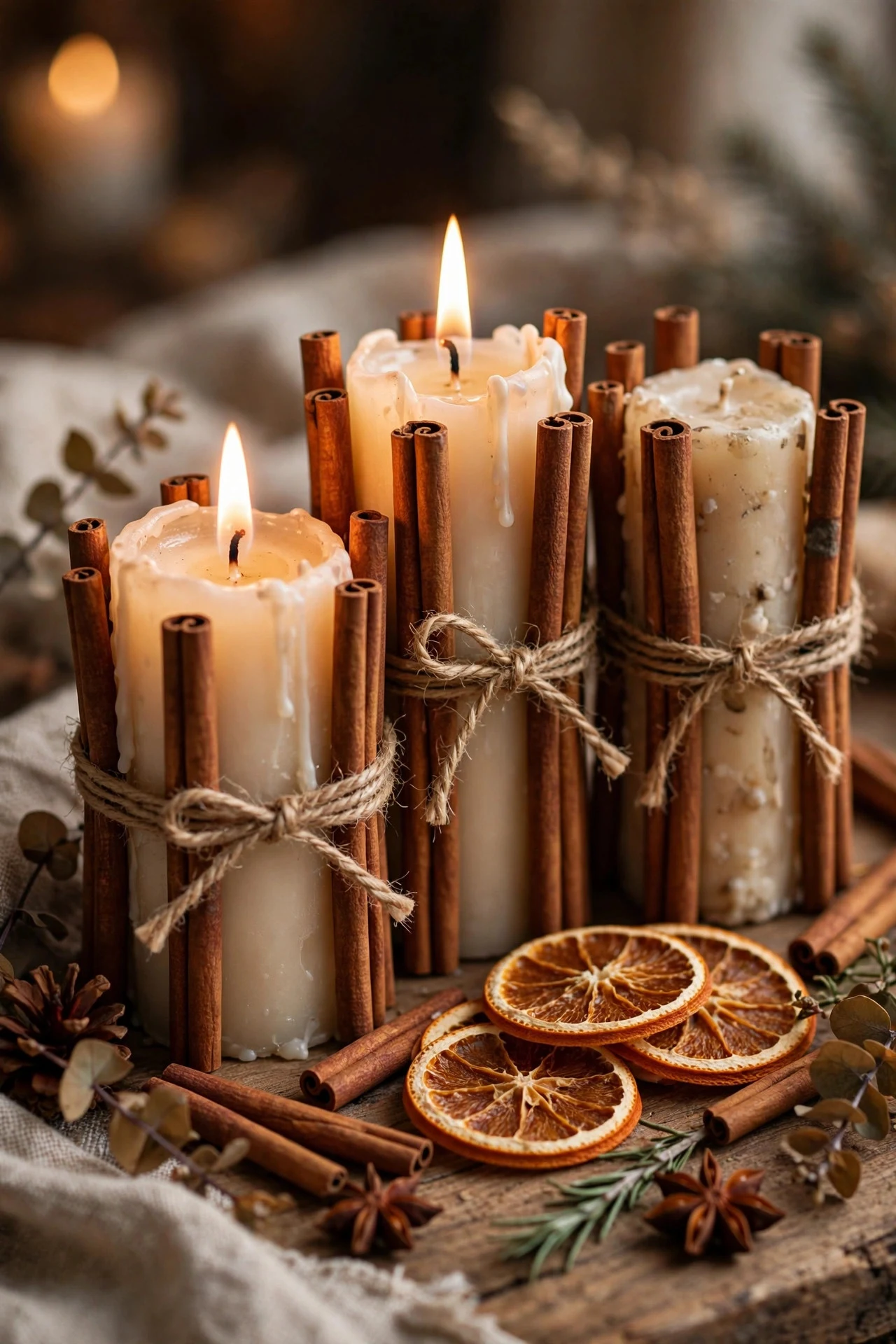
Bundling cinnamon sticks around the base of a few pillar candles with twine adds a subtle seasonal scent to the table along with a warm, rustic visual detail. Cluster three or four candle-and-cinnamon bundles at varying heights down the center of the table, spacing them slightly apart rather than lining them up perfectly. This idea works well because it engages more than just sight — the scent from the warmed cinnamon becomes part of the experience as the candles burn. Add a few dried orange slices nearby for extra warmth and color.
23. The Dried Orange & Greenery Garland
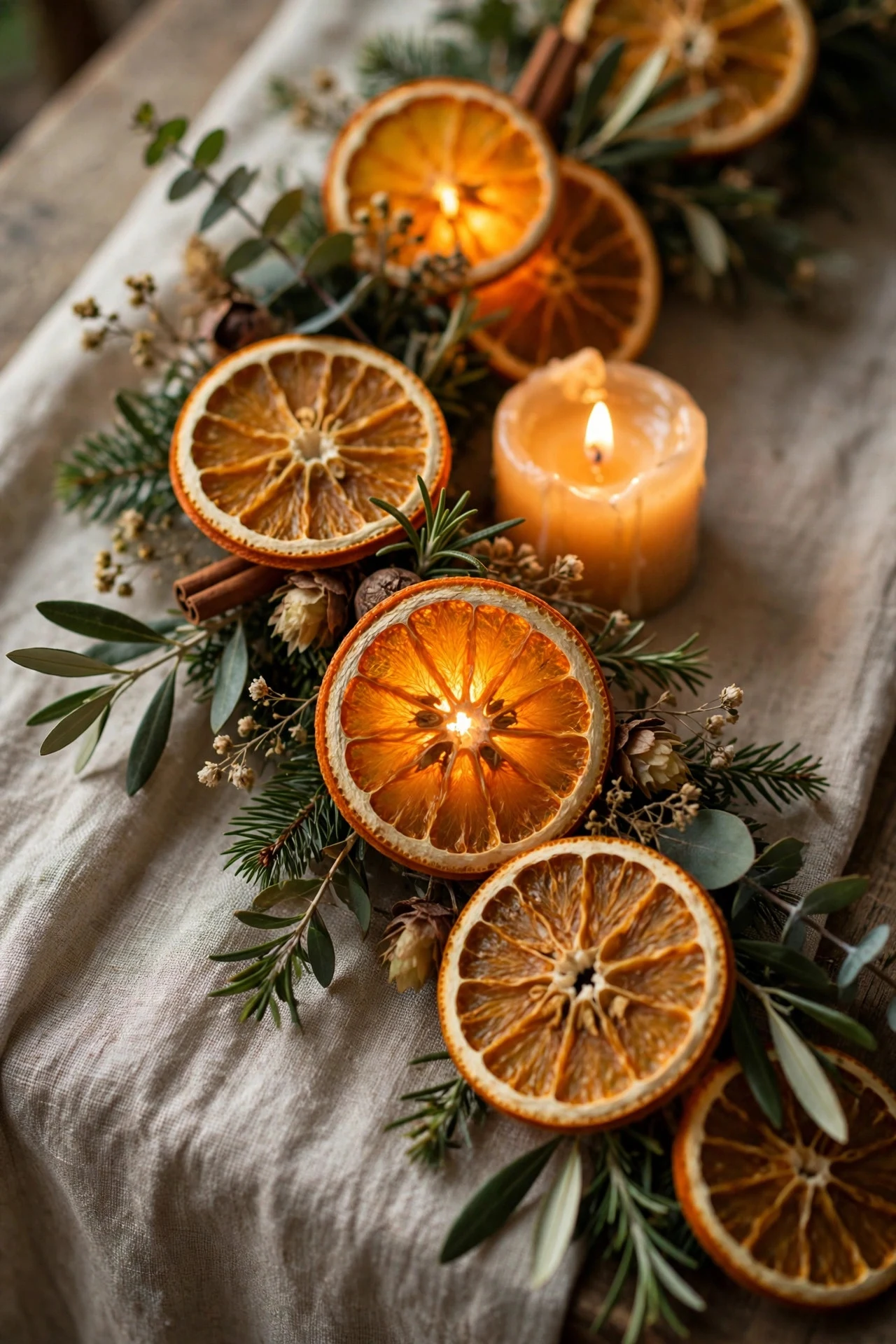
Slices of dried orange strung together with sprigs of greenery make a garland that’s both visually warm and genuinely fragrant as it sits near the table’s heat and candlelight. Lay the garland loosely down the center of the table rather than pulling it taut, so it has a relaxed, draping quality. This idea works especially well layered over a plain linen runner, since the bright color of the dried orange slices provides enough visual interest on its own. Add a few votive candles along the garland’s length to catch the light through the translucent orange slices.
24. The Warm Neutral Tablescape Bowl
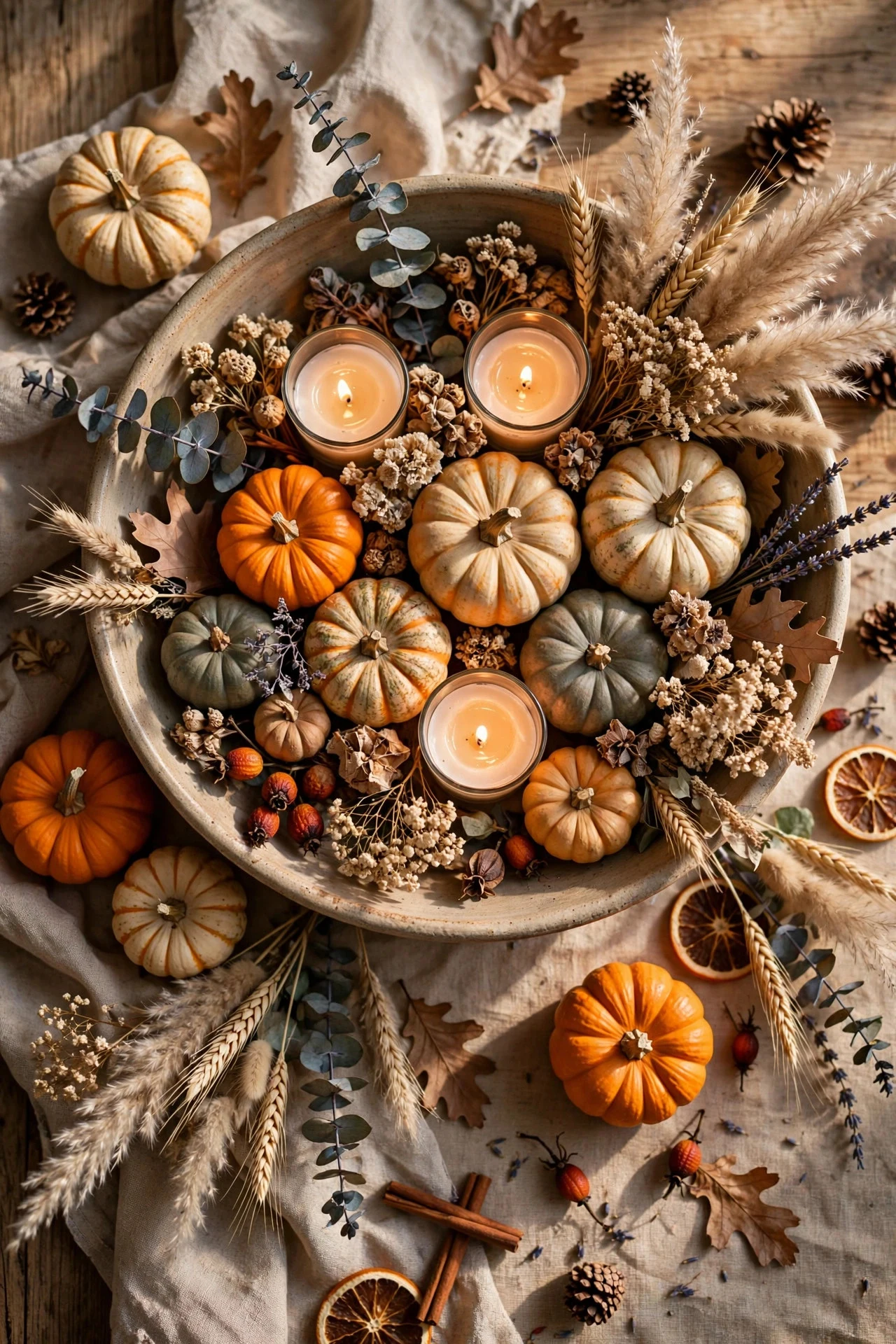
A single large, low bowl filled with a mix of warm-toned items — small pumpkins, dried florals, a few candles nestled in — creates a cozy, unfussy centerpiece that works well as a catch-all for whatever seasonal pieces you already have. Keep everything inside the bowl at roughly the same height so the arrangement stays low and doesn’t block sightlines across the table. This idea works well as a closing option for anyone who wants a cozy, layered look without needing to coordinate multiple separate pieces down the table. Set the bowl in the center and let a few pieces rest just outside its edge for a slightly overflowing, relaxed finish.
Styling Tips for Height & Proportion
Keep any centerpiece under 14 inches tall if guests will be seated across from each other, since anything taller tends to block conversation and eye contact. Vary height in small increments rather than dramatic jumps — a few inches between elements looks intentional, while a huge gap between a low pumpkin and a tall candle can look disconnected. Stick to two or three colors maximum across the whole centerpiece so it reads as cohesive rather than busy. Leave breathing room between elements; a centerpiece with visible negative space almost always looks more expensive than one packed edge to edge.
Practical Implementation Ideas
Build your centerpiece the day before Thanksgiving so you’re not rushing the styling while also cooking. Use floral foam, crumpled paper, or an upside-down bowl underneath a runner to add height variation without needing risers or stands. If you’re combining fresh and dried elements, place the fresh flowers in small water tubes hidden within the arrangement so they stay hydrated without needing a full vase. Photograph your table setup from a few different angles before guests arrive so you can spot and adjust any gaps or uneven spacing.
Related: 17 Blue Thanksgiving Table Decor Ideas for a Fresh Twist
Common Mistakes to Avoid
Don’t build a centerpiece so tall or wide that it blocks sightlines or takes up space needed for serving dishes. Avoid mixing too many colors or textures at once — a centerpiece with five different elements competing for attention usually looks cluttered rather than layered. Skip fresh flowers you haven’t tested in advance if you’re worried about wilting by dinner time; dried or faux elements hold up better for an all-day gathering. And don’t forget to leave space at each end of the table for serving dishes, especially if your centerpiece runs the full length.
Small & Narrow Table Alternatives
For a small or narrow table, skip a single large centerpiece entirely and use a repeated element instead, like a single votive candle and small pumpkin at each place setting. A narrow bud vase with one or two stems takes up minimal space while still adding a seasonal touch. If you only have room for one piece, choose something low and long, like a short runner of pampas grass or a thin garland, rather than anything that requires width to look balanced.
Budget-Friendly Alternatives
Use pumpkins and gourds from your own grocery run instead of a florist, since they hold up for weeks and cost a fraction of fresh flowers. A foraged centerpiece built from branches and berries in your own yard costs nothing beyond the time it takes to gather them. Repurpose vases, bowls, or trays you already own instead of buying new containers — a mismatched but intentional grouping often looks more personal than a matching set purchased just for the occasion.
Pro Styling Recommendations
Start with your dinnerware and tablecloth, then choose a centerpiece style that complements those colors rather than picking the centerpiece first and working backward. If you’re nervous about committing to one look, a low runner style is the most forgiving option, since it works across nearly every aesthetic from farmhouse to modern. And always step back and view the table from a seated position before finalizing anything — what looks balanced standing up can look completely different from where your guests will actually be sitting.
FAQs
Final Thoughts
A centerpiece that gets noticed isn’t the one with the most going on — it’s the one that fits the table it’s on. Pick a style that matches your space, keep the height low enough for real conversation, and let a few good textures do the work instead of trying to fit every idea onto one table. Whichever of these 24 ideas fits your home, the goal is the same: a table that looks like it was styled with intention, not assembled in a rush.