18 Small Thanksgiving Table Decor Ideas for Cozy Dinners
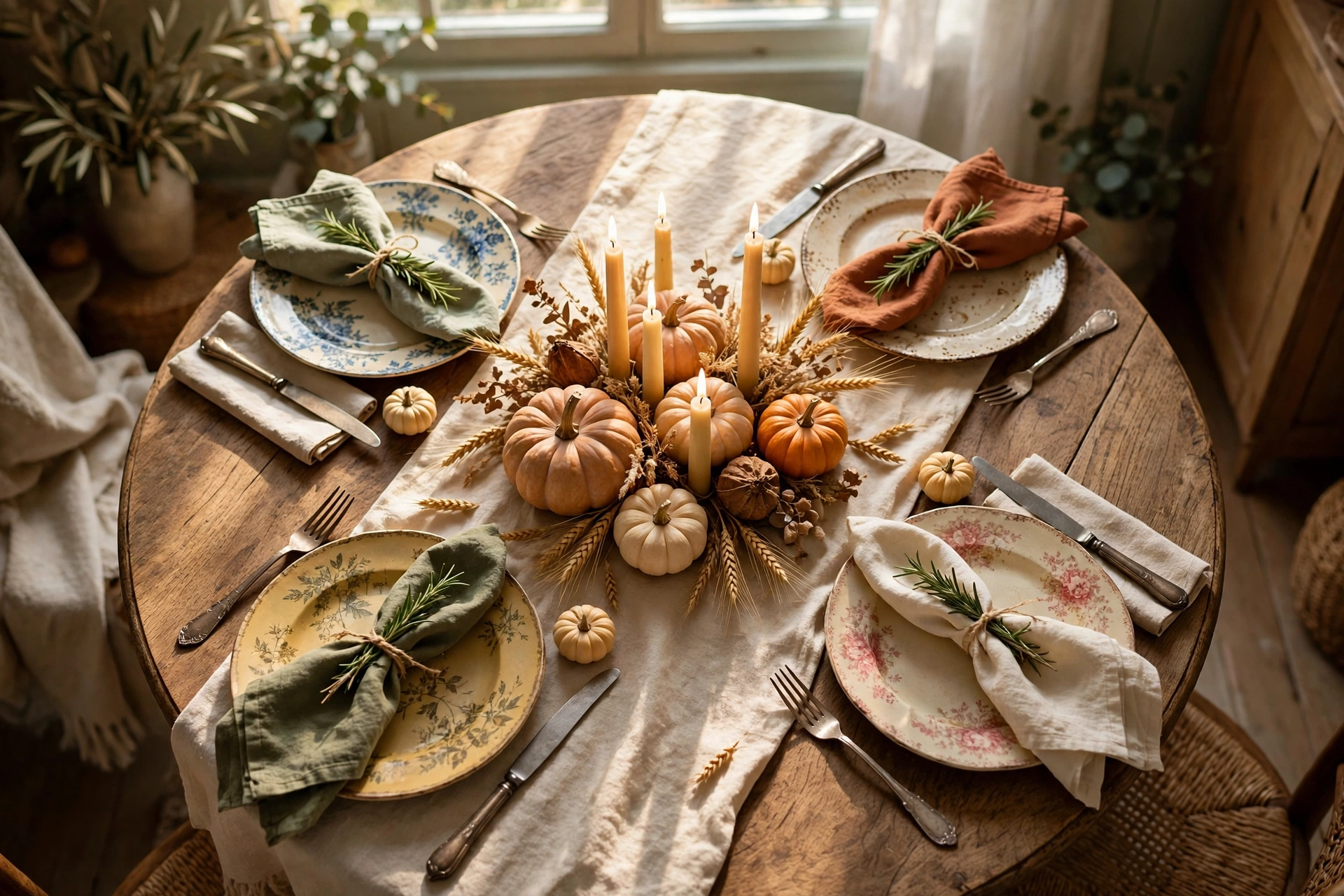
Most Thanksgiving table guides are shot on a table for twelve. Yours seats four, maybe six, and that changes everything about how it should actually be decorated.
A tall, sprawling centerpiece that looks incredible on a long farmhouse table becomes a wall between you and the person across from you on a small round table. The real challenge with a small Thanksgiving table isn’t finding pretty things to put on it — it’s keeping the centerpiece low enough, and the place settings tight enough, that the table still feels intimate instead of crowded.
That’s the gap this guide fills. Below are 18 ideas built specifically around scale, sightlines, and cozy detail for a small dinner, not a scaled-down version of a big formal table.
Table of Contents
The 18 Ideas
Low-Profile Bud Vase Cluster
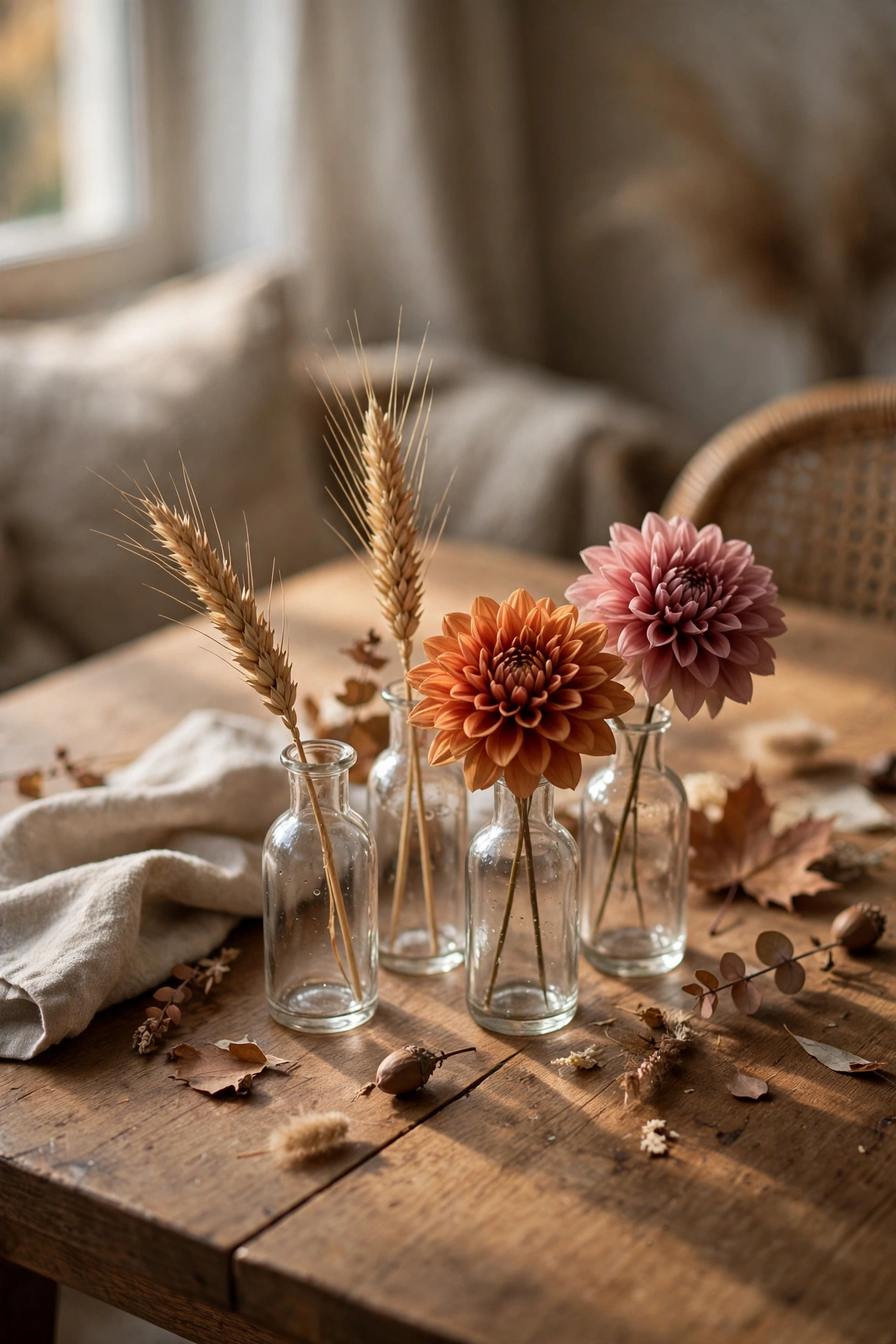
A cluster of three or four small bud vases, each holding a single stem or a few sprigs, replaces one tall centerpiece with something guests can easily see over and around. Keep every vase under eight inches tall so sightlines stay clear even when someone leans forward to pass a dish. Mix in dried wheat, a single dahlia, or a sprig of eucalyptus rather than a full floral arrangement, since one stem per vase keeps the whole cluster feeling light rather than heavy on the table. Group the vases slightly off-center rather than dead-center, leaving the middle of the table open for serving dishes, which matters more on a small table than a large one. This is one of the easiest ways to get real height and color variation without ever blocking a single guest’s view.
Mini Pumpkin Place Markers
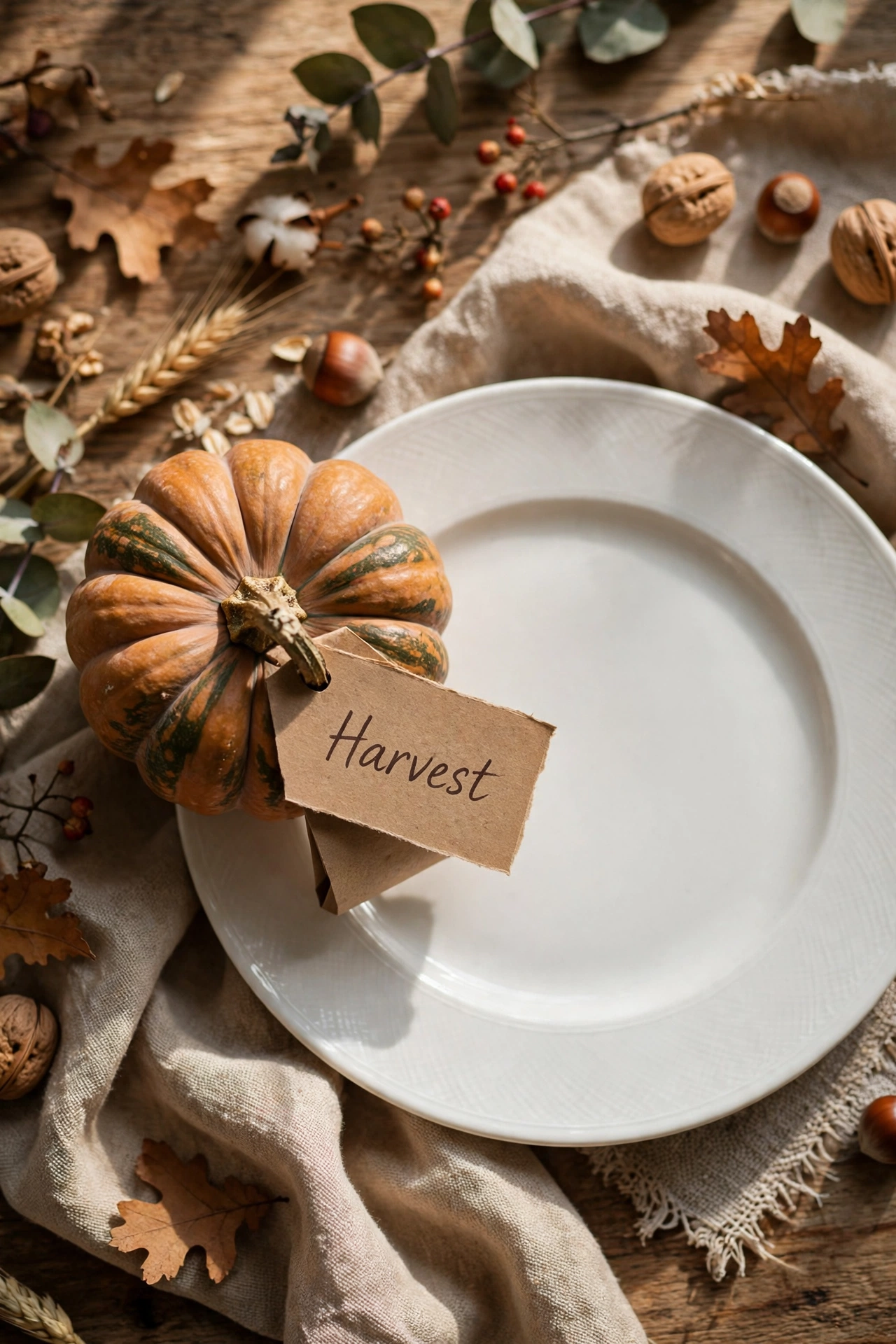
A single mini pumpkin at each place setting, doubling as both decor and a place marker, adds seasonal color without taking up any additional table real estate beyond what a place setting already needs. Choose pumpkins small enough to sit comfortably beside a plate, roughly the size of an orange or smaller, so they don’t crowd the actual dinnerware. A short handwritten tag tucked under the stem, with each guest’s name or a small note of gratitude, turns a simple decoration into a personal touch that guests tend to remember. Mix white, orange, and heirloom-striped varieties across the table rather than using one uniform color, for a look that feels gathered rather than purchased as a matching set. This idea uses zero centerpiece space at all, which makes it especially useful on a genuinely tight table.
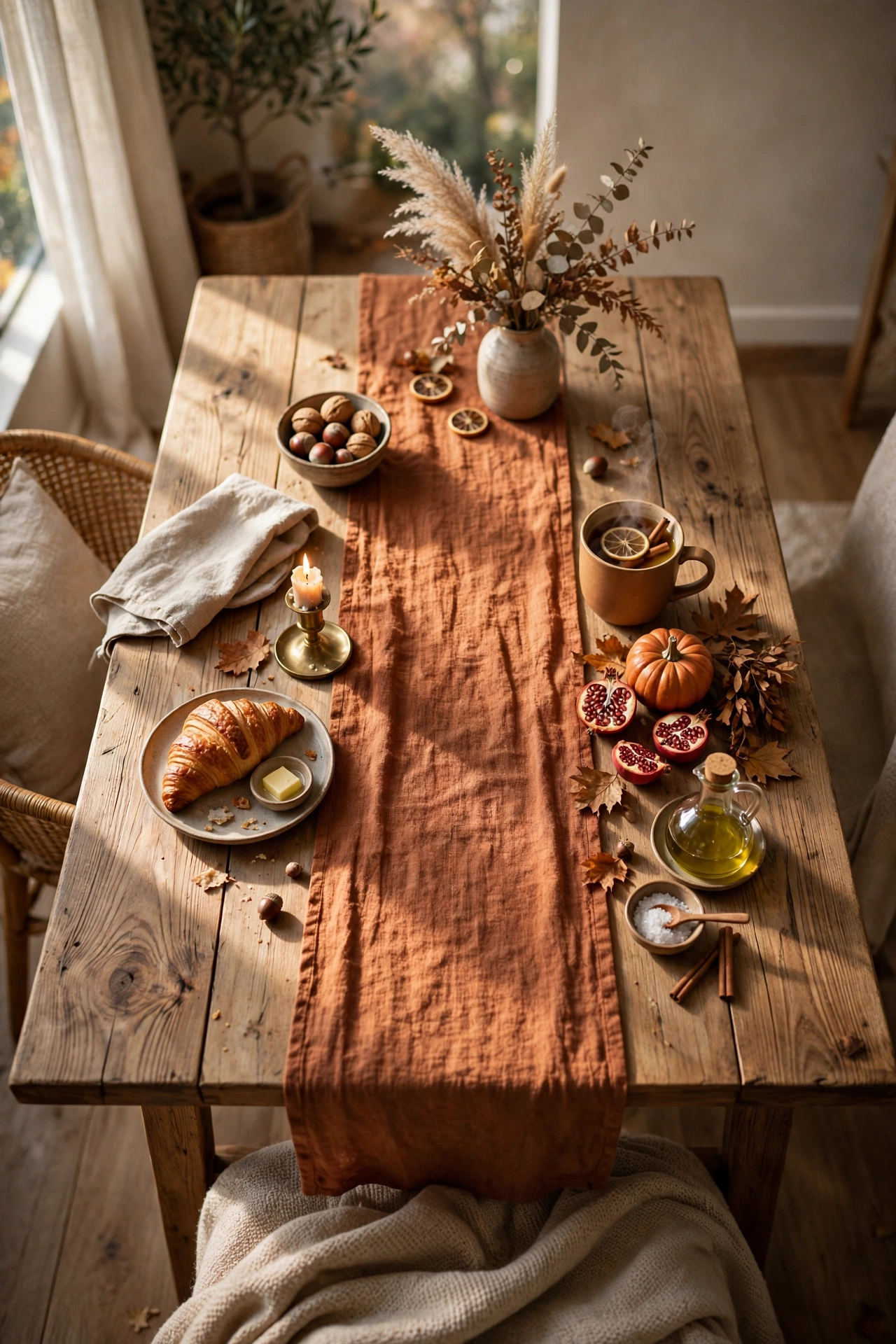
Narrow Table Runner Instead of Tablecloth
A table runner roughly the width of a single dinner plate, run down the center of the table, adds color and texture while leaving far more visible tabletop than a full cloth would, which matters on a smaller surface where every inch of open wood or table material helps the space feel less crowded. A linen or cotton runner in a warm neutral or rust tone works for most palettes, and letting a few inches drape naturally off each end of the table adds a softer, less rigid look than one pulled perfectly taut. This approach also makes a wood table’s natural grain part of the overall styling instead of hiding it completely under fabric. A runner is easier to store and launder than a full tablecloth as well, which is a practical bonus for anyone without much linen storage space.
Related: 16 Thanksgiving Table Favor Ideas Guests Will Actually Keep
Clustered Taper Candle Duo
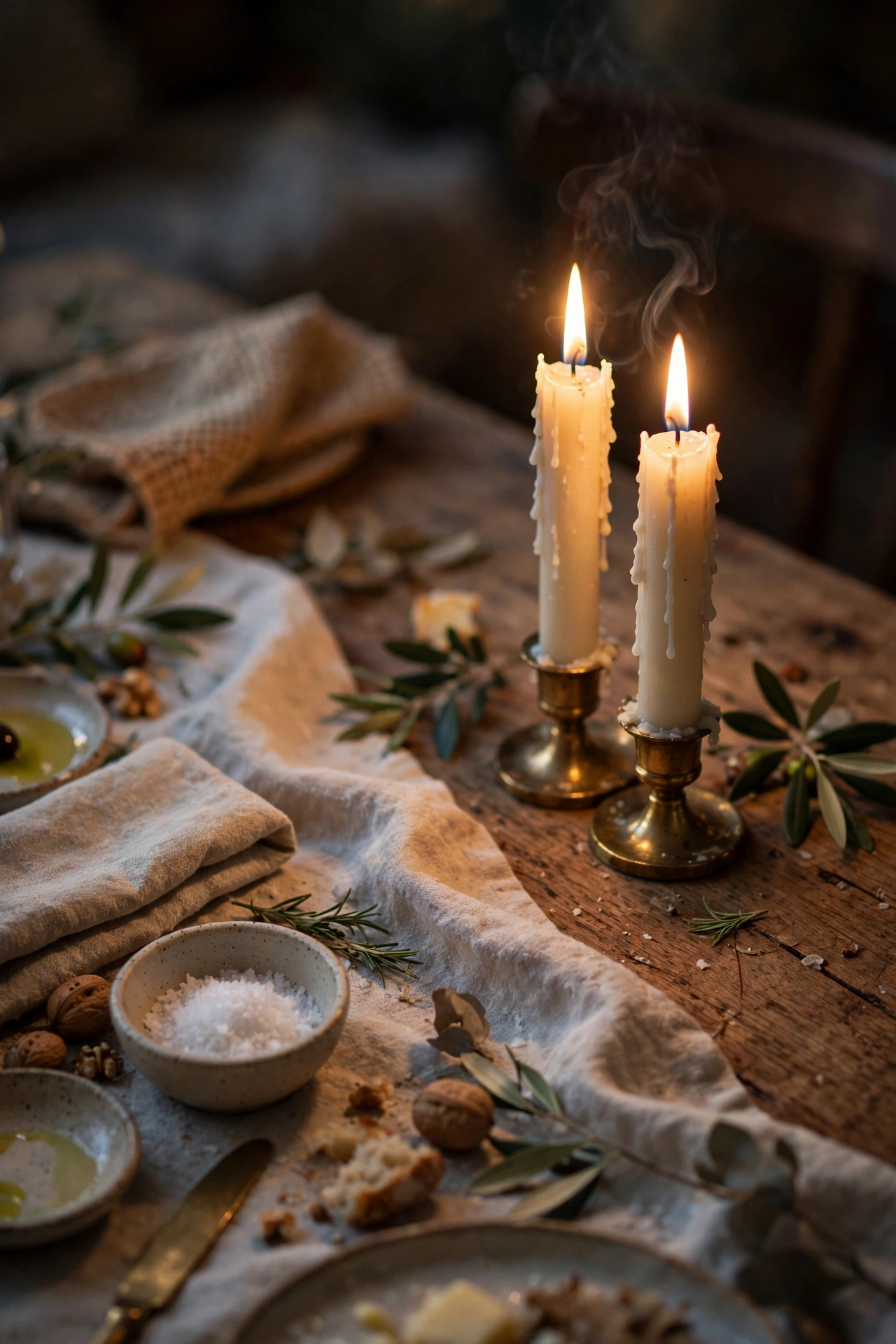
Two taper candles in simple candlesticks, placed close together rather than spread to opposite ends of the table, create warm ambient light without demanding the visual real estate a full candelabra centerpiece would need. Choose candlesticks under six inches tall, low enough that the flame sits below typical eye level when guests are seated, so the light glows without anyone having to look through or around it. Ivory or warm amber tapers photograph and glow more richly than stark white ones under evening lighting. Placing the pair slightly off-center, similar to the bud vase cluster idea, keeps the center of the table open for the actual meal. This is a strong choice for anyone who wants ambiance without committing much tabletop space to achieve it.
Nesting Cake Stand for Height Without Width
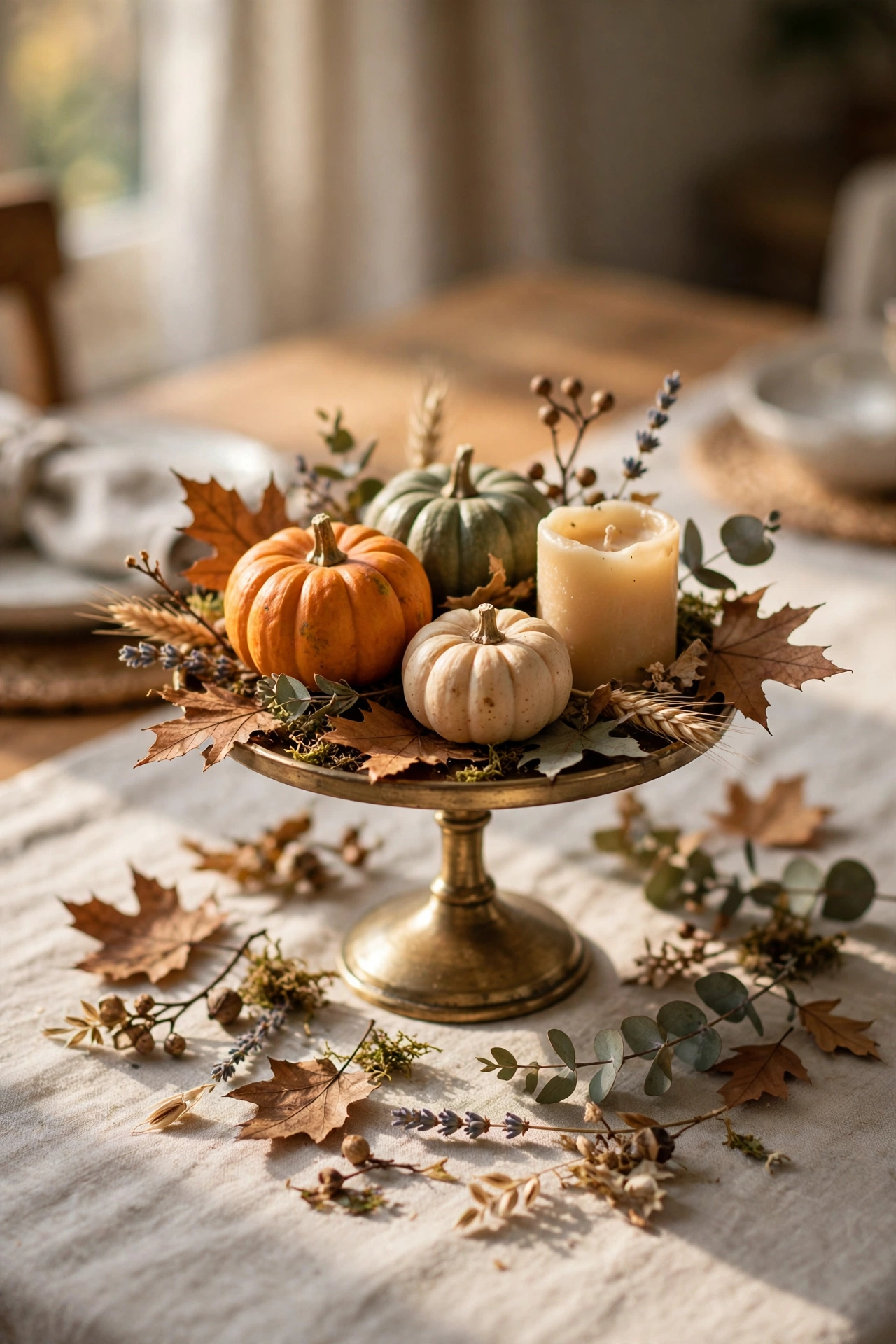
A single small cake stand, roughly ten to twelve inches in diameter, gives a centerpiece a sense of height and tiered visual interest while taking up less footprint than the same volume of decor spread flat across the table. Layer a scattering of mini pumpkins, a few dried leaves, and a short pillar candle directly on the stand rather than building something tall and top-heavy, keeping the overall silhouette compact and stable. Because the stand elevates everything slightly, guests seated at a small table can often still see past it more easily than a wide, sprawling flat arrangement of the same items. This piece also has an obvious second life the rest of the year as a dessert or serving stand, which makes it a practical purchase beyond a single holiday.
Foraged Leaf & Twig Scatter
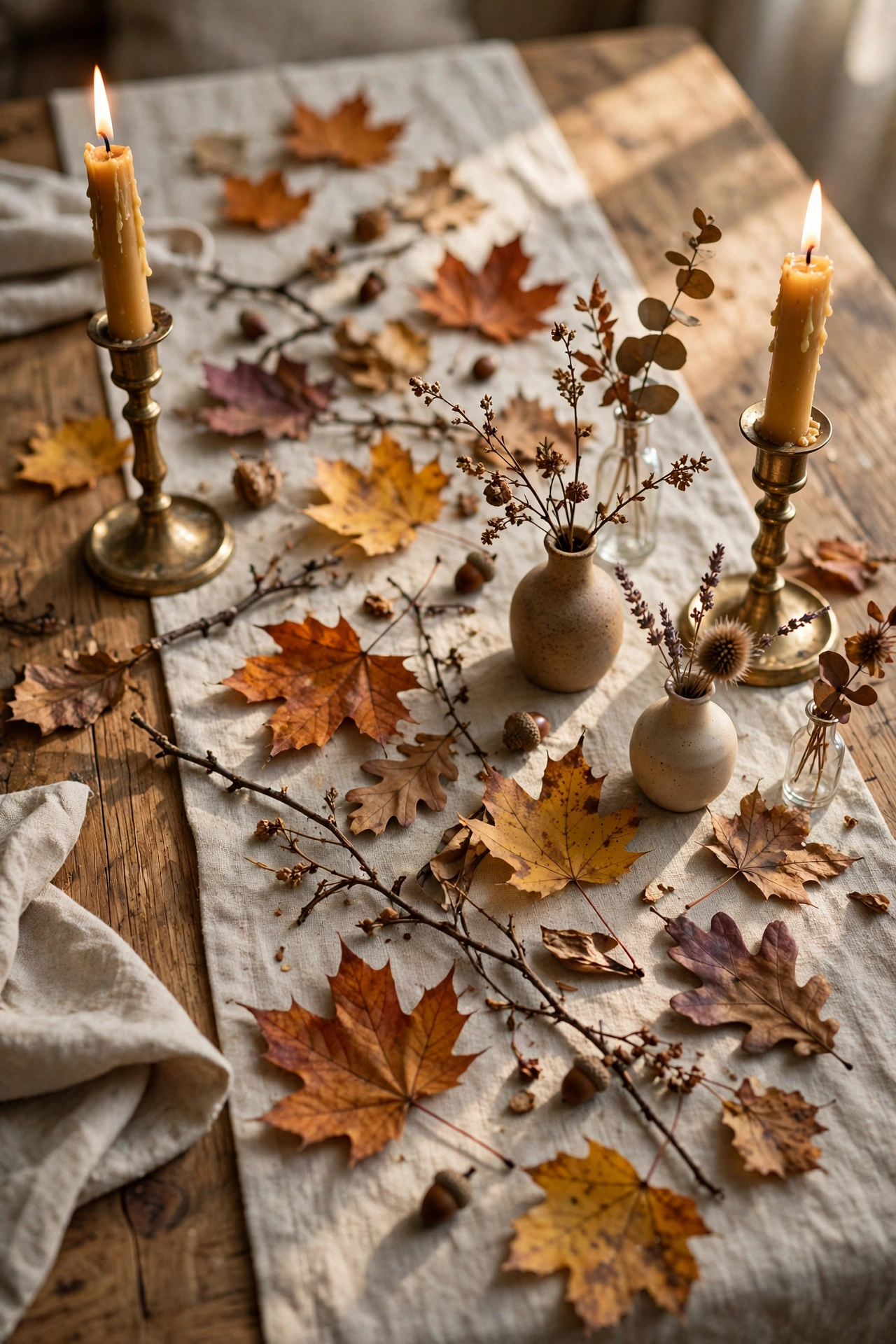
Scattering a handful of foraged fall leaves and a few small twigs directly across the table runner or bare wood costs nothing and adds real seasonal texture without occupying any dedicated centerpiece space at all. Choose leaves with good color and shape, avoiding anything too brittle or crumbling, and scatter them loosely rather than arranging them in a tight, deliberate line. This works especially well tucked around the base of candles or bud vases, filling in small gaps between other decor elements rather than standing alone as the only decoration. Because it uses free, foraged materials, this is one of the lowest-cost ideas on the entire list and pairs easily with almost any other idea here. It’s also a nice activity to do with kids the morning of the gathering, gathering a basket of leaves during a short walk beforehand.
Sprig-Tied Cloth Napkins
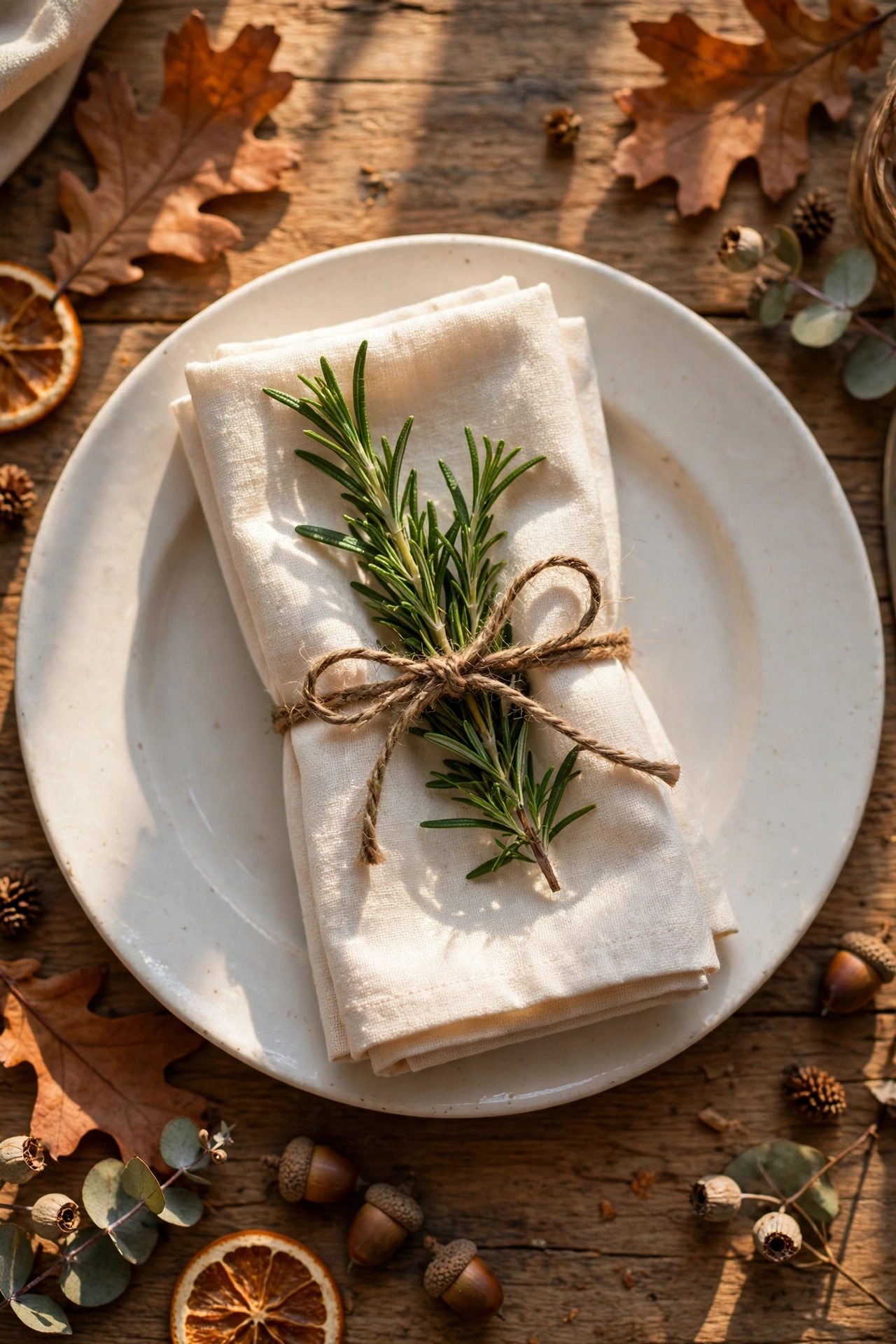
A simple cloth napkin, folded into a rectangle and tied with a sprig of rosemary, sage, or a small dried flower under a length of twine, adds a personal, styled touch directly at each place setting rather than relying entirely on a centerpiece for visual interest. This technique distributes decor evenly across the whole table instead of concentrating everything in the middle, which naturally suits a small table where the center needs to stay clear for serving dishes. Choose a neutral or warm-toned linen napkin so the herb sprig stands out as the main detail rather than competing with a patterned fabric. Tucking the tied napkin directly on top of the dinner plate, rather than beside it, saves additional table space that a separate napkin ring placement would use. This idea also adds a pleasant herbal scent right at the place setting as guests sit down.
Low Centerpiece Ring for Round Tables
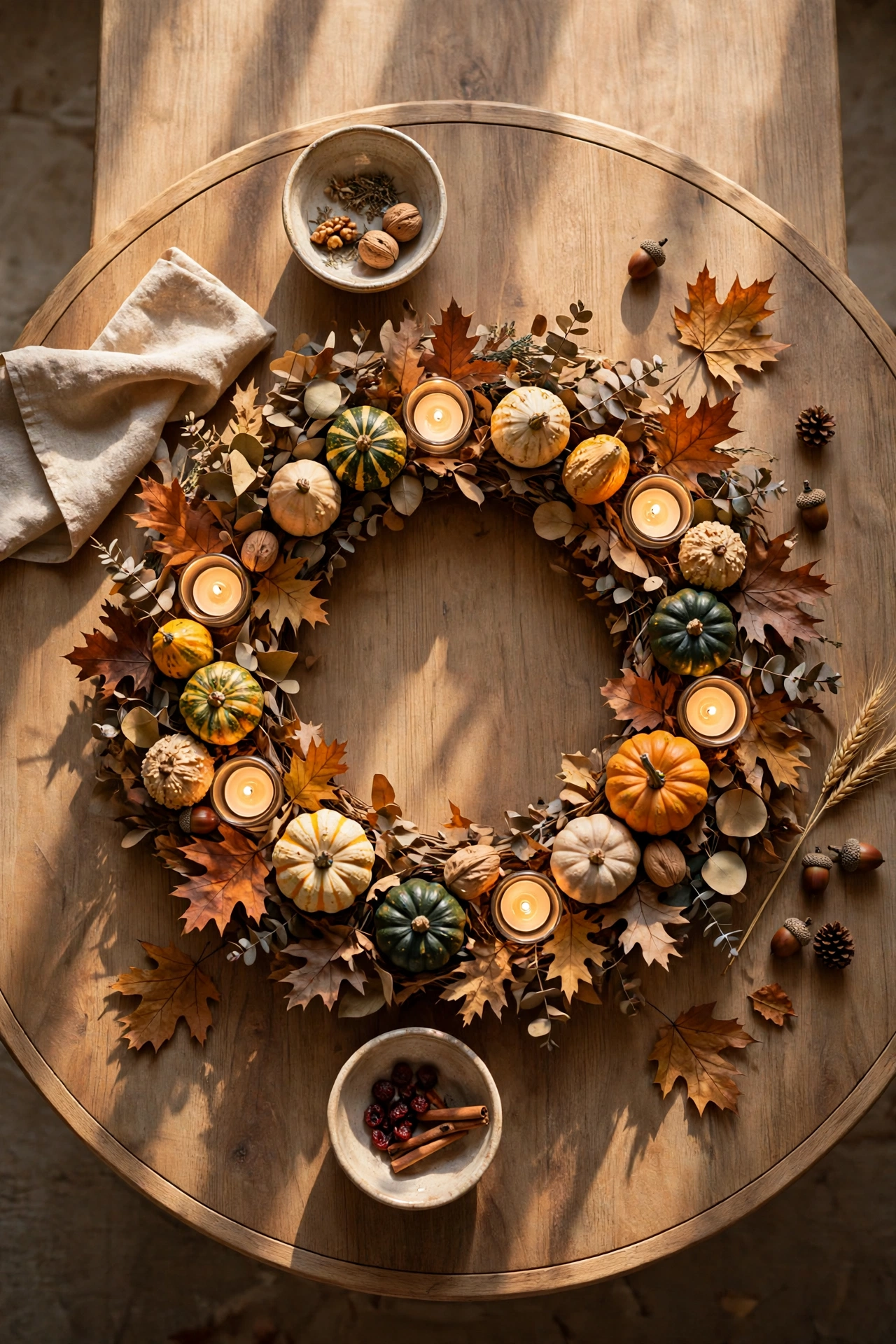
For a genuinely round table, a low, ring-shaped centerpiece built from a shallow wreath form or a circular tray keeps the middle of the table entirely open for a large serving dish while still providing visual interest around its edges. Fill the ring with small gourds, dried leaves, and a few tea lights rather than tall stems, since the circular shape naturally works with the way people are seated around a round table rather than fighting against it the way a long, linear centerpiece would. This idea solves one of the most common round-table struggles directly: where does the turkey or the main serving dish actually go if the centerpiece already occupies the middle. Battery tea lights tucked into the ring add soft glow without any flame directly under a passed serving dish. This is one of the more purpose-built ideas on this list specifically for round or square small tables rather than long rectangular ones.
Mismatched Vintage Plates
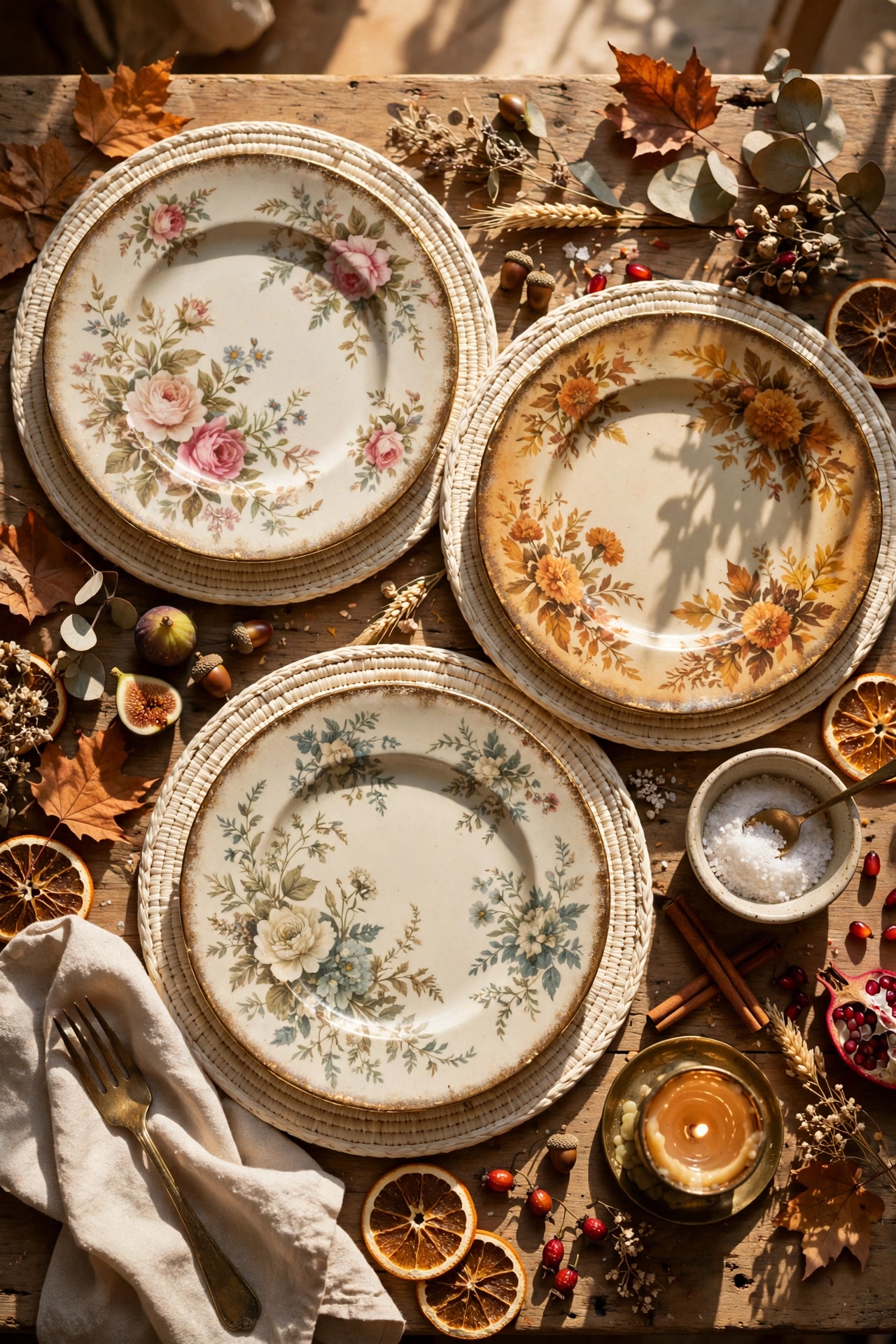
A collection of mismatched vintage or thrifted plates, one different pattern per guest, brings genuine character and conversation value to a small table without needing any additional centerpiece decor to carry the visual interest. Keep the plates within a similar color family, such as all cream and gold-rimmed or all warm floral patterns, so the mismatch reads as curated rather than accidental or mismatched in a chaotic way. This approach works particularly well for a small, intimate gathering where guests are likely to actually notice and comment on individual place settings, something that gets lost at a larger, more formal table. Layering a simple white or cream charger underneath each mismatched plate helps unify the whole table even when the plates themselves vary quite a bit in pattern. This is also one of the more budget-conscious ideas here, since a full matching china set is far more expensive than a handful of thrifted individual pieces.
Handwritten Kraft Place Cards
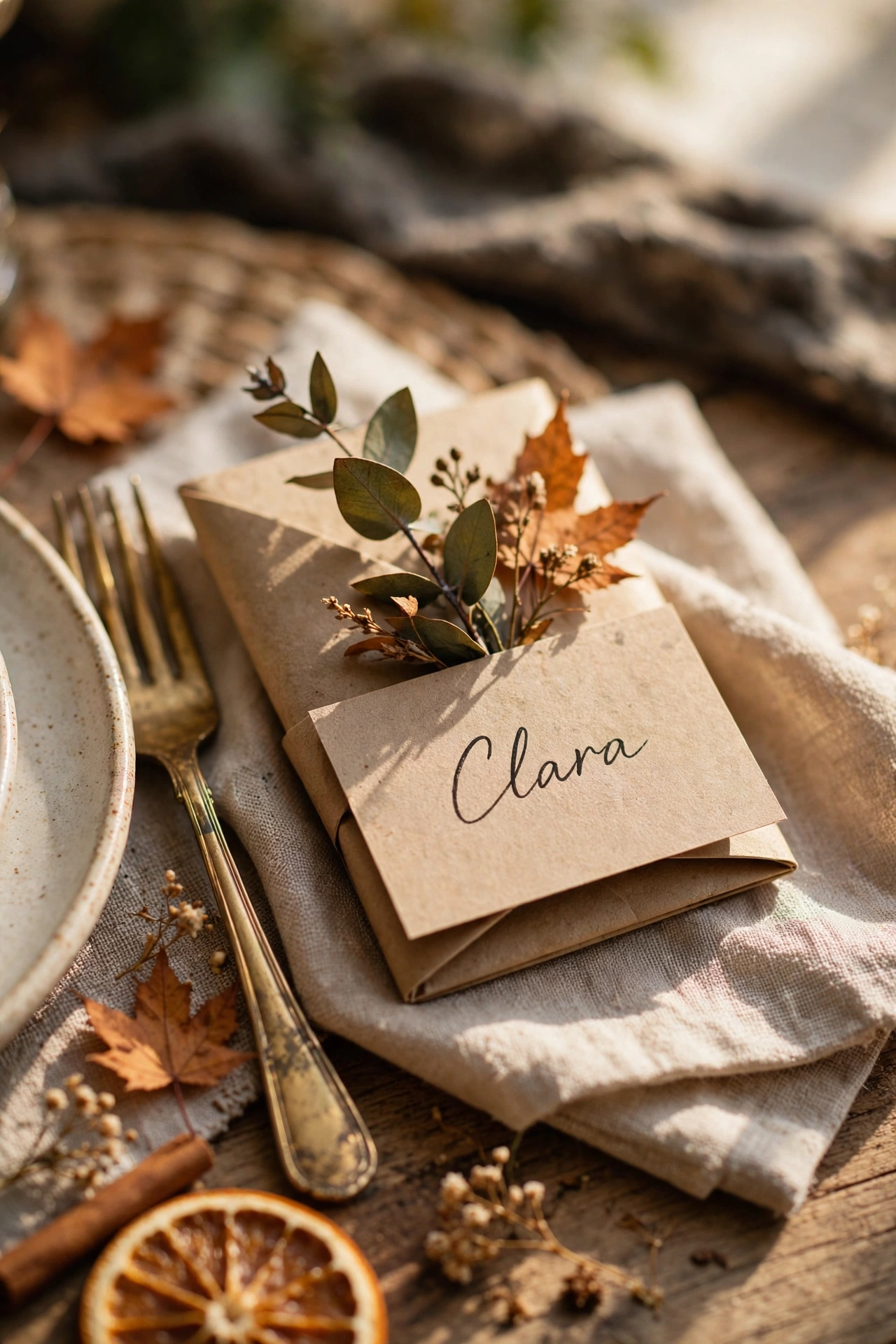
A small kraft paper place card at each setting, folded into a simple tent shape and handwritten with a guest’s name, adds a personal touch that costs almost nothing and takes up minimal space compared to a printed sign or elaborate card. Tucking a single small leaf or sprig under the fold of each card ties it visually to the rest of the table’s natural, seasonal styling. This detail matters more at a small, intimate table than a large one, since guests are close enough to actually read and appreciate the handwriting rather than glancing at a place card from several seats away. A short line of gratitude, or what the host appreciates about that specific guest, turns a simple place card into a small, memorable gesture. This idea is easy to prepare well in advance, since the cards themselves take only a few minutes total to write out for a table of four to six.
Related: 17 Blue Thanksgiving Table Decor Ideas for a Fresh Twist
Votive Candle Cluster
A small grouping of votive candles in short glass holders, placed in a loose cluster rather than a single tall candle, spreads warm light across more of the table surface while keeping every flame low enough to see over easily. Five or six votives clustered together take up roughly the same footprint as one taller pillar candle but distribute their glow more evenly across a small table’s surface. Amber or smoked glass holders diffuse the light slightly and add a warmer tone than clear glass. This cluster works well as the sole centerpiece on a very small table where even a low vase feels like too much, or as a supporting element alongside the bud vase or mini pumpkin ideas above. Battery-operated flameless votives are a safe substitute if there are young children at the table or if the candles will be lit for an extended period during the meal.

Mini Gourds in a Shallow Bowl
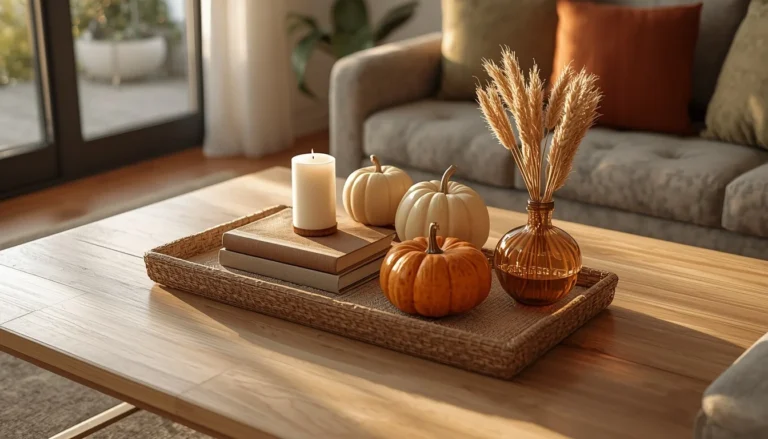
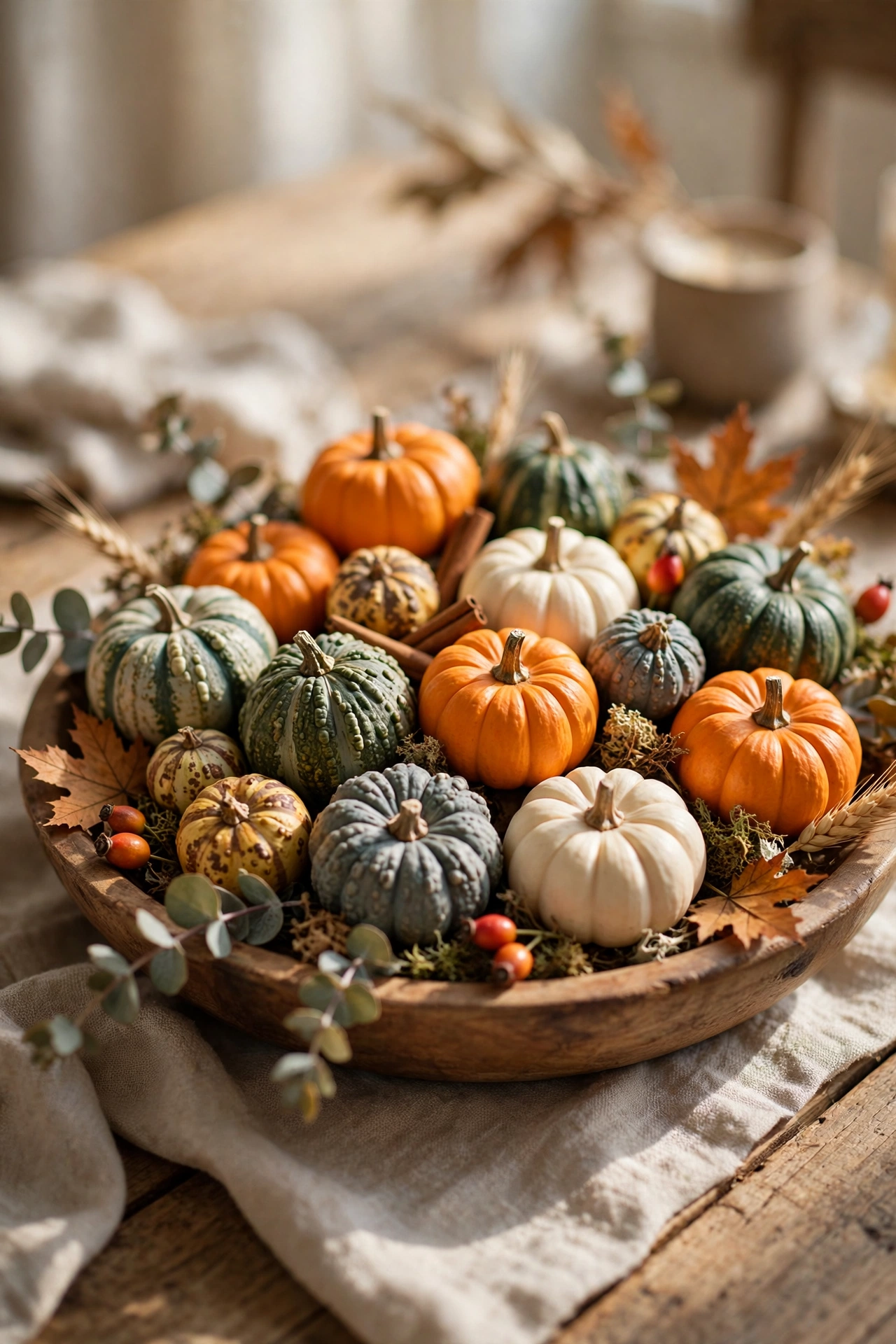
A shallow wooden or ceramic bowl filled with a small assortment of mini gourds and pumpkins gives a contained, tidy centerpiece option that’s easy to move entirely off the table for a moment if extra serving space is suddenly needed. Choose a bowl low enough, generally under four inches tall, that it never blocks sightlines even at a tightly seated table. Mixing gourd shapes, colors, and textures within the same small bowl adds visual interest without needing any additional centerpiece elements around it. This idea is genuinely one of the fastest to assemble on this entire list, since it requires no arranging skill beyond piling a few gourds attractively into a bowl. It also stores easily in a cabinet the rest of the year, unlike taller or more delicate centerpiece pieces.
Dried Wheat or Pampas Bundle
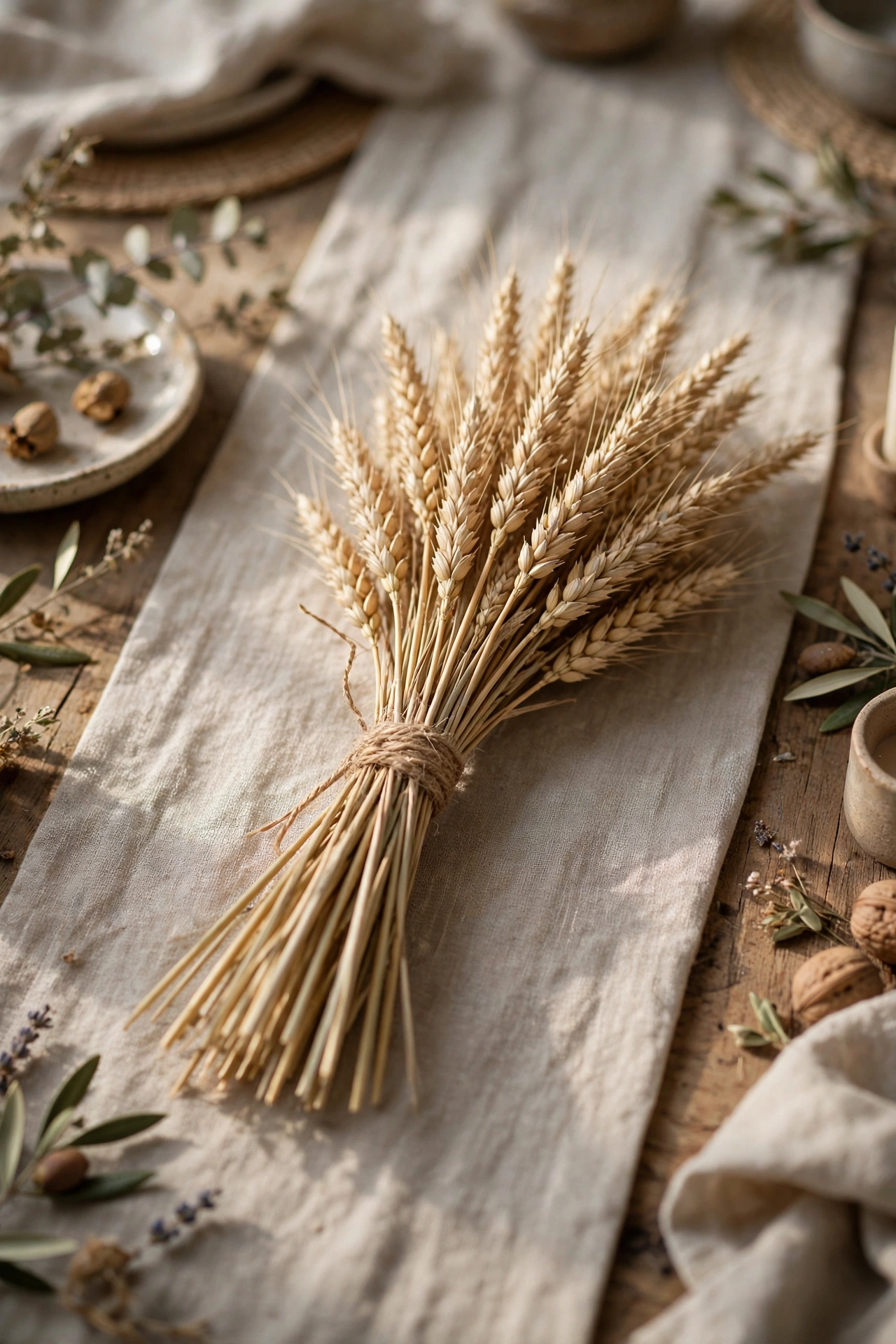
A single slim bundle of dried wheat or small pampas grass stems, laid horizontally down the center of the table rather than standing upright in a vase, adds texture and a rustic, harvest feel while staying almost completely flat and out of the sightline. Tie the bundle loosely with twine or a thin ribbon at the center to keep the stems together without making the bundle look stiff or overly formal. This works particularly well layered directly on top of a table runner, filling the same visual role as a floral centerpiece while taking up a fraction of the vertical space. Because dried elements don’t wilt, this bundle can be assembled well ahead of the gathering and simply set out the day of, which is a practical advantage over fresh floral arrangements for a busy hosting day. It’s also one of the most affordable textural centerpiece options on this entire list.
Folded Napkin with Menu Card
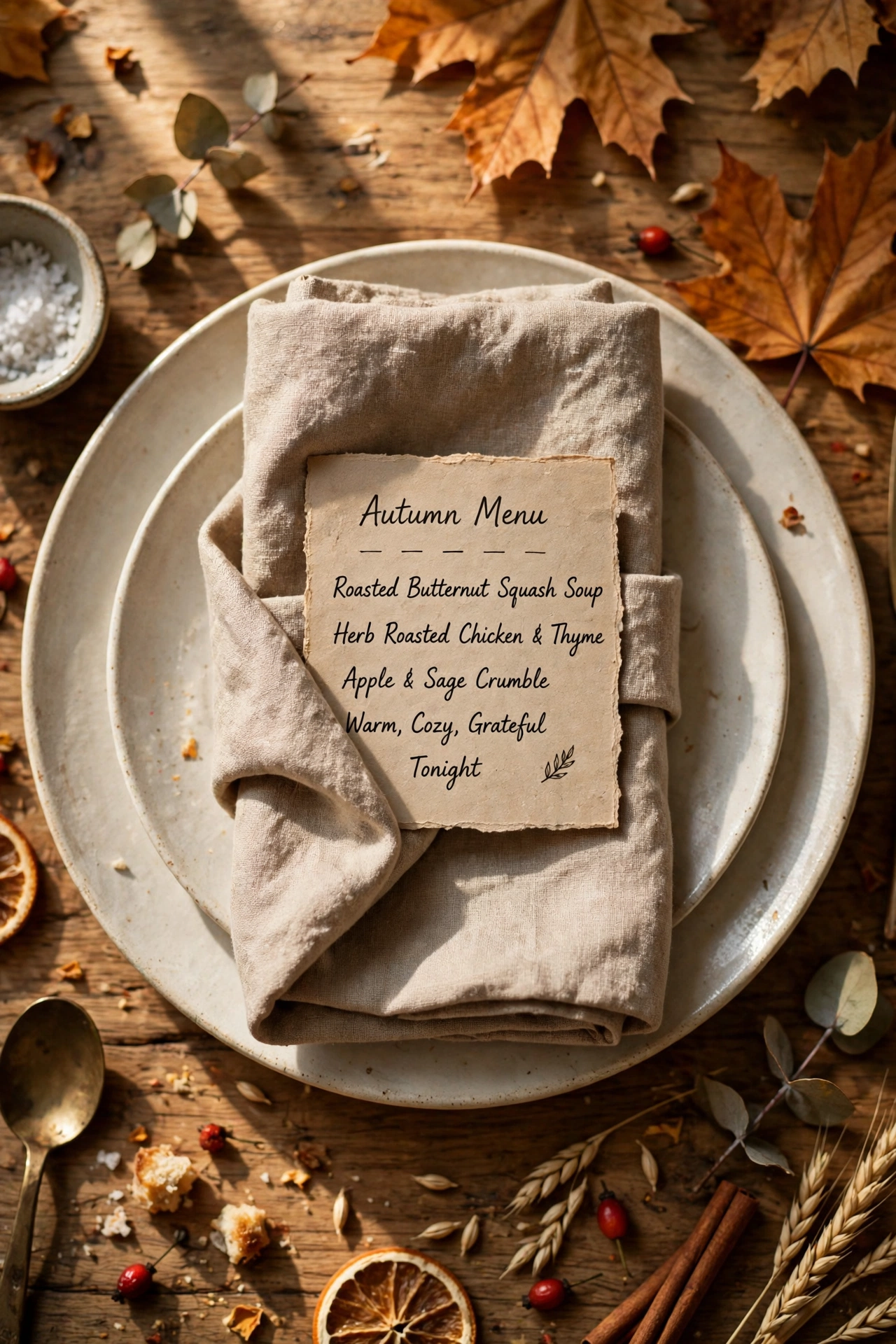
Tucking a small handwritten or printed menu card into the fold of each napkin gives guests something practical and personal to look at without adding any separate decor piece to the table itself. List just the main dishes in a simple, short format rather than an elaborate multi-course menu layout, keeping the card small enough to fit comfortably within a folded napkin. This detail works especially well for a smaller, more intimate Thanksgiving dinner where guests are likely to actually read it and appreciate the thoughtfulness, rather than a large buffet-style gathering where a printed menu might go unnoticed. It also doubles as a nice keepsake, since guests sometimes take these home as a small memento of the gathering. This is a low-cost, low-effort detail that adds a surprising amount of polish for the time it takes to put together.
Card Table Layered Linens
If the actual dining surface is a folding card table rather than a real dining table, layering two textures, such as a solid tablecloth underneath and a narrower patterned runner on top, disguises the table’s utilitarian look far more effectively than a single flat cloth alone. Let the base cloth hang down close to the floor on all sides to fully hide the folding legs, since visible metal or plastic table legs are usually the biggest giveaway that a table isn’t a permanent dining piece. A slightly heavier fabric for the base layer also helps the whole setup feel more substantial and less like it could be folded away in a few minutes. This approach works for any temporary table setup, including a table brought in specifically to accommodate extra guests during the holiday, and it’s one of the few ideas on this list solving a structural problem rather than purely a decorative one.

Single-Stem Bud Vase at Each Setting
Rather than one shared centerpiece, a single small bud vase with one stem placed at every individual place setting distributes the floral element evenly across the whole table and completely eliminates any shared centerpiece blocking sightlines in the middle. Choose one flower variety, such as a single dahlia or chrysanthemum bloom per vase, in a warm autumn tone, so the repeated element ties the table together even though each vase sits apart from the others. This approach uses noticeably fewer stems total than one large arrangement would require, which can actually make it a more budget-friendly floral option despite feeling more abundant across the table. It also gives each guest a small individual detail they can take home afterward if they’d like a memento of the gathering. This idea pairs particularly well with the mini pumpkin place marker idea for a fully personalized setting at every seat.
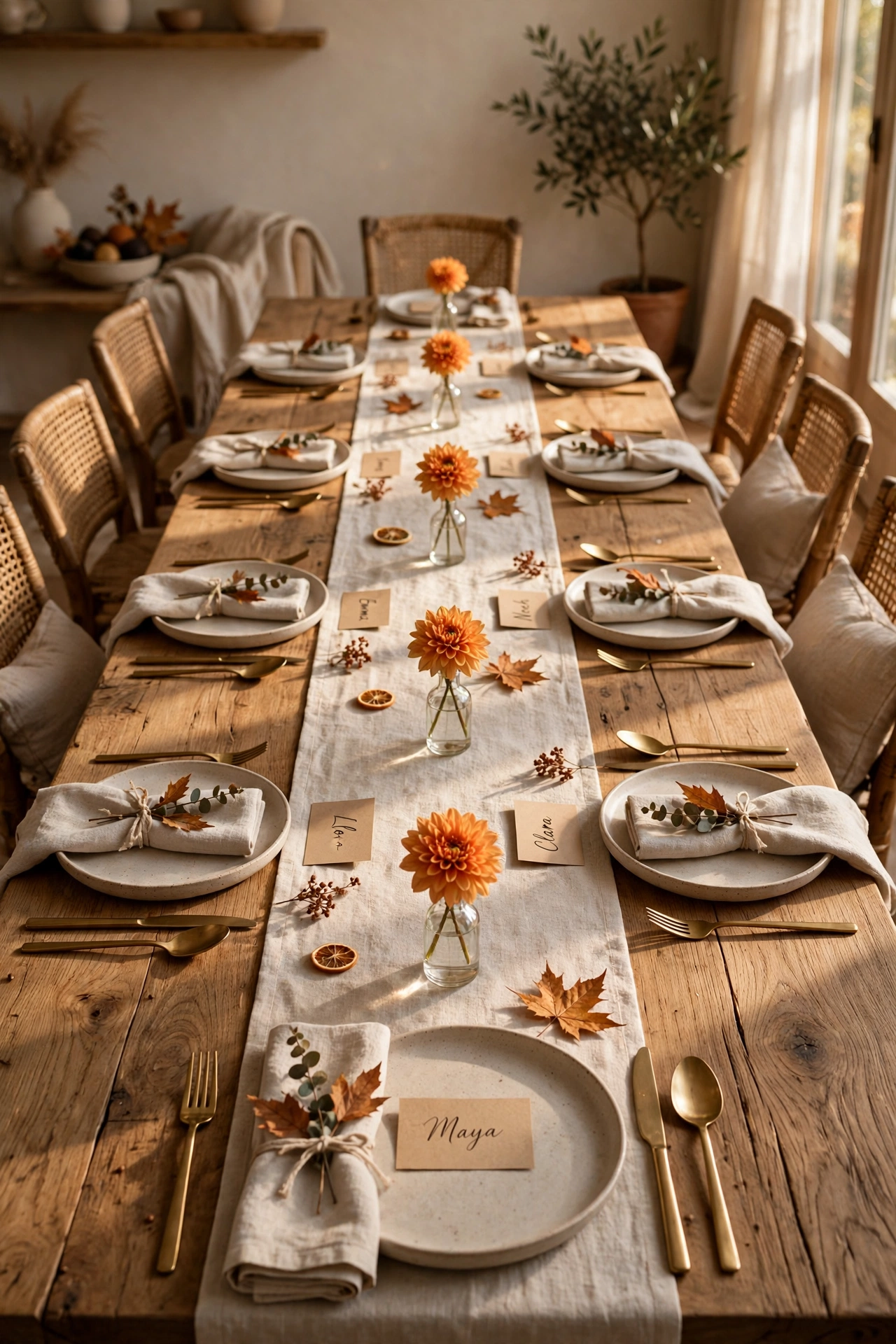
Sideboard Overflow Display
When a small table genuinely can’t accommodate any centerpiece at all once the food and place settings are in place, moving the decorative elements to a nearby sideboard, console, or even a stacked stool beside the table extends the Thanksgiving styling into the room without crowding the actual dinner surface. A cluster of pumpkins, a few taper candles, and some seasonal greenery arranged nearby lets the eye still register a fully decorated space, even though the table itself stays clear and functional for the meal. This is a particularly useful idea for very small apartments or studio dining setups where every inch of table surface needs to go toward food and place settings. It also gives guests a natural spot to set drinks or extra dishes during the meal without cluttering the table itself. Think of this as decorating the room around the table rather than the table surface directly.
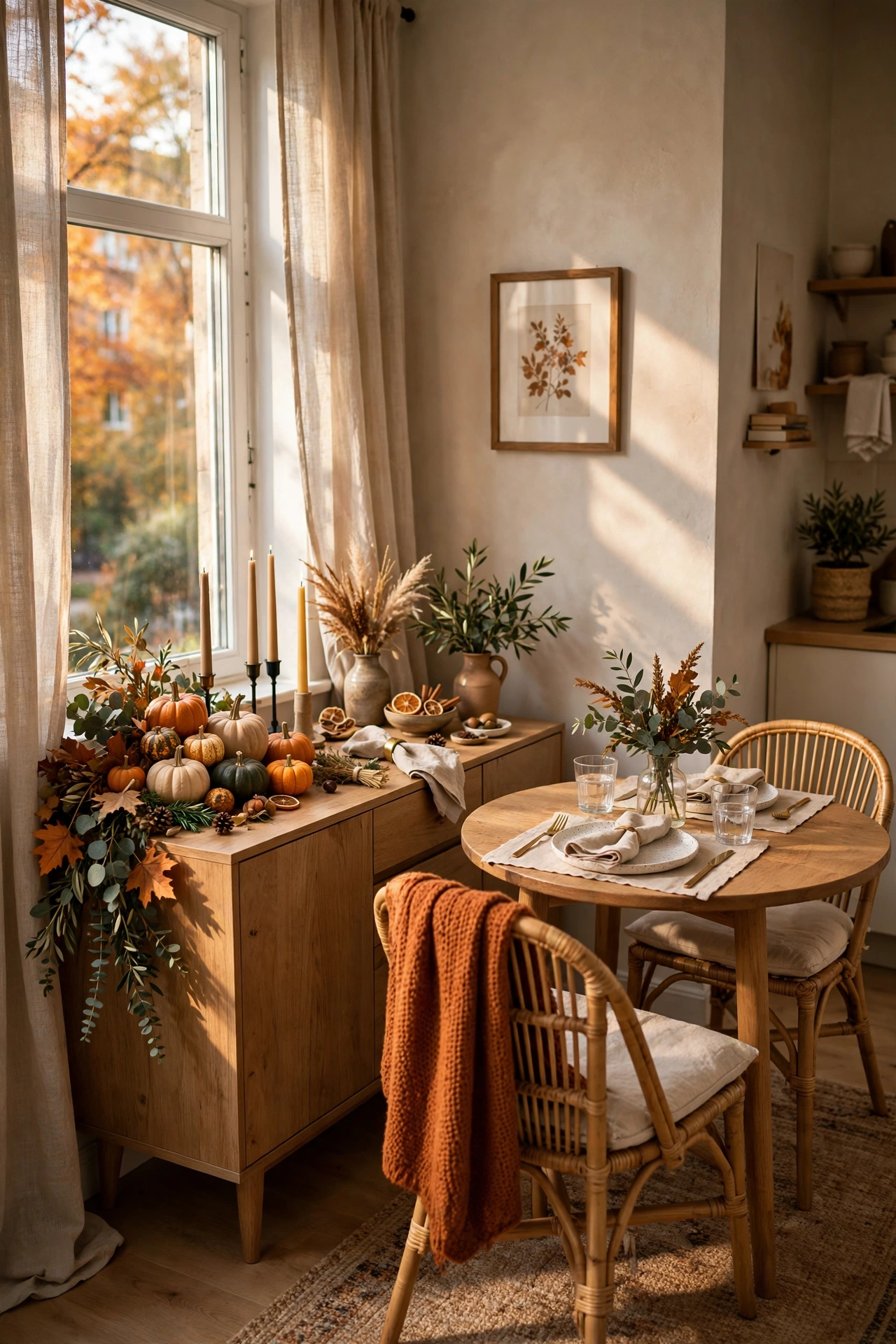
Warm String Lights Under the Runner
A short strand of warm white battery-operated string lights, tucked just beneath the edges of a table runner so only a soft glow shows through the fabric, adds ambient light to the table without any additional bulk or visible clutter on the surface itself. This works especially well for an evening Thanksgiving dinner, giving the table a warm, gentle glow that complements taper or votive candles rather than replacing them entirely. Because the lights sit under the runner rather than on top of it, this idea adds atmosphere without taking up any additional visible tabletop space, which is exactly the constraint a small table is working within. A timer function on the lights means they can be set to turn on automatically as dinner approaches, one less thing to remember amid the last-minute cooking rush. This detail is subtle in photos taken during the day but transforms the mood significantly once evening light fades.
Related: 23 Stylish Small Apartment Christmas Decor Ideas That Save Space That Make Every Inch Count
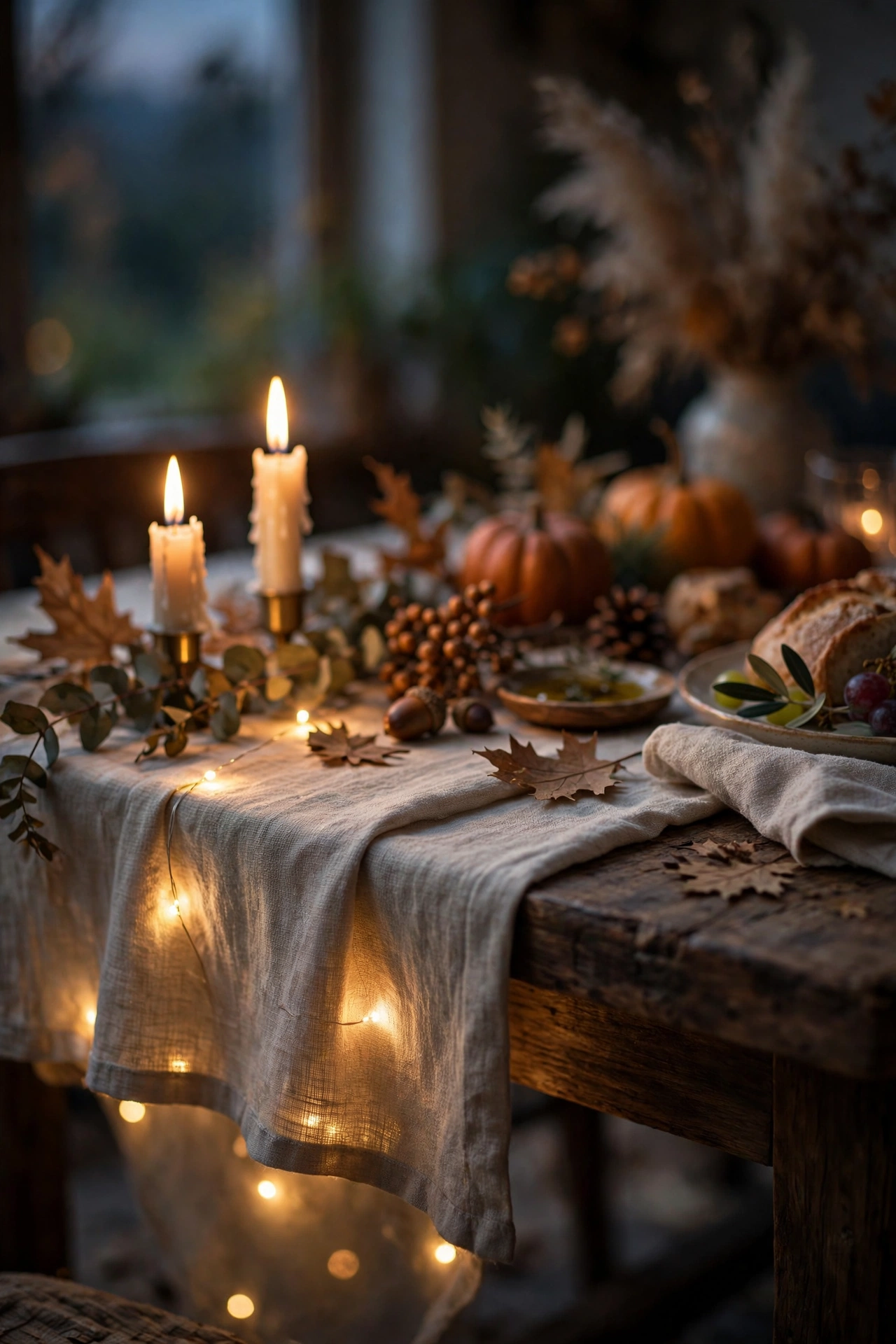
Styling Tips
- Keep any shared centerpiece under eight inches tall so seated guests can see each other clearly across the table.
- Distribute some decor to individual place settings (napkins, place cards, mini pumpkins) rather than putting everything in one central spot, which suits a small table’s limited middle space.
- Choose one dominant color story and repeat it in small doses across the table rather than several unrelated color accents competing for attention.
- Leave the center of a round table genuinely open for serving dishes rather than assuming a centerpiece and the food can share the same space comfortably.
Practical Implementation Ideas
- Set the table fully, including serving dishes if possible, before finalizing centerpiece placement, so you can see exactly how much space remains for decor.
- Test candle and vase heights while actually seated at the table, not just standing over it, since the seated sightline is what actually matters.
- Prepare dried, foraged, or make-ahead elements (wheat bundles, place cards) a day or two in advance to reduce day-of stress on a small kitchen and table setup.
Common Mistakes to Avoid
- Choosing a centerpiece scaled for a photo of a long farmhouse table rather than the actual small table being decorated.
- Using a full floor-length tablecloth on a very small table, which can visually shrink the table further rather than making it feel more substantial.
- Skipping individual place setting details entirely and relying only on a centerpiece, which tends to look sparse on a small table where guests sit close enough to notice details.
- Placing a tall arrangement directly in the center of a round table, which blocks conversation and passing dishes far more than on a long rectangular table.
Small-Space Alternatives
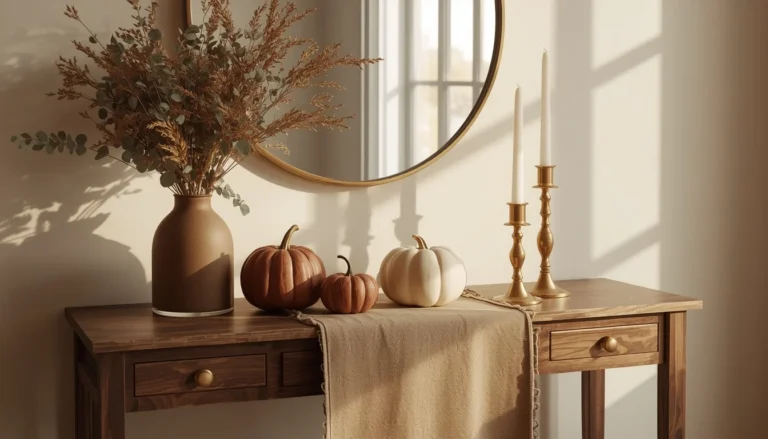
Several ideas on this list are already the small-space alternative version of a bigger Thanksgiving decor concept, but for an especially tight setup, the sideboard overflow display and the votive candle cluster take up the least table space of anything here while still contributing real atmosphere to the meal.
Budget-Friendly Alternatives
Foraged leaves, dried wheat bundles, and handwritten kraft place cards cost close to nothing and are genuinely some of the most effective ideas on this list. A single shallow bowl of mini gourds from a grocery store or farm stand replaces a much pricier floral centerpiece for a fraction of the cost. Thrifted mismatched plates are often cheaper than a matching set purchased new, in addition to adding more character to the table.
Pro Styling Recommendations
Treat centerpiece height the way a stylist treats seating arrangements at a dinner party: the goal is always clear sightlines and easy conversation, not maximum visual drama. Distribute decor between the shared centerpiece and individual place settings so a small table doesn’t rely on one crowded focal point to carry the whole look, and always test the final setup from a seated position before guests arrive.
FAQs
Conclusion
A small Thanksgiving table doesn’t need to borrow its styling from a twelve-seat formal dining spread — it needs decor that respects the space guests actually have to eat, talk, and pass dishes comfortably. Keep the centerpiece low, spread a few details out to individual place settings, and let the table’s smaller size work in favor of a cozier, more intimate gathering rather than trying to visually compete with a much bigger table.