15 Easy Thanksgiving Napkin Folds That Look Fancy
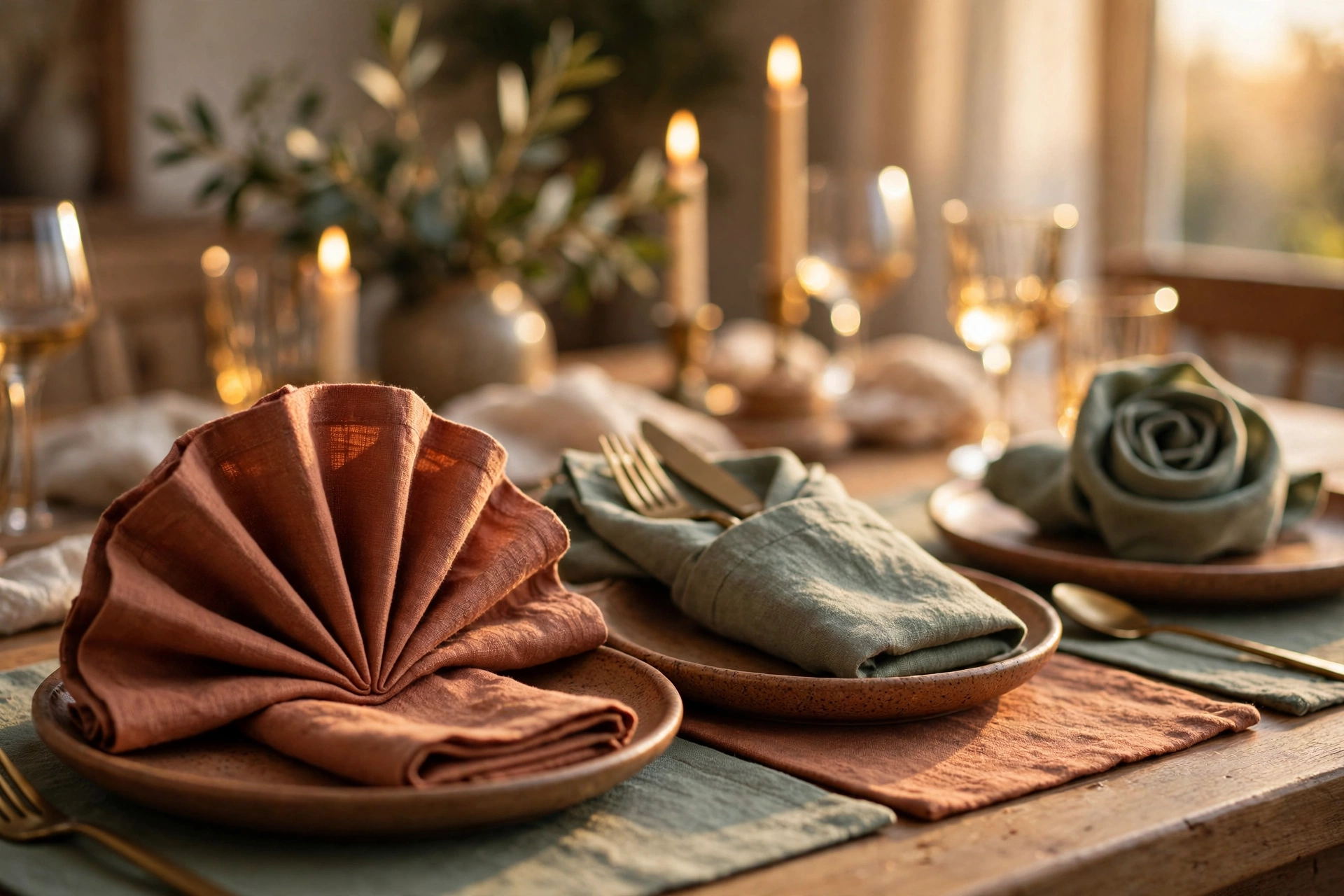
Here’s a small detail that changes how a whole table reads: the napkin. Leave it flat and rectangular, and even a beautifully set table can look unfinished. Fold it with a little intention, and suddenly the whole place setting looks like it took real effort — even if it took you forty-five seconds.
The good news is that the folds that look the most impressive usually aren’t the hardest ones. A clean fan fold or a simple pocket fold reads just as polished as an intricate rose fold, and both take a fraction of the time. You also don’t need matching napkin rings or a stack of stiff linen to pull any of these off; most work with the cotton or linen napkins already in your cabinet.
These 15 folds range from genuinely easy to a little more involved, so there’s something here whether you’re setting a table for four or folding forty napkins solo the morning of. Pick two or three that match your table’s mood, and build your place settings around them.
Related: 16 Easy DIY Christmas Candle Holders to Make Tonight
Table of Contents
15 Easy Thanksgiving Napkin Folds
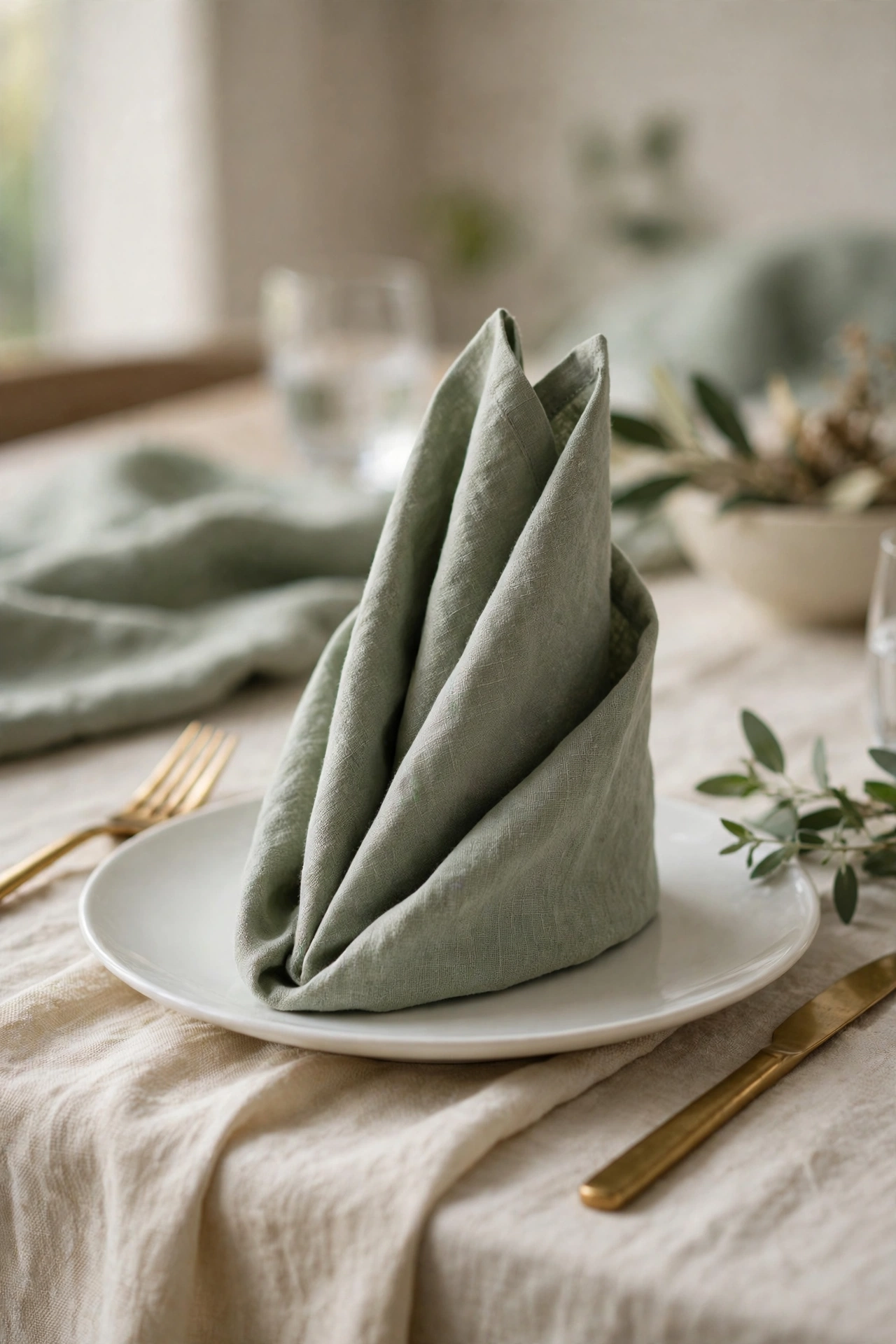
1. Classic Fan Fold
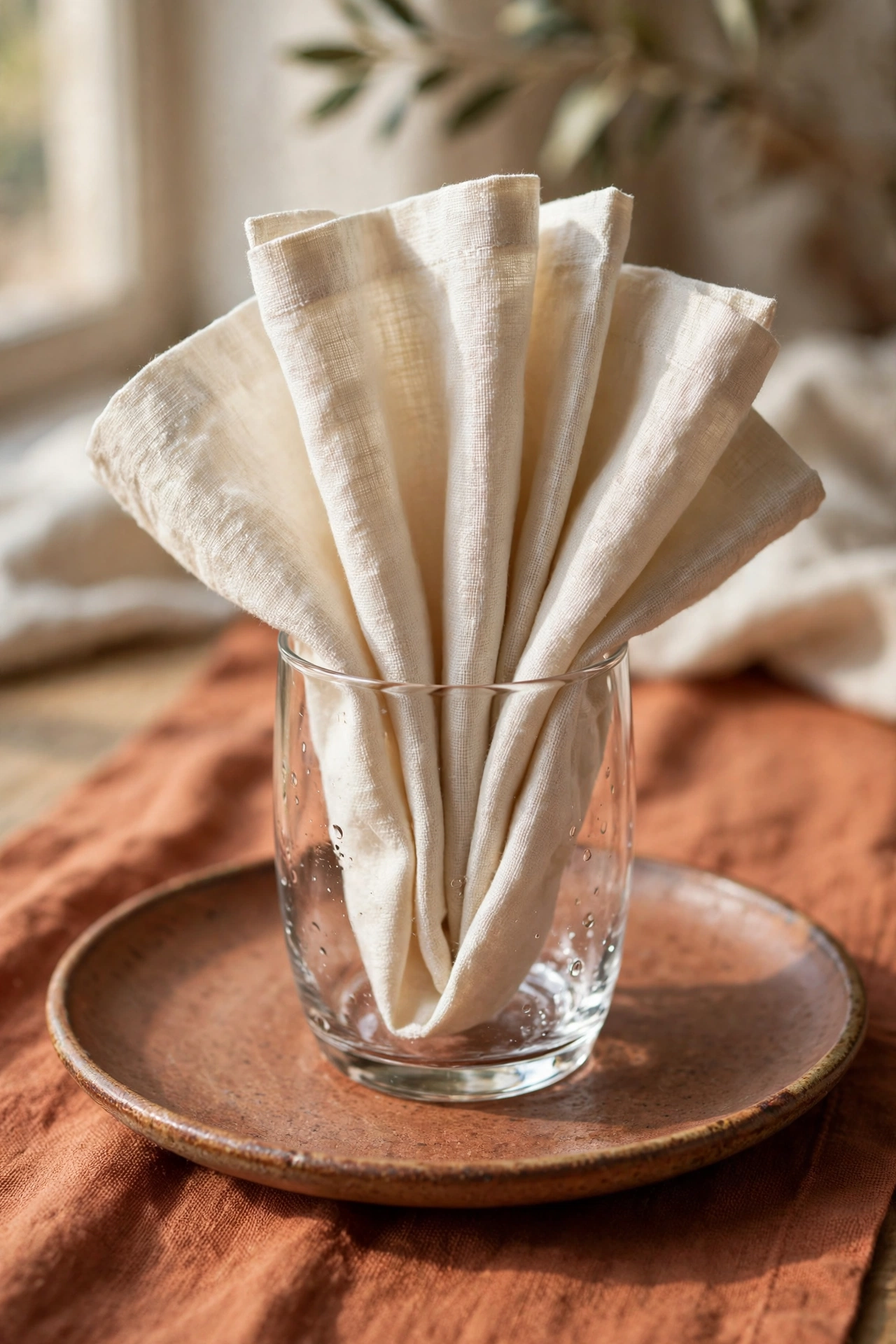
The fan fold is the single most reliable option on this list, because it looks intentional and slightly formal while taking almost no skill to execute. Fold the napkin in half lengthwise, then accordion-pleat it back and forth along the shorter edge until the whole napkin becomes a tight, even stack of folds. Pinch the bottom third together and let the top flare open into a fan shape, then either set it directly into a water glass or lay it flat with the pinched end tucked slightly under the plate. This fold works especially well with crisp linen or a lightly starched cotton napkin, since stiffer fabric holds the pleats without collapsing. It’s the fold to default to when you’re setting a large table and need something that looks polished without eating up your prep time.
2. French Pleat
The French pleat brings height and a bit of drama to a place setting, making it a strong choice for a more formal Thanksgiving dinner where the table itself is part of the presentation. Start by folding the napkin into a long rectangle, then create a series of small, even pleats along its length before folding the pleated strip in half to form a standing pouf shape. Set the folded piece upright on the plate so the pleats fan out slightly at the top, giving it a sculptural, almost fabric-flower look. This fold benefits the most from a lightly starched linen napkin, since the pleats need some structure to hold their shape through dinner. It pairs particularly well with simple, unpatterned dinnerware, since the napkin itself becomes the visual focal point of the setting.
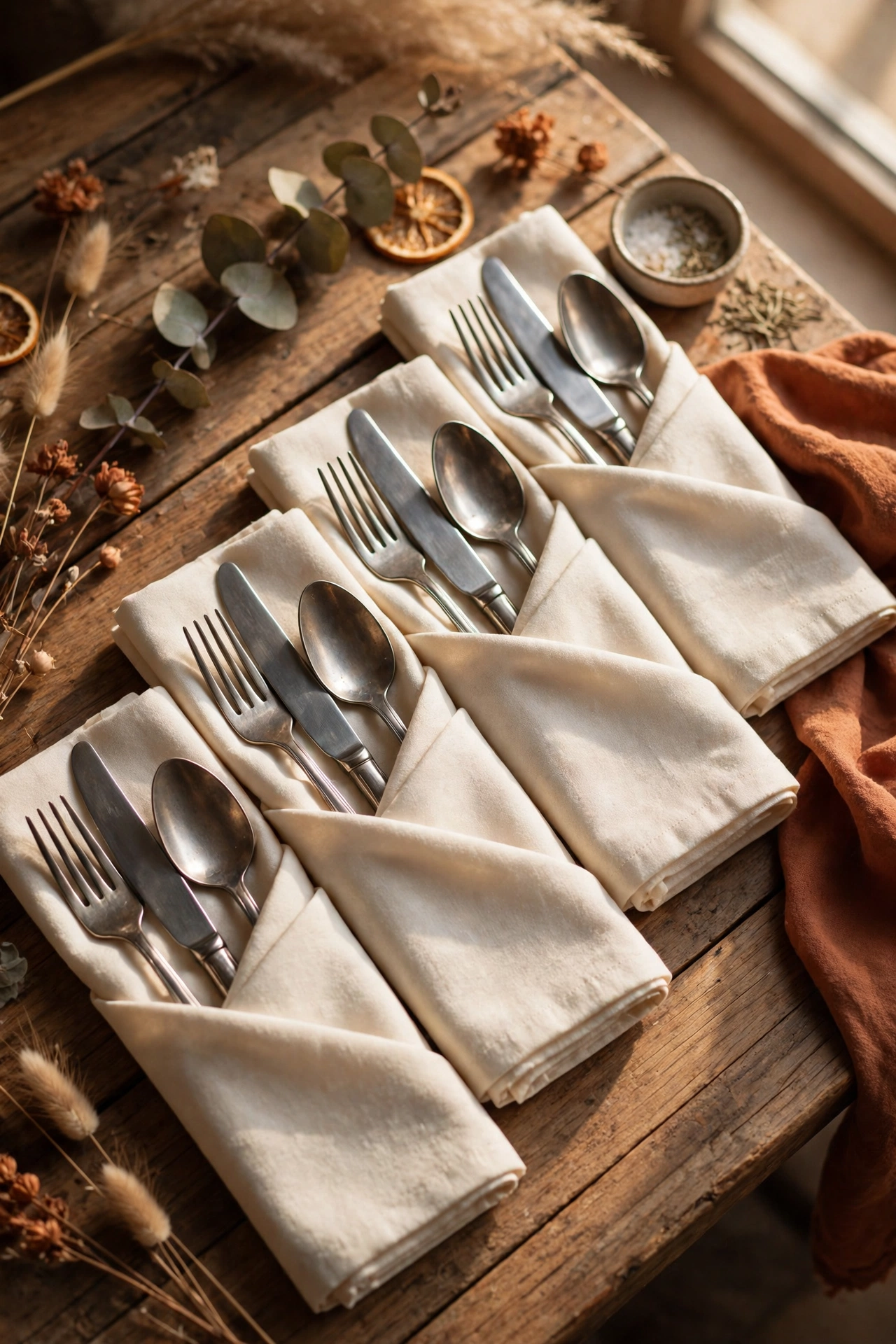
3. Silverware Pocket Fold
Practical and good-looking at once, the pocket fold creates a built-in slot to hold a fork, knife, and spoon, which cuts down on the number of separate elements you need to arrange at each place setting. Fold the napkin in half, then fold the bottom edge up about two-thirds of the way to create a flap, and tuck the sides underneath to form a clean rectangular pocket. Slide the silverware into the pocket so the handles peek out slightly at the top, then set the whole bundle directly on the plate or beside it. This fold works with almost any napkin fabric, including simpler paper napkins, which makes it one of the more forgiving options if you’re working with mismatched or lower-cost linens. It’s especially useful for a buffet-style Thanksgiving, since guests can grab a napkin and their utensils in one motion.
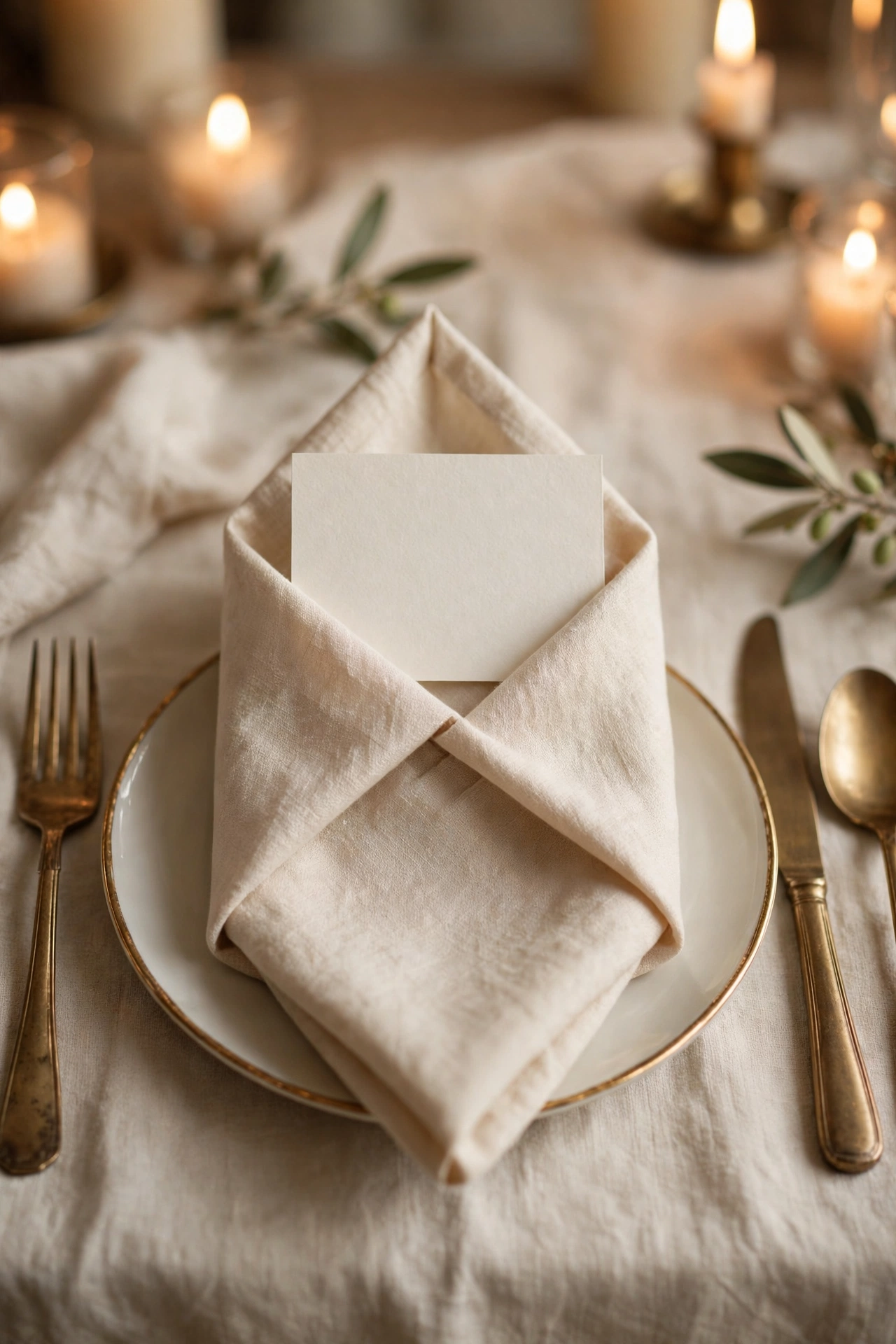
4. Diamond Pocket with Place Card
A slight variation on the standard pocket fold, this version folds the napkin into a diamond orientation rather than a straight rectangle, creating a small triangular pocket at the top that’s perfectly sized to hold a folded place card. Fold the napkin corner to corner into a triangle, then fold the two side points inward to meet at the center, forming a diamond with an open pocket near the top edge. Slip a small printed or handwritten place card into that pocket so it stands slightly upright, giving each setting a personalized touch without needing a separate card holder. This fold suits a seated, assigned-seat Thanksgiving dinner rather than a casual buffet, since the place card only makes sense when guests have designated spots. It’s a small detail, but it consistently reads as one of the more thoughtful choices on a table.
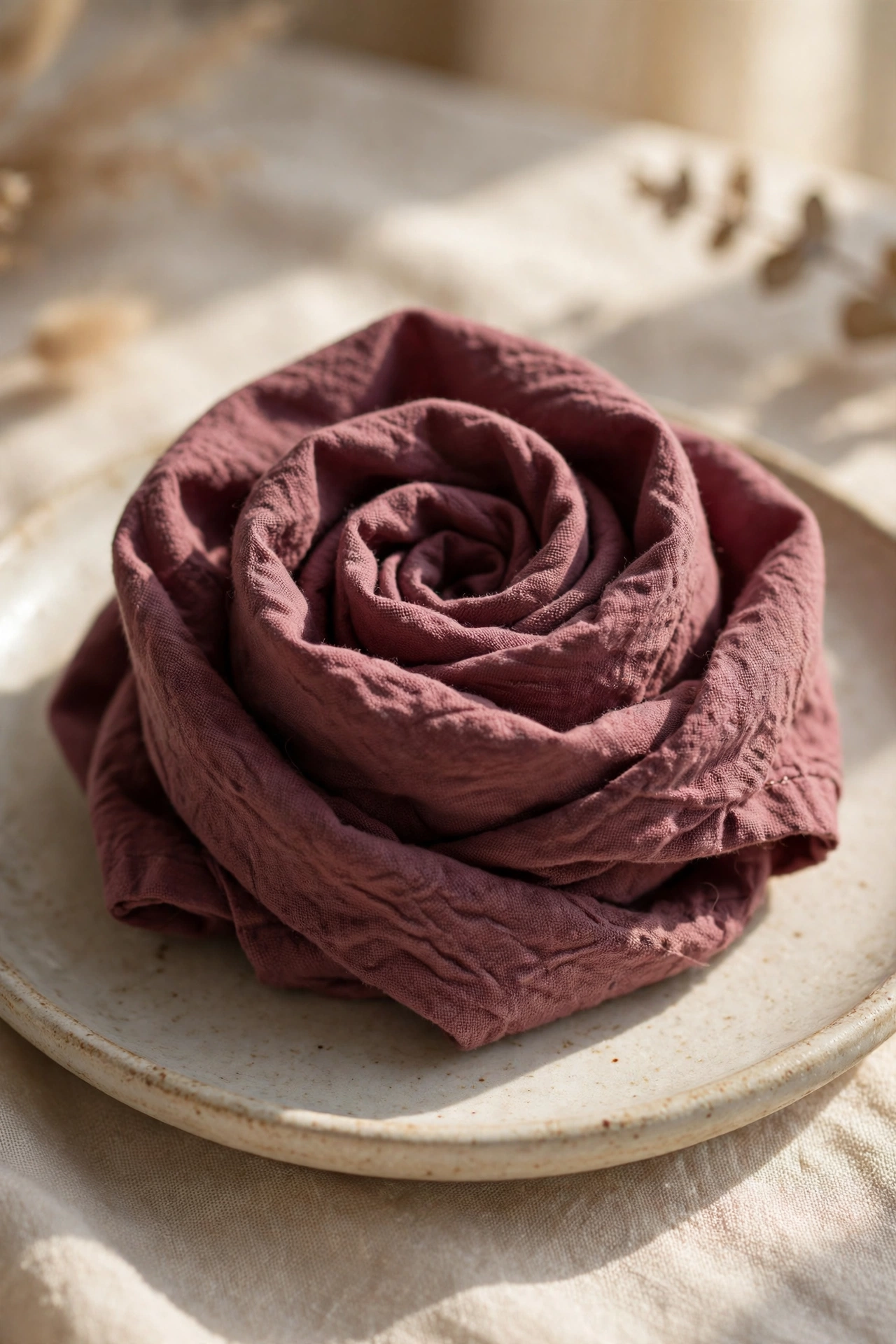
5. Rose Fold
The rose fold looks the most intricate on this list, but it’s really just a rolling technique rather than a series of complicated creases, which makes it more approachable than it first appears. Roll the napkin diagonally from one corner into a loose cylinder, then coil the cylinder around itself starting from one end, tucking the final corner underneath to hold the shape in place. Fan out the top edges slightly with your fingers to mimic the layered look of rose petals, and set the finished shape directly on the plate as its own small centerpiece. This fold works best with a softer cotton or lightweight linen napkin, since stiffer fabric can crack rather than curl smoothly. It’s a strong choice for a smaller, more intimate Thanksgiving table where each place setting gets more individual attention.
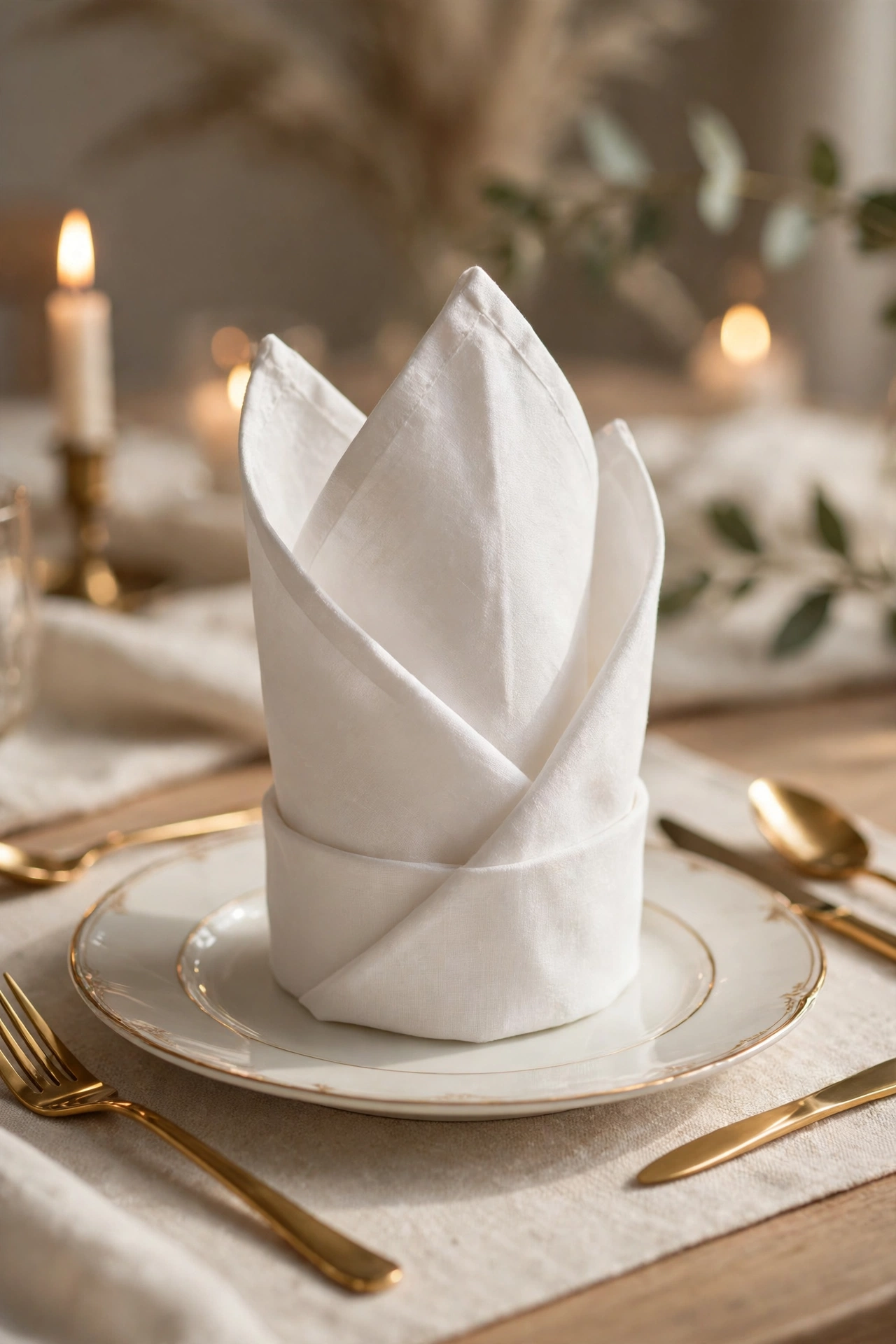
6. Bishop’s Hat (Crown Fold)
The bishop’s hat, sometimes called the crown fold, is a classic restaurant-style fold that stands upright on its own without a glass or ring for support, giving it real presence on the table. Fold the napkin in half diagonally to form a triangle, then fold the two bottom corners up to meet at the top point, creating a smaller diamond shape. Fold the piece in half, tuck one corner into the fold at the base to lock the shape, then stand it upright and gently pull the top layers apart to open it into a crown. This fold requires a stiffer, well-ironed napkin to hold its structure, so linen or a lightly starched cotton works far better than a soft or worn fabric. It’s an especially strong choice for a formal seated dinner, since the height it adds makes each place setting feel more considered.
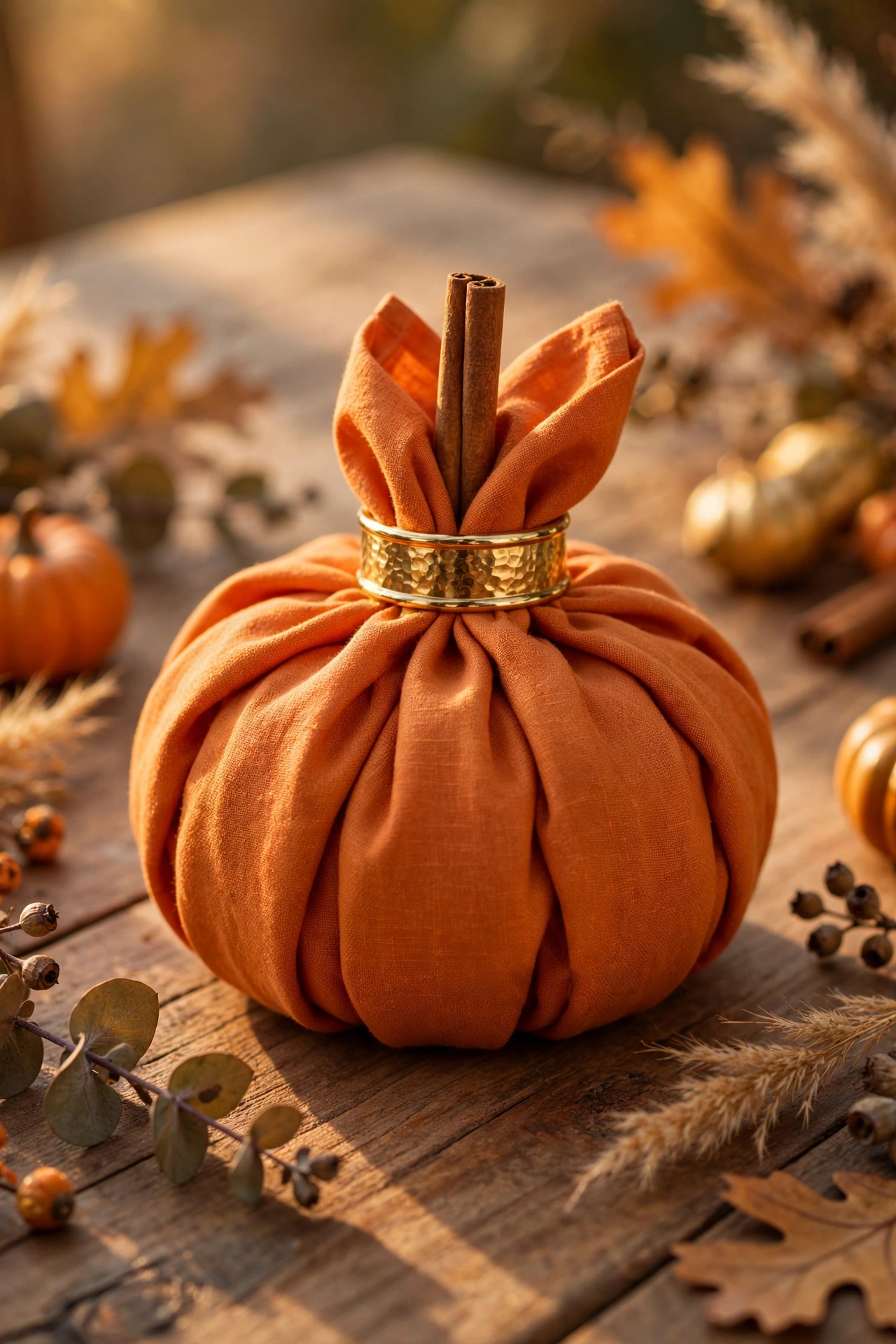
7. Pumpkin Fold
For a table that wants a bit of literal seasonal charm without going overboard, the pumpkin fold uses a napkin ring as its structural base, which actually makes it one of the easier shaped folds to execute consistently. Lay the napkin flat, center a napkin ring on top, and gently pull the middle of the napkin up through the ring before folding each corner into the center and tucking the fabric into the ring as you go. Once the shape is rounded and secured, insert a cinnamon stick or a small twig into the top to mimic a pumpkin’s stem. This fold works best in orange, cream, or deep gold napkins, since the color does a lot of the visual work in selling the pumpkin shape. It’s a good option for a table that’s leaning into a more classic, harvest-themed Thanksgiving look rather than a modern or minimal one.
Related: 20 Thanksgiving Entertainment Ideas to Keep Everyone Happy
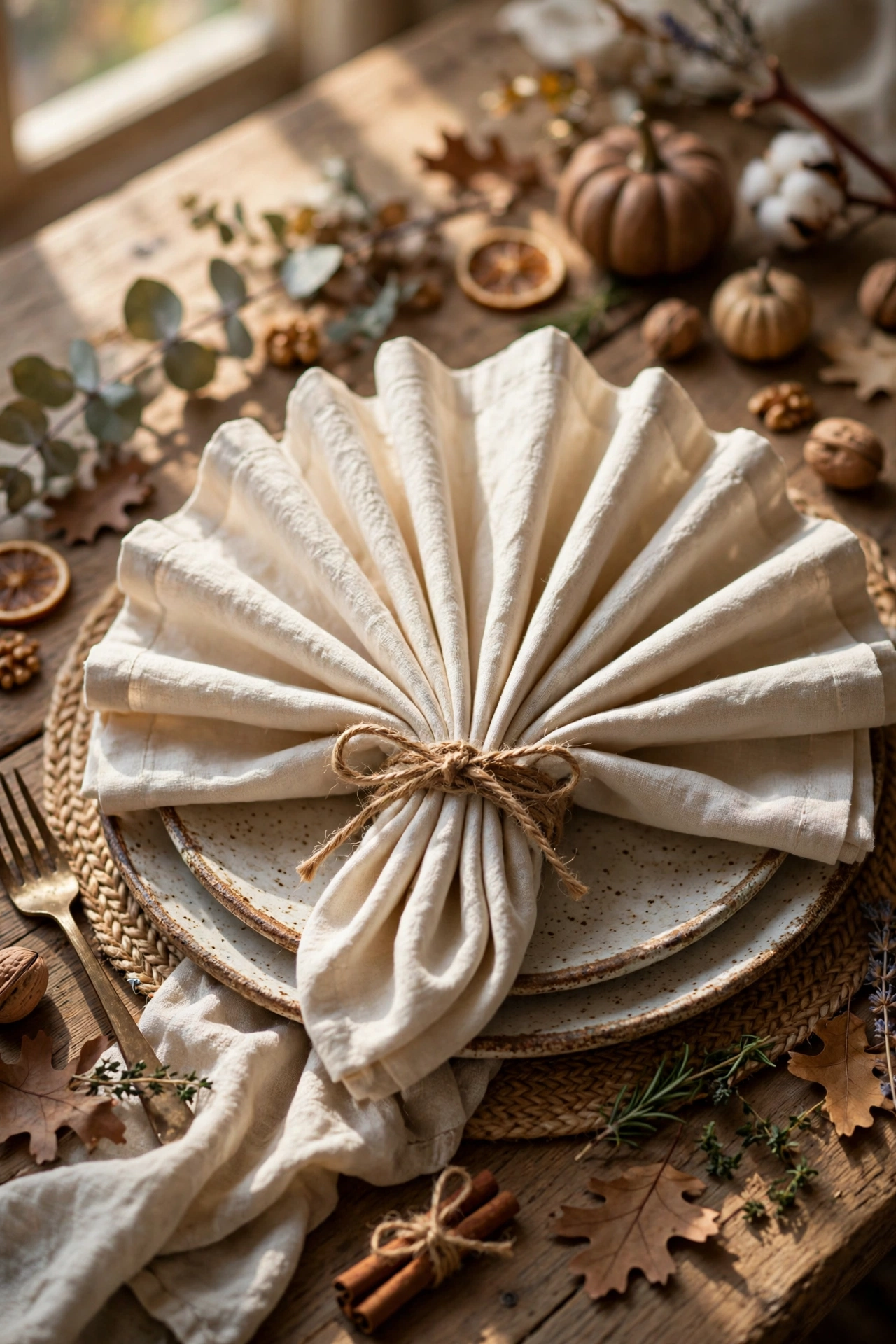
8. Turkey Tail Fold
Playful without being juvenile, the turkey tail fold uses an accordion-pleated fan as its base, then adjusts the proportions slightly to create a shape reminiscent of a turkey’s tail feathers when tucked into a napkin ring. Fold the napkin in half to form a long rectangle, then accordion-pleat the open edge back and forth, pinching the bottom to fan the top out wide. Tuck the pinched end into a napkin ring or tie it with a piece of twine, letting the fanned top spread out fully for the tail effect. This fold works especially well with a thicker three-ply paper napkin if you’re setting a more casual or kid-friendly table, since the extra body helps the fan hold its shape. It’s a good pick for a Thanksgiving table that wants a little personality without committing to a fully literal turkey shape.
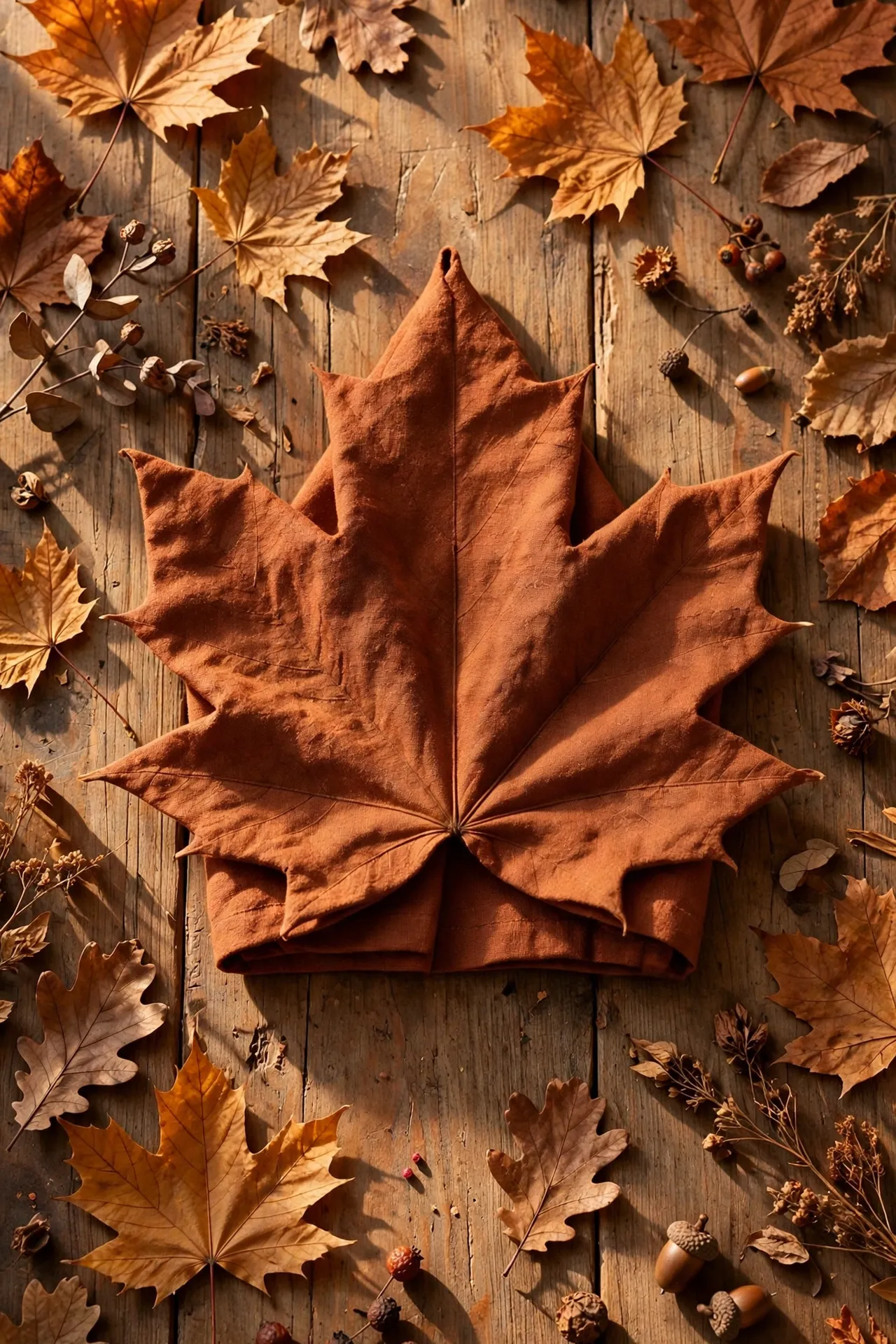
9. Maple Leaf Fold
The maple leaf fold is one of the more visually distinctive options here, using a series of diagonal folds to create pointed edges that mimic a leaf’s natural shape. Fold the napkin into a triangle, then fold the two outer points up and slightly inward to create jagged, leaf-like edges along the top, leaving the base relatively flat to sit steady on the plate. A napkin in a mottled or two-toned fall color — rust, amber, or deep red — sells the leaf shape more convincingly than a solid, flat color. This fold pairs beautifully with a table that’s already leaning into natural, foraged decor elements like dried leaves or branches, since it echoes that same organic shape. It’s a strong middle-ground choice for a table that wants seasonal charm without leaning as literal as the pumpkin or turkey folds.
10. Cornucopia Roll
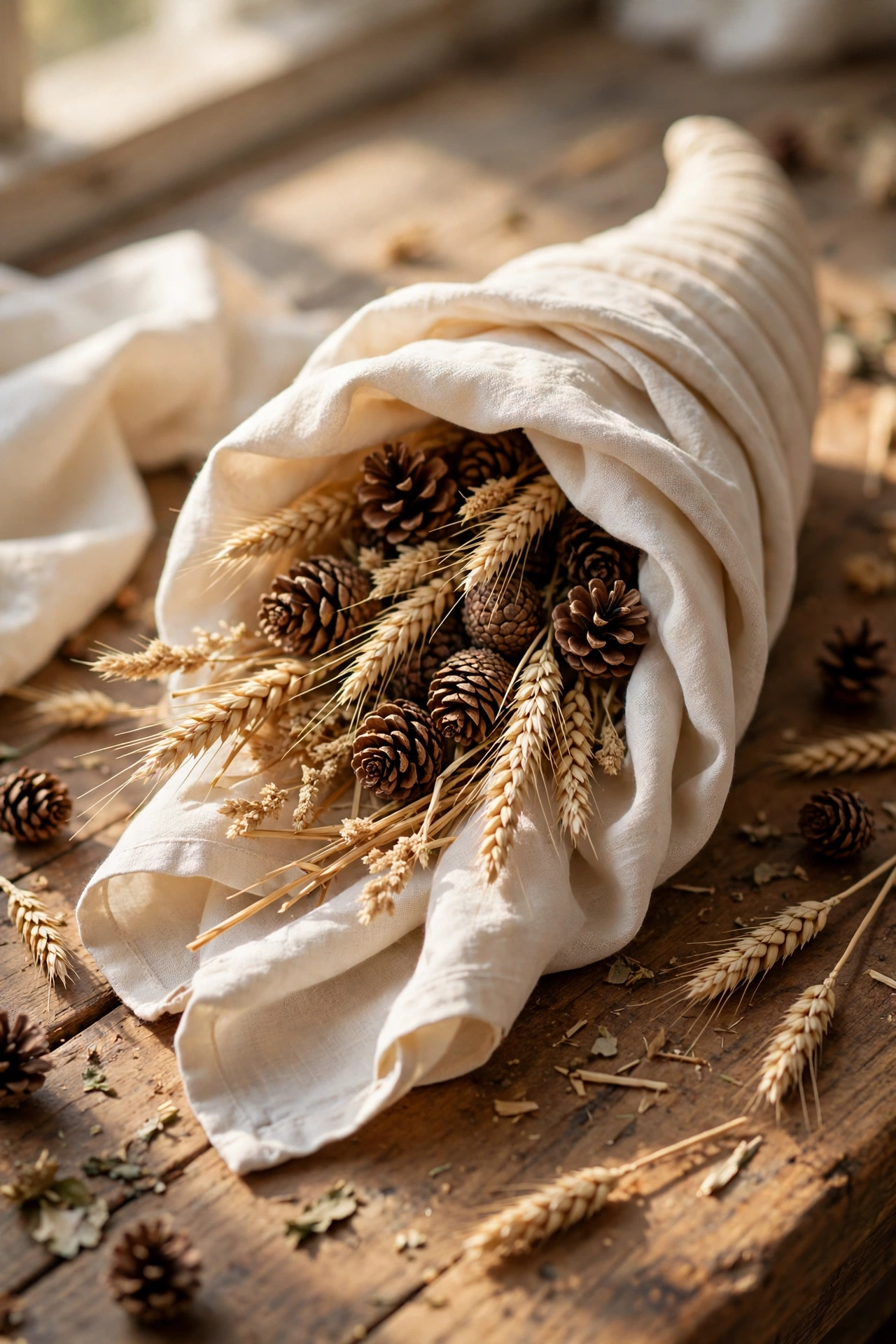
For a buffet or sideboard display rather than an individual place setting, the cornucopia roll transforms a napkin into a small horn-shaped vessel that can actually hold something — a few mini pinecones, a sprig of dried wheat, or a small bundle of cinnamon sticks. Roll the napkin tightly on a diagonal into a cone shape, then curve the rolled cylinder slightly to mimic the classic cornucopia silhouette, tucking the loose end underneath to hold the curve. Once rolled and shaped, fill the wider opening with small seasonal accents so the fold reads as a miniature centerpiece rather than just a folded napkin. This works best with a slightly stiff cotton or linen napkin, since a soft or thin fabric won’t hold the curved shape well once filled. It’s a strong choice for adding a decorative element to a buffet table without needing a separate centerpiece.
11. Lotus Fold
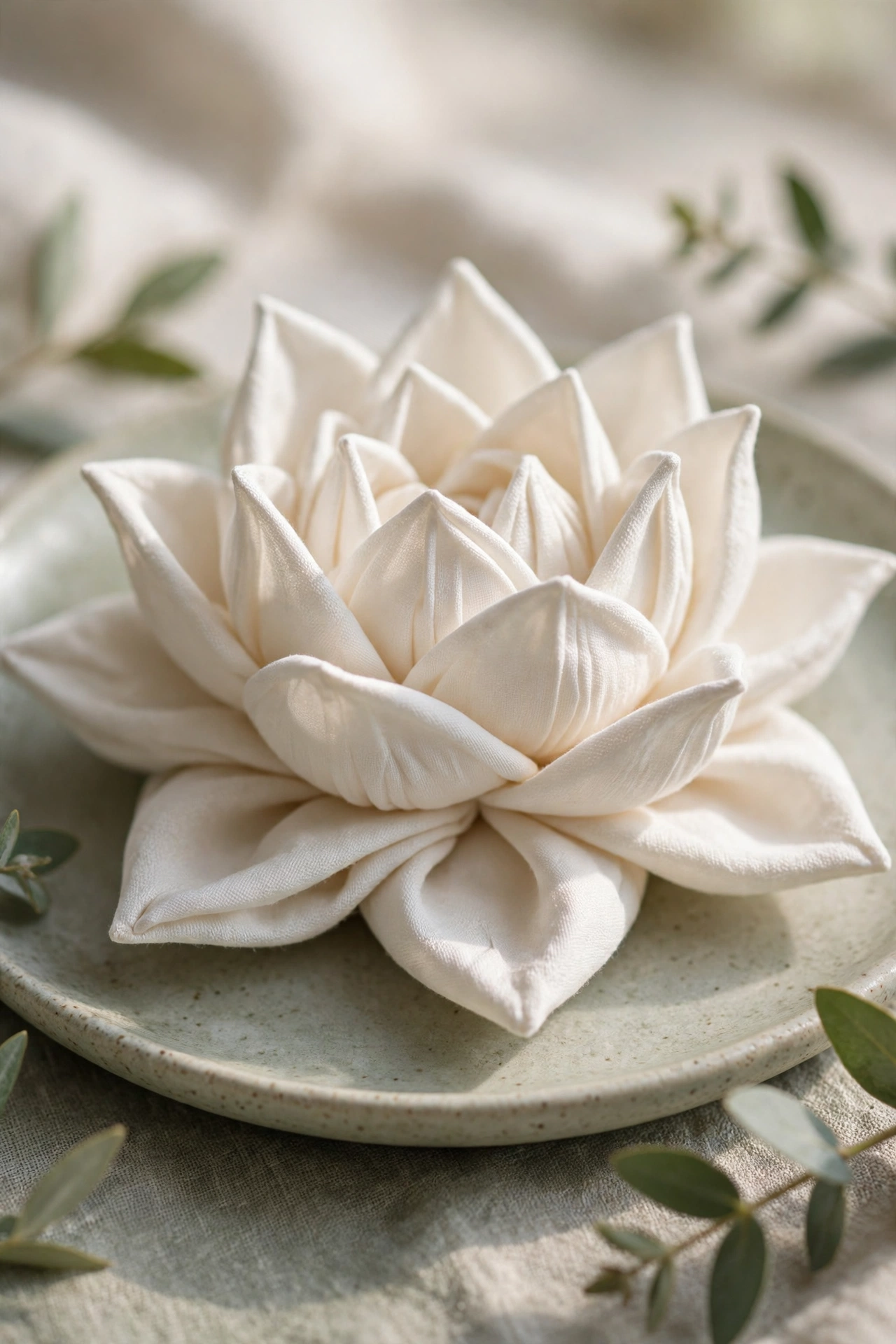
The lotus fold creates a layered, flower-like shape with more visual complexity than the rose fold, though the technique itself is really just a series of repeated corner folds. Fold each corner of the napkin into the center, then flip the napkin over and fold each corner into the center again on the reverse side. Reach underneath each folded corner from the first round and gently pull the fabric up and out to form petals, repeating around all four points until the shape opens into a layered flower. This fold works best with a crisp, well-ironed cotton napkin, since the folded layers need enough structure to hold their shape once pulled open. It’s an eye-catching centerpiece-style fold for a table that wants something a little more elevated than the standard folds, especially for a smaller, more detail-focused gathering.
12. Bow Fold
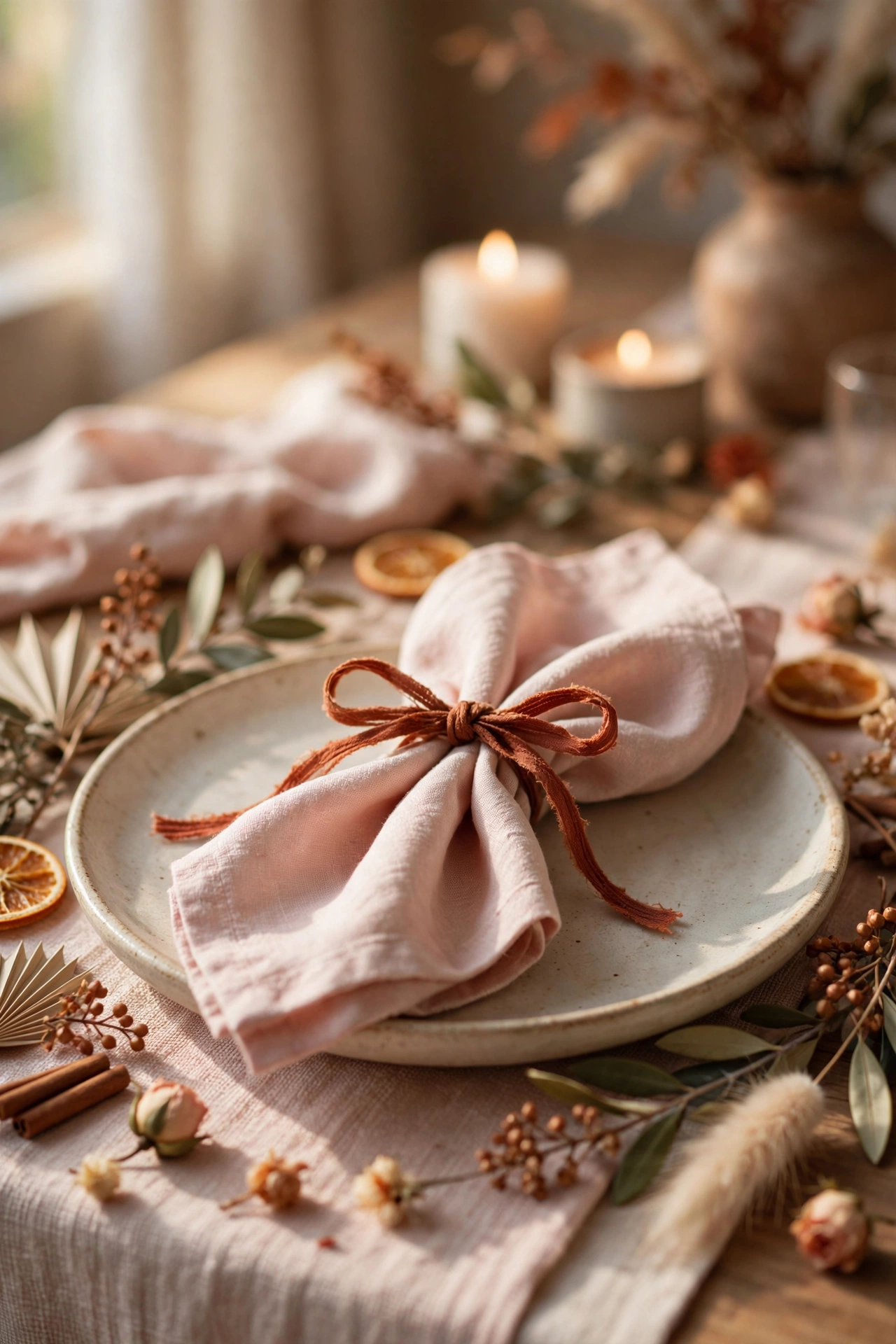
Soft and a little celebratory, the bow fold works especially well for a Friendsgiving or a table that wants a slightly more festive, less traditional feel. Fold the napkin into a long strip, then gather the center and tie a thin ribbon or a strip of the napkin’s own fabric tightly around the middle to cinch it into a bow shape. Fluff the two ends of the fabric outward so they mimic the loops of an actual bow, adjusting the cinched center until it sits neatly. This fold is genuinely fast, usually under thirty seconds per napkin, which makes it a good choice if you’re setting a large table solo and running short on time. Using a ribbon in a contrasting color to the napkin itself adds a small pop of color without needing any additional table decor.
13. Pinwheel Fold
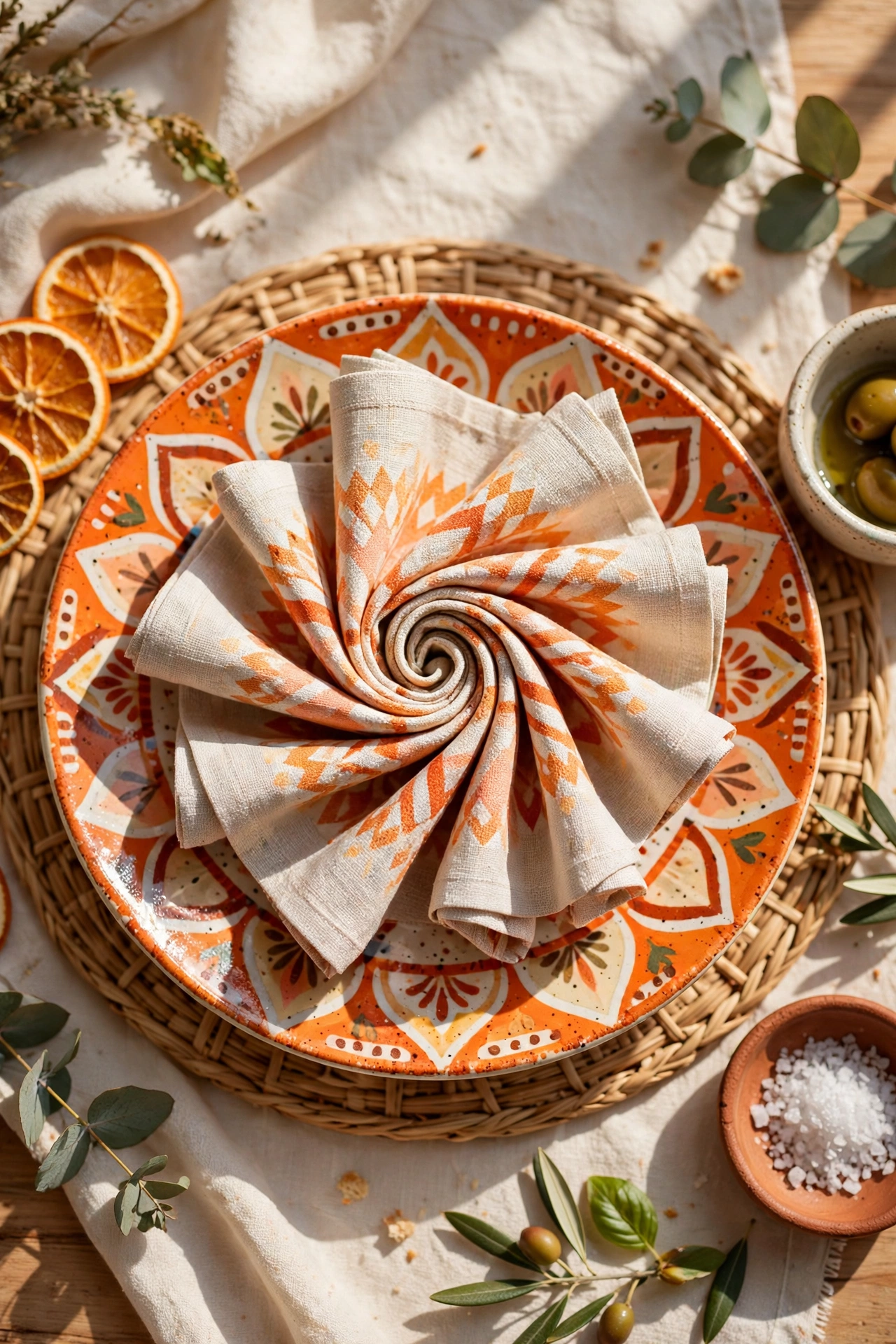
The pinwheel fold creates a spiral, slightly whimsical shape that works well on a table leaning playful or eclectic rather than strictly formal. Fold each corner of the napkin into the center point to form a smaller square, then take one corner of that smaller square and fold it into the center again, repeating around each side in the same rotational direction. The layered, rotated folds create a pinwheel effect once flattened, especially when using a napkin with a patterned or two-toned design that highlights the spiral shape. This fold works with most napkin fabrics, though a lighter cotton folds more easily into the tight corners than a heavier linen. It’s a strong pick for a kids’ table or a more casual Friendsgiving setting where a bit of visual playfulness fits the mood.
14. Simple Ring Roll-Up
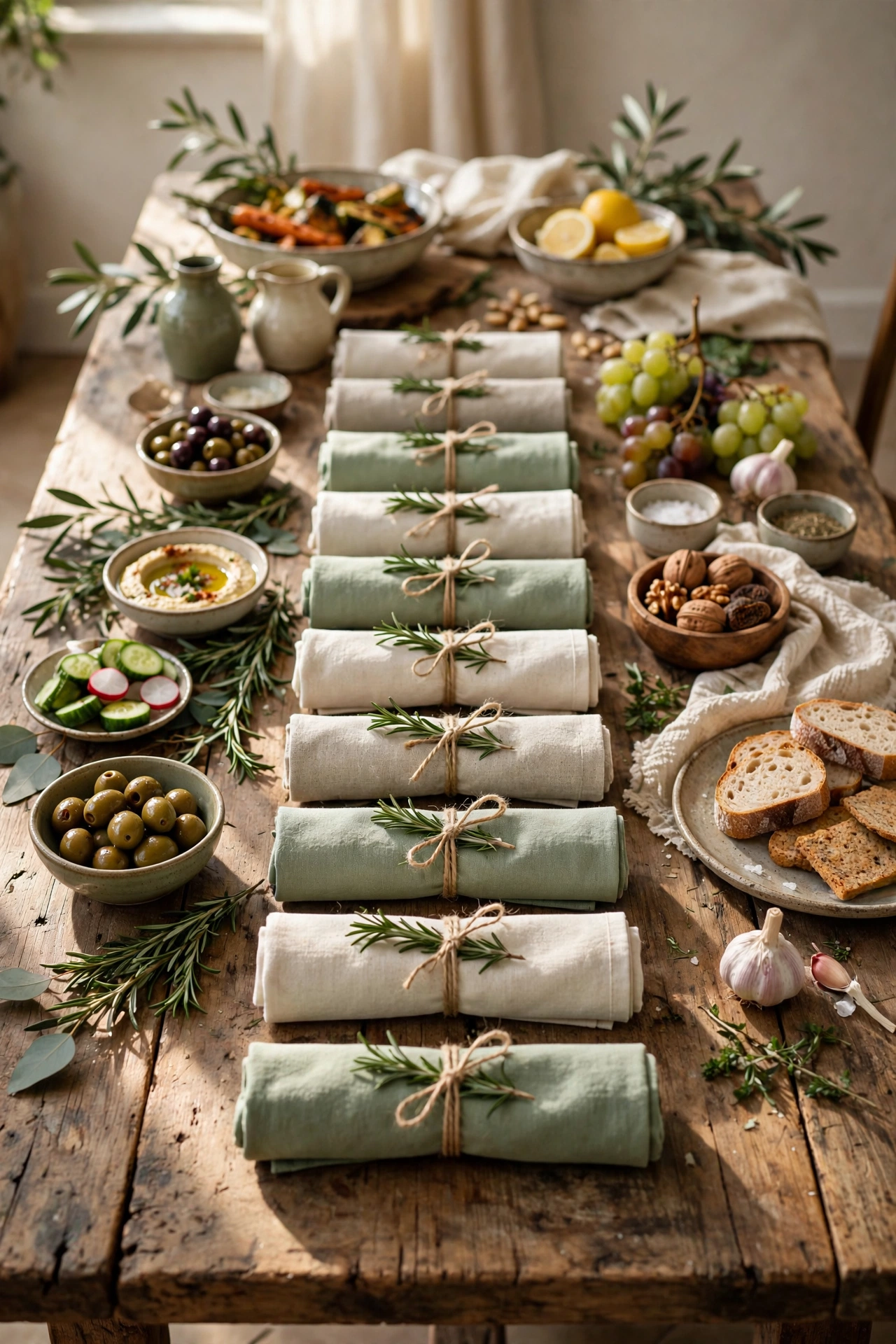
When time is genuinely short, the ring roll-up is the fastest fold on this list and still manages to look considered rather than lazy. Roll the napkin tightly from one edge to the other into a clean cylinder, then slide it through a napkin ring or tie it with a piece of twine, ribbon, or a sprig of greenery. The trick to making this simple fold look styled is the ring or tie itself — a brass ring, a piece of dried wheat, or a small sprig of rosemary all elevate the roll far more than the folding technique does. This is the fold to use for a large buffet-style Thanksgiving where dozens of napkins need to be prepped quickly. It also works well with paper napkins, making it a practical choice for a more casual or outdoor Friendsgiving setup.
Related: 18 Thanksgiving Office Door Decor Ideas That Get Noticed
15. Envelope Fold with Menu Card
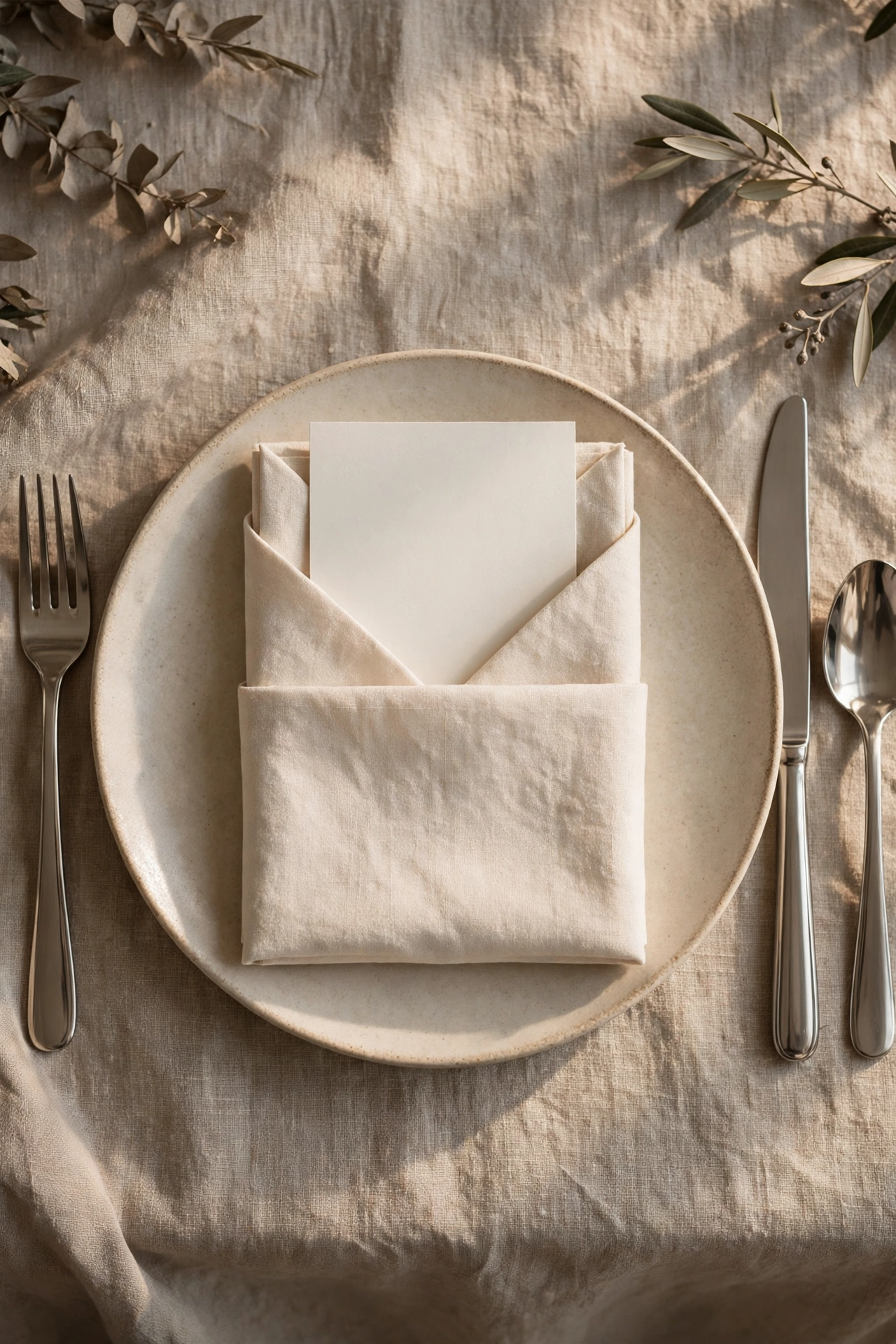
For a Thanksgiving dinner with a printed menu at each seat, the envelope fold creates a flat pocket sized perfectly to hold a small card, giving each place setting a subtle, editorial-magazine feel. Fold the napkin in half, then fold the two side edges in toward the center to form a narrower rectangle, and fold the bottom up to create a flap that leaves an open slot near the top. Slide a small printed menu or place card into the slot so it sits flush with the top edge, then lay the finished envelope flat at the center of each plate. This fold works with almost any napkin fabric, since it relies on straight folds rather than curves or rolls that need extra structure to hold. It’s one of the more functional folds on this list, since it does double duty as both the napkin and a card holder without adding a separate object to the table.
Styling Tips
- Match the fold to the formality of the table — pocket and ring roll-up folds for casual buffets, French pleat and bishop’s hat for seated, formal dinners.
- Iron cloth napkins before folding, especially for structured folds like the French pleat or bishop’s hat, since wrinkled fabric won’t hold a crisp shape.
- Stick to one or two folds per table rather than mixing many different shapes, so the place settings feel cohesive rather than scattered.
- Let the napkin color do some of the seasonal work — rust, amber, and deep cream all read as fall even on a simple fold like the fan or ring roll-up.
- Practice a new fold two or three times on a spare napkin before Thanksgiving morning, since most folds get noticeably faster and cleaner after the first attempt.
Practical Implementation Ideas
- Prep and fold napkins the night before for any structured fold, since some shapes (like the bishop’s hat) hold slightly better after sitting overnight.
- Use starch on linen napkins ahead of time for folds that need to stand upright without support, such as the French pleat or bishop’s hat.
- For a large table, batch-fold the same simple shape (fan or ring roll-up) rather than attempting a more intricate fold for every single setting.
- Keep a small stash of twine, ribbon, and dried sprigs on hand as tie options, since the tie often does more visual work than the fold itself.
Common Mistakes to Avoid
- Using a soft, worn, or unironed napkin for a structured fold that needs sharp creases to hold its shape.
- Overcomplicating a large table by attempting a difficult fold for every guest, which eats up prep time without a proportional visual payoff.
- Forgetting to test a fold on a spare napkin first, since some techniques look different depending on the napkin’s exact size and fabric weight.
- Choosing a fold that blocks the plate or utensils rather than complementing them, especially with taller or more sculptural shapes.
Small-Table Alternatives
For a table of two to four, the rose fold, lotus fold, or bishop’s hat all make sense, since the extra few minutes per napkin are far more manageable across a small guest count. A smaller table also gives each fold more visual space to be appreciated individually, so it’s worth choosing something a bit more detailed than what you’d use for a large buffet. If time is still tight even with a small group, the fan fold remains a strong, low-effort default that still looks intentional.
Budget-Friendly Alternatives
Nearly every fold on this list works with basic cotton napkins from a discount or big-box store, so the look comes from the folding technique and any accent tie, not from an expensive linen set. Twine, dried sprigs, or a sprig of rosemary from the grocery store make a far cheaper accent than purchased napkin rings and often look more natural. Paper napkins work well for several of these folds, including the pocket fold, ring roll-up, and turkey tail, which makes this a genuinely low-cost way to upgrade a table.
Pro Styling Recommendations
- Coordinate the napkin fold’s color with one other table element — the tablecloth, the flowers, or the candles — so the setting feels connected rather than random.
- Add one small natural accent (a sprig, a cinnamon stick, a dried leaf) to a simple fold instead of choosing a more complicated shape; it often reads as more elevated for less effort.
- Set one napkin fold as a “sample” at the head of the table before folding the rest, so you can adjust the technique before committing to all your napkins.
FAQs
Conclusion
A folded napkin is one of the smallest details on a Thanksgiving table, and also one of the fastest ways to make the whole setting look considered. You don’t need a matching set of napkin rings or an hour of practice — a clean fan fold or a simple ring roll-up, done consistently across the table, does more visual work than most people expect. Pick one or two folds that match how formal or casual your table already feels, practice once on a spare napkin, and the rest comes together fast.