20 Cozy Warm Neutral Fall Living Room Ideas Anyone Can Recreate
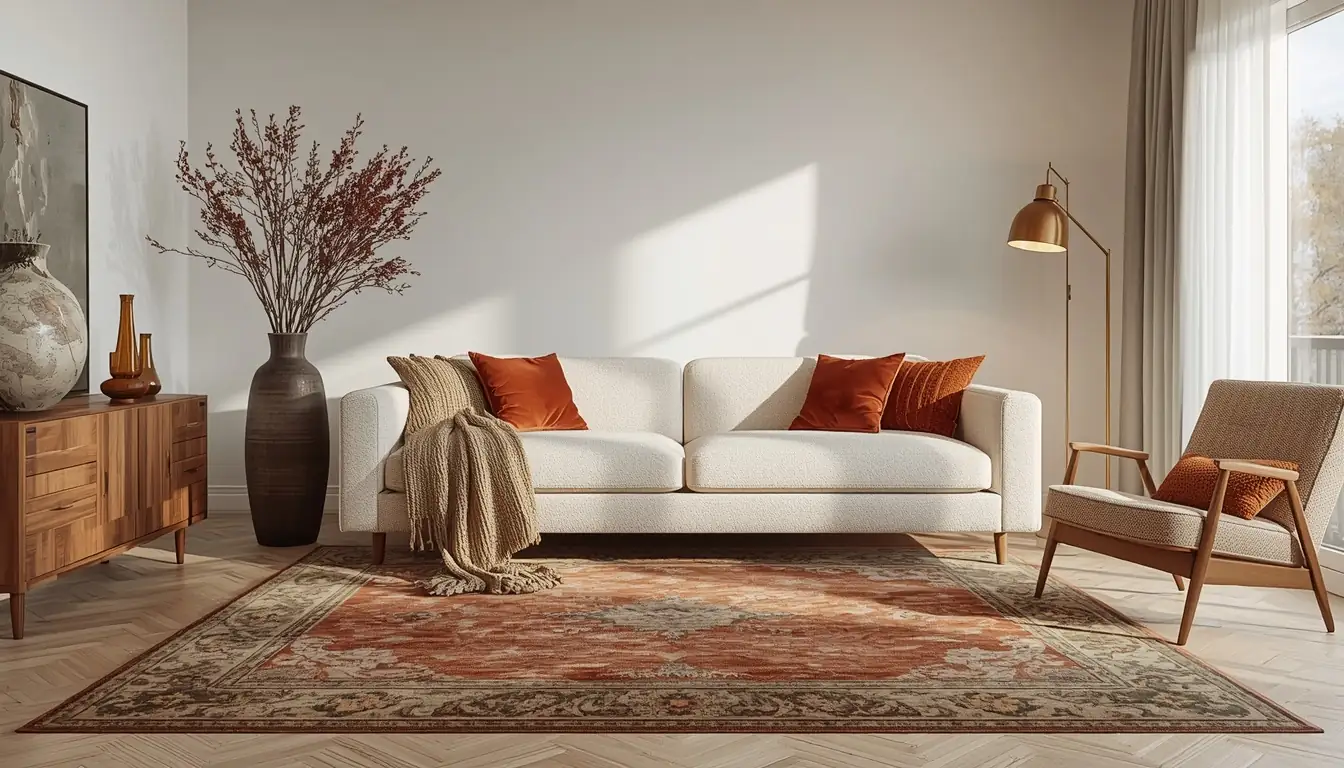
A warm neutral living room already has most of what fall decor is trying to fake. Cream, oatmeal, and taupe are calm on their own, but they’re also the best possible backdrop for the season’s real strength: texture, warm light, and a small handful of deep, confident colors.
The rooms that actually pull this off share a pattern. One warm-toned base across the biggest surfaces, sofa, rug, walls, then two or three textures layered on top, and a couple of accent colors, rust, olive, burgundy, repeated just enough to feel intentional rather than scattered. Warm lighting does the rest, especially once the evenings start getting shorter.
This list runs through 20 cozy warm neutral fall living room ideas, from undertone basics to layered textiles, lighting, and a few gap-filling details most fall decor guides skip entirely, so you can bring the season in without covering every surface in orange.
Table of Contents
1. Start With a Warm Neutral Foundation
Choose cream, oatmeal, camel, or warm taupe for the room’s largest surfaces, the sofa, the rug, and the walls if you’re painting, before adding a single seasonal accent. This foundation matters because it’s what makes every accent color layered on top, rust, olive, burgundy, read as sophisticated and intentional instead of like a random assortment of fall-themed items. You don’t need to repaint the entire room to shift the palette warmer; a warm-toned rug or a curtain swap can change the room’s overall feel significantly on its own. Keep this base consistent in undertone, not just in name, since two “neutrals” can clash if one leans warm and the other leans cool. This idea works as the starting point for every other idea on this list, since the base tone determines how well accent colors and textures will actually read once they’re added.
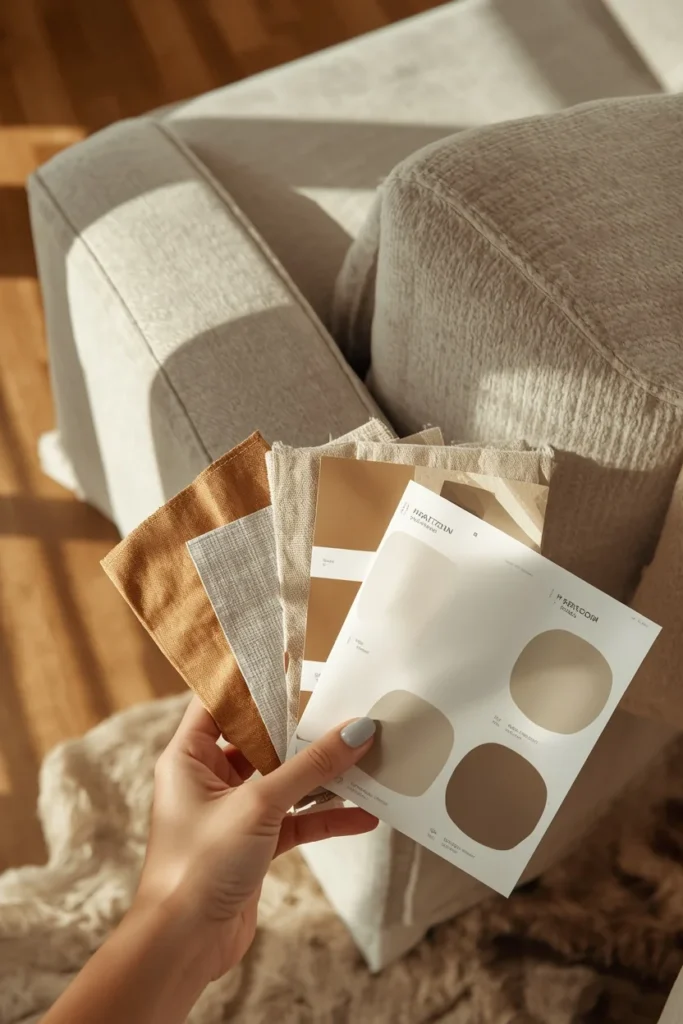
2. Test Your Room’s Undertone Before Buying Anything
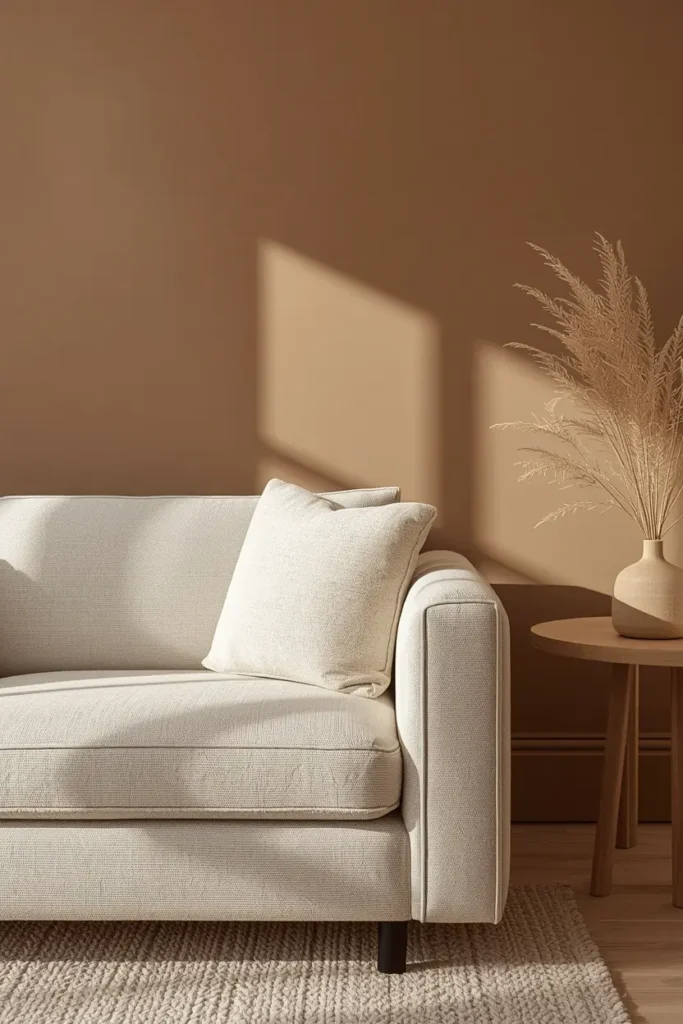
Hold a few fabric swatches or paint chips up against your existing sofa, flooring, and trim in natural daylight to determine whether your room’s neutrals lean warm or cool before adding any new fall pieces. This step gets skipped constantly, but it’s the difference between a cohesive warm neutral room and one where a new “neutral” throw pillow suddenly looks oddly gray or pink against everything else. As a general rule, warm wood flooring tends to pair best with cream, mushroom, and warm beige tones, while cooler gray flooring usually looks more balanced with greige or a slightly cooler off-white. Check swatches at different times of day, since a fabric that reads warm under morning light can shift noticeably under evening lamp light. This idea costs nothing but a few minutes, and it prevents one of the most common and frustrating mistakes in neutral decorating: buying pieces that are technically neutral but don’t actually match.
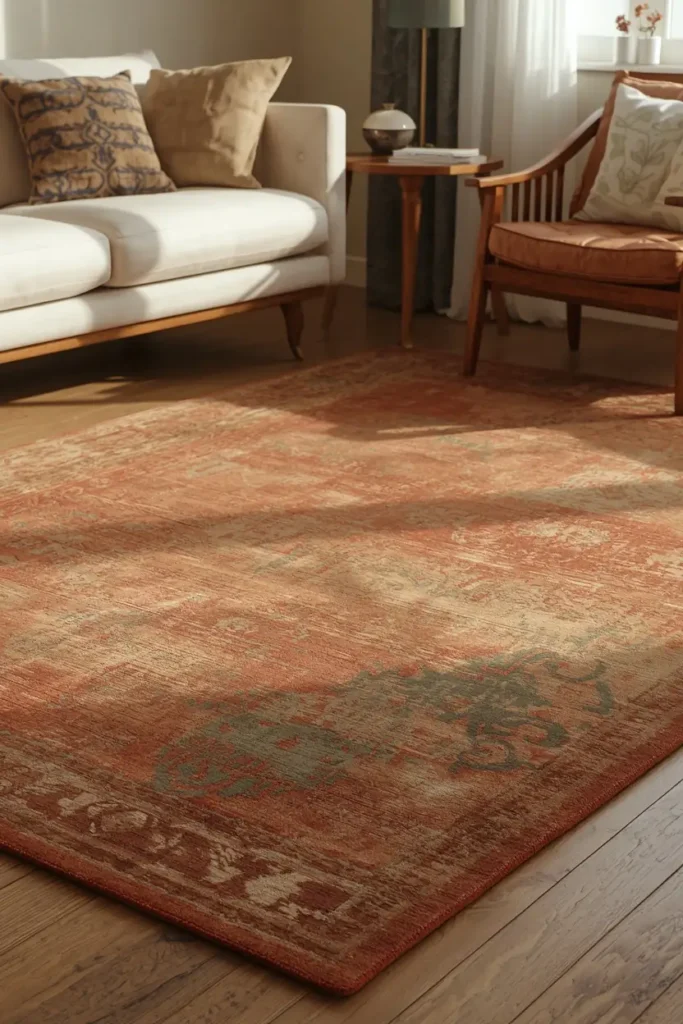
3. Anchor the Room With a Vintage-Inspired Rug
Choose a large area rug in faded rust, camel, or olive with a vintage or Persian-inspired pattern to ground the entire seating area and connect the sofa, wood furniture, and fall accents visually. Size matters more than pattern here, since a rug that’s too small will make an otherwise well-styled room look unfinished; at minimum, the front legs of your major seating pieces should rest on the rug. A muted, multi-tonal pattern works especially well because it can pull together several different accent colors already in the room without requiring an exact color match. Choose a wool or wool-blend rug for genuine warmth underfoot as the weather cools, since a thin, flat rug won’t contribute much to the room’s overall coziness. This idea works as one of the highest-impact updates on this list, since a rug affects how the entire room reads from the doorway, not just one corner or surface.
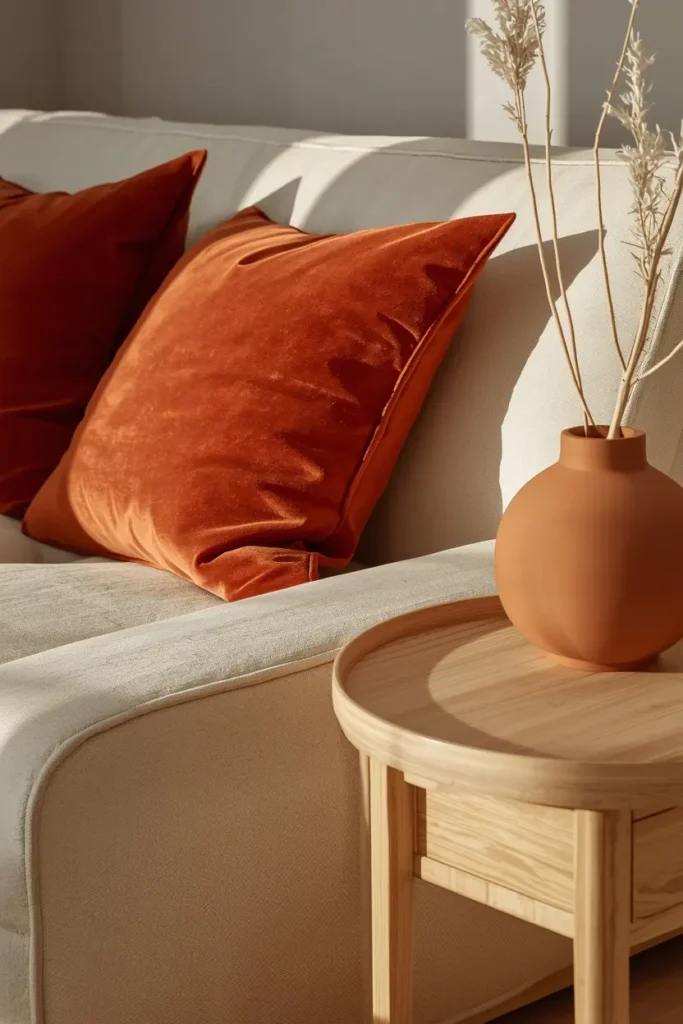
4. Add Rust and Terracotta in Small Doses
Introduce rust and terracotta through pillow covers, a single throw blanket, or a ceramic vase, rather than repeating the color across multiple large surfaces in the room. These warm, earthy tones instantly suggest fall while still feeling versatile enough to leave out well past the season if you want to. Pair rust accents with cream upholstery and light oak furniture for a result that stays bright and elevated rather than heavy, since the contrast between the warm accent and the pale base does most of the visual work. Keep the rust or terracotta confined to two or three spots around the room, a pillow here, a vase there, so the color reads as a deliberate accent rather than a full seasonal theme. This idea works particularly well as a first step for anyone testing warm neutral fall styling for the first time, since it’s low-commitment and easy to swap out later.
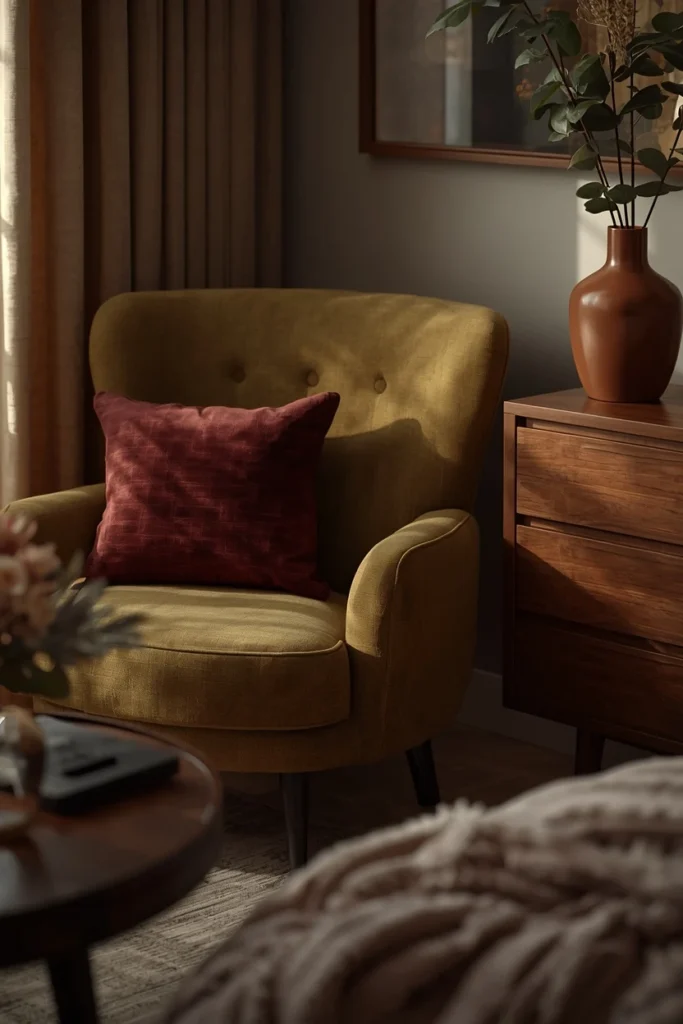
5. Try Olive Green and Burgundy Instead of Orange
Skip traditional orange entirely and build the room’s accent palette around olive green and muted burgundy instead, two colors that feel just as autumnal but read as slightly more moody and sophisticated. This combination looks especially rich beside cream upholstery and walnut furniture, since the warm wood tone bridges the cooler olive and the deeper burgundy into one cohesive palette. Keep one of the two colors dominant and use the other as a smaller accent, for example, an olive chair or throw balanced by two burgundy pillows and a coordinating candle. This pairing works particularly well for anyone who finds bright orange too seasonal or costume-like for their taste, since olive and burgundy both function as genuinely year-round colors that simply happen to feel especially at home in fall. This idea also photographs beautifully under warm lamp light, since both colors deepen rather than dull as the light gets lower in the evening.
6. Add One Black Accent to Ground the Palette
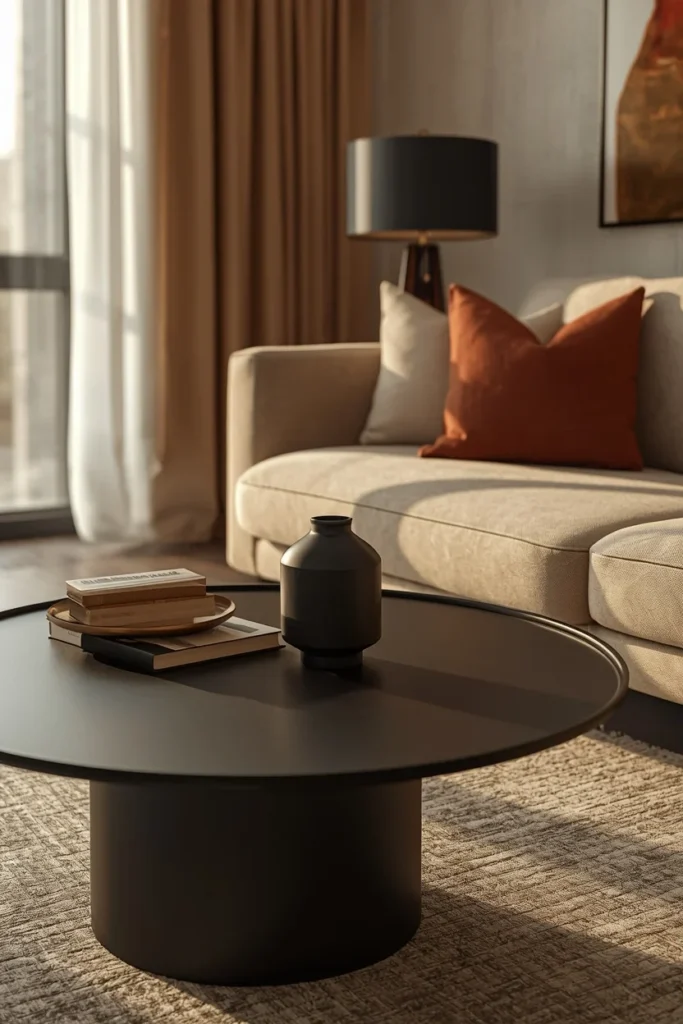
Introduce a single black or near-black element, a lamp base, a picture frame, or a slim coffee table, to give an otherwise all-warm-toned room a clear point of visual weight and contrast. This detail is easy to overlook in a warm neutral room, since black can feel like it belongs to a colder, more modern palette, but a small dose actually sharpens the whole space and keeps a room full of cream, rust, and olive from blurring together. Choose just one or two black pieces rather than repeating the color throughout the room, since the goal is a quiet anchor, not a second competing palette. Position the black accent somewhere central, like the coffee table or a lamp beside the sofa, so it naturally draws the eye and gives the room a clear resting point. This idea works particularly well in a room that already feels a little too soft or one-note, since a single grounding dark element can make every warm tone around it look more intentional by comparison.
7. Layer Three Distinct Textures
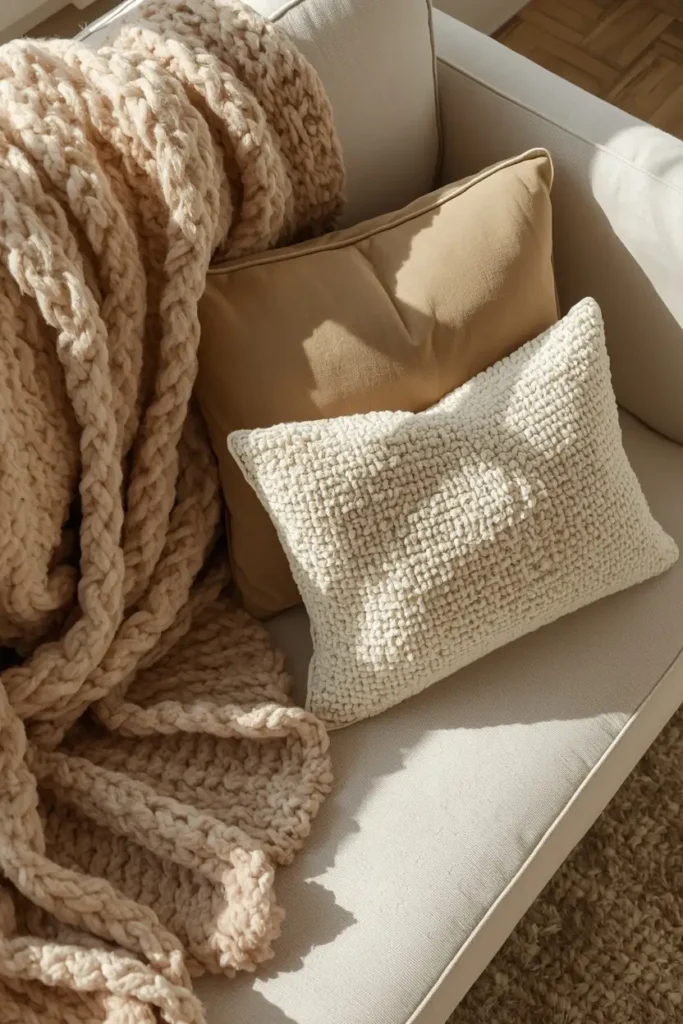
Combine a chunky knit throw, smooth velvet pillow, and a nubby bouclé accent, keeping their colors closely connected so the mix reads as restful rather than busy. Texture often does more to change a room’s mood than any seasonal ornament, which is why a neutral room with genuinely varied texture can feel just as cozy as one relying on bold seasonal color. Two or three strong textures are typically enough; adding more than that risks the room feeling overly busy rather than richly layered. Leave a few smooth, plain surfaces visible around the room, like a glass coffee table top or a plain linen curtain, so the textured pieces have a clear visual break to stand out against. This idea works as one of the most reliable techniques on this list, since texture layering succeeds in almost any warm neutral color scheme, from soft cream and camel to deeper rust and olive.
8. Drape a Throw Over the Sofa’s Arm or Back
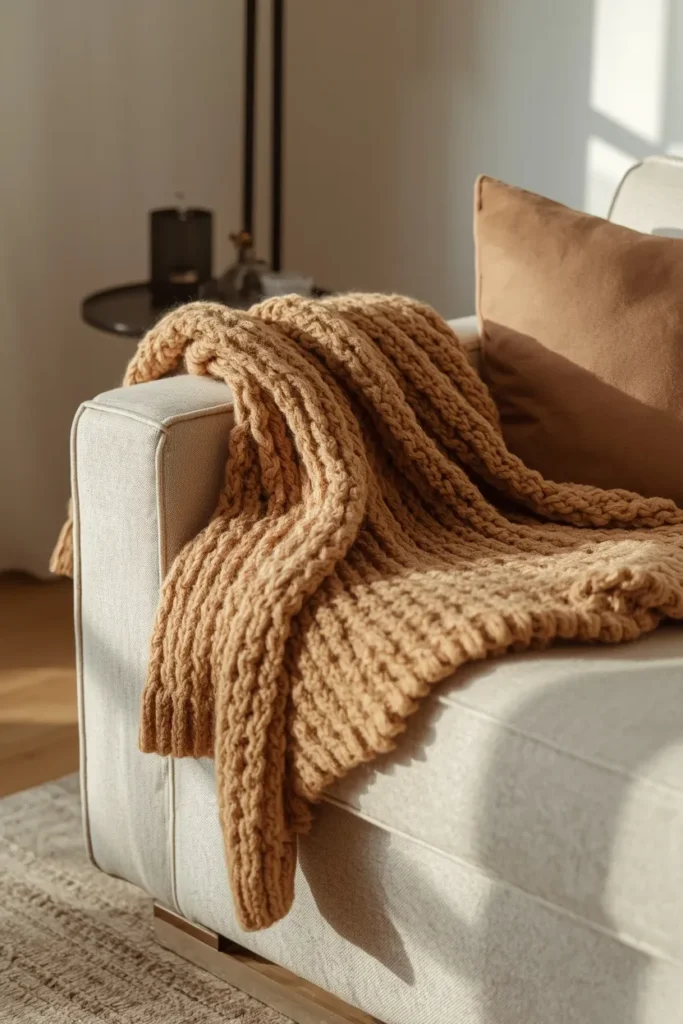
Drape a chunky knit or brushed cotton throw loosely over one arm of the sofa, letting it fall at a slight angle rather than folding it into a perfectly even rectangle. This small, specific detail matters because a draped throw reads as lived-in and inviting in a way that a neatly folded one on a shelf simply doesn’t. Choose a warm neutral or accent-colored throw, like camel or rust, depending on whether you want it to blend into the base palette or stand out as a color accent. Let a portion of the throw pool slightly on the cushion or floor rather than keeping every inch off the ground, since the slightly relaxed drape is what gives the detail its cozy, natural character. This idea takes less than a minute to execute but consistently reads as one of the most reliable “welcome home” signals in a warm neutral living room.
9. Switch to Full-Length Textured Curtains
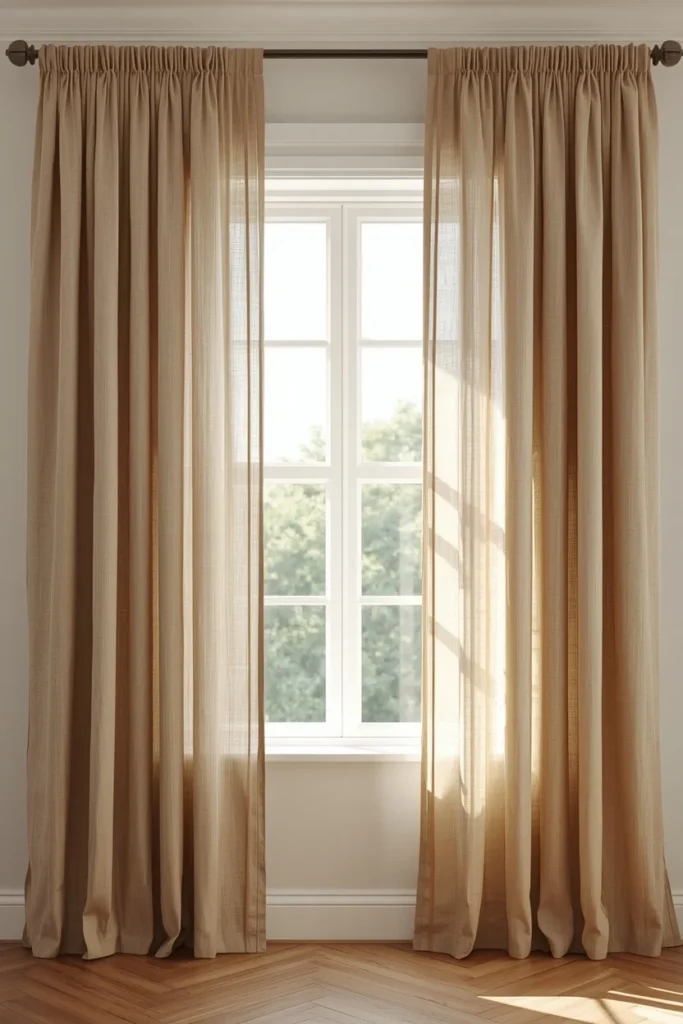
Hang full-length curtains in oatmeal linen, brushed cotton, or velvet, mounting the rod high and wide so the panels frame the window generously rather than blocking valuable daylight. This update introduces both softness and visual weight to the room, since heavier, more textured curtains genuinely change how protected and finished a space feels as the weather cools. If replacing curtains entirely isn’t practical, adding a warm woven shade or a lined panel behind existing sheers can create a similar layered effect for less cost and effort. Choose a curtain color that complements rather than exactly matches the walls, since a very slight contrast helps define the window as its own framed feature rather than disappearing into the wall behind it. This idea works particularly well in a room with a lot of natural light, since heavier curtain fabric also helps soften and warm up any cooler daylight coming through the glass.
10. Choose a Bouclé or Velvet Accent Chair
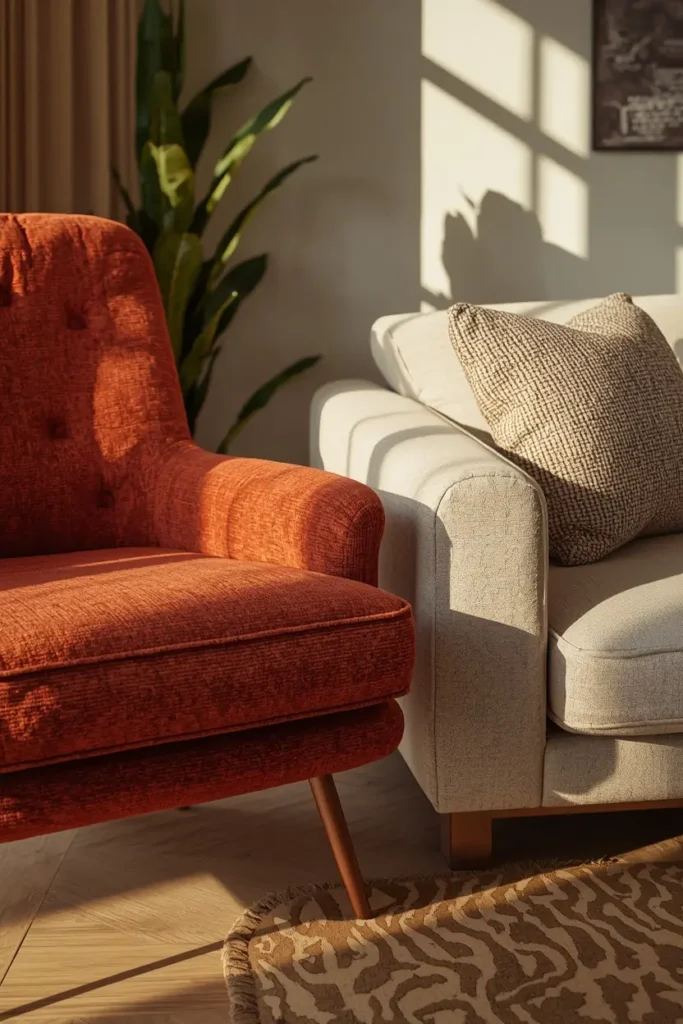
Add a single accent chair upholstered in bouclé or velvet, in either a warm neutral tone or a deeper accent color like rust or olive, to introduce a distinct texture and shape without disrupting the room’s overall palette. This idea works especially well as a way to bring genuine seasonal texture into the room through furniture rather than only through smaller, swappable textiles like pillows and throws. Position the chair at an angle to the sofa, angled toward a window or the fireplace, rather than lined up perfectly parallel, to create a more relaxed, conversational furniture arrangement. Choose a chair silhouette with some curve or softness to it, since a rounder shape tends to read as cozier than a strictly boxy, angular frame. This idea works particularly well for anyone who wants a more permanent style update rather than a purely seasonal one, since a well-chosen accent chair earns its place in the room well beyond just the fall months.
11. Create a Small Fall Reading Corner
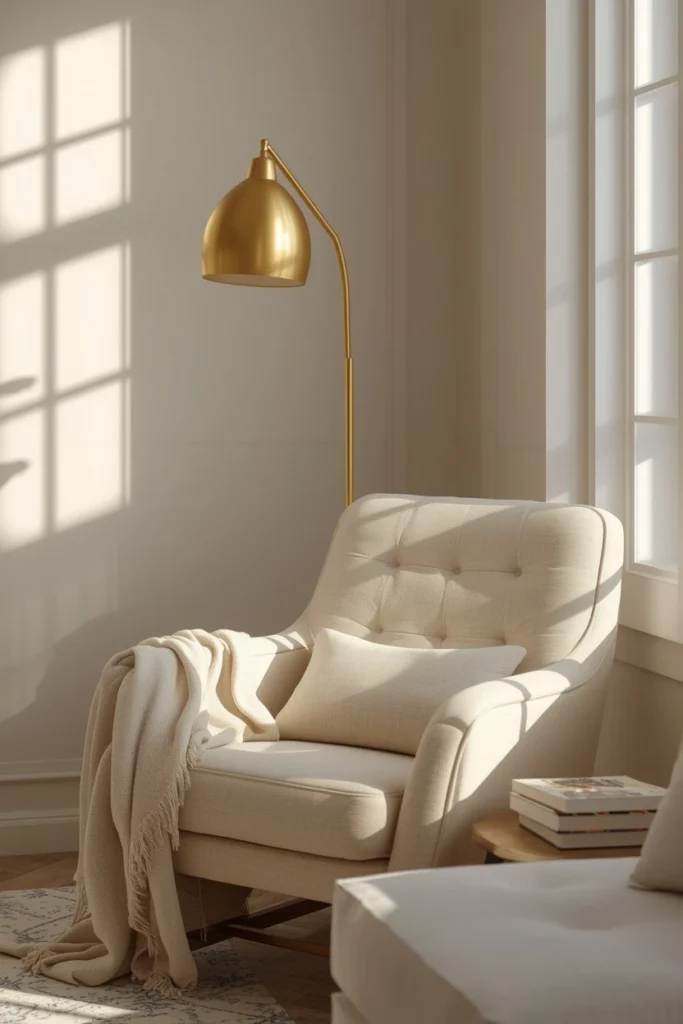
Set up a comfortable chair beside a floor lamp in an underused corner, adding a slim side table for a drink and keeping a throw and a small stack of books within reach. A dedicated reading corner doesn’t require a separate room, just a chair, focused light, and a small surface, but it gives the living room a second, more intimate gathering point beyond the main seating area. Choose a corner near a window if possible, since natural daylight makes the space useful in the afternoon while the lamp takes over as the light source once evening comes. Keep the styling in this corner simple, one throw, one small stack of books, one candle, so it feels like a genuine spot to sit rather than an additional display surface. This idea works particularly well in larger living rooms with awkward, underused corners, since it gives that space real purpose instead of leaving it empty or cluttered with miscellaneous items.
12. Bring In Darker Wood Tones for Contrast
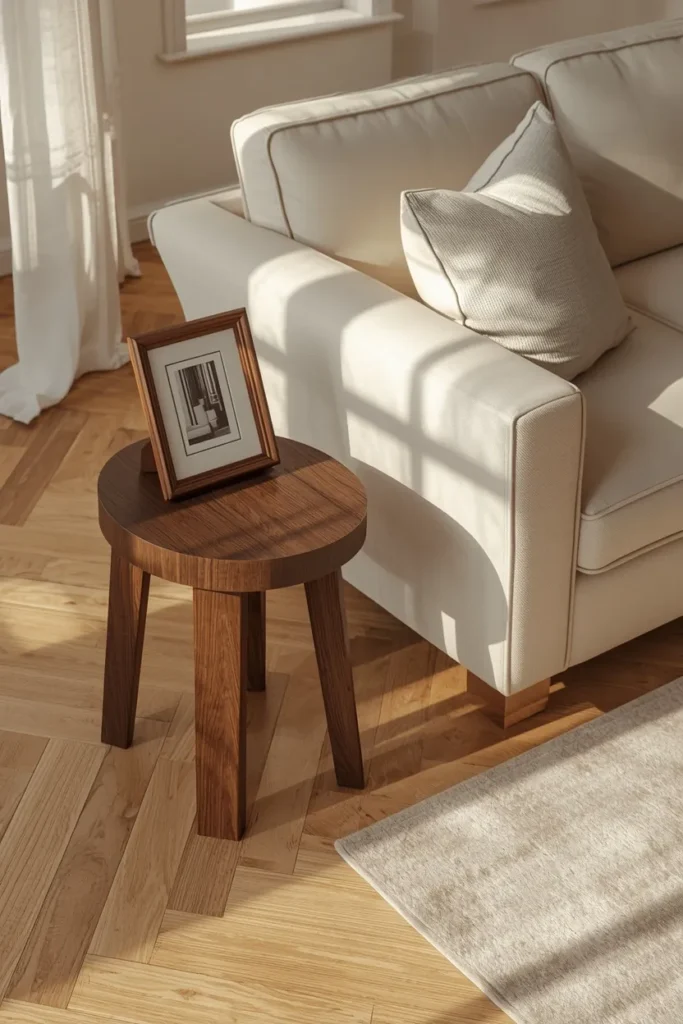
Introduce dark walnut or espresso wood finishes through a side table, tray, picture frame, or thrifted wooden bowl, giving a pale warm neutral room some visual weight and grounding contrast. Dark wood tones do a lot to keep an all-cream-and-taupe room from feeling flat or washed out, especially as the softer, warmer light of fall settles in. You don’t need to replace major furniture pieces to bring this contrast in; small, repeated touches of dark wood are often enough to feel intentional throughout the room. Repeat the darker tone two or three times in different spots, a coffee table here, a picture frame there, rather than introducing it just once, so the addition reads as a deliberate choice rather than an isolated mismatch. This idea works particularly well paired with a lighter oak or ash wood tone elsewhere in the room, since the contrast between the two wood finishes adds genuine depth without needing any additional color.
13. Bring Houseplants Into the Warm Palette
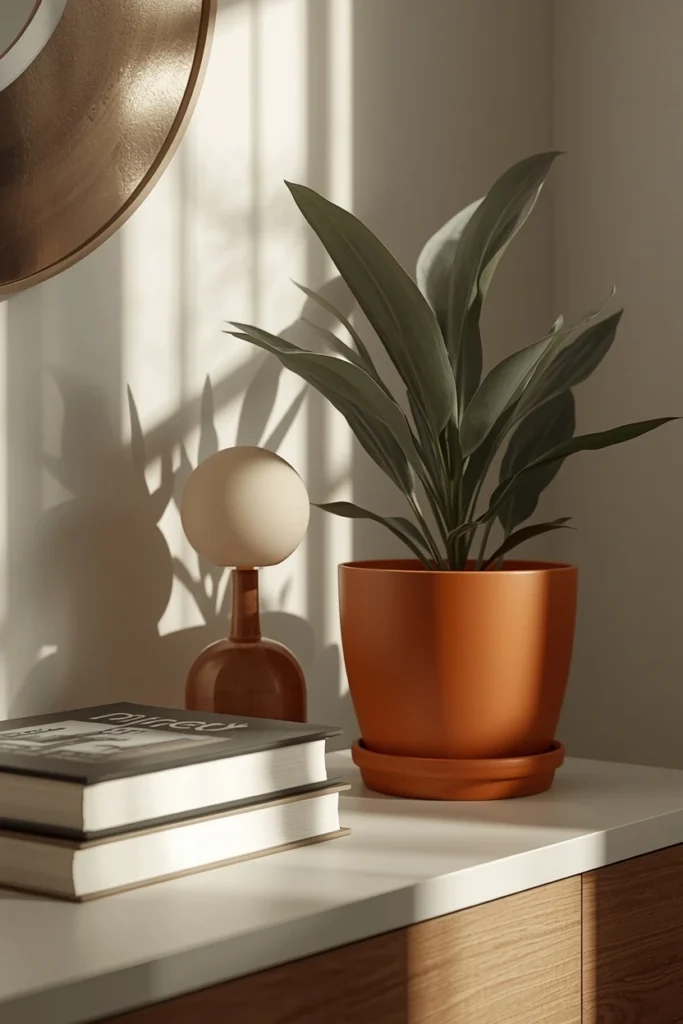
Keep existing houseplants in the room, or add one or two new ones in warm terracotta or stoneware pots, to introduce natural green tones that complement rather than compete with a warm neutral fall palette. Living greenery does something dried branches and faux stems can’t quite replicate, since it keeps the room feeling genuinely alive and connected to the outdoors even as the actual season outside turns colder and grayer. Choose pots in warm clay or muted stoneware finishes rather than bright glazed ceramic, so the planter itself supports the room’s overall color story instead of standing out as an unrelated accent. Position larger plants near a window where they’ll actually get enough light, and use smaller potted plants on a console or shelf to add low-maintenance greenery without requiring much additional care. This idea works particularly well for anyone who already owns houseplants, since repotting or relocating what you have costs nothing and still meaningfully shifts the room’s mood for the season.
14. Layer Lighting at Several Heights
Combine a table lamp, a floor lamp, and a smaller accent light, like a picture light or a cluster of candles, rather than relying on a single overhead fixture to light the entire room. Layered lighting placed at different heights makes fall evenings feel noticeably softer and more intimate, since multiple warm light sources eliminate the flat, harsh quality of one bright ceiling fixture working alone. Choose warm-toned bulbs across every fixture in the room, since mixing warm and cool color temperatures within the same space can undercut an otherwise well-planned lighting scheme. Flameless candles are a good addition here too, since they add a gentle flicker without requiring the same attention as an open flame. Use dimmers where possible, and keep the room bright enough to remain genuinely functional for reading or everyday tasks, even as the overall mood shifts warmer and softer.
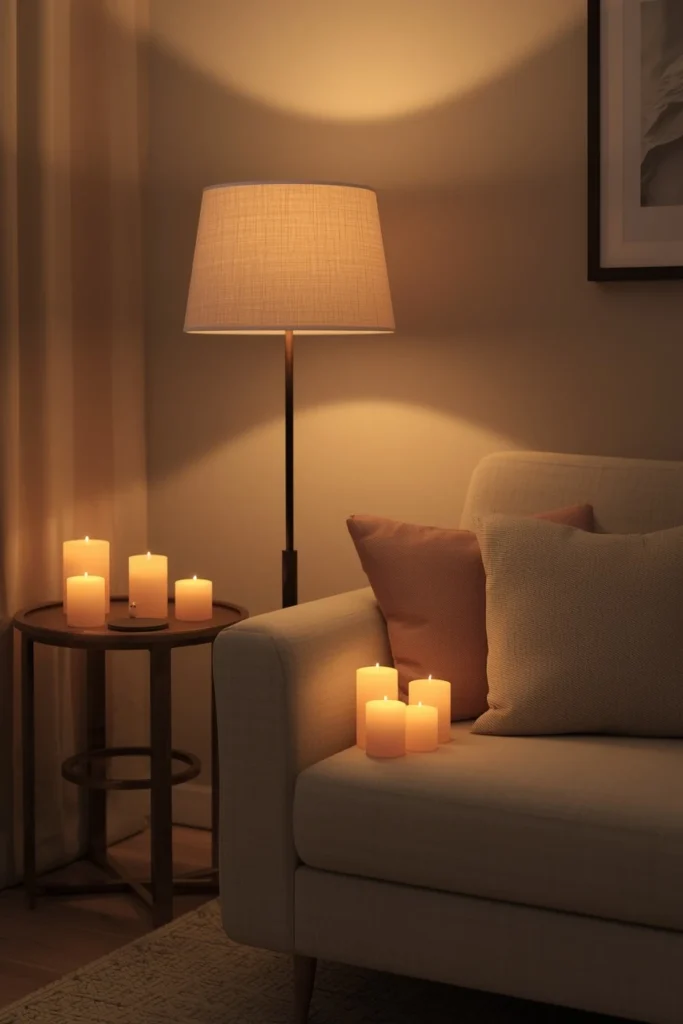
15. Replace Harsh Overhead Bulbs With Warm Ones
Swap any remaining bright white or cool-toned bulbs throughout the living room for warm white or soft amber ones, since this single change can shift the entire feel of the room without touching a single piece of furniture or decor. As daylight hours shorten heading into fall, the harsh white bulbs that felt fine in summer can suddenly read as cold and uninviting once they’re doing more of the room’s lighting work. This is one of the lowest-cost, highest-impact updates on this list, since it typically requires nothing more than buying a different bulb temperature for lamps you already own. Pay attention to the bulb’s listed color temperature when shopping, aiming for something in the warm white range rather than daylight or cool white. This idea works particularly well as a first step before any other lighting changes, since it’s free to test in an existing lamp before committing to new fixtures.
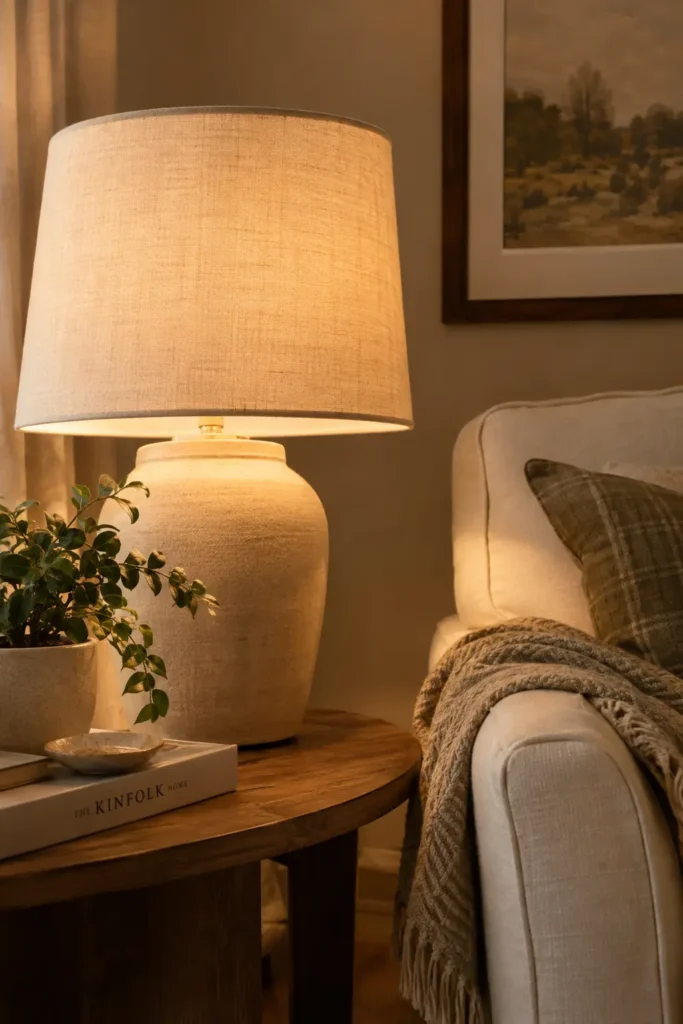
16. Add Copper and Antique Brass Accents
Introduce warm metals through a bowl, candle holder, lamp base, or picture frame, choosing aged or brushed finishes over anything highly polished or shiny. Copper and antique brass pair beautifully with wood, rust, and burgundy, reflecting the room’s warm lighting in a way that adds a restrained touch of richness without feeling flashy. You don’t need to match every metal finish in the room; one copper piece and two smaller brass details are typically enough to create a sense of continuity. Position these metal accents where they’ll catch some natural or lamp light throughout the day, since their warm glow is part of what makes them effective in a fall-styled room. This idea works particularly well layered onto a console table or mantel that’s otherwise mostly wood and fabric, since the metal adds a bit of shine and contrast to an otherwise matte, textural surface.
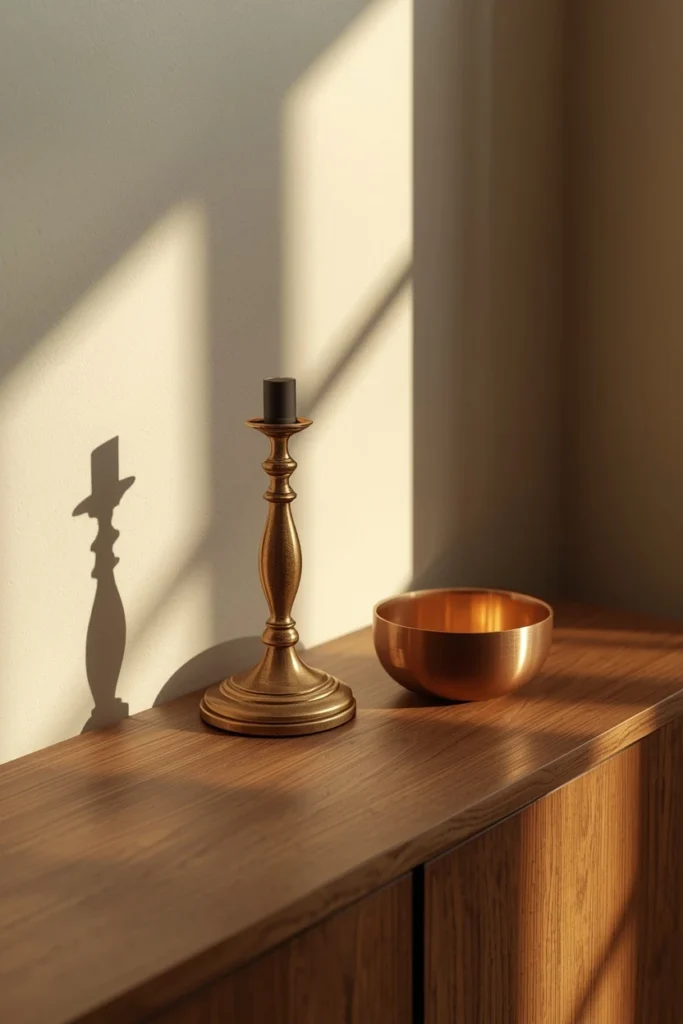
17. Use Woven Baskets for Texture and Storage
Place a sturdy, wide-opening woven basket beside the sofa, under a console table, or near the reading chair to store extra blankets and pillows while adding natural texture to the room. Baskets solve a genuine practical problem, since fall inevitably means more blankets and pillows in circulation, while also contributing meaningfully to the room’s overall textural layering. Choose a basket in a natural fiber, like seagrass or rattan, so the material itself complements the room’s warm wood and fabric tones rather than introducing a colder, more utilitarian look. Leave one throw draped casually over the basket’s edge rather than tucking everything neatly inside, since the slightly casual, in-use appearance reads as more welcoming than a fully hidden storage solution. This idea works particularly well in smaller living rooms, since a basket handles overflow textiles without needing a closet or separate storage furniture piece.
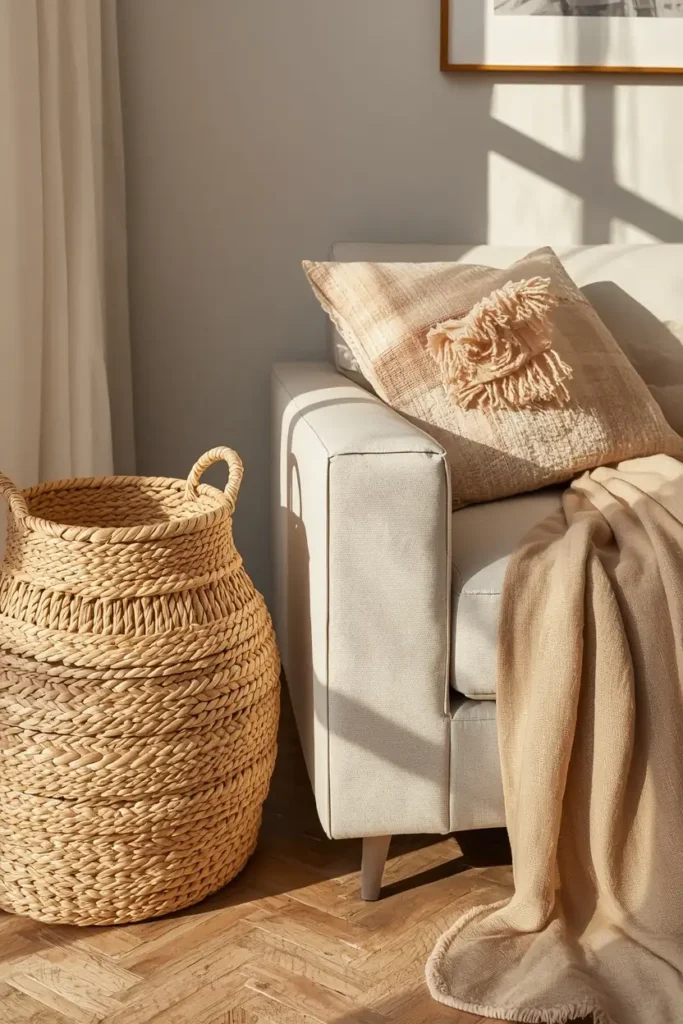
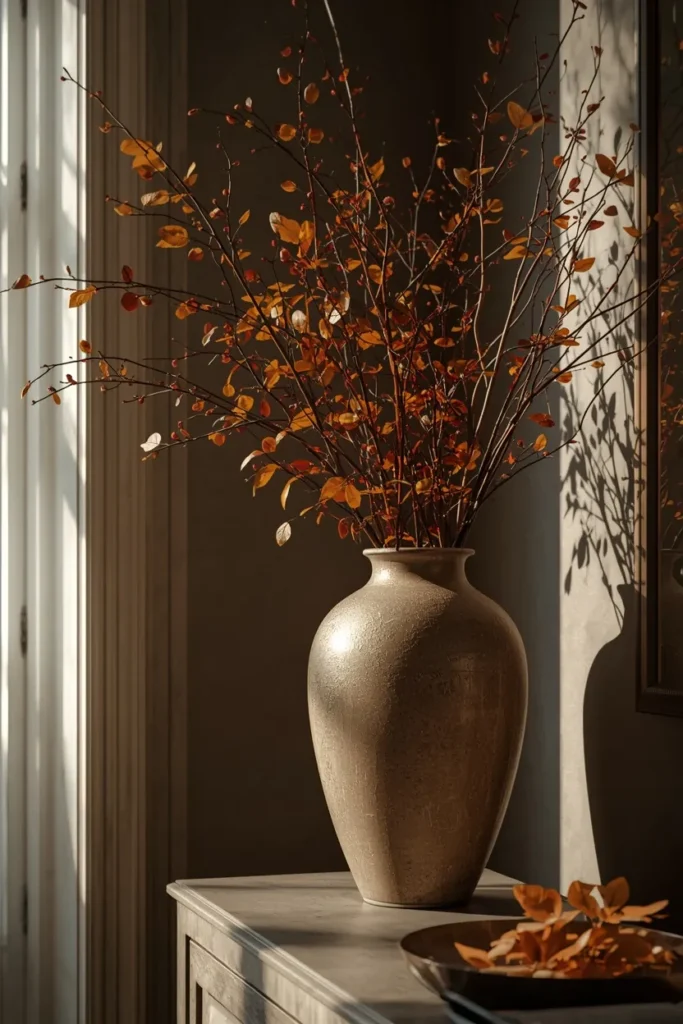
18. Style a Large Branch Arrangement in a Stoneware Vase
Place one generous arrangement of amber or burgundy-toned autumn branches in a heavy stoneware vase with a narrow opening, positioning it on a console, sideboard, or side table where it adds height without blocking a walkway. A single large, dramatic arrangement almost always makes a stronger visual statement than several small seasonal accessories scattered around the room, and it’s genuinely more affordable than it might look. Choose a vase with some real weight and a narrower neck, since a heavy base and a snug opening will support the branches better than a wide, light container. If you’re collecting branches outdoors yourself, check them carefully for pests and let them dry for a day or two before bringing them indoors. This idea works particularly well as one of the lowest-cost, highest-drama updates on this list, since a single trip to gather branches or a modest purchase from a craft store can fill an entire vase.
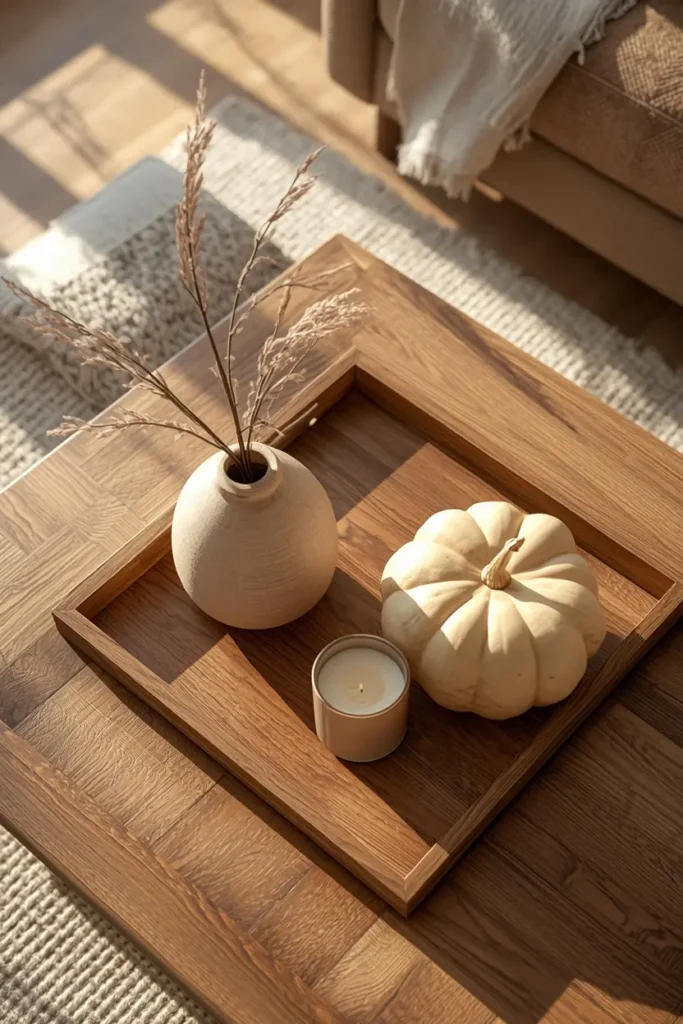
19. Keep the Coffee Table Styling Simple
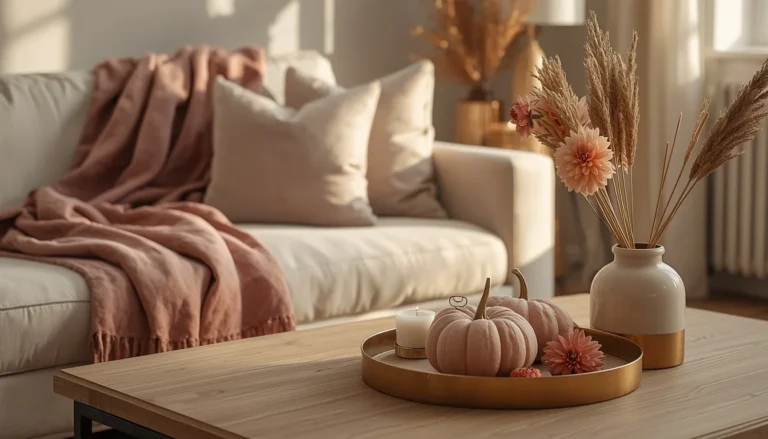
Start with a low tray, then add just one vase, one candle, and a small seasonal object, varying their heights slightly while keeping the whole arrangement low enough not to block conversation or the view of the television. A tray keeps the coffee table’s styled objects contained and easy to move entirely out of the way when the table needs to function for its actual purpose. Leaving open space on the table matters just as much as the styled corner, since a coffee table still needs room for an actual mug, remote, or book during everyday use. Choose one or two neutral or muted-colored pumpkins, cream, taupe, or muted sage, if you want a recognizable seasonal touch without introducing a bright, competing color. This idea works as a useful discipline for the whole room, since restraint on the coffee table often sets the tone for how restrained the rest of the space’s styling should be.
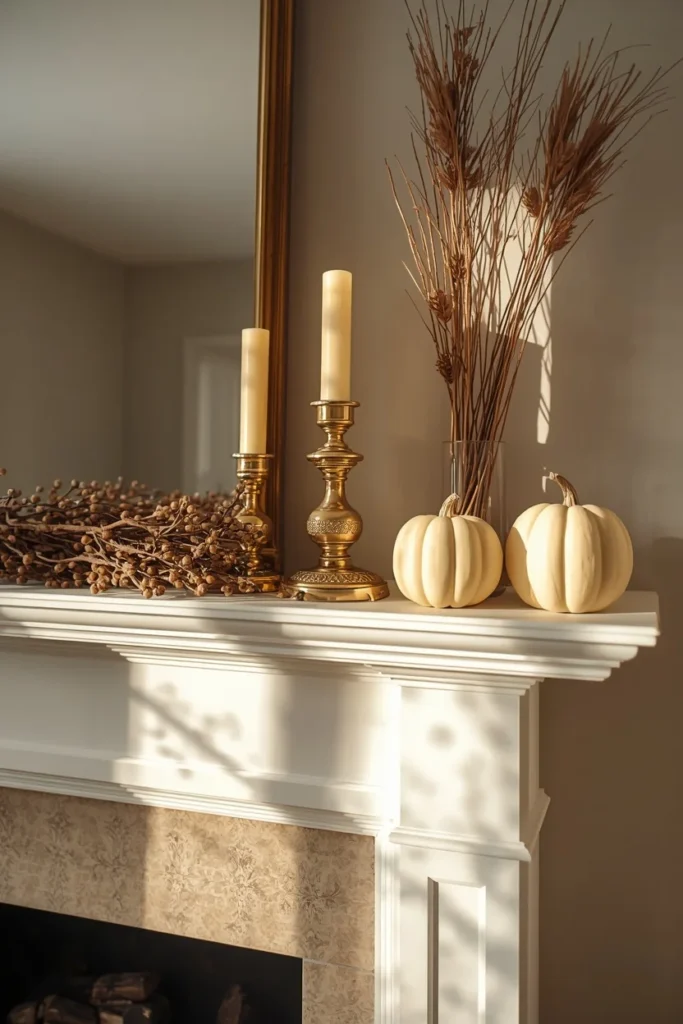
20. Build a Simple Mantel or Ladder-Shelf Display for Any Room
If your living room has a fireplace, start the mantel with one piece of art or a mirror, add candlesticks at one end and a low bowl or a pair of neutral pumpkins at the other, then connect the two sides with a loose branch garland. Vary the height of each object rather than lining everything up evenly, since that variation is what makes a mantel feel relaxed and gathered instead of rigidly arranged. If there’s no fireplace in the room, a leaning ladder shelf or a simple floating shelf can hold the exact same styled elements, giving a room without a mantel the same kind of vertical focal point. Choose one warm accent color to repeat across whichever surface you’re using, since consistency between the mantel or shelf and the rest of the room’s palette keeps the whole space feeling connected. This idea works as a strong finishing touch once most of the room’s larger styling choices, the rug, the sofa layering, the lighting, are already in place.
Styling Tips
- Establish your room’s warm undertone first, then hold every new fabric, paint, or accent piece up against that established base before buying.
- Layer two or three textures, knit, velvet, bouclé, woven, rather than relying on color alone to signal coziness.
- Keep bold accent colors, rust, olive, burgundy, confined to two or three spots around the room instead of repeating them everywhere.
- Add one small dark or black accent to ground an otherwise all-warm-toned palette and keep it from blurring together.
- Layer lighting at multiple heights, table, floor, and candle level, rather than depending on a single overhead fixture.
Practical Implementation Ideas
- Test paint chips and fabric swatches against your existing flooring and furniture in natural daylight before committing to any new warm neutral pieces.
- Start with the lowest-cost changes first, warm lightbulbs and a pillow swap, before investing in larger updates like a new rug or curtains.
- Shop your own home before buying anything new; a lamp, vase, or throw from another room may already fit the warm neutral fall palette you’re going for.
- Introduce dark wood or black accents gradually, adding one piece at a time and checking how it reads against the rest of the room before adding another.
- Photograph the room in both daylight and evening lamp light once a few changes are in place, since warm tones can look noticeably different depending on the light source.
Common Mistakes to Avoid
- Choosing “neutral” pieces without checking undertone first, which can leave a room feeling mismatched even when every individual item is technically a neutral color.
- Relying on color alone without adding texture, which can make an all-neutral room feel flat or under-decorated rather than genuinely cozy.
- Spreading one accent color evenly across every surface in the room, rather than concentrating it in two or three deliberate spots.
- Skipping lighting changes entirely, which leaves even a beautifully styled warm neutral room feeling cold and uninviting once natural daylight fades.
- Overcrowding tables and shelves with too many small seasonal objects, rather than choosing fewer, larger pieces that make a stronger visual statement.
Small-Space Alternatives
For a smaller living room, a single large branch arrangement (Idea 18) or a simple coffee table tray (Idea 19) delivers real seasonal impact without requiring extra floor space for additional furniture. A basket for blanket storage (Idea 17) solves the practical overflow of fall textiles without needing a separate storage piece, which matters more in a compact room. Choosing one accent chair (Idea 10) rather than a full second seating area, and keeping the mantel or shelf styling simple (Idea 20), both help a small space stay functional while still feeling warm and finished.
Budget-Friendly Alternatives
Swapping to warm lightbulbs (Idea 15) and adding rust or olive pillow covers (Ideas 4 and 5) are two of the lowest-cost, highest-impact changes on this list, both achievable for well under the cost of new furniture. A large branch arrangement (Idea 18) gathered outdoors costs little beyond a vase, and a woven basket (Idea 17) sourced secondhand can add real texture without a significant investment. Testing your room’s undertone (Idea 2) is completely free and helps prevent costly mismatched purchases down the line, which makes it one of the most valuable steps on this entire list.
Pro Styling Recommendations
Start with undertone and lighting before adding any bold color or new furniture, since getting the room’s warm foundation and light quality right first makes every other styling decision noticeably easier. Choose two accent colors maximum and repeat them consistently around the room rather than introducing a new color with every new seasonal purchase. Layer texture deliberately across at least three different surfaces, the sofa, the rug, and one smaller accent like a basket or vase, since texture variation does more for a room’s cozy feel than color alone ever will. Finally, resist the urge to fill every surface with a seasonal object; the negative space between styled groupings is often what keeps a warm neutral room feeling calm and elevated rather than cluttered.
FAQs
Conclusion
A warm neutral fall living room works because it leans on the same short list of moves every time: a consistent warm undertone, layered texture, one or two confident accent colors, and lighting that actually gets warmer as the room’s job shifts from bright daytime space to cozy evening retreat. None of it depends on covering every surface in orange pumpkins. Test your undertone, pick your two accent colors, layer in texture through throws and baskets and rugs, and let warm lamp light do the rest once the sun starts setting earlier. The room doesn’t need every idea on this list. It needs enough of them, chosen with intention, to feel like the season actually arrived.