22 Summer Dining Table Decor Ideas That Make Every Meal Feel Like a Celebration
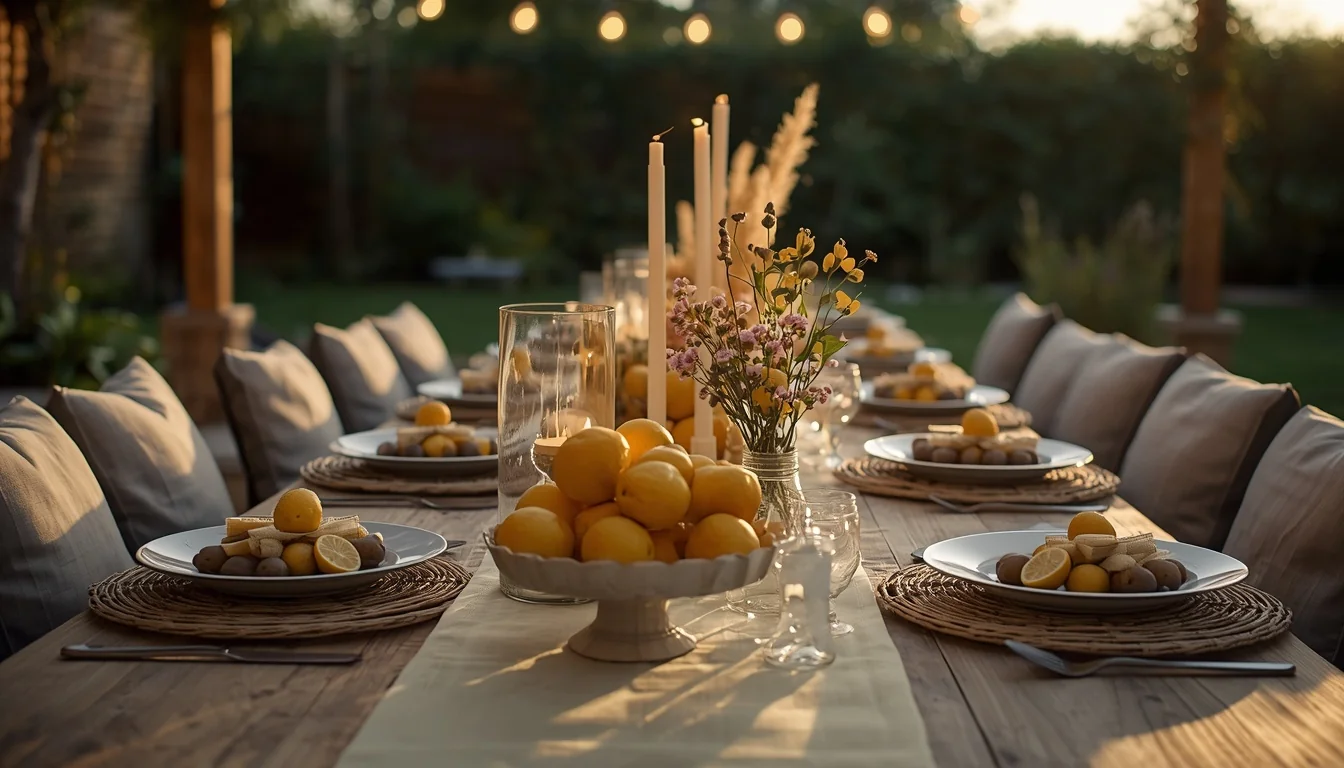
You know that feeling when you walk into a friend’s backyard dinner and the table just does something to the whole evening? It’s rarely the food that gets photographed first. It’s the table — the way the light hits a bowl of lemons, the way a mismatched napkin sits against a plain white plate, the way candlelight makes even a Tuesday dinner feel like it mattered.
Summer is the easiest season to pull this off, and also the one where it’s tempting to skip it entirely because the weather’s doing all the work already. But a few small, intentional choices on the table turn “we ate outside” into “that dinner was special.” This list has 22 of them, ranging from five-minute fixes to full tablescapes, so you can pick what fits your evening — and your budget.
Table of Contents
1. Candy-Stripe Linen Runner
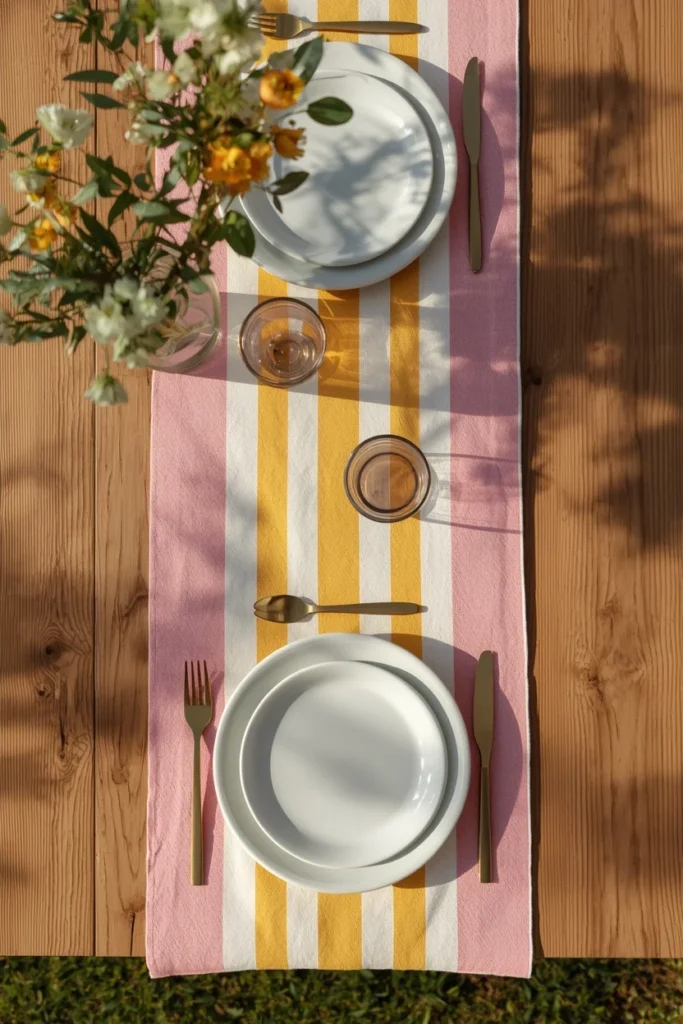
A striped linen runner is the fastest way to give a plain table instant personality, and this summer the stripes are louder than the coastal navy-and-white you’ve seen for years. Think bubblegum pink paired with citrus yellow, or pistachio green running against a warm cream base — colors that read as playful rather than nautical. Lay the runner down the center of the table over bare wood or a solid tablecloth, then let it be the loudest thing on the table so everything else, plates, glassware, napkins, can stay simple. Linen specifically matters here because its slight wrinkle and drape catch light in a way that crisp cotton doesn’t, giving the stripes a handmade, lived-in look instead of a stiff, retail one. This one idea alone can carry an entire tablescape if you’re short on time, since the pattern does the visual work that a centerpiece usually handles.
2. Leaf-and-Bloom Botanical Centerpiece
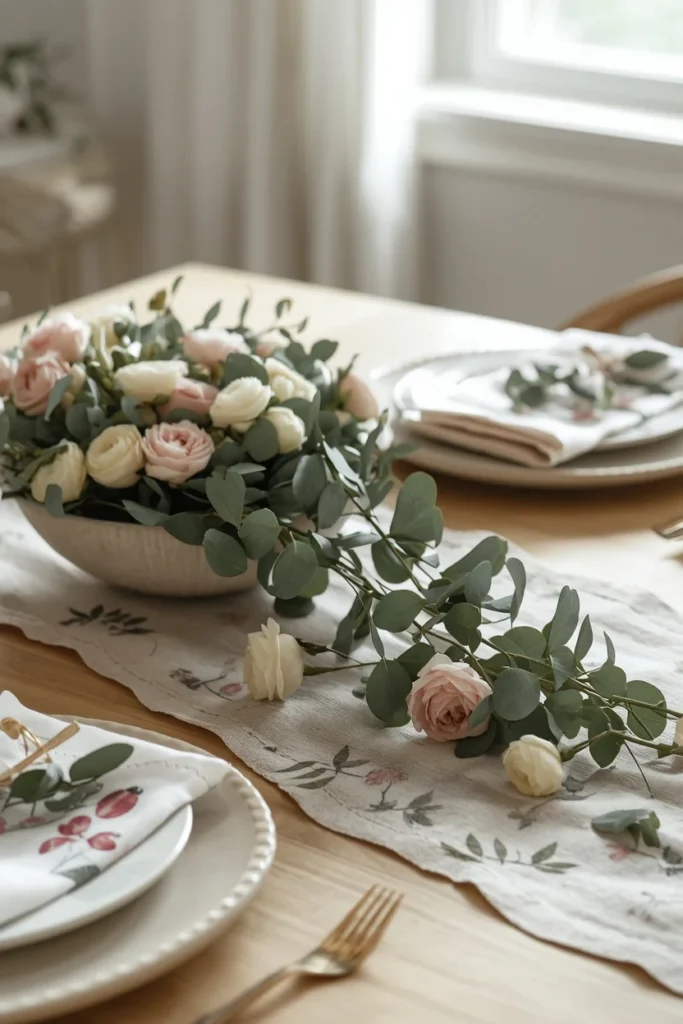
The botanical trend for summer isn’t just flowers anymore, it’s foliage given equal billing alongside the blooms, so the arrangement feels less like a bouquet and more like something pulled straight from a garden bed. Mix trailing greenery, like eucalyptus or ivy, with loose-headed flowers such as cosmos or ranunculus, letting stems fall at different lengths instead of trimming everything to match. Place the arrangement in a low, wide-mouthed vessel rather than a tall vase so it doesn’t block sightlines across the table, which matters most when you’re seating people on both sides for conversation. Layer floral-patterned linens or botanical-print plates underneath to echo the greenery without introducing an entirely new pattern. This look works particularly well because it can shift with whatever’s actually blooming near you that week, so it never looks identical twice.
3. Layered Eclectic Table Setting
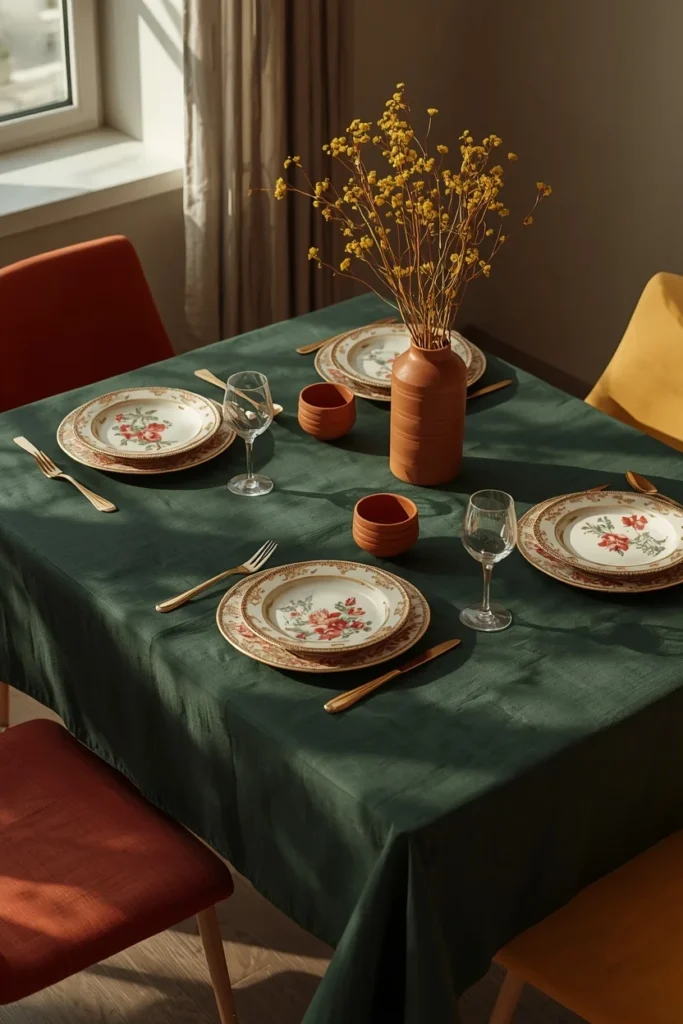
The old rule of matching your plates to your napkins to your glassware is officially gone, and today’s biggest table trend is intentional mismatching built around one strong anchor color. Start with a single bold base, a deep green tablecloth or a rust-orange runner, and then let the plates, napkins, and chairs bring in contrasting colors and patterns that wouldn’t normally sit together. The trick to making this look curated instead of chaotic is repetition: pick two or three colors total and repeat them across different elements so your eye keeps finding familiar threads. Vintage floral plates can sit comfortably next to solid stoneware if they share even one color in common. This approach is genuinely one of the more forgiving ways to decorate a table because there’s no single “correct” combination to get wrong.
4. Fresh Produce Centerpiece Bowl
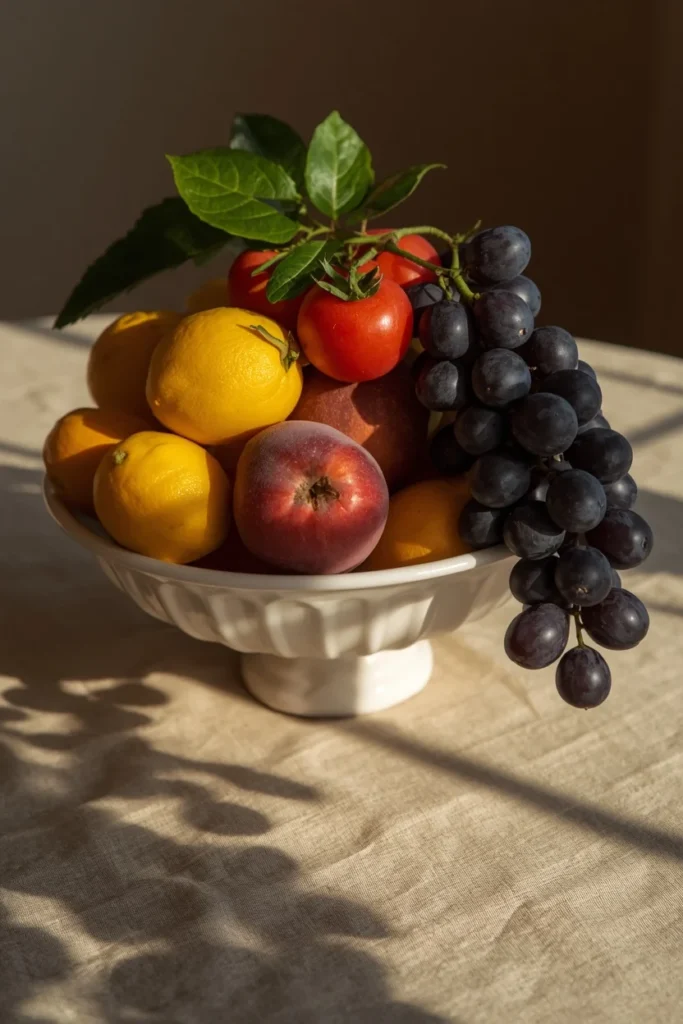
Skip the florist entirely and build a centerpiece out of your produce drawer, which is exactly what stylists are doing for summer tables right now. Pile lemons, small tomatoes on the vine, apricots, and loose grapes into a footed ceramic bowl or cake stand so the fruit sits at a slight height above the table surface. The unexpected part is what makes it work: nobody expects tomatoes as decor, so the table immediately reads as more thoughtful than a standard flower arrangement. Choose fruit with some color variation, reds against yellows against deep purples, so the bowl has visual movement instead of one flat tone. This idea also happens to be the most budget-friendly on the whole list, since you’re likely decorating with groceries you already planned to eat.
5. Dried-and-Fresh Branch Arrangement
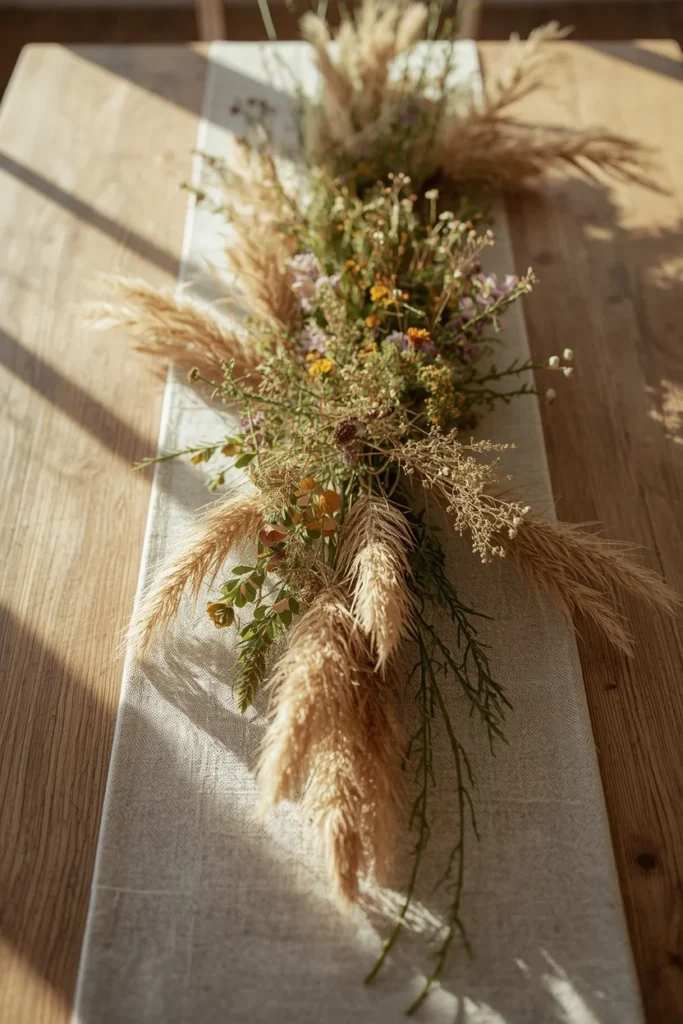
As summer stretches toward its later weeks, mixing dried branches with fresh-cut stems gives a table a sense of the season shifting without abandoning the lushness of summer altogether. Gather a handful of dried grasses or seed pods and combine them loosely with fresh greenery or late-blooming flowers in the same container, letting the dried elements add height and texture while the fresh stems bring color. This pairing works especially well in a low, wide vessel laid horizontally down the table rather than a single central vase, since it mimics the look of a foraged, gathered display. The dried elements also mean the arrangement holds up longer than an all-fresh bouquet, which matters if you’re setting the table hours before guests arrive. It’s a subtle way to signal that summer is winding toward fall without fully committing to autumn styling yet.
6. Lantern-Lit Evening Table
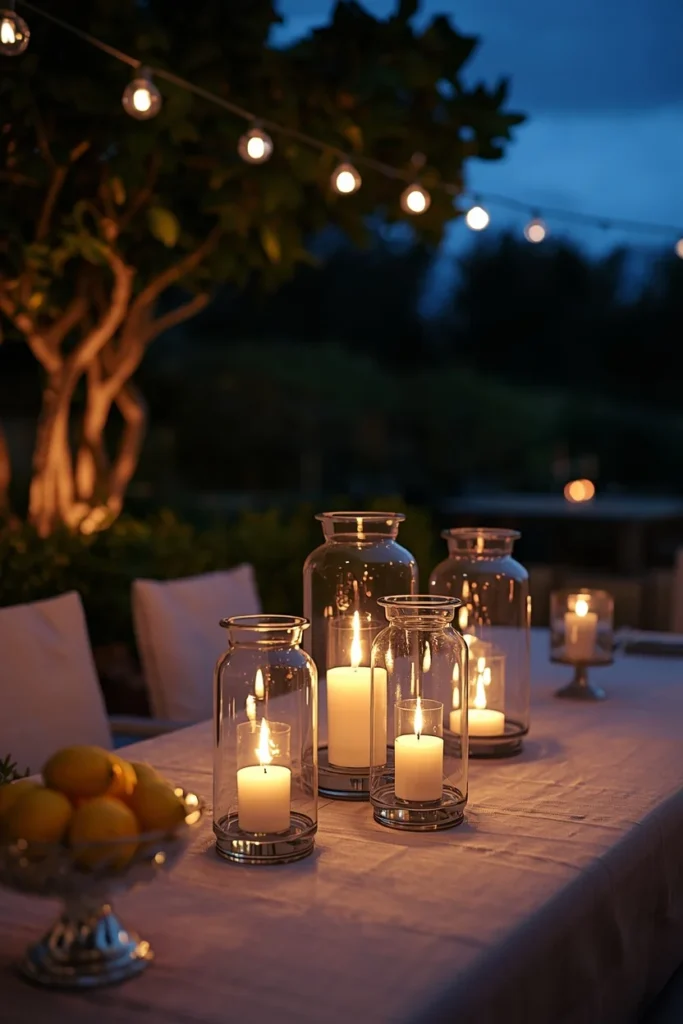
Once dinner moves past sunset, lanterns do double duty as both light source and centerpiece, and they’re one of the defining pieces of this summer’s outdoor tablescaping trend. Cluster two or three glass hurricane lanterns of varying heights down the center of the table instead of a single large one, which creates a softer, more layered glow across everyone’s faces. Battery-powered candles work here if you’re worried about wind or want to leave the table set up overnight, and most people genuinely can’t tell the difference once it’s dark. Pair the lanterns with low greenery or fruit so the display doesn’t feel like lighting alone, but a full tablescape that happens to glow. This idea solves a real hosting problem, since outdoor dinners lose their charm fast once the sun drops if there’s no lighting plan in place.
7. Elegant Dessert Centerpiece
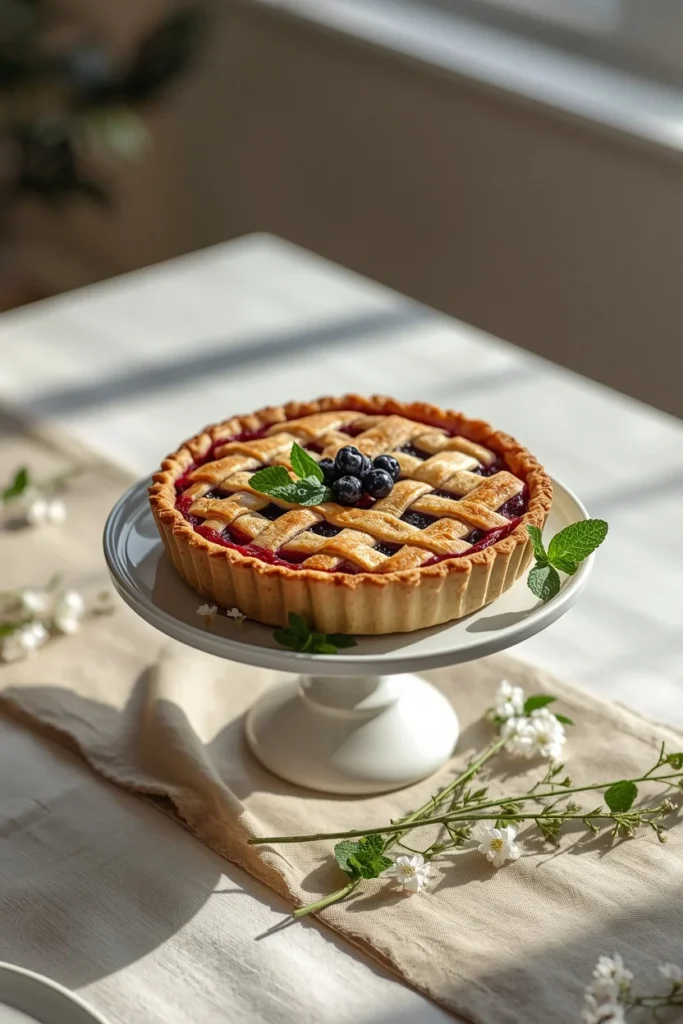
Instead of flowers, some of the best-styled summer tables right now put dessert front and center, literally. A tiered cake stand loaded with a galette, fresh berries, or a stack of pastries sits at the middle of the table as both the centerpiece and the meal’s finale. This works because it eliminates the awkward moment of clearing a floral arrangement to make room for dessert later, and it gives guests something to look forward to throughout dinner. Choose desserts with visible texture and color, a lattice-topped pie or a berry tart, since the goal is a display that looks intentional even before anyone takes a bite. Surround the stand with a few loose herb sprigs or small flowers tucked at the base to soften the presentation without competing with it.
8. Gingham Picnic Tablecloth
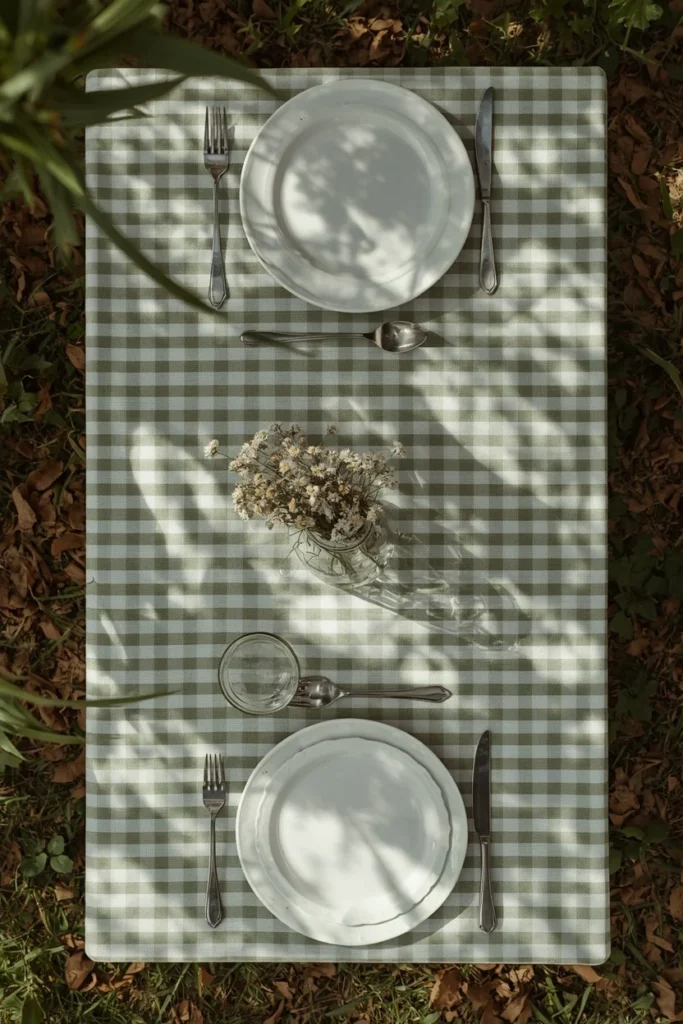
For a casual daytime lunch, gingham brings instant warmth without trying too hard, and it photographs beautifully in natural light. Choose a mid-scale check in a warm red, blue, or sage green rather than the tiny classic pattern, since larger checks read as more current and less like a diner tablecloth. Let the gingham be the statement and keep everything else plain, white stoneware, simple flatware, a single jar of wildflowers, so the pattern has room to breathe. This is one of the easiest ideas on the list to execute because gingham tablecloths are widely available and inexpensive, and the look works equally well indoors or spread across a backyard picnic blanket. It’s the go-to choice when you want the table to feel relaxed rather than formal.
9. Watermelon Party Table
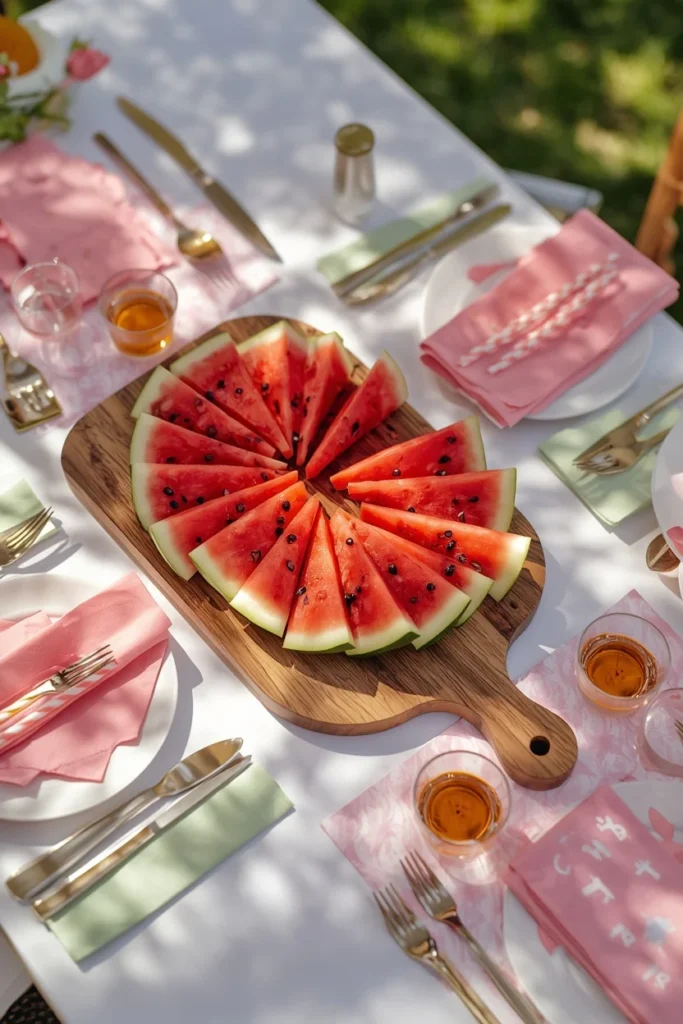
For a birthday, a kids’ gathering, or just a playful summer afternoon, watermelon slices double as both snack and decor when arranged directly on the table. Fan sliced wedges across a serving board at the center, or set a few whole halved melons carved into simple bowls to hold fruit salad or drinks. The bright pink-and-green color pairing is naturally festive, so it needs almost no additional styling beyond a striped paper straw or two and simple paper napkins in a matching pink. This idea is especially useful for outdoor parties where you want a table that photographs well but doesn’t require delicate glass or florals that could get knocked over. It also solves two problems at once, since the “decor” is edible and there’s no cleanup beyond what you’d already be doing.
10. Coastal Blue-and-White Stripe Table
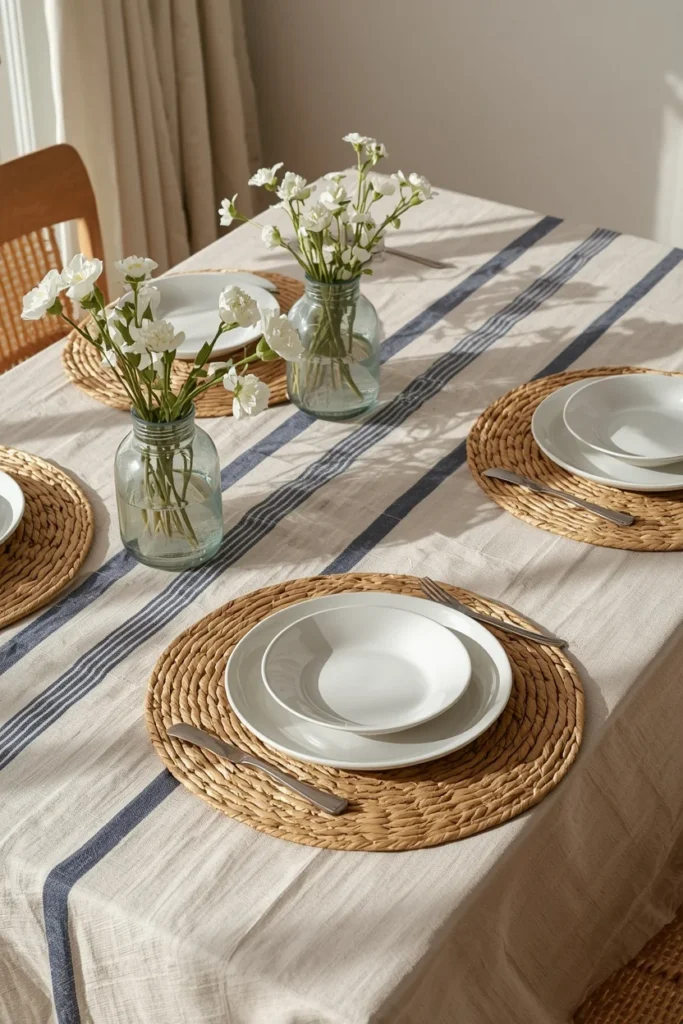
Classic nautical stripes remain a summer staple for a reason, and pairing crisp navy-and-white linens with natural rope or rattan accents keeps the look feeling coastal rather than costume-like. Use a striped tablecloth or runner as the base, then bring in woven placemats and simple white ceramic plates so the palette stays tight and calm. A small dish of shells or a single glass vase of white flowers finishes the look without overcomplicating it. This combination works especially well for waterside dinners or anytime you want a table that feels breezy and unfussy. Because the palette is so restrained, it’s also one of the easier looks to keep looking crisp even after a long, casual dinner.
11. Citrus Place Setting Accents
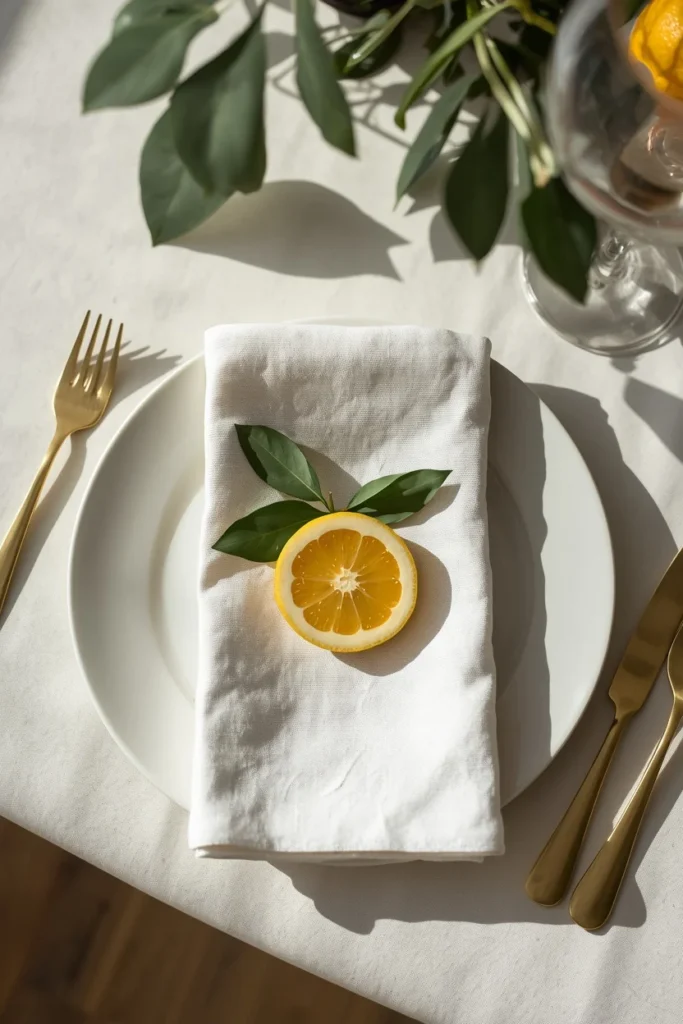
Rather than a single centerpiece, this idea distributes small citrus touches across each individual place setting, a lemon slice tucked into a folded napkin, a small orange resting beside each plate, or a sprig of citrus leaves laid across the charger. It gives every seat at the table its own small moment of styling instead of concentrating all the visual interest in the middle. Choose citrus with the leaves still attached when possible, since the green adds contrast against the bright yellow and orange tones. This works particularly well for smaller dinner parties where guests will notice the detail up close, and it’s inexpensive enough to do for a table of ten without much planning. It also doubles as a natural favor, since guests can simply take their citrus home at the end of the night.
12. Terracotta Vase Styling
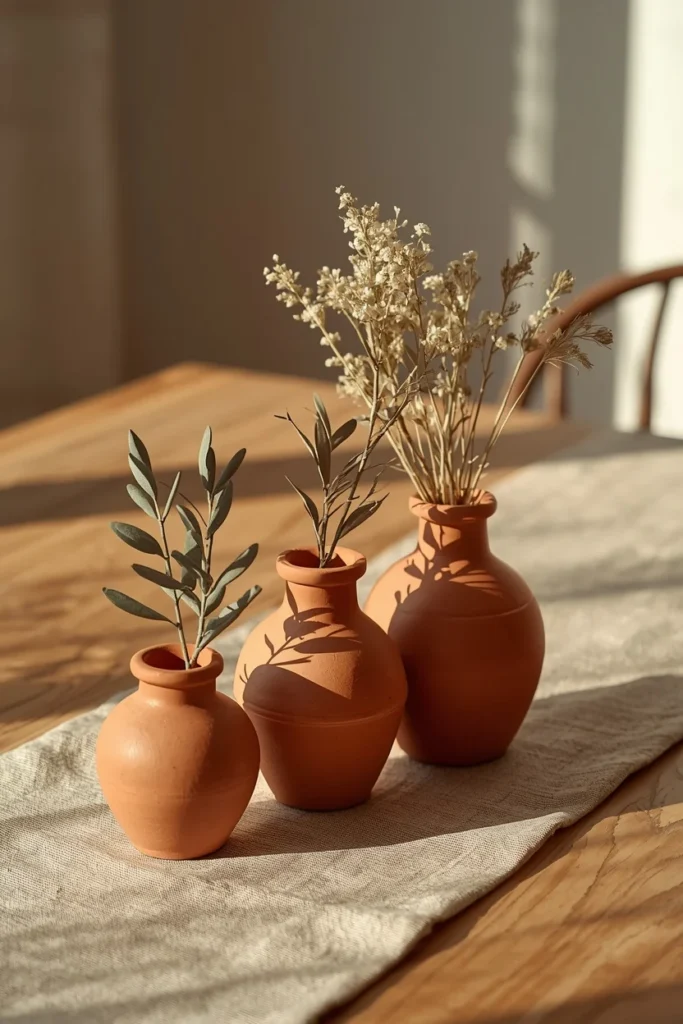
Swapping a glass or ceramic vase for a terracotta pot instantly warms up a table and leans into the earthy, sun-baked color palette that’s trending across dining spaces this year. Use a few small unglazed terracotta pots grouped at varying heights rather than one large one, filling each with a single type of stem, olive branches in one, wildflowers in another, so the grouping feels curated rather than random. The matte, rough texture of terracotta contrasts nicely against smooth glassware and linen, giving the table more tactile variety without adding more color. This look pairs especially well with a Mediterranean-inspired menu or a table set with warm ochre and rust tones. It’s also a look you can build gradually, picking up a pot or two at a time from garden centers or flea markets.
13. Wildflower Mason Jar Runner
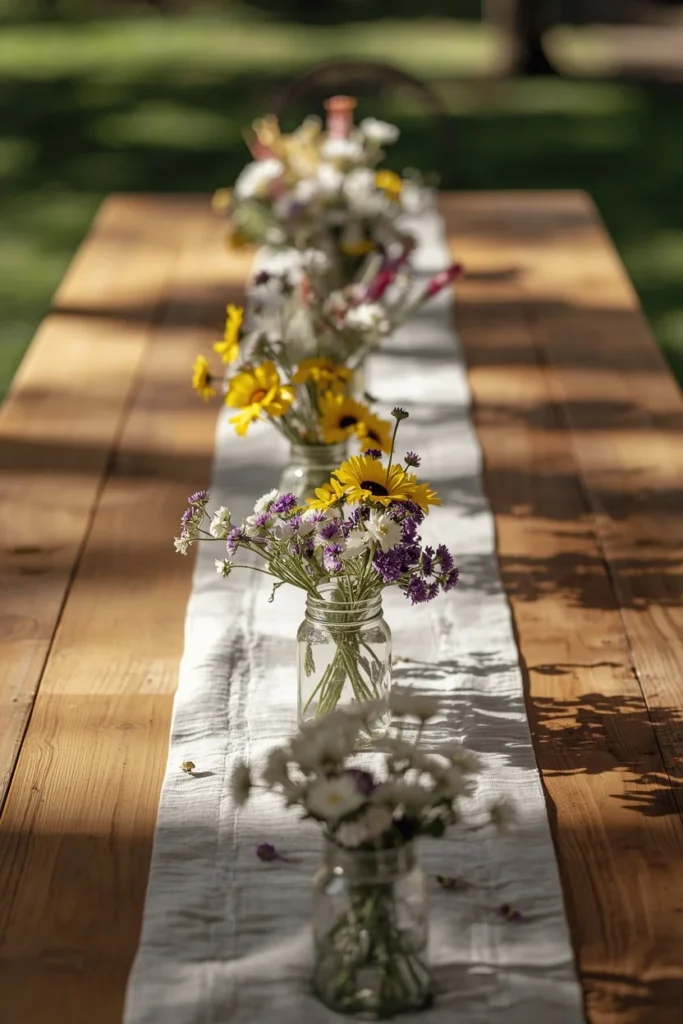
Line a row of small mason jars down the center of the table, each holding a loose, single-variety bunch of wildflowers, cosmos in one, black-eyed susans in the next, daisies after that, so the runner reads as a continuous meadow rather than one large arrangement. This is one of the most budget-conscious ideas on the list because mason jars are inexpensive or already in most kitchens, and wildflowers can often be gathered rather than purchased. Vary the jar heights slightly by using different sizes, which keeps the eye moving down the length of the table instead of landing flat. The casual, slightly imperfect nature of this look is exactly the point, so resist the urge to trim stems too precisely or arrange them too symmetrically. It’s an especially good option for long outdoor tables where a single centerpiece would get lost.
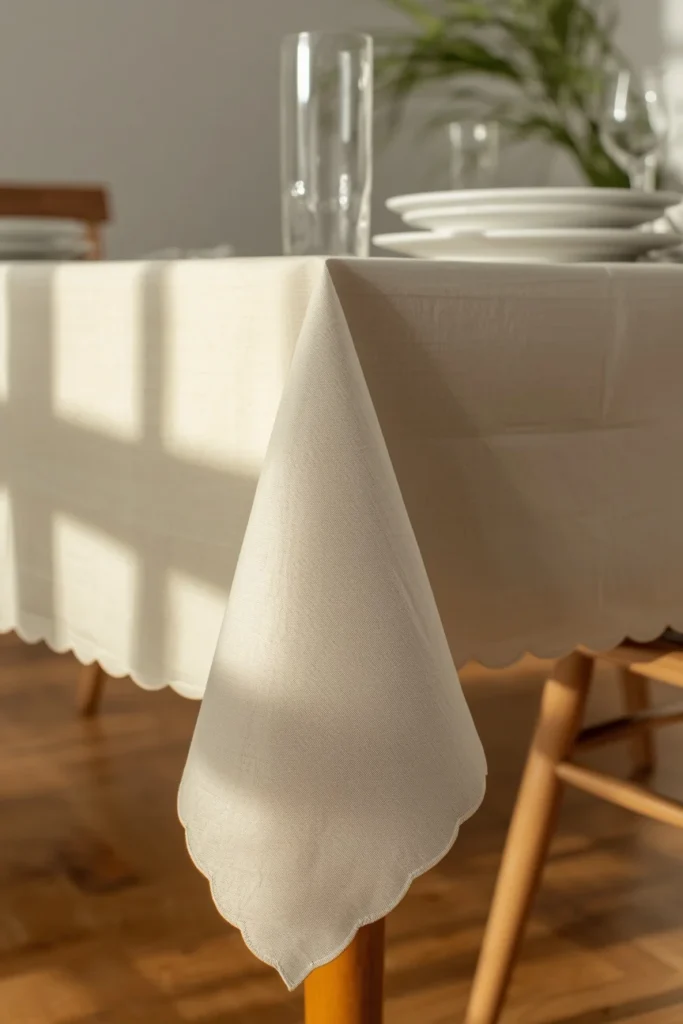
14. Scalloped Table Linens
Scalloped-edge tablecloths and napkins add a soft, feminine detail that photographs beautifully without requiring any additional styling effort. The curved edge catches light differently than a straight hem, giving even a plain solid-color linen a more finished, custom look. Choose a scalloped tablecloth in a warm neutral, buttery cream or soft blush, and let the edge detail be the focal point rather than layering it under a busy pattern. Pair with simple glassware and a minimal centerpiece so the linen’s texture stays visible and isn’t visually competing with anything else on the table. This is a small upgrade that makes a noticeable difference in photos, since the scalloped hem shows up clearly in any overhead or wide table shot.
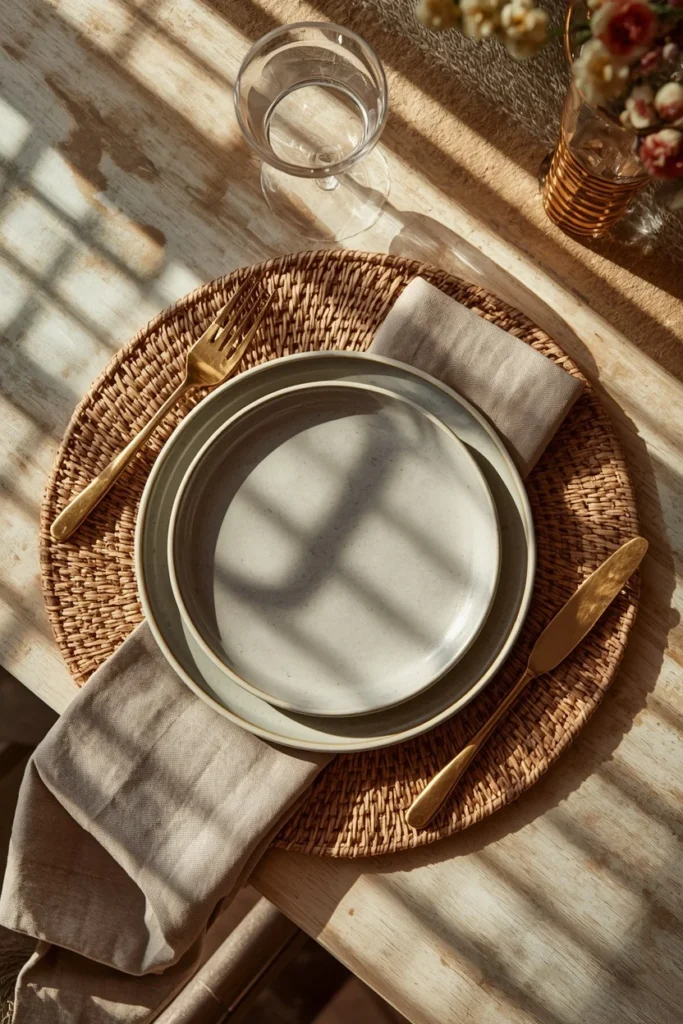
15. Woven Rattan Chargers
Rattan chargers add warmth and texture underneath each plate, bridging the gap between a fully formal table setting and a relaxed outdoor one. The woven texture reads as natural and handmade, which pairs well with both coastal and farmhouse-leaning tablescapes without looking out of place in either. Layer a simple stoneware plate directly on top of the rattan charger, then add a linen napkin in a complementary neutral tone so the texture stays the star of each place setting. Because rattan chargers are lightweight and stack easily, they’re also practical for anyone who hosts outdoors regularly and needs decor that’s easy to store. This detail alone can make a table look considerably more styled without changing anything else about the setting.
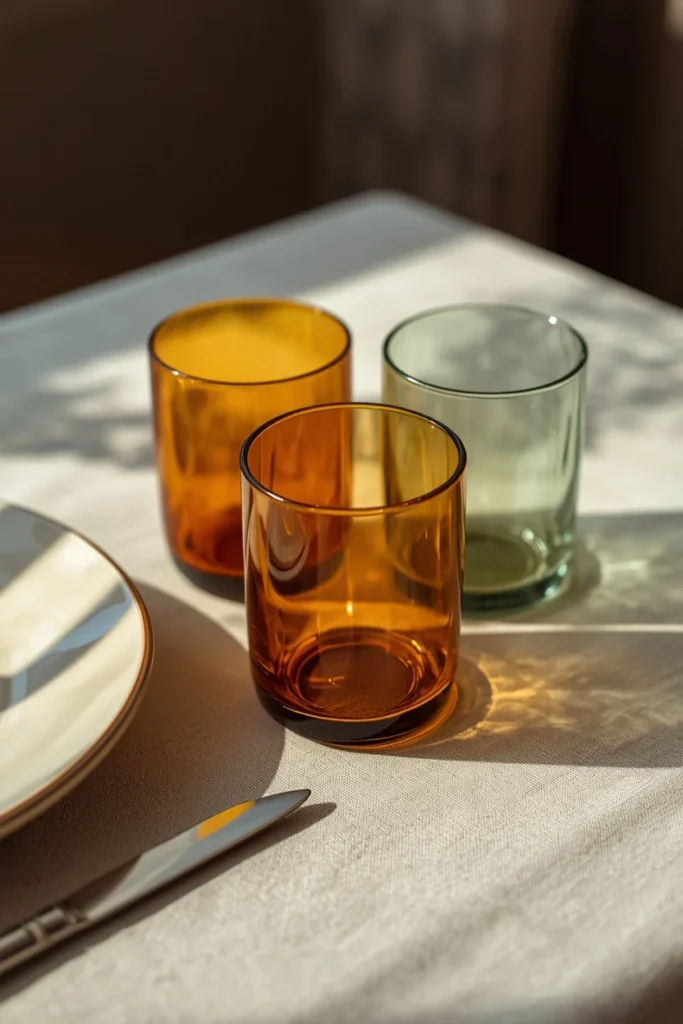
16. Colored Glassware Styling
Swapping clear glassware for colored glass, amber, sage green, or soft blue, adds a wash of color to the table without introducing a new pattern or texture to manage. Mix two or three colors across the glasses rather than matching every single one, which creates the same layered, collected-over-time look that’s trending in tableware more broadly. Colored glass also catches and refracts light beautifully in both midday sun and candlelight, adding a subtle glow to overhead photos. Pair with otherwise neutral plates and linens so the glassware has room to stand out as the main color moment. This is a particularly good idea for anyone slowly building a table decor collection, since colored glasses can be picked up individually over time from vintage shops or flea markets.
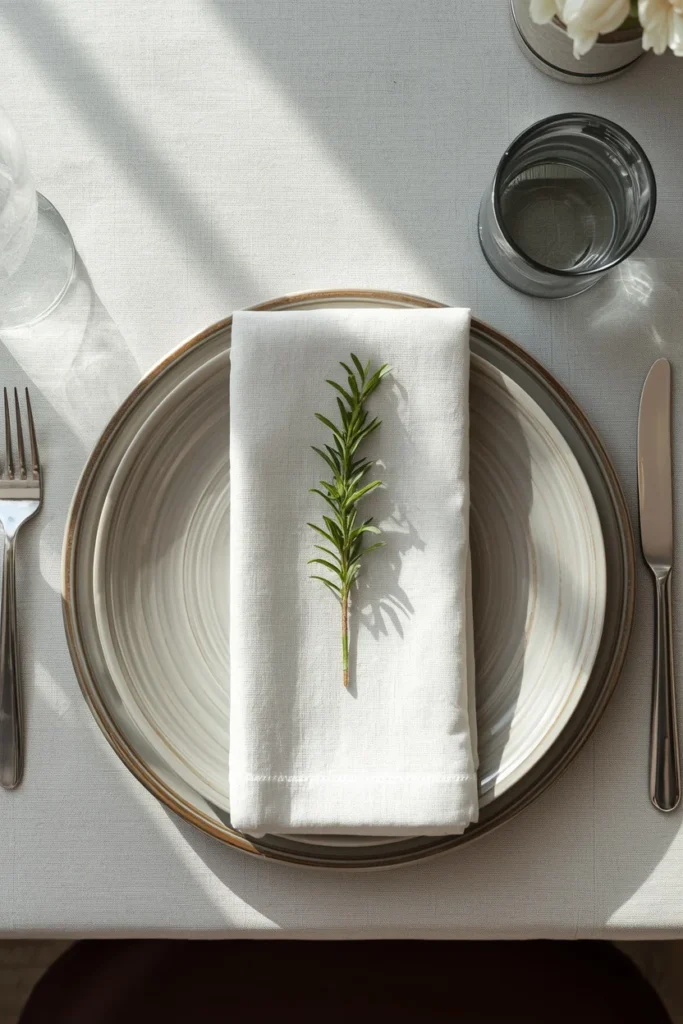
17. Fresh Herb Napkin Sprigs
A single sprig of fresh herb tucked into a folded napkin, rosemary, basil, or mint, adds fragrance and a small green detail to every place setting at almost no cost. This works especially well if the herb echoes something in the meal itself, basil beside a caprese dish or mint next to a summer dessert, tying the table styling directly to what’s being served. Fold the napkin simply, a basic rectangle or loose roll, so the herb has room to sit visibly on top rather than getting lost in fabric folds. Because fresh herbs wilt fairly quickly outdoors, this is best set up shortly before guests arrive rather than hours ahead. It’s a detail most guests will comment on specifically, since it feels personal and considered in a way that store-bought decor often doesn’t.
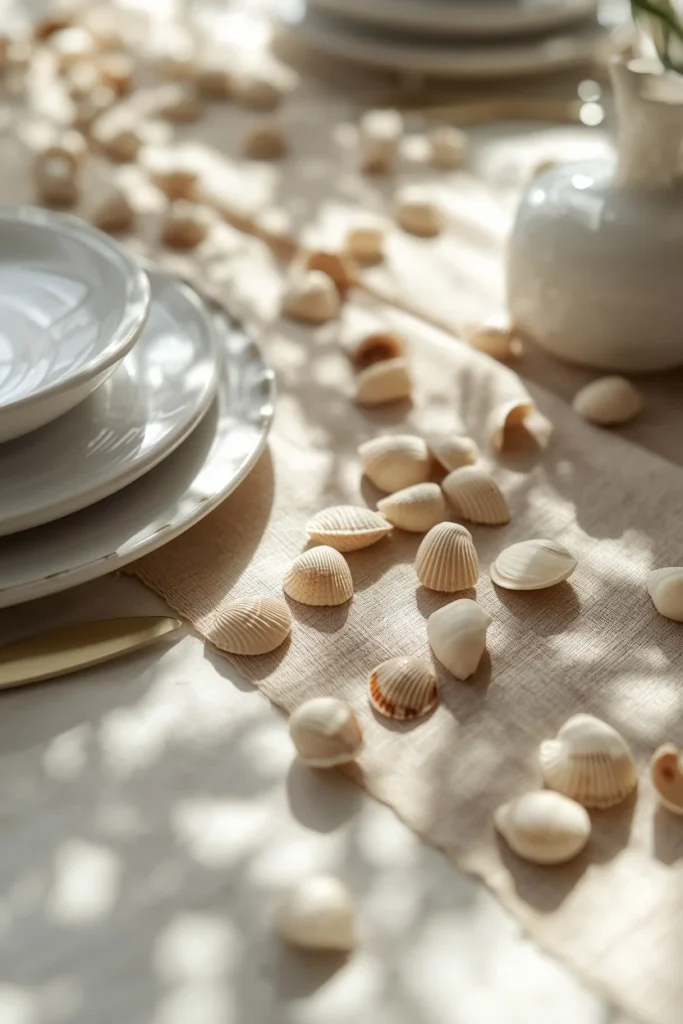
18. Coastal Shell Accents
For beach house dinners or anytime you want a subtle nod to the coast without going full nautical theme, small shells scattered along the table runner or gathered into a shallow dish add texture and story without much effort. Mix a few different shell shapes and sizes rather than uniform ones, since the slight irregularity looks gathered rather than purchased in bulk. Pair with natural linen in sandy neutrals and simple white ceramics so the shells read as a considered detail rather than a costume piece. This idea works particularly well scattered near place settings rather than piled in the center, giving each seat a small individual touch. It’s also an easy way to repurpose shells collected on an actual beach trip earlier in the summer.
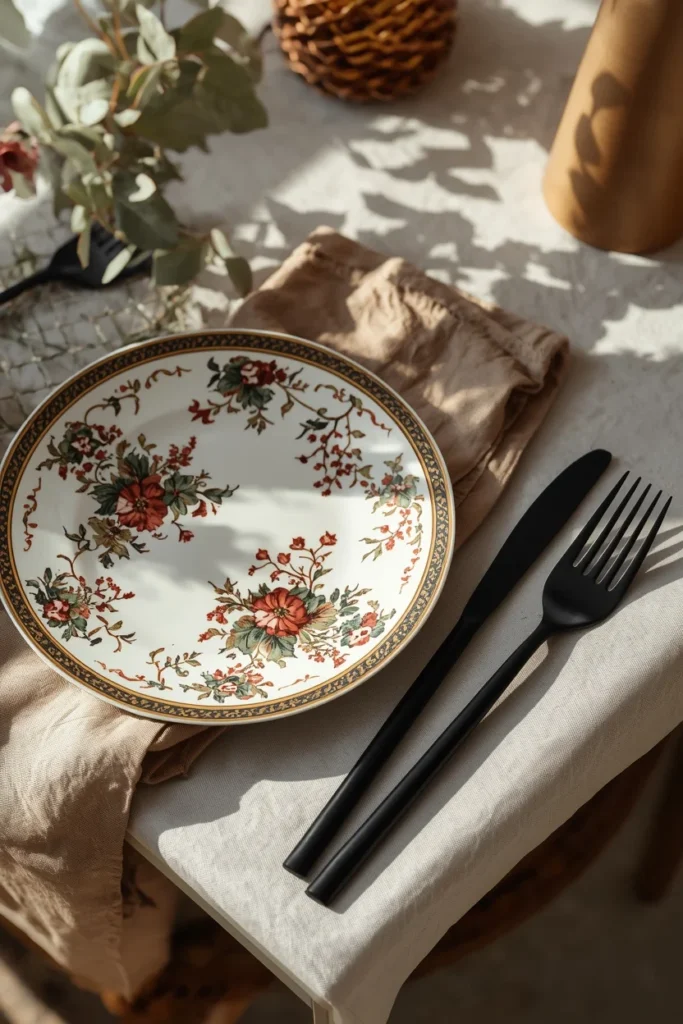
19. Vintage Floral Meets Modern Flatware
Pairing an inherited or thrifted floral china pattern with sleek, modern flatware keeps a sentimental piece from feeling dated or overly formal. The contrast between the ornate plate pattern and the clean lines of contemporary cutlery gives the table a collected-over-generations feel that’s hard to fake with all-new pieces. Keep the rest of the table simple, a plain linen napkin and minimal glassware, so the floral plate has room to be the focal point without competing elements. This idea is especially meaningful for anyone using a grandmother’s china or a flea market find, since it gives an old pattern a genuinely current context. The mix of eras is exactly what makes the table feel personal rather than styled from a single catalog.
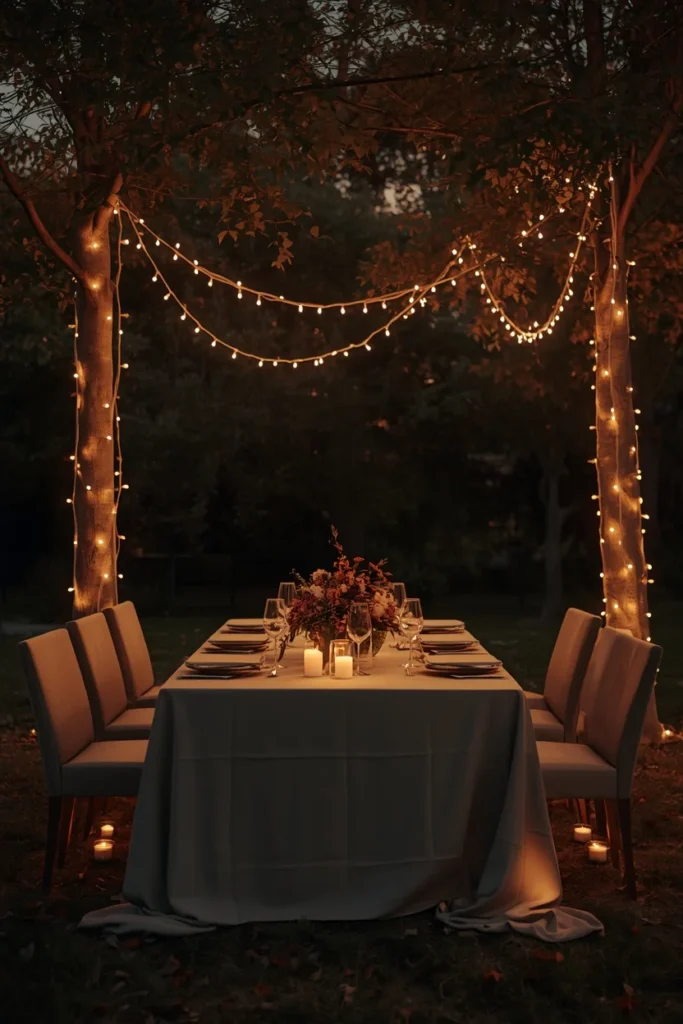
20. Golden-Hour String Light Table
Stringing warm white lights above or around an outdoor dining table extends the usable evening and gives every photo taken at that table a soft, golden glow, even well after sunset. Hang the lights slightly looser than taut, letting them dip gently between posts or trees, since a relaxed drape reads as more natural than a perfectly straight line. Combine with a few low candles on the table itself so the light comes from multiple heights rather than only overhead. This setup solves the practical problem of losing table ambiance once daylight fades, while also giving the space a built-in reason to linger longer after the meal ends. It remains one of the most requested outdoor entertaining upgrades because it works for everything from a casual family dinner to a full celebration.
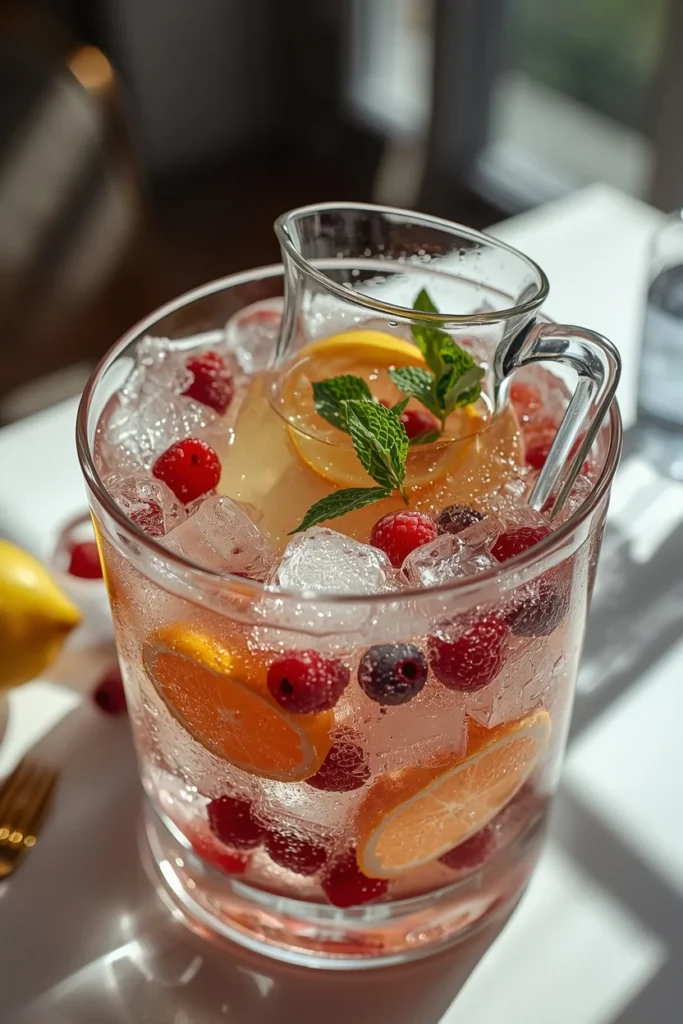
21. Frozen Fruit Ice Bucket Centerpiece
A large glass bowl or bucket filled with ice and frozen fruit, berries, citrus slices, mint leaves, doubles as both a striking centerpiece and a functional way to keep bottles or a pitcher chilled at the table. Freeze the fruit in the ice itself the day before by layering it into water in batches, which suspends the color throughout the block rather than letting it sink to the bottom. Place the bucket at the center of the table with a few bottles or a glass pitcher nestled into the ice so it’s immediately useful as well as decorative. This idea is particularly strong for larger gatherings where a purely decorative centerpiece would otherwise take up space needed for serving. It also tends to be a genuine conversation starter, since the frozen fruit inside the ice is visually unexpected.
22. Pressed-Flower Place Cards
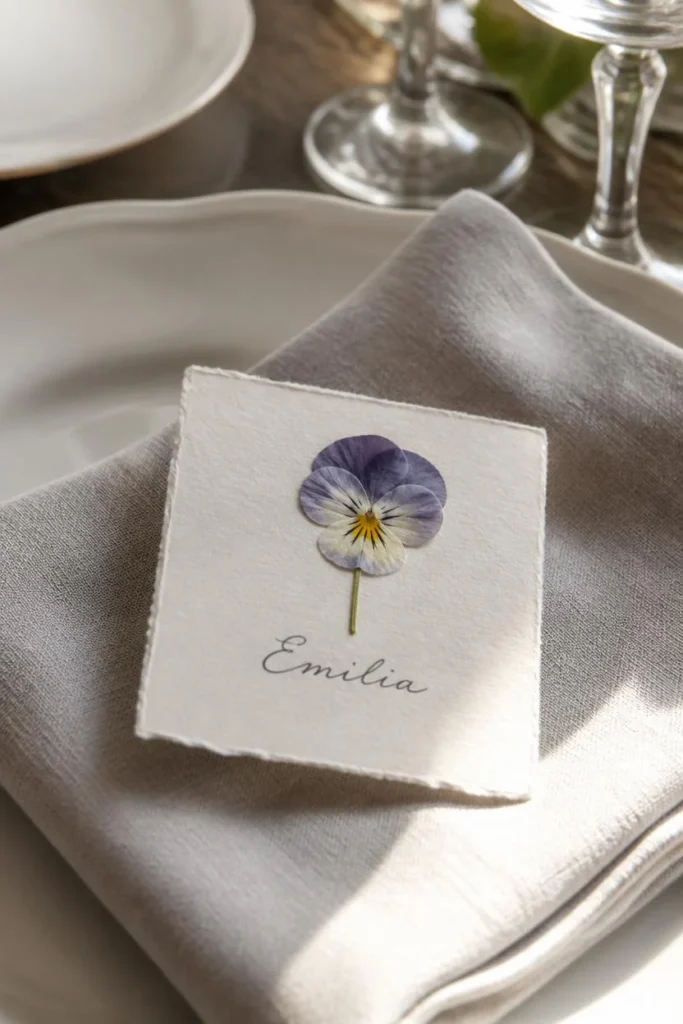
For a dinner party with assigned seating, hand-lettered place cards topped with a single pressed flower add a personal, artisanal touch that feels far more special than printed name tags. Press flowers ahead of time using a heavy book, choosing thin, flat blooms like pansies or violas that dry well and hold their color. Write each guest’s name in simple script on a small cardstock rectangle, then adhere the pressed flower just above or beside the name with a small dot of glue. This detail works especially well layered on top of a folded napkin or leaned against a glass, giving each place setting one more small, considered moment. It’s a low-cost idea that reads as significantly more thoughtful than its actual effort level, which makes it one of the most rewarding additions on this list.
Styling Tips
Build every table around one anchor color and let everything else support it, rather than trying to coordinate five different elements equally. Vary height across the table, low bowls, mid-height jars, taller candles, so the eye has somewhere to travel instead of landing flat. Texture matters as much as color: pairing smooth glass against woven rattan or matte terracotta gives a table depth even in a single-color palette. Set the table an hour before guests arrive when possible, since natural elements like herbs and flowers look their freshest in that window. Finally, resist the instinct to fill every inch of space; a few well-placed elements with breathing room between them almost always photograph and feel better than a crowded table.
Practical Implementation Ideas
Start with what’s already in the kitchen, lemons, herbs, a jar, before buying anything new for a tablescape. Keep a small rotating box of linens in two or three colors so you can mix and match without needing a new set for every dinner. If hosting outdoors, do a lighting test at dusk a day ahead so you’re not scrambling to add candles once guests are already seated. For larger tables, break the centerpiece into two or three smaller groupings spaced down the length rather than one large arrangement in the middle, which keeps sightlines open for conversation.
Common Mistakes to Avoid
Overcrowding the center of the table so guests can’t see or reach across it comfortably is one of the most common styling misses. Choosing a centerpiece that’s too tall blocks conversation and makes a table feel like a barrier instead of a gathering point. Matching every single element too perfectly can flatten a table’s personality, since a little intentional mismatch usually reads as more curated than a fully coordinated set. Forgetting lighting entirely for an evening table leaves even a beautifully styled setting looking flat and unfinished once the sun goes down.
Small-Space Alternatives
For a small table or apartment balcony, keep centerpieces low and narrow, a single row of citrus or one slim vase, so there’s still room for plates and serving dishes. Skip the runner in favor of individual placemats, which visually break up a small table rather than making it feel more crowded. A single cluster of candles at one end of the table can replace a full centerpiece entirely, freeing up the rest of the surface for food.
Budget-Friendly Alternatives
Produce-based centerpieces, lemons, tomatoes, grapes, cost nothing beyond the groceries already planned for the meal. Mason jars from the recycling bin work as well as purchased vases for loose wildflower stems. Battery-powered candles are reusable across dozens of dinners and remove the ongoing cost of replacing real ones. A single new linen runner in a bold color can refresh an entire table setting without replacing plates, glassware, or chairs.
Pro Styling Recommendations
Layer at least two textures on every table, one soft like linen, one natural like rattan or wood, for a setting that feels finished rather than flat. Choose a centerpiece height under twelve inches for any table where guests will be seated across from each other. When mixing patterns, repeat a shared color across at least two elements to keep the eye anchored. Fresh elements, herbs, flowers, produce, should always go in last, right before guests sit down, so they look their best.
FAQs
Conclusion
None of these ideas require a dramatic overhaul or a trip to a specialty store. What they have in common is intention, choosing one or two details and letting them carry the table instead of trying to do everything at once. Start with whatever feels most like you, a bowl of lemons, a striped runner, a jar of wildflowers from the yard, and build outward from there. The best summer tables aren’t the ones that look the most expensive; they’re the ones that make people want to stay at them a little longer.