19 Afrobohemian Bedroom Ideas That Turn Your Space Into a Cultural Sanctuary
There’s a particular kind of room that doesn’t just look good in photos. It feels like it has a history. Every object seems to have a reason for being there — a basket someone wove by hand, a fabric that traveled a long way to reach that wall, a stool carved from a single piece of wood.
That’s what an Afrobohemian bedroom does. It takes the storytelling and craftsmanship of African design — mudcloth, adire, carved wood, terracotta tones — and layers it with the relaxed, collected-over-time spirit of bohemian style. The result isn’t loud for the sake of being loud. It’s warm, textured, and personal in a way that a room full of matching furniture never quite manages.
Pinterest has been tracking this shift for a while now, and the interest keeps climbing. Below are 19 specific elements that build this look authentically, with styling logic behind each one so the room feels intentional rather than assembled from a trend board.
Table of Contents
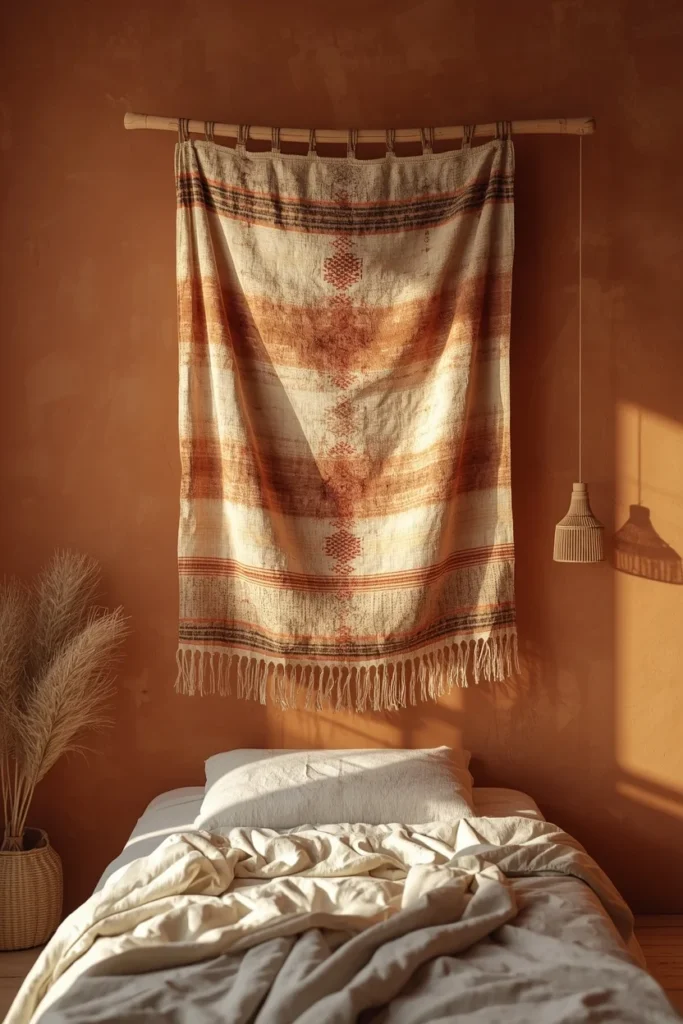
1. Terracotta or Ochre Accent Wall
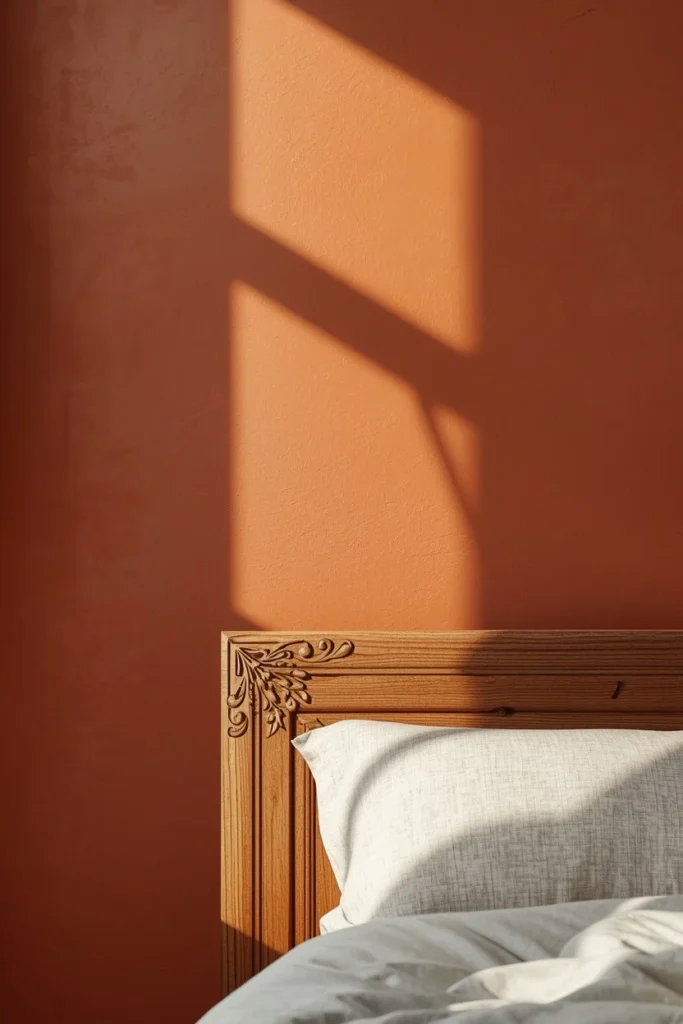
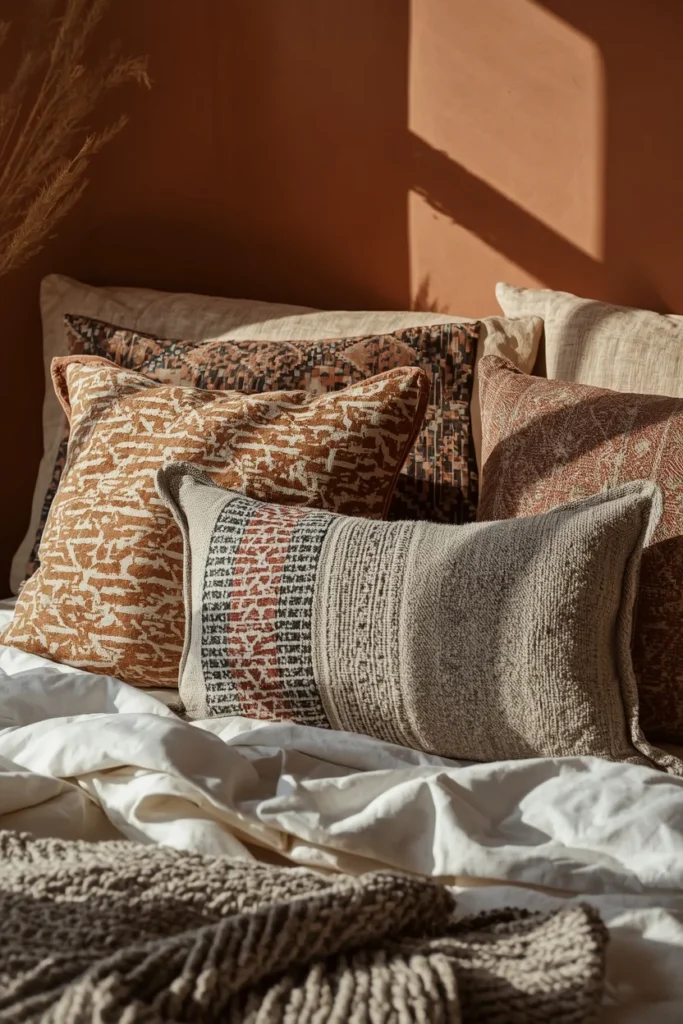
A wall painted in a warm terracotta, burnt sienna, or ochre tone gives the room its earthy foundation before any decor goes up. These colors echo the landscapes and pigments found across African design traditions, and they read as warm rather than stark, which suits a bedroom’s restful purpose. Choosing a slightly muted, clay-like version of the color, rather than a bright orange, keeps the wall grounded instead of overpowering. Pairing it with natural wood furniture and cream textiles lets the wall act as a backdrop that everything else gets layered against, rather than the loudest thing in the room.
2. Mudcloth or Adire Textile Wall Hanging
A large piece of mudcloth or adire fabric, hung flat or slightly draped on the wall behind the bed, becomes an instant piece of textile art. Both fabrics carry distinct hand-dyed or hand-painted patterns, so no two pieces look quite the same, which adds to the room’s individual character. Choosing a piece with earthy indigo, black, or rust tones keeps it cohesive with a terracotta or neutral wall, rather than clashing. Framing the fabric lightly with a simple wood dowel at the top, rather than a heavy frame, keeps the presentation closer to how the textile is traditionally displayed.
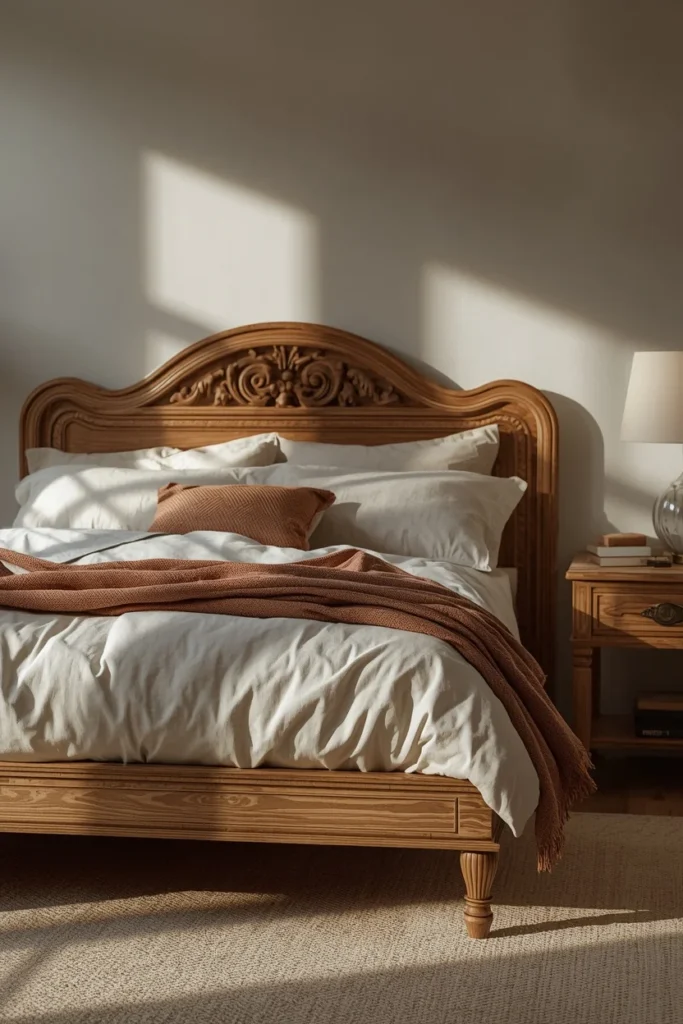
3. Low Carved Wood Platform Bed
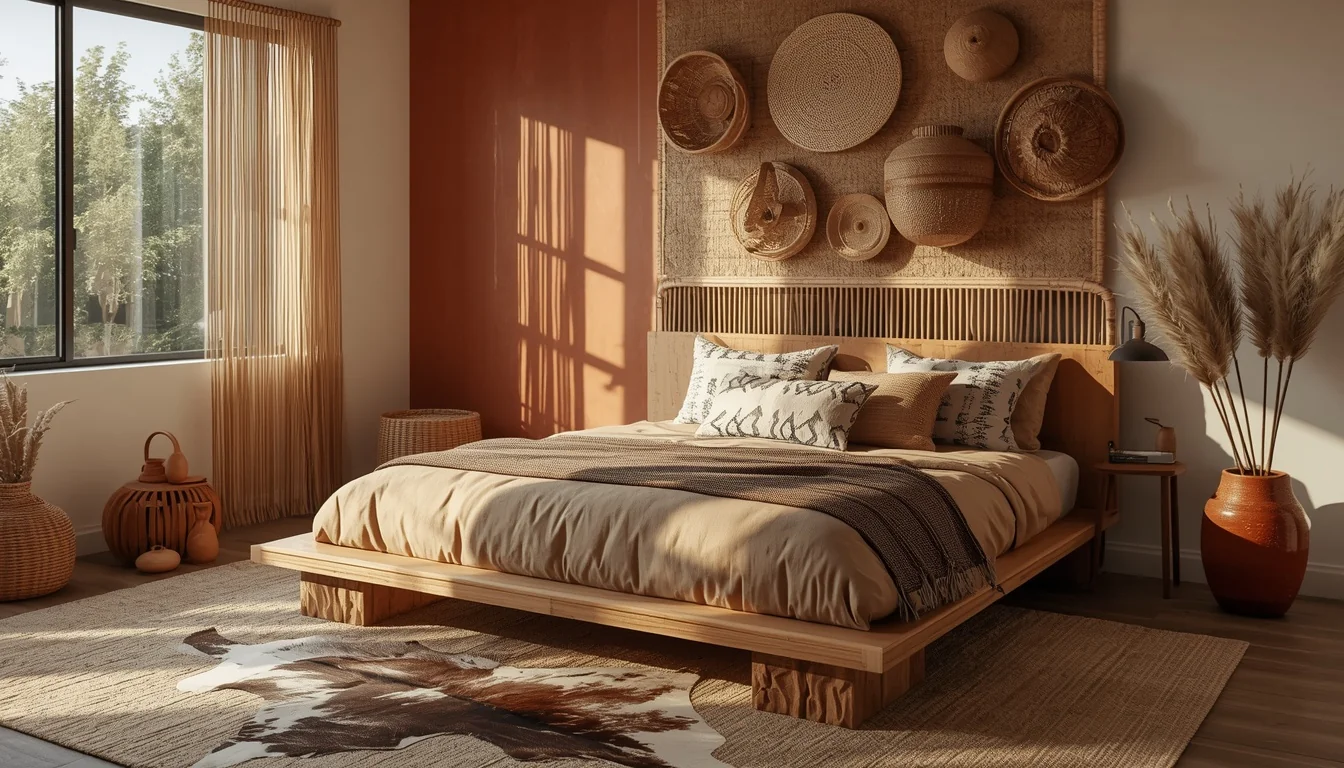
A low platform bed with a carved wood frame keeps the room grounded and gives it a more intentional, architectural centerpiece than a generic upholstered frame. Look for frames with visible hand-carved detailing along the headboard or legs, since that texture is a key marker of authentic Afrohemian style rather than a mass-produced imitation. The lower profile also opens up the room visually, which helps smaller bedrooms feel less crowded despite the amount of pattern and texture layered elsewhere. Pairing the bed with a simple wood or rattan side table keeps the material story consistent from floor to headboard.
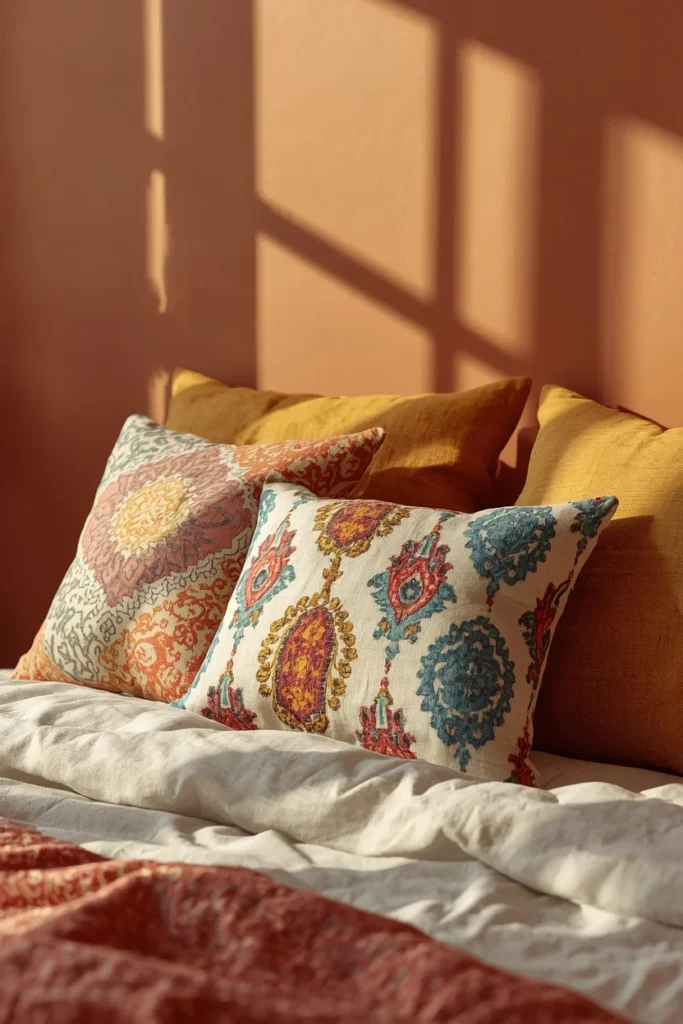
4. Ankara Print Throw Pillows
A cluster of pillows in bold Ankara or wax-print patterns brings color and graphic energy to an otherwise earthy palette. Mixing two or three different Ankara patterns, rather than a single matching set, is closer to how the fabric is traditionally used and gives the bed a more collected, expressive look. Keeping the base pillows solid in cream or rust lets the printed ones stand out as the visual highlight rather than competing with each other. This is one of the easiest and most affordable ways to bring authentic pattern into the room without committing to a full textile overhaul.
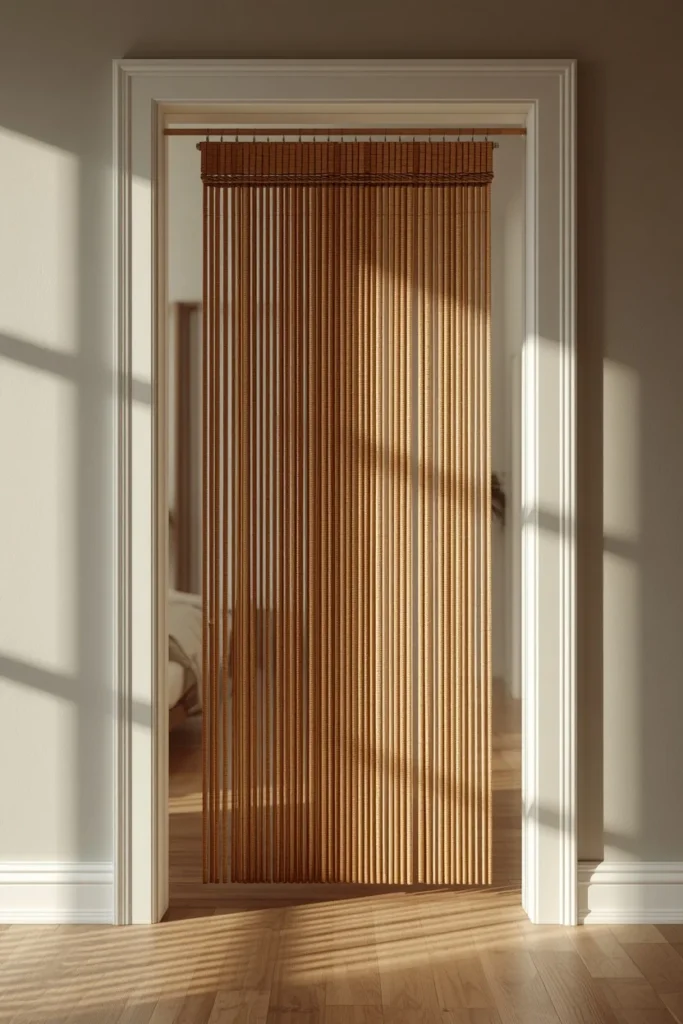
5. Bamboo Beaded Curtain
A bamboo beaded curtain hung across a doorway, closet opening, or window brings texture, gentle movement, and a soft clicking sound that adds a sensory layer most bedrooms don’t have. It works especially well as a room divider in studio apartments, separating a sleeping area from the rest of the space without blocking light the way a solid door would. Choosing a natural, unfinished bamboo tone keeps it consistent with the room’s other wood and rattan elements. This piece has also been one of the fastest-rising search terms in this style, so it’s worth prioritizing if you want the room to feel current.
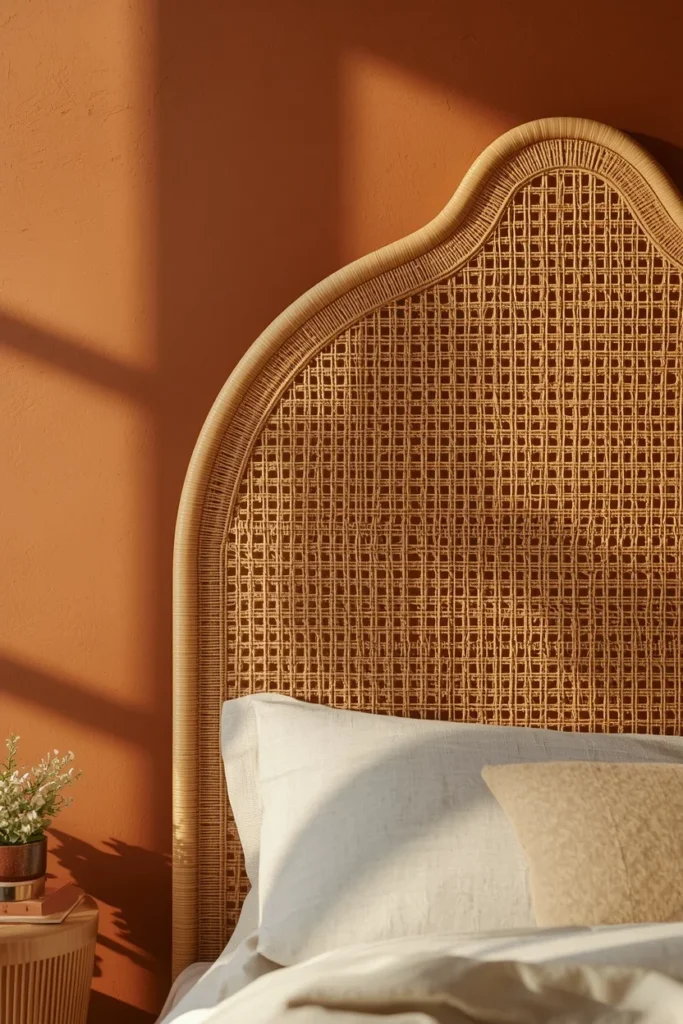
6. Woven Rattan Headboard
If a fully carved wood bed frame isn’t in the budget, a woven rattan headboard delivers similar texture and warmth at a lower cost. The open weave pattern catches light in a way flat wood or upholstery can’t, adding visual interest to the wall behind the bed even before other decor is added. Rattan also pairs naturally with both the earthy wall tones and the natural fiber rugs common in this style, so it never feels out of place. Attaching it directly to the wall, rather than as part of the bed frame itself, makes it easier to swap out later if your style evolves.
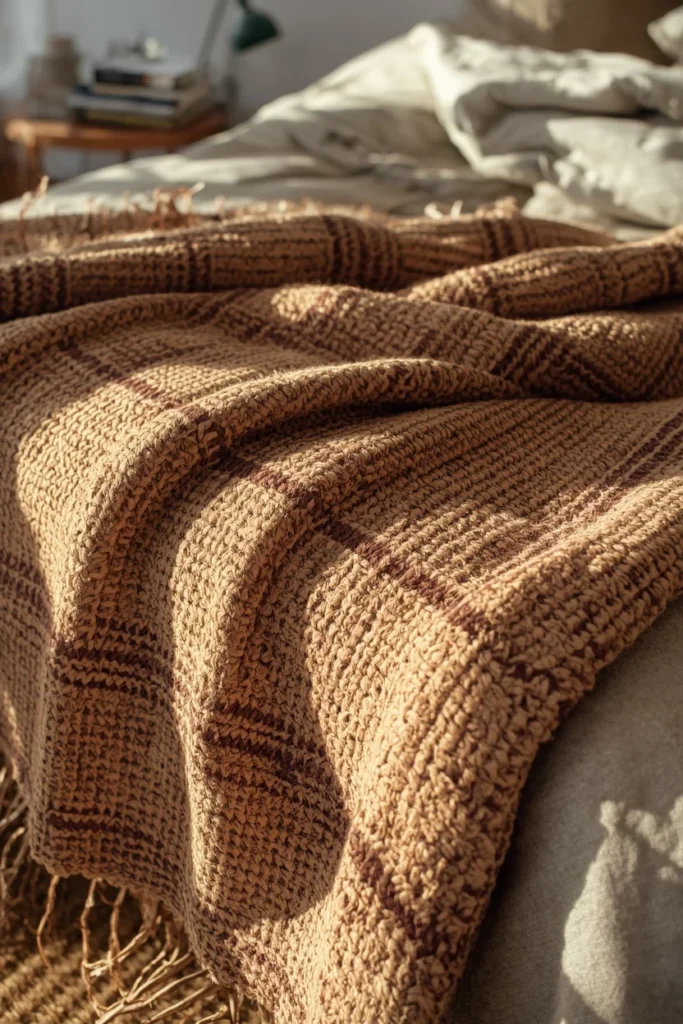
7. Kuba Cloth Patterned Throw
A Kuba cloth throw, known for its raffia texture and intricate geometric patterning, adds one of the most distinctive textures in this entire style when draped across the foot of the bed or over a nearby chair. The slightly rough, woven surface contrasts beautifully against smooth linen sheets, giving the bed a tactile layer that photographs with real depth. Because each piece is traditionally handwoven with irregular patterning, no two throws look identical, which supports the room’s one-of-a-kind character. Sourcing an authentic piece from artisans or fair-trade retailers, rather than a printed imitation, keeps the piece true to its origins.
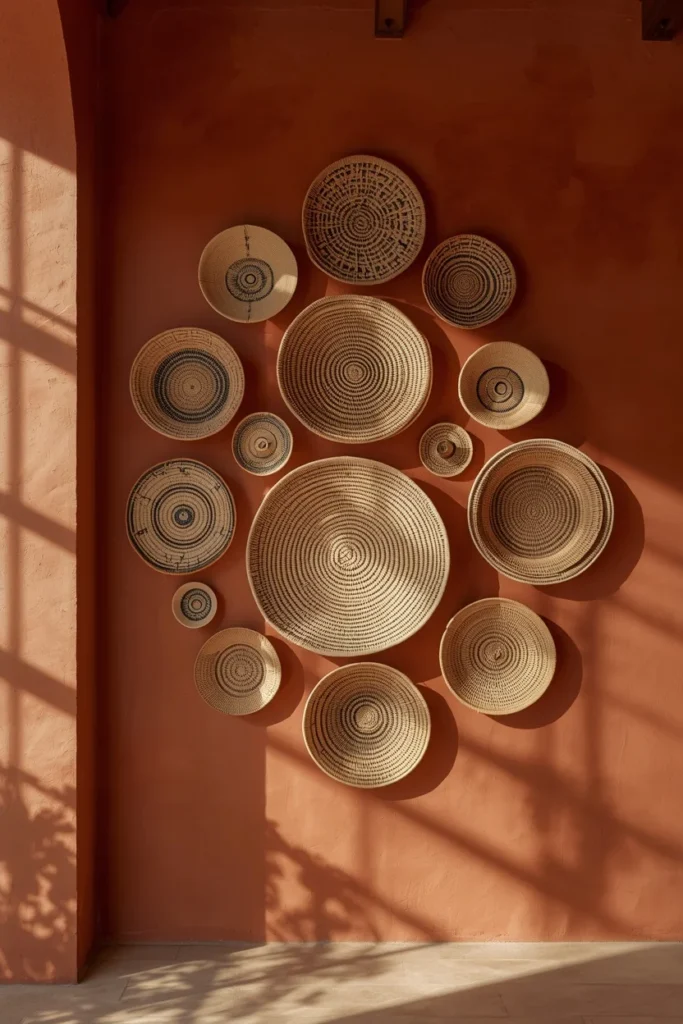
8. Handwoven Basket Wall Cluster
A cluster of flat, patterned woven baskets arranged on the wall doubles as both storage-adjacent decor and a genuine art moment. Varying the basket sizes and grouping them in an organic, slightly asymmetrical cluster rather than a strict grid keeps the arrangement feeling collected rather than assembled from a kit. This is one of the most recognizable markers of the style, and it works on almost any wall in the room, from above the bed to a stretch of hallway leading into it. Choosing baskets with visible natural fiber variation, rather than uniform factory pieces, adds to the handmade quality that defines this aesthetic.
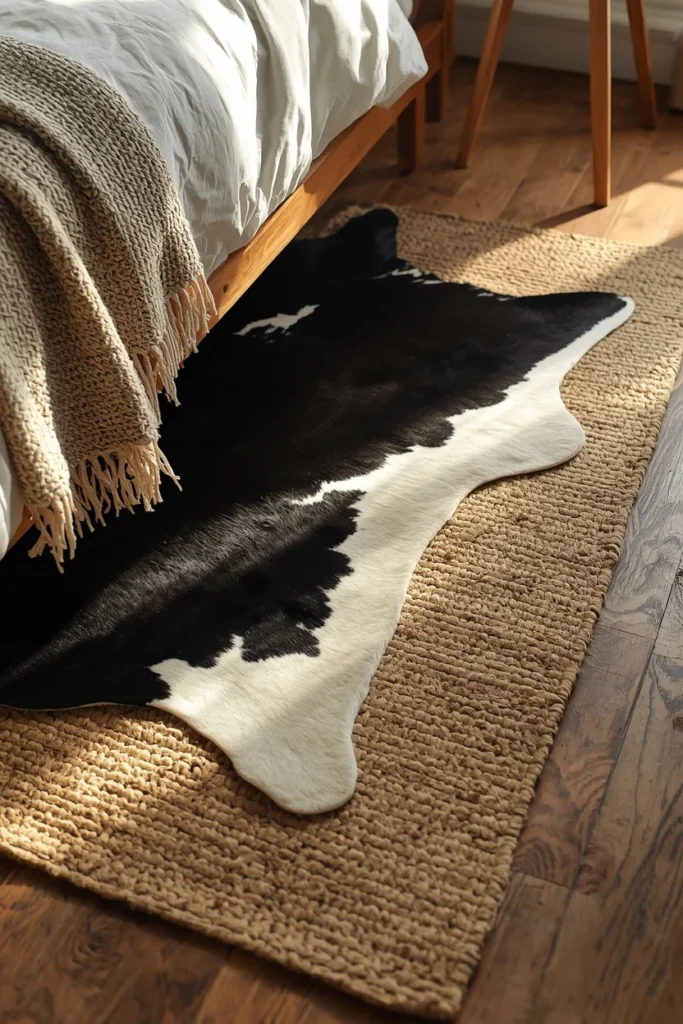
9. Cowhide or Jute Area Rug
A natural jute rug layered under a cowhide accent rug adds both grounding texture and a graphic, high-contrast moment underfoot. The jute base keeps the room feeling warm and casual, while the cowhide introduces the kind of bold pattern play this style is known for, whether in black-and-white or a warmer brindle tone. Layering the two rather than choosing just one gives the floor the same depth the walls and bed already have. This combination also does real practical work in a bedroom, softening footsteps and adding warmth to hard flooring.
10. Rattan Accent Chair
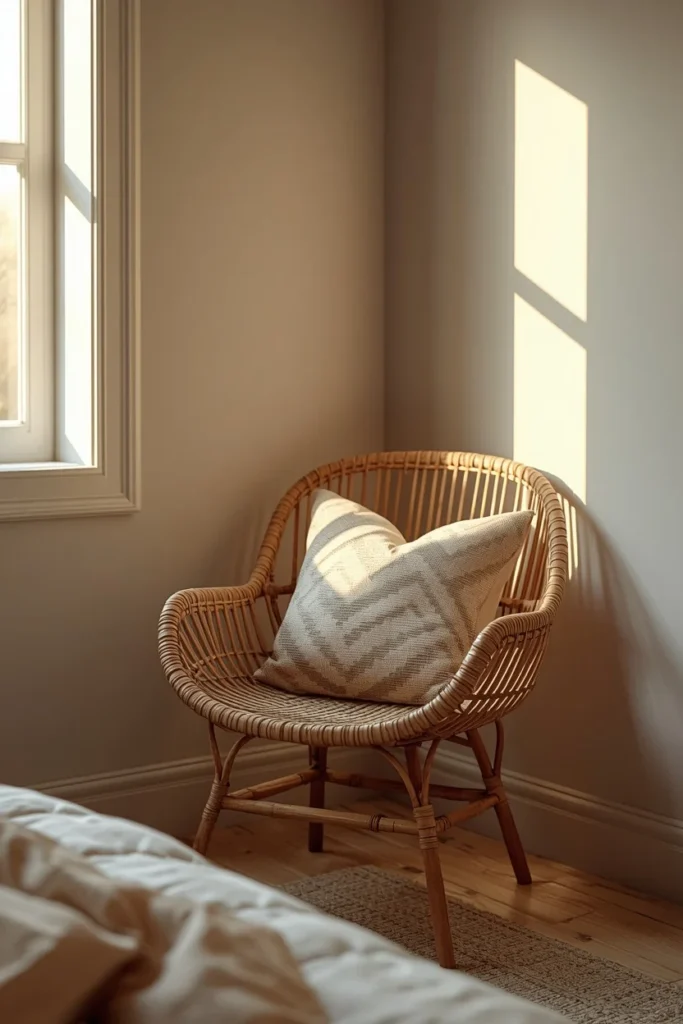
A rattan accent chair, whether a peacock-style statement piece or a simpler woven frame, gives the room a second focal point beyond the bed and a genuinely useful place to sit. Positioning it near a window lets the natural light highlight the woven texture, which photographs especially well in the late afternoon. Adding a single patterned cushion in a mudcloth or Ankara print ties the chair back into the rest of the room’s textile story. This piece also works well as a starting point for a small reading corner if space allows for a side table alongside it.
11. Macrame Wall Hanging
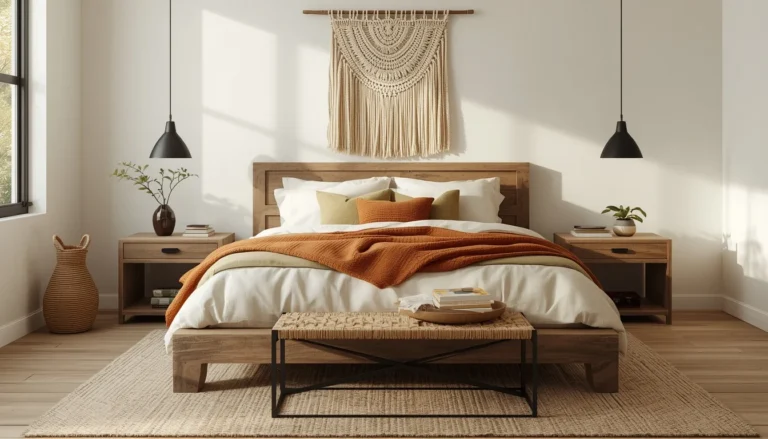
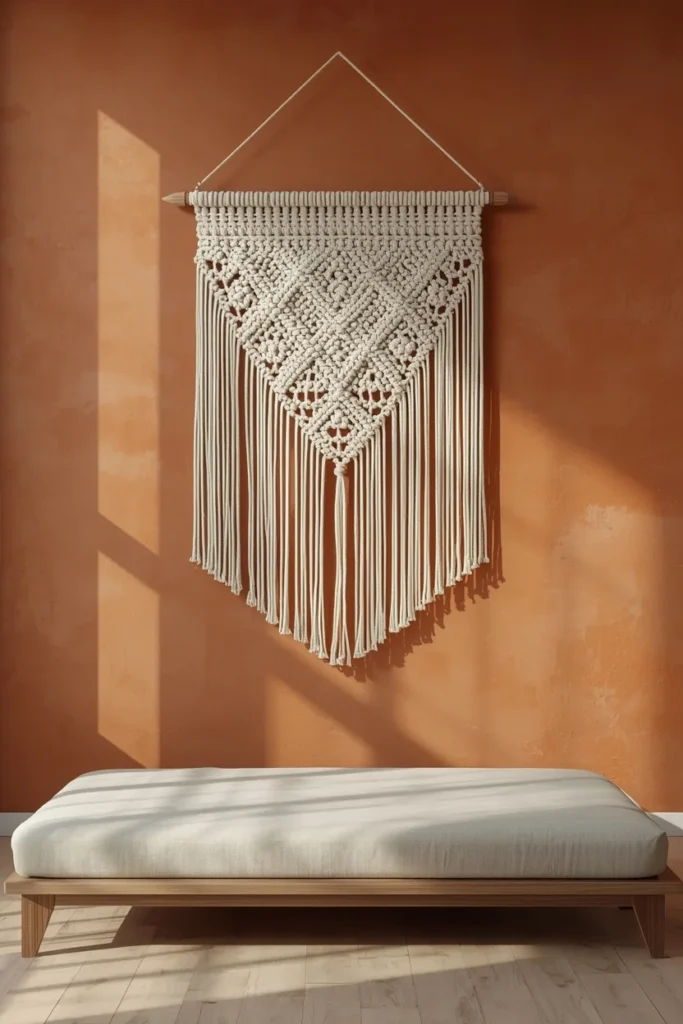
A large macrame wall hanging adds soft, sculptural texture and a distinctly bohemian layer that balances the more structured African textiles elsewhere in the room. Choosing a piece in natural, undyed cotton keeps it from competing with the room’s color story, letting it function as texture rather than another pattern to balance. Hanging it above the bed or on an otherwise empty wall gives it room to breathe, since these pieces tend to lose their impact when crowded by other decor. The knotted, handmade quality of macrame also reinforces the room’s overall commitment to craftsmanship over mass production.
12. Ethiopian-Inspired Wall Art or Adinkra Prints
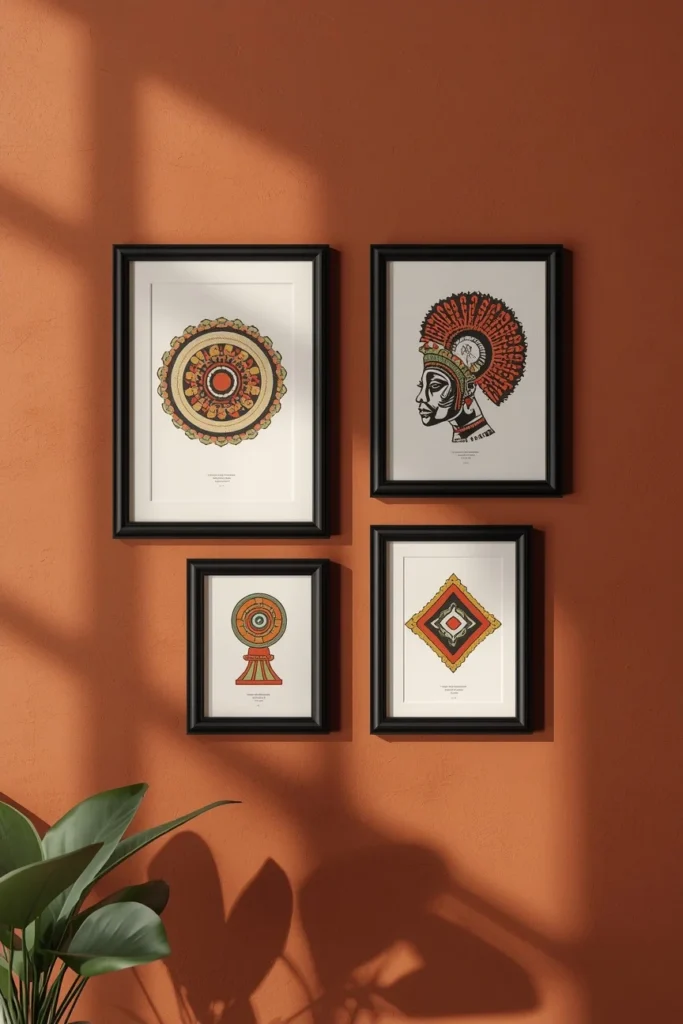
A small collection of framed prints featuring Ethiopian-style illustration, Adinkra symbols, or African landscape art gives the room a more personal, storytelling layer than generic decorative prints. Grouping two or three pieces together, rather than a single large print, echoes the gallery-style layering common throughout this aesthetic. Choosing frames in dark wood or aged brass keeps the presentation consistent with the room’s other natural materials. Sourcing prints from African or diaspora artists, where possible, adds authenticity and supports the same craftsmanship this whole style is built around.
13. Carved Wooden Stool or Side Table
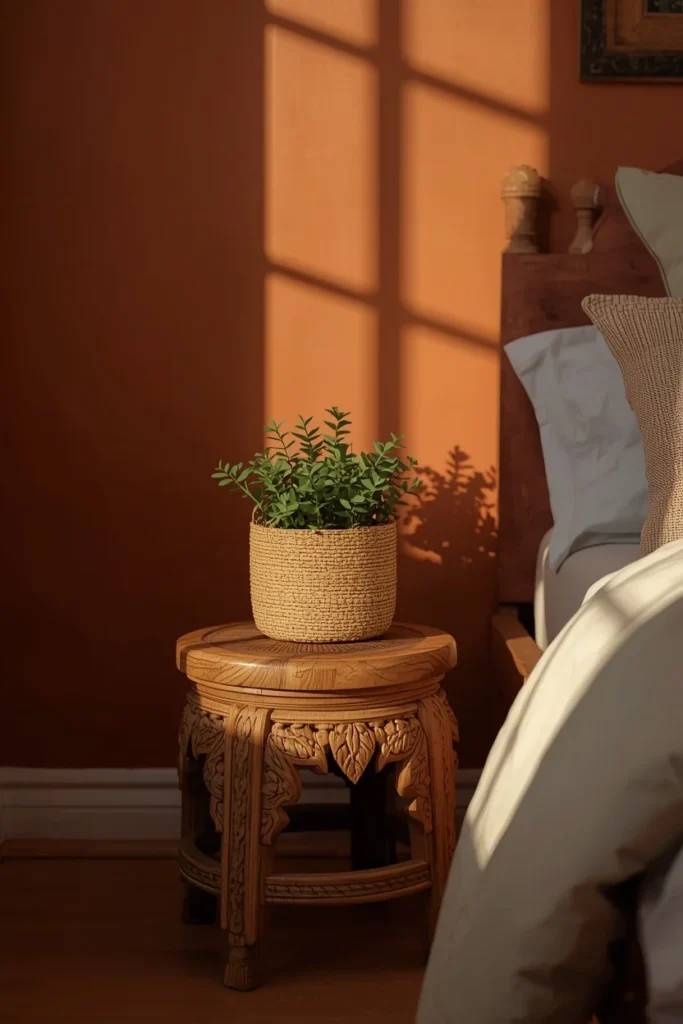
A small carved wooden stool, whether used as a side table, plant stand, or extra seat, adds sculptural interest at a lower height than most furniture in the room. Look for pieces with visible hand-carved detailing or a distinct silhouette, since these small pieces do a lot of visual work for their size. Placing one beside the bed instead of a traditional nightstand adds an unexpected, more organic shape to an otherwise predictable corner. Because these stools are lightweight, they’re also easy to move around the room as the space and its needs change.
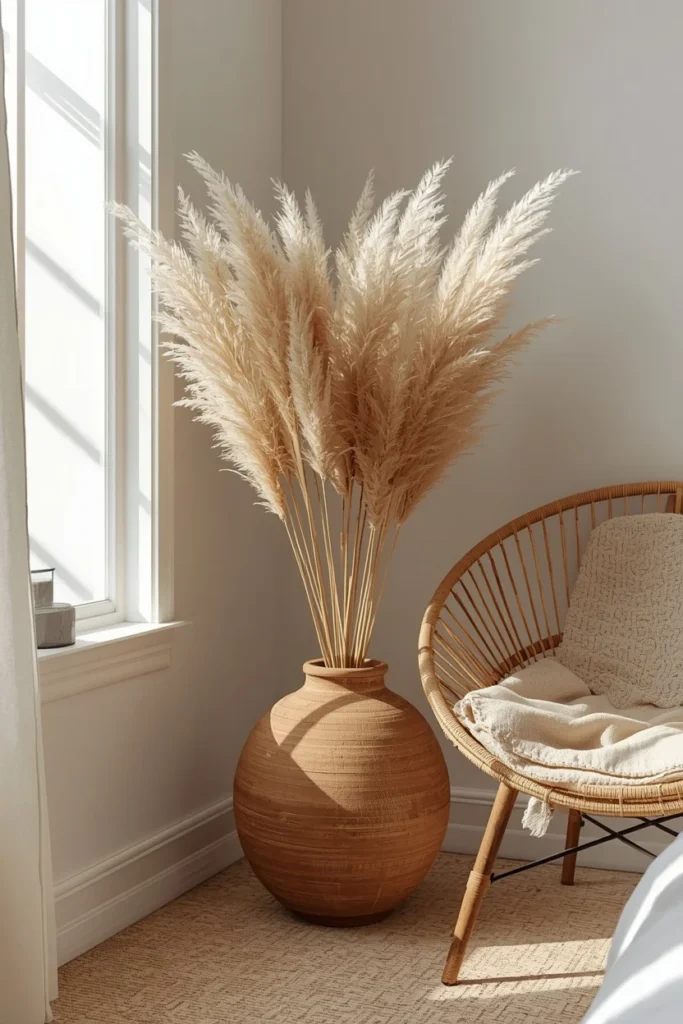
14. Pampas Grass in a Sculptural Vase
A tall bundle of pampas grass in a rounded clay or ceramic vase adds height, softness, and movement to a corner of the room without requiring any maintenance. Its pale, neutral tone works as a visual break between the room’s warmer terracotta and rust hues, keeping the palette from feeling too saturated. Placing it in a corner near natural light lets the individual strands catch subtle shadows throughout the day. This is one of the lowest-effort additions on the list, since dried pampas grass holds its shape and color for months without any care.
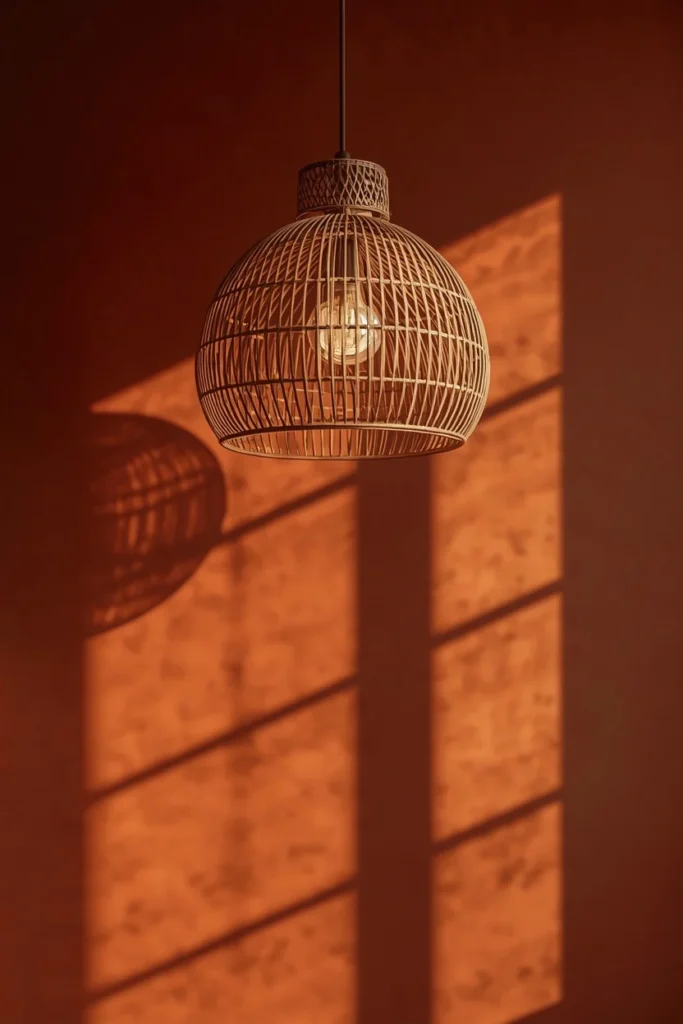
15. Woven Rattan Pendant or Floor Lamp
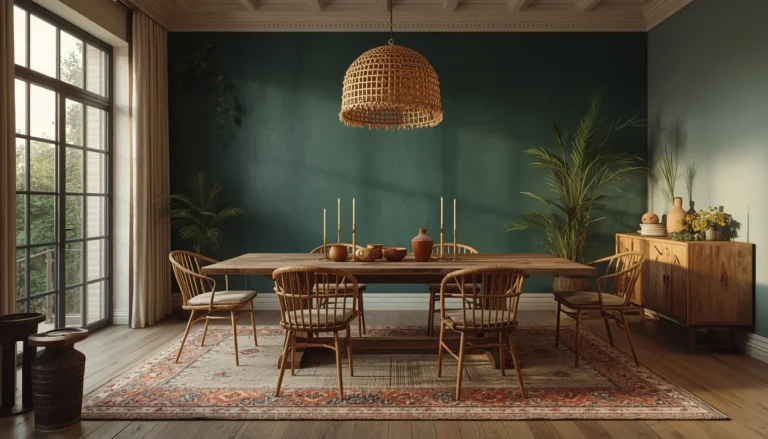
A woven rattan pendant light or floor lamp casts warm, dappled shadows across the room that flat overhead lighting simply can’t replicate. The open weave pattern lets light filter through in small pockets, adding movement to the walls and ceiling as the evening goes on. Choosing a warm amber bulb rather than a cool white one keeps the lighting consistent with the room’s earthy, sun-warmed color story. This fixture works as both a functional light source and a sculptural object in its own right, so it earns its place even before it’s switched on.
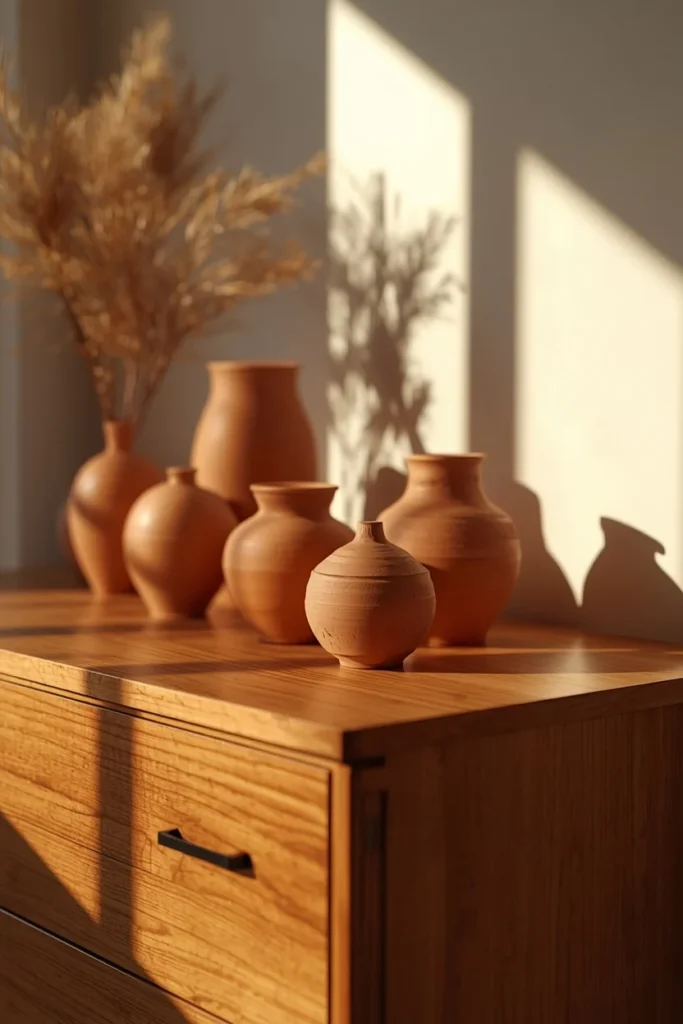
16. Clay Pottery and Terracotta Vessels
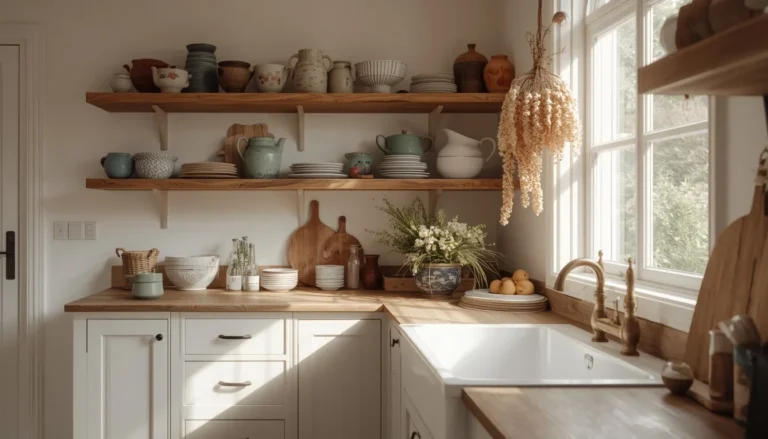
A small collection of clay pots, vases, or bowls, whether displaying dried flowers or left empty as sculptural objects, reinforces the room’s earthy, handmade materials story. Grouping a few different shapes and sizes together on a shelf or dresser top looks more curated than a single matching set. Their slightly imperfect, hand-thrown texture contrasts nicely against smoother surfaces like glass or polished wood elsewhere in the room. This is another low-cost, high-impact element, since simple clay pottery is widely available and instantly reads as authentic rather than mass-produced.
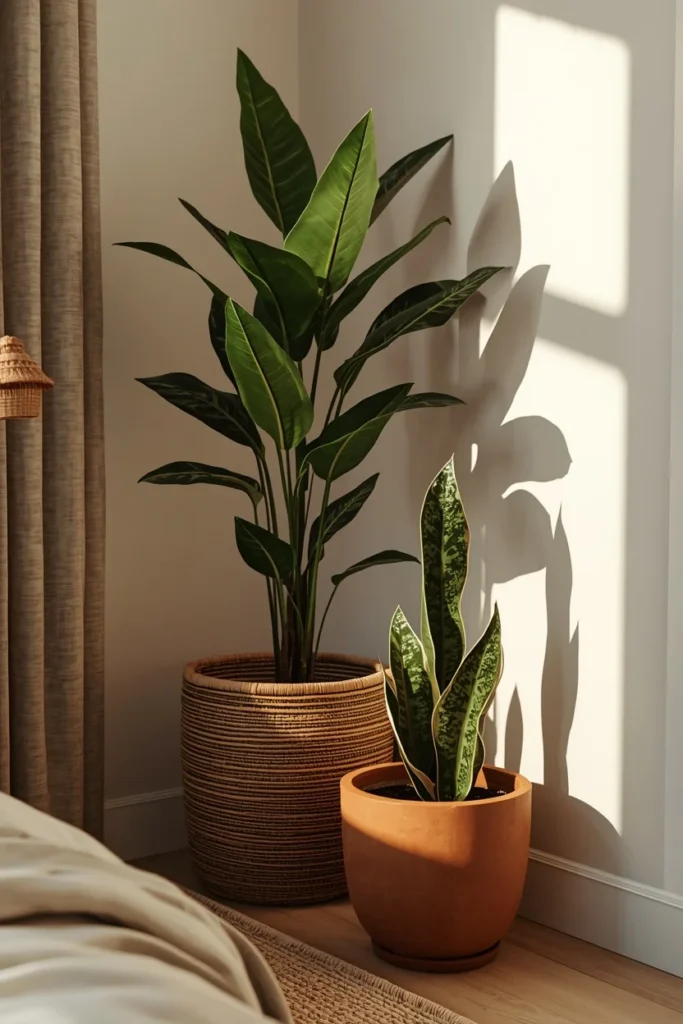
17. Layered Indoor Plants in Woven Planters
Plants like monstera, snake plant, or fiddle leaf fig, placed in woven or terracotta planters, bring the natural, living element that grounds a bohemian-influenced room. Positioning a taller plant in a corner and a smaller one on a nightstand or shelf creates the kind of varied height that keeps a room from feeling flat. Choosing planters in the same natural material family as the room’s baskets and pottery keeps the greenery from feeling like an afterthought. Low-light varieties like snake plants are a practical choice for bedrooms that don’t get much direct sun, while still delivering the same visual effect.
18. Tribal-Motif Accent Pillow Mix
Beyond the Ankara pieces, a few additional pillows in geometric tribal-inspired motifs, mudcloth patterns, or embroidered detailing round out the bed’s textile layering with even more depth. Mixing pattern scale — one bold graphic print, one smaller repeating motif, one solid texture — keeps the arrangement from feeling flat or overly matched. Sticking to a consistent color family across all the pillows, even with varied patterns, keeps the bed cohesive despite the pattern mixing. This layered pillow approach is one of the clearest visual signatures of the Afrobohemian style and one of the easiest to update seasonally.
19. Gallery of African Portrait or Travel Photography
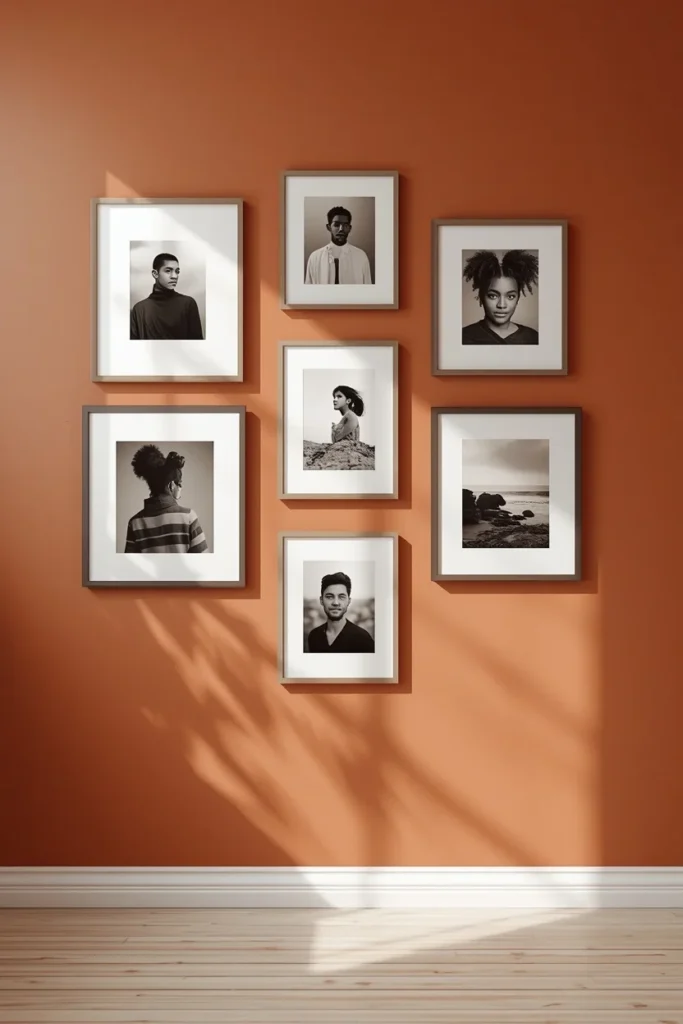
A small gallery wall of black-and-white or warm-toned portrait photography, travel imagery, or cultural photography adds a more personal, narrative layer to the room, especially when the images reflect places or people that mean something to you. Mixing frame sizes and a couple of finishes, similar to the earlier gallery wall approach, keeps the arrangement from feeling too formal. Placing this gallery on the wall opposite the bed makes it one of the first things you see each morning, which adds to the room’s sense of intention. This element, more than almost any other on the list, is what turns a well-decorated bedroom into a genuine personal sanctuary.
Styling Tips
Build the room in layers, starting with the wall color and bed, then textiles, then smaller sculptural pieces like pottery and baskets. Keep the base palette to two or three earthy tones — terracotta, rust, cream, or olive — and let the patterned textiles introduce additional color rather than painting multiple walls in different bold shades. Mix pattern scale deliberately: one bold graphic piece, one smaller repeating pattern, and one solid texture in any given grouping keeps the eye moving without feeling chaotic.
Practical Implementation Ideas
Start with the wall color and bed frame, since those two choices set the room’s entire foundation. Add one major textile piece next, like a mudcloth wall hanging or Kuba cloth throw, before layering in smaller pillows and accents. Save wall galleries, basket clusters, and pottery groupings for last, once you can see how much space is genuinely left after the larger furniture and textiles are in place.
Common Mistakes to Avoid
Mixing too many bold patterns at the same visual scale without any solid color to rest the eye can make the room feel overwhelming rather than rich. Relying entirely on printed or mass-produced imitations of handwoven textiles loses the texture and authenticity that make this style work in the first place. Skipping natural materials like wood, rattan, and clay in favor of only fabric and paint leaves the room feeling flat, since texture is doing as much work here as color.
Small-Space Alternatives
In a smaller bedroom, choose one statement textile — a mudcloth hanging or a Kuba cloth throw — rather than layering several large pattern pieces at once. A low platform bed and a rattan headboard mounted directly to the wall both keep the room’s visual weight low, which helps compact spaces feel less crowded. Basket clusters and small gallery walls are especially useful in tight rooms since they add pattern and texture vertically without taking up any floor space.
Budget-Friendly Alternatives
Fair-trade marketplaces and independent artisan shops often offer authentic mudcloth, adire, and woven baskets at a lower cost than specialty home decor retailers, while also putting money directly toward the makers. Secondhand and vintage shops are a strong source for carved wood stools, pottery, and rattan furniture that already carry some age and character. Pampas grass, macrame, and clay pottery are all relatively inexpensive additions that deliver a noticeable amount of texture for their cost.
Pro Styling Recommendations
Choose one “hero” textile piece — usually the wall hanging or bed throw — and let the rest of the room’s patterns support it rather than compete with it in scale or boldness. Group natural materials in odd numbers, like three baskets or three pottery pieces, since asymmetrical groupings tend to look more intentional than even ones. Prioritize authentic, artisan-made pieces over mass-produced imitations where your budget allows, since the handmade irregularity is a large part of what makes this style read as genuine rather than trend-chasing.
FAQs
Conclusion
An Afrobohemian bedroom isn’t something you order in a single box. It’s built the way most meaningful rooms are — one handwoven basket, one carved stool, one fabric with a story behind it, added slowly over time. Start with the wall color and the bed, then let the smaller pieces find their way in as you come across them. The room that results won’t just be stylish. It will feel like it actually belongs to you.