20 Cool Blue Bedroom Ideas for a Calm, Spa-Like Sleep Space
Some bedrooms make your shoulders drop the second you walk in. Others just don’t.
The difference usually isn’t the size of the room or how much you spent on furniture. It’s color, texture, and light working together instead of against each other. Blue happens to be one of the few colors backed by actual sleep research for helping people fall asleep faster and stay asleep longer, which is part of why it keeps showing up in the calmest, most spa-like bedrooms you’ll find.
But a blue bedroom can go two very different directions. Done well, it feels like a boutique hotel room, layered, textured, quietly luxurious. Done without much thought, it can feel flat or cold.
This guide walks through 20 specific ways to bring cool blue tones into a bedroom while keeping it warm, textured, and genuinely restful. Pull the ones that fit your space and start building.
Table of Contents
1. Paint the Walls in a Soft Powder Blue
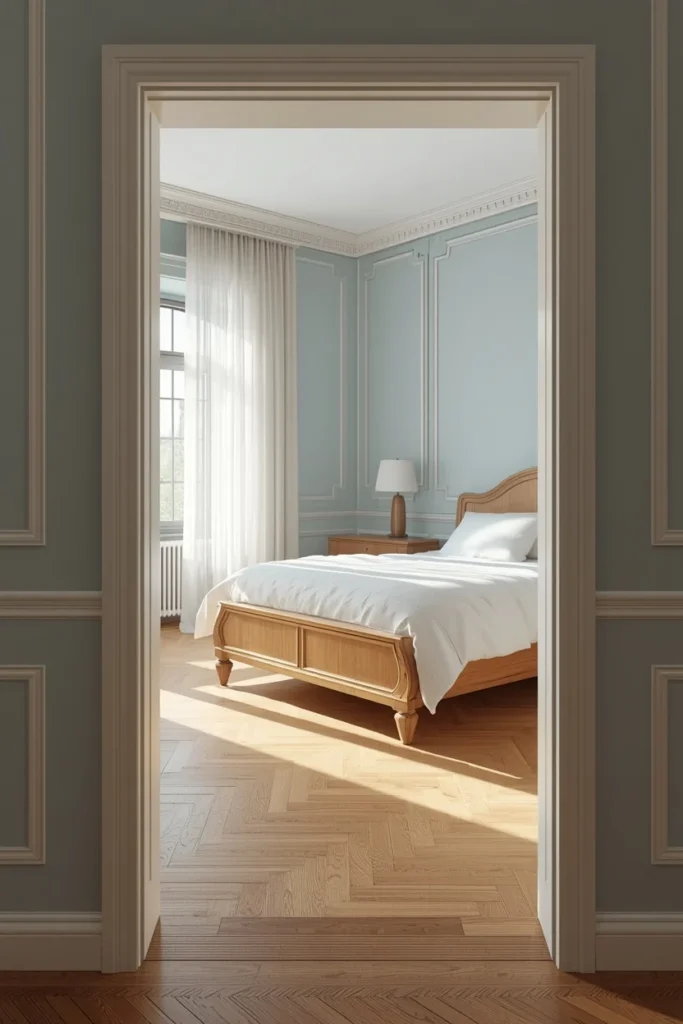
Powder blue is one of the gentlest ways to bring color into a bedroom without it ever feeling loud or overstimulating. This pale, slightly gray-toned blue reflects light softly rather than absorbing it, which keeps a room feeling open and airy even with limited windows. Pair it with crisp white trim and warm wood furniture so the palette doesn’t drift too cool or clinical. Because the color sits so close to neutral, it works well as a full four-wall treatment rather than requiring a single accent wall. This shade is often the easiest starting point for anyone nervous about committing to a bolder blue.
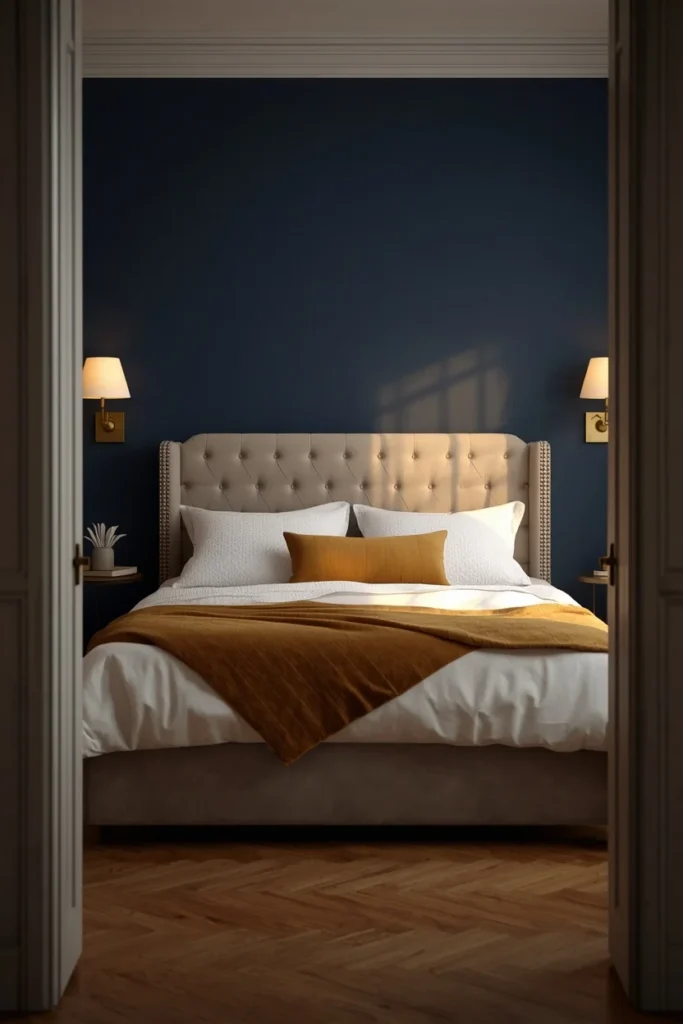
2. Go Bold With a Deep Navy Accent Wall
A single navy accent wall behind the headboard adds drama and depth without making the whole room feel dark or enclosed. This deep, saturated blue absorbs light rather than reflecting it, which creates a cocooning, restful quality that’s especially effective in primary bedrooms used mainly at night. Keep the remaining three walls in warm white or soft cream so the navy wall reads as an intentional focal point rather than an overwhelming color choice. Balance the depth of the navy with lighter bedding, brass accents, and natural wood furniture so the room still feels warm rather than heavy. This is one of the highest-impact single changes you can make to a bedroom in a single weekend.
3. Layer Tone-on-Tone Blue Bedding
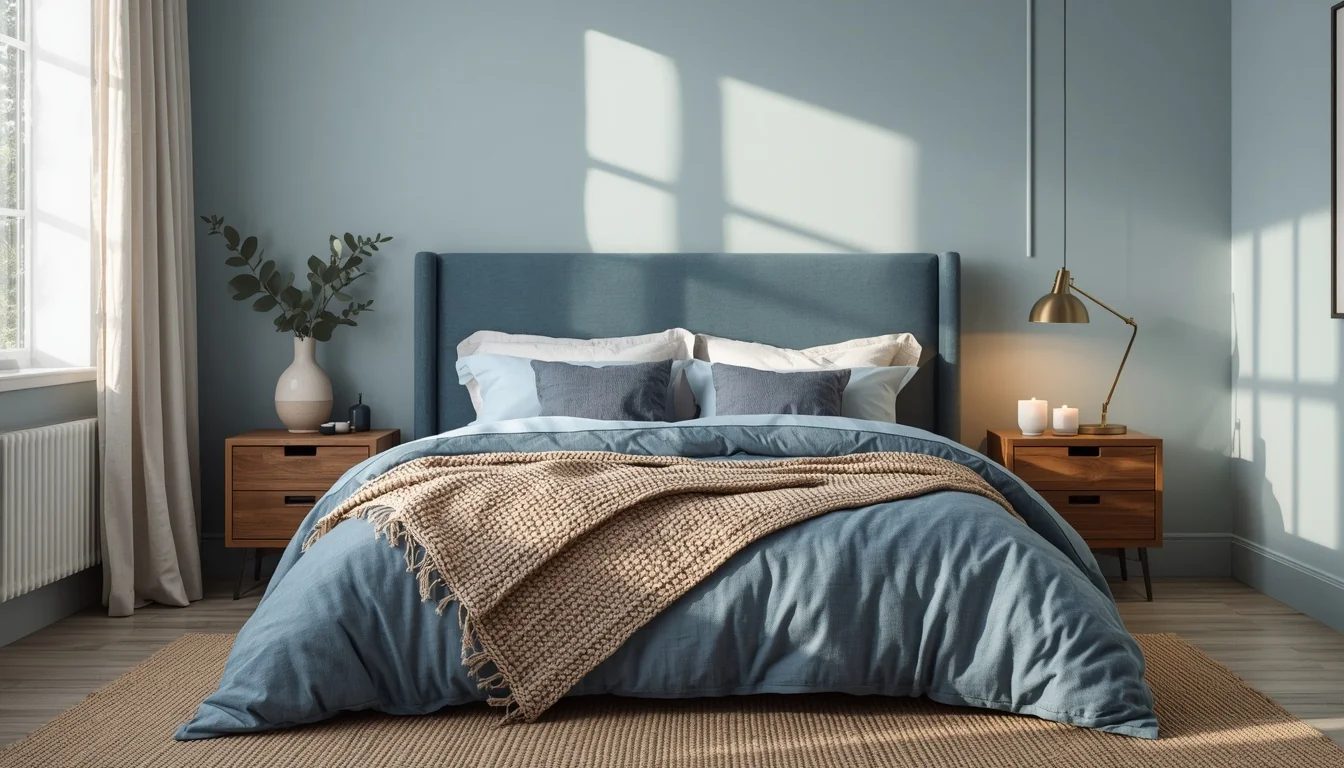
Instead of choosing one blue and stopping there, layer three or four shades within the same color family across your sheets, duvet, and throw blanket. Start with a crisp white or pale blue fitted sheet, add a mid-tone chambray or denim-blue duvet cover, then finish with a deeper indigo throw folded at the foot of the bed. This layering technique adds visual depth and richness without introducing pattern, which keeps the overall effect calm rather than busy. Mixing textures within the blue layers, like a linen duvet against a cotton waffle-weave throw, adds even more tactile interest. This approach is what separates a bedroom that photographs as flat from one that reads as intentionally styled.

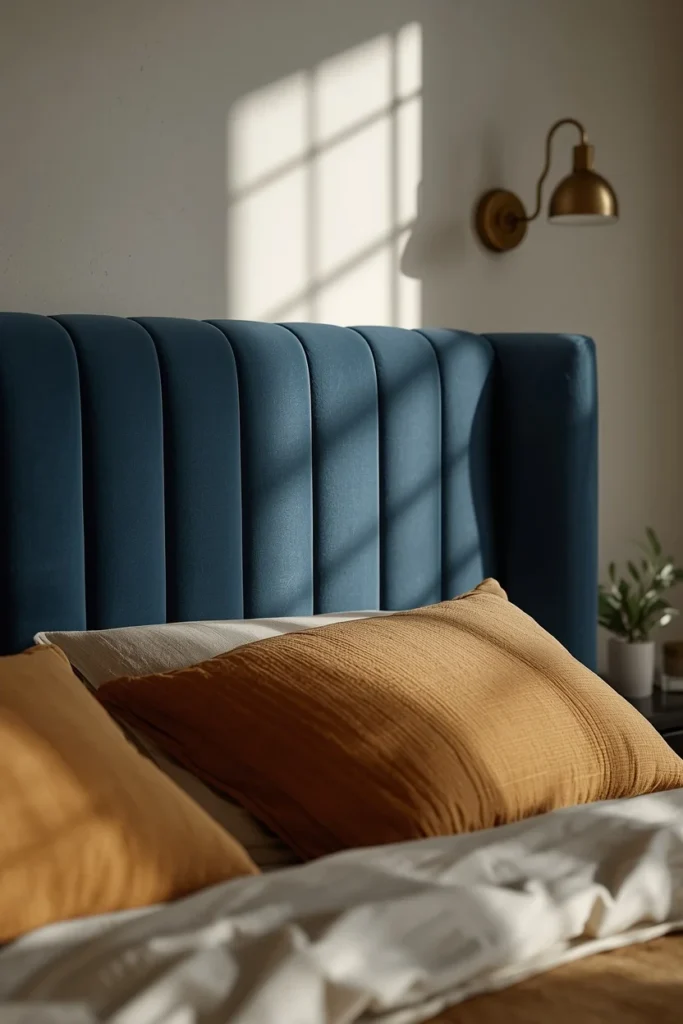
4. Add a Blue Velvet Upholstered Headboard
An upholstered headboard in slate or dusty blue velvet instantly softens a bedroom and adds a plush, hotel-like quality that a plain wood frame can’t replicate. The slight sheen of velvet catches light in a way that flat cotton or linen doesn’t, giving the headboard a subtle richness even in a room with minimal other decor. Choose a channel-tufted or simple wingback style depending on whether your room leans more modern or classic, keeping the surrounding furniture simple so the headboard remains the focal point. This single furniture piece does more to elevate the perceived quality of a bedroom than almost any other single purchase. Pair it with warm brass or wood bed legs to keep the overall look grounded rather than overly formal.
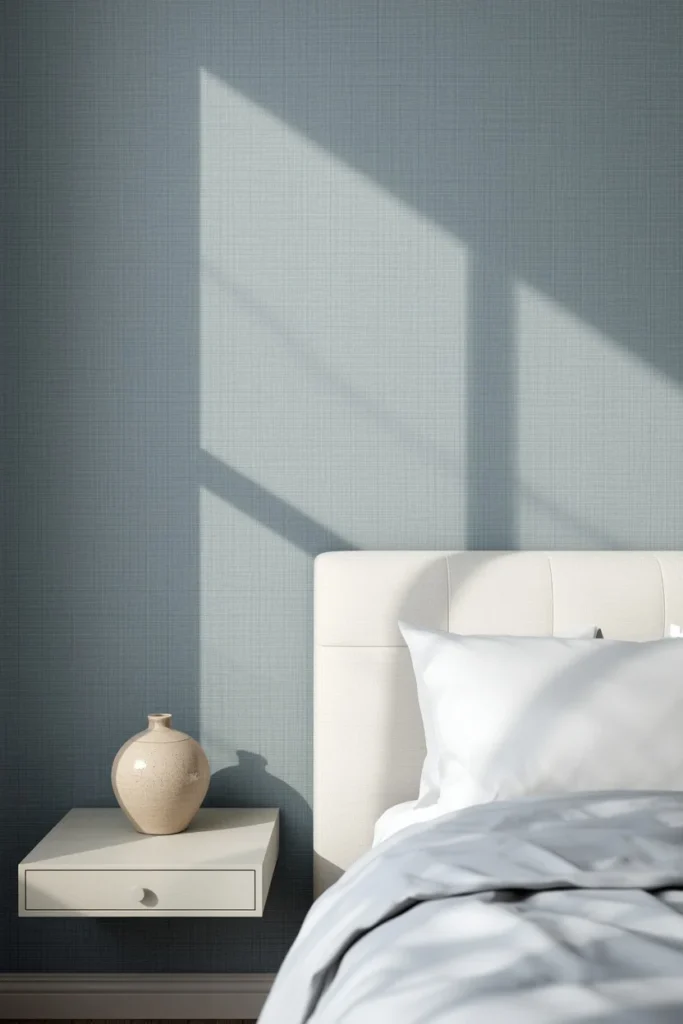
5. Bring In Coastal Grasscloth Wallpaper
Grasscloth wallpaper in a soft blue tone adds natural texture to the walls that flat paint simply can’t achieve, giving the room a woven, organic quality reminiscent of a boutique coastal hotel. The subtle texture also helps hide minor wall imperfections better than paint, which is a practical bonus alongside the visual appeal. Apply it as a full-room treatment for maximum spa-like effect, or limit it to the headboard wall if you want a slightly more restrained approach. Pair grasscloth with simple, uncluttered furniture so the wall texture itself gets to be the star of the room. This material choice signals a level of intentional design that immediately elevates a bedroom beyond standard painted walls.
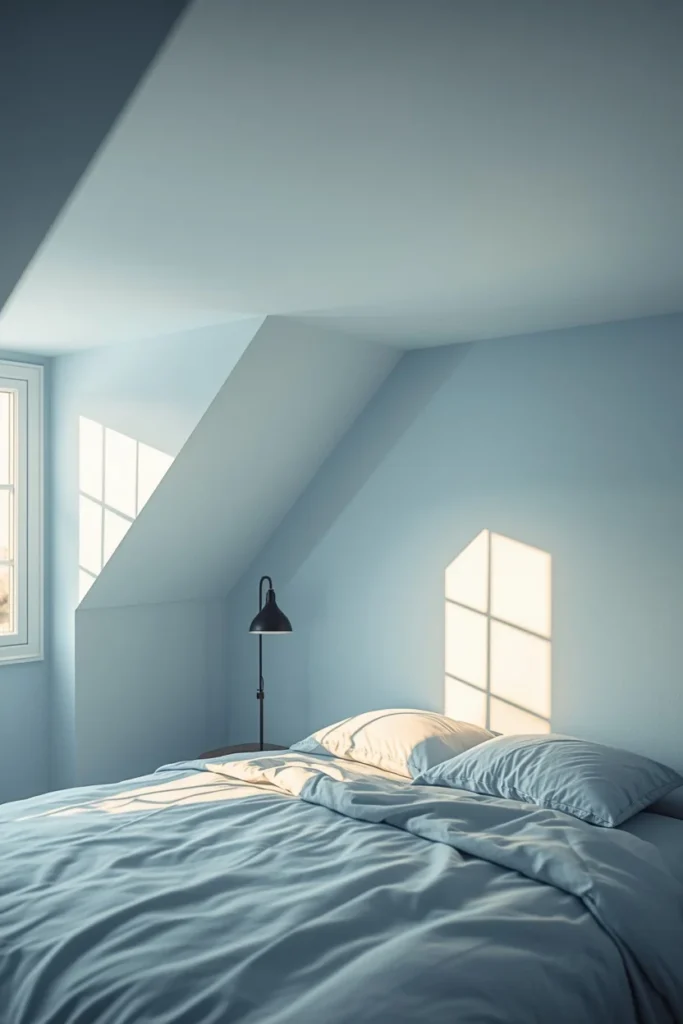
6. Paint the Ceiling a Misty Blue
Treating the ceiling as a fifth wall and painting it a soft misty blue creates an enveloping, sky-like effect that makes a bedroom feel more like a retreat than a standard room. This technique works especially well in rooms with lower ceilings, where a lighter blue overhead can actually make the space feel taller rather than more closed in. Keep the wall color a shade or two lighter than the ceiling so the room doesn’t feel visually top-heavy. This detail is subtle in photos but dramatically changes how a room feels to lie in, since it’s often the last thing you see before falling asleep. It’s a small, low-cost update that consistently surprises people with how much difference it makes.
7. Layer in Natural Linen Textures
Linen curtains, a linen duvet cover, or a linen upholstered bench add a slightly rumpled, relaxed texture that keeps a blue color scheme from feeling too crisp or formal. The slightly nubby weave of linen also has natural texture variation that catches light differently than smooth cotton, adding subtle visual interest without any added pattern. Choose linen in a soft white or pale blue tone so it blends with your wall color rather than competing with it. This fabric choice is also genuinely practical, since linen breathes well and tends to regulate temperature better than heavier synthetic fabrics, which matters directly for sleep quality. The relaxed, lived-in quality of linen is part of what makes a room feel like an actual retreat rather than a showroom.
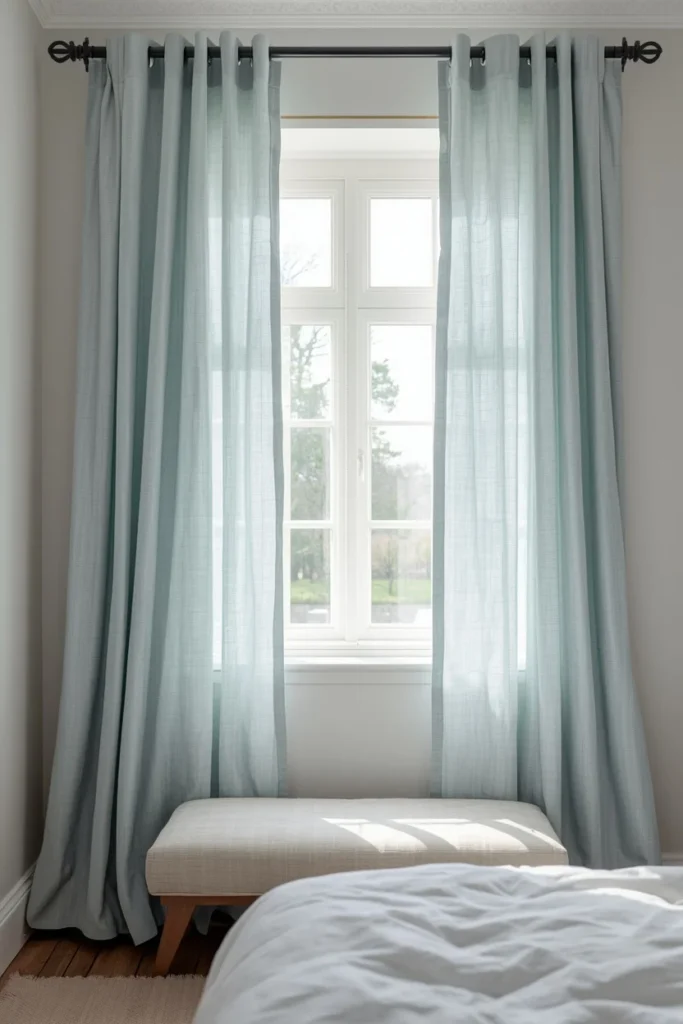
8. Add a Blue Boucle Reading Bench
A small upholstered bench at the foot of the bed adds function and texture in one move, giving you a spot to sit while getting dressed and a soft surface that breaks up the visual line of the bed frame. Choose boucle in a dusty or slate blue tone for a nubby, tactile texture that contrasts nicely against smoother bedding fabrics. Size the bench to roughly two-thirds the width of the bed so it reads as proportional rather than crowded. This piece also gives you a spot to fold and display an extra throw blanket, adding another small layer of texture to the room. It’s a detail that photographs beautifully while still earning its place functionally.
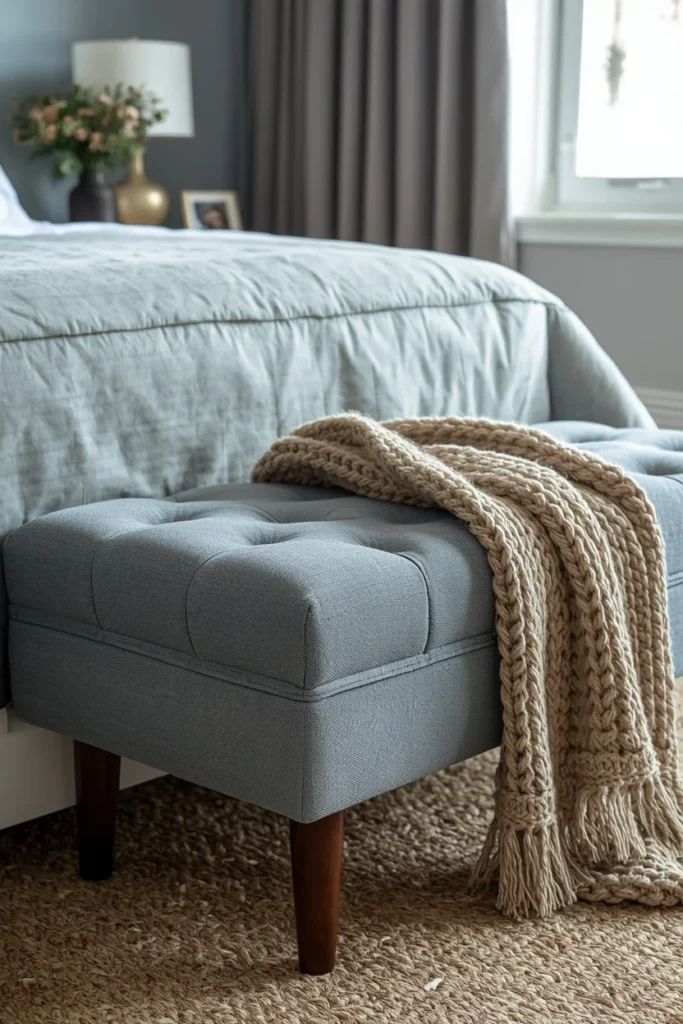
9. Use Blackout Curtains in Ocean Blue
Deep ocean blue blackout curtains do double duty, delivering genuine sleep-supporting light control while adding a rich, saturated color moment to the room. Choose a curtain fabric with at least a slight sheen or texture, like a brushed velvet, so the blackout lining doesn’t read as flat or overly utilitarian. Hang the rod several inches above the window frame and let the curtains extend to the floor, since floor-length curtains hung high make a room feel taller and more finished than short, tightly fitted panels. This is one of the most functional items on this entire list, since actual darkness during sleep hours has a measurable effect on sleep quality. Pair them with a matte black or brass rod depending on your room’s other metal finishes.
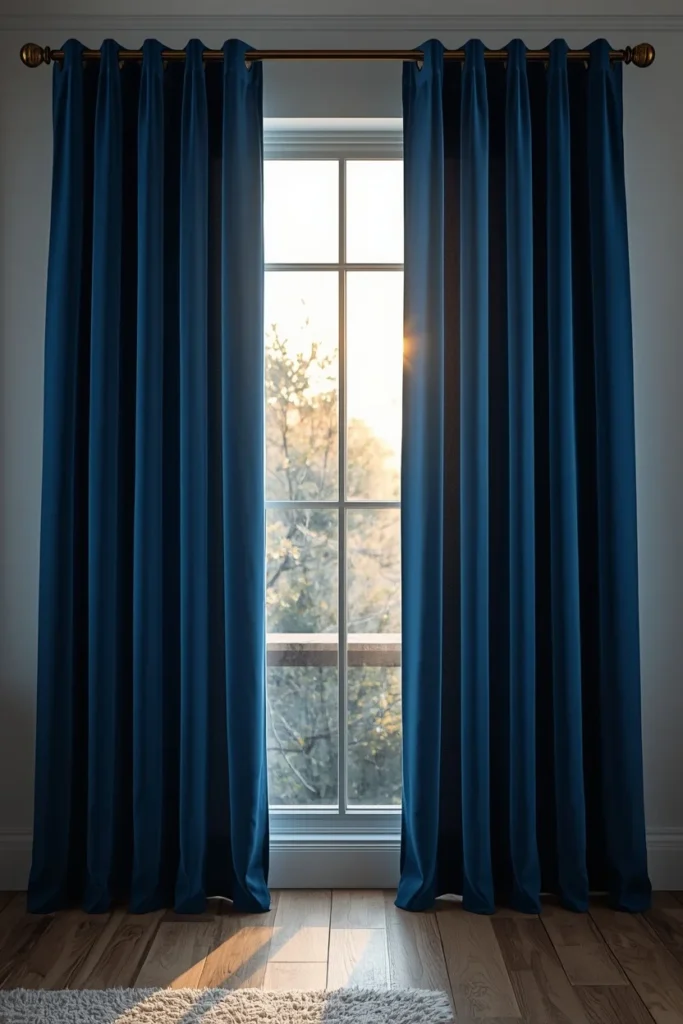
10. Introduce Driftwood and Natural Wood Accents
Raw or driftwood-finish furniture pieces, like a nightstand or a decorative branch in a vase, add warmth and organic irregularity to a color scheme that could otherwise feel too cool and uniform. The pale, weathered tone of driftwood pairs particularly well with powder or slate blue walls, echoing a beach-adjacent, salt-worn quality without leaning into obvious nautical decor. Use these wood pieces in small doses, like a single nightstand or a decorative accent, rather than filling the room with them, since their texture works best as a counterpoint rather than the room’s dominant material. This pairing of cool blue and warm weathered wood is one of the most reliable combinations for achieving a genuinely calming, spa-like effect. It also keeps the room from feeling like it belongs to any one narrow design trend.
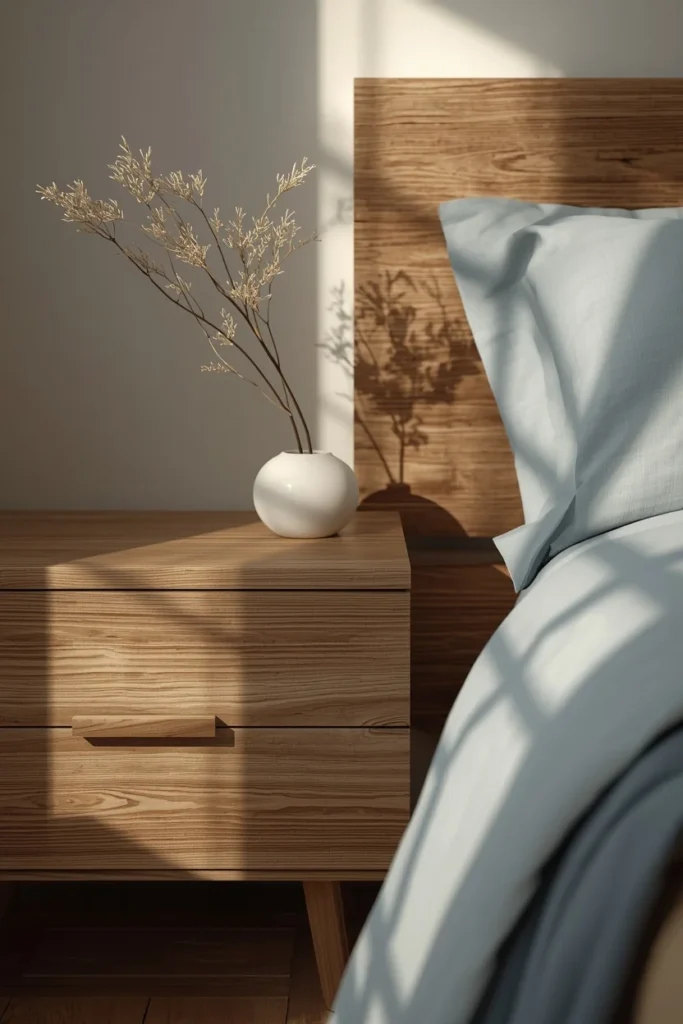
11. Add a Textured Jute or Wool Area Rug
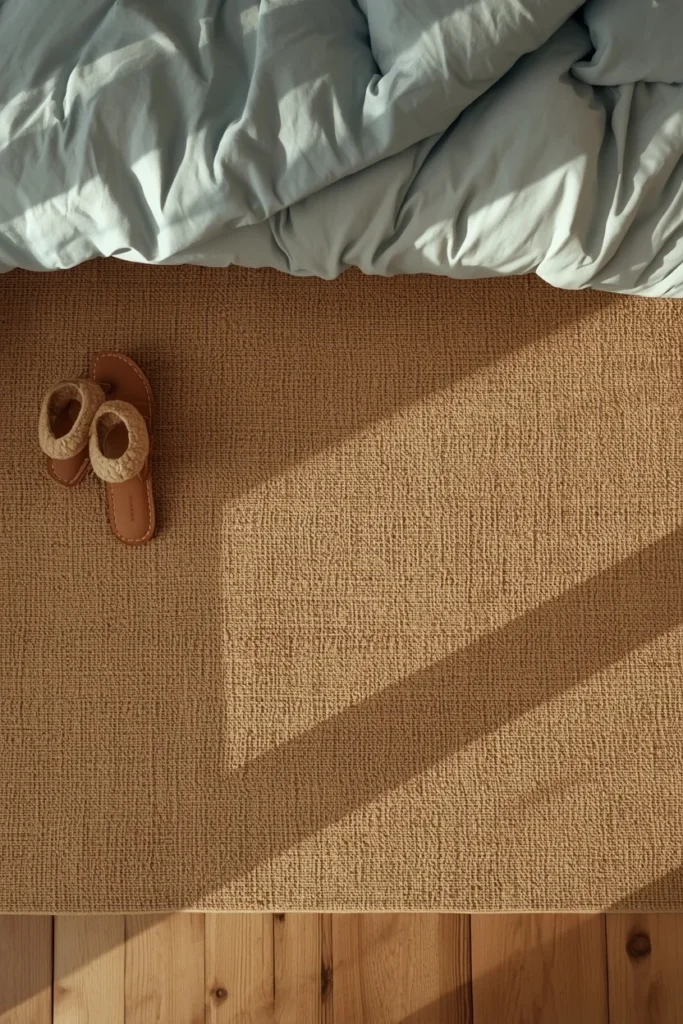
A natural jute or chunky wool rug grounds a blue bedroom with warmth and texture underfoot, which matters both visually and for the actual daily experience of stepping out of bed. Choose a rug large enough to extend at least eighteen inches beyond each side of the bed frame, since an undersized rug is one of the most common bedroom styling mistakes. A neutral tan or cream rug lets the blue tones in your walls and bedding stay the visual focus, while a chunky wool weave in soft gray adds a slightly cooler texture option if you want the rug to echo the room’s palette more directly. Either way, this layer solves a real comfort problem while reinforcing the room’s overall tactile richness. It’s also one of the easiest elements to swap out seasonally if you want to refresh the room without repainting.
12. Style a Minimalist Nightstand Vignette
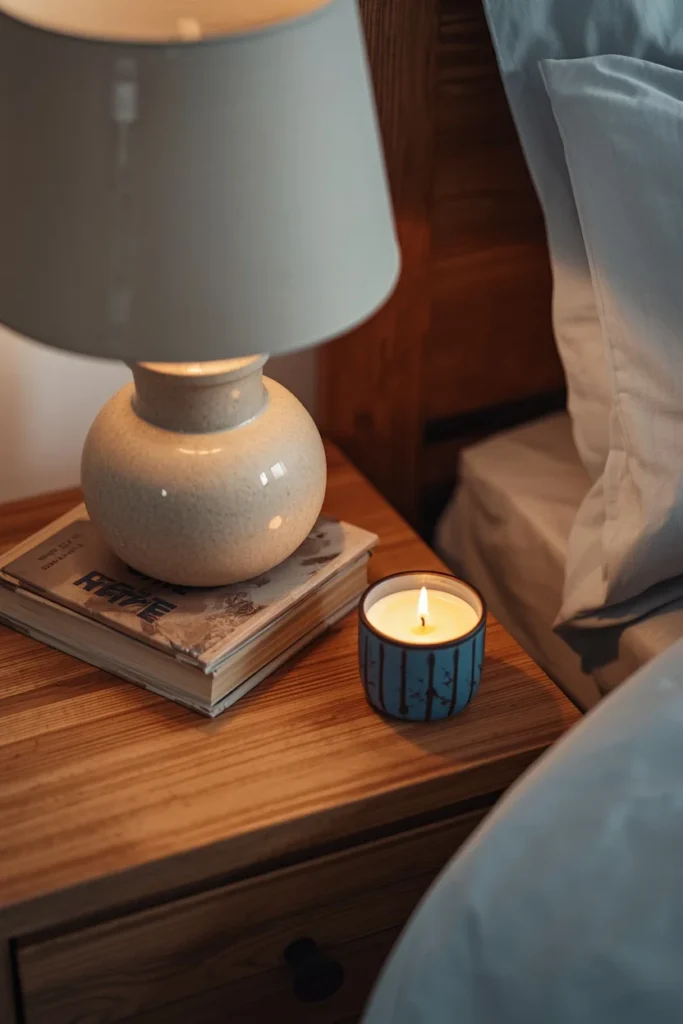
A spa-like bedroom depends as much on what you leave off the nightstand as what you put on it. Limit each side to three items maximum, typically a lamp, a small ceramic dish for jewelry or a ring, and either a candle or a small stack of books. Keep colors within your blue and neutral palette rather than introducing bright, unrelated accent colors in small objects, since even tiny color outliers can disrupt an otherwise calm room. This restraint is what separates a genuinely restful nightstand from a cluttered one, and it’s a detail worth revisiting every few weeks as items tend to accumulate. A clear nightstand also has a real practical benefit, since it’s easier to keep clean and functional for actual nighttime use.
13. Add Dimmable Warm Lighting
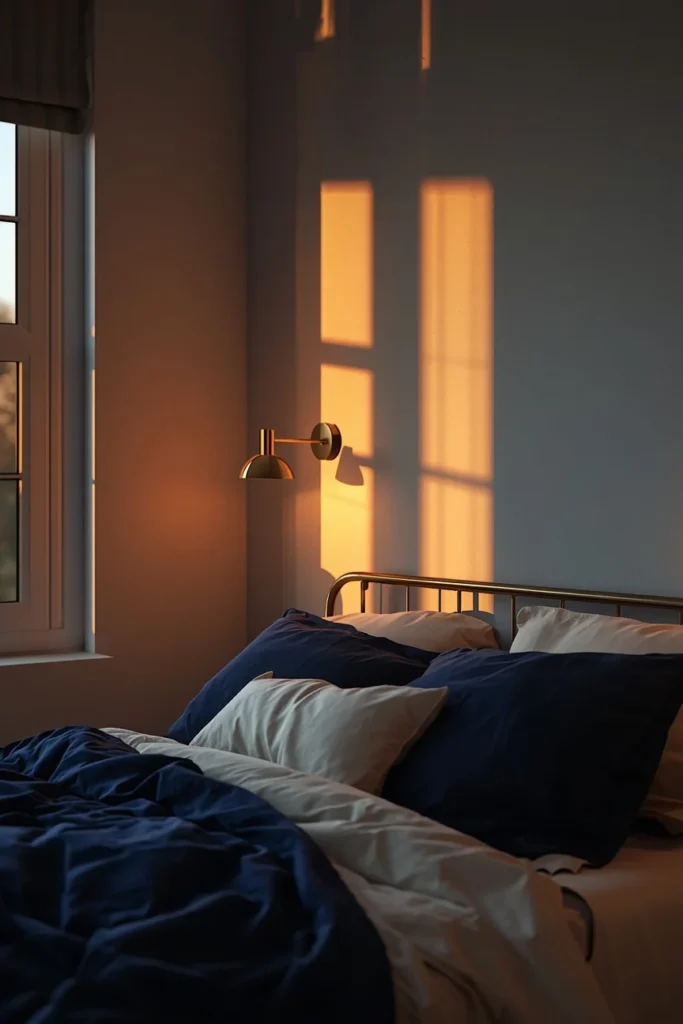
Overhead lighting alone rarely creates a calming atmosphere, so layering in dimmable lamps and sconces gives you control over the room’s mood at different times of day. Choose bulbs in a warm white temperature rather than a cool or daylight setting, since warm light supports the body’s natural wind-down process in the evening far better than bright, blue-toned light. Wall-mounted sconces on either side of the bed free up nightstand space while still providing task lighting for reading. A small plug-in dimmer switch is an easy retrofit if your existing lamps don’t already have dimming built in. This single change affects the room’s actual functionality for sleep more than almost any decor choice on this list.
14. Bring In Ceramic Vases and Stoneware
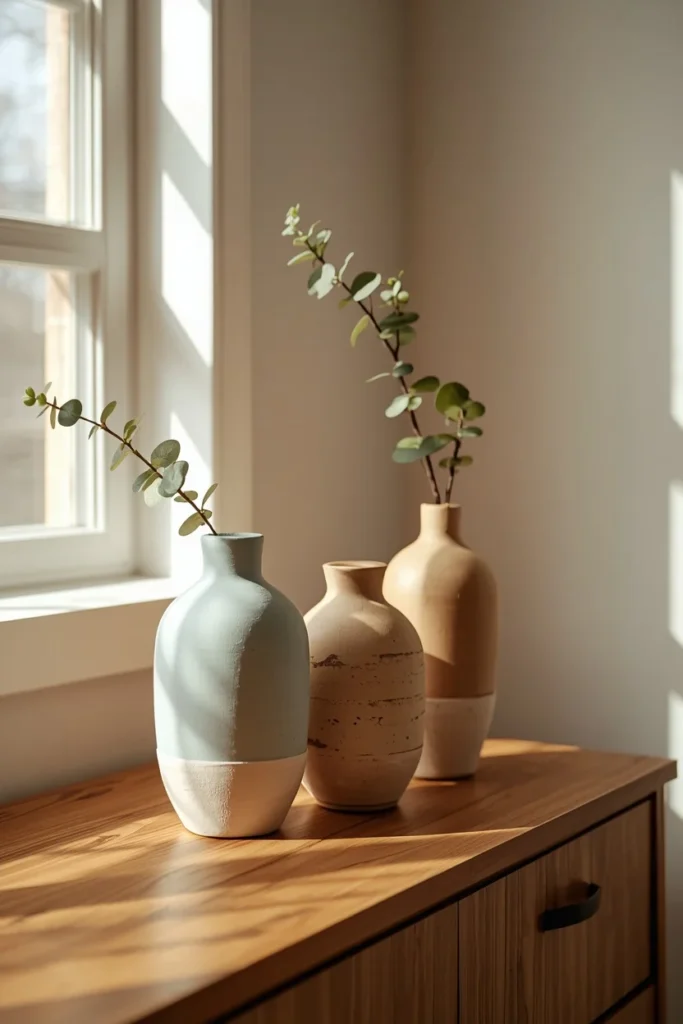
A few pieces of handmade or artisan-style ceramic stoneware, in matte glazes of pale blue, sand, or cream, add an organic, slightly imperfect quality that mass-produced decor lacks. Group two or three pieces of varying height on a dresser or windowsill rather than displaying just one, since a cluster reads as more intentional and collected. Choose pieces with visible texture, like a reactive glaze or hand-thrown ridges, so they add tactile interest even from across the room. This detail connects directly to the spa aesthetic, since handmade ceramics are a recurring element in genuinely upscale spa and wellness spaces. Rotating a piece seasonally, like swapping in a small vase of fresh eucalyptus, keeps the vignette feeling current without much effort.
15. Layer in Live or Faux Greenery
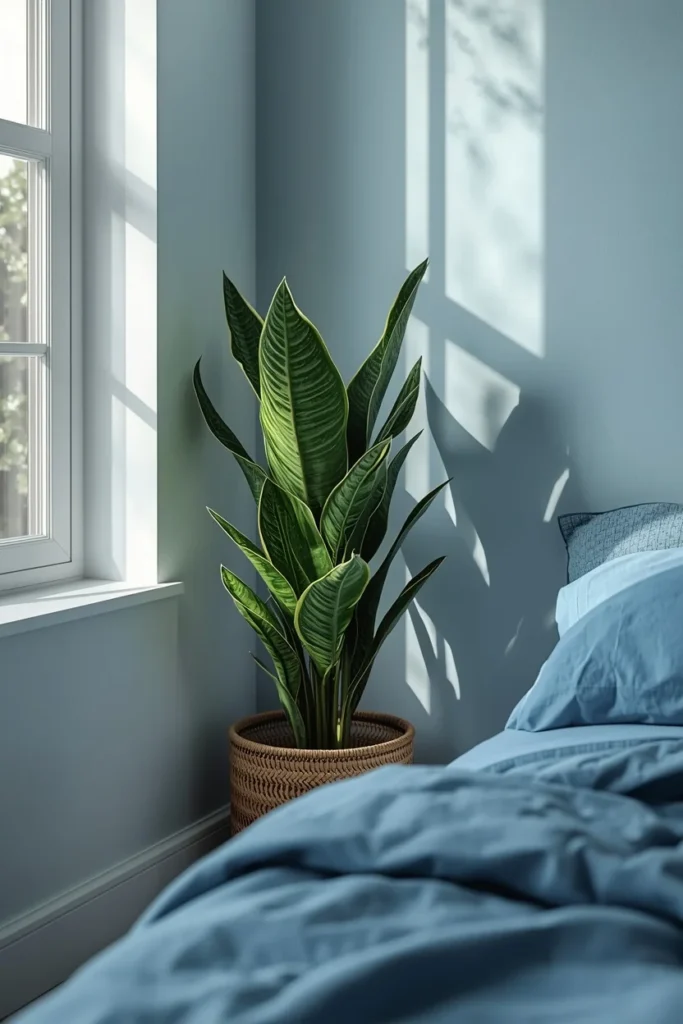
A snake plant, pothos, or eucalyptus stem introduces a soft, living green note that keeps a blue color palette from feeling too monochromatic or cold. Place a taller plant in a corner near natural light and a smaller trailing variety on a dresser or shelf, so the greenery exists at more than one height in the room. Choose planters in matte ceramic or woven material rather than glossy plastic, keeping the material palette consistent with the room’s other natural textures. Plants also genuinely improve air quality and have a documented calming effect, which supports the actual restfulness this entire bedroom style is built around. Even a single well-placed plant does a lot to soften an otherwise angular, furniture-heavy room.
16. Add Blue and White Color Blocking
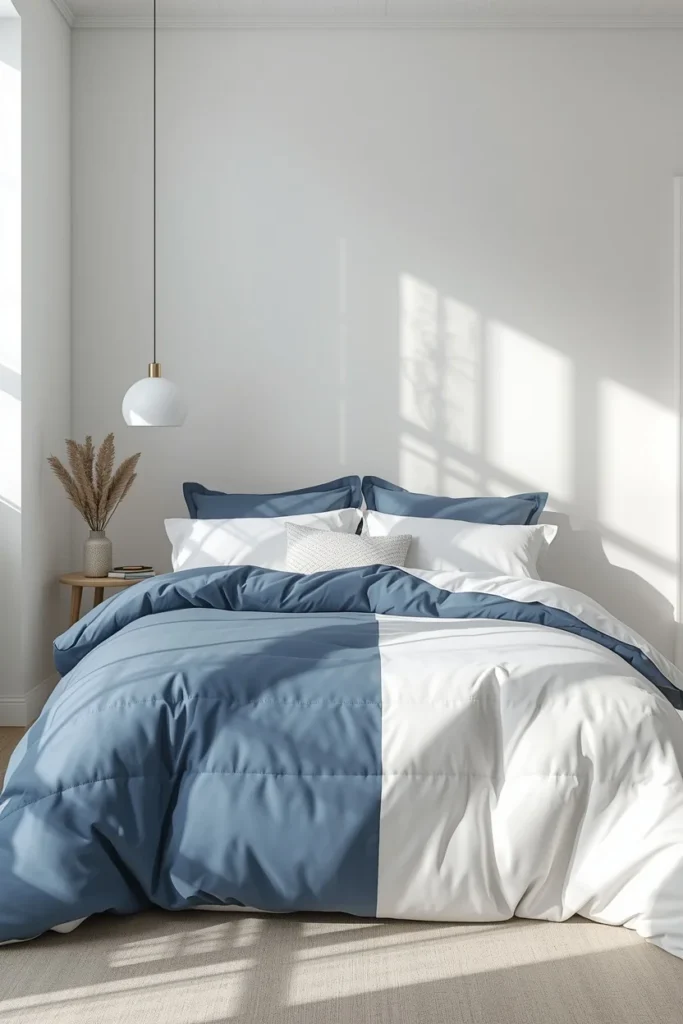
Rather than mixing many shades of blue at once, color blocking uses two tones, typically a mid-blue and crisp white, in clean, defined sections across the bedding, curtains, or an accent wall. A duvet with a wide horizontal white stripe against a solid blue ground is a simple version of this technique that reads as fresh and modern rather than busy. This approach works particularly well for anyone who wants a blue bedroom that feels crisp and graphic rather than soft and layered, offering a distinct alternative direction within the same overall color family. Keep other decor elements simple and uncluttered so the color blocking itself remains the visual focus. This technique also tends to photograph exceptionally well thanks to its clean lines and high contrast.
17. Use Brass or Matte Black Fixture Accents
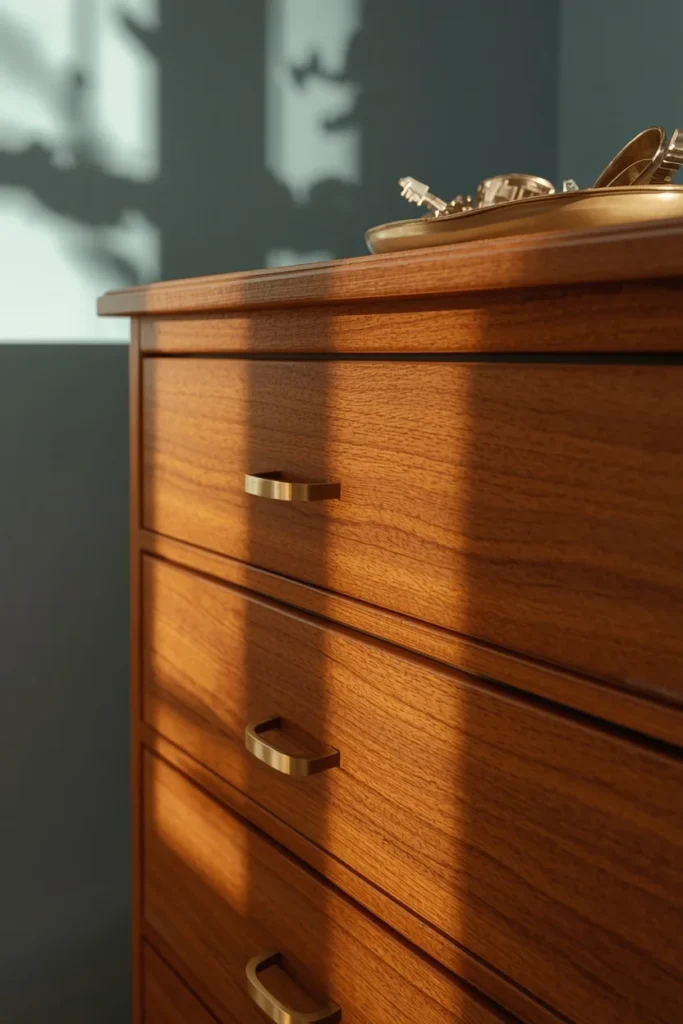
Metal finishes on drawer pulls, curtain rods, and light fixtures add a small but consistent detail that ties a room together once you notice it. Brass adds warmth and a sense of quiet luxury against cool blue tones, while matte black offers a more modern, grounded contrast if your room leans contemporary rather than classic. Whichever finish you choose, stay consistent across every visible metal element in the room, since mixing several different metal tones is one of the fastest ways to make an otherwise well-designed room feel unfinished. This detail is easy to overlook while shopping for bigger pieces, but its consistency is often what makes professionally designed rooms feel cohesive. Even simple, budget drawer pulls in the right finish make a noticeable difference.
18. Add a Spa-Inspired Scent Station
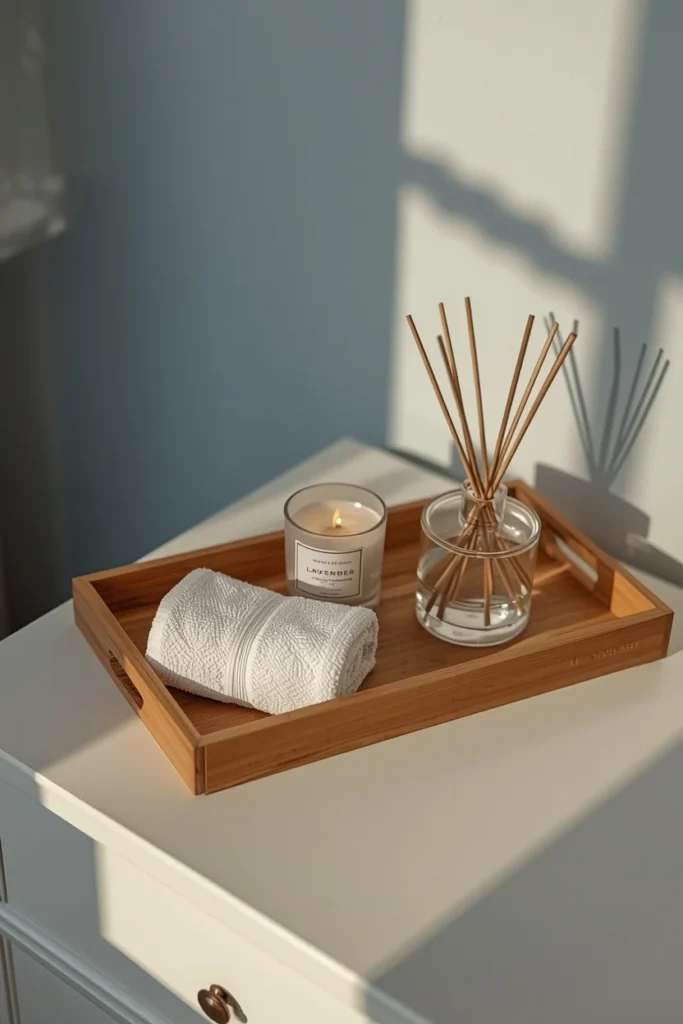
A small tray on the dresser holding a candle, a reed diffuser, and a folded hand towel brings the sensory, ritual quality of an actual spa into the bedroom. Choose scents in the calming range, like lavender, eucalyptus, or sandalwood, which have documented associations with relaxation and better sleep onset. Keep the tray itself in a neutral material, like wood or marble, so it reads as an intentional styling moment rather than clutter. This idea also creates a small nightly ritual, lighting a candle or refreshing a diffuser, that reinforces the room’s purpose as a place to wind down rather than a space you just happen to sleep in. It’s a low-cost detail that does a lot to reinforce the spa-like feeling this entire style is built around.
19. Choose a Slate Blue Upholstered Bed Frame
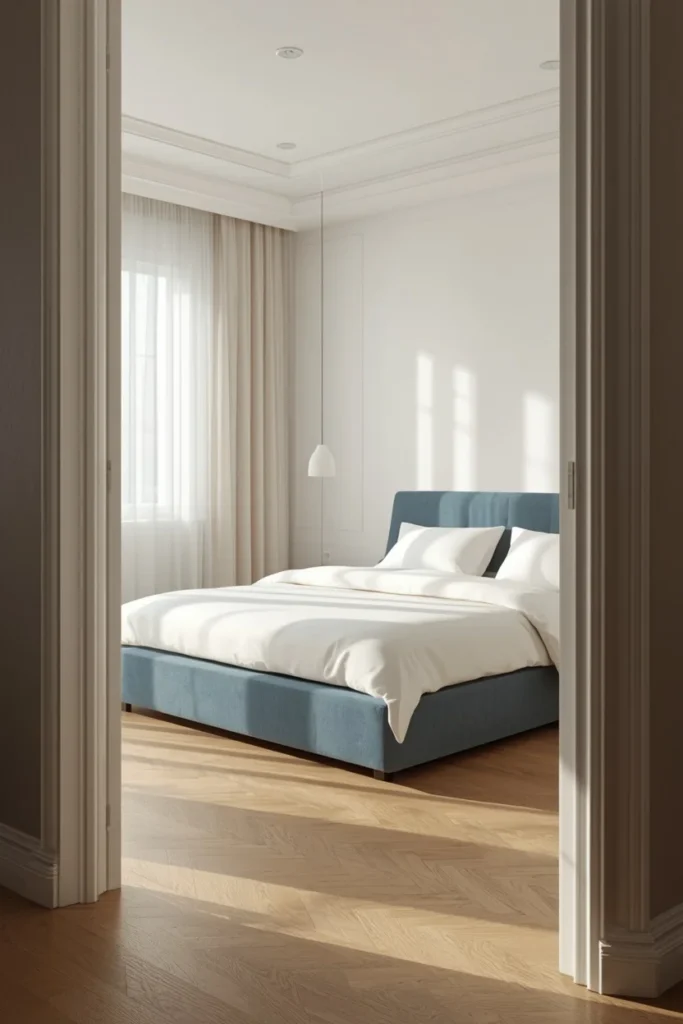
The bed frame itself, not just the bedding, can carry color and texture. A slate blue upholstered frame in linen or performance fabric gives the entire room a foundation piece that anchors the palette without needing a painted accent wall at all. This option works especially well for renters who can’t paint but still want a strong blue color moment in the room. Choose a low-profile platform style for a more modern feel, or a frame with a slightly curved or channel-tufted headboard for something softer and more classic. Because the frame is upholstered rather than painted wood or metal, it also adds a layer of the soft, textured quality that defines the whole spa-like aesthetic.
20. Add Floating Shelves With Curated Objects
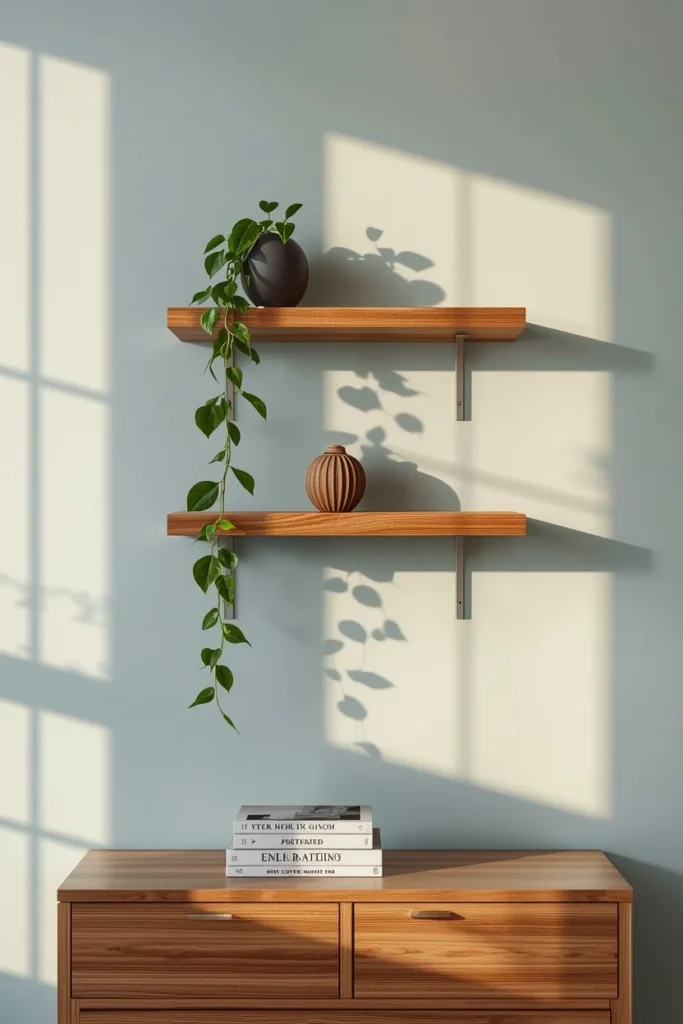
A pair of floating wood shelves above a dresser or reading chair gives you a spot to display a small, curated collection without the visual weight of a full bookcase. Style each shelf with no more than four or five objects, mixing a small plant, a ceramic piece, and one or two books, leaving visible negative space between groupings. Keep the color palette tied to blue, cream, and natural wood tones so the shelves feel like a continuation of the room rather than a separate display. This detail adds personality and a sense of curation to a wall that would otherwise stay empty, without requiring a full gallery wall or heavy furniture piece. It’s a flexible feature you can restyle seasonally as your collection of small objects grows.
Styling Tips for a Spa-Like Blue Bedroom
Choose one dominant blue, then let others support it. Pick a primary wall or bedding shade and treat every other blue in the room as a supporting tone rather than an equal.
Balance cool color with warm material. Wood, brass, linen, and warm lighting keep a blue room from feeling cold or clinical. Never skip this step.
Limit pattern in favor of texture. Reach for boucle, linen, and jute before reaching for a printed textile. Texture reads as calmer than pattern in a space meant for rest.
Keep surfaces mostly clear. A spa feeling depends on visual quiet as much as color choice. Fewer, better objects beat a fully styled, busy room.
Practical Implementation Ideas
Start with wall color and bedding first, since these two elements cover the largest surface area and set the tone everything else responds to. Add your rug and window treatments next, then layer in furniture texture through a bench, headboard, or accent chair. Save small decor, lighting, and styling objects for last, since it’s easier to edit these once the larger pieces are in place. Live with the room for a week or two before adding final accessories, since it’s often easier to spot what’s missing once you’re actually sleeping in the space.
Common Mistakes to Avoid
Choosing a blue that’s too cool or gray without any warmth nearby. Without wood, brass, or warm lighting to balance it, a blue bedroom can read as cold rather than calm.
Overdoing pattern. A spa-like bedroom depends on restraint. Too many printed textiles fighting for attention undercuts the calm this style is meant to create.
Skipping window treatments. Bare windows let in light at the wrong times and leave the room feeling unfinished, no matter how well the rest of the space is styled.
Cluttering nightstands and dressers. Small surfaces fill up fast. Regularly edit them back down to just a few intentional objects.
Small-Space Alternatives
In a smaller bedroom, choose a single powder blue accent wall behind the headboard rather than a full navy room, since deep saturated color can make a small space feel more enclosed. A wall-mounted sconce instead of a floor or table lamp frees up nightstand and floor space while still providing warm, dimmable light. Swap a full bench for a smaller upholstered stool at the foot of the bed, and choose a compact floating shelf instead of a full dresser vignette. Mirrors placed opposite a window also help bounce natural light around a smaller blue room, keeping it from feeling dim.
Budget-Friendly Alternatives
Paint remains the most affordable way to bring in a powder blue or navy accent wall, and a misty blue ceiling costs barely more than a standard ceiling paint job. A new duvet cover in a mid-tone blue transforms the bed for a fraction of the cost of a new frame or headboard. Thrifted ceramic vases and ceramic dishes often have more character than new mass-produced pieces, and a secondhand wood nightstand with a fresh coat of paint or oil finish can stand in for a driftwood-style piece. Battery-operated candles or an affordable reed diffuser bring in the spa-scent detail without a big investment.
Pro Styling Recommendations
Test paint colors on a large poster board rather than directly on the wall, moving it around the room throughout the day to see how the blue shifts under different light. When shopping for bedding, buy an actual fabric swatch if possible, since blue tones can photograph very differently online than they look in person. Keep your metal finishes and wood tones consistent throughout the room, treating this consistency as a non-negotiable design rule rather than a minor detail. Finally, resist finishing the room in one shopping trip. The most convincing spa-like bedrooms tend to be built slowly, with each new piece chosen deliberately rather than bought all at once to fill space.
FAQs
Conclusion
A calm bedroom isn’t really about finding the perfect shade of blue. It’s about what surrounds that color once it’s on the wall, the warm wood, the soft lighting, the linen that actually feels good against your skin at the end of the day. Start with one or two ideas from this list, live with them for a while, and let the rest of the room build slowly around what already feels restful to you.