19 Curved Banquette Seating Ideas for Cozy Kitchen Nooks
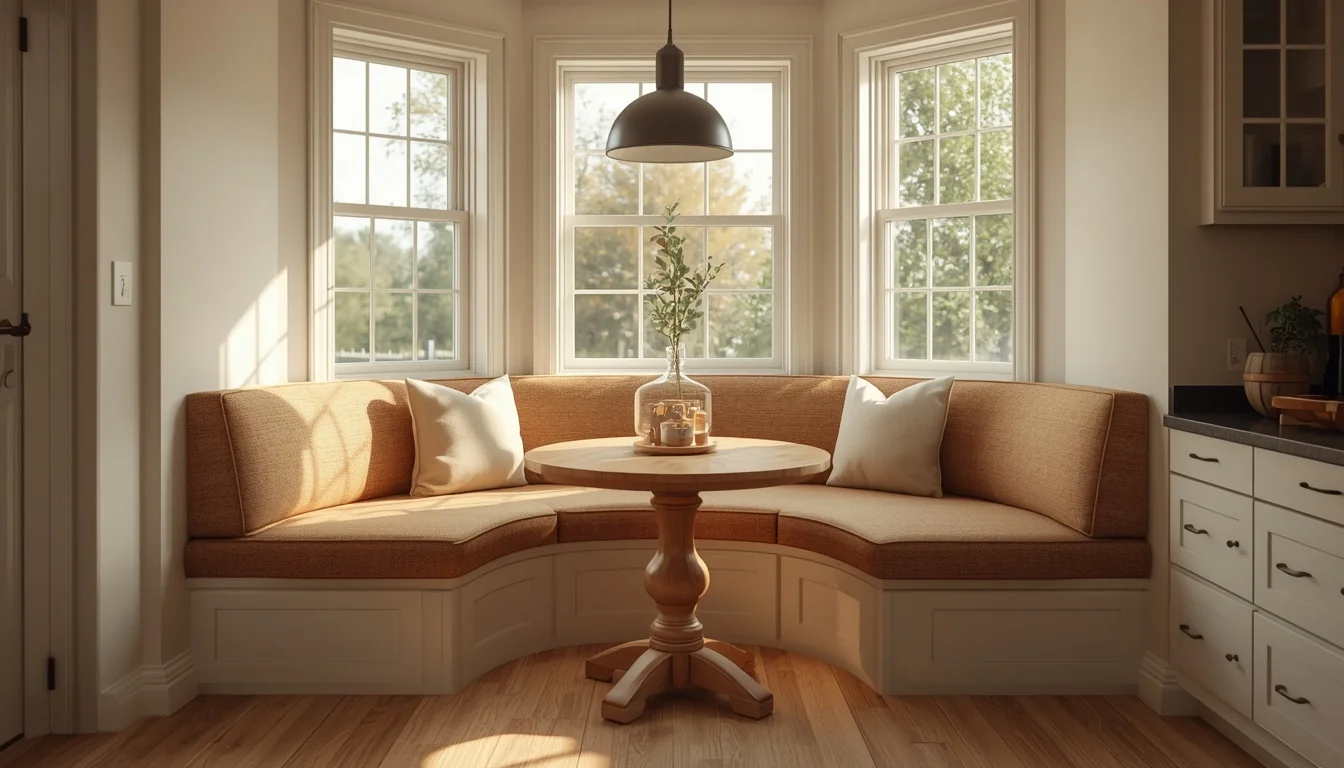
There’s a certain kind of kitchen corner that never quite works. Too narrow for a table and chairs. Too awkward for a straight bench. The kind of space that just sits there, wasted, until someone finally curves a bench around it and the whole room clicks into place.
That’s the quiet genius of a curved banquette. Instead of fighting an odd angle or a bay window, the seating follows the shape of the room, wrapping around it the way water settles into a bowl. It seats more people than a standard table and chairs, softens a kitchen full of straight lines and hard edges, and somehow makes even a rushed weekday breakfast feel a little more like a moment worth sitting down for.
Getting the details right matters, though. Seat depth, table height, upholstery choice, all of it affects whether the finished nook actually gets used every day or just photographs well and then gathers junk mail.
This guide walks through 19 specific ways to design a curved banquette that’s both beautiful and genuinely functional. Save the ones that fit your kitchen.
Table of Contents
1. Build a Curved Banquette Into a Bay Window
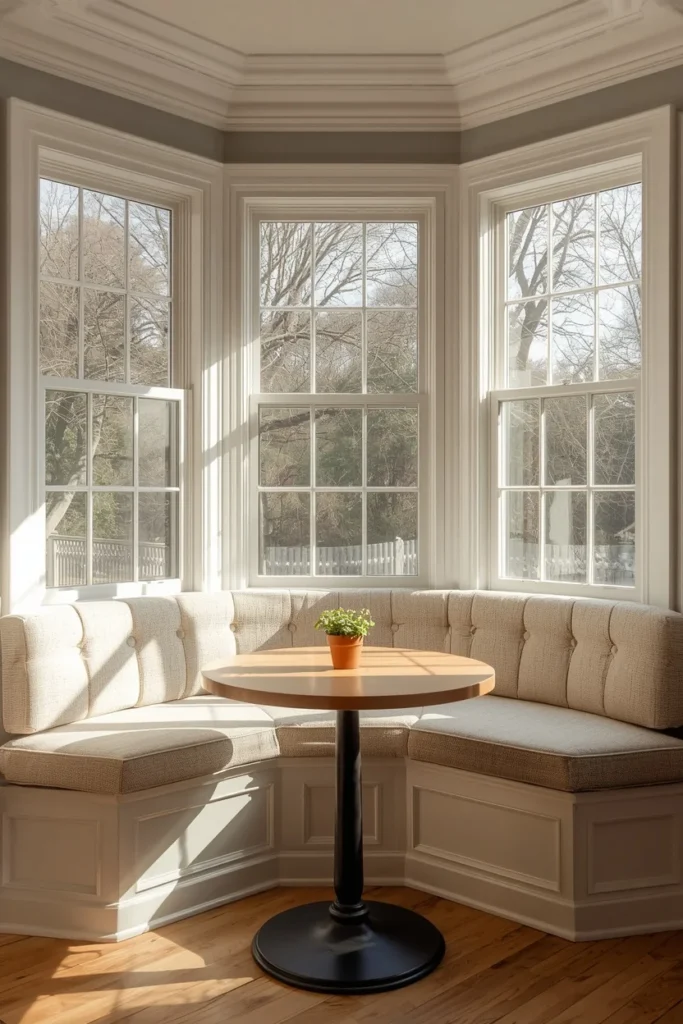
A bay window is one of the most natural spots for a curved banquette, since the window’s existing angles already suggest a rounded seating shape rather than a straight bench pushed against a flat wall. Follow the curve of the window frame closely when building the bench base, leaving just a few inches of clearance so daylight still reaches the seating area without obstruction. This placement also means the nook gets used throughout the day, not just at breakfast, since the natural light and view make it a pleasant spot to linger with coffee or a laptop. Cushion the bench in a durable fabric that can handle direct sun exposure without fading quickly, since bay window nooks tend to get more light than any other seating spot in the kitchen. This is one of the most classic and enduringly popular ways to use curved seating, and it rarely goes out of style.
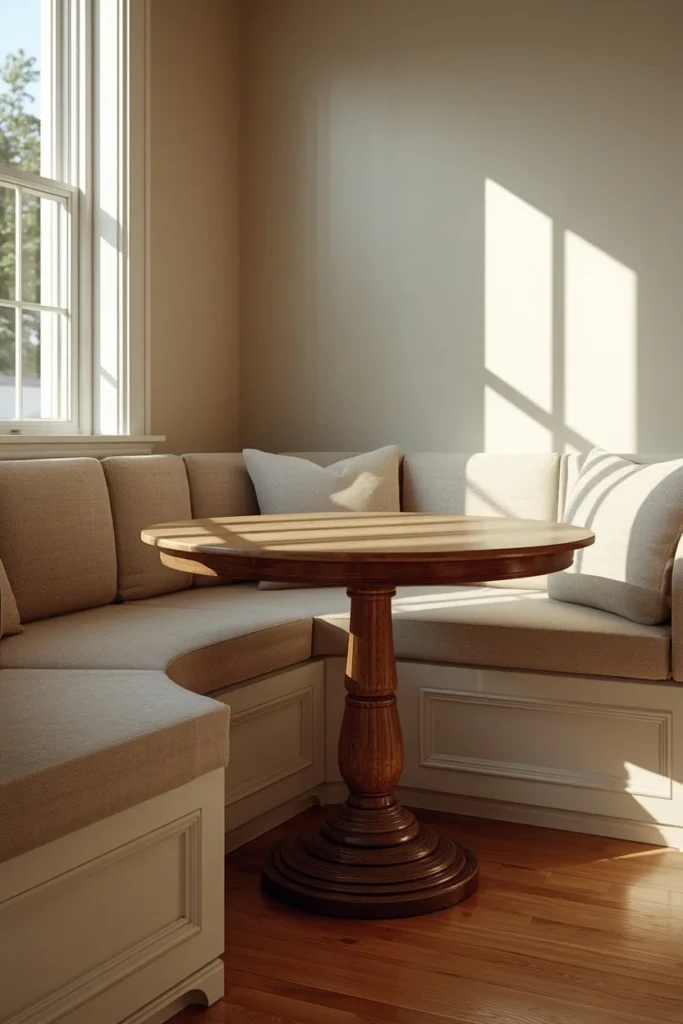
2. Pair a Curved Banquette With a Round Pedestal Table
A round table is the natural partner for curved seating, since its shape echoes the bench’s curve and avoids the awkward corners that a rectangular table can create against a rounded bench edge. Choose a pedestal or trestle base rather than a table with four legs, since a single central support makes it far easier to slide in and out of the banquette without bumping a table leg. Size the table so its edge sits roughly ten to twelve inches above the seat cushion, which keeps legroom comfortable for everyday use rather than cramped. This pairing also visually softens the entire kitchen nook, replacing hard right angles with a continuous, flowing shape from bench to tabletop. It’s the single most common and most reliable combination for anyone planning a curved banquette from scratch.
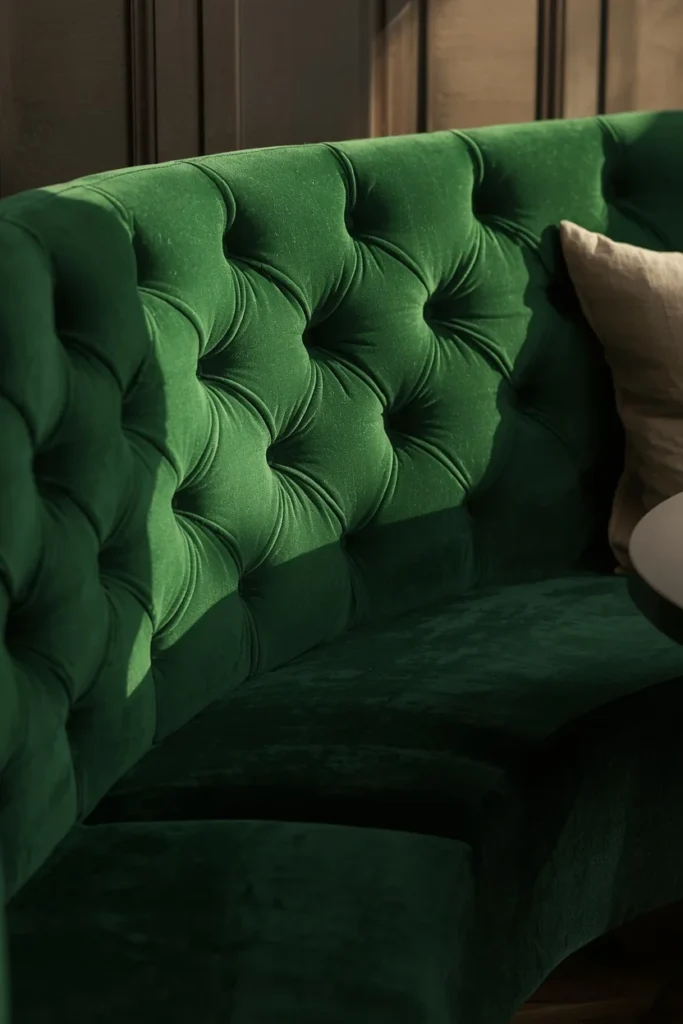
3. Choose Tufted Velvet Upholstery for a Plush Look
A curved banquette upholstered in tufted velvet brings a level of polish that plain cushioned benches don’t achieve, with the button detailing adding dimension and shadow across the fabric surface. Choose a durable performance velvet rather than a delicate decorative fabric, since this seating gets daily use and needs to hold up to spills and regular wear. Deep jewel tones like emerald or navy velvet make a strong style statement, while a soft blush or warm taupe velvet keeps the look softer and more neutral. The tufting pattern should follow the curve of the bench naturally rather than fighting it, so work with an upholsterer experienced in curved furniture if you’re custom-building this piece. This upholstery choice instantly elevates a kitchen nook from purely functional to genuinely design-forward.
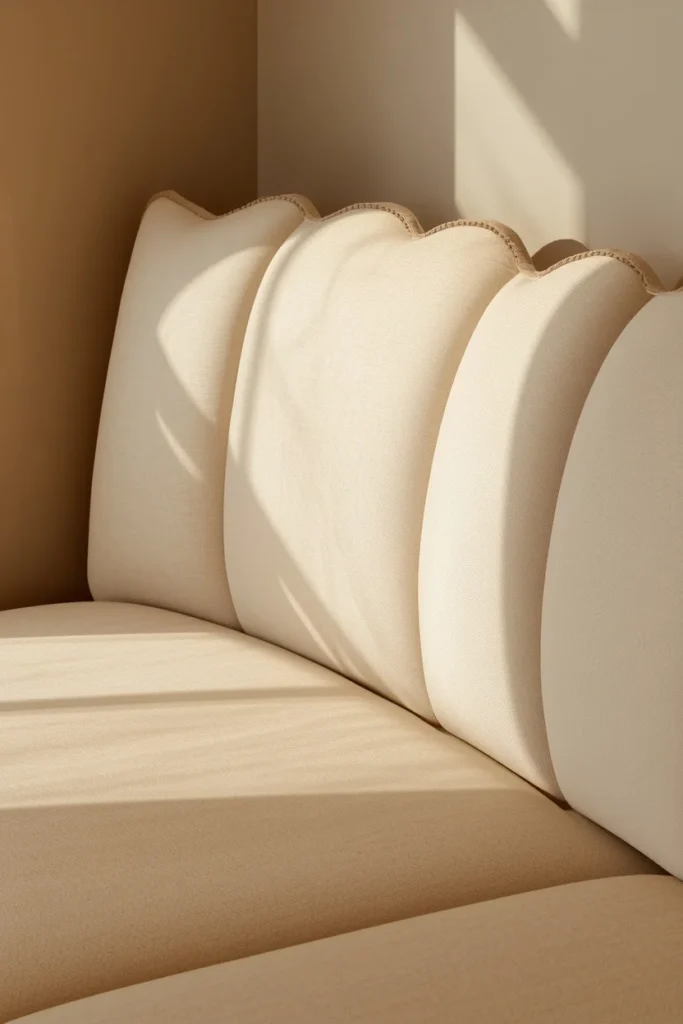
4. Add a Scalloped Bench Back for Soft Detail
A scalloped edge along the top of the banquette’s back cushion introduces a repeating wave-like detail that reinforces the curved theme even in the smaller construction elements of the piece. This detail works especially well in a more traditional or transitional kitchen, where the soft, rounded scallop shape complements existing millwork or cabinetry curves elsewhere in the room. Keep the scallop size proportional to the overall bench length, since overly small or overly large scallops can look busy or clumsy depending on the scale of the piece. Pair a scalloped back with a solid, unpatterned fabric so the shape itself provides the visual interest rather than competing with a printed textile. This detail is subtle in photos from a distance but adds genuine craftsmanship once you’re sitting close enough to notice it.
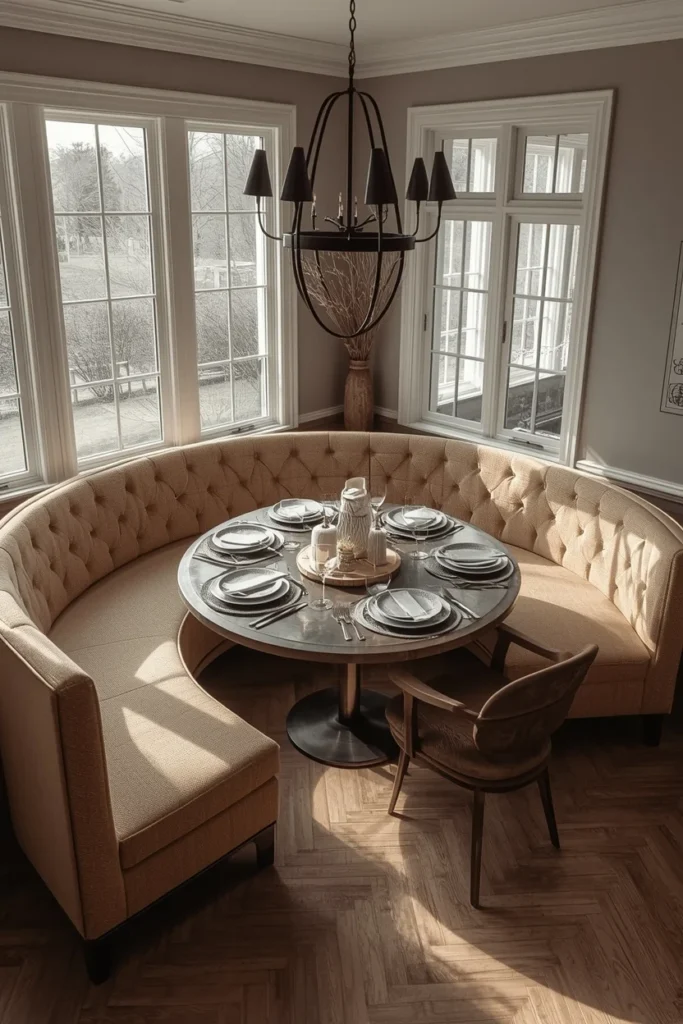
5. Use a U-Shaped Curved Banquette to Maximize Seating
For kitchens with enough floor space, a full U-shaped curved banquette wraps seating around three sides of a table, maximizing how many people can sit comfortably without needing extra chairs pulled in from elsewhere. This layout works particularly well for households that regularly host larger family meals, since it comfortably fits more guests in the same footprint a standard table and chair set would require. Leave one open side for easy access, typically facing the kitchen or a walkway, so getting in and out doesn’t require climbing over other seated guests. Because this layout takes up significant floor space, measure carefully and mock up the footprint with tape on the floor before committing to a final design. Once built, though, a U-shaped banquette tends to become the most-used seating in the entire house.
6. Build In Hidden Storage Beneath the Bench
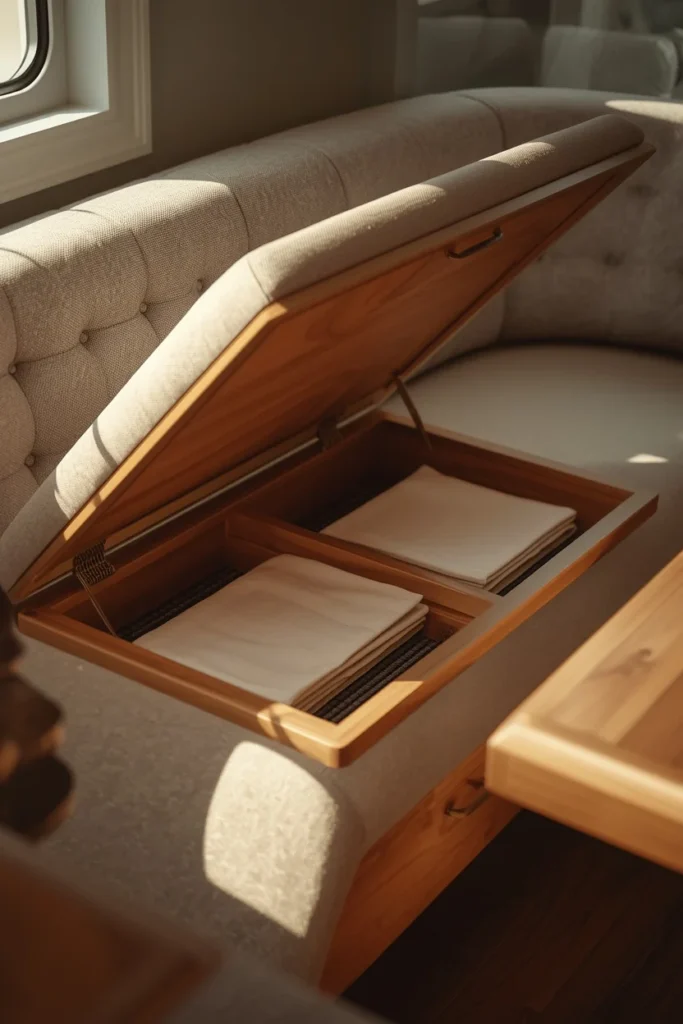
A lift-up bench seat or drawer front built into the base of a curved banquette turns otherwise wasted under-seat space into genuinely useful storage for placemats, linens, or seasonal serving pieces. Curved storage fronts require more careful carpentry than straight ones, so this detail works best with a builder experienced in curved cabinetry rather than a standard flat-pack solution. Choose a soft-close hinge mechanism for lift-up seats, since this prevents the lid from slamming and keeps the mechanism working smoothly over years of daily use. This feature is especially valuable in smaller kitchens, where every bit of extra storage meaningfully reduces clutter elsewhere in the room. It’s also one of the details that consistently surprises guests, since the storage is completely invisible until someone lifts the cushion.
7. Add a Fluted Wood Front Panel
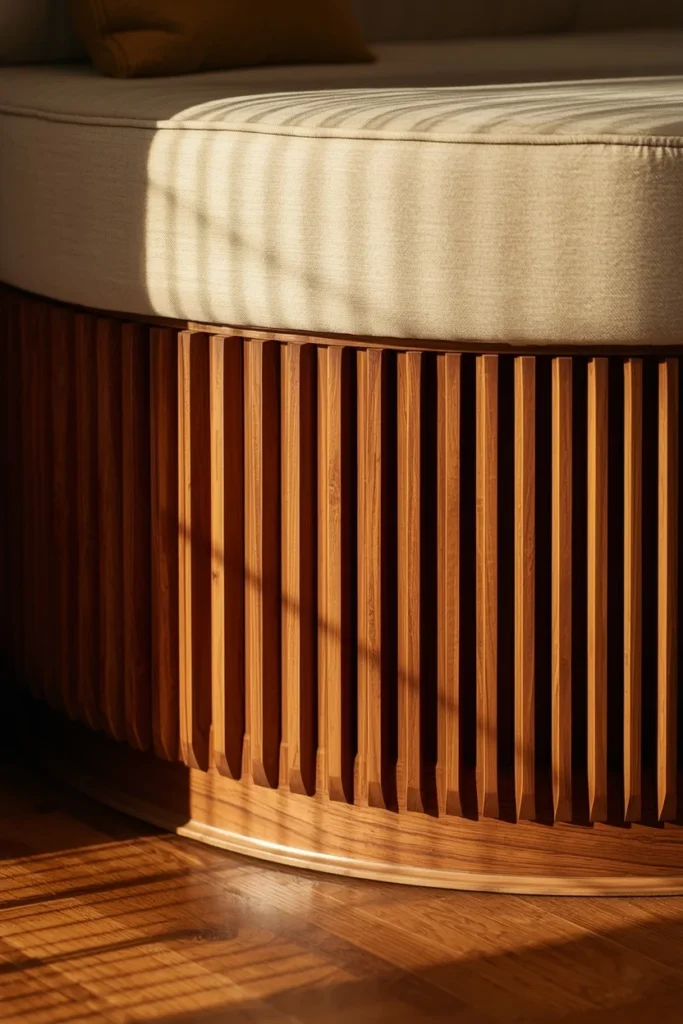
A fluted wood panel along the front base of the banquette, where the bench meets the floor, adds textural detail at a level most people don’t think to design for. The vertical ridges of fluting catch light differently depending on the time of day, adding subtle movement to what would otherwise be a plain, flat panel. Choose a warm wood tone like walnut or white oak to keep the detail feeling organic rather than overly formal, and curve the fluted panel to match the bench shape exactly for a seamless, custom look. This detail pairs particularly well with a plinth base rather than exposed legs, since the continuous fluted surface reads as more intentional without visible gaps beneath the bench. It’s a refined touch that signals custom craftsmanship rather than a standard, store-bought piece.
8. Choose Boucle Upholstery for Texture
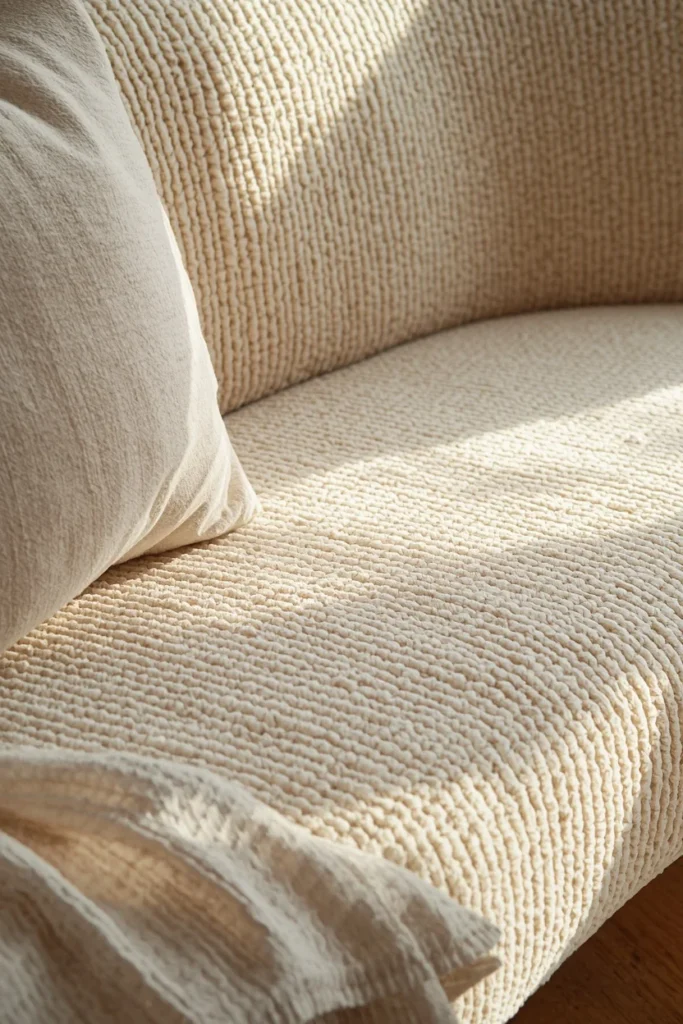
Boucle’s nubby, looped texture adds tactile richness to a curved banquette without requiring bold color or pattern, making it one of the most popular upholstery choices in current kitchen nook design. The slightly irregular surface of the fabric also tends to hide minor everyday wear better than smooth cotton or linen, which matters for a piece of furniture used multiple times a day. Choose a warm ivory or oatmeal boucle to keep the nook feeling bright and neutral, or a deeper taupe or gray tone if the rest of the kitchen leans more moody. This fabric pairs especially well with warm wood tones and brass hardware, echoing the same soft, organic material palette found throughout much of current kitchen design. Boucle’s popularity also means it’s now widely available in performance-grade options suitable for genuine daily family use.
9. Wrap a Kitchen Island Corner With Curved Seating
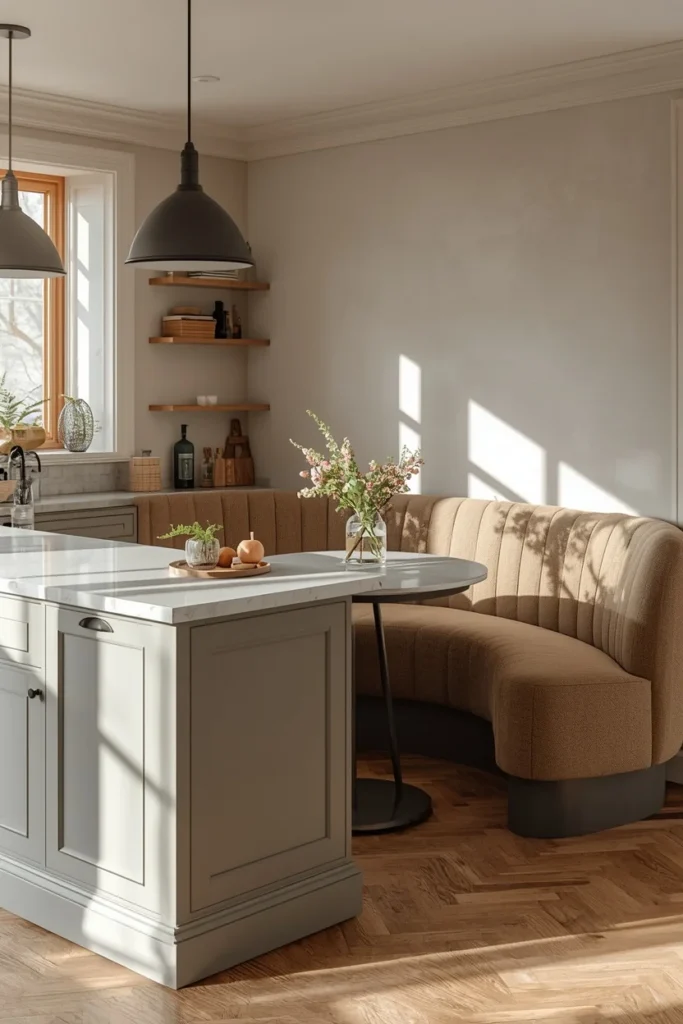
Instead of building a separate nook, a curved banquette can wrap directly around one end of a kitchen island, creating a casual seating area that stays connected to the main cooking and prep space. This layout works especially well in open-concept kitchens, since the curved bench softens the otherwise hard rectangular lines of most island designs. Choose a bench height that aligns with either standard table height or counter height depending on whether you’re pairing it with a standard table or a taller bistro-style table. This setup also creates a natural gathering spot during meal prep, letting kids do homework or guests chat with the cook without being in the direct workflow of the kitchen. It’s a smart solution for households that want banquette seating but don’t have a dedicated nook area to build one into.
10. Add a Skirted Banquette for a Soft Silhouette
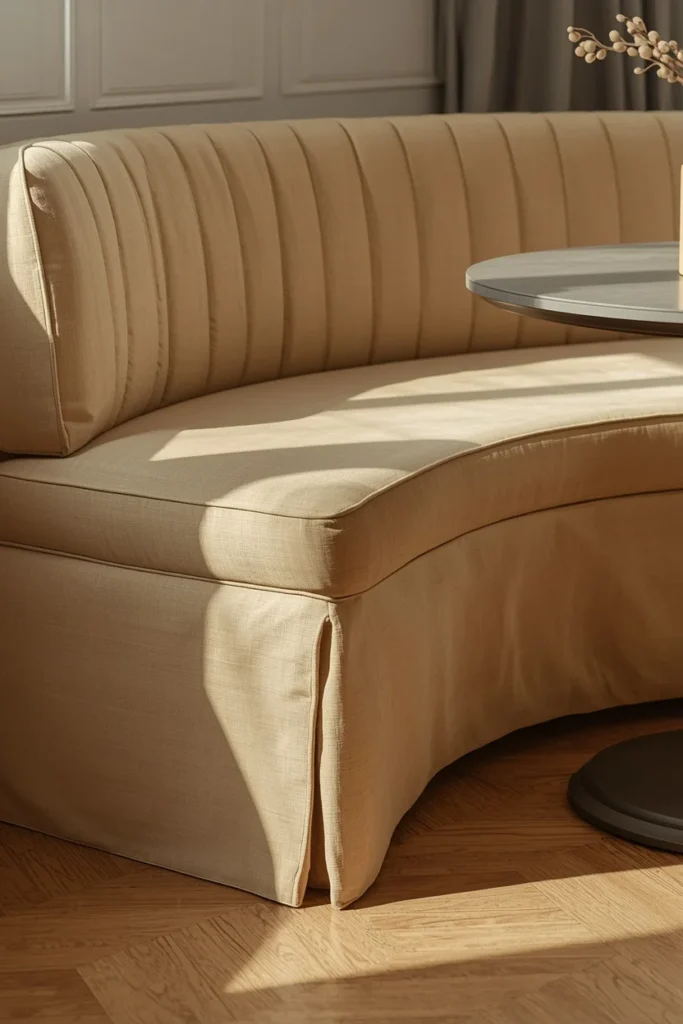
A fabric skirt covering the base of the banquette, extending from the seat cushion down to the floor, creates a soft, traditional silhouette that hides the bench’s structural base entirely. This detail works particularly well in a more classic or cottage-style kitchen, where the fabric skirt echoes similar detailing found on slipcovered chairs or a kitchen table skirt elsewhere in the home. Choose a fabric with enough body to hold a clean line without sagging, and have it professionally fitted to the curve of the bench so the skirt falls smoothly rather than bunching at the corners. This style choice also has a practical benefit, since a skirt conceals any structural imperfections in a custom-built curved base without requiring additional finishing work. It’s a softer, more romantic take on banquette seating that stands apart from the more streamlined, exposed-leg styles common in modern kitchens.
11. Use Contrast Piping on Curved Cushions
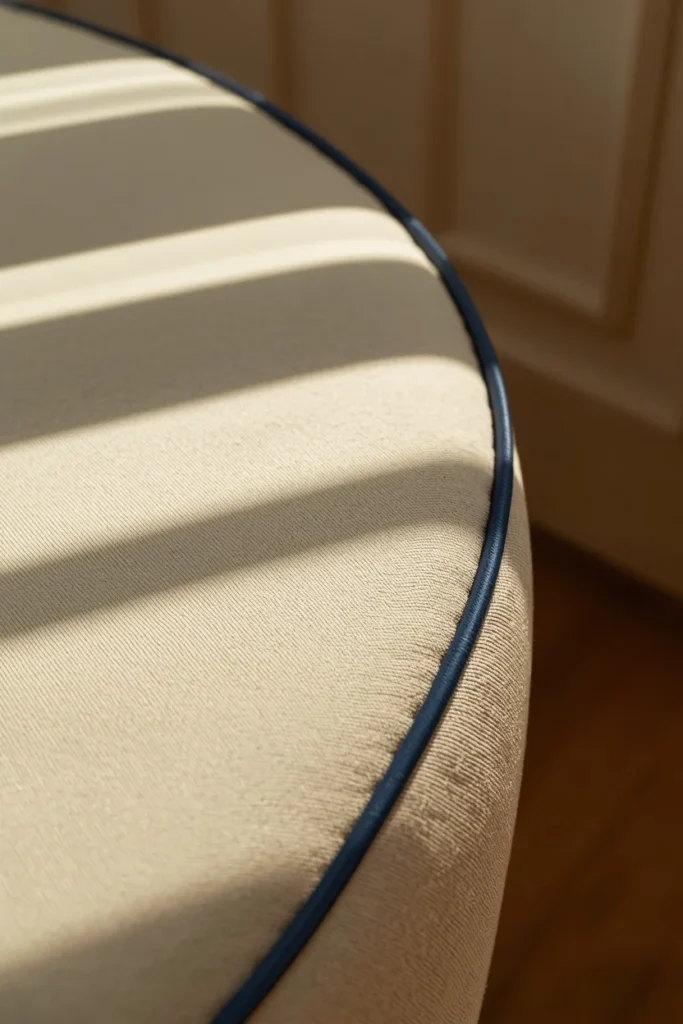
A thin line of contrast piping along the seams of the bench cushions adds definition to the curved shape, making the bench’s silhouette read more clearly from across the room. Choose a piping color one or two shades darker than the main upholstery fabric for a subtle effect, or a genuinely contrasting color like navy piping on a cream cushion for a bolder, more graphic look. This detail is especially useful on curved furniture, since the piping helps the eye track the shape of the bench clearly, something flat, unpiped upholstery can sometimes blur on a rounded form. Keep the piping consistent across every cushion in the nook, including any accent pillows, so the detail reads as a cohesive design choice rather than a mismatched accident. This small addition is inexpensive relative to the overall upholstery cost but adds a noticeably custom, tailored quality to the finished piece.
12. Choose a Plinth Base Instead of Legs
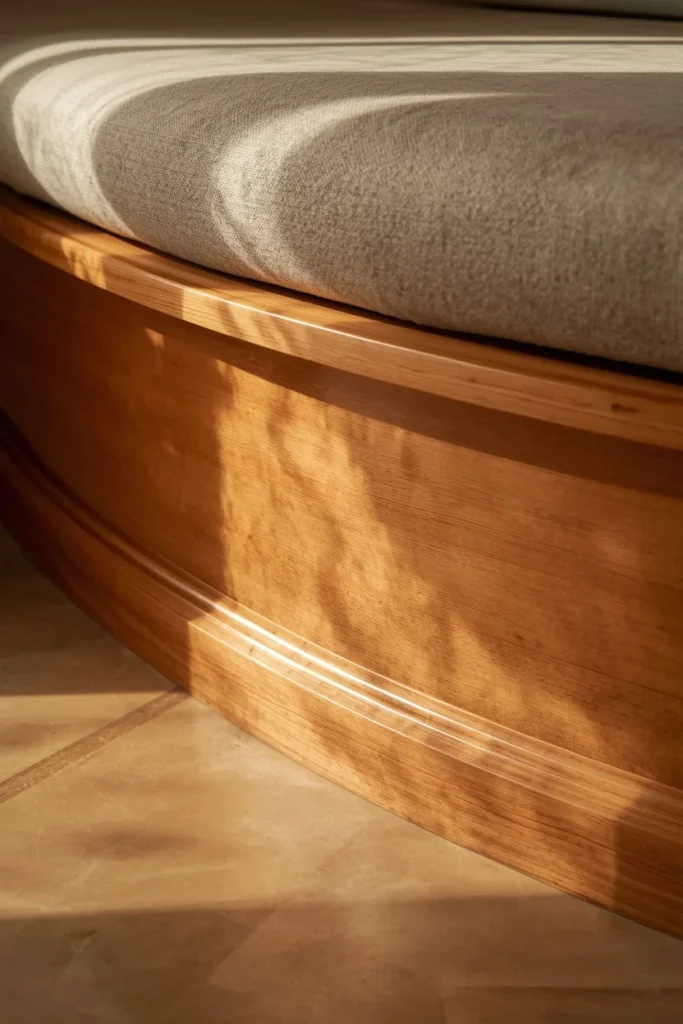
A solid plinth base, where the bench sits flush against the floor rather than raised on visible legs, creates a cleaner, more grounded look for a curved banquette while also eliminating gaps where dust and crumbs tend to collect. This base style works especially well with a fluted or paneled front detail, since the continuous surface gives those decorative elements a clean, uninterrupted canvas. A plinth base also tends to feel more substantial and built-in, even on a freestanding banquette that isn’t permanently attached to the wall or floor. Choose this option if easy cleaning and a streamlined, custom-built appearance matter more to you than the lighter, more visually open look that exposed legs provide. It’s a practical choice as much as an aesthetic one, particularly in households with young kids or pets.
13. Add a Curved Banquette in a Small Alcove
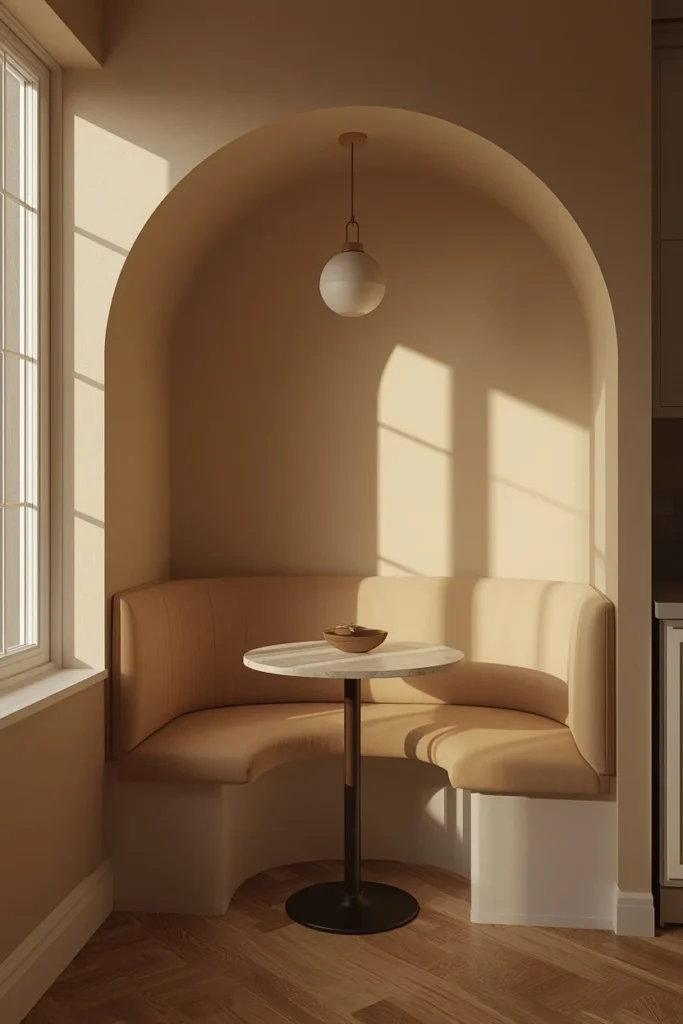
A small wall alcove, even one just large enough for a single curved bench and a small round table, can become a surprisingly effective breakfast nook when the seating follows the alcove’s existing shape rather than fighting it with straight furniture. Measure the depth carefully, aiming for eighteen to twenty-four inches of seat depth including the back cushion, so the bench feels comfortable without eating up more of the small space than necessary. A curved front edge on the bench, even in a mostly straight alcove, softens the overall look and makes entering and exiting the seat easier in a tight footprint. Choose a compact bistro-style table rather than a full-size dining table for this setup, keeping proportions appropriate to the smaller space. This idea proves that curved banquette seating isn’t reserved only for large kitchens with generous floor plans.
14. Pair Curved Benches With an Oval Table
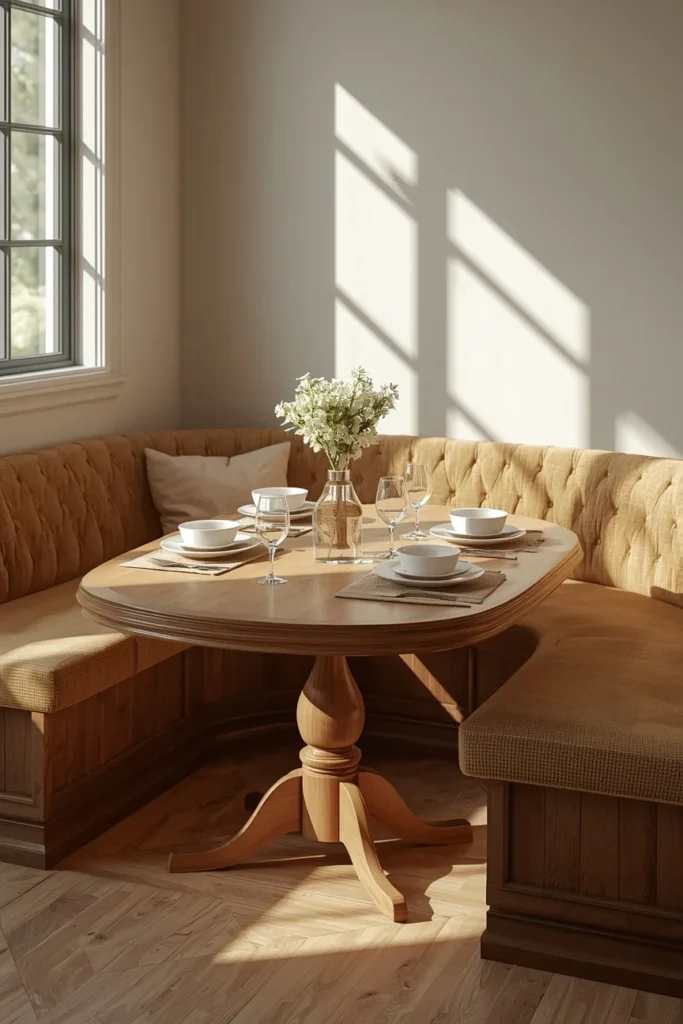
An oval table offers a middle ground between a round table’s soft shape and a rectangular table’s greater seating capacity, making it a strong pairing option for a curved banquette in a slightly longer, narrower nook. The elongated shape accommodates more place settings along its length while still avoiding the hard corners that can awkwardly meet a curved bench edge. Choose an oval table with a pedestal or trestle base for the same reason a round table works well with curved seating, since this keeps legroom open and unobstructed. This pairing works particularly well in a nook that’s wider than it is deep, where a round table might leave awkward empty space at either end of the bench. It’s a slightly less common choice than a round table but offers real practical advantages for households that regularly seat more than four people.
15. Layer in Throw Pillows for Everyday Comfort
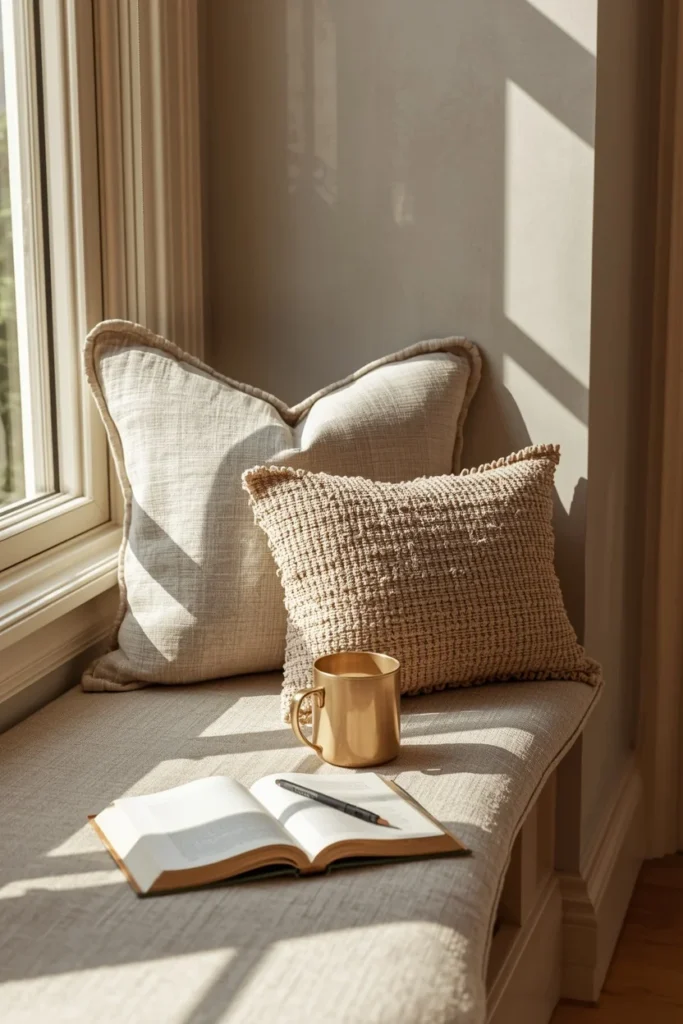
A few well-chosen throw pillows soften the formality of a built-in curved banquette and add a layer of everyday comfort that a bare cushioned bench doesn’t provide on its own. Choose two or three pillows in complementary neutral tones and textures, like a linen weave paired with a subtle boucle, rather than mixing several bold patterns that can clutter the visual line of the curve. Position them at the ends of the bench rather than scattering them along the entire length, since this keeps the main seating area clear and usable for actual sitting. Rotating pillow covers seasonally is also one of the easiest and most affordable ways to refresh the nook’s look without touching the main upholstery. This detail adds genuine daily comfort alongside its styling function, especially for anyone who lingers in the nook with coffee or a book.
16. Add Curved Wood Ribs for a Sculptural Statement
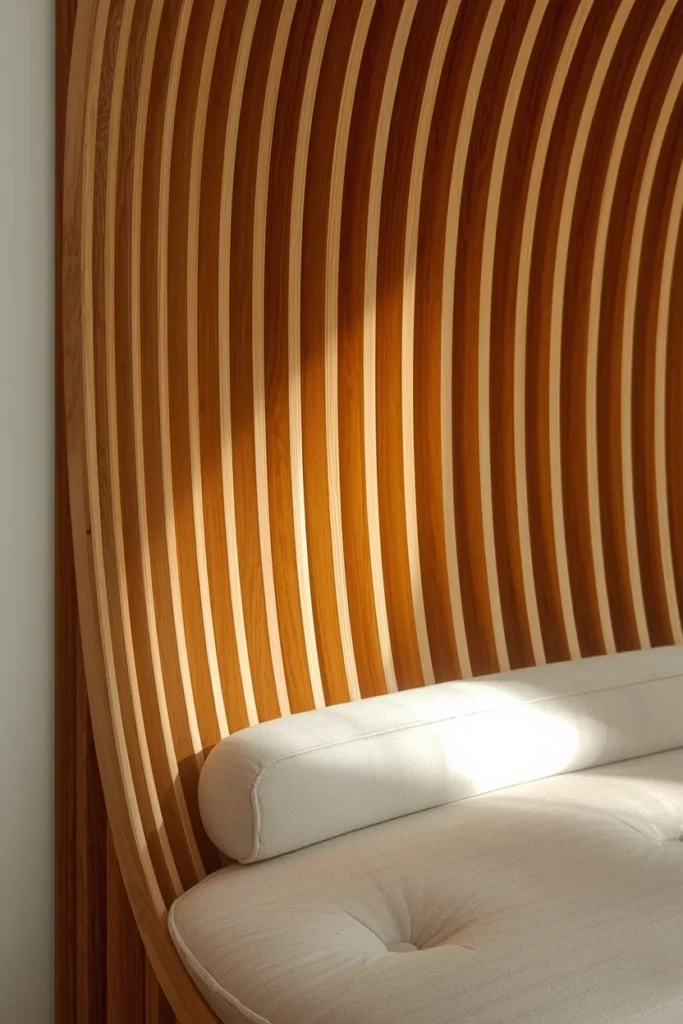
For a more dramatic, architectural take on curved seating, laminated wood ribs forming the visible frame or backrest of the banquette turn the bench itself into a sculptural feature rather than a piece hidden mostly under upholstery. This construction technique, where thin strips of wood are bent and laminated together into a smooth curve, requires skilled carpentry but produces a genuinely striking result that reads as furniture-grade craftsmanship. Leave the wood ribs exposed along the top edge or sides of the bench, pairing them with a simpler, more minimal cushion so the woodwork itself remains the visual focus. This detail works especially well in a kitchen that already leans toward natural materials and organic modern design, where the sculptural wood reinforces the room’s broader material story. It’s a higher-investment option, but one that tends to become the defining feature of the entire kitchen.
17. Use a Neutral Linen Slipcover for Flexibility
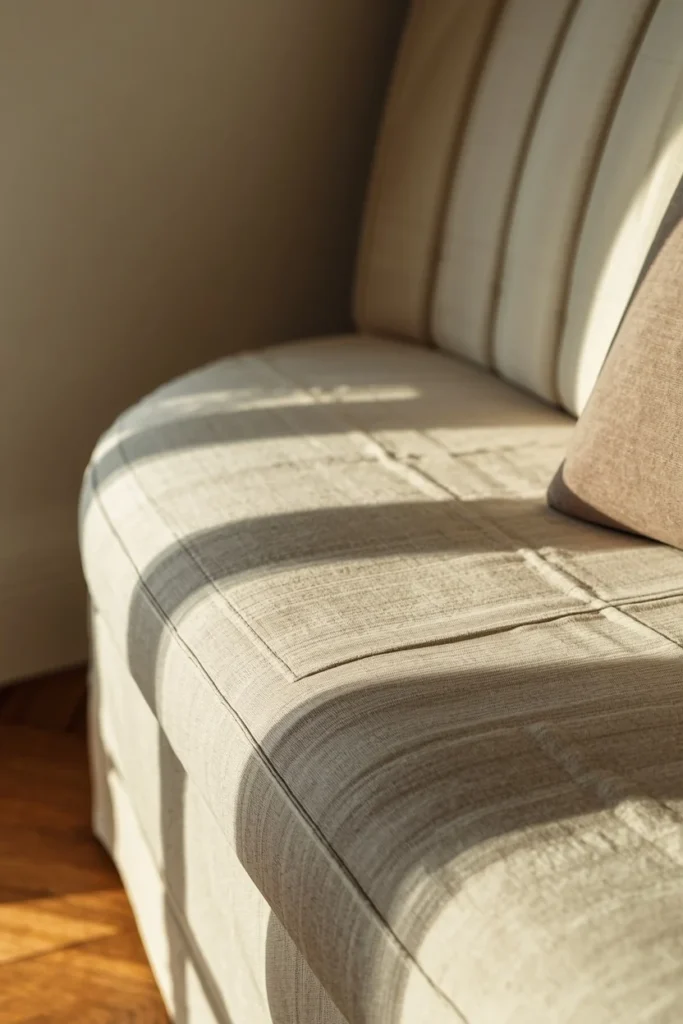
A removable linen slipcover offers a practical alternative to permanent upholstery, especially valuable for households with young children or anyone who wants the option to wash or replace the fabric without reupholstering the entire bench. Choose a slipcover cut and fitted specifically to the bench’s curve, since an off-the-shelf slipcover designed for straight furniture won’t sit properly on a rounded form. Natural linen in a soft neutral tone works well here, since it launders easily and tends to soften with age rather than looking worn out. This option trades some of the polish of a fully upholstered, tailored bench for genuine long-term practicality, which matters for a piece of furniture that sees this much daily use. It’s a smart choice for anyone still deciding on a final fabric direction, since a slipcover is far easier to change later than permanent upholstery.
18. Add a Chandelier or Pendant Above the Curve
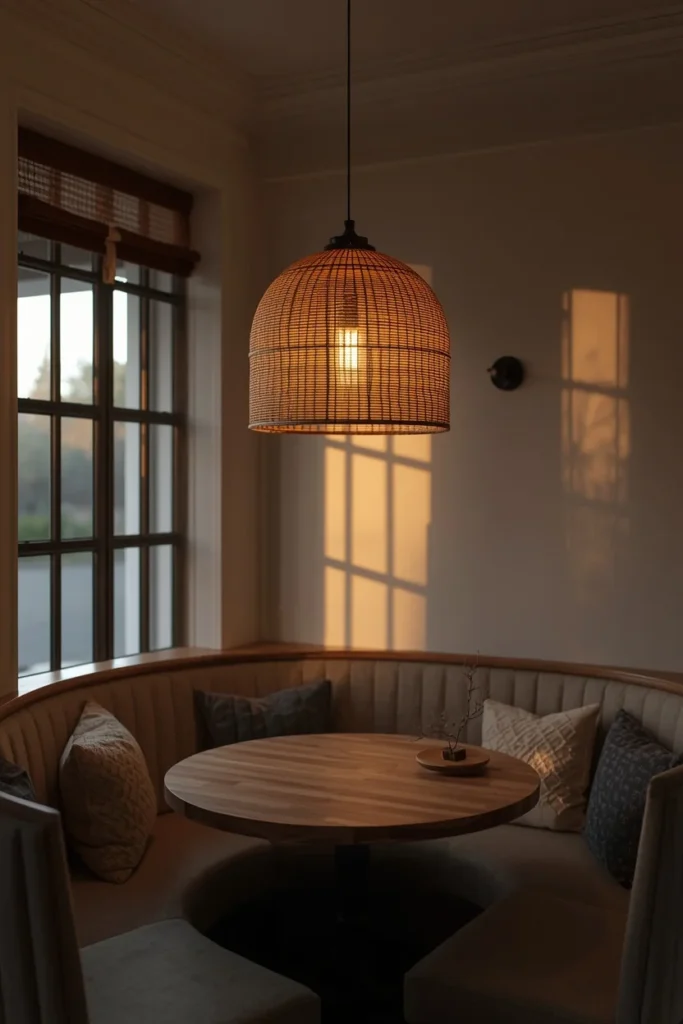
A single statement light fixture centered above a curved banquette anchors the nook visually and signals that this corner of the kitchen deserves as much design attention as the main dining or living areas. Choose a fixture with some curved or organic detailing of its own, like a woven rattan pendant or a softly rounded glass chandelier, to echo the shape of the bench below it. Hang the fixture low enough to create intimacy at the table, typically thirty to thirty-six inches above the tabletop, without obstructing sightlines across the table for people seated in the curve. Warm, dimmable bulbs make this fixture useful for both bright morning meals and softer evening use, extending how often the nook actually gets used throughout the day. This detail is often the finishing touch that makes a curved banquette feel like a fully designed room rather than just a functional seating solution.
19. Choose a Two-Tone Palette for the Banquette and Walls
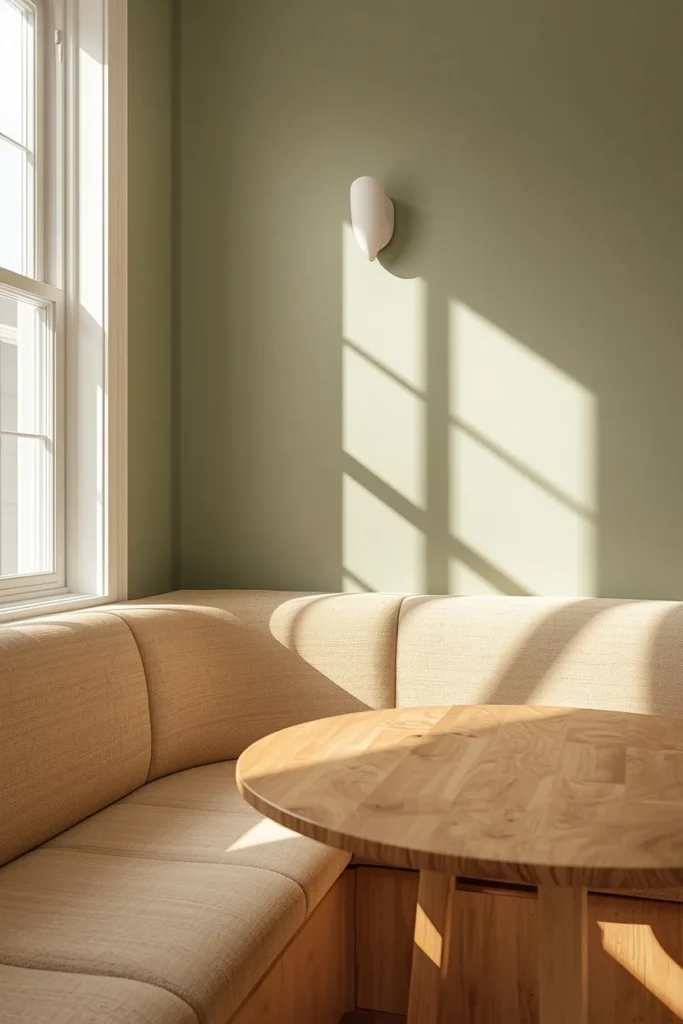
Pairing the banquette’s upholstery color with a complementary but distinct wall color behind it creates visual depth and makes the curved seating area read as an intentional, separate zone within the larger kitchen. A soft sage green wall behind a warm cream banquette, or a deep terracotta wall behind a neutral taupe bench, both create enough contrast for the eye to register the nook as its own defined space. Keep the two tones within the same warmth level, either both warm or both cool, so the combination feels cohesive rather than jarring. This approach works particularly well in open-concept kitchens, where a distinct color treatment helps the nook feel like a considered destination rather than an afterthought tucked into a corner. It’s a low-cost way to add significant visual impact to the finished space using just paint and fabric choices you’ve likely already selected.
Styling Tips for a Curved Banquette Nook
Let the table shape match the bench curve. Round or oval tables pair far more naturally with curved seating than rectangular tables, avoiding awkward gaps at the corners.
Keep upholstery durable, not just beautiful. This seating gets daily use, so choose performance fabrics rated for high traffic rather than delicate decorative textiles.
Layer texture over pattern. Boucle, velvet, and linen add richness without competing visually the way a busy printed fabric can on a curved, already visually active form.
Light the nook intentionally. A dedicated pendant or chandelier signals that this corner deserves the same design attention as the rest of the kitchen.
Practical Implementation Ideas
Measure your available floor space carefully before finalizing a layout, using painter’s tape on the floor to mock up the bench’s footprint and confirm there’s enough clearance for people to walk around the table comfortably. Work with a carpenter or upholsterer experienced specifically in curved furniture, since bending wood and fitting fabric to a rounded form requires different skills than building a standard straight bench. Choose your table base style, pedestal or trestle, before finalizing bench height, since these two pieces need to work together for comfortable everyday seating. Order fabric samples and test them in the actual room’s lighting before committing to a large yardage order, since color can shift noticeably under different light conditions throughout the day.
Common Mistakes to Avoid
Pairing curved seating with a rectangular table. The straight edges create awkward gaps and uneven legroom around the curve, undermining the whole point of the curved shape.
Skipping proper seat depth and height measurements. A seat that’s too shallow or too low quickly becomes uncomfortable for regular daily use, no matter how good it looks.
Choosing fabric based on looks alone. Kitchen nooks see constant use and spills. Delicate fabrics that aren’t rated for high traffic wear out or stain quickly.
Underestimating the complexity of curved construction. Curved benches require more skilled carpentry and upholstery work than straight ones. Budget and plan accordingly rather than assuming standard furniture pricing applies.
Small-Space Alternatives
In a tighter kitchen, a partial curve, just the front corner of an otherwise straight bench, delivers much of the softening effect of a full curved banquette without requiring as much floor space or construction complexity. A small round bistro table scaled down from a standard dining table keeps the footprint compact while still pairing naturally with the curved edge. Built-in storage becomes even more valuable in small spaces, since it reduces the need for separate storage furniture elsewhere in the kitchen. Choosing a lighter upholstery color also helps a small curved nook feel more open and less enclosed than a deep, saturated fabric would.
Budget-Friendly Alternatives
A curved bench doesn’t have to be a full custom build. Some furniture makers offer modular curved banquette sections that can be configured to fit a range of nook shapes at a fraction of custom carpentry cost. Slipcovers in affordable linen or cotton blends deliver a similar visual softness to more expensive performance velvet or boucle at a much lower price point. Secondhand or vintage curved dining sets, like mid-century booth seating, occasionally turn up at estate sales or online marketplaces and can be reupholstered for less than building new. Paint remains the cheapest way to create the two-tone wall and bench contrast that makes a nook feel like a defined, intentional space.
Pro Styling Recommendations
Sit in a mockup of your planned seat height and depth before finalizing dimensions, since numbers on paper don’t always translate to genuine comfort once you’re actually seated for a full meal. Choose a table height that leaves ten to twelve inches of clearance above the seat cushion, which keeps legroom comfortable without feeling cramped. When in doubt on upholstery, choose a slightly darker, more forgiving neutral tone over a very pale one, since daily use inevitably brings some wear and staining over time. Finally, don’t rush the lighting decision. The right pendant above a curved banquette does as much to make the space feel finished as the bench and table themselves.
FAQs
Conclusion
A curved banquette solves a real problem, but the best ones do more than that. They turn an awkward corner into the spot everyone naturally gravitates toward, coffee in hand, long after the meal is technically over. Start with the shape that fits your actual kitchen, get the dimensions right before anything else, and let the fabric and finishing details come together once the bones of the nook are solid.