18 Christmas Wreath Ideas That Make Your Front Door Absolutely Unforgettable
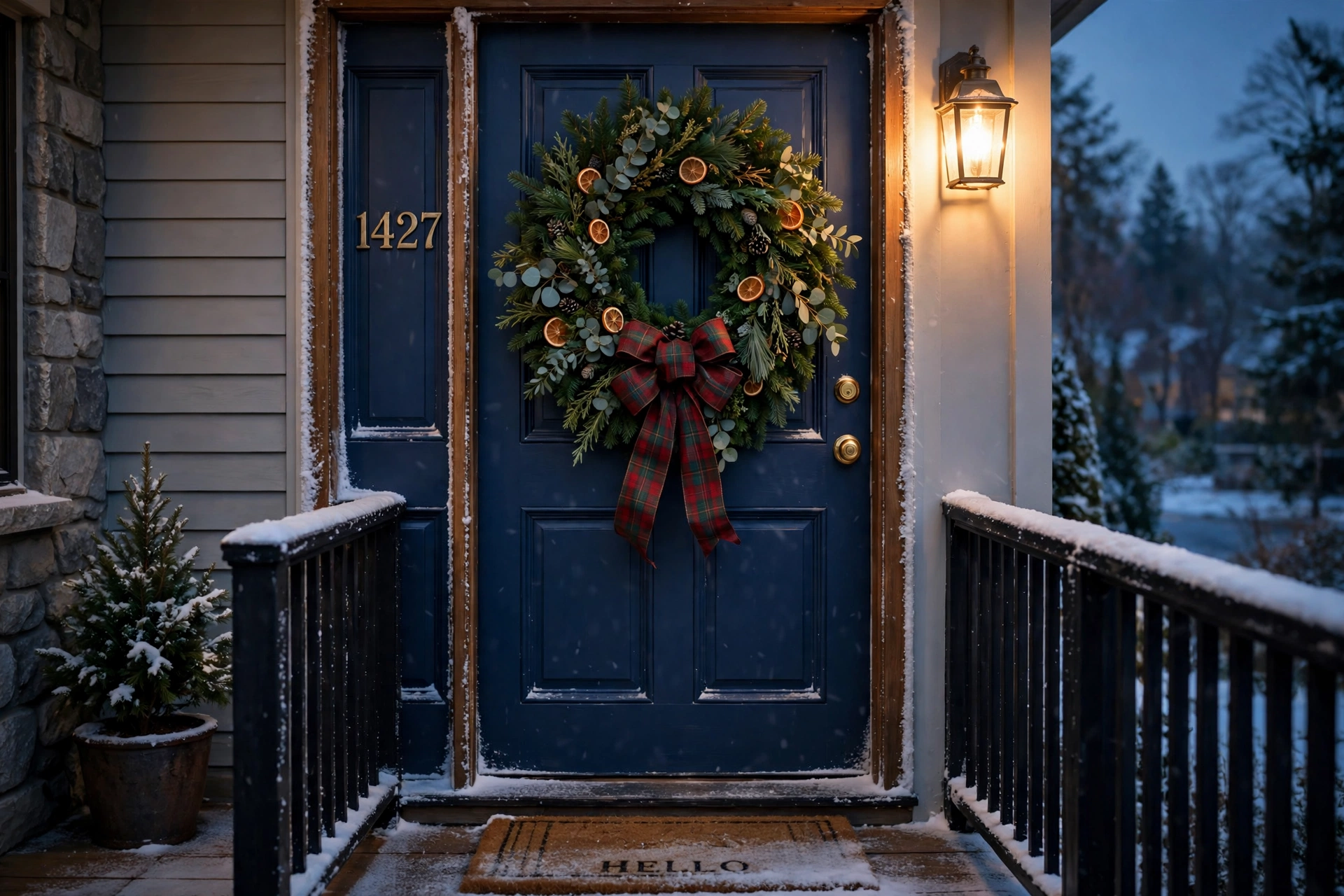
Your front door gets seen before anything else in your home does. Guests see it, neighbors see it walking their dogs, and delivery drivers see it more than they see your living room. A basic pre-lit wreath from the discount aisle does the job, technically, but it rarely makes anyone stop and look twice.
The wreaths that actually get noticed usually do one of two things well: they layer texture instead of relying on a single type of greenery, or they build around one strong focal point, like an oversized bow or a bold ribbon color, instead of scattering five small accents evenly around the ring. Once you see that pattern, it’s much easier to shop for — or build — a wreath that feels like it belongs on a design blog instead of a big-box shelf. Here are 18 ideas to get you there.
Table of Contents
18 Christmas Wreath Ideas for an Unforgettable Front Door
Idea 1: An Oversized Velvet Bow as the Focal Point
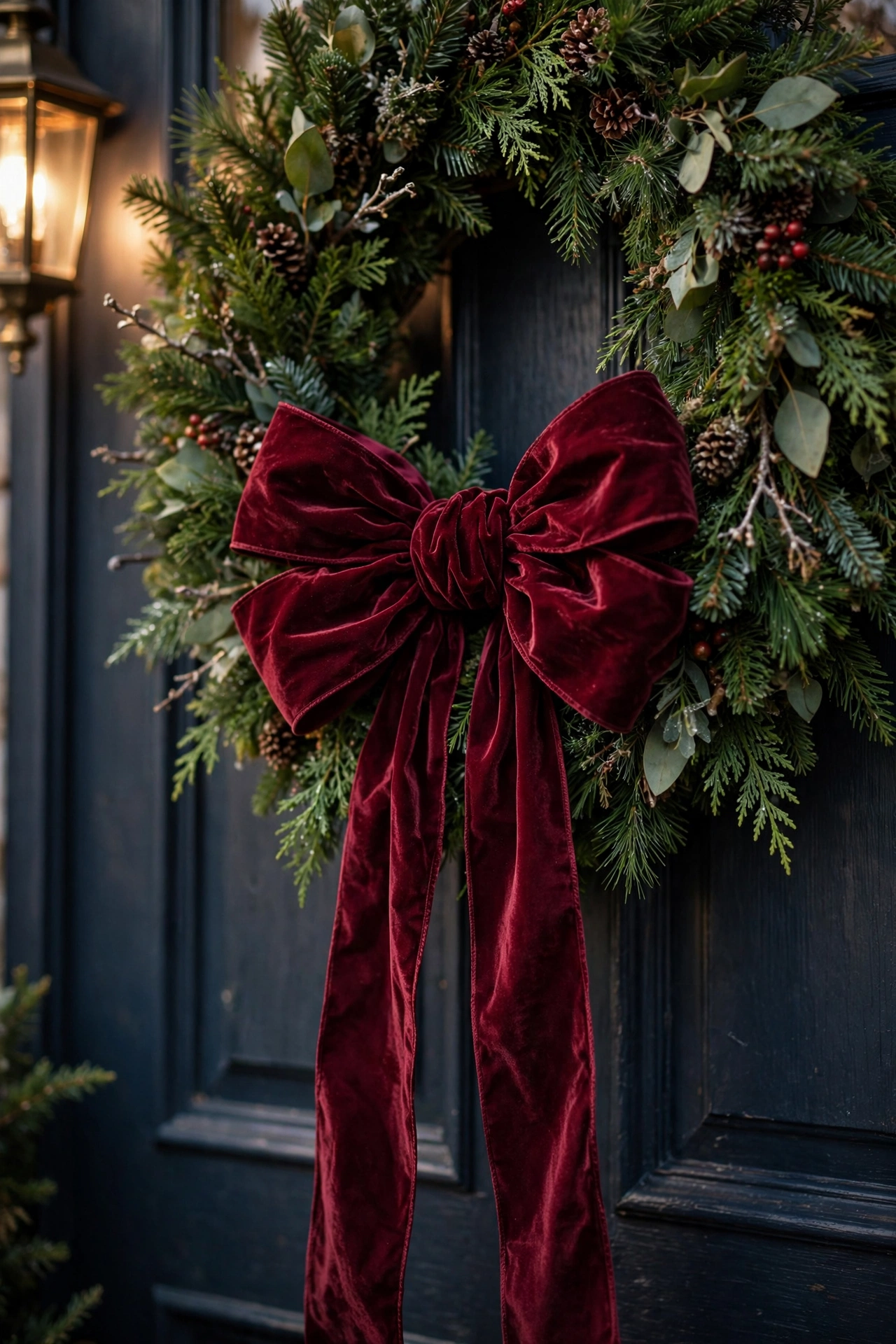
A single, oversized velvet bow tied at the bottom of an otherwise simple evergreen wreath instantly makes the whole design feel intentional rather than store-bought. Choose a deep jewel tone like burgundy, emerald, or oxblood, since velvet’s soft sheen shows up best in saturated colors and photographs beautifully even in low porch light. Let the tails of the bow hang long, past the bottom of the wreath itself, so the proportions feel dramatic instead of timid. This idea works because it gives the eye one clear place to land, which is often what separates a forgettable wreath from a memorable one. It’s also one of the easiest upgrades to make to a wreath you already own — a plain evergreen base can look completely different with just a new, larger bow.
Idea 2: Black Watch Plaid Ribbon Wreath
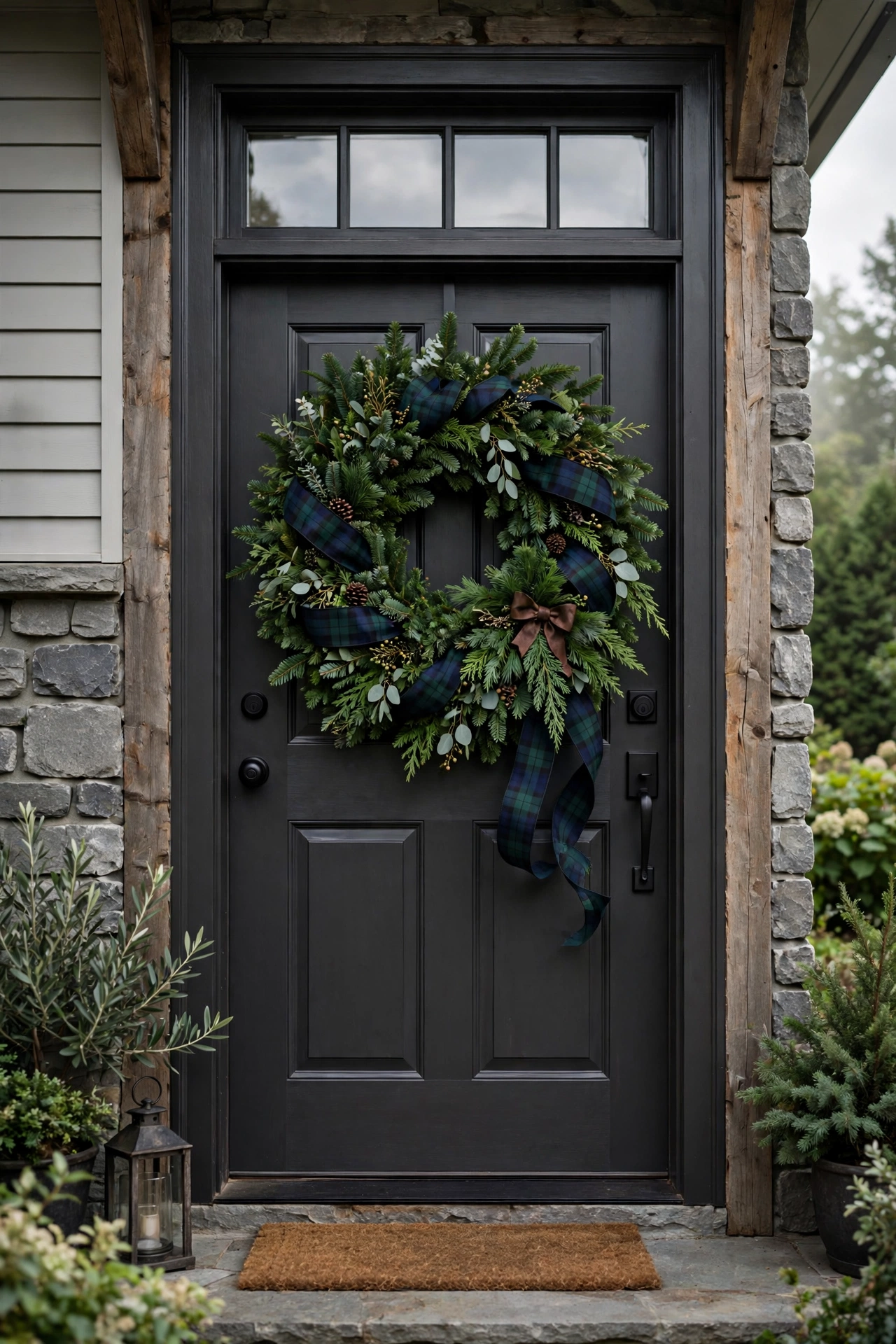
Black watch plaid — a mix of navy, midnight green, and black — has become one of the standout ribbon trends for the season, and it brings a more masculine, moody edge than traditional red plaid. Weave a wide black watch ribbon through a full, dense evergreen wreath, letting some loops sit higher and others lower for a relaxed, woven-through look rather than a stiff, evenly spaced pattern. Pair it with a few leather or faux-leather accent pieces, like a small tag or bow knot, since leather and plaid have been showing up together across holiday decor this year. This combination works especially well on a black, navy, or deep green front door, where the ribbon’s tones blend into the door color instead of fighting it. It’s a strong choice for anyone who wants their wreath to feel current without abandoning a classic evergreen base.
Idea 3: Dried Orange and Cinnamon Bundle Wreath
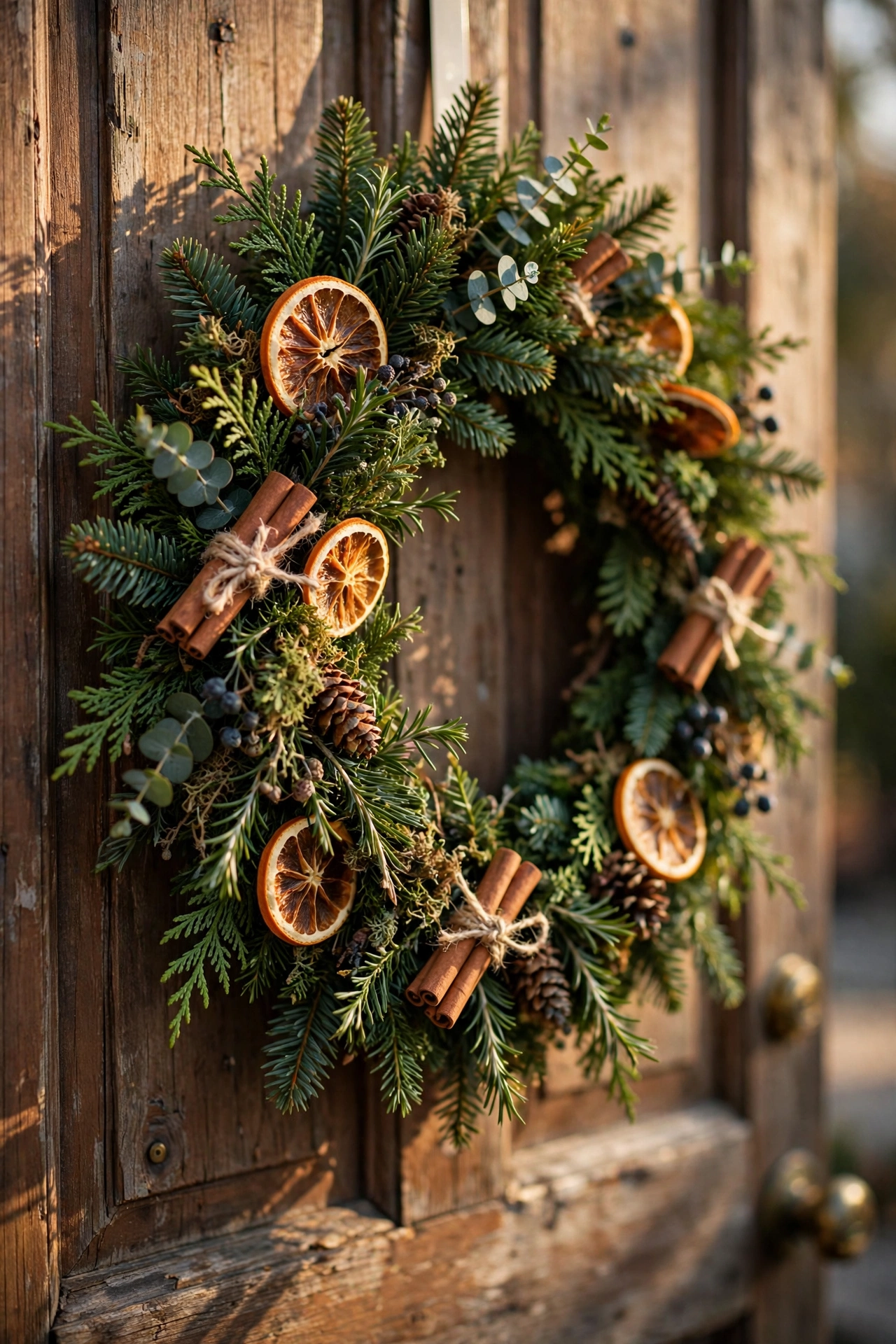
Dried orange slices, tucked between sprigs of evergreen alongside small cinnamon stick bundles, bring a warm, nostalgic feel that reads as homemade even when it’s carefully arranged. Space the orange slices unevenly around the ring rather than in a perfectly symmetrical pattern, which keeps the look feeling gathered and organic instead of manufactured. Tie small bundles of cinnamon sticks with twine or thin jute string and tuck them in the gaps between the orange slices, adding both color and texture without needing any additional ribbon. This is one of the more budget-friendly ideas on this list, since dried orange slices can be made at home in an oven on the lowest setting over a few hours. The scent this combination gives off, even from dried materials, adds a sensory layer that most wreaths don’t offer.
Idea 4: Deep Jewel Tone Layered Wreath
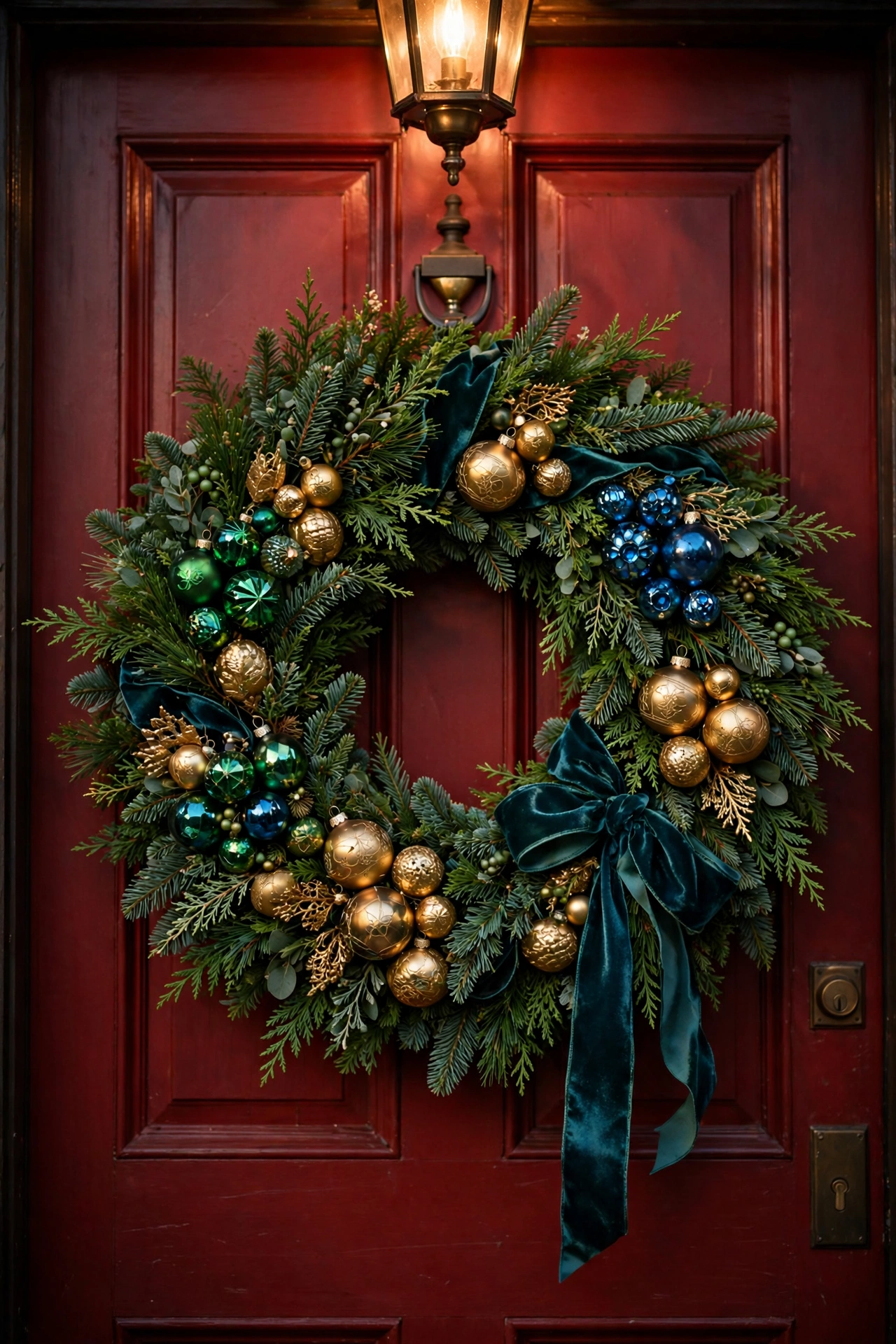
Building a wreath around three or four jewel tones — think emerald, sapphire, amethyst, and antique gold — creates a rich, layered look that feels closer to a piece of art than a seasonal decoration. Use the 60-30-10 approach designers rely on: let evergreen make up the majority of the base, use one jewel tone ribbon as your secondary color, and add small ornament clusters in the remaining tones as accents. Cluster the ornaments in two or three spots around the ring rather than spacing them evenly, which gives the wreath a sense of movement instead of a static, uniform pattern. This idea suits a front door with dark trim or a colored front door, since the jewel tones tend to echo rather than clash with bolder paint colors. It’s also one of the more maximalist ideas here, so it’s best paired with a simpler porch setup rather than a lot of competing decor nearby.
Related: 17 Simple Christmas Front Door Decorations Anyone Can Do
Idea 5: A Classic Boxwood Wreath With a Wreath Sash
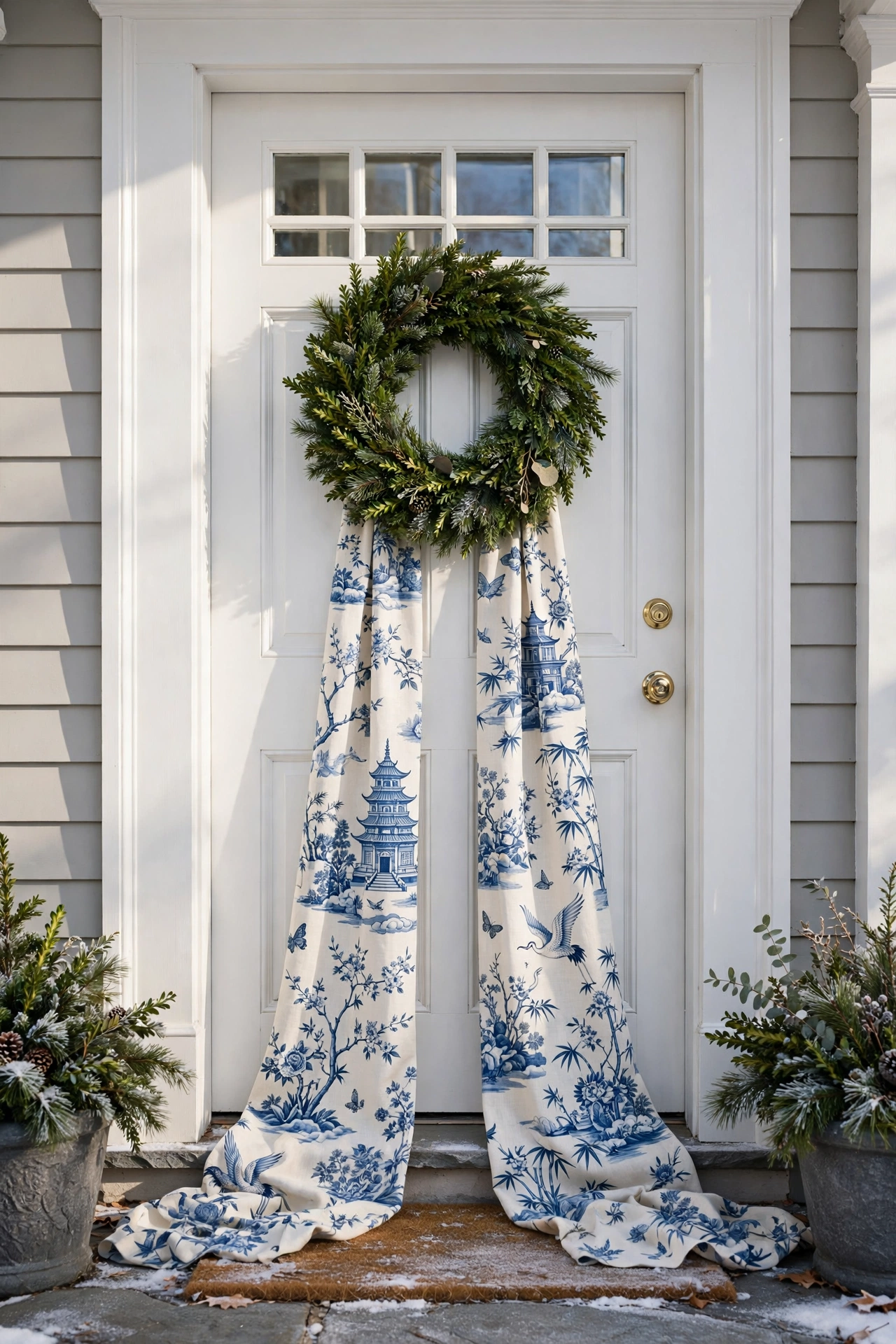
A simple round boxwood wreath, dressed with a fabric wreath sash instead of a traditional bow, gives you a design that can be swapped in minutes for different occasions throughout the season. Choose a sash in a chinoiserie print, a block print pattern, or a plain velvet ribbon with a monogram, and let it drape the full length of the door rather than stopping at the bottom of the wreath. Boxwood holds its shape and deep green color for weeks without drying out or shedding, which makes it a reliable base for a front door that needs to look sharp through several weeks of guests and gatherings. This idea is popular specifically because the sash can be changed out for Thanksgiving, Christmas, and New Year’s without buying a new wreath each time. Keep the boxwood itself untouched and let the sash do all the seasonal storytelling.
Idea 6: Preserved Eucalyptus and Magnolia Wreath
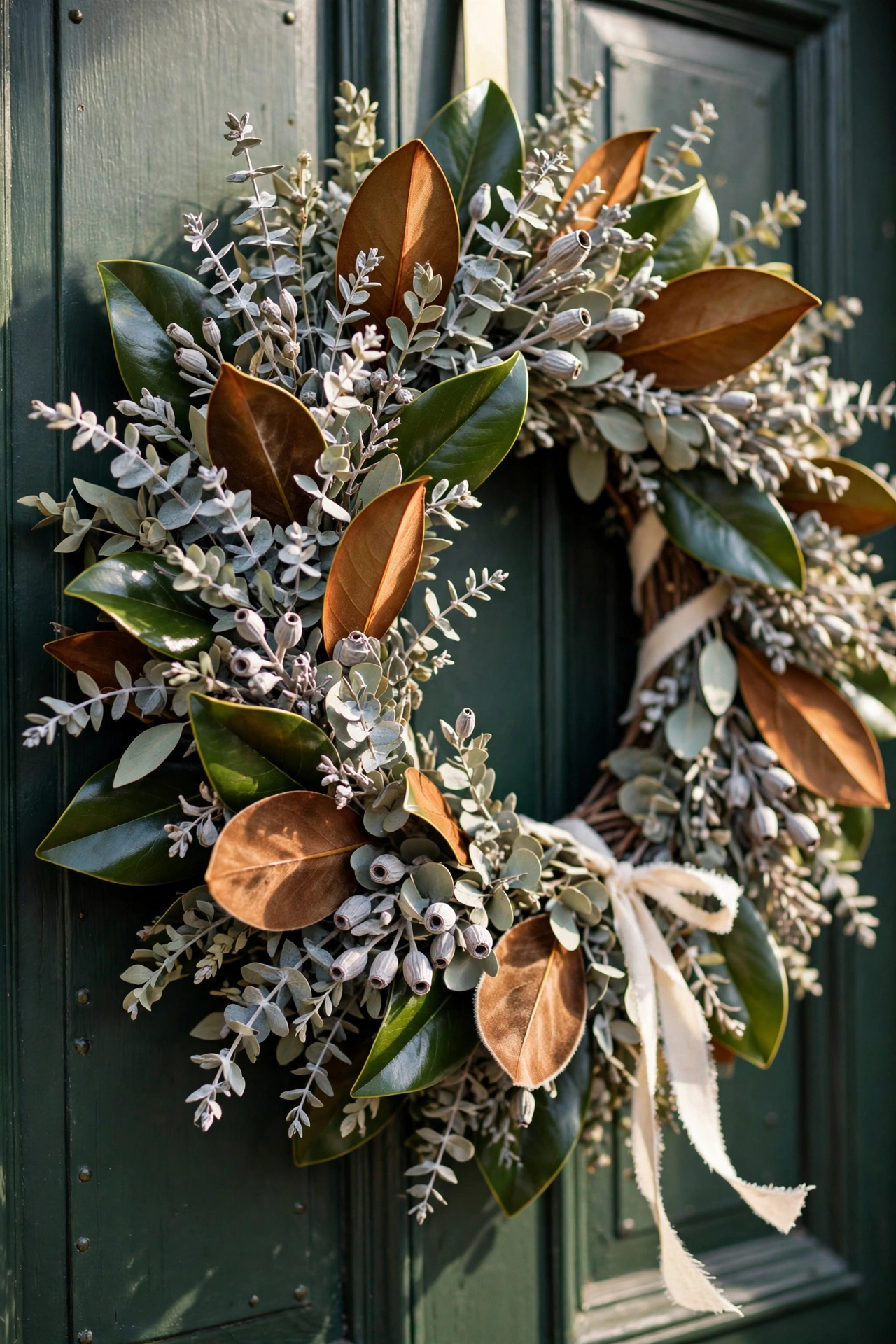
Mixing preserved eucalyptus with fresh or faux magnolia leaves gives a wreath a softer, more organic texture than a wreath made from a single type of greenery. The eucalyptus adds movement with its smaller, silvery-green leaves, while the magnolia’s broad, glossy leaves with their brown-velvet undersides add visual weight and contrast. Let the magnolia leaves sit slightly proud of the eucalyptus rather than tucking everything into one flat plane, since the layered depth is what makes this combination photograph so well. A thin, understated ribbon in cream or brass works better here than a bold color, since the greenery itself is the star of this design. This idea has become a favorite among stylists specifically because it looks elegant without leaning on red, gold, or plaid at all.
Idea 7: Rattan Star Accent Wreath
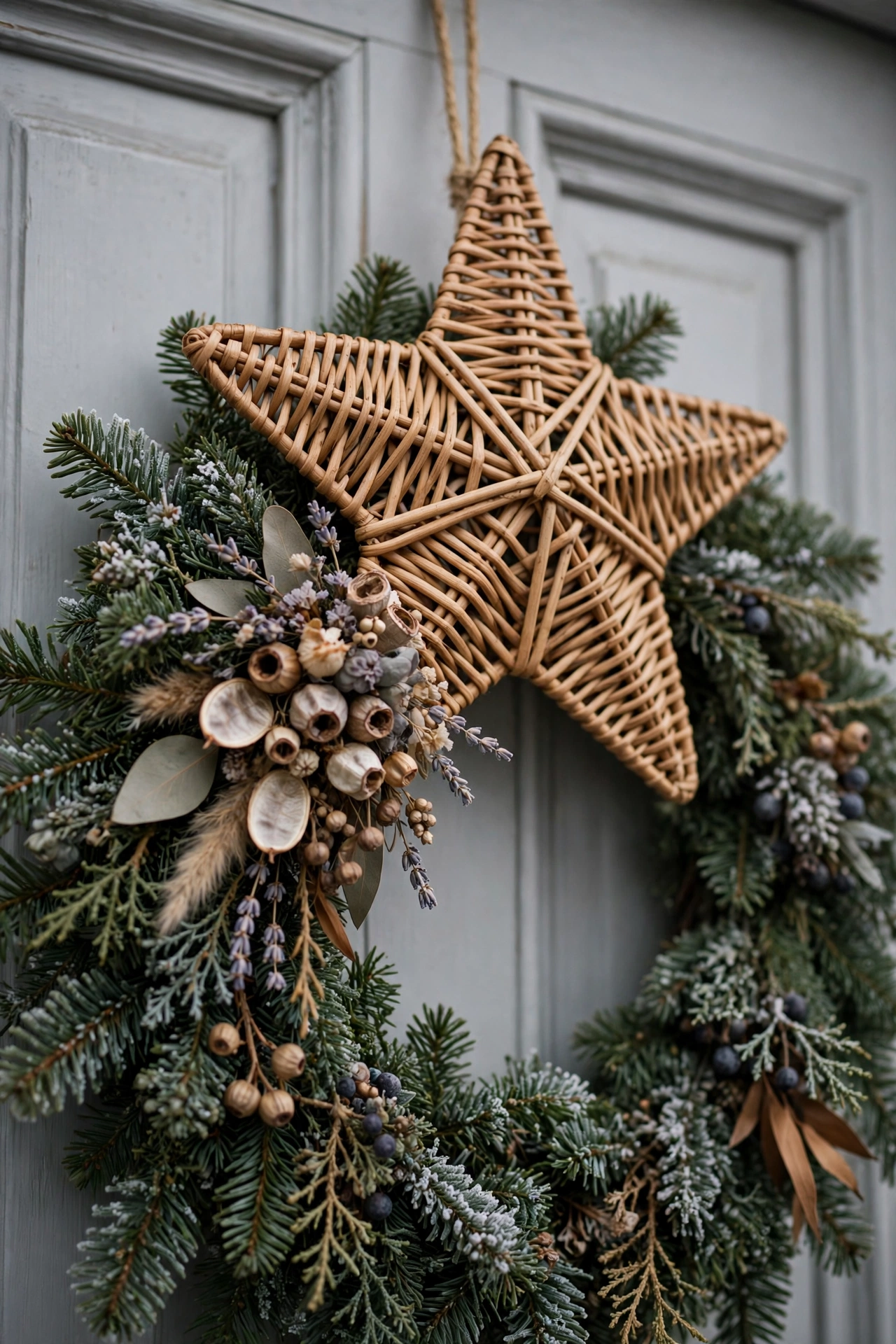
Attaching a woven rattan star or snowflake shape to the top or side of an evergreen wreath adds a natural, textural focal point that isn’t a bow, a ribbon, or an ornament. This is one of the newer wreath trends for the season, and it works particularly well for anyone who wants a nature-forward look without going fully rustic-farmhouse. Position the rattan shape off-center, toward the upper third of the wreath, and let a small cluster of dried florals or pampas grass sit just below it to balance the visual weight. Rattan holds up outdoors far better than fresh materials, so this piece can typically be reused year after year while the surrounding greenery gets swapped or refreshed. Pair this idea with a lighter, more neutral evergreen base rather than a very dark, dense one, so the rattan detail actually stands out.
Idea 8: Wood Bead Garland Wrapped Wreath
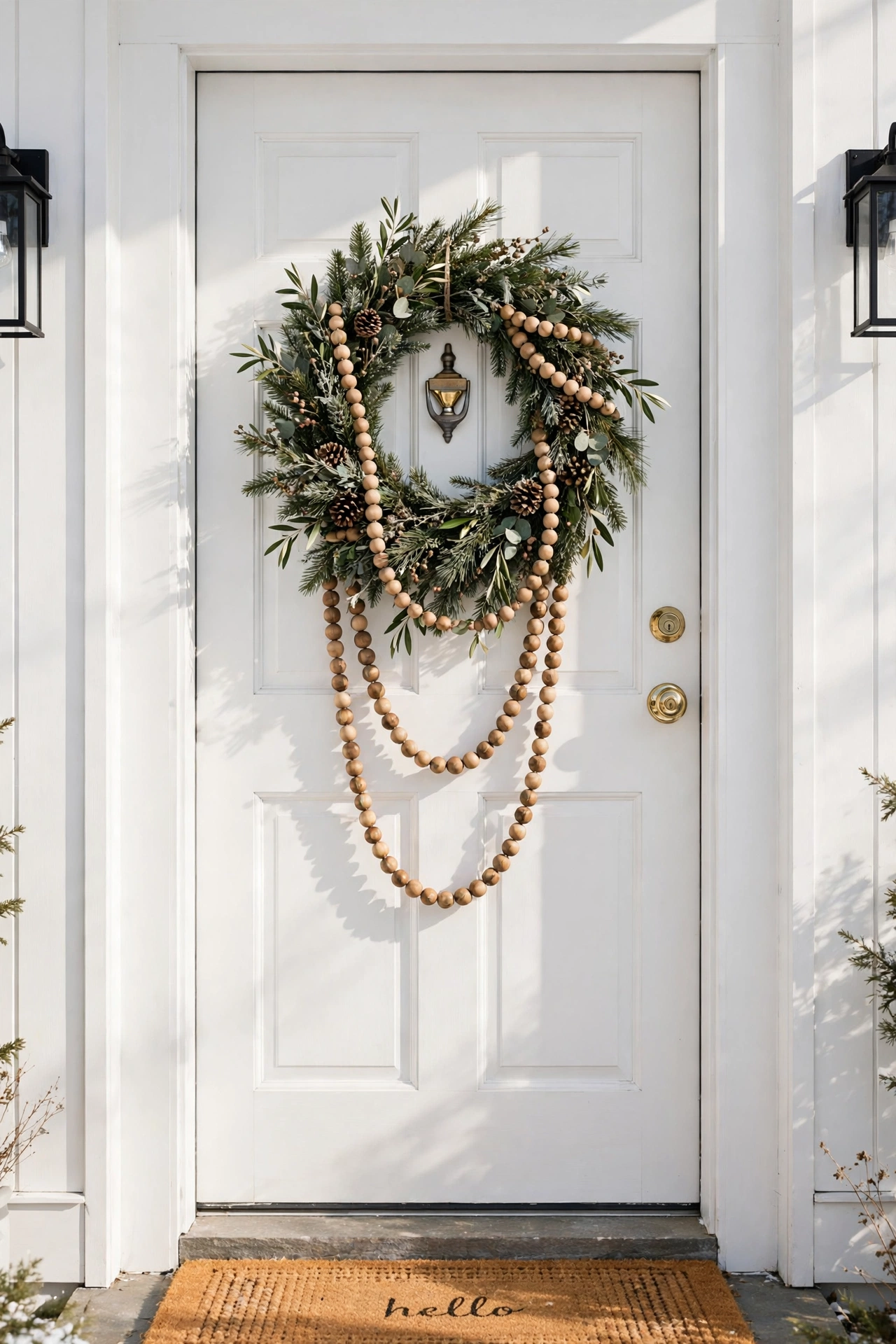
Wrapping a natural wood bead garland around an evergreen wreath, letting a portion of it drape loosely below the ring, brings in warm, neutral texture that works well for a more Scandinavian or modern farmhouse front door. Choose beige or natural-toned wood beads rather than painted ones, since the raw wood tone is what gives this look its calm, understated feel. Wrap the garland loosely rather than tightly, leaving visible gaps of greenery between each pass, so the beads read as an accent rather than covering the wreath entirely. This idea pairs beautifully with a plain white or black front door, where the contrast between the wood tone and the door color does most of the visual work. It’s also a strong choice if you plan to reuse the beads separately on a tree or garland once the holidays wrap up.
Idea 9: Grandmillennial Beaded Fruit Wreath
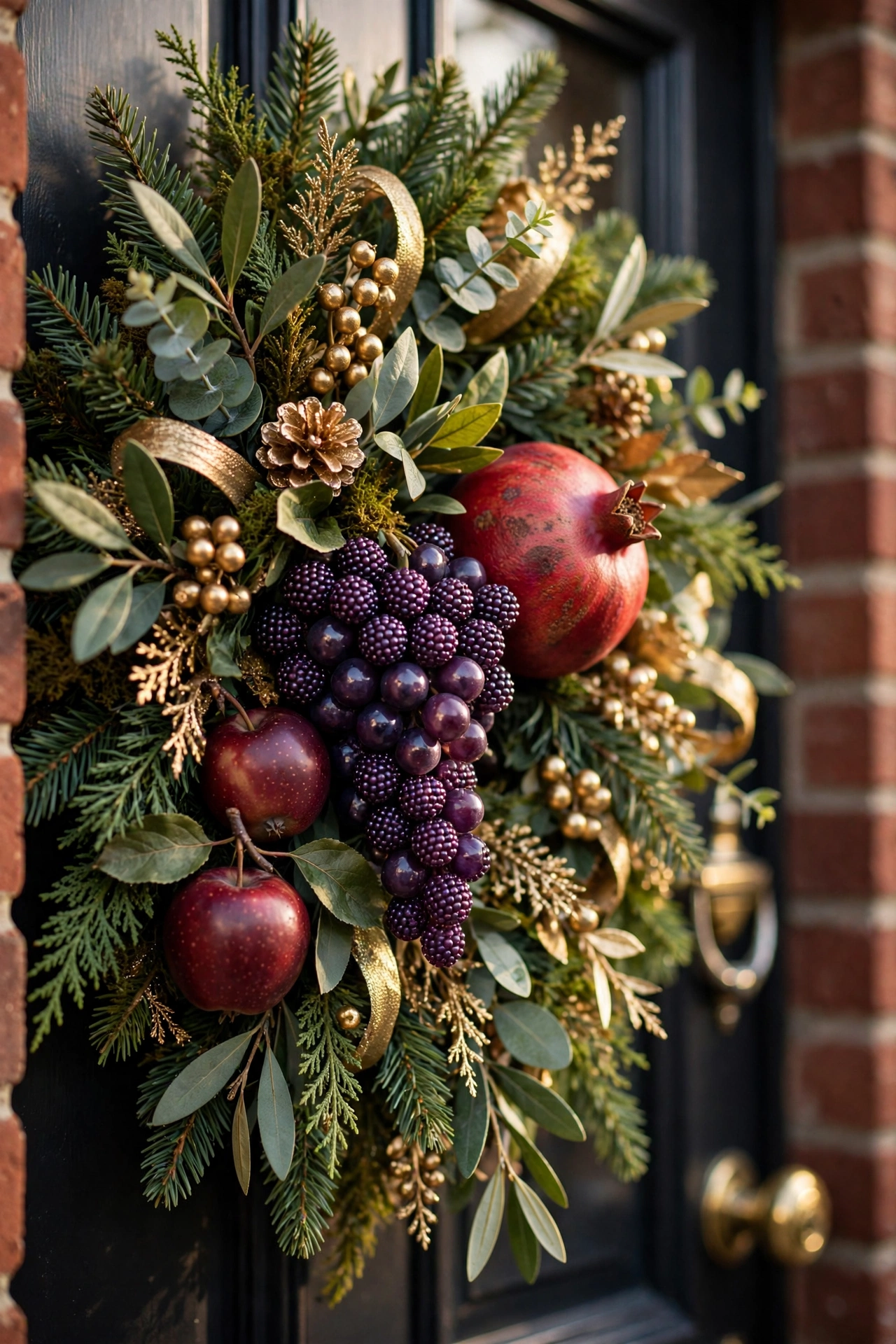
A wreath built around beaded fruit — grapes, pomegranates, and small apples in deep jewel tones — brings back a “collected over generations” look that’s having a real moment again this year. Mix the beaded fruit with real-touch greenery and a few antique gold accents, since the combination of shine and rich color is what gives this style its slightly formal, heirloom feel. Cluster the fruit in two or three groupings rather than spacing pieces evenly, which mimics the way real fruit naturally bunches together on a vine. This idea works especially well on a traditional or colonial-style front door, where the more formal, layered aesthic feels at home with the architecture. People sometimes call this look “grandma style,” but the timeless combination of jewel tones and texture is exactly why it keeps coming back.
Idea 10: A Monochrome All-Black Wreath
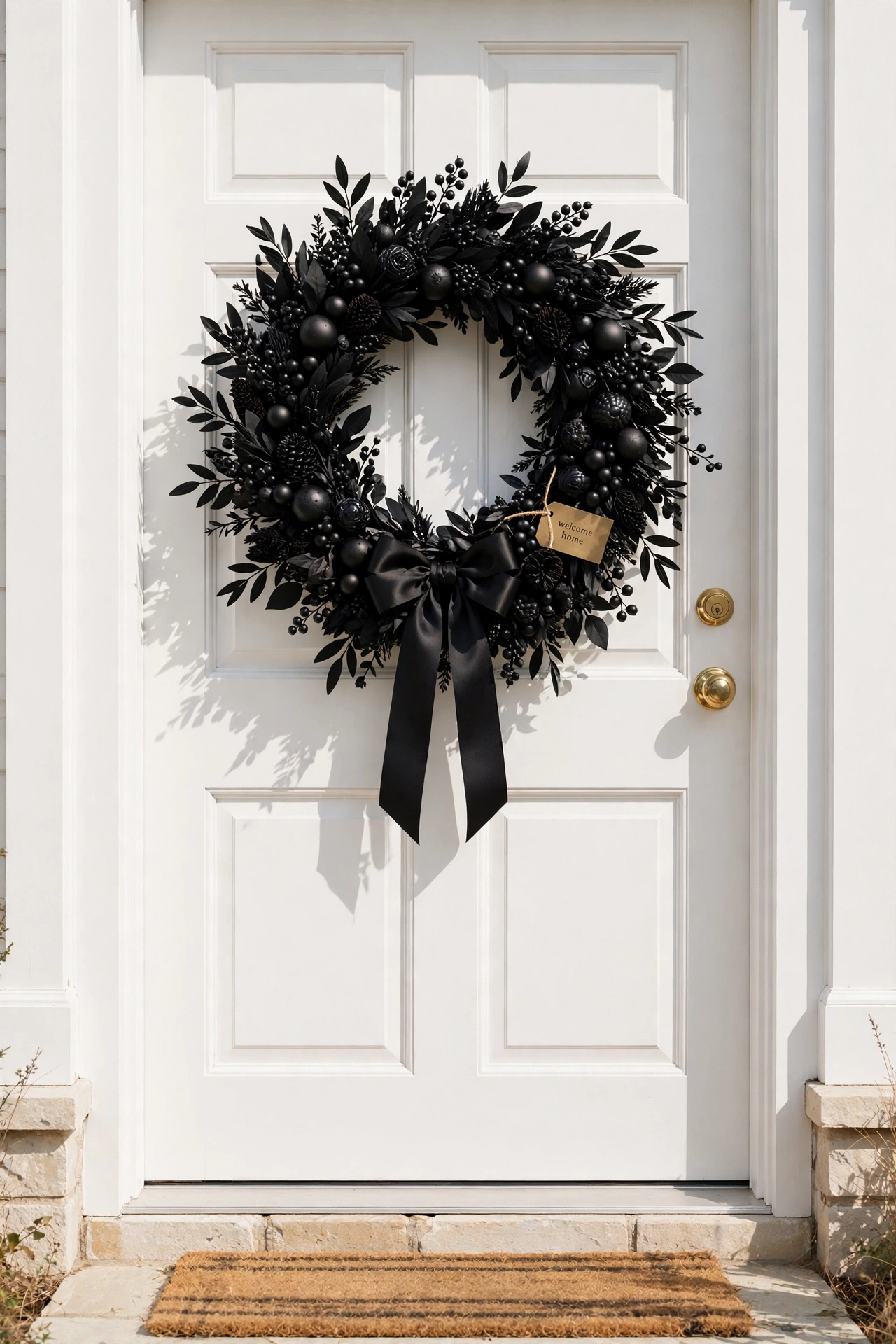
For a front door that leans modern or moody, an all-black wreath — black-painted stems, black ornaments, and a matte black ribbon — makes a bold, unexpected statement that almost nobody else on the block will have. This look works best on a white, cream, or light gray front door, where the contrast makes the wreath’s silhouette the real focal point rather than any single decorative element inside it. Keep the shapes within the wreath simple, like round ornaments and smooth ribbon loops, since black tends to hide texture and detail more than lighter colors do. This idea isn’t for every home, but for a design-forward front door, it reads as confident and current rather than somber. Add one small warm accent, like a brass tag or a single copper ornament, so the design has one point of contrast to keep it from feeling flat.
Related: 18 Unique Modern Front Door Christmas Decoration Ideas
Idea 11: Snow-Flocked Winter Woodland Wreath
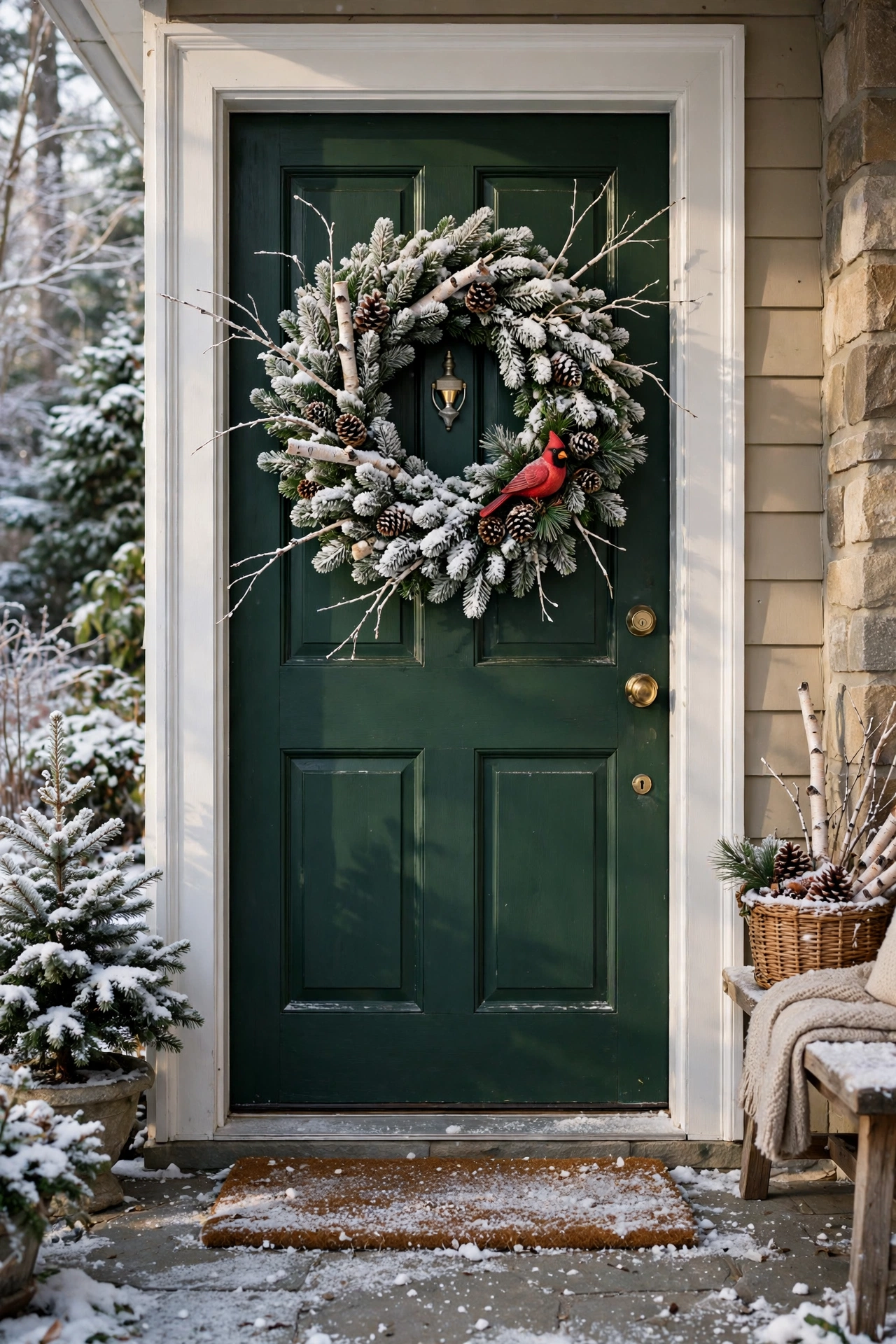
A flocked wreath, dusted to look like it’s been lightly touched by snow, brings a winter-wonderland feel that works even in climates that never actually see snow. Add small pinecones, faux birch branches, and a woodland creature ornament or two, like a small cardinal or owl, tucked into the flocked greenery for a storybook quality. Keep the color palette to white, silver, and natural wood tones so the flocking reads as intentional styling rather than an accident of the manufacturing process. This idea works particularly well for wreaths that stay up through the full winter season, since it doesn’t lean on any specifically “Christmas” colors like red or gold. Hang it on a deep green, navy, or red front door for the strongest contrast against the white flocking.
Idea 12: Coastal Blue and White Wreath

For a home that leans coastal year-round, a wreath built in dusty blue and white — using hydrangea-style blooms, faux cotton stems, and a soft blue ribbon — brings in the holiday season without abandoning that airy, beachy foundation. Choose a denim or dusty blue tone rather than a bright baby blue, since the deeper shade reads as more sophisticated and holiday-appropriate. Mix in a few sprigs of white pine or frosted greenery for texture, keeping the overall palette light and soft rather than deep and saturated like a traditional red-and-green wreath. This idea works especially well on a light blue, white, or soft gray front door, where the tonal wreath blends into the architecture rather than standing in contrast to it. It’s a good option for anyone who wants to acknowledge Christmas without their front door looking dramatically different from the rest of the year.
Idea 13: Vintage Sled and Skates Wreath

Attaching a small vintage-style wooden sled or a pair of ice skates to the center or side of an evergreen wreath turns the design into more of a scene than a simple greenery ring. This idea leans heavily into nostalgia, evoking old postcards and classic holiday movies, which is part of why it’s remained a favorite pairing for wreaths that want to feel more like a moment than a decoration. Choose weathered or distressed wood and skates in a worn leather tone rather than anything glossy or new-looking, since the slightly aged finish is what sells the vintage feel. Tuck small bottlebrush trees or a mini village building near the sled for an even more layered, storybook effect if you want to take the theme further. This idea works particularly well for farmhouse or traditional front doors, where the handcrafted, collected look fits naturally with the rest of the home’s style.
Idea 14: Personalized Monogram Wreath
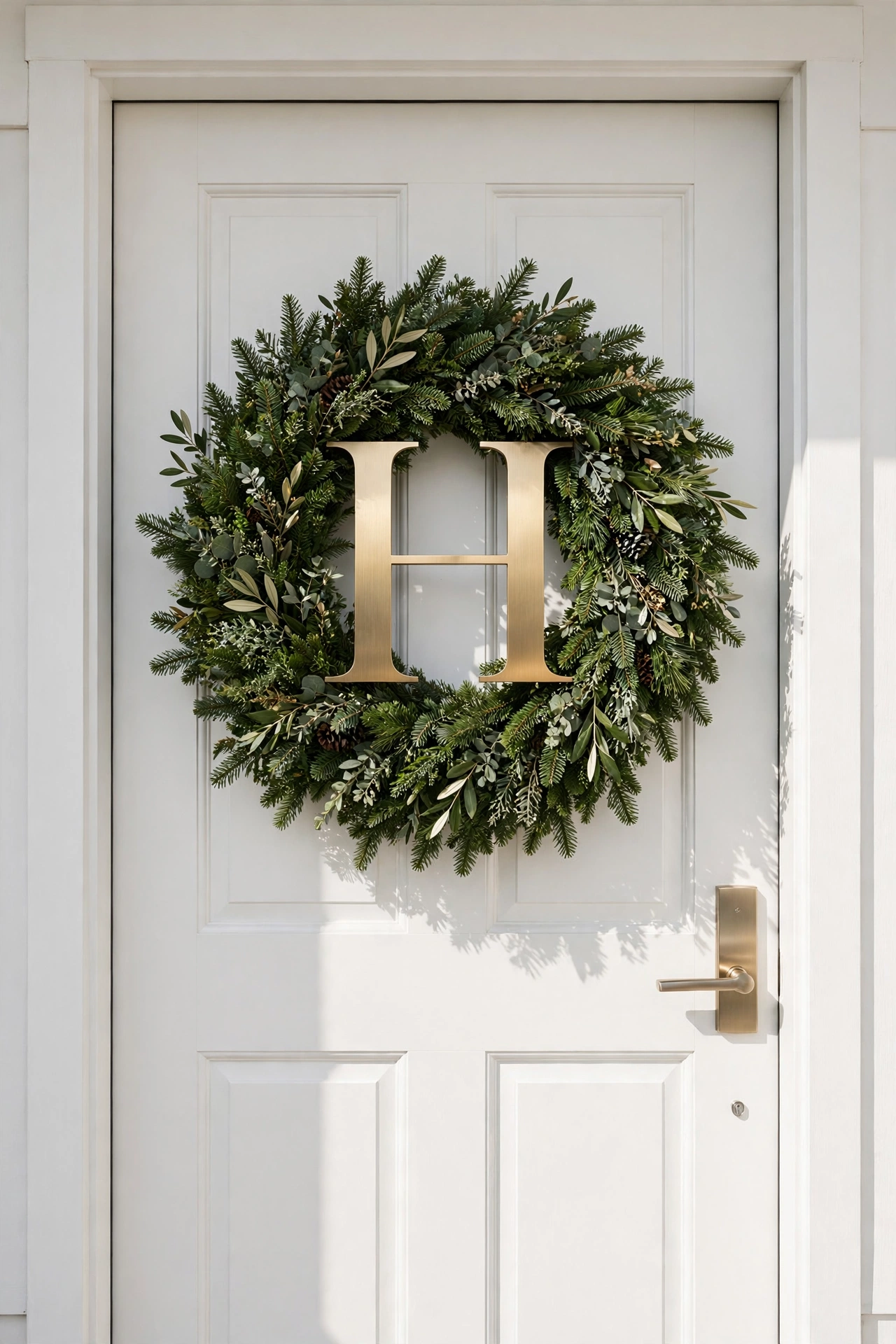
A wreath built around a single large initial or monogram, set against a simple greenery base, gives your front door a personal touch that a generic wreath can’t offer. Choose a monogram material that fits your home’s style — a brushed brass letter for a more modern door, a carved wood letter for farmhouse, or a flocked and glittered letter for a more traditional look. Keep the surrounding greenery simple and evenly full so the monogram remains the clear focal point rather than competing with a lot of additional ornaments or ribbon. This idea is especially popular for young families and newer homeowners who want their front door to feel distinctly theirs rather than something anyone else on the street could also be hanging. A monogram wreath also tends to make a meaningful, easy-to-personalize gift if you’re making one for someone else’s front door.
Idea 15: Layered Mixed-Greenery Wreath
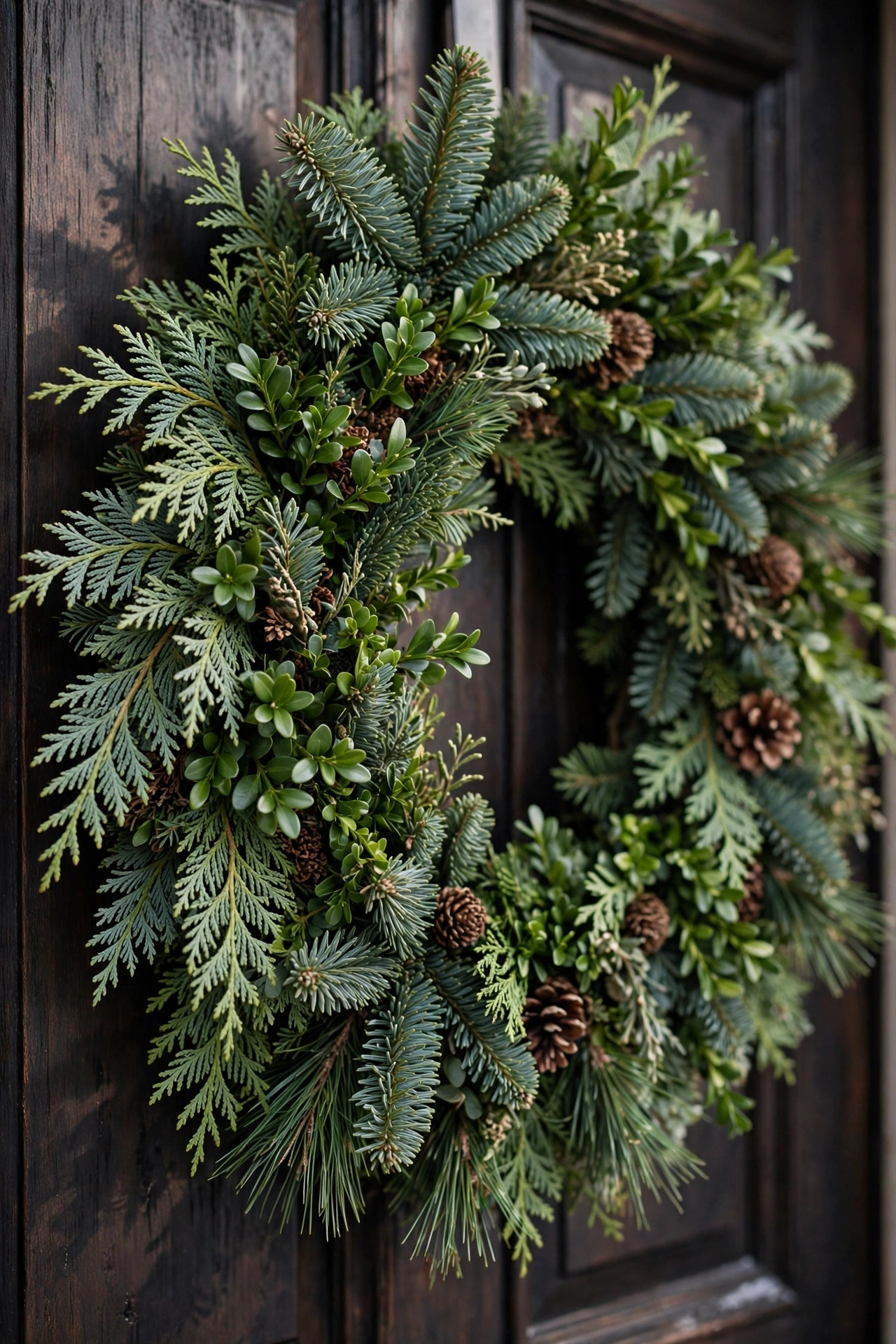
Combining three or four different types of greenery — cedar, noble fir, boxwood, and pine — in one wreath creates depth and texture that a single-greenery wreath simply can’t match. Each variety has a slightly different shade of green, needle shape, and growth pattern, and layering them together gives the wreath a fuller, more natural silhouette than a uniform base. Let the different textures show rather than trimming everything into one flat, even shape, since the varied lengths and directions are what make this style feel gathered rather than manufactured. A simple, understated ribbon or no ribbon at all works best here, since the mixed greenery itself carries the design. This idea tends to be the longest-lasting of all the fresh-greenery options, since a blend of hardier varieties like cedar and boxwood holds up better through weeks of exposure than a single softer greenery would on its own.
Idea 16: Warm Brass and Burnt Orange Wreath
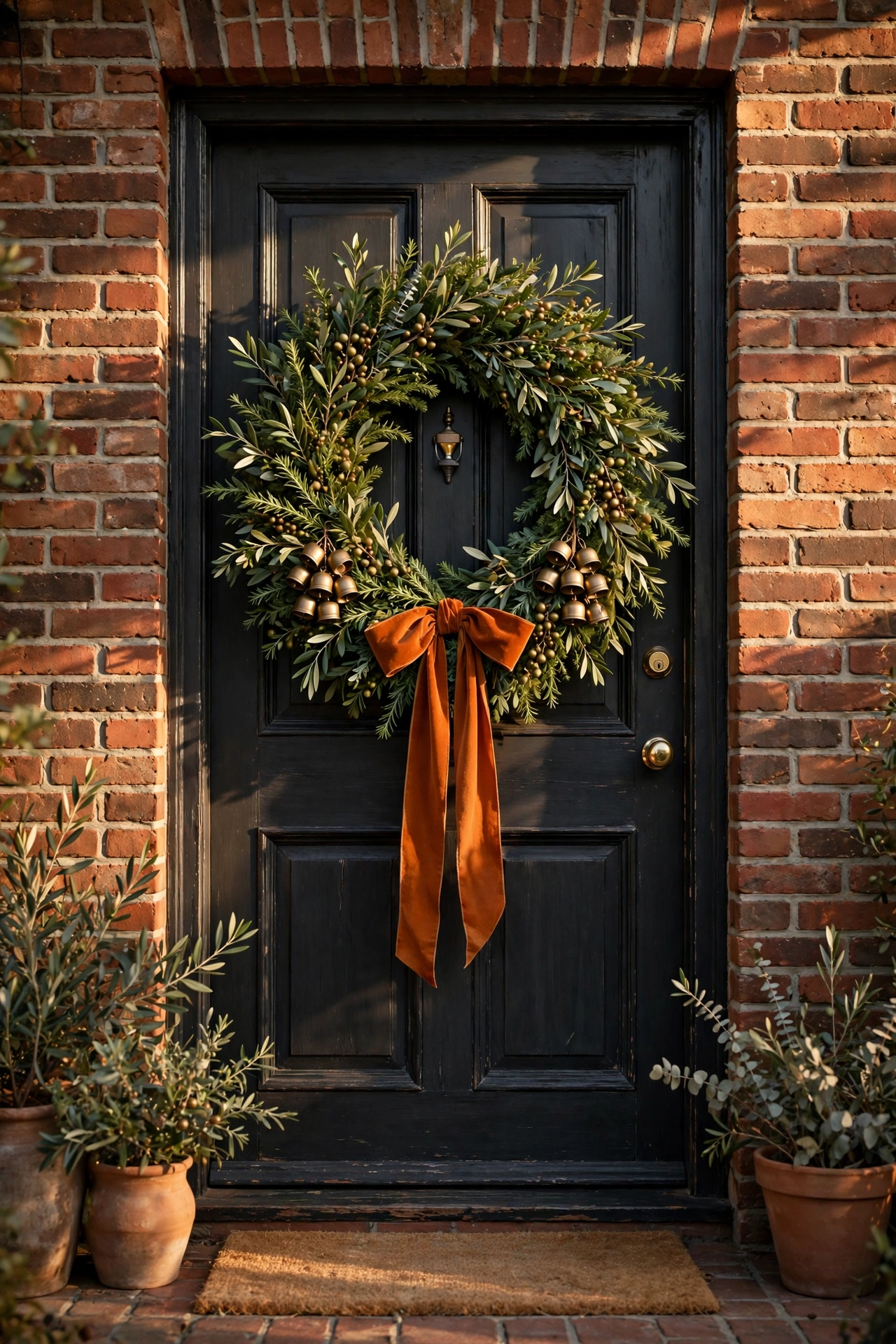
Pairing burnt orange ribbon and dried elements with warm brass ornaments creates a wreath that bridges fall and Christmas, which works well for anyone who wants their front door to transition smoothly from autumn into the holiday season. Use a wide burnt orange or rust-toned velvet ribbon as the base color, then add small brass bell or star ornaments in two or three spots around the ring for warmth and shine. This combination avoids traditional red and green entirely, which makes it a strong option for a front door with warm-toned brick, wood, or terracotta elements that a classic Christmas palette might clash with. Keep the greenery itself a warmer, more olive-toned green rather than a cool blue-green, so the whole design feels cohesive rather than mismatched. This is a great pick for anyone decorating a rental or a home they don’t want to feel dramatically different once December ends.
Idea 17: Nutcracker-Inspired Wreath
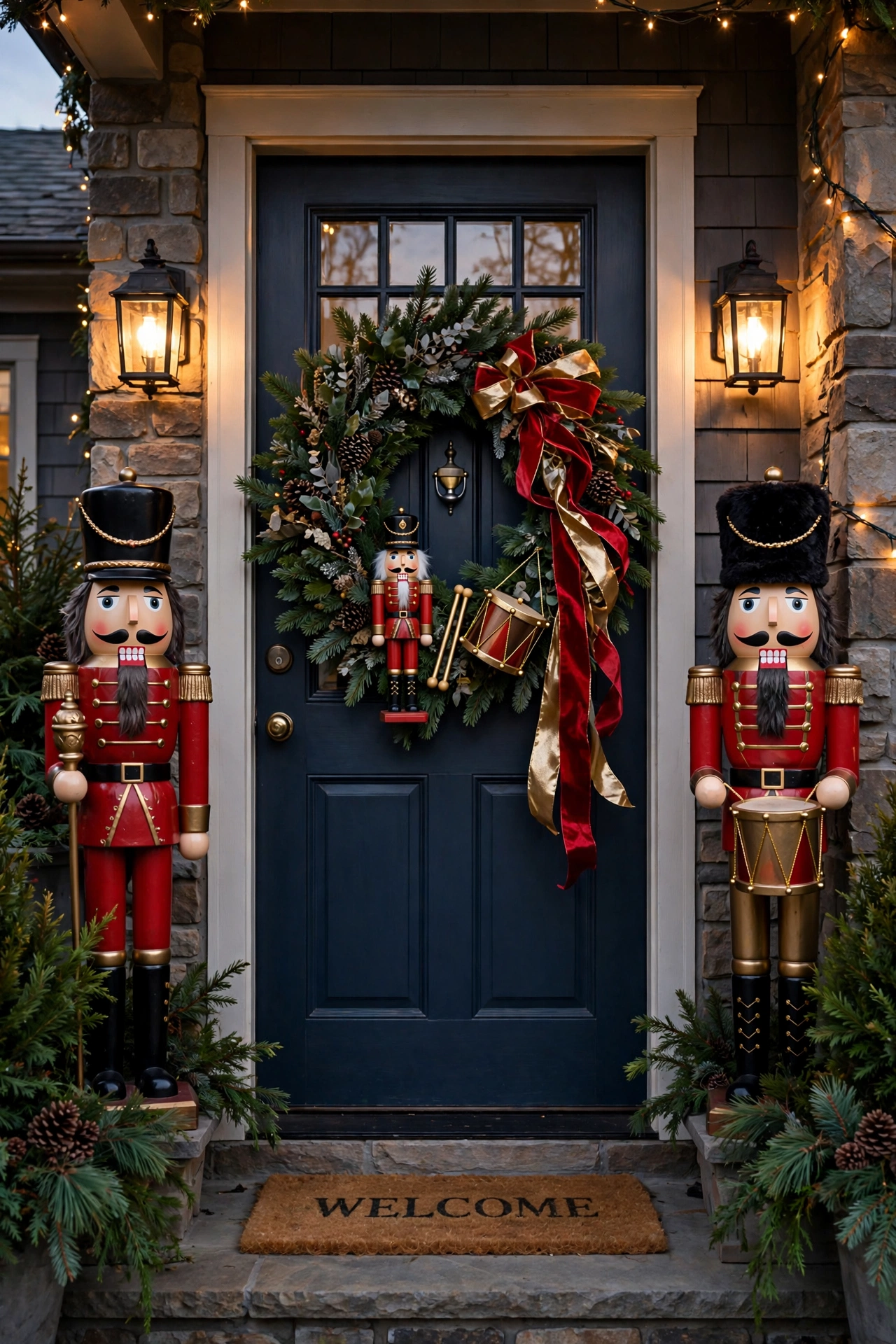
Adding a small nutcracker figure, or nutcracker-themed accents like a tiny drum or hat ornament, to an evergreen wreath brings in a playful, classic holiday character without needing an entire nutcracker display on the porch. Attach the figure toward the bottom or side of the wreath rather than dead center, so it reads as an accent within the design instead of the sole focus. Pair it with a red and gold color scheme, since that combination echoes the traditional nutcracker costume and keeps the whole look cohesive. This idea works especially well for households with kids, since the nutcracker theme tends to be an instant, recognizable favorite for younger visitors and trick-or-treat-style holiday walks through the neighborhood. It also pairs naturally with a matching pair of oversized nutcracker statues flanking the front door, if you want to build the theme out further.
Idea 18: Mirror and Ornament Sparkle Wreath
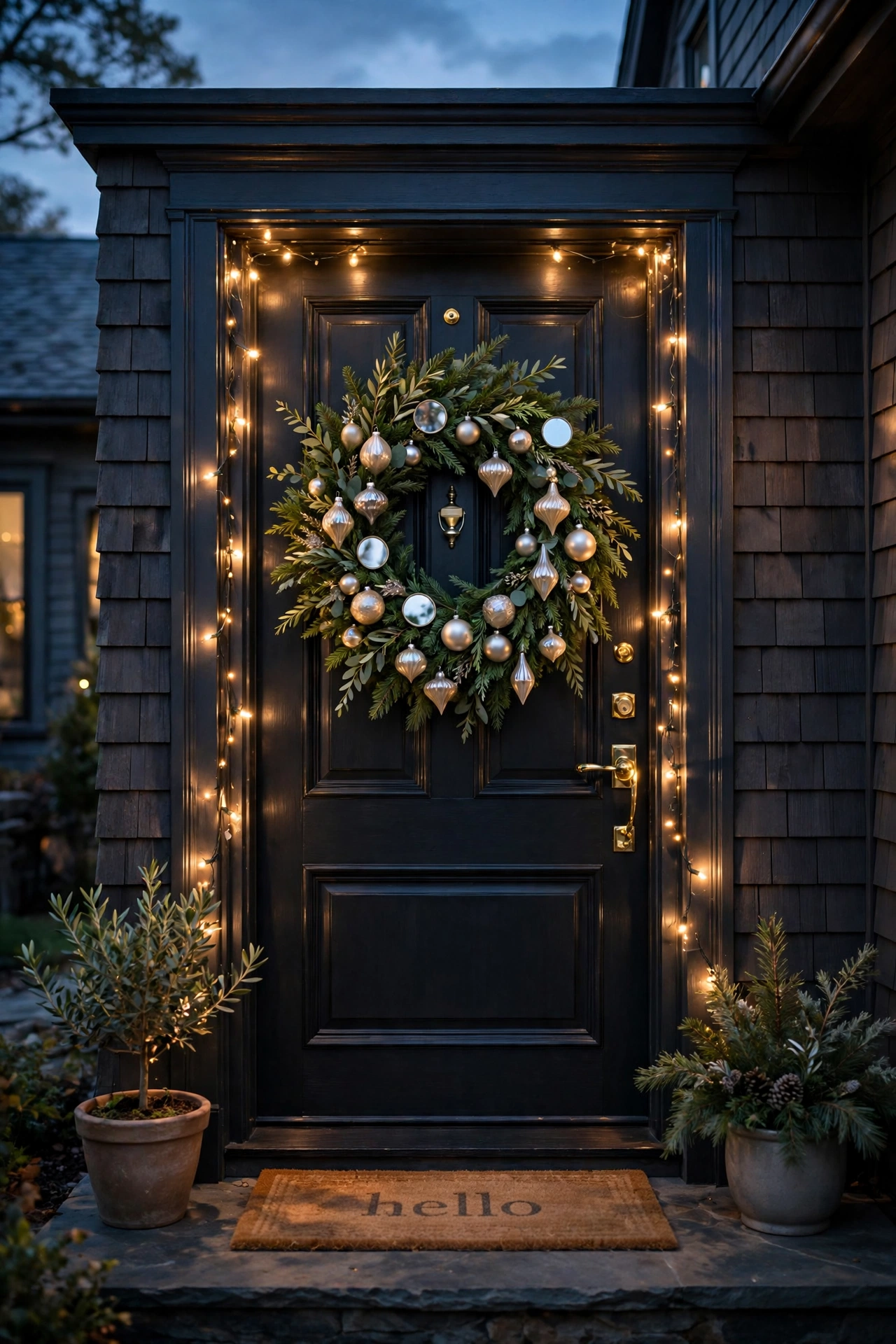
Small round mirrors, tucked between ornaments and greenery, reflect porch light and nearby string lights, giving the wreath a soft glimmer that catches the eye even from the street. Mix in a few glass ball ornaments in silver and champagne tones alongside the mirrors, so the shine feels layered rather than coming from a single flat source. Position the mirrors at slightly different angles rather than all facing forward, which creates a more natural, scattered sparkle instead of one uniform reflection. This idea works especially well if your porch already has string lights or a lantern nearby, since the mirrors will pick up and multiply that existing light source after dark. It’s a strong choice for anyone who wants a wreath that looks just as good, if not better, once the sun goes down.
Related: 18 DIY Fresh Christmas Wreath Ideas Worth the Effort
General Styling Tips
- Give the wreath one clear focal point. A bow, a monogram, or a cluster of fruit works better than five small accents spread evenly around the ring.
- Layer at least two textures. Smooth ribbon against rough dried orange, or shiny ornaments against matte greenery, is what makes a wreath feel designed instead of assembled.
- Let the wreath breathe. A few visible gaps in the greenery, where you can see the wire frame or base, actually reads as more natural than a perfectly dense, uniform surface.
- Match the wreath’s undertone to your door color. Warm greenery and brass suit warm-toned doors, while cool blue-greens and silver suit cooler tones like navy or gray.
- Consider how it looks at night. Porch lighting changes how colors and textures read, so check your wreath after dark before deciding it’s finished.
Practical Implementation Ideas
- Start with a full, dense base wreath — real or faux — and add your statement piece second, whether that’s a bow, monogram, or dried fruit cluster.
- Use a wreath hanger that sits over the top of the door rather than a nail, so you can change wreaths through the season without new holes in your door or frame.
- Build seasonal versatility into the wreath itself, like the boxwood-and-sash idea, if you want to reuse the base through Thanksgiving, Christmas, and New Year’s.
- Take a photo of your finished wreath in daylight and again at night, since this is the easiest way to catch an area that looks sparse from the street.
- If you’re combining fresh and faux elements, place fresh pieces like dried orange slices toward the front where they’ll be most visible, since faux greenery in the back holds its shape longer.
Common Mistakes to Avoid
- Centering every accent perfectly and evenly. This tends to look more like a craft-store display than a curated design; asymmetry and clustering usually look more intentional.
- Choosing a ribbon or bow that’s too small for the wreath’s overall size, which makes the whole design look underwhelming from the street.
- Mixing too many competing themes at once, like nutcrackers, mirrors, and beaded fruit all on one wreath, which can start to feel busy instead of cohesive.
- Ignoring the front door’s own color. A wreath that clashes with the door instead of complementing it will fight for attention instead of working with the space.
- Hanging a wreath too high or too low on the door. Centering it vertically, or placing it just above the door’s own centerline, usually looks the most balanced.
Small-Space Alternatives
For a narrow front door or a smaller porch, scale down to a 16 to 18-inch wreath rather than the oversized 24-inch-plus styles that suit wider entries. Choose one focal accent instead of several, like a single bow or one monogram letter, since a smaller wreath doesn’t have the visual room for multiple competing elements. A flatter, less dimensional wreath style also works well in tight entryways where a bulkier, layered wreath might brush against the door frame or a nearby storm door.
Budget-Friendly Alternatives
Dried orange slices, cinnamon bundles, and pinecones can all be made or gathered at home for a fraction of what a fully decorated designer wreath costs. A plain evergreen wreath from a local tree farm or hardware store, dressed up with a single ribbon you already own, can look every bit as intentional as a much pricier version. Secondhand and thrift stores are also a reliable source for vintage ornaments, small figurines, and ribbon that can be added to a basic base wreath for a fraction of retail pricing. Reusing a wreath frame year after year and simply changing the greenery, ribbon, or accents is one of the most cost-effective ways to keep your front door feeling current every season.
Pro Styling Recommendations
Professional wreath designers tend to build in layers, starting with a full greenery base, then adding a “hero” element like a bow or monogram, then finishing with two or three smaller accents that echo the hero element’s color or material. This structure keeps even a maximalist, jewel-toned wreath from feeling chaotic, because every piece is doing a job rather than existing on its own. It’s also worth stepping back about ten feet from the door after hanging a wreath, since details that look great up close, like small mirrors or delicate dried florals, can disappear entirely from normal street viewing distance if they’re too subtle or too small for the wreath’s overall scale.
FAQs
Conclusion
A front door wreath is one of the smallest decorating decisions you’ll make all season, and one of the most visible. The ones that get remembered aren’t necessarily the most expensive or the most elaborate — they’re the ones with a clear point of view, whether that’s a single oversized bow, a moody plaid ribbon, or a cluster of dried oranges tucked into fresh greenery. Pick the idea from this list that matches your door’s color and your home’s personality, build it in layers, and let it stay a little imperfect. That’s usually what makes a wreath feel like it belongs there instead of just hanging there.