21 Easy Thanksgiving Charcuterie Board Ideas Guests Will Love
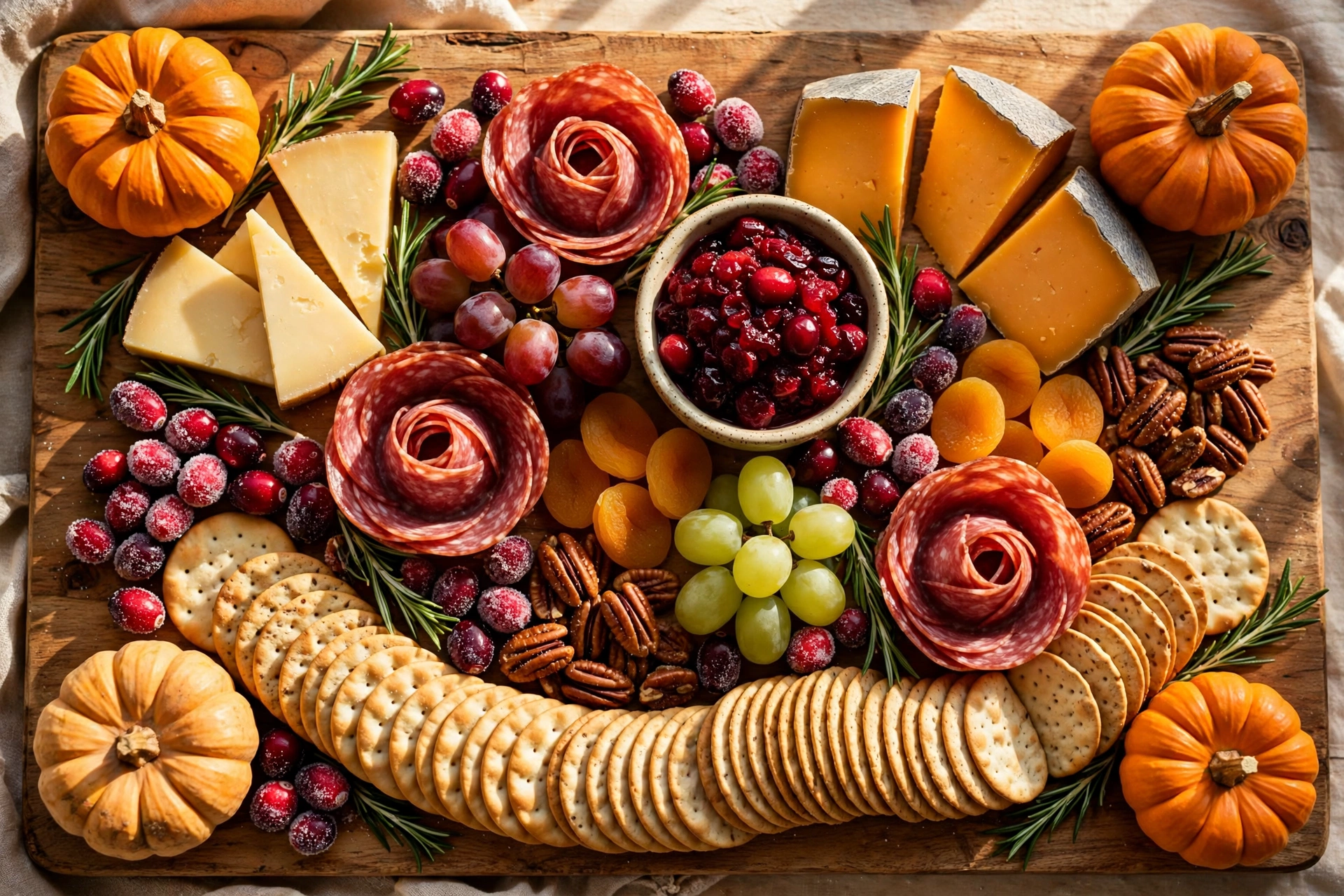
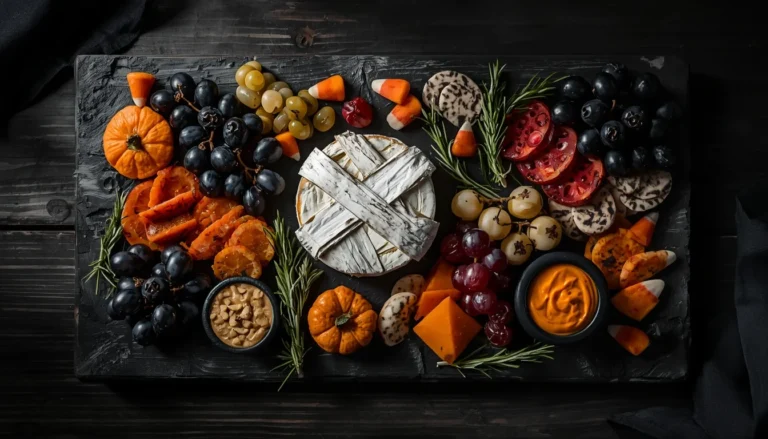
The turkey gets the spotlight, but the charcuterie board is what your guests actually descend on the second they walk through the door. It’s the thing people are still picking at an hour later, the thing someone photographs before dinner even starts, the thing that makes hosting feel less like a countdown and more like a party.
If you’ve been scrolling Pinterest for a Thanksgiving spread that looks effortless and still tastes incredible, you’re in the right place. Below are 21 easy Thanksgiving charcuterie board ideas, built from what actually works — shape techniques like turkey rosettes and cornucopia spreads, seasonal flavor pairings, and the make-ahead logistics that matter when you’re also cooking an entire turkey dinner. Every idea includes the “why it works” behind it, plus a matching image so you know exactly what you’re building toward.
Table of Contents
21 Easy Thanksgiving Charcuterie Board Ideas
1. Classic Harvest Board With Three Salamis & Farmhouse Cheddar
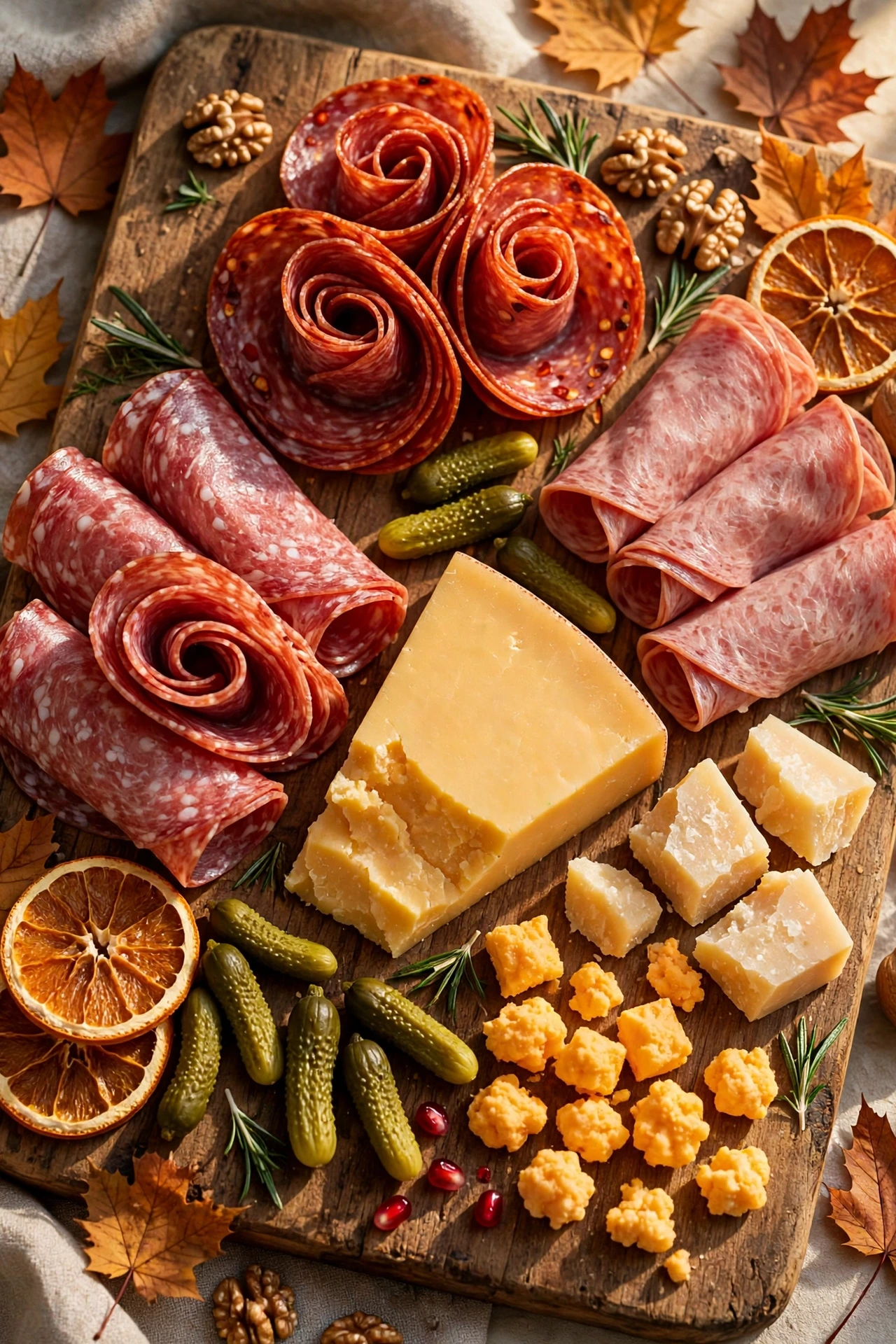
Build your base board with three different cured salamis — Sopressata, Calabrese, and Genoa are the classic trio — paired with a sharp farmhouse cheddar, a wedge of Parmesan, and a handful of cheddar cheese curds for texture variety. Offering three distinct salami styles rather than just one gives guests an actual tasting experience instead of a single repeated flavor, and it’s the same technique professional charcuterie stylists use to keep a board from feeling one-note. Fill in the gaps with cornichons or pickled onions for acidity, since cured meat and cheese both need something sharp to cut the richness. Arrange the meats first in loose folds or ribbons, then tuck the cheeses into the remaining space so nothing sits in a flat, repetitive row. This board is the reliable, no-fuss foundation nearly every other idea on this list builds from.
2. Turkey-Shaped Charcuterie Board
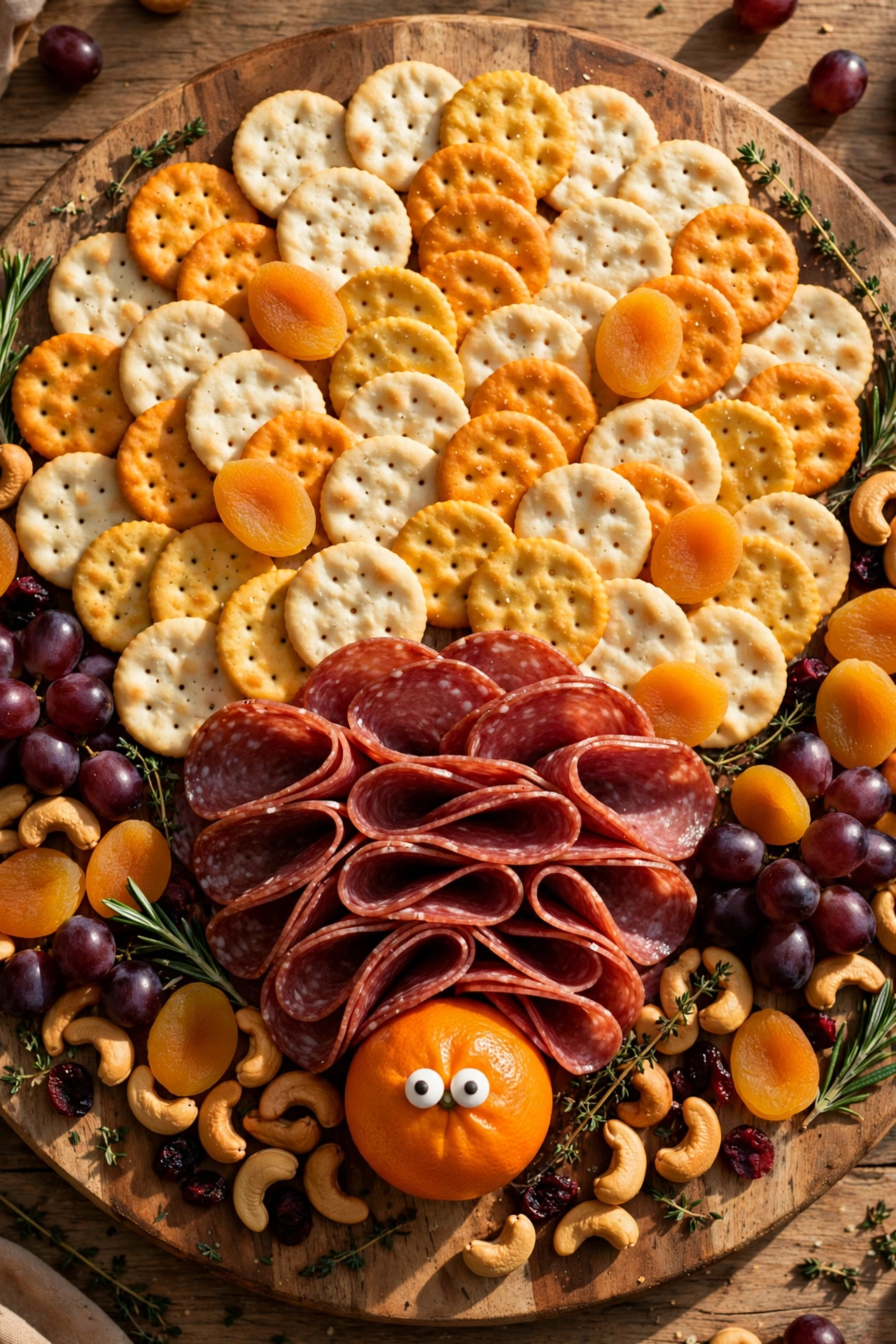
Arrange sliced meats and cheeses into the outline of a turkey on a large round board, using circular crackers in yellow, orange, and cream fanned out in overlapping semi-circles for the feathers. Build the turkey’s body from folded salami or pepperoni in the center for a deep burgundy tone, then use dried apricots for additional pops of orange throughout the tail. A small piece of orange cheese or fruit with two tiny candy eyes becomes the head, giving the whole design a playful, unmistakably Thanksgiving silhouette. Fill any remaining space around the shape with cashews, pistachios, and dark grapes so the board reads as full rather than sparse. This is consistently one of the most-saved Thanksgiving charcuterie ideas on Pinterest because the shape alone photographs as an instant conversation piece.
3. Cornucopia-Inspired Spilling Board
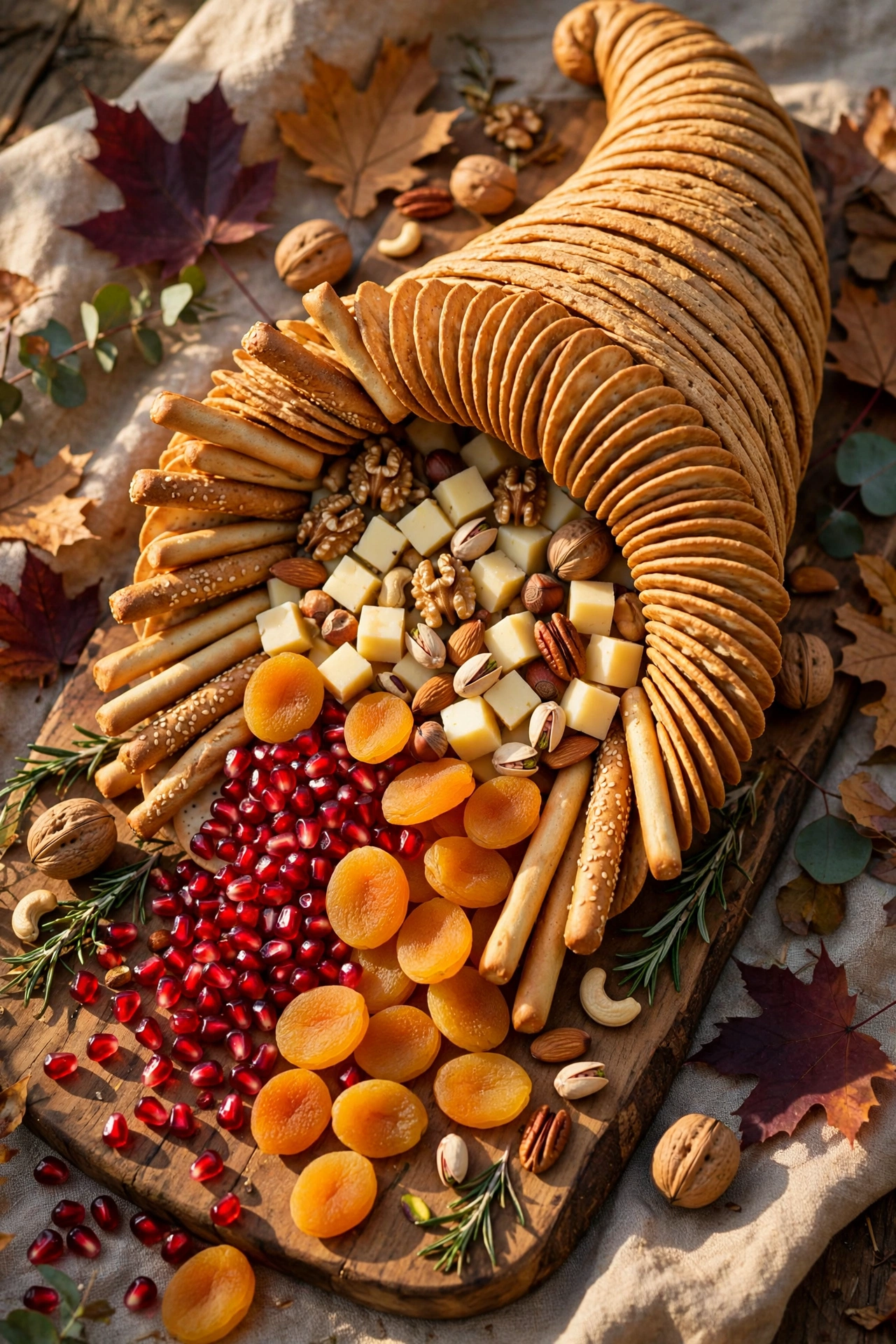
Arrange crackers, breadsticks, and dippable items in a curved horn shape across one side of the board, with fruits, cheeses, and a small leaf-shaped bowl of pomegranate seeds appearing to spill out from the open end. The cornucopia is one of the most iconic visual symbols of the holiday, and recreating its silhouette out of food rather than a decorative object gives the board an immediate, unmistakable Thanksgiving identity. Build the curved “horn” shape first using longer items like breadsticks or fanned crackers to establish the outline, then fill the interior with smaller cheese cubes and nuts before adding the spilling fruit at the open end. Keep the colors warm and jewel-toned — pomegranate, persimmon, dried apricot — so the “spilling harvest” effect reads clearly even from across the room. This idea takes slightly more assembly time than a flat board but delivers one of the strongest visual payoffs on this entire list.
4. “Cheesegiving” Cheese-Centric Board
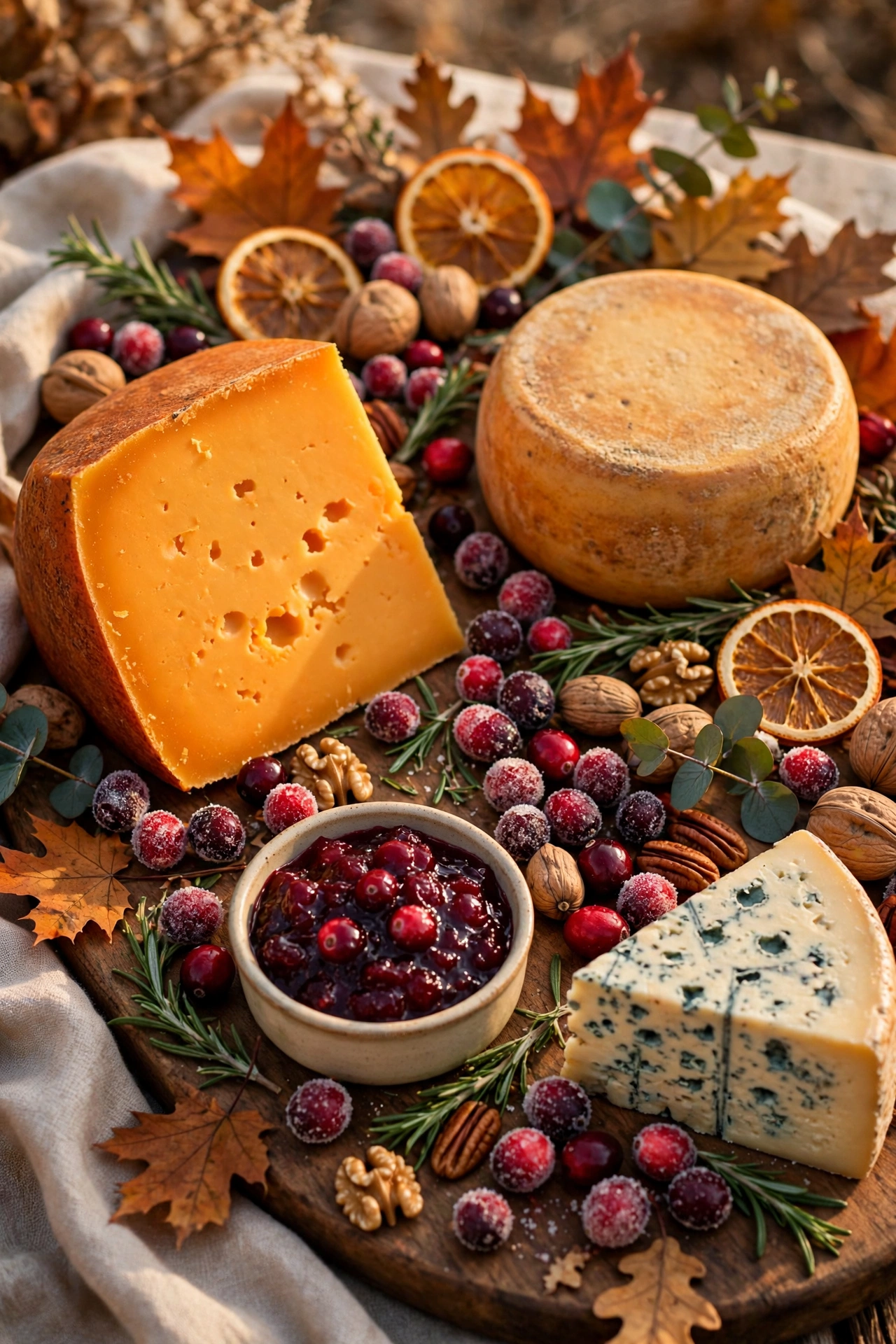
Build an entire board around cheese as the star, choosing a mix of hard and soft varieties like Mimolette for a bright orange pop of color, Comté for nutty depth, and Bleu d’Auvergne for guests who want something bolder. Leave soft cheeses whole and let guests cut their own portions, but pre-slice the hard cheeses into easy-to-grab pieces so the board stays accessible without a lot of cutting mid-party. Swap the usual honey for cranberry jam or a scattering of sugared cranberries to keep every element tied to Thanksgiving flavors rather than a generic cheese board. This approach works especially well for a crowd that’s more interested in cheese variety than a heavy meat spread, and it scales easily up or down depending on your guest count. A cheese-forward board like this one also tends to be more budget-friendly than a meat-heavy version, since a few excellent cheeses go further than several types of cured meat.
Related: 20 Thanksgiving Entertainment Ideas to Keep Everyone Happy
5. Turkey Rosette & Rosemary Kebab Skewers
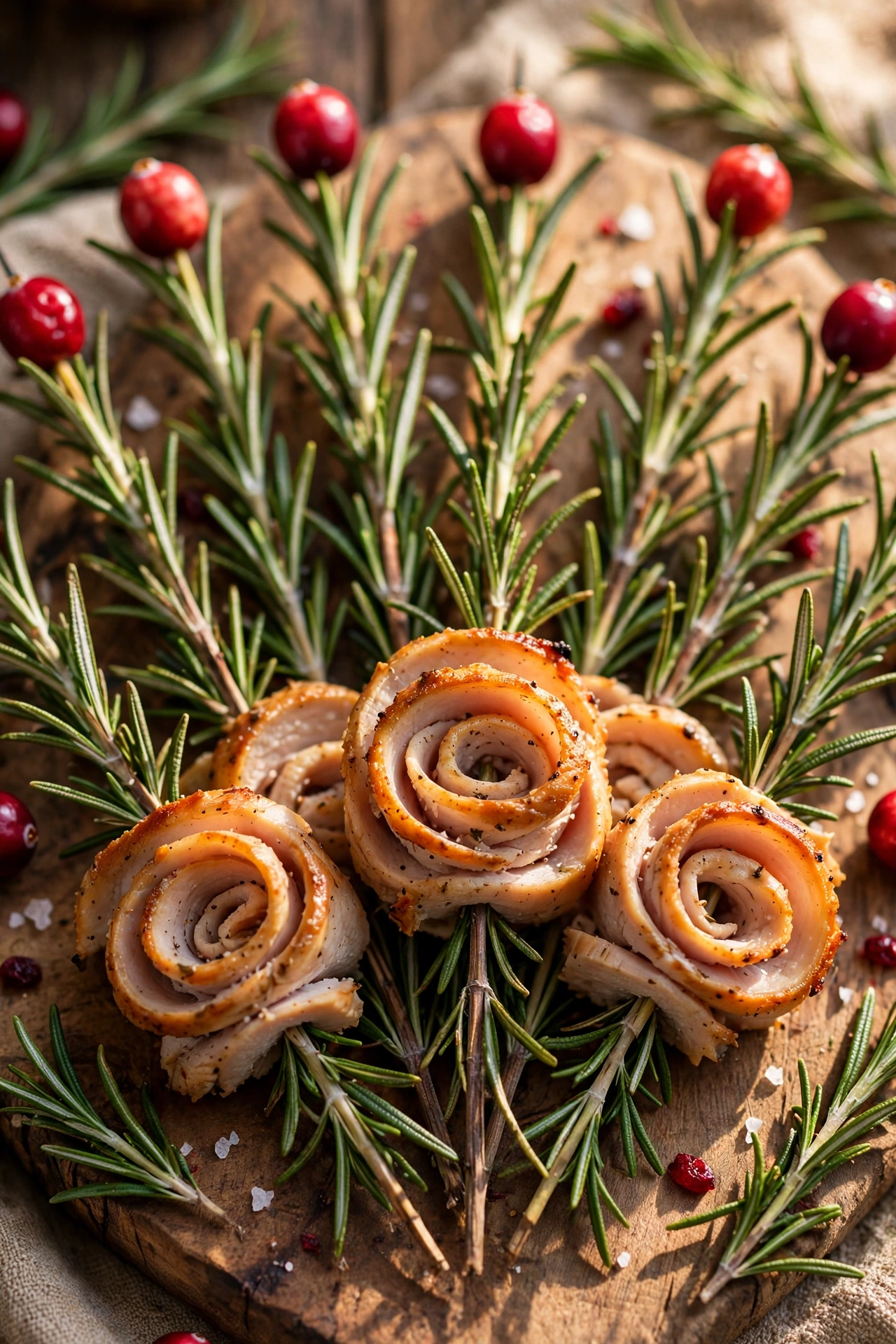
Fold thin slices of deli turkey into small rosettes by folding each slice into thirds lengthwise and rolling it from one end to the other, then thread the rosettes onto stripped rosemary sprigs along with a single cranberry for a rustic little skewer. The rosemary stem doubles as both garnish and handle, so guests can pick up a self-contained bite without needing a serving fork. This technique works just as well with prosciutto or salami if you’d rather save turkey for the main meal, and either way it turns a flat pile of deli meat into something that looks intentionally styled. Arrange the finished skewers in a loose fan shape on one section of the board rather than scattering them randomly, so they read as a cohesive feature rather than an afterthought. This is one of the easiest “wow factor” techniques on the whole list, since it takes only a few extra minutes but completely changes how the meat portion of the board looks.
6. Baked Brie Pumpkin Centerpiece Board
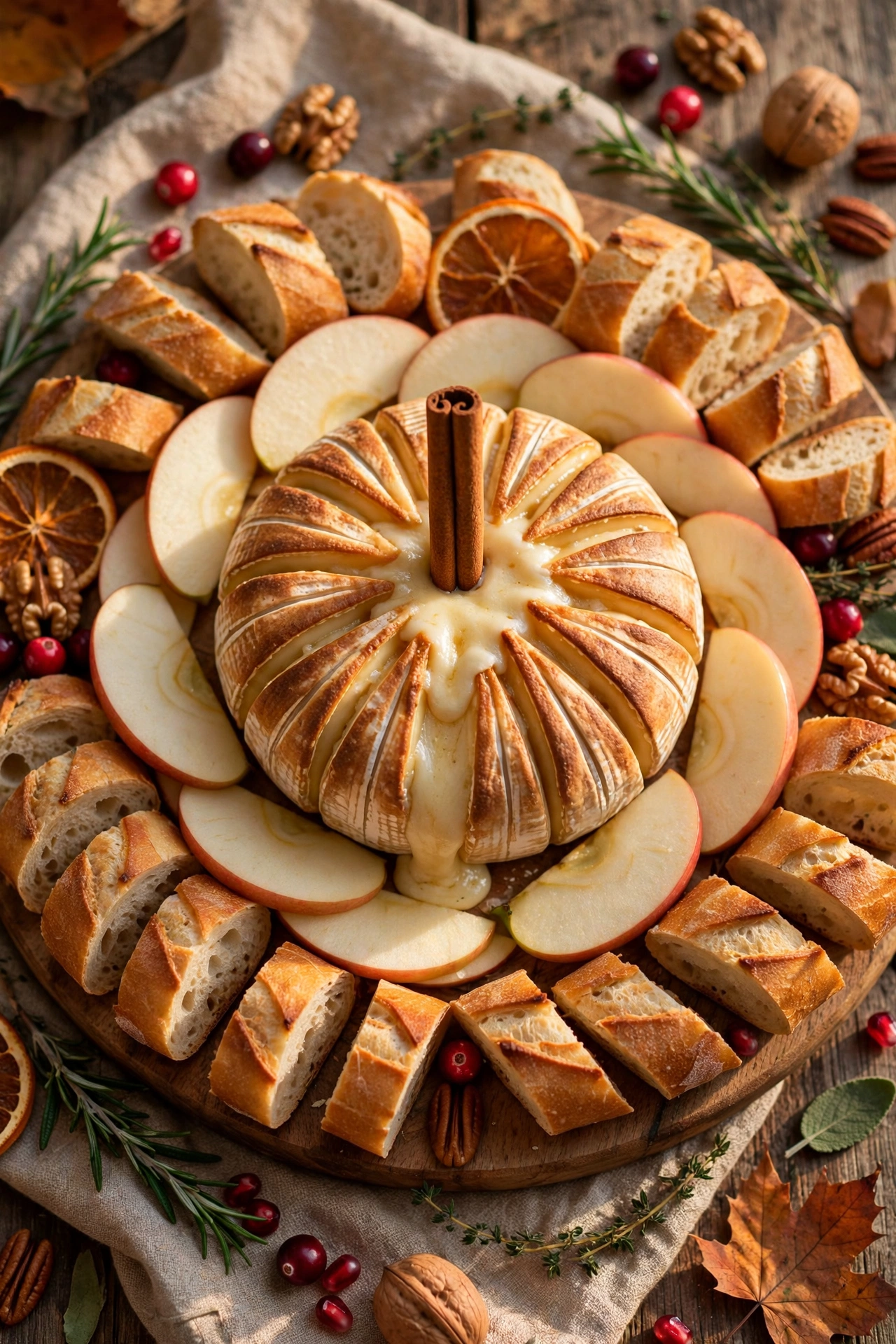
Bake a wheel of brie shaped or scored to resemble a small pumpkin, using a pretzel stick or cinnamon stick as the stem, then set it in the center of the board surrounded by sliced baguette and apple slices for dipping. The warm, melty brie gives the board a hot element alongside all the cold cured meats and cheeses, which adds temperature contrast that makes the whole spread feel more substantial. Surround the pumpkin brie with a ring of apple slices and bread first, then build the rest of the board’s cold ingredients around that ring so the warm centerpiece stays the clear focal point. Because brie needs to be served warm and fresh from the oven, this idea works best assembled just before guests arrive rather than sitting out with the rest of a make-ahead board. The visual of a pumpkin-shaped centerpiece surrounded by a full autumn spread is one of the most consistently popular Thanksgiving board images on Pinterest.
7. Mini Pumpkin & Gourd Accented Board
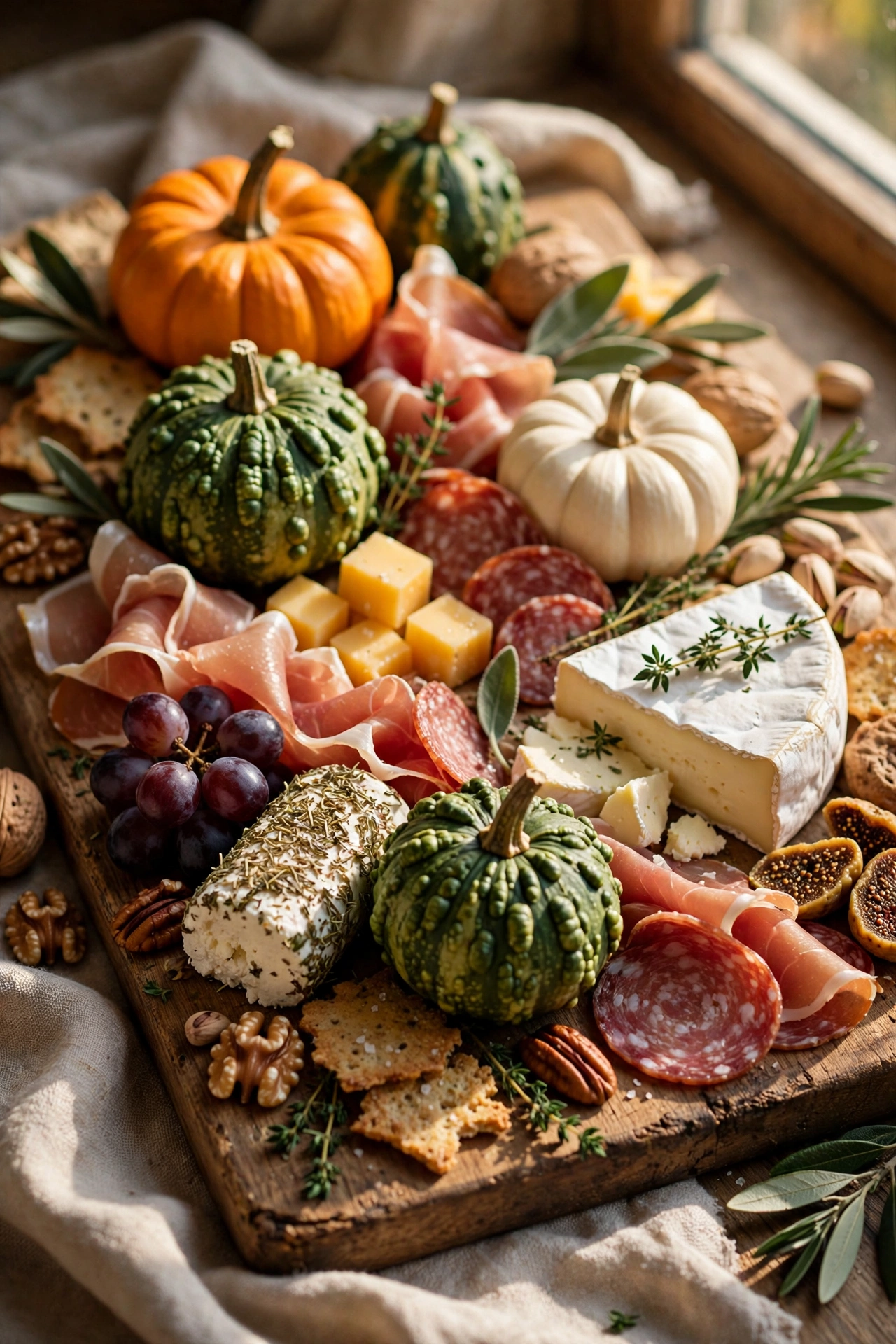
Tuck a few small decorative mini pumpkins and gourds directly onto the board itself, nestled among the food rather than placed only around its edges, to add color and shape variety without taking up much space. These small, uneaten accents work the same way a mantel display does — they fill visual gaps and reinforce the seasonal theme even where there isn’t more food to add. Choose a mix of solid orange, white, and warty green gourds for texture variety, and keep them clustered in odd-numbered groupings of two or three rather than spread out individually. This is one of the fastest ways to make even a simple, thrown-together board look intentionally styled, since the pumpkins do a lot of visual work for almost no extra effort. Just remind guests the gourds are decorative if there’s any chance of confusion at a busy table.
8. Sweet Potato Spread & Candied Pecan Board
Whisk together sweet potato purée, tahini, maple syrup, orange zest, and warm spices like cinnamon and clove into a smooth spread, then serve it in a small bowl alongside crunchy quick candied pecans scattered across the board. This spread brings a genuinely unique flavor to a Thanksgiving board that most versions skip entirely, giving guests something beyond the usual honey or jam pairing. Make the candied pecans by coating them in a bubbling brown sugar mixture until toasted and thickly coated, then cooling them completely so they stay crunchy rather than sticky when added to the board. Pair the sweet potato spread with plain crackers or baguette slices so its flavor comes through clearly rather than competing with a heavily seasoned cracker. This combination consistently surprises guests, since sweet potato as a savory-sweet spread isn’t something most people expect to see outside of the main Thanksgiving meal.

9. Cranberry Relish & Fig Chutney Pairing Board
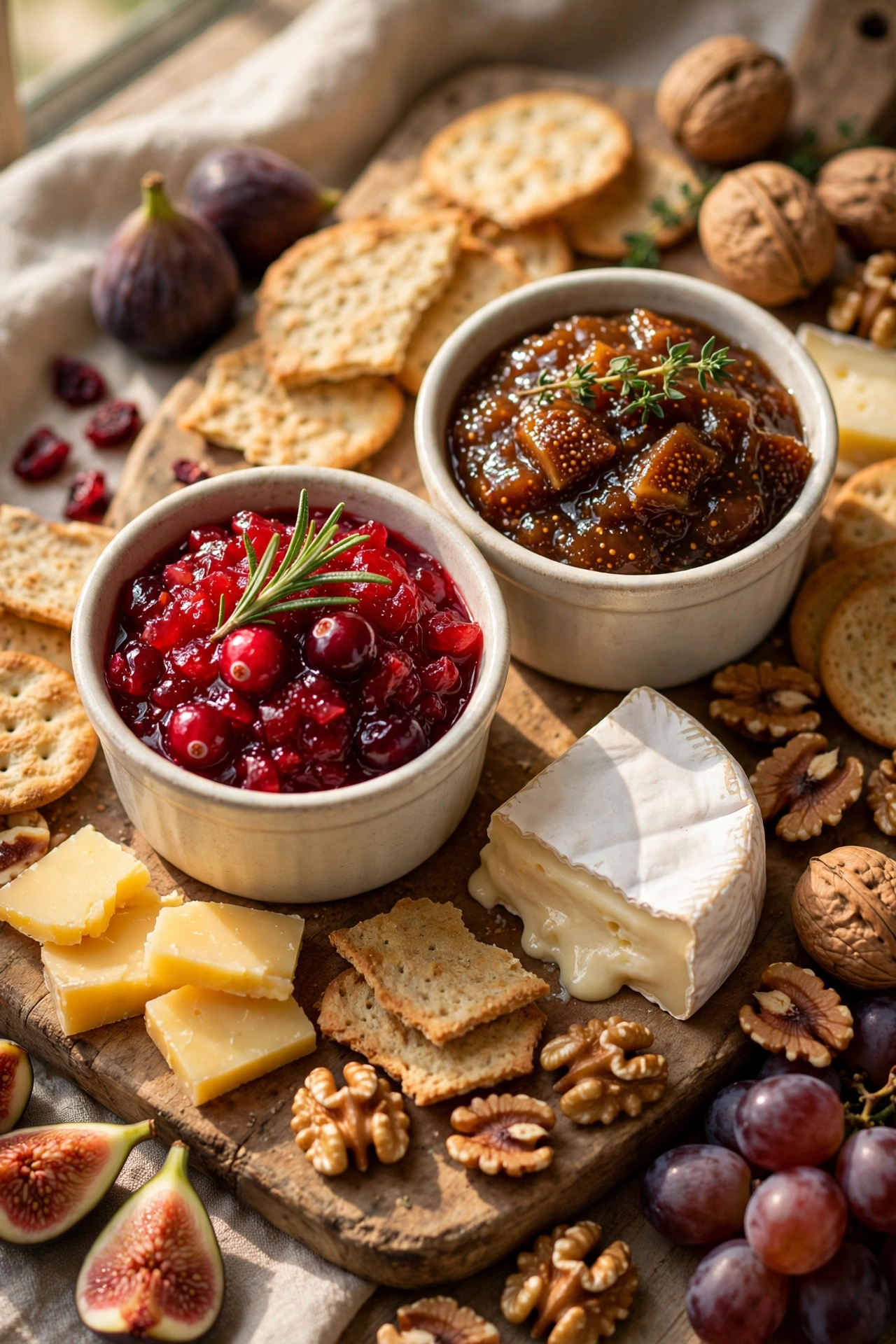
Offer two contrasting spreads side by side — a bright, tart cranberry relish and a rich, slightly sweet fig chutney — so guests can pair whichever one suits the cheese or meat they’re currently eating. Having two spreads instead of one gives the board more flexibility, since cranberry relish tends to pair better with milder cheeses while fig chutney stands up well against something bolder like blue cheese or aged cheddar. Serve each in its own small ramekin rather than spooned directly onto the board, which keeps the flavors from bleeding into each other and makes portioning easier for guests. Garnish each ramekin with a small sprig of fresh thyme or rosemary to visually separate the two and reinforce the fall flavor profile. This is a small addition that consistently gets specifically called out by guests, since most boards default to just one spread and this doubles the flavor options with very little extra effort.
10. Persimmon & Pomegranate Jewel-Toned Board
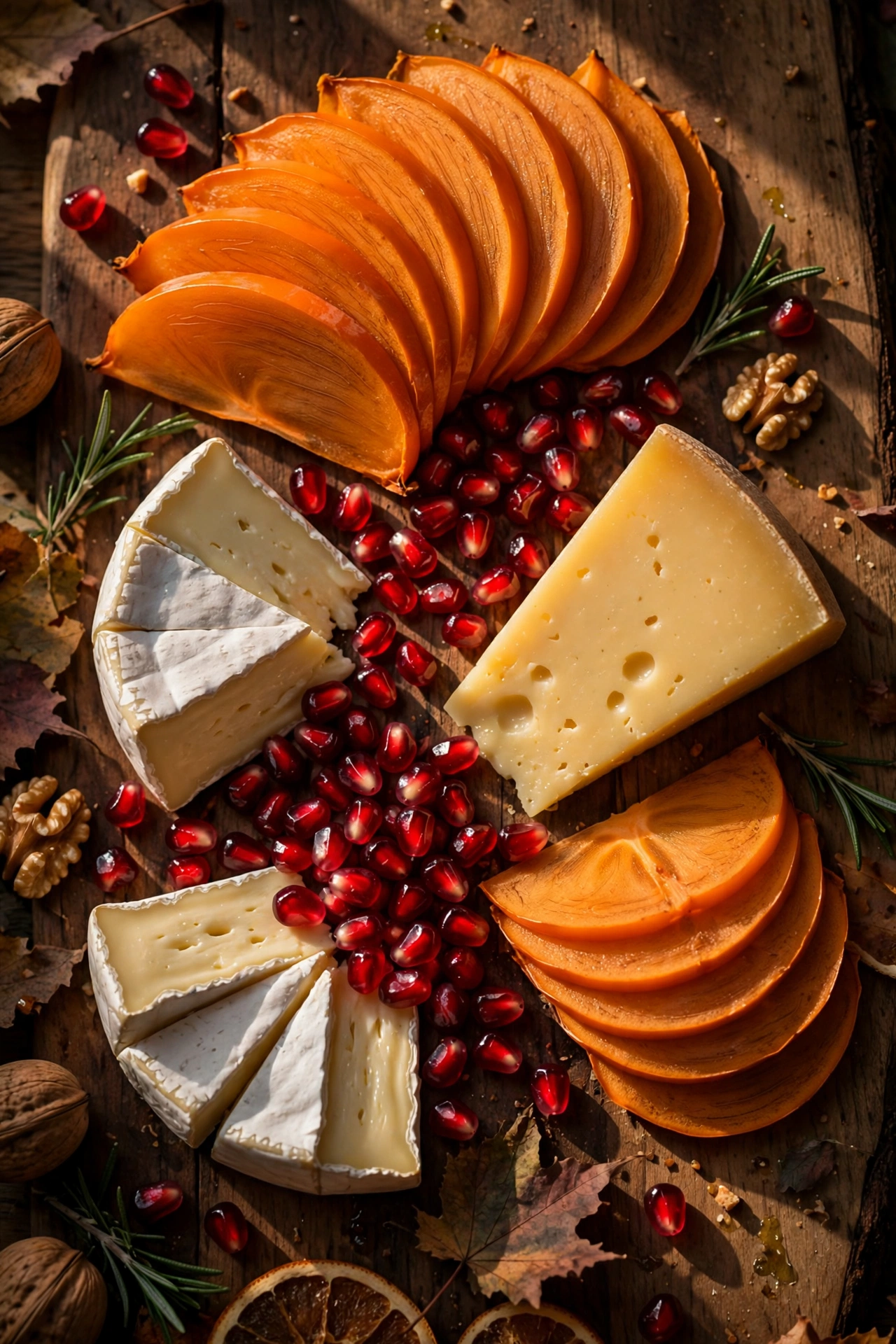
Build a board around in-season persimmon slices and scattered pomegranate seeds, both of which naturally hit the warm orange-and-deep-red color scheme of a Thanksgiving table without needing any additional styling. These two fruits are in peak season during the exact weeks leading up to Thanksgiving, which means they’re both affordable and at their best flavor right when you need them. Slice persimmons thin and fan them across one section of the board, then scatter pomegranate seeds into any small gaps between cheeses and meats, where their jewel-like color pops against the more muted tones of cured meat. Pair both fruits with a milder cheese like a young Gouda or a soft brie, since persimmon and pomegranate both bring enough sweetness and acidity on their own without needing a bold cheese to compete with. This combination consistently reads as more elevated and “designed” than a board built around more common fruits like grapes or apples alone.
11. Dessert Charcuterie Board
Build a fully separate dessert board using mini pumpkin pies, cookies, small dessert bites, and fresh fruit arranged the same way you’d arrange a savory charcuterie board, giving guests a grazing option after the main meal instead of a single sliced pie. This idea solves a real hosting problem — cutting and serving individual pie slices to a large group takes time, while a pre-portioned dessert board lets everyone help themselves whenever they’re ready. Arrange the larger dessert items first to establish structure, then fill in gaps with smaller bites like mini cookies or chocolate-covered treats, following the same clustering principle used on a savory board. Add a few whole or halved fruits like figs or grapes for color contrast and to balance out the richness of the sweets. This board can be fully assembled ahead of time and simply set out after dinner, which makes it one of the lowest-stress parts of the entire Thanksgiving spread.

12. Kids’ “Turk-uterie” Snack Board
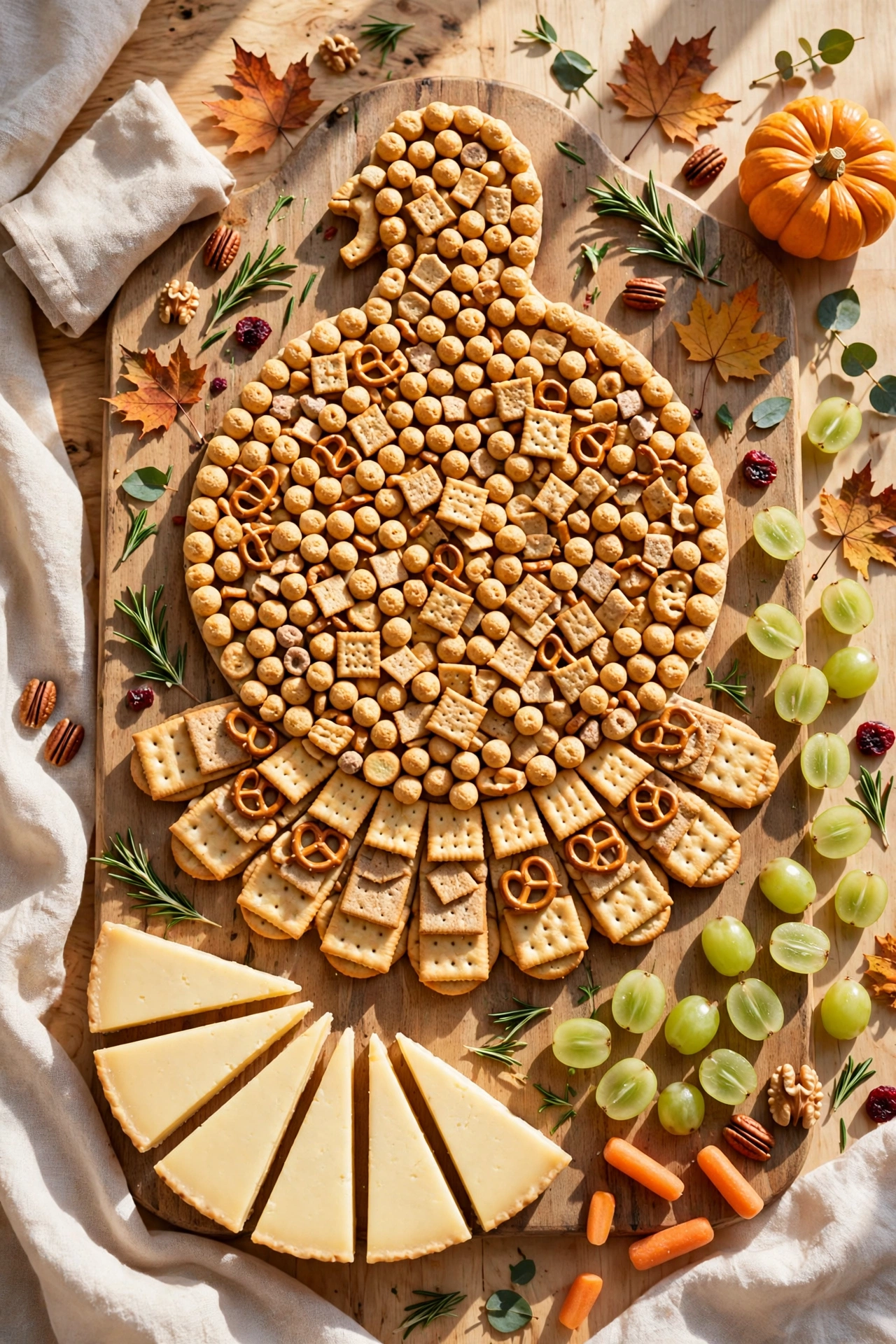
Build a simplified, kid-friendly version of a turkey-shaped board using mild cheese wedges cut into pumpkin-pie-slice shapes, plain crackers, and a filled cookie-cutter turkey outline made from small, easy-to-grab snacks like cereal or crackers. Keeping the flavors mild and familiar — think mozzarella cheese sticks, plain crackers, and grapes cut in half — makes the board approachable for younger palates without leaving kids feeling excluded from the adult spread. Fill a turkey-shaped cookie cutter with small snack pieces the same way you’d fill it with a dip, then carefully lift the cutter away to leave a clean, defined turkey outline on the board. This idea gives kids their own dedicated grazing option at a busy holiday table, which tends to keep them occupied and out from underfoot while the adults finish the last of the cooking. It’s also one of the simplest ideas on this entire list, since it requires almost no advanced technique beyond the cookie-cutter trick.
13. Fall Herb Butter Board
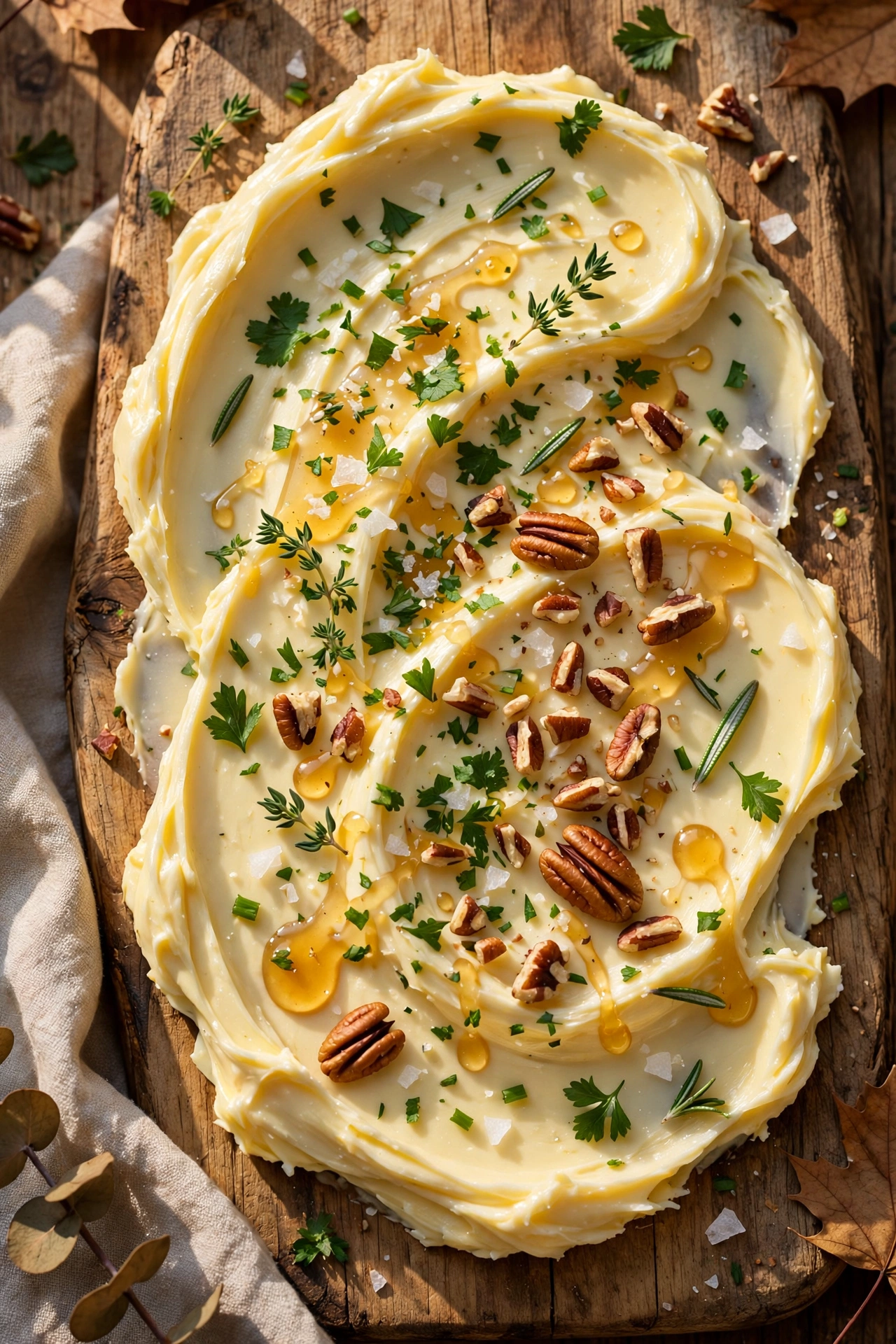
Spread softened butter in a thick, textured layer directly across a wooden board using the back of a spoon to create swooping ridges, then top it with chopped fresh herbs, flaky salt, a drizzle of honey, and a scatter of toasted pecans for a Thanksgiving twist on the viral butter board trend. Butter boards work because they require almost no cooking — just softened butter, good bread, and a handful of toppings — which makes this one of the fastest ideas on the entire list to pull together. Use a designated food-safe board rather than a decorative wooden cutting board that’s been used for raw proteins, and lay a sheet of parchment underneath the butter if you’re using an older or more porous board. Serve with warm, sliced baguette or dinner rolls so guests can spread their own portion directly from the board. This idea works especially well as a starter set out the moment guests arrive, since it requires zero last-minute assembly once the butter is spread.
Related: 15 Easy Thanksgiving Napkin Folds That Look Fancy
14. “Thankful” Spelled Cheese Board
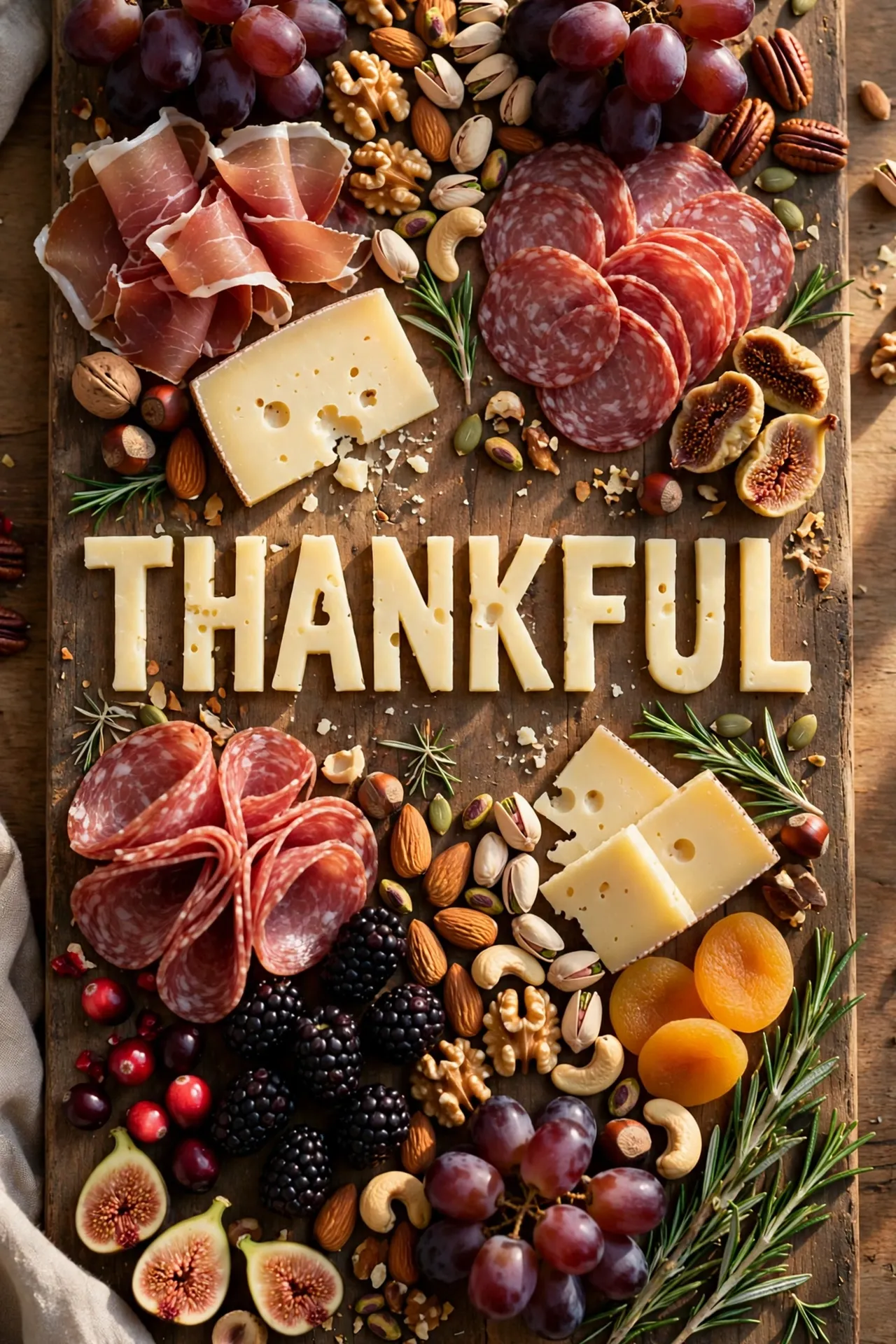
Use small alphabet cookie cutters to cut the word “Thankful” out of sliced cheese, then arrange the letters across the center of the board with the rest of the charcuterie ingredients filling in around the word. Spelling out a simple message turns a standard cheese board into a small, personal centerpiece that immediately signals thought and effort without requiring any real cooking skill. Choose a firm, sliceable cheese like provolone or mild cheddar for the letters, since softer cheeses tend to tear or lose their shape when cut into small precise letters. Place the lettered cheese along the horizontal center of the board so it reads clearly from a standing position at the table, then build the rest of the board’s meats, fruits, and nuts around it symmetrically. This is a simple styling trick that photographs exceptionally well and consistently performs on Pinterest because it doubles as both food and a small piece of tableware decor.
15. Leaf-Shaped Cheese Cutout Board
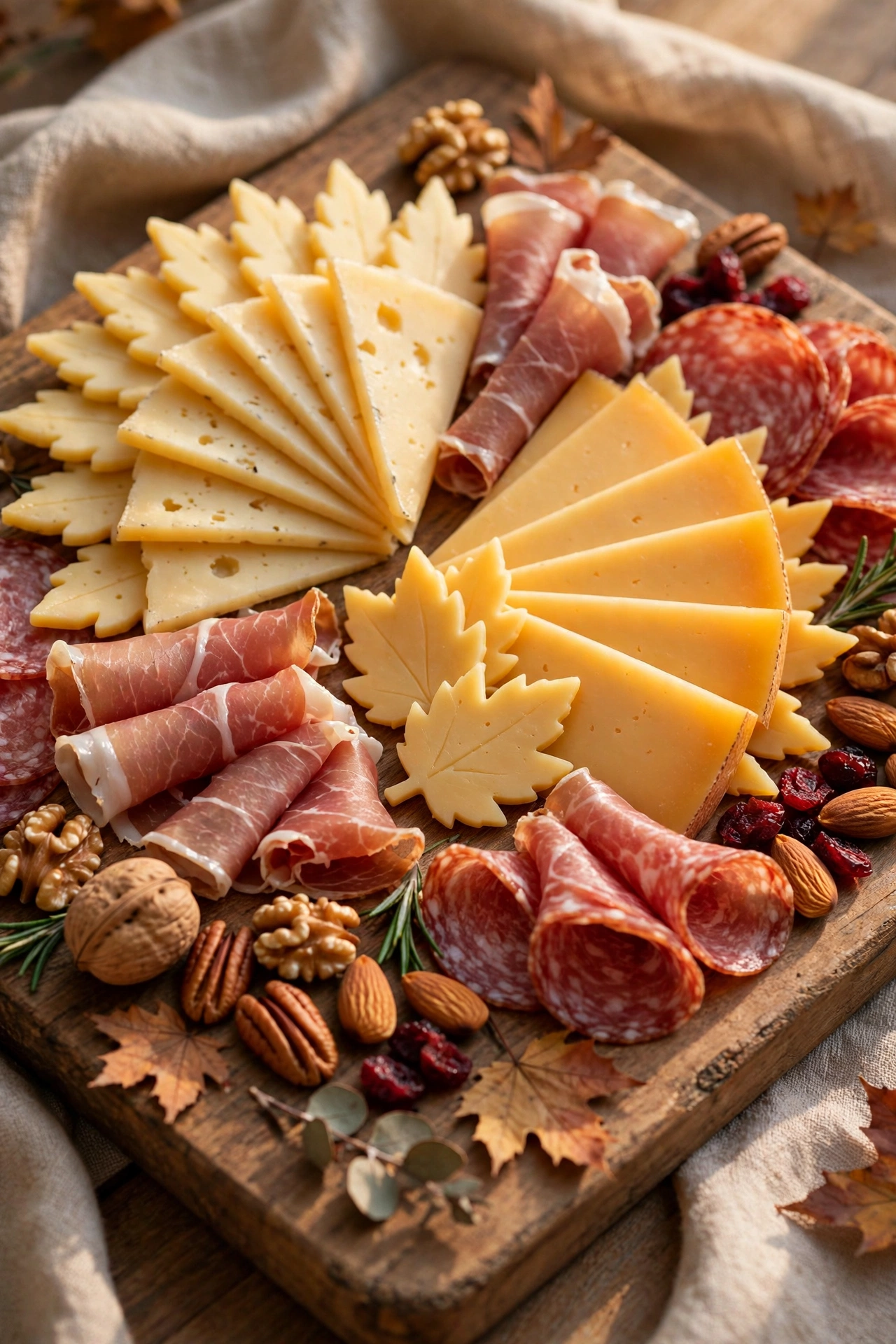
Cut slices of a firmer cheese like Comté or Gouda into simple leaf shapes using a small cookie cutter, then scatter the leaf cutouts across the board alongside the rest of the ingredients for a subtle seasonal detail. This technique takes the same small-cutter trick used for the “Thankful” lettering above and applies it purely for shape rather than message, which works well if you want a seasonal visual cue without adding text to the board. Fan several leaf shapes together in one corner rather than scattering them evenly, so they read as an intentional cluster instead of a random garnish. Pair the leaf cutouts with a small pile of actual dried leaves or a sprig of rosemary nearby to reinforce the autumn theme without adding anything inedible directly onto the food. This detail is inexpensive, requires only one extra cookie cutter, and consistently adds a polished, boutique-shop feel to an otherwise simple board.
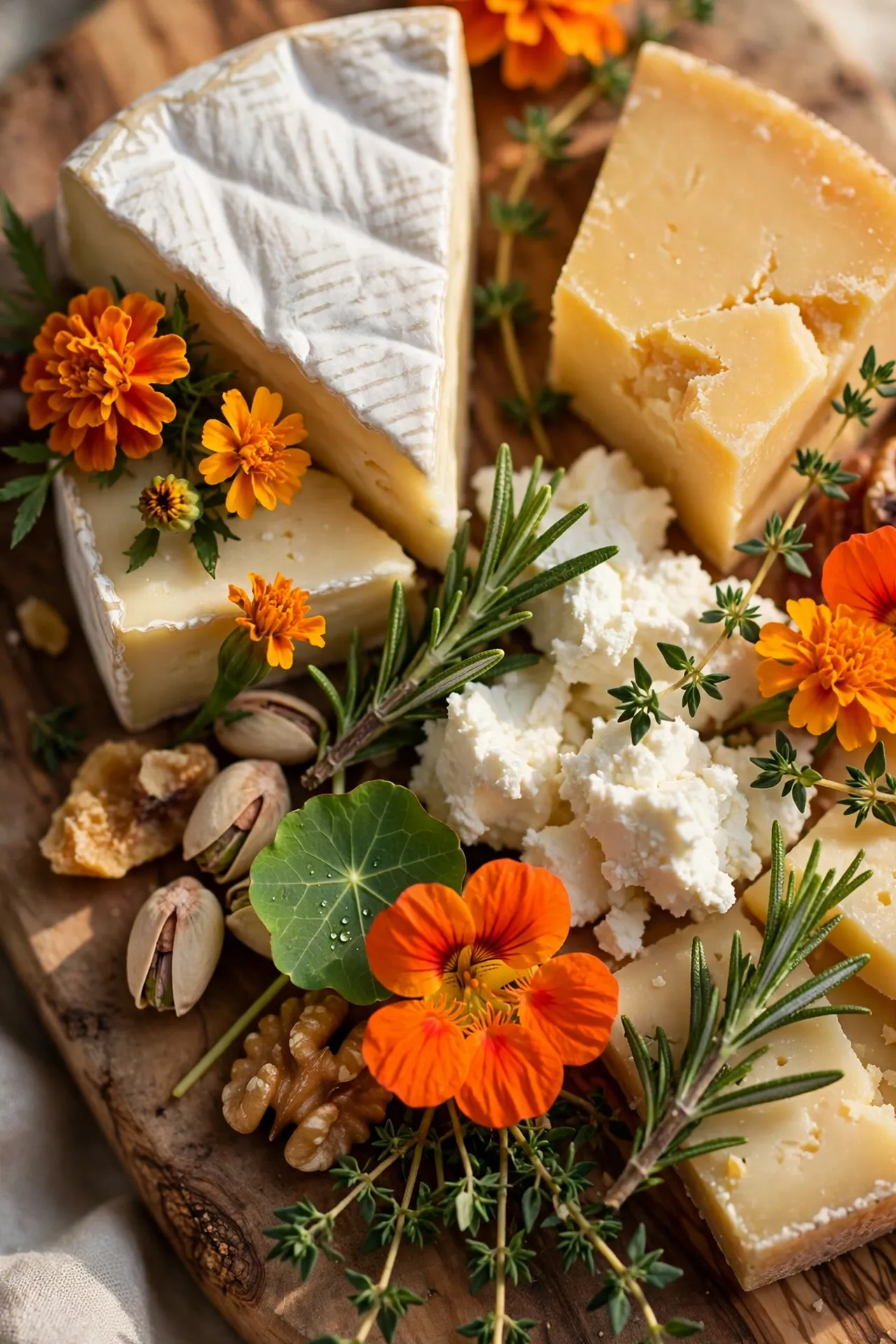
16. Edible Flower & Herb Garnished Board
Tuck a few edible flowers, like marigolds or nasturtiums, directly onto the board near the cheese, where their smooth petals help them stay in place, along with a scattering of fresh rosemary and thyme sprigs throughout. Edible flowers are an easy, low-effort way to add a genuine “wow, that’s pretty” moment, since most guests don’t expect flowers on a food board and the surprise factor does a lot of the work. Add flowers sparingly — one or two per section rather than scattering them everywhere — since restraint is what keeps the board looking elegant rather than overdone. Herb sprigs can go in more liberally, tucked into gaps between cheeses and meats the same way you’d use greenery in a floral arrangement. If you’re nervous about using flowers for the first time, start with just one or two blooms near the most photogenic section of the board before committing to a fuller floral layout next year.
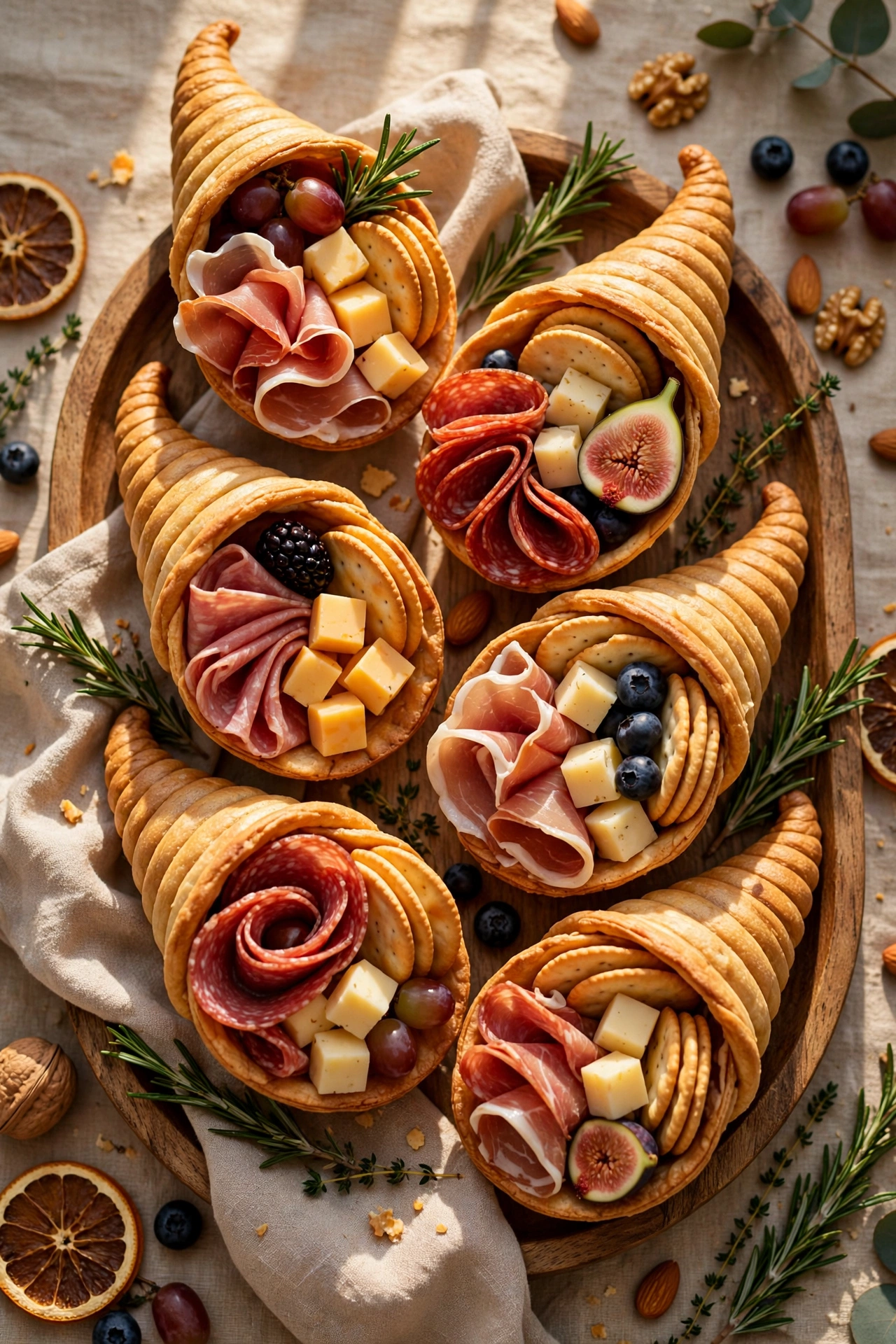
17. Individual Cornucopia Charcuterie Cups
Instead of one large shared board, fill small cone-shaped cups or paper cornucopia forms with individual portions of meat, cheese, crackers, and fruit for each guest, solving both the presentation and the food-safety timing problem in one move. Individual cups eliminate the awkward reach-across-the-table moment of a shared board and give each guest a self-contained, grab-and-go portion that’s easy to bring to a seat before the meal starts. Build each cup the same way you’d build a full board — a base layer of crackers, then meat, then cheese, then a piece of fruit tucked in at the top — so every portion feels complete rather than randomly filled. This idea is particularly useful for a larger Friendsgiving gathering where a single shared board would empty out in minutes and create a crowding problem near the food table. It also naturally limits how long any one portion sits out, which helps with the same 2-hour food safety window that applies to a full board.
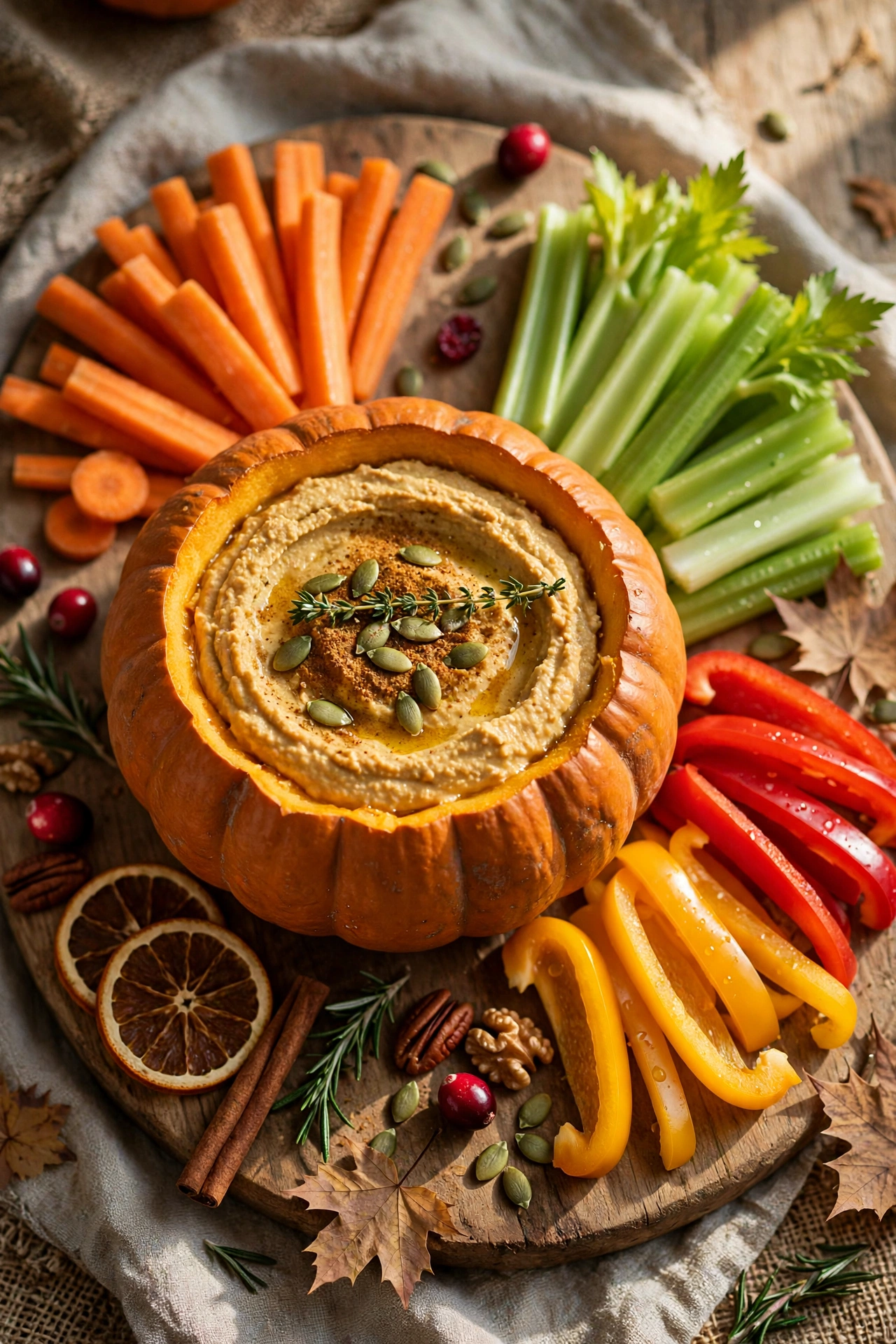
18. Pumpkin-Spice Hummus & Veggie Board
Serve a batch of pumpkin-spice hummus in a hollowed-out small pumpkin or a simple bowl, surrounded by fresh vegetable dippers like carrots, celery, and sliced bell peppers, giving guests a lighter, savory-sweet option alongside the richer meat and cheese sections. This idea offers a genuine break from the heavier flavors dominating most Thanksgiving boards, and it’s a smart addition if you know some guests will be looking for a lighter or more vegetable-forward option. Hollowing out a small pumpkin to use as the serving vessel for the hummus doubles as a festive decorative element, so the dip becomes part of the board’s visual theme rather than an afterthought bowl set off to the side. Arrange the vegetable dippers in a loose fan around the pumpkin bowl, grouped by color for visual impact. This is also one of the more make-ahead-friendly ideas on the list, since hummus keeps well refrigerated and vegetables can be cut a day in advance.
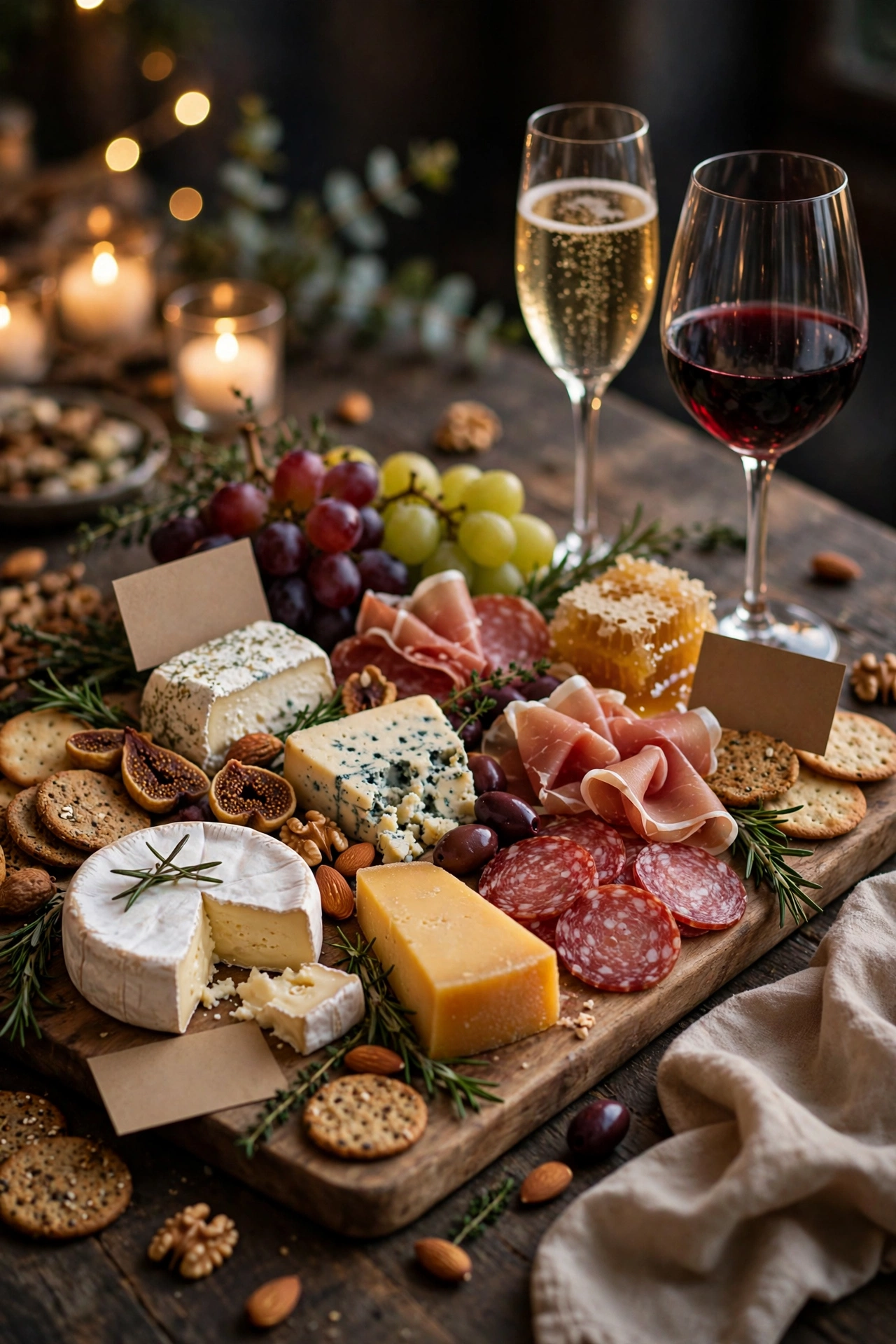
19. Wine Pairing Grazing Board
Build the board specifically around two or three wine styles you plan to serve, choosing cheeses and meats that complement each pairing rather than assembling ingredients first and figuring out drinks later. A crisp sparkling wine pairs well with lighter, fresher cheeses and fruit, while a fuller red complements richer cured meats and aged cheeses, so grouping the board loosely by which wine each section pairs with helps guests navigate the spread more intentionally. Label each wine-and-food pairing with a small handwritten card if you’re hosting a more formal gathering, since this small detail elevates the board from casual snacking to an actual tasting experience. Keep the overall board layout the same as a standard charcuterie spread — the wine pairing is a flavor-planning approach more than a different visual style. This idea works particularly well for hosts who already think about drink pairings for the main meal and want that same intentionality carried through to the appetizer course.
20. Make-Ahead Two-Board Rotation System
Prepare two identical boards instead of one, setting the first out for guests while keeping the second fully assembled and refrigerated, then swapping them at the two-hour mark to keep everything within safe food temperature limits. Perishable items like cut cheese and cured meat shouldn’t sit at room temperature for more than two hours, and building a second board ahead of time solves that problem without leaving guests staring at an empty table while you scramble to refill one. Assemble both boards the night before or early on Thanksgiving morning, covering each tightly with plastic wrap and refrigerating until needed, so the only day-of work is the swap itself. This approach is especially useful for an all-day Thanksgiving gathering where guests arrive at different times and the board needs to stay fresh and appealing for several hours total. It’s one of the few ideas on this list that’s more about hosting logistics than visual styling, but it solves a real problem that almost no other Thanksgiving board guide actually addresses.

21. Chex Party Mix & Spiced Nut Crunch Board
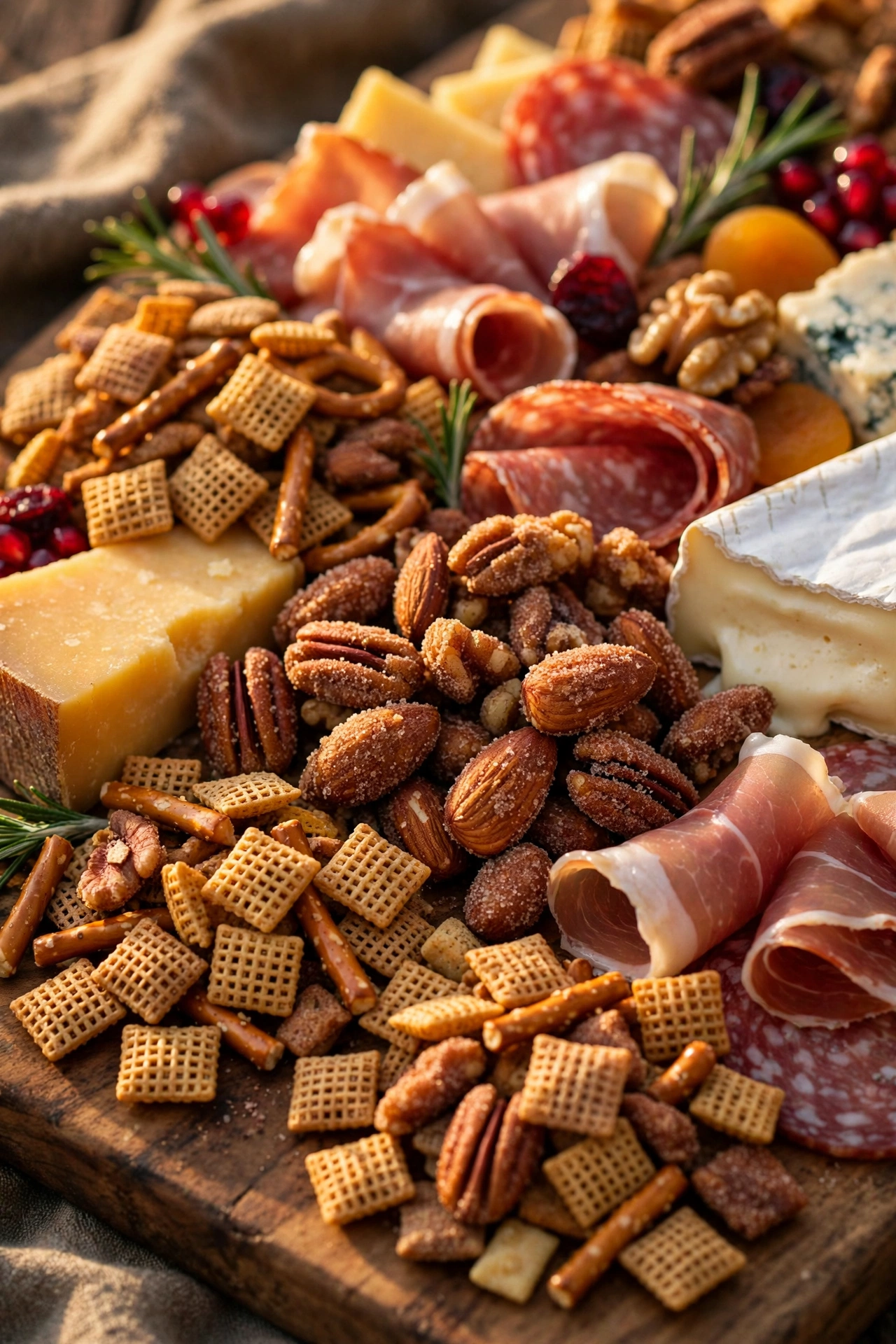
Fill in the open spaces of any board with homemade Chex party mix and warm spiced nuts, giving guests a crunchy, savory option that replaces plain crackers and adds another layer of texture to the spread. Chex mix brings a different bite than crackers or bread, and its small pieces are excellent for filling in awkward gaps between larger items where a full cracker wouldn’t fit naturally. Toast the spiced nuts in a simple cinnamon-sugar or cayenne-brown-sugar coating shortly before serving, so they’re still slightly warm and fragrant when guests first arrive at the board. Portion the party mix and nuts into small clusters around the board’s edges rather than one large central pile, which keeps the crunchy elements from overwhelming the rest of the presentation visually. This idea is one of the easiest additions on the entire list and works as a finishing touch on almost any of the other twenty boards described above.
Styling Tips
Build the board from the outside in, placing the largest anchor items like bowls of spreads and the biggest cheese wedges first, then filling smaller gaps with crackers, nuts, and fruit last. Group similar colors near each other but avoid perfect symmetry, since a slightly asymmetrical, clustered layout reads as more natural and less mass-produced than an evenly spaced grid. Keep a small bowl nearby for pits, rinds, or toothpicks so the board itself stays clean-looking throughout the event rather than accumulating scraps.
Practical Implementation Ideas
Prep and pre-slice everything you can the day before Thanksgiving, storing components separately in the fridge so final board assembly only takes fifteen to twenty minutes on the day itself. Set out serving utensils and small forks or toothpicks for spreads and softer cheeses, since guests digging in with their hands for shared dip items is one of the more common food-safety complaints at large gatherings. If you’re short on serving boards, a large cutting board, a marble slab, or even a clean baking sheet lined with parchment all work as a base in a pinch.
Related: 18 Thanksgiving Office Door Decor Ideas That Get Noticed
Common Mistakes to Avoid
Cramming too many strongly flavored cheeses onto one board without any mild options can overwhelm guests who aren’t used to bold, funky cheese; balance at least one approachable cheese alongside anything more assertive like blue cheese. Leaving a board out for the entire day without refrigerating or refreshing any portion of it is a real food-safety risk, not just a freshness issue, once you’re past the two-hour mark. Skipping the fruit or fresh element entirely and relying only on cured meat and cheese makes a board feel heavy and one-note; the fresh produce is doing more work for balance than people usually expect.
Small-Space Alternatives
A single wooden cutting board or a large dinner plate can hold a smaller-scale version of any of the ideas above, simply reducing the quantity of each ingredient while keeping the same variety. Individual cornucopia cups work especially well in small spaces since they eliminate the need for one large board taking up counter or table space entirely. For a very small gathering, choose just three or four ideas from this list rather than trying to combine everything into one oversized spread.
Budget-Friendly Alternatives
Cheese curds, a single block of sharp cheddar, and one type of salami can stand in for a more elaborate multi-cheese, multi-meat spread while still delivering real variety through fruit, nuts, and spreads. Store-brand crackers and grocery-store deli meats work just as well as premium charcuterie brands once they’re arranged with the same styling techniques described above — presentation does more visual work than ingredient cost. Skipping a specialty cheese like Bleu d’Auvergne in favor of a well-priced Brie or cheddar keeps the board approachable to a wider range of palates while also reducing cost.
Pro Styling Recommendations
Layer textures deliberately — something crunchy, something creamy, something chewy, and something fresh — rather than defaulting to only meat, cheese, and crackers. Choose one visual “statement” element per board, whether that’s the turkey shape, the cornucopia spread, or the spelled cheese lettering, and let the rest of the ingredients support that one focal point instead of competing with several standout ideas at once. Always taste your spreads and pairings the day before if possible, since flavor balance matters just as much as visual balance on a board this many people will actually be eating from.
FAQs
Conclusion
A great Thanksgiving charcuterie board isn’t about buying the most expensive ingredients — it’s about a handful of small techniques (folding meat into rosettes, clustering rather than scattering, building in a shape guests recognize) that turn a plate of snacks into something people talk about after they’ve gone home. Pick two or three ideas from this list that fit your crowd and your schedule, build in the food-safety basics from the start, and let the board do exactly what it’s supposed to do — keep everyone happy and grazing until the turkey’s ready.