16 Christmas Dough Bowl Centerpiece Ideas to Try
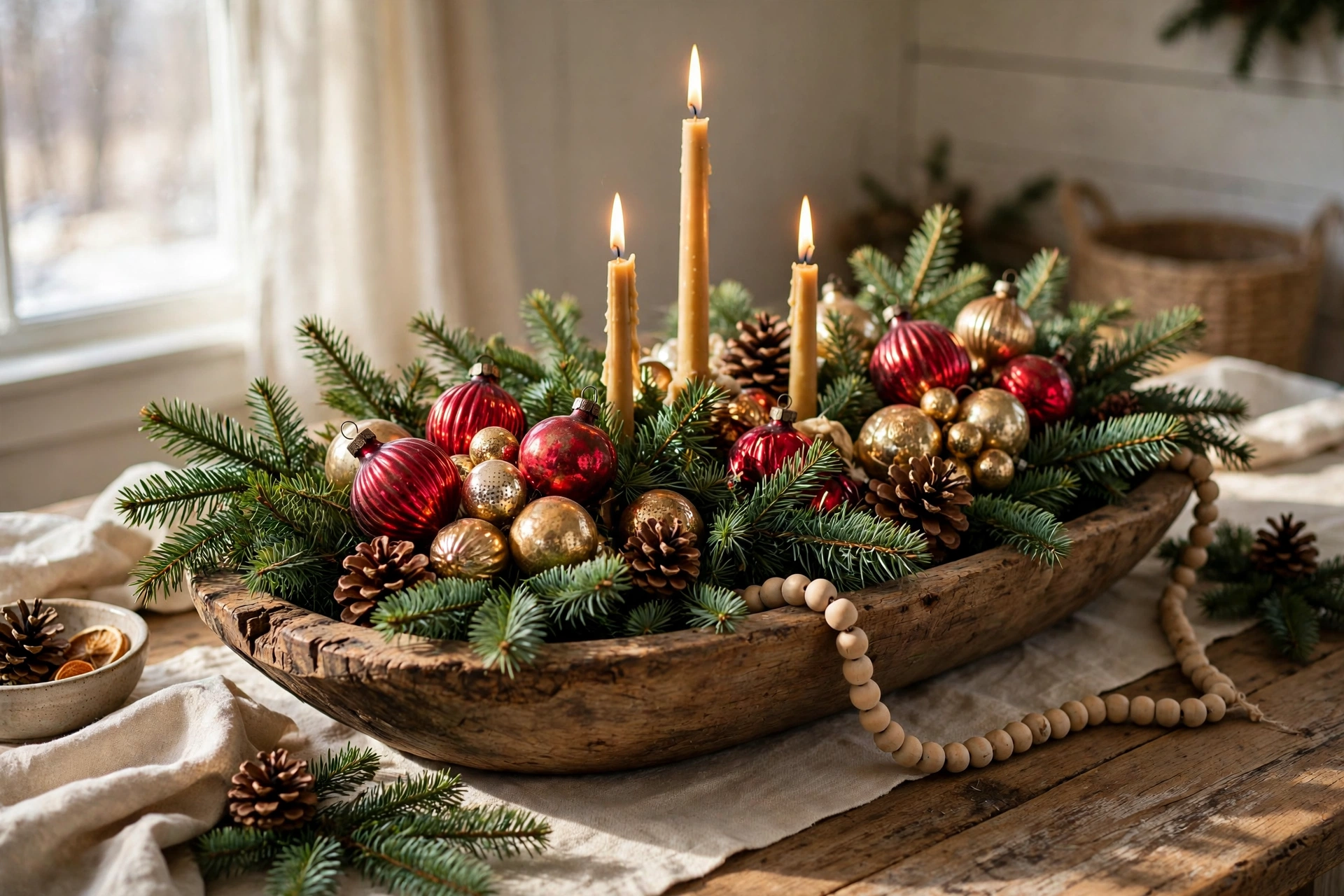
A dough bowl might be the single most useful piece of farmhouse decor to own, mostly because it solves the “what do I put here” problem for every season without needing a new bowl each time. Christmas is where it really earns its keep. That long, shallow shape was built for holding bread dough while it rose, but it turns out to be just as good at holding fresh greenery, a cluster of ornaments, or a row of flickering taper candles.
The tricky part is knowing where to start once the fir branches and ornament boxes come out of storage. A dough bowl can look effortlessly styled or randomly filled depending on how the pieces inside it are layered, and the difference usually comes down to a few small decisions — height, texture, and how much of the bowl’s own wood grain you leave visible. The 16 ideas below cover the full range, from a five-minute greenery-and-candle version to more collected, vintage-inspired displays, so there’s a fit whether this is the first year you’ve pulled the dough bowl out for Christmas or the tenth.
Table of Contents
16 Christmas Dough Bowl Centerpiece Ideas
Fresh Fir & Pinecone Filled Bowl
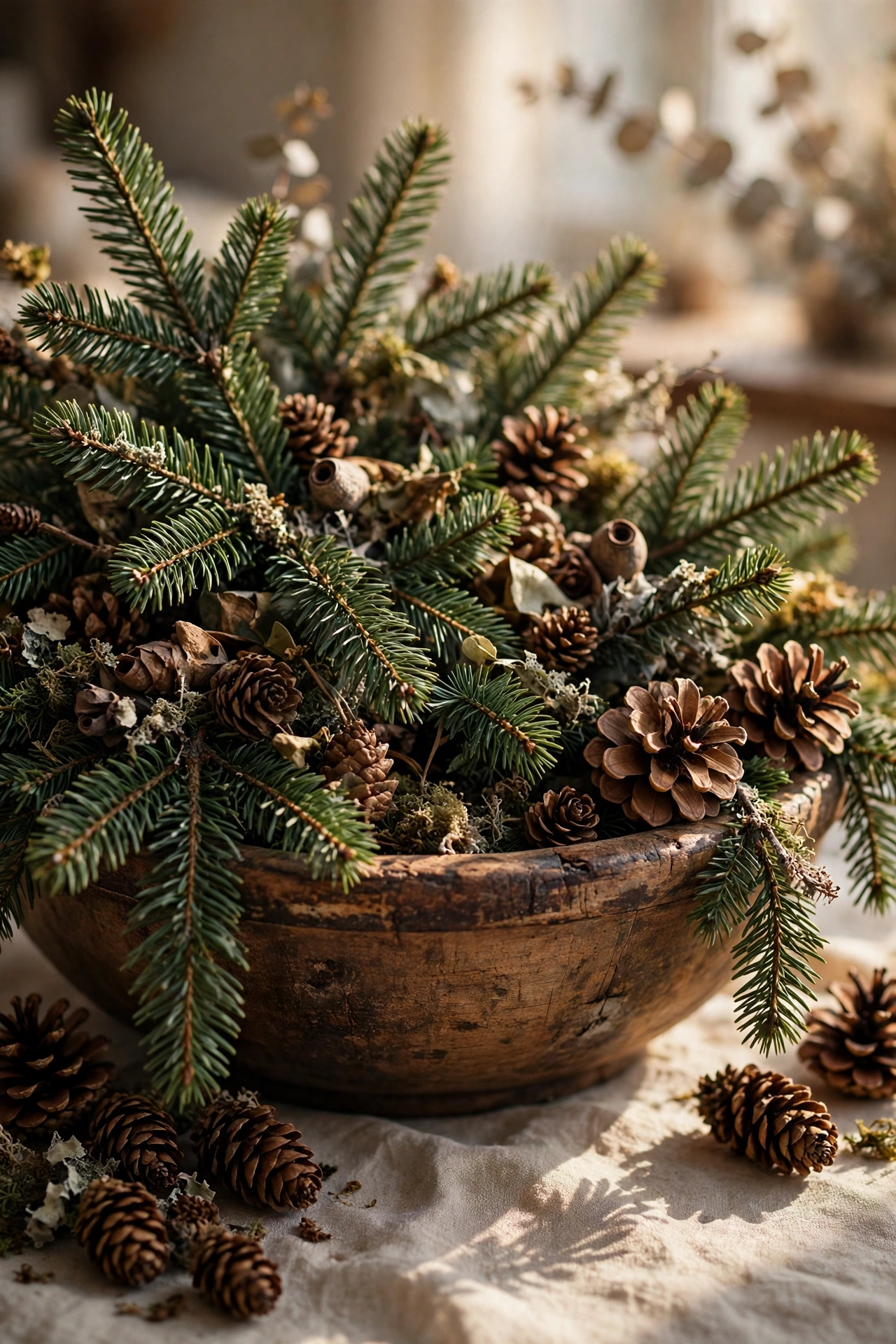
The simplest and most classic way to style a dough bowl for Christmas is also the one nearly every version of this idea starts with: a generous layer of fresh fir branches, tucked and layered to follow the curve of the bowl, dotted with pinecones in a few different sizes. Building the greenery in layers, starting with larger branches at the base and adding smaller sprigs on top, gives the arrangement more depth than laying everything in flat. Letting a few pinecones spill slightly over the bowl’s edge, rather than keeping every piece contained inside the rim, softens the transition between the bowl and the table underneath it. This idea works with fresh-cut branches from a Christmas tree lot or leftover trimmings from your own tree, which makes it one of the most budget-friendly options on the list. It also serves as the base layer for several other ideas here, since ornaments, candles, and ribbon all tuck naturally into a foundation of greenery like this one.
Related: 23 Stylish Small Apartment Christmas Decor Ideas That Save Space That Make Every Inch Count
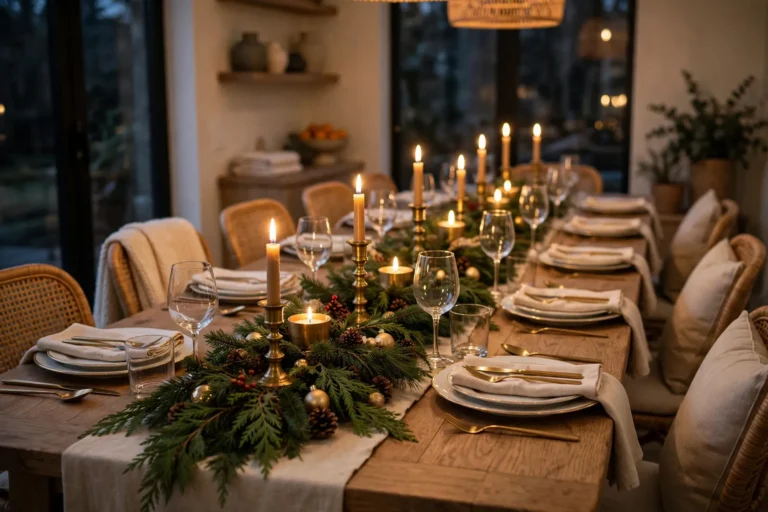
Taper Candles Nestled in Greenery
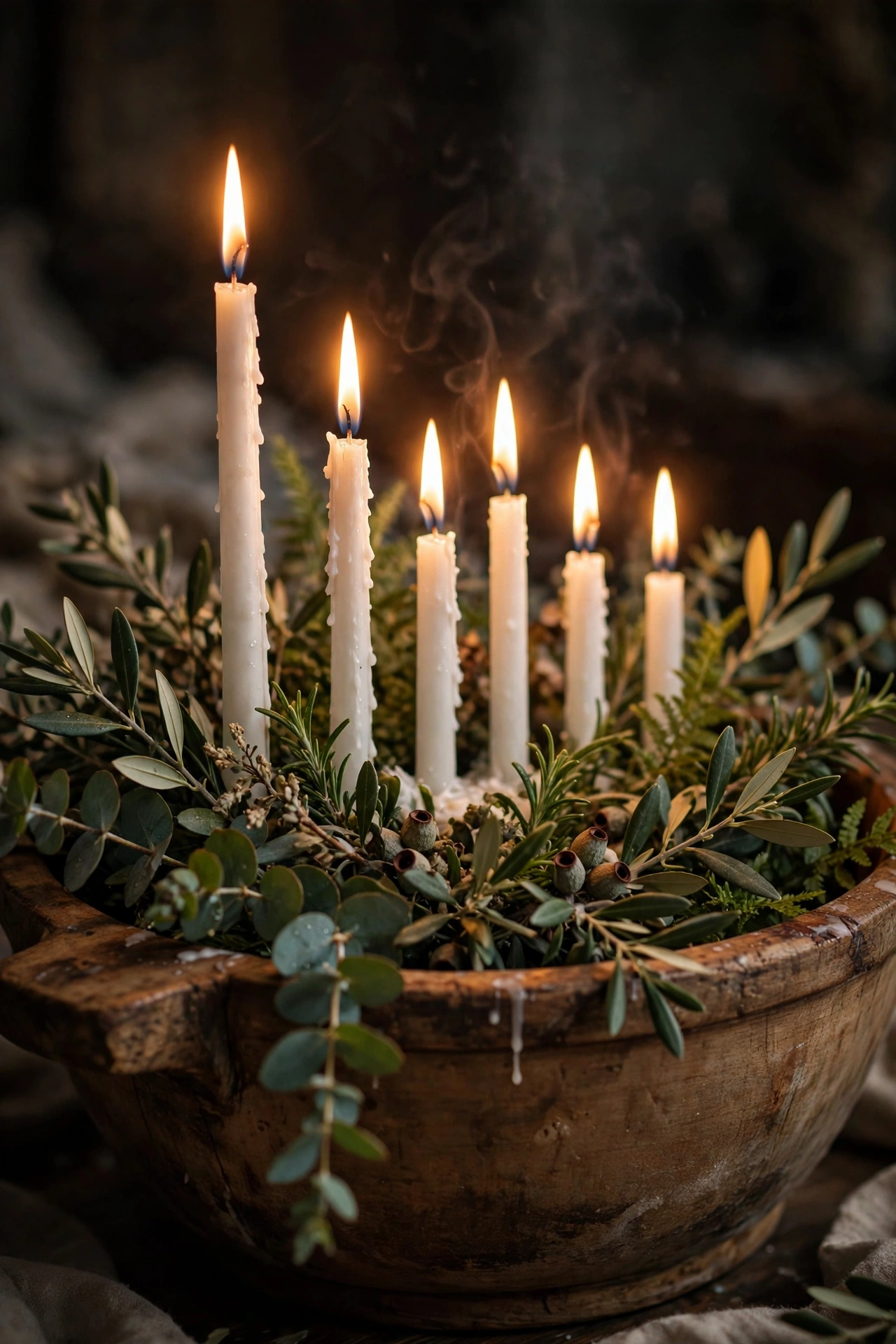
Standing a row of thin taper candles directly in a bed of greenery inside the dough bowl turns a simple centerpiece into a lit one, without needing candlesticks or holders that would otherwise take up space in the bowl. Using floral foam or a Stick-Um-style adhesive at the base of the bowl gives the candles a stable, hidden anchor point so the greenery around them can be arranged freely without worrying about the candles tipping. Spacing the candles at slightly different heights, rather than lining them all up evenly, creates a more organic, gathered look that matches the informal shape of the bowl itself. Choosing a mix of white and cream tapers, rather than a single uniform color, adds a bit of visual variation without introducing a whole new palette. This idea works best with real flame candles supervised on the table during a meal, or with flameless versions if the centerpiece will sit out unattended for longer stretches.
Vintage Ornament Cluster
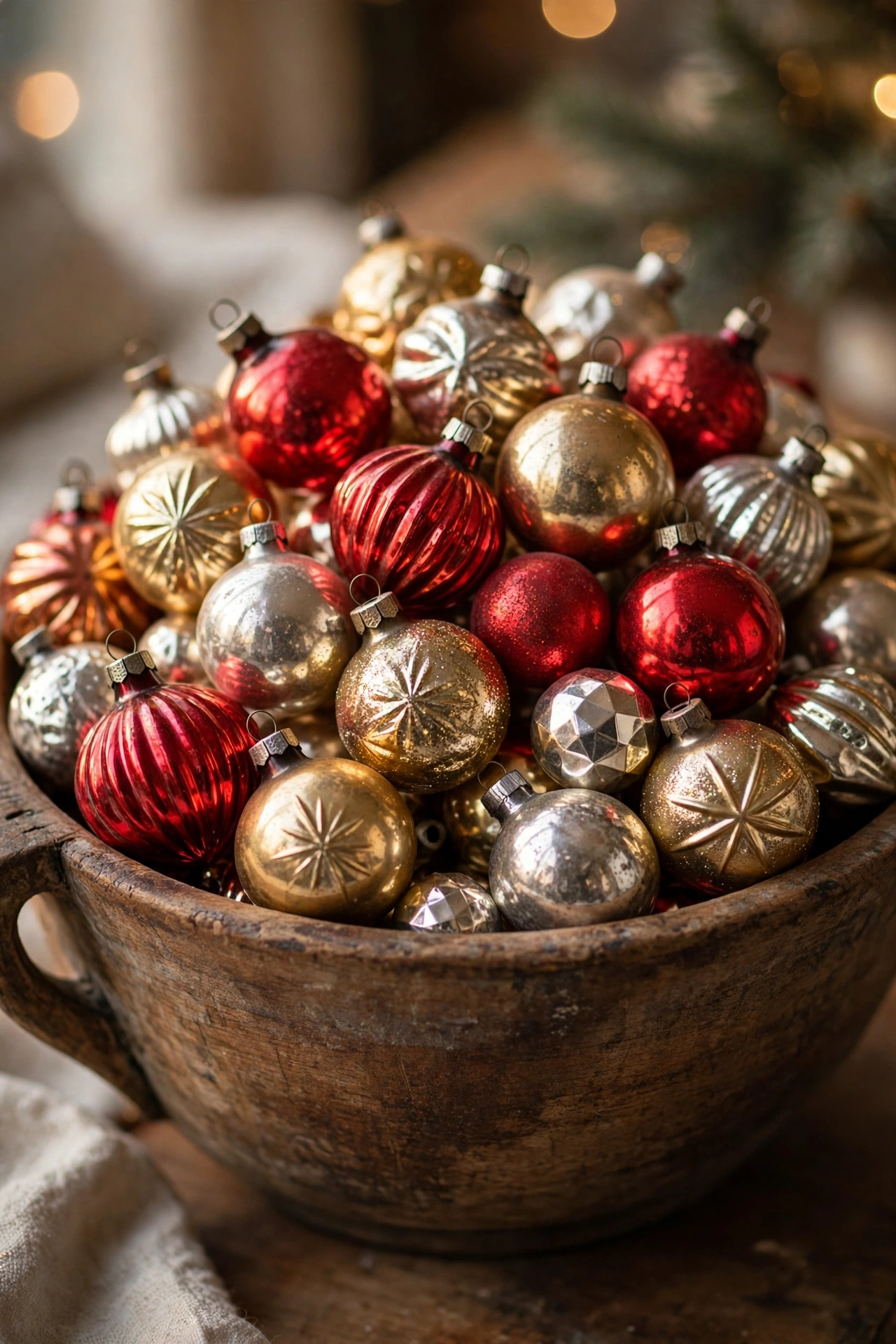
Filling a dough bowl with a generous cluster of vintage or vintage-style glass ornaments, without any greenery at all, turns the bowl into a colorful, collected display that works especially well as a coffee table or sideboard centerpiece rather than a full dining table arrangement. Mixing ornament sizes and finishes — matte, glossy, glittered — within the same general color family keeps the display feeling cohesive even with a wide variety of individual pieces. Piling the ornaments generously, so they mound slightly above the bowl’s rim rather than sitting in a single flat layer, gives the arrangement more visual weight and makes it read as intentional rather than sparse. This idea is a good way to display a family collection of ornaments that might otherwise stay boxed up until they’re hung on the tree, giving them a second moment to be seen. It’s also one of the quickest ideas on this list to put together, since it requires no cutting, arranging, or floral mechanics at all.
Pedestal Display With a Glass Cloche
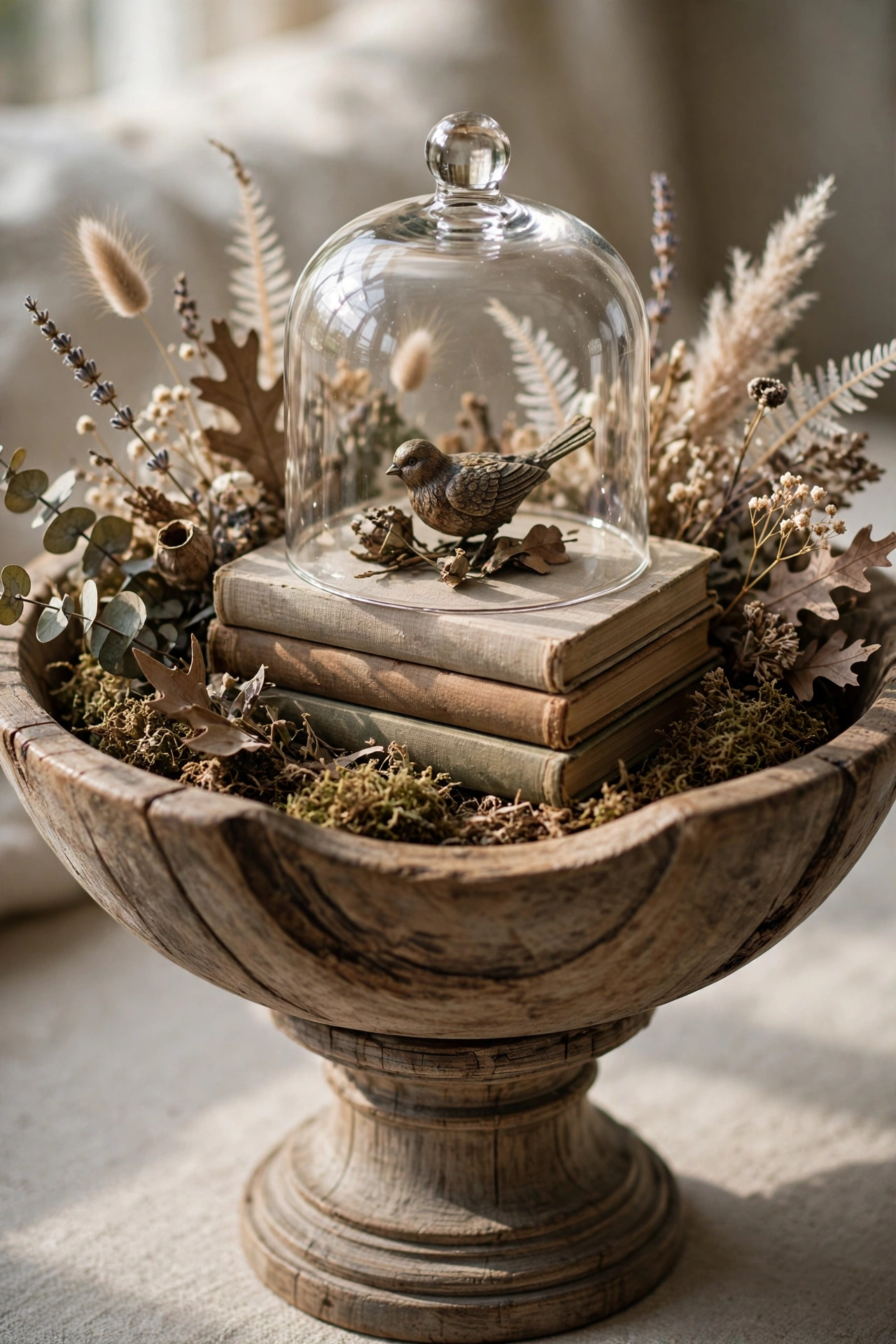
Elevating a dough bowl on a pedestal stand, then adding height inside it with a stack of books topped by a glass cloche, turns the centerpiece into a layered display with multiple points of visual interest rather than one flat arrangement. Filling the space around the cloche with dried botanicals, moss, or small ornaments gives the display texture at the base while the raised cloche draws the eye upward. Choosing a cloche large enough to cover a meaningful object inside it — a small vintage figure, a cluster of ornaments, a single stem — makes the elevated piece feel purposeful rather than decorative for its own sake. This idea works particularly well on a sideboard or console table where the extra height won’t block sightlines the way it might on a dining table meant for conversation across from each other. It’s also one of the more elegant, styled-for-photos ideas on the list, since the layered pedestal-and-cloche structure reads as considered and design-forward.
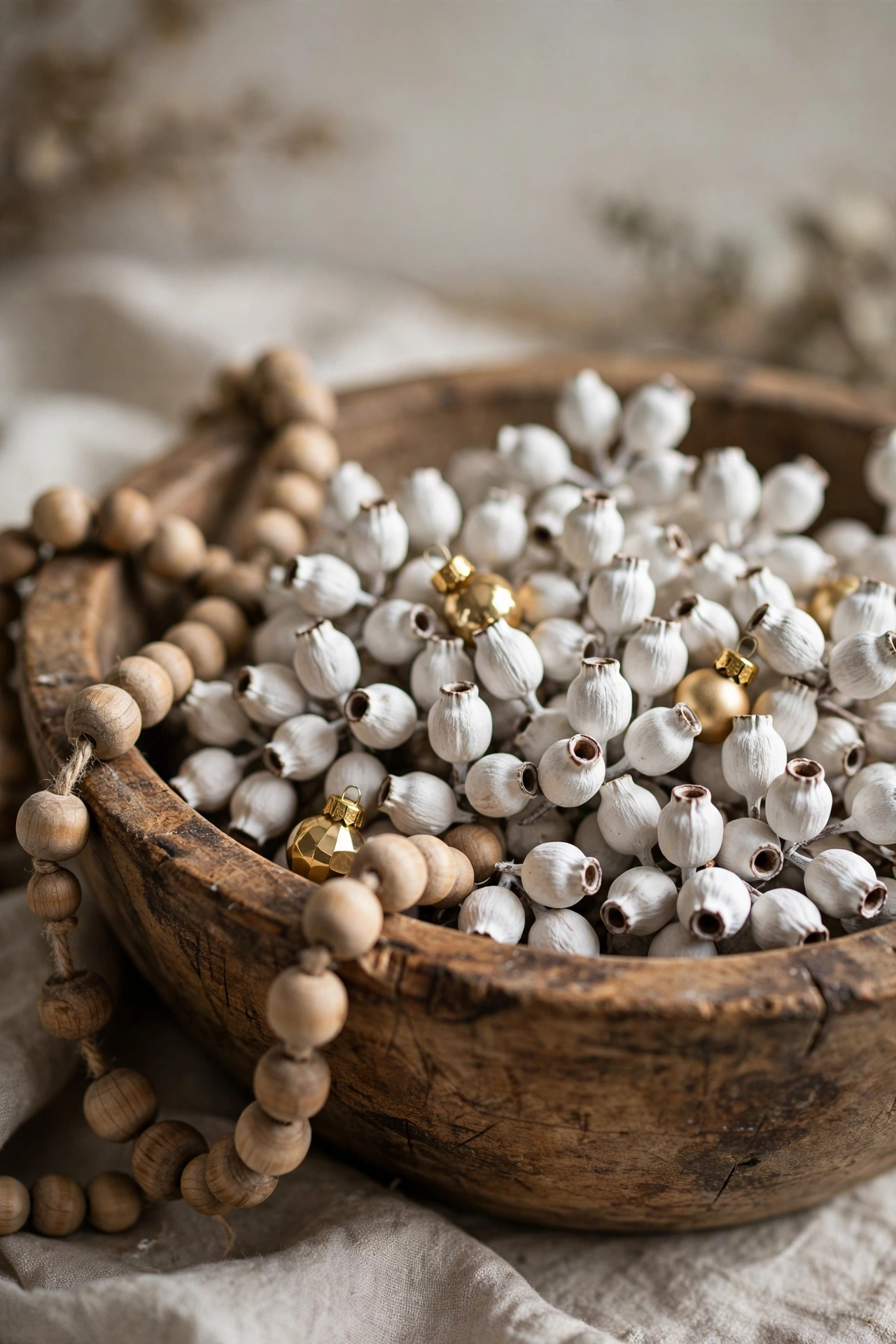
Wood Bead Garland & White Pods
A strand of natural wood bead garland, draped loosely across the length of the dough bowl and paired with white eucalyptus pods or dried botanical pods, brings a warm, textural, distinctly farmhouse look that skips traditional red and green entirely. The natural wood tone of the beads echoes the bowl’s own material, which ties the garland into the bowl rather than making it feel like a separate added element. Scattering the white pods loosely throughout the bowl, rather than lining them up in a row, gives the arrangement the same soft, gathered feeling found in the more natural ideas on this list. Adding a few small gold ornaments among the pods introduces just enough sparkle without pulling the display away from its neutral, natural base. This idea works well for anyone who wants a Christmas centerpiece that still fits comfortably within an otherwise neutral, year-round farmhouse color scheme.
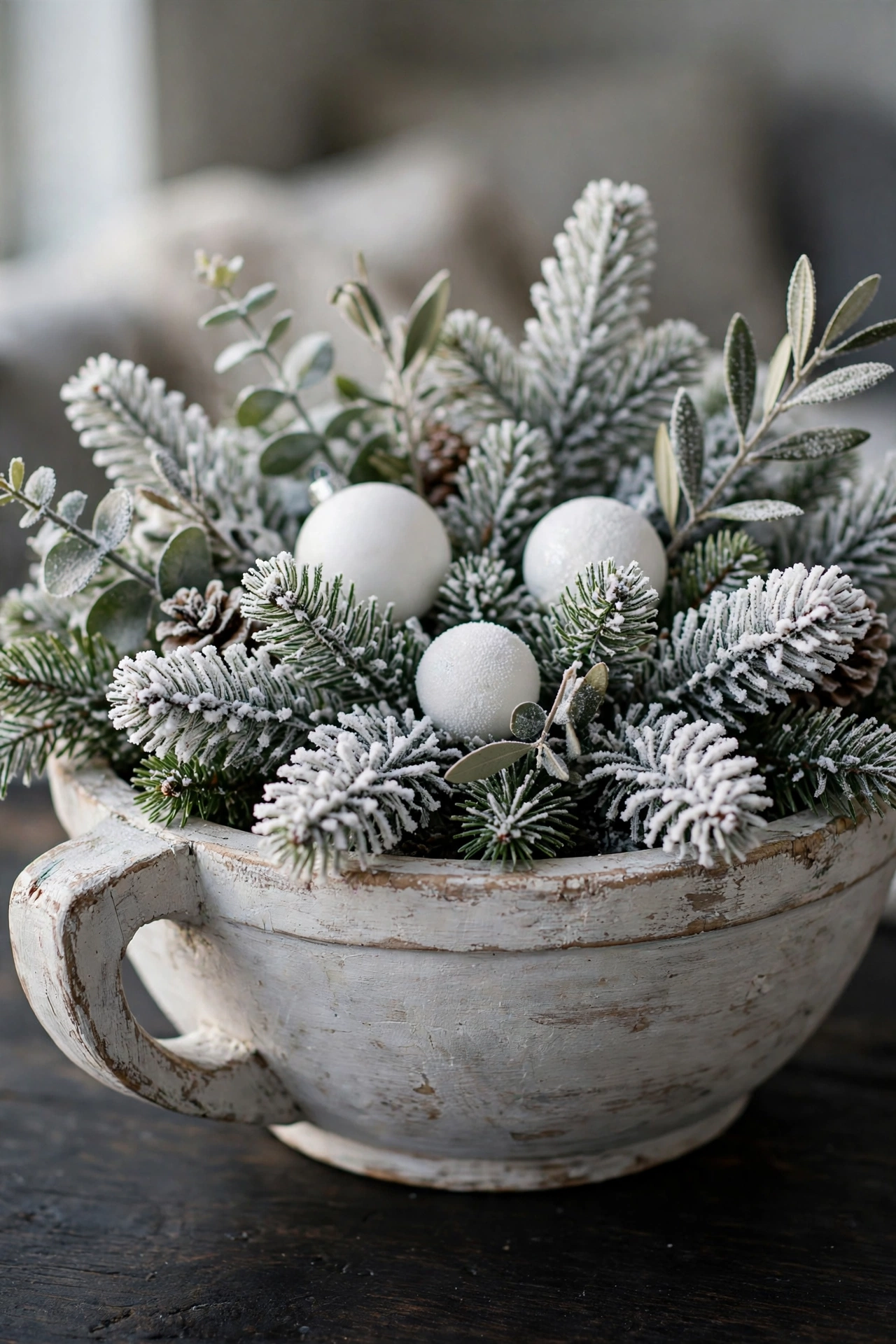
Whitewashed Bowl With Flocked Greenery
Starting with a whitewashed or lightly painted dough bowl, rather than the traditional dark wood finish, and filling it with snow-flocked greenery creates a softer, wintry look that suits a more neutral or Scandinavian-style Christmas palette. The pale bowl and the flocked branches share a similar light tone, which lets any additional accents — a few white ornaments, a scattering of faux berries — stand out more clearly against the muted base. Applying whitewash with a dry brush technique, letting some of the natural wood grain show through, keeps the bowl from looking uniformly painted or artificial. This combination photographs especially well against a darker table surface, since the light bowl and greenery create strong, clean contrast. This idea is a good option for anyone who owns a dough bowl already used for other seasons in its natural finish and wants a distinctly different look specifically for a winter or Christmas display.
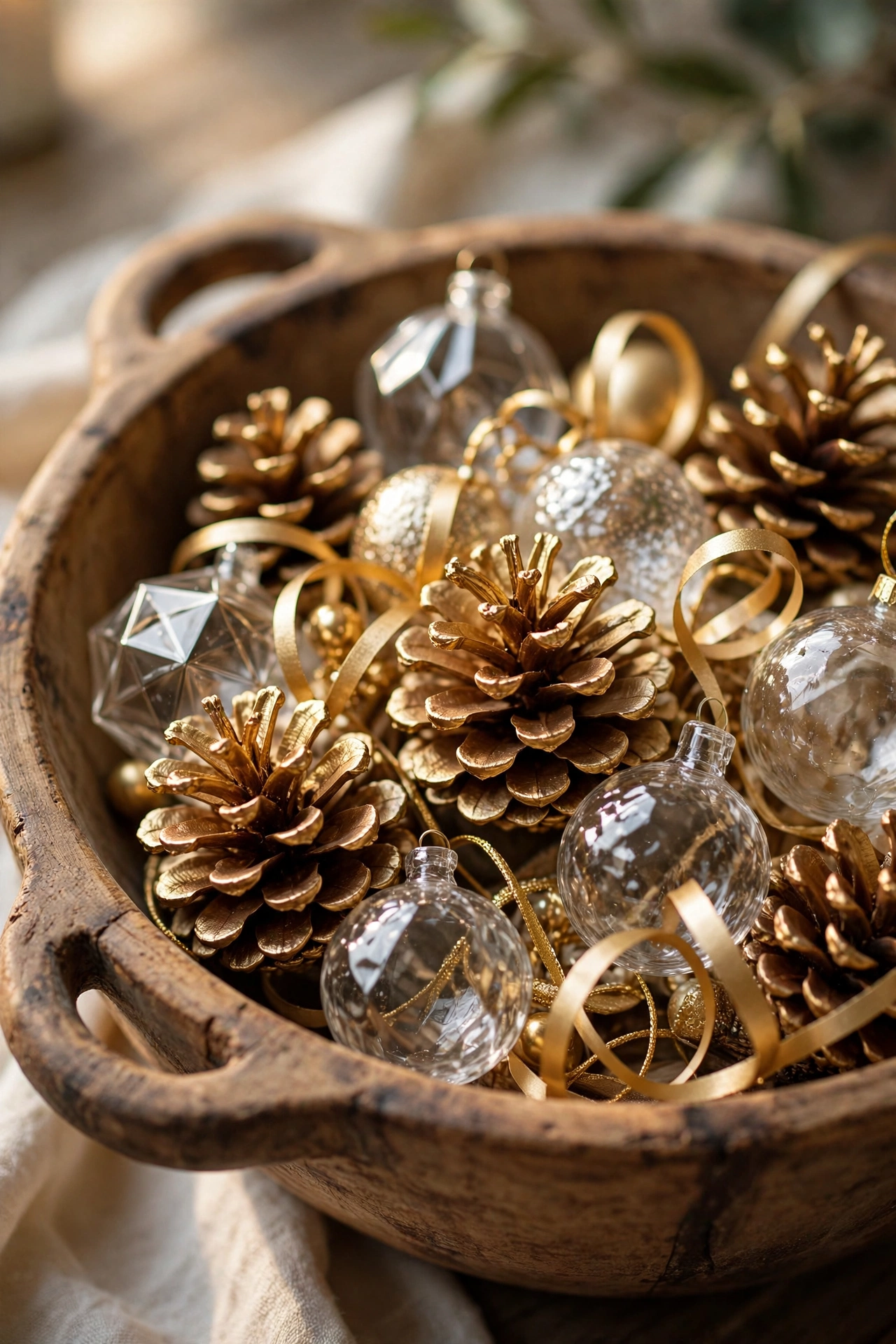
Gold Pinecones & Glass Ornaments
Dipping real pinecones partway in gold paint, then mixing them into the bowl alongside gold and clear glass ornaments, gives a dough bowl centerpiece a warmer, more glamorous finish than natural greenery alone provides. Leaving the untouched end of each pinecone in its natural brown tone, rather than painting the whole thing gold, keeps the piece looking intentional and detailed up close rather than solid and flat. Layering in a few strands of thin gold ribbon or wired gold mesh among the pinecones adds shine that catches candlelight or lamp light nearby. Because this combination skips fresh greenery, it holds its look for the entire season without any wilting or drying to worry about. This idea suits a more formal or elegant dining room particularly well, since the gold tone reads as a step up from the typical rustic red-and-green dough bowl display.
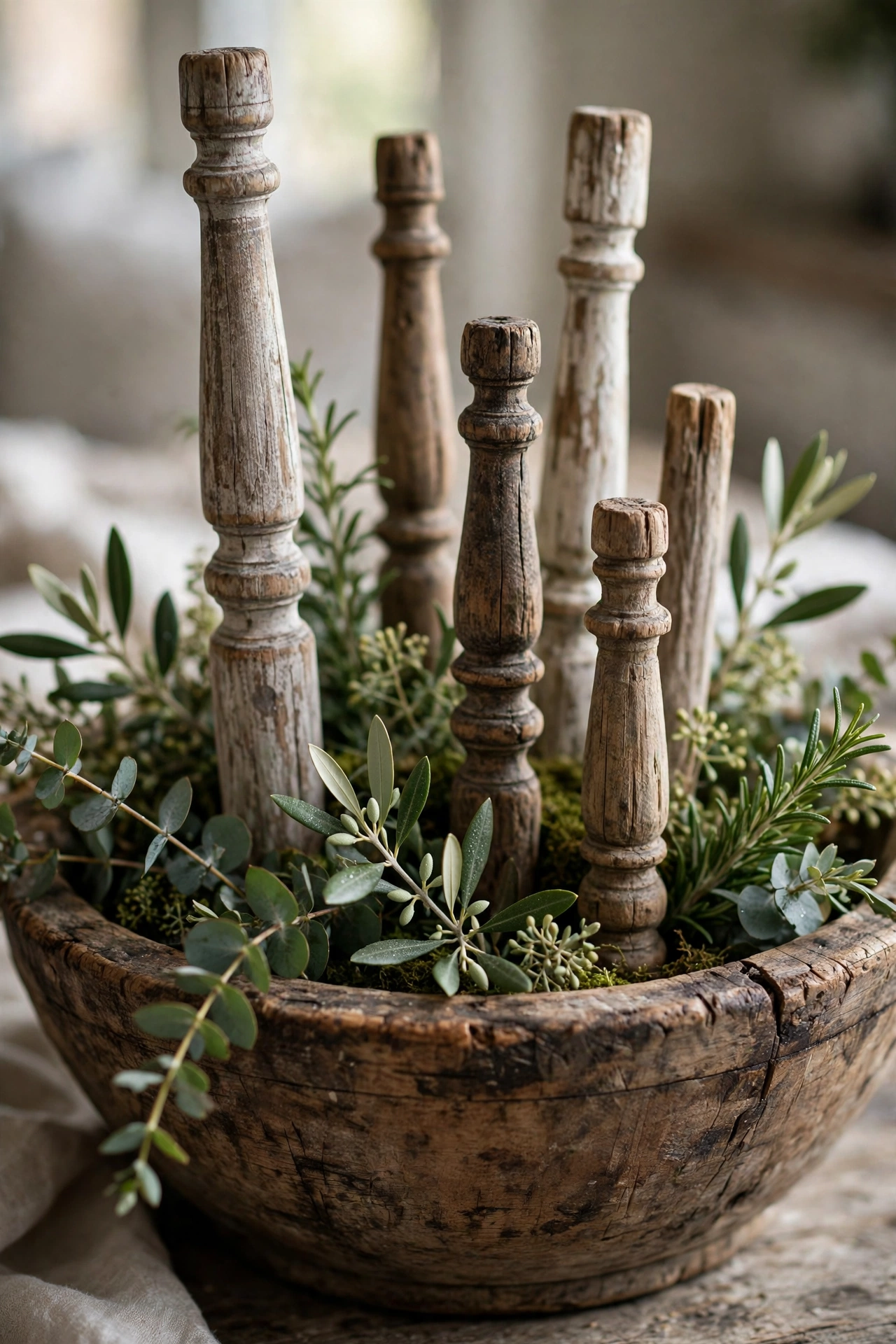
Architectural Salvage Spindle Accents
Tucking a few reclaimed wood spindles or architectural salvage pieces — often called “gingerbread” trim in farmhouse decorating circles — into a dough bowl alongside greenery gives the centerpiece an unexpected, one-of-a-kind character that no store-bought accent can replicate exactly. Standing the spindles upright at slightly different heights among the greenery adds vertical interest that flat ornaments or ribbon can’t provide on their own. Because each piece of salvage is unique, this idea naturally results in a centerpiece that looks different from anyone else’s, which matters if the goal is a design that feels personal rather than assembled from a matching seasonal decor set. Pairing the aged, weathered wood tone of the spindles with simple greenery and a few white or cream accents keeps the overall look cohesive despite the mix of materials. This is one of the more advanced, collector-driven ideas on the list, best suited to anyone who already has architectural salvage pieces on hand or enjoys sourcing them from salvage yards and antique markets.
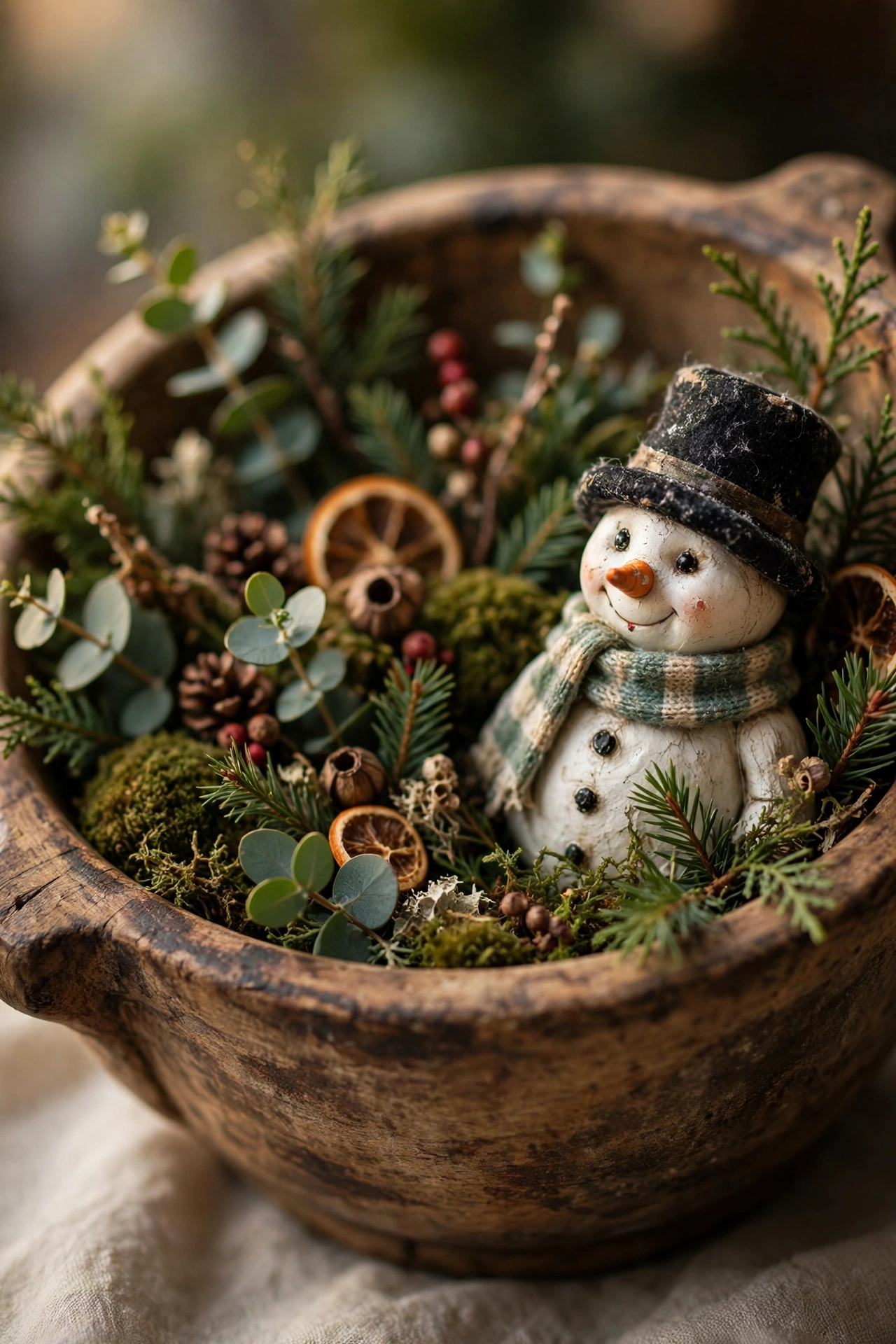
Vintage Snowman Figures
Nestling one or two vintage or vintage-style snowman figures directly into a bed of greenery inside the dough bowl adds a bit of charm and whimsy that pure greenery or ornament displays don’t offer. Battery-operated snowman candles, in particular, do double duty as both a decorative figure and a light source, which means the centerpiece stays functional even without additional taper candles added separately. Positioning the figure slightly off to one side, rather than centered, leaves the rest of the bowl free for greenery and smaller accents to build out the display around it. Choosing a figure with a slightly worn, aged paint finish over a glossy new one keeps the piece consistent with the vintage, collected character dough bowls are typically known for. This idea works especially well for anyone decorating with kids, since a snowman figure gives them something specific and recognizable to point out in the finished display.
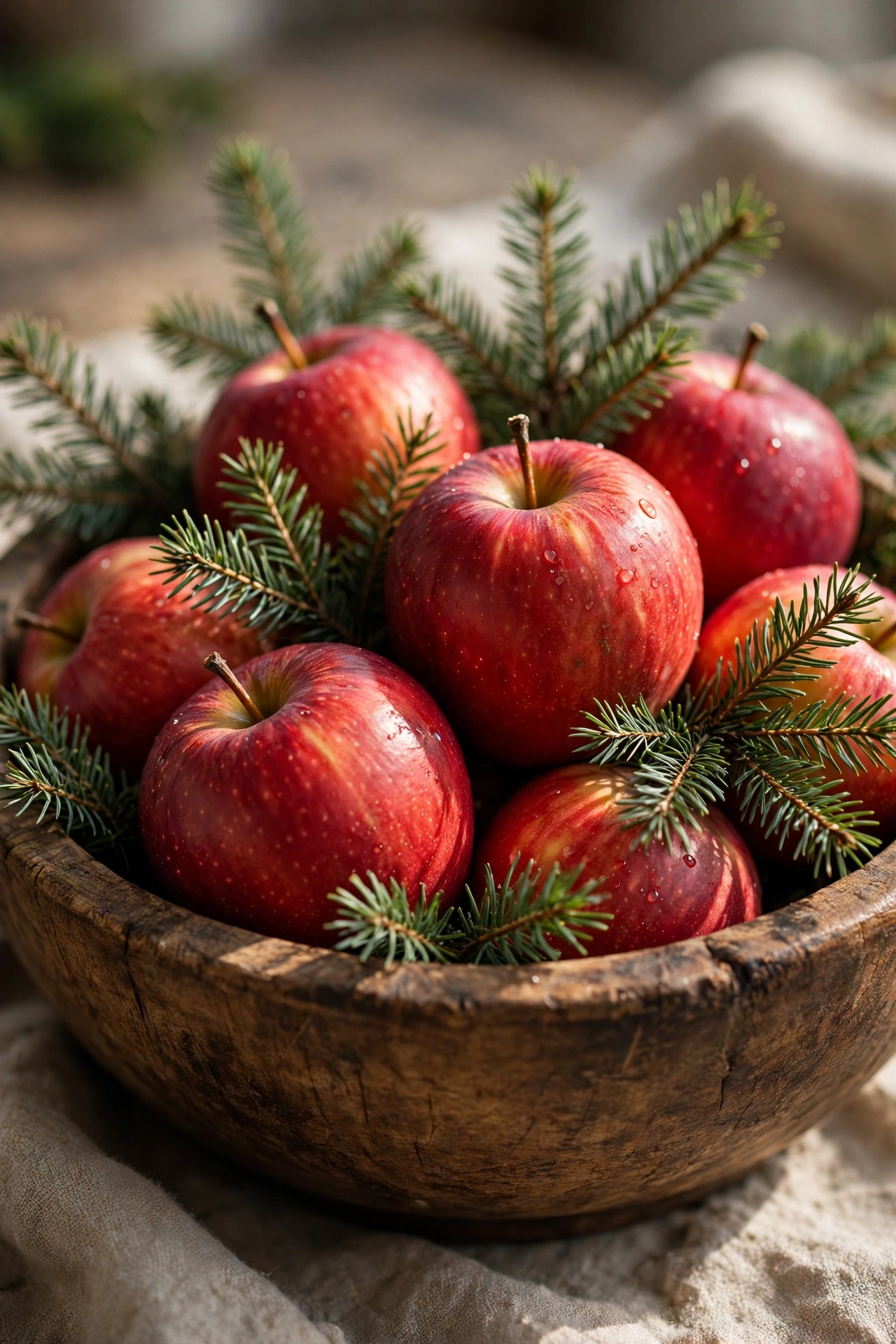
Apples & Greenery
Filling a dough bowl with fresh green or red apples alongside sprigs of fir or eucalyptus brings a natural, edible-feeling element into the centerpiece that reads as festive without relying on any traditional ornaments at all. The rounded shape and saturated color of the apples contrast nicely against the more textured, muted tones of greenery, giving the arrangement visual weight without needing a large volume of filler. Choosing apples in a single color, either all red or all green, keeps the display looking more curated than a mixed bowl of produce would. Because real apples only last a week or two before needing to be replaced, this idea works best for a shorter display window, like the days leading directly up to a Christmas gathering, rather than a full month of continuous decor. This is one of the more affordable ideas on the list, since apples are inexpensive and available at any grocery store through the winter months.
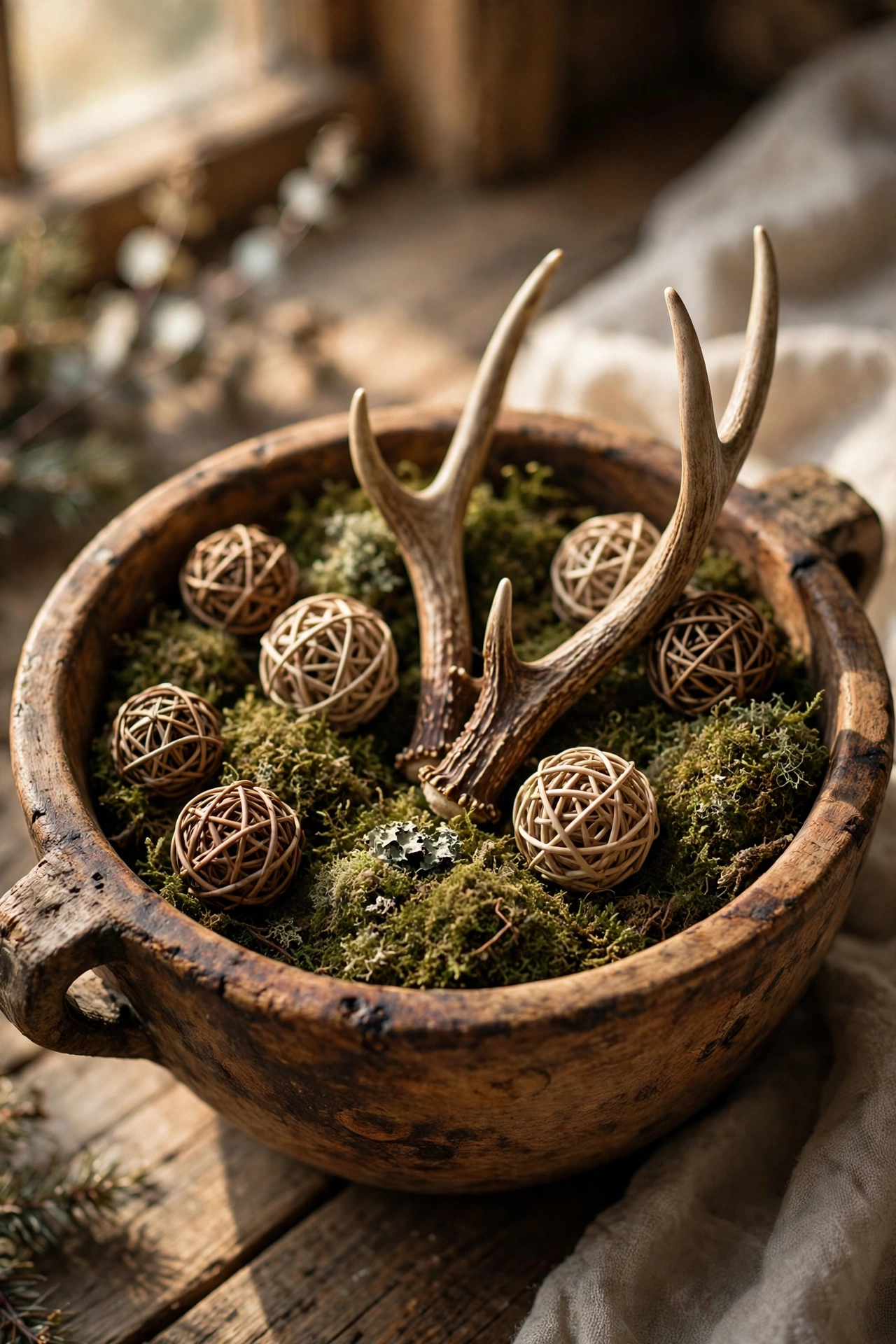
Moss, Vine Balls & Antlers
Combining moss, small woven vine balls, and a pair of faux or real antlers inside a dough bowl creates a woodland-inspired Christmas display that leans more rustic-lodge than traditional red-and-green farmhouse. Layering the moss first as a base, then tucking the vine balls and antler pieces on top, gives the arrangement the same natural, gathered-from-outside look found in cabin or lodge-style holiday decor. Choosing antlers in a matching pair, rather than a single piece, adds symmetry that balances out the more randomly shaped moss and vine texture. This combination works especially well for a home that already leans toward a rustic or hunting-lodge aesthetic the rest of the year, since it extends that same material palette into the Christmas season rather than introducing an unrelated new one. It’s also a good option for anyone who wants a Christmas centerpiece that feels more “winter cabin” than overtly holiday-specific.
Related: 25 Modern Ways to Decorate a Small Living Room for Christmas
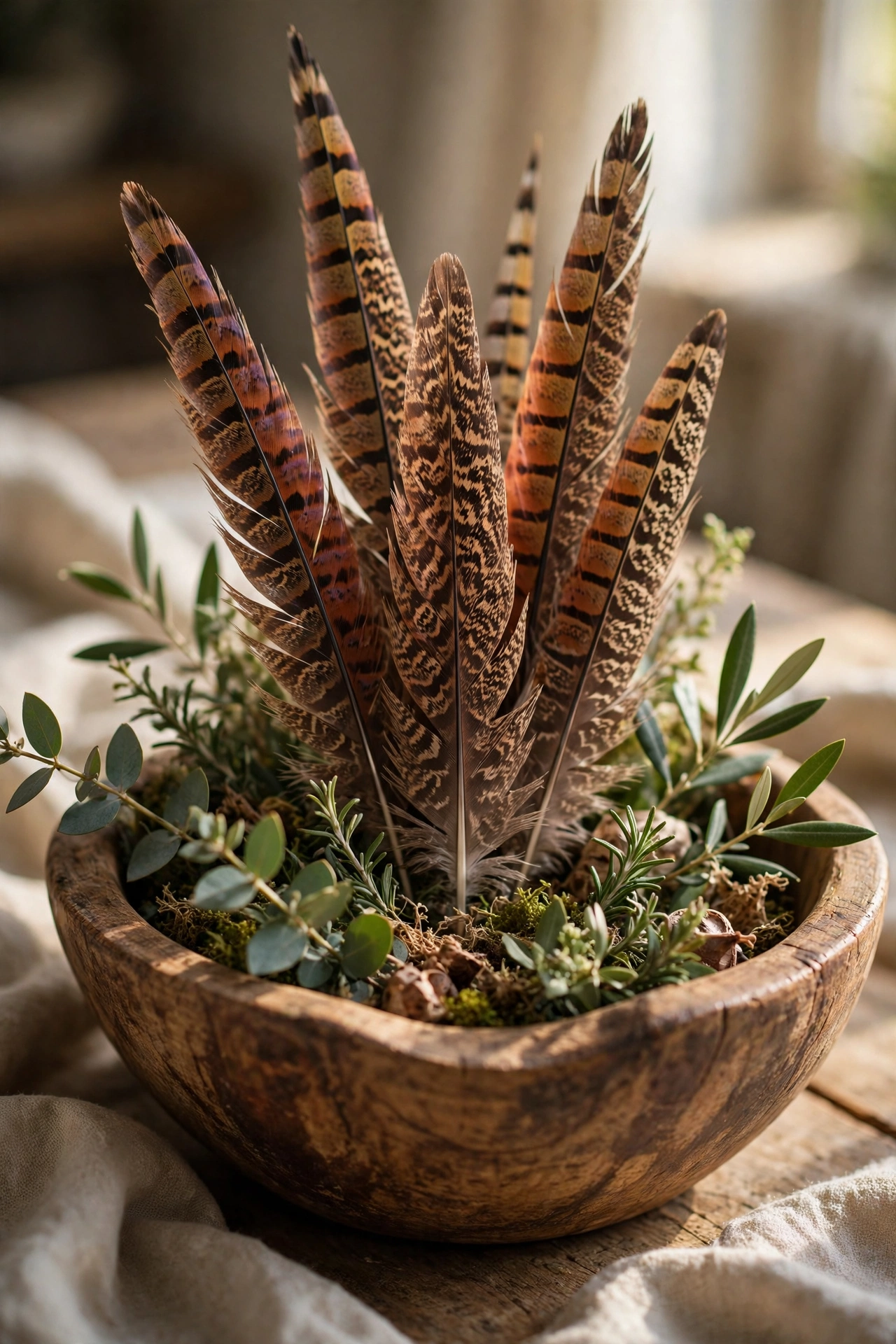
Pheasant Feathers & Greenery
Adding a few pheasant feathers, with their distinctive mottled brown, cream, and copper coloring, into a bed of greenery inside the dough bowl brings texture and natural color variation that solid green branches alone don’t provide. Standing the feathers upright at the back of the arrangement, rather than laying them flat, gives the centerpiece more height and draws the eye through the layers of the display. This combination works particularly well alongside pinecones and dried botanicals, since all three materials share a similar warm, earthy color palette that reads as sophisticated rather than costume-like. Real pheasant feathers can typically be found at craft stores or floral suppliers, and a small bundle goes a long way when used as an accent rather than the main body of the arrangement. This idea suits a more elegant, English-countryside-inspired Christmas table particularly well, since pheasant feathers carry that same traditional, gathered-from-the-hunt quality.
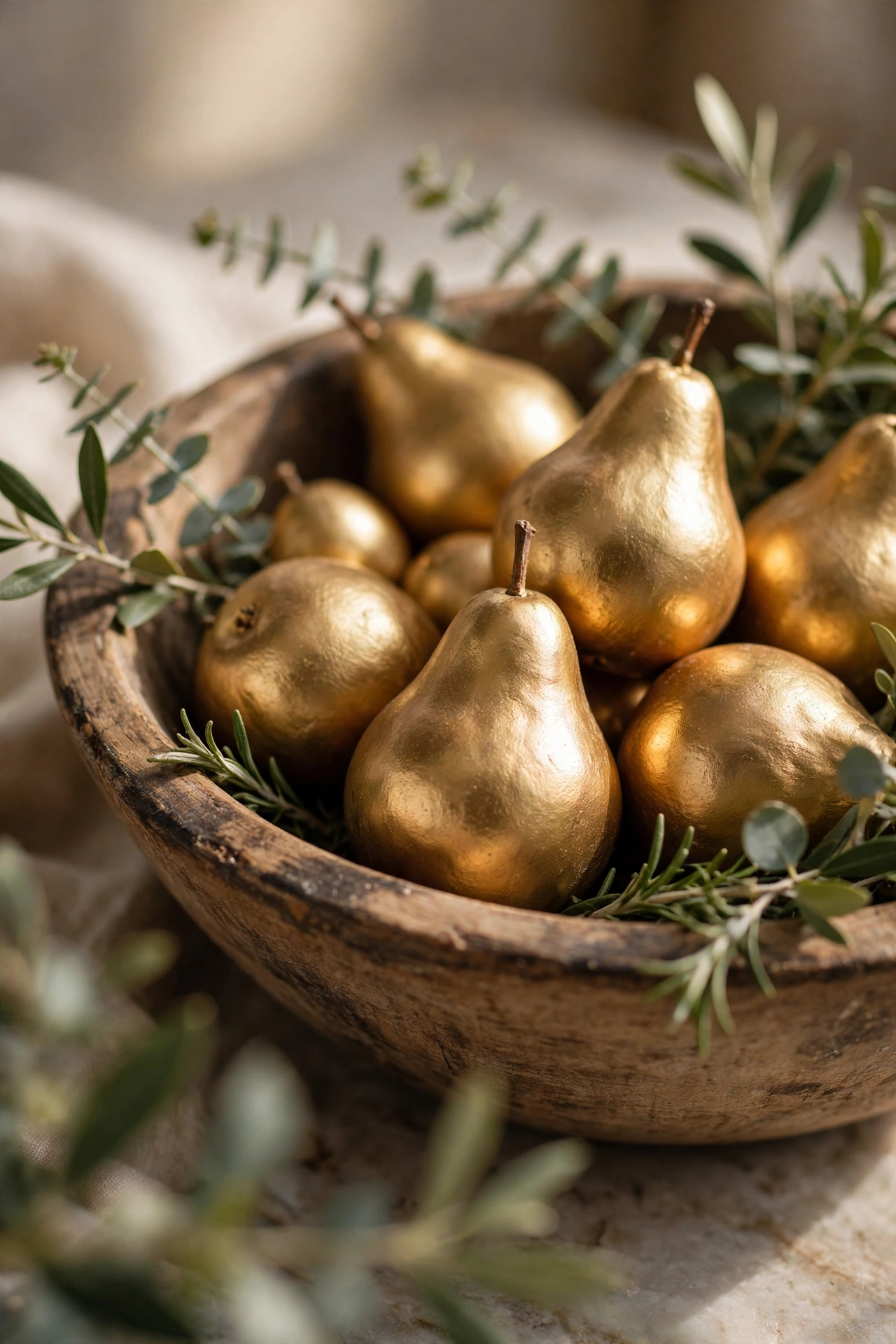
Faux Gold Pears
A cluster of faux gold pears, nestled among a small amount of greenery, gives a dough bowl centerpiece an elegant, slightly unexpected focal point that works especially well on a coffee table or smaller side surface rather than a full dining table. The pear shape reads as a fruit-bowl display at a glance, but the gold finish shifts the mood toward something more formal and holiday-specific than a bowl of real produce would suggest. Grouping the pears closely together, rather than spacing them evenly around the bowl, keeps the gold finish concentrated enough to catch the light as a cohesive cluster. Adding just a few sprigs of greenery around the edges, rather than filling the whole bowl, lets the pears remain the clear visual focus. This idea is a good choice for anyone who wants an elegant, low-maintenance Christmas centerpiece that requires no fresh materials and holds its look for the entire season without any upkeep.
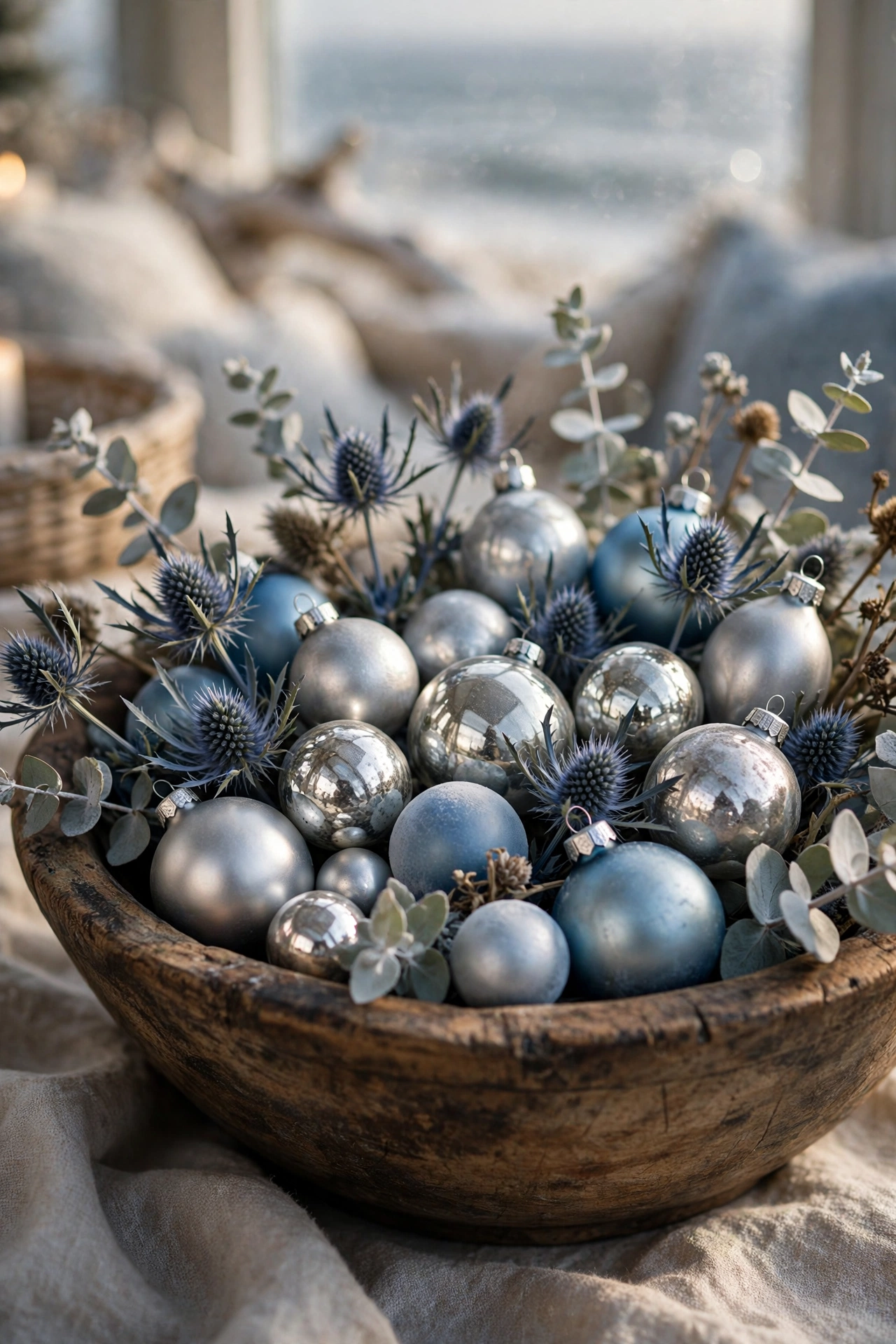
Blue & Silver Coastal Christmas Palette
Filling a dough bowl with silver and soft blue ornaments, dried blue thistle, and a few sprigs of silvery eucalyptus gives the centerpiece a cooler, more coastal take on Christmas that skips the traditional red and gold combination entirely. This palette works particularly well for coastal farmhouse homes that lean into blues and neutrals as their year-round color scheme, since the centerpiece stays consistent with the rest of the home’s existing style rather than introducing a jarring seasonal shift. Mixing matte and glossy silver ornaments within the bowl adds dimension that a single uniform finish wouldn’t provide. Scattering a few pinecones lightly dusted with silver glitter among the blue accents ties the arrangement back to a more traditional winter look without abandoning the cooler color story. This idea is one of the more distinctive options on the list, since most dough bowl Christmas displays default to warm reds and golds rather than this cooler alternative.
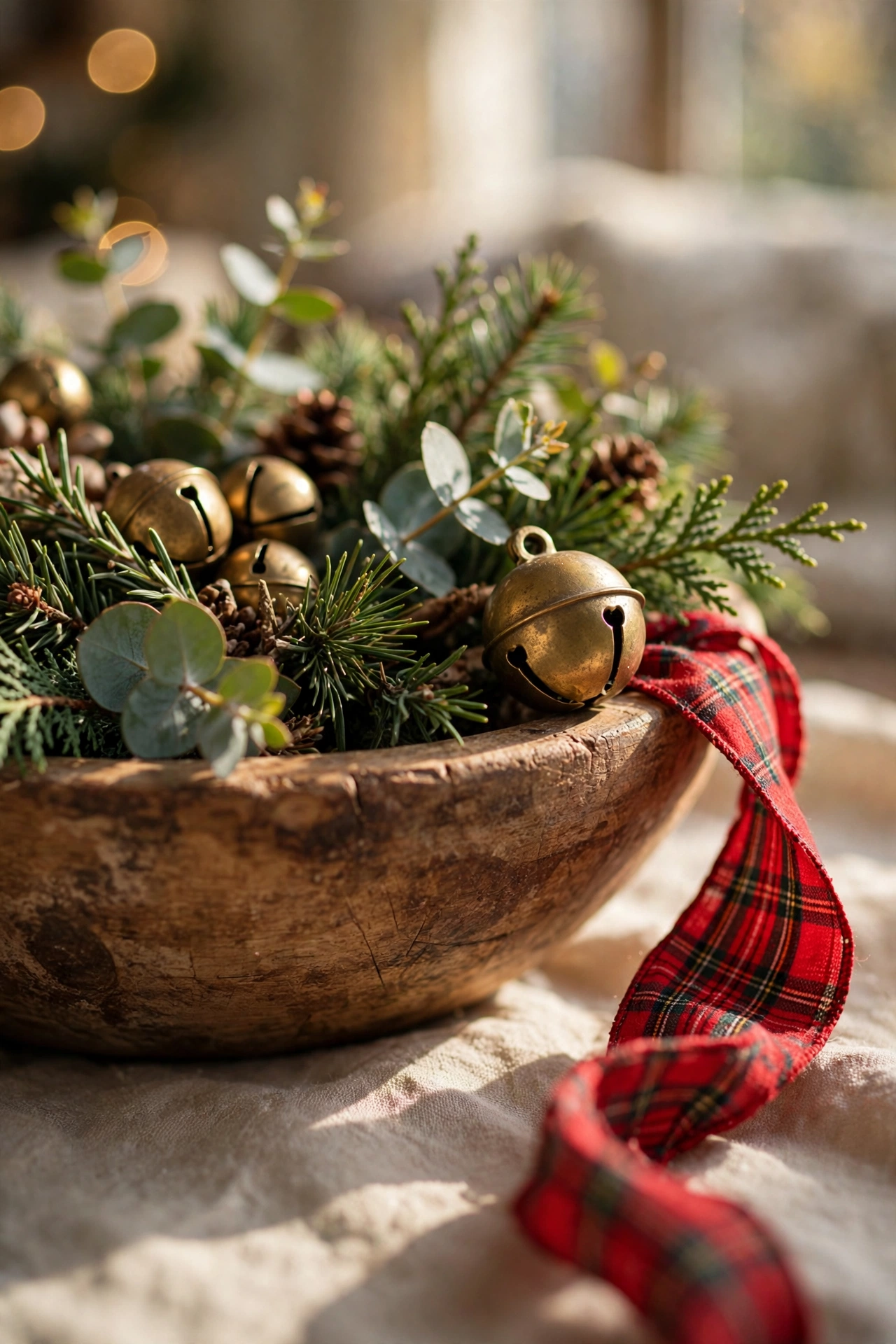
Bells & Plaid Ribbon
Tucking a handful of jingle bells, in either brass or aged silver, into a dough bowl alongside a length of plaid or tartan ribbon woven loosely through greenery brings a classic, slightly playful Christmas texture to the display. Choosing a ribbon pattern in red, green, and cream keeps the plaid feeling traditional rather than novelty, and it pairs naturally with the warm wood tone of the bowl itself. Letting the ribbon trail loosely over the edge of the bowl on one or both sides, rather than tucking it entirely inside, adds movement and softens the bowl’s straight edges. Clustering the bells together in one or two spots rather than scattering them evenly throughout keeps their sound and visual weight from overwhelming the rest of the arrangement. This idea works especially well for a more traditional, classic Christmas aesthetic, and it’s an easy way to bring a favorite plaid ribbon into a centerpiece without needing an entirely new set of decor.
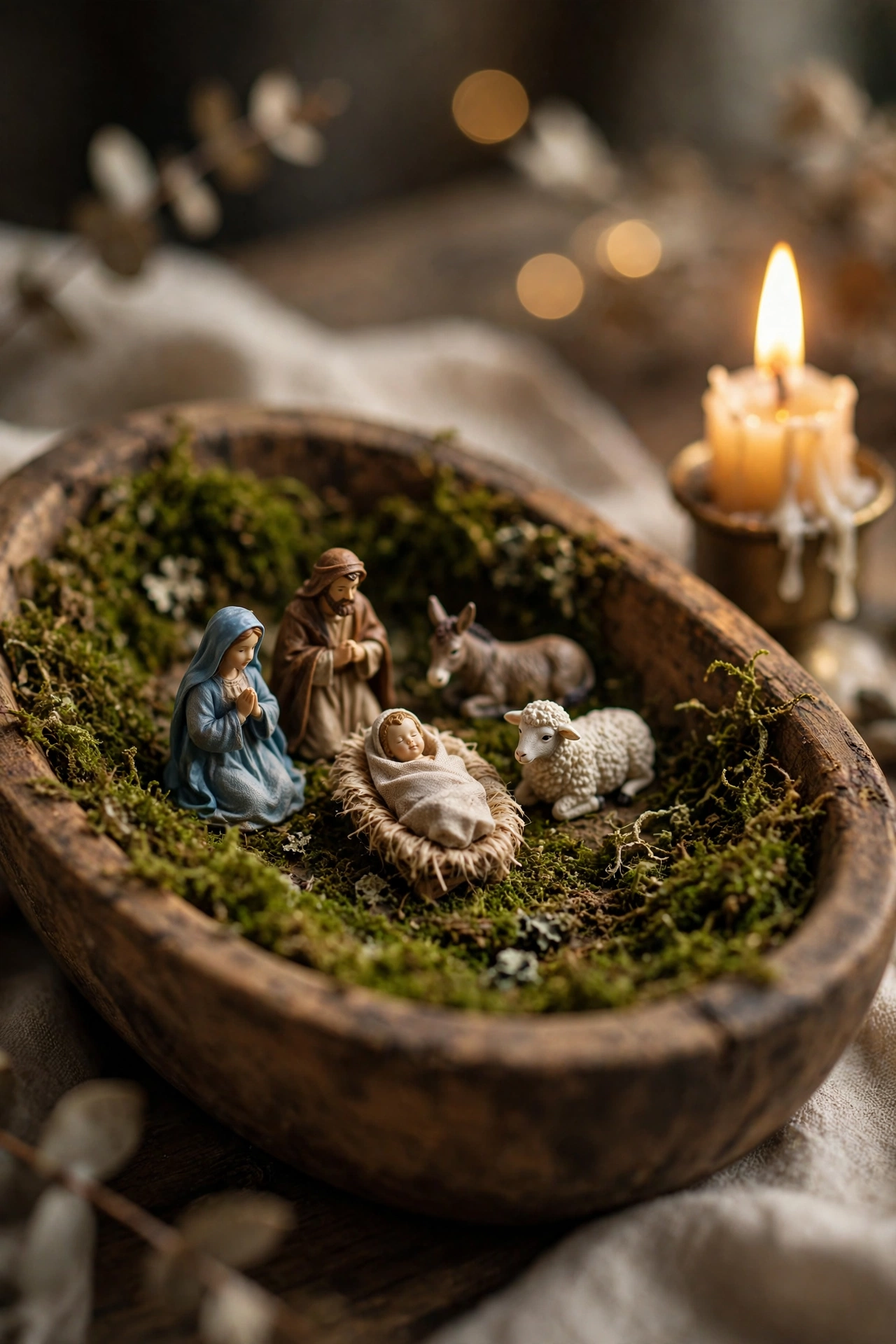
Small Nativity or Figural Collection
Arranging a small nativity scene, or another meaningful collection of holiday figurines, directly inside a dough bowl gives the centerpiece a personal, sentimental focus rather than a purely decorative one. Nestling the figures into a thin layer of moss or straw at the base of the bowl grounds them visually and adds a bit of texture without competing with the details of the figures themselves. Keeping the surrounding greenery minimal, or skipping it altogether, keeps the attention on the figural collection as the clear centerpiece rather than one element among many. This idea works particularly well for a family nativity set or a collection of figurines gathered over the years, since the dough bowl gives them a defined, elevated space to be displayed together rather than spread across a mantel or shelf. It’s also one of the more meaningful ideas on this list for anyone who wants their Christmas centerpiece to carry personal or religious significance rather than serving a purely aesthetic purpose.
Related: 17 Doable Christmas Table Settings That Feel Elevated
Styling Tips
- Build in layers, starting with a base (greenery, moss, or straw) and adding taller or more delicate elements (candles, feathers, figures) on top, rather than placing everything directly on the bare bowl at once.
- Let a few pieces spill slightly over the bowl’s edge — pinecones, ribbon, greenery — to soften the hard line of the rim and make the arrangement feel more organic.
- Choose one clear focal point (a cluster of ornaments, a snowman figure, a stack of gold pears) rather than combining several equally weighted elements that compete for attention.
- Keep the bowl’s own wood grain at least partially visible in most arrangements, since covering it completely removes the texture that makes a dough bowl worth using as a centerpiece in the first place.
- Match the arrangement’s height to where the bowl will sit — lower, denser arrangements for a dining table where sightlines matter, taller displays for a sideboard or coffee table where height isn’t a concern.
Practical Implementation Ideas
- Use floral foam or a stick-adhesive product to anchor candles or floral stems securely inside the bowl, especially if the centerpiece will be moved or bumped during a gathering.
- Line the inside of the bowl with a thin plastic liner before adding fresh greenery or real fruit, which protects the wood from moisture damage over time.
- Build the arrangement in the bowl’s final location rather than assembling it elsewhere and moving it afterward, since dough bowl centerpieces can be heavier and more delicate to transport once finished.
- Keep a small box of extra pinecones, ribbon, or ornaments on hand to fill in any gaps that become more visible once the arrangement is viewed from different angles around the table.
- Refresh fresh greenery with a light water misting every few days if the display needs to last several weeks, which helps prevent the branches from drying out and shedding needles too quickly.
Common Mistakes to Avoid
- Overfilling the bowl so densely that none of the wood grain shows, which removes the texture and character that makes a dough bowl distinct from a plain basket or tray.
- Using materials that are too small or lightweight for the bowl’s scale, resulting in an arrangement that looks sparse or lost inside a larger bowl.
- Skipping a stable base for candles, which risks tipping or uneven burning once the surrounding greenery starts to shift.
- Choosing a centerpiece so tall or wide that it blocks sightlines across a dining table meant for conversation.
- Mixing too many unrelated color palettes or materials at once, which can make even a well-stocked dough bowl look cluttered rather than intentionally layered.
Small-Space Alternatives
For a smaller dough bowl or a tighter table, a simple greenery-and-candle combination or a single cluster of ornaments takes up less visual space than a multi-layered pedestal-and-cloche display. Choosing one focal element — a small nativity, a cluster of gold pears, a pair of antlers — rather than combining several ideas from this list keeps a smaller bowl from feeling overcrowded. A dough bowl can also be placed on a narrow console table or mantel rather than a dining table if floor or table space is limited elsewhere in the room.
Budget-Friendly Alternatives
Fresh greenery trimmed from an existing Christmas tree, leftover ornaments from previous years, and apples or pinecones gathered from the yard can fill a dough bowl centerpiece at very little additional cost. A can of gold spray paint turns ordinary pinecones or found branches into a more elevated-looking accent without needing to buy pre-made gold decor. Thrift stores and after-Christmas clearance sales are good sources for vintage-style ornaments, ribbon, and small figural pieces that can be added to the collection year after year. If a dough bowl isn’t already owned, a large wooden salad bowl or bread trough can serve the same purpose for most of the ideas on this list.
Pro Styling Recommendations
Treat the dough bowl itself as a material in the design, not just a container, and choose accents that complement rather than hide its wood tone and shape. Vary height within the arrangement — low greenery at the edges building up to taller candles, feathers, or a pedestal element in the center or to one side — so the display has visual movement rather than sitting at one flat level. Repeat at least one material or color from the rest of the room’s holiday decor within the dough bowl centerpiece, whether that’s a matching ribbon, ornament color, or greenery type, to tie the piece into the wider space. Finish with one detail that rewards a closer look — a hand-painted pinecone tip, a personal figurine, a piece of architectural salvage — since dough bowl centerpieces are often viewed up close at a dining table where guests have time to actually notice the details.
Frequently Asked Questions
Fresh or faux greenery, pinecones, taper candles, vintage ornaments, dried botanicals, and small figural pieces like a nativity or snowman figure are all common choices, often combined in layers for more visual depth.
Floral foam or a strong adhesive like Stick-Um can be used at the base of the bowl to anchor candles securely, allowing greenery to be arranged around them without risk of tipping.
A reproduction dough bowl works just as well as an antique one for styling purposes — the principles behind filling and layering the bowl are the same regardless of its age or origin, and even a large salad bowl or bread trough can serve a similar purpose.
Fresh fir or pine greenery typically lasts one to two weeks before needing to be refreshed, and a light misting of water every few days can help extend that timeframe.
An oval bowl in the 20 to 30 inch range tends to work well for a dining table centerpiece, while smaller round bowls suit a coffee table or sideboard display better.
Yes — taller, more layered arrangements like a pedestal display with a glass cloche or a cluster of ornaments tend to work particularly well on a coffee table, since sightline concerns matter less there than at a dining table.
Using gold-toned accents, glass ornaments, faux gold pears, or a cloche-and-pedestal display, rather than natural greenery and pinecones alone, shifts the look toward something more formal and polished.
A simple combination of greenery and a few candles, using whatever pieces are already on hand from other holiday decor, can be arranged in five to ten minutes and still looks fully finished.
Conclusion
A dough bowl earns its place in farmhouse decor because it adapts to whatever a season calls for, and Christmas gives it more material to work with than almost any other time of year. Start with a base you already have — greenery from the tree lot, ornaments from a storage bin, apples from the kitchen — and build the rest of the arrangement around whichever idea from this list matches the mood you’re going for. Once it’s filled, a dough bowl tends to become the centerpiece people linger over at the table, simply because there’s always one more small detail tucked inside worth noticing.