18 Studio Apartment Christmas Decor Ideas That Save Space
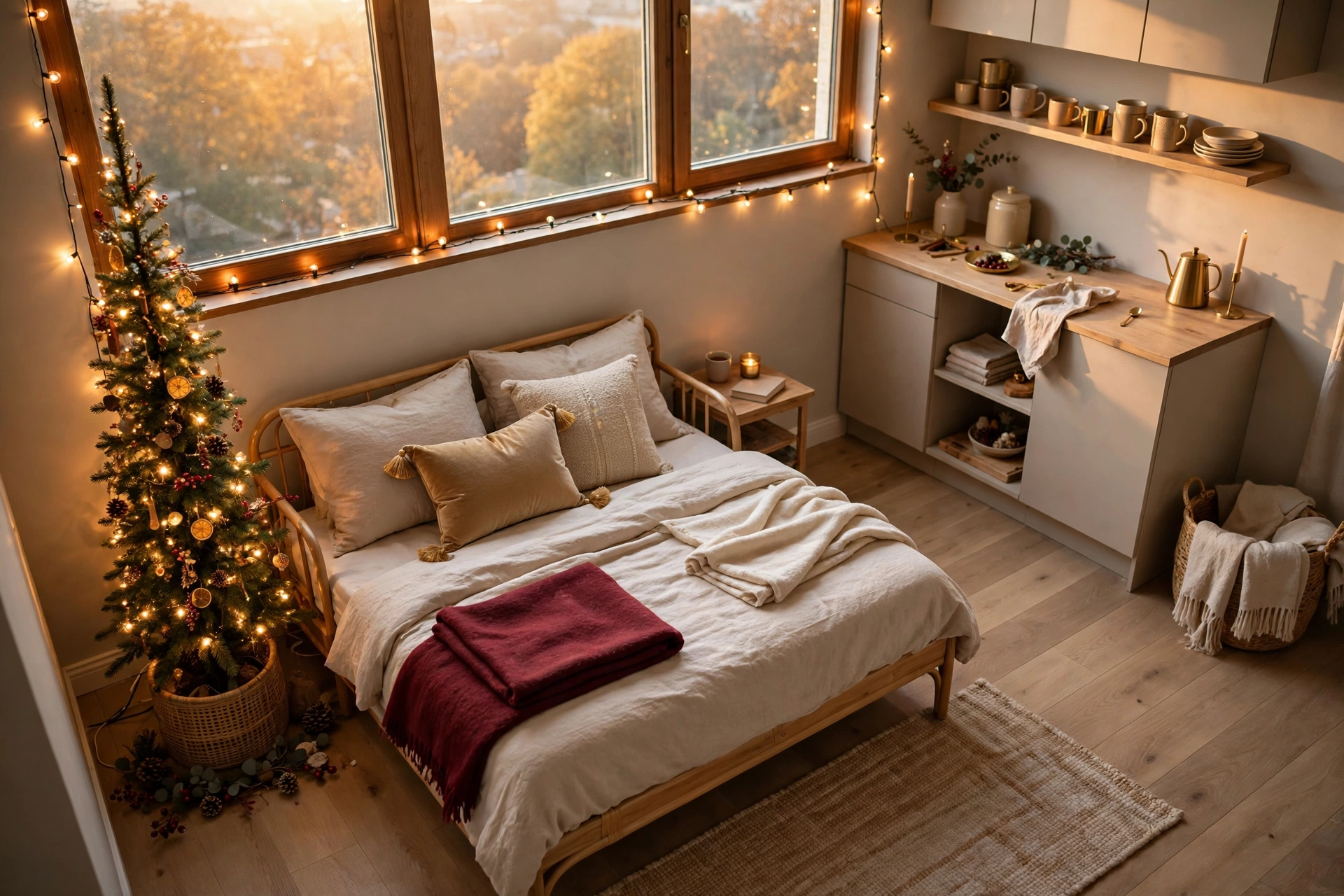
A studio apartment doesn’t have a living room, a bedroom, and a kitchen. It has one room doing the job of all three, which means every decorating decision you make is visible from every angle, all the time — including from your bed at 7 a.m.
That’s a different challenge than a small one-bedroom or a tight house. Most small-space Christmas advice assumes you at least have separate zones to hide the less-finished corners in. A studio doesn’t offer that luxury, so the decor has to actually work as a whole, cohesive room instead of a handful of disconnected vignettes.
This list covers 18 studio apartment Christmas decor ideas built specifically around one-room living — zoning a single space into distinct areas, decorating a kitchenette that’s really just part of your living room, and lighting a spot that sits a few feet from where you sleep. No separate rooms required, no nail holes required, and no pretending your apartment is bigger than it is.
Table of Contents
18 Studio Apartment Christmas Decor Ideas
Zone Your Studio Into Three Decorated Micro-Areas
The single biggest styling mistake in a studio is treating it like one space that needs one big decorating push, when it actually works better mentally split into a sleep zone, a living zone, and a kitchen zone, even without walls separating them. Give each zone exactly one holiday touch — a small tree in the living corner, a strand of lights near the bed, a mug swap in the kitchenette — rather than spreading decor evenly across the whole floor plan. This keeps any single area from feeling overloaded while still making the entire studio read as decorated once you take in the whole room. Use your existing furniture layout as the zone boundaries; a rug, a room divider, or even just the foot of your bed already marks where one “zone” ends and the next begins. This approach solves the core studio problem: there’s no room to hide an unfinished corner, so every corner gets a little attention instead of one corner getting a lot.
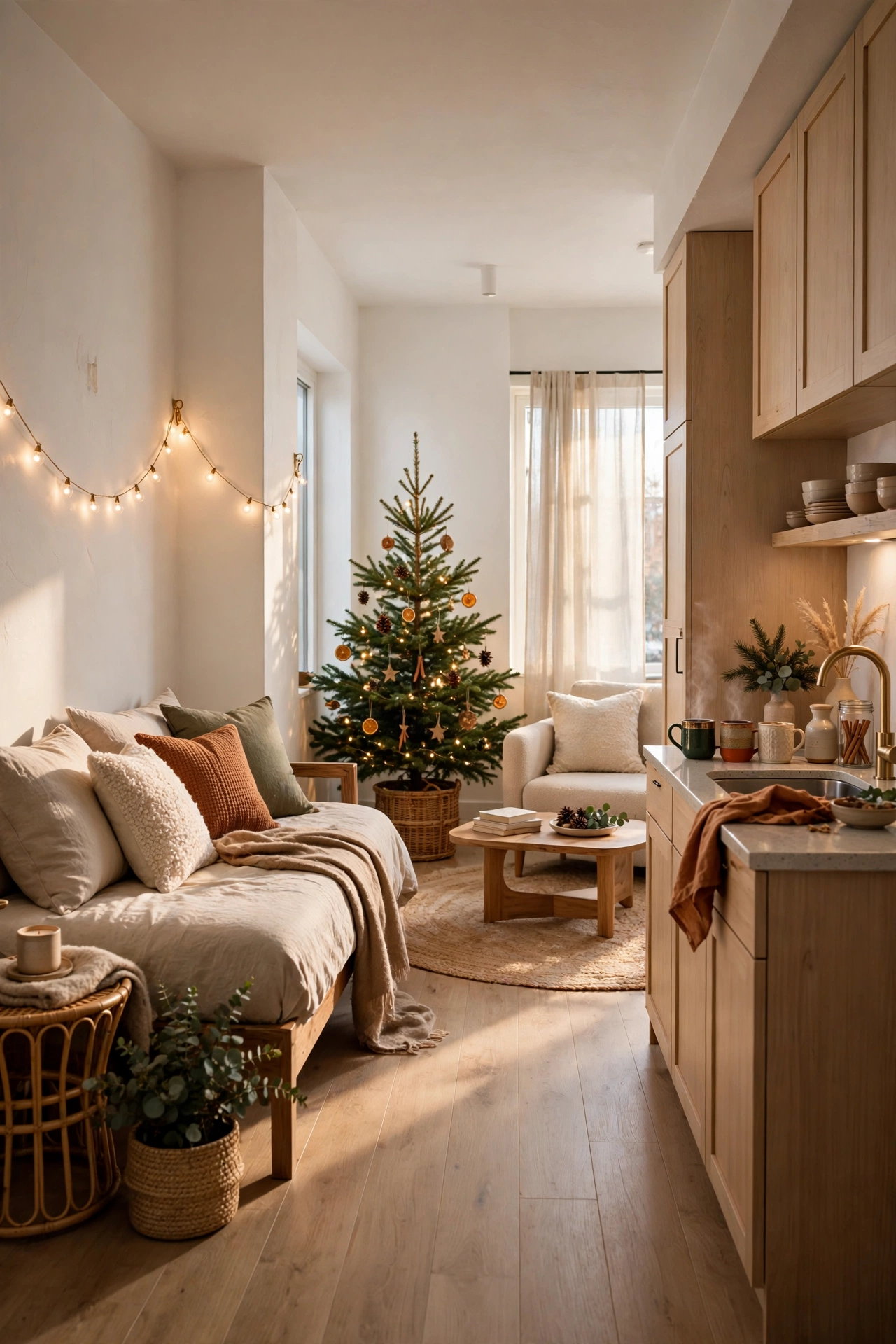
A Single Corner Pencil Tree as Your One Anchor Piece
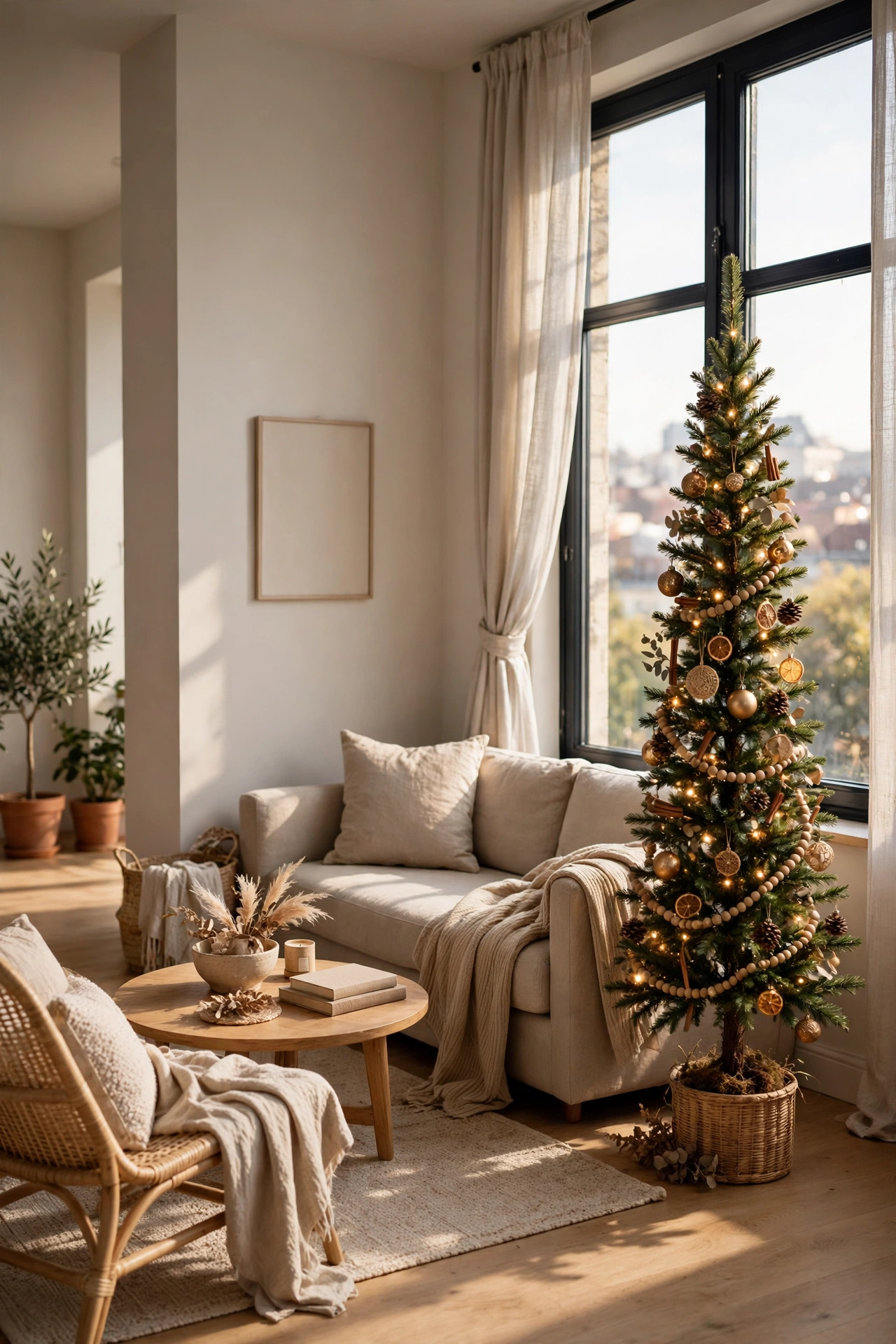
In a studio, you likely only have room and reason for one tree, so make it count by choosing a slim pencil tree and giving it the best corner in the apartment — usually near a window, away from walking paths between your bed and kitchen. Because a studio is viewed from every angle, decorate the tree fully around its whole circumference instead of just the front-facing side, since there’s no wall behind it to hide a bare back. Keep the ornament palette to two or three colors so the tree reads as intentional from across a small room, where a busy, mismatched tree can visually shrink the space further. A 6-to-7-foot pencil tree gives you real height and holiday presence without eating into the walkway between your main living area and your bed. This single tree effectively becomes your entire “Christmas moment,” so it’s worth spending slightly more time getting it right than you would in a home with room for several trees.
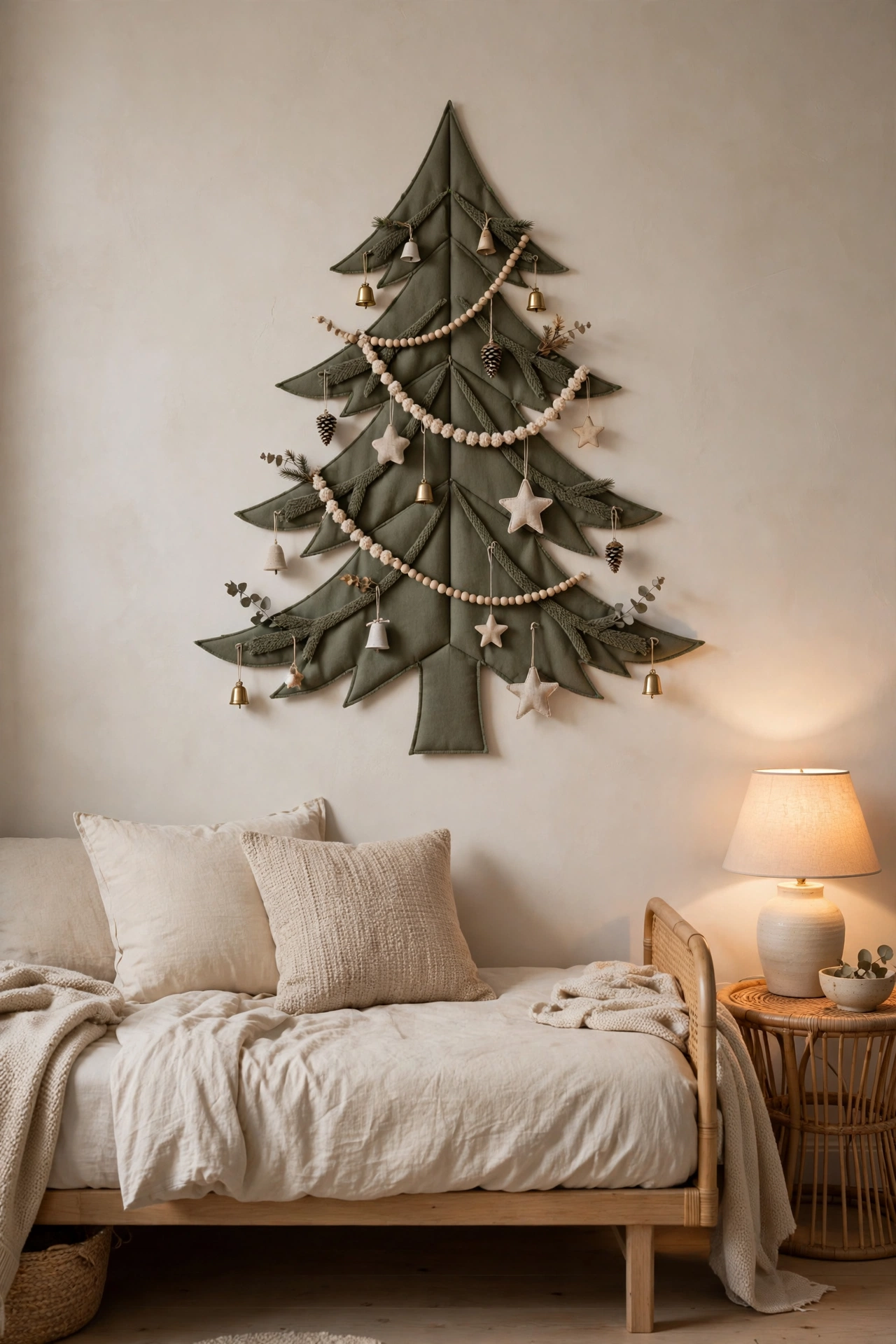
A Wall-Mounted or Peel-and-Stick Tree Behind the Bed
When floor space genuinely doesn’t exist, a peel-and-stick fabric tree or a string-light tree outline applied directly to the wall behind your bed solves the problem without touching a single square foot of usable floor. These reusable, adhesive-backed designs come as individually cut fabric pieces that go up and come down without damaging paint, which matters even more in a studio where your landlord’s move-out inspection covers the exact same walls you sleep against every night. Placing it behind the bed rather than behind the sofa area works especially well in a studio, since the headboard wall is often the one wall not already doing double duty as storage or a kitchen backsplash. Keep ornaments on a peel-and-stick tree lightweight and minimal, since anything heavier tends to pull at the adhesive backing over several weeks. This idea gives you genuine tree-shaped presence in a home where an actual standing tree simply isn’t realistic.
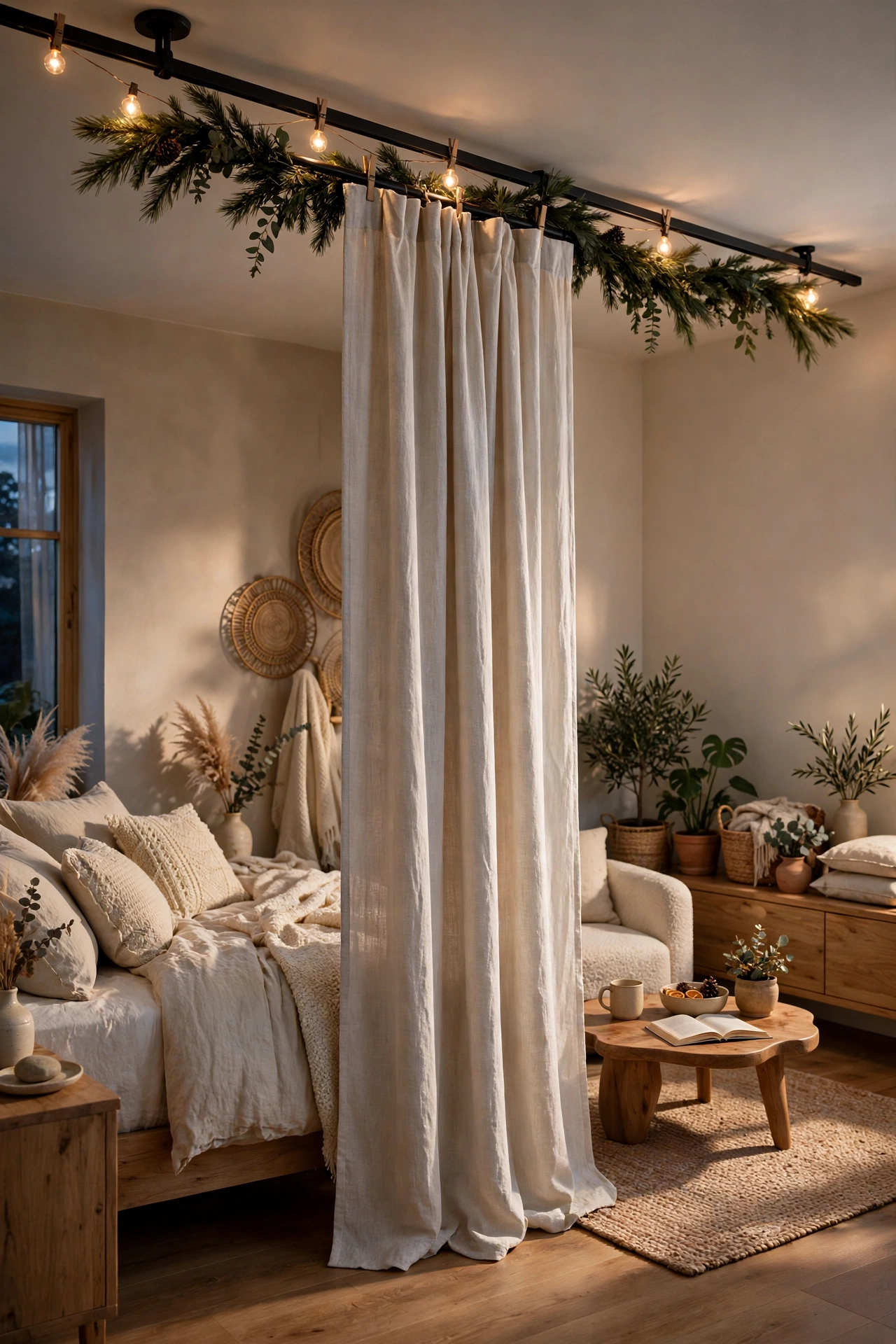
A Room Divider Curtain Strung With Garland and Lights
A hanging curtain or fabric room divider does more work in a studio than almost any other single purchase, since it visually separates your sleep zone from your living zone while also giving you a surface to decorate that doesn’t exist in a one-room layout otherwise. Clip a pine garland along the top curtain rod using no-drill brackets, weaving a thin strand of warm lights through it before hanging so you’re not fighting cords once it’s up. The curtain itself creates the “wall” a studio doesn’t naturally have, which means you can decorate one side facing your living area differently than the side facing your bed if you want two distinct moods. This idea solves a problem unique to one-room living: most Christmas decor assumes you have a doorway or hallway to hang something in, and a studio often doesn’t. Pull the curtain back during the day for light and privacy, and let the garland and lights do their job in the evening when it’s drawn.
Related: 25 Modern Ways to Decorate a Small Living Room for Christmas
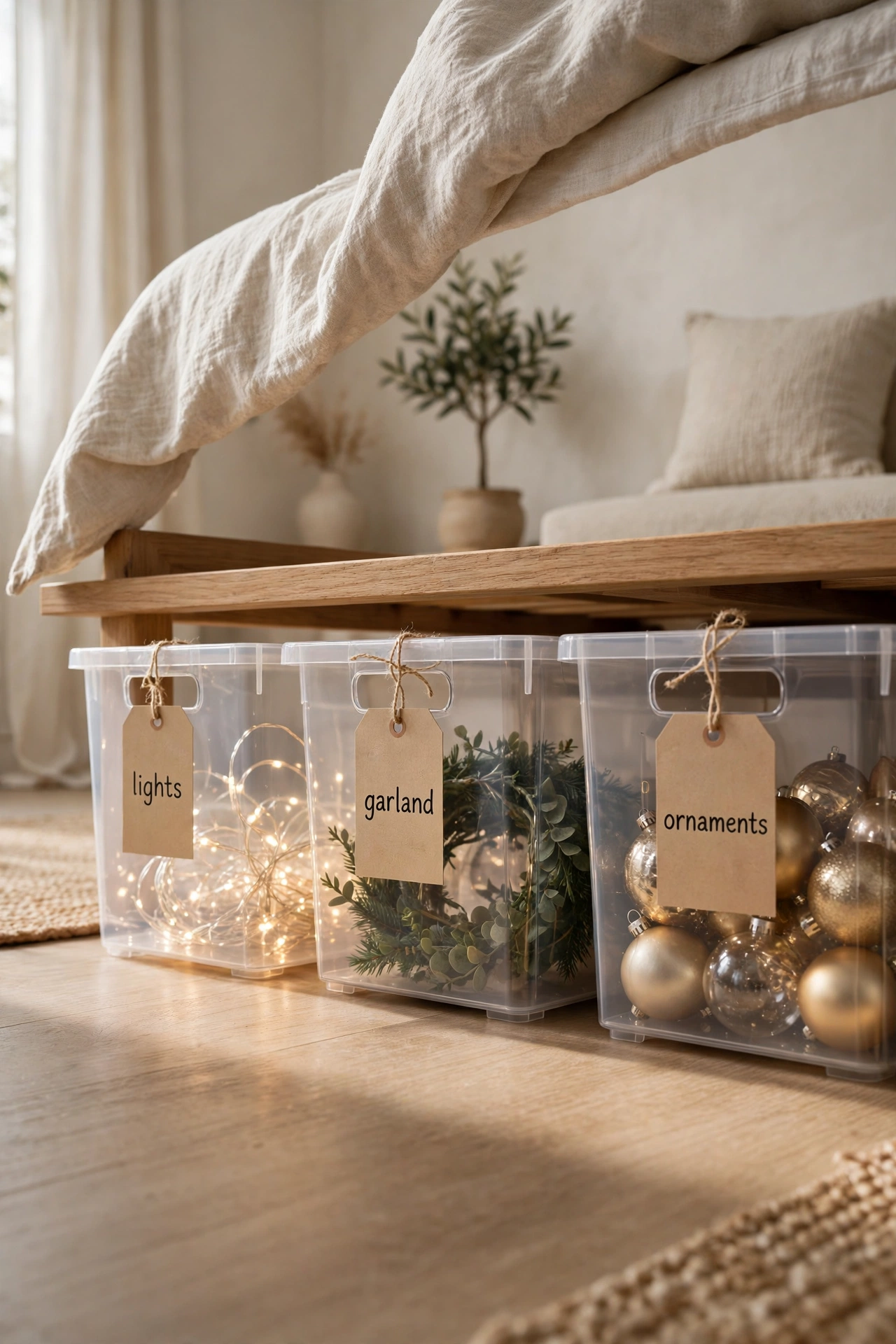
Under-Bed Storage Bins That Do Double Duty
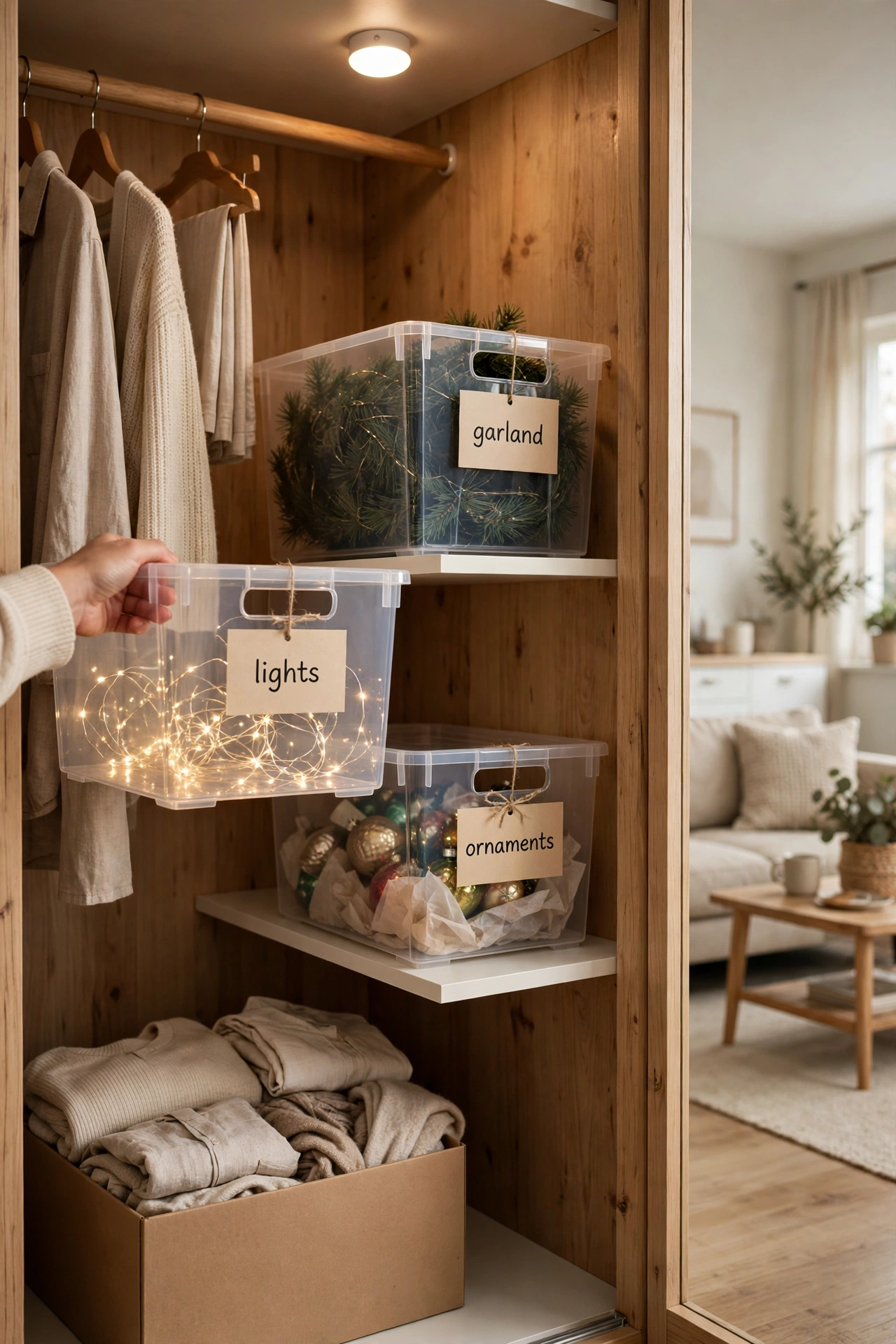
Storage is the scarcest resource in a studio, so the space under your bed has to work harder than it would in a home with a closet or garage to spare. Use low, flat, clear storage bins specifically sized for under-bed clearance, labeled by category — lights, garland, ornaments — so they slide in and out easily without becoming a permanent obstacle the other eleven months of the year. This spot is especially valuable in a studio because it’s genuinely the only “hidden” storage most one-room layouts offer, unlike a house where a closet or attic can absorb decor without anyone seeing it day to day. Keep the bins you’ll need first, like string lights, closest to the front edge so you’re not unpacking your entire under-bed storage system just to find one item. This single habit is what keeps a studio’s Christmas decor from competing with your daily living space once the season ends.
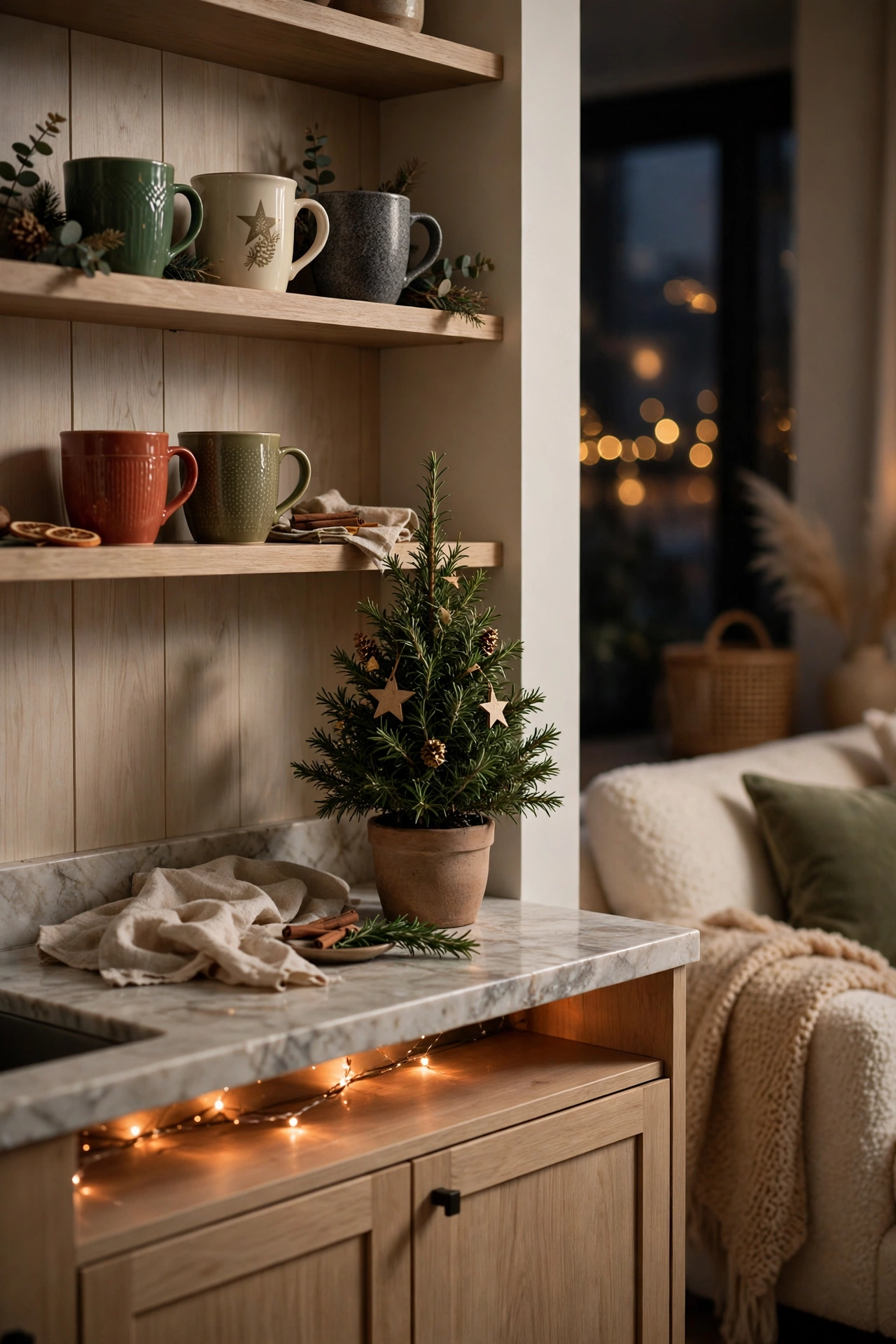
Style the Kitchenette Counter Since It’s Always in View
In a studio, your kitchenette isn’t tucked into a separate room — it’s part of the same sightline as your bed and your seating area, which means it deserves the same styling attention a full kitchen in a house would get. Swap in two or three seasonal mugs on open shelving or a small mug tree, and add a short strand of battery-operated lights along the underside of a cabinet or shelf for a warm glow visible from anywhere in the studio. A small dish of ornaments or a mini potted rosemary “tree” on the counter works well here too, since kitchenette counters in a studio rarely have room for much beyond what’s actually useful. Because this counter is visible from your bed and your seating area simultaneously, even a small styling effort here reads as decorating the whole apartment, not just one appliance-heavy corner. This is one of the highest-value swaps on this entire list precisely because of how much of the room it’s visible from.
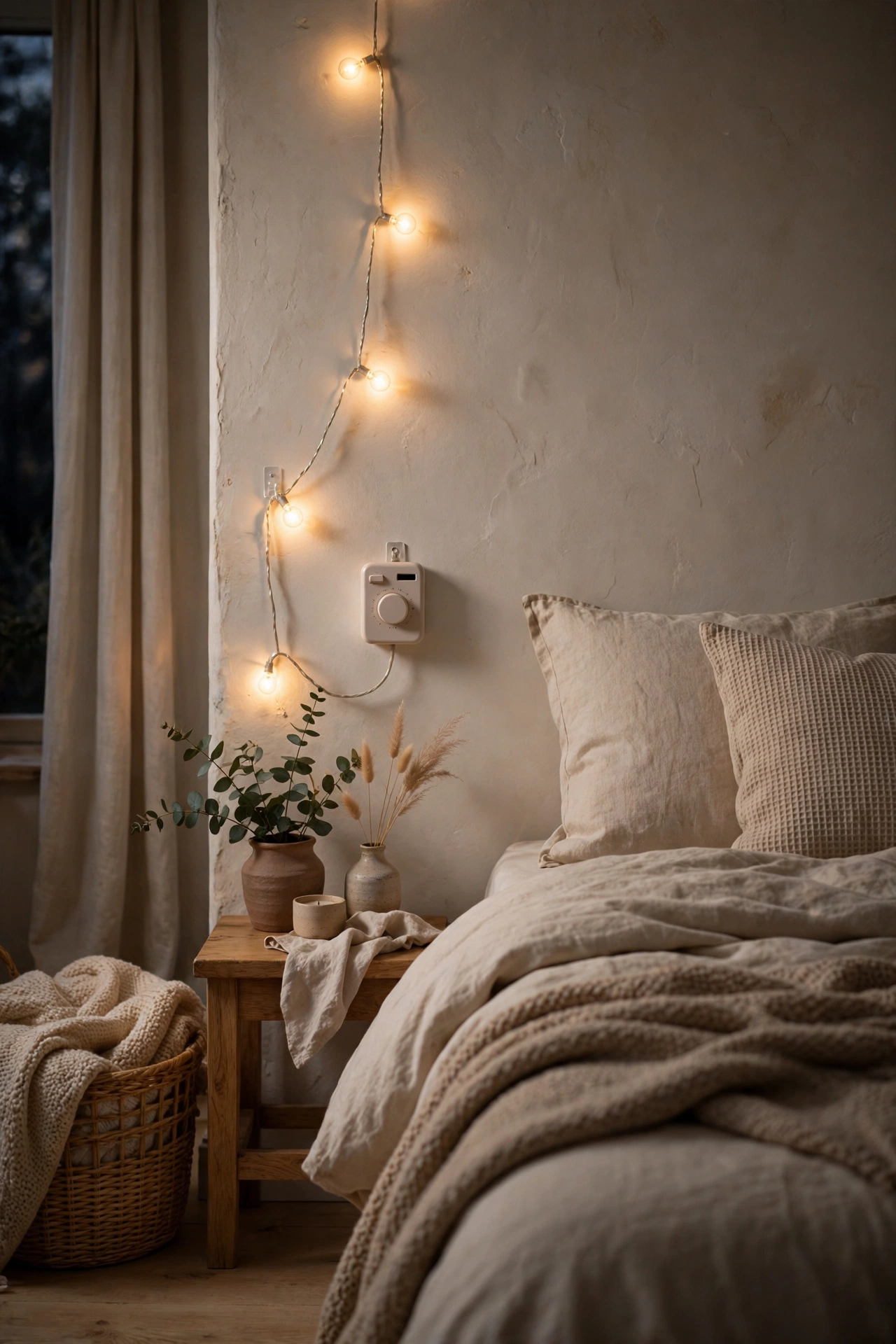
Bed-Safe Battery Timer Lights
Because your bed sits a few feet from wherever you decorate in a studio, lighting choices matter more here than in almost any other home layout — a bright, constantly-on light strand a few feet from your pillow can genuinely disrupt sleep. Choose warm white, low-brightness battery-operated lights with a built-in timer set to shut off around your usual bedtime, so you get the glow during waking hours without it interfering once you’re actually trying to sleep. Position any lights near the bed on the far side of the headboard or along a wall you don’t directly face while lying down, rather than at eye level facing your pillow. This is a distinctly studio-specific concern, since a house or apartment with a separate bedroom simply doesn’t have this problem — the tree and the bed are never sharing the same six feet of space. A timer also solves the practical issue of not wanting to physically get up and unplug something every night before bed.
A Mini Tree on the Vanity or Desk Corner
The desk or vanity corner in a studio is almost always doing double or triple duty — workspace, vanity, mail sorting spot — so a small tabletop tree here has to earn its place without disrupting daily function. Choose a tree under 2 feet tall in a simple pot or base, positioned toward the back corner of the surface rather than the center, so it doesn’t block a laptop, mirror, or the daily items that actually need that space. Decorate it minimally with just a few mini ornaments and a thin light strand, since this surface needs to still function as a desk or vanity through the entire season, not just look festive in photos. This idea works especially well in a studio because it adds a second small moment of holiday cheer without requiring any additional square footage the desk or vanity wasn’t already using. Move it slightly if you need the full surface for a specific task, since its small size and light weight make it easy to shift temporarily and put back.

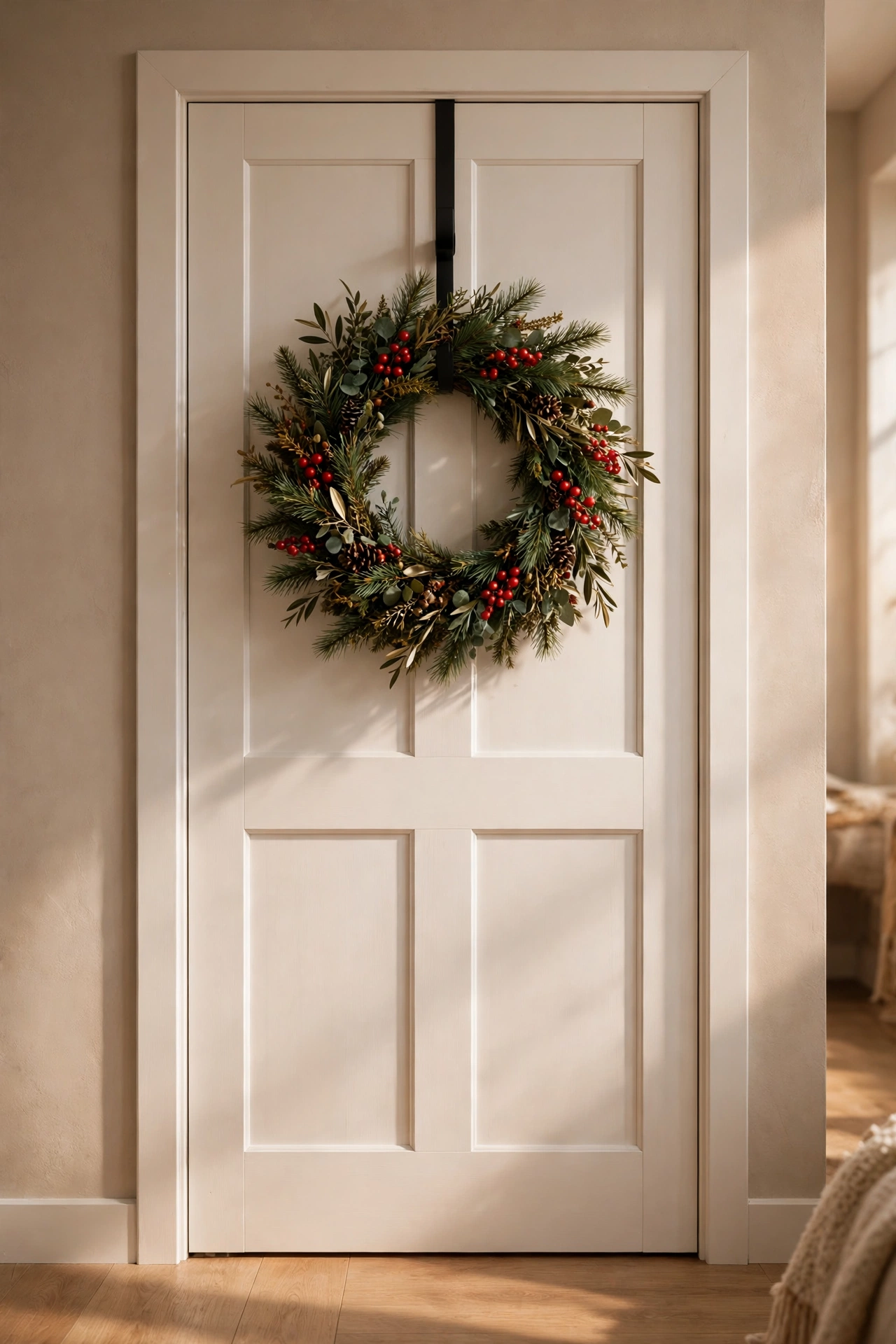
A Wreath on the Closet or Sliding Door
Many studios don’t have a traditional front door within the unit itself — the entry might be a building hallway door, or the most prominent door inside might actually be a closet or sliding bathroom door. Hang a wreath there instead, using an over-the-door hook that requires no drilling or adhesive at all, which works even on sliding closet doors that a traditional wreath hanger wouldn’t grip. This gives your studio a “focal door” moment even when the unit’s actual entry door isn’t yours to decorate or sits in a shared building hallway. A wreath on an interior closet door also breaks up a flat, undecorated surface that would otherwise go completely untouched in most studio decorating plans. Choose a lightweight faux or small fresh wreath, since heavier options can pull an over-the-door hook loose on a door that gets opened and closed daily.
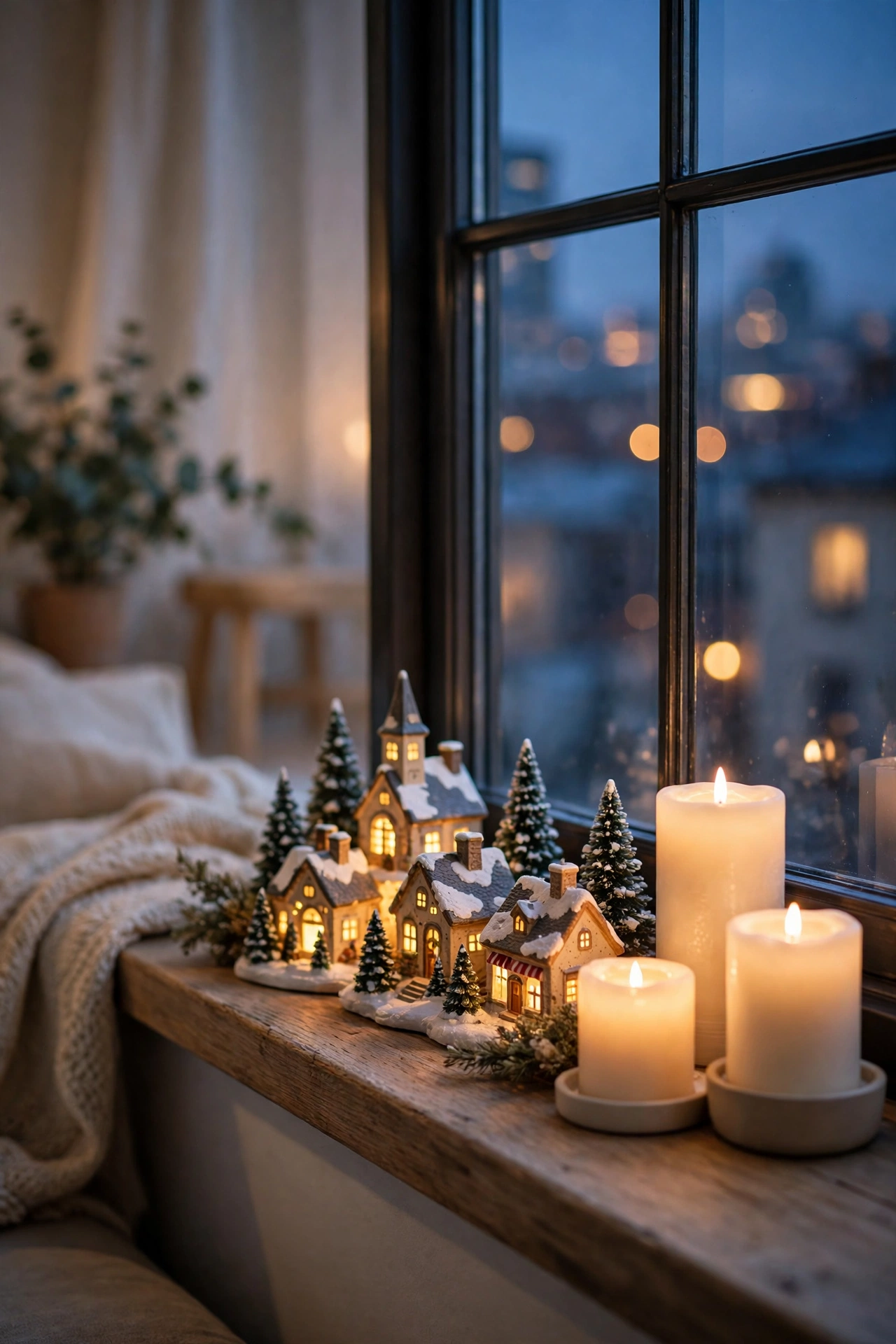
A Windowsill Village or Candle Display
A studio typically has one, maybe two windows doing the job of lighting an entire home, which makes the windowsill one of the most visually important surfaces in the whole apartment. Set up a small light-up village or a cluster of flameless candles along the sill, choosing pieces low enough that they don’t block daylight from reaching the rest of the room during the day. At night, this same display becomes visible from outside as well as inside, giving your studio the same festive curb appeal a house with a full yard would get, just condensed into one window. Battery-operated candles with timers mean you get the warm evening glow without needing to remember to switch anything on or off. Because a studio’s one window often serves as the main “view” from your bed, kitchen, and seating area all at once, this display touches more of your daily sightline than almost any other idea on this list.
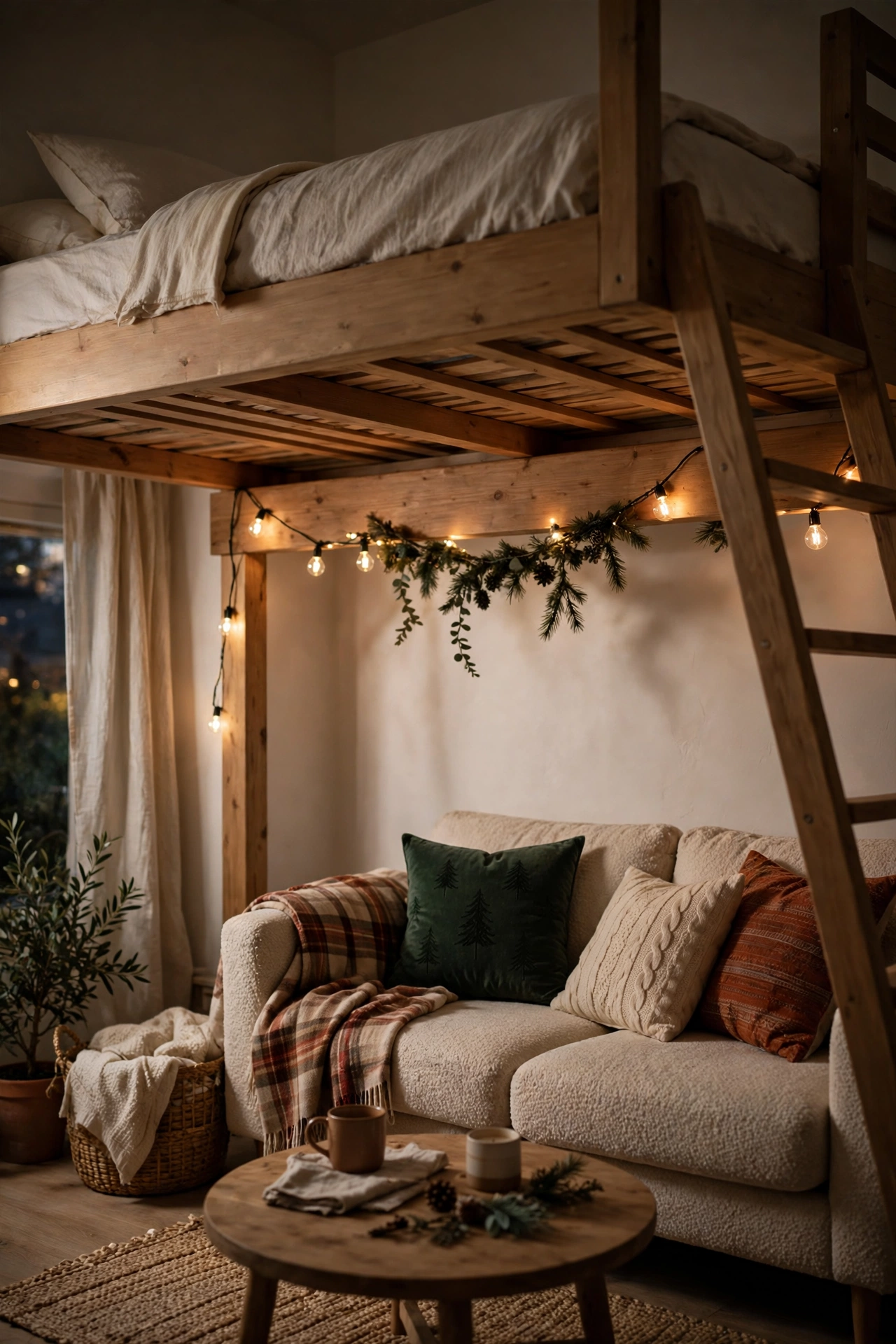
Styling the Space Under a Loft Bed
If your studio has a loft or elevated bed, the open area underneath is often the closest thing to a “living room” the apartment has, which makes it worth treating as its own dedicated zone rather than just leftover space under a mattress. Hang a short garland along the loft bed’s support beam or ladder, and add a small strand of lights along the underside of the platform to give the space a defined, cozy ceiling even though it’s really just the bottom of your bed frame. A folded holiday throw over the seating area below and a couple of festive pillows finish the space without adding any bulky furniture that would make the already-low ceiling height underneath feel more cramped. This is one of the more architecturally specific ideas on this list, but for the studios that do have a lofted layout, it solves a very real question: what do you do with the one indoor space that has its own natural “ceiling” already built in. Keep anything hanging from the loft structure lightweight, since it’s attached to the same frame supporting your mattress overnight.
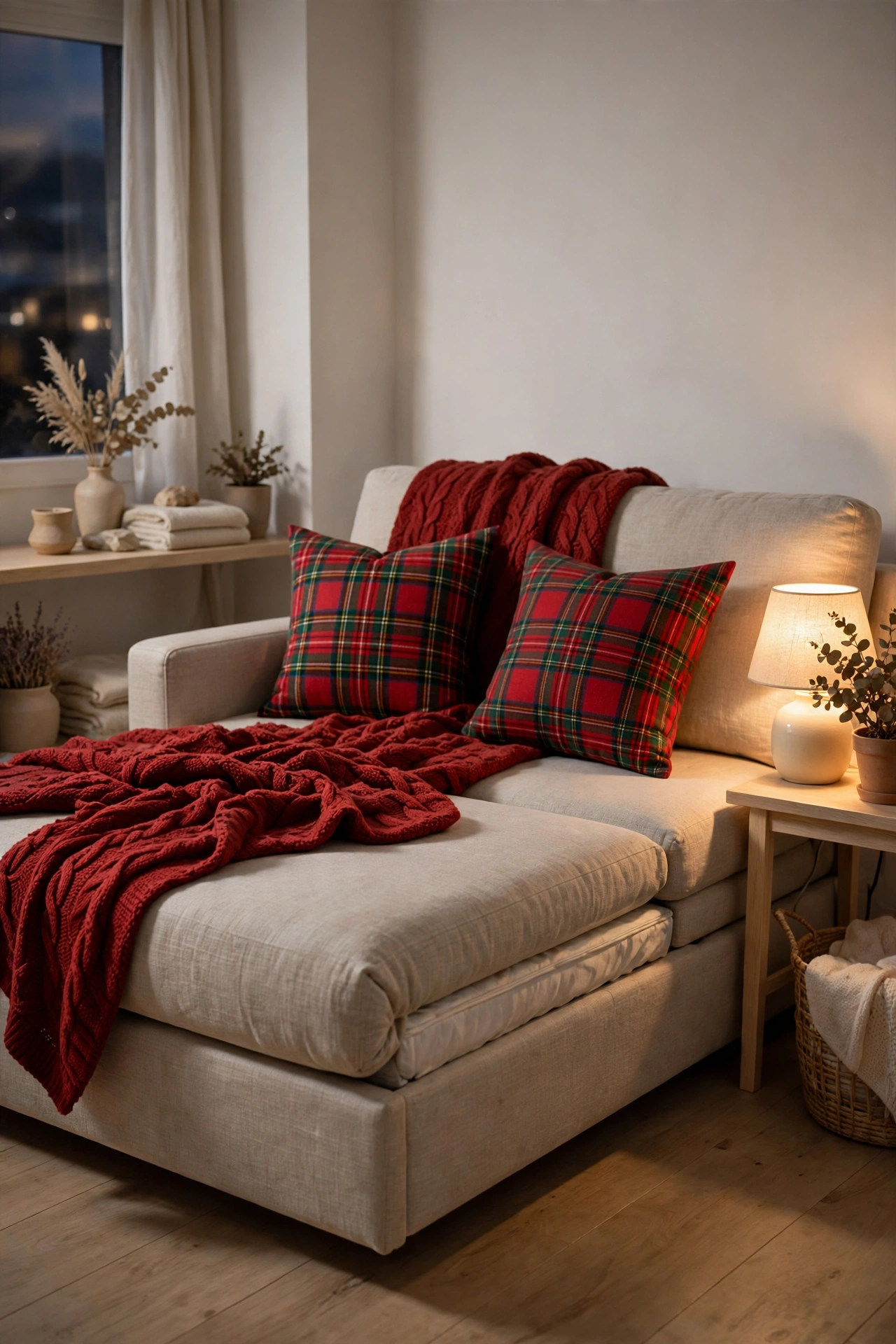
Sofa-Bed-Safe Pillow and Throw Swap
If your studio’s seating doubles as your bed each night, any decor added to it has to survive a nightly transformation without becoming a hassle you dread. Choose two or three holiday throw pillows in a size and shape that’s easy to toss aside quickly, rather than oversized or oddly shaped ones that are awkward to move every evening. A single plaid or knit throw blanket works double duty as both a decorative layer during the day and functional bedding at night, so it doesn’t need to be removed and stored separately at all. Skip anything with buttons, sequins, or embellishments that could catch on sheets or dig into you while you sleep, since comfort has to win over styling on a piece of furniture that’s also your bed. This idea acknowledges a genuinely unique studio problem: your “living room decor” and your “bedroom” are sometimes the exact same three cushions.
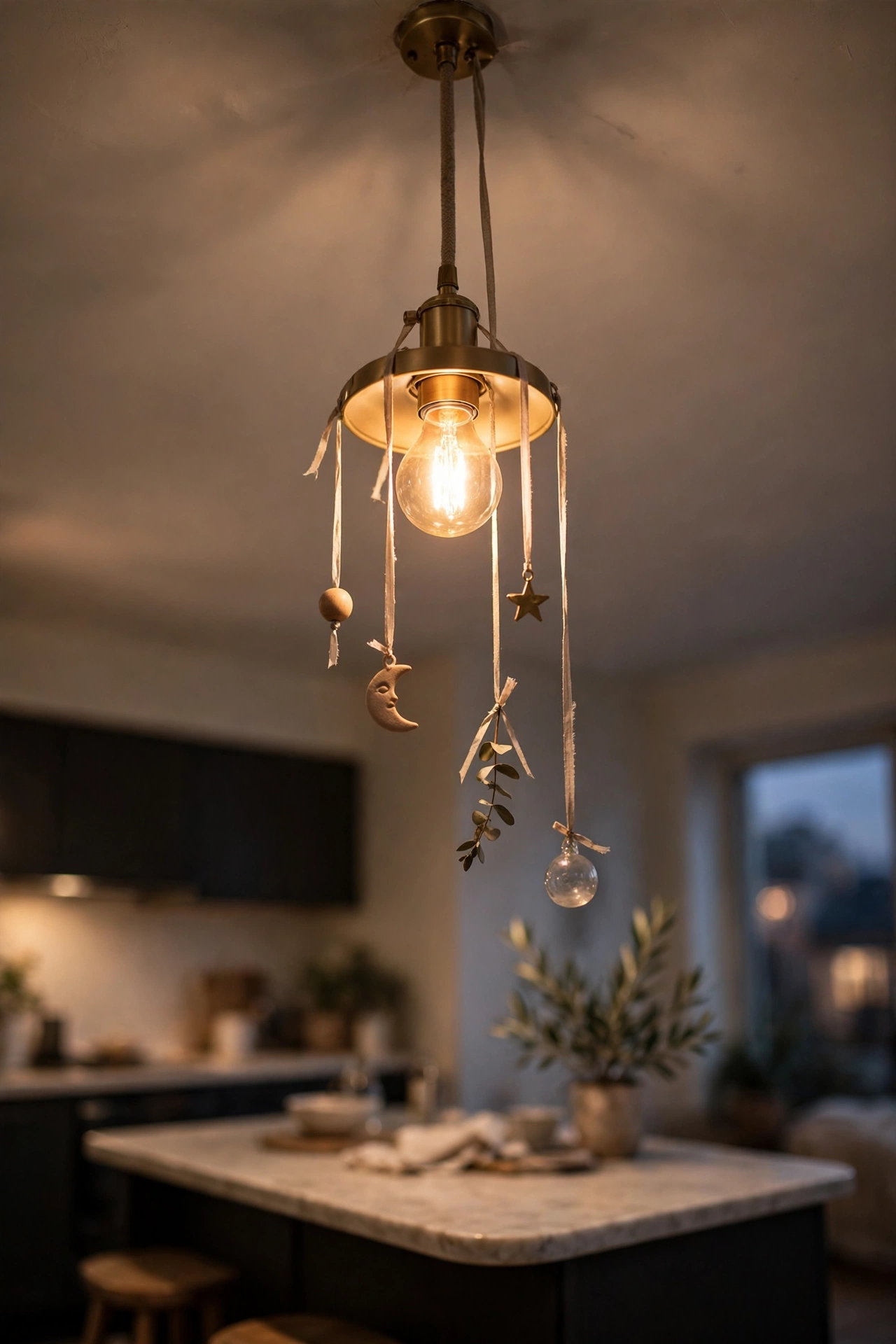
Ornaments Hung From a Pendant Light or Ceiling Fixture
Because a studio has no back hallway or spare wall to hide decor that only looks good from one angle, hanging a few ornaments directly from an existing pendant light or ceiling fixture adds height and sparkle that’s genuinely visible from all 360 degrees of the room. Use thin, nearly invisible fishing line or thin ribbon to hang three to five ornaments at slightly different lengths around the fixture, keeping them light enough not to interfere with the bulb’s heat or the fixture’s balance. This works especially well over a kitchenette island or dining nook, where a hanging display draws the eye upward in a room that otherwise reads entirely at furniture height. It’s a low-cost, low-commitment way to add a decorative moment to the literal center of a studio, which is often the one spot every zone of the apartment can see. Just be sure to remove any ornaments hanging near a light bulb before it’s been on long enough to generate real heat, since some ornament materials can warp or discolor over time.
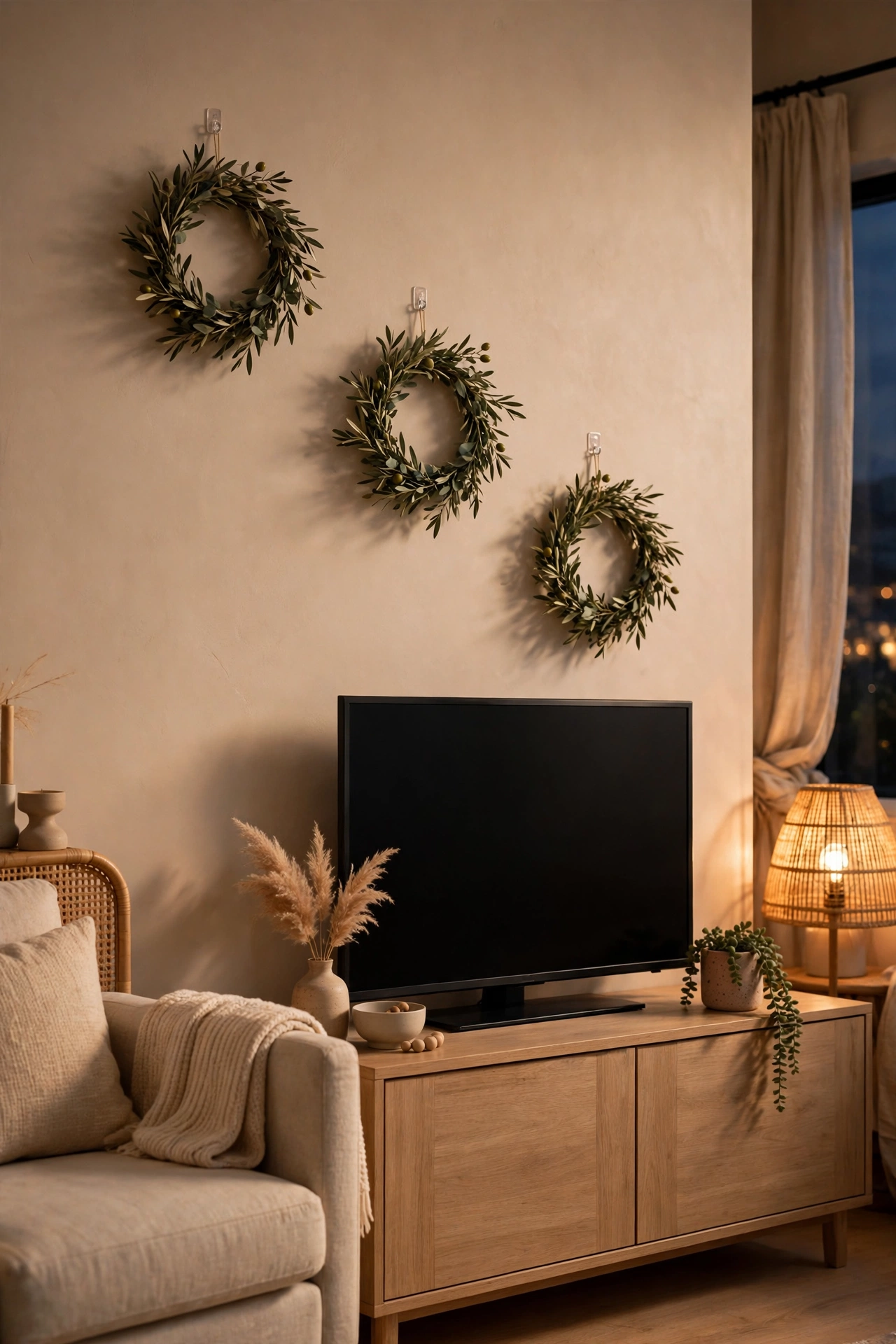
A Command Hook Wreath Wall Above the TV or Media Console
The wall behind or above a TV or media console in a studio is often the single largest uninterrupted wall space in the whole apartment, since furniture placement elsewhere is usually dictated by the bed and kitchen. Use a cluster of small Command hooks to hang two or three mini wreaths in a loose vertical or diagonal grouping above the console, rather than one single large piece that competes visually with the screen below it. This adds real holiday presence to the wall guests and you see most often while seated in the studio’s main living zone, without needing a full accent wall’s worth of decor. Keep the wreaths small — 8 to 12 inches — so the grouping reads as a curated display rather than overwhelming the media console setup underneath. This no-drill solution comes down cleanly in January without leaving any trace on a wall your landlord will absolutely notice during a move-out inspection.
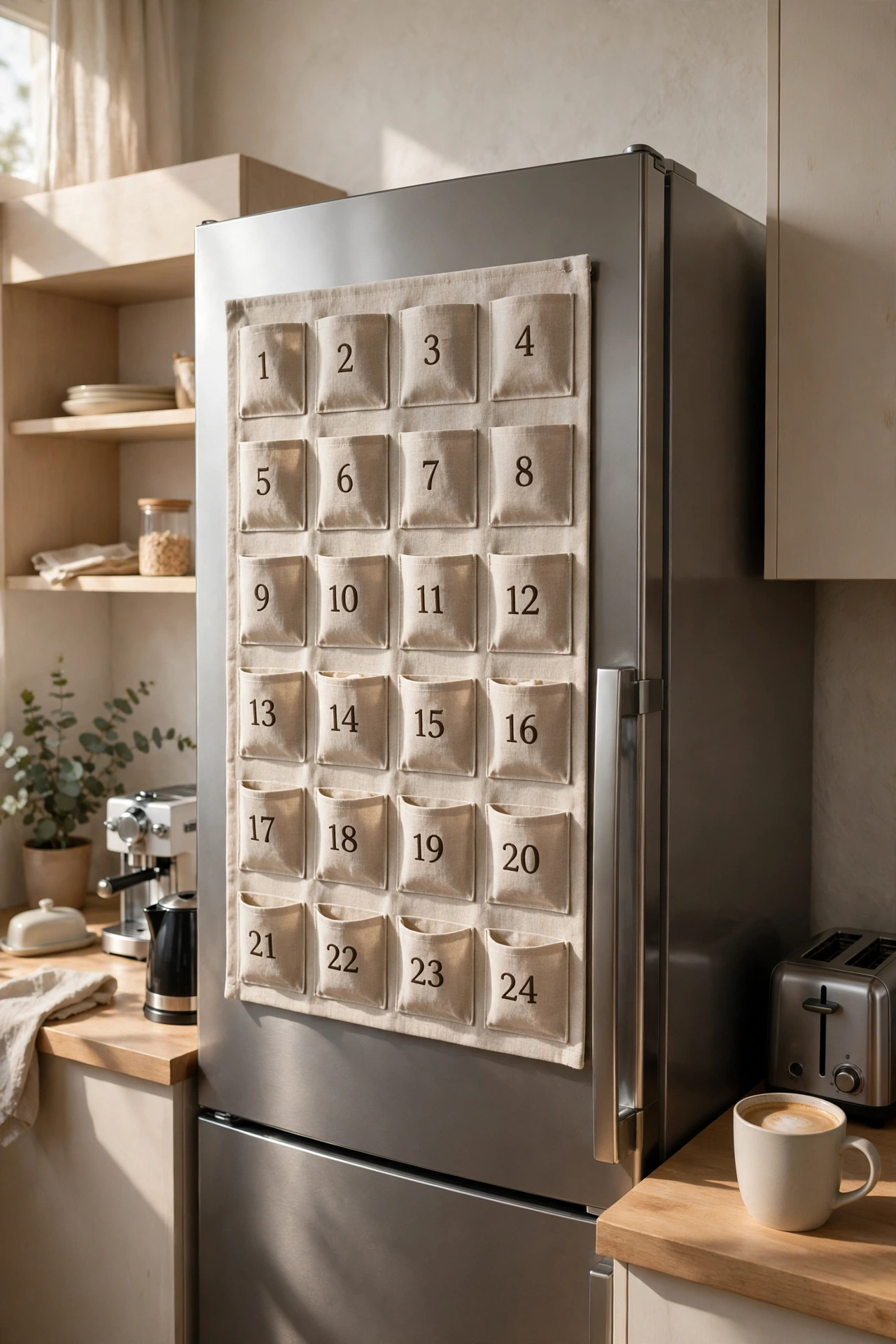
A Compact Advent Calendar on the Fridge or Cabinet Front
Fridge and cabinet fronts are some of the only vertical, magnet-friendly surfaces in a studio kitchenette, and a small magnetic advent calendar makes use of that real estate without needing a single extra hook or nail anywhere in the apartment. Choose a flat, magnetic pocket-style calendar rather than a bulkier wooden drawer version, since it needs to sit flush against the fridge without blocking cabinet doors or drawers you use daily. Fill it with small treats or notes, and position it at a height you’ll actually notice each morning while making coffee, since the kitchenette in a studio doubles as the space you pass through constantly throughout the day. This is one of the easiest daily-ritual additions to a studio’s Christmas decor because it uses a surface that’s otherwise almost always left blank. It also comes down and stores flat, which matters in an apartment where every storage inch is already accounted for.
Related: 17 Doable Christmas Table Settings That Feel Elevated
A Multi-Use Tray That Travels Between Surfaces
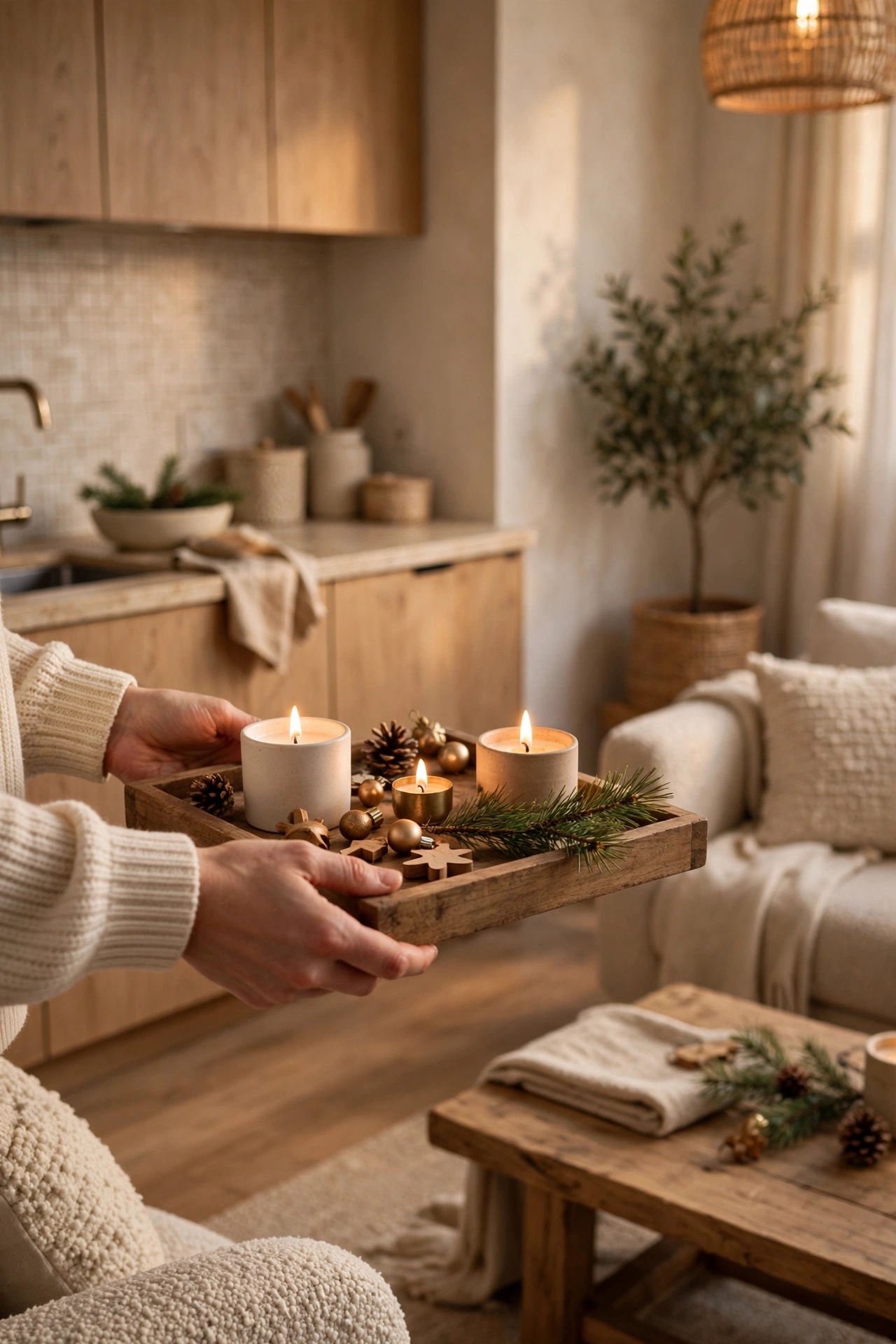
A single styled tray filled with candles, small ornaments, and a sprig of greenery becomes one of the most flexible decor pieces in a studio because it can move from your desk to your kitchenette counter to your nightstand depending on which surface needs the most attention that day. Build it once on a wooden or metal tray small enough to lift with one hand, and let it anchor whichever surface is currently the most visible — your coffee table when you’re hosting, your counter when you’re cooking, your nightstand when you’re winding down for the night. This solves a problem unique to a studio’s constantly-shifting furniture use, where a coffee table might become a desk during the day and a dining spot at dinner, all in the same twelve square feet. Keep everything on the tray lightweight and secured well enough that moving it doesn’t send candles or ornaments sliding. This single object effectively lets you decorate three or four “rooms” with one purchase, since in a studio, those rooms are really all the same room anyway.
A Single Extension-Cord Lighting Plan
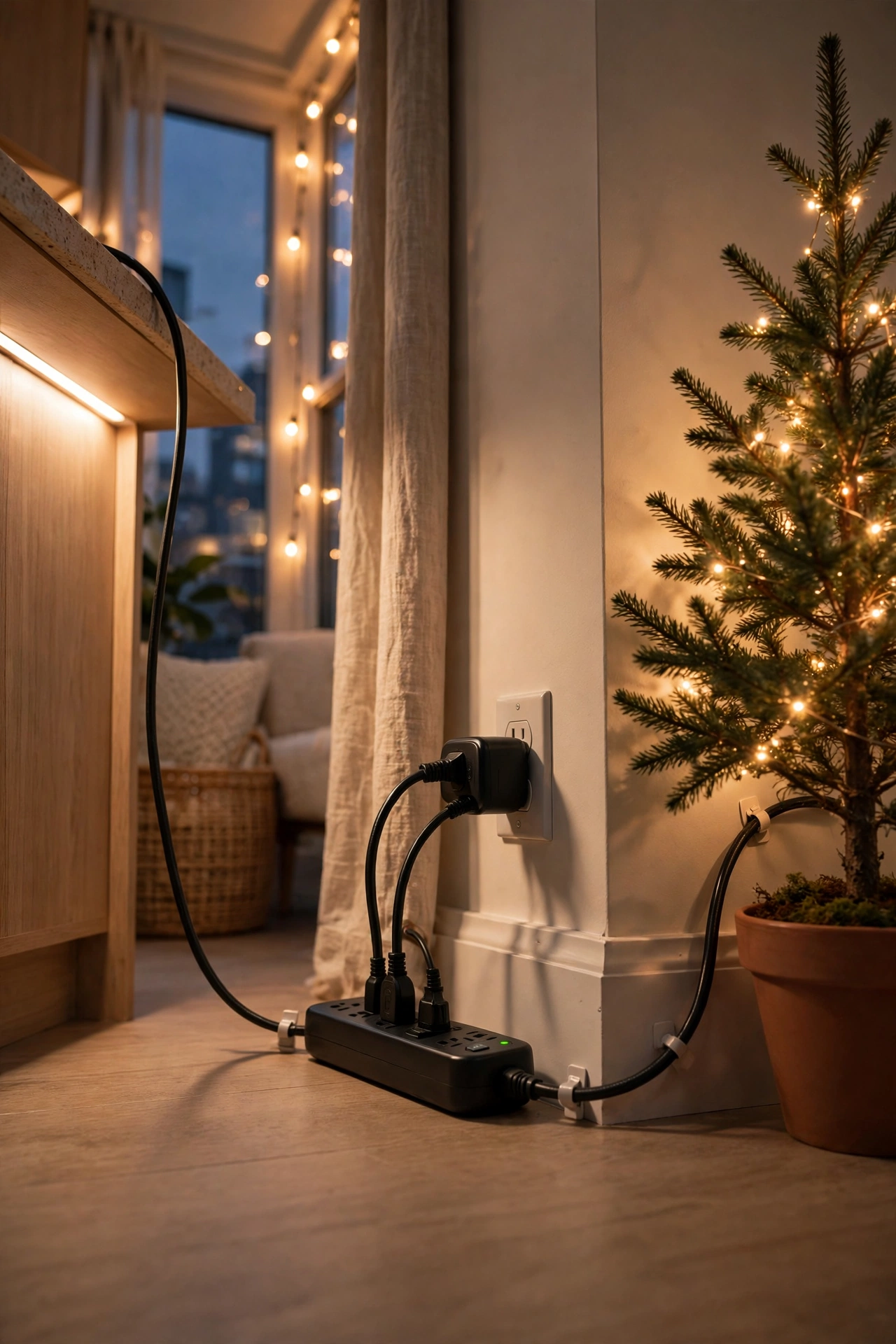
Studio apartments often have fewer outlets relative to square footage than a full apartment, especially older buildings converted into studio units, which makes an actual lighting plan more necessary here than almost anywhere else on this list. Map out which single outlet or power strip will run your tree, your window lights, and any counter lighting before you buy anything, since discovering you need three separate outlets on move-in day of your decorating is a frustrating way to start. Use one heavy-duty extension cord or a surge-protected power strip with a built-in timer to run everything from one source, tucking the cord along a baseboard or under a rug edge specifically rated for that use. This is a distinctly studio-specific planning step, since a house with multiple rooms rarely needs to coordinate every single light source off one shared circuit the way a one-room apartment does. Getting this right before you start decorating saves you from restyling everything a second time once you realize your outlet situation won’t support your original plan.
A Declutter-First Storage Swap Before You Decorate
Before a single ornament comes out of a box, swap your everyday storage bins for your holiday ones rather than trying to fit both in a studio’s limited closet or under-bed space at the same time. Pull out anything you can donate or store off-site for the season, and use that freed-up space specifically for the decor boxes you’re about to unpack, since a studio genuinely doesn’t have room to hold both your regular life and your holiday decor simultaneously. This single ritual, done at the very start of decorating season, is what keeps a studio from feeling more cluttered in December than it does the rest of the year, which is the single most common complaint about small-space holiday decorating. Treat it as a two-way swap: decor comes out, off-season clutter goes into storage or gets donated, so the net amount of stuff in the apartment barely changes. This step doesn’t add any visible holiday cheer on its own, but it’s the one that makes every other idea on this list actually livable in a one-room apartment.
Styling Tips
Decorate for 360-degree visibility, not a single “front” view, since a studio has no wall to hide an unfinished side behind — every piece needs to look intentional from every angle someone in the room might see it from. Repeat one consistent color palette across all three zones (sleep, living, kitchen) instead of a different theme per area, since a studio reads as one room even when you’re mentally treating it as several. Prioritize decor that does double duty — a tray that moves, a throw that’s also bedding — since a studio rewards multi-use objects more than almost any other home layout. Keep the walking path between your bed, kitchen, and door completely clear of decor, since a studio’s compact footprint makes tripping hazards from a stray cord or an overfilled basket a much bigger daily nuisance than in a larger home.
Practical Implementation Ideas
Start with the zone you spend the most waking hours in, usually the living or kitchen area, before decorating the sleep zone, since that’s where the visual payoff matters most for daily life. Map your outlet situation and lighting plan before buying anything, since a studio’s limited outlets can quietly derail a decorating plan that wasn’t scoped around what your apartment can actually power. Use Command hooks, tension rods, and adhesive strips for anything on a wall, testing weight limits before hanging a full garland or a heavier wreath. Do your under-bed and closet storage swap in one sitting at the very start of the season, rather than trying to find space for new decor while old, out-of-season items are still taking up the same storage spot.
Common Mistakes to Avoid
Buying one large-scale piece meant for a full living room, like an oversized wreath or a wide-based tree, is the most common mistake, since it will visually dominate a studio in a way it never would in a larger home. Decorating only the “front-facing” side of an object, the way you might in a house with walls to hide a bare back, looks obviously unfinished in a studio where every side is visible from somewhere in the room. Overloading every available surface with decor removes the functional workspace, cooking, and sleeping areas a studio genuinely needs to stay livable through December. Forgetting to check outlet placement before buying multiple light strands often means restyling an entire lighting plan halfway through decorating. And skipping the declutter-first step tends to leave a studio feeling smaller and messier during the holidays instead of more festive.
Related: 23 Christmas Centerpieces for Every Style of Table For a Home That Feels Festive All Season
Small-Space Alternatives for Even Tighter Studios
For a studio under 300 square feet, or a micro-studio with a Murphy bed that folds fully into the wall, skip the standing tree entirely and rely on the wall-mounted or peel-and-stick tree idea along with windowsill and kitchenette styling, since those three combined cover most of the visual “Christmas moment” a floor-standing tree would otherwise provide. For a studio shared with a roommate through a curtain divider, keep decor confined to the shared living and kitchen zones, and let each person handle their own sleep-zone side of the divider independently. For a studio with almost no closet space at all, the tray-that-travels idea is worth prioritizing over anything requiring dedicated storage, since it minimizes what you need to find room for come January.
Budget-Friendly Alternatives
The windowsill display, the fridge advent calendar, and the pillow-and-throw swap are the three lowest-cost ideas on this list, since all three typically use a surface or item you already own. A single strand of warm lights, moved between the window, the pendant fixture, and the tree over the course of the season, stretches your budget further than buying separate light sources for every idea. Thrifted or secondhand ornaments in a coordinated color palette cost less than new sets and add just as much visual texture to a small tree or a hanging fixture display. Skip a standing tree entirely for one season if budget is tight, and lean on the wall tree or window display instead, both of which cost meaningfully less than even a modest artificial tree.
Pro Styling Recommendations
Treat your studio as one cohesive photograph, not several separate vignettes, and check how the whole room reads from your bed, your kitchen, and your seating area before calling the decorating done. Keep metal tones and color families consistent across every zone, since that consistency does more to make a one-room apartment feel intentionally decorated than any single standout piece could. Layer height wherever you can — a hanging ornament display, a tall tree in one corner, a low windowsill village — since varying heights is what keeps a small, flat floor plan from reading as visually monotonous. And always test your lighting plan at night before finalizing it, since a studio’s lighting does more work after dark than in any daylight walkthrough, given how much of your evening you likely spend in this one room.
FAQs
Zone your studio into distinct micro-areas — sleep, living, kitchen — and give each one just one or two decor touches instead of spreading decorations evenly across the whole floor plan, which keeps any single area from feeling overloaded.
A slim pencil tree between 6 and 7 feet tall gives real height and presence without taking up much floor space, while a tabletop tree under 2 feet works well for a desk or vanity corner in a very tight studio.
Command hooks, tension rods, and adhesive strips hold wreaths, garland, and peel-and-stick trees without leaving marks, and most rated versions hold enough weight for lightweight seasonal decor.
Flat, clear storage bins that slide under a bed frame are typically the only “hidden” storage option in a closet-free studio, and swapping out off-season items for holiday bins at the very start of the season keeps space available.
Yes, as long as you choose warm white, low-brightness battery-operated lights with a timer set to turn off around bedtime, and position them on a wall you don’t directly face while lying down.
Focus on wall-mounted or peel-and-stick tree designs and lightweight, easily-movable decor rather than a standing tree or heavy floor pieces, since anything in front of a Murphy bed needs to be cleared away nightly.
Map out which single outlet or power strip will run all your lights before buying anything, and use one surge-protected power strip with a built-in timer rather than plugging multiple light strands into different outlets throughout the room.
Swap in two or three seasonal mugs, add a short strand of battery-operated lights under a cabinet, and set a small potted herb “tree” or dish of ornaments on the counter, since the kitchenette is visible from the rest of the studio at all times.
Yes — since a studio apartment is viewed from every angle with no wall to hide an unfinished side, decorate trees, wreaths, and hanging displays so they look intentional from all directions, not just one “front” view.
Conclusion
A studio apartment doesn’t need to borrow decorating advice built for a house with rooms to spare. It needs a plan built around the fact that your bed, your kitchen, and your Christmas tree are all going to share the same twelve feet of sightline for the next month. Zone the space, keep the walking path clear, plan your outlets before you plug anything in, and let a handful of well-placed touches do the work instead of trying to fill every surface. The whole apartment only needs to feel like one, well-considered room — because that’s exactly what it is.