24 Winter Porch Decor Ideas That Make Your Home Feel Warm & Welcoming
Winter can make a porch feel like the coldest, least-used corner of your house. Bare railings. A door mat nobody notices. Maybe one sad string of lights.
But a porch doesn’t have to go quiet just because the temperature drops.
The right mix of greenery, texture, and light can turn those same few square feet into the spot where neighbors slow down, where your morning coffee tastes better, where your front door photo actually looks like you live there.
This list covers 24 ways to get there — some take ten minutes, some are a weekend project, and all of them work whether you’ve got a wraparound farmhouse porch or a narrow city stoop.
Table of Contents
The 24 Ideas
Evergreen Garland on the Railings
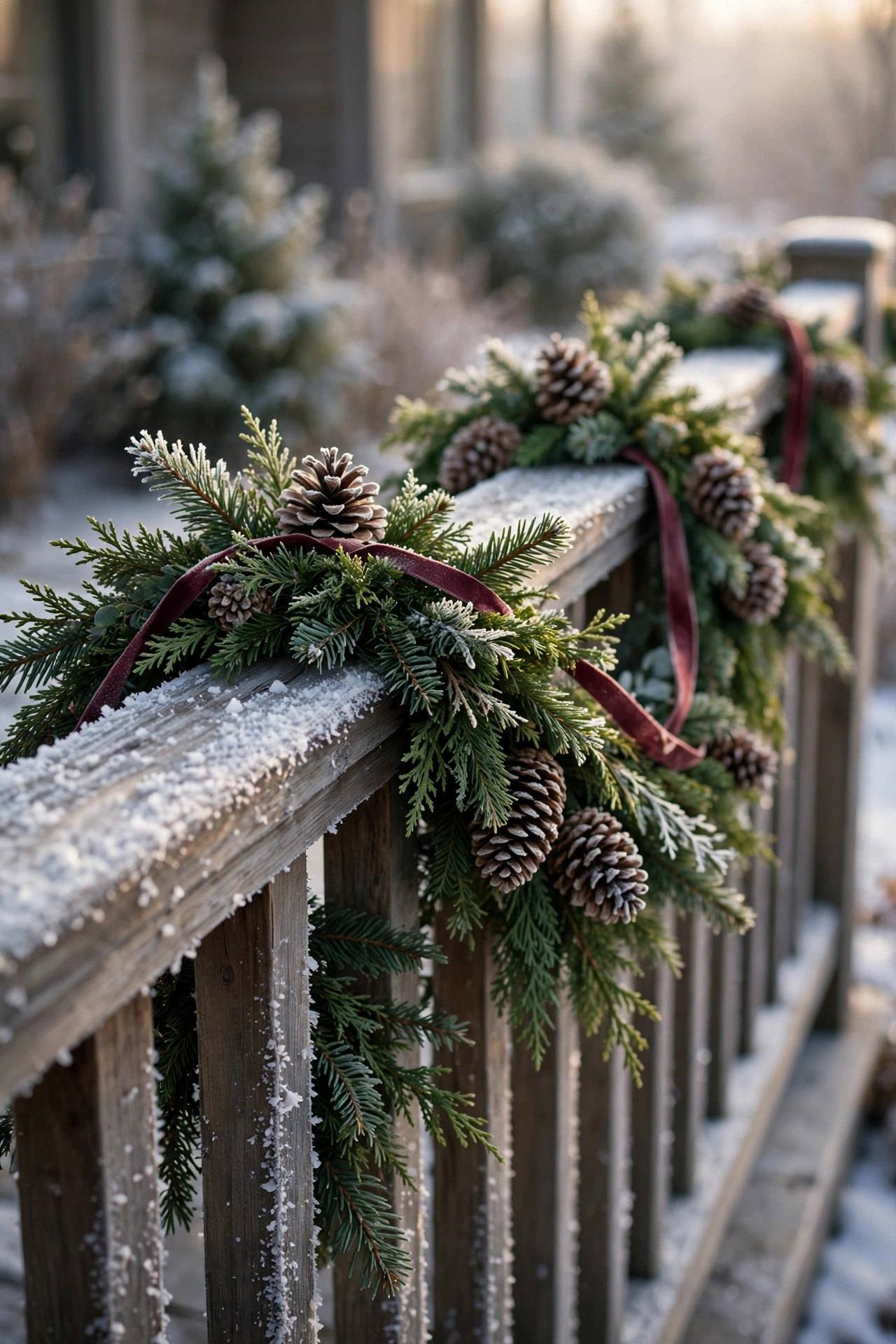
Wrap real or high-quality faux evergreen garland along your porch railings and stair posts for an instant, low-effort transformation. Cedar and fir both hold their color well through the coldest months, and the natural texture reads as expensive without the price tag. Tuck in a few pinecones or a thin ribbon at intervals so the garland doesn’t look flat from a distance. The best part is flexibility: leave the plaid bows up through the holidays, then strip them off in January for a quieter, snowy-season look that still feels intentional. It’s one of the easiest wins on this list, and it works on almost any railing style.
Layered Plaid Throws on Seating
Outdoor rocking chairs and benches go from bare to inviting the moment you add a folded plaid throw across the seat or arm. Choose wool or a wool-blend for real insulation on cold mornings, and layer two coordinating patterns — a plaid with a solid cream, for example — so the seating area doesn’t look like a single flat block of fabric. This is a favorite trick among interior stylists because it does double duty: it looks styled in photos and it’s genuinely usable for anyone who sits down with a coffee. Rotate the throws indoors when rain or snow is heavy, and your porch stays photo-ready without the fabric getting ruined.
A Leaning Vintage Sled
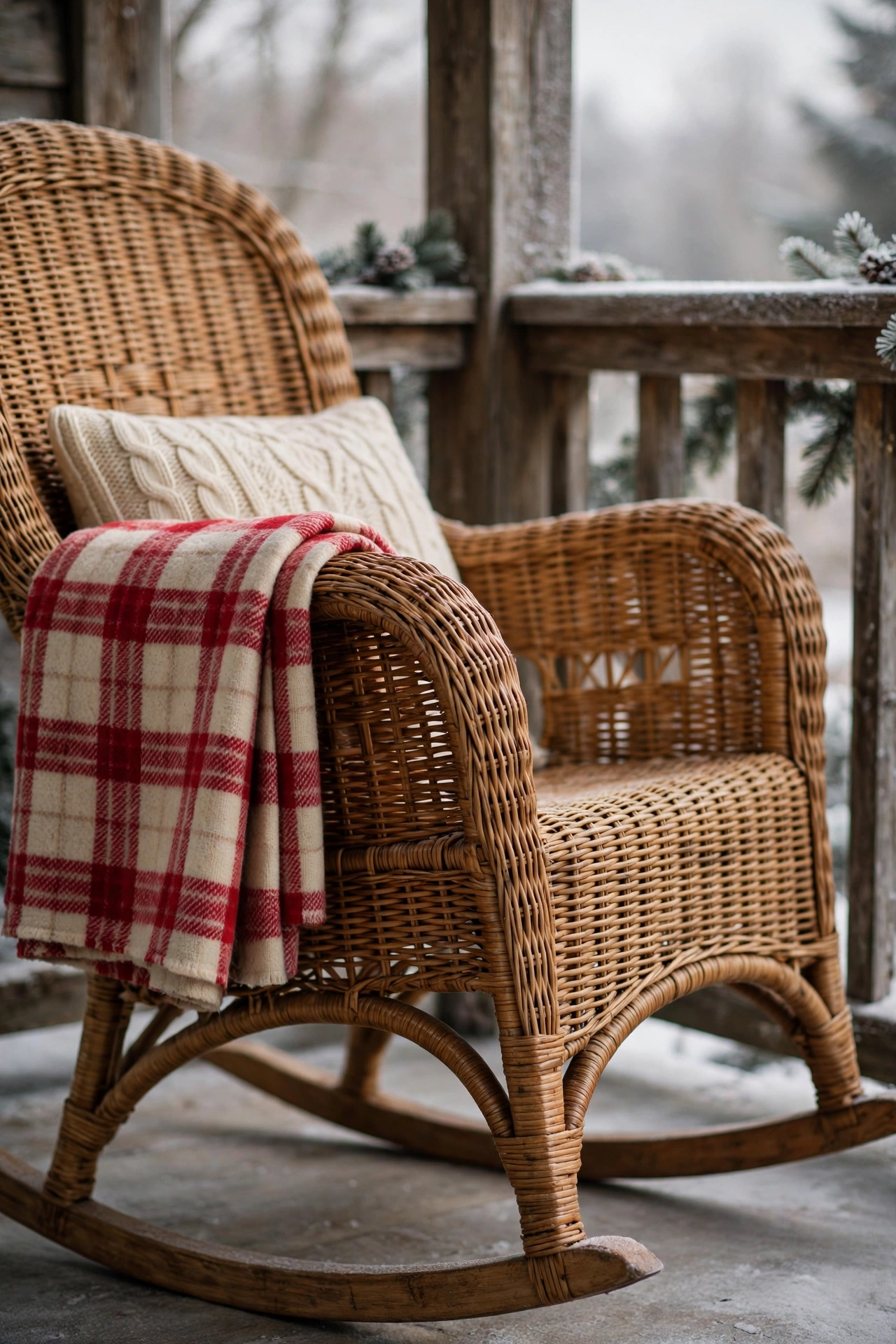
An old wooden sled or a pair of wooden skis leaned against the wall beside your door brings instant rustic charm without cluttering the space. It works because it’s a single, unmistakable object — no styling required beyond finding the right spot. Pair it with a small lantern at its base or a sprig of greenery tucked into the rope handle for a bit more warmth. This idea leans nostalgic rather than trendy, which is exactly why it photographs so well and why it doesn’t feel dated after the holidays end. If you don’t own a vintage one, thrift stores and flea markets are the best source.
Birch Branches in Blue & White Urns
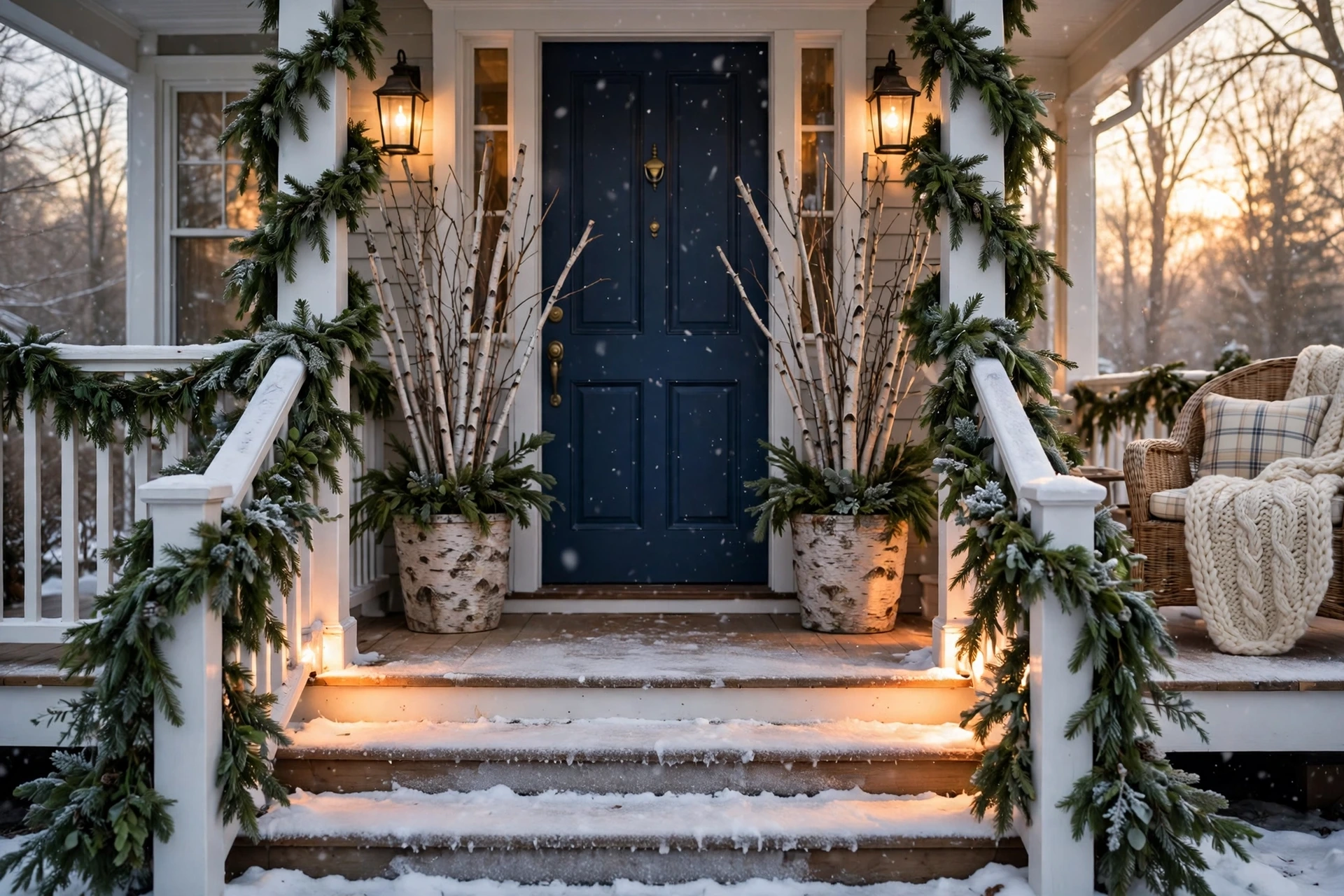
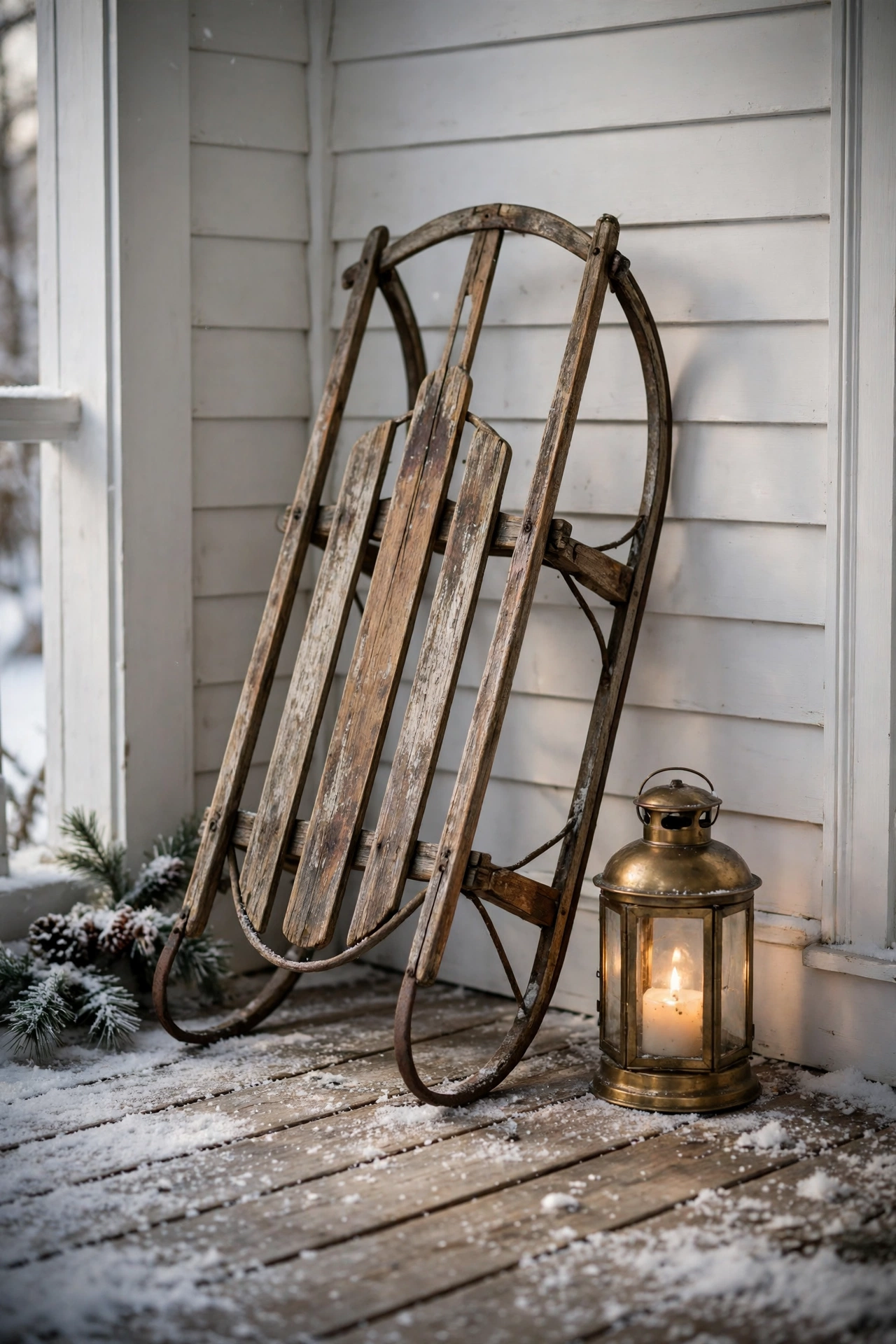
Tall birch branches arranged in a pair of blue-and-white ceramic urns give your entryway height and structure without needing anything to bloom. The white bark reads as bright even on gray winter days, and the classic blue-and-white pairing brings a French country feel that works with both traditional and modern exteriors. Keep the branches slightly uneven in height for a natural look rather than a trimmed, formal one. This pairing also holds up through wind and cold far better than fresh floral arrangements, which makes it a practical choice as much as a decorative one. Place one urn on each side of the door for symmetry that photographs beautifully straight-on.
Lantern-Lined Steps
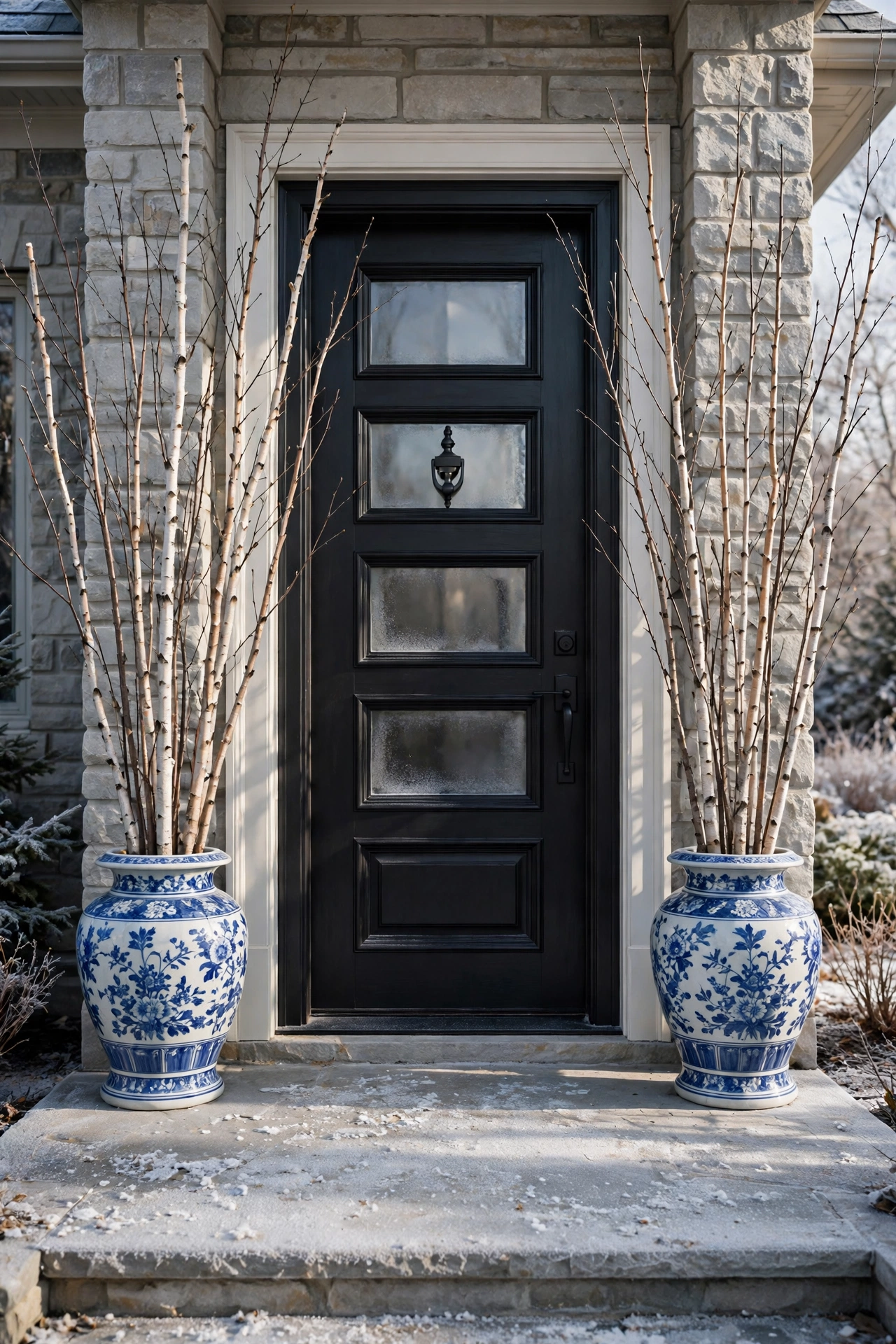
Line your porch steps with a mix of tall and short lanterns to add rhythm, safety, and warmth all at once. Alternating heights keeps the eye moving instead of reading as a flat row, and flickering LED candles inside keep the look safe for icy conditions. This idea solves a real problem — dark winter evenings make steps genuinely hard to see — while also being one of the most Pinterest-friendly visuals on this entire list. Choose matte black or aged brass lanterns for a look that won’t feel seasonal once the holidays pass. Even two or three lanterns make a noticeable difference on a small porch.
Wicker Furniture with Faux Fur
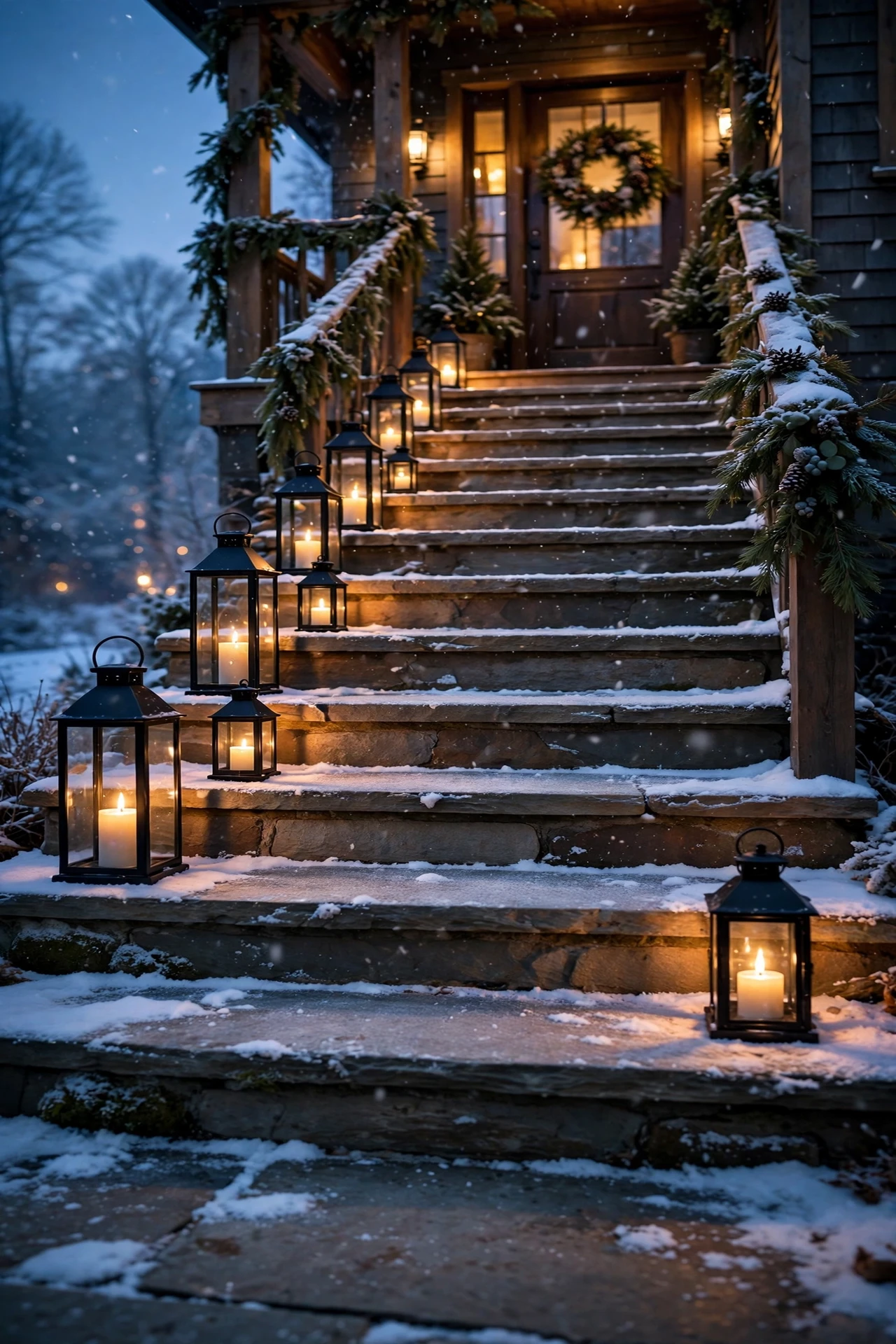
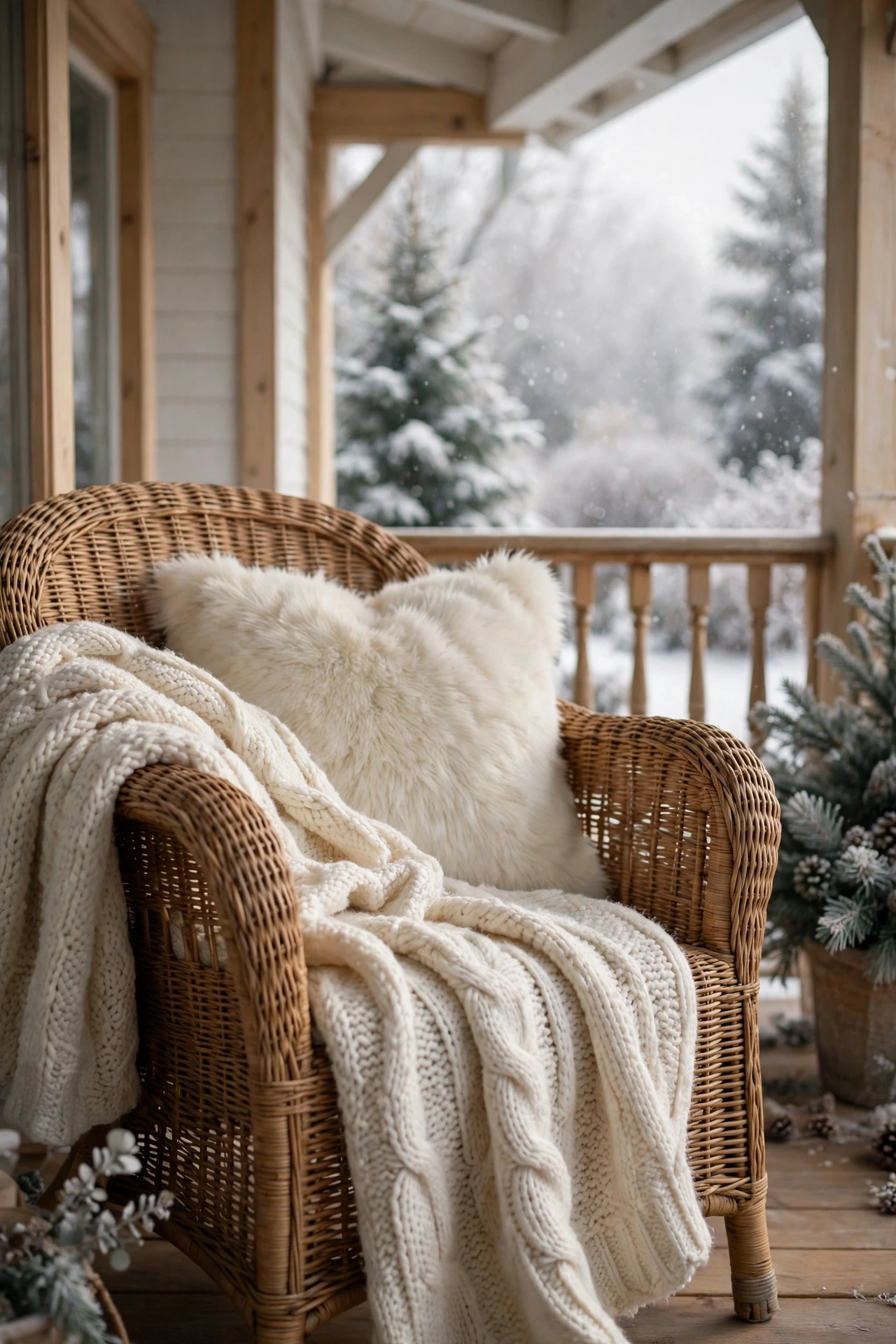
Wicker seating has made a strong comeback for its cozy, textural feel, and it holds up surprisingly well in cold weather when paired with the right cushions. Add a faux fur or sherpa throw pillow to soften the look and make the seat genuinely more comfortable in low temperatures. Wicker’s woven texture also photographs beautifully next to smooth surfaces like a ceramic planter or a metal lantern, giving your porch some visual contrast. If your existing furniture is metal or wood, even a single wicker accent chair can shift the whole feel toward “lived-in and cozy” instead of “outdoor storage.”
Winter Porch Pots (No Soil Needed)
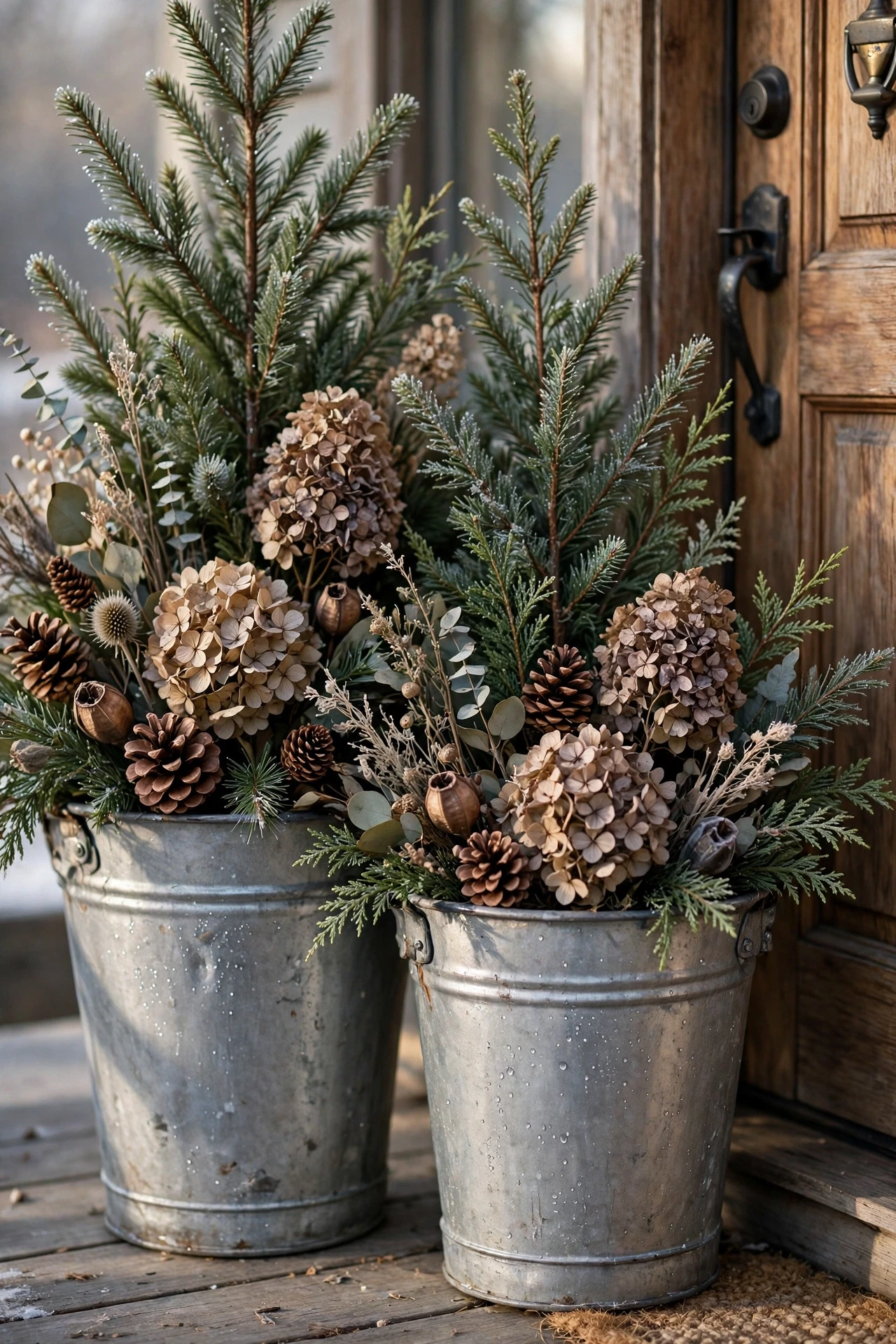
Skip the soil and build your porch pots on dry floral foam instead — it holds branches upright, doesn’t freeze into a solid brick, and makes it far easier to swap stems as the season shifts. Start with tall evergreen or dogwood branches for height, then layer in pinecones, dried hydrangea, or berry stems for texture. This is one of the most repeated techniques among experienced porch stylists because it genuinely lasts through the coldest months without wilting. Use galvanized buckets or classic urns depending on whether you want a farmhouse or formal look. One well-built pot on each side of the door does more visual work than a dozen small decorations scattered around.
A Black “Power Entrance” Door
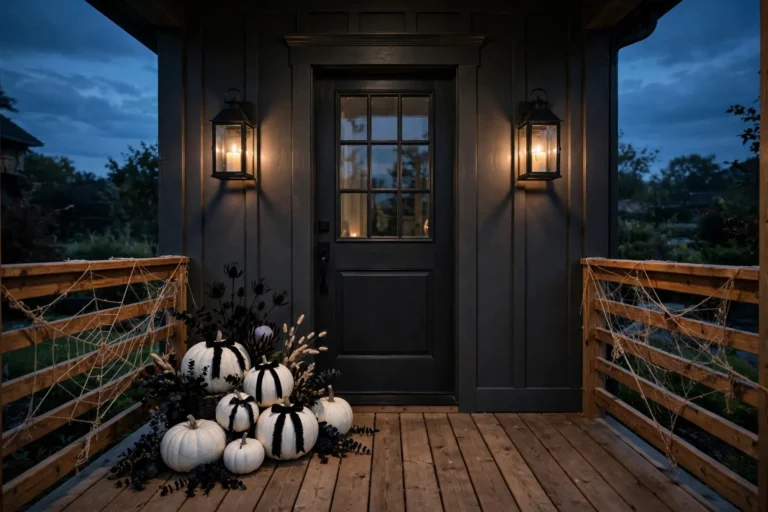
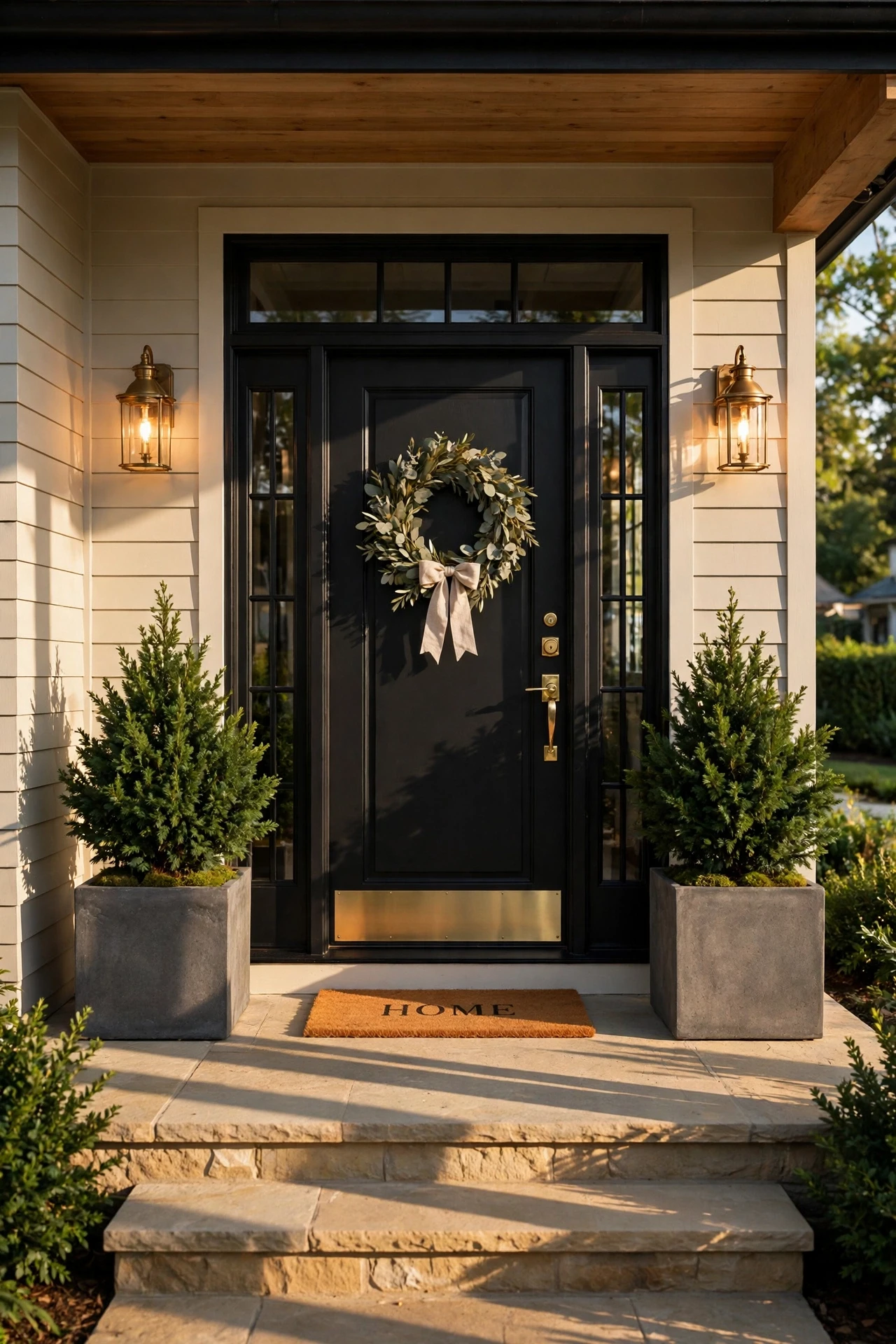
Painting your front door a deep black or charcoal creates what designers call a “power entrance” — a high-contrast anchor point that makes every other decor choice around it look more intentional. It pairs especially well with warm wood tones and deep organic neutrals, which are trending strongly for porches this year. This isn’t a seasonal decoration exactly, but it’s the single highest-impact background change you can make before adding your winter touches. A black door also makes brass lanterns, greenery, and light-colored planters pop far more than a neutral or pastel door would. If repainting isn’t an option, even a black door mat or hardware swap nods to the same look.
Cedar & Eucalyptus Door Swag
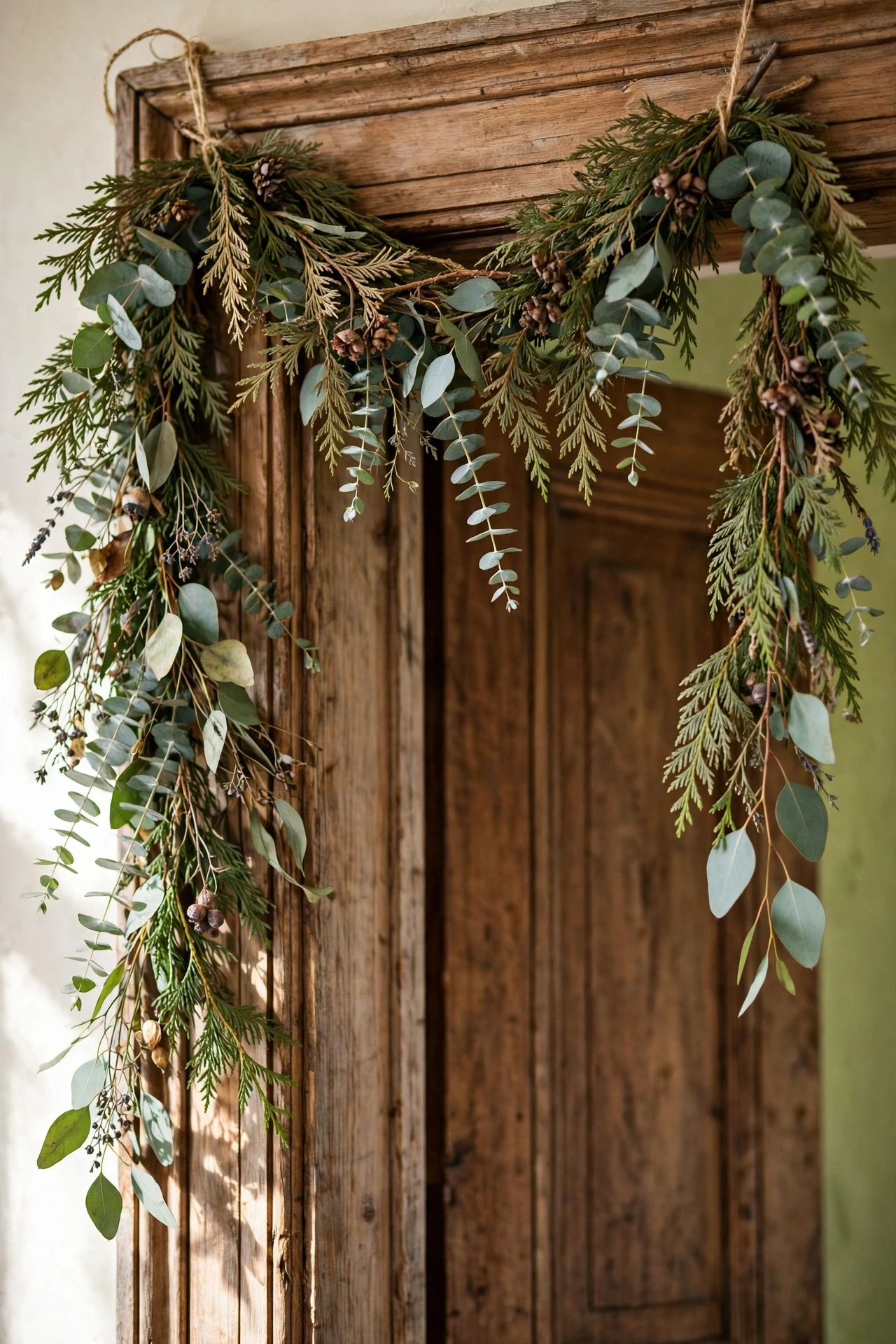
A simple garland swag draped over the top of your door frame is one of the cheapest, fastest projects on this list, and it fills the porch with a genuinely wonderful scent as the cedar warms slightly in the sun. Let the ends trail loosely down each side rather than trimming them square — the slightly wild shape reads as more natural and less “store display.” Eucalyptus mixed in adds a soft blue-green tone that contrasts nicely against a painted door. Because it’s made from real greenery, this swag will dry naturally over the following weeks rather than wilting badly, so it stays presentable well past its first day up.
A Doormat with Personality
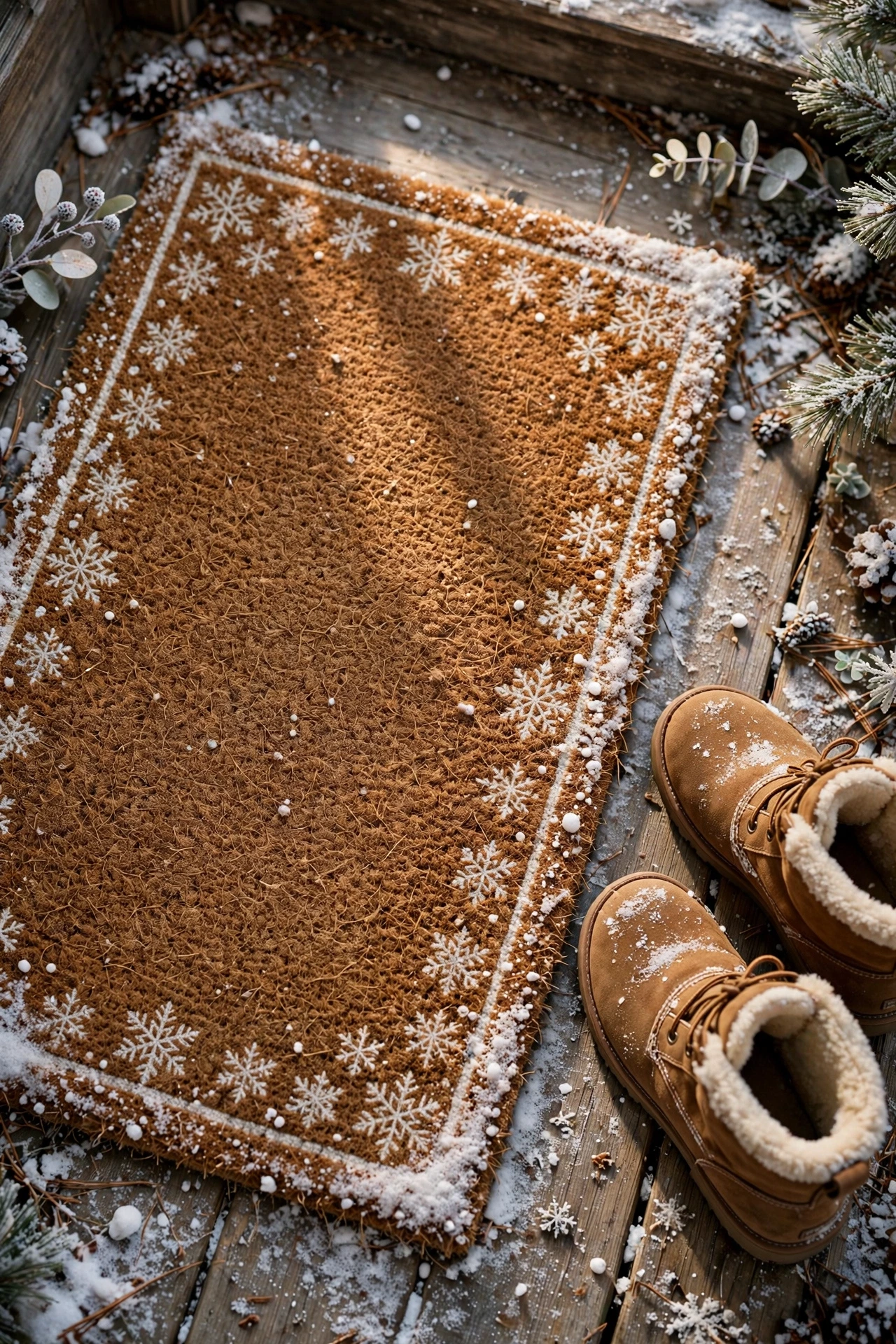
A doormat is one of the smallest items on a porch, but it’s also one of the first things a visitor actually looks down at, which makes it worth choosing carefully. A subtle winter motif — snowflakes, a simple sprig pattern, or a warm greeting in a classic font — reads as intentional without feeling like a themed decoration. Choose a thick coir or rubber-backed mat so it holds up to snow, salt, and wet boots without falling apart by February. Swapping just this one item is often enough to make an otherwise undecorated porch feel considered.
Window Boxes with Hardy Greenery
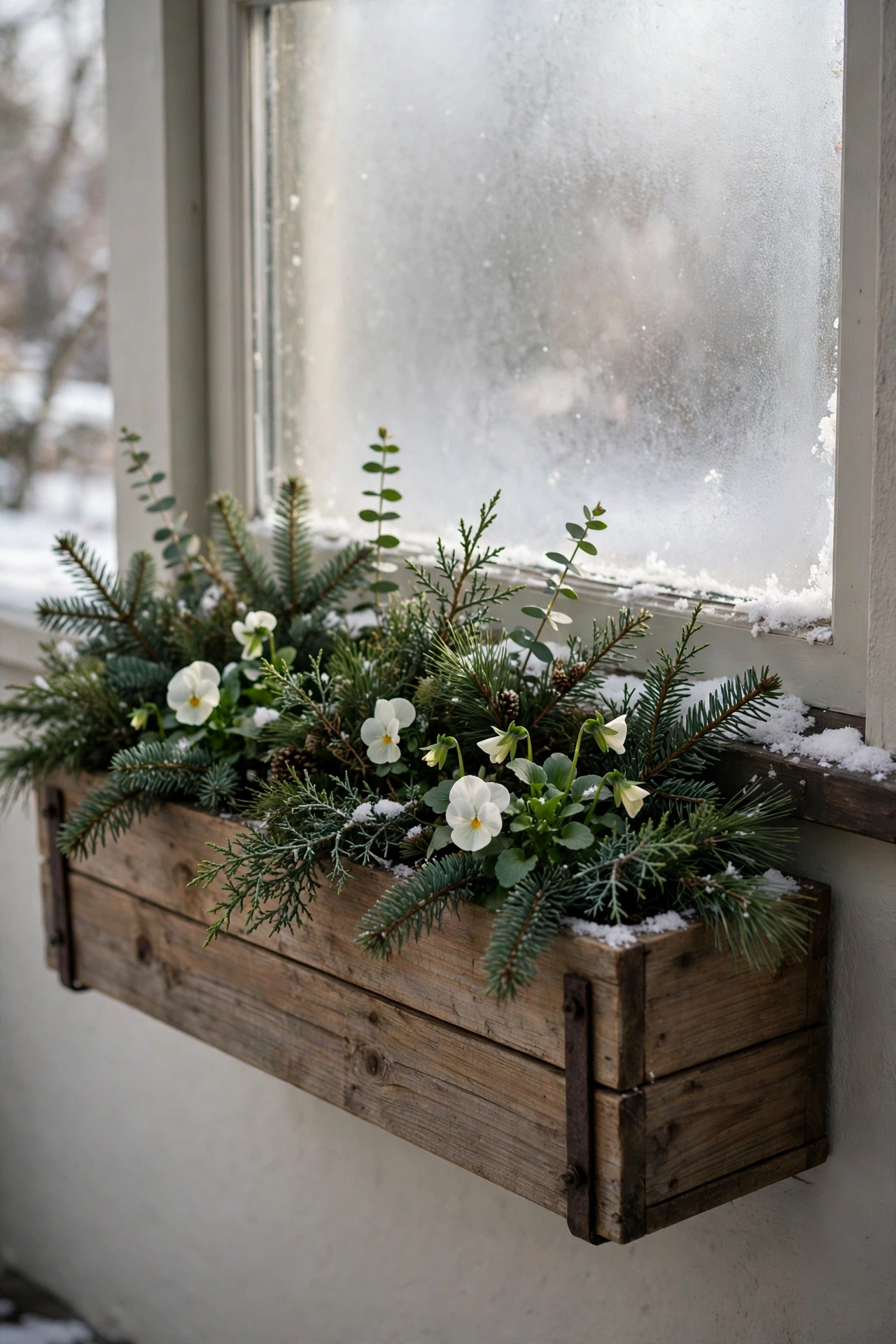
If your porch has windows nearby, hardy window boxes filled with cold-tolerant greenery keep color and texture going even when everything else outside is bare. Skip anything that needs consistent warmth and reach for evergreen sprigs, artificial greenery, or truly cold-hardy plants like pansies in milder climates. Seal wooden boxes before winter so moisture doesn’t warp them over repeated freeze-thaw cycles. Window boxes work especially well on porches where the ground-level planting space is limited, since they add greenery at eye level instead of only down by your feet.
A Decorated Mailbox
A mailbox near your porch is easy to forget, but a small wrap of garland, a weatherproof bow, or even just a fresh coat of paint pulls it into the same styled world as the rest of your entryway. This is a low-cost, high-visibility fix, since mailboxes typically sit right where visitors and delivery drivers naturally look. Choose ribbon and greenery that can handle rain and snow without fading, and keep the wrap loose enough that it doesn’t block the mail flag or door. It’s a small detail, but it’s the kind of finishing touch that makes a whole property read as cared-for.

Woven Baskets with Pinecones
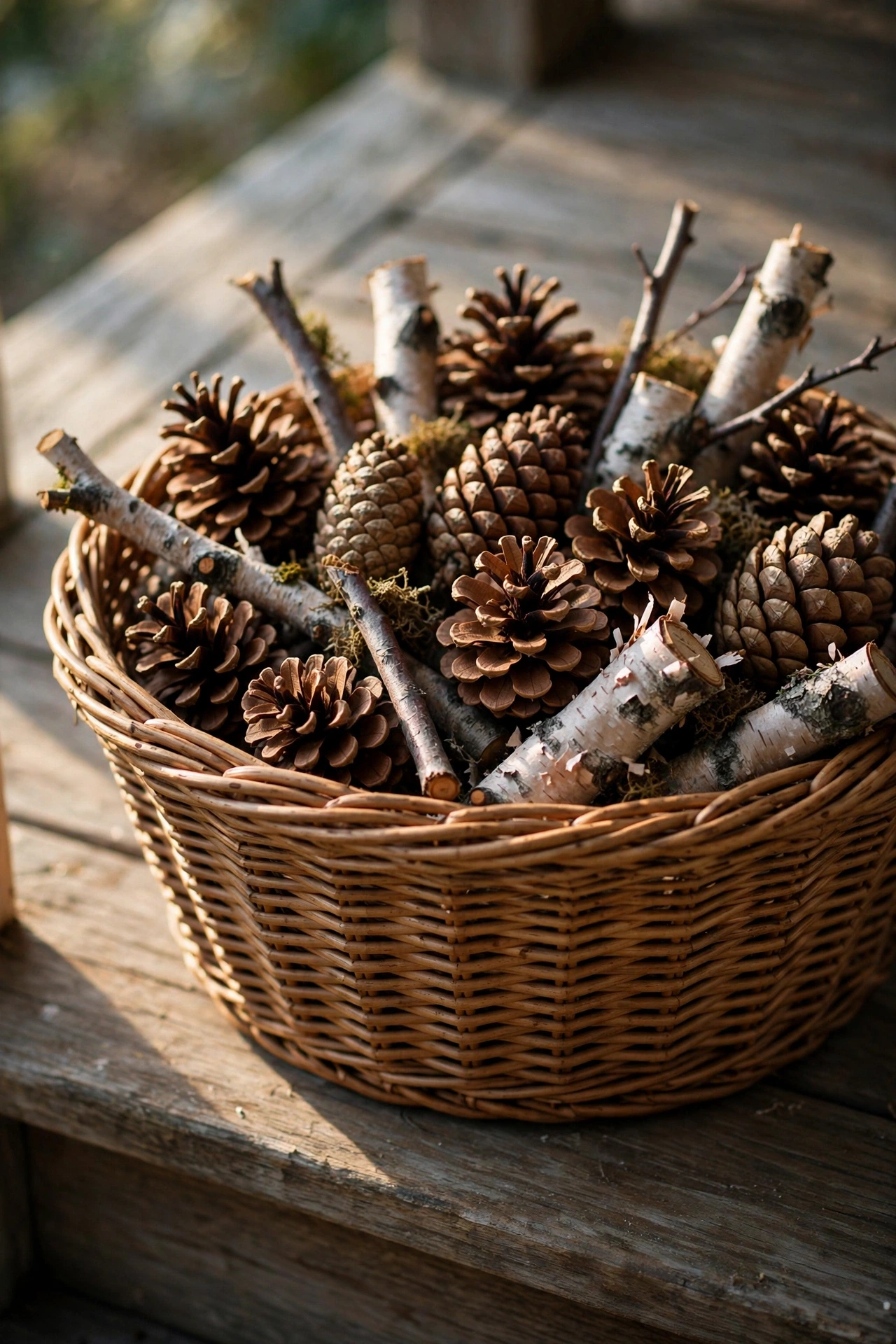
A woven basket filled with pinecones, birch offcuts, or dried flowers adds real texture to a porch corner or step without needing anything to grow or stay fresh. This is one of the easiest ways to bring in raw, natural material for a primitive or farmhouse feel, and it costs almost nothing if you gather pinecones locally. Set the basket slightly off-center near the door rather than dead center, which reads as more natural and less staged. Because everything inside is dried or dormant material, this decoration genuinely lasts the entire winter without any maintenance.
Warm White String Lights
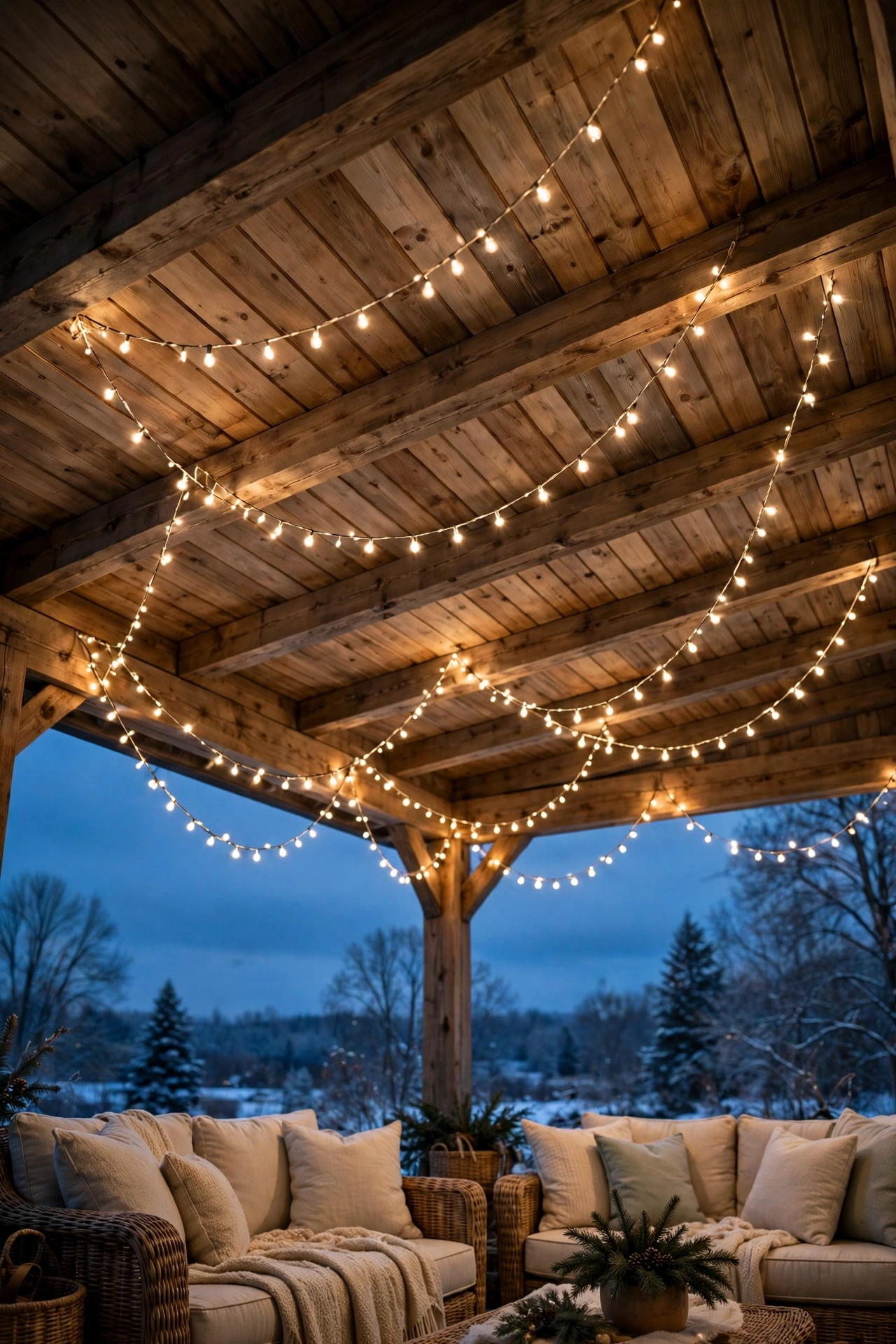
String lights along a porch railing, ceiling beam, or column instantly extend how late your porch feels usable, since winter evenings arrive so much earlier than in warmer months. Choose warm white over cool white or multicolor bulbs for a look that feels cozy rather than festive-only, which means they’ll still look right long after the holidays are over. Run the lights loosely rather than pulled taut, letting them dip slightly between attachment points for a softer, more natural glow. On covered porches, this is also one of the few decorations that works well after dark, giving your home genuine curb appeal at night.
Moss Green Cushions & Neutral Rug
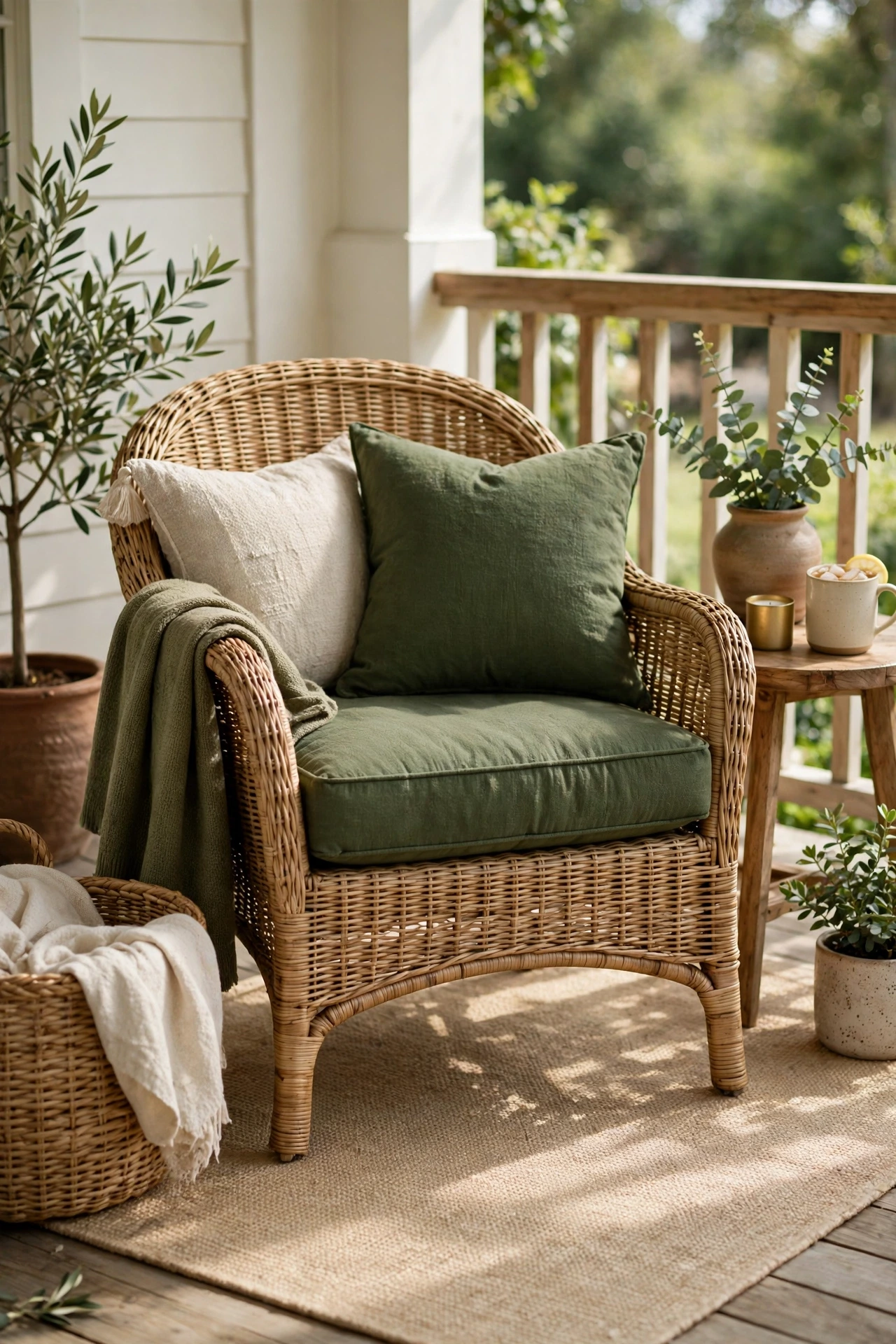
Swapping in cushions in a deep moss or olive green brings one of this year’s most popular color choices onto your porch without committing to anything permanent. Pair the cushions with a neutral outdoor rug in oatmeal or sandy beige so the green has room to stand out rather than competing with a busy pattern underneath. This combination works particularly well because it photographs as elevated and current, while still feeling grounded and easy to live with year after year. If you already own a plaid throw, moss green cushions blend with it more naturally than brighter holiday colors would.
A Bench Layered with Wool Throws
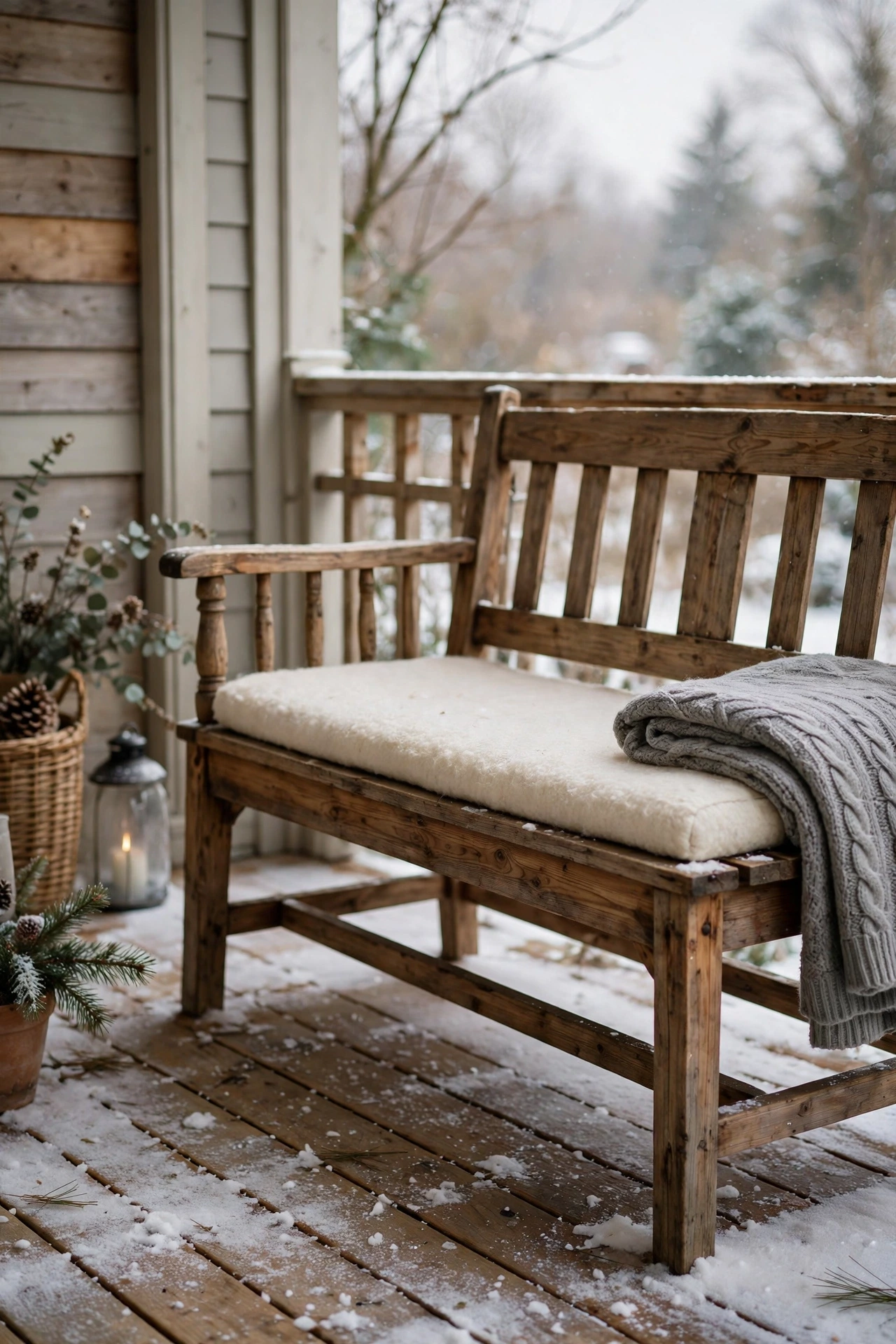
A simple wooden or metal bench becomes genuinely useful in winter once you add a wool cushion pad and a folded throw at one end. This setup works well for boot removal, holding packages for a moment, or just a spot to sit while lacing up shoes before a walk. Choose weather-resistant wool or a treated wool-blend rather than delicate throws that will mildew in damp conditions. Adding a small lantern or a stack of folded blankets at one end turns a purely functional bench into a styled focal point instead of an afterthought.
Boxwood Topiaries Flanking the Door
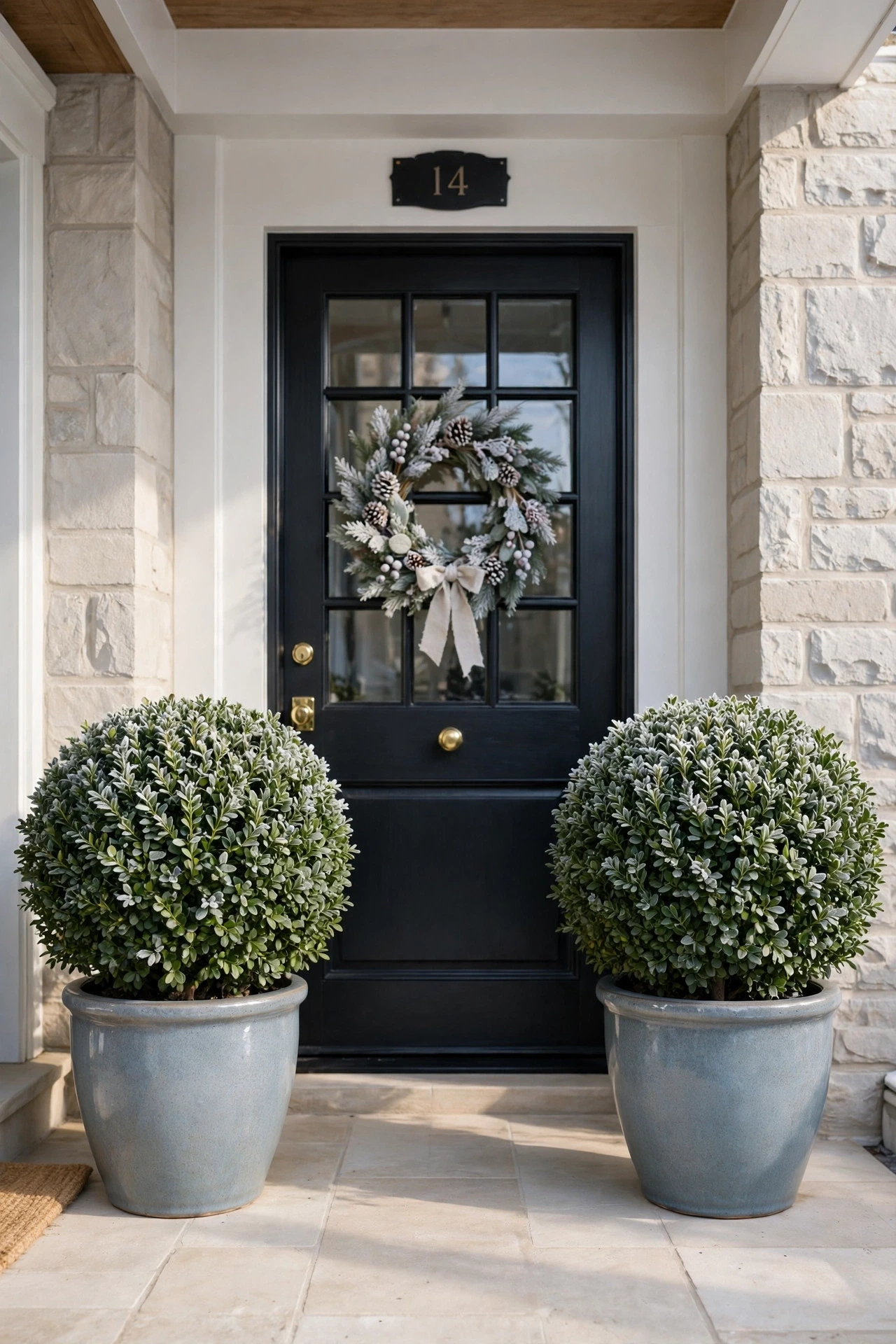
A pair of boxwood topiaries in matching planters gives your entryway a formal, tailored look that holds up through the entire winter without needing any seasonal swapping. Boxwood tolerates cold well, keeps its structure under light snow, and reads as classic rather than trendy, which means it won’t feel dated by spring. Choose planters in a material that won’t crack in freezing temperatures, like fiberglass or glazed ceramic rated for winter use. This is a slightly higher upfront investment than some ideas on this list, but it pays off by requiring almost no ongoing styling once it’s placed.
A Small-Space Fire Element
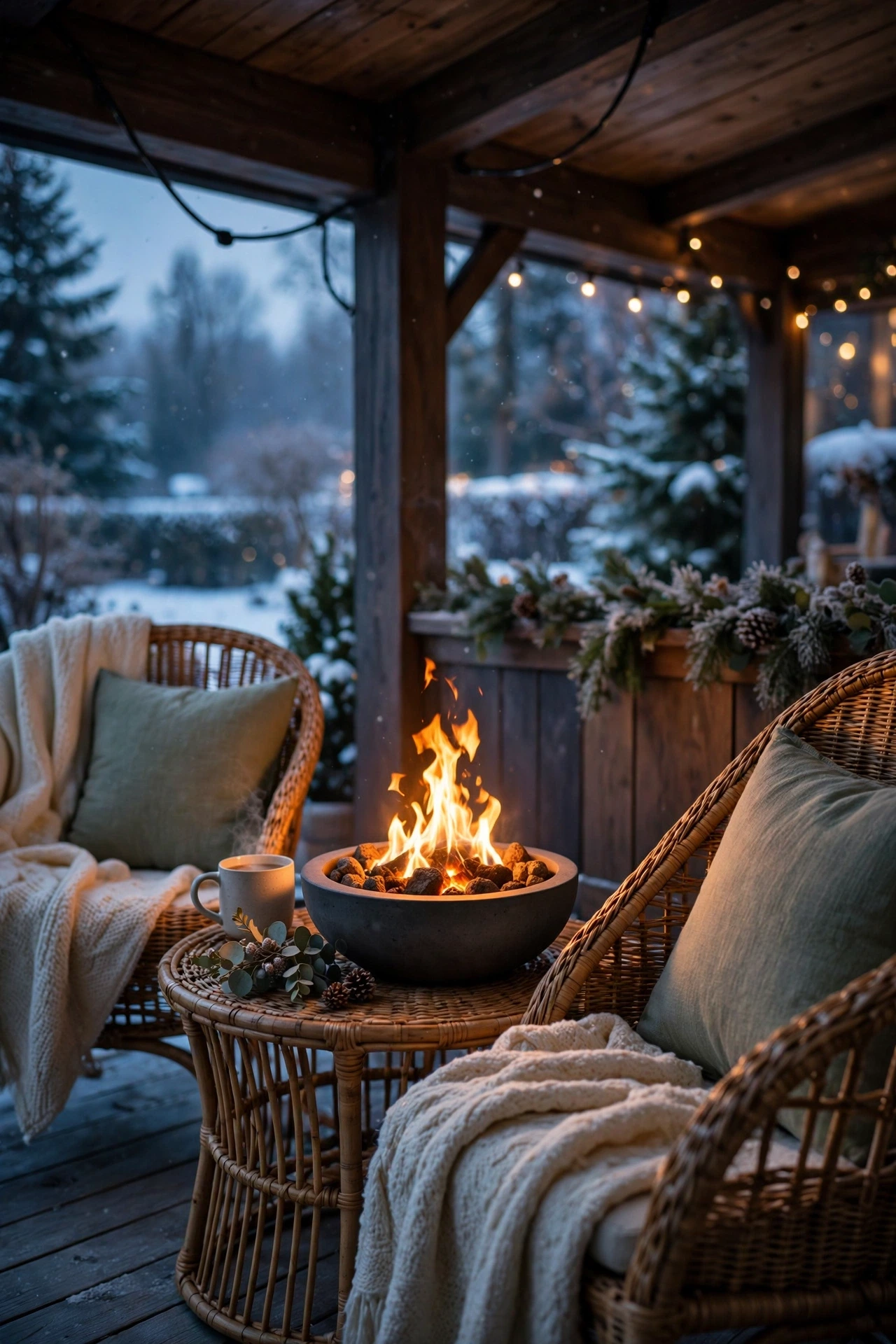
A compact tabletop fire bowl or a small electric heater styled to look intentional adds genuine warmth to a porch that might otherwise sit unused once temperatures drop. This idea has grown in popularity as porches shift from single-use entryways into small extensions of the living room. Position it near your seating area rather than blocking the walkway, and pair it with a small stack of firewood or a metal caddy nearby for visual grounding. Even a modest fire element signals to guests that the porch is meant to be lingered in, not just passed through.
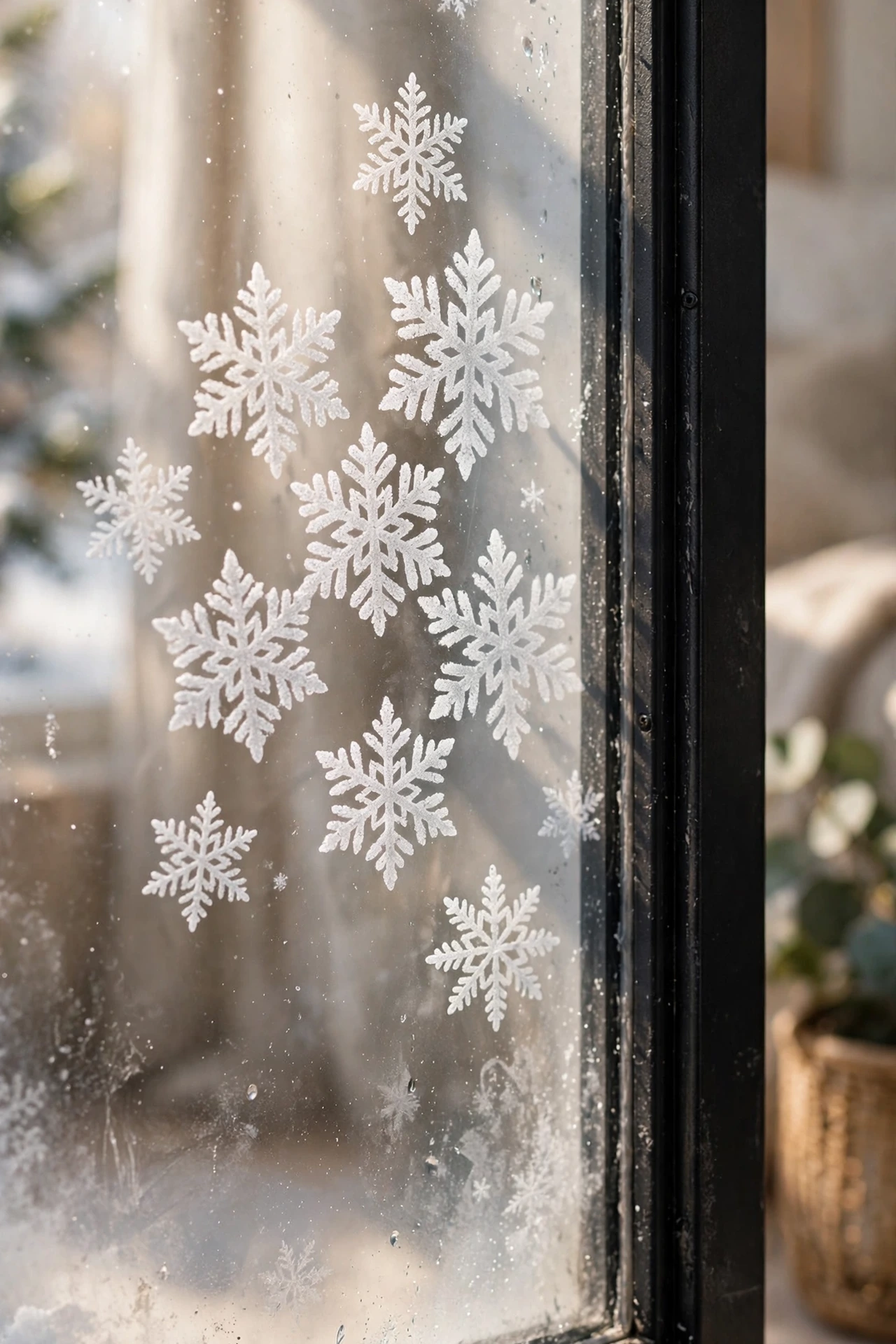
Frosted Window Decals
If your porch has windows or a glass storm door, frosted or translucent decals in a simple snowflake or branch pattern add charm without blocking natural light the way heavier decorations would. This is one of the easiest decorations to remove and replace, which makes it a good option for renters or anyone who likes to refresh their look each season. Choose a subtle, single-tone pattern rather than a busy multicolor design so it reads as elegant rather than juvenile. Applied at eye level, decals also give window-facing porch photos a finished, styled edge they’d otherwise lack.
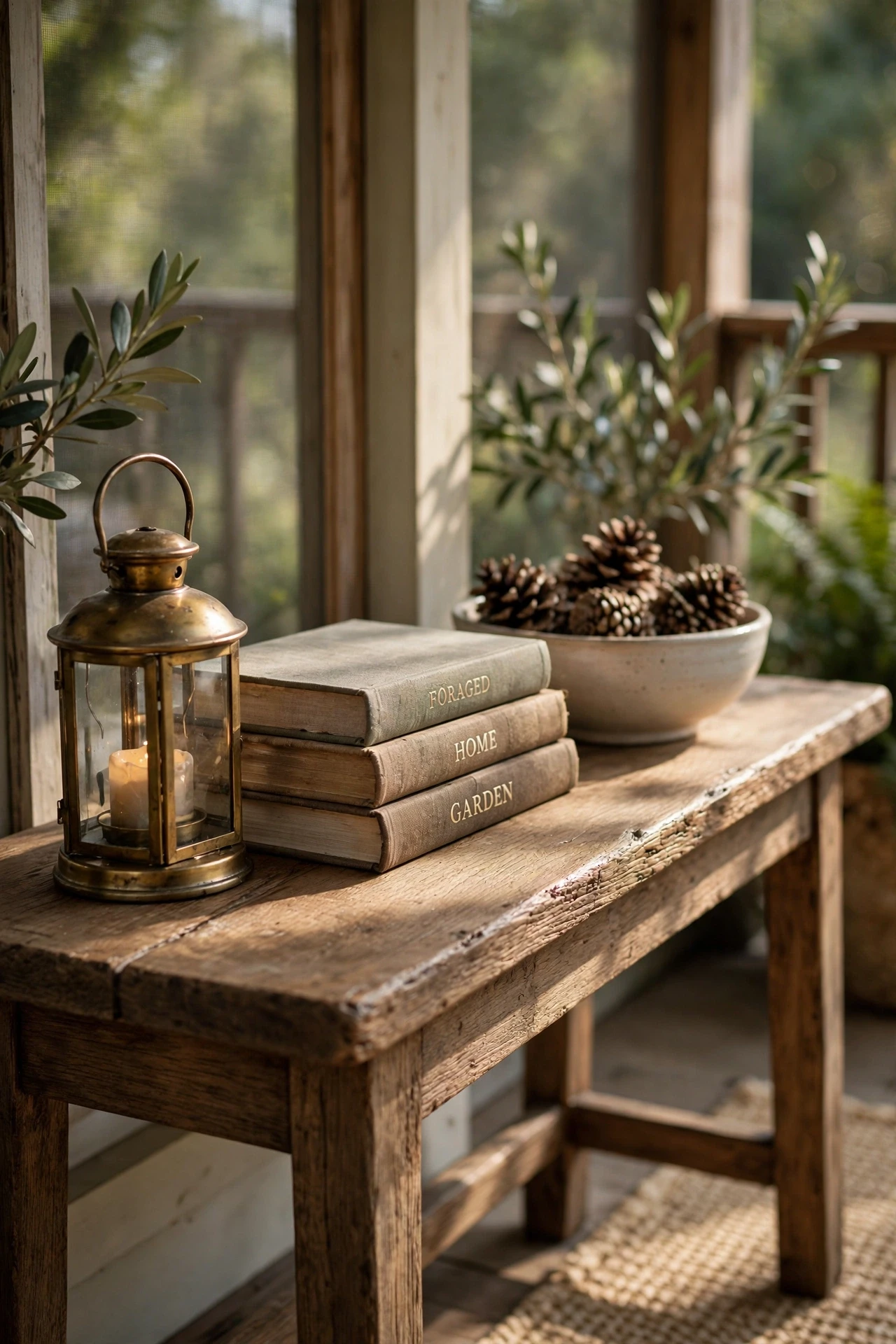
A Console Table Vignette
A slim console table pushed against the porch wall gives you a dedicated spot to style the way you would an entryway table indoors. Layer in a stack of books, a small lantern, a bowl of pinecones or winter citrus, and one taller item like a vase of branches for height variation. Keep the palette limited to two or three tones so the vignette reads as curated instead of cluttered. This idea works especially well on larger, covered porches where there’s enough space for a piece of furniture that isn’t strictly seating.
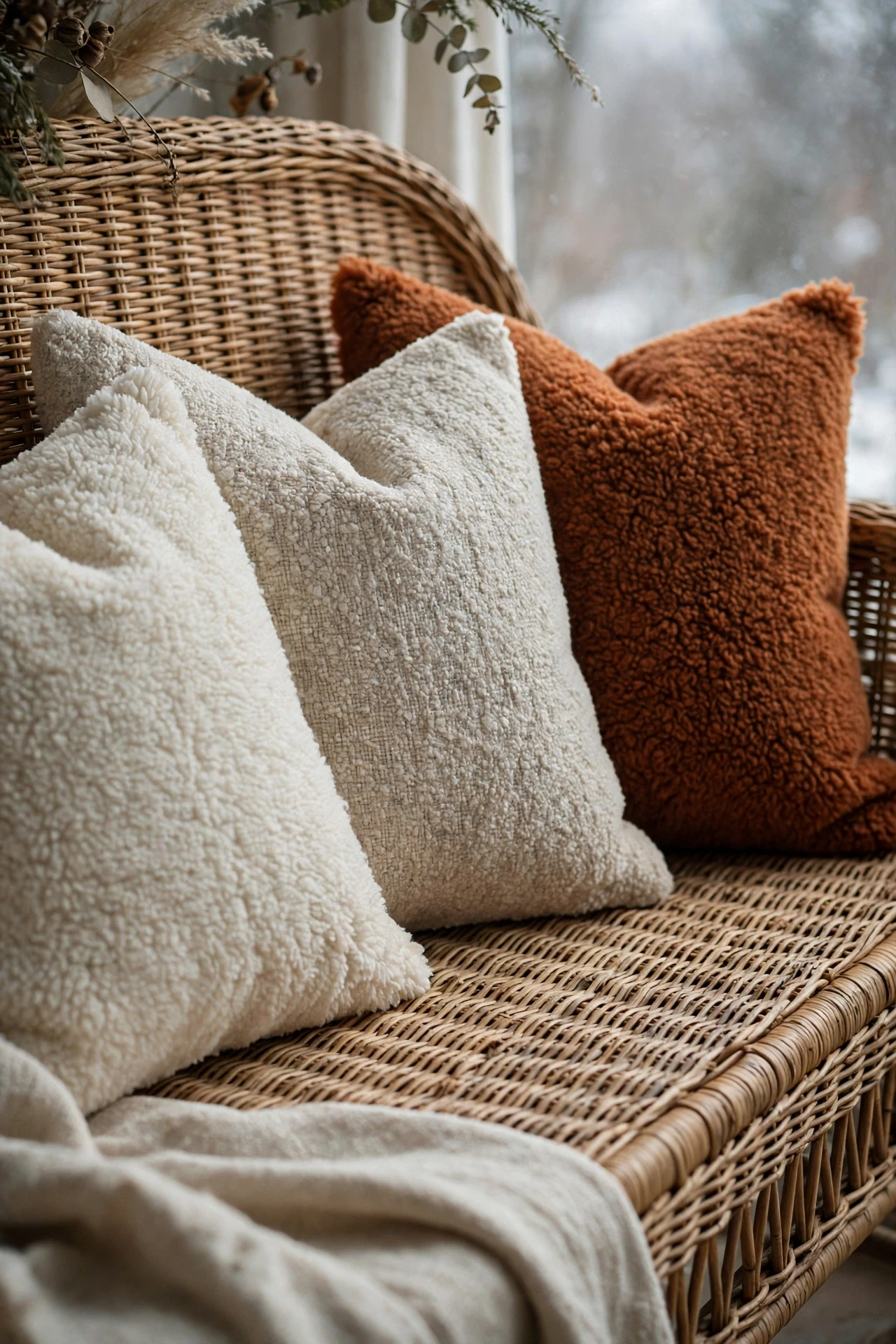
Mixed-Pattern Sherpa Pillows
Two or three sherpa or faux shearling pillows in slightly different textures, mixed on the same bench or chair, create depth that a single matching set can’t achieve. Keep the color palette tight — cream, oatmeal, and one deeper accent like rust or forest green — so the mix feels intentional rather than mismatched. Sherpa holds up reasonably well outdoors under a covered porch, though it’s worth bringing pillows in during heavy rain or snow to extend their life. This is a quick, affordable refresh that instantly makes seating look softer and more inviting in photos and in person.
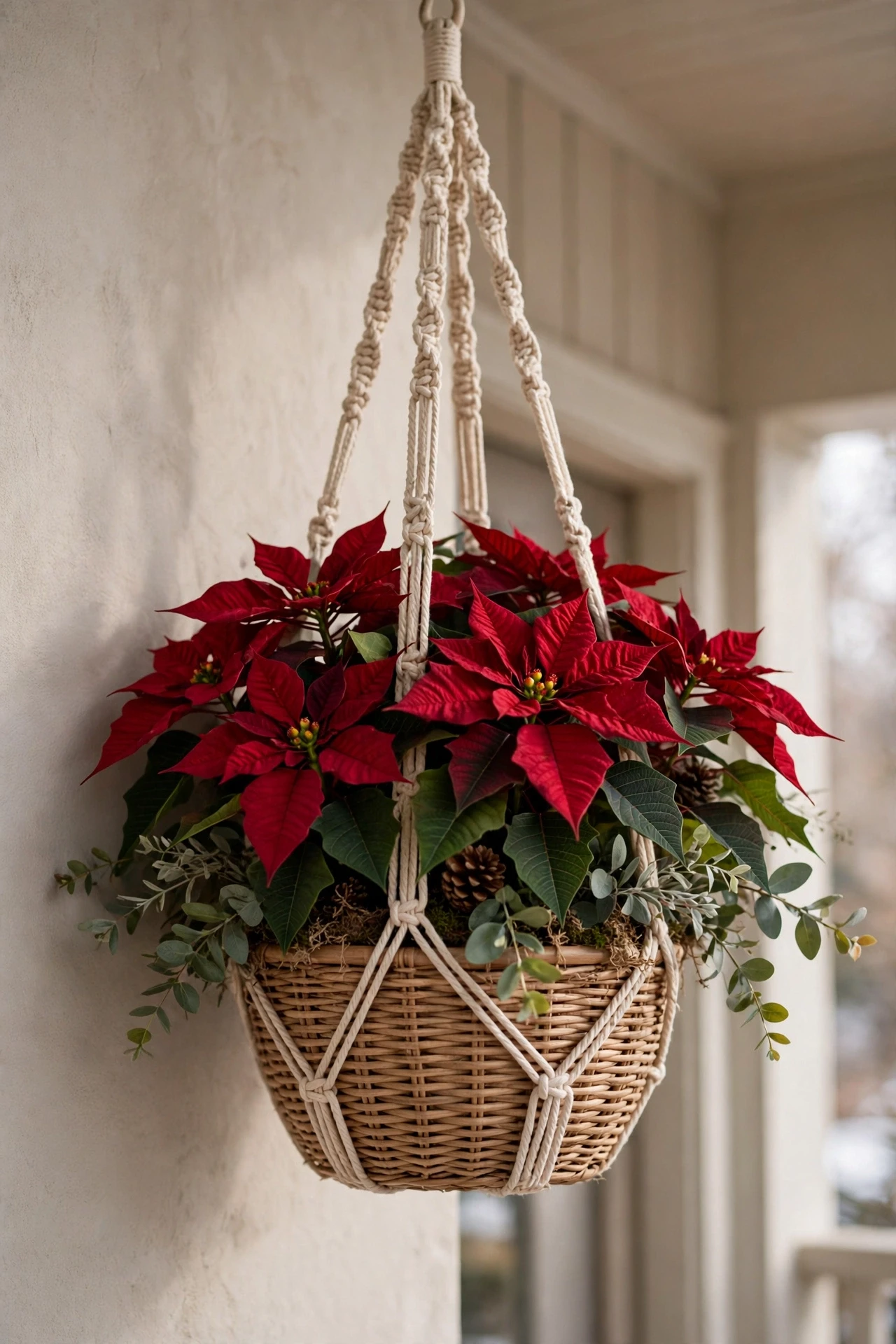
A Hanging Poinsettia Basket
A hanging basket built on floral foam and filled with faux or dried poinsettia stems adds a pop of red near the door without requiring a live plant that can’t handle frost. Hang it at a height where it’s visible from the front walkway rather than tucked too close to the porch ceiling. This idea pairs especially well with a more neutral overall palette elsewhere on the porch, since the red becomes a clear focal point instead of competing with other colored decor. It’s also easy to swap out for a different stem color in January if you want the porch to feel less holiday-specific.
Accessible, Smooth-Threshold Styling
Designing for accessibility doesn’t have to look clinical — a flush threshold, a wider clear path between furniture, and slip-resistant mats can all be worked into a warm winter look rather than feeling like an add-on. Keep furniture at least a few feet from the main walking path so the porch stays easy to navigate even with a cane, stroller, or wet boots. Choose textured, low-pile mats instead of thick shag styles that can catch a foot or wheel. This approach is gaining real traction in porch design because it makes the space genuinely welcoming for every guest, not just the ones who find stairs and clutter easy to manage.

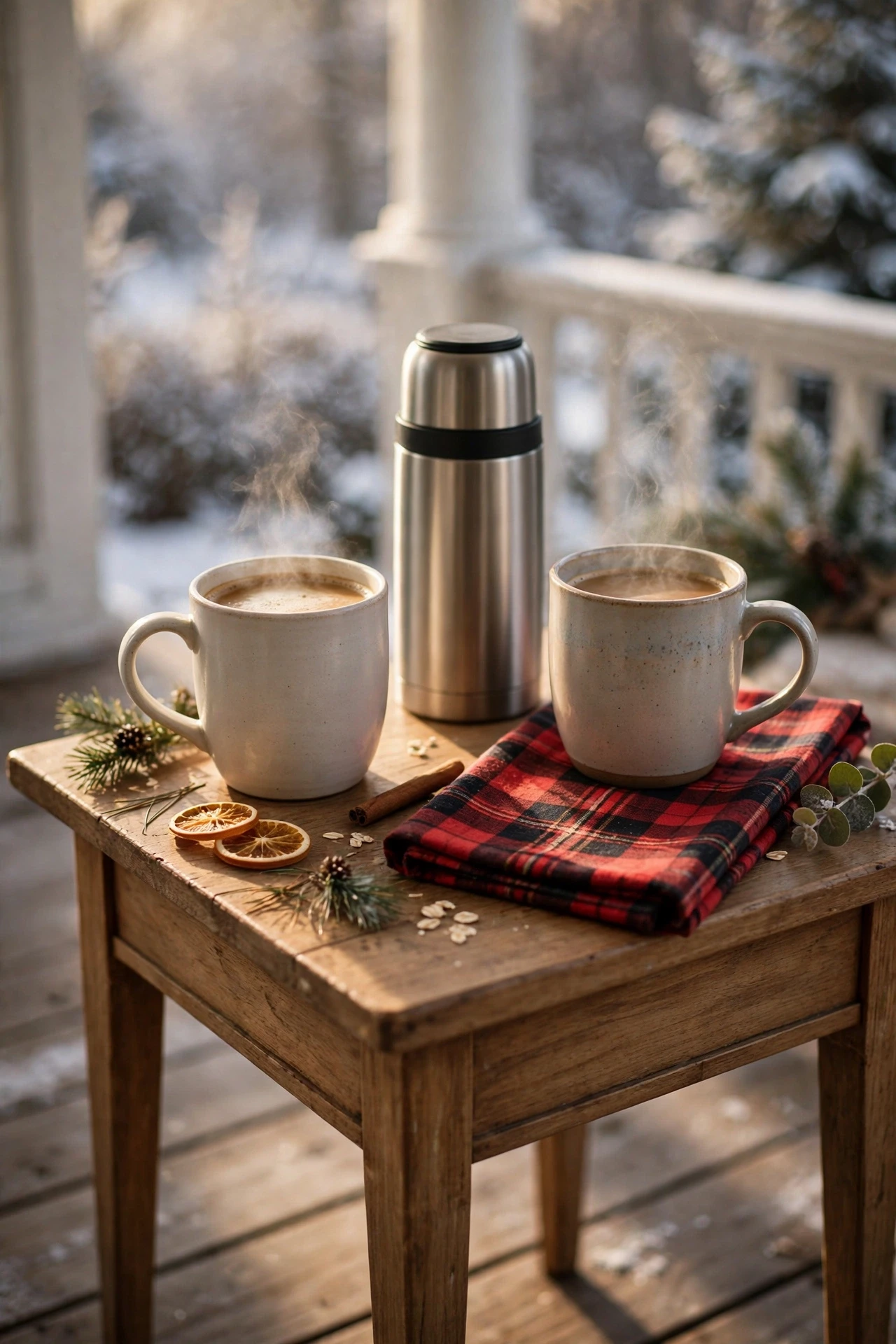
A Porch Coffee & Cocoa Corner
A small tray or side table set up with mugs, a thermos, and a few winter-friendly extras turns your porch into a destination rather than a pass-through space. This works particularly well paired with the fire element or bench ideas above, giving you an actual reason to sit outside even in cold weather. Keep the tray simple — two mugs, a thermos, a small folded napkin stack — so it looks intentional rather than like leftover kitchen items. This is one of the more personal ideas on the list, since it signals how the space is actually used, which is exactly the kind of detail that makes a porch feel like part of the home rather than just its exterior.
Styling Tips
Stick to two or three main colors across the whole porch so individual ideas read as one cohesive space instead of a pile of separate decorations. Vary height deliberately — tall branches or lanterns, mid-height furniture, low baskets or mats — since a flat, single-height porch photographs as boring even when it’s well decorated. Natural materials like wood, wicker, and dried greenery age better outdoors than plastic or shiny finishes, which tend to look worn and dated within a single season.
Practical Implementation Ideas
Start with the background elements first — door color, lighting, and any furniture — before layering in smaller seasonal touches like pillows or a swag. This way, if your budget or time runs out partway through, the porch still looks finished rather than half-decorated. Group similar tasks together, like doing all your greenery in one afternoon, so you’re not making repeated trips for supplies.
Common Mistakes to Avoid
Overcrowding a small porch with too many separate decorations is the most common misstep, since it reads as cluttered rather than cozy in photos. Mixing too many colors or patterns without a unifying neutral tends to feel chaotic instead of curated. Skipping lighting entirely is another frequent oversight — a beautifully decorated porch still looks unfinished once the sun goes down if there’s no warm light source.
Small-Space Alternatives
On a narrow stoop or tiny entry, choose two or three ideas from this list rather than attempting all of them — a doormat, a small wreath or swag, and a single lantern go a long way. Wall-mounted options like a swag or window box free up floor space that a full-size urn or bench would take up. A single well-styled basket can replace several smaller scattered items and still deliver the same cozy effect.
Budget-Friendly Alternatives
Gather your own pinecones, branches, and evergreen clippings instead of buying them, especially if you have access to a yard or nearby park. Faux greenery from a discount or dollar store often looks convincing once it’s mixed with one or two real natural elements like pinecones. Repainting an existing door or mailbox costs far less than replacing furniture and delivers a comparably strong visual impact.
Pro Styling Recommendations
Work in odd numbers — three lanterns, three pillows, three branches in a vase — since asymmetry in small groupings tends to look more natural than perfectly even pairs. Step back and view your porch from the street or front walkway periodically while decorating, since details that look good up close can disappear entirely from a normal viewing distance. Refresh just the small, cheap elements (a throw, a wreath) between December and February rather than redoing the whole porch, so the space stays current without extra cost.
FAQs
Conclusion
A porch doesn’t need a full renovation to feel warm in winter. Most of the ideas here take an afternoon, a few natural materials, and a willingness to swap out one or two tired items for something with real texture. Pick three or four that fit your space and your style, layer them in gradually, and you’ll end up with an entryway that feels genuinely lived-in — not just decorated for a season, but ready for whoever walks up to your door.