19 Winter Mantel Ideas That Make Your Fireplace Look Cozy & Incredibly Beautiful

There’s a particular kind of quiet that settles into a room once the holiday boxes go back in the attic. The stockings come down, the tree gets carried out to the curb, and suddenly your mantel is just… bare. Cold, even.
But a fireplace doesn’t stop being the heart of your living room just because December ended. If anything, January through March is when you actually sit in front of it the most — wrapped in a blanket, coffee in hand, watching the fire do its thing while it’s grey and freezing outside.
This is where a good winter mantel earns its keep. Not a holiday mantel. Not a Christmas leftover. A mantel that feels intentional, warm, and a little bit magazine-worthy, using pieces that work from January straight through the last cold snap of the season.
Below are 19 winter mantel ideas pulled from real styling logic — how professional decorators actually think about height, texture, color, and balance — so you can pick the version that fits your fireplace, your budget, and how much time you actually want to spend on a Saturday afternoon.
Table of Contents
Set a Winter Color Palette First
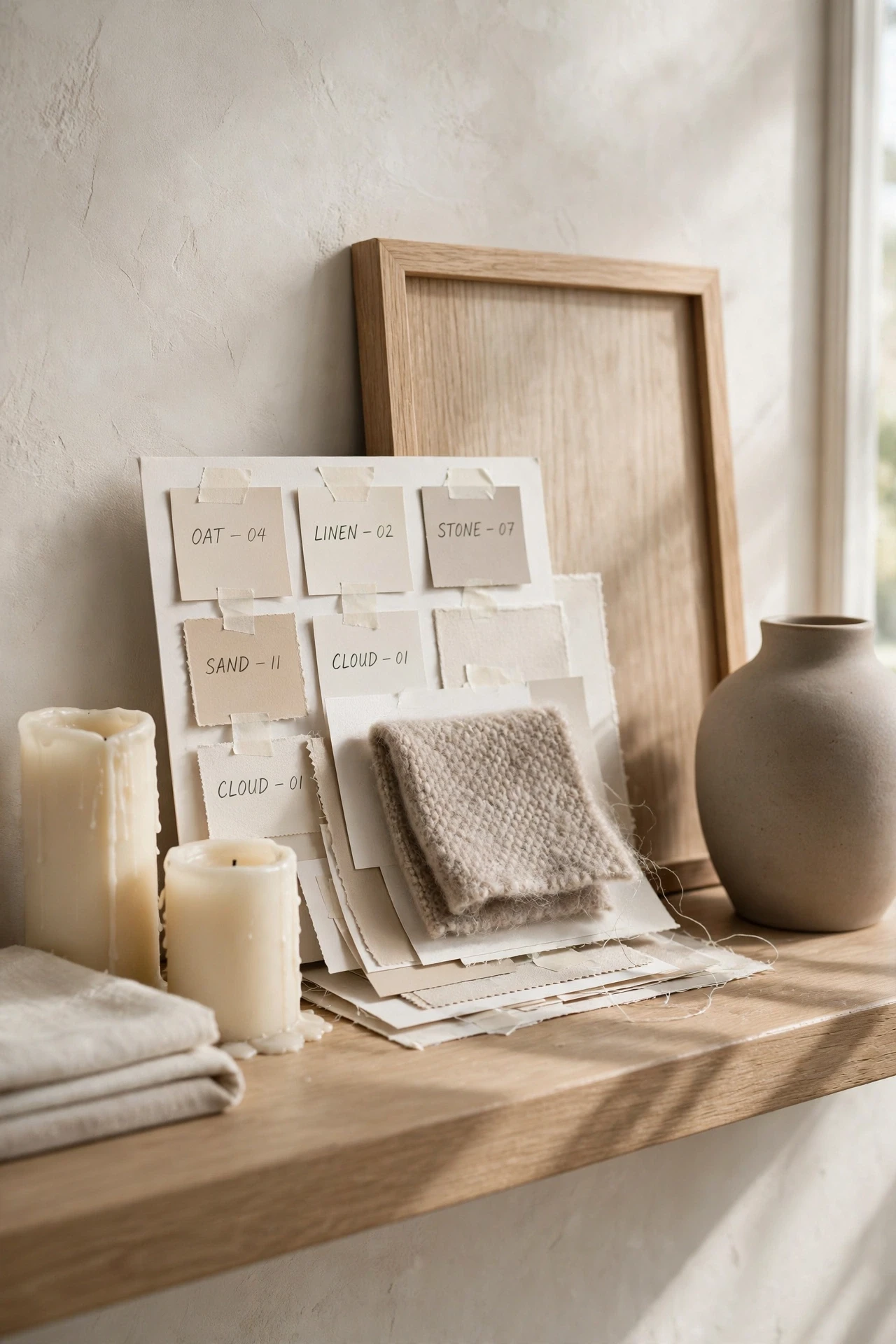
Before you place a single object, decide on a color story, because this is what separates a mantel that looks styled from one that looks like leftover Christmas decor nobody bothered to put away. A soft winter palette usually leans into ivory, warm taupe, muted grey, and light wood tones, with maybe one deeper accent like charcoal or forest green worked in through a single object. This neutral base is what lets texture do the heavy lifting instead of color, which is exactly why so many winter mantels feel calm rather than seasonal. Sticking to two or three tones total keeps the eye moving smoothly across the shelf instead of jumping between competing colors. Once this palette is locked in, every other idea on this list becomes easier because you’re just filling in a frame you’ve already built.
Layer in Real or Faux Greenery
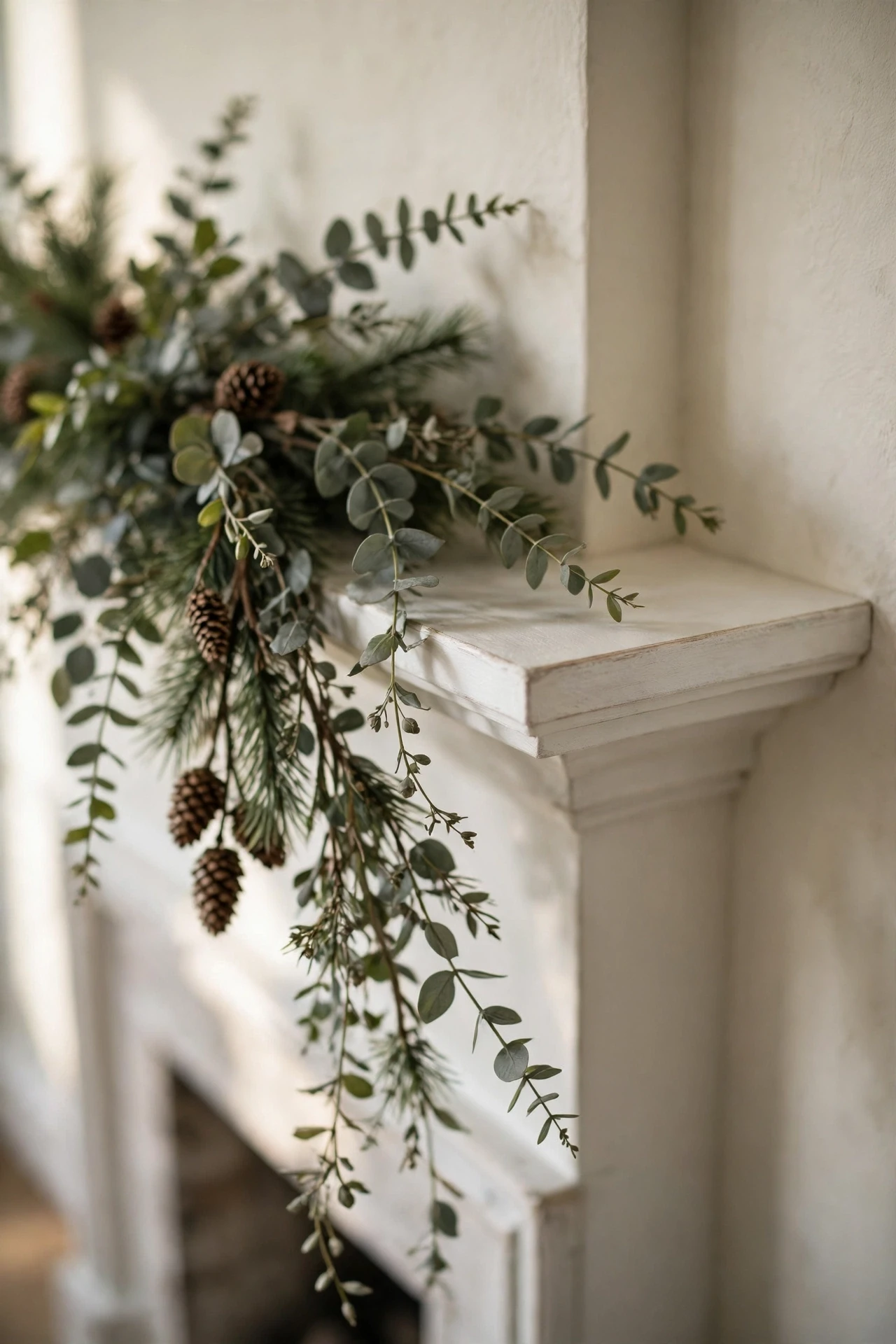
Greenery is one of the fastest ways to make a mantel feel alive again after the holiday florals disappear, and it works because it references the outdoors without tying itself to any specific holiday. Eucalyptus, pine sprigs, olive branches, or magnolia leaves all hold their shape and color well into winter, whether you use fresh cuttings or a quality faux stem. The trick professional stylists use is draping it asymmetrically along one section of the mantel rather than centering it, which creates a sense of natural movement instead of a stiff, symmetrical line. Mixing two greenery types — something with texture like eucalyptus and something structural like pine — adds depth without adding clutter. A single trailing stem left to spill slightly over the edge of the shelf also softens the hard architectural line of the mantel itself.
Anchor the Mantel With a Mirror
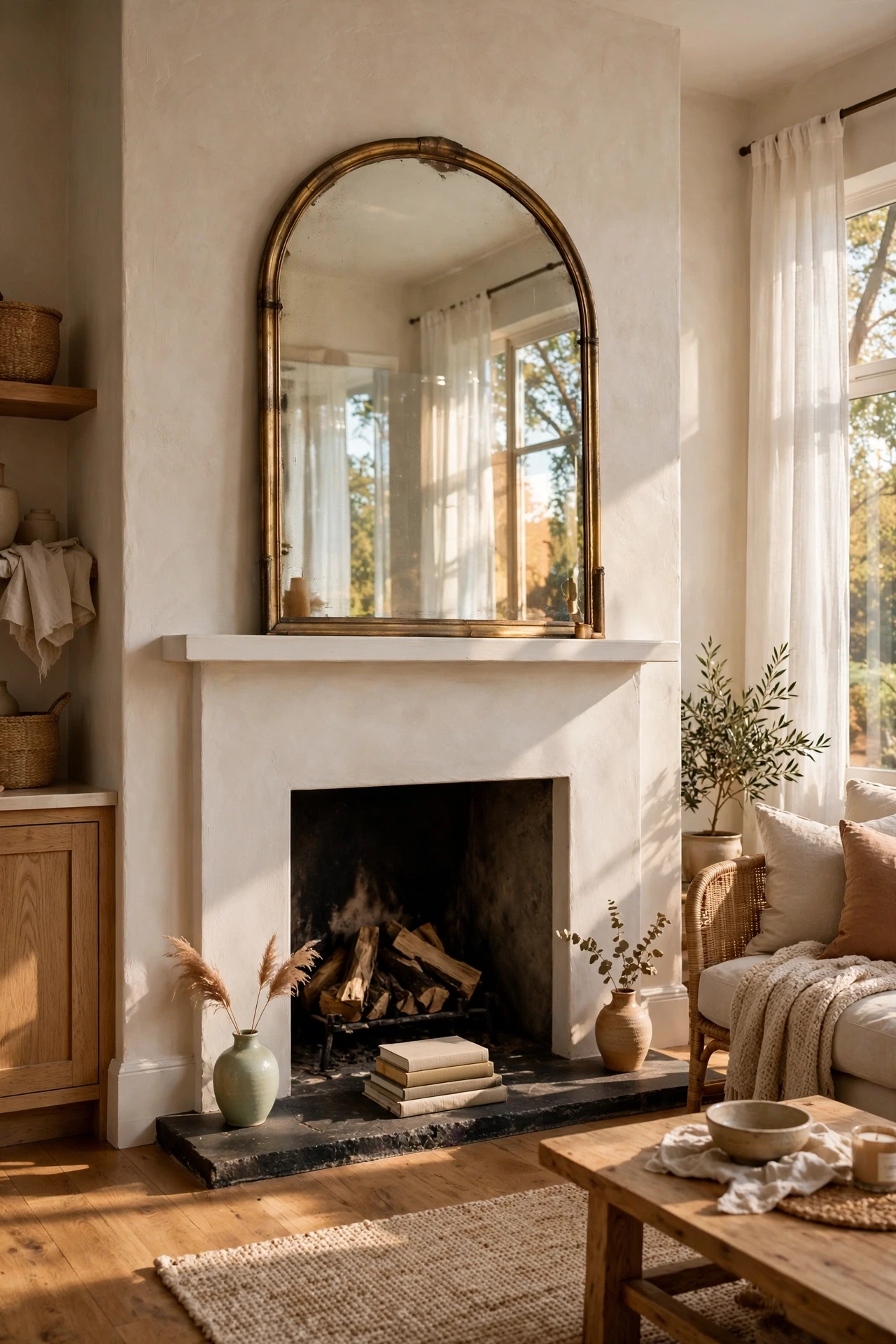
A large mirror above the mantel does more design work than almost any other single piece, because it doubles the light in the room and gives the entire arrangement a vertical anchor to build around. Once that anchor is in place, the objects on the shelf itself can stay lower and more spread out, since the mirror is already carrying visual weight. An arched or oversized round mirror in a warm brass or light wood frame pairs especially well with a winter palette, since the metal tone picks up whatever candlesticks or trays you place below. This approach also solves a common styling problem: mantels that feel empty in the middle, because the mirror fills that vertical gap without requiring more objects. Keeping the rest of the arrangement restrained lets the mirror reflect the room instead of competing with a busy tabletop.
Cluster Candles at Varying Heights
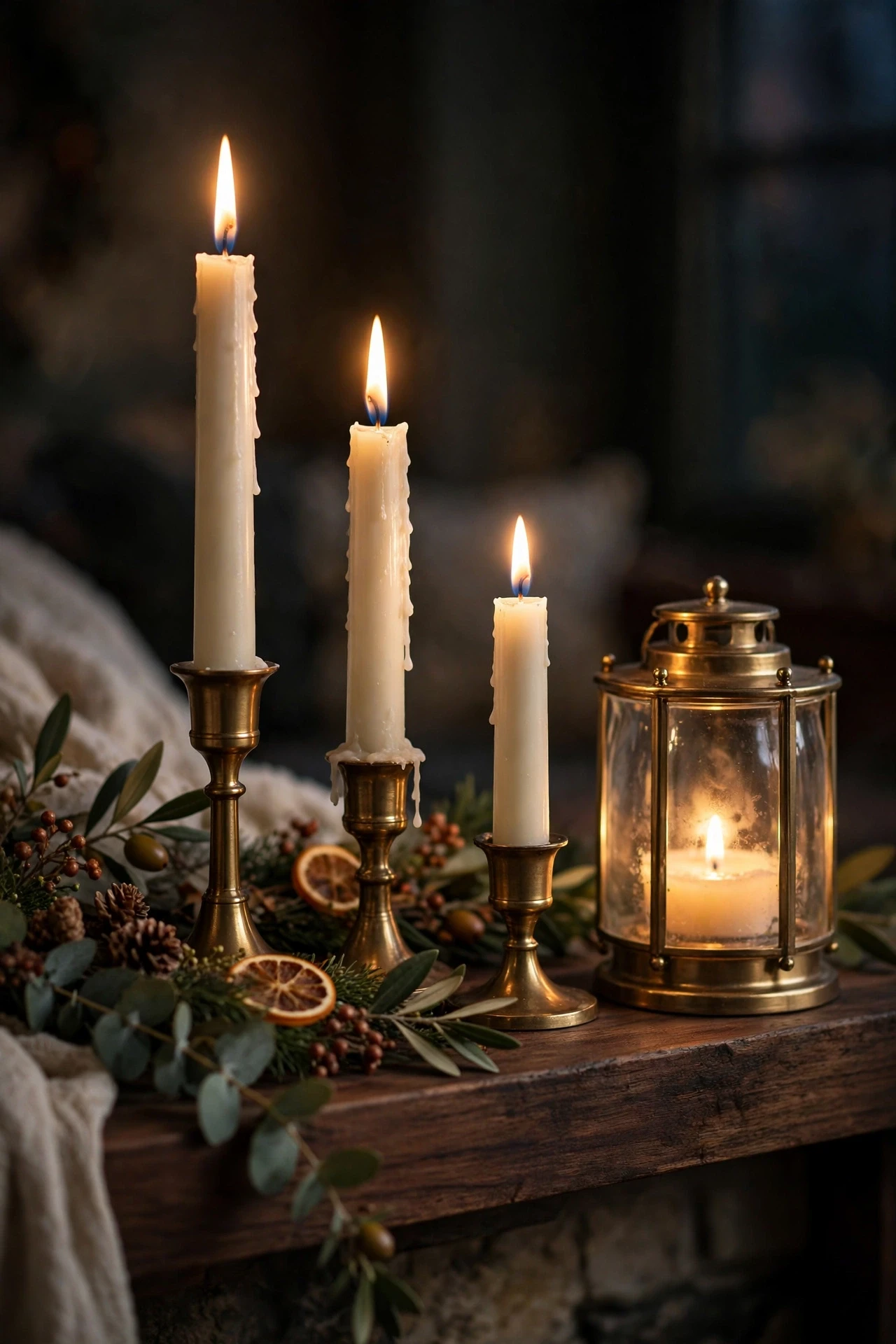
Candles are the single easiest way to add warmth to a mantel in the literal and visual sense, and clustering them in odd numbers at different heights is what keeps the arrangement from looking flat. Three taper candles in brass holders of slightly different heights, or a grouping of pillar candles on a small wooden riser, creates a rhythm the eye naturally wants to follow left to right. Glass hurricane lanterns work well too, especially if you want the flicker without worrying about drips on a wood shelf. For an evening glow without the fire risk, flameless LED candles with a realistic flicker setting have gotten good enough that most guests can’t tell the difference from three feet away. Grouping candles toward one third of the mantel, rather than spacing them evenly across the whole thing, also creates the kind of intentional asymmetry that reads as professionally styled.
Bring In a Chunky Knit Throw
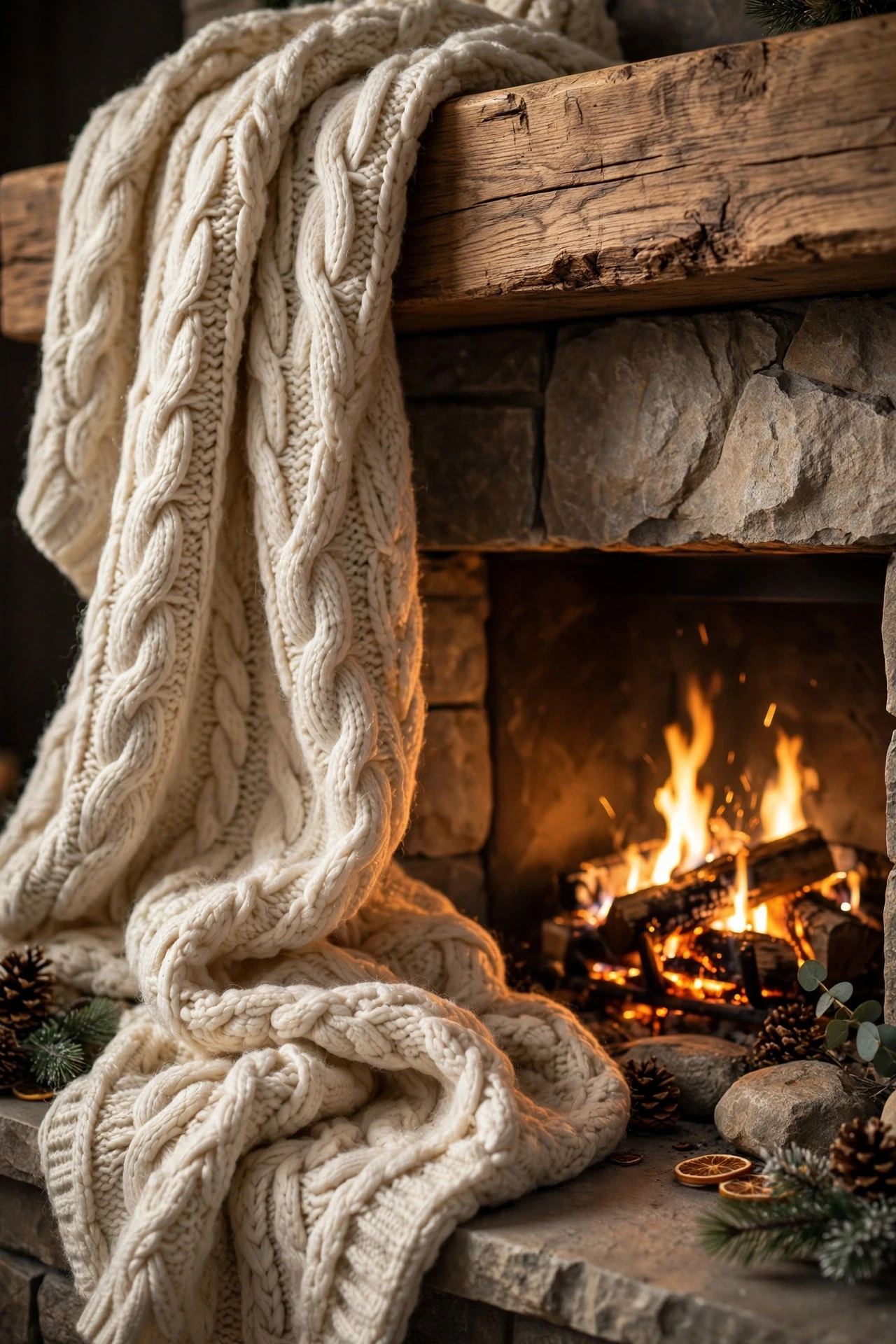
Draping a chunky knit throw over one end of the mantel, or letting it spill down from a nearby chair positioned close to the fireplace, brings a soft textile element into what’s usually a hard-surfaced vignette of wood, glass, and ceramic. Cable knit, cream boucle, or a heavier waffle-weave blanket all read as “winter” instantly, without needing a single seasonal motif printed on them. This idea works especially well on mantels that feel too rigid or symmetrical, since fabric introduces a relaxed, lived-in quality that balances out stiffer objects like frames or vases. A folded throw on the hearth below the mantel, rather than only on the shelf itself, also extends the cozy feeling into the full fireplace zone instead of just the top ledge. Choosing a throw in the same neutral family as your other decor keeps it from becoming a distracting color block.
Style a Bowl of Pinecones
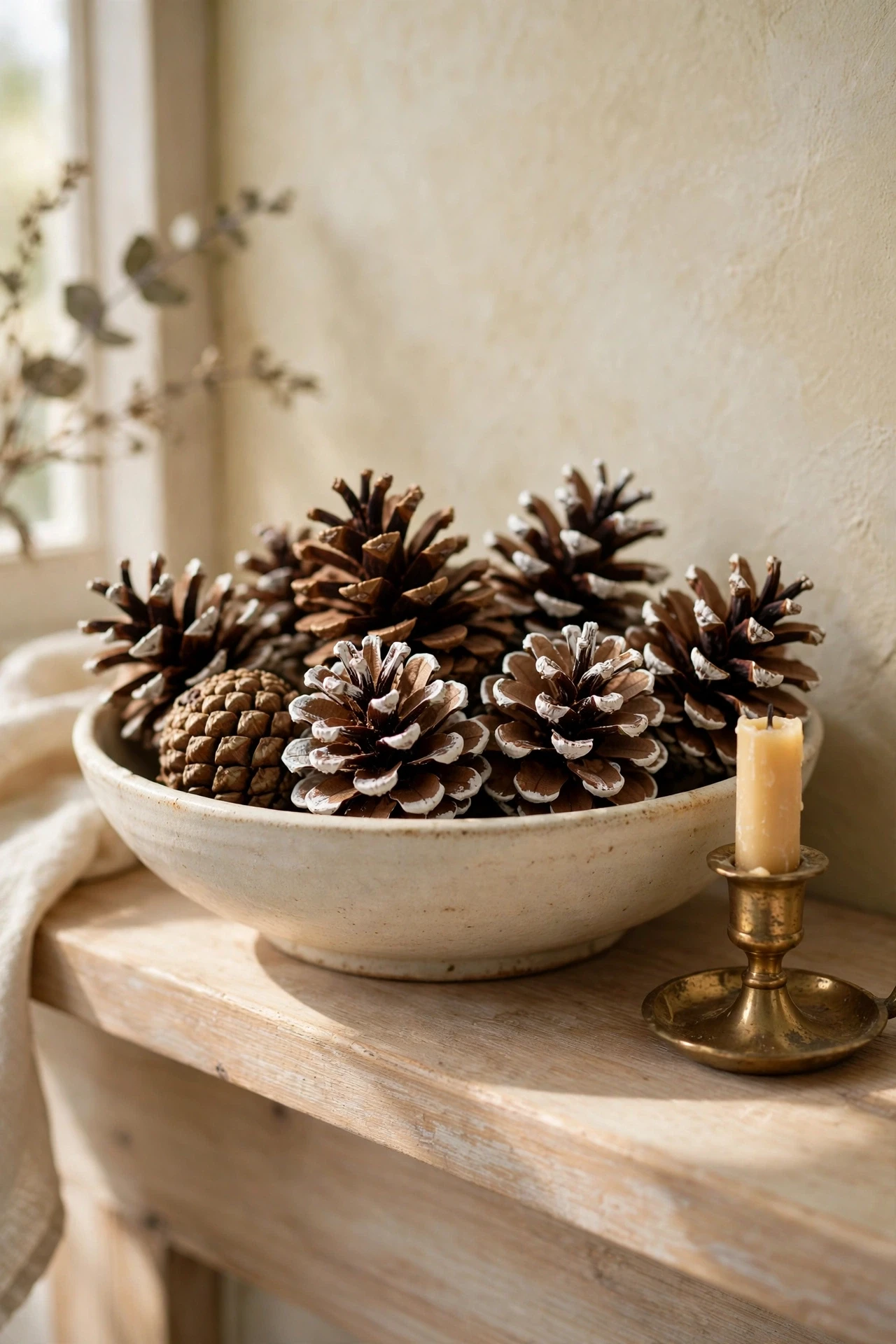
A simple bowl or basket filled with pinecones is one of the most budget-friendly winter mantel ideas that still looks intentional, because pinecones carry natural texture and a warm brown tone that fits almost any color scheme. Using a shallow ceramic or wood bowl instead of piling them directly on the shelf gives the arrangement a defined shape and keeps stray needles contained. Mixing in a few white-tipped or flocked pinecones adds a subtle winter touch without pushing the display into full holiday territory. This idea also works as a filler piece between larger objects like a vase and a stack of books, giving the eye a place to rest between taller elements. Because pinecones are free or nearly free to gather locally, this is a favorite among decorators who want a mantel that photographs well without a real budget behind it.
Add a Stack of Coffee Table Books
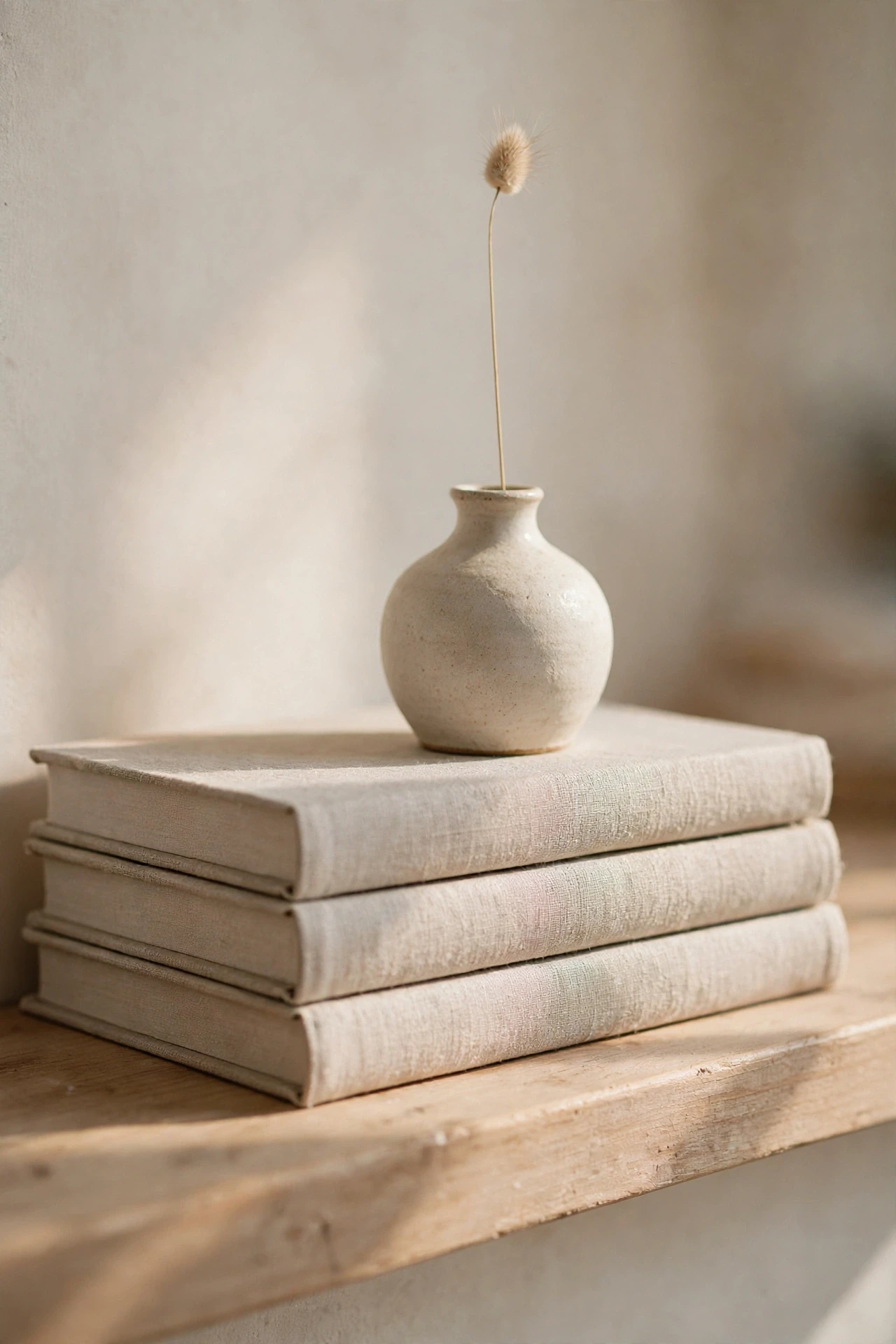
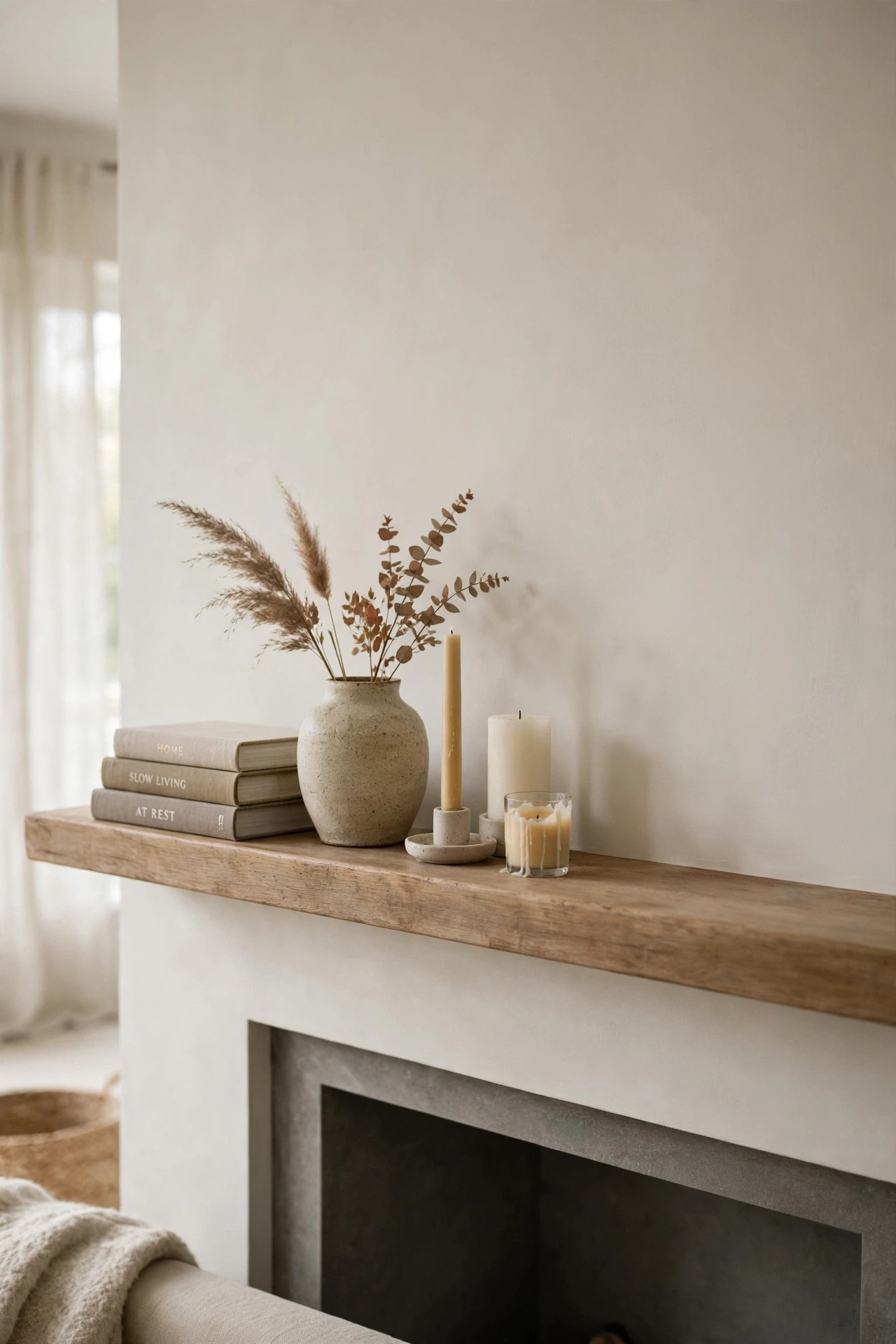
A stack of two or three hardcover books, styled with the spines facing inward or wrapped in plain kraft paper, adds height variation to a mantel without adding visual noise. Books also solve a practical problem: mantels with objects of similar height tend to look flat, and a book stack instantly creates a stepped platform for a smaller item like a candle or bud vase to sit on top. Choosing books with neutral or textured covers, rather than bright graphic spines, keeps the focus on shape and height rather than color. This idea pairs especially well with a reading-nook style living room, since it subtly signals the kind of slow, cozy winter afternoon the whole mantel is meant to evoke. A single small object placed on top of the stack, like a mini vase or a smooth stone, finishes the vignette without overloading it.
Hang Bare Winter Branches in a Tall Vase
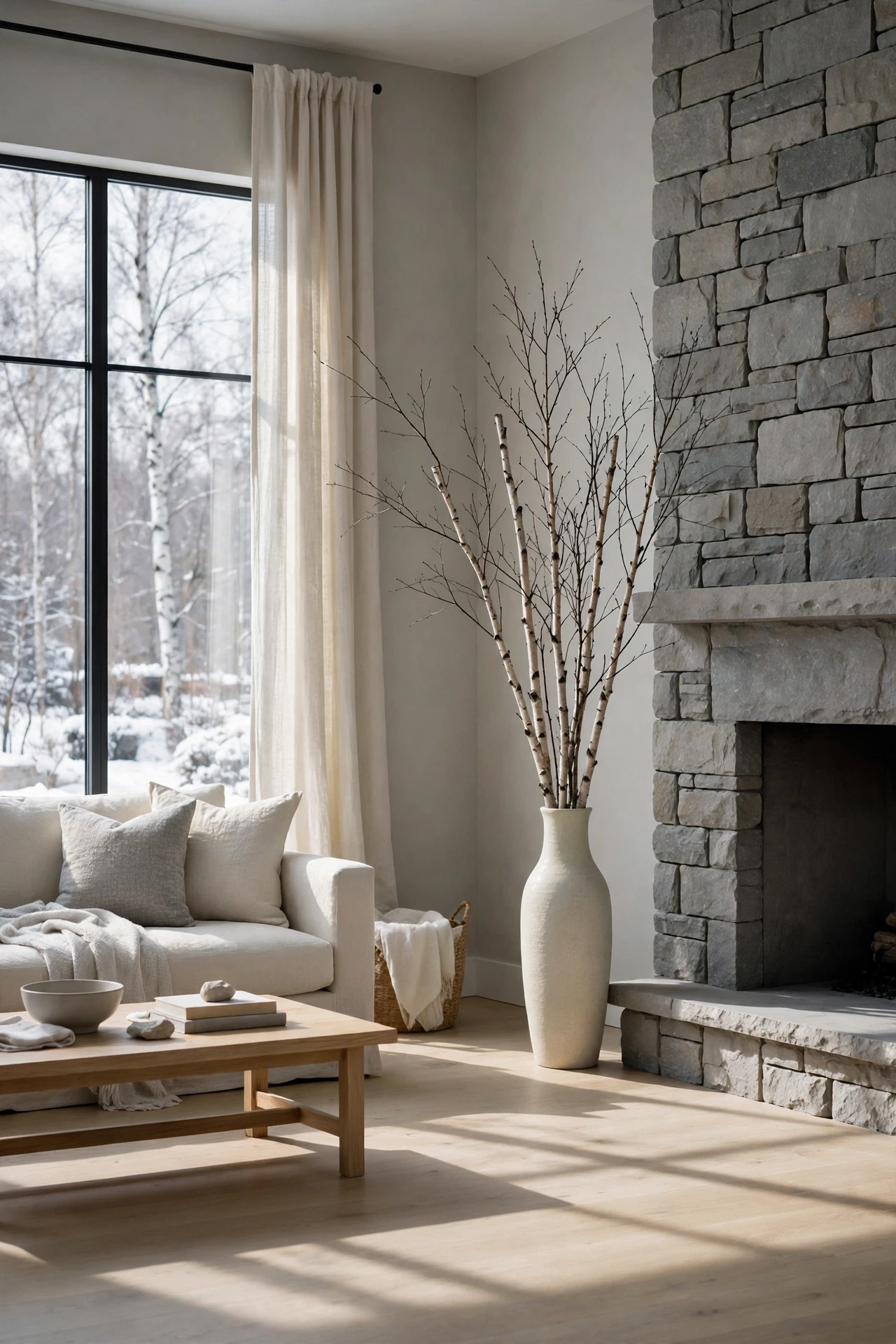
Tall bare branches — birch, dogwood, or curly willow — arranged in a floor vase beside the fireplace or in a slim ceramic vessel directly on the mantel bring vertical drama that greenery alone can’t achieve. Because they’re leafless, branches read as distinctly wintery rather than holiday-specific, which makes them one of the longer-lasting seasonal choices on this list. A single vase with three to five branches, left slightly uneven in height, creates a natural silhouette that looks intentional rather than sparse. This idea works particularly well next to a mirror or piece of art, since the branch lines echo the vertical frame above them and tie the whole composition together. For homes with high ceilings or a taller mantel, branches also help fill the upper visual space that shorter decor items simply can’t reach.
Try a Floating Concrete or Wood Shelf Look
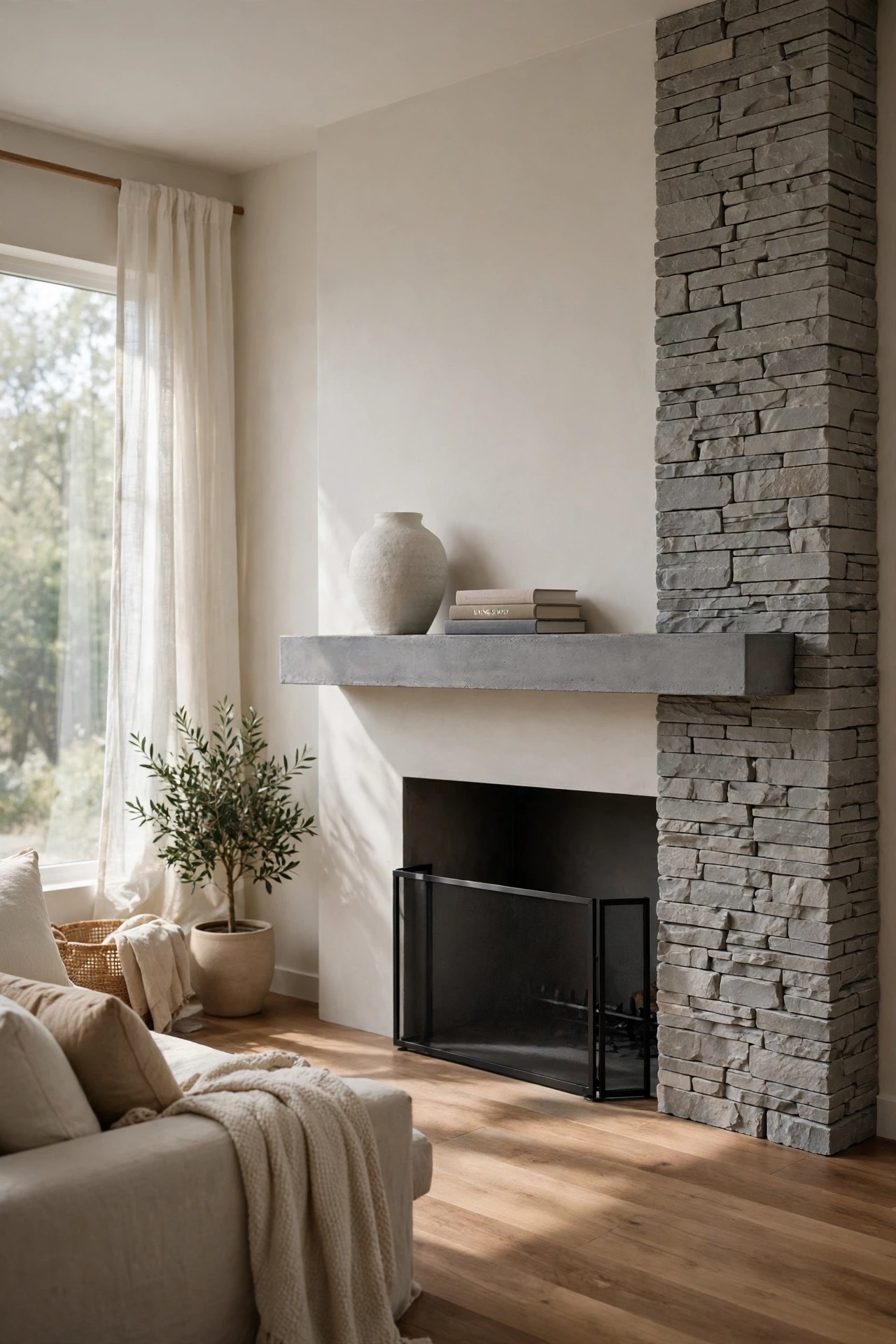
If you’re updating the mantel itself rather than just the styling on top of it, a floating shelf in natural concrete or raw white oak has become one of the defining looks of mantel design, valued for how it grounds a fireplace without visually crowding the wall above it. A floating profile works especially well in open-plan living rooms, where the fireplace needs to feel connected to the kitchen or dining space rather than boxed off as its own separate feature. Concrete in particular photographs beautifully in winter light, since its slightly cool, matte surface contrasts nicely against warm textiles and brass accents placed on top of it. This is a bigger investment than most ideas on this list, but it pays off by giving every future seasonal refresh a clean, neutral base to build from. Even with minimal styling — a single ceramic vessel and a stack of books — a floating concrete shelf tends to look finished on its own.
Mix Brass and Warm Metal Accents
Brass, antique gold, and other warm-toned metals bring a subtle richness to a winter mantel without requiring bold color, which is exactly why they show up so often in professionally styled spaces. A brass candlestick, a small gold tray, or even simple picture frame hardware in the same metal family can tie an otherwise mismatched collection of objects into one cohesive look. The key is picking one metal tone and repeating it two or three times across the mantel, rather than mixing brass, silver, and copper all in the same vignette. Warm metals also catch candlelight beautifully in the evening, adding a soft glow that cool-toned silver or chrome doesn’t reflect in quite the same way. This idea costs very little if you already own a few metal pieces around the house — it’s often more about grouping what you have than buying anything new.
Layer a Simple Winter Garland
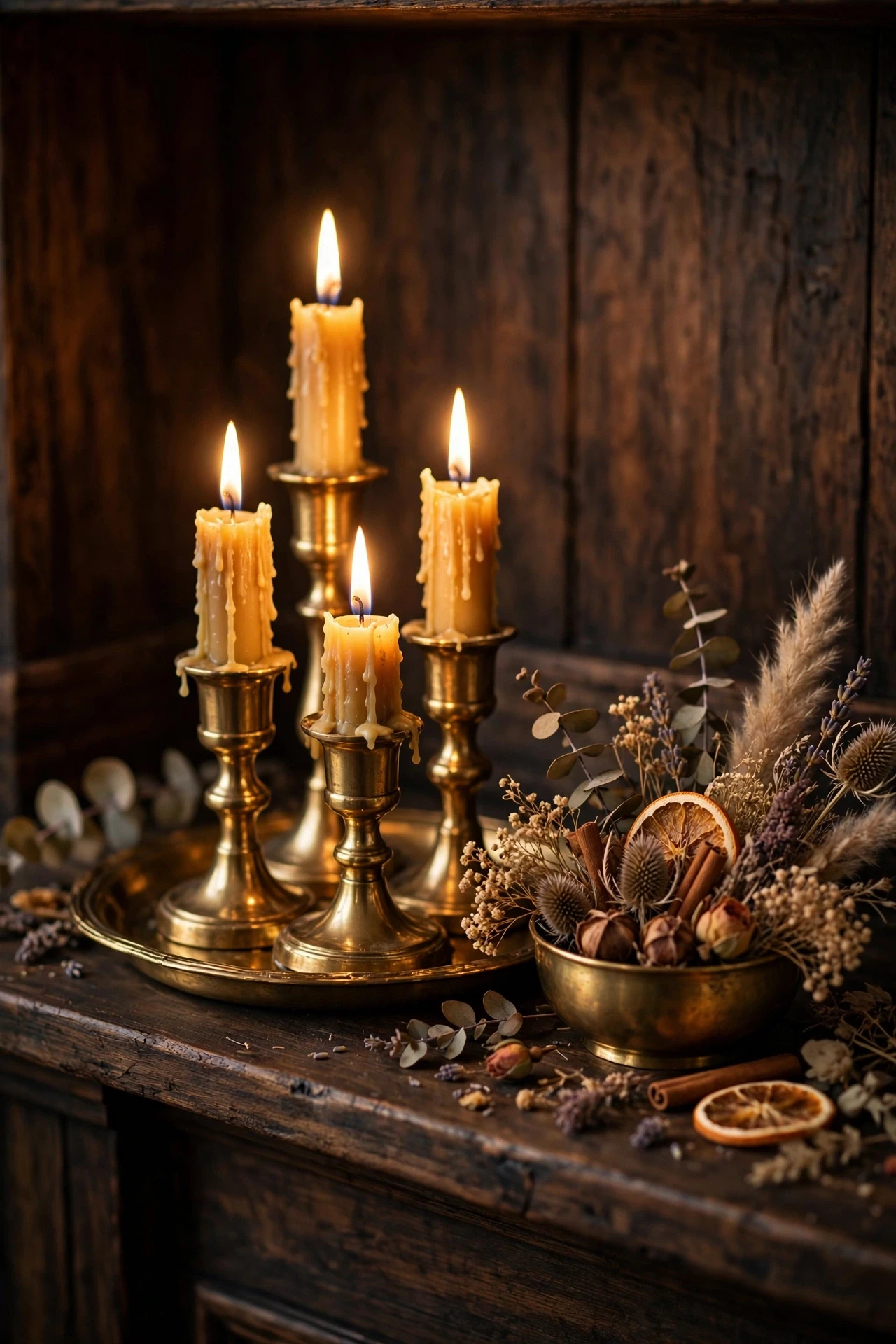
A garland doesn’t have to disappear the moment Christmas ends — a plain, undecorated greenery garland made of pine, eucalyptus, or preserved boxwood can stay up straight through winter as long as it’s free of ornaments, bows, and holiday-specific trim. Draping it along the full length of the mantel, letting it dip slightly in the center and trail off one end, creates a soft horizontal line that pulls the whole display together. Choosing a garland with varied leaf shapes and a muted green tone, rather than the bright plastic-looking pine often used at Christmas, keeps it feeling like a natural winter accent instead of a holiday leftover. This idea is one of the easiest transitions for anyone who already put up holiday greenery, since it often just means removing the ornaments and ribbon rather than buying anything new. A thin strand of warm white fairy lights woven through the garland adds ambiance without turning it back into a Christmas display.
Style Around Statement Artwork
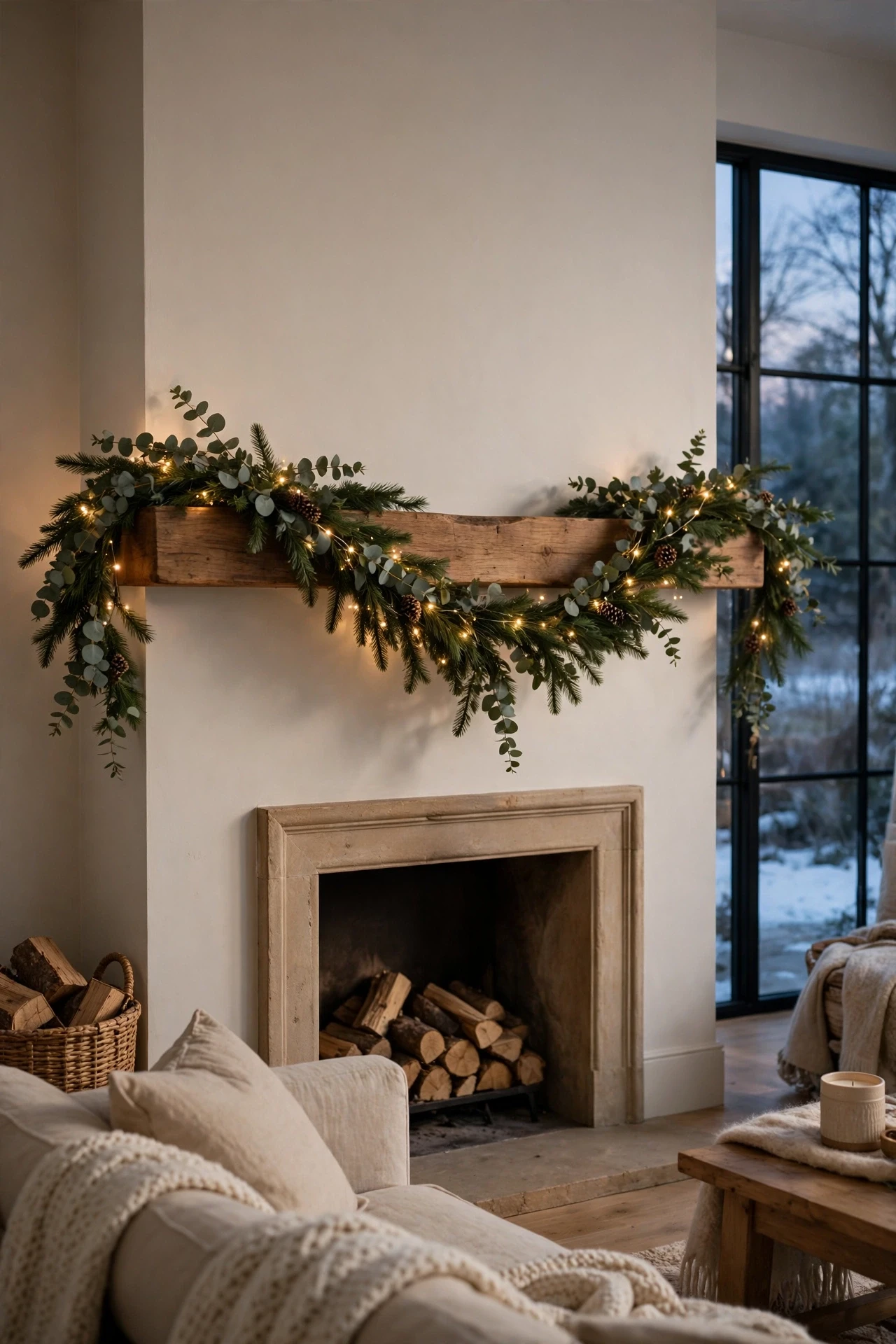
When a mantel sits below a large piece of art rather than a mirror, the smartest styling move is to treat the mantel as a supporting frame rather than the main event. Keep the objects on the shelf low, spaced out, and pulled from the same color family as the artwork above, so the two elements feel connected instead of competing for attention. A small bowl of pinecones or a low gold tray placed at each end, with the center of the shelf left mostly open, lets the art breathe while still giving the mantel some grounded detail. This approach also solves the common mistake of stacking too many tall items in front of a piece of art, which visually chops the painting or print in half. Repeating even one color from the artwork — a muted blue in a ceramic vase, for example — helps the whole wall read as one intentional composition rather than two separate decorating decisions.
Use Ceramic Vessels in Neutral Tones
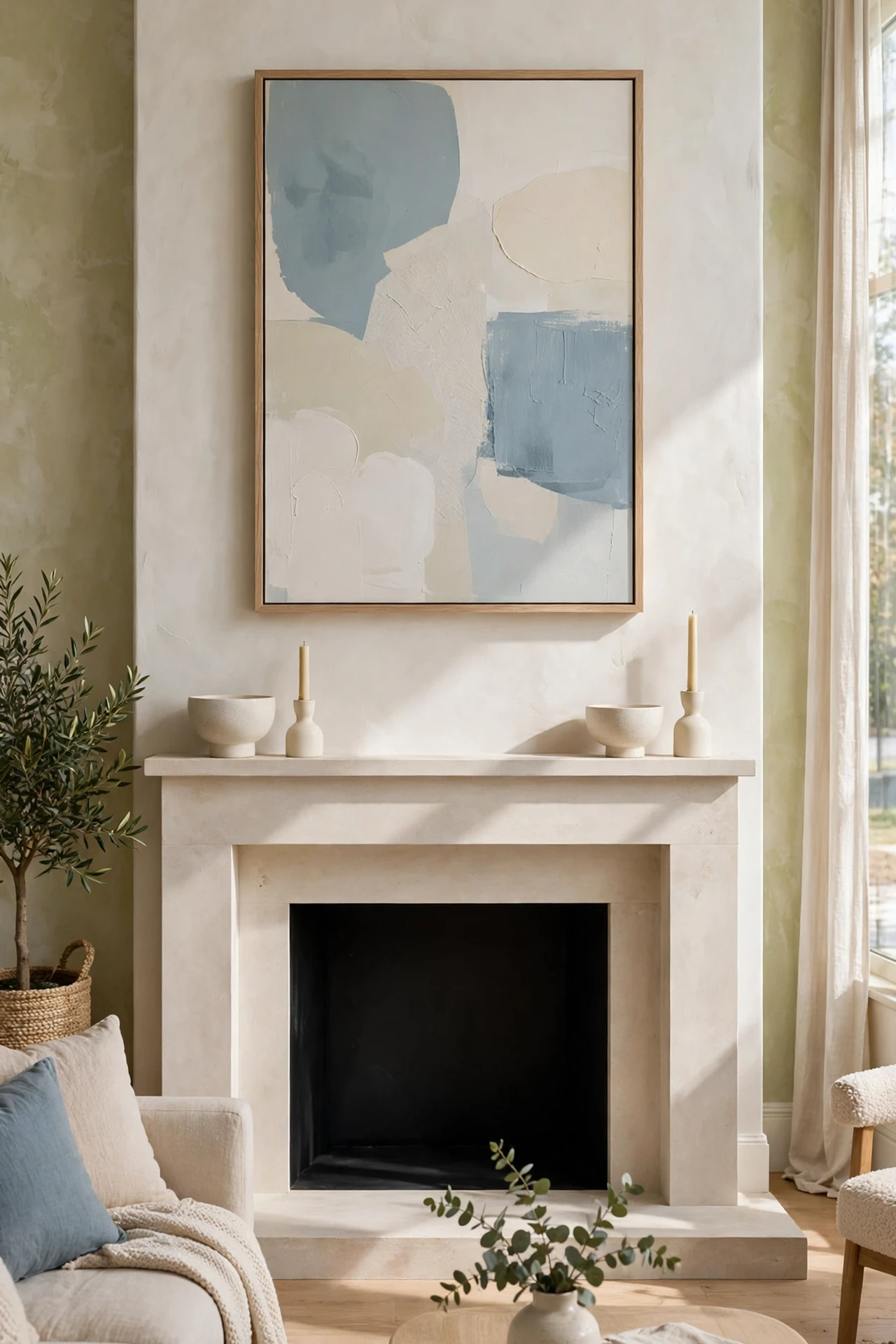
A collection of ceramic vessels — vases, bowls, and small jars — in varying heights and matte neutral glazes gives a mantel the kind of quiet, gallery-like texture that photographs beautifully without needing any seasonal theme at all. Grouping three vessels of different heights but the same general color family creates a sculptural cluster that works as a focal point on its own, especially on a mantel without a mirror or art above it. Choosing pieces with visible texture — a slightly rippled glaze, unglazed stoneware, or a subtle crackle finish — adds depth even when the color palette stays entirely neutral. This idea is especially useful for renters or anyone who wants a mantel look that transitions easily from winter into spring, since ceramic vessels aren’t tied to any specific season. A single dried stem or small branch in the tallest vessel finishes the grouping without adding much cost or clutter.

Add Amaryllis or White Winter Florals
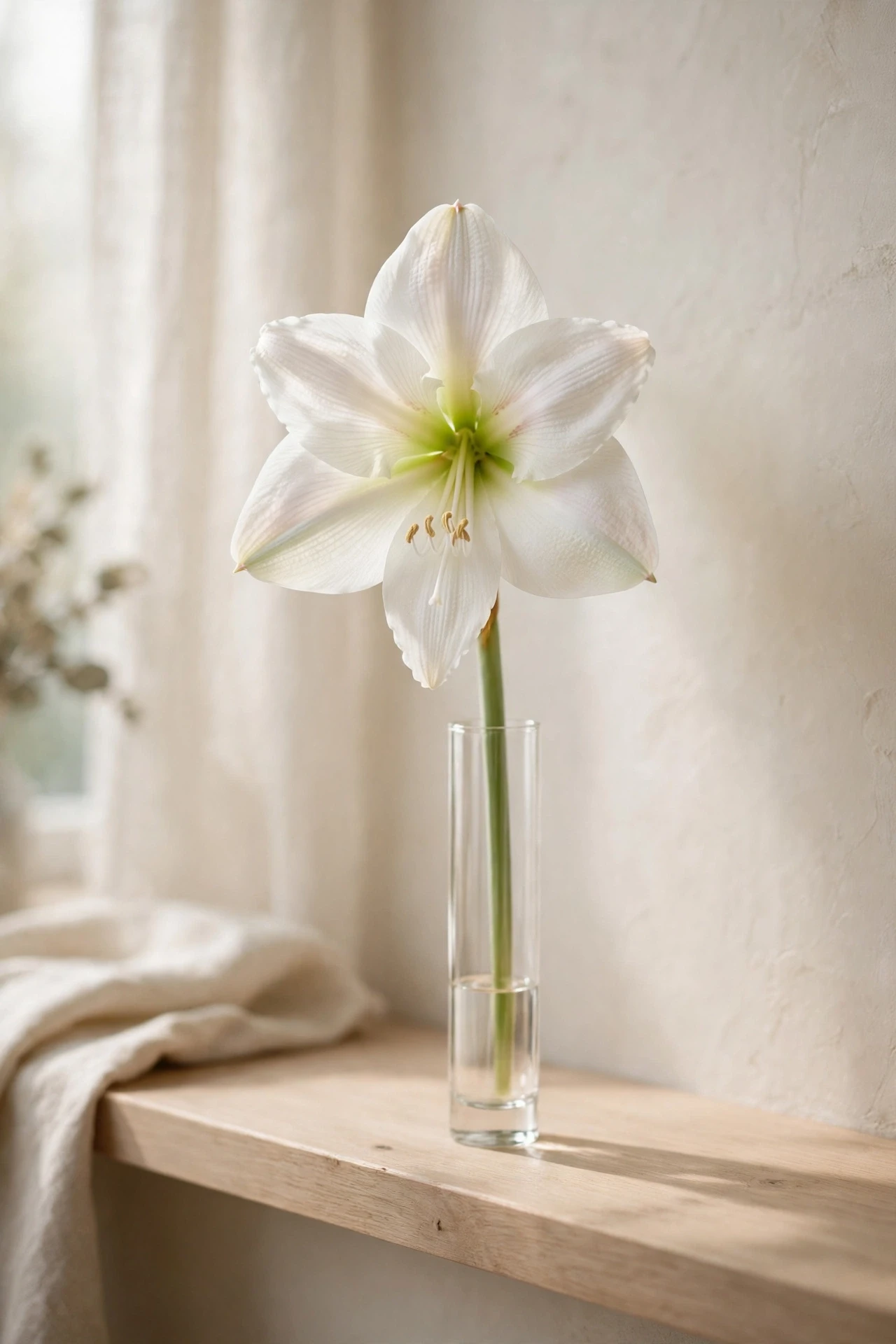
Fresh winter florals like amaryllis, white roses, ranunculus, or anemones bring a touch of elegance to a mantel that greenery and dried elements alone can’t quite achieve, since live blooms add both color contrast and a subtle fragrance to the room. A single amaryllis stem in a slim glass vase, positioned near one end of the mantel, gives a tall pop of white or deep red without requiring a full floral arrangement. For a longer-lasting option, a small potted amaryllis bulb can bloom right on the mantel over several weeks, which also gives the display a sense of change and progress as winter goes on. Pairing fresh florals with drier textures nearby — pinecones, branches, or a knit throw — keeps the softness from feeling out of place next to more rustic winter elements. This idea works especially well for anyone hosting guests, since fresh flowers signal effort and care in a way that’s hard to fake with faux decor alone.
Try an Asymmetrical Ladder Arrangement
Instead of the classic symmetrical mantel with matching objects on each end, an asymmetrical “ladder” arrangement stacks decor in a diagonal line of decreasing height across the shelf — tallest object on one end, shortest on the other. This approach reads as more modern and dynamic than a mirrored setup, and it works especially well on longer mantels that can feel empty in the middle with a purely symmetrical layout. A typical ladder might start with a tall vase and branch arrangement on the left, step down to a mid-height stack of books with a candle on top, and finish with a low, flat dish of pinecones on the right. The key to making this look intentional rather than random is keeping every object within the same two or three color tones, so the eye reads the height variation as rhythm rather than clutter. This idea takes a bit more trial and error to get the spacing right, but it’s one of the styling techniques interior decorators reach for most often on longer or oversized mantels.
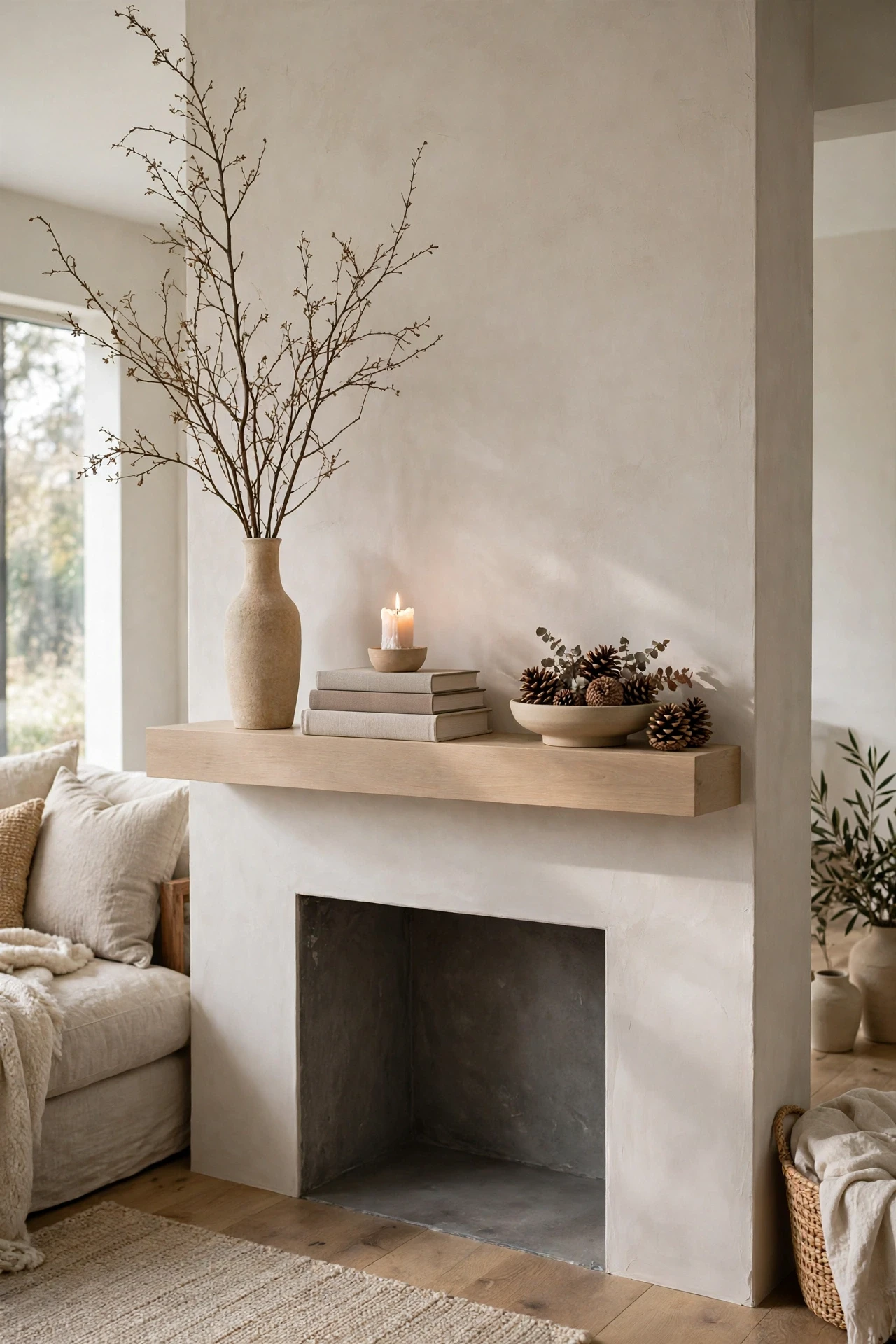
Bring In Faux Fur Textures
A faux fur throw, small pillow, or draped stole across one section of the mantel adds a plush, tactile layer that photographs especially well in soft winter light. Because faux fur has an obvious visual texture, even a small amount goes a long way — a folded piece the size of a placemat, tucked beneath a candle grouping, is often enough to read as cozy without overwhelming the display. This works particularly well paired with harder materials like ceramic, glass, and metal, since the contrast between soft fur and smooth surfaces is what makes each texture stand out more clearly. Cream, ivory, or light grey faux fur tends to blend more naturally into a winter palette than stark white, which can look slightly clinical under warm lighting. This is also one of the easiest ideas to store and reuse each winter, since a small faux fur piece takes up almost no space when the season changes.
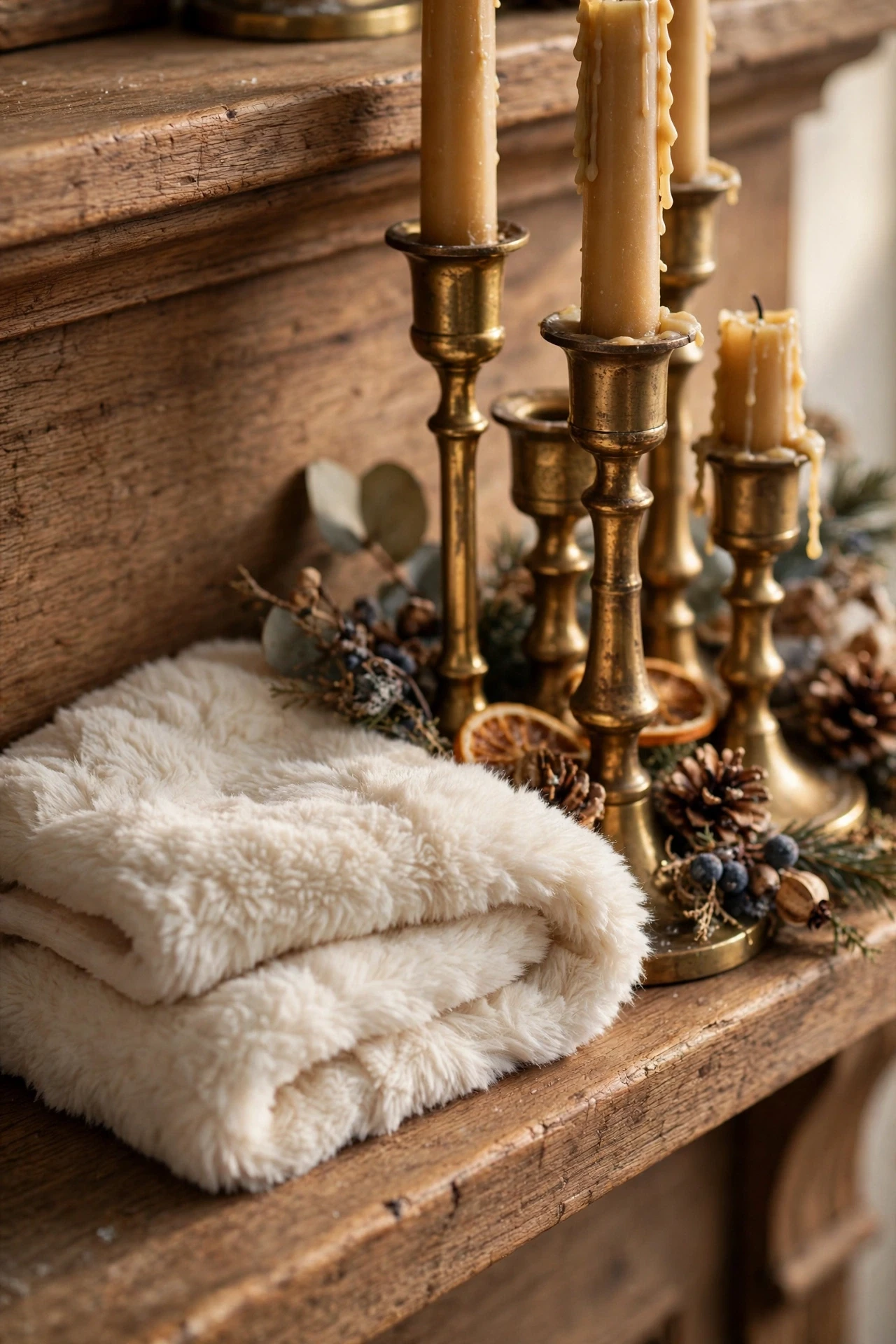
Use a Tray to Ground Small Decor
Small objects like votive candles, tiny vases, or a cluster of pinecones can look scattered and disorganized on an open mantel shelf, but placing them on a single tray instantly gives them a defined boundary and a more finished, intentional look. A wood, marble, or brass tray works as a mini vignette within the larger mantel display, making it easy to move the whole grouping at once when you’re cleaning or rearranging. This idea is especially useful on wider mantels, where several small items spread edge to edge can start to feel busy without a tray to visually contain them. Choosing a tray material that echoes another element already on the mantel — a marble tray next to a marble-look vase, for example — reinforces the sense that every piece was chosen on purpose. Trays also make seasonal swaps faster, since you can lift the entire grouping off and replace it with a spring version in one motion.
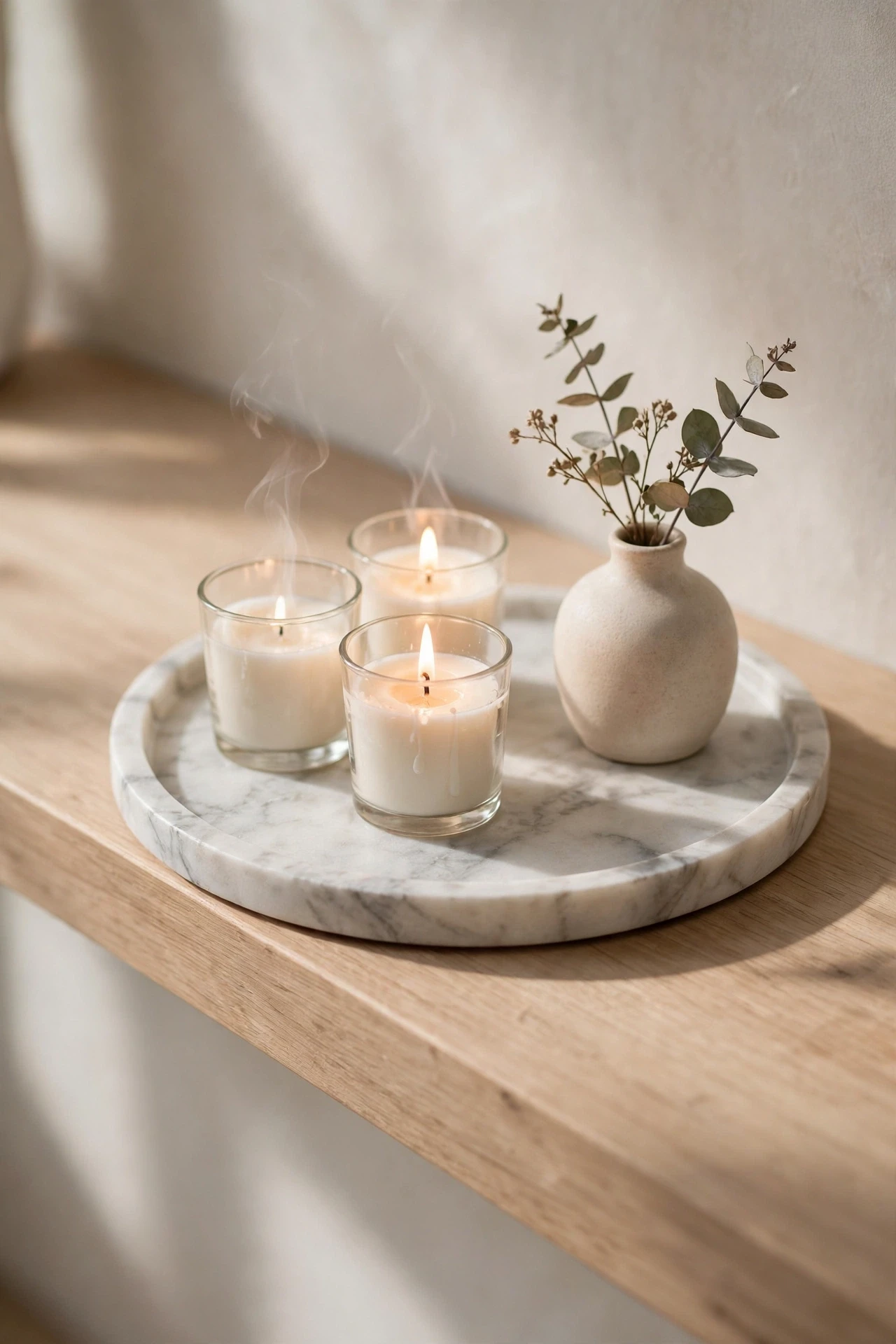
Add Soft Ambient Lighting
Beyond candles, a thin strand of warm white string lights tucked behind a garland, vase collection, or stack of books adds a soft ambient glow that makes the whole mantel feel warmer once the sun goes down. The trick to keeping this look elegant rather than decorative-string-lights-on-a-porch is hiding the actual light strand behind other objects, so only the glow is visible and not the wire or bulbs themselves. A small battery-operated puck light placed behind a mirror or artwork can also cast a soft uplight that makes the whole wall feel intentional after dark. This idea matters more in winter than any other season, since shorter days mean your mantel spends more hours being seen in evening light than in daylight. Warm-toned bulbs, rather than cool white or blue-tinted LEDs, are essential here — cool lighting tends to fight against the cozy, neutral palette the rest of the mantel is built around.
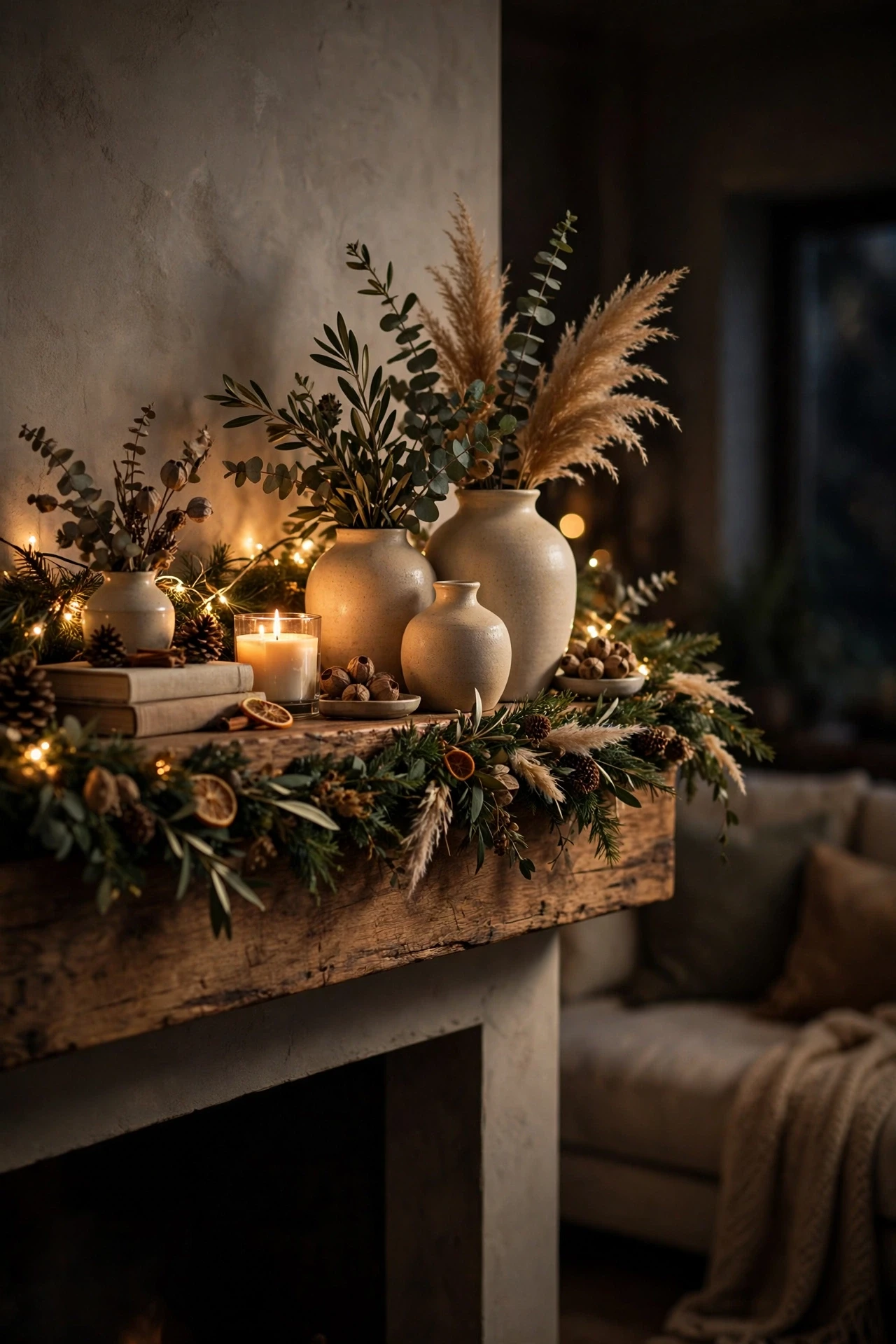
Keep One Side Empty on Purpose
The most overlooked winter mantel idea is also the simplest: leaving one section of the shelf completely bare. Negative space gives the eye somewhere to rest and makes every other object on the mantel feel more considered, since nothing is competing for attention across the entire width of the shelf. This works especially well when paired with a strong focal point like a mirror or tall vase — the empty space balances the visual weight rather than looking unfinished. Decorators sometimes call this the “one-third rule,” where roughly a third of the mantel stays clear while the remaining two-thirds hold the styled grouping. If your instinct is to keep adding items until every inch is covered, try removing one piece at the end instead — most mantels look better with slightly less than you’d expect.
Styling Tips
- Work in odd numbers (three or five objects per cluster) since asymmetrical groupings read as more natural than even pairs.
- Vary height deliberately — tall, medium, low — rather than letting everything sit at the same eye level.
- Repeat one color or material at least twice across the mantel so the whole display feels connected instead of random.
- Step back and view the mantel from across the room every few minutes while styling, since small imbalances are easier to spot from a distance than up close.
- Let at least one element trail slightly off the edge of the shelf — a branch, a garland end, or a draped throw — to soften the hard architectural line.
Practical Implementation Ideas
- Start with the largest anchor piece first (mirror, art, or tall vase), then build the smaller layers around it rather than the other way around.
- Shop your own house before buying anything new — vases from other rooms, books from a shelf, and bowls from the kitchen can all be repurposed for a season.
- Group items into a “tray test”: if a cluster of small objects can’t be lifted together on one tray, it’s probably too spread out to read as a cohesive vignette.
- Take a photo of your finished mantel on your phone. Flaws in balance and spacing tend to show up more clearly in a photo than in person.
Common Mistakes to Avoid
- Overcrowding the shelf edge to edge, which leaves no visual breathing room and makes even beautiful individual pieces look cluttered together.
- Mixing too many metal tones (gold, silver, and copper all at once) instead of committing to one warm or cool family.
- Leaving holiday-specific items up out of habit — ornaments, stockings, or anything printed with snowflakes tends to read as “forgotten Christmas decor” by February.
- Centering every single object symmetrically, which can look stiff on a longer mantel that has room for more dynamic, asymmetrical styling.
- Choosing decor that’s too small for the scale of the fireplace, which makes even a well-styled mantel look sparse from across the room.
Small-Space Alternatives
For a narrow or short mantel, scale everything down rather than trying to fit fewer full-size objects into a tight space. A slim bud vase instead of a large floor vase, a single taper candle instead of a cluster of three, and a small stack of just two books all keep the proportions right for a compact shelf. Mirrors and art can still work above a small mantel, but choose a piece sized closer to the width of the shelf itself rather than an oversized statement piece that overwhelms the wall. Vertical elements like a single tall branch or a slim framed print help a small mantel feel taller than it is, which is often more useful in a tight space than adding more objects side by side.
Budget-Friendly Alternatives
Pinecones gathered on a walk, branches trimmed from your own yard, and books already on your shelves cost nothing and make up several of the ideas on this list. Faux greenery from a craft store, bought once, can be reused every winter for years, which often works out cheaper than fresh florals purchased new each season. Secondhand shops and thrift stores are especially good sources for ceramic vessels, trays, and candlesticks, since mismatched pieces in a similar color family look intentional once grouped together. Even the mirror idea can be done affordably — a plain frame from a home goods store, spray-painted in a warm brass tone, gives a similar effect to a designer piece for a fraction of the price.
Pro Styling Recommendations
Professional stylists tend to build a mantel in layers rather than placing everything at once: base layer first (garland, greenery, or a runner), then the anchor pieces (candles, vases), then the small filler details (pinecones, books) last. Working this way makes it much easier to spot gaps or overcrowding as you go, rather than needing to undo a finished arrangement. Stylists also recommend living with a mantel for a day or two before finalizing it, since a display that looks right in the morning light can feel off by evening once the lamps and firelight change the mood of the room. Finally, most professionals treat the mantel as one piece of a larger room story — pulling at least one color or texture from the mantel into a nearby pillow, rug, or piece of art so the whole space feels connected rather than staged in isolation.
FAQs
Conclusion
A mantel this good doesn’t happen by accident, but it doesn’t take a full weekend either. Pick two or three ideas from this list that fit your fireplace and your budget, build them in layers, and leave a little room for the shelf to breathe. That’s really the whole formula. The fire does the rest.