18 Winter Flower Arrangement Ideas for a Cozy Home
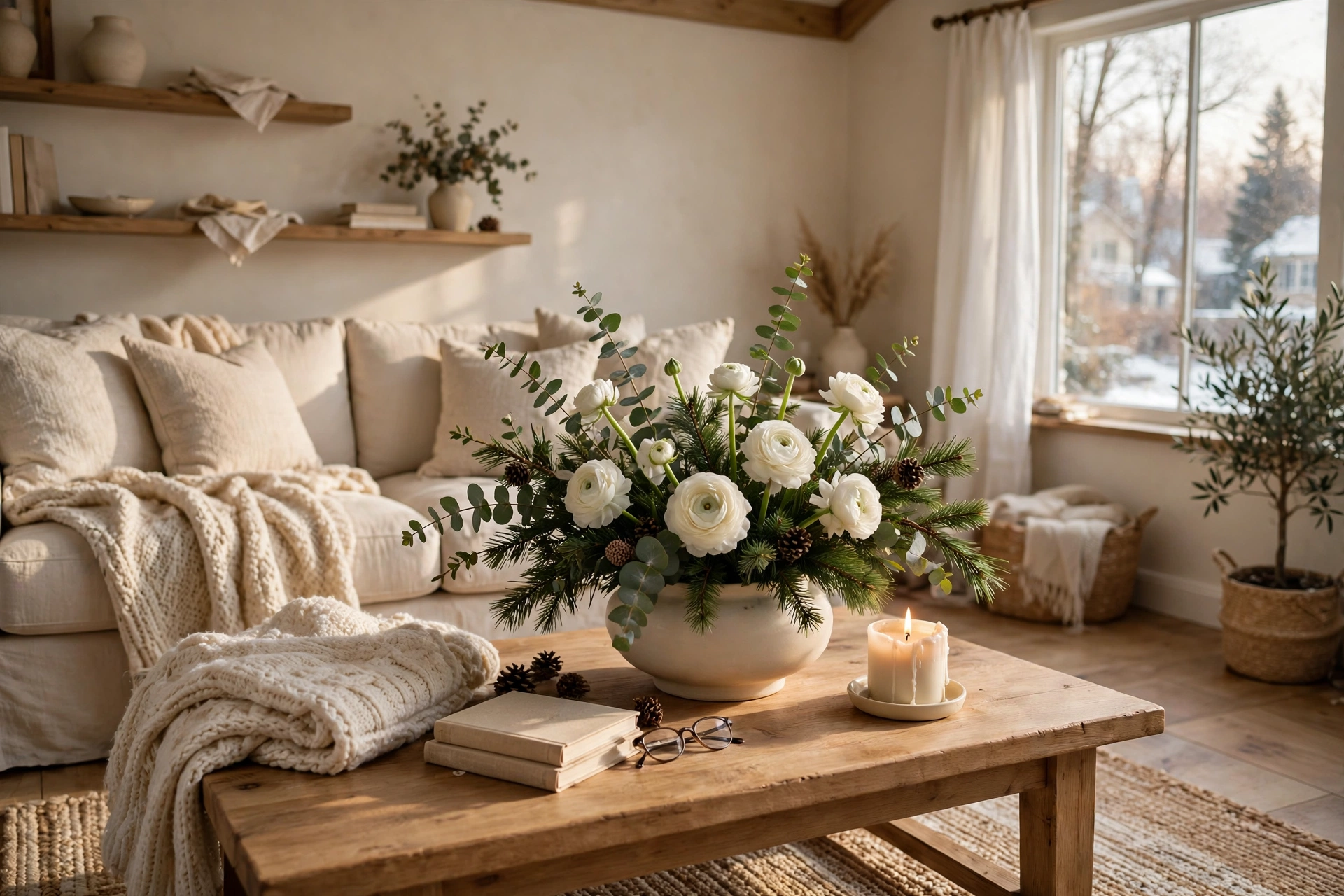
Winter has a way of making a home feel a little quieter than usual. The garden’s asleep, the days are short, and most rooms could use something alive in them again.
That’s exactly what a good winter flower arrangement does. It doesn’t need to compete with a full spring garden or a summer bouquet. A single amaryllis stem, a low bowl of white ranunculus, or a jar of bare branches can be enough to make a whole room feel warmer.
These 18 winter flower arrangement ideas for a cozy home walk through the exact flowers, containers, and placement choices that make a winter arrangement feel intentional, not like an afterthought grabbed from the grocery store on the way home.
Let’s bring a little life back into the house.
Table of Contents
White and Evergreen Classic Arrangement
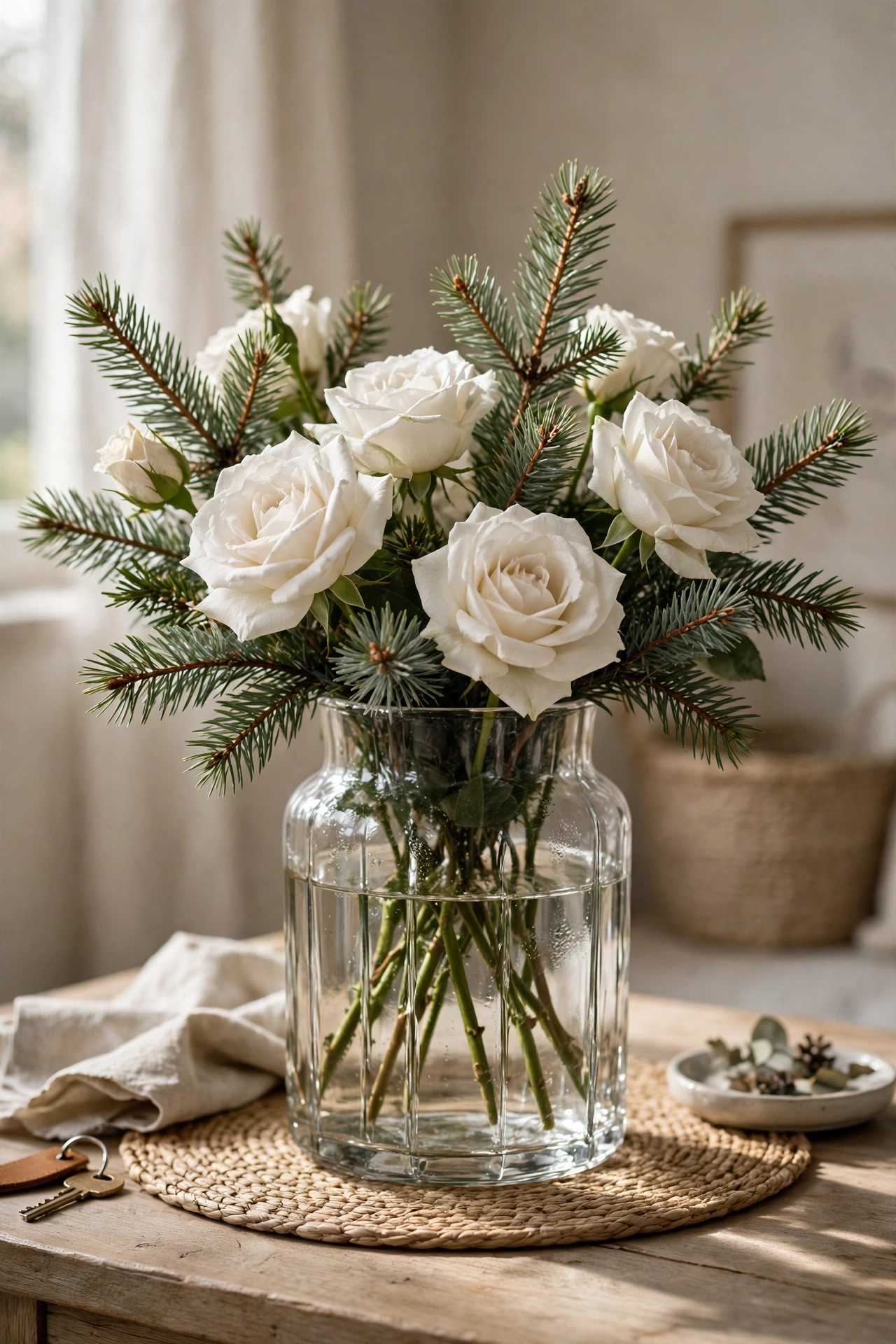
A mix of white roses or ranunculus with fresh pine, cedar, or juniper sprigs is one of the most reliable winter arrangements because it mirrors the snowy, quiet landscape outside while still feeling warm indoors. Trim the greenery slightly longer than the flowers so it frames the bouquet from the outside in, then nestle the white blooms toward the center where they catch the most light. Use a clear glass vase so the green stems are visible through the water, which adds a natural, garden-fresh look even in the middle of winter. This combination also carries a subtle evergreen fragrance that fills a room without being overpowering, making it a favorite for entryways and dining tables alike. Because both roses and evergreen sprigs hold up well in cooler indoor temperatures, this arrangement typically stays fresh a few days longer than an all-flower bouquet.
Jewel Tone Winter Blooms
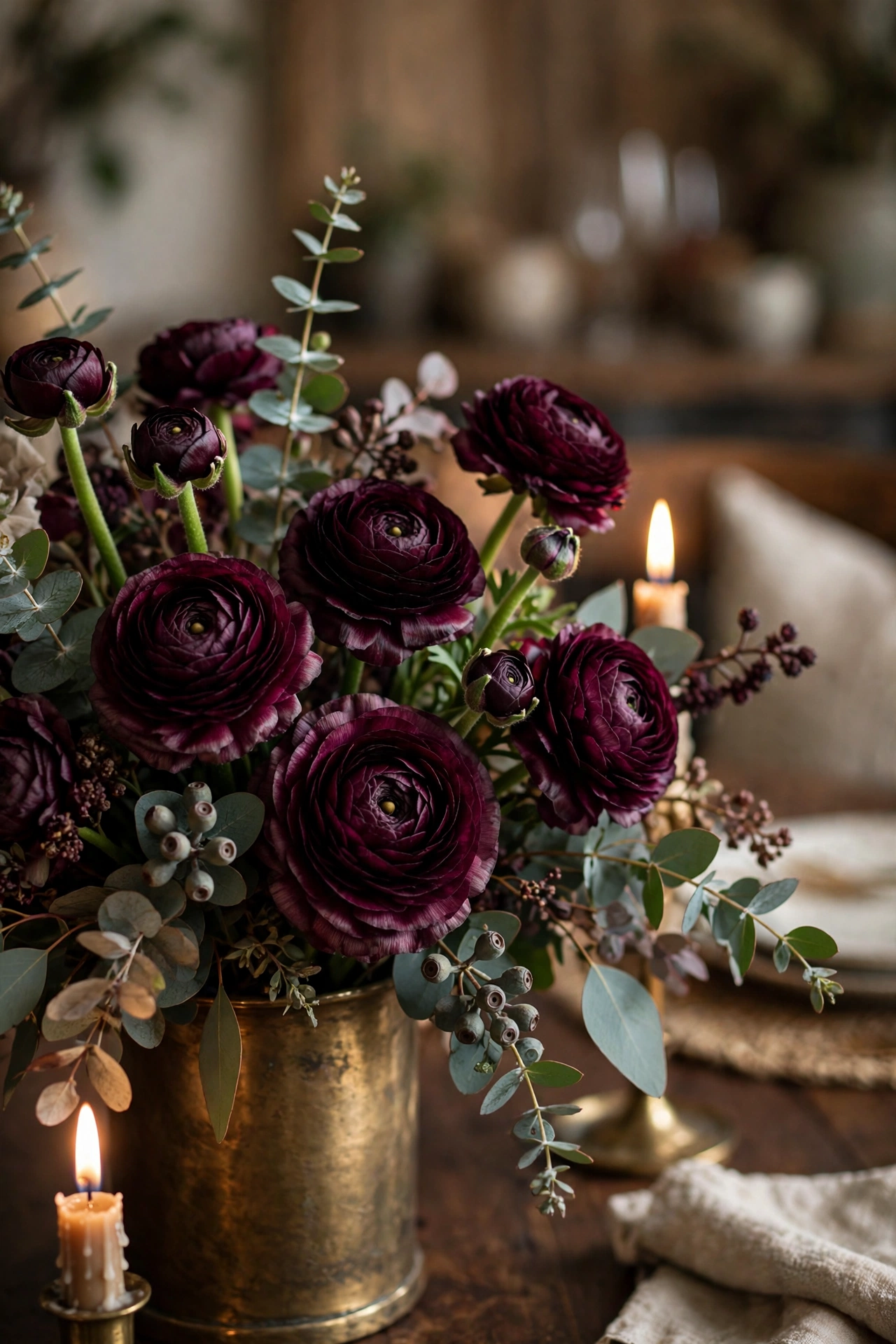
Deep plum, wine, and emerald flowers, like dark ranunculus, garden roses, or lisianthus, bring a rich, moody warmth to a room that feels distinctly cold-weather rather than trying to mimic spring or summer color. Pair the jewel-toned blooms with a small amount of dark greenery, such as eucalyptus or cedar, so the arrangement reads as layered rather than a single flat block of color. A touch of brass or gold, whether through the vase itself or a thin ribbon tied around the stems, brings out the warmth in the deep tones without introducing an unrelated color. This palette works especially well in dining rooms or by a reading chair, where the deeper colors feel intimate under lamp or candlelight rather than washed out under bright daylight. Because jewel-toned flowers tend to hold their color well as they age, this arrangement often still looks intentional even a few days past its freshest point.
Monochrome Single-Flower Vase
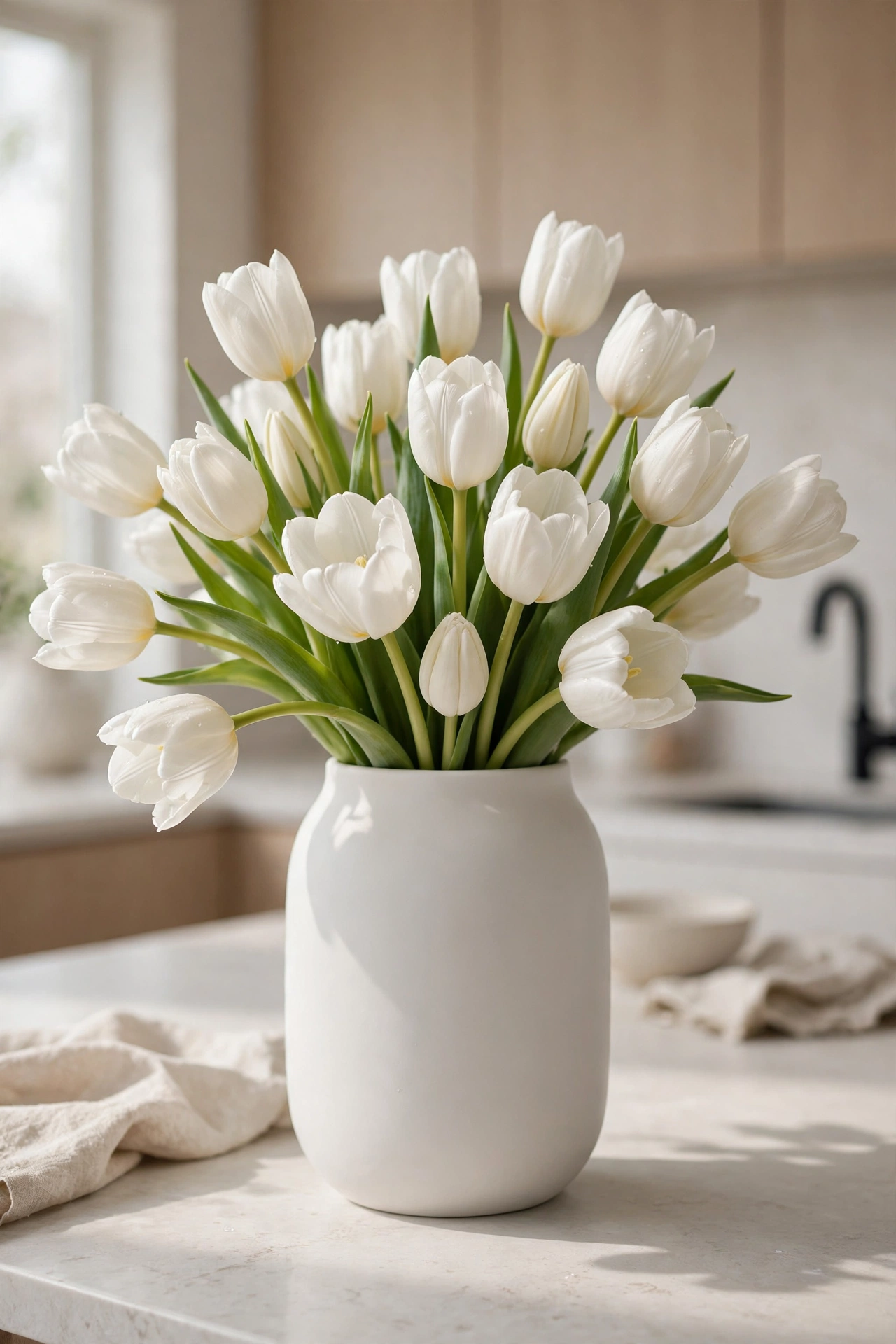
Choosing a single flower type, like all white tulips, all cream ranunculus, or all pale anemones, and placing them in a sleek, simple vase creates a calm, architectural look that lets the natural shape of the stems and petals take center stage. Keep the stem count generous, using a dozen or more of the same flower, since a monochrome arrangement relies on volume rather than variety to feel full. Choose a clear or matte ceramic vase in a neutral tone so nothing distracts from the flower’s own color and shape. This style works particularly well on a kitchen island, a bathroom counter, or a home office desk, spaces where a smaller, more restrained arrangement fits better than a large, layered centerpiece. Because there’s only one flower type to manage, monochrome arrangements are also some of the easiest to keep looking fresh, since wilting or browning stems are easy to spot and remove quickly.
Dried Flower and Grass Arrangement
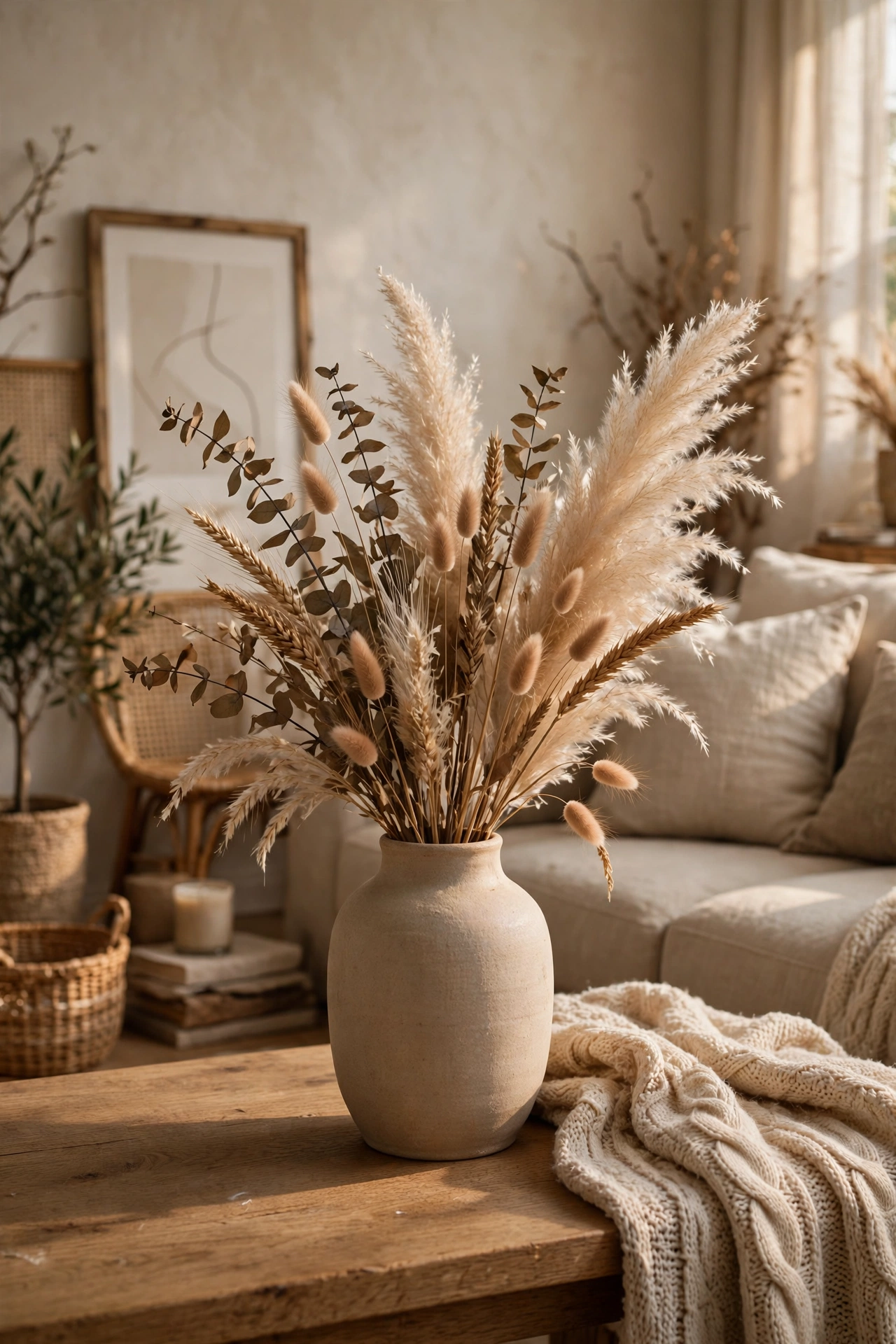
Dried flowers, pampas grass, and preserved eucalyptus offer one of the lowest-maintenance ways to bring texture and warmth into a home during winter, since they require no water and last for months rather than days. Choose dried stems in soft neutral tones, like beige, cream, and dusty rose, so the arrangement feels seasonal without leaning into any single bold color. Arrange the tallest pampas or grass stems toward the back of the vase, then layer shorter dried flowers and preserved greenery toward the front for a fuller, more dimensional shape. Because dried arrangements don’t wilt, they work particularly well in spaces that don’t get checked or refreshed often, like a guest room or a formal living room used mainly for entertaining. This option is also one of the more budget-conscious choices on this list over time, since a single arrangement can be styled and restyled across multiple winters without needing to be replaced.
Amaryllis Statement Stem
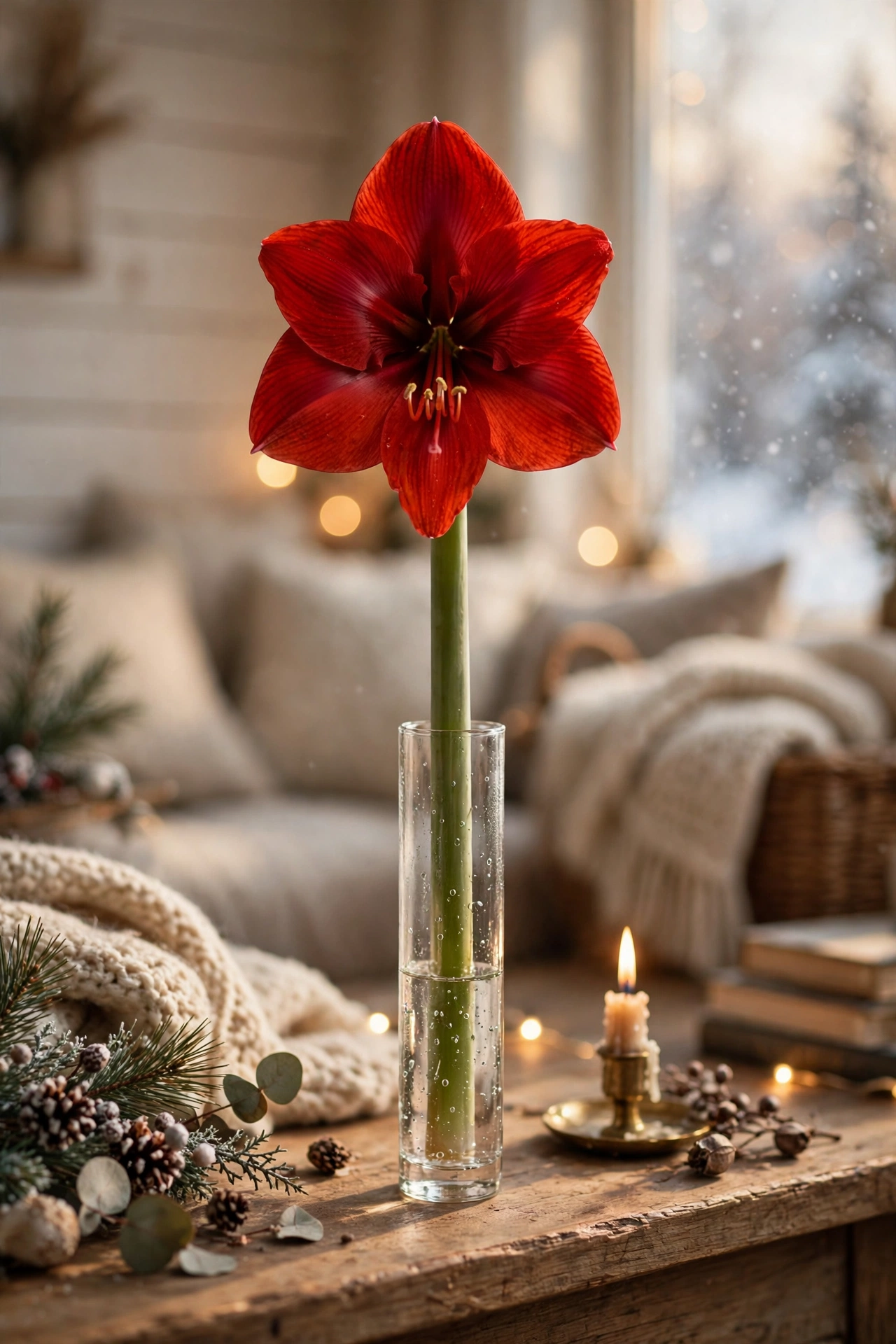
A single amaryllis stem, with its oversized trumpet-shaped blooms, makes a dramatic statement with almost no additional styling required, which makes it one of the most efficient ways to add a big visual impact to a room in winter. Choose a tall, narrow vase or a decorative glass cylinder to support the amaryllis stem’s height and weight, adding a few glass marbles or decorative stones at the base for extra stability. Because a single stem typically produces multiple blooms over its flowering period, one amaryllis can provide weeks of continuous color rather than needing to be replaced like a cut bouquet. Place it somewhere it can be seen from across the room, such as a mantel or entry table, since its height and bold color read clearly even from a distance. Amaryllis bulbs are also widely available already potted through the winter months, offering an even lower-maintenance version of this same idea for anyone who prefers not to manage cut stems in water.
Bare Branch and Berry Centerpiece
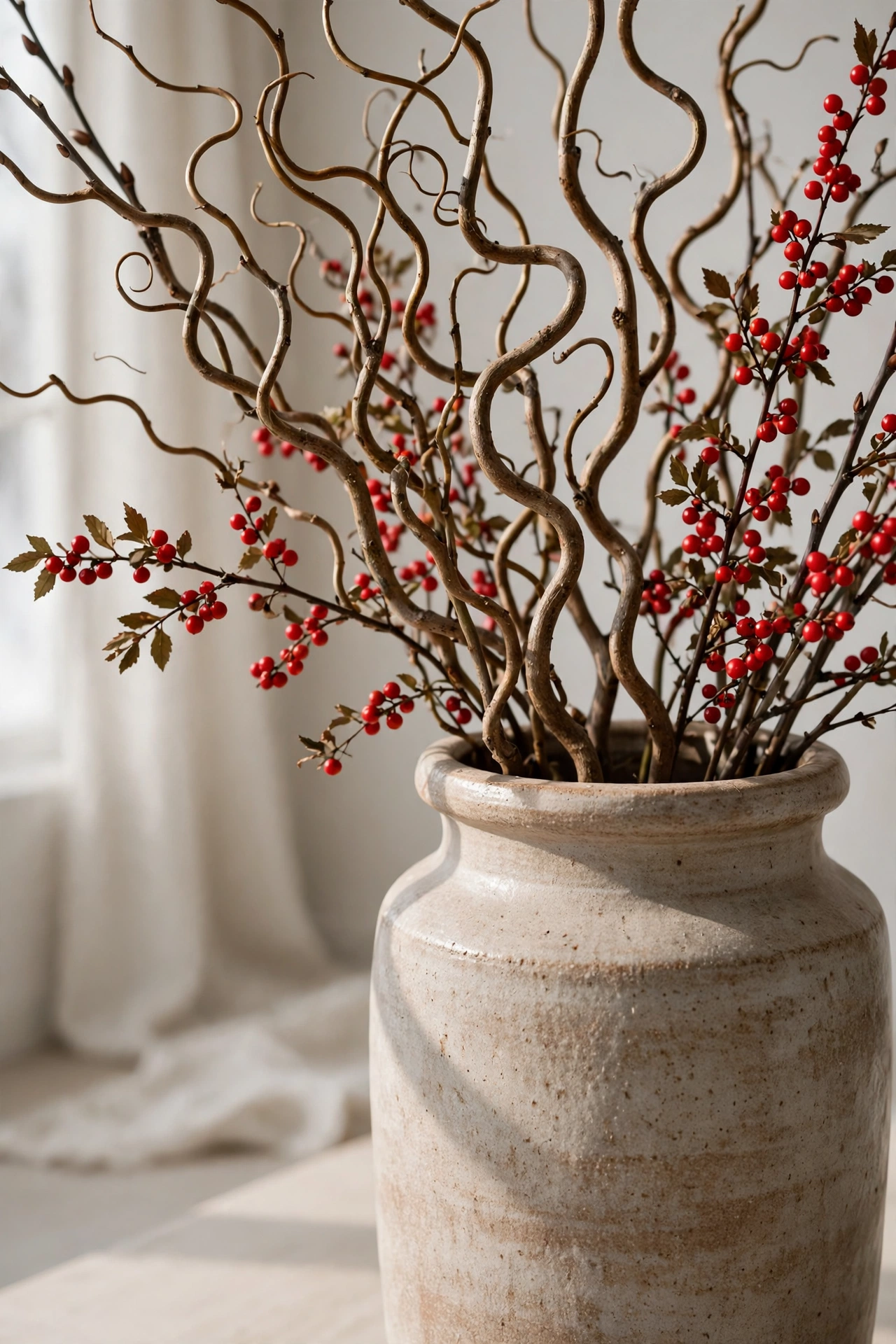
A cluster of bare, unadorned branches paired with a few sprigs of red winter berries creates a striking, sculptural centerpiece that leans on shape and texture rather than traditional flowers. Choose branches with an interesting natural bend or fork, like curly willow or birch, so the arrangement has visual movement even without any blooms attached. Place the branches in a tall, heavy-based vase to keep the arrangement stable, since bare branches can be top-heavy and prone to tipping in a lighter container. Tuck a few stems of red winterberry or rose hips low among the branches, letting most of the height and structure come from the bare wood itself. This idea works particularly well for anyone who wants a long-lasting centerpiece without fresh flowers, since dried or faux branches paired with faux berries can look nearly identical to a fresh version while lasting the entire season.
Eucalyptus and Silver Dollar Greenery Mix
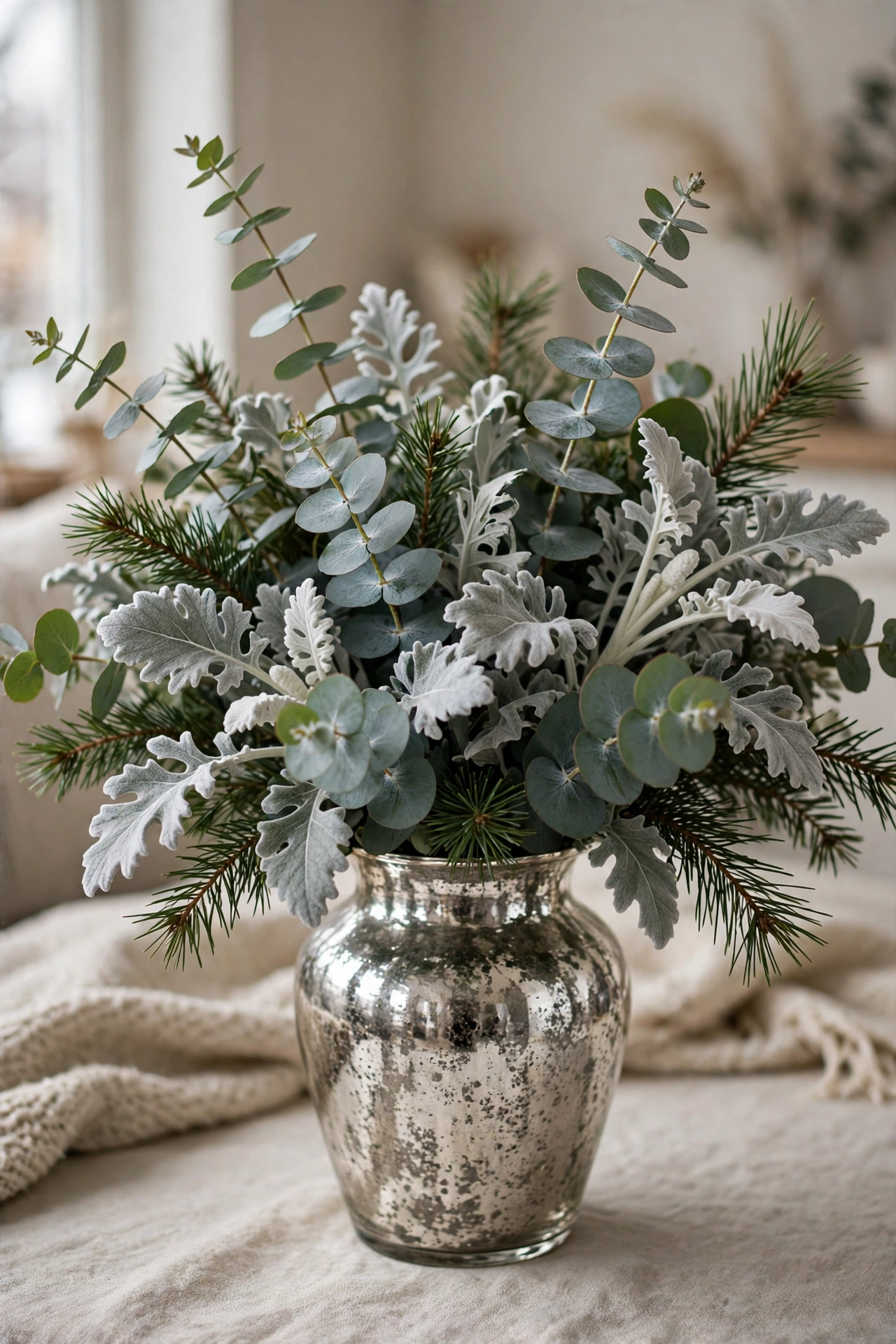
An arrangement built mostly from greenery, like silver dollar eucalyptus, dusty miller, and a few sprigs of pine, offers a soft, muted texture that works beautifully as a lower-key alternative to a flower-heavy bouquet. The rounded, silvery-green eucalyptus leaves catch light differently than the darker pine, giving the arrangement natural depth even without any flowers included. Trim the stems at varying lengths so the greenery cascades slightly over the edge of the vase rather than sitting stiffly upright, mimicking the way it would grow naturally. This style pairs especially well with a mercury glass or brushed metal vase, since the cool-toned metallics complement the silvery leaf tones. Because greenery-only arrangements tend to last significantly longer than flower-based ones, this idea works well for anyone who wants a low-maintenance centerpiece that still feels fresh and textural throughout the winter months.
Blush and Cream Romantic Bouquet
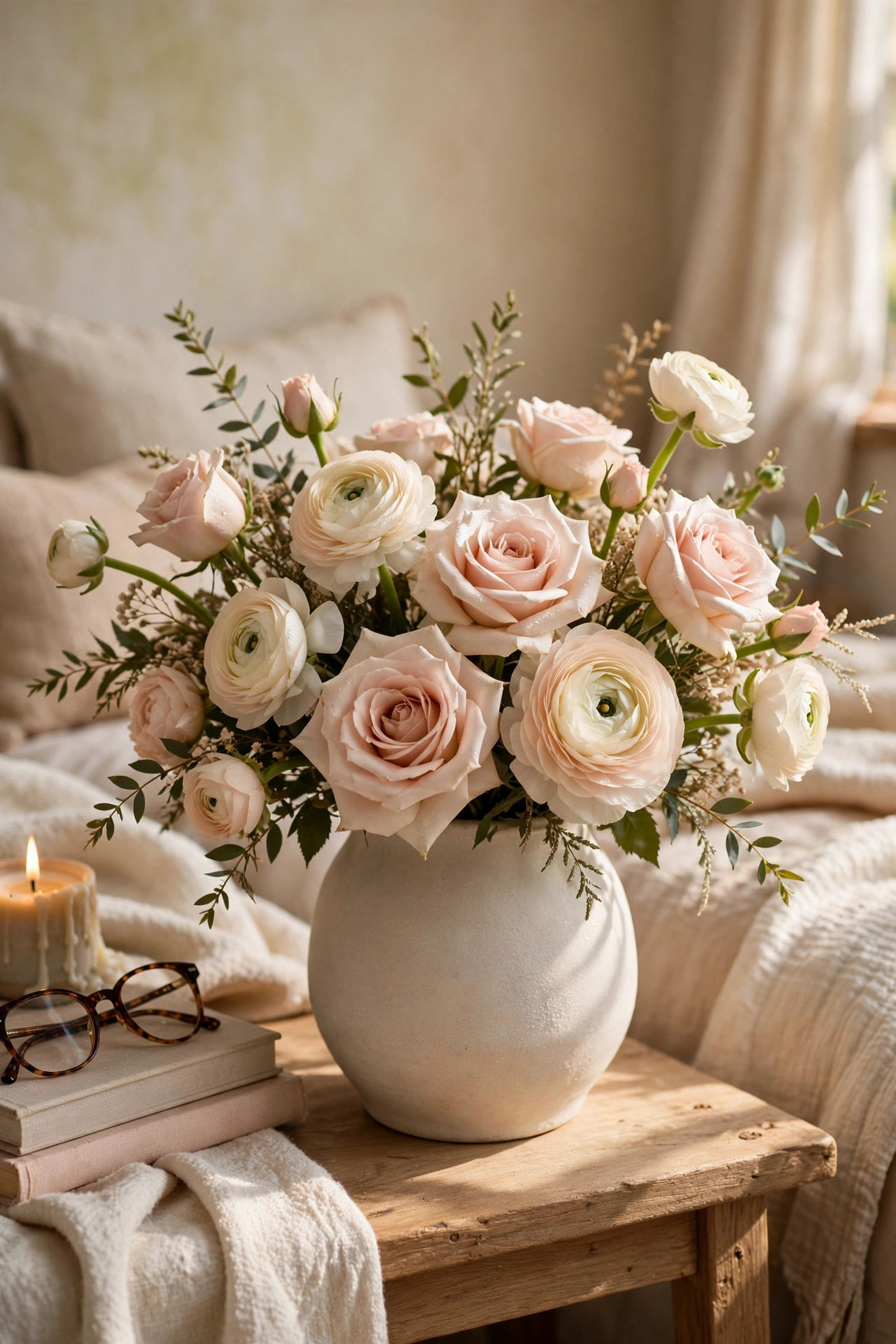
Soft blush roses, cream ranunculus, and a touch of ivory garden roses come together for a romantic, gentle winter arrangement that brightens a room without introducing any bold or saturated color. Balance the softer tones with a small amount of deeper greenery, like eucalyptus or ruscus, so the blush and cream flowers stand out clearly against a slightly darker backdrop. Keep the arrangement fuller and rounder in shape, rather than tall and architectural, since the soft color palette pairs naturally with a relaxed, garden-style silhouette. This combination works especially well in a bedroom or a reading nook, where the gentle colors feel calming rather than commanding attention the way a bolder jewel-toned arrangement would. Blush and cream flowers also photograph beautifully under both natural daylight and warm lamp light, making this one of the more versatile color palettes on this list for a range of lighting conditions.
Anemone and Ranunculus Delicate Arrangement
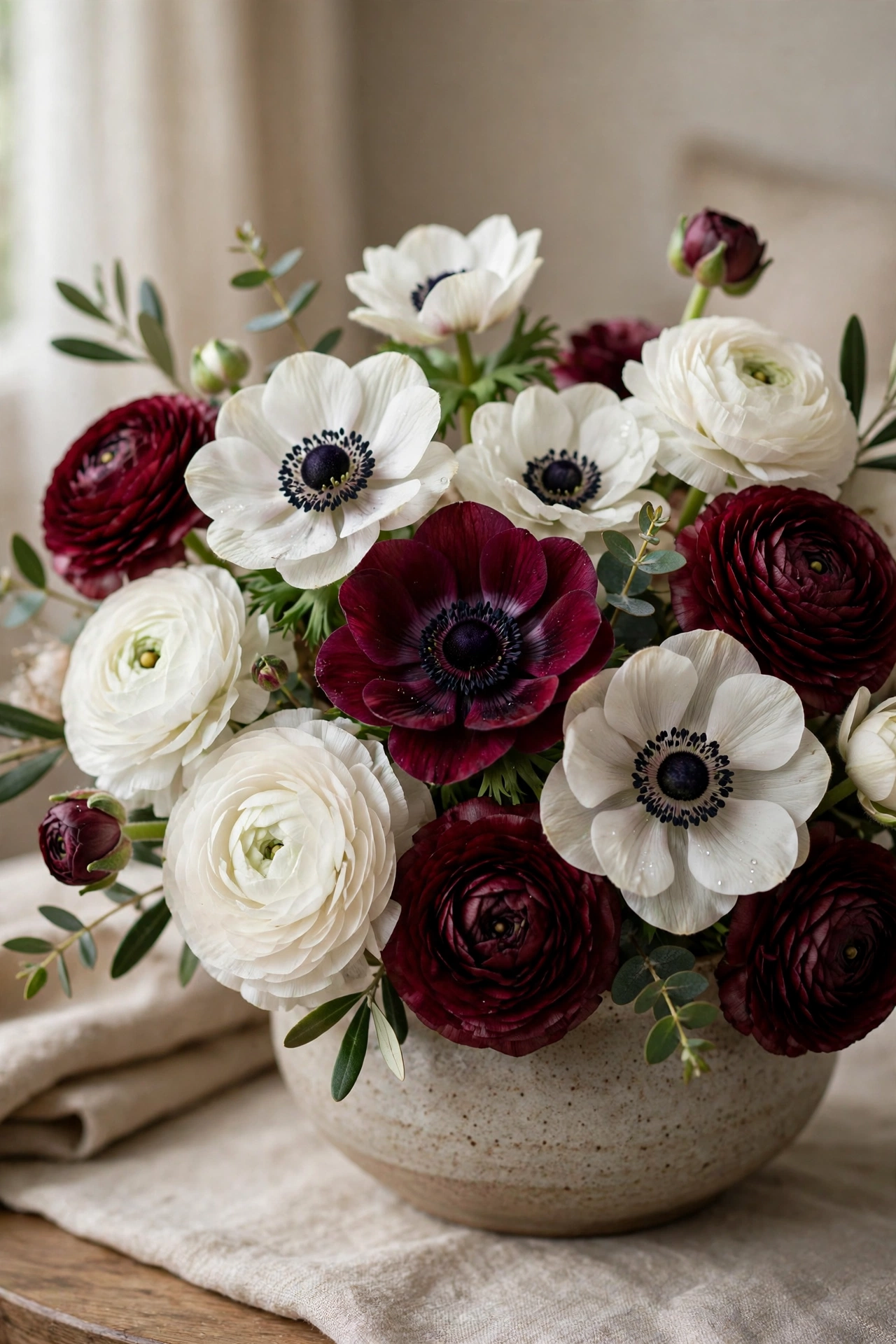
Anemones and ranunculus both have delicate, layered petals that give a winter arrangement a soft, almost hand-painted texture without needing a wide variety of different flower types. Mix white and deep burgundy anemones together for contrast, since the dark centers of white anemones echo the deeper burgundy tones and tie the two colors together visually. Keep the arrangement relatively low and compact in a shorter vase, since both flowers have naturally thin, slightly curved stems that look more elegant gathered closely rather than spread wide. Because anemones and ranunculus are both considered classic winter and early-spring flowers, they’re often more available and reasonably priced during the colder months than warm-weather blooms. This pairing works particularly well on a small side table or nightstand, where its detailed, delicate look rewards a closer look rather than needing to make a statement from across the room.
Pinecone and Floral Mixed Centerpiece
Tucking a few small pinecones directly into a floral arrangement bridges the gap between a traditional bouquet and a more rustic winter centerpiece, adding texture that flowers alone can’t provide. Wire small pinecones onto thin floral picks so they can be inserted directly among the stems at varying heights, rather than simply resting on top of the arrangement. Pair the pinecones with white or cream flowers and a touch of greenery so the natural brown tone of the cones stands out clearly against a lighter background. This centerpiece style works especially well for a dining table during a winter gathering, since the pinecones give the arrangement a seasonal, tactile quality that guests are likely to notice and comment on. Because pinecones are sturdy and don’t wilt, they can also be removed and reused in future arrangements once the fresh flowers are replaced.
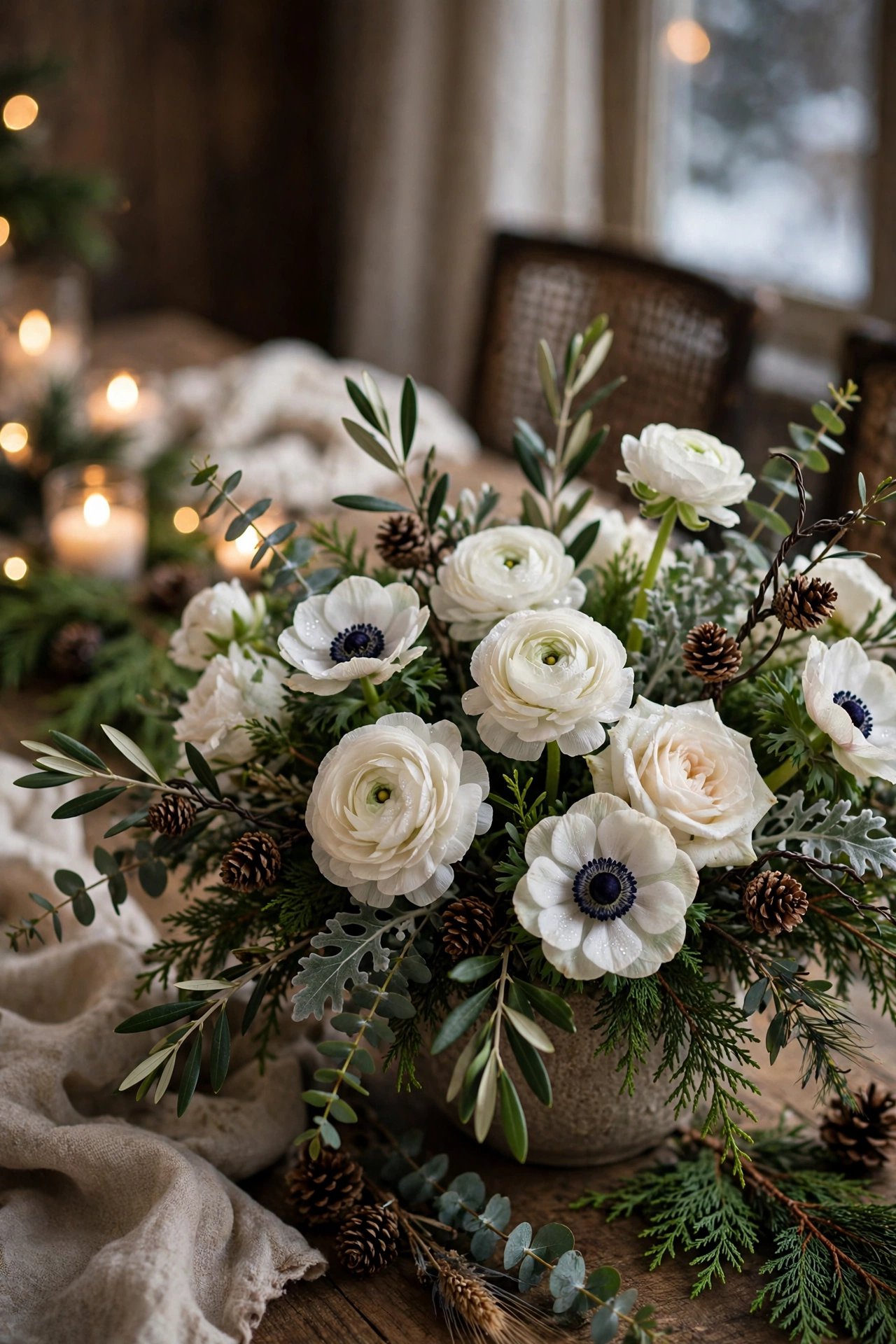
Forced Paperwhite Narcissus Display
Forcing paperwhite narcissus bulbs indoors is one of the few ways to grow genuinely fresh, fragrant flowers during the darkest part of winter, and the process itself is simple enough for anyone without a garden. Fill a shallow glass container with pebbles or gravel, nestle the bulbs on top, and add water just up to the base of the bulbs without submerging them fully, which encourages healthy root growth over the following weeks. As the shoots grow taller, they’ll typically need light staking with thin bamboo sticks or a ribbon tie, since paperwhite stems tend to grow tall and lean before blooming. The flowers themselves are small and white with a strong, sweet fragrance that fills a room noticeably more than most cut flower arrangements. This project works especially well for anyone who wants an ongoing seasonal ritual, since bulbs can be started every few weeks from late fall through winter for a continuous, staggered bloom.
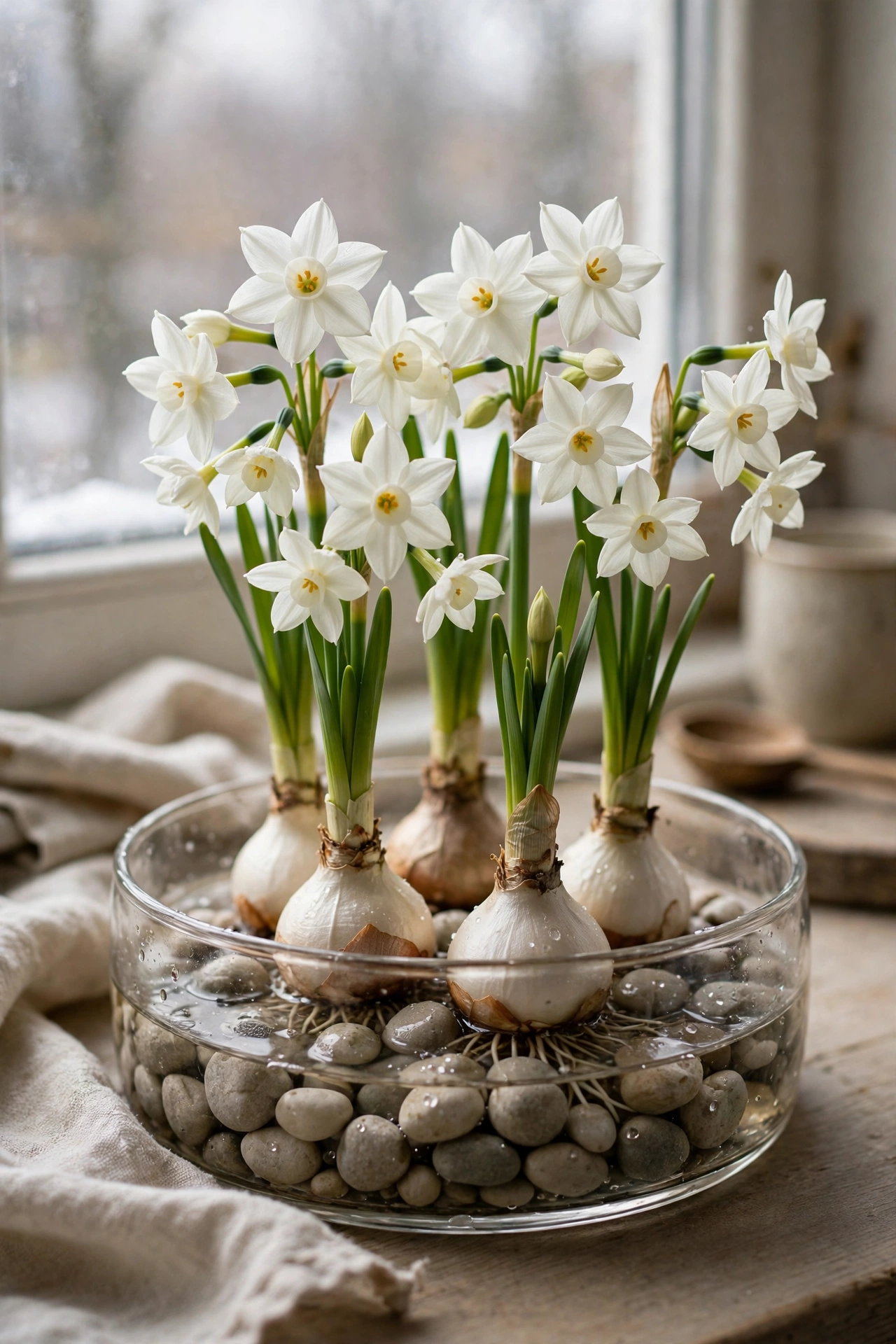
Mercury Glass Vase Styling
Placing almost any winter arrangement in a mercury glass vase instantly adds a soft, antiqued shimmer that catches candlelight and lamp glow in a warmer, more diffused way than plain clear glass. Choose a mercury glass finish in silver, gold, or champagne depending on the arrangement’s flower and greenery palette, keeping the metallic tone consistent with any other decor nearby. Because the clouded, uneven finish is part of mercury glass’s charm, it works especially well with simpler, more restrained flower choices, like the monochrome single-flower vase or the greenery-only mix covered earlier, letting the container itself add visual interest. Group two or three mercury glass vases of different heights together for a fuller centerpiece effect without needing a single large arrangement. This container choice also tends to elevate even a simple grocery store bouquet, making it a practical styling upgrade for anyone working with a limited flower budget.
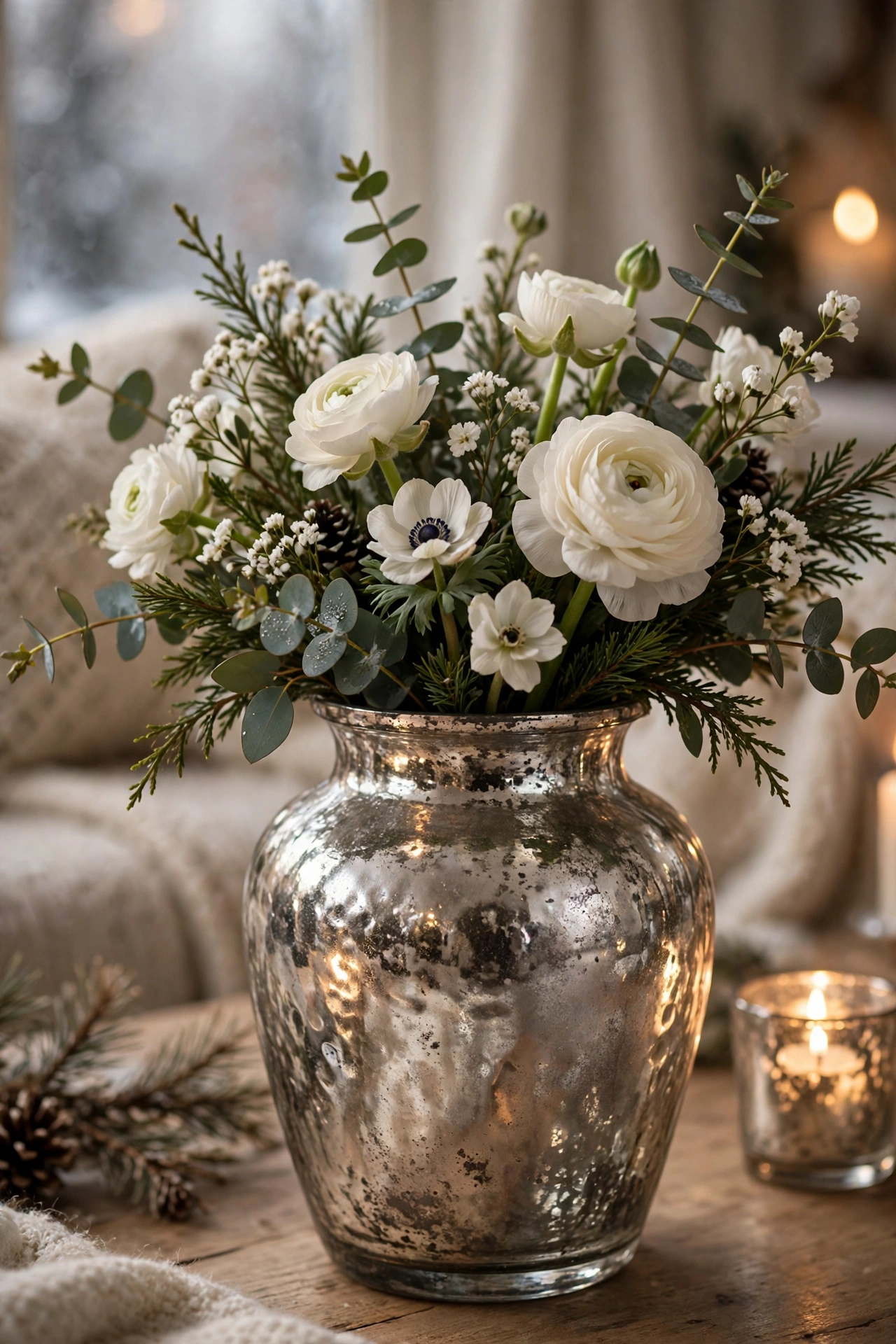
Rustic Wicker Basket Arrangement
A wicker basket lined with a plastic liner or a hidden vase inside makes a warm, textural container for a fuller winter arrangement built from white blooms, greenery, and a few pinecones tucked throughout. The natural woven texture of the basket grounds the arrangement, giving it a homespun, gathered-from-outside feel that a formal glass vase doesn’t offer. Fill the basket generously, letting some greenery spill slightly over the rim, since a basket arrangement typically looks best a little fuller and looser than a tightly composed vase display. This style works particularly well as a gift arrangement or for a farmhouse-style dining table, where the basket ties naturally into other natural materials already in the room. Because the basket itself has no water-holding capacity on its own, using a hidden liner or a smaller vase inside is essential to keep the actual flowers hydrated and the basket from getting damaged.
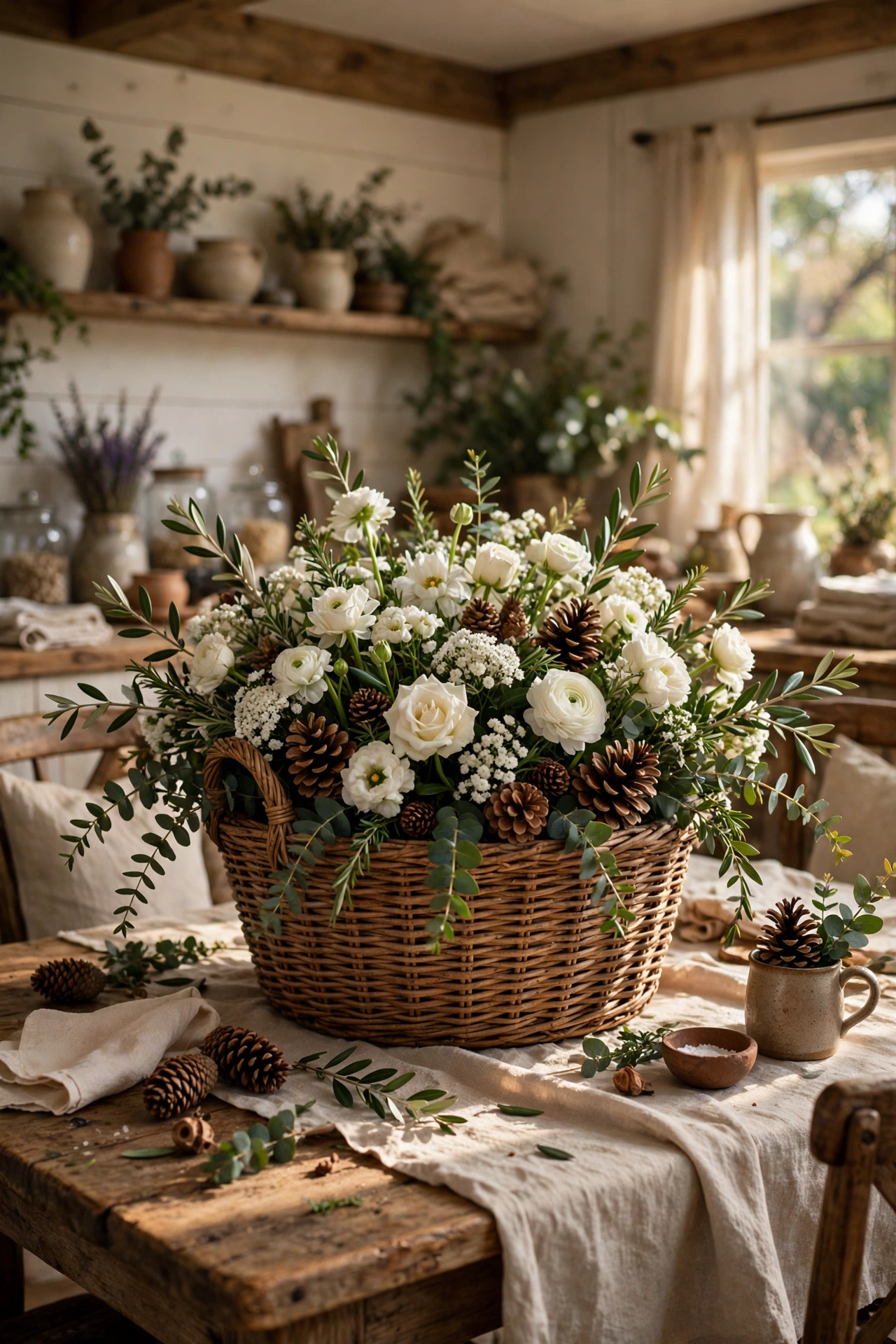
Blue and White Winter Hydrangea Display
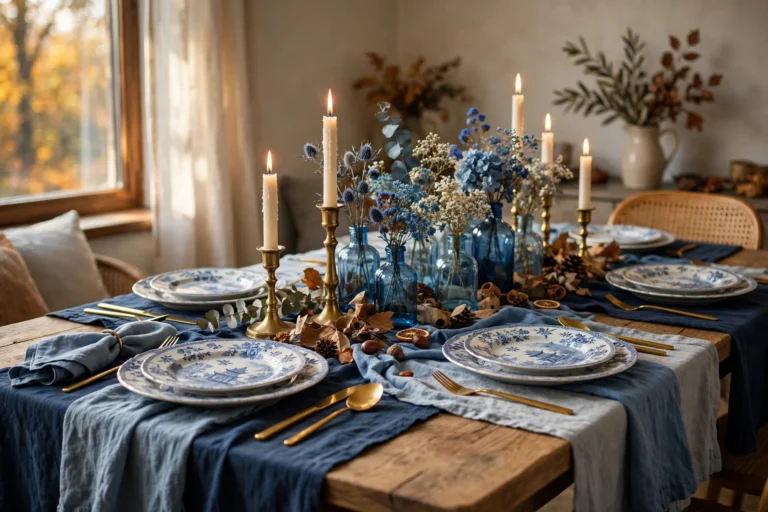
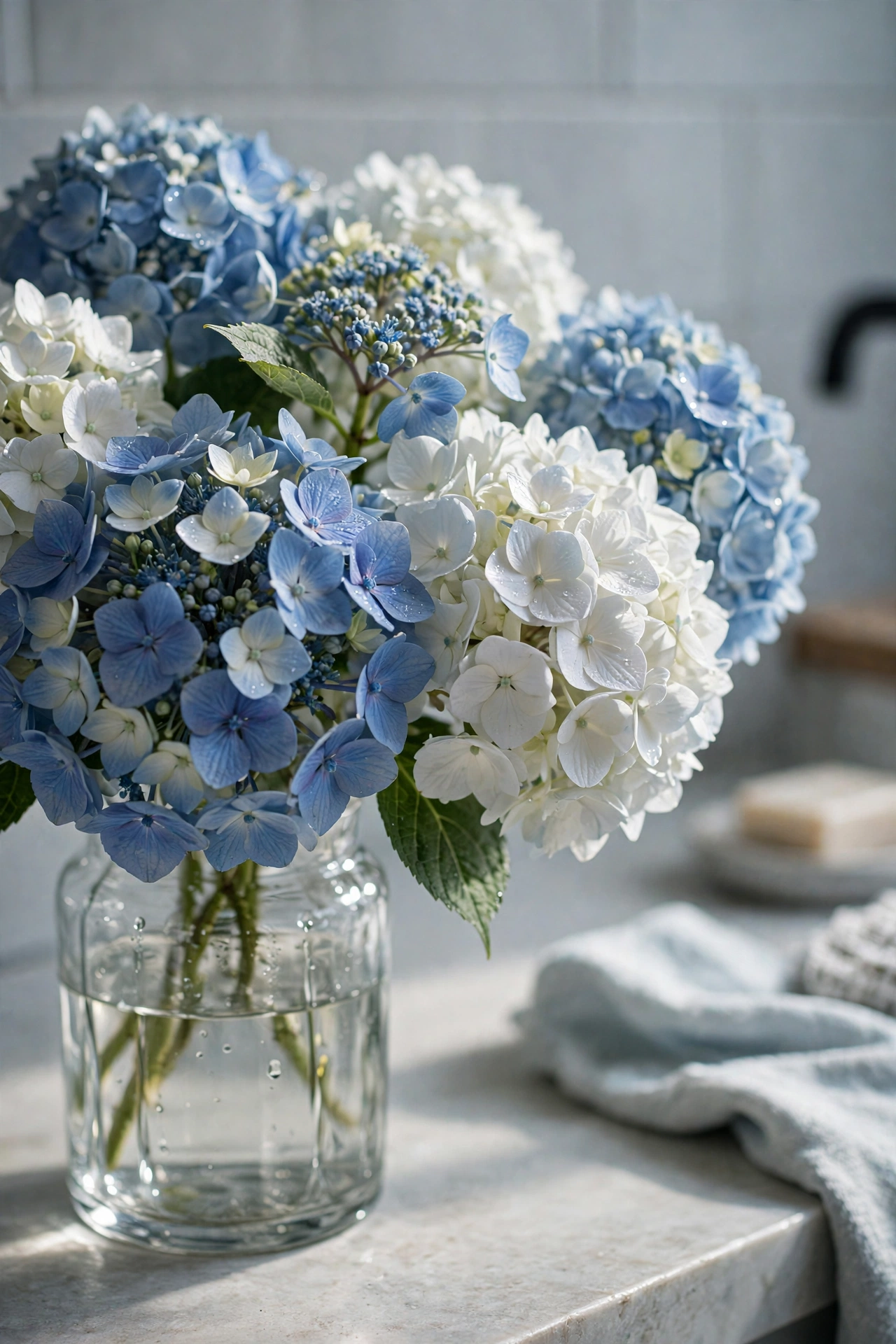
Blue and white hydrangeas together create a cool, wintry palette that feels like fresh snowfall rather than a traditional holiday color scheme, making it a strong choice for anyone who wants seasonal flowers without leaning into red, green, or gold. Because hydrangea blooms are naturally large and full, a single stem can fill out a vase on its own, making this one of the more efficient arrangements on this list in terms of flower cost. Add a few sprigs of eucalyptus or silver-toned greenery to soften the transition between the blue and white blooms without introducing a third distinct color. Hydrangeas tend to droop faster than other cut flowers, so re-cutting the stems at an angle and fully submerging the flower heads in water for a few minutes before arranging helps them stay upright longer. This cool-toned palette works especially well in a bathroom, bedroom, or any space with a naturally cooler or more neutral color scheme already in place.
Single Bloom Bud Vase Collection
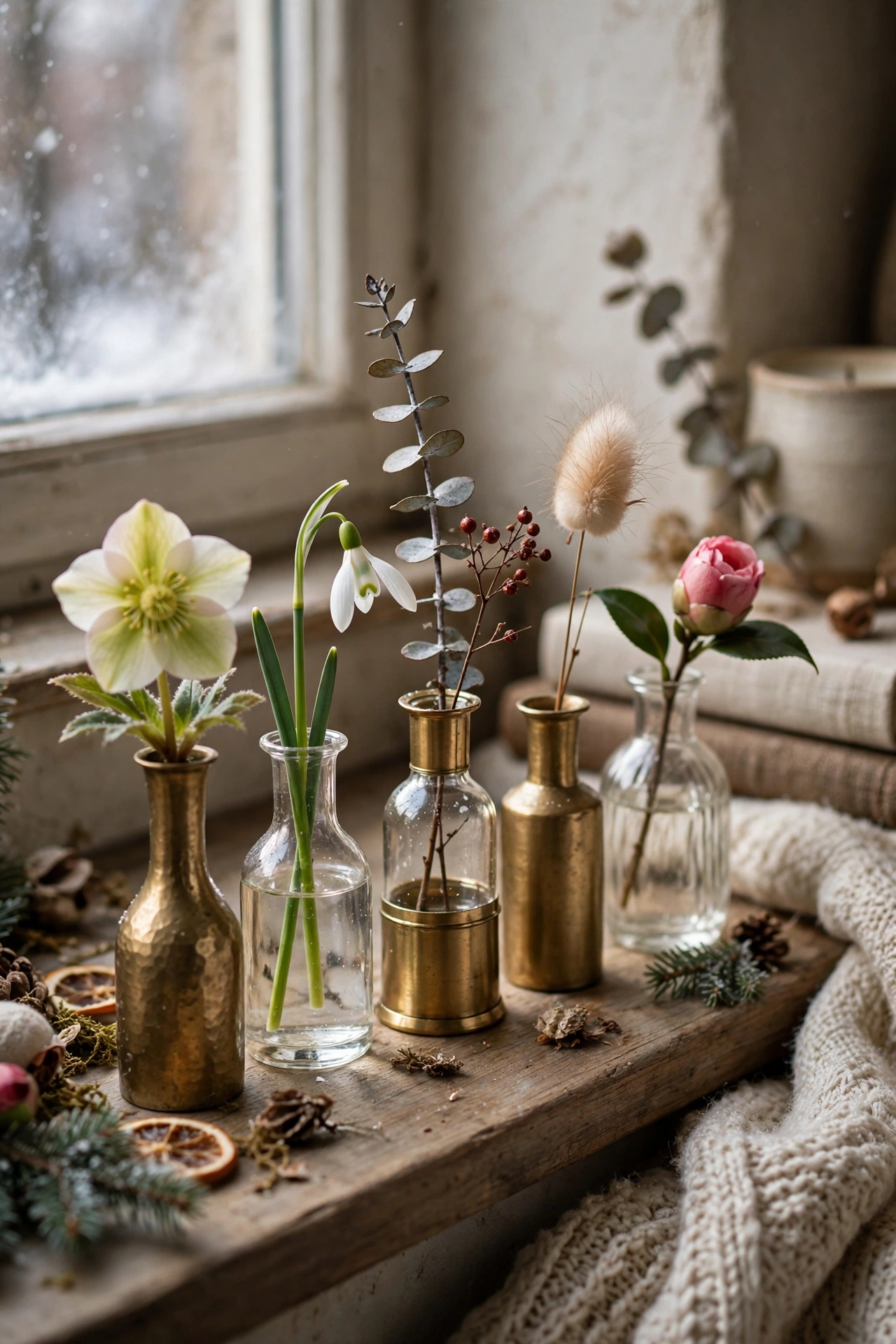
Instead of one large arrangement, a collection of small bud vases, each holding just one or two stems, spreads winter florals across a room or table in a lighter, more casual way. Mix different bud vase shapes and heights, in glass, ceramic, or brass, so the collection feels curated rather than uniform, while keeping the flower choice within the same color family for cohesion. Group three to five bud vases together on a mantel, windowsill, or table runner, spacing them at slightly uneven intervals rather than in a perfectly straight line. This approach is one of the most budget-friendly ways to use fewer stems while still creating a noticeable visual impact, since a single rose or ranunculus in its own small vase reads as more intentional than the same stem lost inside a larger bouquet. It’s also an easy way to repurpose stems that are starting to fade in a larger arrangement, giving them a second life as an individual bud vase display.
Evergreen and Citrus Fragrant Arrangement
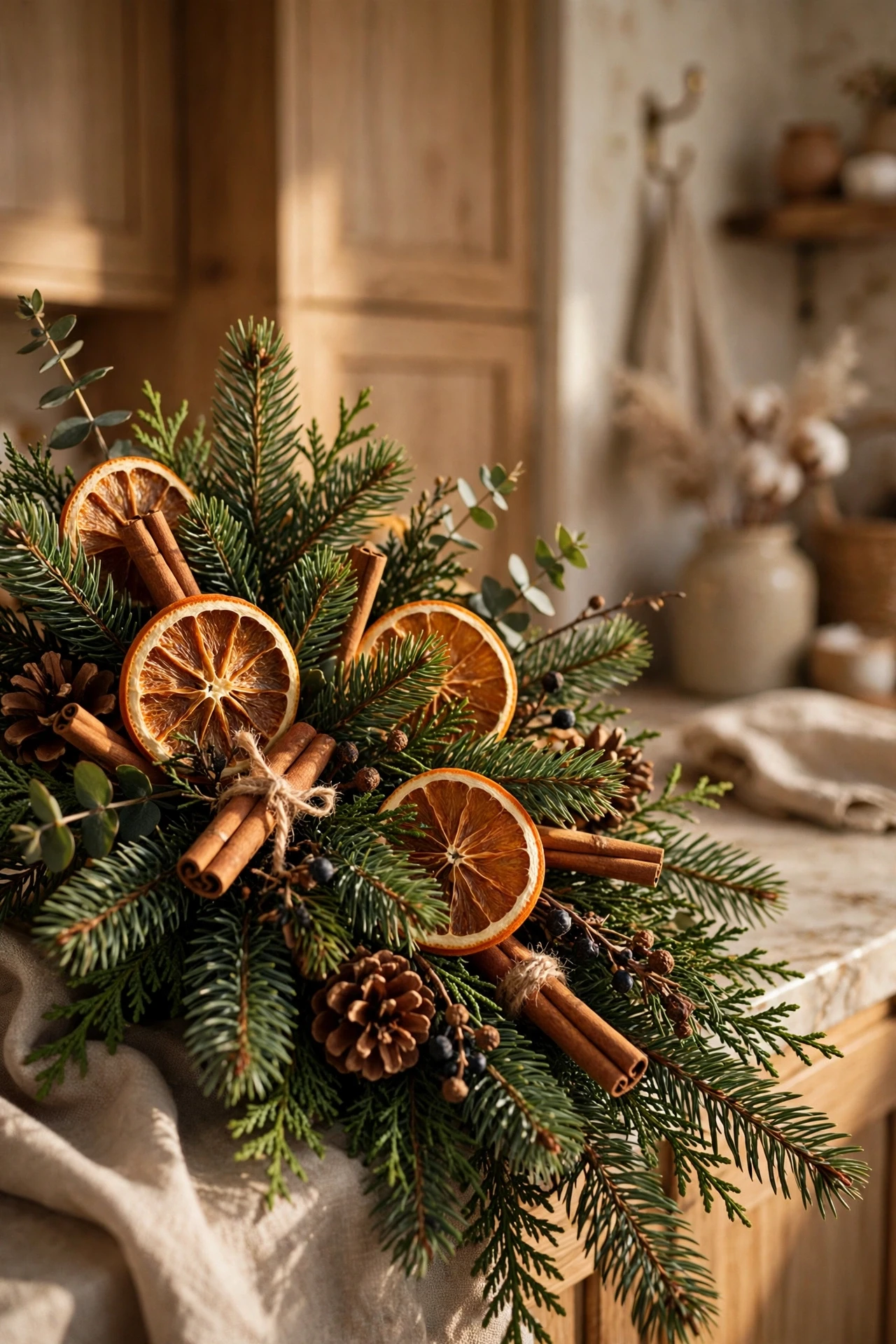
Combining fresh evergreen sprigs with a few dried orange slices or small kumquats on the stem adds a warm, spiced fragrance to a winter arrangement that pure flowers can’t replicate on their own. Wire the dried citrus slices onto floral picks similarly to the pinecone technique covered earlier, tucking them among the greenery at varying depths for a natural, layered look. Add a few cinnamon sticks bundled with twine as an additional textural and fragrant element, positioning them near the base of the arrangement where they’re less likely to interfere with the greenery’s shape. This combination works especially well in a kitchen or entryway, where the citrus and evergreen scent makes the strongest first impression as people walk through. Because the dried citrus and cinnamon don’t require water, this arrangement also holds its shape and fragrance for several weeks longer than a purely fresh floral display.
Dark Moody Floral Arrangement
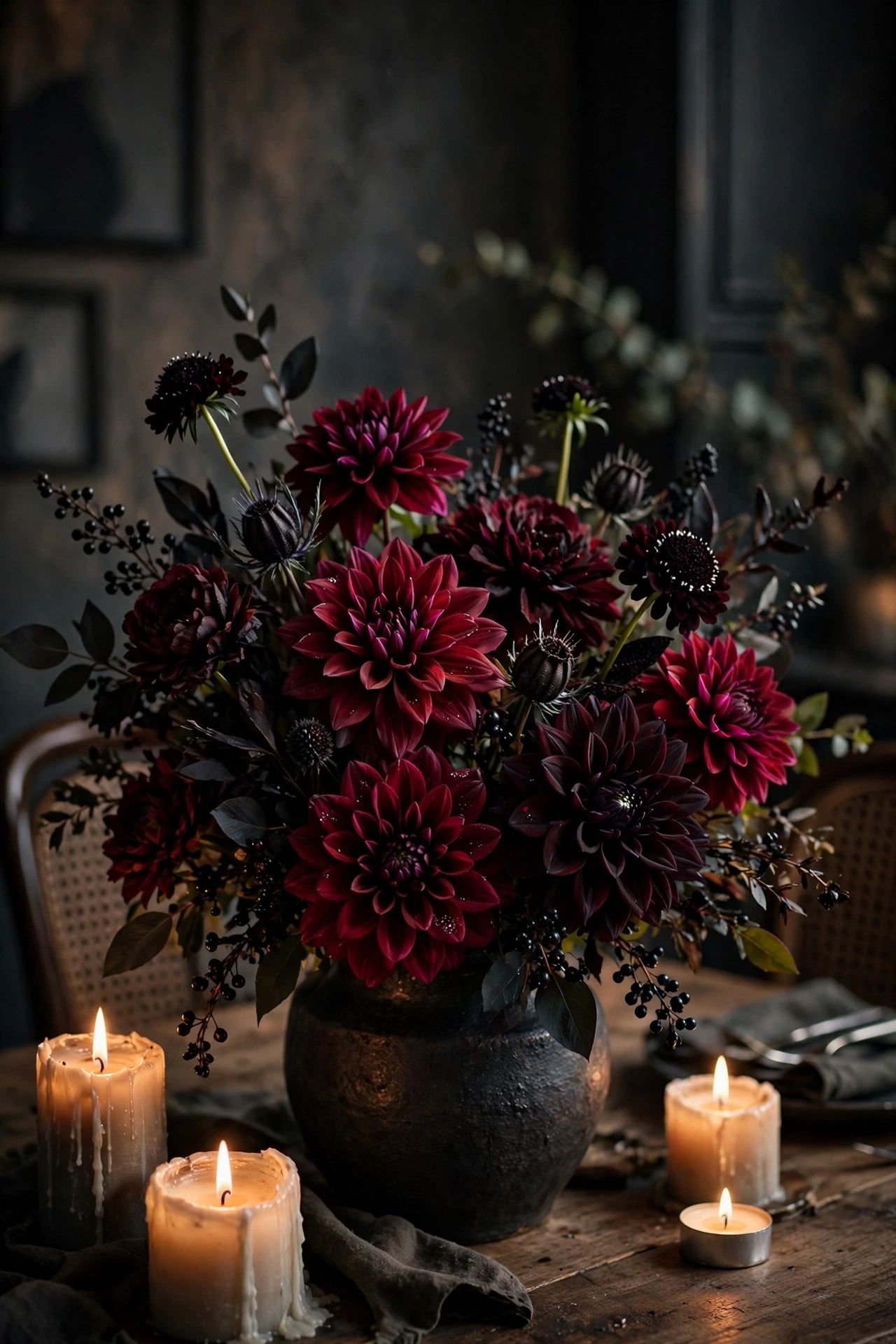
An arrangement built almost entirely from deep burgundy, near-black, and dark plum flowers, like chocolate cosmos, dark dahlias, or deep red amaranthus, creates a dramatic, moody centerpiece that feels distinctly suited to the shorter, darker days of winter. Balance the darker blooms with just one or two lighter accents, like a single ivory rose or a sprig of pale eucalyptus, so the arrangement doesn’t read as flat or overly somber. Photograph or display this style under warm, low lighting rather than bright overhead light, since candlelight and lamp glow bring out the depth and richness of the dark tones far better than harsh daylight. This arrangement works particularly well for a formal dinner party or a candlelit evening gathering, where the deep colors add drama without needing any additional decor. Because dark, richly colored flowers are less commonly used than brighter blooms, this idea also tends to stand out clearly on Pinterest and in photos compared to more traditional winter color palettes.
Windowsill Mini Winter Garden
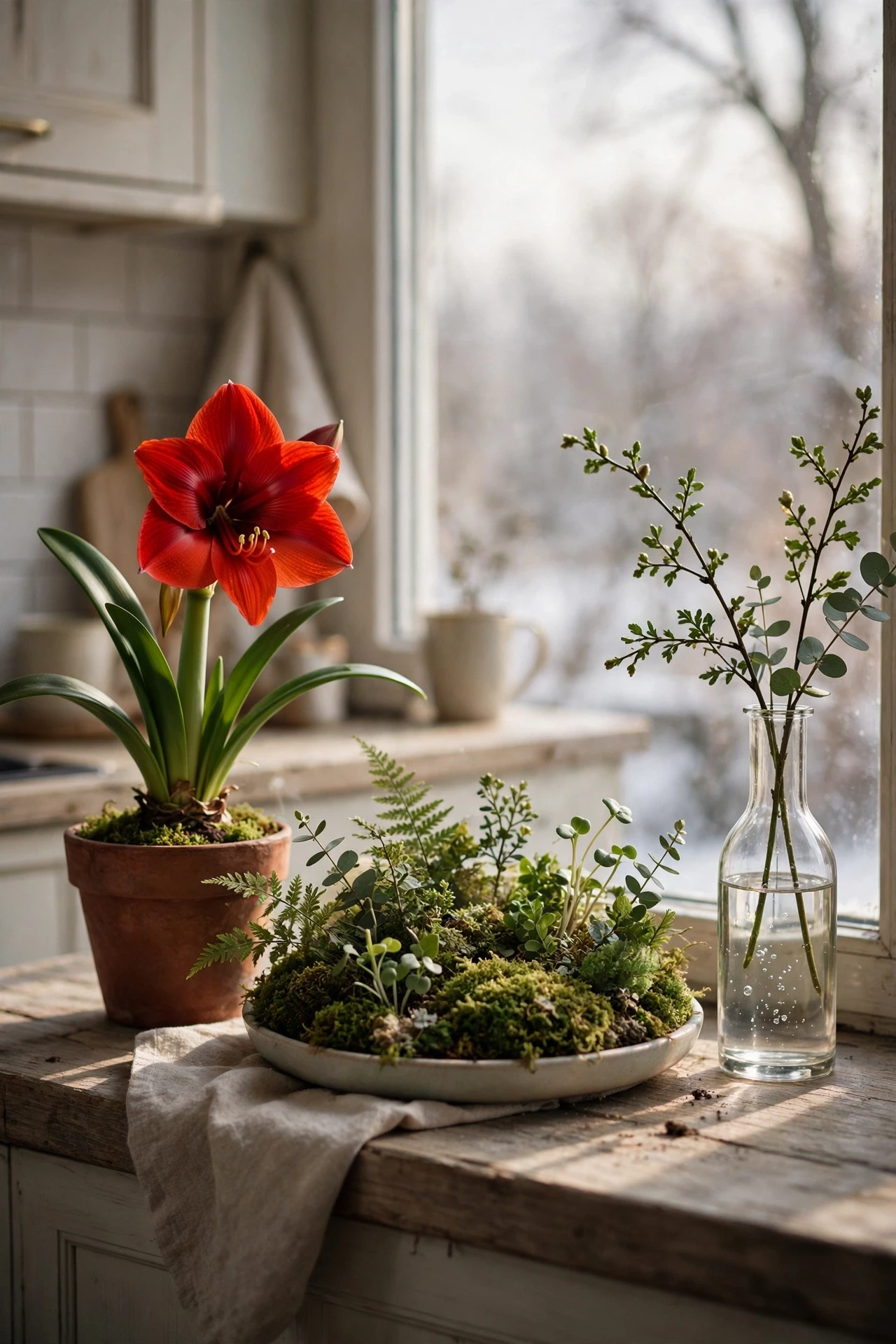
A small collection of potted winter plants and mini arrangements, like a tiny potted amaryllis, a small dish of moss and greenery, and a single bud vase, turns a windowsill into a miniature winter garden rather than a single isolated arrangement. Vary the container heights and shapes across the collection, using small terracotta pots, a shallow ceramic dish, and a slim glass vase together, so the grouping feels intentional rather than randomly placed. Keep the overall footprint small enough that natural light still reaches each piece evenly, since a windowsill typically has limited depth compared to a table or mantel. This idea works especially well in a kitchen or a small apartment where a full-sized arrangement isn’t practical, letting a few small, well-chosen pieces do the same warming work as one larger centerpiece elsewhere in the home. Because each piece in the collection can be swapped out individually as flowers fade or plants outgrow their pots, a windowsill garden is also one of the easier arrangements on this list to keep looking fresh over an extended period.
Styling Tips
Choose containers before flowers whenever possible. Knowing the shape and height of the vase first makes it much easier to buy the right stem lengths and quantities rather than guessing at the flower shop.
Let stems breathe. Winter arrangements tend to look calmer and more intentional with a little visible space between stems, rather than packed tightly the way a full summer bouquet might be.
Match the arrangement’s mood to the room’s lighting. Cooler palettes like blue and white hydrangeas suit naturally bright rooms, while jewel tones and dark moody florals come alive under warmer, dimmer lighting.
Practical Implementation Ideas
Buy flowers a day or two before you plan to arrange them, giving stems time to fully hydrate in a bucket of water before final trimming and placement.
Re-cut every stem at a forty-five degree angle right before placing it in the vase, since a fresh cut allows for better water uptake than a stem that’s been sitting exposed.
Keep a small pair of floral shears and extra floral picks on hand, since several ideas on this list, like the pinecone and citrus arrangements, require wiring small elements onto the stems.
Common Mistakes to Avoid
Placing arrangements too close to heating vents, radiators, or fireplaces, since the extra warmth and dry air will cause flowers to wilt significantly faster than normal.
Forgetting to change the water every two to three days, which allows bacteria to build up in the vase and shortens the life of the entire arrangement.
Overcrowding a vase with too many different flower types and colors at once, which can make even expensive, high-quality flowers look chaotic instead of intentional.
Small-Space Alternatives
A collection of small bud vases takes up far less counter or table space than one large arrangement while still adding color and life throughout a room.
A single amaryllis or forced paperwhite display works well in a narrow entryway or small kitchen, since both need minimal footprint but still make a noticeable visual impact.
A windowsill mini winter garden, as covered above, is one of the most space-efficient ways to bring several small arrangements into a compact apartment or kitchen.
Budget-Friendly Alternatives
Choose greenery-forward arrangements, like the eucalyptus and silver dollar mix, since foliage is typically less expensive than flowers and lasts noticeably longer once cut.
Repurpose grocery store bouquets by re-arranging them into a nicer container, like a mercury glass or ceramic vase, rather than buying florist-arranged bouquets at a higher price point.
Invest in one dried flower arrangement that can be restyled and reused across multiple winters instead of purchasing fresh flowers repeatedly throughout the season.
Pro Styling Recommendations
Layer at least two textures in every arrangement, such as smooth petals with rough pinecones or soft greenery with a rigid branch, since texture contrast is what keeps a winter arrangement from looking flat.
Group arrangements in odd numbers when displaying more than one vase together, whether that’s three bud vases on a mantel or a cluster of small pots on a windowsill.
Refresh one small detail, like swapping fading stems for new ones or adding a fresh sprig of greenery, every few days rather than waiting until the entire arrangement needs to be redone.
Frequently Asked Questions
Conclusion
A winter flower arrangement doesn’t need to be elaborate to change how a room feels. Sometimes it’s one amaryllis stem on a mantel, or a low bowl of white ranunculus catching the last bit of afternoon light.
Pick the idea that matches the room and the mood you’re going for, whether that’s a moody jewel-toned centerpiece for a dinner party or a simple bud vase collection for a quiet Tuesday afternoon. The goal isn’t a showroom-perfect arrangement. It’s a small, living detail that makes the house feel warmer while everything outside stays cold and still.
Bring a little color inside this season. Even one small vase can be enough.