15 Christmas Traditions in Peru You’ve Probably Never Heard Of
Most Christmas articles will tell you about Peru’s panettone and hot chocolate and stop there, as if that were the whole story. It isn’t. Peru’s Christmas is louder, later, more communal, and more deeply woven into daily life than the version most visitors expect — and some of its traditions genuinely surprise even seasoned travelers.
What makes Peru different isn’t a single custom. It’s the way an entire season unfolds: nativity scenes that grow room by room through December, a midnight Mass that empties whole neighborhoods into the streets, and a Christmas dinner that doesn’t start until most of the world is already asleep.
This guide walks through 15 traditions that show that fuller picture — the ones Peruvians actually live, not just the ones that photograph well. Some are sacred, some are delicious, and a few are delightfully chaotic.
If you’re planning a trip, hosting a Peruvian-inspired celebration, or simply curious about how Christmas feels somewhere else, start here.
Table of Contents
The Quick Answer
What are the most unique Christmas traditions in Peru? Peruvians treat December 24, called Noche Buena, as the main night. The nativity scene, called the nacimiento, matters more than the tree. Panetón and hot chocolate are served even in summer heat. Beyond that, each region has its own custom: UNESCO-listed Afro-Peruvian dances in Chincha, the Takanakuy festival in Chumbivilcas, the Santurantikuy art fair in Cusco, and masked dances in the central Andes.
Quick terms you will see here:
- Noche Buena: “Good Night,” the evening of December 24 and the heart of Peru’s Christmas.
- Nacimiento: the nativity scene, also called a pesebre, set up weeks ahead in many homes.
- Niño Manuelito: Cusco’s beloved Baby Jesus figure, shown with Andean features.
- Panetón: a tall, sweet Italian-style bread with dried fruit, served with hot chocolate.
- Chocolatada: a gathering where hot chocolate and panetón are shared, often to give treats to children.
- Qhapaq Raymi: an Inca-era festival tied to the summer solstice, which many scholars link to the timing of Andean Christmas.
A quick note on respect: Some dance names, like Negritos, are traditional names tied to Afro-Peruvian history. They are used here as the communities use them. Rituals like Takanakuy are community events, not shows, so treat them with care.
Why Christmas in Peru Feels So Different
Peru is in the Southern Hemisphere, so Christmas lands in the middle of summer. On the coast, it is hot. In the Andes, it is the rainy season, with cool nights. The country is also home to coastal, Andean, and Amazonian cultures, each with its own history. When Spanish Catholicism arrived, people in each region blended it with local music, dress, and belief. That mix is why Christmas in Cusco looks different from Christmas in Chincha or Pucallpa.
Related: 25 Modern Ways to Decorate a Small Living Room for Christmas
Takanakuy: The Christmas Day Ritual Fight
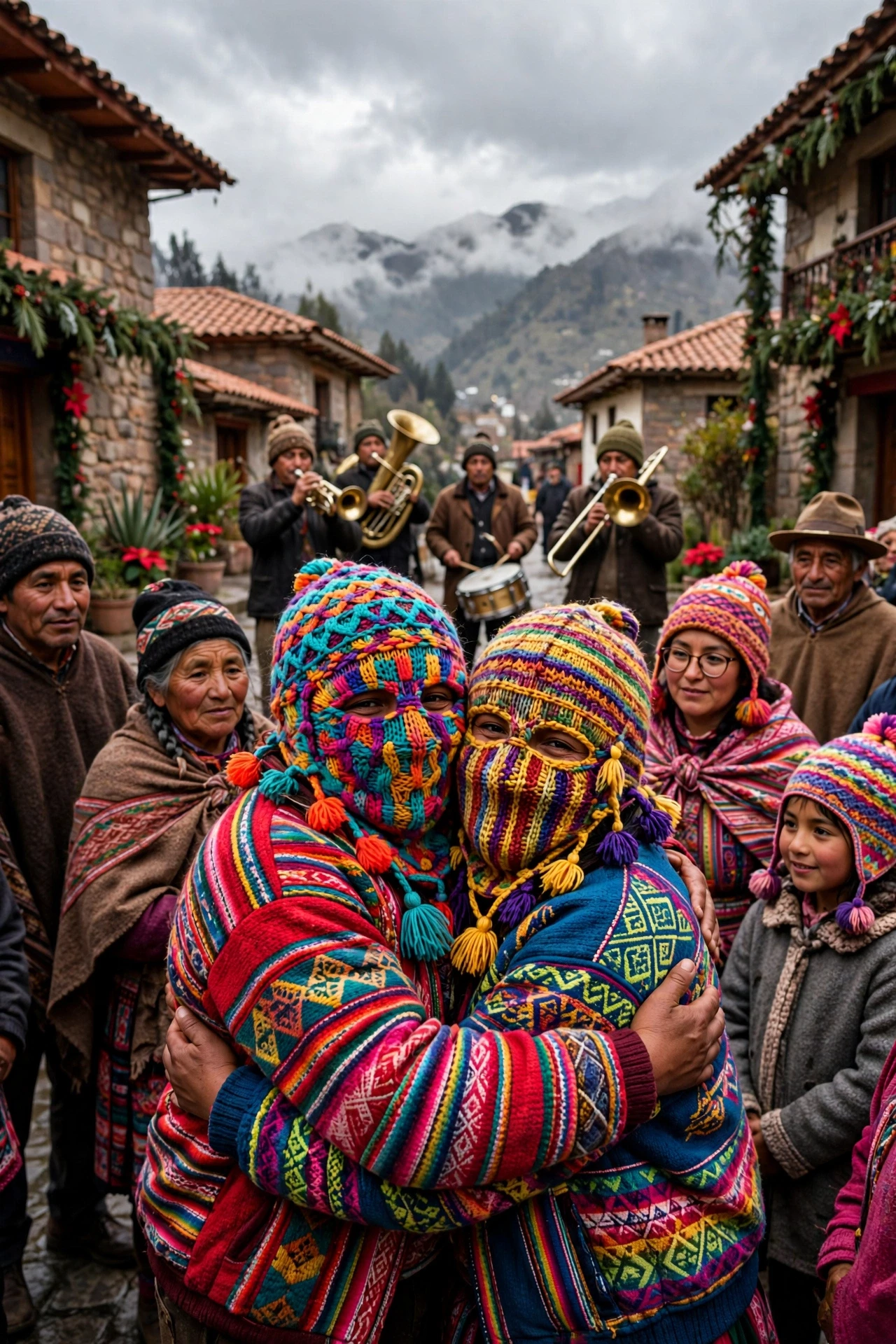
On Christmas Day in Santo Tomás, a high Andean town in Cusco’s Chumbivilcas province, neighbors settle the year’s arguments with their fists. The name Takanakuy comes from Quechua and means “to hit each other.” It is not a street brawl. The day starts with dancing and singing, fights are one-on-one in a circle, and each one begins and ends with a hug so everyone can start the new year with a clean slate. For many families, it is also a way to settle disputes in a region where courts are far away. Visitors should treat it as a community ritual, not a show, and go with a local guide.
Hatajo de Negritos and Las Pallitas: UNESCO-Listed Dances
In Chincha, on Peru’s south-central coast, Afro-Peruvian communities celebrate Christmas with two dances that UNESCO added to its Representative List of Intangible Cultural Heritage in 2019. Men dance the Hatajo de Negritos, stomping to violin and bells, and women dance Las Pallitas to guitar, both singing as they go. The dancers visit nativity scenes in homes, sing to the Baby Jesus, and are welcomed with food and drink. The season runs from December 24 to January 6, and the dancers represent the shepherds who visited Jesus. Tradition says that enslaved Afro-Peruvians once celebrated Christmas on haciendas with this music, giving thanks to the Christ Child.
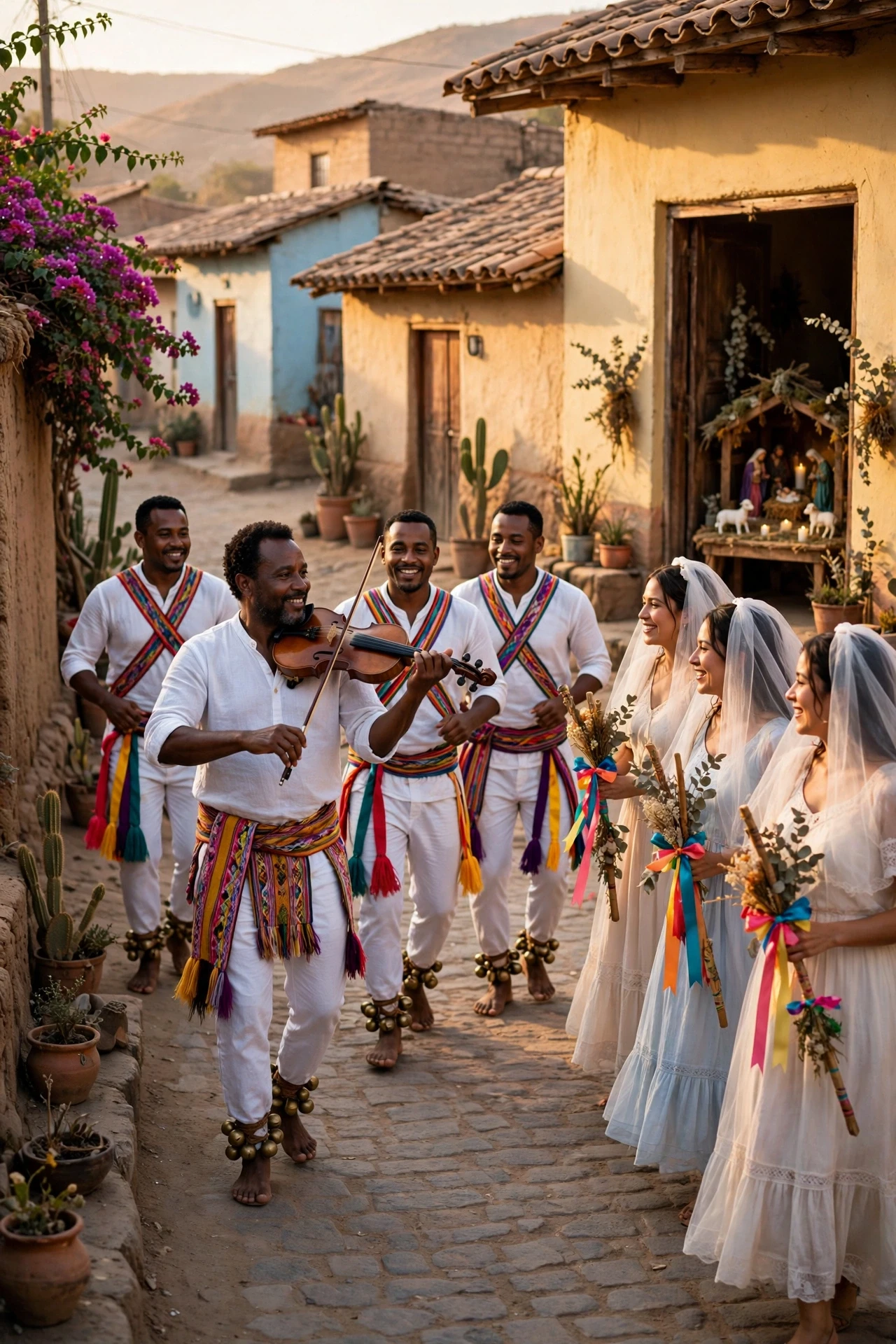
The Negritos of Huánuco: A Christmas That Lasts Almost a Month
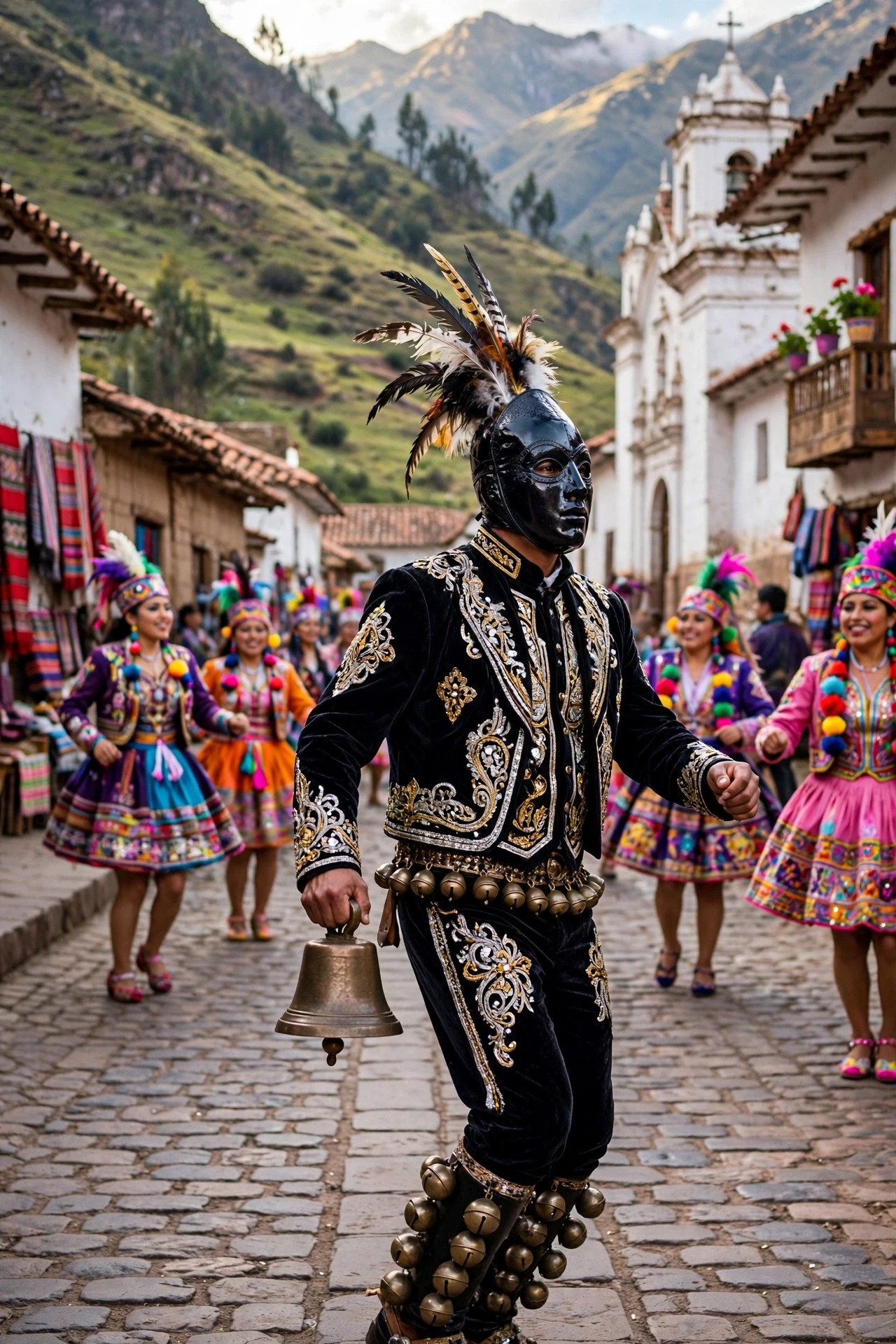
In Huánuco, in the central highlands, Christmas is celebrated from December 24 to January 19, which locals describe as one of the longest Christmas seasons in the world. Brotherhoods called cofradías of Negritos dance through the streets, stop at nativity scenes and churches, and thank the Christ Child. The leaders, called caporales, wear shiny leather masks, dark velvet embroidered with gold and silver thread, and feathered hats, with bells on their legs. A joking character called the Corochano keeps the crowd laughing with a rattle and whip. The dance is tied to the 1854 decree by President Ramón Castilla that ended slavery in Peru, and hosts often thank the dancers with traditional drinks and dishes like locro.
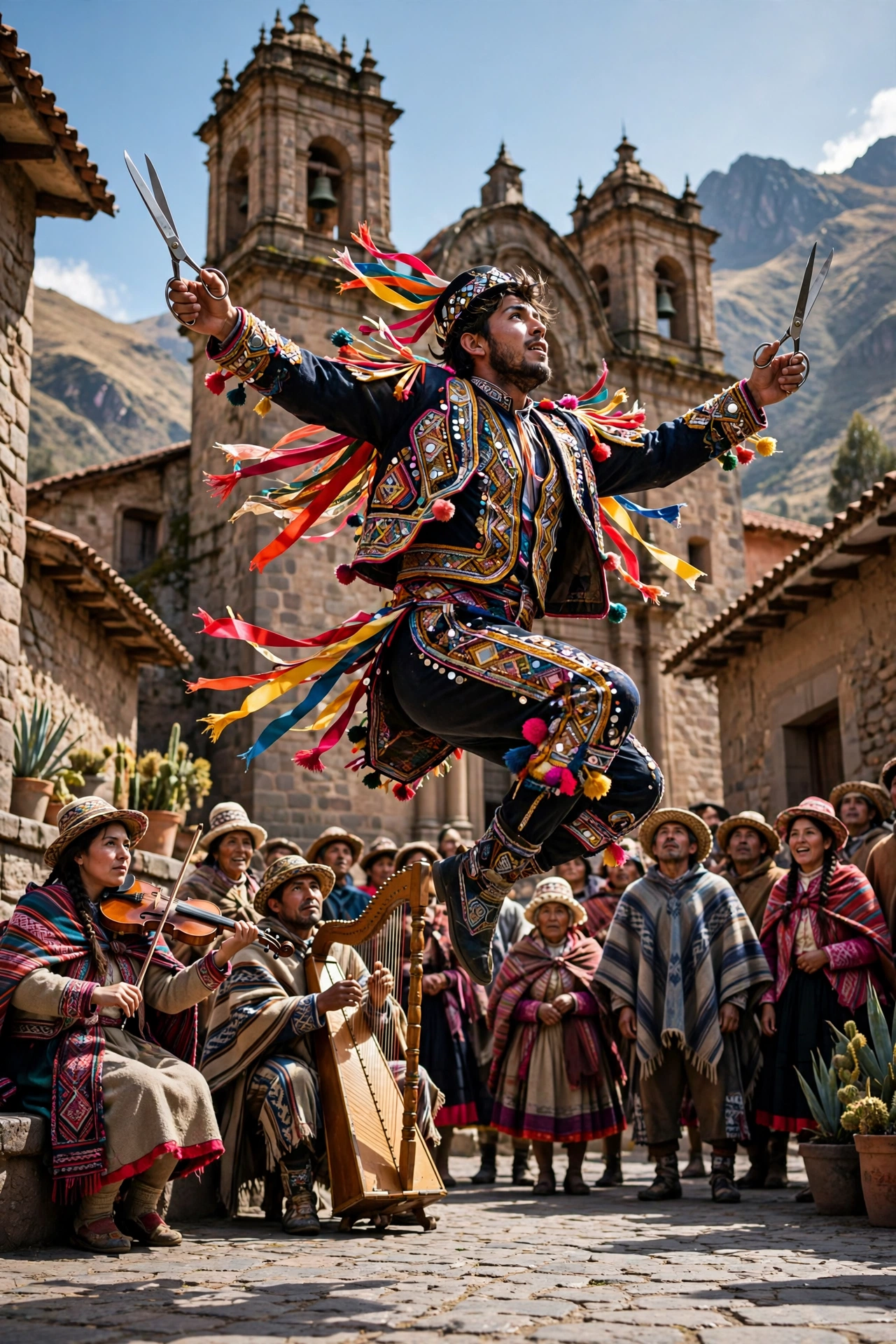
Niño Lachocc and the Scissors Dancers of Huancavelica
In Huancavelica, from December 22 to 27, a Christmas festival honors the Niño Lachocc, a miraculous Child Jesus image. The story says people tried to move the image to the city, but he agreed to stay only after neighbors held a great feast with stomping dances in front of the San Sebastián church. Today, the center of the festival is an atipanakuy, a contest between troupes of scissors dancers, led by a coplero and joined by clowns called latamachos. Each contest lasts 20 to 30 minutes, and dancers show strength, endurance, and skill. The festival was declared part of Peru’s cultural heritage in 2011.
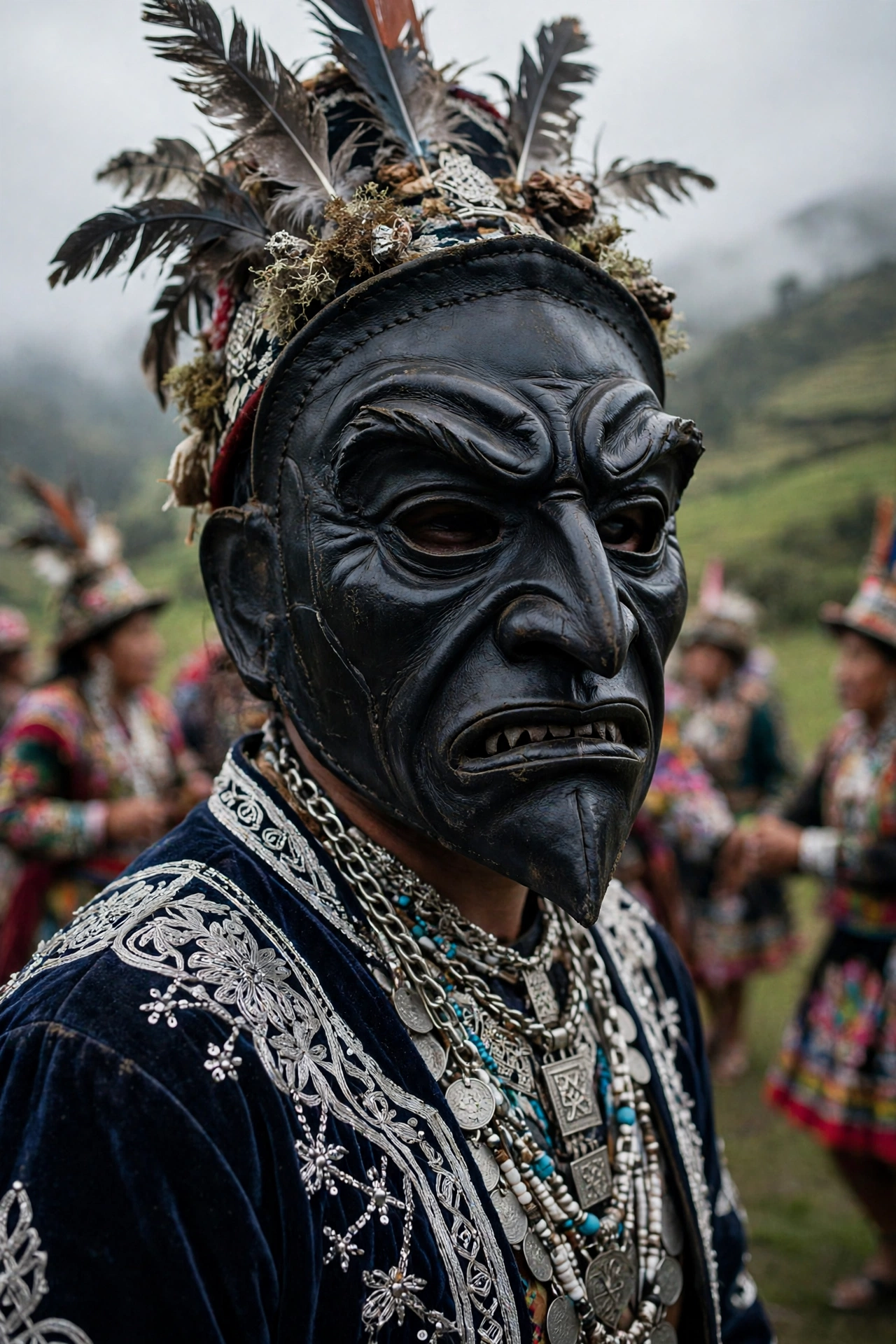
The Pachahuara Masks of Jauja
In the Yanamarca Valley of Jauja, in Peru’s Junín region, dancers perform the Pachahuara at Christmas. They wear outfits embroidered with silver thread, expensive jewelry, and strange black leather masks, and parade through streets and plazas. Some say the dance is an allegory of the freedom that Marshal Ramón Castilla granted to Afro-Peruvians. Others say it simply shows the joy of Christmas and the new year. Junín has many more Christmas dances, including Chacranegro, Tunantada, Huaylía, Pastoras, and Chutos.
Related: 17 Doable Christmas Table Settings That Feel Elevated
Pastoreadas Navideñas in the Amazon
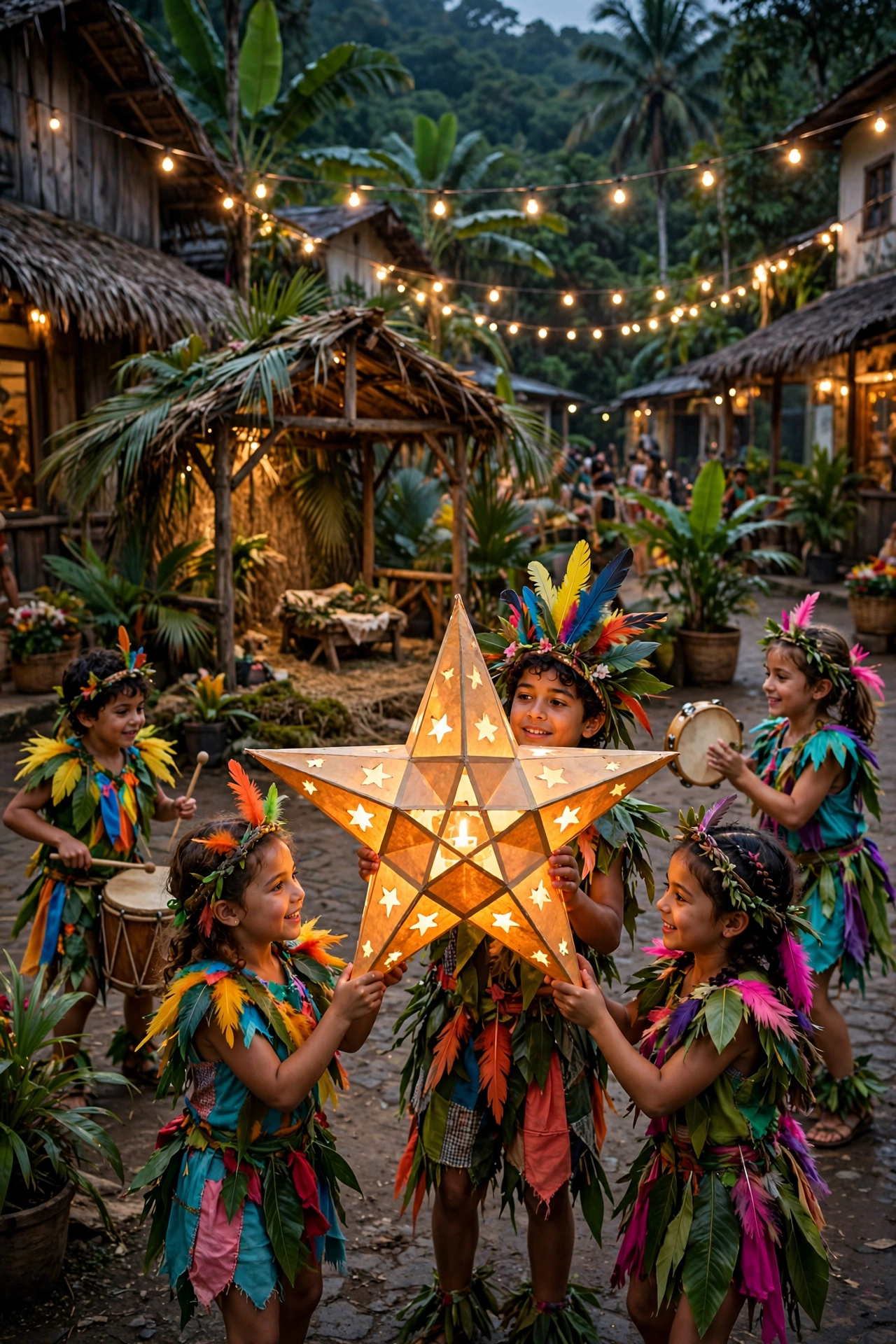
Christmas in the Amazon has its own style. In Ucayali, the Pastoreadas Navideñas date back to the 19th century. Children and young people dress as biblical and jungle figures and go out into the streets to look for nativity scenes, imitating the journey to follow the Star of Bethlehem. At each stop, hosts offer snacks made from local products. The groups dance and sing Amazonian carols to drums, snare drums, whistles, and tambourines, and the procession ends at the nativity scene in the town’s main square.
Santurantikuy: The “Selling of Saints”
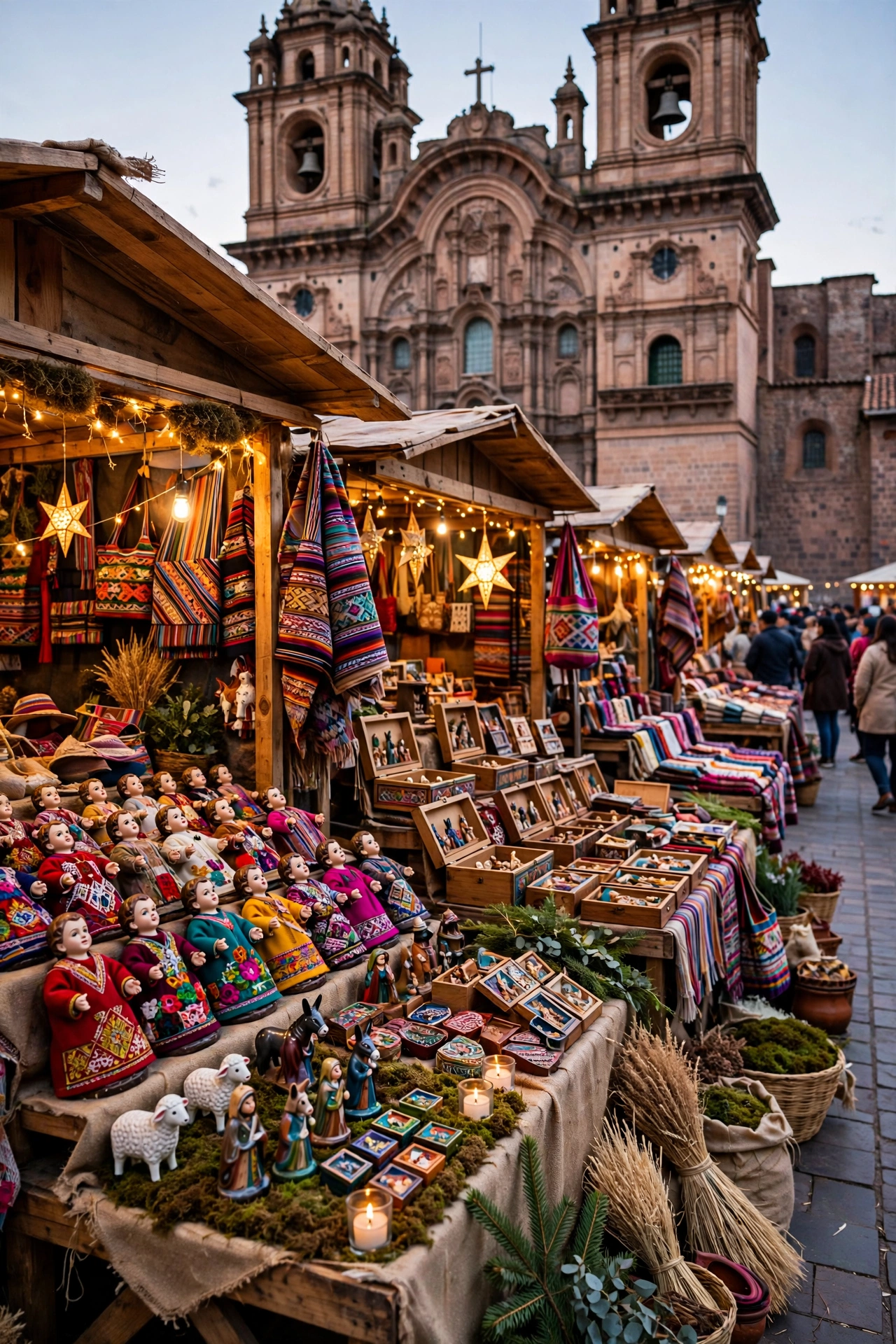
Every December 24, Cusco’s main square turns into the Santurantikuy fair, a Quechua name that means the selling of saints. Artisans from Cusco, Puno, Ayacucho, and nearby areas sell ceramics, carvings, retablos, and handmade nativity pieces. Some stalls sell tiny outfits for Baby Jesus figures in every size and style. The fair is recognized as part of Peru’s national cultural heritage and is said to date back centuries. If you buy something here, buy directly from the artisan and ask about the story behind each piece.
Niño Manuelito and the Child of the Thorn
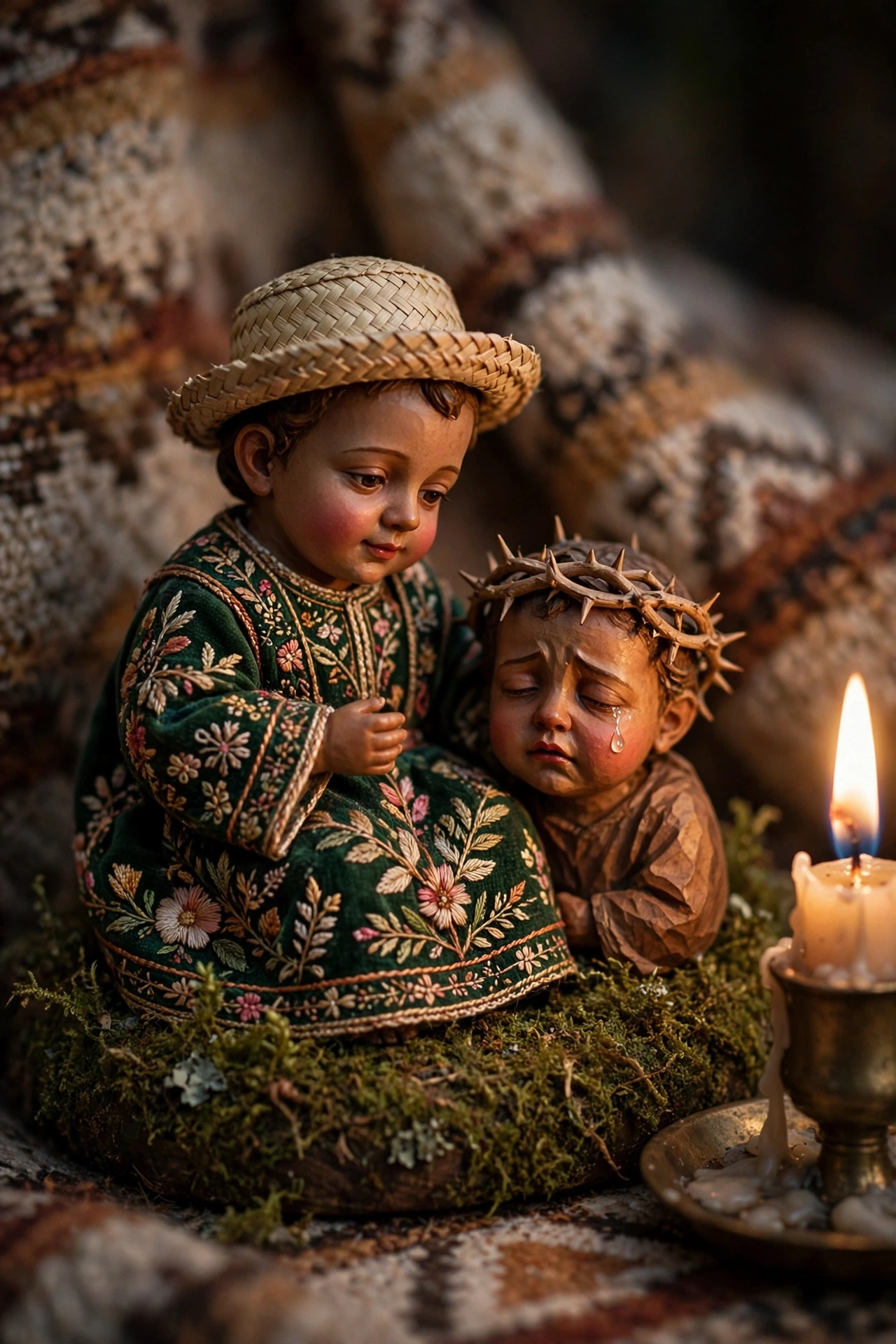
The Niño Manuelito is Cusco’s Baby Jesus, shown with Andean features, rosy cheeks, and a gentle look. His name comes from Emmanuel, meaning “God with us,” and families treat him as a symbol of protection, hope, and prosperity. Many people bring their own small Niño to Midnight Mass so he can be blessed. Another much-loved image is the Niño de la Espina, created in 1975 by Cusco artisan Antonio Olave Palomino. It shows the Child seated with a tear on his cheek, removing a thorn from his foot, inspired by an Andean legend about friendship and shared pain.
Andean Nativities With Moss, Mirrors, and Long Necks
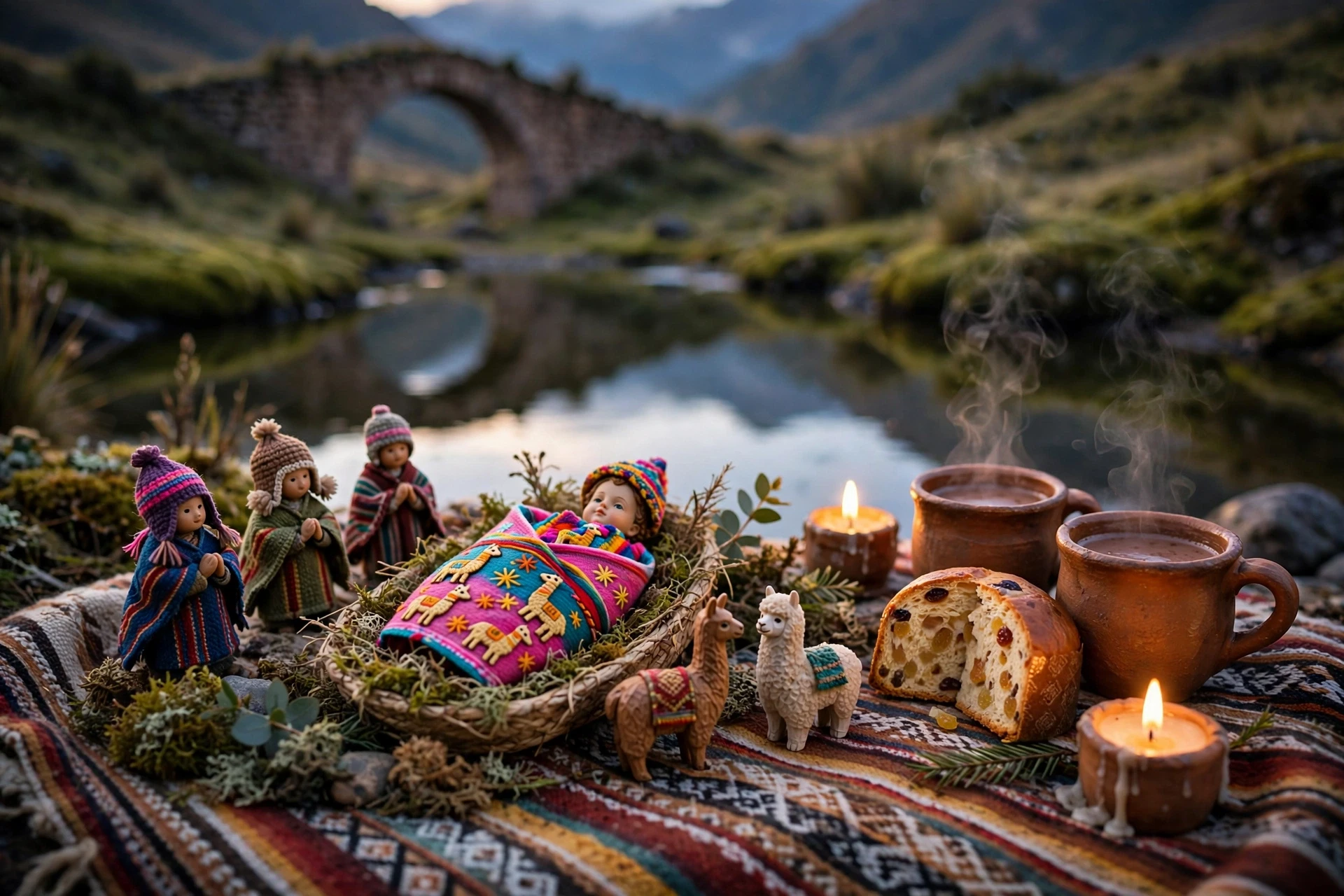
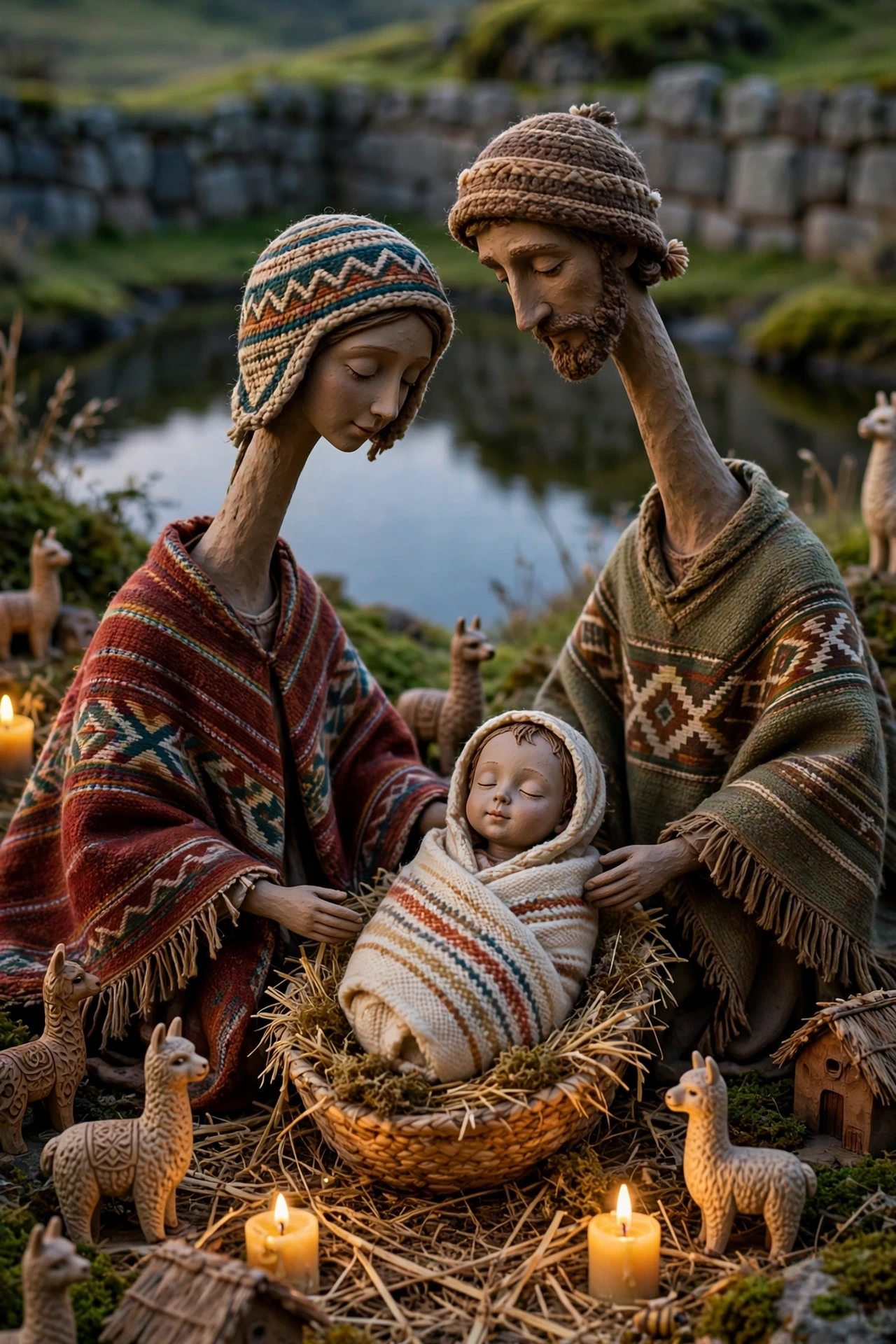
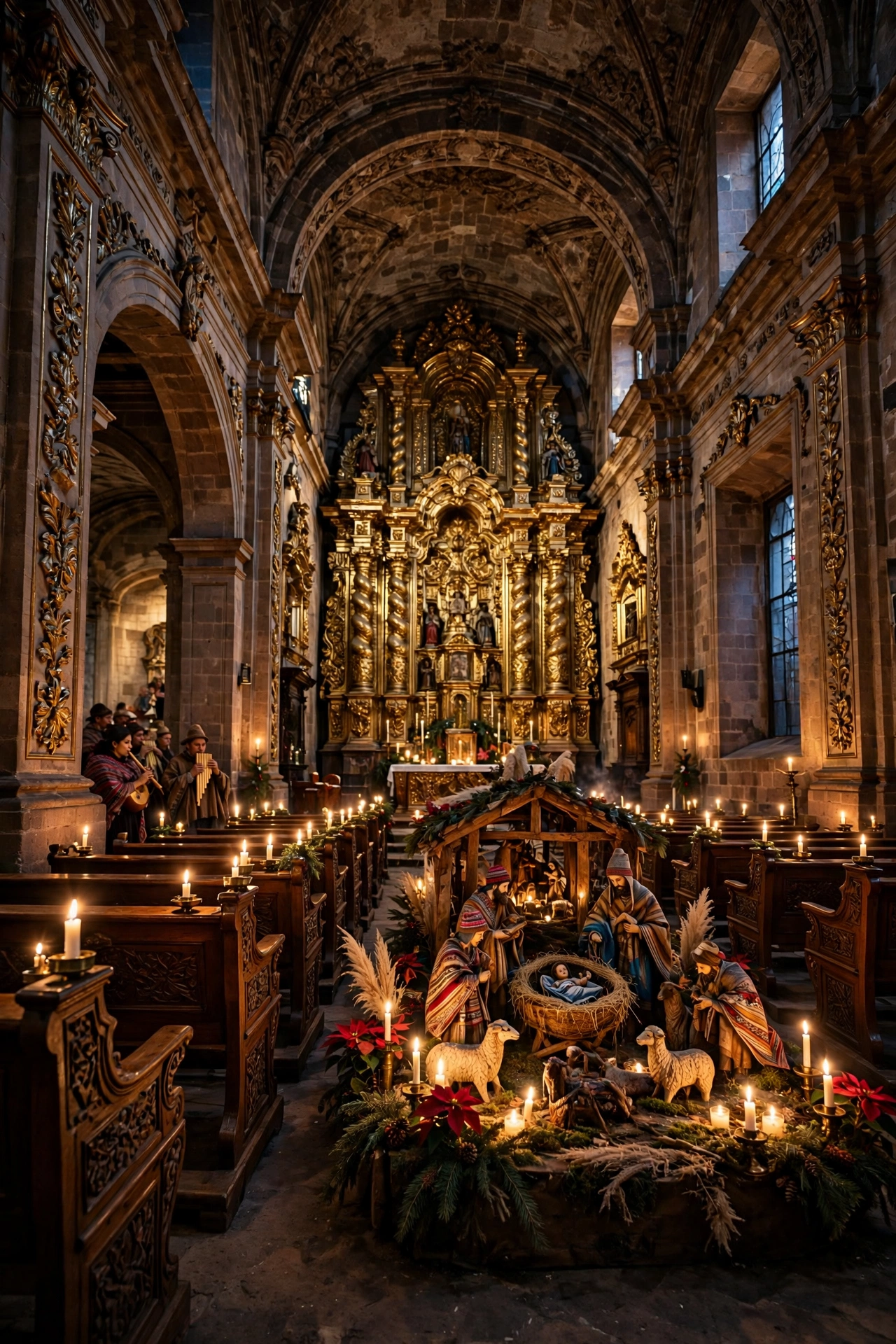
Andean nativity scenes retell the Christmas story in a mountain setting. Makers use moss, straw, and wild herbs to build hills, and a small mirror often stands in for a river or lake. Mary, Joseph, and the Niño Manuelito wear woven ponchos, hats, and sandals, and the animals include llamas, alpacas, and even condors. In Cusco’s main square, the life-sized nativity is known for its long-necked figures, a style created by sculptor Hilario Mendívil of the San Blas neighborhood, who took inspiration from llama and alpaca necks. His family continues that tradition, and more nativity scenes appear inside Inca sites like Qorikancha.
Nativity Scenes Built From Food and Regional Dress
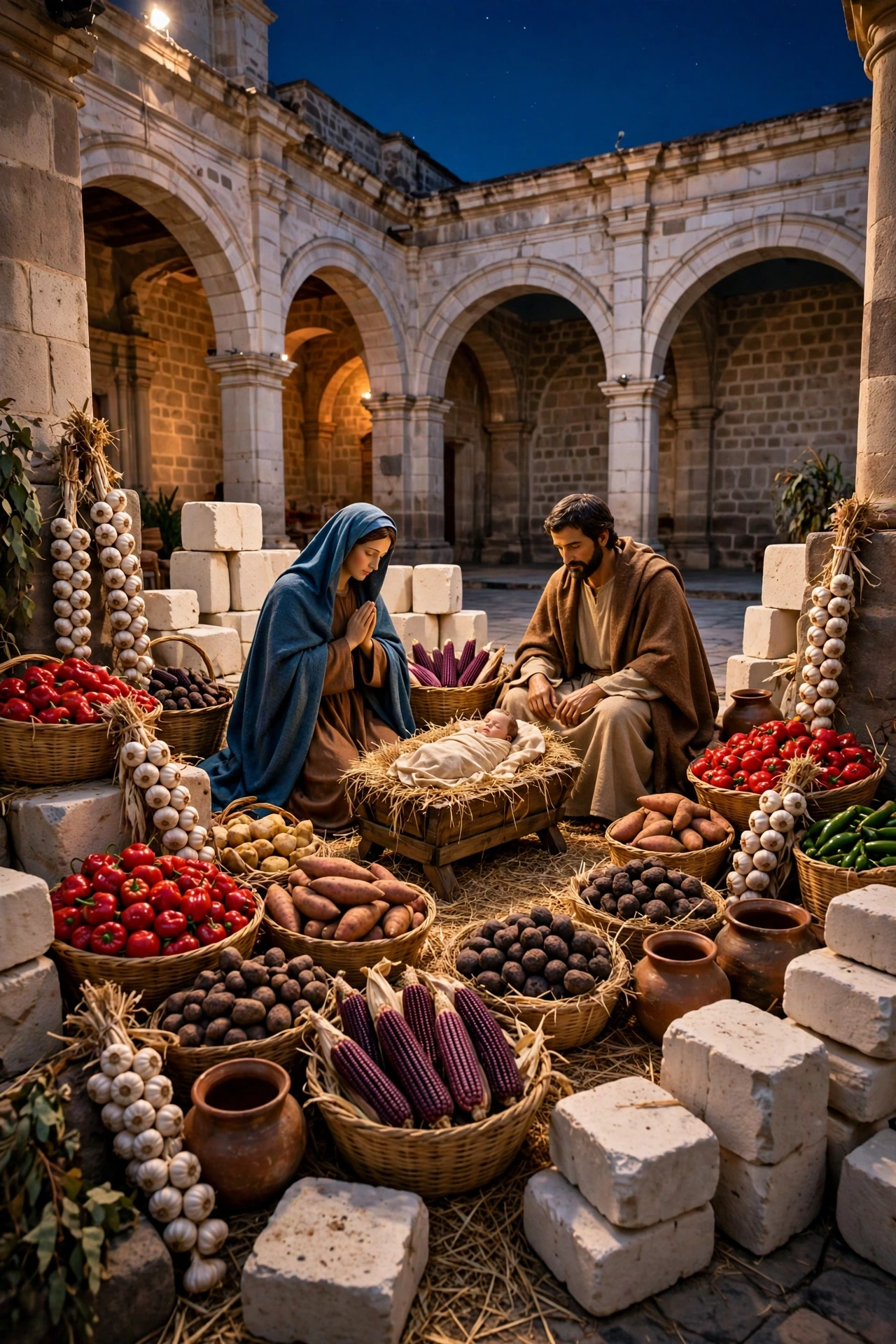
Some cities turn the nativity into a portrait of their land. In Arequipa, the cathedral courtyard has hosted a life-sized nativity surrounded by regional ingredients, like rocoto peppers, garlic, ají panca, sweet potatoes, yuca, oca, chuño, purple corn, and blocks of volcanic sillar stone. In Chiclayo, in the Lambayeque region, a live nativity has shown the Virgin Mary in the traditional dress of the Marinera Lambayecana dance. Local artisans decorate the scene with native cotton, palm straw, and reeds. Large decorated breads and sweet empanadas appear on the tables too.
The Manger Beats the Tree: Midnight on Noche Buena
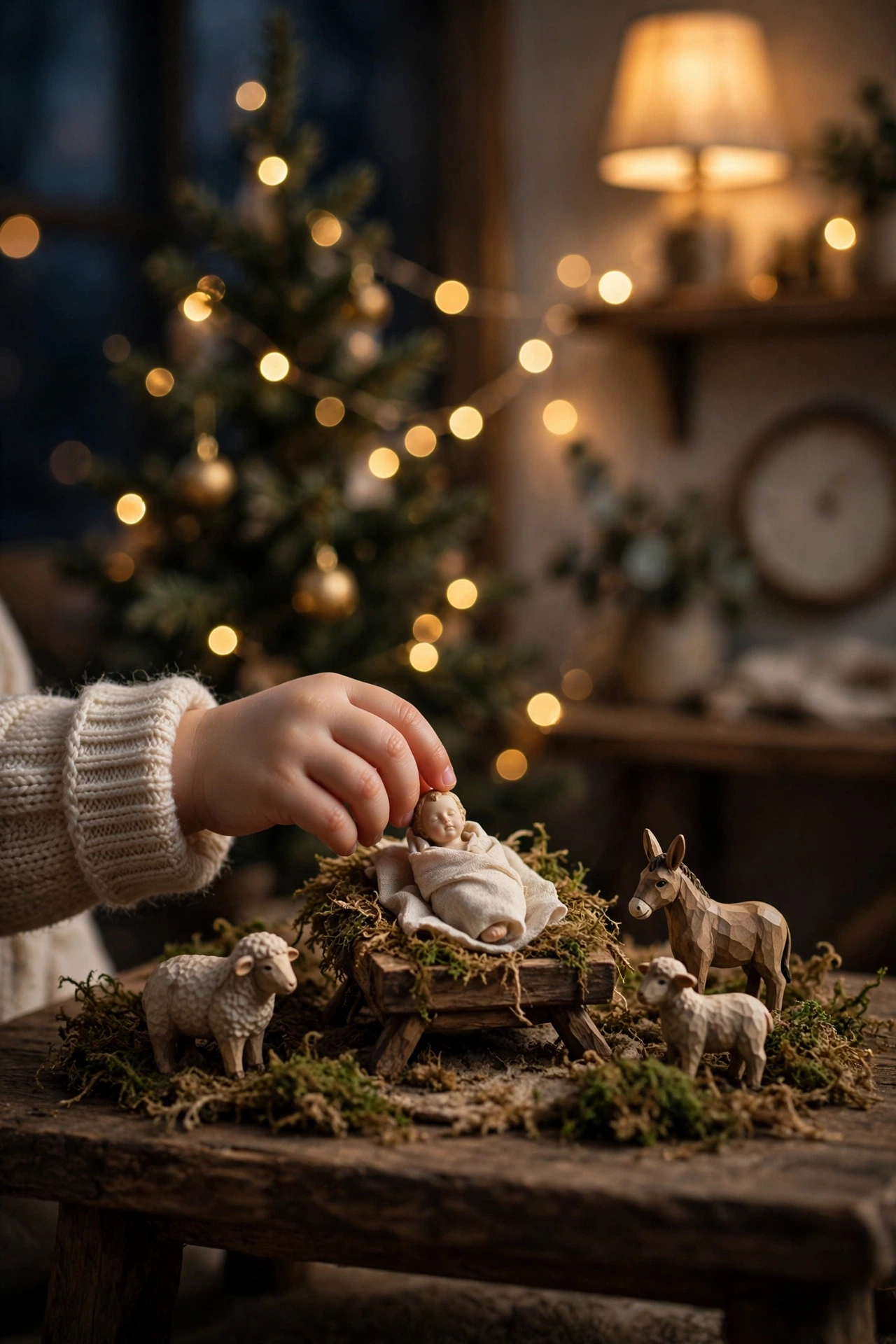
In many Peruvian homes, the nacimiento is the main Christmas decoration, and it goes up weeks in advance. On December 24, families wait for midnight. At 12 a.m., the youngest family member traditionally places the Baby Jesus in the manger, and everyone hugs and toasts. Then comes the moment kids wait for: the gifts are opened. Dinner follows, with roast turkey on many tables, though families differ on timing and menu. In the Andes, you may see roast suckling pig, pachamanca, or guinea pig instead.
Hot Chocolate and Panetón in Summer
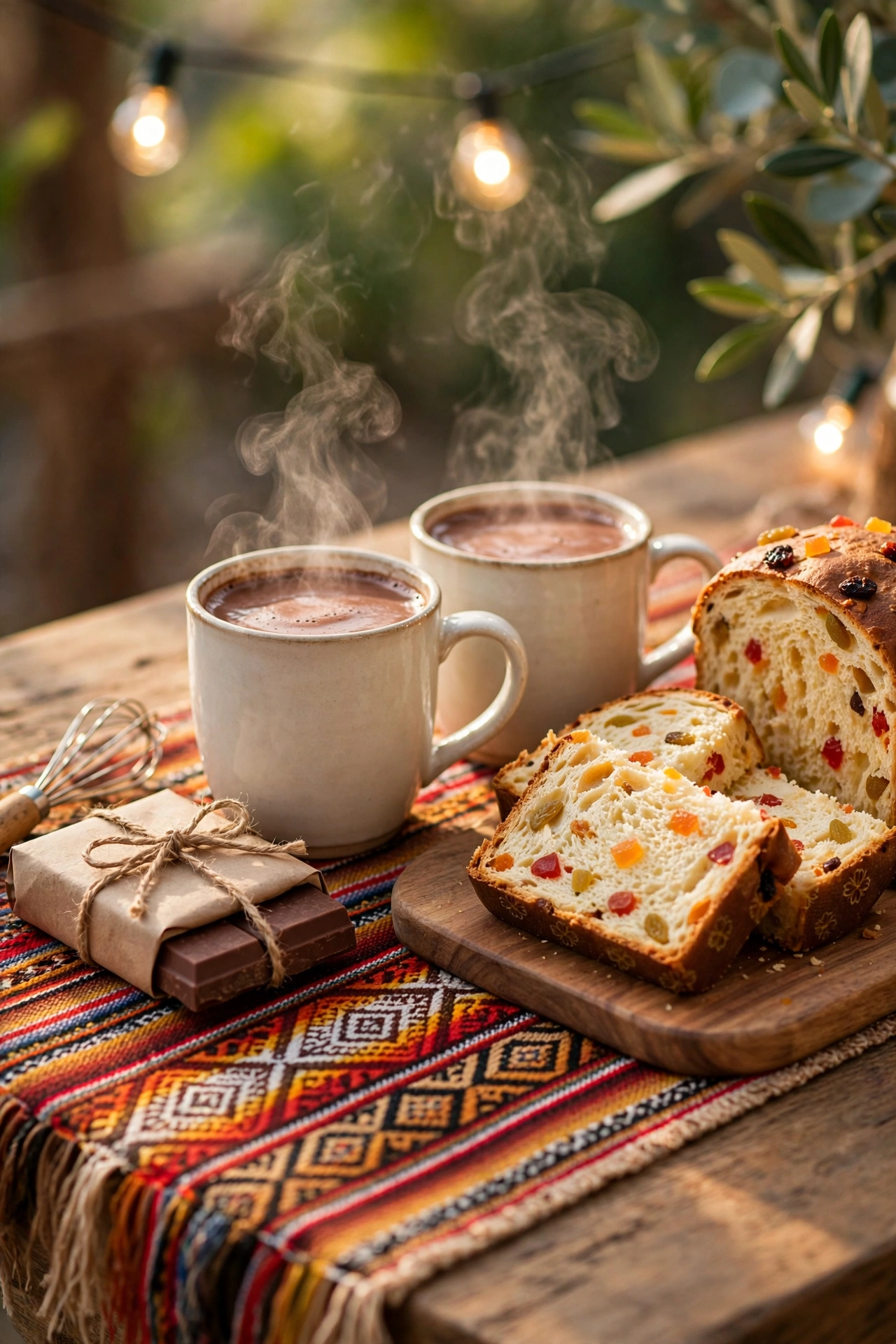
Panetón and hot chocolate are among the most important Christmas foods in Peru, even on hot coastal nights. Panetón is a tall, sweet bread with candied fruit and raisins that came to Peru from Italy. Families slice it and dip it into a steaming cup of chocolate made from drinking-chocolate tablets. The tradition also has a giving side: chocolatadas bring hot chocolate, panetón, and small gifts to children in rural communities and working-class neighborhoods. Churches, businesses, and families all take part.
Corporate Christmas Baskets
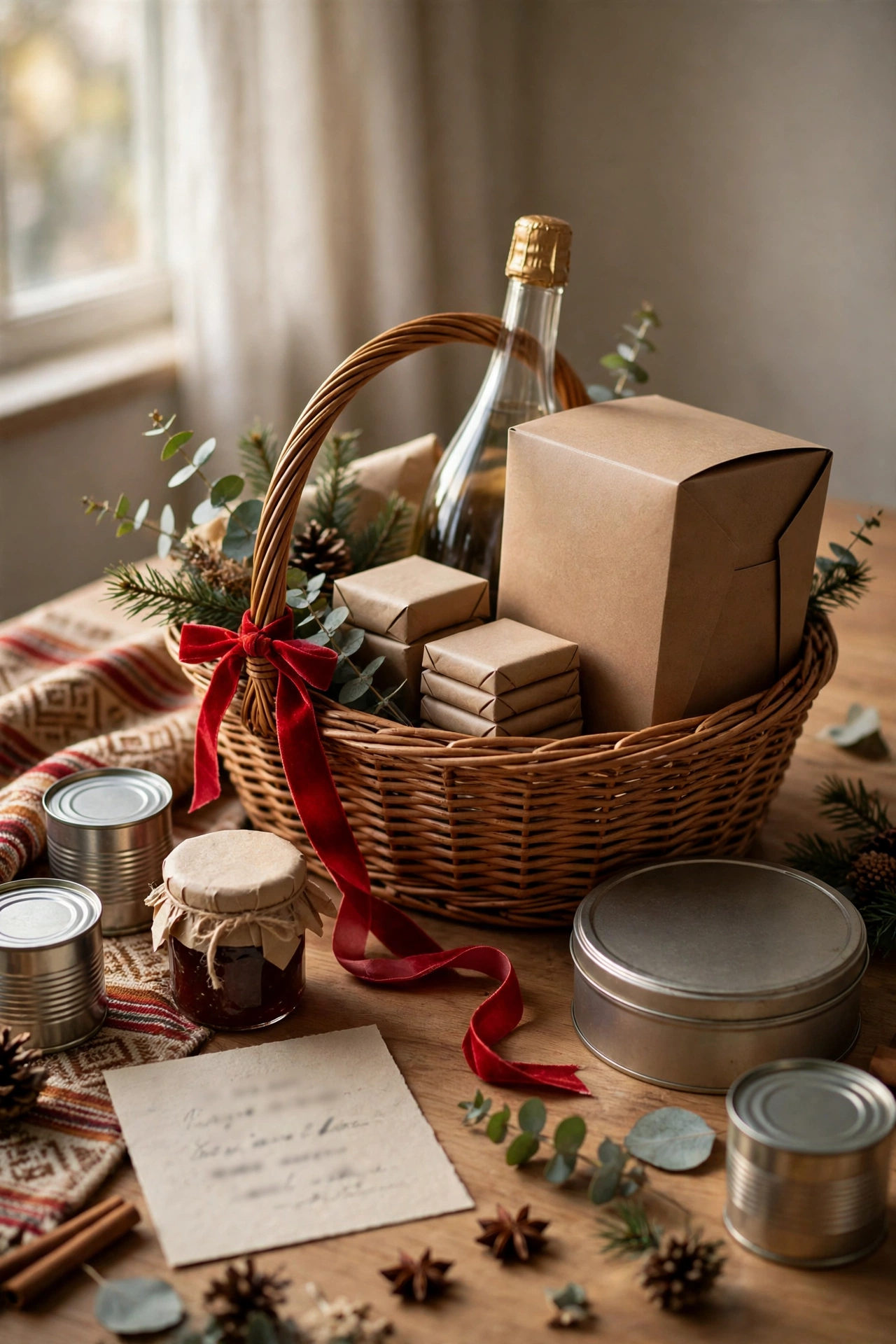
In Peru, many workplaces give employees a Christmas basket in the weeks before the holiday. It is a thank-you for the year’s effort, and it is a strong, widely shared custom. A typical basket holds a panetón, a bottle of wine or sparkling wine, drinking-chocolate tablets, cookies, canned goods, and other foods that keep well. Families often use the basket to build their Noche Buena table. For many households, it is part of how the holiday meal comes together.
The Seven Churches Tour and Carols in Quechua
In Cusco’s historic center, many families visit the nativity scenes in a loop of seven churches, such as the Cathedral, La Compañía de Jesús, San Blas, Santo Domingo, San Francisco, La Merced, and San Cristóbal. The custom grew from a Holy Week habit of visiting seven temples, and at Christmas it became a way to admire each display, give thanks, and spend time together. Choirs sing carols in Quechua with quenas and zampoñas, and Midnight Mass hymns mix Spanish and Quechua. If you go to Midnight Mass, arrive at least 30 minutes early for a spot.
Related: 23 Christmas Centerpieces for Every Style of Table For a Home That Feels Festive All Season
Bajada de Reyes: Taking Down the Nativity on January 6
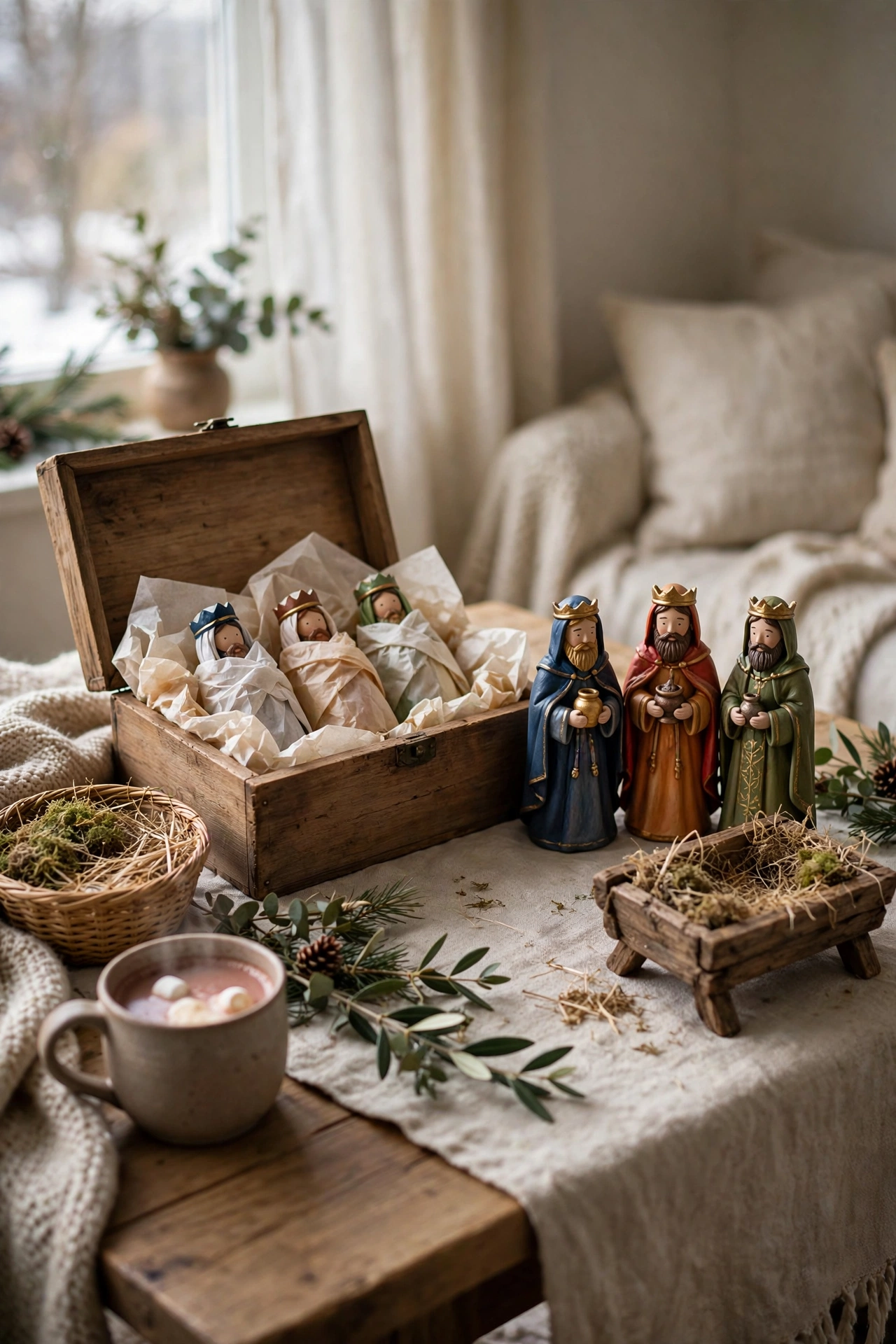
Peru’s Christmas does not end on December 25. On January 6, the Bajada de Reyes, or Three Kings’ Day, families take down their nativity scenes and remember the arrival of the Wise Men. In Chincha, the dances that began on December 24 end on this day. In Huánuco, the Negritos continue until January 19. Many families go to Mass, share food, and use the day to ask for a good new year. The Three Kings are often the last figures to reach the manger and the last to be packed away.
Peru’s Christmas Season at a Glance
Dates can shift from year to year, so check local sources before you travel.
| When | Where | What happens |
|---|---|---|
| Dec 22 to 27 | Huancavelica | Niño Lachocc festival and scissors dancers’ contest |
| Dec 22 to 29 | Acobamba | Christmas festival between two rival neighborhoods, with a dance inspired by mule drivers |
| Dec 24 | All of Peru | Noche Buena and Midnight Mass |
| Dec 24 | Cusco | Santurantikuy fair and nativity visits |
| Dec 24 to Jan 6 | Chincha, Ica | Hatajo de Negritos and Las Pallitas |
| Dec 24 to Jan 19 | Huánuco | Negritos brotherhoods dance and visit nativity scenes |
| Dec 25 | Santo Tomás, Cusco | Takanakuy |
| Dec 25 and following days | Pucará, Puno | Child Jesus procession, orchestras, and dance contests over about eight days |
| Jan 6 | All of Peru | Bajada de Reyes |
Ways to Bring Peruvian Christmas Home (Styling Tips)
- Build the nacimiento first. Set it up weeks early, before the tree, and make it the center of your holiday decor.
- Use natural materials. Moss, dried grass, small stones, and a small mirror for a lake give an Andean feel.
- Add local animals. Llamas and alpacas fit the scene better than sheep and oxen.
- Dress the table. A woven textile runner and warm candle-style light set the mood.
- Serve hot chocolate and panetón. Offer them after midnight or on Christmas Eve.
- Let the youngest place the Baby Jesus. Make it a family moment at midnight.
- Add a retablo box. Ayacucho is known for these small painted dioramas, and they make a great shelf piece.
- Choose handmade. Buy from artisans or fair-trade sellers, and ask about the maker.
- Keep fire safety in mind. Use LED candles near moss and dry grass.
How to Plan a Peruvian Christmas Trip or Home Celebration
Pick your region. Cusco for nativities and the Santurantikuy fair, Chincha for Afro-Peruvian dances, Huánuco for the longest season, or the Amazon for the Pastoreadas. Check the dates. Festivals can shift, so confirm with local tourism offices or municipal pages. Book early. In Cusco, hotels fill up fast between about December 20 and 31. Pack for the weather. In Cusco, December is rainy, with daytime highs around 16 to 20 °C and cold nights around 5 to 7 °C. Bring layers and a rain jacket. Plan for altitude. Many highland towns sit above 3,000 meters. Give yourself a day or two to adjust, and talk to a doctor if you have health concerns. For a home version: build a nacimiento, plan hot chocolate and panetón, and let a child place the Baby Jesus at midnight.
Common Mistakes Visitors Make
- Expecting December 25 to be the main day. Noche Buena on December 24 is the heart of the holiday.
- Booking at the last minute. Hotels and flights fill up fast around Christmas.
- Treating rituals like photo ops. Takanakuy, church services, and dances are community events. Ask before photographing people.
- Assuming the whole country celebrates the same way. Customs differ widely between the coast, Andes, and Amazon.
- Skipping a local guide. For events like Takanakuy, a guide helps you understand what you see and stay safe.
- Packing only summer clothes. Highland nights can be cold, and December is rainy there.
- Ignoring altitude. Rest, drink water, and move slowly on arrival.
- Buying mass-made souvenirs. Look for artisans and ask about the maker.
Small-Space Alternatives
- Build a mini nacimiento on a tray, shelf, or windowsill with moss and two or three small figures.
- Choose a small retablo box that closes up when you are not using it.
- Set up a hot chocolate station on a tray with mugs, panetón, and a small textile runner.
- Use Peruvian nativity ornaments on a small tree or garland.
- Replace real candles with LED lights.
- Pack your nacimiento flat in a box after January 6.
Budget-Friendly Alternatives
These price tiers are rough guides. Prices change by store and region.
Under about $30
- Moss, dried grass, small stones, and a small mirror
- A box of panetón and drinking chocolate
- A few small animal figures
- A handwoven or printed textile runner
About $30 to $100
- A small handmade nativity or retablo box from an artisan or fair-trade seller
- Ceramic Peruvian nativity ornaments
- A set of mugs and a tray for a hot chocolate station
- A woven wool textile
About $100 and up
- A larger carved or ceramic nativity set
- A large retablo with several scenes
- A handmade textile for the table
- A trip to a regional fair, if you can travel
Spend on handmade pieces that last for years. Save on moss, grass, and treats, which you can refresh each year.
Pro Tips for Respectful Travelers and Hosts
- Ask first. Always ask before photographing dancers, families, or children.
- Buy directly. Buy from artisans at fairs, and pay a fair price without hard bargaining.
- Learn the names. Use the proper names for dances and festivals, and learn what they mean.
- Go quietly to church. If you attend Midnight Mass, dress simply, arrive early, and follow the local lead.
- Share a dish. If you are invited to a family dinner, bring something to share.
- Check local news. Weather, transport, and events can change.
- Support local guides. They know the context, the etiquette, and the safest places to stand.
FAQs
The main celebration is Noche Buena on the night of December 24. Families wait for midnight, then hug, toast, open gifts, and share a meal. Many regions also celebrate through January 6.
Panetón with hot chocolate is the signature pairing. Many families serve roast turkey, and others serve roast pork, tamales, or regional dishes. In some Andean communities, guinea pig and pachamanca appear.
Yes, many do. But the nacimiento, or nativity scene, is often the most important decoration and is set up first.
Takanakuy is a Christmas Day tradition in Santo Tomás, in Cusco’s Chumbivilcas province. Participants settle disputes through one-on-one ritual fights that begin and end with a hug, so the community can start the new year without grudges.
Santurantikuy is a Christmas Eve art fair in Cusco’s main square. The name means the selling of saints, and artisans sell nativity figures, retablos, ceramics, and carvings.
They are Afro-Peruvian Christmas dances from Chincha. Men dance the Hatajo de Negritos to violin and bells, and women dance Las Pallitas to guitar. UNESCO added both to its heritage list in 2019.
Yes, for many people. Most Peruvians are Catholic, and Midnight Mass, nativity scenes, and dances for the Baby Jesus are common. Many traditions also blend Spanish and Indigenous or Afro-Peruvian customs.
A chocolatada is a gathering where hot chocolate and panetón are shared. Many are held for children in rural or working-class communities, and some are organized by churches, businesses, or neighbors.
Yes. Peru is in the Southern Hemisphere, so Christmas falls in summer on the coast. In the Andes it is the rainy season, with chilly nights.
Cusco is a good start for nativity scenes and the Santurantikuy fair. Chincha is best for Afro-Peruvian dances, Huánuco for the long Negritos season, and Santo Tomás for Takanakuy. Check dates and local advice before you go.
Conclusion
Christmas in Peru is not one tradition. It is dozens of them, shaped by mountains, coast, and rainforest, by Spanish faith, Andean belief, and Afro-Peruvian history. A moss manger, a masked dancer, a cup of hot chocolate in summer heat, and a hug after a ritual fight all come from the same urge: to mark the end of a year and welcome what comes next.
Pick one tradition to learn more about this season. Build a small nacimiento. Make a pot of hot chocolate. Or plan a trip with dates in mind. Whichever you choose, treat each custom as a living tradition that belongs to the people who keep it.