23 Japandi Bedroom Ideas That Are Calm, Clean & Incredibly Beautiful
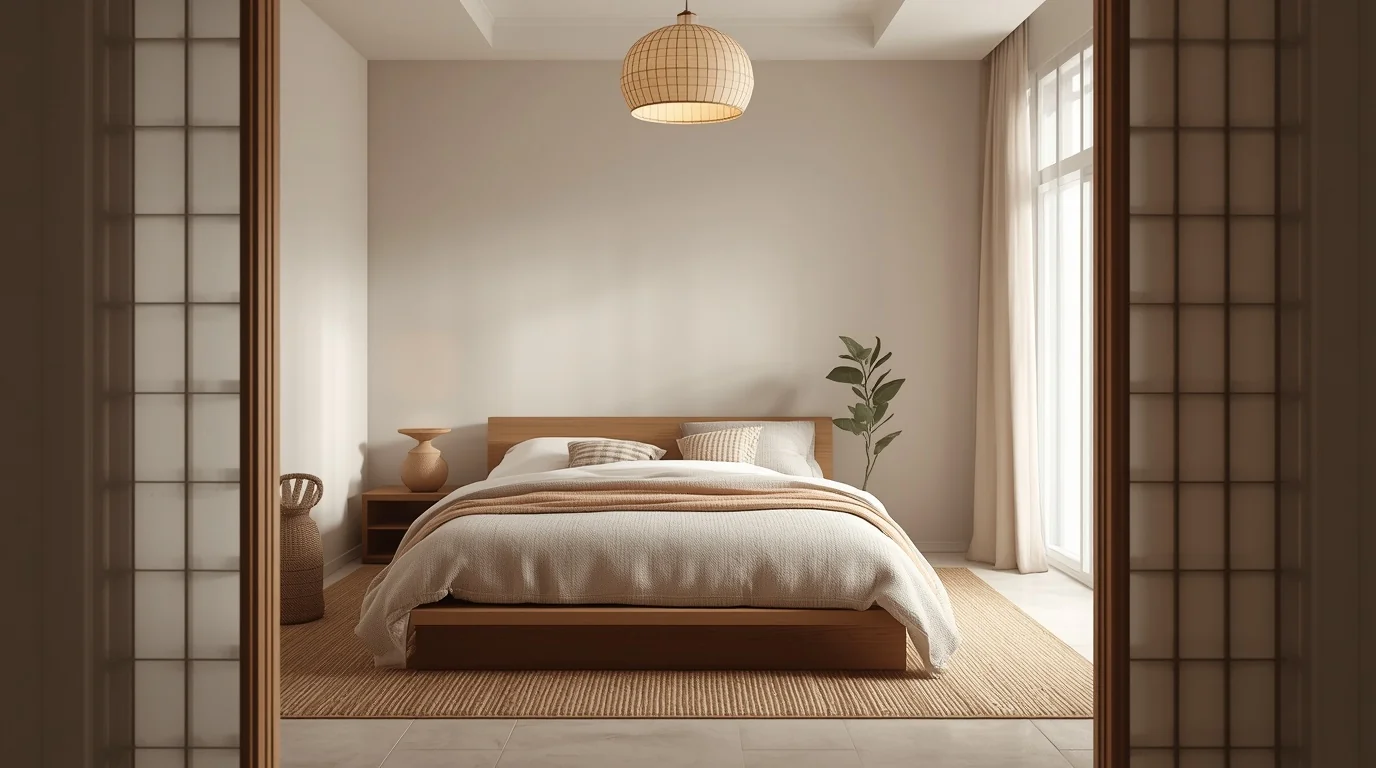
A Japandi bedroom isn’t the room with the least stuff in it. It’s the room where every object left in view earned its spot. Picture a low oak bed frame catching the last bit of evening light, a single ceramic lamp glowing warm instead of white, a folded wool throw at the foot of the bed that’s there because it feels good, not because it matches. That’s the quiet trick behind this style: it looks simple, but it’s built on very specific choices about color temperature, texture, and empty space. Here are 23 real ways to bring that feeling into your own bedroom, from the low-effort styling swaps to the full room overhaul.
Table of Contents
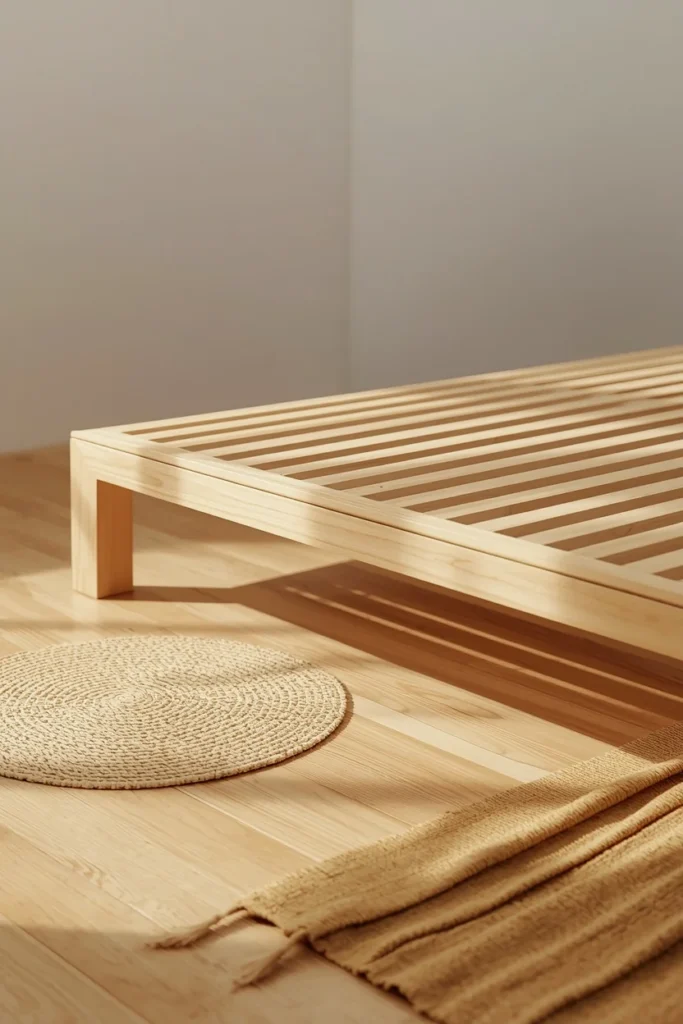
1. Low-Profile Platform Bed
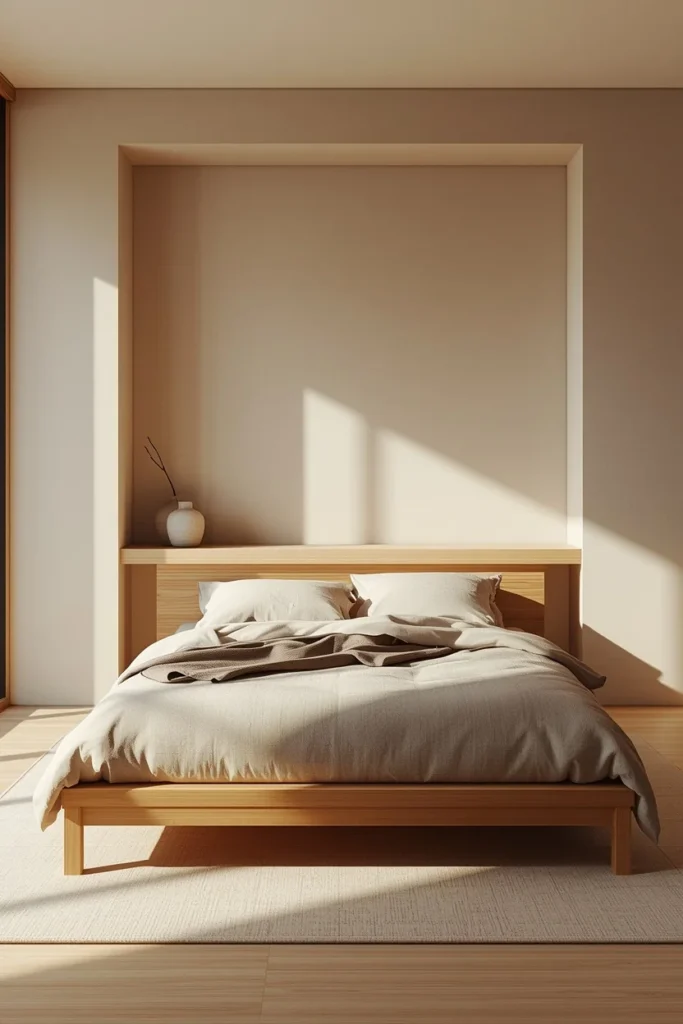
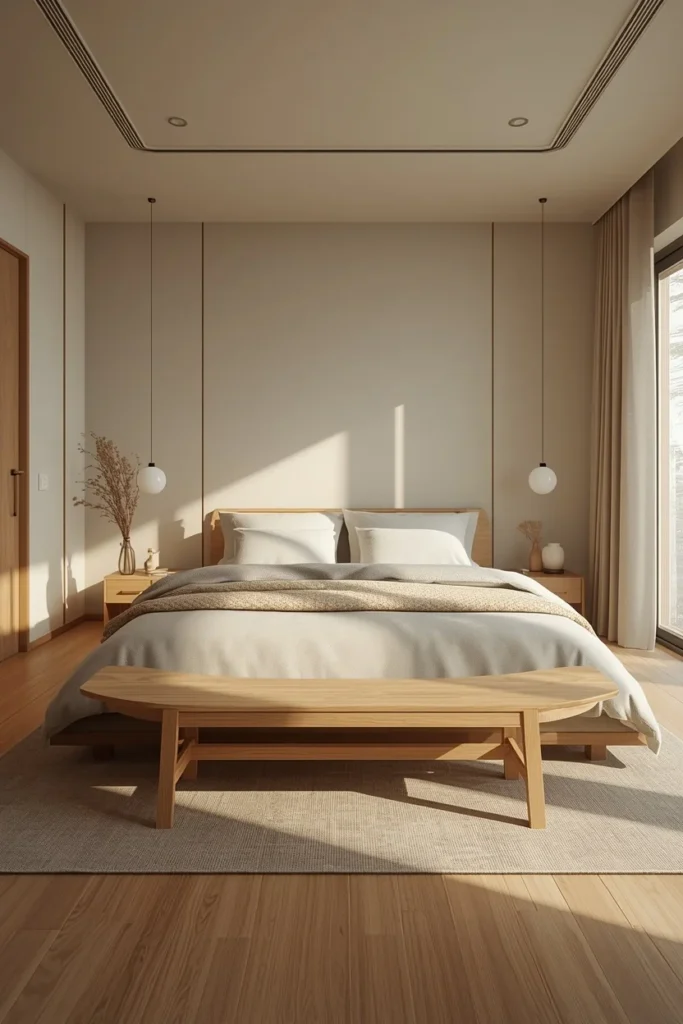
Moving away from a tall, bulky bed frame in favor of a low platform bed is one of the clearest signals of Japandi style, since it echoes the traditional Japanese practice of sleeping closer to the ground. A solid oak or walnut platform with clean, unadorned lines keeps the frame itself from becoming a decorative statement, letting the bedding and lighting carry the room’s warmth instead. Lower furniture also opens up the vertical space in a room, which makes even a small bedroom feel airier since the eye isn’t stopped by a tall headboard. This idea pairs naturally with a slightly wider-than-standard frame, since Japandi rooms tend to favor a few generously scaled pieces over many small ones. A low bed also changes how light moves through the room, since more of the wall above stays open and reflective instead of blocked by a tall headboard silhouette.
2. Dark Japandi Charcoal & Walnut Palette
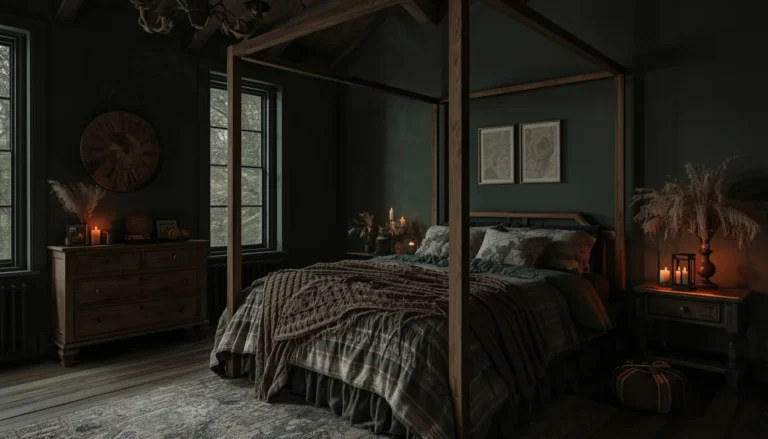
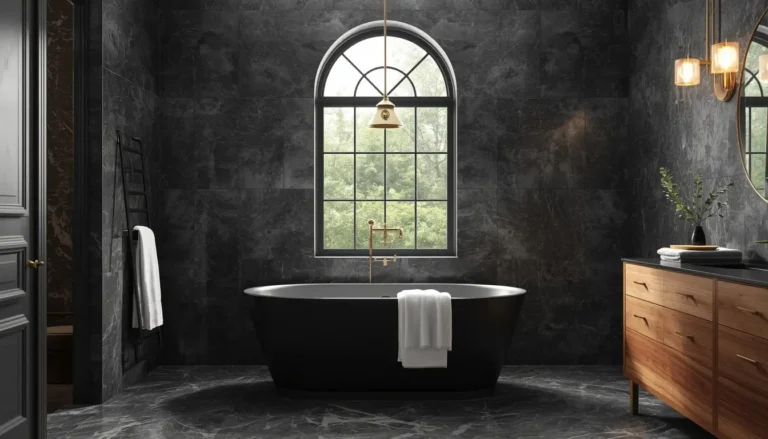
Dark Japandi swaps the pale, airy palette most people associate with the style for charcoal, black, and rich walnut tones, creating a bedroom that feels intimate and sophisticated rather than simply bright and empty. This shift works particularly well in bedrooms, since a deeper backdrop naturally supports the calmer, more restful mood the room is meant to hold at night. Walnut furniture against charcoal walls reads as grounded and deliberate, especially when paired with warm brass or bronze hardware that keeps the palette from feeling cold. A single deep rust or terracotta textile, like a folded throw or a ceramic lamp base, acts as a warming agent against all that charcoal and walnut. This direction suits anyone who finds an all-white minimalist bedroom a little sterile and wants the same restraint delivered in a moodier, richer register instead.
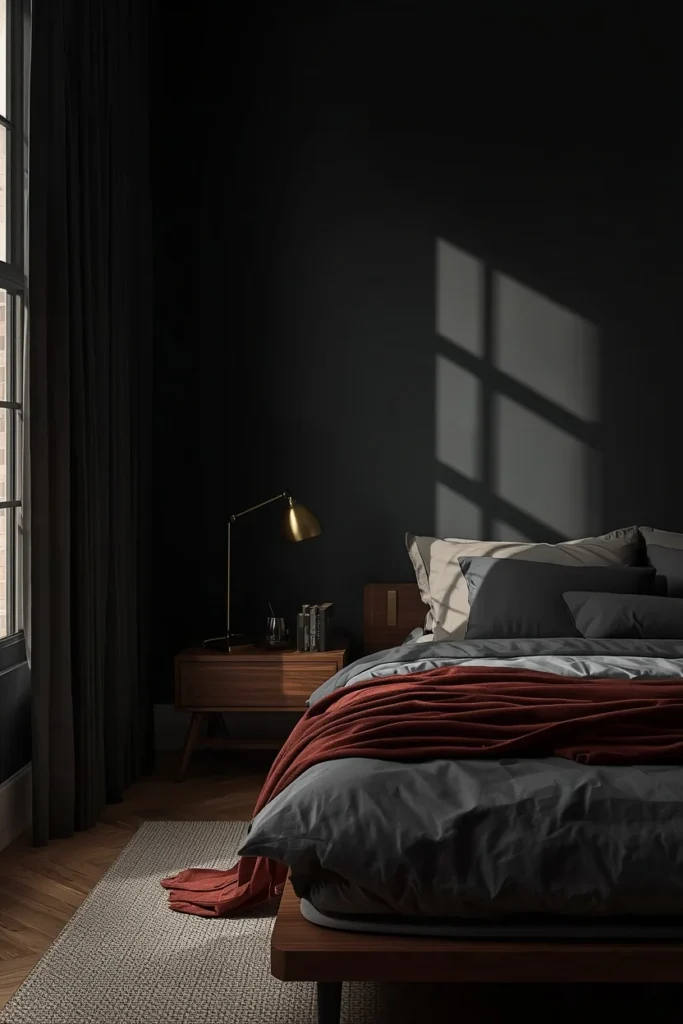
3. Color-Drenched Cocoon Walls
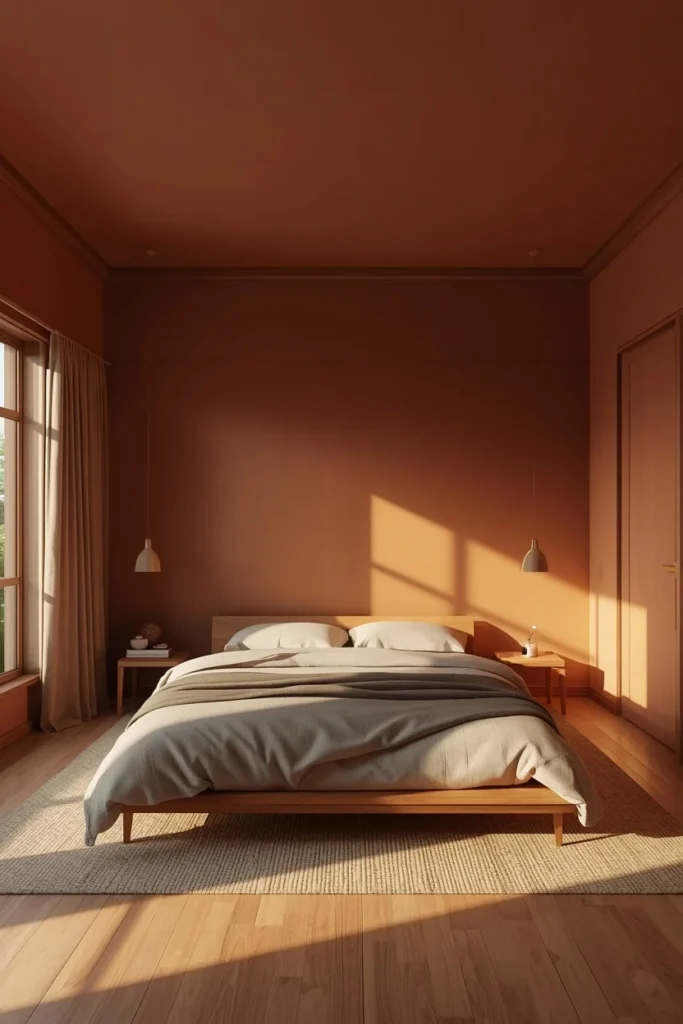
Color drenching, where the walls, trim, ceiling, and even door frames are painted the same warm neutral or muted tone, removes the visual lines that normally break a room into separate segments, creating a seamless, cocoon-like envelope around the bed. This technique makes ceilings feel higher and rooms feel more cohesive, since there’s no contrasting white trim cutting the walls off partway up. A soft greige, warm taupe, or muted clay color works especially well for this treatment, since these tones reflect warm-spectrum light rather than the cooler, more alert-inducing cues of stark white. This idea is one of the more dramatic-feeling entries on this list despite using only paint, since the effect of a fully enveloped room is immediately noticeable the moment you walk in. It pairs beautifully with natural wood furniture, since the wood grain provides the only textural contrast against an otherwise monochrome backdrop.
4. Shou Sugi Ban Burnt Wood Accent Wall
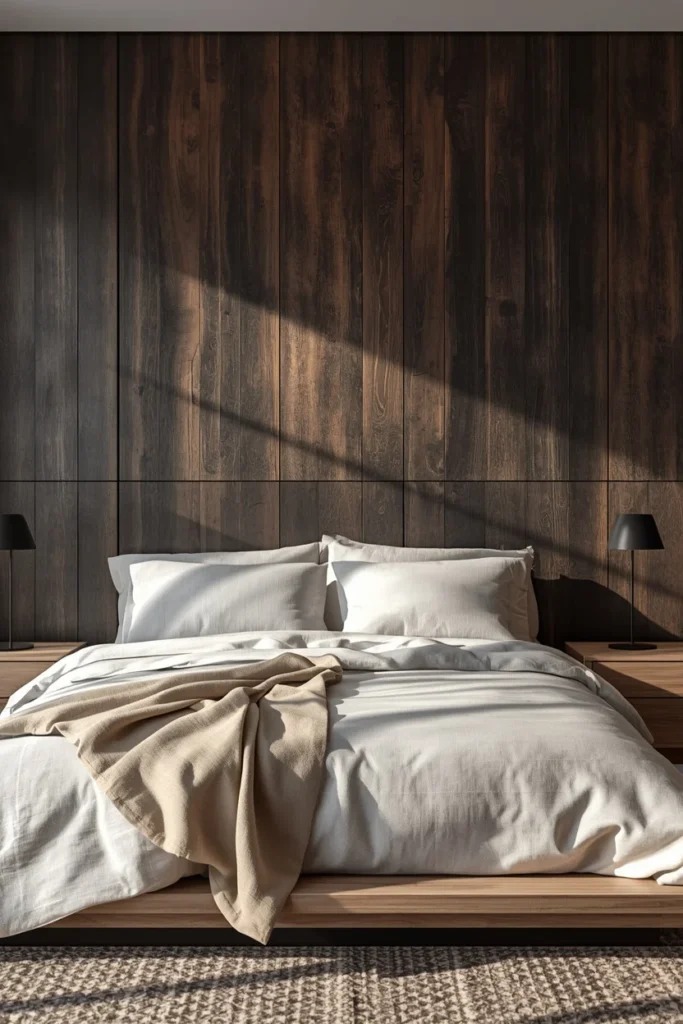
Shou sugi ban, the traditional Japanese technique of charring wood to create a deep black, textured surface, brings genuine wabi-sabi character to a bedroom without relying on paint or wallpaper. Used as a single headboard-height accent wall, the charred wood introduces natural variation and grain that photographs differently depending on the light hitting it throughout the day. This idea works especially well paired with pale linen bedding and lighter oak furniture elsewhere in the room, since the contrast between the darkest and lightest natural materials keeps the space from feeling one-note. Because the technique naturally seals and protects the wood, it also holds up well over time, aging in a way that Japandi philosophy treats as character rather than wear. This is one of the more advanced, statement-making ideas on this list, best suited to someone ready to treat one wall as a genuine textural feature.
5. Layered Natural Textiles on the Bed
Because color and pattern stay restrained in Japandi bedrooms, texture has to carry the full weight of visual and tactile warmth, and the bed is the easiest place to build that layering. A linen duvet cover in a warm neutral, cotton pillowcases a shade lighter or darker than the duvet, and a wool throw folded at the foot of the bed brings together three distinct textures within a single tonal family. This layering approach avoids the “dead room” effect designers warn about, where a bedroom is technically minimalist but reads as cold and uninviting because every surface feels the same. Choosing materials that look slightly different up close than from a distance, like a nubby linen weave or a slightly irregular handmade wool throw, gives the eye something quiet to discover without introducing visual clutter. This idea costs relatively little compared to furniture changes, making it one of the most accessible entry points into the whole aesthetic.

6. Noren Fabric Divider as a Soft Headboard
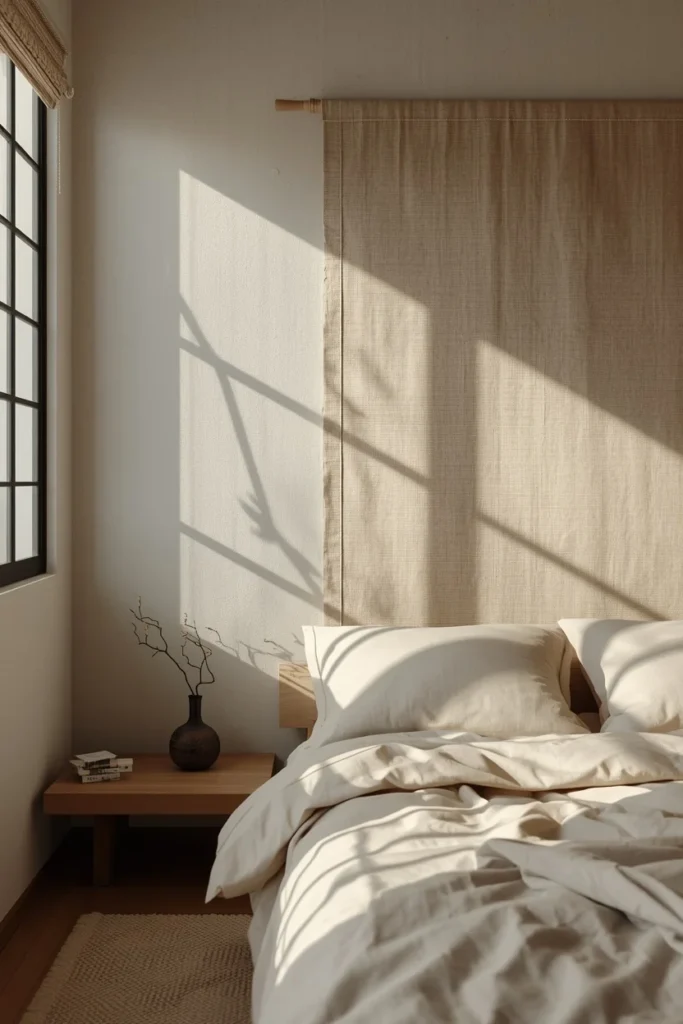
Noren, the traditional Japanese fabric panels typically hung in doorways, have found a second life in Japandi bedrooms as a soft, textile alternative to a hard headboard or wall hanging. Mounted behind the bed, a noren panel introduces a layer of textile art that softens the hard edges of a wall without the visual weight of a large framed piece. Because noren are typically made from natural linen or cotton in muted, solid tones, they add quiet texture rather than competing pattern, keeping the wall behind the bed calm rather than busy. This idea also offers practical flexibility, since a noren panel can be swapped seasonally or refreshed far more easily and affordably than repainting a wall or replacing a headboard. It’s a distinctly Japandi detail that immediately signals intentional design to anyone familiar with the aesthetic.
7. Warm Wood Slat Feature Wall
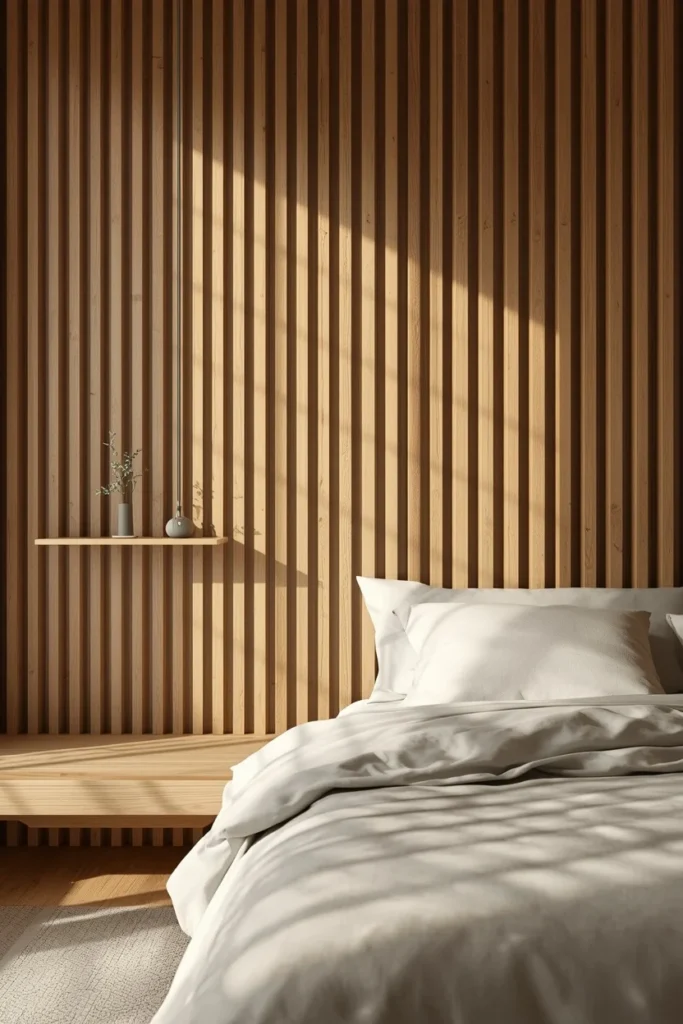
A wall built from vertical wood slats, spaced evenly with narrow gaps between each piece, brings rhythm and dimension to the space behind or beside the bed without introducing color or pattern. This idea works particularly well as a headboard wall, since the slats can be sized to align with the width of the bed frame, creating a built-in, tailored look rather than an afterthought. Warm oak or cedar slats catch directional light differently throughout the day, creating subtle shadow lines that shift the wall’s appearance from morning to evening. Structured wall panels like this also give a room polish and architectural interest, balancing out the softer, more organic elements typically found elsewhere in a Japandi bedroom, like plants or a woven rug. This is a strong choice for anyone who wants a genuine architectural feature without introducing anything as bold as full color or a busy pattern.
8. Styled ‘Ma’ Nightstand Vignette
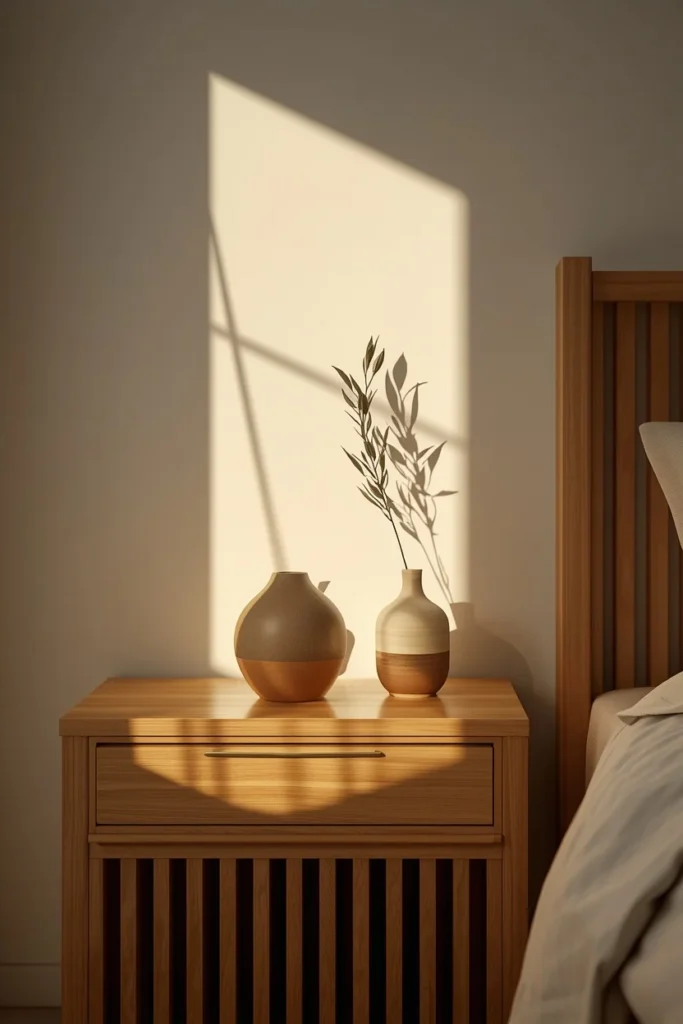
The Japanese concept of ma, or meaningful empty space, is one of the two core principles that separate Japandi bedrooms from other calm, minimalist trends, and the nightstand is the easiest place to practice it deliberately. Rather than filling every inch of surface space, a well-styled Japandi nightstand holds only two or three objects: perhaps a small ceramic lamp, a single stem in a bud vase, and nothing else. This restraint isn’t about having run out of decorating ideas, it’s treating the empty surface area itself as part of the composition, the same way negative space works in a piece of art. A slatted or handleless nightstand in a light wood reinforces this quiet, uncluttered feeling, since even the furniture itself avoids visual heaviness. This idea costs nothing to implement and is often the single fastest way to make an existing bedroom feel more Japandi without buying anything new.
9. One Piece of Handmade Ink Art
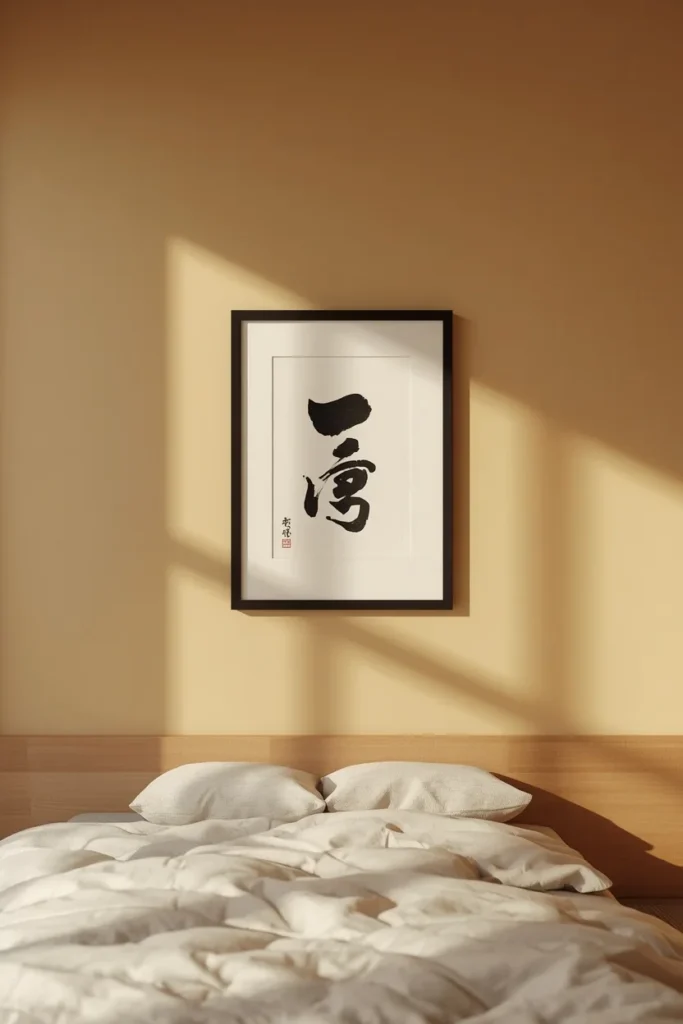
A single framed ink brushstroke or sumi-e style print does more for a Japandi bedroom wall than several generic prints ever could, since the slight irregularity of a hand-drawn line carries the wabi-sabi principle of imperfection directly onto the wall. Because the rest of the room is deliberately restrained, this one piece of art becomes the most personal object in the space, which is exactly what makes it the detail the eye keeps returning to. A simple, thin wood or black metal frame keeps the focus on the brushwork itself rather than an ornate framing choice. Hanging the piece slightly off-center or at an intentionally asymmetrical height, rather than perfectly centered above the bed, echoes the organic, imperfect quality the artwork itself represents. This idea is a strong, low-cost way to add a genuine focal point to an otherwise unadorned wall.
10. Paper Lantern or Rattan Pendant Lighting
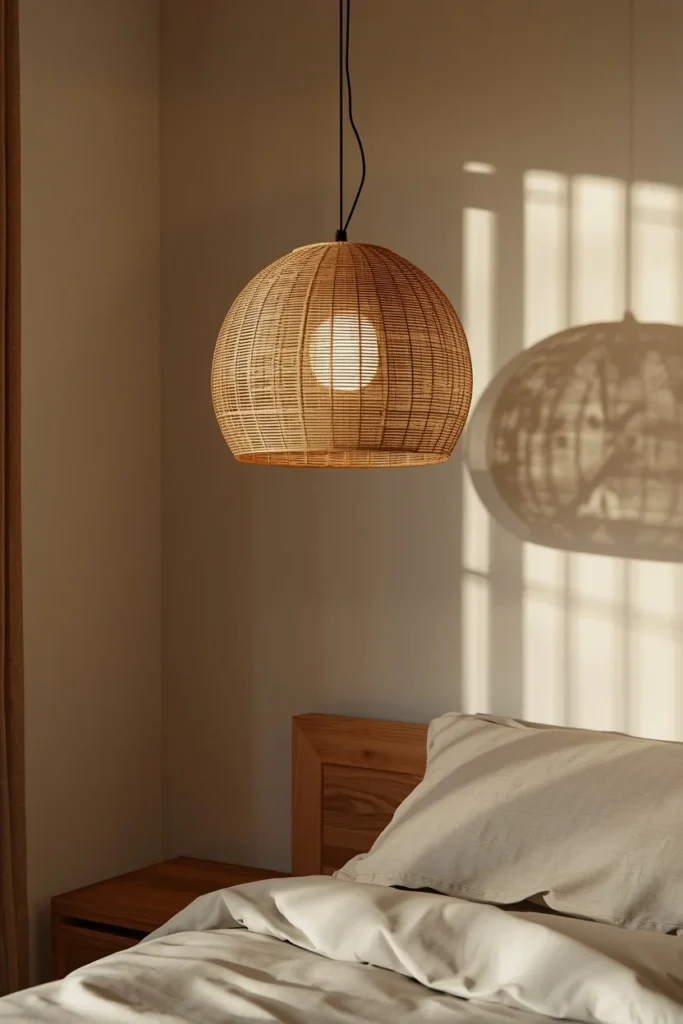
A bamboo or rice-paper pendant shade diffuses light into something soft and warm rather than harsh and direct, functioning as a modern nod to the traditional Japanese lantern. Hung at a lower height than a typical overhead fixture, this kind of pendant casts a gentle, glowing pool of light that suits a bedroom’s evening use far better than a bright, uniform ceiling fixture would. The natural material of the shade itself, whether rattan, bamboo, or washi paper, adds textural interest even when the light is switched off, so the fixture reads as intentional decor during the day too. Pairing this pendant with a warm 2700K bulb reinforces the calming effect, since the combination of diffused light and warm color temperature keeps the whole room feeling like it’s winding down rather than staying alert. This idea works as a statement centerpiece over the bed or as a softer reading light beside it.
11. Sculptural Textured Plaster Headboard Wall
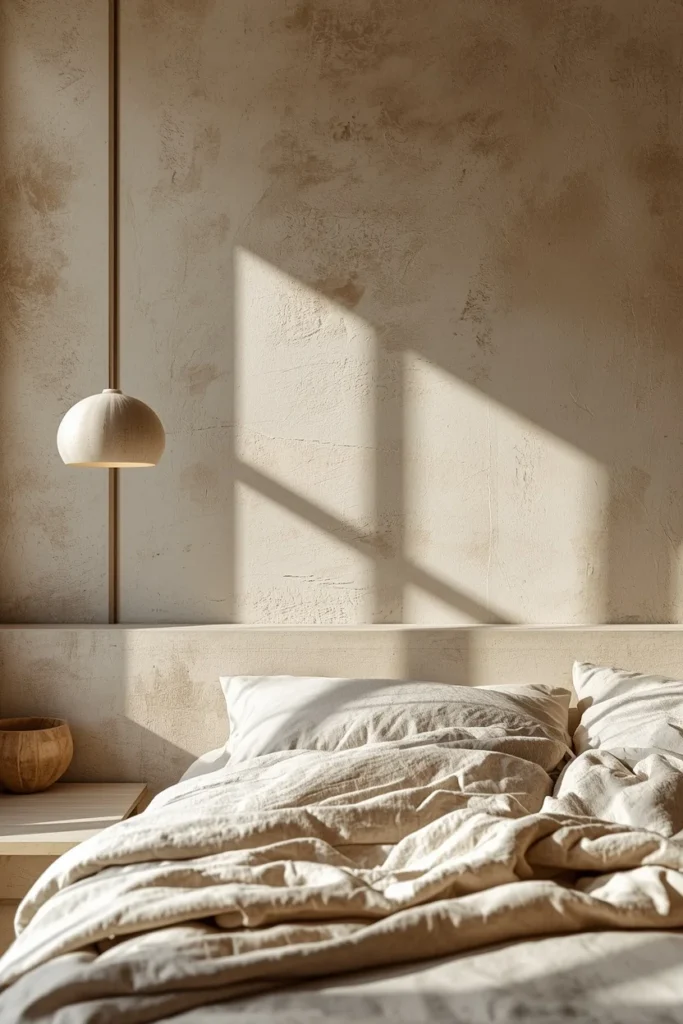
A raw lime-washed or plaster-textured wall behind the bed becomes a quiet piece of art in its own right, bringing movement and depth to the room while staying entirely within the soft, neutral Japandi palette. Unlike a printed or painted focal wall, plaster’s texture shifts depending on the angle of light in the room, so the wall genuinely looks different in the morning than it does at night. This treatment pairs beautifully with a floating pendant light positioned nearby, since the fixture’s glow rakes across the plaster’s subtle variation and deepens the shadow play. Because the color stays neutral, this idea doesn’t compete with anything else in the room, making it a safe way to add texture-driven drama without introducing a bold color choice. It’s a favorite among designers specifically because it photographs as “a quiet piece of art” without requiring any actual artwork to be hung.
12. Curved, Rounded Furniture Silhouettes
Swapping one angular piece of furniture for a curved one, like a kidney-shaped bench or a rounded bedside table, is one of the highest-impact single changes for updating a Japandi bedroom, since version of the style is softening away from strict, boxy minimalism. A gently curved silhouette feels safer and more fluid in a small room, echoing the organic forms increasingly favored across the whole aesthetic. This doesn’t mean introducing dramatic, sculptural curves throughout the room, since Japandi still favors restraint over statement shapes, just one rounded edge or soft oval mixed in among otherwise straight-lined pieces. A round mirror or an oval accent table works just as well as a curved bench for achieving this same softening effect. This is a low-cost, high-impact way to modernize an older, more rigidly minimalist Japandi bedroom without replacing the whole room.
13. Low Bench at the Foot of the Bed
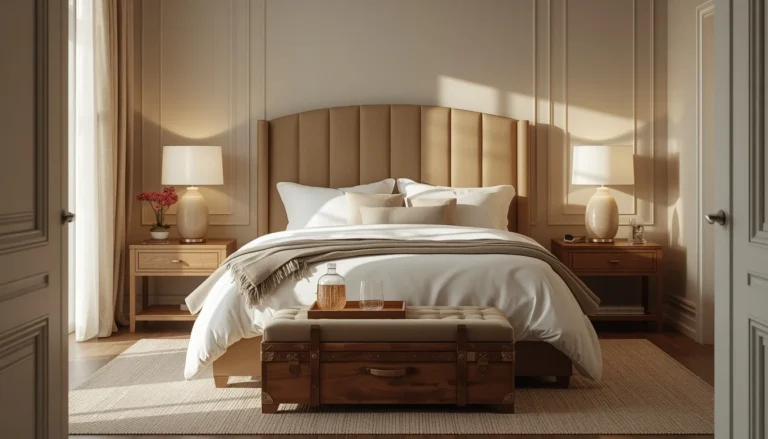
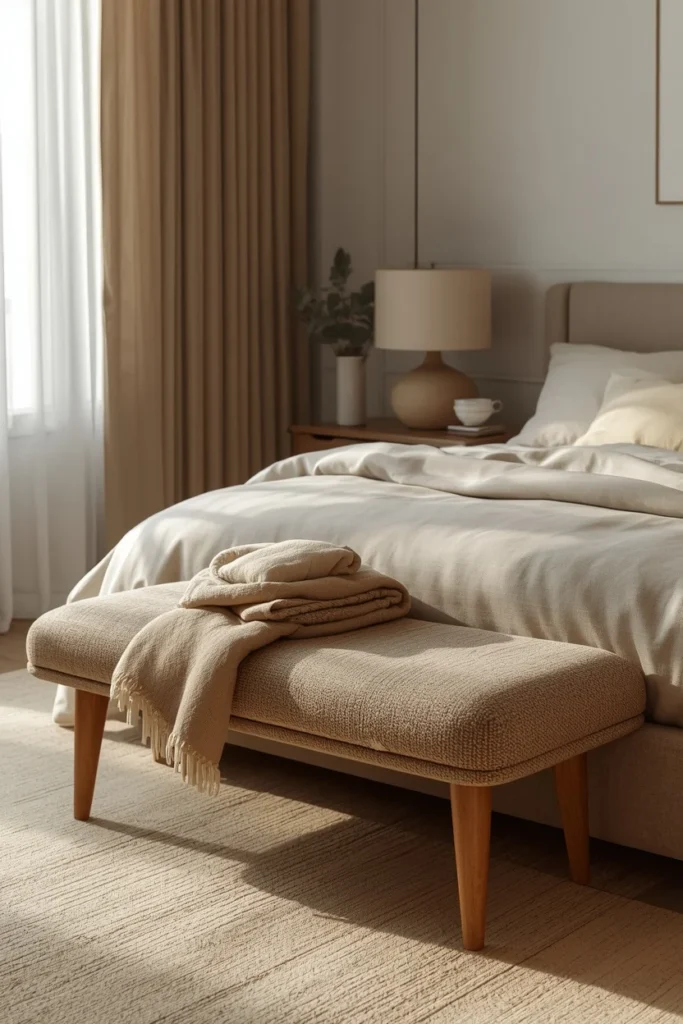
A low, upholstered bench at the foot of the bed adds a soft architectural element that feels both stylish and genuinely practical, giving a spot to set clothes, a book, or a folded blanket without cluttering the nightstands. This idea works especially well upholstered in a natural bouclé or linen fabric, since the tactile texture reinforces the room’s broader material vocabulary instead of introducing something synthetic-feeling. Keeping the bench roughly the same height as the platform bed maintains the room’s overall low, grounded profile rather than introducing a taller piece that breaks up the sightline. This detail also adds a layer of everyday function that pure minimalism sometimes strips away, proving that a Japandi bedroom can be uncluttered without being impractical. It’s a small addition that reads as considered rather than decorative for its own sake.
14. Integrated Nature Corner
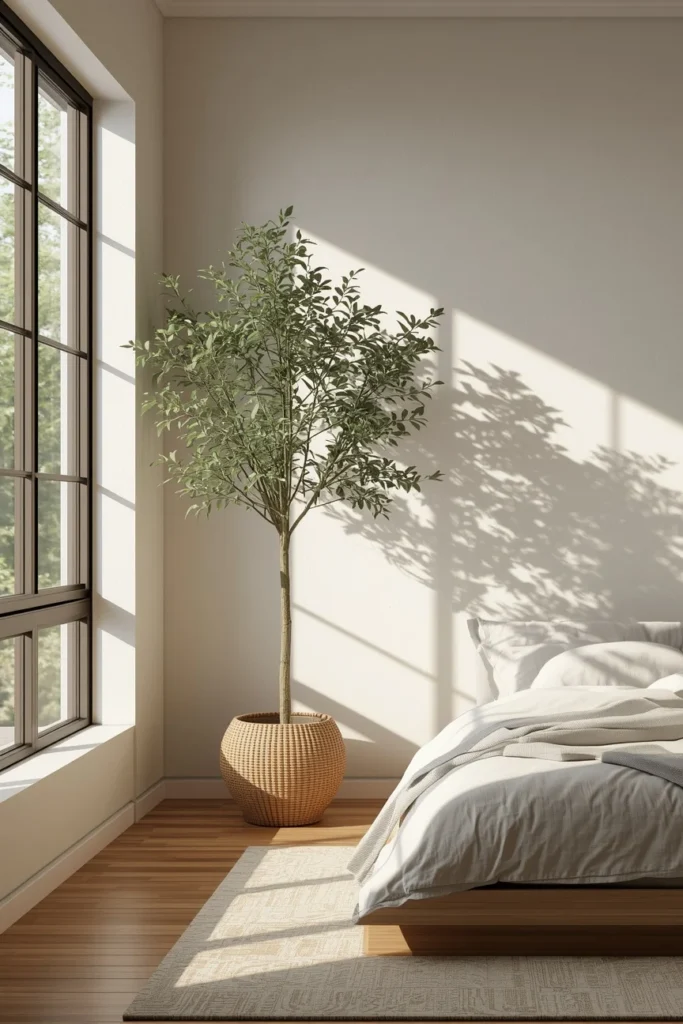
Moving beyond a single potted plant, an integrated nature corner brings a larger indoor tree or a small cluster of varied greenery into one dedicated part of the bedroom, reinforcing the Japandi principle that every room should include at least one living thing. Placing this greenery near a window lets natural light do double duty, both nourishing the plant and casting soft, moving shadows across the nearby wall throughout the day. A simple woven or ceramic planter keeps the container itself from becoming a decorative statement, letting the plant’s natural form carry the visual interest instead. This idea is especially effective in a bedroom with floor-to-ceiling windows or a garden view, since the indoor greenery echoes and extends whatever’s visible just outside. Even in a bedroom without much natural light, a shade-tolerant plant like a snake plant or ZZ plant can deliver the same grounding effect.
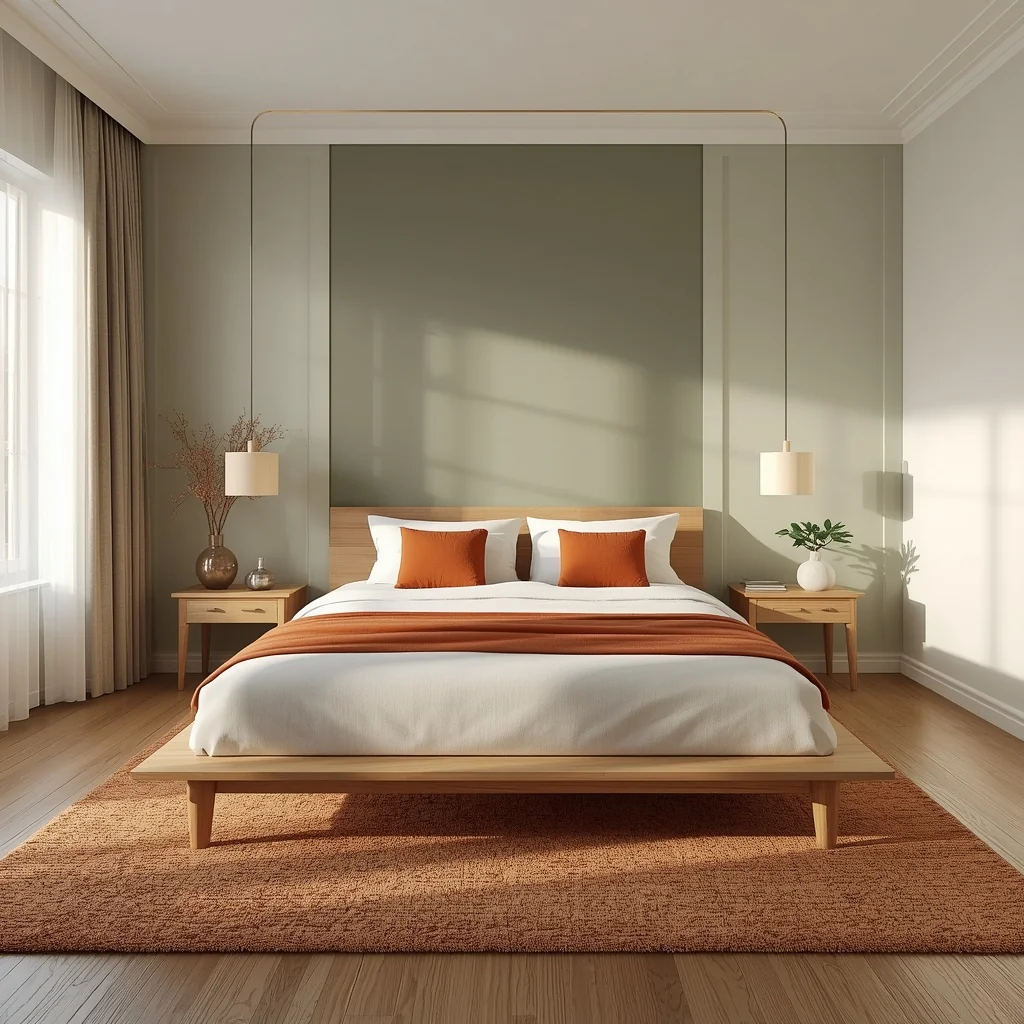
15. Sage, Clay & Terracotta Neutral Palette
Moving past the classic warm-white-and-oak Japandi starting point, a palette built around sage green, muted clay, and soft terracotta introduces color without raising the room’s stimulation level, since all three tones share the same warm, earthy undertone family. These colors work because they reflect warm-spectrum light rather than the cooler, high-contrast cues that keep the brain alert, which is part of why designers specifically recommend them for bedrooms over brighter or cooler color choices. A sage green wall paired with terracotta textiles and natural oak furniture creates a palette that feels like it was pulled directly from a landscape rather than a paint chip display. This combination also ages well stylistically, since none of these three tones are tied to a fast-moving trend cycle the way a brighter accent color might be. It’s a strong option for anyone who wants more visual warmth than a strictly neutral Japandi room while staying within the aesthetic’s calm, grounded intent.
16. Woven Paper-Cord Bench or Stool
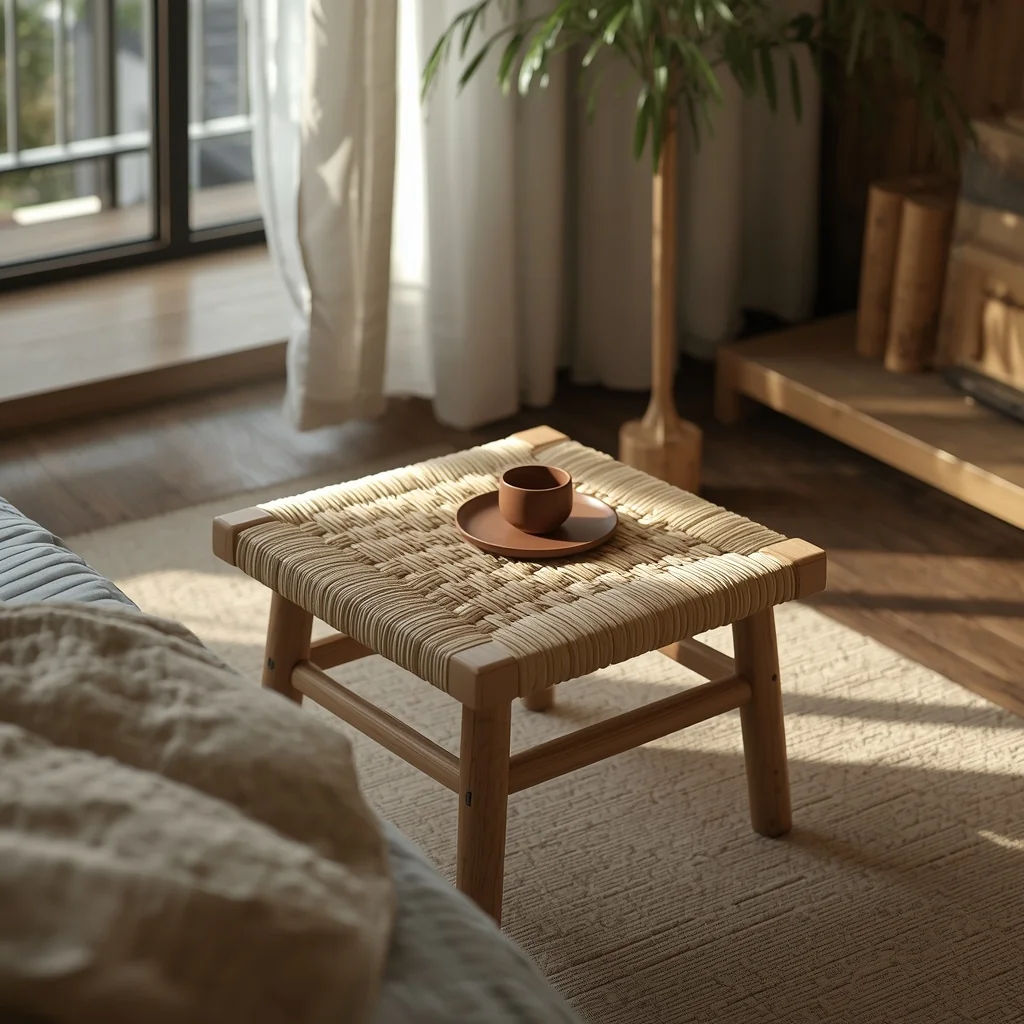
A low stool or bench with a hand-woven paper-cord seat puts visible craftsmanship on full display, which is exactly the quality Japandi design increasingly celebrates over mass-produced, uniform furniture. The subtle texture and slight irregularity of a hand-woven seat gives the eye something quiet to notice up close, rewarding a longer look the way a piece of handmade pottery does. Positioned beside the bed or under a window, this kind of stool works equally well as a small side table or an actual seat, adding function without adding visual bulk. Pairing the woven seat with a solid oak frame keeps the piece feeling honest and grounded rather than delicate or purely decorative. This idea is a strong representative of the broader shift toward visible joinery and artisan-made pieces as the “quiet stars” of a Japandi room.
17. Warm 2700K Layered Lighting Plan
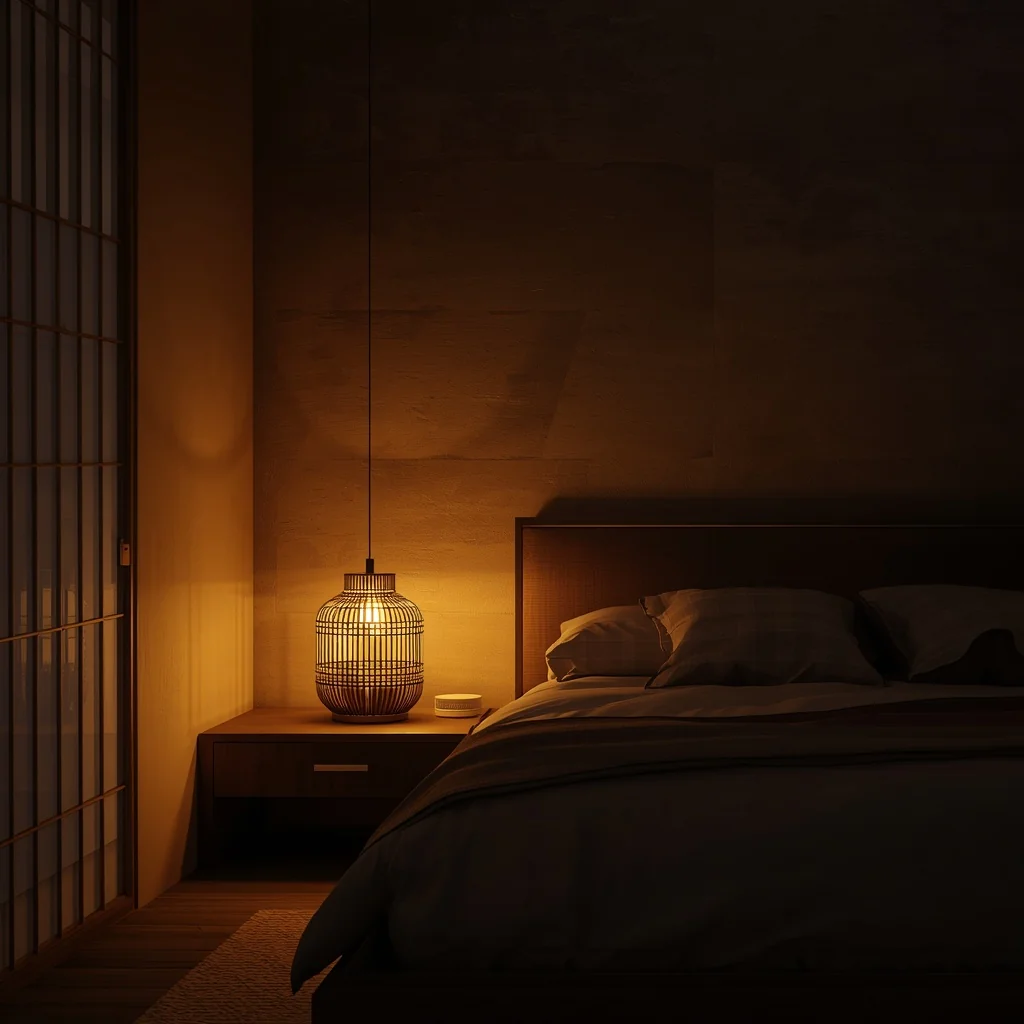
Building a bedroom’s lighting around warm 2700K to 3000K bulbs exclusively, rather than mixing in cooler white tones, is one of the most functional design choices on this list, since warmer light supports the body’s natural wind-down signals instead of disrupting them. A layered plan combining a pendant, a bedside lamp, and a smart warm-white bulb with dimming control gives the room flexibility between a brighter task-lighting mode and a soft, low evening glow. This approach turns lighting into a genuine wellness feature rather than just an aesthetic afterthought, since the color temperature choice and the sleep science point in exactly the same direction. Choosing fixtures made from natural materials, like a linen drum shade or a ceramic lamp base, keeps the light sources themselves in step with the room’s broader material palette. This is one of the more overlooked but genuinely impactful upgrades for anyone building out a Japandi bedroom, since it affects how the room feels for hours every single night.
18. Floor Cushion Reading Nook
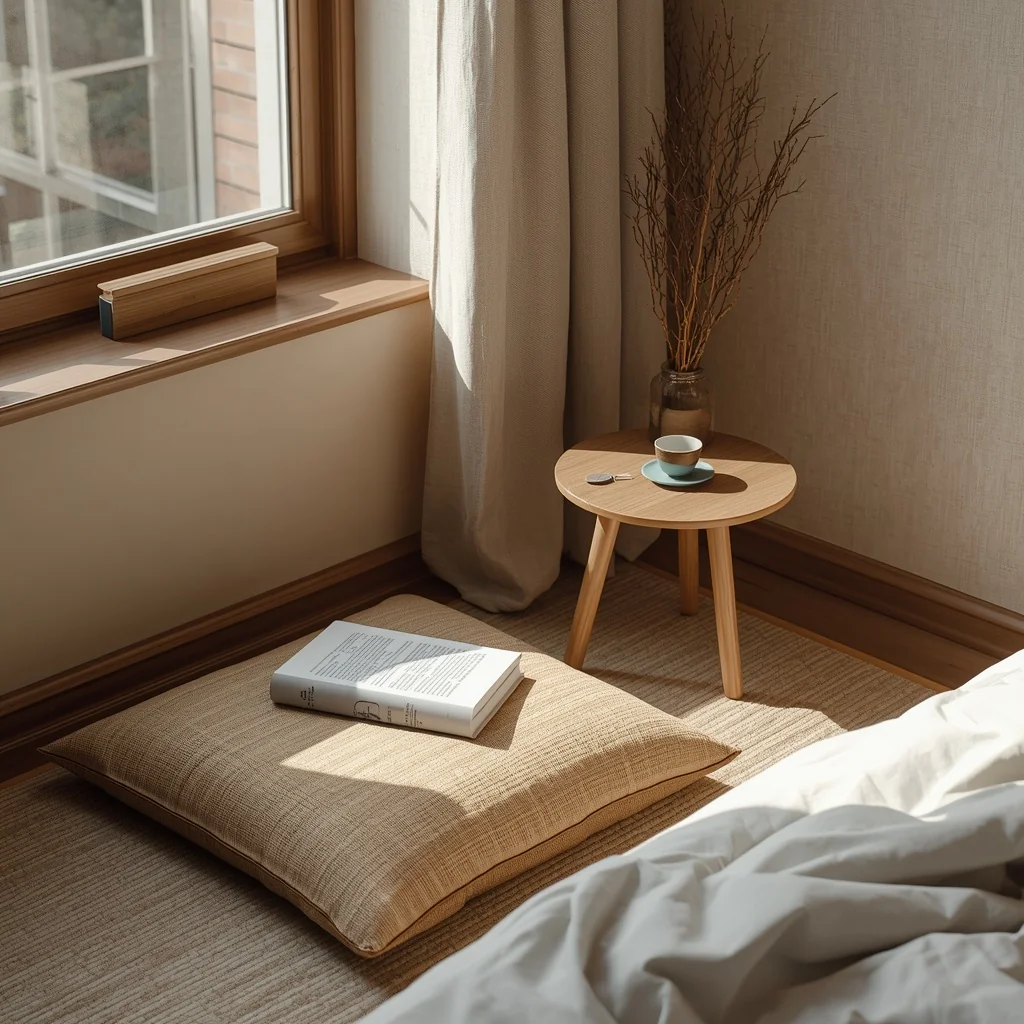
A small floor cushion or tatami-inspired seating area in an underused bedroom corner leans further into the Japanese side of Japandi, offering a grounded, low seating alternative to a traditional armchair. A simple woven floor cushion in a natural fiber, paired with a low side table for a book and a cup of tea, creates a dedicated spot for winding down that doesn’t compete with the bed for attention. This idea works especially well in a bedroom with a window seat or a quiet corner that would otherwise sit empty, turning unused square footage into genuine function. Keeping the cushion in the same warm neutral family as the rest of the room ensures the nook feels like an extension of the bedroom rather than a separate styling decision. This is a distinctly Japandi detail that few other minimalist bedroom styles include, since it directly borrows from traditional Japanese floor-seating culture.
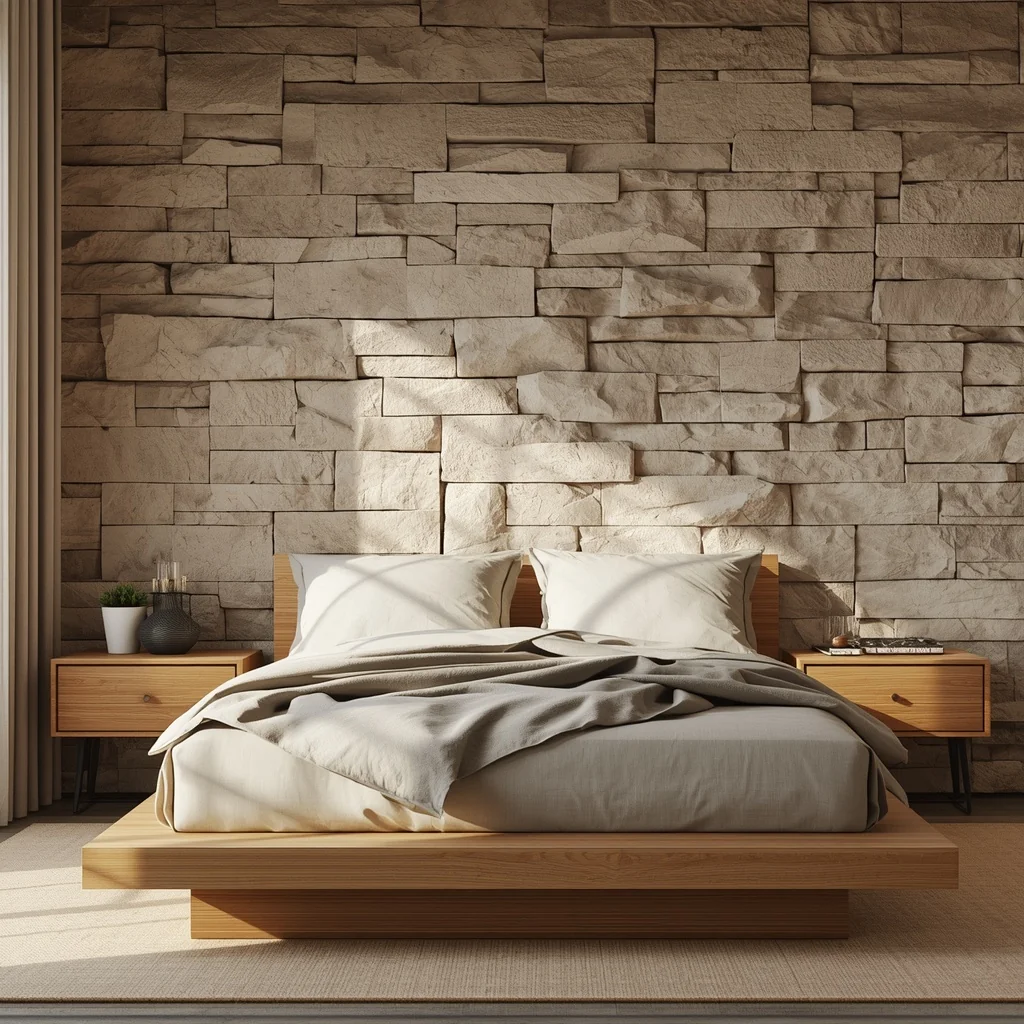
19. Raw Stone or Lime-Washed Wall Texture
Smooth drywall is giving way to raw stone, clay, and lime-washed finishes in Japandi interiors, since these materials carry a sense of permanence and natural irregularity that flat painted walls can’t replicate. Used behind the headboard or across a full accent wall, a lime-washed finish creates subtle tonal variation that shifts throughout the day as natural light moves across it. Raw stone, whether a full slab or a smaller stacked detail, brings a cooler, more architectural texture that pairs beautifully with warmer wood furniture nearby for contrast. This idea suits anyone building a Japandi bedroom from the studs up, since it requires more commitment than a paint or textile change, but the resulting depth is difficult to replicate with flatter materials. It’s one of the clearest expressions of the “texture is king” shift shaping the aesthetic this year.
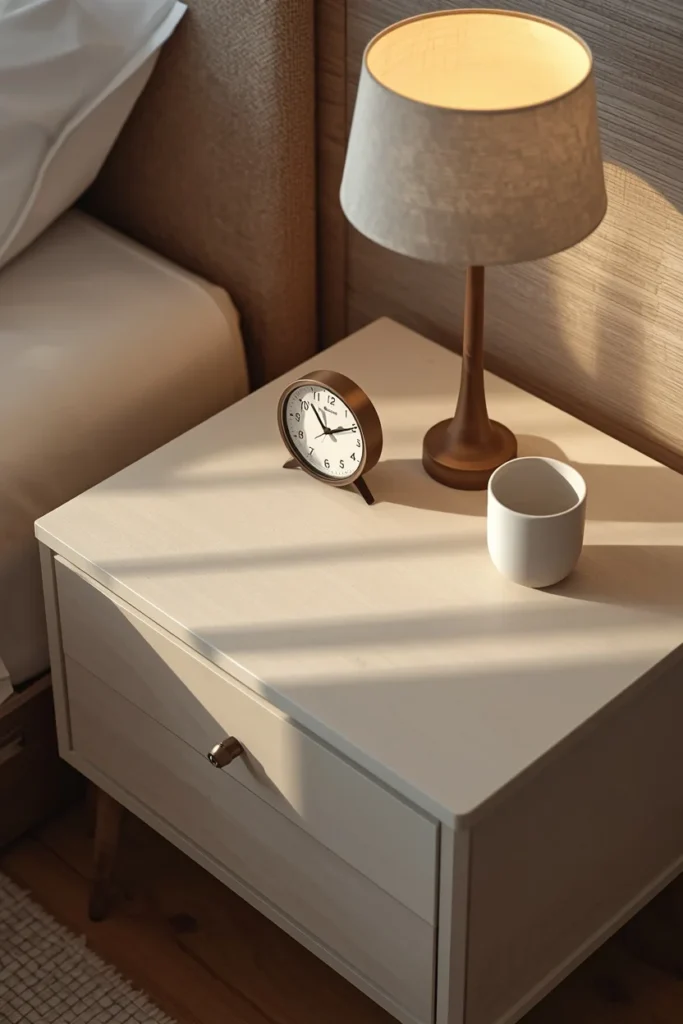
20. Cable-Free, Hidden-Tech Nightstand
Technology, specifically visible cables, chargers, and glowing device displays, is one of the biggest threats to a Japandi bedroom’s calm, since visual noise undercuts the room’s whole purpose even when every other design choice is right. Routing charging cables through a drilled hole in the back of the nightstand, or using a nightstand with a hidden drawer specifically for a phone charger, keeps the surface on top completely clear. A simple analog clock instead of a phone on the nightstand removes another common source of glowing, attention-grabbing light right beside the bed. This idea costs little to nothing to implement, and unlike most items on this list, it’s about removing rather than adding, which fits neatly within the broader Japandi principle of editing ruthlessly. It’s often the single most overlooked detail standing between a nearly-there Japandi bedroom and one that actually feels calm to fall asleep in.
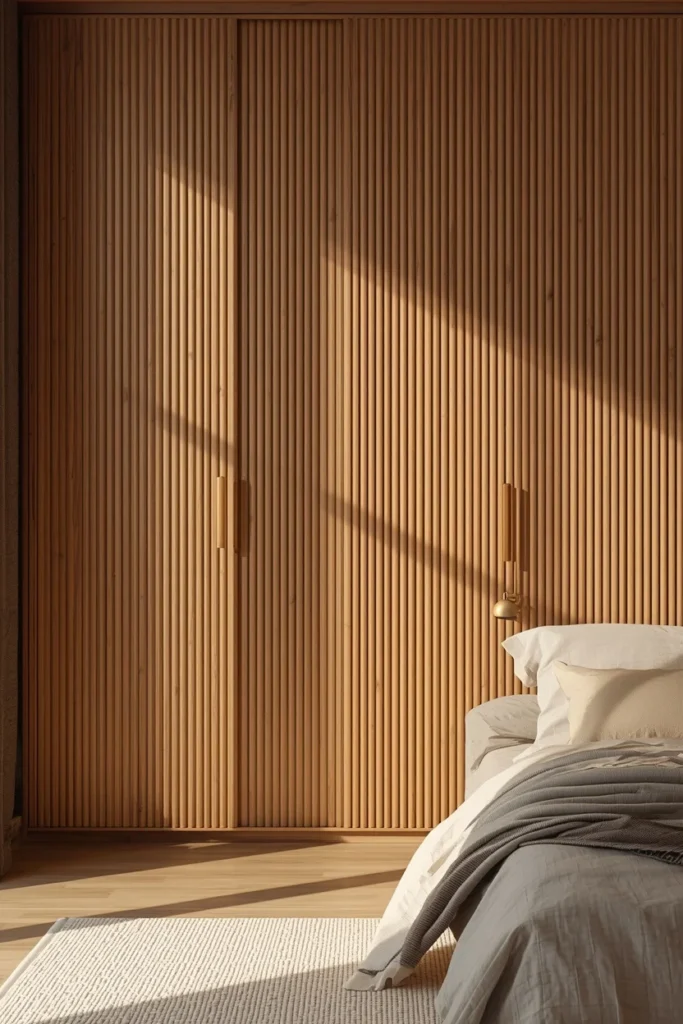
21. Fluted Wood Wardrobe Doors
Fluted, ribbed wood detailing on wardrobe or closet doors introduces subtle vertical texture and shadow play without departing from the room’s restrained material palette. Unlike a flat wardrobe front, fluted panels catch light differently throughout the day, creating a soft rhythm of shadow lines that keeps a large storage piece from reading as a flat, heavy block against the wall. This detail pairs naturally with visible brass or bronze hardware, since the warm metal tones echo the warmth already present in the wood grain underneath the fluting. A handleless or minimal-hardware design keeps the fluted texture as the wardrobe’s main visual feature, rather than competing with a bulky pull or knob. This idea is a strong way to add architectural interest to a large, necessarily practical piece of furniture that might otherwise disappear visually into the room.
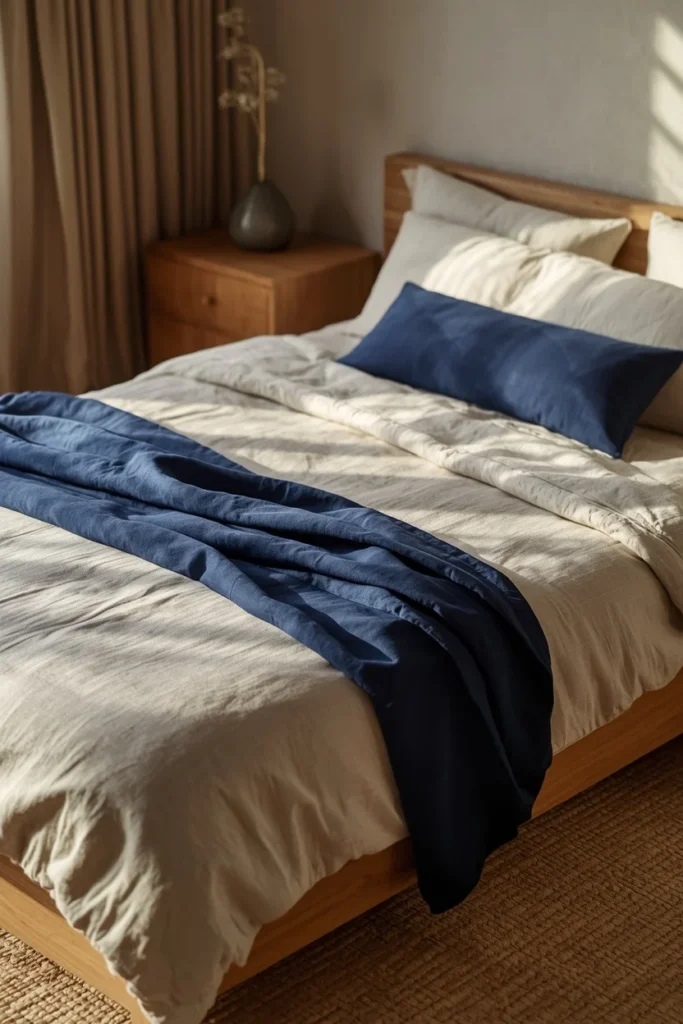
22. Indigo Accent Bedding on a Neutral Base
A single deep indigo accent, whether a folded throw, a lumbar pillow, or a runner across the foot of the bed, introduces genuine color into an otherwise neutral Japandi bedroom without disrupting its calm foundation. Indigo works particularly well here because it reads as an earthy, natural dye tone rather than a bright, synthetic-feeling blue, tying it back to traditional Japanese textile dyeing traditions. Keeping the accent to a single textile, rather than repeating the indigo across multiple pieces, maintains the restraint that defines the whole aesthetic while still delivering a clear moment of color. This idea pairs beautifully with warm oak furniture and cream linen bedding, since the contrast between the deep blue and the warm neutrals reads as intentional rather than random. It’s an easy, low-cost way to add personality to a Japandi bedroom that might otherwise feel a touch too uniform.
23. Minimalist Slatted Platform With Negative Space Beneath
A platform bed built with an open, slatted base rather than a solid box frame leaves visible negative space beneath the mattress, which reinforces the Japandi principle of ma by treating even the floor beneath the bed as part of the room’s composition. This open base also keeps the whole room feeling lighter and less grounded-down than a solid platform would, since light and floor line continue underneath rather than stopping abruptly at a solid frame. A slatted base pairs especially well with a light wood floor or a simple jute rug, since the visible gap lets both surfaces read as continuous rather than interrupted. This idea suits smaller bedrooms in particular, since the visual openness beneath the bed can make the whole room feel less cramped than a heavier, boxier frame would. It’s a subtle detail, but one that design-literate visitors often notice immediately as a marker of an intentionally, correctly built Japandi room.
Styling Tips
- Choose warm 2700K to 3000K lighting exclusively; cool white bulbs at 4000K or above visually clash with Japandi’s warm palette and work against the room’s restful purpose.
- Limit every surface to two or three objects maximum, and make sure each one is either functional or genuinely beautiful — this is the fastest way to practice ma without overthinking it.
- Layer at least three natural textures on the bed alone (linen, cotton, wool) since texture carries the visual warmth that color and pattern aren’t providing.
- Add one scent element, like a hinoki wood or cedar reed diffuser, to anchor a consistent bedtime ritual the same way the visual design anchors calm.
- Keep one metal finish consistent across hardware, light fixtures, and any small decor accents so the room reads as considered rather than assembled piecemeal.
Practical Implementation Ideas
- Start by editing ruthlessly: remove everything from every surface in the room, then return only what’s functional or genuinely beautiful before adding anything new.
- Swap one angular furniture piece, like a boxy nightstand or coffee table, for a rounded or oval version as the single highest-impact update.
- Route or hide charging cables through a drilled hole in furniture, or use a nightstand with a built-in cable channel, to keep surfaces completely clear.
- Test paint colors and lightbulb color temperatures together in the room at night before committing, since Japandi’s calming effect depends on how the two interact after dark.
Common Mistakes to Avoid
Using cool white lighting anywhere in the room is one of the most common mistakes, since bulbs at 4000K or above don’t just look visually wrong against a warm Japandi palette, they actively work against the calming, sleep-supporting effect the whole room is designed around. Over-styling nightstands and shelves with too many small decorative objects undercuts the principle of ma, turning meaningful empty space into visual clutter instead. Skipping texture and relying on color or pattern alone leads to what designers call the “dead room” effect: technically minimalist, but cold and uninviting in a way that’s hard to pinpoint. Leaving cables, chargers, and device displays visible on nightstands is a frequently overlooked source of visual noise that undermines an otherwise well-designed room. Finally, choosing furniture that’s all one material and finish, rather than mixing at least two natural textures like wood and woven fiber, can make the room feel flat instead of layered.
Small-Space Alternatives
- A low platform bed with a slatted, open base makes a small bedroom feel airier than a solid, boxy frame would.
- Color-drenching a small room in one warm neutral tone removes visual breaks and can make the space feel larger and more cohesive than contrasting trim would.
- A single curved accent piece, like a rounded nightstand, adds softness without requiring extra floor space.
- Vertical wood slat paneling behind the bed adds texture and height without consuming any additional square footage.
Budget-Friendly Alternatives
- Start with textiles rather than furniture: a new linen duvet cover, wool throw, and cotton pillowcases deliver the layered texture effect of a full Japandi bed at a fraction of the cost.
- Swap standard bulbs for warm 2700K options throughout the bedroom as one of the least expensive, highest-impact changes on this entire list.
- A single hand-thrown ceramic lamp or vase can introduce the handmade, wabi-sabi quality of the aesthetic without a full furniture overhaul.
- Rearranging existing furniture to create more open floor space, then editing surfaces down to only functional or beautiful objects, costs nothing and delivers much of the calming effect on its own.
Pro Styling Recommendations
Designers working in this style consistently point to restraint as the foundation, choosing a few well-made, natural pieces over many cheaper ones, since Japandi’s whole visual language depends on quality being obvious at a glance. Spending on one beautifully crafted seat or a solid wood platform bed, then saving on textiles, ceramics, and general decluttering, tends to deliver the most convincing result for the investment. Layering at least two natural materials, like wood paired with woven paper cord or linen paired with raw plaster, is what keeps a Japandi room from reading as generic minimalism instead of the specific, warmer aesthetic it’s meant to be. Designers also recommend treating scent and lighting as seriously as furniture choices, since both directly shape how the room feels to actually sleep in, not just how it photographs.
FAQs
Conclusion
A Japandi bedroom works because it treats restraint as a design choice rather than a limitation. Every low bed frame, every warm bulb, every empty inch of nightstand left intentionally bare is doing something specific: lowering the room’s stimulation level so the person lying in it can actually rest. The rooms on this list that photograph the best and the ones people don’t get tired of a year later share that same underlying logic. Choose fewer things, choose them well, and leave enough quiet space around them for the room to actually breathe.