22 Cottagecore Dining Room Ideas That Are Romantic, Rustic & So Dreamy
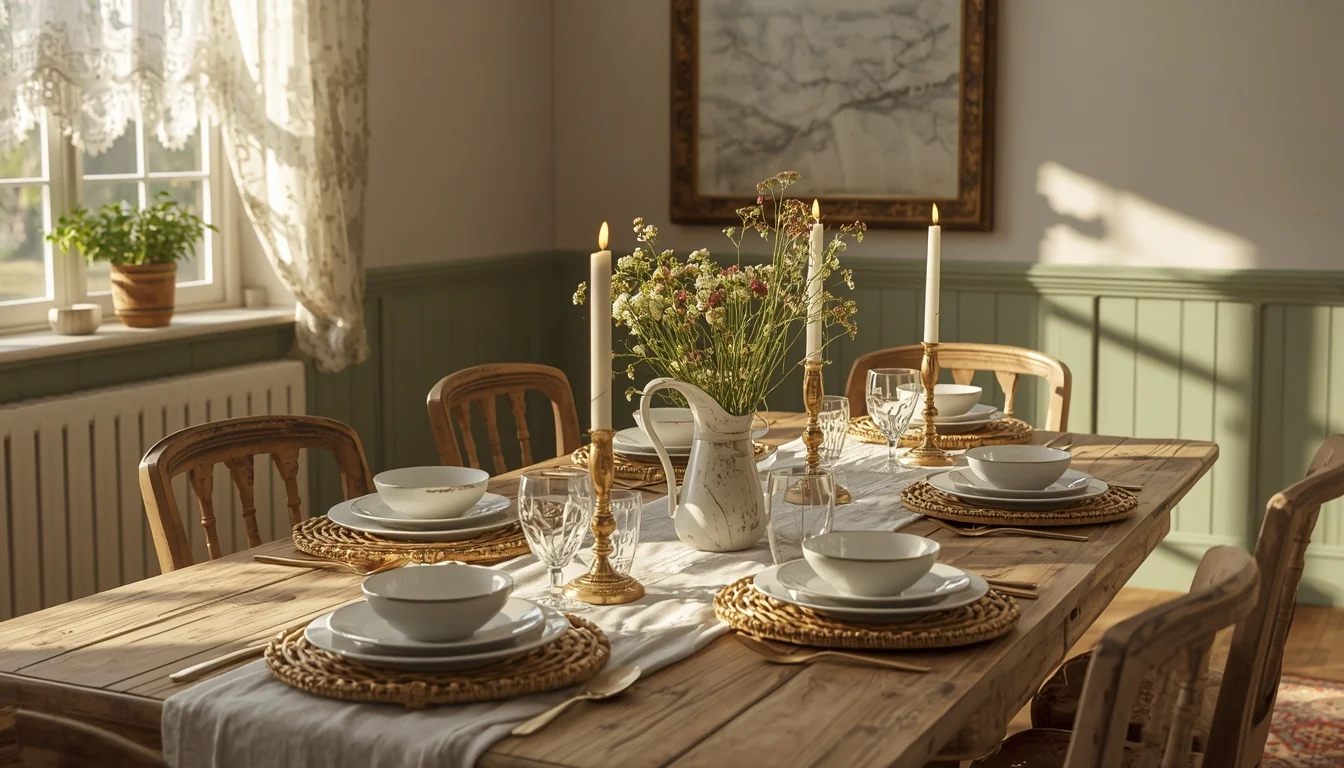
There’s a certain kind of dining room that makes you want to linger after the last bite. Candlelight flickering off a chipped china plate. A jar of wildflowers someone picked that morning. A table with enough scratches to prove it’s been used and loved.
That’s cottagecore dining. It’s not about a spotless showroom look. It’s about a room that feels like it has stories in it.
If your dining room currently feels stiff, empty, or a little too matchy, these 22 ideas will show you how to soften it with rustic wood, vintage finds, and a color palette pulled straight from a countryside garden.
Table of Contents
1. Reclaimed Farmhouse Table
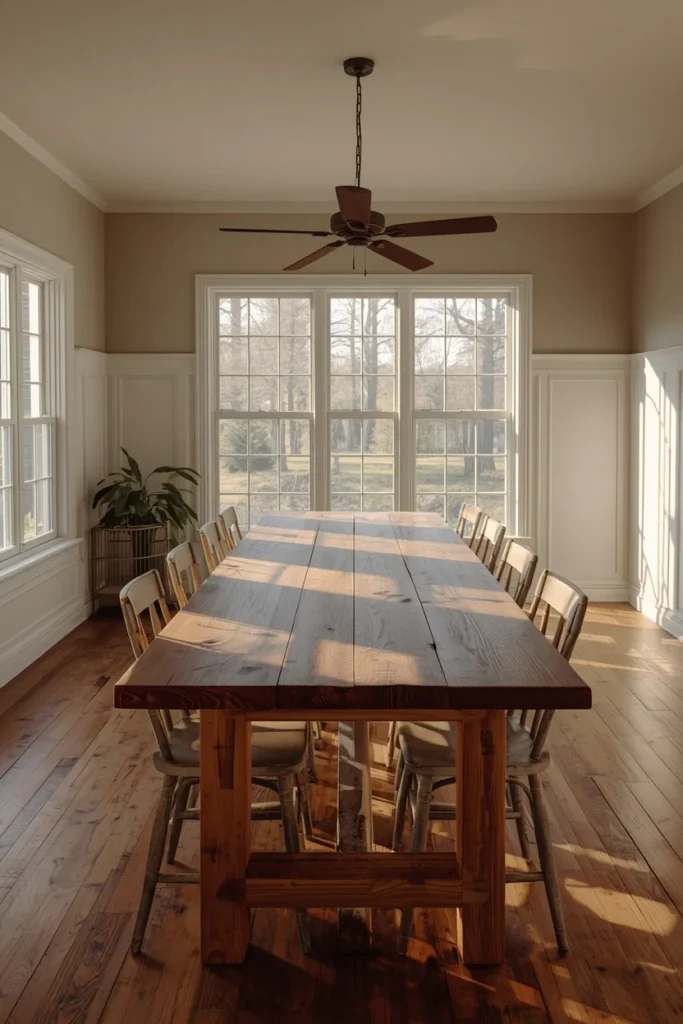
A dining room needs one honest anchor, and a reclaimed wood table does that job better than anything new. Look for tables with visible grain, knots, or old nail holes — these marks read as history, not damage. Pair it with mismatched chairs in painted wood or cane instead of a matching set, since uniformity tends to flatten the cottagecore mood. The slight color variation between the table and chairs actually pulls the whole look together, the same way an old farmhouse kitchen collects pieces over decades. A trestle or farmhouse-style base also gives more legroom for gathering extra chairs when guests show up.
2. Sage Green Paneled Walls
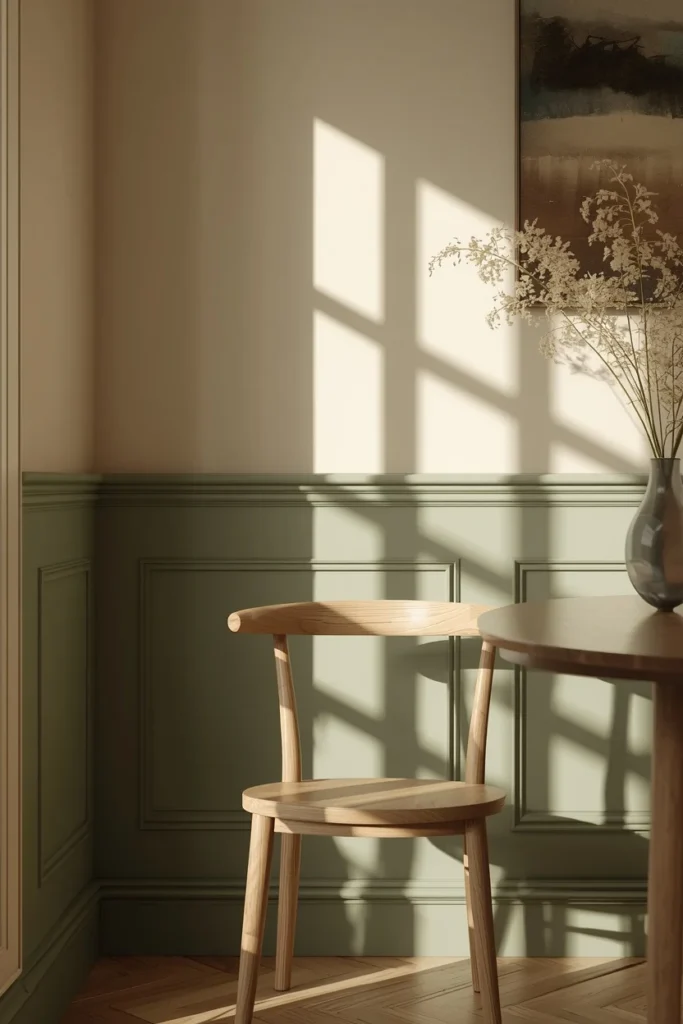
Sage green wainscoting or full paneling gives a dining room the muted, garden-adjacent color that defines cottagecore without tipping into a theme park version of “cottage.” Keep the upper wall in warm white or cream so the room still feels bright, especially in spaces with limited windows. Paneling also adds architectural texture, which matters because cottagecore rooms lean on depth and dimension rather than flat, builder-grade walls. A soft green base works with almost any wood tone, from honey oak to dark walnut, so it’s a safe long-term choice. Add brass hardware or hinges on nearby furniture to keep the green from feeling too cool.
3. Vintage Candlelit Chandelier
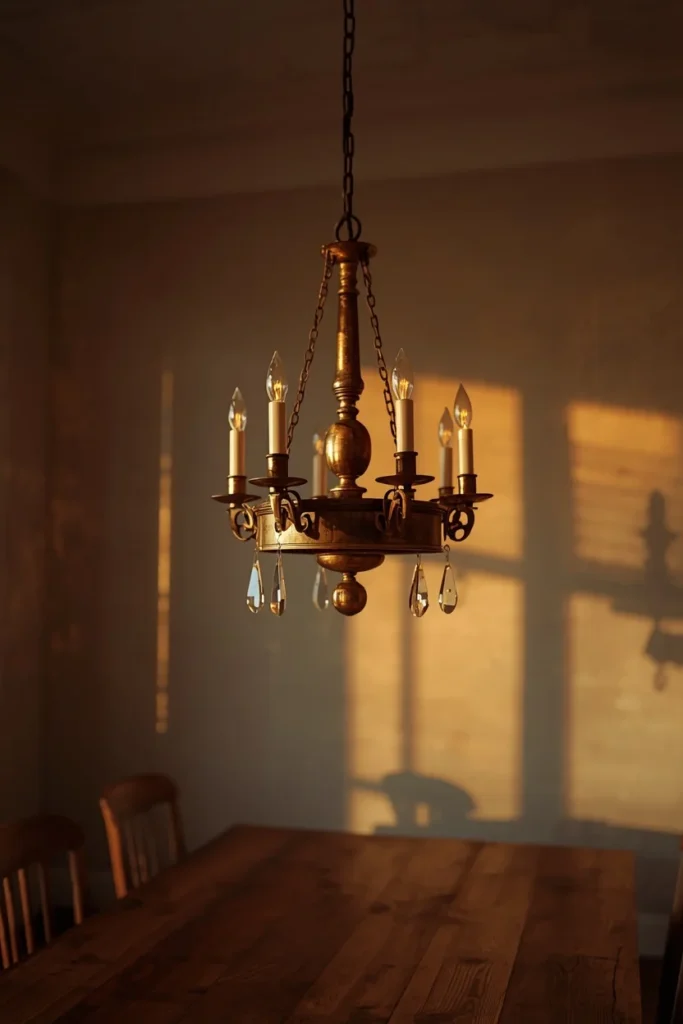
An aged brass or wrought iron chandelier does more for cottagecore atmosphere than almost any other single fixture. Choose one with candle-style bulbs or, for special dinners, actual taper candles for real flicker and warmth. Hang it slightly lower than a standard fixture so it becomes part of the tablescape, not just ceiling decor. A chandelier with a little tarnish or an uneven patina photographs better than a polished, brand-new one, since it matches the worn, collected feel of the room. Dimmable bulbs let you shift from bright weeknight dinners to a moodier, romantic glow for weekends.
4. Floral Wallpaper Accent Wall
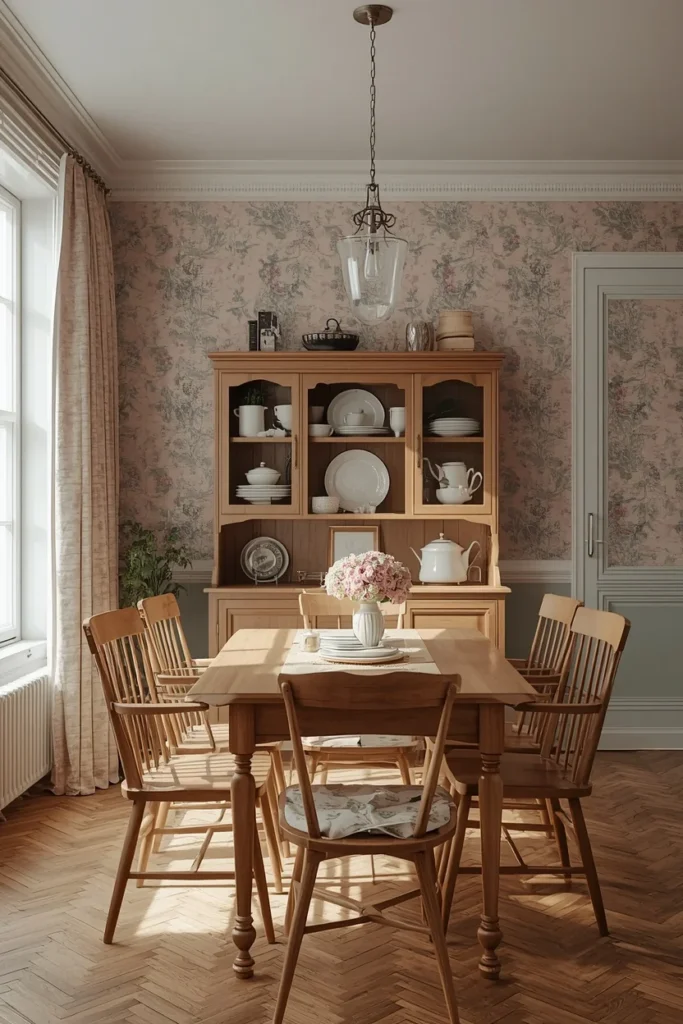
A single floral wallpaper wall gives cottagecore its signature romantic backdrop without overwhelming the whole room. Pick a small to mid-scale print in muted florals — dusty rose, sage, and cream work particularly well against natural wood furniture. Save the busiest pattern for the wall behind a sideboard or hutch rather than behind the table itself, so it reads as backdrop instead of visual noise during meals. This approach also makes the wallpaper easier to swap later if your taste shifts, since only one wall needs redoing. Vintage-inspired florals with a slightly faded look tend to age better than crisp, saturated prints.
5. Open Shelving With Mismatched China
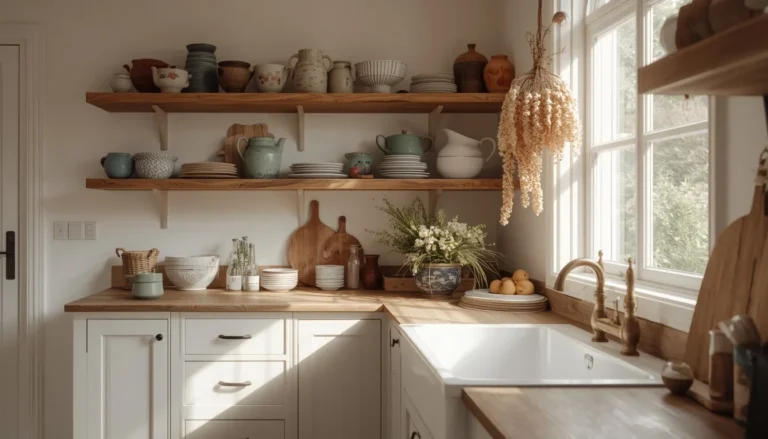
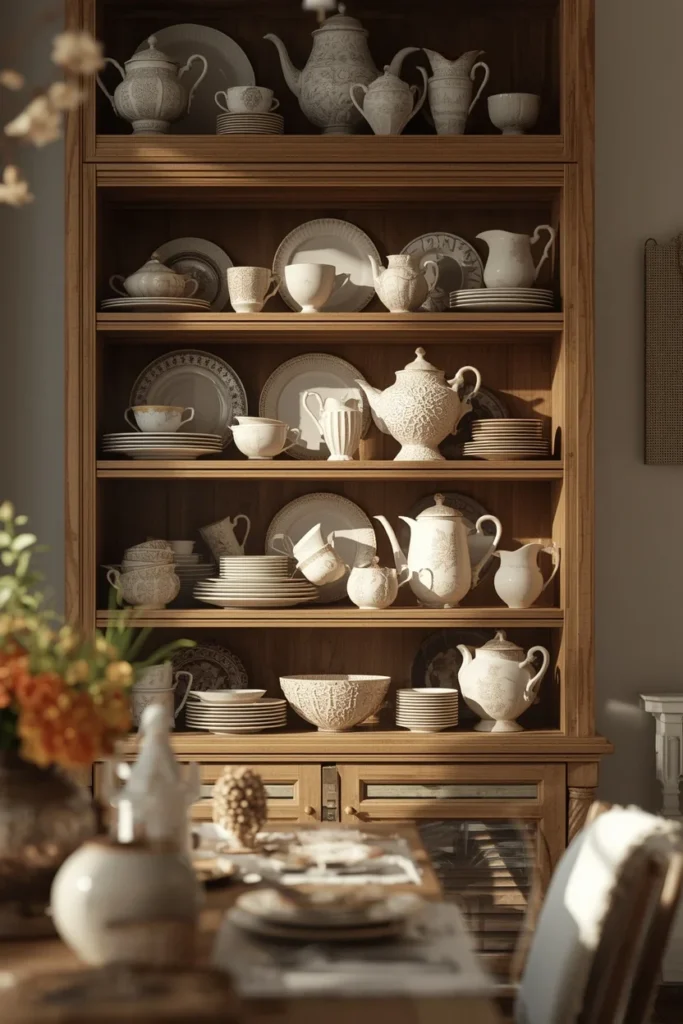
Swapping a closed cabinet for open wooden shelves turns everyday dishware into decor. Stack plates by color or size instead of by set, letting different patterns sit side by side — this mismatched arrangement is part of what makes the look feel collected over time rather than store-bought. Add a few pitchers, teacups, or serving bowls in between stacks so the shelves don’t look too uniform. Open shelving also keeps a small dining room from feeling closed in, since you can see through to the wall color and light behind the dishes. Leave a little breathing room between items; overcrowded shelves start to look cluttered instead of curated by hand.
6. Gauzy Lace Curtains
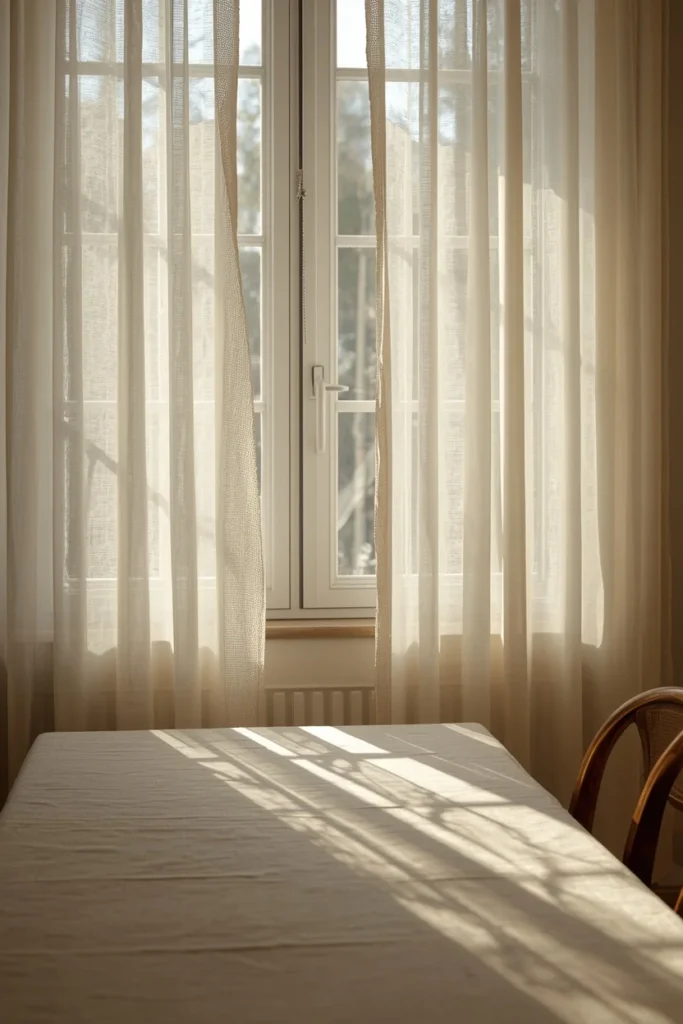
Lace curtains filter light into a soft, patterned glow that instantly makes a dining room feel gentler. Choose a natural linen-lace blend over stiff synthetic lace, since it drapes more loosely and catches breeze if a window is open. Hang the curtains close to the ceiling rather than just above the window frame, which draws the eye up and makes the room feel taller. During the day, the shadow pattern lace casts across the table becomes its own kind of decoration, especially over a plain linen tablecloth. For a layered look, pair sheer lace panels with simple linen tie-backs instead of heavy drapery hardware.
7. Hanging Herb Drying Rack
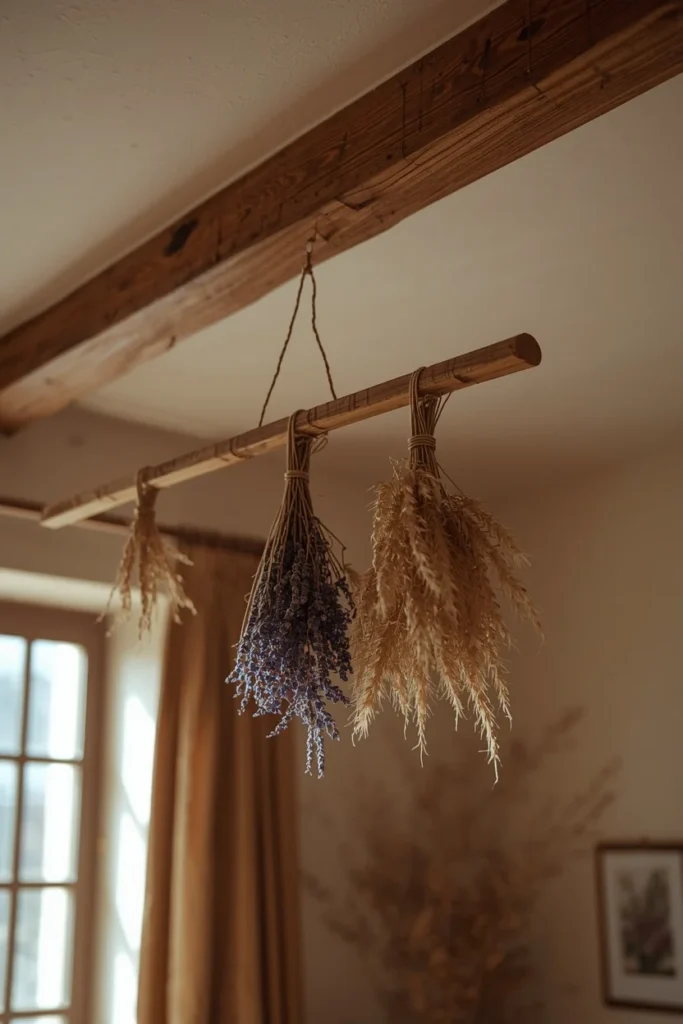
A drying rack suspended near the dining area, filled with bundles of lavender, rosemary, or dried wildflowers, adds scent, texture, and a genuinely useful function. Mount it from a ceiling beam or ladder-style hook so it hangs at a height where it’s visible but not in the way of anyone standing. Rotate the herbs seasonally — lavender and chamomile in summer, wheat and dried hydrangea in fall — to keep the display feeling current rather than static. This detail works especially well in dining rooms near the kitchen, since it bridges the two spaces visually. Keep bundles loosely tied with twine rather than ribbon for a more natural, foraged look.
8. Patchwork Quilted Table Runner
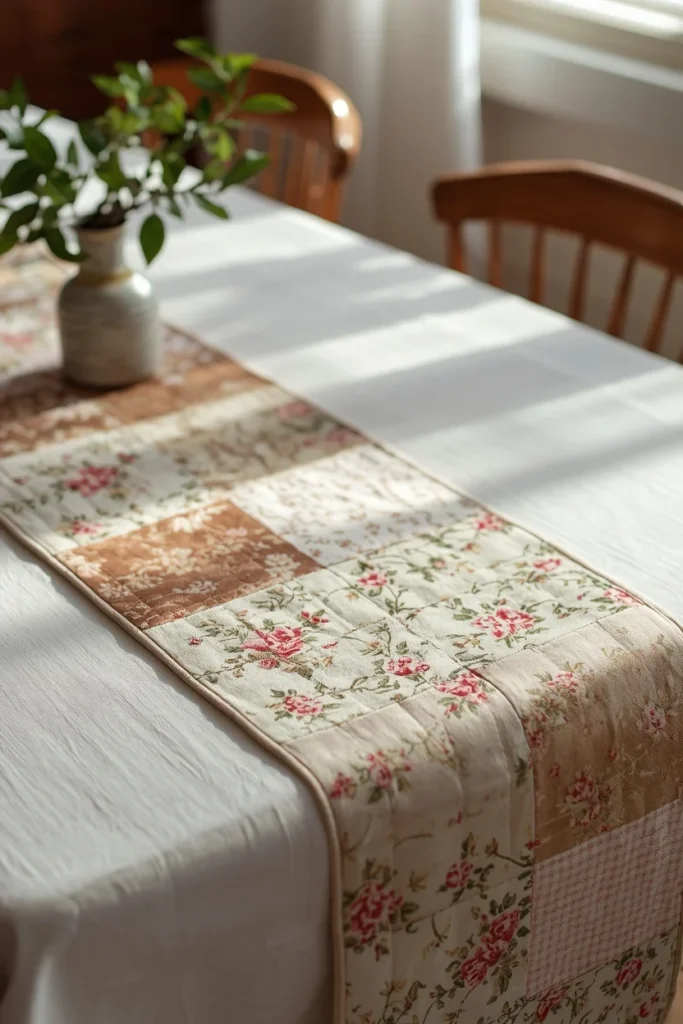
A quilted patchwork runner down the center of the table brings in color, pattern, and a handmade quality that a plain tablecloth can’t match. Look for vintage or vintage-style quilts in faded florals, gingham, or calico prints, since these patterns are core to cottagecore’s countryside references. Layer the runner over a solid linen tablecloth so the patchwork has a calm background to stand out against. This combination also protects the table from spills while adding visual warmth that photographs beautifully in natural light. If you can’t find a vintage quilt, a patchwork placemat set achieves a similar effect on a smaller budget.
9. Wildflowers in a Vintage Pitcher
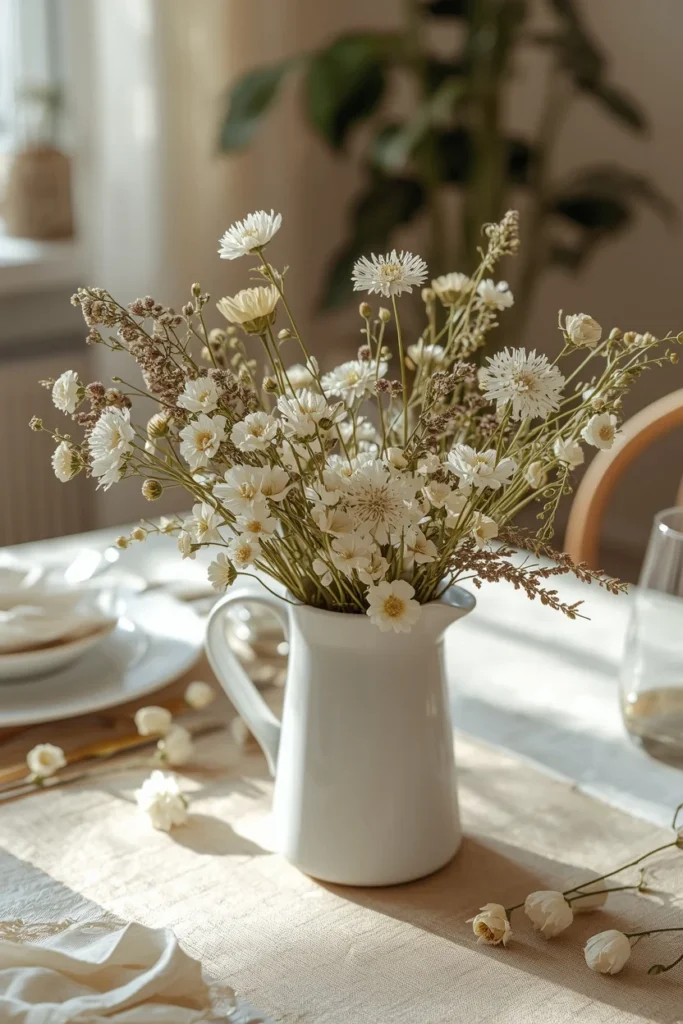
A simple white ceramic pitcher filled with loosely arranged wildflowers does more for a cottagecore table than an expensive florist bouquet. Skip tightly arranged, symmetrical flowers in favor of an uneven mix of stems at different heights, which mimics how flowers actually grow in a garden. Seasonal blooms work best — daisies and cosmos in summer, dried statice or eucalyptus in winter — so the centerpiece changes naturally throughout the year. A slightly chipped or aged pitcher fits the aesthetic better than a pristine vase, reinforcing that collected, secondhand feel. Keep the arrangement low enough that guests can still see and talk across the table.
10. Woven Rattan Dining Chairs
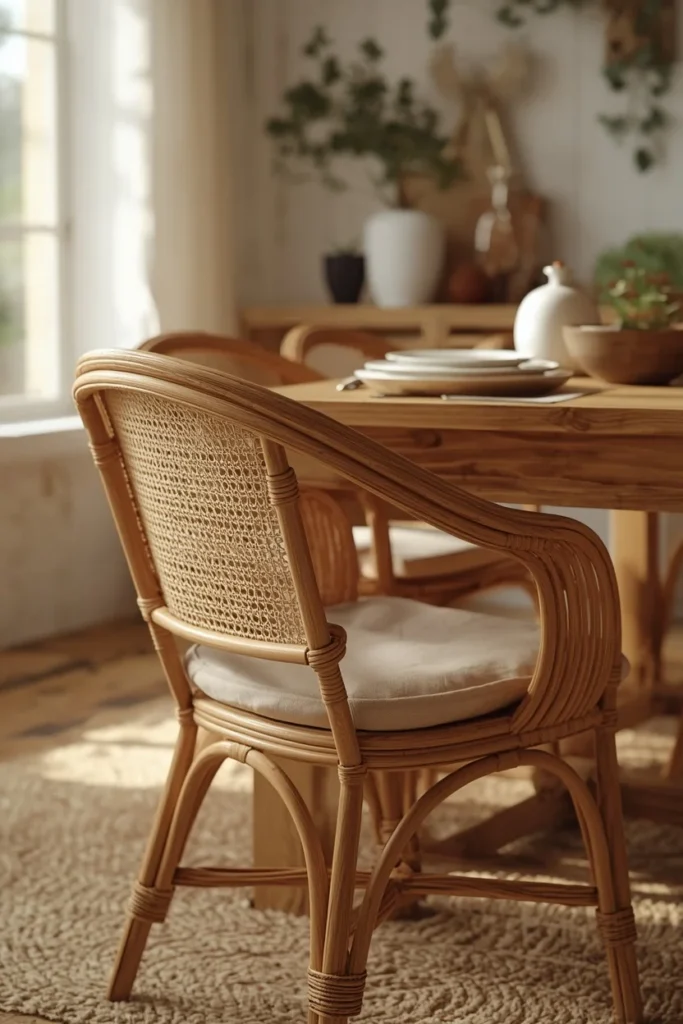
Rattan or wicker chairs bring texture and a lighter visual weight than solid wood seating, which helps a small dining room feel less boxed in. The natural woven texture also plays well against the smoother surface of a wood table, giving the eye two different materials to rest on. Choose chairs with a slightly curved back for comfort, since rattan without added cushions can feel stiff during long dinners. Adding a linen or gingham seat cushion softens the look further and gives you an easy way to bring in seasonal color. Rattan chairs also tend to be lighter to move, which matters if the dining room doubles as extra seating for gatherings.
11. Antique Wooden Sideboard
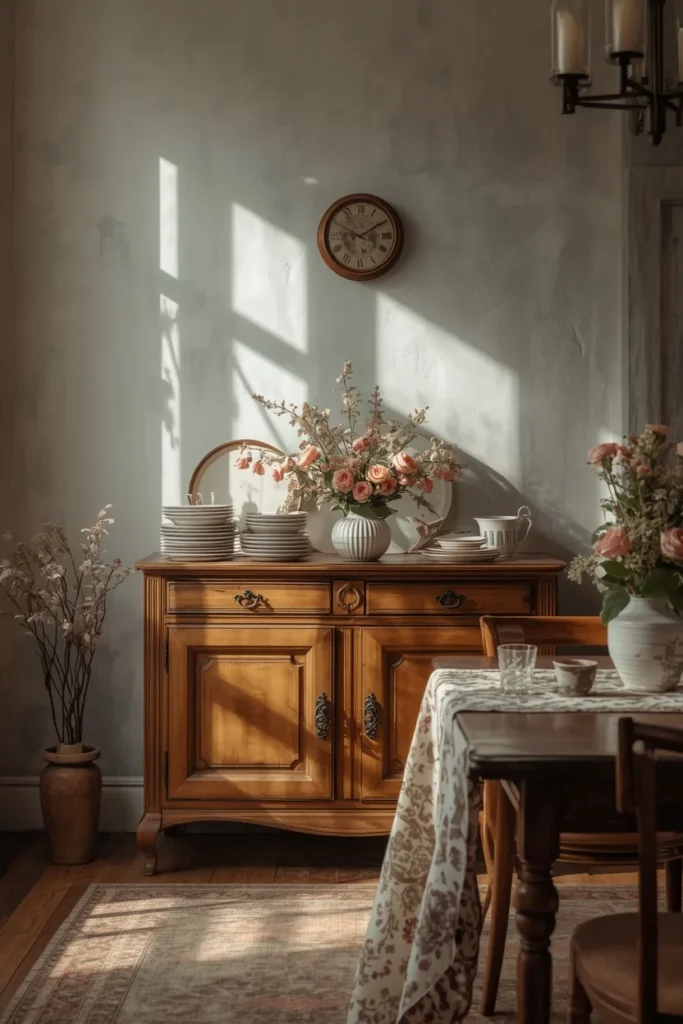
A sideboard or hutch gives a dining room storage and a place to display collected dishware, glassware, and linens. Look for pieces with turned legs, worn brass pulls, or slightly uneven paint, since these details suggest age and use rather than mass production. Style the top with a mix of heights — a stack of plates, a pitcher, a small framed print — instead of lining items up evenly. The inside can hold table linens and serving pieces you don’t use daily, while the open top stays for rotating seasonal decor. A sideboard also anchors a long wall the way a table anchors the room’s center, giving the space better visual balance.
12. Exposed Ceiling Beams
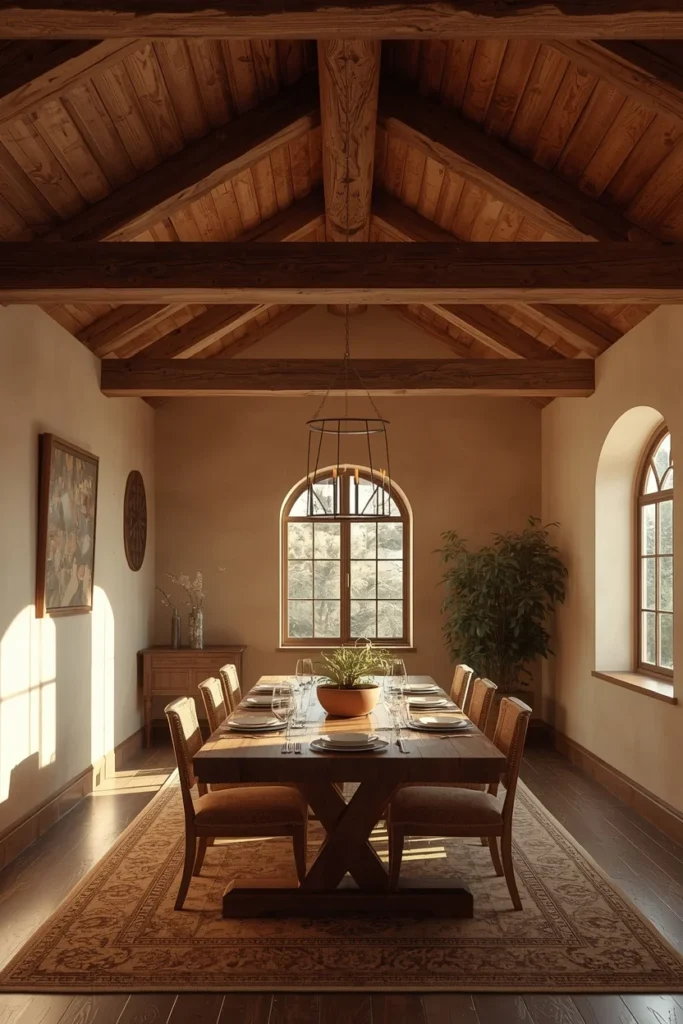
Exposed wood beams, whether original to an older home or added during a renovation, give a dining room the architectural weight that a flat ceiling lacks. Reclaimed or rough-hewn beams in oak or pine create the most authentic cottagecore effect, while painted beams in soft white or gray suit a lighter, more modern take on the style. Beams also double as functional hanging points for a chandelier, pendant lights, or dried herb bundles, tying several ideas on this list together. In rooms with lower ceilings, keeping beams a shade lighter than the walls helps prevent the space from feeling too heavy overhead. This detail works especially well paired with a farmhouse table directly underneath, since the two elements share the same raw wood language.
13. Gothic Cottagecore Black Accents
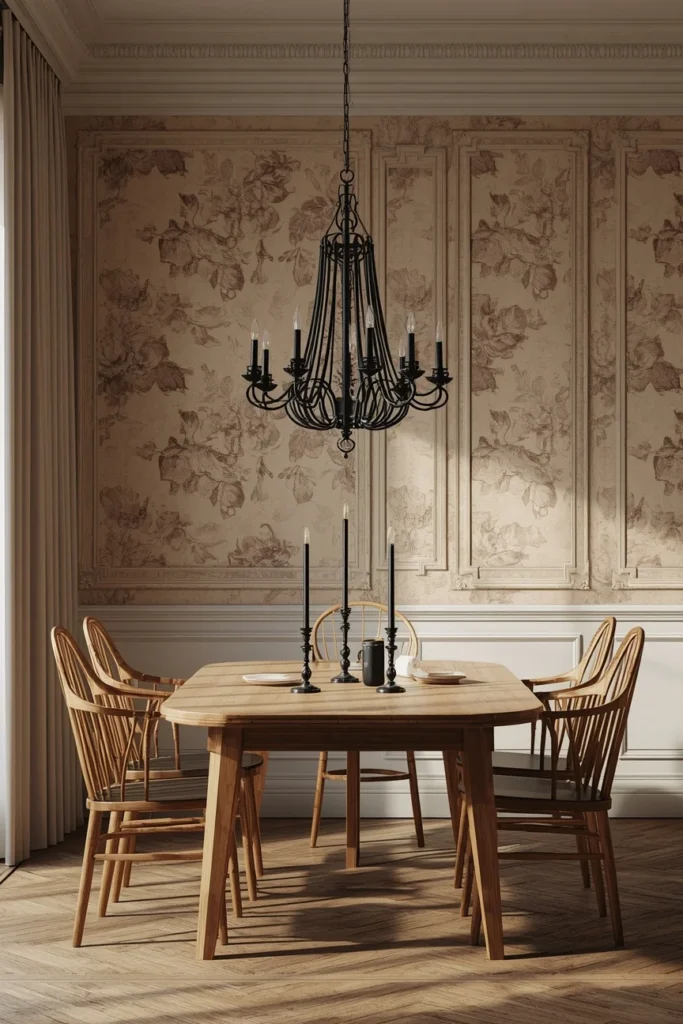
A moodier take on cottagecore leans on black iron light fixtures, dark cabinet hardware, or a black-framed window to add contrast against soft florals and pale wood. This works especially well in dining rooms with strong natural light, where the dark accents read as dramatic rather than heavy. Start small, with black candlesticks or drawer pulls, before committing to a larger piece like a black iron chandelier, since too many dark elements at once can make a room feel closed in. The contrast between delicate florals and sturdy black metal is part of what makes this variation feel current rather than overly sweet. Balance it with warm wood tones nearby so the room still feels inviting rather than austere.
14. Woven Storage Baskets
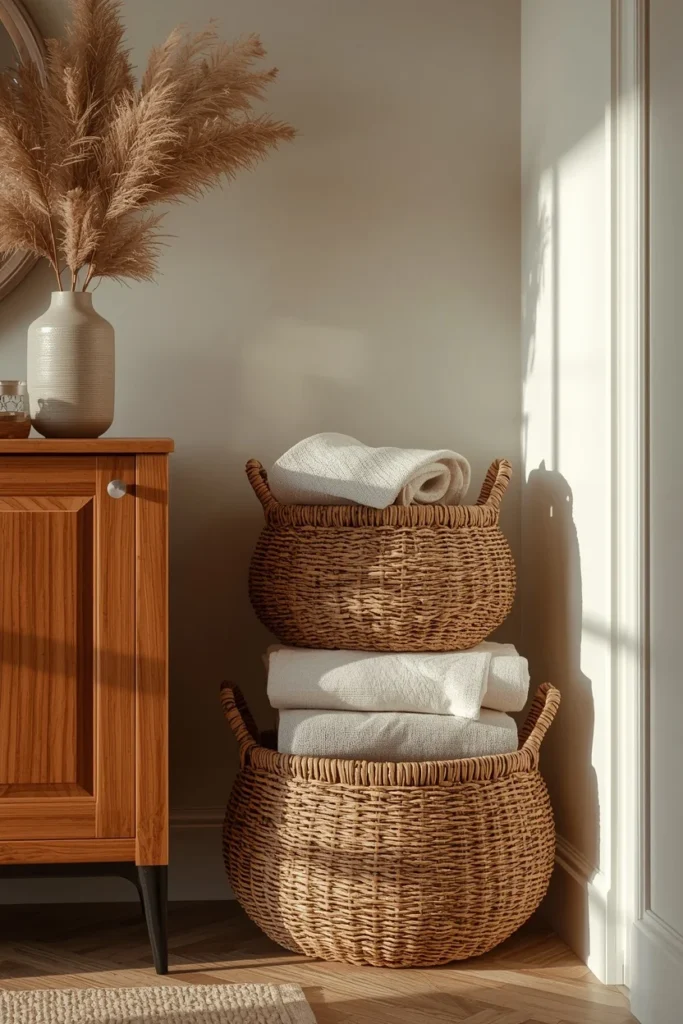
Baskets tucked under a sideboard or stacked in a corner solve real storage problems while adding natural texture to the room. Use them for table linens, extra candles, or seasonal decor that doesn’t need to stay out year-round. Choose baskets in varying sizes rather than a matching nested set, since slight variation in weave and shape supports the collected, secondhand feel central to cottagecore. A basket near the entry to the dining room also gives guests somewhere to set down a coat or bag without cluttering the table area. Natural seagrass or willow baskets tend to photograph warmer than synthetic woven baskets, which can look slightly cool or plasticky under indoor lighting.
15. Mismatched Vintage Dinnerware Display
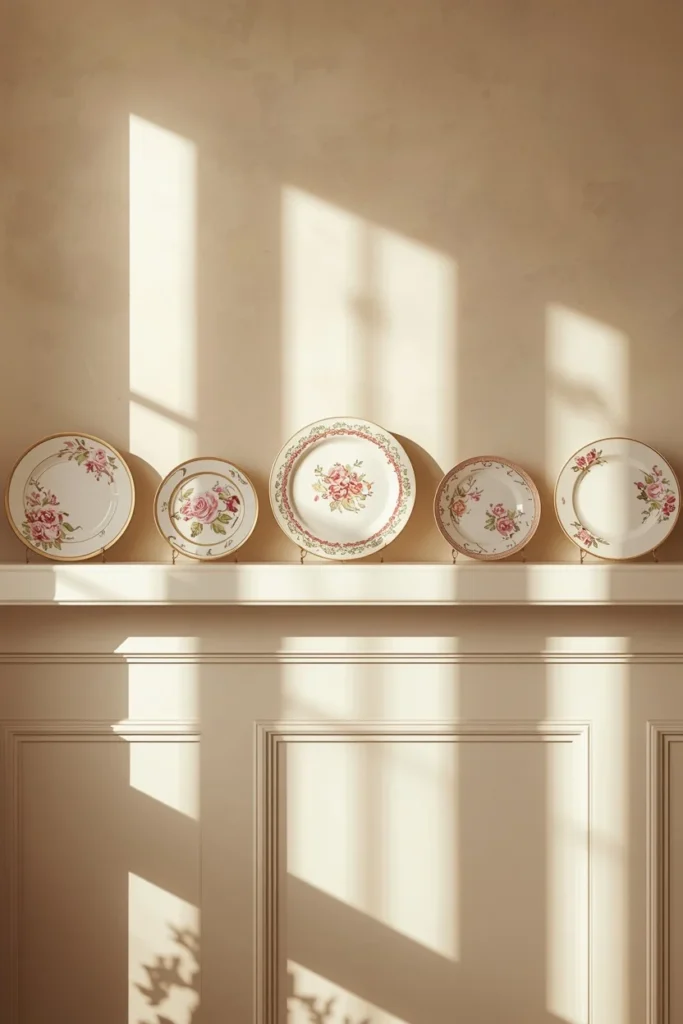
Displaying dinnerware isn’t just for shelves — a small plate rail along one wall turns everyday china into wall art. Mix patterns, eras, and colors freely, since the point of cottagecore dinnerware is that it looks gathered over years, not purchased as a set. Group plates loosely by color family so the wall doesn’t look chaotic, even with a wide range of patterns. This display works particularly well above a sideboard or in an awkward blank wall that doesn’t fit artwork easily. Rotating a few plates seasonally keeps the display feeling fresh without requiring a full rehang.
16. Buttery Yellow and Dusty Pink Palette
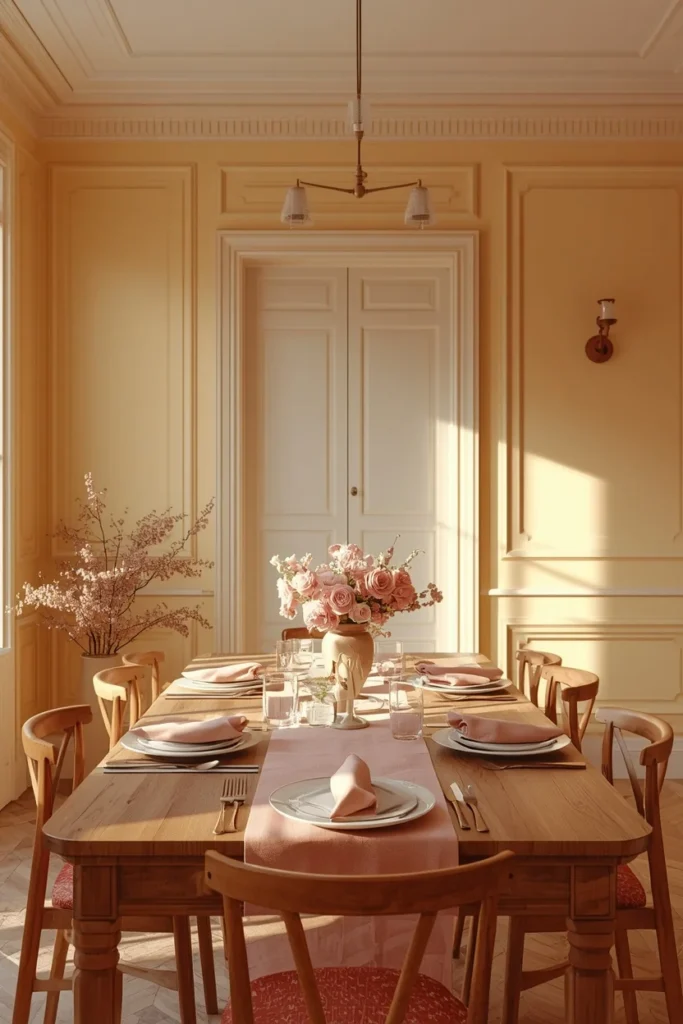
A soft palette of buttery yellow walls or trim paired with dusty pink textiles gives a dining room warmth without leaning too saccharine. Keep the yellow muted rather than bright, closer to churned butter than a highlighter, so it reads as vintage rather than playful. Bring in the pink through smaller elements — cloth napkins, a seat cushion, or a single floral arrangement — instead of large furniture pieces, which keeps the palette from feeling overdone. This combination pairs especially well with natural wood tones and brass hardware, both of which sit comfortably between warm and neutral. Test paint samples at different times of day, since yellow can shift noticeably between morning and evening light.
17. Natural Jute or Braided Rug
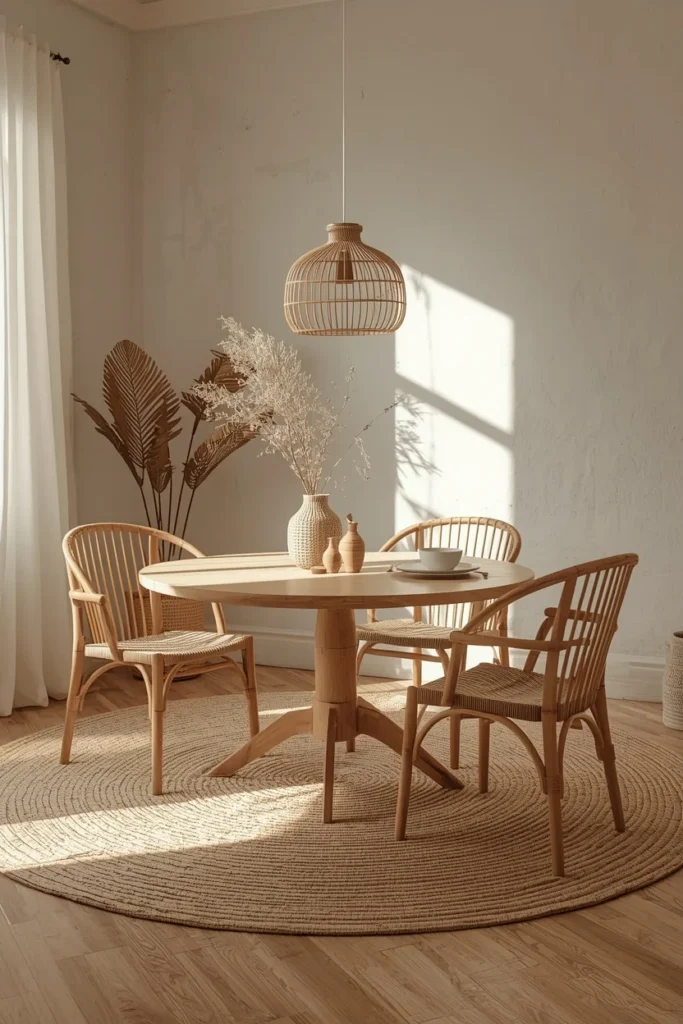
A jute or braided wool rug under the dining table adds warmth and texture underfoot while grounding the room’s natural material palette. Choose a rug large enough that chairs stay on it even when pulled out, which keeps the space looking intentional rather than mismatched in scale. Natural fiber rugs also tend to hide crumbs and everyday wear better than flat-weave synthetic options, which matters in a room where food gets dropped. A round rug under a round table echoes the shape and softens the overall geometry of the room. Layering a smaller vintage-style runner rug on top of a larger jute base adds pattern without losing the natural texture underneath.
18. Layered Lace Tablecloth and Linen Runner
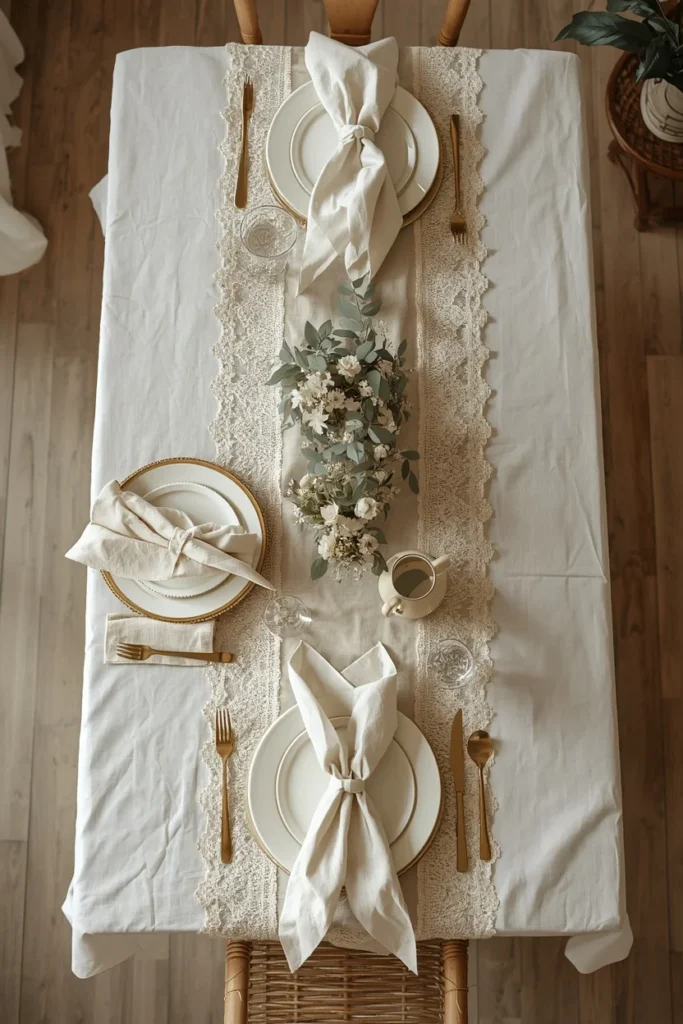
Layering a lace tablecloth under a solid linen runner creates depth on the table itself, even before any dishware goes down. The lace edge peeking out from under the linen adds a soft, romantic detail that photographs beautifully from above. Choose an ivory or cream lace rather than stark white, since it tends to look older and softer under warm lighting. This layered base also gives you flexibility — swap just the runner for holidays or seasons while keeping the lace as a year-round foundation. Iron both pieces before laying them out, since wrinkled linen reads as messy rather than relaxed in photos.
19. Plaster Walls With Painted Trim
Textured plaster walls bring an aged, handcrafted quality that flat drywall can’t replicate, and pairing them with simple painted trim keeps the look grounded rather than overly rustic. A soft lime-wash or limewash-style paint finish in warm white or pale clay adds subtle variation in tone as light moves across the room throughout the day. This works particularly well in dining rooms with statement furniture, like a large hutch or a dark wood table, since the textured wall gives those pieces a quieter backdrop. Painted picture-rail or wainscoting trim in a slightly deeper shade adds definition without competing with the wall texture. This combination has been showing up in higher-end dining room design as a way to bring architectural character back into rooms.

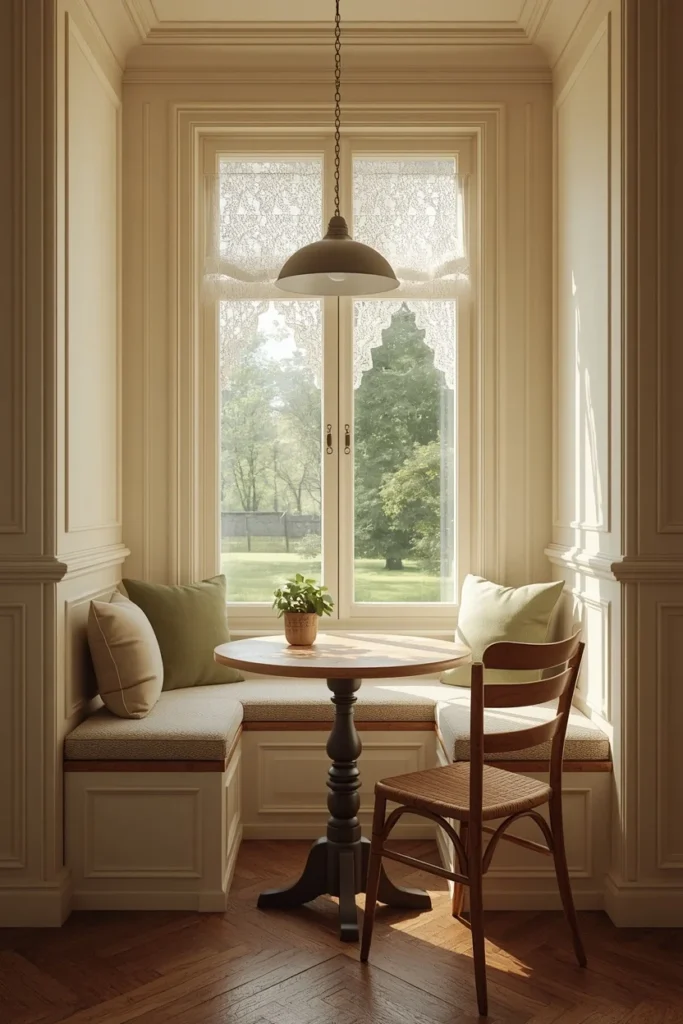
20. Window Nook Dining Corner
A small dining nook built into a window area makes the most of natural light while creating an intimate spot for everyday meals. A built-in bench with a cushioned seat pairs well with one or two freestanding chairs, giving flexible seating without needing a full dining set. Add a small round table so the nook doesn’t feel cramped, and dress the window with the same lace or linen curtains used elsewhere in the room for consistency. This setup works especially well in smaller homes or apartments where a full separate dining room isn’t an option. A single hanging pendant light overhead finishes the space without taking up floor or table room.
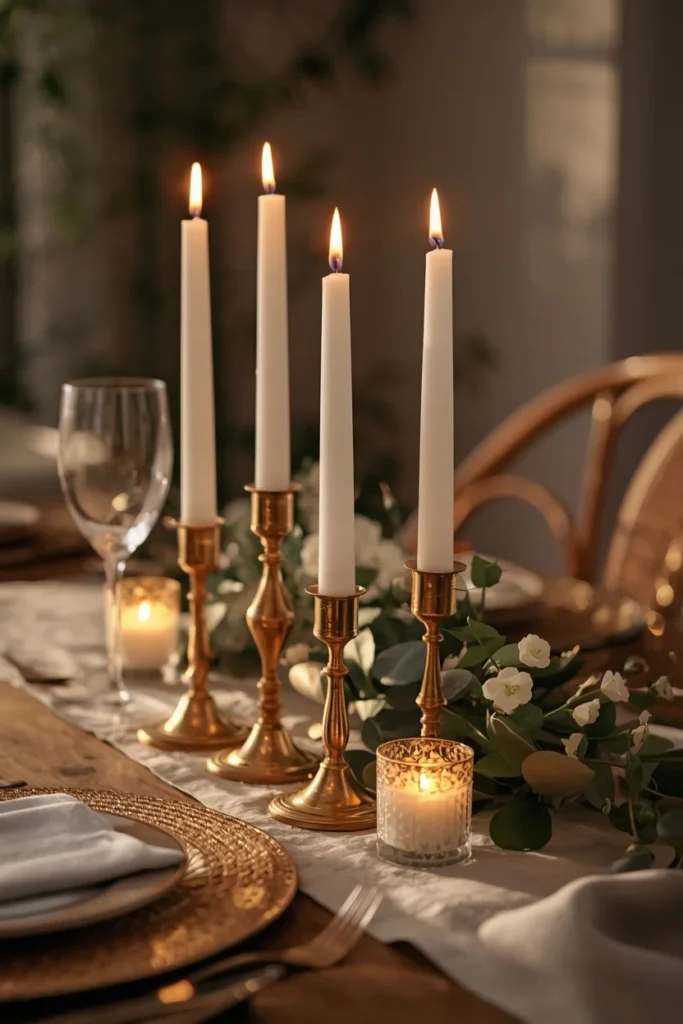
21. Brass and Copper Candlestick Accents
Brass and copper candlesticks add warmth and a soft metallic shine that photographs beautifully against wood and linen. Mix heights and finishes rather than using a matched pair, since uneven candlestick heights create more visual interest down the center of the table. A slightly tarnished or aged brass finish fits the cottagecore mood better than a bright, polished one, again supporting that lived-in, collected feeling. Beeswax or cream taper candles work better here than bright white ones, since their warmer tone matches the metal finishes. Group three to five candlesticks together rather than spacing them evenly, which reads as more intentional and less like a matching set from a store display.
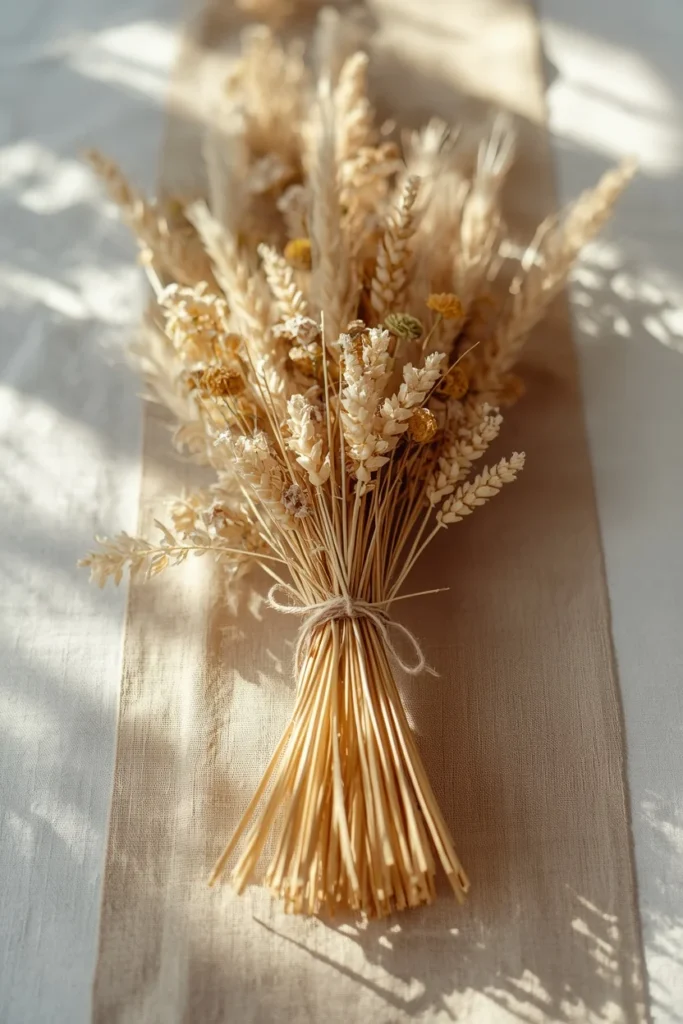
22. Dried Wheat and Flower Centerpiece
A bundle of dried wheat stems tied with twine, paired with a few dried flowers like statice or baby’s breath, makes a centerpiece that lasts through an entire season without wilting. Lay the bundle flat down the center of the table instead of standing it upright in a vase for a more relaxed, harvest-inspired look. This centerpiece style works especially well in fall but reads as cottagecore year-round when paired with the right table linens. Dried arrangements also solve a practical problem, since they don’t need water changes or constant replacing like fresh flowers do. Add a few loose stems scattered near the bundle rather than keeping everything perfectly bunched, for a more natural, just-gathered feel.
Styling Tips
- Mix at least two wood tones in the room (table, chairs, sideboard) instead of matching everything.
- Keep centerpieces low so people can see and talk across the table.
- Layer textiles — linen, lace, quilted patchwork — rather than using just one tablecloth.
- Let a few “imperfect” pieces stay visible: a chipped pitcher, a worn chair, a tarnished candlestick.
- Rotate small decor (flowers, herb bundles, table runners) by season so the room doesn’t feel static.
Practical Implementation Ideas
- Start with the table and chairs first, since they set the tone for every other decision.
- Add one architectural element (paneling, beams, or plaster texture) before shopping for smaller decor.
- Build your lighting layer next: a statement fixture plus candles for flexibility between everyday and special dinners.
- Save wall displays (plate rails, floral wallpaper) for last, once the furniture and lighting feel settled.
Common Mistakes to Avoid
- Buying a fully matched dining set, which reads as showroom rather than cottagecore.
- Using bright white lighting instead of warm, dimmable bulbs or candlelight.
- Overcrowding open shelves or table surfaces until the room feels cluttered instead of collected.
- Choosing synthetic lace or rattan, which photographs cooler and less textured than natural materials.
Small-Space Alternatives
A window nook with a built-in bench (Idea 20) works better than a full dining set in tight apartments. A round table also uses corner space more efficiently than a rectangular one. Open shelving instead of a full hutch keeps storage without eating into floor space, and a smaller jute rug scaled to just the table footprint keeps the room from feeling visually heavier than it is.
Budget-Friendly Alternatives
Thrifted mismatched chairs cost far less than a matching new set and fit the aesthetic better. A secondhand pitcher from a flea market works as well as an expensive vase for wildflowers. Painting an existing table instead of buying reclaimed wood furniture gets a similar rustic effect for a fraction of the price, and dried flowers from a craft store last far longer than fresh bouquets, saving money over time.
Pro Styling Recommendations
Interior designers are steering dining rooms toward paneled walls, plaster finishes, warm wood tones, and layered lighting, which lines up closely with cottagecore’s own emphasis on texture and warmth. Leaning into one or two of these architectural elements, rather than only shopping for small decor, tends to give a room more lasting character.
FAQs
Conclusion
A cottagecore dining room doesn’t come from one big purchase. It comes from small, layered choices: a table with real texture, a light that flickers instead of glares, a bundle of flowers picked more for feeling than symmetry. Pick two or three ideas from this list to start, live with them for a few weeks, and let the rest of the room build slowly around what already feels right.