18 DIY Fresh Christmas Wreath Ideas Worth the Effort

Store-bought wreaths are fine. They’re also plastic, a little stiff, and don’t smell like anything. A fresh wreath, made from actual cut greenery, is the difference between decorating your door and filling your entryway with the actual scent of Christmas every time it opens.
It’s also less complicated than it looks. Most fresh wreaths come down to one repeatable technique — bundle greenery, attach it to a frame, repeat around the circle — and from there, the greenery you choose and what you tuck into the gaps is what makes each one different.
This list covers 18 DIY fresh Christmas wreath ideas, with the actual greenery, technique, and longevity details you need before you start clipping branches, plus a few designs most roundups skip entirely, like a foraged seed-head wreath and a living herb wreath a cook can actually snip from. Grab your gloves and some floral wire. Let’s build one.
Table of Contents
18 DIY Fresh Christmas Wreath Ideas
Classic Wired Evergreen Base Wreath
This is the technique every other wreath on this list builds on, so it’s worth learning first even if you plan to dress it up later. Start with an 18-inch wire wreath frame, cut noble fir, cedar, or pine into 6 to 8 inch lengths, and stack three or four pieces together into small bundles. Lay each bundle against the frame and secure it with floral wire, wrapping three or four times before moving a few inches over and repeating, always overlapping the stems of the previous bundle so no bare wire shows through. Noble fir, cedar, and pine all hold their needles well even in warm indoor temperatures, which makes this base genuinely durable rather than just pretty for a week. Once the frame is fully covered, this base is ready for any embellishment — ribbon, berries, pinecones — from the ideas further down this list.
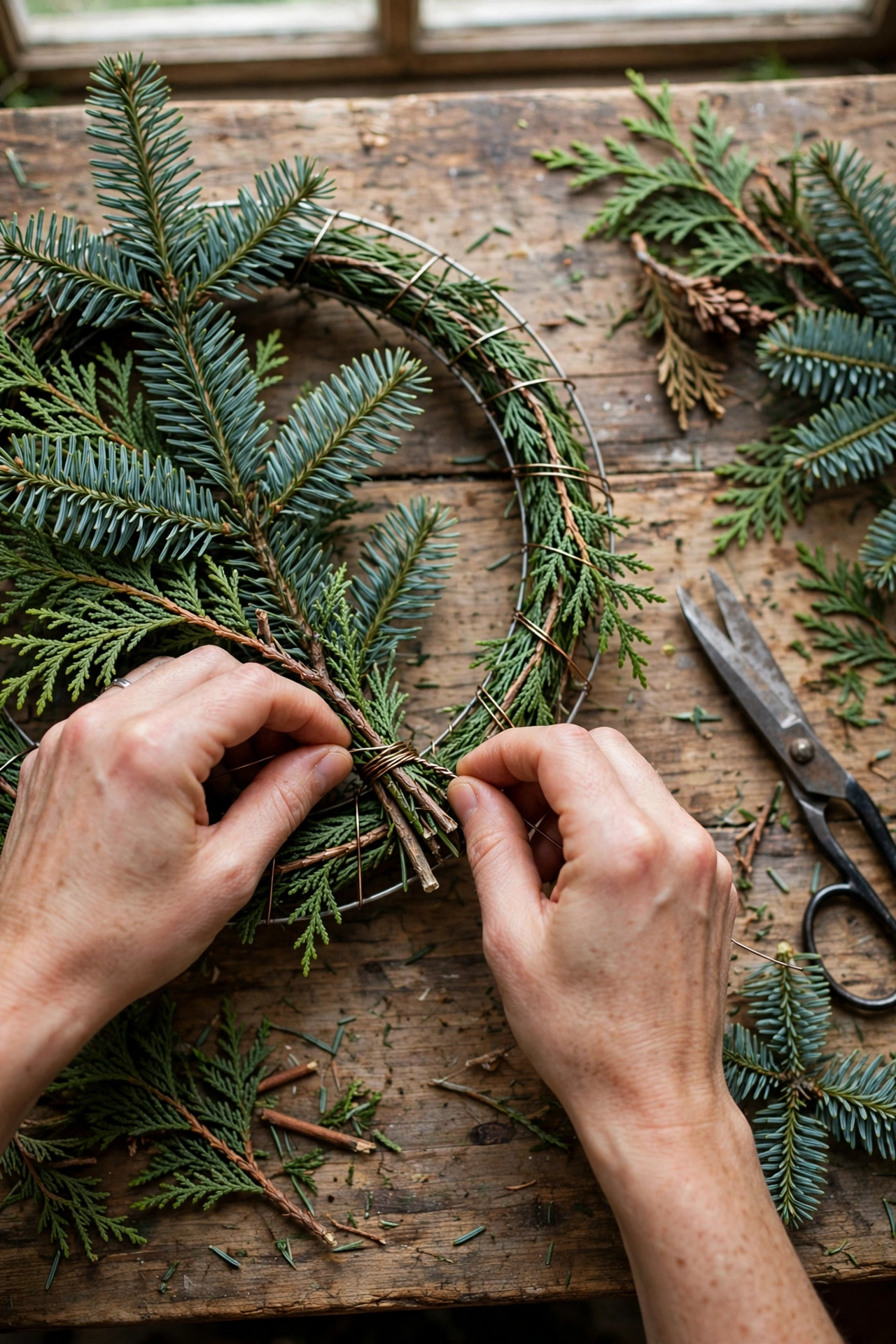
No-Wire Woven Branch Wreath
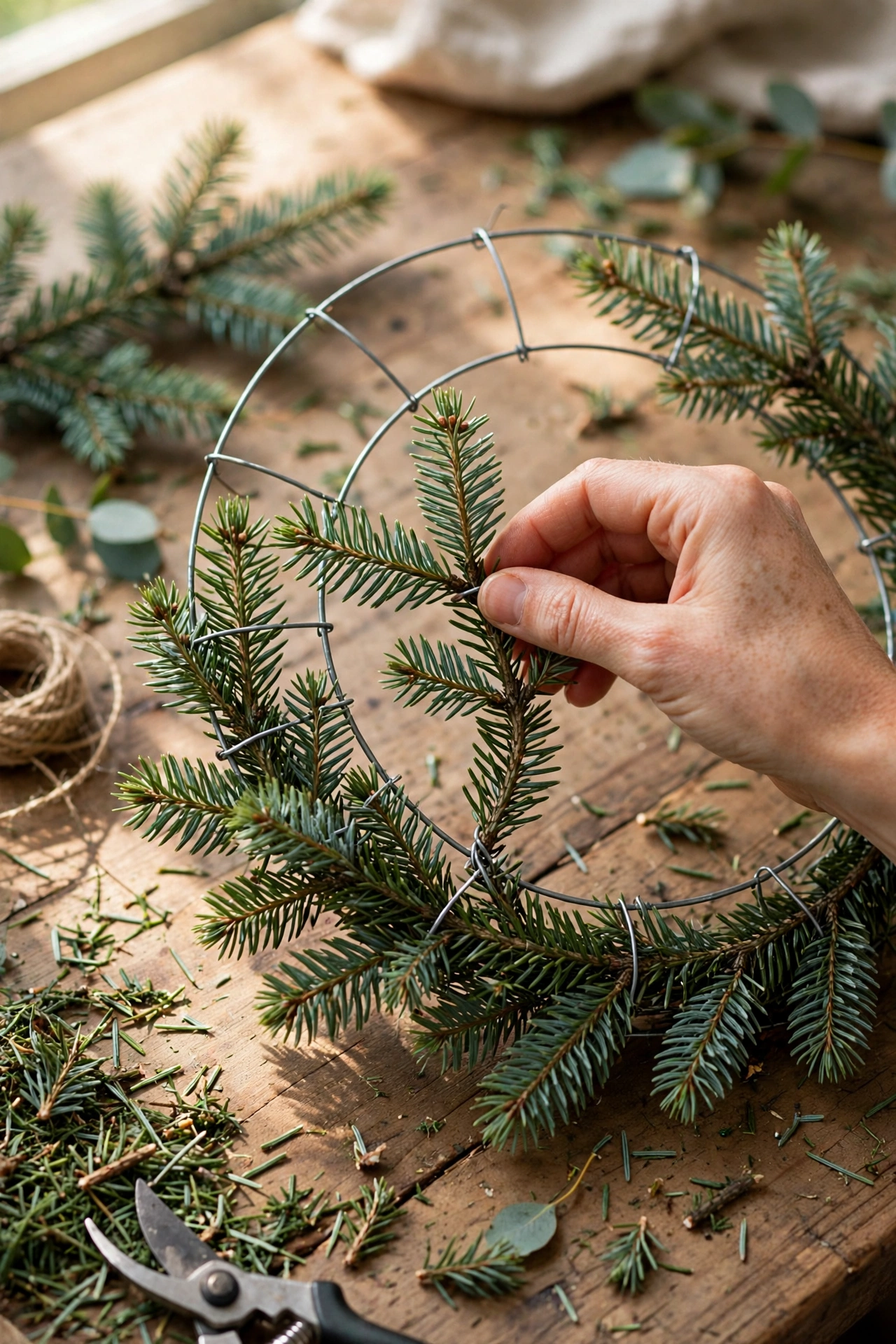
For a genuinely fast version with almost no tools, this technique skips floral wire entirely by weaving flexible conifer branches directly through the gaps of a wire wreath frame. Take a branch about 18 to 24 inches long and thread it in and out through the frame’s wire spokes, letting the tension of the weave hold it in place on its own. Continue weaving 6 to 8 more branches around the circle, tucking the cut end of each new branch under the foliage of the one before it so the transitions disappear. This method genuinely takes about 20 minutes start to finish, making it the fastest wreath on this entire list. It works best with pliable greenery like spruce or younger pine branches, since stiffer wood is harder to weave without snapping.
Eucalyptus Statement Wreath
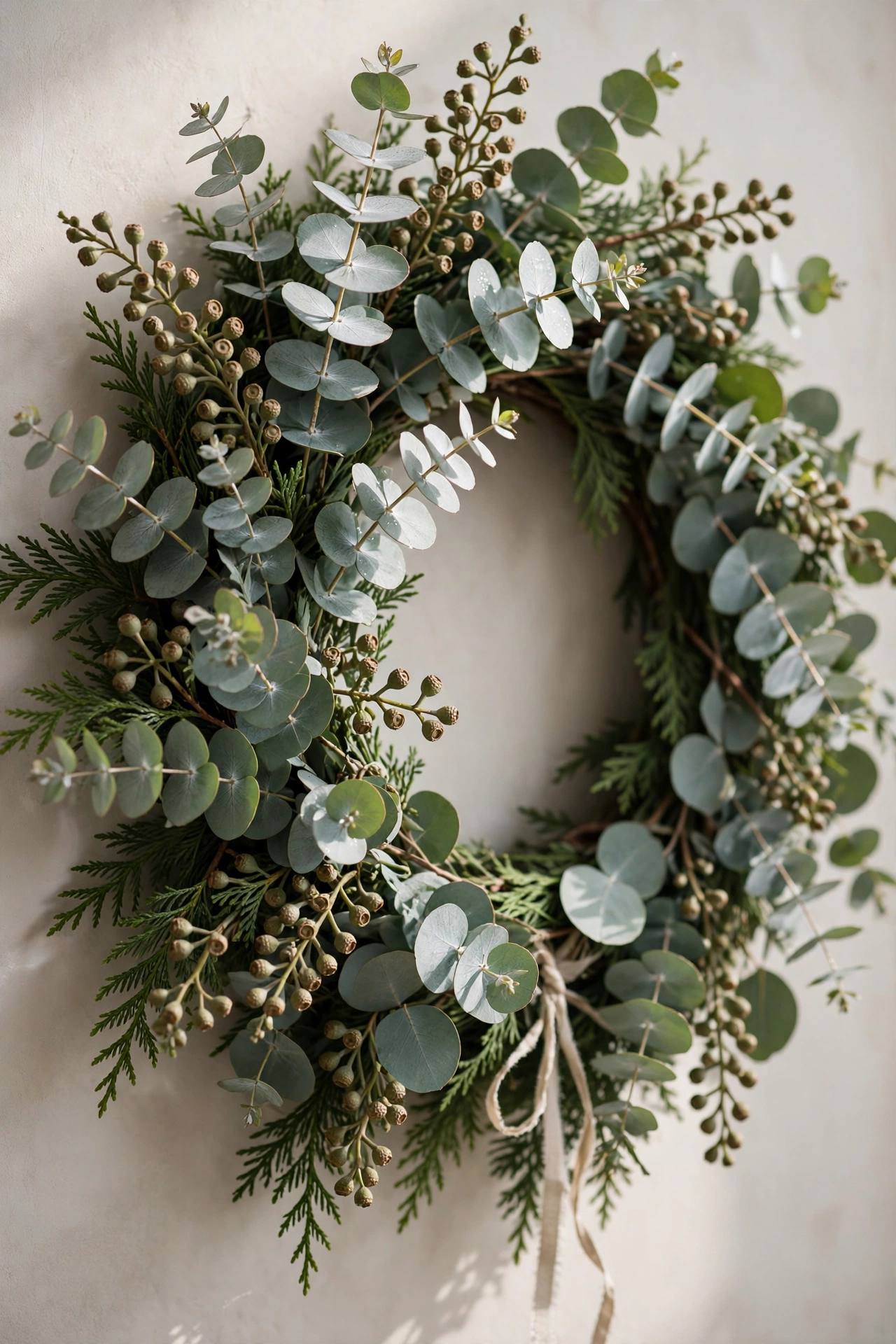
Eucalyptus brings a soft, silvery-green color and a genuinely strong, clean fragrance that reads more Scandinavian minimalist than traditional red-and-green Christmas. Use it as the star rather than a filler by adding it last, after your base layer of a sturdier evergreen like cedar is already in place, so the eucalyptus stems drape loosely over the top instead of getting buried. Silver dollar eucalyptus and seeded eucalyptus both work well, and mixing the two varieties adds textural contrast between rounder and more elongated leaf shapes. Keep the wreath simple with this one — a single thin ribbon or no ribbon at all lets the eucalyptus color and shape carry the whole design. Note that eucalyptus dries out faster than cedar or fir, so this wreath looks best displayed somewhere it gets misted every few days or kept in cooler outdoor temperatures.
Related: 16 Easy DIY Christmas Candle Holders to Make Tonight
Glossy Magnolia Leaf Wreath
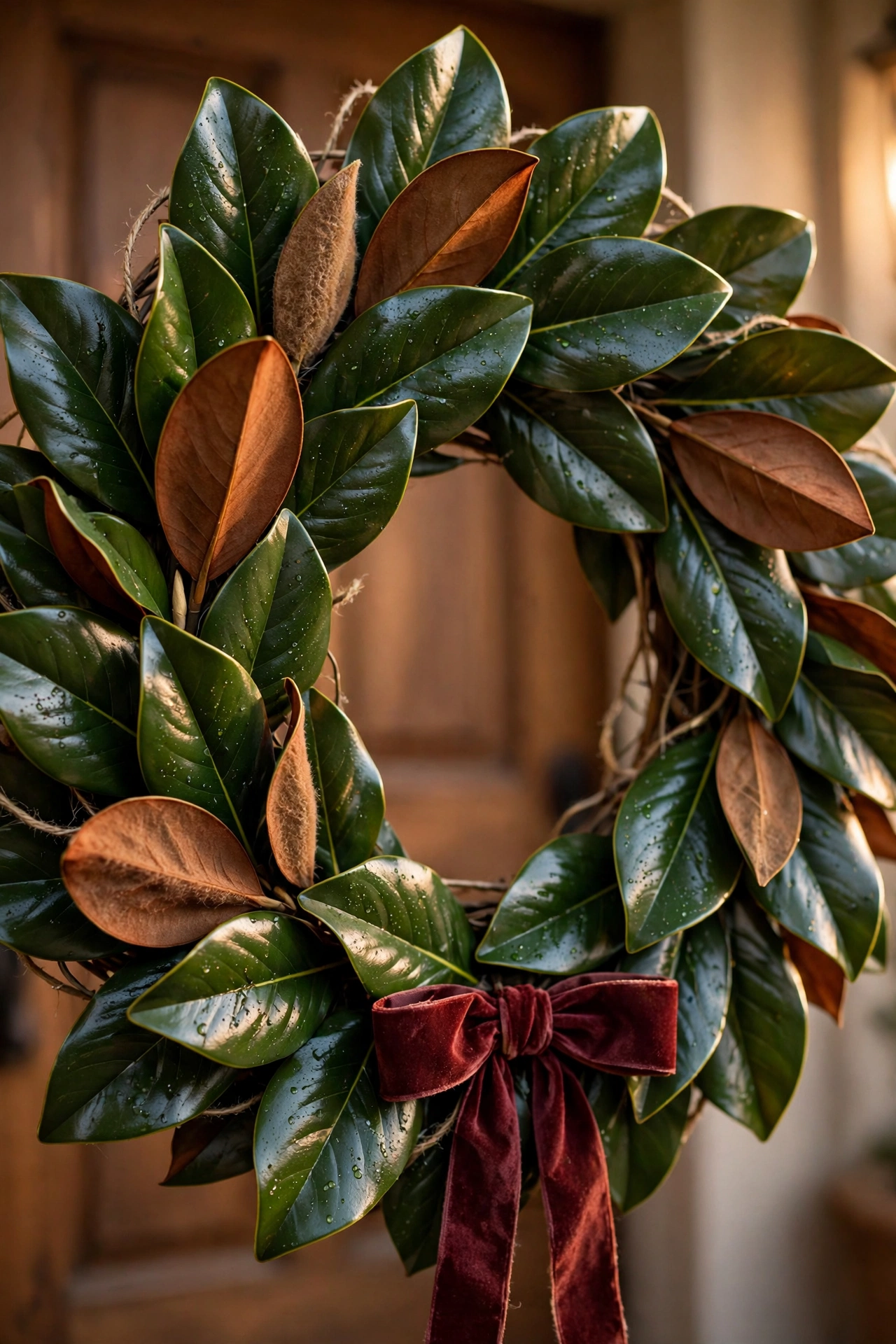
Magnolia leaves bring a completely different texture to a wreath than any evergreen needle can — broad, glossy, deep green on top with a soft velvety brown underside that adds warmth when a few leaves are flipped over. Wire small clusters of magnolia branches onto the frame the same way you would evergreen bundles, alternating a few leaves face-up and a few flipped to show the brown backing for visual depth. Magnolia holds up remarkably well once cut, often lasting several weeks without wilting even without water, which makes it one of the most forgiving greens on this entire list. This wreath needs very little else to look finished — a simple burgundy or gold ribbon is usually enough, since the leaves themselves are already the focal point. It transitions beautifully from Thanksgiving straight through the whole Christmas season without needing a swap.
Compact Boxwood Clipping Wreath
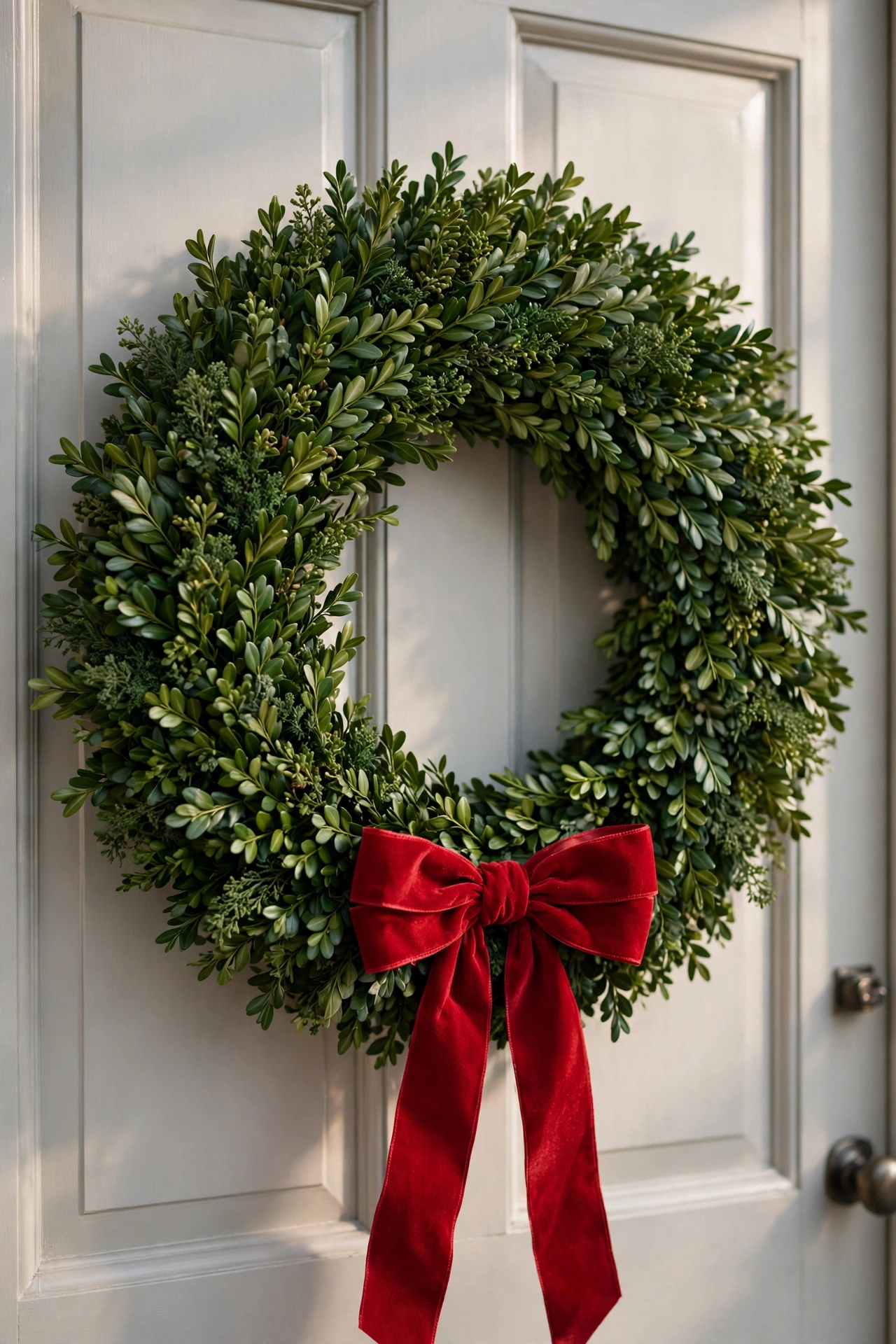
Boxwood is one of the most structured, formal-looking greens you can use, since its small, dense leaves create a tight, manicured texture rather than the looser, feathery look of fir or pine. Clip small sprigs directly from an established boxwood shrub, keeping pieces to about 4 to 6 inches so the finished wreath stays compact and tidy rather than shaggy. Wire the sprigs on in tight, overlapping layers, going around the frame two or three times if needed until no gaps show through. Boxwood is genuinely one of the longest-lasting greens for holiday decor, holding its color and shape for weeks with minimal wilting even indoors. This wreath pairs especially well with a classic red velvet bow or a cluster of gold-painted pinecones for a traditional, polished look.
Mixed Textural Evergreen Wreath
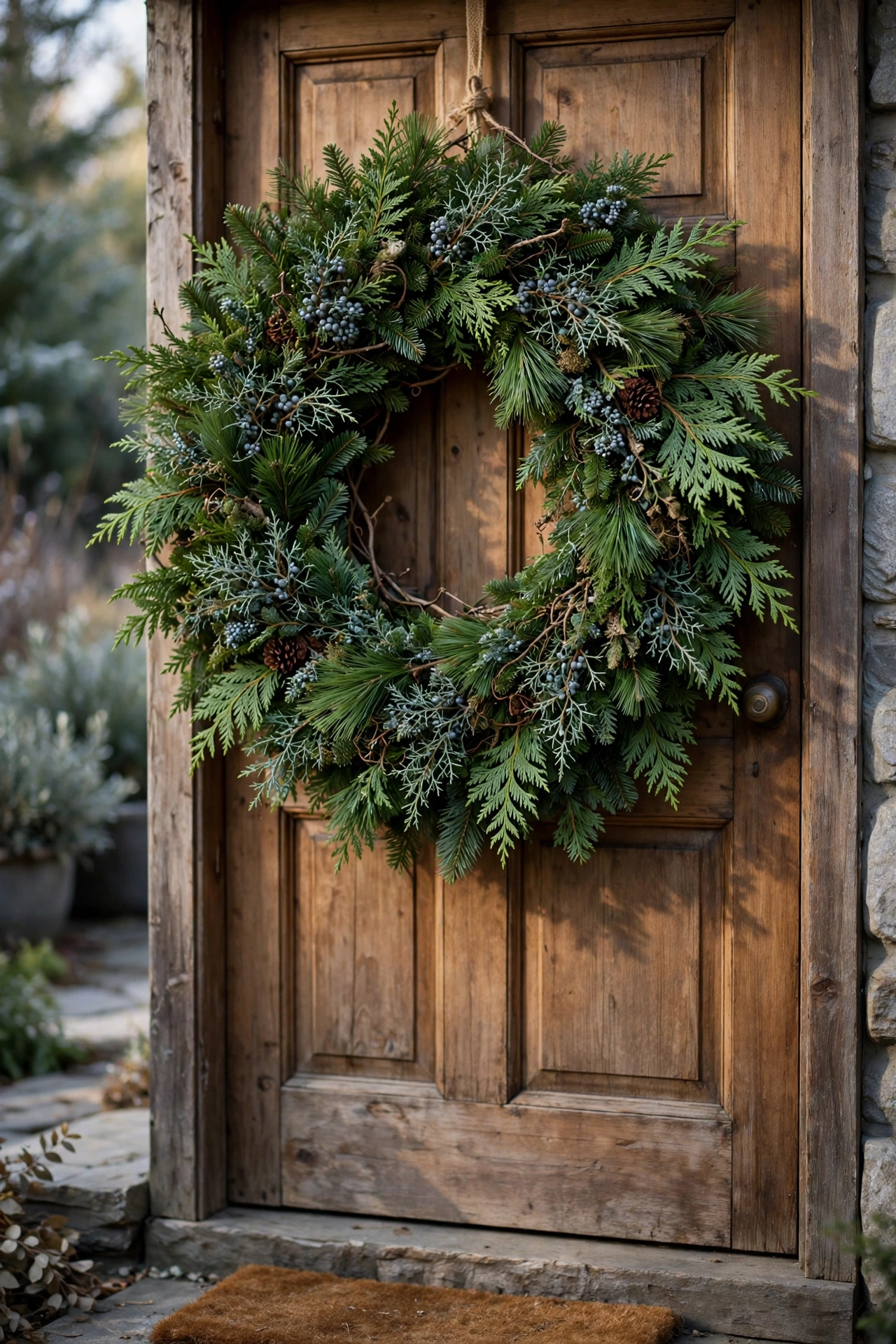
Instead of relying on one type of greenery, this wreath layers three or four different evergreens for a fuller, more dimensional look than any single green can achieve alone. Start with a base layer of one sturdier green, like cedar, then disperse smaller bundles of juniper, pine, and fir throughout rather than grouping each type together in its own section. Vary the needle lengths and shades of green deliberately, since the contrast between cedar’s flat sprays and pine’s rounder clusters is what actually creates visual texture. Make the wreath fuller on a front door than you would in a smaller interior space, since a front door needs to read well from several feet away. This is the wreath most florists actually make as their default, since the mix hides small gaps far better than a single greenery type does.
Living Herb Wreath for the Kitchen
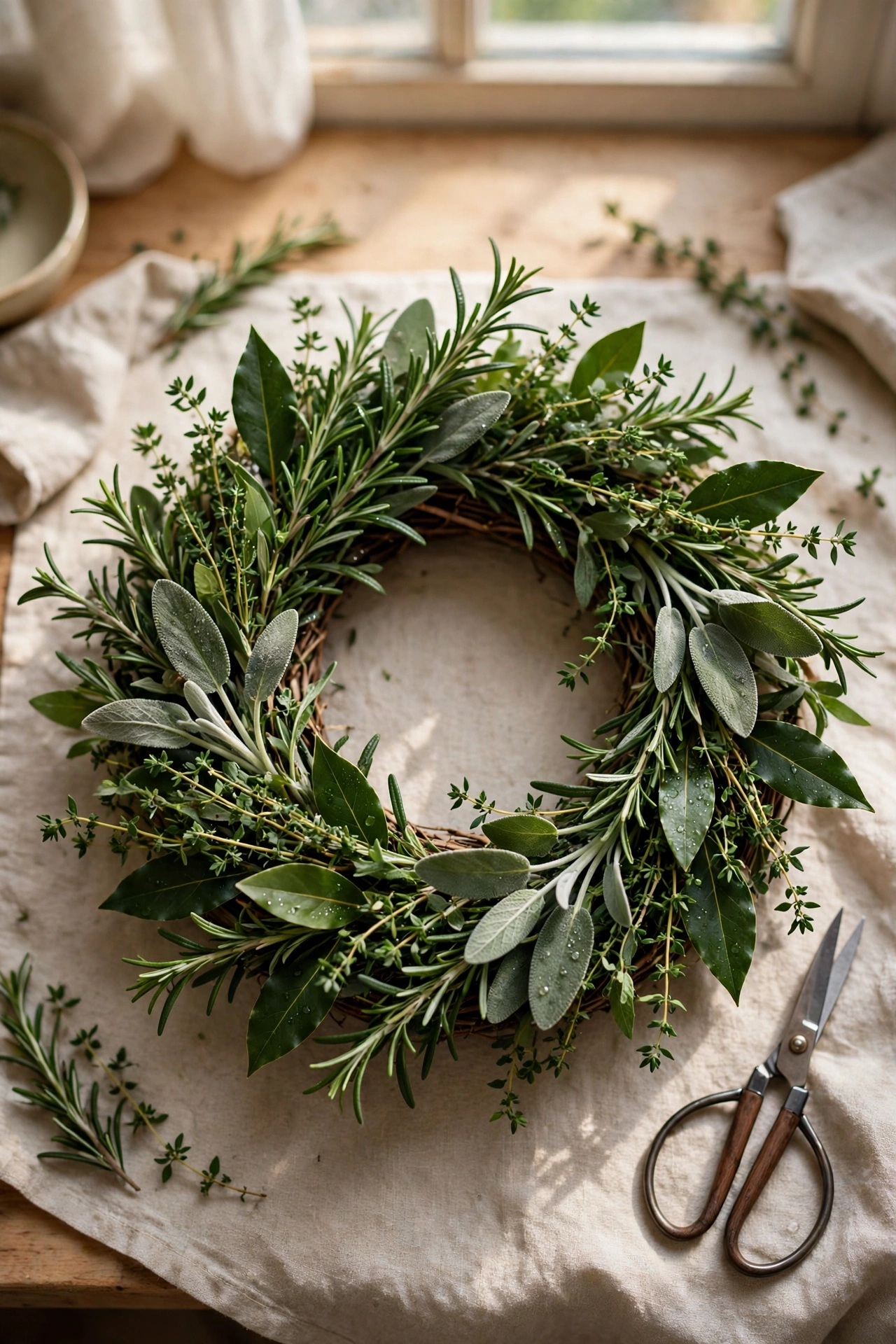
Built from fresh rosemary, sage, bay leaf, and thyme instead of ornamental evergreens, this wreath doubles as an actual cooking ingredient a host can snip from while prepping holiday meals. Wire small bundles of each herb onto a compact 12 to 14 inch frame, mixing rosemary’s needle-like texture with the broader leaves of bay and sage for visual variety. Keep this wreath in the kitchen near where you cook, both because the constant warmth and light help it last and because it’s genuinely more useful hung somewhere you’ll actually reach for it. This makes an especially good hostess gift, since it’s decorative right up until the moment someone needs a sprig of rosemary for a roast. Mist it lightly every couple of days to keep the herbs from drying out too quickly in a warm kitchen.
Dried Citrus and Cinnamon Wreath
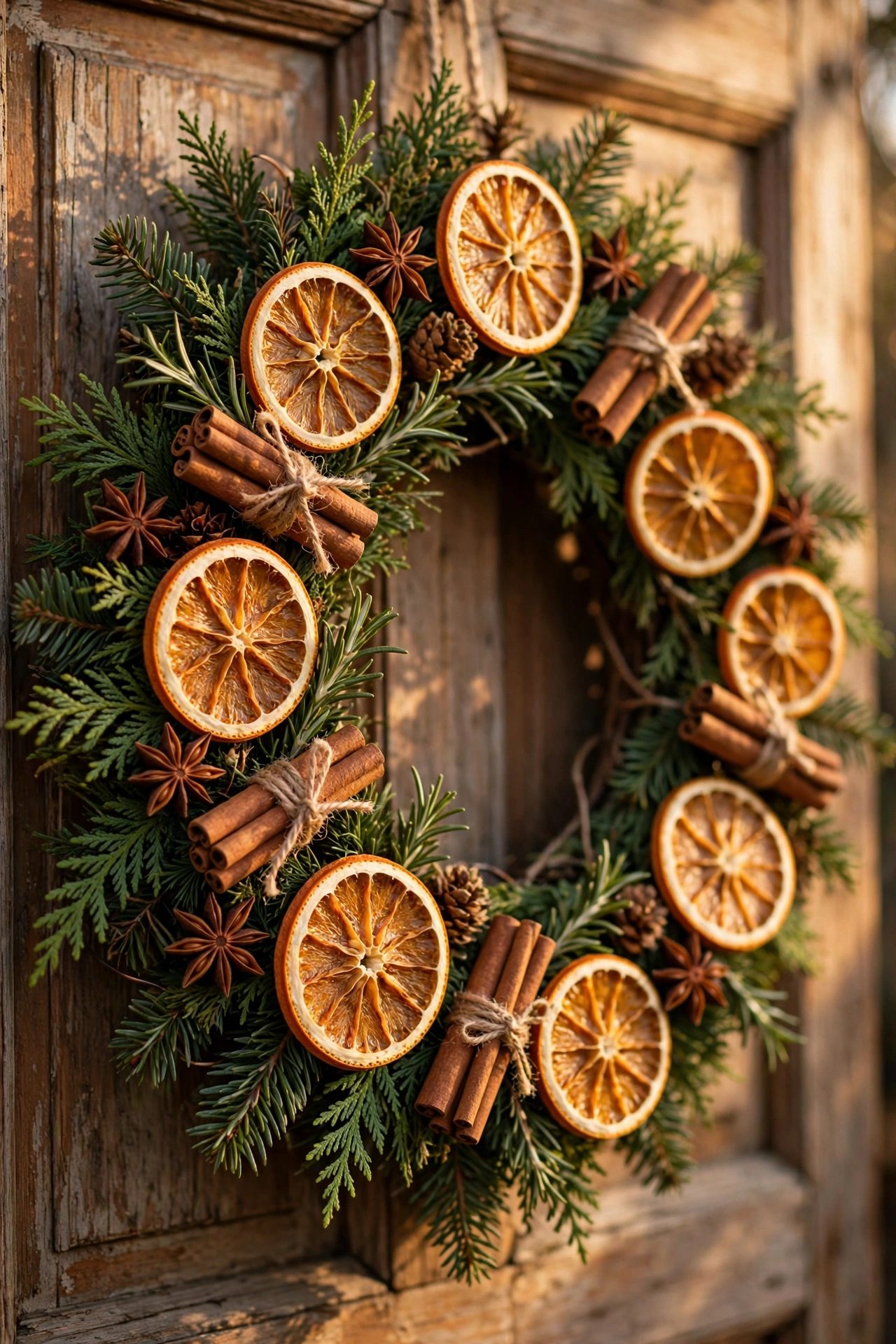
Thin slices of dried orange, cinnamon sticks, and star anise turn a simple evergreen base into something that smells almost as good as it looks. Slice oranges into even, quarter-inch rounds and dry them in a low oven or dehydrator for at least eight hours until they’re fully dehydrated rather than just dried on the surface, since undried slices will mold once wired onto a wreath. Wire the citrus slices, bundles of cinnamon sticks, and a few whole star anise pods onto a finished evergreen base, spacing them evenly rather than clustering everything on one side. Add dried pomegranate halves or small dried apple slices for more color variation if you want the wreath to lean warmer and more rustic. This is one of the more time-intensive ideas on this list because of the drying step, but the finished result has a genuinely different look and scent than any greenery-only wreath.
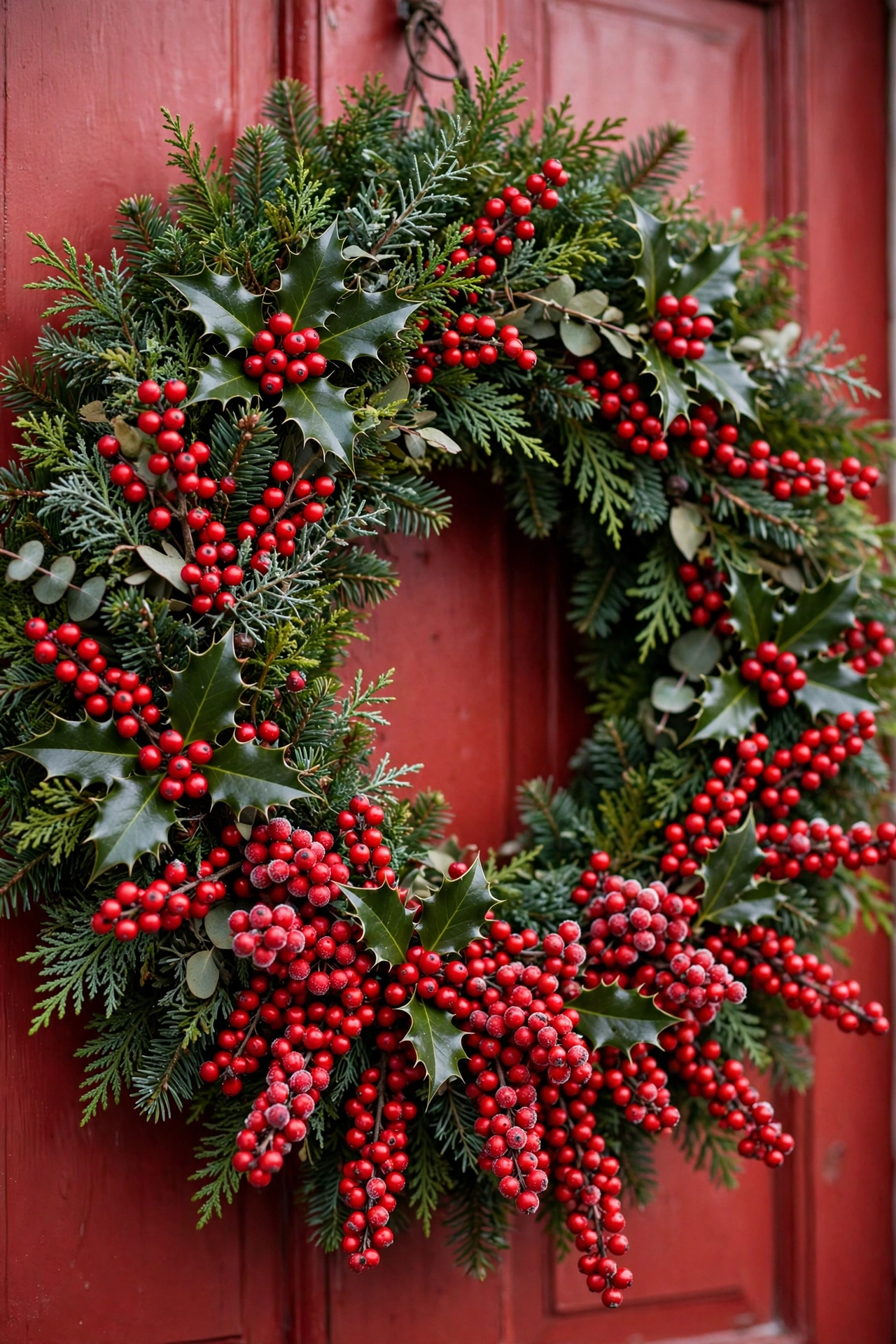
Berry-Studded Wreath
Bright red berries do more to signal “Christmas” than almost any other single embellishment, and this wreath leans fully into that with clusters of holly, winterberry, or pyracantha berries wired throughout an evergreen base. Cut berry branches into 4 to 6 inch pieces and wire them in small clusters of three or four berries rather than single sprigs, since clusters read as fuller and more intentional from a distance. Distribute the clusters unevenly around the wreath, with slightly more concentrated near the bottom, which mimics how berries naturally cluster on a branch and avoids a stiff, evenly-spaced look. Real holly berries are toxic if eaten, so keep this wreath out of reach if small children or pets have access to your front entry. Winterberry holly in particular holds its bright red color for weeks even after the leaves drop, making it one of the most reliable color sources on this entire list.
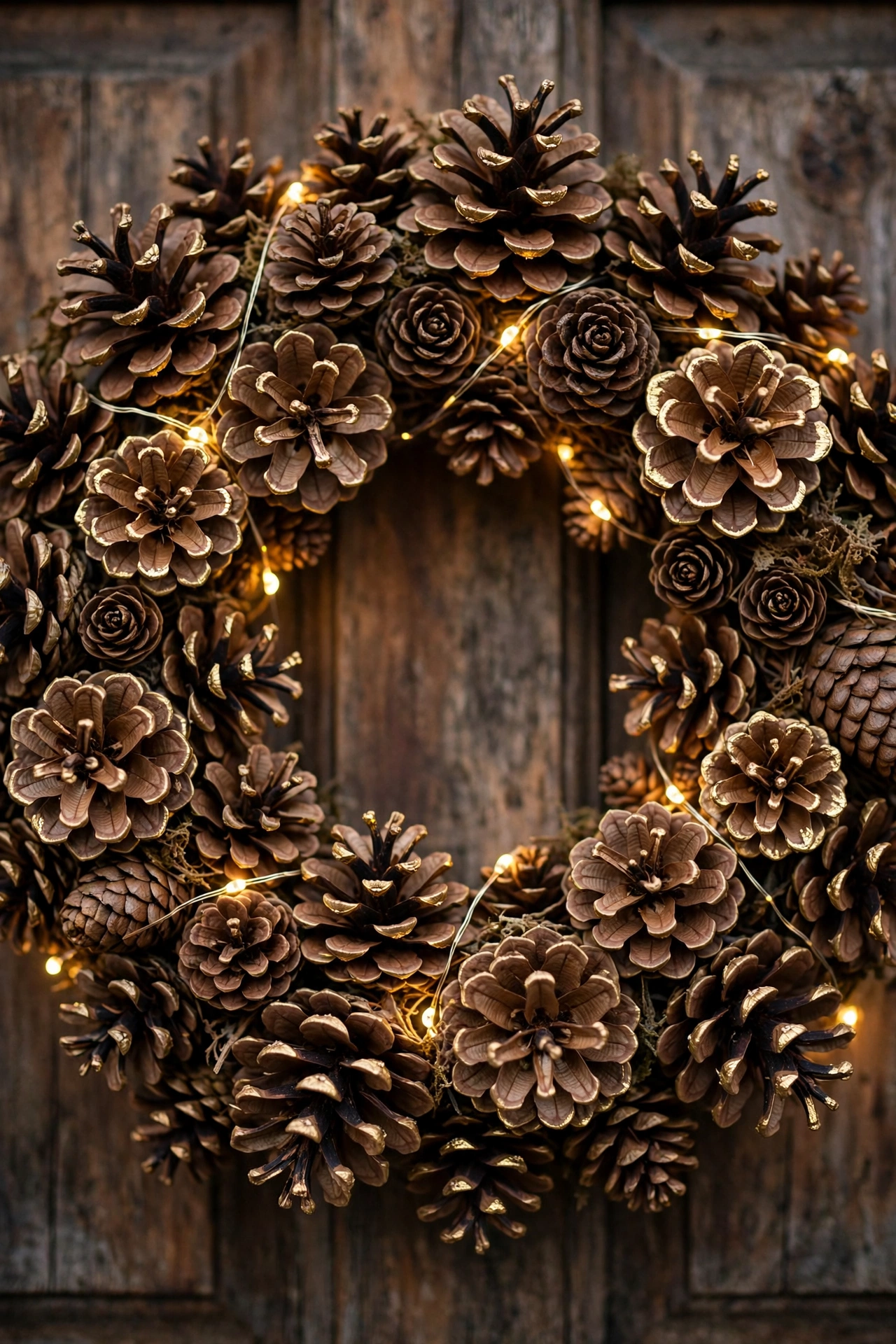
Foraged Pinecone Wreath
Fallen pinecones cost nothing and add real dimension and rustic texture that flat greenery alone can’t achieve. Gather pinecones of varying sizes from your own yard or a nearby park, and let them dry out fully indoors for a few days if they were collected on a damp day, since wet pinecones won’t hold hot glue or wire well. Attach them to a foam or wire wreath base using hot glue for smaller cones or a loop of floral wire threaded through the base scales for larger, heavier ones. For extra shine, dip the tips of a few pinecones in gold or white spray paint before attaching, which adds a metallic accent without needing any other embellishment. This wreath pairs beautifully with a thin strand of warm white lights woven through the cones for an evening glow.
Heart-Shaped Fresh Greenery Wreath
Stepping away from the expected circle entirely, this design starts with a wire hanger bent into a heart shape instead of a standard wreath frame, then follows the same bundling and wiring technique used on a round base. Attach small evergreen bundles around the heart shape using floral wire, paying extra attention to the inner point and outer curves where the shape changes direction, since greenery needs slightly smaller bundles there to follow the curve cleanly. Scatter a handful of berries throughout for color and texture once the base is fully covered. This design works particularly well over a mirror, on a bedroom door, or as a smaller accent piece rather than the main front door wreath, since its shape reads best up close. It’s also an easy way to repurpose this same fresh-wreath technique for Valentine’s Day if you keep the frame past the holidays.
Related: 23 Stylish Small Apartment Christmas Decor Ideas That Save Space That Make Every Inch Count

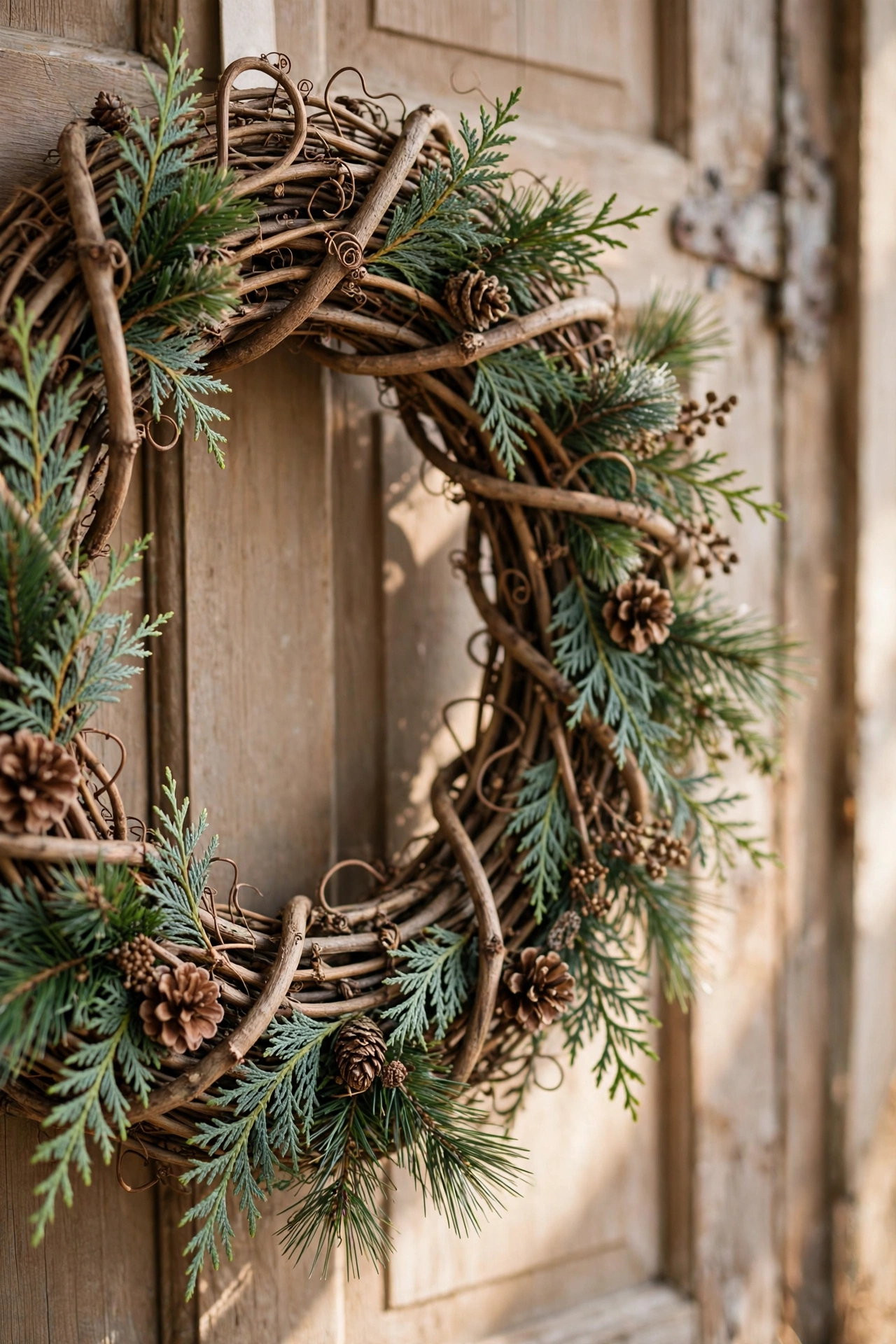
Grapevine Base with Tucked Greenery
Instead of hiding the frame completely, this design uses a natural grapevine wreath base as a visible part of the finished look, with fresh greenery tucked in rather than fully covering it. Weave small sprigs of cedar, pine, or eucalyptus directly into the gaps of the grapevine, letting some of the twisted vine texture show through between the greenery clusters. This creates a more relaxed, textured look than a fully-covered wire-frame wreath, since the exposed vine adds an earthy, organic layer underneath the green. Add a few dried elements like small pinecones or dried berries directly into the vine gaps rather than wiring them onto the greenery, since the vine itself holds them naturally. This wreath tends to read as more rustic and farmhouse-styled than the fully covered versions on this list, making it a good fit for a more casual, natural-leaning home.
Foraged Seed Head and Wildflower Wreath
For a genuinely wild, foraged look, this wreath skips traditional evergreens almost entirely in favor of dried seed heads, rosehips, and late-season wildflowers gathered from a garden or hedgerow. Use spiky echinops seed heads and eryngium for texture, mixed with sprays of rosehips and a handful of dried wild carrot or yarrow flower heads kept long and loose rather than trimmed short. Add a few sprigs of eucalyptus if you want a touch of fragrance, since most foraged seed heads and dried flowers carry little to no scent on their own. This design intentionally looks less manicured than the other wreaths on this list, with stems left longer and texture left irregular for a genuinely gathered-from-the-garden effect. It works best displayed somewhere protected from heavy rain or wind, since the dried, delicate materials hold up less well outdoors than sturdy evergreen needles.

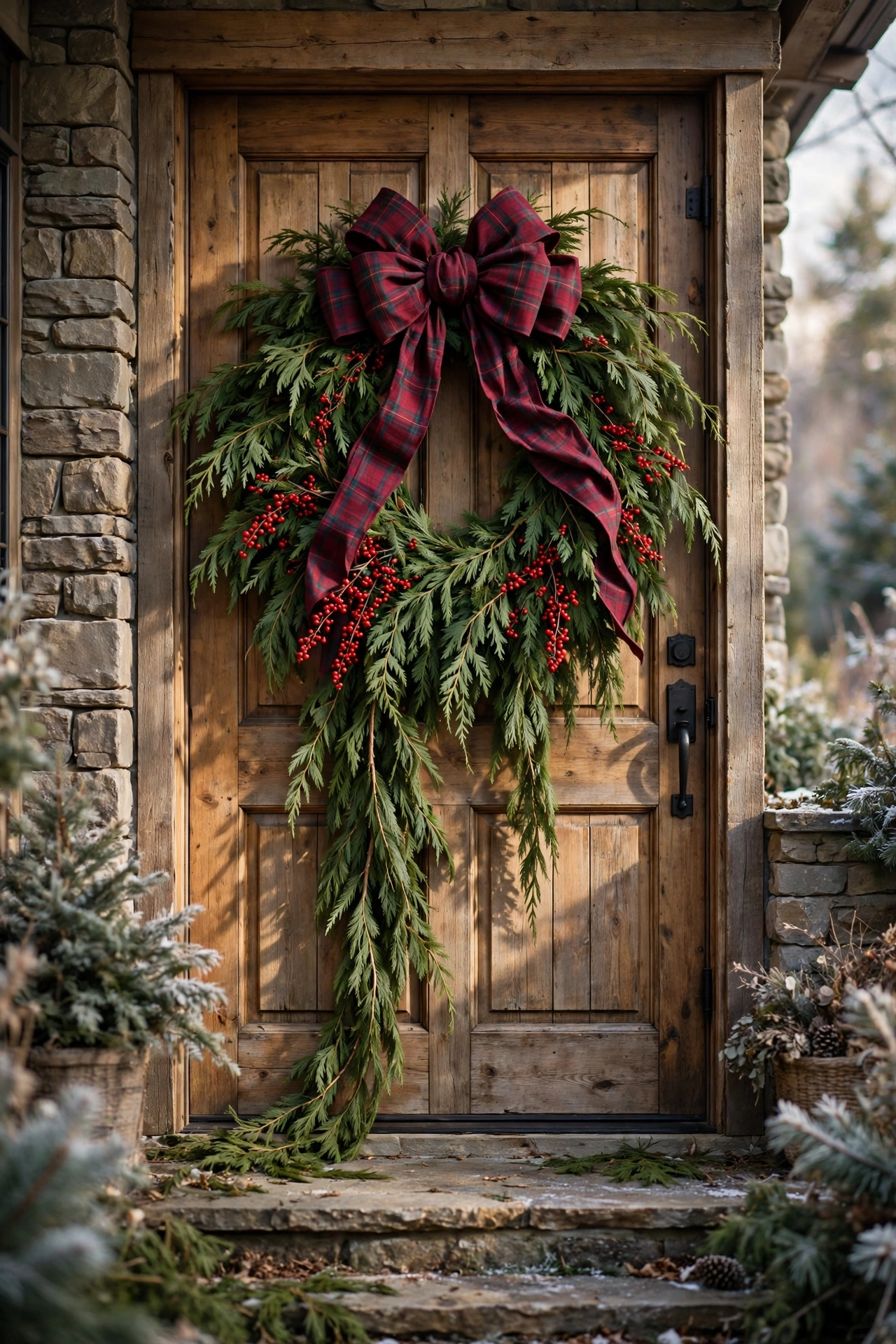
Cedar and Berry Statement Wreath
Cedar’s dramatic, draping branch structure makes it one of the most photogenic bases for a large, statement-sized front door wreath. Use a 24 to 30 inch frame for real visual impact, wiring cedar bundles thickly enough that the branches naturally cascade slightly rather than sitting flush against the frame. Add clusters of red or white berries throughout, keeping them slightly asymmetrical rather than perfectly spaced, since cedar’s natural draping look pairs better with a looser berry placement than a tightly structured one. Cedar’s natural oils also give it real staying power, holding its shape and color for weeks even in cold outdoor conditions. Finish with a single oversized bow in burgundy or plaid, scaled up to match the larger wreath size so it doesn’t look undersized against the fuller branches.
Teardrop Swag as a Wreath Alternative
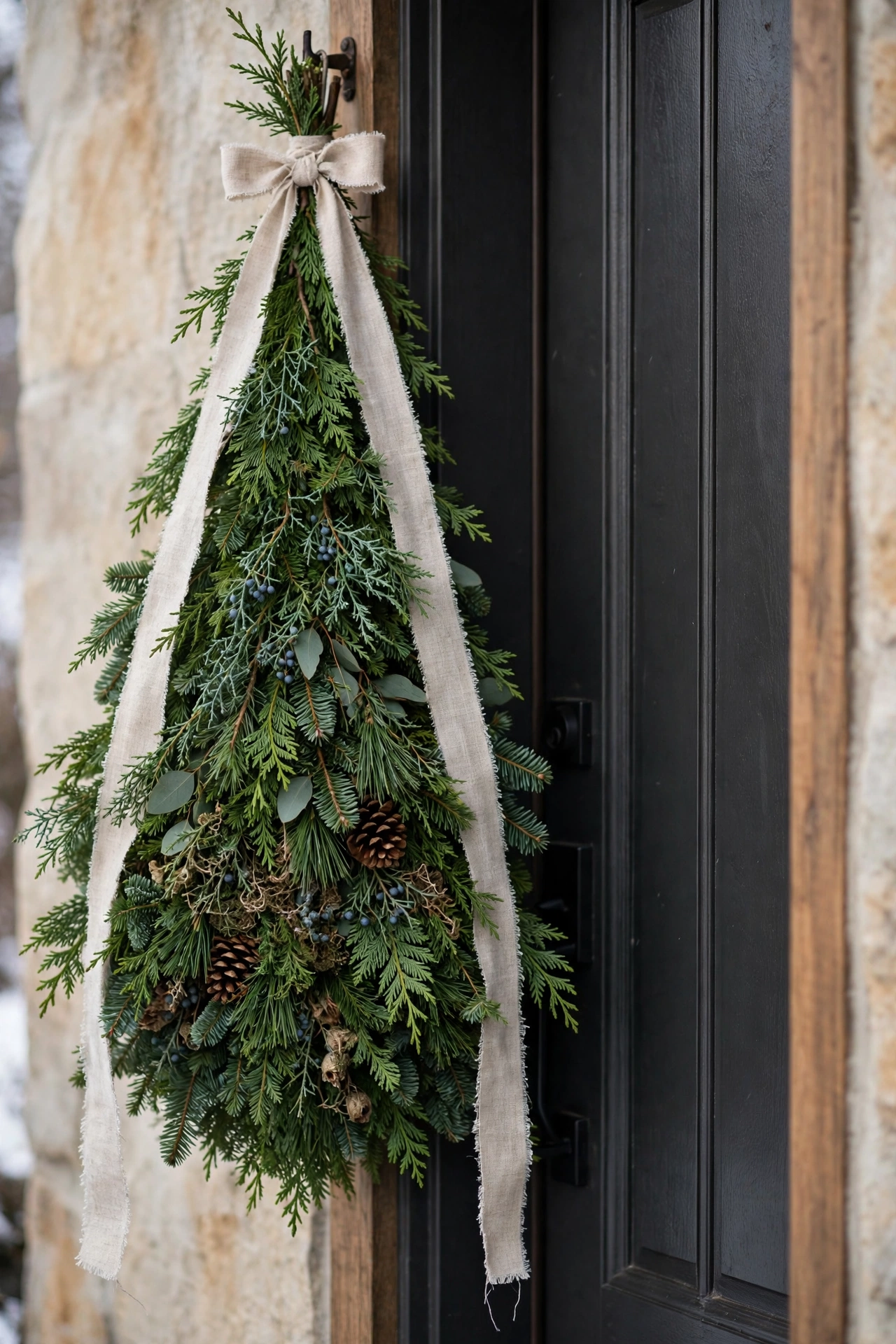
For a narrower entryway or a door where a full circle wreath feels too bulky, a teardrop swag delivers the same fresh-greenery impact in an elongated, tapered shape instead. Build the swag by layering evergreen bundles onto a flat backing or simply wiring them directly to each other in a graduating line, starting with the smallest sprigs at the pointed top and working down to the fullest branches at the rounded bottom. Hang it vertically beside a door frame or centered above it, rather than in the traditional wreath position, since its shape is designed to draw the eye downward instead of in a circle. Add a ribbon at the narrow top where it hangs, letting the tails run down alongside the greenery for a finished, elegant look. This is a particularly good option for a narrow apartment door or a side entrance where a full wreath would look oversized.
Burlap-Woven Wreath with Fresh Greenery Accents
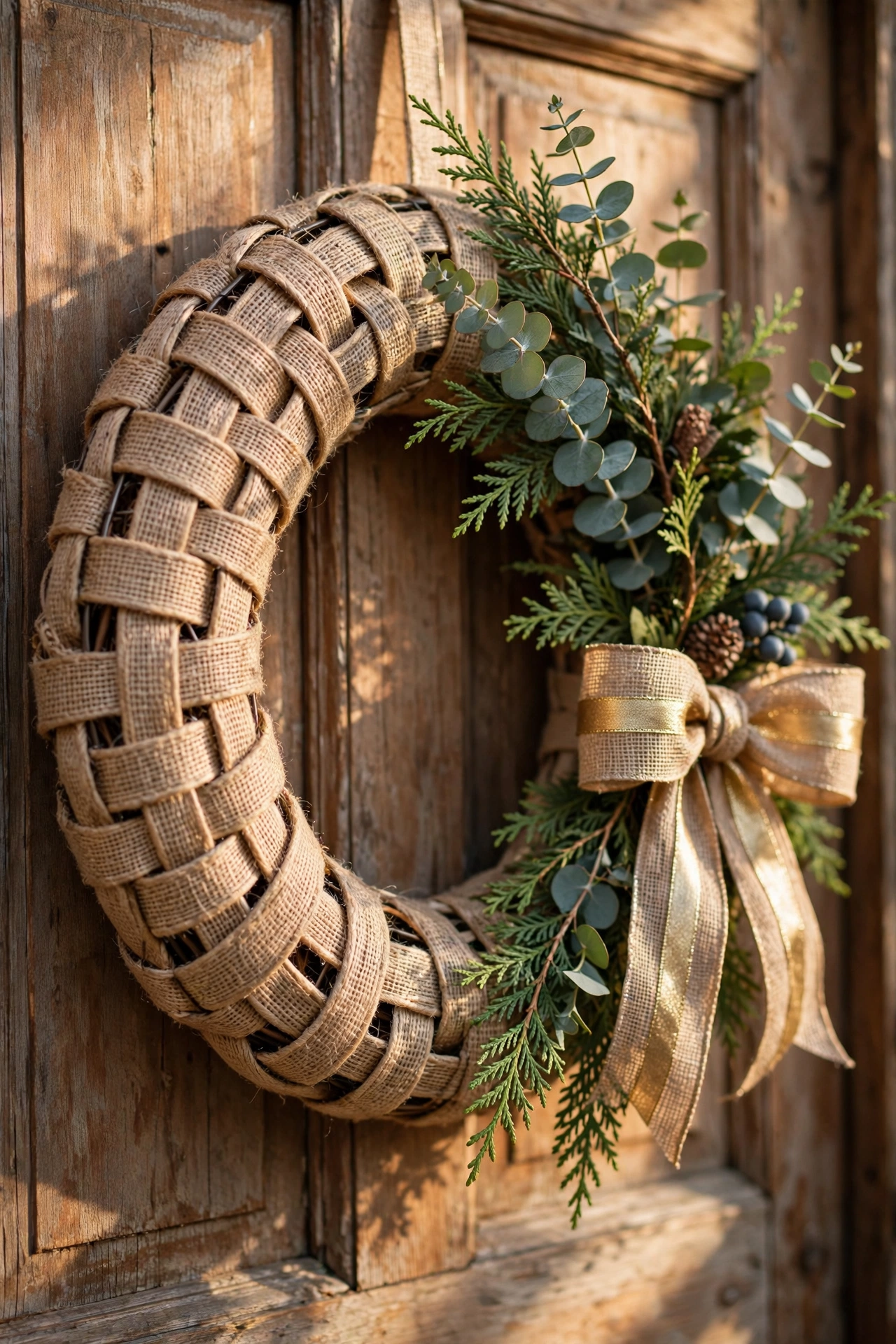
This design uses strips of burlap woven directly through a wire wreath frame as the base texture, with fresh greenery added as an accent rather than covering the whole surface. Cut burlap into 4-inch strips and weave them through the frame’s wire spokes the same way you’d weave a branch, pulling each strip snug so the fabric fully wraps the wire beneath it. Once the burlap base is complete, wire small clusters of fresh greenery, like a spray of eucalyptus or a few sprigs of cedar, onto one section of the wreath rather than spacing it evenly around the whole circle. This asymmetrical, one-sided greenery placement is what keeps the burlap texture visible and the design from looking overly busy. Finish with a wide burlap or burlap-and-gold ribbon bow at the same side as the greenery cluster for a cohesive, rustic-meets-refined look.
Traditional Ivy and Holly English Wreath
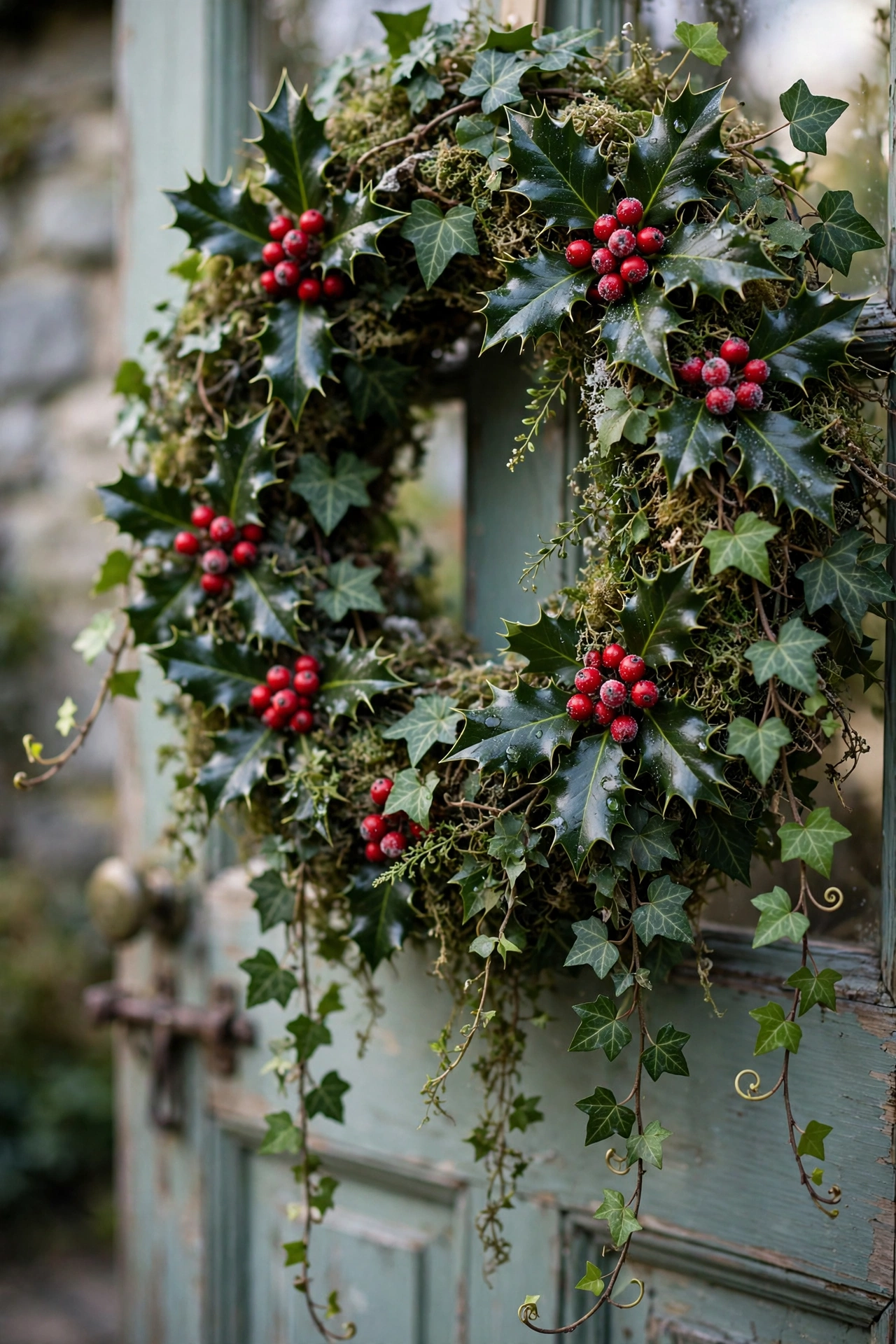
This classic design pairs trailing ivy with structured holly for a look rooted in traditional English Christmas decorating, where the two greens have been paired for centuries. Wire small bundles of holly, leaves and berries together, first to establish the wreath’s main shape and color, then weave longer strands of ivy loosely through and around the holly rather than wiring it as tightly, letting a few tendrils trail slightly past the edge of the frame. The contrast between holly’s glossy, structured leaves and ivy’s looser, trailing habit is what gives this wreath its distinctive, slightly wild-but-elegant character. Keep the color palette limited to just the deep green of both plants and the red of holly berries, resisting the urge to add extra embellishments that would compete with this pairing’s simplicity. This wreath holds up especially well outdoors in cold weather, since both holly and ivy are naturally cold-hardy evergreens.
Snowberry and White Accent Wreath
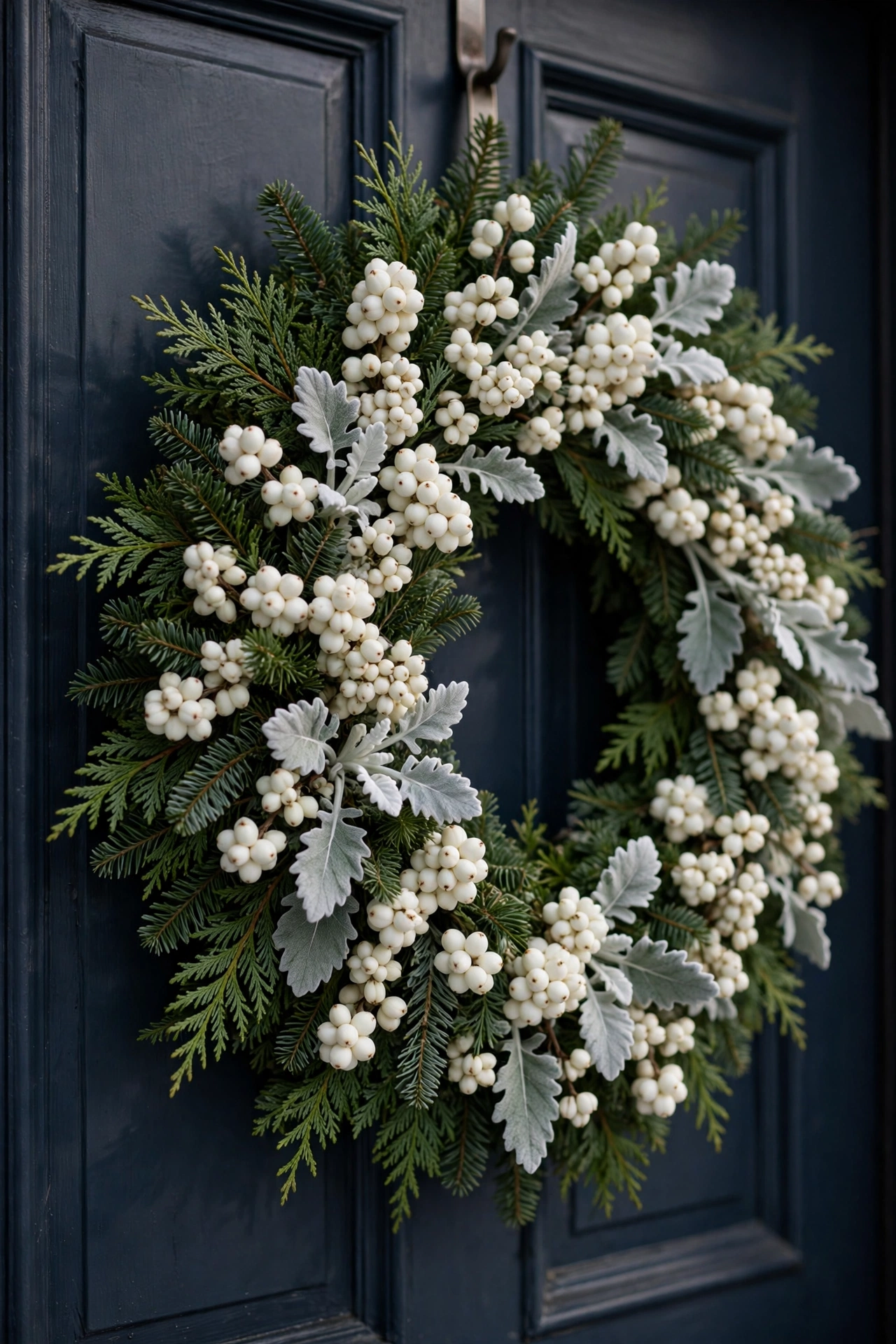
For a softer, winter-white palette instead of the traditional red and green, this wreath pairs an evergreen base with clusters of white snowberries for a look that feels more like a snowy landscape than a classic Christmas color scheme. Wire small clusters of white snowberries throughout a cedar or fir base the same way you’d add red berries, distributing them slightly more heavily near the top and sides where they catch the most light. Add a few sprigs of dusty miller or another silvery-toned foliage if you want to deepen the white-and-silver theme even further. This palette works especially well against a dark front door, like navy, black, or deep green, where the white berries create real contrast instead of blending in. It’s also a versatile option that transitions easily into a general winter wreath you can leave up well past the holidays without it reading as specifically “Christmas.”
Related: 25 Modern Ways to Decorate a Small Living Room for Christmas
Styling Tips
Choose two or three greenery types rather than one for most designs, since mixed textures read as more intentional and hide small gaps better than a single greenery type ever can. Build fullness gradually by starting with a base layer and layering more interesting or delicate greens, like eucalyptus or magnolia, on top near the end, so the standout material doesn’t get buried under everything else. Keep embellishments — berries, pinecones, citrus — clustered rather than evenly spaced, since natural clustering reads as more organic than a perfectly symmetrical pattern. Scale the wreath size to the door: an 18-inch wreath disappears on an oversized entry door, while a 24 to 30 inch wreath can overwhelm a narrower doorway.
Practical Implementation Ideas
Gather more greenery than you think you’ll need, since a full 18-inch wreath typically requires 15 to 20 individual bundles once everything is cut down to size. Cut greenery in the morning when stems hold the most moisture, and place cut branches in a bucket of water if you’re not assembling the wreath the same day. Submerge fully finished fresh wreaths in a tub of water for a few minutes before hanging, then let them dry, which helps the greenery hydrate fully before it starts its display life. Mist indoor wreaths every day or two with a spray bottle, and outdoor wreaths in cold climates typically need far less frequent misting since the cold air itself slows moisture loss.
Common Mistakes to Avoid
Using floral wire too loosely is the most common beginner mistake, since bundles that shift or droop within the first week usually weren’t wired tightly enough at the start. Skipping the water-hydration step before hanging shortens a wreath’s lifespan noticeably, so don’t skip submerging it even if the greenery looks fine straight off the branch. Mixing too many embellishment types — berries, ribbon, pinecones, citrus, ornaments — on one wreath often reads as cluttered rather than festive, so pick two accent elements at most per design. Hanging a fresh wreath in direct, intense sun or right next to an indoor heat vent dries it out far faster than a shadier or cooler spot would. And using wet, undried pinecones or freshly-sliced (rather than fully dehydrated) citrus leads to mold within days, so always let both dry completely before wiring them on.
Small-Space Alternatives
For an apartment door or a narrower entry, scale any design on this list down to a 12 to 14 inch frame, which uses roughly half the greenery of a full-size wreath while keeping the same technique and look. The teardrop swag idea is especially useful for tight spaces, since its narrow shape fits doorways and side entries where a full circle wreath would look oversized. A small herb wreath or a compact boxwood design also works well hung inside on a kitchen wall or pantry door if outdoor space or a front door isn’t available at all. Skip the larger statement designs, like the cedar and berry wreath, for small spaces, since those are specifically built for the visual scale of a large front door.
Budget-Friendly Alternatives
Foraging is the single biggest cost-saver on this entire list — pinecones, holly, ivy, and evergreen trimmings from your own yard or a friend’s cost nothing beyond the time it takes to gather them. A basic wire wreath frame and a roll of floral wire together typically cost less than a single bundle of specialty florist greenery, so the technique itself is inexpensive even before factoring in free foraged materials. Skip specialty greens like eucalyptus or magnolia if they’re not naturally available near you, and lean on a mixed evergreen base instead, since cedar, pine, and fir are widely available and inexpensive at most tree lots and garden centers in December. Reuse the same wire frame year after year, since the frame itself is the only truly durable material in the entire project.
Pro Styling Recommendations
Wire in odd-numbered berry or pinecone clusters rather than pairs, since odd groupings photograph and read as more natural than symmetrical matching sets. Vary your bundle sizes slightly as you work around the frame instead of cutting every piece to an identical length, since uniform bundles can look stiff and mass-produced rather than handmade. Save your most interesting or unusual greenery, like a particularly striking eucalyptus stem or a cluster of berries, for the bottom third of the wreath, since that’s where the eye naturally lands first on a hanging wreath. And always step back and view the wreath from at least six feet away before calling it finished, since gaps and uneven fullness are far easier to spot from typical front-door viewing distance than up close while you’re working.
FAQs
A fresh wreath typically lasts about 3 weeks indoors and 4 to 6 weeks outdoors with regular misting, though greenery choice matters — cedar, boxwood, and noble fir hold up longer than eucalyptus or magnolia.
Cedar, boxwood, noble fir, and pine are among the longest-lasting greens for wreaths, since their natural oils and needle structure hold moisture well and resist drying out even indoors.
Submerge the finished wreath in a tub of water for a few minutes before hanging it, then mist it every day or two if it’s indoors, since cold outdoor air naturally slows moisture loss and needs less frequent misting.
Not always — a no-wire woven wreath uses the tension of flexible branches threaded directly through a wire frame instead, though floral wire gives a more secure, longer-lasting hold for most designs.
An 18 to 24 inch frame works well for most standard front doors, while a 24 to 30 inch frame makes more of a statement on a larger entry, and a 12 to 14 inch frame suits an apartment door or interior wall.
Yes — evergreen trimmings, holly, ivy, pinecones, and seed heads gathered from your own yard or a local park all work well in a fresh wreath and are one of the most budget-friendly ways to build one.
Real holly berries are toxic if ingested, so a berry-studded wreath using holly should be hung somewhere out of reach of small children or pets who might be tempted to pull berries off.
Slice oranges into thin, even rounds and dry them in a low oven or dehydrator for at least eight hours until fully dehydrated, since any remaining moisture in the slices will cause mold once they’re wired onto a wreath.
A wreath is a circular arrangement, while a swag is an elongated, teardrop-shaped design that tapers from small at the top to full at the bottom, making it a better fit for narrow doorways or side entries.
Conclusion
None of these eighteen wreaths require florist training, just a wire frame, some floral wire, and greenery you either buy in bulk or forage for free. Pick a technique that matches your patience level — the no-wire woven wreath if you want something in twenty minutes, the dried citrus version if you’ve got an afternoon to spare — and let the greenery you have easiest access to guide which idea you start with. A fresh wreath won’t last forever, but for the few weeks it does, your front door will smell like it too.