25 Friendsgiving Decor Ideas That Make Your Gathering Feel Extra Special
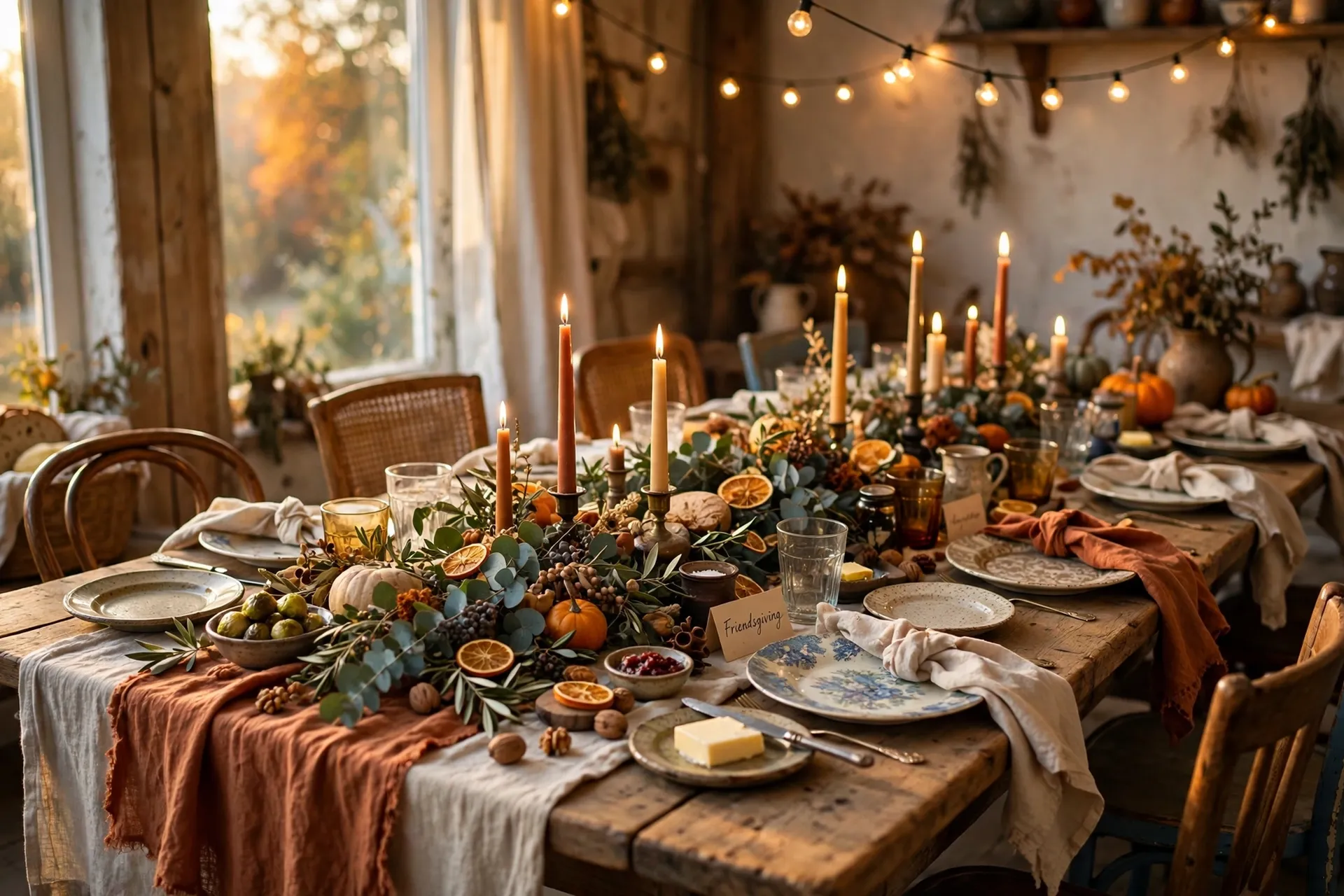
Friendsgiving isn’t Thanksgiving with the formal parts removed. It’s its own kind of gathering — a little looser, a little more personal, built around people who chose each other. The decor should feel the same way: warm, a bit imperfect, and clearly put together by someone who cares more about making people feel welcome than getting every place setting to match.
Most Friendsgiving decor guides stop at the centerpiece. This one doesn’t. Below are 25 ideas that cover the table, the seating, the drinks, the dessert spread, and the small personal touches that end up being what people actually remember the next morning — plus an image for every idea so you can see exactly what it should look like before you start setting up.
- A Kraft-Paper Table Runner Guests Can Write On
- A Foraged Centerpiece of Eucalyptus, Pinecones, and Dried Oranges
- Mismatched Thrifted Plates for an Eclectic Table
- A Gratitude Tree or Jar Guests Fill In Together
- Floor Seating, Picnic-Style, for a Cozy Crowd
- A Heirloom Object Swap Centerpiece
- Warm String Lights Draped Low Over the Table
- A DIY Grazing Board as the Table’s Centerpiece
- Hand-Lettered Place Cards With a Personal Note
- A Cozy Blanket and Pillow Nook for Overflow Seating
- A Friendsgiving Photo Backdrop Corner
- Copper and Wood Mixed-Metal Table Styling
- A Signature Cocktail or Mocktail Bar Cart
- Pumpkin Place Card Holders at Each Seat
- A Dessert Table Styled Like a Fall Farmers Market
- Taper Candle Clusters at Varying Heights
- A Potluck Sign-Up Chalkboard Display
- Layered Table Linens for a Collected, Not Matched, Look
- A Cozy Playlist Station With Handwritten Song Requests
- An Outdoor Patio Setup With Blankets and Lanterns
- A Kids’ Craft Corner for Younger Guests
- Vintage Glassware Mixed With Modern Stemware
- A Thank-You Favor Bag or Jar for Each Guest
- An Autumn Leaf and Berry Garland Along the Table Edge
- A “Welcome, Framily” Entry Display
- Styling Tips
- Practical Implementation Ideas
- Common Mistakes to Avoid
- Small-Space Alternatives
- Budget-Friendly Alternatives
- Pro Styling Recommendations
- FAQs
The 25 Ideas
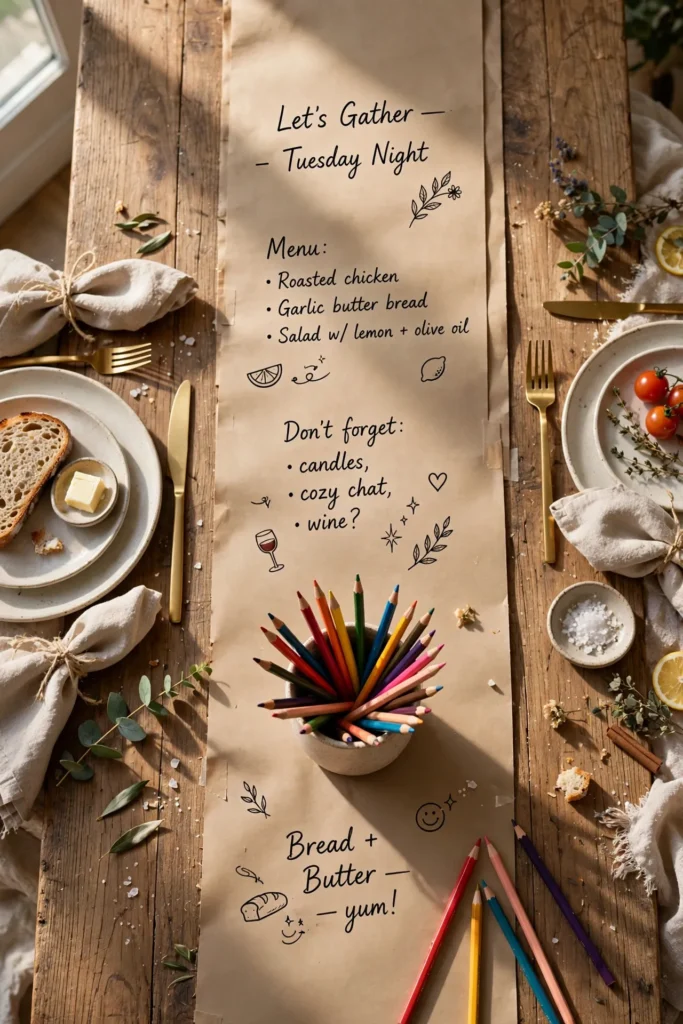
1. A Kraft-Paper Table Runner Guests Can Write On
Roll a length of plain kraft paper down the center of your table instead of a traditional runner, then set out a small cup of colored pencils or fine-tip markers at each end. Guests can doodle, write what they’re thankful for, or leave a note near their seat over the course of the meal, turning the table itself into a keepsake by the end of the night. Layer your centerpiece and place settings directly on top of the paper rather than working around it, since the writing is meant to happen in the empty spaces between dishes. This idea solves a real hosting problem — kraft paper is cheap, covers stains, and doubles as an activity that gets quieter guests talking. Save the paper afterward and you have a genuinely sentimental record of the night.
2. A Foraged Centerpiece of Eucalyptus, Pinecones, and Dried Oranges
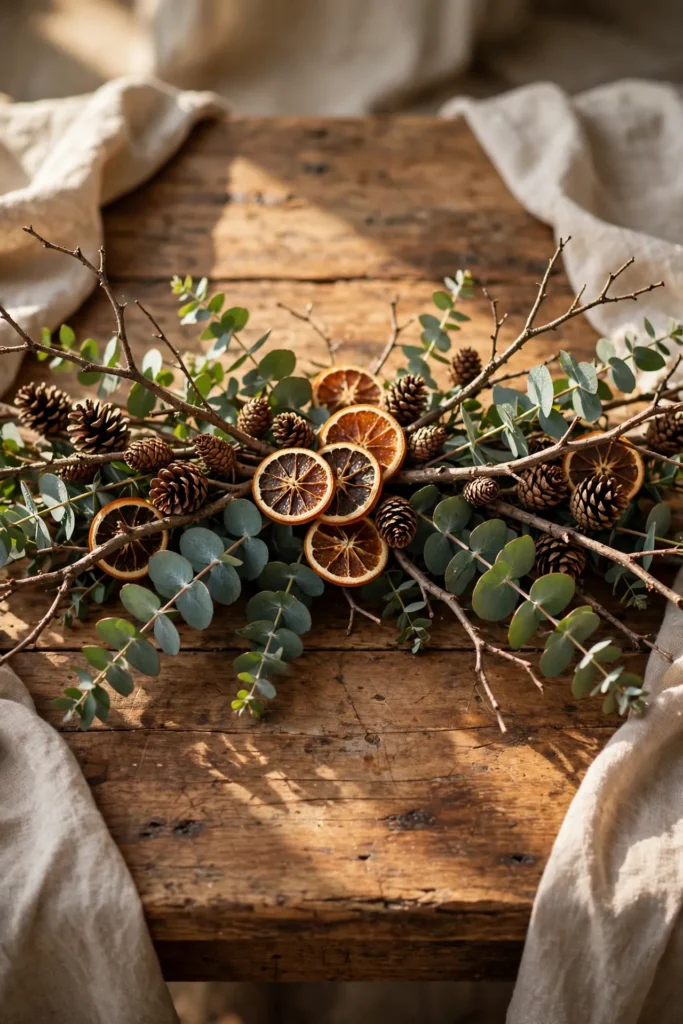
Walk your yard or a nearby park the day before and gather what’s actually in season — bare branches, dried leaves, small pinecones, or seed pods — then mix them with a bundle of grocery-store eucalyptus for fullness. Lay the arrangement flat down the center of the table as a loose runner-style centerpiece rather than upright in a vase, tucking in a few dried orange slices for color and scent. This keeps the arrangement low enough that guests can still see and talk across the table, which taller centerpieces often block. Mixing foraged and store-bought materials is also what keeps the cost down while still looking full and intentional. It’s compostable when the night is over, so there’s nothing to store until next year.
3. Mismatched Thrifted Plates for an Eclectic Table
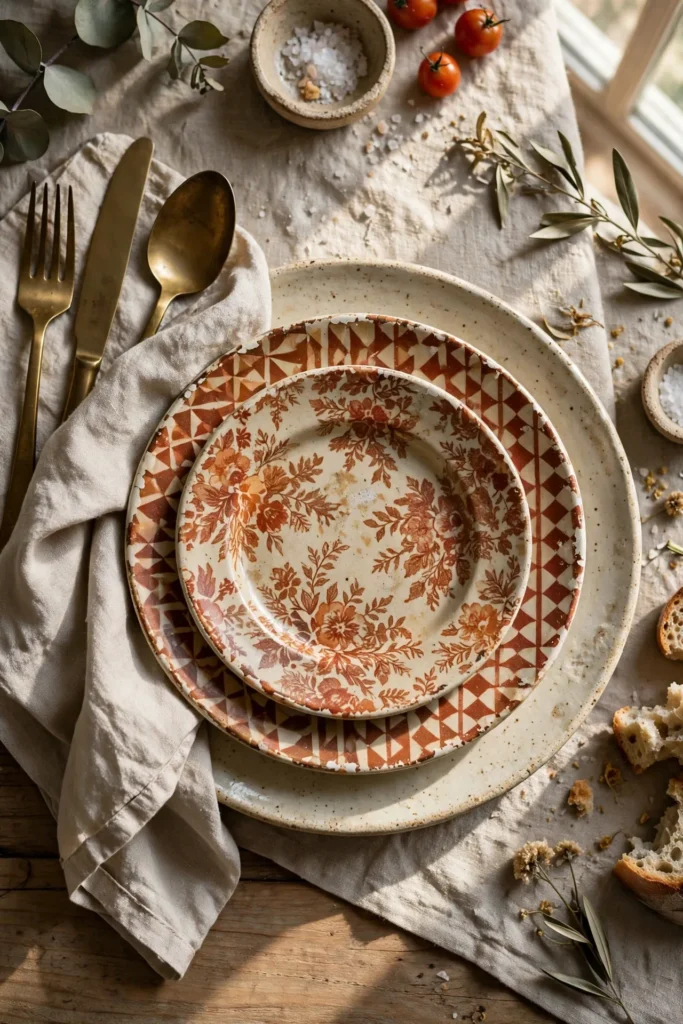
Collect plates from thrift stores, your own cabinet, or even borrowed from a friend, choosing pieces that share a loose color story — creams, warm neutrals, and a few patterned accents — rather than trying to match sets. Stack a patterned salad plate on top of a plain dinner plate at each setting so the mismatch reads as a deliberate layering technique instead of leftover odds and ends. This is one of the most repeated tips across Friendsgiving hosting guides for a reason: it looks collected and personal, and it means nobody needs to own twelve matching place settings for one dinner a year. Keep napkins and flatware more uniform so the plate mixing feels styled rather than chaotic. This approach also means broken or single mismatched pieces from past sets finally get a use.
4. A Gratitude Tree or Jar Guests Fill In Together
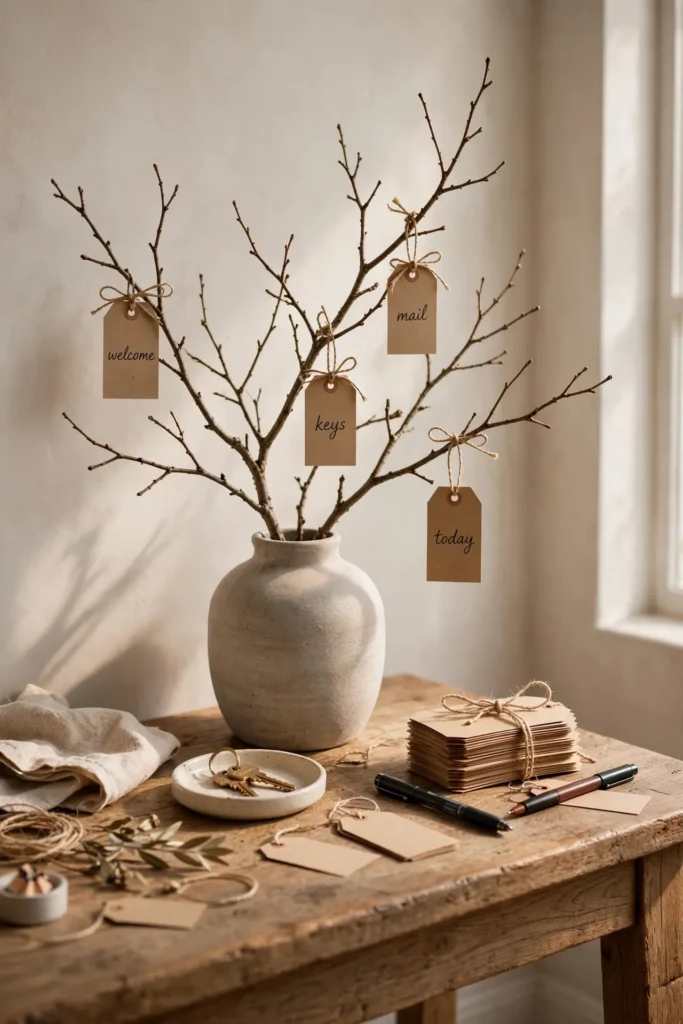
Set a small bare branch in a weighted vase near the entrance or centerpiece, along with a stack of paper tags and pens, and invite each guest to write one thing they’re grateful for and tie it to a branch as they arrive. Alternatively, use a large glass jar and let guests drop folded notes in instead, then read a few aloud after dinner if the group is up for it. This interactive piece gives people something to do in the first few awkward minutes of arrival, before everyone has a drink in hand and conversation gets going. It also directly reinforces the “giving thanks” part of the holiday in a way that’s participatory rather than just decorative. By the end of the night, the tree or jar becomes a small piece of the group’s shared memory.
5. Floor Seating, Picnic-Style, for a Cozy Crowd
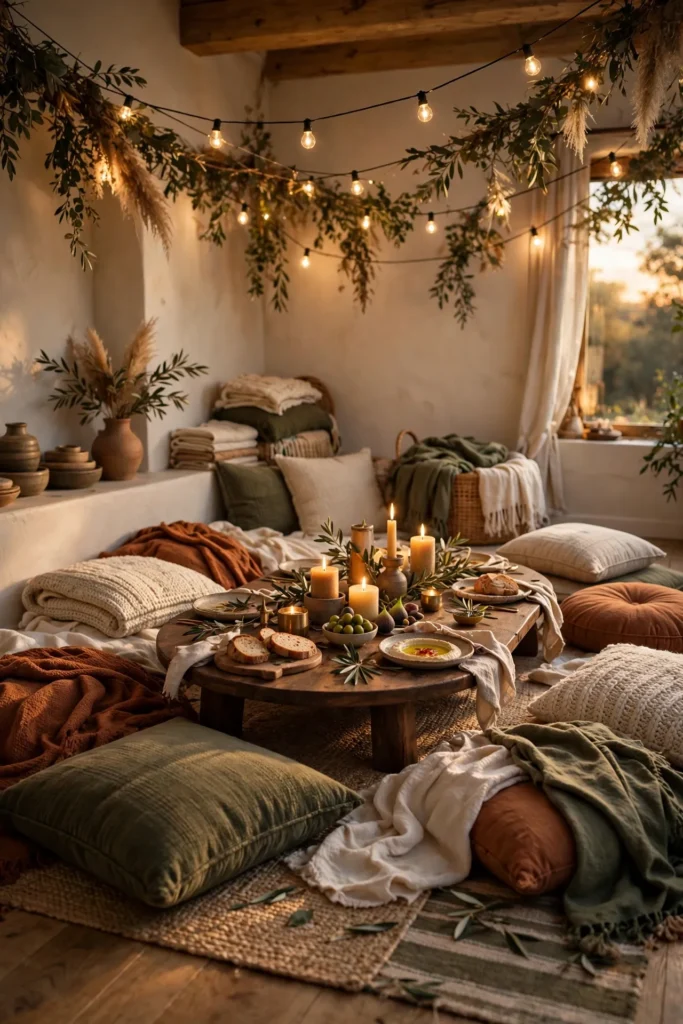
When you don’t have enough chairs for everyone, lean into it: clear the floor space around a low coffee table or a table with the legs removed, then layer the ground with a large blanket, floor cushions, and a mix of throw pillows in warm tones. This setup works especially well for a larger friend group in a smaller apartment, since floor seating fits more people per square foot than a traditional dining table. Keep the cushion colors within your overall palette — rust, cream, olive, and warm brown — so the seating area still feels styled rather than thrown together last minute. Add a low centerpiece and a few candles at the table’s height so the eye level from the floor still has something warm to land on. It’s also simply a more relaxed, conversation-friendly way to gather than a long formal table.
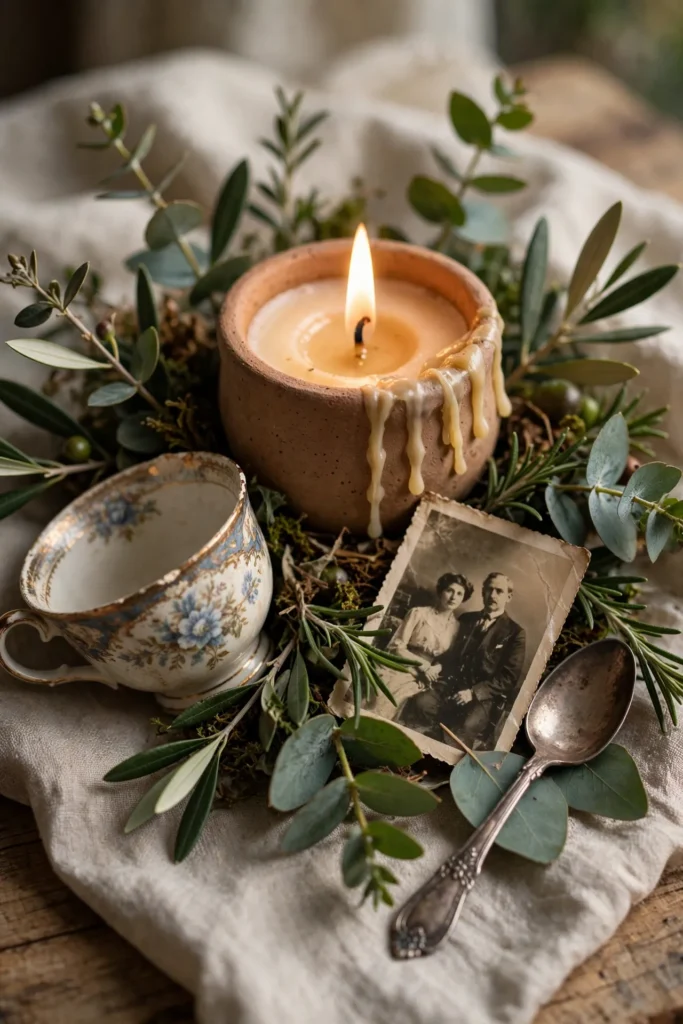
6. A Heirloom Object Swap Centerpiece
Ask each guest to bring one small meaningful object — a teacup, an old photo, a vintage spoon — and nestle these pieces directly into the centerpiece alongside the florals and candles as people arrive. By the end of the night, the table holds a small piece of everyone at it, which turns a standard centerpiece into something far more personal than flowers alone could manage. This idea works particularly well for a group that’s been celebrating Friendsgiving together for a few years, since the collected objects can become a running tradition. Keep the base arrangement simple — greenery and a few candles — so there’s visual room for the added objects without the table feeling cluttered. It also gives guests an easy conversation starter once everyone notices what’s been added.
Related: 17 Doable Christmas Table Settings That Feel Elevated
7. Warm String Lights Draped Low Over the Table
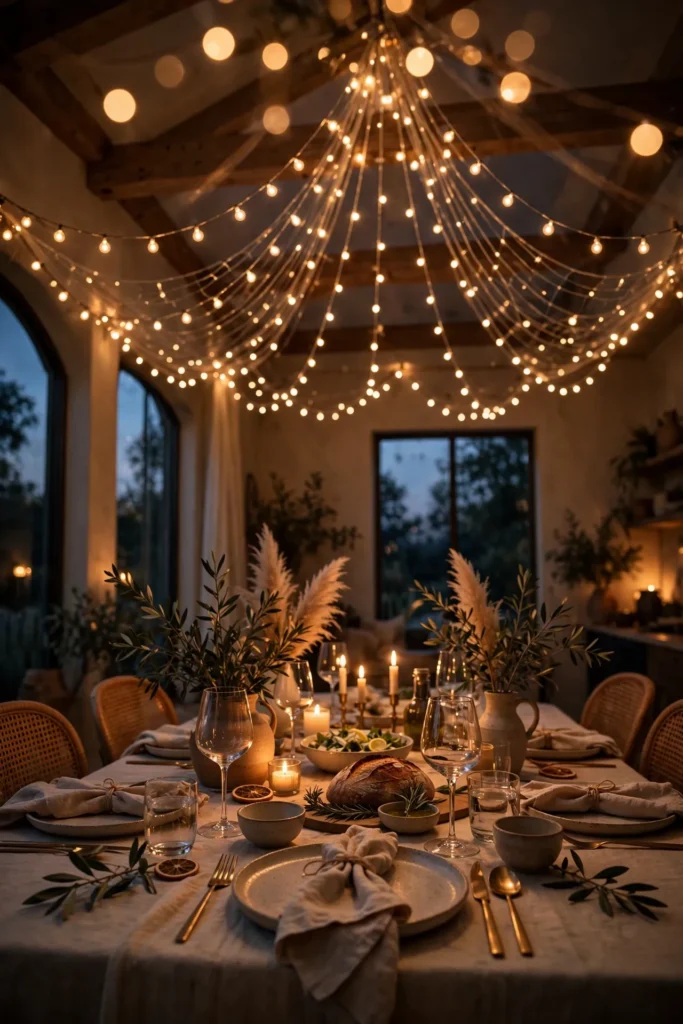
Hang warm white string lights just above the table, either strung between two hooks or draped from a ceiling beam, letting them dip low enough to create a soft canopy of light rather than sitting flat against the ceiling. Turn off or dim overhead lighting entirely once the lights are up, so the string lights and candles become the main light source for the meal. This single change does more to shift a room from “everyday dinner” to “occasion” than almost any other decor move, since warm, low light affects mood immediately. Choose warm white or amber bulbs specifically, since cool white string lights tend to feel more like a garage sale than a dinner party. This idea also works well combined with the floor seating setup for an especially cozy, lantern-lit feeling.
8. A DIY Grazing Board as the Table’s Centerpiece
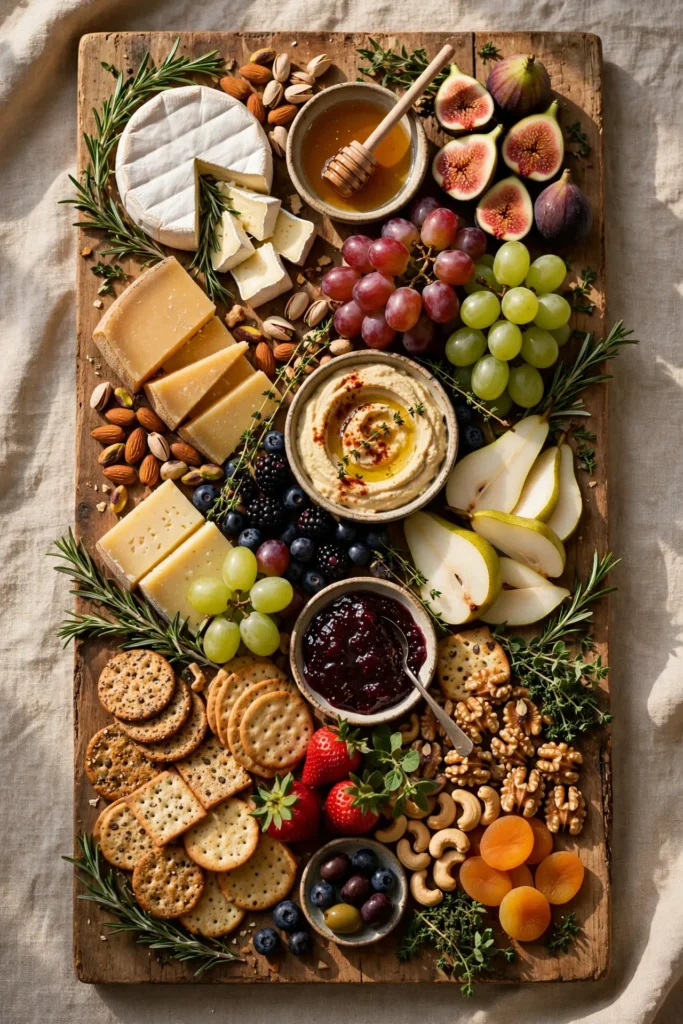
Instead of a floral centerpiece, build a long grazing board directly down the center of the table using a wooden board or butcher paper as the base, layering cheeses, fruit, nuts, crackers, and small bowls of dips or spreads. This does double duty as both decor and the appetizer course, which is especially practical for a potluck where table space is already tight. Vary the height by propping a few items on small risers or upturned bowls underneath the paper, and tuck in a few sprigs of rosemary or sage for color and scent between the food. Odd-shaped, rustic serving boards read better here than perfectly rectangular trays, since the imperfect edges match the casual mood of the holiday. This idea consistently performs well on Pinterest because it’s both aspirational and genuinely useful.
9. Hand-Lettered Place Cards With a Personal Note
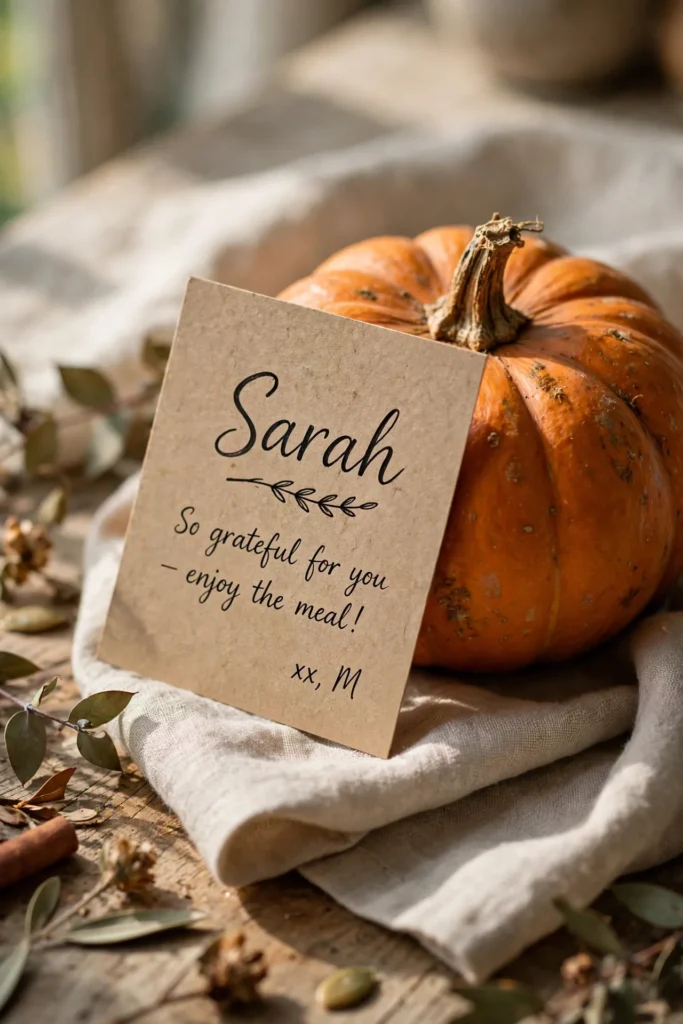
Write each guest’s name on a small card in simple hand lettering, then add one short personal line underneath — an inside joke, a compliment, or something you appreciate about them — instead of just the name alone. Prop the cards against a small pumpkin, a folded napkin, or a leaf at each place setting so they stay upright without needing a separate holder. This tiny addition takes only a few extra minutes per guest but is consistently the detail people mention remembering afterward, since it makes the seating arrangement feel considered rather than random. Use a simple cardstock in a warm cream or kraft tone rather than bright white, so the cards blend into the rest of the table’s palette. It also solves the practical problem of where everyone should sit without any awkwardness.
10. A Cozy Blanket and Pillow Nook for Overflow Seating
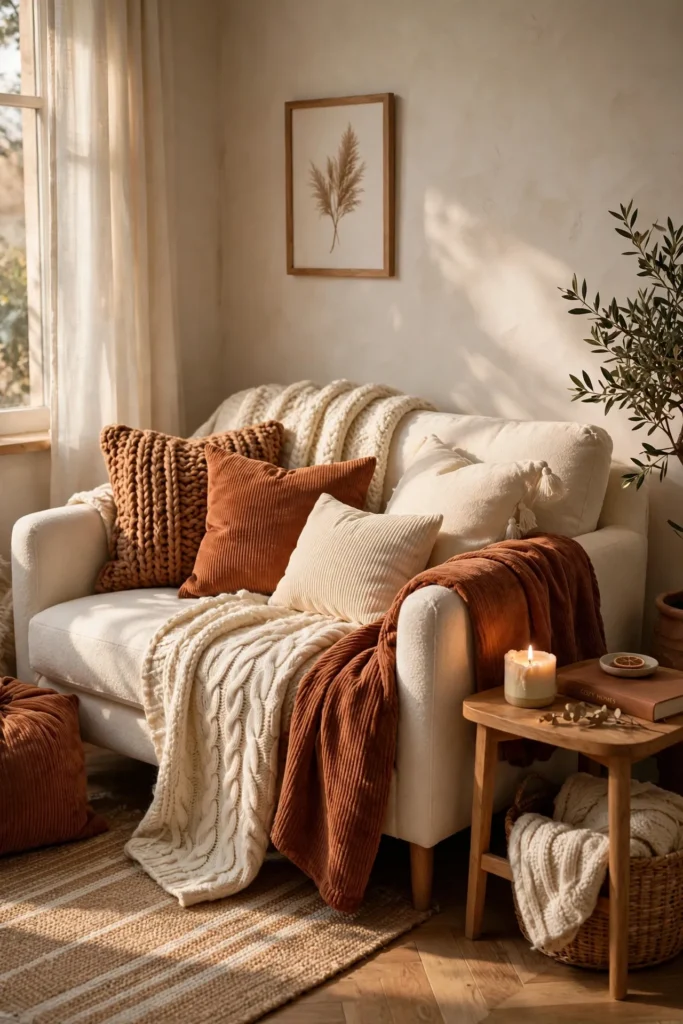
Set up a small seating nook away from the main table — a corner with a loveseat, floor cushions, or even a cleared window seat — layered with throw blankets and pillows in warm, textured fabrics like chunky knit and corduroy. This gives guests a place to land before and after the meal, which matters more than people expect at a Friendsgiving, since the gathering often stretches well past the meal itself into hours of conversation. Keep the blanket and pillow colors within your main palette so the nook feels like an extension of the party rather than a separate space. Add a small side table with a candle or a bowl of nuts so the corner feels intentional rather than like unused furniture. This is also one of the easiest ideas to set up, since it likely just means rearranging what you already own.
11. A Friendsgiving Photo Backdrop Corner
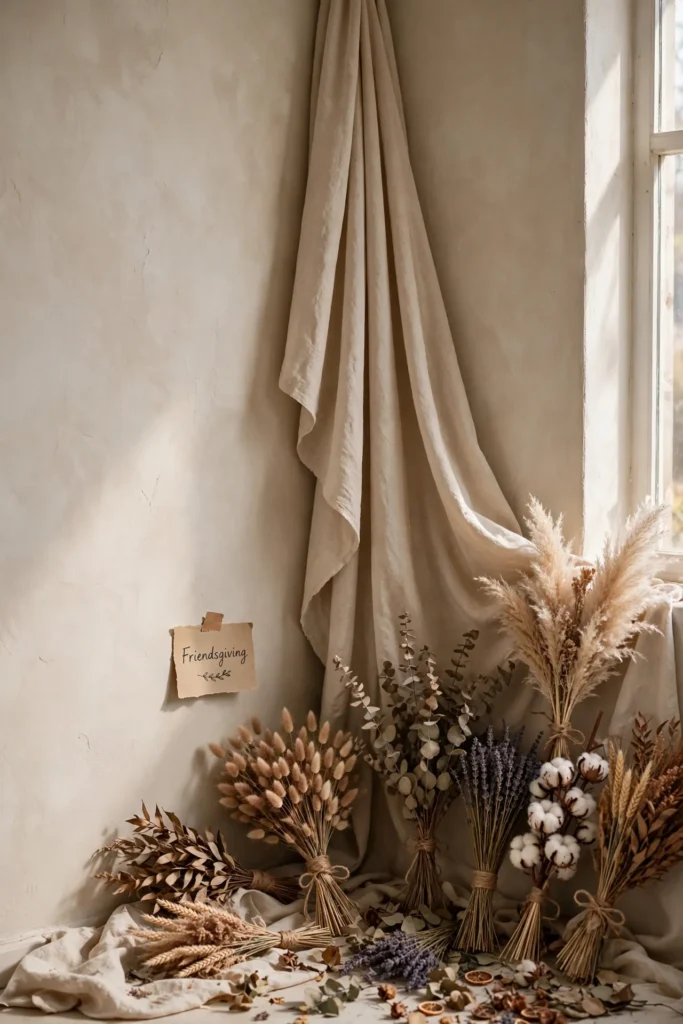
Choose one wall or corner and dress it simply with a length of neutral fabric, a few dried flower bunches, and a small handwritten “Friendsgiving” sign, creating one clear spot where the whole group can gather for a photo. This is a genuinely underused idea in most Friendsgiving decor content, even though a dedicated photo moment is one of the most searched Pinterest terms tied to any friend-group gathering. Keep the backdrop simple and low-clutter, since busy backgrounds compete with the people standing in front of them. Position it near good natural light, close to a window if possible, rather than in a dim corner of the room. A backdrop like this also gives the party a natural closing moment, since groups tend to gather for the photo near the end of the night.
12. Copper and Wood Mixed-Metal Table Styling
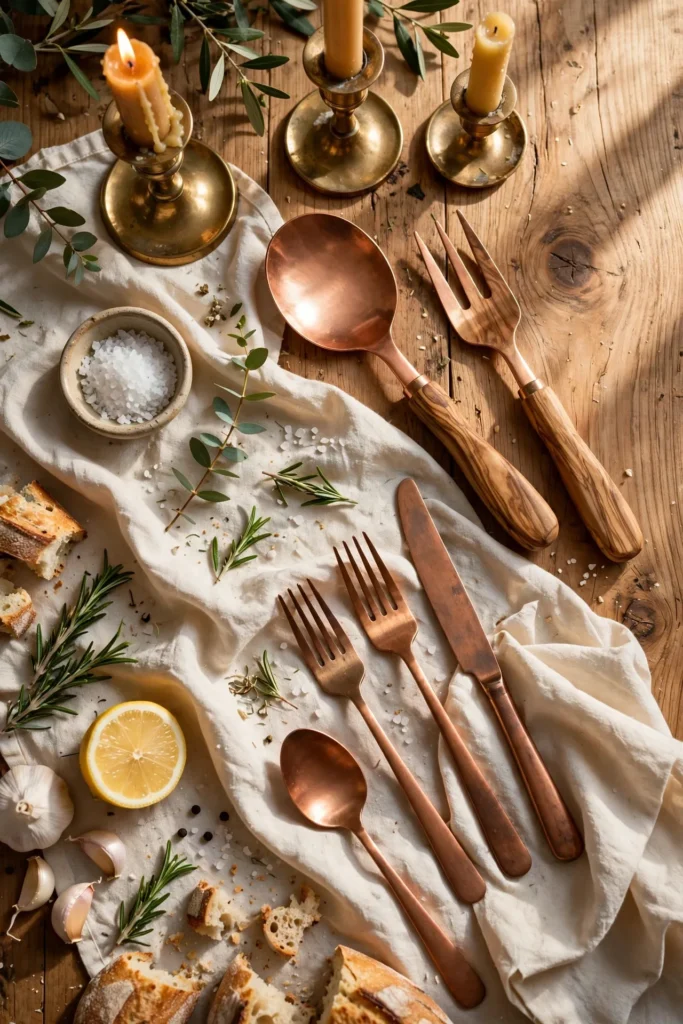
Layer copper flatware, wood-handled serving utensils, and a few brass candlesticks together on the same table instead of matching every metal finish, which is a styling move several higher-end Friendsgiving guides point to as an easy way to elevate a casual table. The mix of warm metals against natural wood tones is what gives the table a “collected over time” feeling similar to vintage styling, even when every piece is new. Keep the rest of the table relatively simple — plain linens, a low centerpiece — so the metal and wood details have room to stand out rather than competing with a busy pattern. This idea is a good middle ground for hosts who want the table to feel a little more elevated without going fully formal. It also photographs well in both daylight and candlelight.
13. A Signature Cocktail or Mocktail Bar Cart
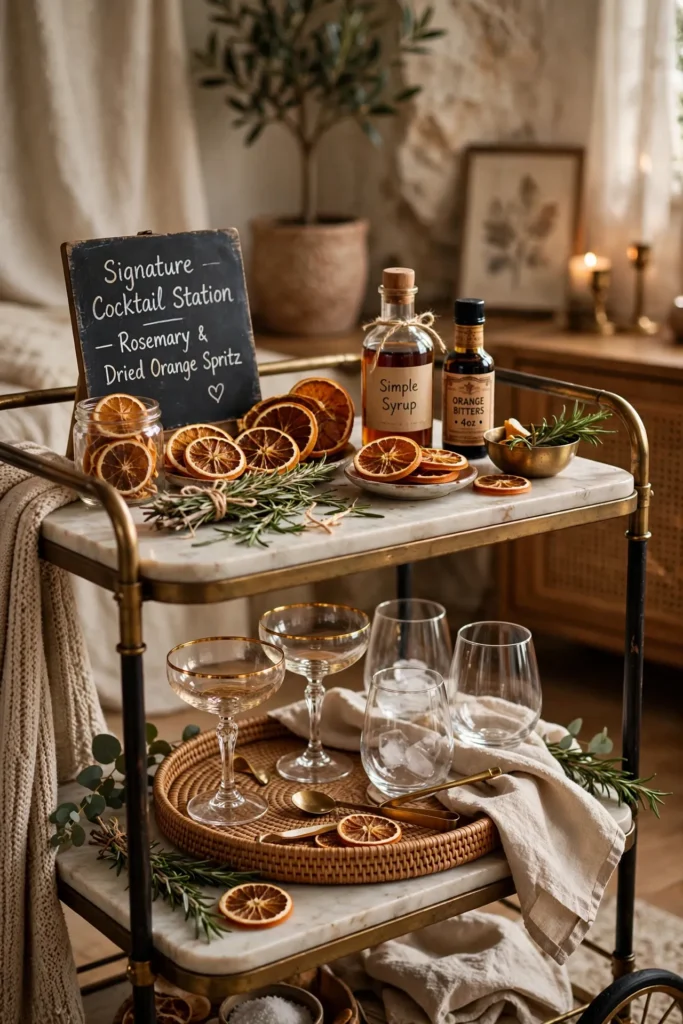
Set up a small bar cart or side table with a labeled signature cocktail and a non-alcoholic version side by side, along with a few garnishes like rosemary sprigs, dried orange wheels, and cinnamon sticks in small dishes. Write the drink name and ingredients on a small chalkboard or card propped against the bottles, which gives the station a defined identity instead of looking like a random collection of liquor. Group glassware — a mix of vintage coupes and simple stemless glasses works well — on a tray so the cart stays organized as the night goes on. This idea takes pressure off you as a host, since guests can serve themselves once the station is set up. A styled bar cart is also one of the more Pinterest-friendly vignettes in this whole list, since it photographs well entirely on its own.
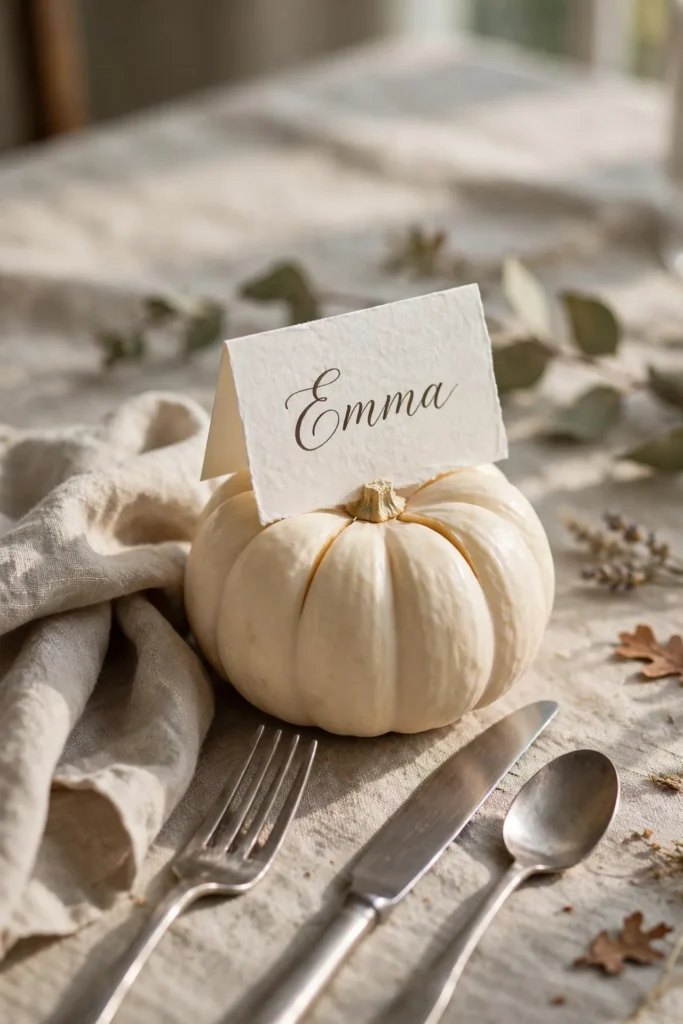
14. Pumpkin Place Card Holders at Each Seat
Use small white or muted-orange mini pumpkins as natural place card holders by cutting a thin slit in the top and slotting a folded name card directly into it. This swaps out a plastic or plain paper holder for something seasonal that doubles as a tiny individual centerpiece at every seat. Choose pumpkins in a mix of sizes so the table has slight variation rather than uniform rows. At the end of the night, guests can take their pumpkin home as a small favor, which adds a nice bit of closure to the table without any extra cost. This is one of the simplest and most budget-friendly ideas on the entire list, since mini pumpkins are inexpensive and widely available through the season.
15. A Dessert Table Styled Like a Fall Farmers Market
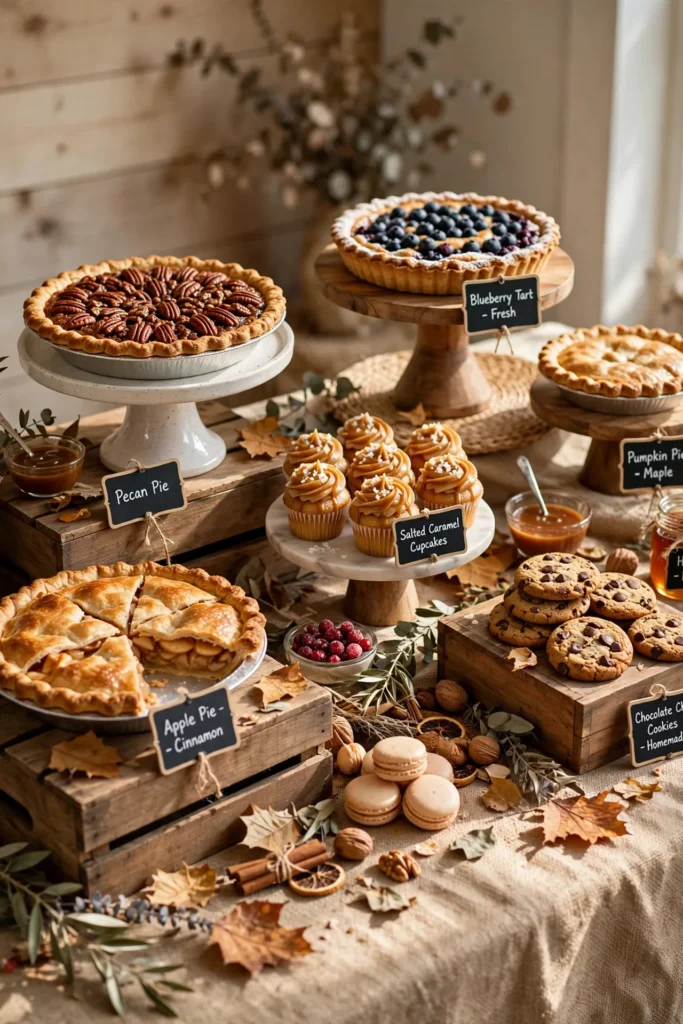
Set up a separate dessert table away from the main dining area, using wooden crates, cake stands of varying heights, and small chalkboard labels to give it a market-stall feel rather than a plain buffet line. Mix homemade pies, a few store-bought treats, and a bowl of caramel apples so the display has visual variety without requiring you to bake everything yourself. Layer a burlap or linen cloth underneath everything and tuck in a few dried leaves or small pumpkins between the stands to tie it back to the rest of your decor palette. Height variation is the key detail here — flat desserts on a single level read as a buffet, while stacked stands and crates read as a styled display. This also solves a real hosting problem, since it moves dessert traffic away from the main table once dinner is finished.
Related: 23 Christmas Centerpieces for Every Style of Table For a Home That Feels Festive All Season
16. Taper Candle Clusters at Varying Heights
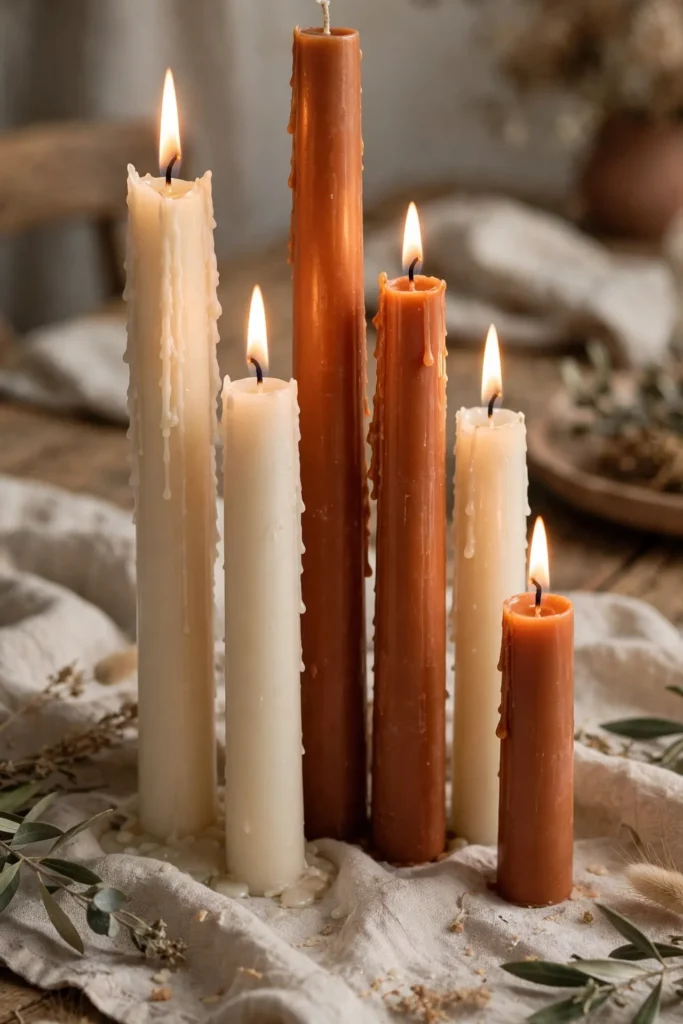
Group three to five taper candles in simple holders of different heights down the length of the table, rather than spacing single candles evenly apart. Mix in a few cream and warm terracotta candles alongside classic white for subtle color variation without overwhelming the palette. Light them right before guests arrive rather than hours ahead, so the wax hasn’t dripped too far and the flames are all roughly the same height for photos. This clustering technique is one of the most repeated tips across higher-end tablescape guides because grouped candles create a stronger visual anchor than the same number spread thin across a long table. It also means you can use fewer candles overall while still achieving a full, warmly lit look.
17. A Potluck Sign-Up Chalkboard Display
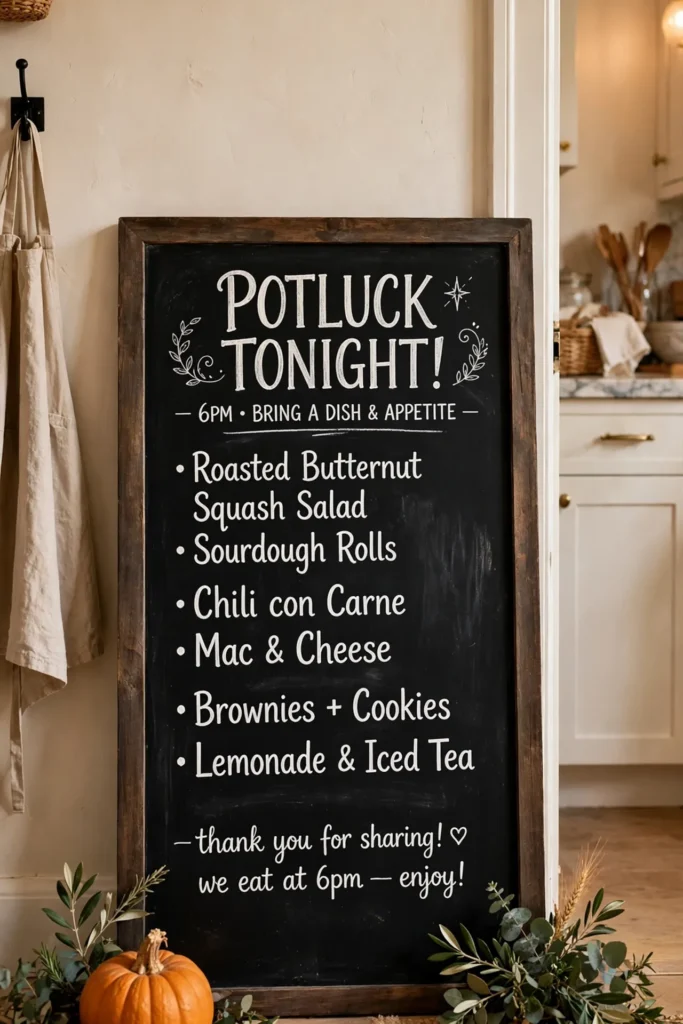
Set up a small chalkboard or printed sign near the kitchen or entry listing what each guest is bringing, updated as dishes arrive throughout the evening. This solves a genuinely practical potluck problem — guests and hosts both losing track of what’s already covered — while also giving the entryway a styled, purposeful focal point. Use simple, consistent lettering and leave enough space to write in dish names by hand as people arrive with their contributions. Position it somewhere guests naturally pass, like near the food table or coat area, so it actually gets used instead of becoming background decor. This is a small, low-cost idea that most Friendsgiving decor guides skip entirely, despite potluck coordination being one of the most common real hosting headaches for this specific holiday.
18. Layered Table Linens for a Collected, Not Matched, Look
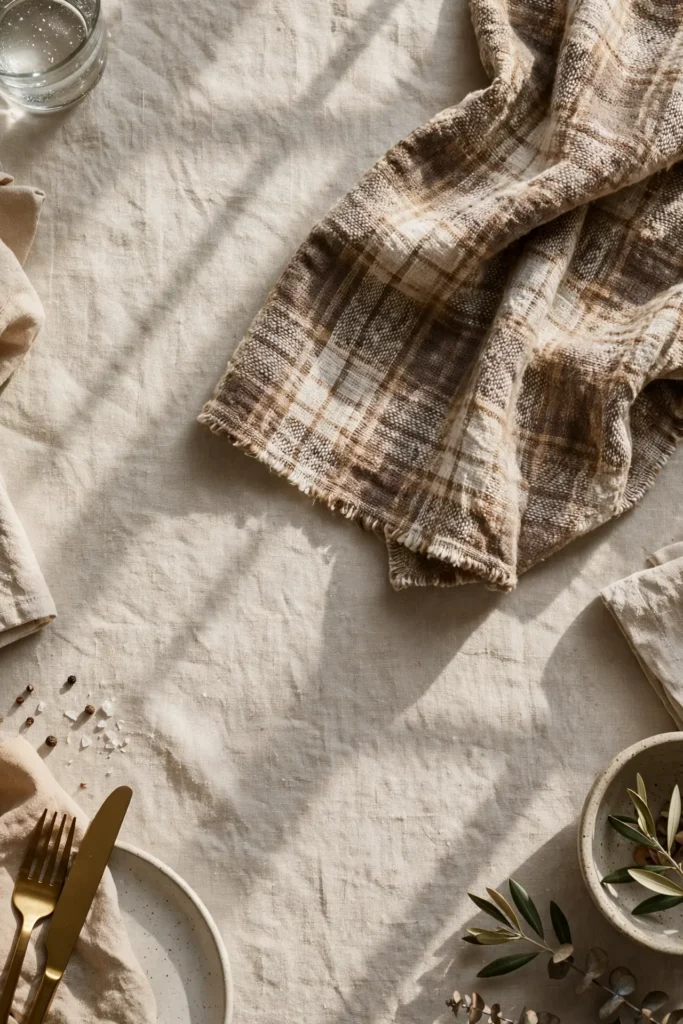
Layer a solid base tablecloth in a warm neutral with a contrasting table runner on top — a plaid, a stripe, or a subtle print — instead of relying on a single flat cloth. Let the runner hang slightly uneven at the ends rather than perfectly centered, which keeps the layering feeling relaxed instead of overly precise. This technique is repeated across nearly every higher-end tablescape guide because it adds visual depth and texture without needing any additional centerpiece pieces. Choose fabrics with at least a little texture, like linen or waffle-weave cotton, since flat, glossy fabric tends to look more like a plastic party-store cloth in photos. This is also one of the more reusable ideas on the list, since both pieces can be mixed and matched again for future gatherings.
19. A Cozy Playlist Station With Handwritten Song Requests
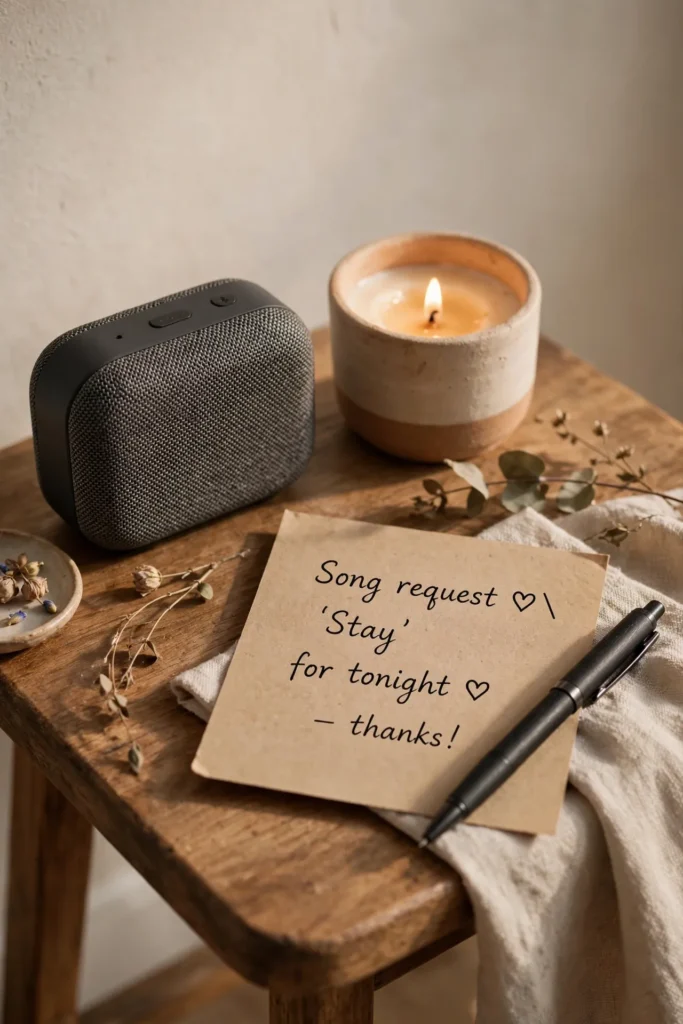
Set out a small card near the entry or bar cart asking guests to write down one song they’d want played that night, then build the evening’s playlist live from the requests as they come in. Pair the request card with a small speaker station styled with a candle or a small vase, so it doesn’t look like a random tech setup sitting on the counter. This idea adds a personal, participatory layer to the party in the same spirit as the gratitude tree, giving guests a small, low-pressure way to contribute to the mood of the night. It also tends to naturally mix generations and music tastes if your Friendsgiving includes a wide age range of friends. Save the final playlist afterward as a easy way to relive the night later.
20. An Outdoor Patio Setup With Blankets and Lanterns
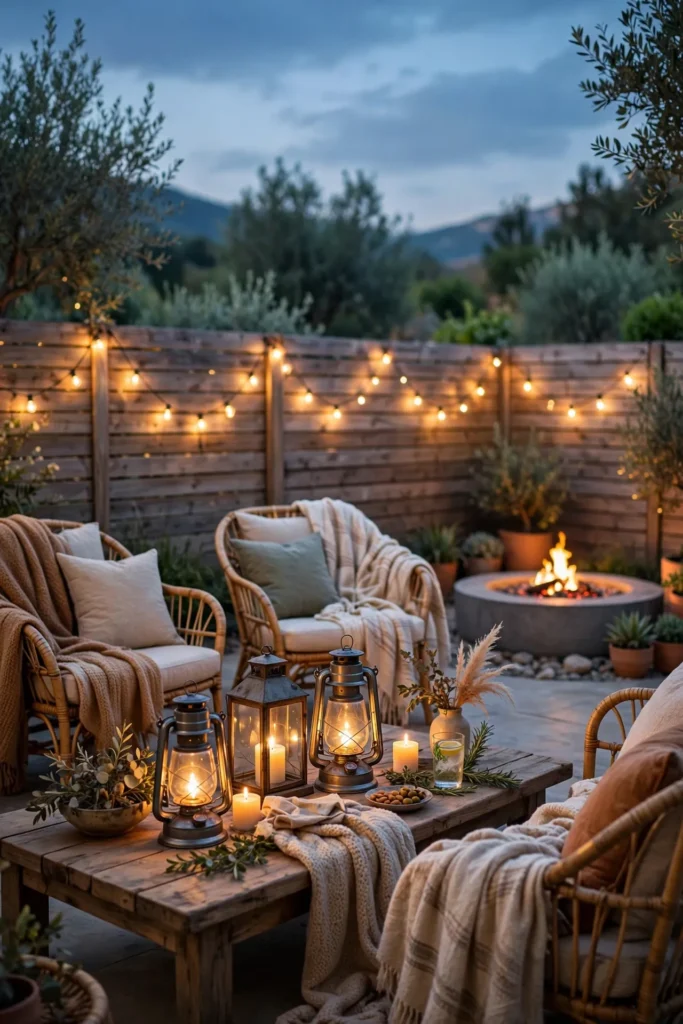
If weather allows, move part of the gathering outside by layering an outdoor table or seating area with warm blankets, a few lanterns, and string lights strung along a fence or pergola. Add a small fire feature if you have one, since it naturally draws people to gather around it and extends the evening once the meal is finished. Keep blankets within easy reach on a nearby bench or basket so guests can grab one without needing to ask. This idea works particularly well for hosts without much indoor space, since it effectively doubles your usable square footage for the party. Even a small balcony or patio can support a scaled-down version with a couple of chairs, a lantern, and a shared blanket or two.
21. A Kids’ Craft Corner for Younger Guests
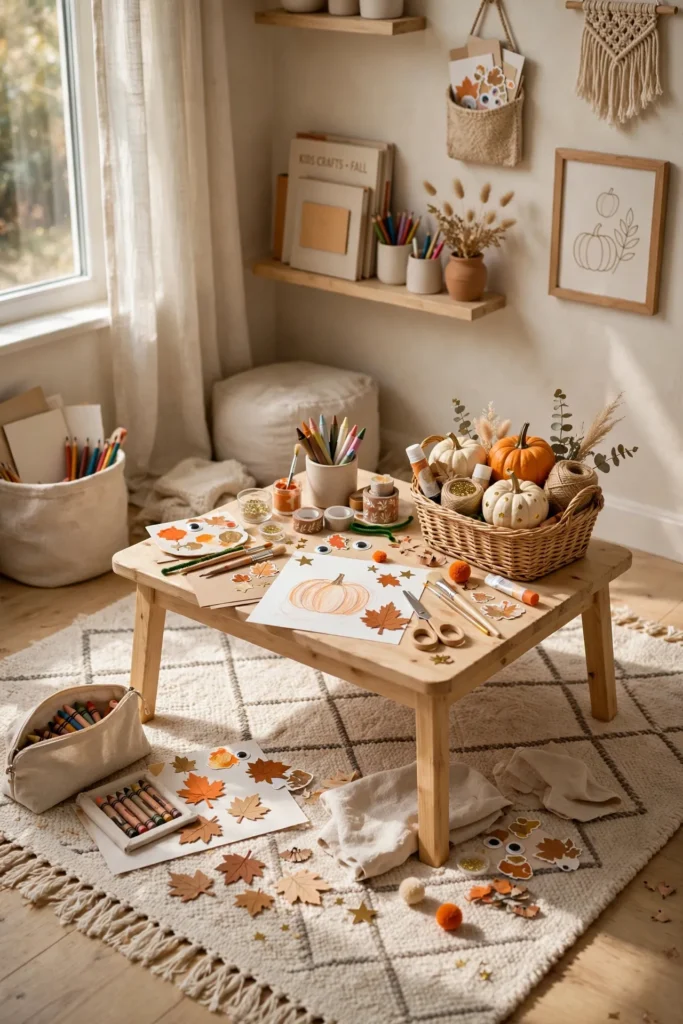
Set up a small low table or corner of the floor with paper, crayons, and simple fall-themed coloring sheets or pumpkin-decorating supplies for any younger guests at the gathering. This keeps kids engaged and out from underfoot during meal prep, while also giving the space a warm, family-inclusive feel that pure adult-focused Friendsgiving content often skips entirely. Style the corner with a small basket for supplies and a soft rug or cushion so it still fits the overall cozy aesthetic rather than looking like a separate daycare zone. Keep the craft materials simple and mess-contained — crayons and paper rather than paint — especially if the space is shared with the main gathering. This is a small addition, but it solves a real problem for any host whose friend group includes families with young kids.
22. Vintage Glassware Mixed With Modern Stemware
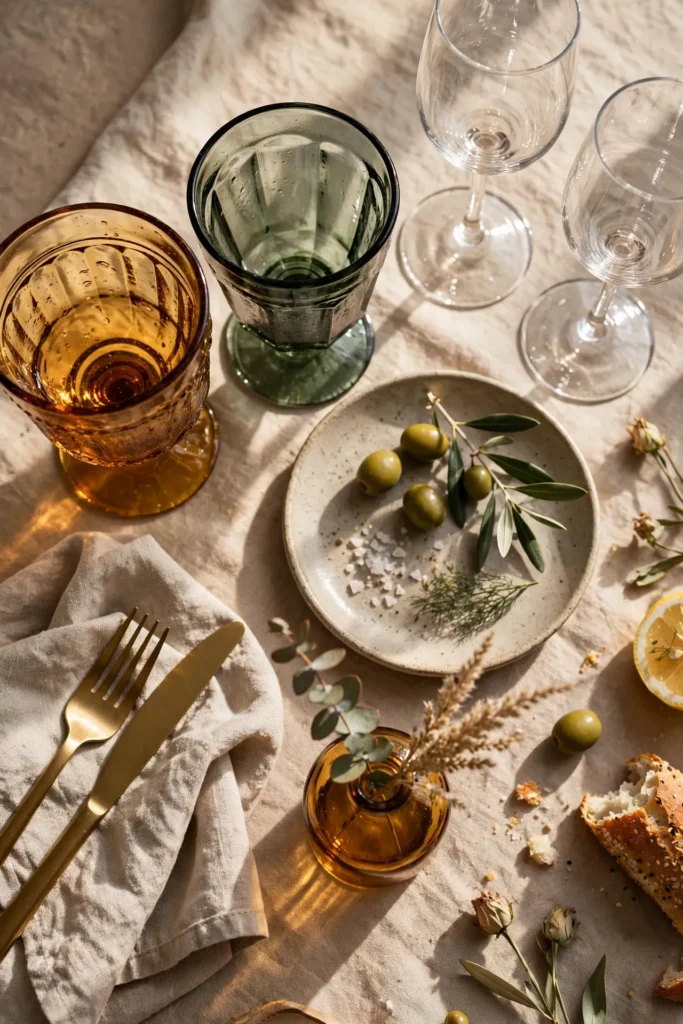
Combine a few pieces of vintage colored glassware — amber, smoky green, or pressed glass — with your regular modern stemware rather than buying a full matching set for one night. Group the vintage pieces near the centerpiece or use them specifically for water glasses, so they stand out as an intentional accent rather than getting lost among a full table of matching glasses. This is a low-cost way to add the same “collected over time” texture that mismatched plates bring, without needing to source an entire second dinnerware set. Thrift stores and estate sales are reliable, inexpensive sources for exactly this kind of glassware. It also means any chipped or single leftover pieces from other sets finally get put to good use instead of sitting in a cabinet.
Related: 17 Effortless Vintage Christmas Decor Ideas for a Nostalgic Home Straight Out of a Magazine
23. A Thank-You Favor Bag or Jar for Each Guest
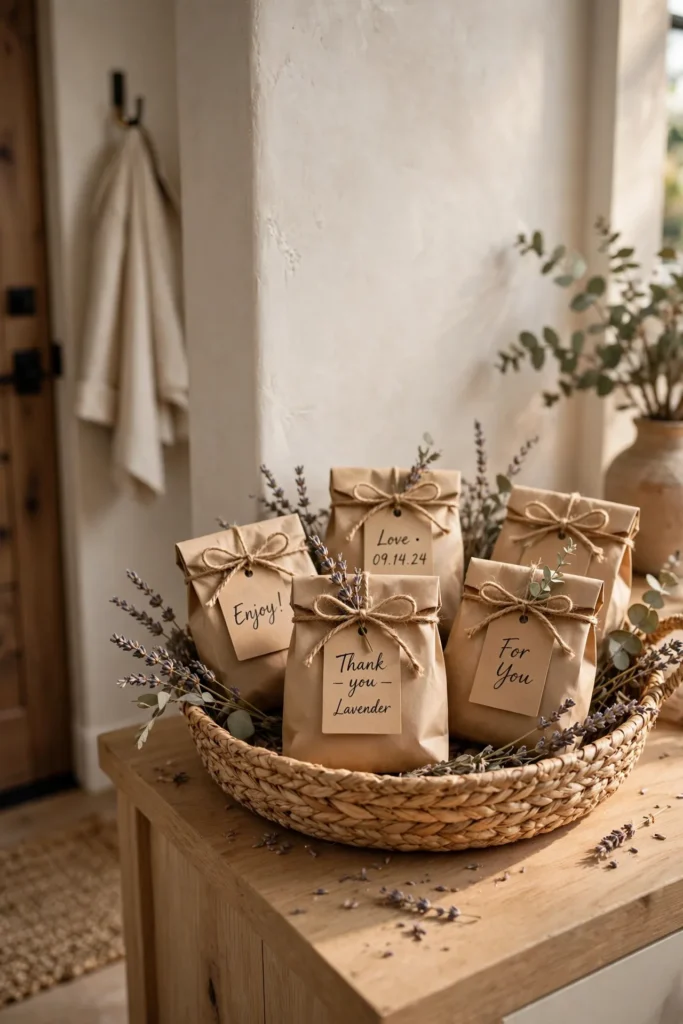
Fill small kraft paper bags or mini mason jars with a simple treat — a few caramels, a small candle, or a packet of hot cocoa mix — and set them near the door or at each place setting for guests to take home. Tie each one with a bit of twine and a small handwritten tag with the guest’s name or a short thank-you note. This detail gives the night a clear, thoughtful close and reinforces the personal, appreciative tone that separates Friendsgiving from a more generic dinner party. Keep the favors simple and low-cost — the gesture matters more than the price of what’s inside. Arranging them in a small basket or tray by the door also solves the practical problem of people forgetting to grab one on their way out.
24. An Autumn Leaf and Berry Garland Along the Table Edge
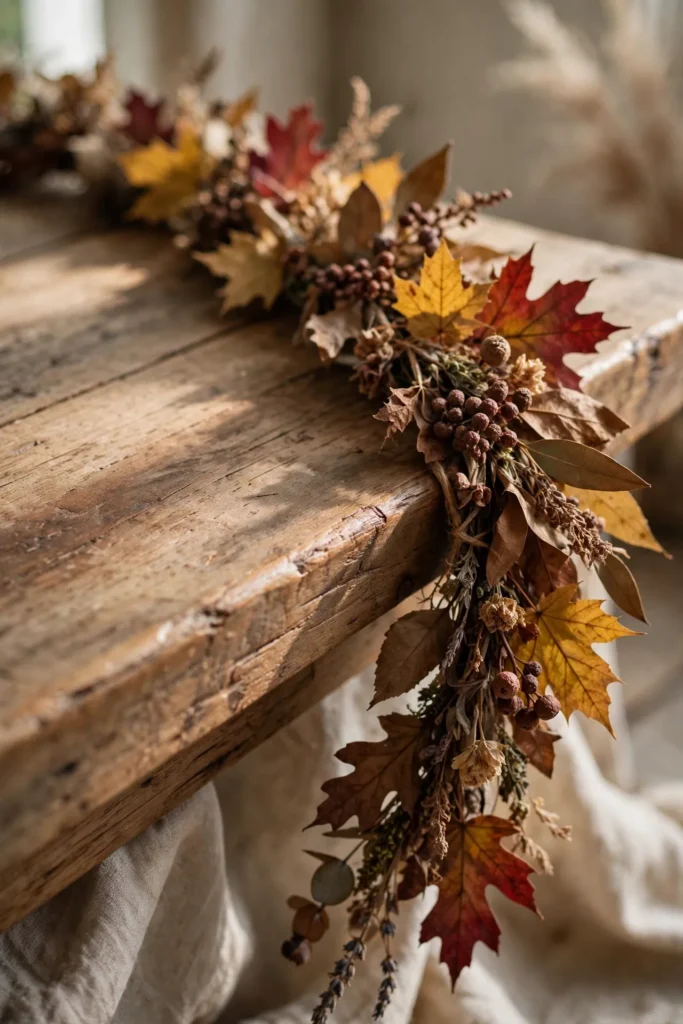
Drape a simple garland of preserved autumn leaves and small dried berries along the edge of the table, letting it trail slightly off the sides rather than staying perfectly contained within the tablecloth’s border. This adds texture and color at the table’s perimeter without competing with the centerpiece or place settings in the middle. Mix leaf colors — deep red, mustard, and warm brown — for a fuller, more natural look than a single-tone garland. It also works well draped along a mantel or staircase railing if you want to extend the same detail into other parts of the room. This is an easy, inexpensive way to tie multiple areas of your Friendsgiving decor together using one repeated material.
25. A “Welcome, Framily” Entry Display
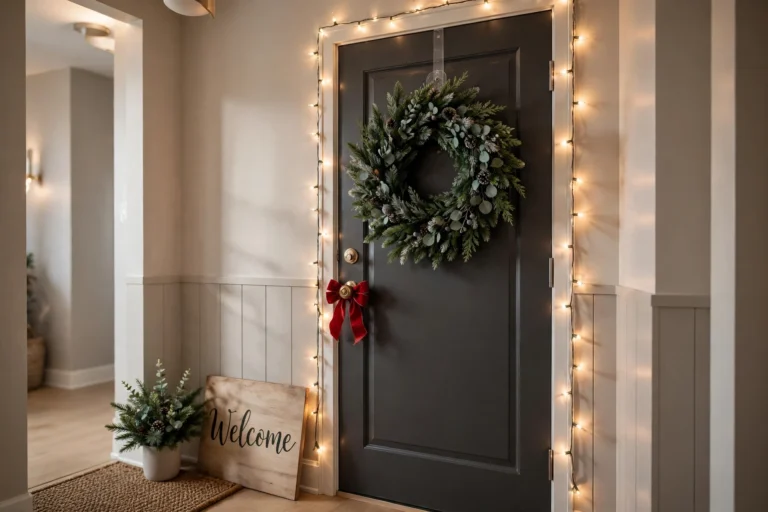
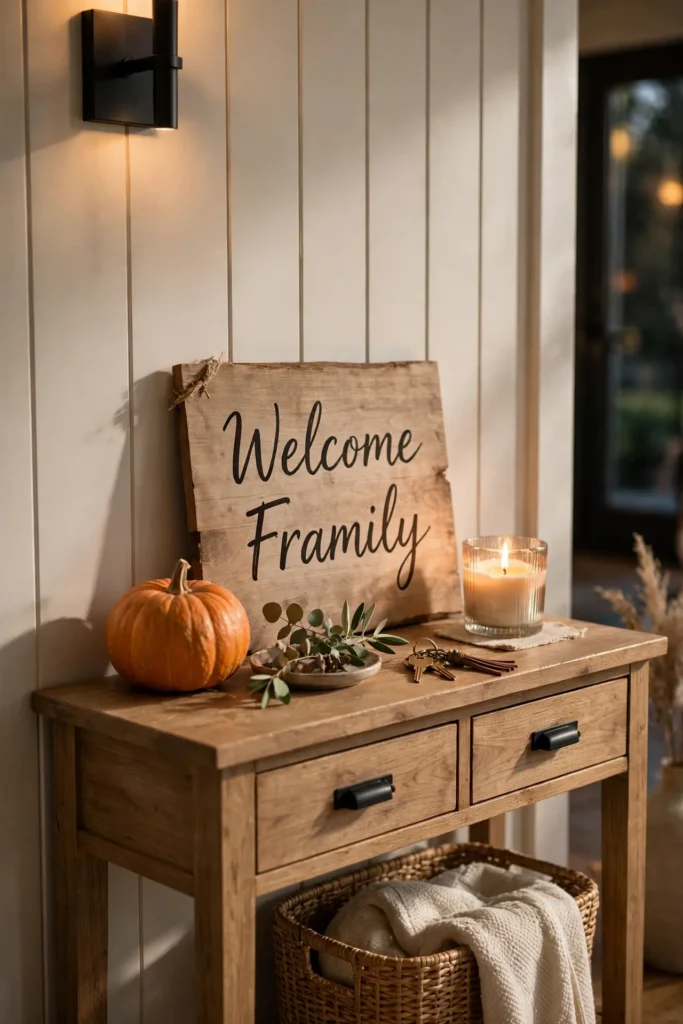
Style a small table or console just inside your front door with a simple sign reading “Welcome, Framily” alongside a small pumpkin, a candle, and a spot for guests to set down anything they’re bringing. This is the first thing anyone sees when they arrive, so it sets the tone for the whole gathering before they’ve even reached the main table. Keep the display warm and simple rather than elaborate — a candle, one seasonal accent, and the sign are enough. Pair it with the potluck sign-up chalkboard nearby if you’re using one, so the entry becomes a single functional, welcoming zone. This small entryway moment is consistently underused in Friendsgiving decor content, even though it’s the one spot every single guest is guaranteed to see.
Styling Tips
Anchor your whole gathering in one consistent color palette — warm neutrals, rust, mustard, and deep green work well together — and repeat it across the table, the garland, the favors, and the entry display so every zone feels connected. Vary height constantly within each vignette, since flat, single-level displays read as unstyled no matter how nice the individual pieces are. Layer textures deliberately: smooth ceramic against rough linen, glossy glass against matte pumpkins, since contrast is what makes a table feel rich instead of flat. Light everything warm — candlelight, string lights, and amber bulbs — rather than relying on overhead lighting, which flattens color and texture in photos and in person.
Practical Implementation Ideas
Start setup the day before with anything that doesn’t involve food, like the linens, garland, string lights, and entry display, so party day is only about the table settings and final touches. Build the table in layers: linens first, then centerpiece, then place settings, then the small final details like place cards and candles, lighting the candles last so wax doesn’t drip unevenly before guests arrive. Set up secondary zones — the dessert table, bar cart, and photo backdrop — in the hour before guests arrive, since these areas take less time than the main table but add significant visual impact. Walk through your own front door as if you were a guest arriving, and adjust the entry display based on what you actually notice first.
Common Mistakes to Avoid
Spending your entire decorating budget and energy on the centerpiece while leaving the seating, entry, and secondary areas as an afterthought is the most common gap in Friendsgiving decorating, and it’s exactly what this article is built to avoid. Overly matched, brand-new decor sets can read as more formal Thanksgiving than casual Friendsgiving, so mix in at least a few thrifted or borrowed pieces. Skipping a seating plan for a larger group leads to awkward last-minute chair scrambling, so decide on floor seating, overflow nooks, or extra chairs ahead of time. Finally, forgetting to dim overhead lighting is a small but consistent mistake — even a beautifully styled table looks flat under bright ceiling lights.
Small-Space Alternatives
For apartments without room for a full dining setup, the floor seating idea effectively doubles your capacity without needing extra furniture. A narrow console or even a stacked stool can hold the dessert table or bar cart if a separate table isn’t available. Skip the full backdrop corner and instead style just one wall with a simple garland and a few string lights for a scaled-down photo moment. The entry display and potluck sign can be combined onto a single small table by the door to save space while still covering both functions.
Budget-Friendly Alternatives
Foraged centerpiece materials, thrifted plates and glassware, and homemade place cards make up most of the cost savings across this list, since none of them require buying anything new. Mini pumpkins, kraft paper, and dried leaves are inexpensive and widely available throughout the season at grocery stores and farmers markets. Ask guests to bring a folding chair or floor cushion if seating is tight, which is a normal, low-awkwardness potluck-style request. Favors don’t need to be elaborate — a handful of caramels in a kraft bag with a handwritten tag costs very little but still lands as thoughtful.
Pro Styling Recommendations
Photograph your table setup in natural daylight before guests arrive and again once the candles are lit in the evening, since both versions tend to perform differently depending on when people are searching for inspiration. Keep a small styling kit on hand — extra twine, a hot glue gun, and a few spare candles — so last-minute touch-ups between zones take minutes instead of a full extra trip to the store. When deciding whether a piece fits the mood, ask whether it feels more like a formal Thanksgiving item or something you’d actually want at a relaxed dinner with close friends — if it’s the former, it likely belongs in a different kind of gathering.
FAQs
Conclusion
A great Friendsgiving table matters, but it’s rarely the only thing people remember. It’s the handwritten note tucked into a place card, the corner with blankets where the night’s best conversation happened, or the gratitude tree everyone added to on their way in. Style the table well, then give just as much thought to everything happening around it — that’s the part most guides skip, and it’s usually the part that makes the gathering feel extra special.