16 Blue and White Farmhouse Thanksgiving Table Ideas
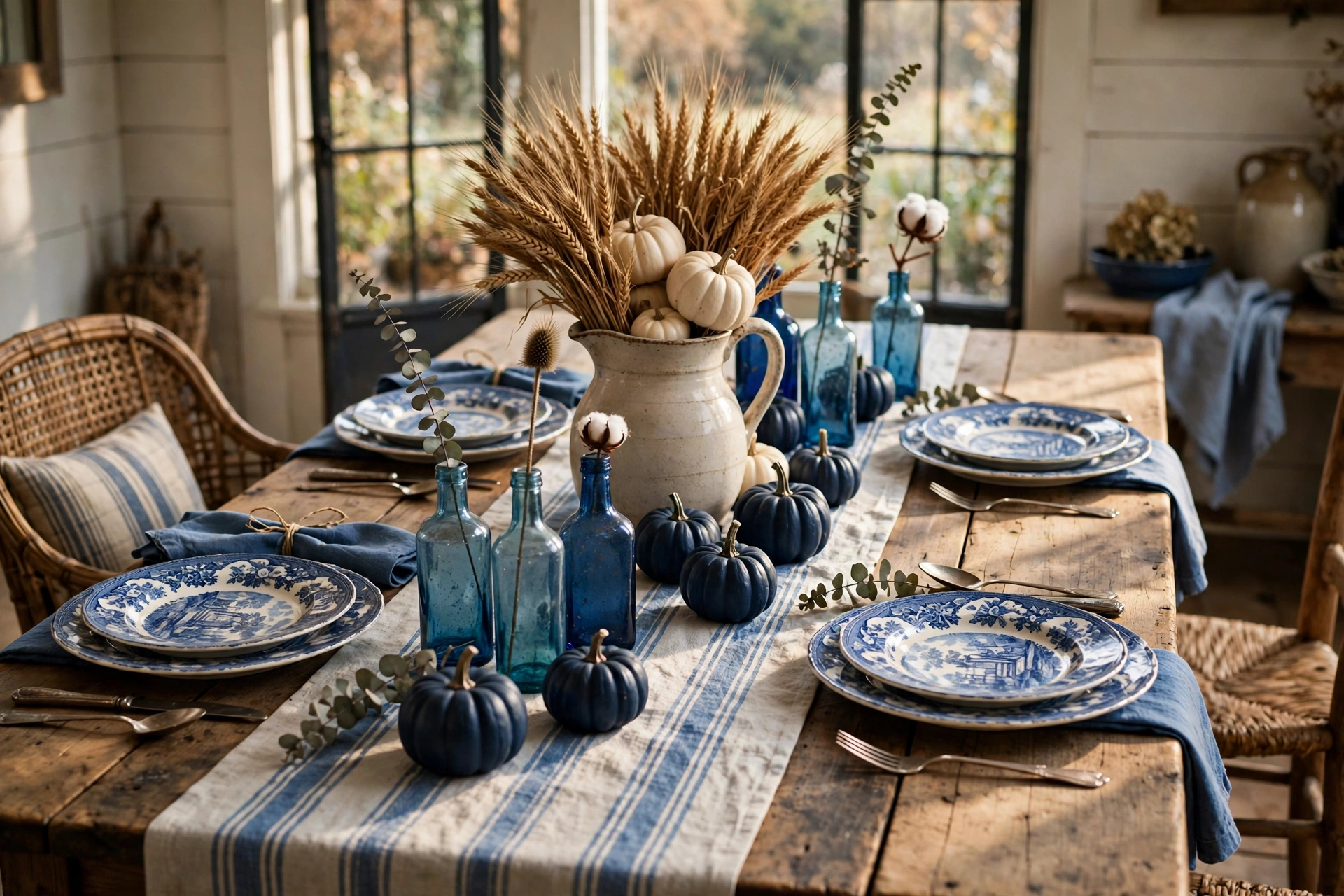
Thanksgiving tables tend to default to the same palette every year — burnt orange, deep brown, maybe a little burgundy if things get adventurous. It’s a lovely combination, but it’s also the combination showing up on nearly every table and every Pinterest board come November. Blue and white takes the same cozy, collected farmhouse feeling and gives it a completely different mood — fresher, a little more vintage, and closer to something you’d find set out in an old farmhouse kitchen than a seasonal display from a big-box store.
The best part is that this palette often comes from pieces people already own. A stack of blue and white transferware plates, an ironstone pitcher passed down from a grandmother, a few blue mason jars from summer canning — these ideas lean on exactly that kind of collected, lived-in charm rather than asking you to buy an entirely new set of Thanksgiving decor. The 16 ideas below show how to build a full blue and white farmhouse tablescape, whether you’re starting from a real vintage collection or just want to try the look for the first time this year.
Table of Contents
16 Blue and White Farmhouse Thanksgiving Table Ideas
1. Blue & White Transferware Layered Plates
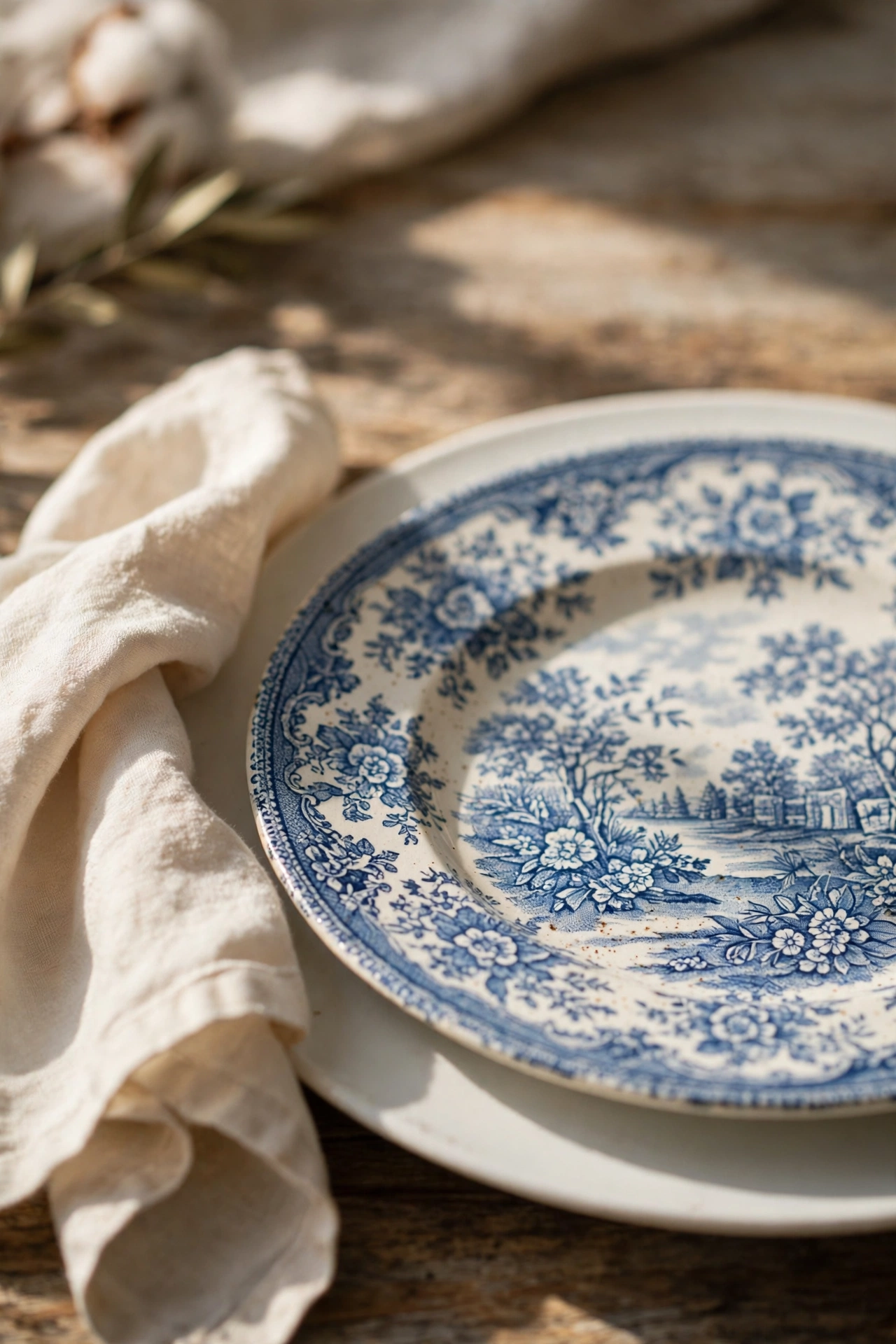
Transferware, the blue-printed pottery pattern that’s been a farmhouse and cottage staple for decades, makes an easy foundation for a blue and white Thanksgiving table since it works as both the dinnerware and the decor at the same time. Layering a transferware salad plate over a plain white or ironstone dinner plate at each setting adds pattern without needing to match every single piece exactly, which matters since most transferware collections are gathered piece by piece over time rather than bought as a matching set. Mixing a few different transferware patterns together, as long as they share the same blue tone, actually reads as more collected and farmhouse-authentic than a perfectly matched set would. A simple white or cream napkin underneath keeps the pattern as the clear focal point of each place setting rather than competing with a patterned linen. This idea works as the foundation for nearly every other item on this list, since the blue tone in the china sets the palette for everything else on the table.
2. Navy-Painted Pumpkins Centerpiece
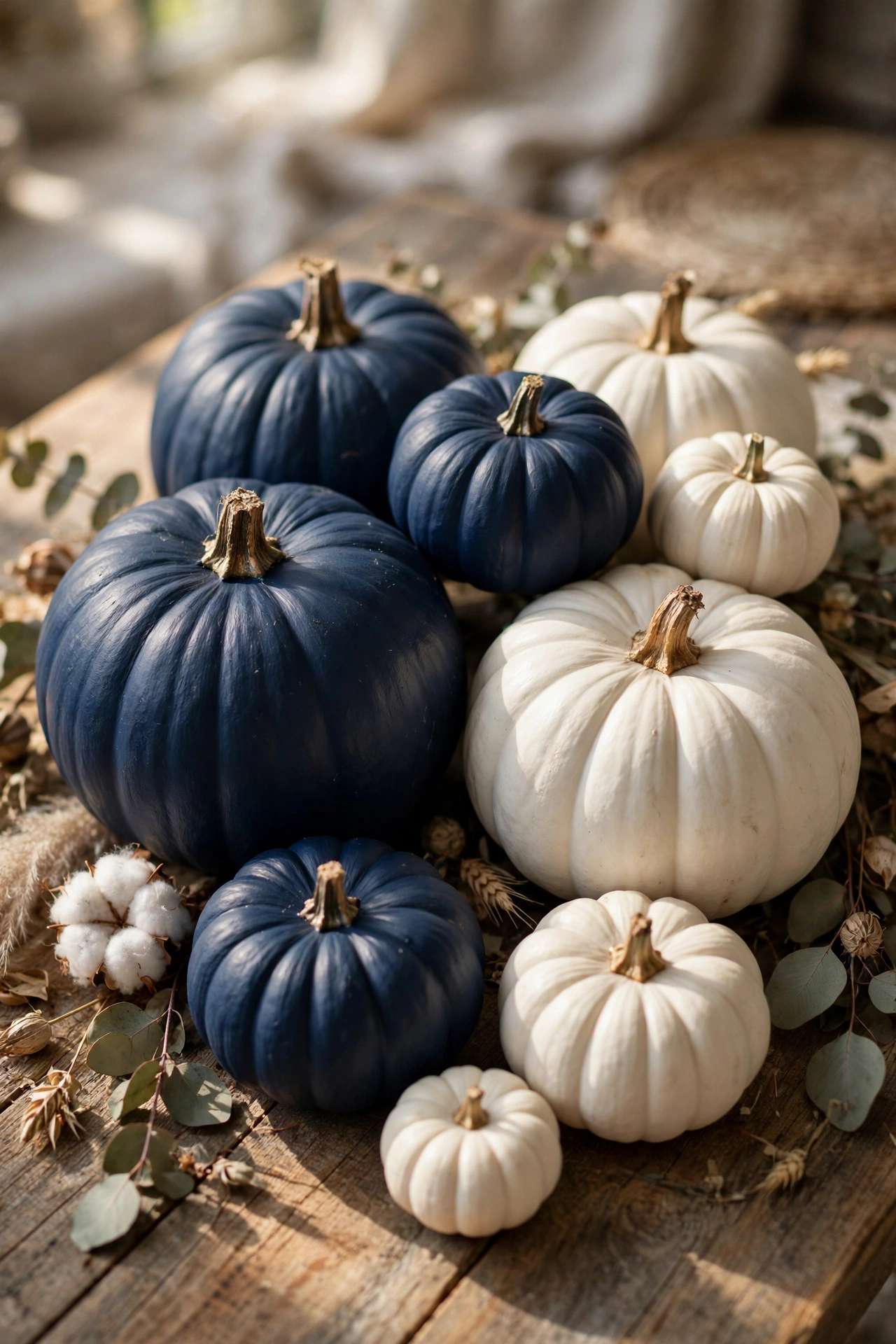
Painting real or faux pumpkins in a deep navy blue instead of leaving them their natural orange gives the most recognizable Thanksgiving symbol a completely different, more sophisticated look while keeping the shape instantly recognizable as fall decor. A matte finish paint, rather than glossy, keeps the pumpkins looking more like a designed piece than a craft project, and it photographs better under warm indoor lighting. Grouping the navy pumpkins with a few unpainted white ones creates the core blue and white contrast the whole table is built around, without needing any other colored element to establish the palette. Varying pumpkin sizes within the cluster, and grouping them in odd numbers down the table’s centerline, keeps the display from looking too uniform or store-bought. This is one of the more hands-on DIY ideas on the list, but it’s also one of the most distinctive, since almost no traditional Thanksgiving table uses this particular color on the pumpkins themselves.
3. Ironstone Pitcher with Wheat & Dried Florals
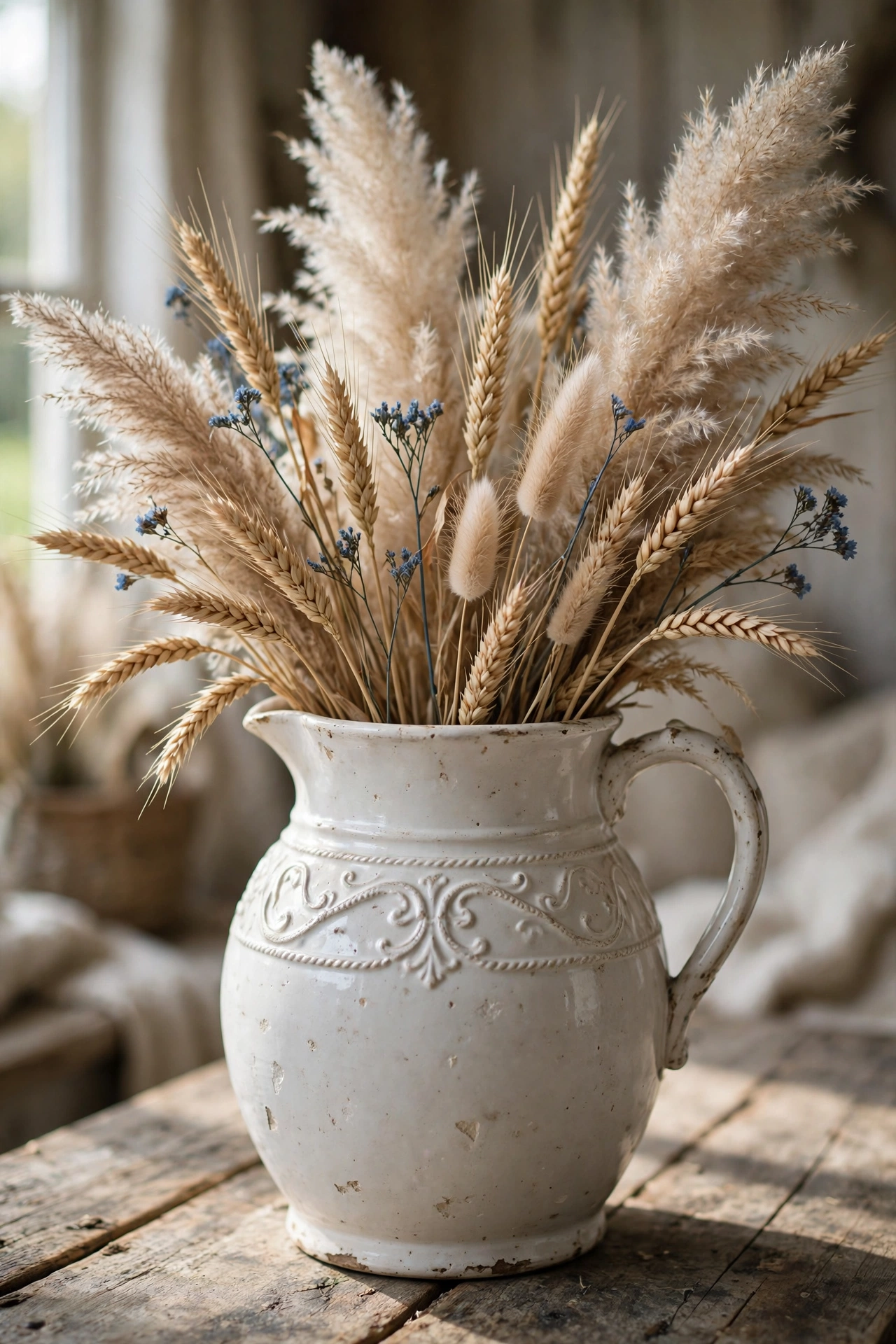
A large white ironstone pitcher, filled generously with dried wheat stalks, pampas grass, or dried eucalyptus, gives a blue and white table its height and its harvest connection at the same time, since the pale, textural stems read clearly as autumn even without any orange in the mix. Ironstone’s slightly imperfect, aged white finish pairs naturally with blue and white china, since both materials share that same collected, vintage farmhouse quality. Placing the pitcher slightly off-center on the table, rather than dead-middle, gives the arrangement a more relaxed, gathered-from-the-garden look instead of a stiffly formal centerpiece. Tucking a few stems of blue-tinted dried flowers, like blue thistle or dried hydrangea, into the arrangement ties the pitcher directly into the table’s overall color story. This idea works especially well as the main centerpiece on a longer table, since the pitcher’s height keeps it visible from either end without blocking sightlines across the middle.
Related: 18 Small Thanksgiving Table Decor Ideas for Cozy Dinners
4. Blue Mason Jar Lanterns
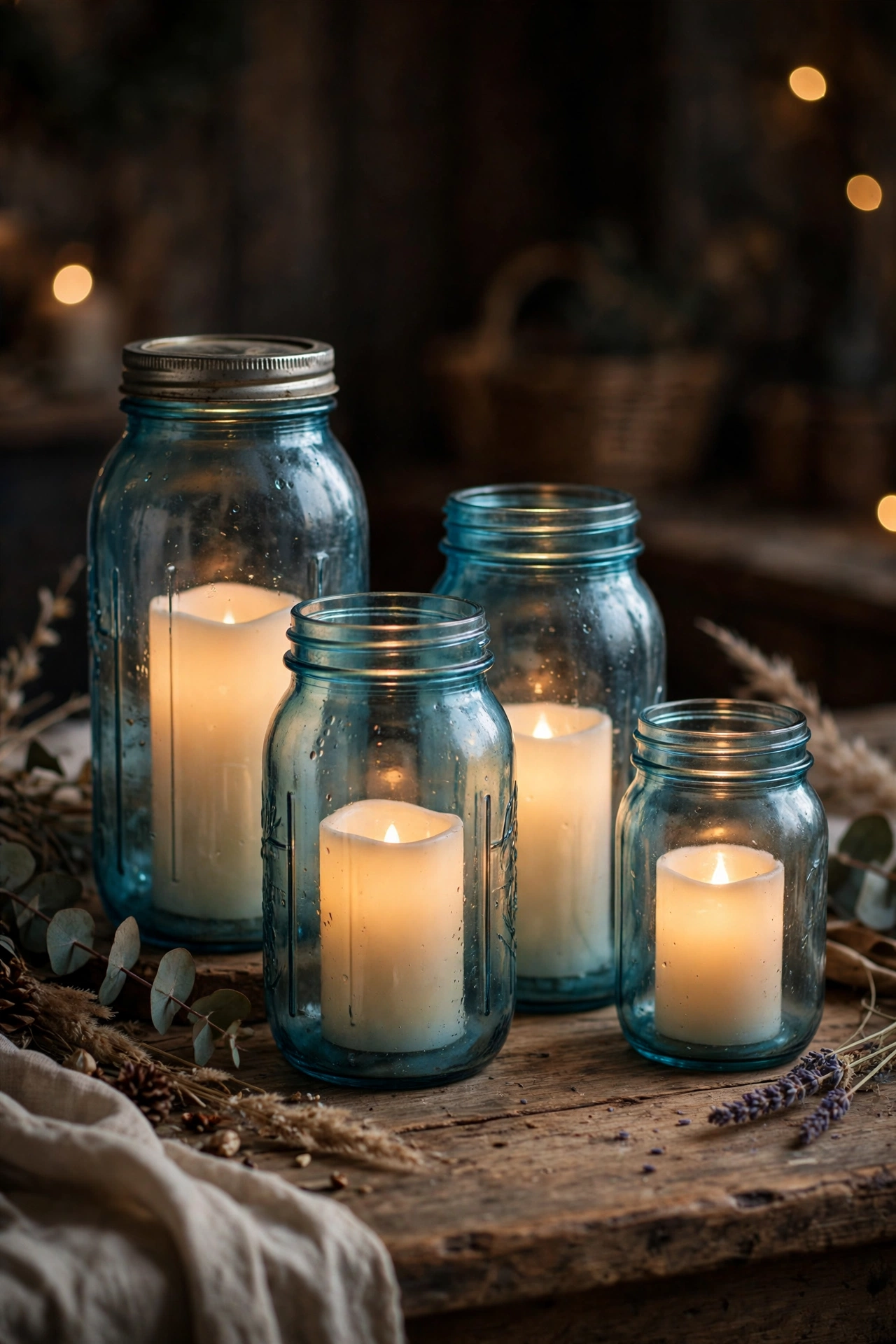
Mason jars tinted a soft blue, either from vintage Ball jars or a quick coat of blue glass paint, filled with a flameless candle or a strand of warm lights, create a soft glow that ties directly into the table’s palette without needing any additional blue decor nearby. Lining several jars down the table’s centerline at slightly staggered heights, using small books or overturned bowls underneath a few of them, adds the kind of dimension a single row of evenly spaced jars doesn’t achieve. Vintage blue-tinted mason jars, often found at antique shops or estate sales, have a naturally uneven, aged tone that reads as more authentic than a uniformly painted modern jar. Because mason jars are inexpensive and easy to find, this is one of the more budget-friendly ways to reinforce the blue and white palette across a longer table. Battery-operated candles inside the jars make this a safer lighting option for tables where kids will be seated nearby.
5. Vintage Ginger Jars as Centerpiece Anchors
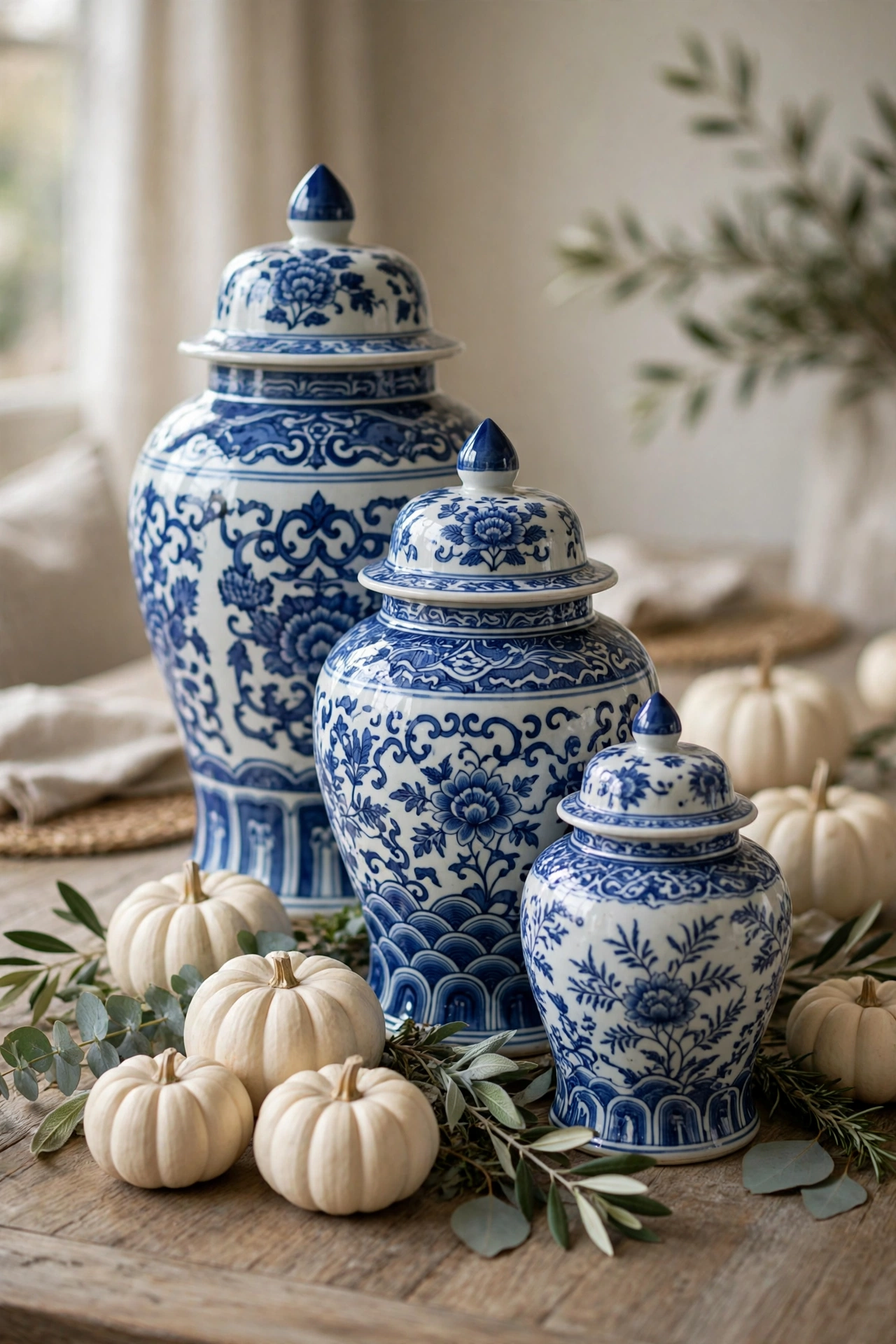
A pair or trio of blue and white ginger jars, whether authentic antiques or more affordable reproductions, gives a Thanksgiving table an anchor point that feels more like a curated collection than a seasonal purchase. Grouping the jars at varying heights, with the tallest positioned slightly behind the others, creates the same layered look found in traditional chinoiserie-inspired tablescapes. Leaving the jars empty, rather than filling them with anything, actually works well here, since the jars’ pattern and shape are strong enough to stand as the centerpiece on their own without additional florals competing for attention. Surrounding the base of the jars with a few sprigs of greenery or a scattering of white pumpkins softens the display and ties it into the rest of the table’s Thanksgiving styling. This idea suits a more formal or elegant Thanksgiving table particularly well, since ginger jars carry an inherently polished, collected-over-time quality.
6. Blue & White Buffalo Check Table Runner
A buffalo check runner in blue and white, rather than the more common black and white or red and black, brings a familiar farmhouse pattern into the table’s specific color story without needing to source anything unusual or hard to find. The bold, graphic check pattern gives the table a strong visual base layer that other blue and white pieces — transferware, ironstone, mason jars — can sit on top of without clashing. Running the check pattern the full length of the table, rather than using a shorter runner that only covers the centerline, keeps the pattern consistent whether guests are looking at the table from the side or the head. Pairing the runner with solid white or cream napkins keeps the pattern from feeling overwhelming once plates, glasses, and a centerpiece are added on top. This idea is one of the most affordable and easiest to find pre-made, since buffalo check runners in various colorways are widely available through the fall season.
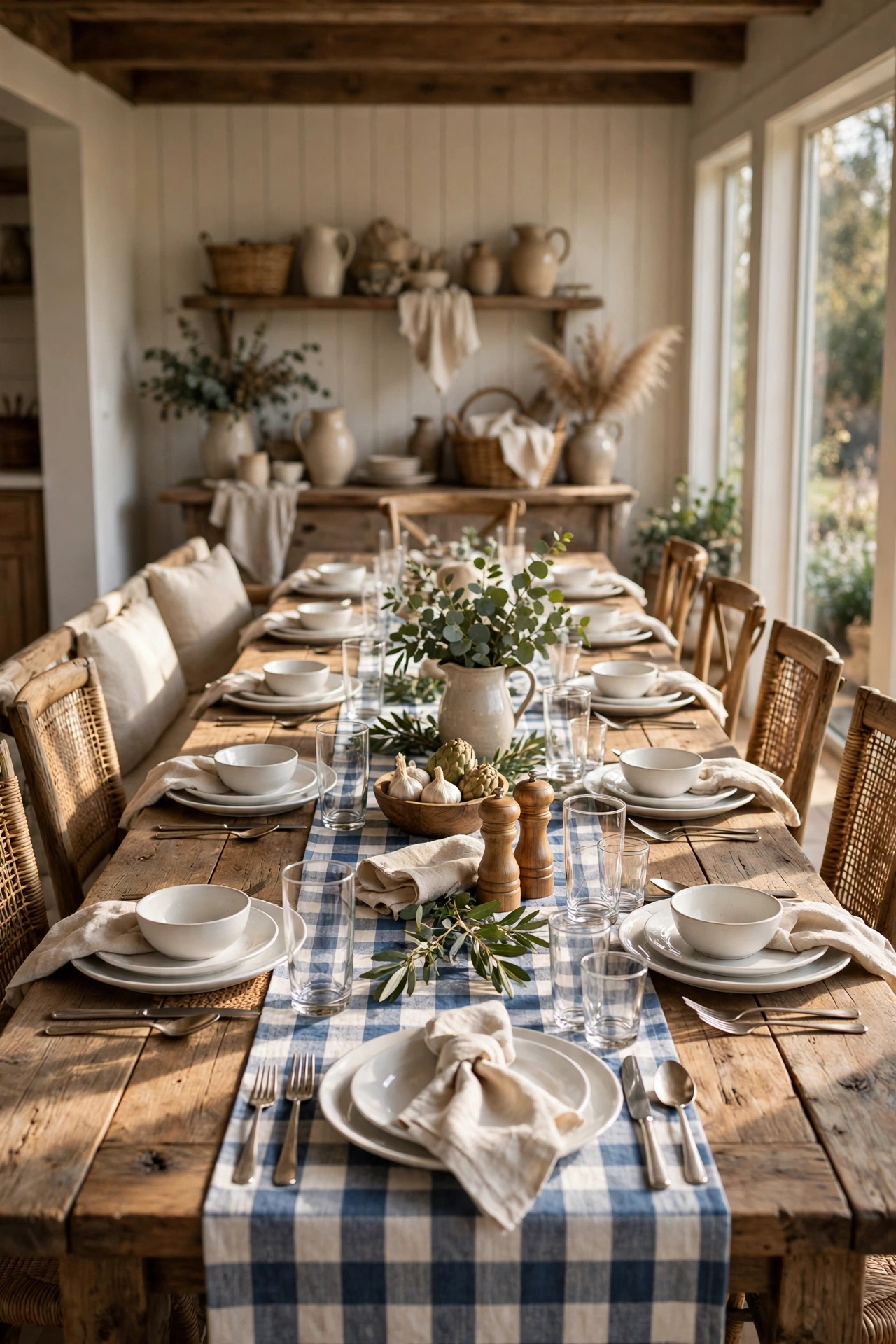
7. Blue Ticking Stripe Linen Runner
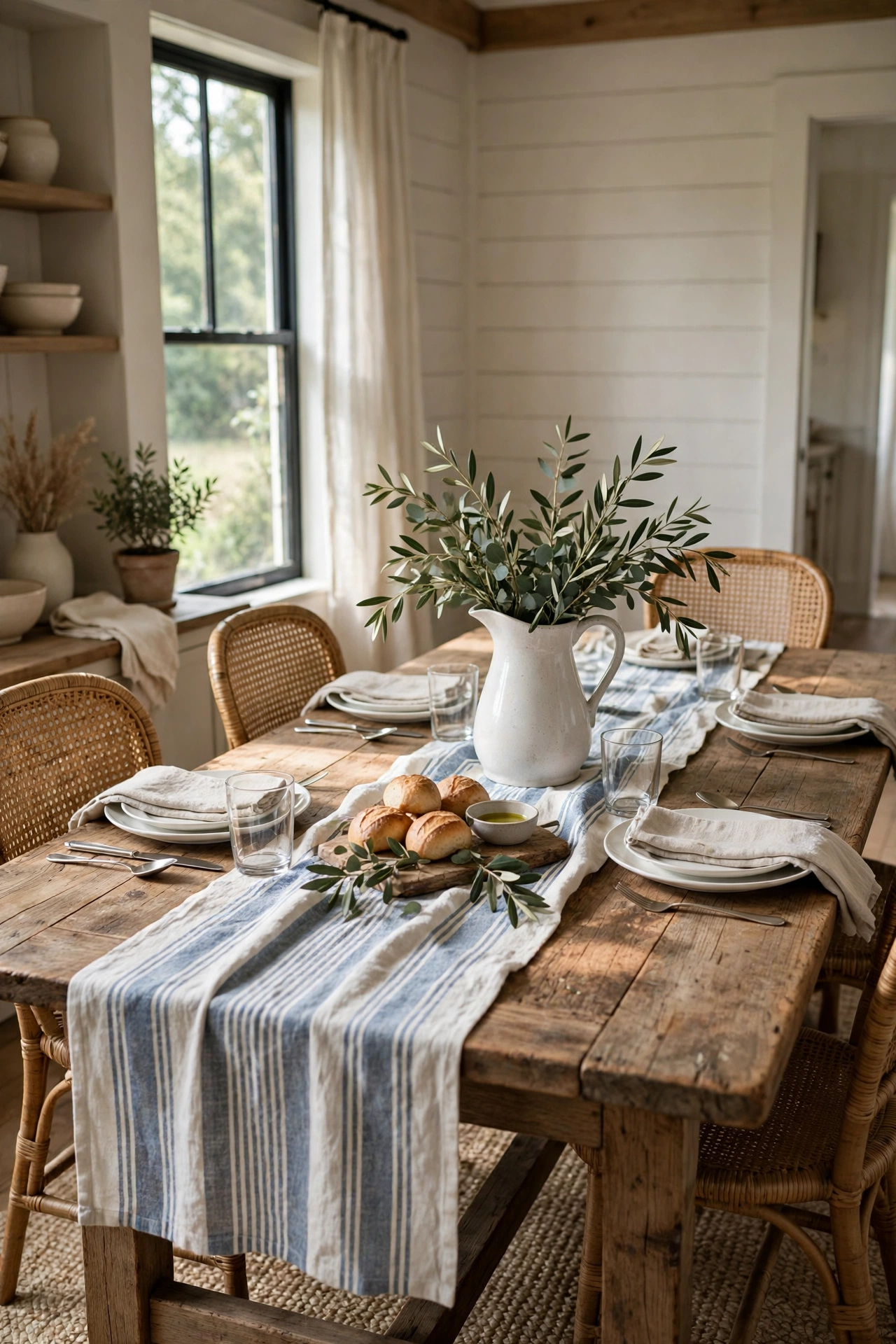
Blue and white ticking stripe fabric, the same narrow-striped cotton traditionally used for mattress covers, brings a softer, more subtle pattern to the table than a bold buffalo check while still reading clearly as classic farmhouse material. The narrow stripes create movement down the length of the table without competing with a patterned centerpiece or dinnerware, which makes this a good choice for a table that already has several other blue and white elements in play. Choosing a slightly wider stripe for a more relaxed, vintage feel, or a narrower pinstripe for something a bit more refined, lets this idea flex toward either a casual or dressier table depending on the rest of the styling. Hemming the fabric length to hang slightly over each end of the table, rather than cutting it flush, gives the runner a more finished, tailored look. This idea works particularly well underneath ironstone or transferware, since the fabric’s texture and pattern complement rather than compete with the pottery.
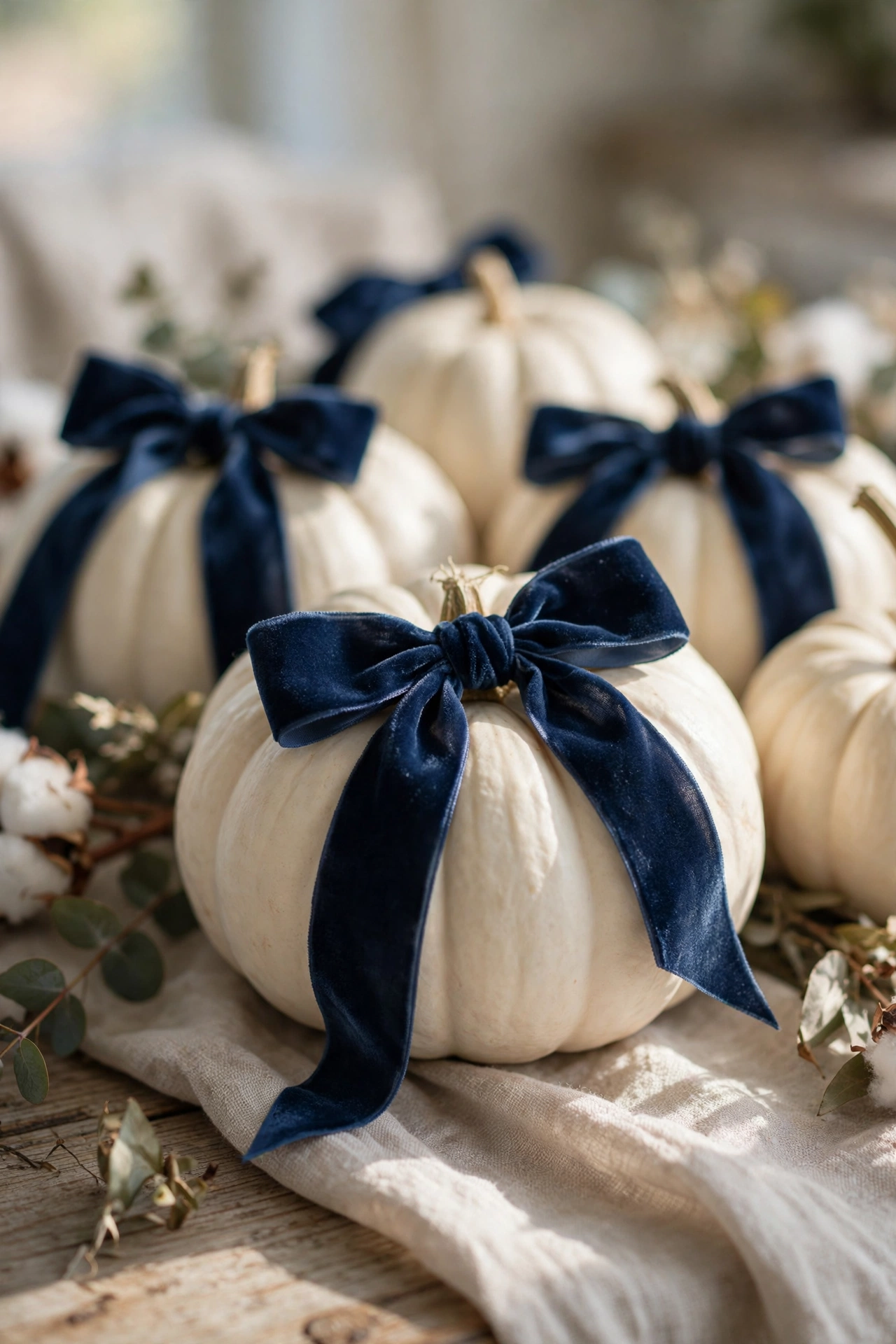
8. White Pumpkins with Navy Ribbon Bows
Plain white pumpkins, tied with a simple navy ribbon bow at the stem, connect the table’s centerpiece directly to its color palette without needing to paint or alter the pumpkins themselves. Velvet ribbon in a deep navy adds a bit of richness and texture that a thinner satin or grosgrain ribbon doesn’t provide, and it holds a bow shape better in cooler fall temperatures if the table is set on a covered porch. Clustering three or four white pumpkins with matching navy bows down the table’s centerline, rather than spacing single pumpkins evenly apart, gives the display more visual weight and consistency. This idea is one of the simplest on the list to put together quickly, since it only requires pumpkins already on hand and a length of ribbon. It also pairs easily with almost every other idea in this list, since white pumpkins are neutral enough to sit alongside ironstone, transferware, or a patterned runner without any color conflict.
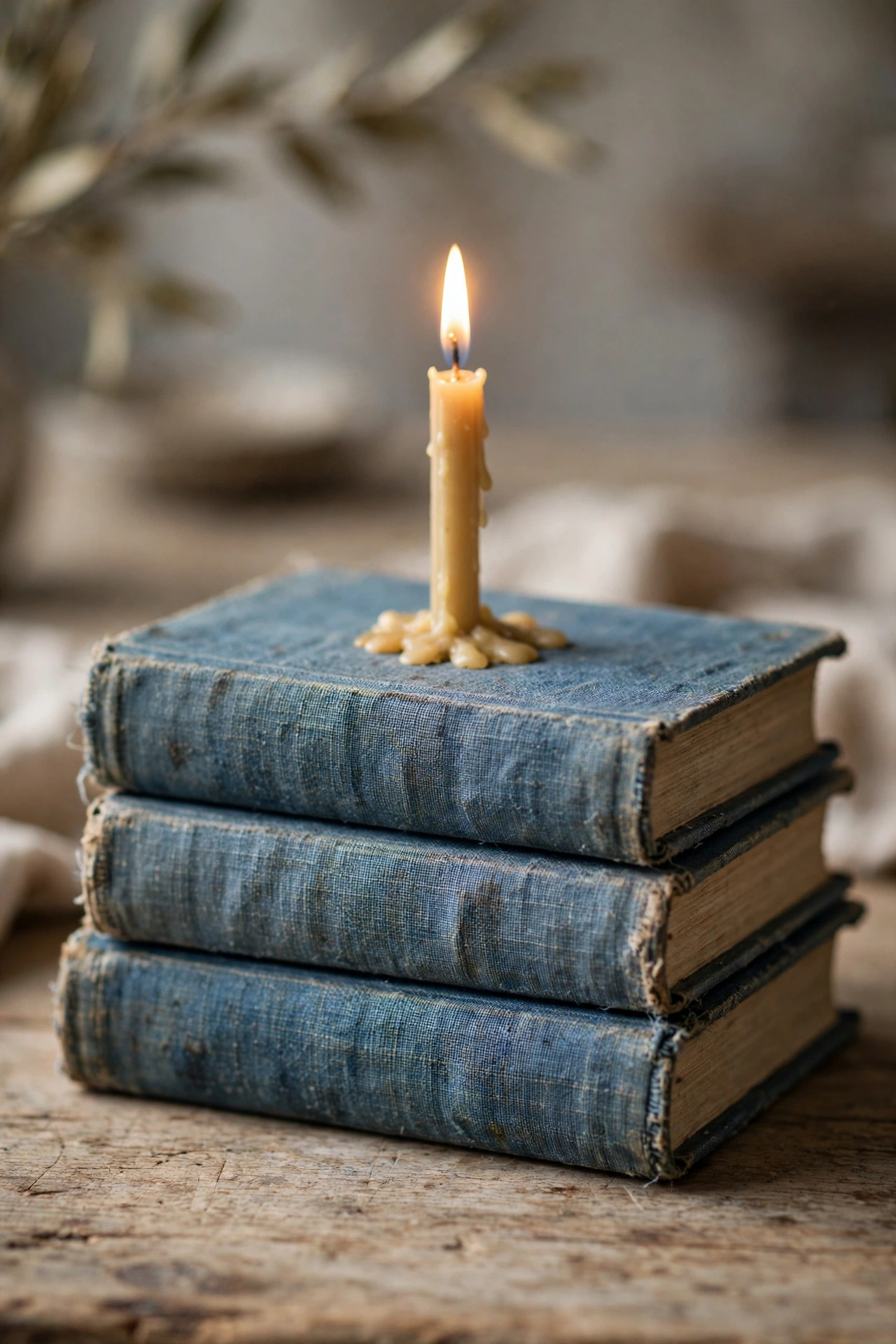
9. Stacked Antique Blue Books as a Riser
A small stack of old books with blue linen or cloth covers, used as a riser beneath a candle, small pumpkin, or single stem vase, adds height and a bookish, collected character to the table that most seasonal decor doesn’t offer. Choosing books with a worn, slightly faded blue cover rather than anything glossy or new keeps the piece feeling authentically vintage instead of styled specifically for the occasion. Stacking two or three books of slightly different sizes, rather than a perfectly even pile, gives the riser a more natural, lived-in look. This idea works especially well repeated at a few different points along the table, since it adds varying heights to the overall tablescape without needing multiple large centerpiece pieces. It’s also a practical way to use books that might otherwise sit unused on a shelf, giving them a second life as part of the table’s styling for the season.
Related: 16 Thanksgiving Table Favor Ideas Guests Will Actually Keep
10. Blue Glass Bottle Bud Vases
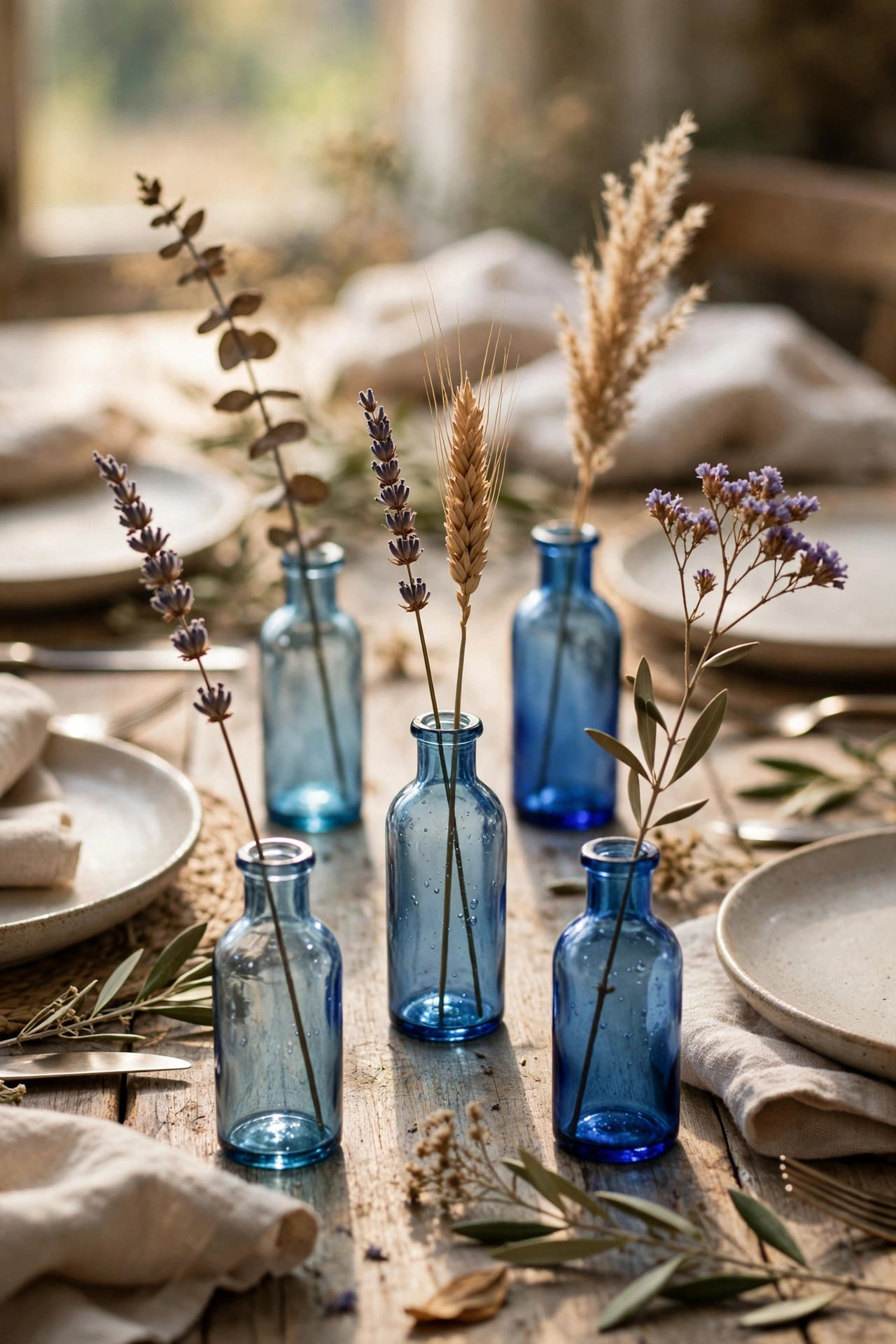
A collection of small blue glass bottles, each holding a single stem of dried wheat, eucalyptus, or a small seasonal flower, scattered along the table rather than gathered into one large arrangement, gives the table a relaxed, garden-gathered feeling. Mixing bottle heights and shapes — some tall and narrow, others shorter and rounder — creates natural variation without needing to plan an exact arrangement. Cobalt or cornflower blue glass both work well here, and vintage medicine or apothecary bottles in particular often carry the kind of soft color variation that makes each one look slightly different from the next. Placing a bottle at every other place setting, rather than clustering them all in the center, brings the blue and white color story directly to each guest rather than keeping it confined to one central display. This idea is one of the most affordable on the list, since small glass bottles are inexpensive and widely available secondhand.
11. Salt-Glazed Stoneware Crock Centerpiece
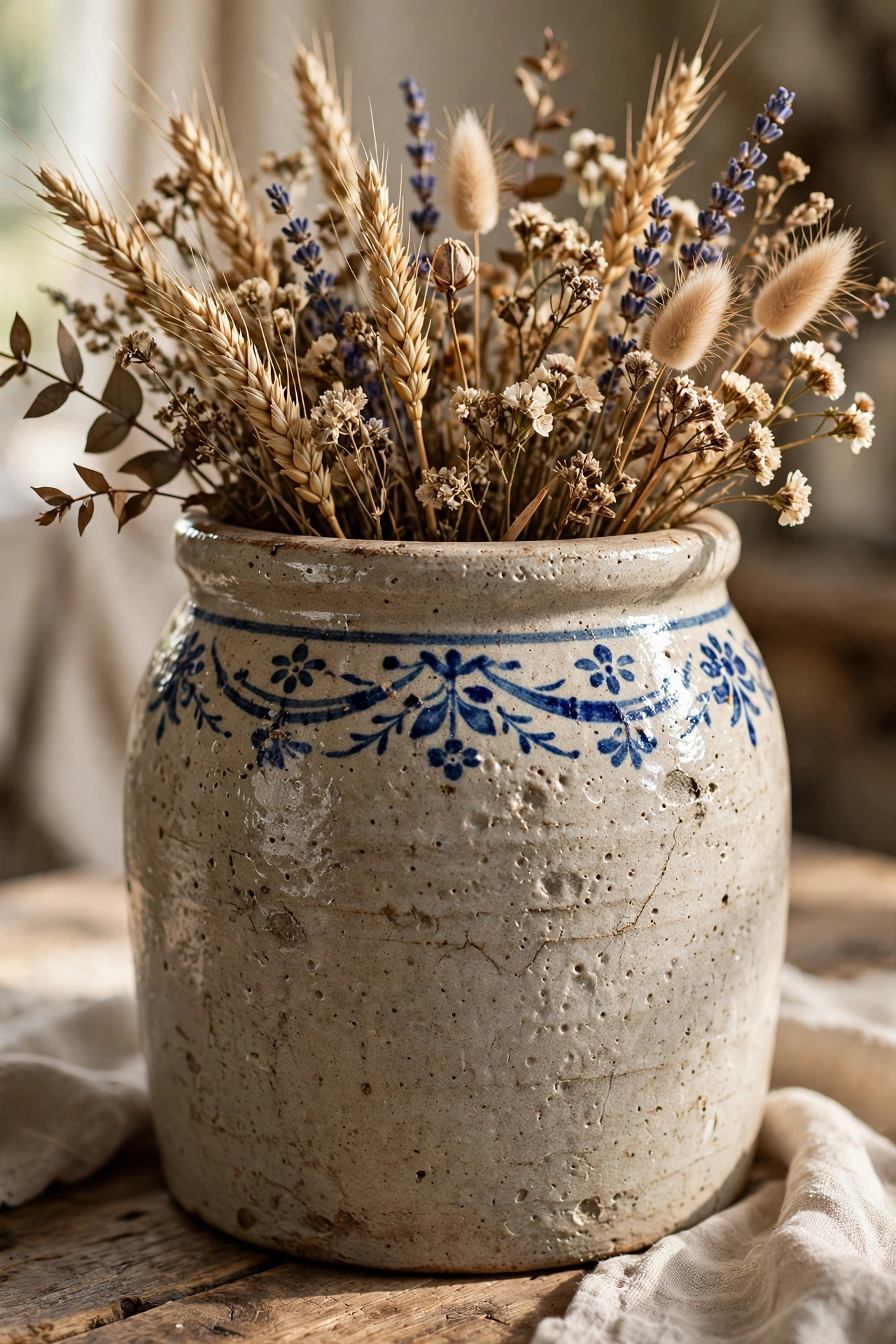
A salt-glazed stoneware crock, often found in a soft gray-blue tone with simple cobalt blue detailing, makes a substantial, farmhouse-authentic centerpiece vessel when filled with dried florals, wheat, or even a few decorative gourds. The crock’s naturally rough, slightly uneven texture contrasts nicely against smoother transferware or ironstone pieces elsewhere on the table, adding another layer of material variety within the same color family. Choosing a crock with a simple stamped or hand-painted design, rather than anything overly ornate, keeps the piece feeling like genuine antique farmhouse pottery rather than a modern reproduction. Filling it generously, so the arrangement spills slightly over the rim, gives the display a fuller, more abundant look appropriate for a harvest table. This idea works especially well as a single, substantial centerpiece on a table that otherwise keeps the surrounding decor fairly simple.
12. Delft-Style Pottery Accents
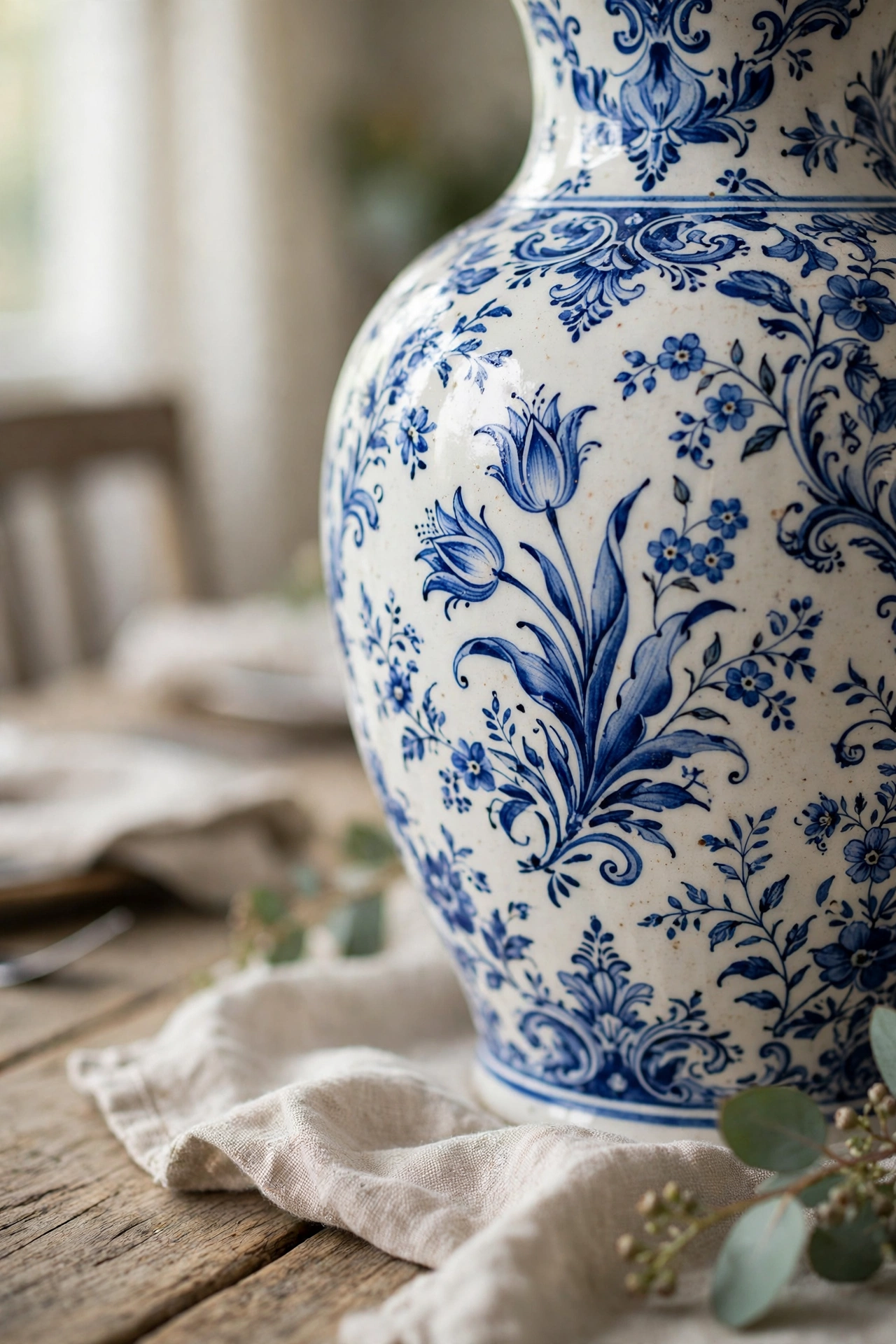
Delft-style pottery, with its distinctive hand-painted blue windmill, floral, or landscape motifs on a white background, brings a slightly more European, heirloom quality to a farmhouse Thanksgiving table than plain transferware alone. A single Delft-style vase, plate, or small dish used as an accent piece — rather than a full matching set — keeps the look feeling collected instead of overly themed. Placing one or two Delft pieces near the head of the table, where they’ll draw the eye first as guests take their seats, makes the most of the pattern’s detail without needing multiples spread throughout. Because genuine Delft can be expensive, a reproduction or Delft-inspired piece from a home goods store achieves a very similar look for a fraction of the cost. This idea works particularly well for hosts who already have one or two Delft-style pieces at home, giving them a clear, intentional place in the overall table design rather than sitting unused in a cabinet.
13. Blue & White Striped Napkins with Wood Napkin Rings
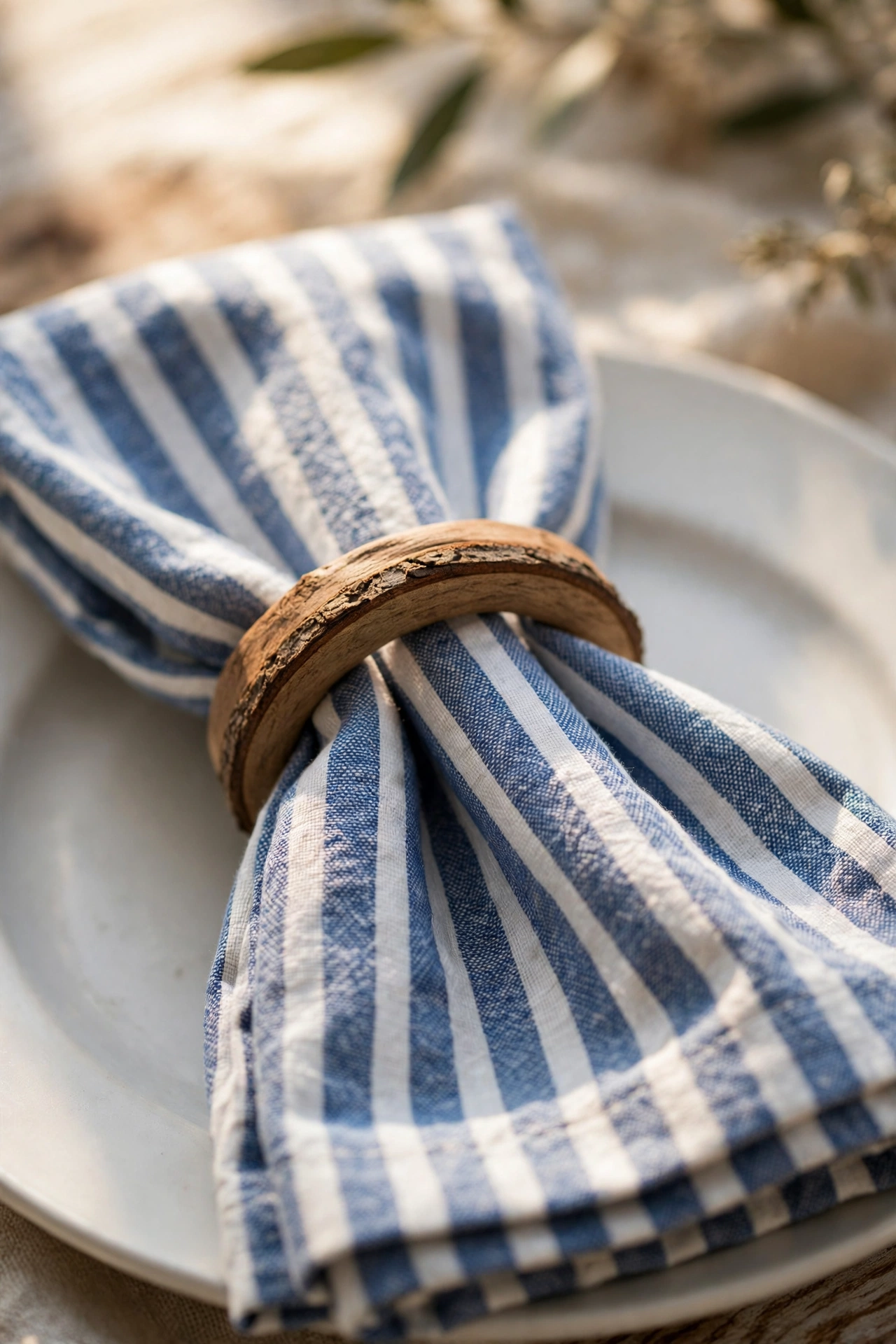
Simple blue and white striped cloth napkins, paired with plain wood napkin rings, bring the table’s color palette down to each individual place setting without introducing another pattern that competes with the dinnerware. Choosing a narrow stripe keeps the look classic and slightly nautical-farmhouse, while a wider stripe leans more casual and relaxed. Wood napkin rings in a natural, unfinished tone add warmth and a bit of textural contrast against the crisp fabric stripe, and they tie the place setting back to the same natural materials used in the centerpiece. Folding the napkins simply, rather than into an elaborate shape, keeps the stripe pattern fully visible and lets the fabric do the visual work at each seat. This idea is one of the easiest ways to extend the blue and white theme to every guest at the table, even if the centerpiece itself uses a completely different technique from the rest of this list.
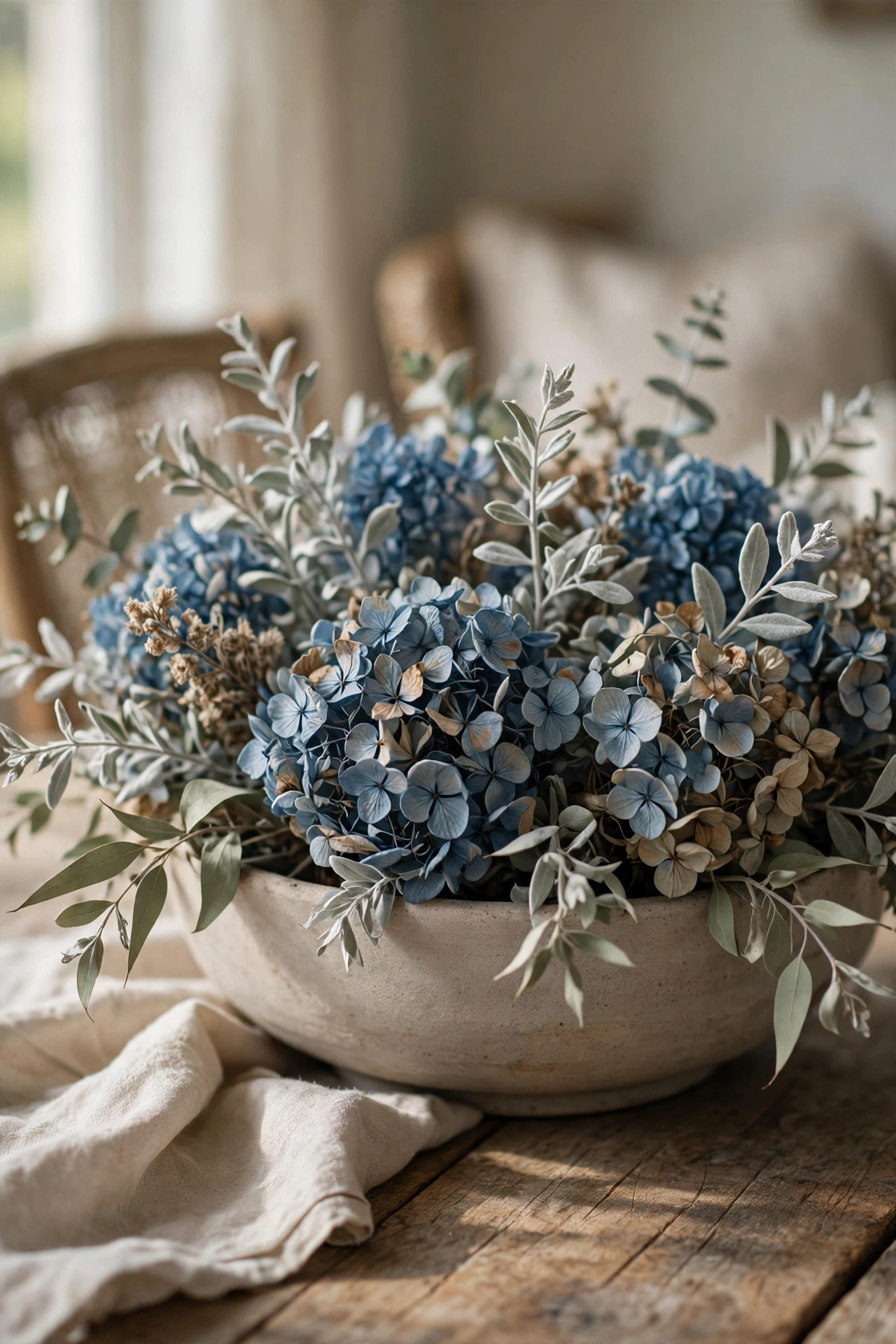
14. Dried Blue Hydrangea & Eucalyptus Centerpiece
Dried hydrangea blooms in their naturally faded, dusty blue tone pair beautifully with silvery dried eucalyptus for a centerpiece that brings real floral texture into the table’s blue and white palette. Because hydrangea dries with a slightly papery, muted quality rather than a bright saturated color, the arrangement reads as soft and vintage rather than bold or overly styled. Mixing in a few stems of white statice or baby’s breath adds contrast and keeps the arrangement from leaning too heavily into one shade of blue. Arranging the stems in a low, wide vessel rather than a tall vase keeps sightlines open across the table, which matters for a longer Thanksgiving gathering where guests need to see and pass dishes to each other. This idea works well as either the sole centerpiece or as a smaller accompanying arrangement alongside a larger anchor piece like an ironstone pitcher or stoneware crock.
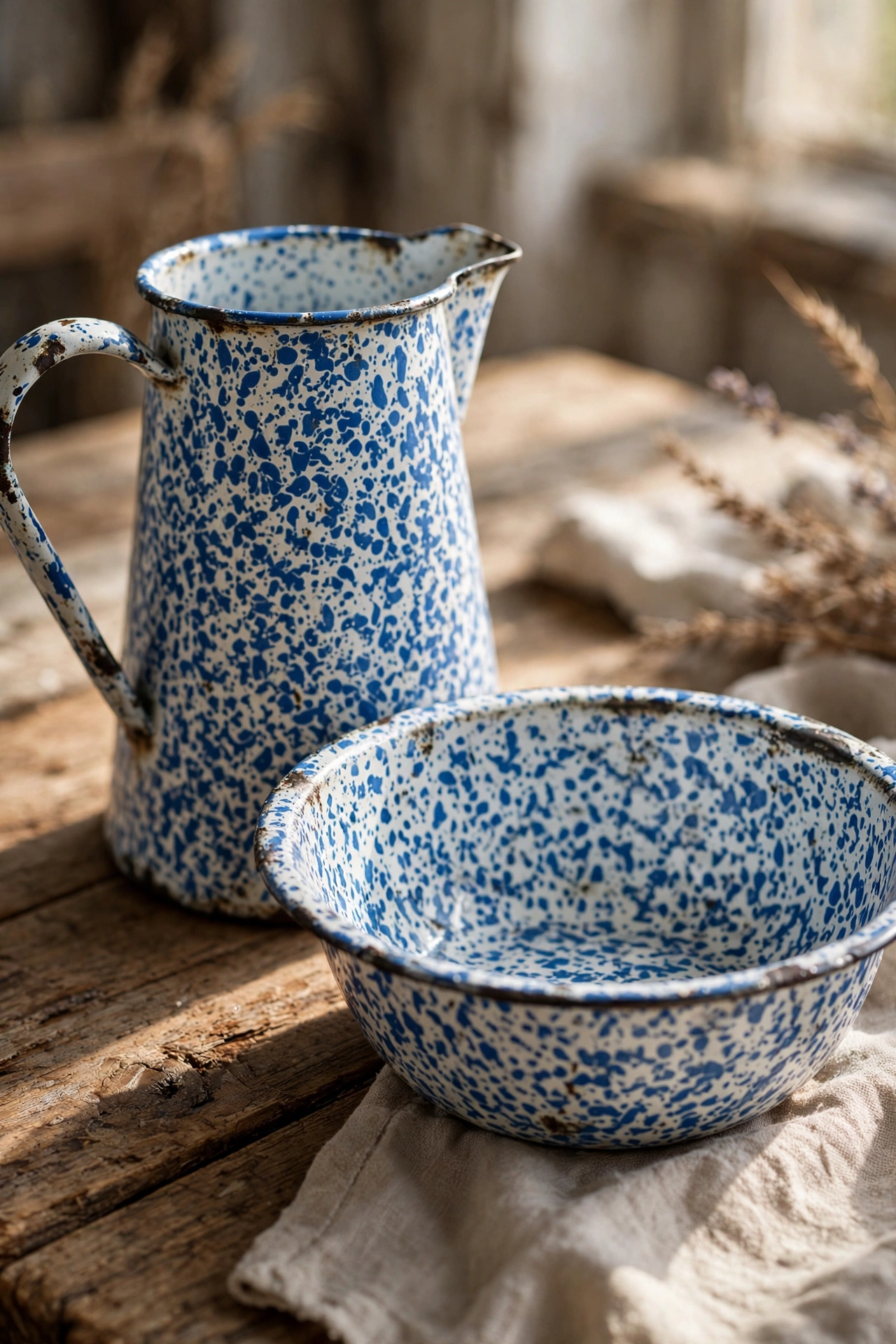
15. Blue Enamelware Pitchers & Bowls
Speckled blue and white enamelware, the kind traditionally used for camping or old farmhouse kitchens, brings a slightly more rustic, utilitarian version of the blue and white palette to a Thanksgiving table. A large enamelware pitcher filled with water for the table, or a smaller enamelware bowl used to hold rolls or cranberry sauce, works both as functional serveware and as part of the overall styling. The speckled texture and slightly worn, chipped edges typical of vintage enamelware add an authentic, well-used character that newer, more polished blue and white pieces don’t have. Mixing a few enamelware pieces alongside finer transferware or ironstone creates a nice contrast between rustic and refined within the same color family. This idea is a good option for a more casual Thanksgiving gathering, since enamelware naturally leans toward a farmhouse-kitchen feeling rather than a formal dining room one.
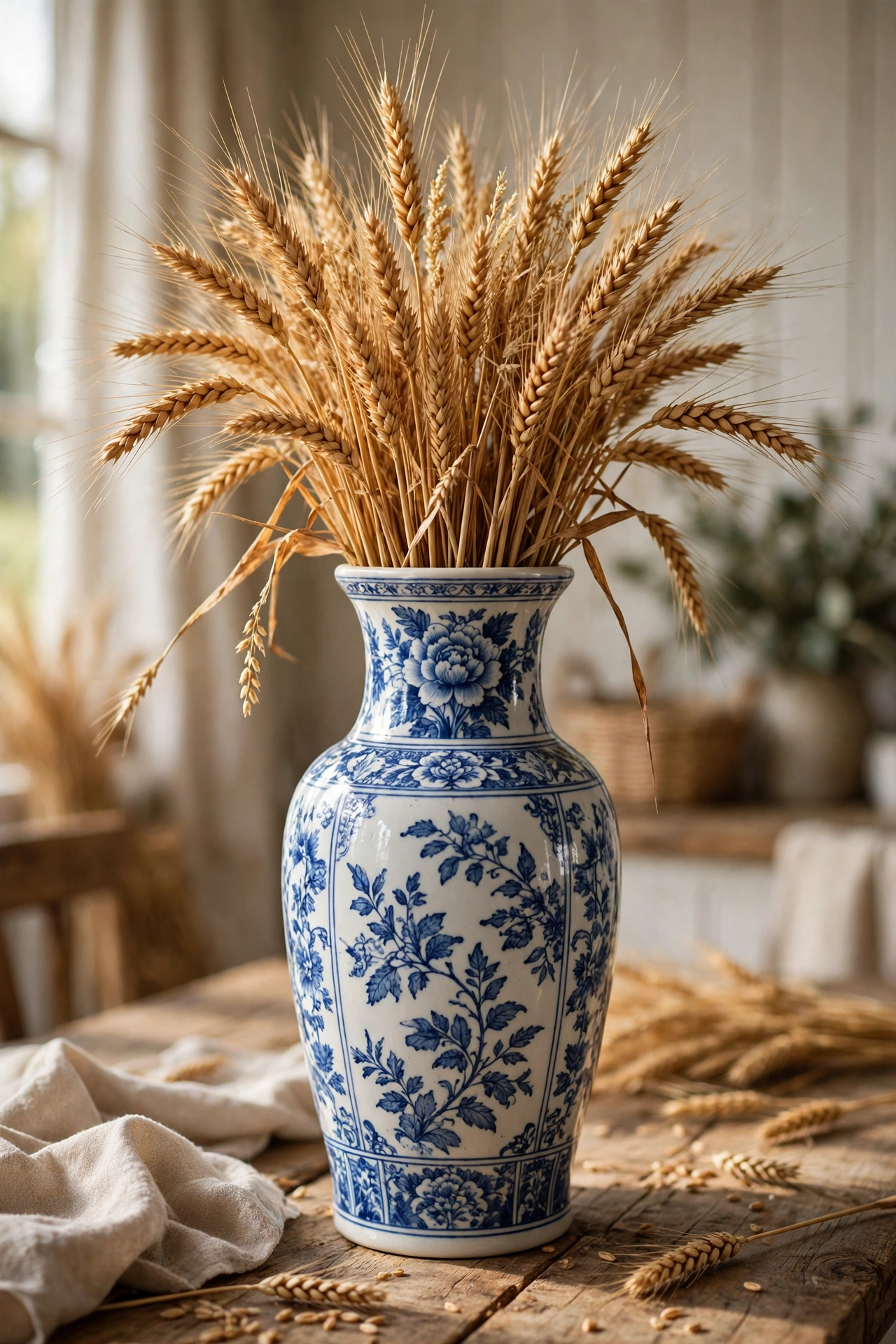
16. Wheat Stalks in a Blue & White Urn
A tall blue and white ceramic urn, filled generously with golden wheat stalks, brings together the harvest symbolism of Thanksgiving with the table’s specific color palette in one clear, cohesive centerpiece. The contrast between the warm golden wheat and the cool blue and white pottery keeps the arrangement from leaning too heavily into either the traditional autumn palette or the newer blue and white one, letting both coexist clearly on the same table. Choosing an urn with a simple, classic silhouette rather than an overly ornate one keeps the focus on the color and texture contrast rather than the vessel’s shape. Placing the urn at the head of the table or at the center of a longer table gives it the visual weight to anchor the rest of the smaller blue and white details spread throughout the rest of the setting. This idea works especially well as a bridge piece for hosts who want to introduce the blue and white palette without fully abandoning the traditional golden, harvest-toned elements guests expect to see at Thanksgiving.
Styling Tips
- Anchor the table with one larger blue and white piece — an ironstone pitcher, a stoneware crock, or a ceramic urn — then build smaller details around it rather than scattering several equally sized pieces evenly across the table.
- Mix textures within the blue and white palette (glossy transferware, matte ironstone, speckled enamelware, dried florals) so the table has visual depth even within a limited color range.
- Let white pumpkins and neutral linens do the “Thanksgiving” signaling while blue carries the color story, so the two don’t compete for attention.
- Vary the shade of blue slightly across pieces — navy, cornflower, dusty blue — rather than trying to match every item exactly, since genuine vintage collections rarely match perfectly anyway.
- Keep gold or brass touches minimal if used at all, since too much metallic can pull the eye away from the blue and white contrast that defines this whole look.
Practical Implementation Ideas
- Start by laying out whatever blue and white pieces you already own — china, jars, vases — before buying anything new, since most people have more of this palette on hand than they realize.
- Group thrifted and antique-shop finds by exact blue tone before committing to a final table layout, since certain blues (navy versus cornflower) pair better together than others.
- Set the table a day ahead when using dried florals or wheat, since these elements hold their shape well and won’t wilt the way fresh flowers might over a multi-day setup.
- Photograph the table in natural daylight before guests arrive, since blue tones can shift slightly and read differently under warm indoor lighting versus daylight.
- Keep a small box of navy ribbon, twine, and extra dried stems on hand in case any part of the centerpiece needs a quick adjustment right before guests sit down.
Common Mistakes to Avoid
- Using too many different, unrelated shades of blue at once, which can make the table look mismatched rather than intentionally collected.
- Skipping white or neutral tones entirely and going too heavy on blue, which removes the contrast that makes this palette feel fresh rather than simply monochromatic.
- Choosing a centerpiece so tall or wide that it blocks sightlines across a table meant for conversation and passing dishes.
- Overlooking the “farmhouse” half of the theme by using pieces that feel too polished or formal, which can push the table toward a coastal or nautical look instead.
- Forgetting to include at least one clearly autumnal element, like wheat, dried florals, or pumpkins, since blue and white alone can start to feel more like a spring table without that seasonal anchor.
Small-Space Alternatives
For a smaller table, choose one anchor piece — an ironstone pitcher or a cluster of ginger jars — rather than trying to include several large centerpiece elements at once. Blue glass bud vases or small mason jar lanterns take up very little surface space while still reinforcing the color palette at each place setting. A ticking stripe runner or simple striped napkins can carry the blue and white theme even when there’s no room for a substantial centerpiece at all.
Related: 17 Doable Christmas Table Settings That Feel Elevated
Budget-Friendly Alternatives
Thrift stores and estate sales are strong, affordable sources for transferware, ironstone, and vintage blue glass bottles, often at a fraction of what similar new pieces cost. Painting plain white or unfinished pumpkins navy blue at home costs very little beyond a can of matte spray paint. Buffalo check and ticking stripe fabric can be purchased by the yard and hemmed at home for less than a pre-made table runner. Repurposing canning-season mason jars as lanterns, rather than buying new decorative jars, is an easy way to bring the palette to the table without any additional cost.
Pro Styling Recommendations
Choose one dominant blue and white pattern or material — transferware, ironstone, or enamelware — to serve as the table’s main visual language, then layer in smaller accent pieces in complementary but not identical tones. Balance the cool blue and white palette with warm textural elements like wheat, dried wood, or natural linen, since the contrast between cool and warm tones is what keeps this look feeling like Thanksgiving rather than a different season entirely. Vary the height of centerpiece elements across the table’s length, using books, pedestal stands, or a taller pitcher at one point and lower dried arrangements at another, so the overall table has visual rhythm rather than one flat plane of decor. Finish with one unexpected vintage detail — a stack of blue-covered books, a Delft-style vase, a piece of genuine antique transferware — since that kind of specific, collected detail is usually what makes a blue and white table feel personal rather than purchased as a set.
FAQs
Conclusion
A blue and white Thanksgiving table doesn’t require an entirely new decor collection — it usually just means looking at the blue and white pieces already sitting in a china cabinet or antique booth with fresh eyes. Start with one anchor piece, whether that’s an ironstone pitcher, a stack of transferware, or a cluster of ginger jars, and build the rest of the table around that same tone. The result is a Thanksgiving table that still feels warm, harvest-ready, and unmistakably farmhouse, just told through a color palette most guests won’t have seen at every other table they’ve sat at this season.