17 Christmas Centerpiece Ideas for Round Dining Tables
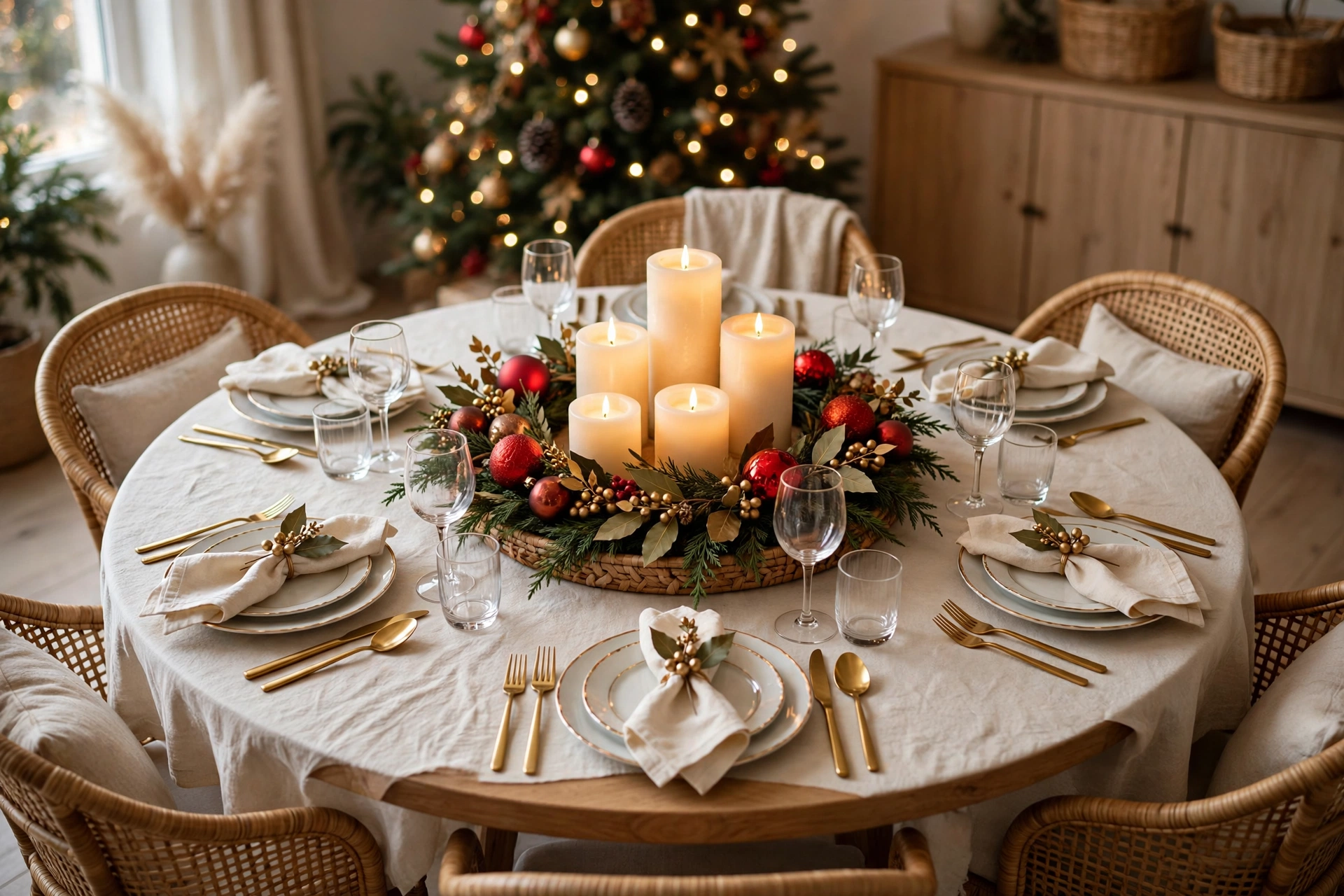
Round tables change the rules for centerpieces. There’s no head of the table to build toward and no long runway to fill — just one circular surface where every single guest needs a clear line of sight to everyone else. A centerpiece that works beautifully on a long rectangular table can completely block conversation the moment you put it in the middle of a round one. The seventeen ideas below are built specifically for that shape, with real height and width guidelines pulled from how stylists actually design for round tables, not just adapted from a rectangular table Pinterest board.
Table of Contents
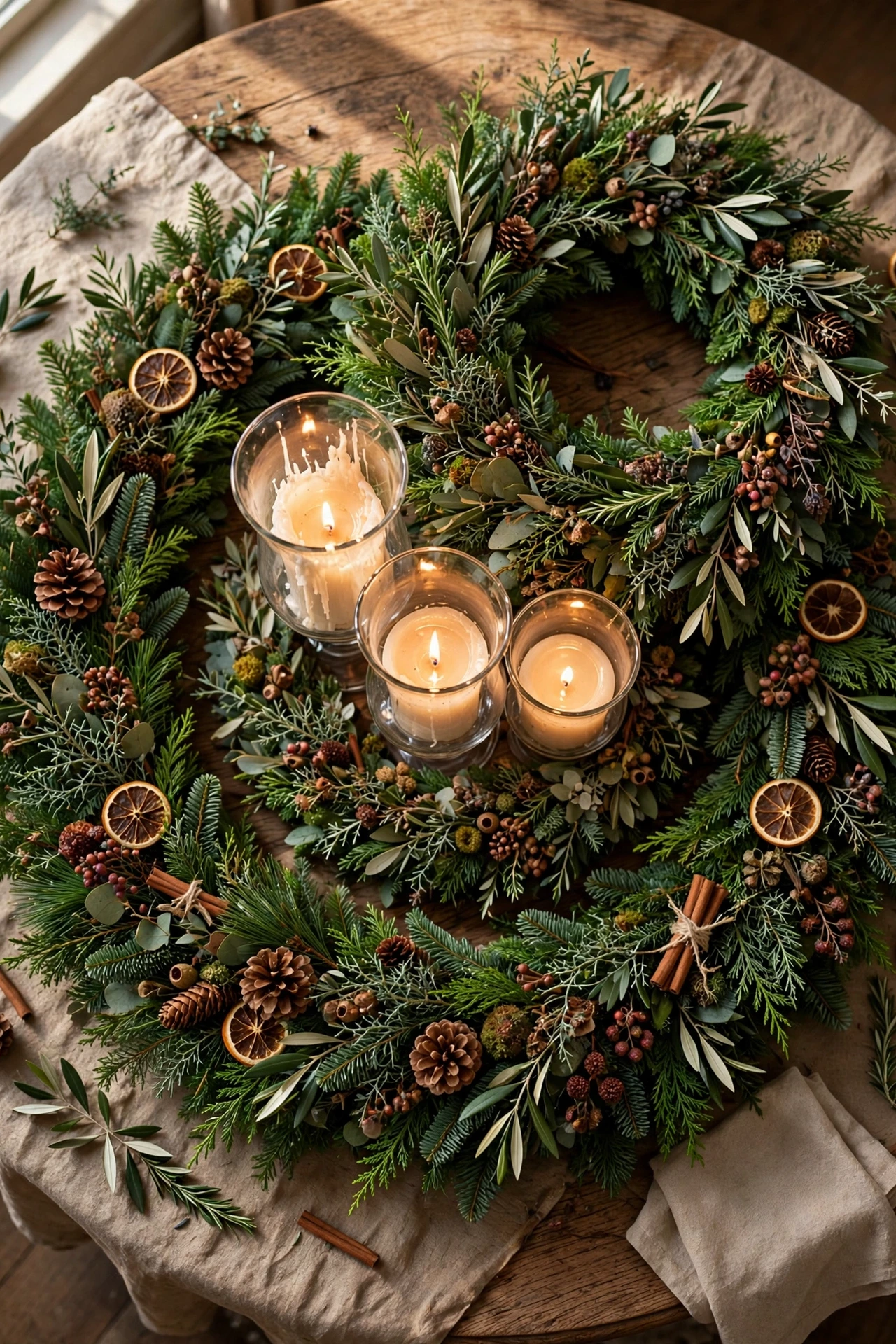
Low Wreath-and-Candle Ring
A wreath laid flat in the center of the table, with a hurricane candle holder set inside the ring, is one of the simplest centerpieces that works on almost any round table size. The wreath’s circular shape naturally echoes the table’s own shape, which is part of why this combination looks so intentional rather than borrowed from a door display. Add a scatter of berries and a few sprigs of extra greenery around the base of the candle to fill the gap between the wreath and the glass. Keep the candle flameless if children will be at the table, since a hurricane holder alone doesn’t fully protect against a tipped glass near reaching hands. This idea stays under most sightline guidelines because the wreath itself sits flat and the candle is the only vertical element, centered where it blocks the least.

Rotating Lazy Susan Centerpiece Tray
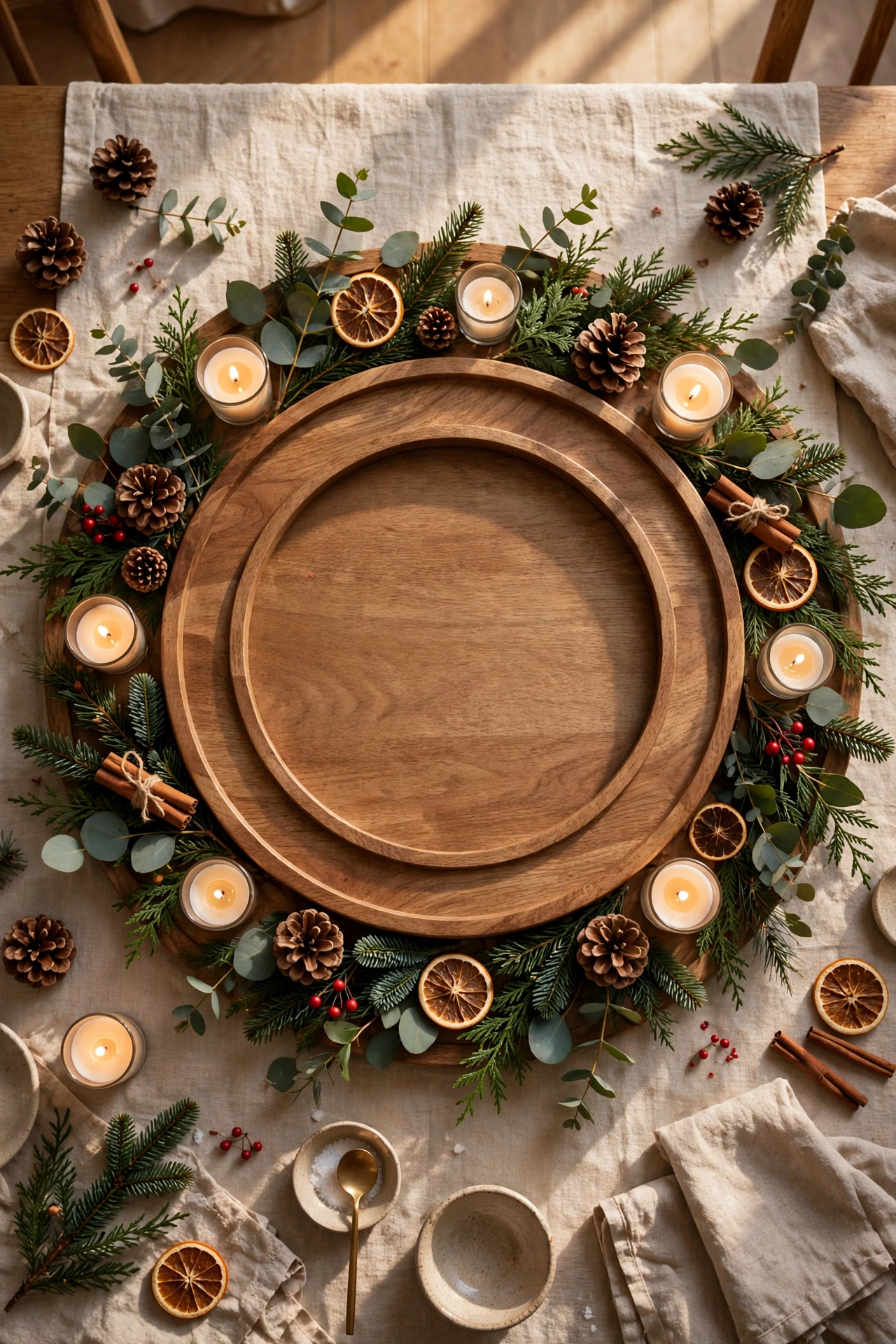
A lazy susan turns a centerpiece into something functional as well as decorative, since it can rotate small dishes, sauces, or shared plates around the table during dinner. Choose a wood or mirrored round tray sized to about a third of the table’s total width, then decorate the outer edge with a thin ring of greenery and candles while leaving the center open for whatever needs to be passed. Small ornaments or pinecones tucked into the greenery ring keep the display festive even when the center is holding food instead of decor. This idea works especially well for family-style holiday dinners where dishes get passed constantly, since guests can spin the tray instead of reaching across the table. It also solves the sightline problem automatically, because a lazy susan is built low and flat by design.
Trio of Staggered Pillar Candles with Cedar
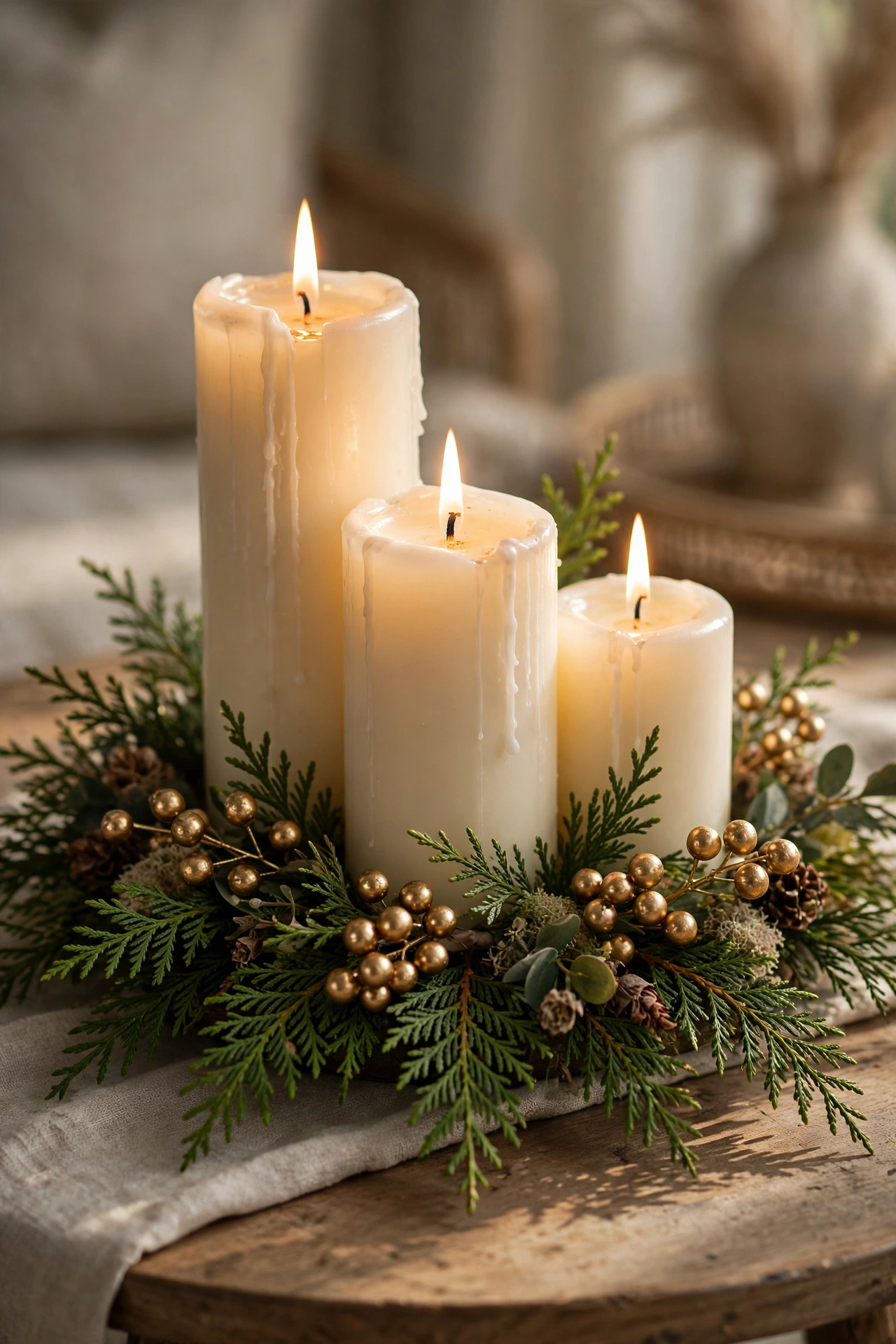
Three pillar candles at slightly different heights, clustered together with a base of cedar greenery, give a round table warmth without a single tall obstruction in the middle. Group the candles off-center by an inch or two rather than in a perfectly straight line, since a small stagger reads as more natural and less like a store display. Tuck cedar sprigs and a few gold berry picks around the candle bases so the greenery does double duty as both filler and a stable platform. Keep the tallest candle under about fourteen inches if your table seats people closely, since anything taller starts to block eye contact across a table under four feet wide. This is one of the most flexible centerpiece styles because it works equally well for a formal dinner or a casual family meal.
Minimalist Glass Vessel Trio
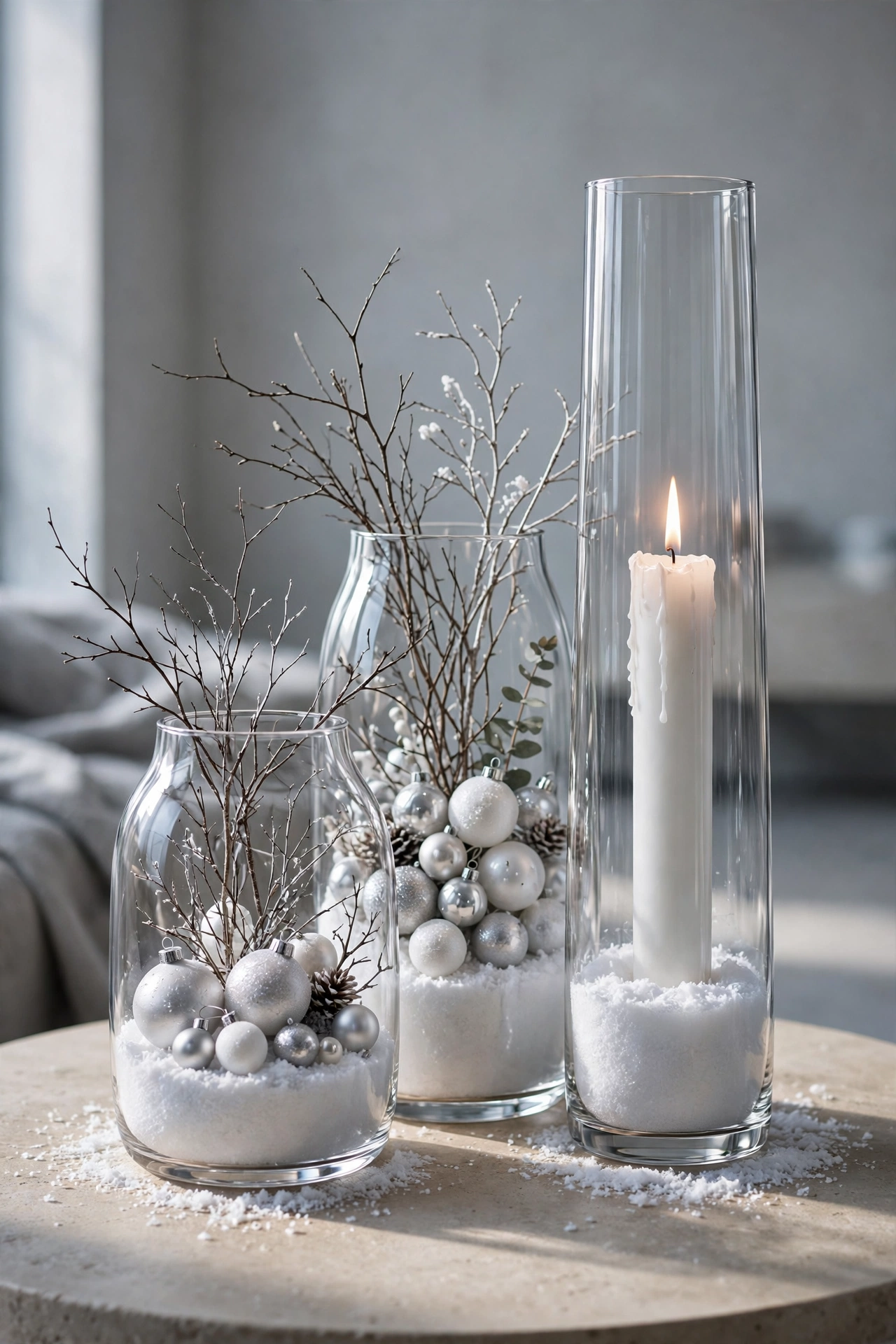
Three glass vases of varying heights, filled with ornaments, twigs, or faux snow, give a round table a cleaner, more modern centerpiece than a traditional floral arrangement. Keep the vases clear rather than frosted or colored so the materials inside stay visible and the overall look reads as light rather than heavy. Add a single taller candle to just one of the three vases for a bit of height and drama, while keeping the other two low enough to preserve sightlines. Cluster the vases close together near the center rather than spreading them toward the table’s edges, since a tight grouping reads as one cohesive centerpiece instead of three separate objects. This style suits a contemporary dining room where a full floral arrangement would feel out of place against the room’s existing decor.
Related: 17 Doable Christmas Table Settings That Feel Elevated
Jewel-Toned Floral Arrangement
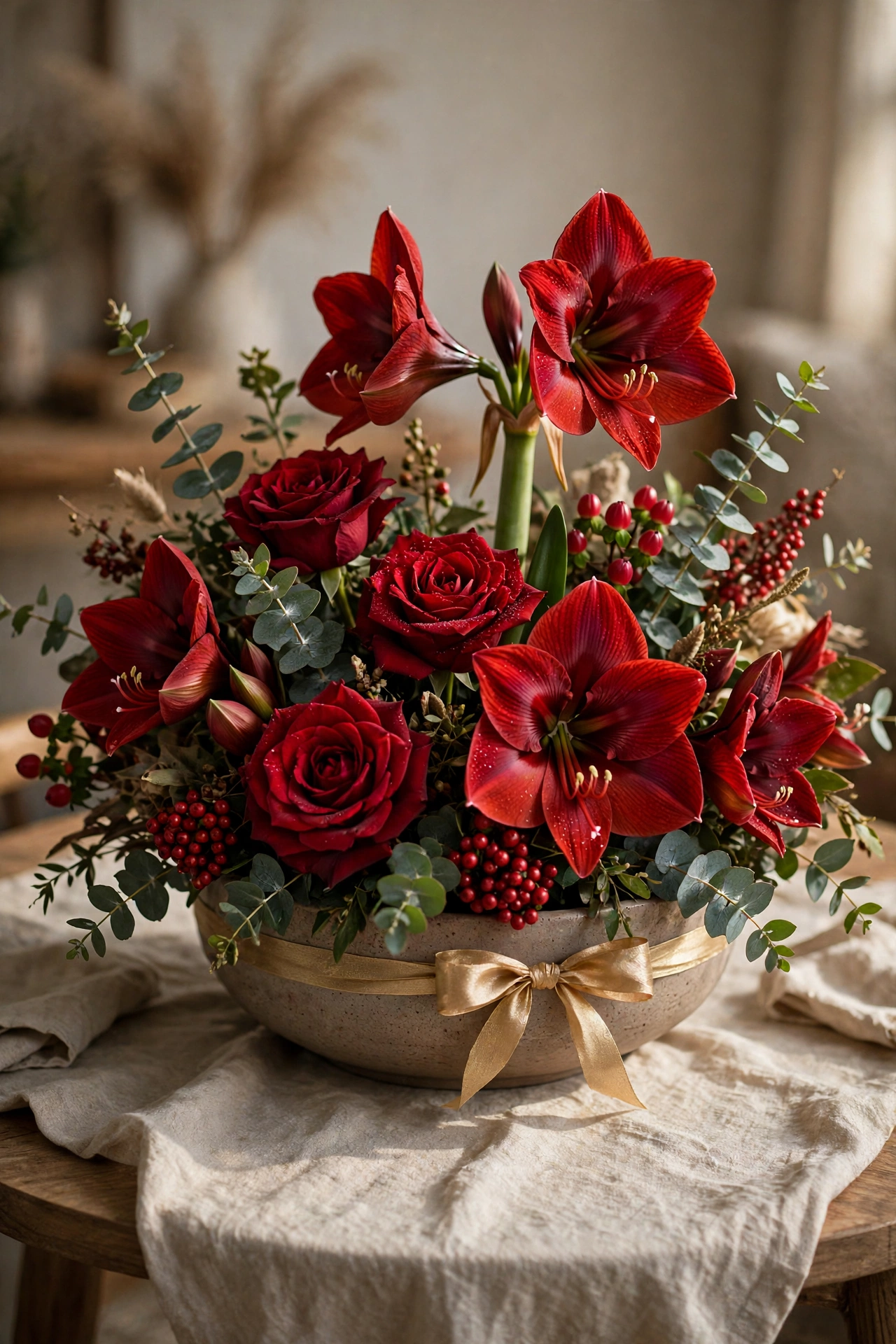
Deep red and green flowers accented with gold or silver ribbon give a round table a richer, more formal look than greenery alone. Mix roses, amaryllis, or chrysanthemums with eucalyptus and berries so the arrangement has fullness without needing an enormous vase. Keep the arrangement low and wide rather than tall and narrow, since a wide base spreads the visual weight evenly around a circular table instead of creating one dominant side. Set the arrangement in a low bowl or wide-mouthed vase rather than a tall cylinder vase, which keeps the overall height well under most sightline guidelines. This centerpiece style works particularly well against neutral linens, since the jewel tones read as more luxurious when they’re the only saturated color on the table.
Foraged Pinecone and Branch Runner Ring
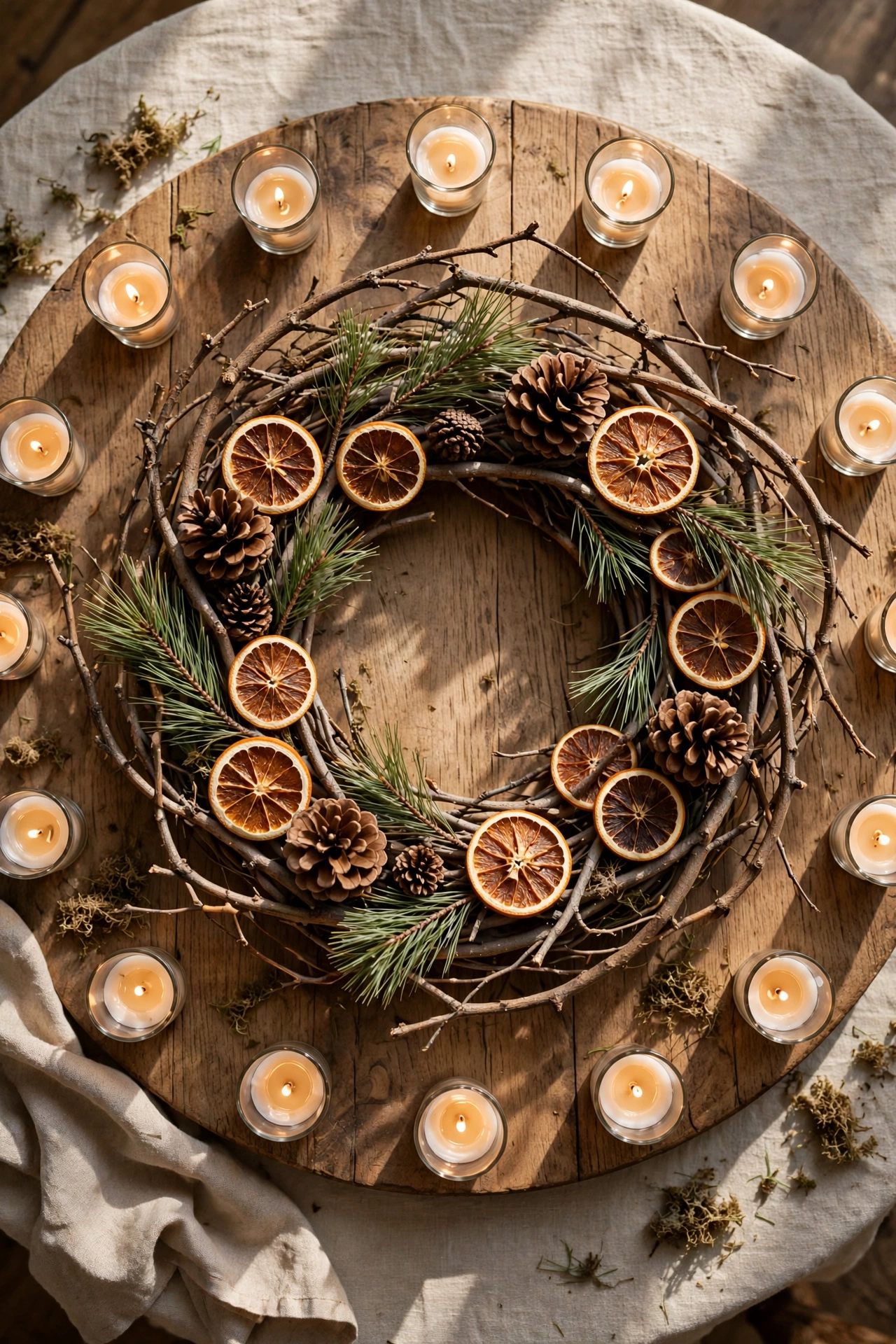
Instead of a straight runner, curve a loose ring of foraged branches, pinecones, and greenery around the center of the round table so it echoes the table’s own circular shape. Use bare winter branches mixed with pine for structure, then tuck pinecones and a few dried orange slices into the gaps for color and texture. A handful of small votive candles placed around the outer edge of the ring adds glow without raising the overall height of the centerpiece. This idea costs very little if the branches and pinecones are gathered locally, and it looks more custom than a purchased centerpiece precisely because the shapes are irregular rather than uniform. It also works well left up for weeks past Christmas Day since it reads as more “winter” than strictly holiday themed.
Fruit and Citrus Compote Centerpiece
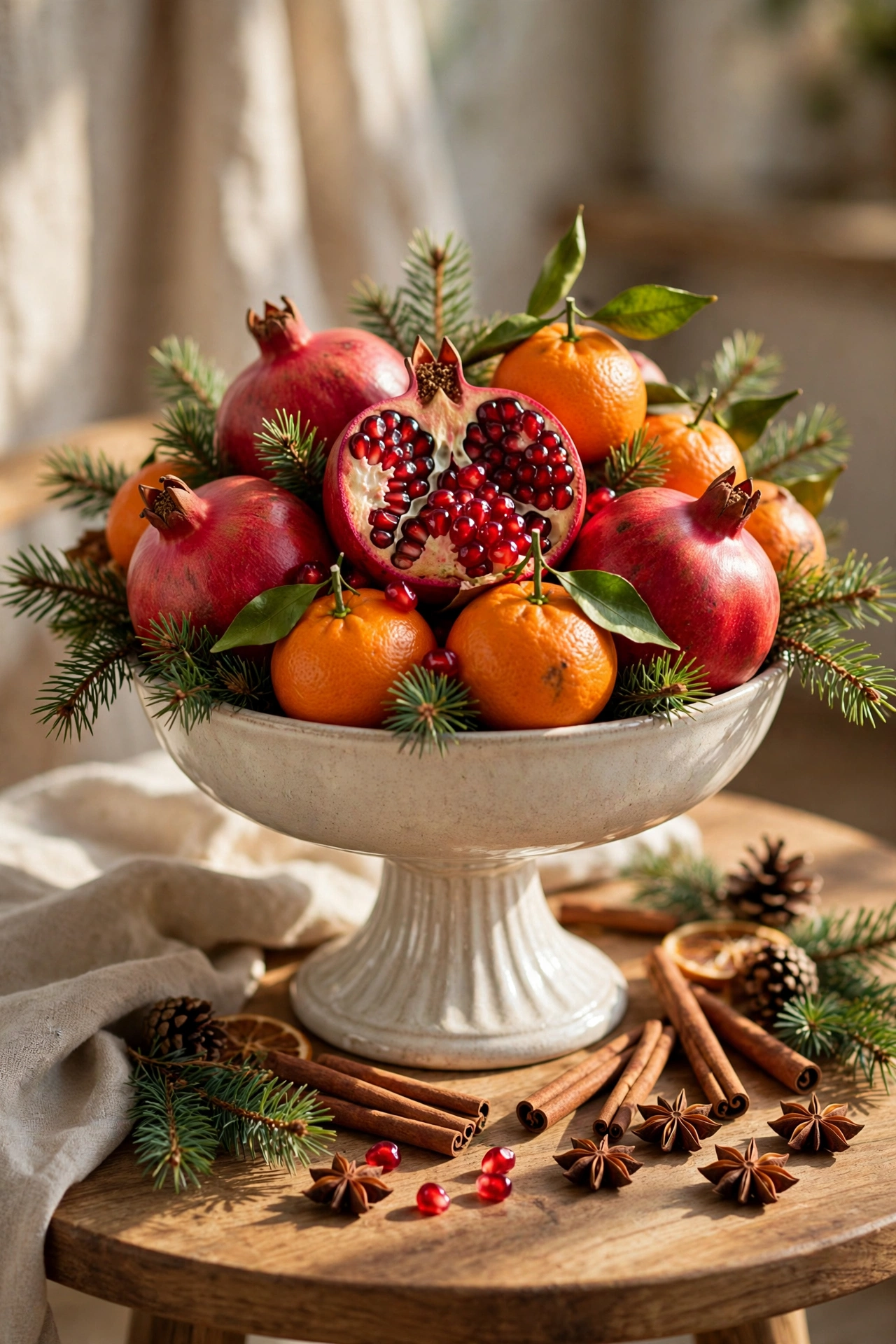
A compote or pedestal bowl filled with pomegranates, clementines, and pine sprigs brings in color and a bit of old-world formality without needing fresh flowers at all. Stack the fruit slightly above the rim of the bowl so it reads as generous and full rather than sparse, then tuck greenery into any visible gaps between the pieces of fruit. Add a few whole cinnamon sticks or star anise pods around the base for texture and a light, natural scent that drifts across the table as the room warms up. Keep the compote itself under about six inches tall so the fruit doesn’t stack high enough to block sightlines, since the height adds up quickly once fruit is piled generously. This centerpiece also doubles as an actual snack if guests want to grab a clementine after dinner, which gives it a nice practical bonus over purely decorative options.
Mini Christmas Tree Cluster
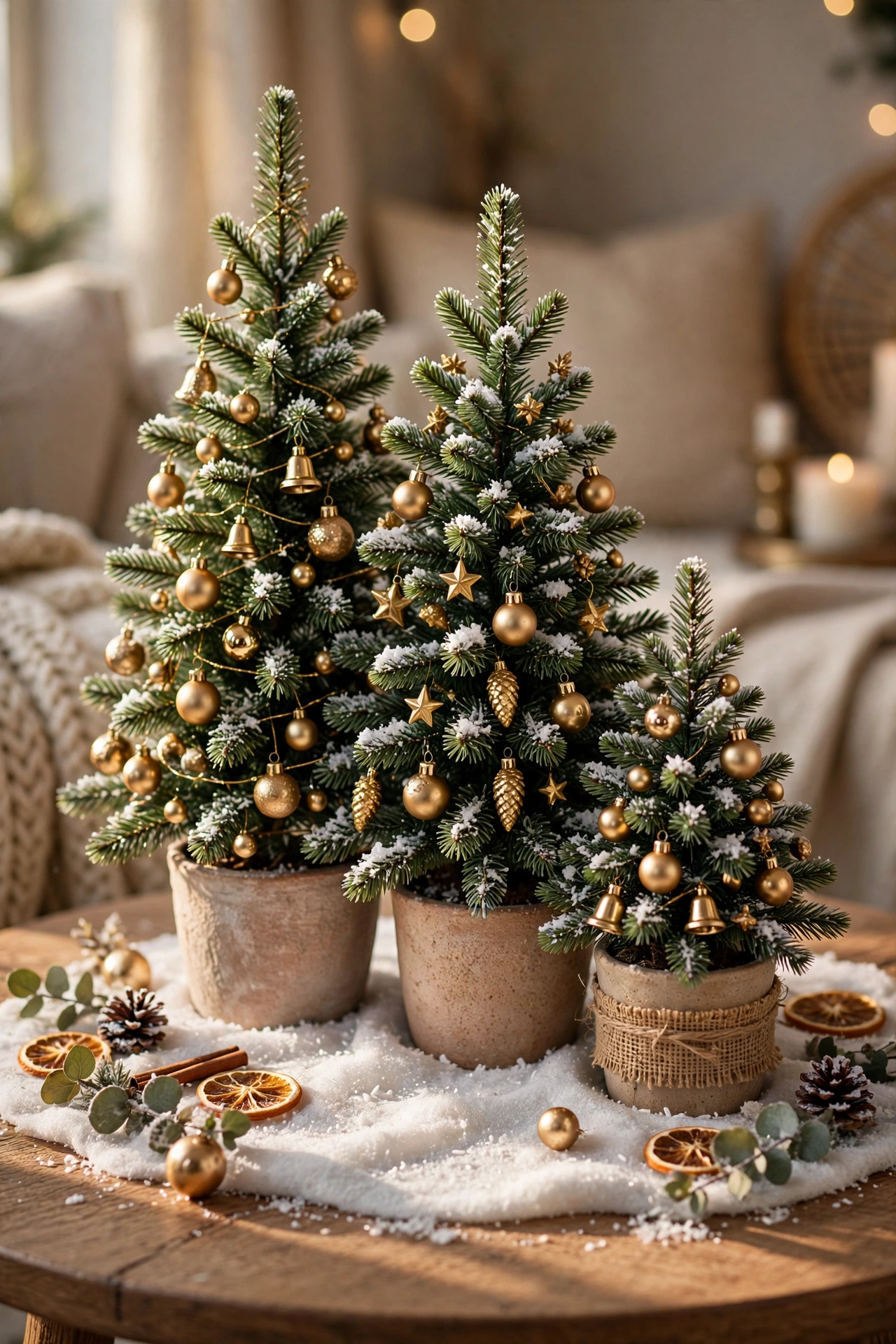
A group of three small potted or faux Christmas trees, set at slightly different heights, gives a round table a playful centerpiece that still respects sightlines if kept compact. Use trees under twelve inches tall and cluster them tightly together rather than spacing them evenly across the table’s diameter. Decorate each mini tree with a single ornament color rather than a full mixed set, since a limited palette keeps three small trees from looking cluttered together. Add a thin layer of faux snow or a strip of white fabric underneath the trees to visually unify the cluster as one centerpiece rather than three separate decorations. This idea works particularly well for a family gathering with kids, since mini trees photograph well and can be handed out as small takeaway gifts after the meal.
Round Mirror Base with Candles and Ornaments
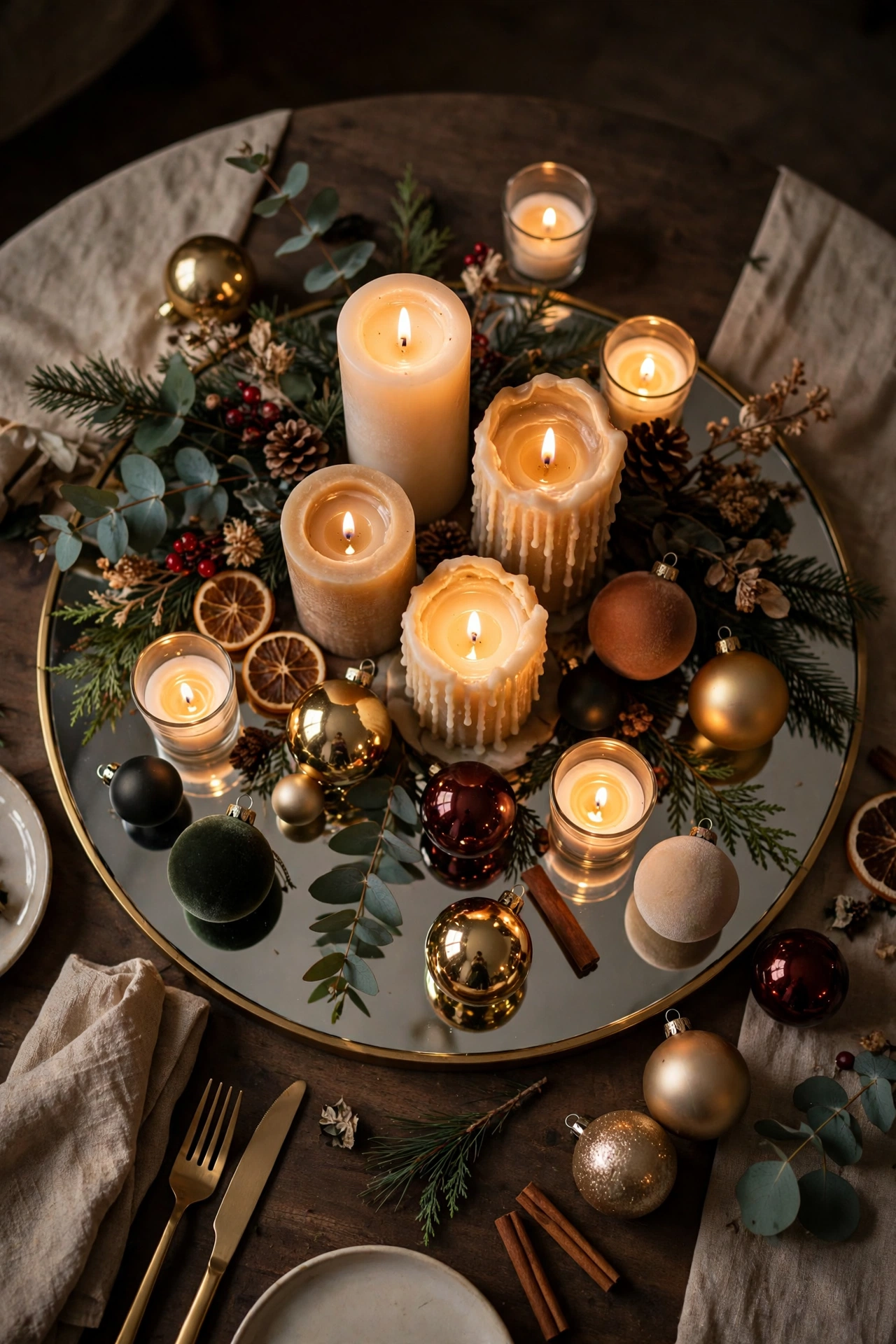
Setting a round mirror flat on the table as a base for candles and ornaments doubles the amount of visible sparkle without adding a single extra inch of height. Cluster a mix of votive and pillar candles across the mirror’s surface, then scatter loose ornaments in varying finishes — matte, glossy, glitter — around the candles to catch the reflected light. Keep the arrangement toward the center of the mirror rather than spreading it to the edges, since a contained cluster reads as more polished than one that sprawls. This centerpiece style photographs exceptionally well in the evening once candles are lit, because the mirror doubles every point of light in the frame. It works especially well for a more formal round table setting where a bit of glamour fits the occasion.
Woven Tray with Ornaments and Berries
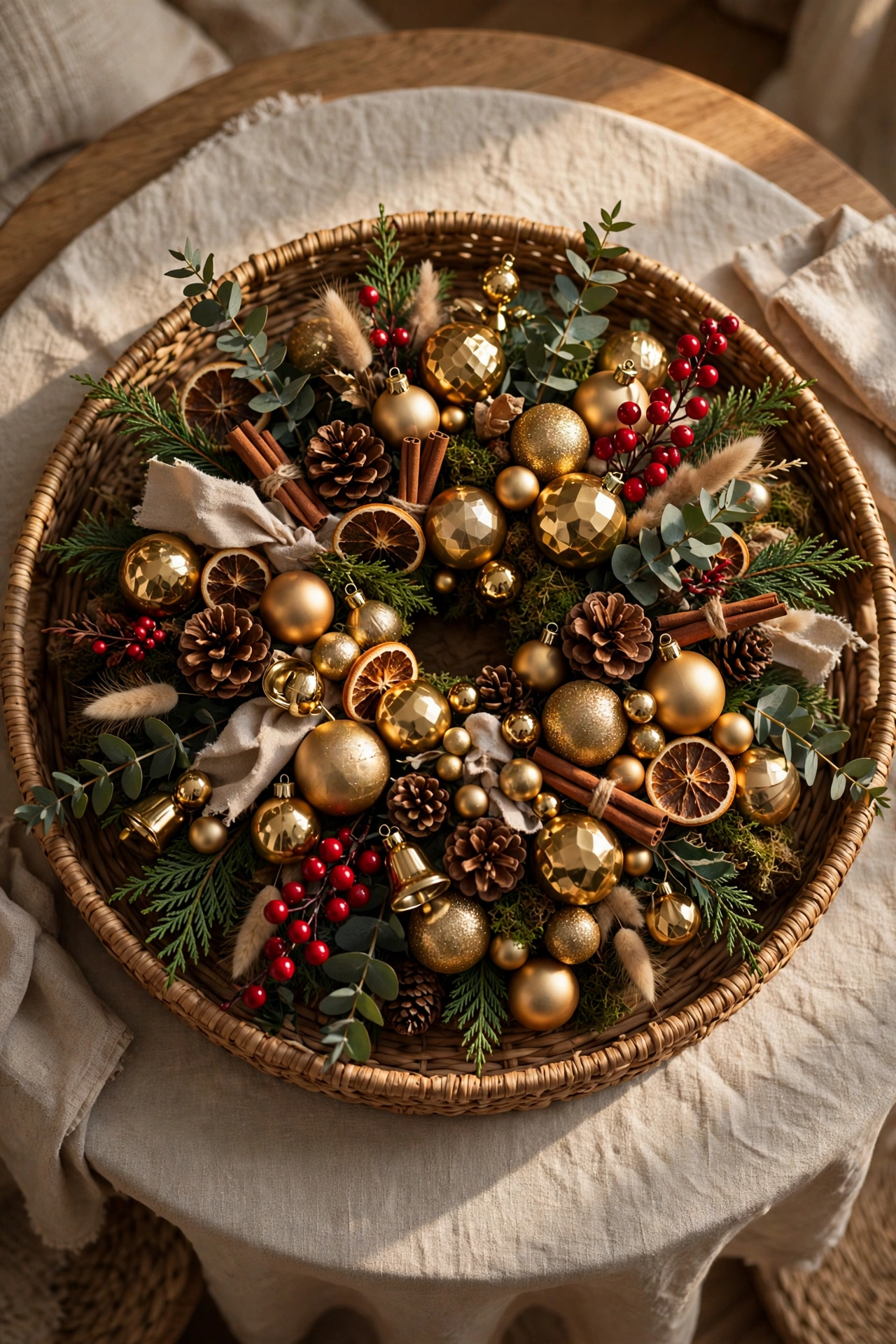
A round woven tray filled with a mix of large ornaments, berry picks, and a few gold accents creates a textured, layered centerpiece without needing any fresh flowers. Start with the tray as your base layer, then build up the arrangement in the same order you’d build a charcuterie board — largest elements first, then filler, then small accents last. Vary the ornament finishes and sizes so the display has visual rhythm instead of looking like a bowl of matching baubles. Keep the entire arrangement inside the tray’s edges so it stays contained and doesn’t creep toward guests’ place settings. This idea is fast to put together and easy to store, since everything packs back into the tray itself once the season ends.
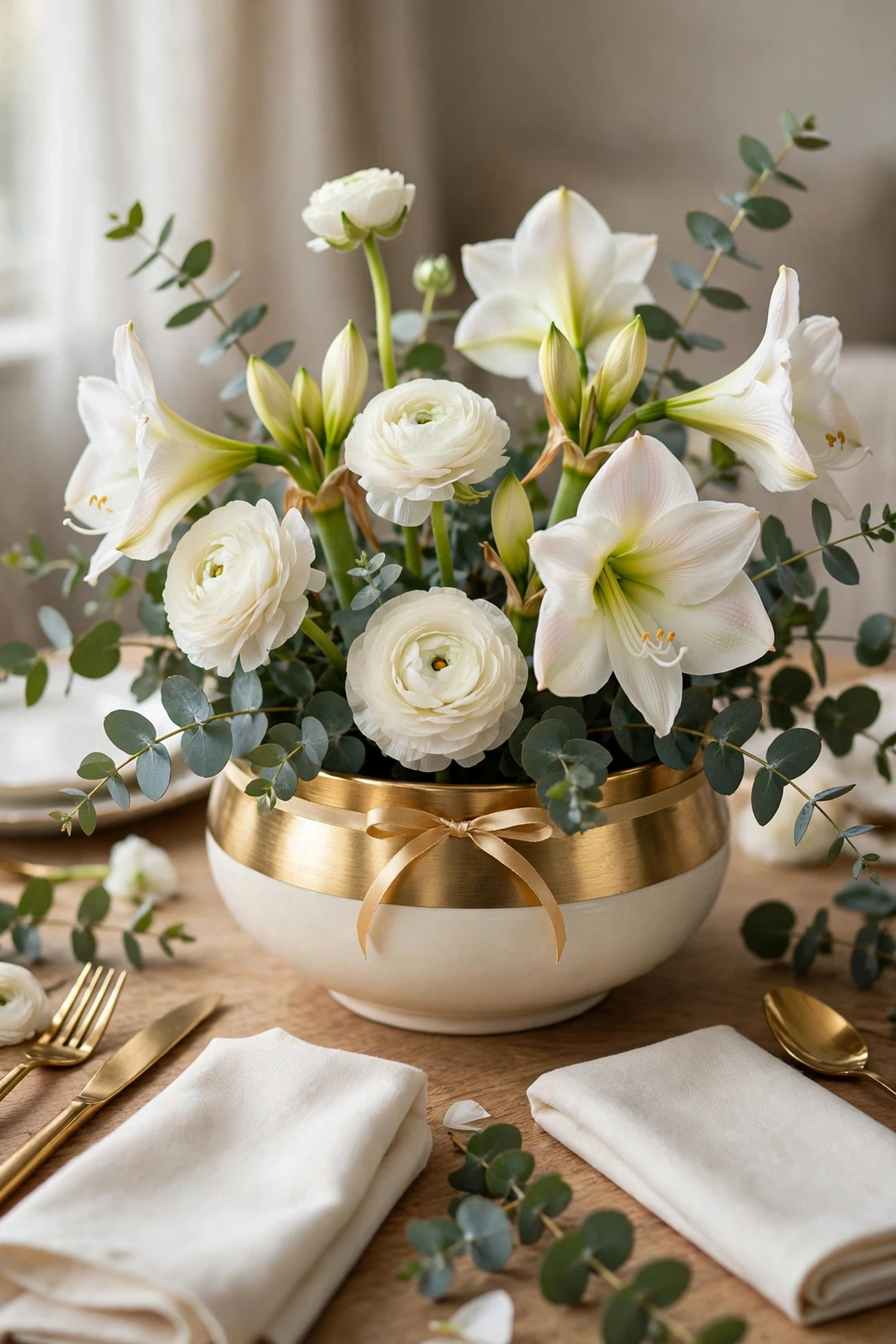
Ivory and Gold Formal Floral Centerpiece
White flowers — ranunculus, roses, or amaryllis — arranged with eucalyptus in a low ivory or gold-rimmed vase give a round table a softer, more formal look than a red-and-green arrangement. Keep the flower heads slightly loose rather than tightly packed, since a looser arrangement feels more elegant and less like a florist’s standard bouquet. Add a thin gold ribbon tied around the vase or scattered gold ornaments around its base to tie the metallic accent into the rest of the table setting. This palette works particularly well paired with gold flatware and cloth napkins, since the repeated metallic tone across several elements makes the whole table feel cohesive rather than accessorized piece by piece. It suits a Christmas Day dinner or a more formal extended-family gathering where the mood leans elegant over cozy.
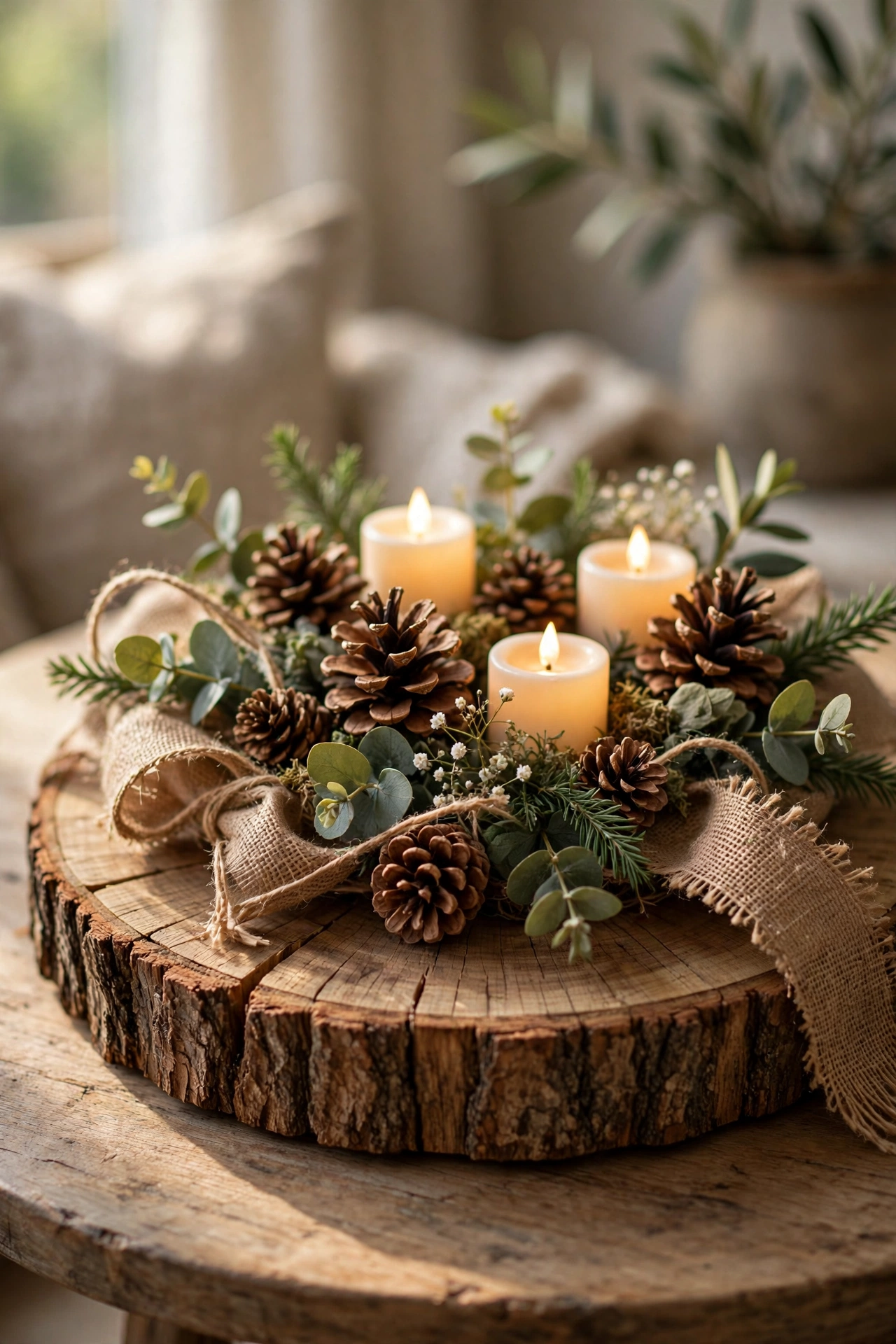
Rustic Wood Slice and Pinecone Base
A raw wood slice used as the base of the centerpiece instead of a vase or tray gives a round table a more organic, farmhouse feel. Stack pinecones, small logs, and greenery directly on top of the wood slice, then tuck in a few battery candles for glow without fire risk near the natural materials. Keep the wood slice roughly a third of the table’s diameter so it feels proportional rather than either lost or overwhelming. A little burlap ribbon or twine wrapped loosely around a cluster of pinecones adds texture without requiring any additional purchases. This idea pairs naturally with a farmhouse or cabin-style dining room, and the wood slice itself can be reused as a serving base for cheese or bread once the season changes.
Layered Double Wreath Centerpiece
Two wreaths of slightly different sizes, layered on top of each other, create more fullness and texture than a single flat wreath while still keeping the centerpiece low. Set the larger wreath down first, then offset the smaller one slightly on top so the layers create depth rather than sitting perfectly aligned. A single hurricane candle or cluster of votives in the center finishes the look and adds the only vertical element in the whole arrangement. This idea is popular because it reuses wreaths many households already own, layering last year’s slightly worn wreath underneath a fresher one on top. It also naturally suits a round table’s shape better than almost any other centerpiece style, since the wreath’s circular form directly mirrors the table beneath it.
Silver and Blue Winter Wonderland Centerpiece
Silver and icy blue tones move a round table centerpiece away from traditional Christmas red and into a more wintery, less overtly holiday-specific look. Use frosted branches, silver ornaments, and a few faux icicles arranged in a low silver bowl or tray as the base of the display. Mercury glass votive candles scattered around the arrangement pick up and scatter the silver tones once lit, adding sparkle without adding height. Keep any blue accents muted rather than bright, since a soft dusty blue reads as elegant while a bright blue can feel more like a costume theme than a color palette. This centerpiece style suits a modern dining room or a household that prefers winter imagery over strictly Christmas imagery on the table.
Related: 25 Modern Ways to Decorate a Small Living Room for Christmas

Sentimental Family Display
A small, low display built around meaningful objects — a childhood ornament, a family photo in a small frame, a handwritten recipe card — turns the centerpiece into something personal rather than purely decorative. Keep the arrangement compact and low, tucking these sentimental pieces into a bed of greenery so they don’t look randomly placed on bare tablecloth. This idea works particularly well for a family gathering that includes an empty chair or a missing loved one, since the centerpiece can quietly acknowledge that without needing to say anything out loud. Rotate in a different meaningful object each year so the centerpiece evolves alongside the family rather than staying static. This is one of the only centerpiece ideas here built around emotional connection first and visual styling second, which makes it worth considering even if it’s less “Pinterest-perfect” than the others.

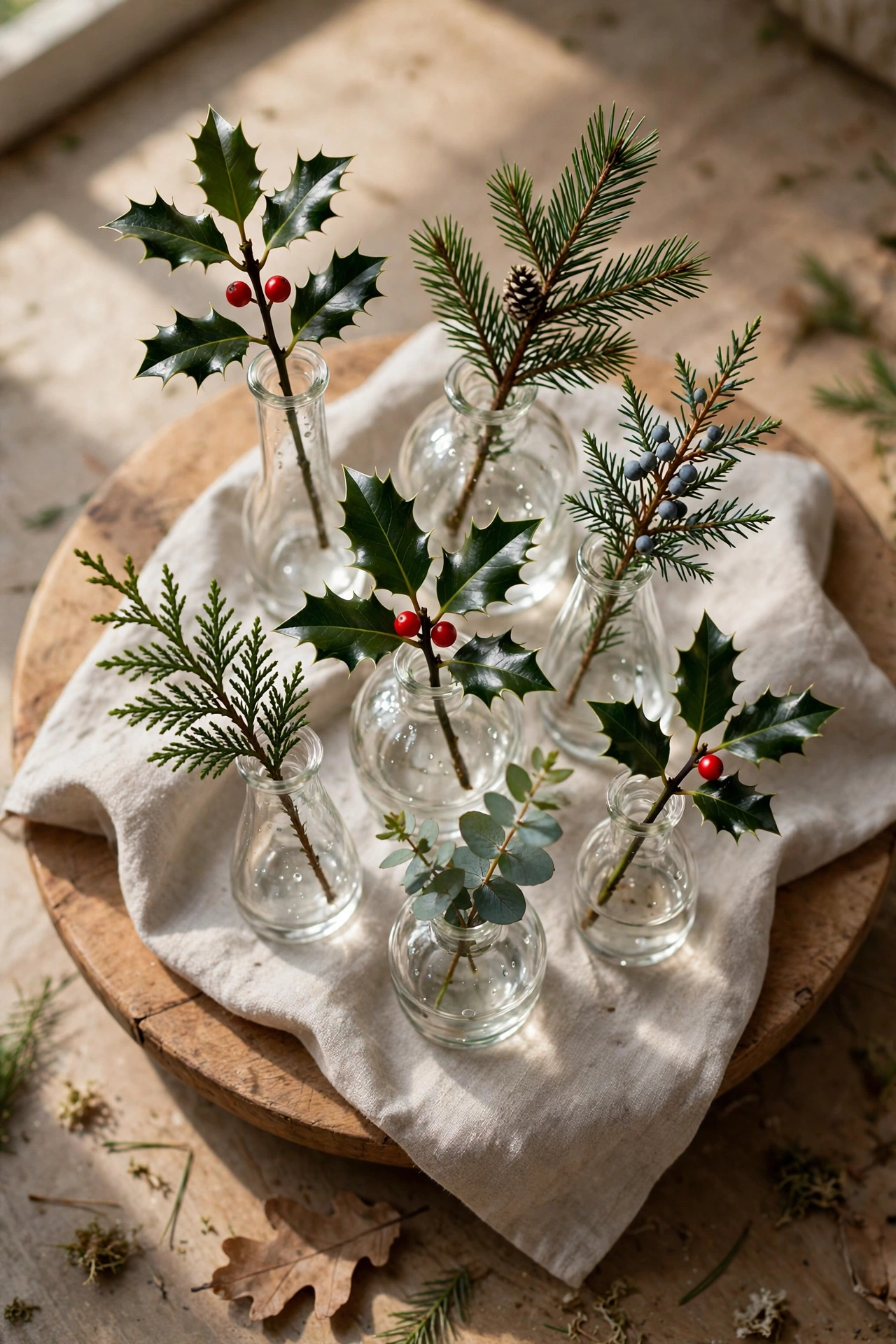
Compact Bud Vase Cluster
For a small round table, five to seven tiny bud vases scattered loosely across the center create a centerpiece with almost zero visual weight, which matters a lot on tables under four feet wide. Fill each vase with a single stem or sprig — a rose, a bit of holly, a small evergreen branch — rather than trying to fill any one vase generously. Vary the vase heights slightly, but keep the tallest under about eight inches so nothing blocks sightlines on a smaller, more intimate table. Cluster the vases in a loose, uneven grouping rather than a straight line or perfect circle, since asymmetry tends to look more natural in a small collection like this. This idea is ideal for an apartment dining nook or a small round table for two to four people, where a full-sized arrangement would eat up most of the usable surface.
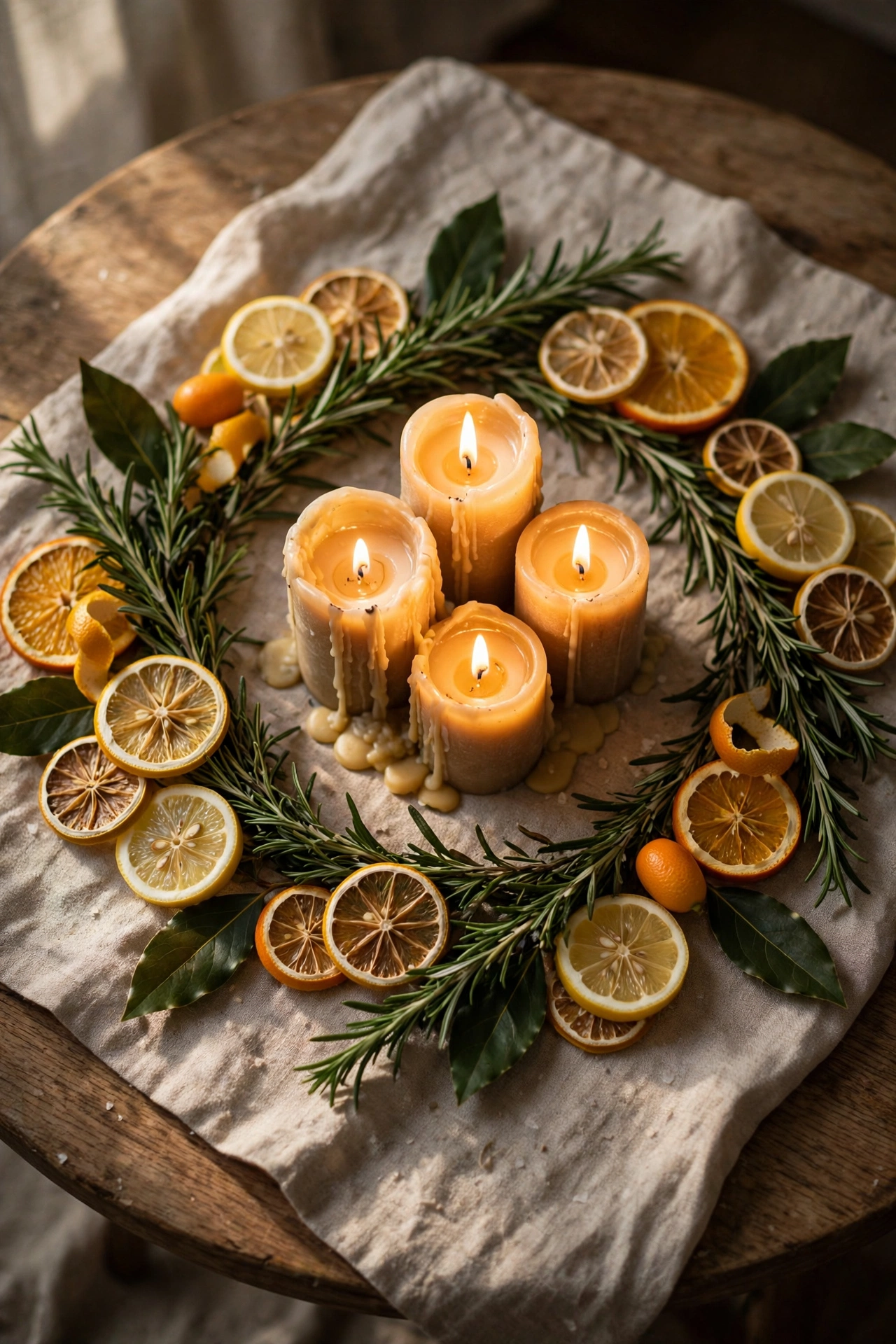
Edible Herb and Citrus Garland Ring
A ring of fresh rosemary, bay leaves, and thin citrus slices laid directly around the base of a few candles brings scent into the centerpiece in a way that flowers and ornaments can’t. Arrange the herbs and citrus in a loose circular pattern rather than a tight braid, since some visible gaps let the individual elements read clearly instead of blurring into a solid green mass. As the candles warm the air near the herbs, the scent lifts subtly across the table over the course of the meal, adding a sensory layer most centerpieces skip entirely. Keep the ring flat rather than piled, which keeps the whole arrangement low enough to preserve sightlines even on a smaller table. This idea costs very little if the herbs and citrus are already in your kitchen, and any leftover pieces can go straight into cooking the next day instead of getting thrown out.
Styling Tips
Scale the centerpiece to roughly a third of the table’s total diameter so it looks proportional rather than lost on a large table or crowding a small one. Keep the arrangement’s height either under about fourteen inches or well above eighteen inches, since anything in between tends to sit right at eye level and block conversation across the table. Build outward from a central anchor rather than spreading decor evenly toward the table’s edges, since round tables read best when the visual weight stays concentrated in the middle. Leave a twelve to sixteen inch clear perimeter around the centerpiece so platters and shared dishes can still be passed comfortably during a family-style meal.
Practical Implementation Ideas
Test the centerpiece’s height by sitting in a chair at the table before the meal, not just by looking at it from standing height, since sightlines look completely different from a seated position. Set the centerpiece in place before adding place settings around it, so you can adjust its size relative to the actual plates and glasses rather than guessing. For a lazy susan or rotating tray, leave the very center completely clear so dishes can spin freely without knocking into decor. If the table will host young children, choose flameless candles and secure any tall or top-heavy elements so they don’t tip when someone reaches across the table.
Common Mistakes to Avoid
Choosing a tall, narrow arrangement is one of the most common mistakes on a round table, since anything at eye level blocks conversation for the two or three guests sitting directly across from it. Spreading decor toward the table’s edges rather than keeping it centered makes the table feel busy and eats into space needed for plates and glasses. Skipping a base layer, like a tray or runner, under loose items such as ornaments or fruit lets the centerpiece drift and look unfinished by the time guests sit down. Overcrowding the center with too many separate elements — flowers, candles, ornaments, and greenery all competing at once — usually looks less intentional than committing to one clear centerpiece style.
Related: 23 Christmas Centerpieces for Every Style of Table For a Home That Feels Festive All Season
Small-Space Alternatives
A single low wreath with one candle in the center works on almost any round table, no matter how small, since it adds almost no width. A cluster of small bud vases, as described above, scales down easily for a two-to-four-person table without losing any visual interest. A shallow bowl of ornaments or a few clementines takes up minimal space while still reading as a finished centerpiece. Pushing the centerpiece slightly to one side of a small round table, rather than dead center, can also free up more usable surface for actual place settings.
Budget-Friendly Alternatives
A wreath already hanging on the front door can be repurposed as the base of a table centerpiece for the cost of nothing extra. Foraged pinecones, branches, and greenery from the yard substitute well for purchased florals and often look more natural. Leftover ornaments from the tree, arranged in a bowl or tray already in the kitchen, make a fast and free centerpiece with items already on hand. A few candles already in the house, clustered together with a bit of ribbon, can carry an entire centerpiece without any new purchases.
Pro Styling Recommendations
Light candles about fifteen to twenty minutes before guests sit down so the flames settle and any wax has time to soften evenly. Photograph the finished table from a seated eye level in addition to an overhead shot, since a centerpiece that photographs well from above can still block sightlines from an actual chair. Keep a small trimming scissors nearby to freshen wilting greenery if the table will stay set for several hours before the meal actually starts. Choose one dominant material — glass, wood, greenery, or metallic — and let the other elements support it, rather than giving every material equal visual weight in the same centerpiece.
FAQs
Most stylists recommend keeping a centerpiece under about fourteen inches tall, or well above eighteen inches with open space underneath, since anything in between sits at eye level and blocks conversation across the table.
A good general rule is sizing the centerpiece to roughly a third of the table’s total diameter, which keeps it proportional without overwhelming the space needed for place settings.
Ornaments, pinecones, fruit, candles, greenery, or even sentimental objects like small framed photos can all replace fresh flowers while still creating a finished, festive centerpiece.
Keep the arrangement low and centered, test the height from a seated position before guests arrive, and leave a clear perimeter of about twelve to sixteen inches around it for passing dishes.
Yes, a lazy susan works well as a centerpiece base because it stays low by design and can double as a functional serving tray during a family-style holiday meal.
A repurposed wreath from the front door, foraged branches and pinecones, or leftover ornaments arranged in an existing bowl all make low-cost centerpieces without new purchases.
Keep the arrangement compact and low, using a single wreath, a cluster of small bud vases, or a shallow bowl of ornaments so the centerpiece doesn’t take up space needed for place settings.
Not necessarily — a round table has no single “front,” so centerpieces that look balanced from every seat, whether arranged symmetrically or in a natural, slightly asymmetrical cluster, both work well.
Conclusion
A round table centerpiece has one job a rectangular table’s doesn’t: it has to look good and stay functional from every single seat around it, not just from one end. Pick a style from the seventeen above based on your table’s actual size and the mood you’re going for, then check the height and width against the guidelines here before the guests arrive. The best round table centerpieces are the ones nobody notices they can see past — because that’s exactly what lets the conversation, and the dinner, actually happen.